

Laureate of the Pritzker Architecture Prize, Zaha Hadid, founder of Zaha Hadid Architects (ZHA), has profoundly redefined the architectural landscape of the Middle East, transforming regional skylines and setting new global benchmarks in innovative design for the 21st-century design. Known for radical fluidity, as the Queen of curves, angles, and interwoven planes, her groundbreaking parametric design defied conventional norms and challenged the rigidity of traditional architectural forms.
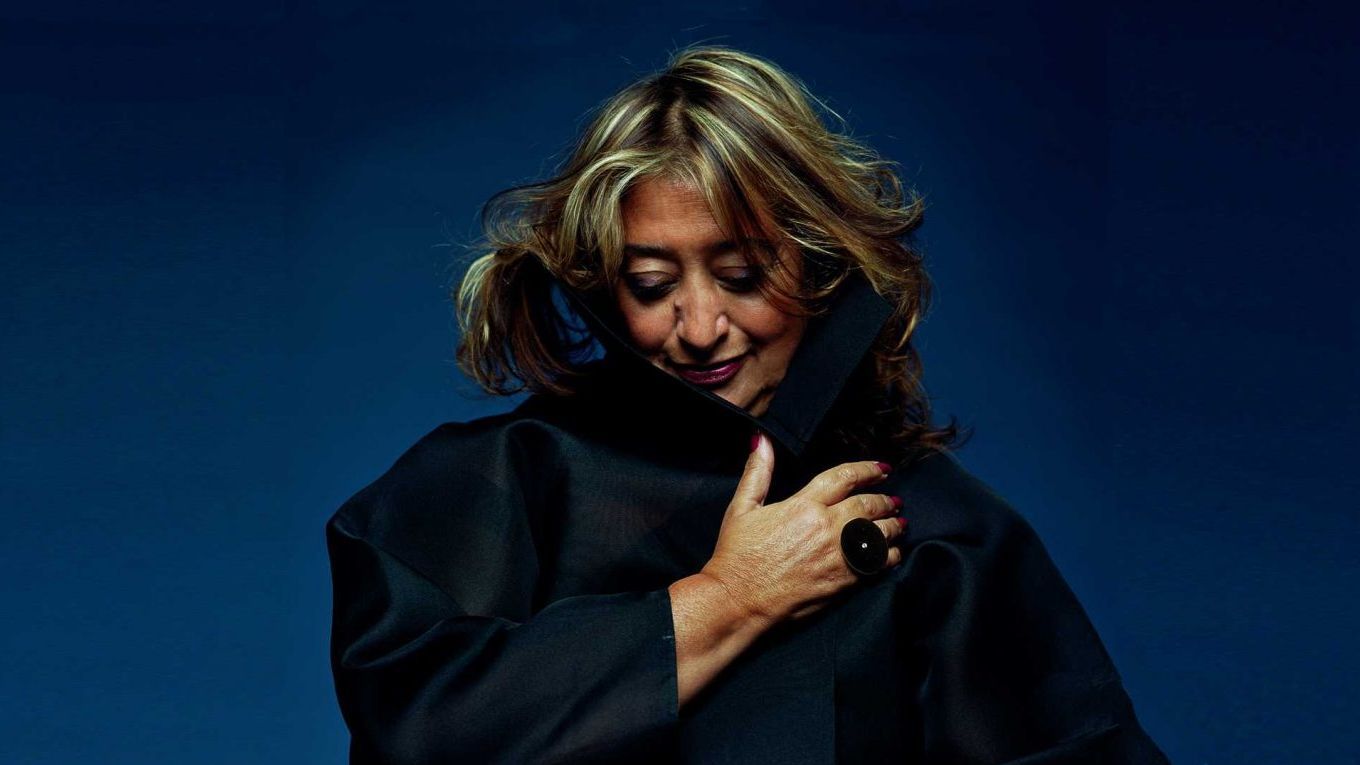
Born in Baghdad, the late Dame Zaha Mohammad Hadid (1950 – 2016) viewed architecture as an art form that could dissolve boundaries, blur the lines between interior and exterior, and create experiences that were immersive and transformative. Inspired by natural forms, mathematics, and the fluidity of landscapes, ZHA’s work is spatially inventive, structurally efficient, technologically advanced, and environmentally considerate.
These 10 projects reflect ZHA’s commitment to crafting iconic architecture that shapes the Middle East’s national identity and enhances the region’s global recognition.
1. Sheikh Zayed Bridge
Location: Abu Dhabi, UAE
Completion Year: 2010
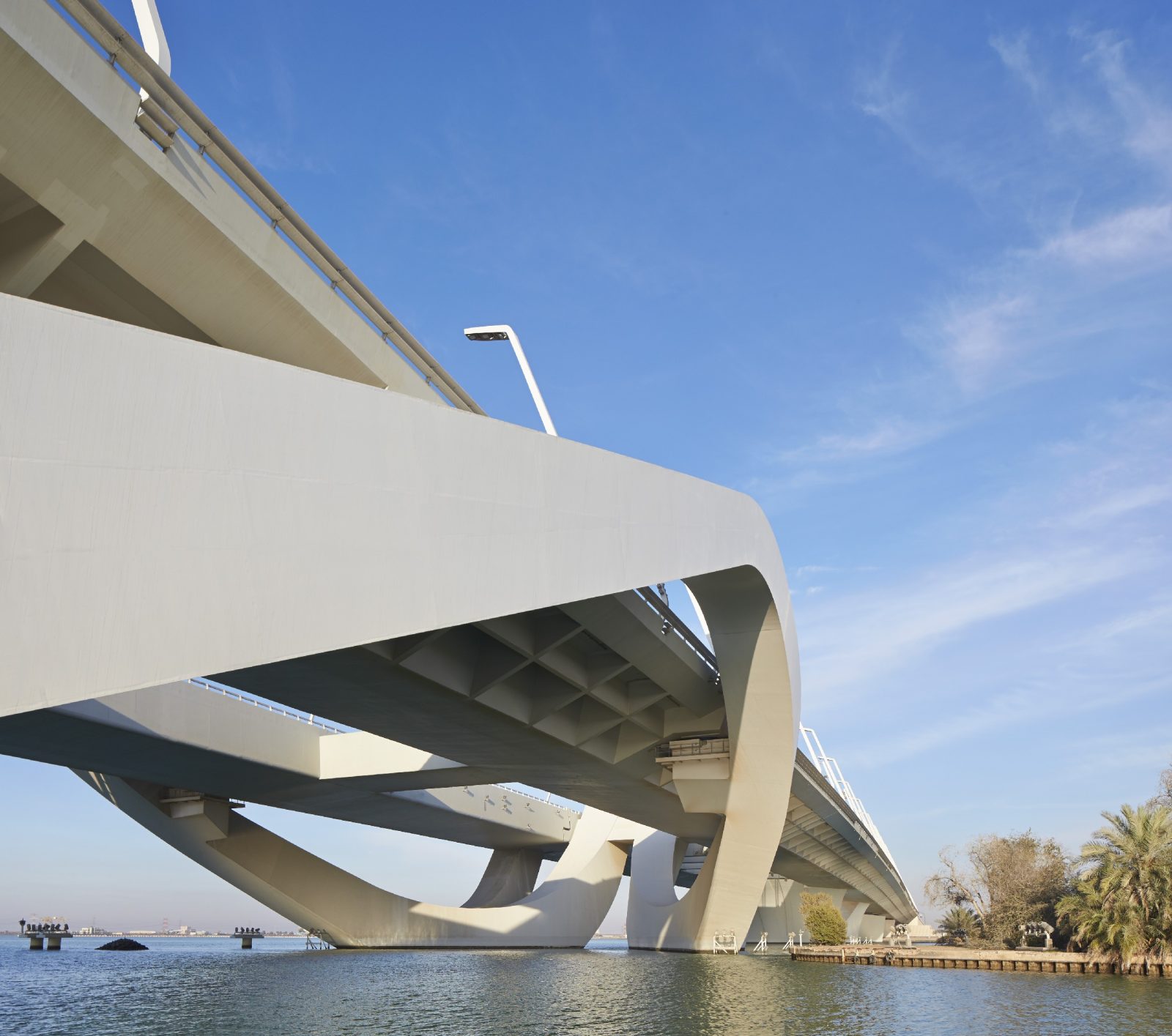
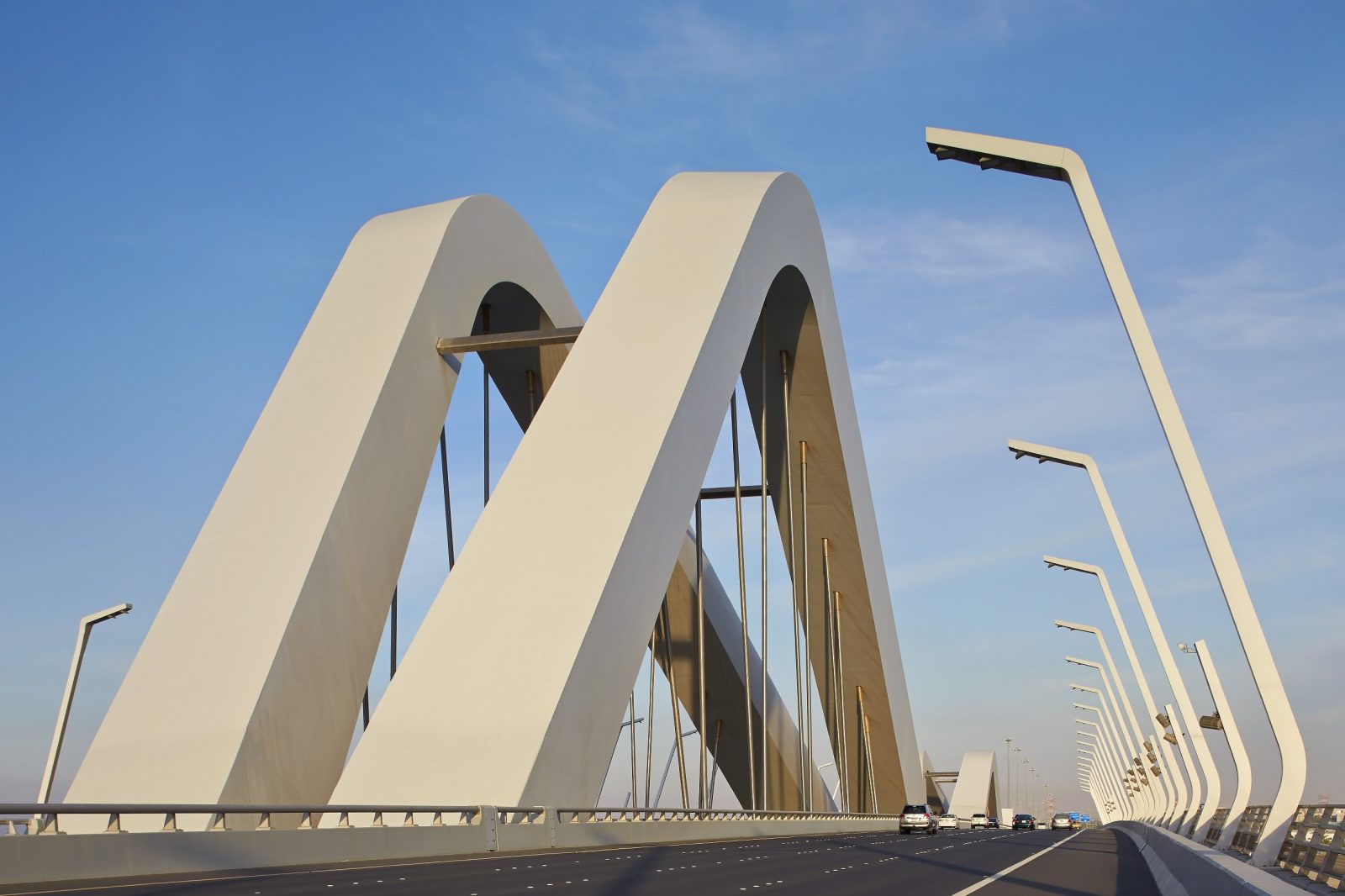
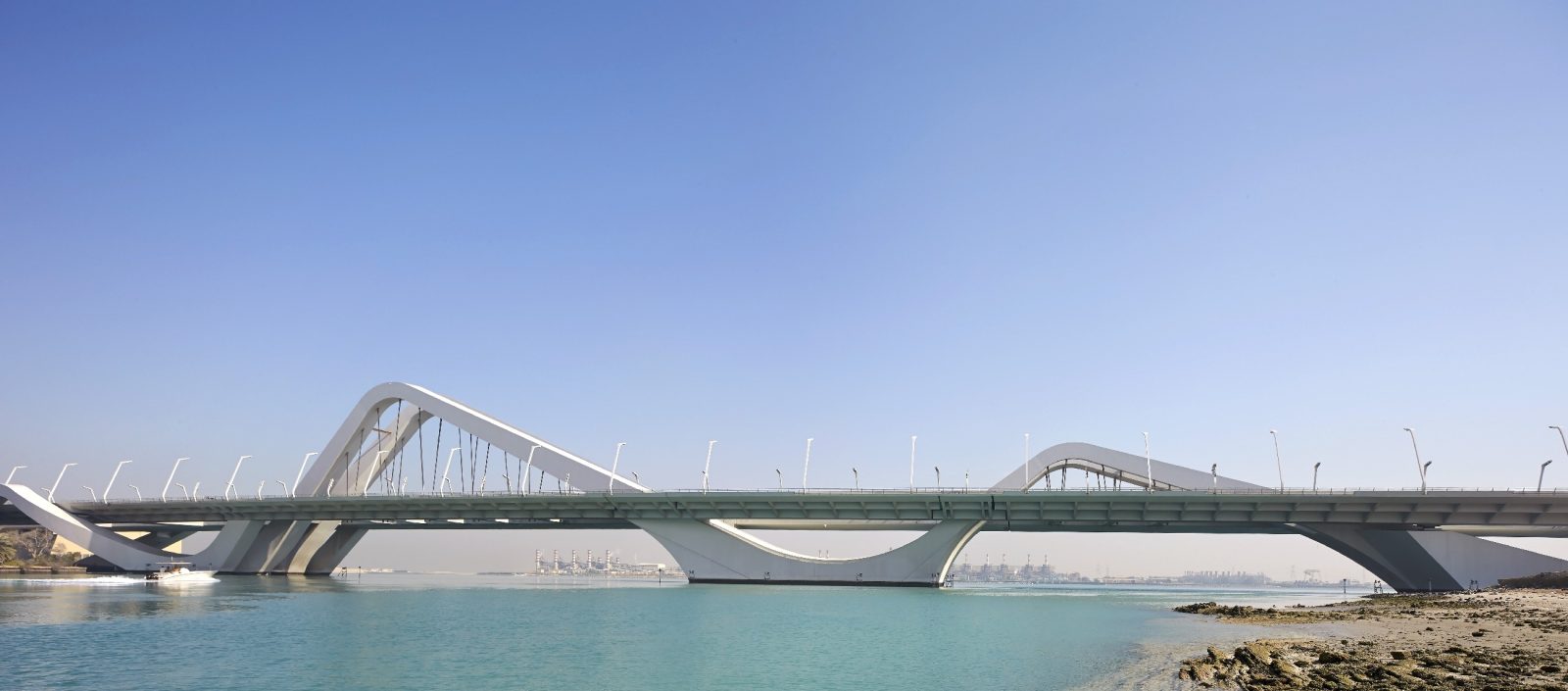
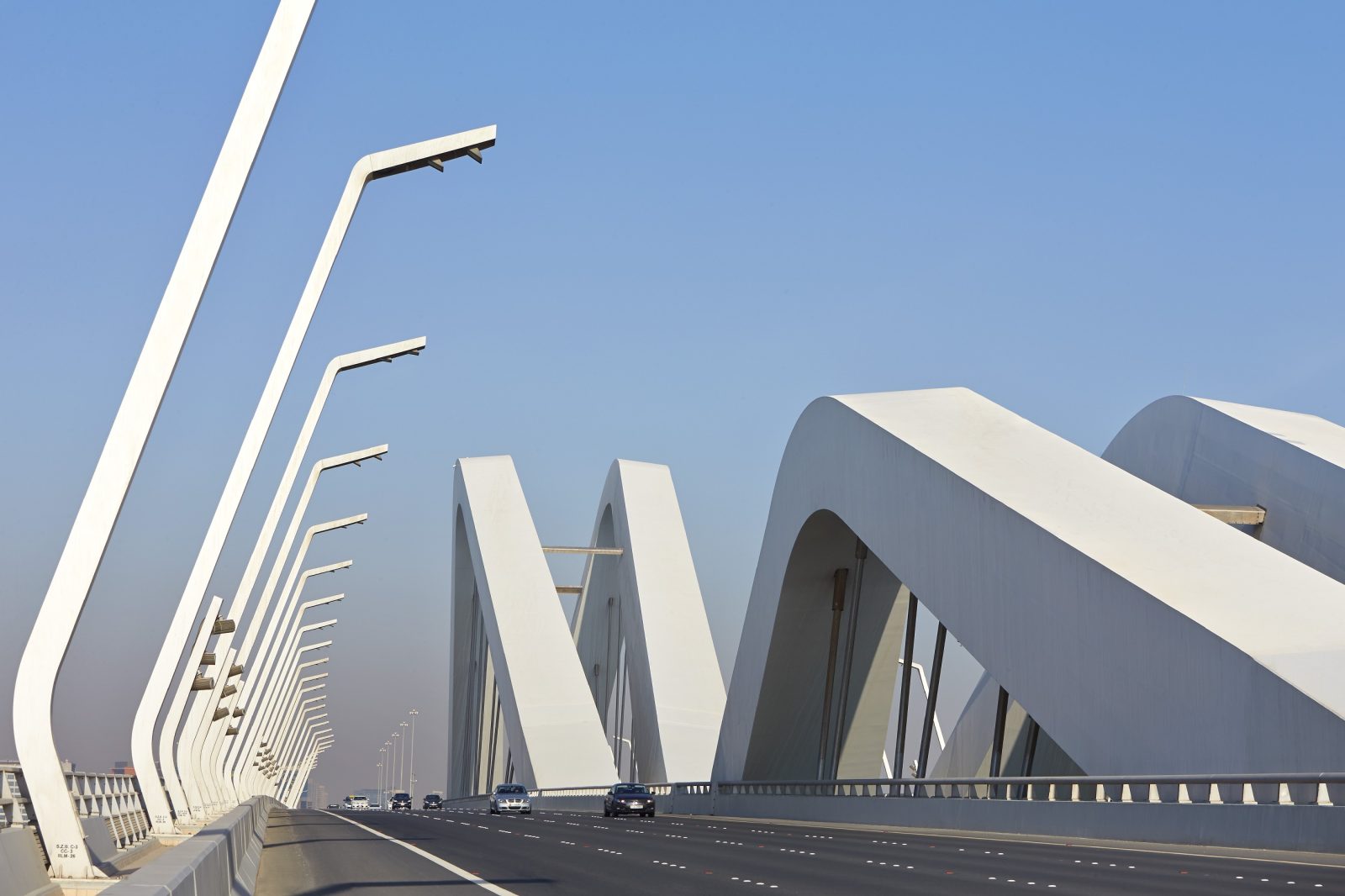
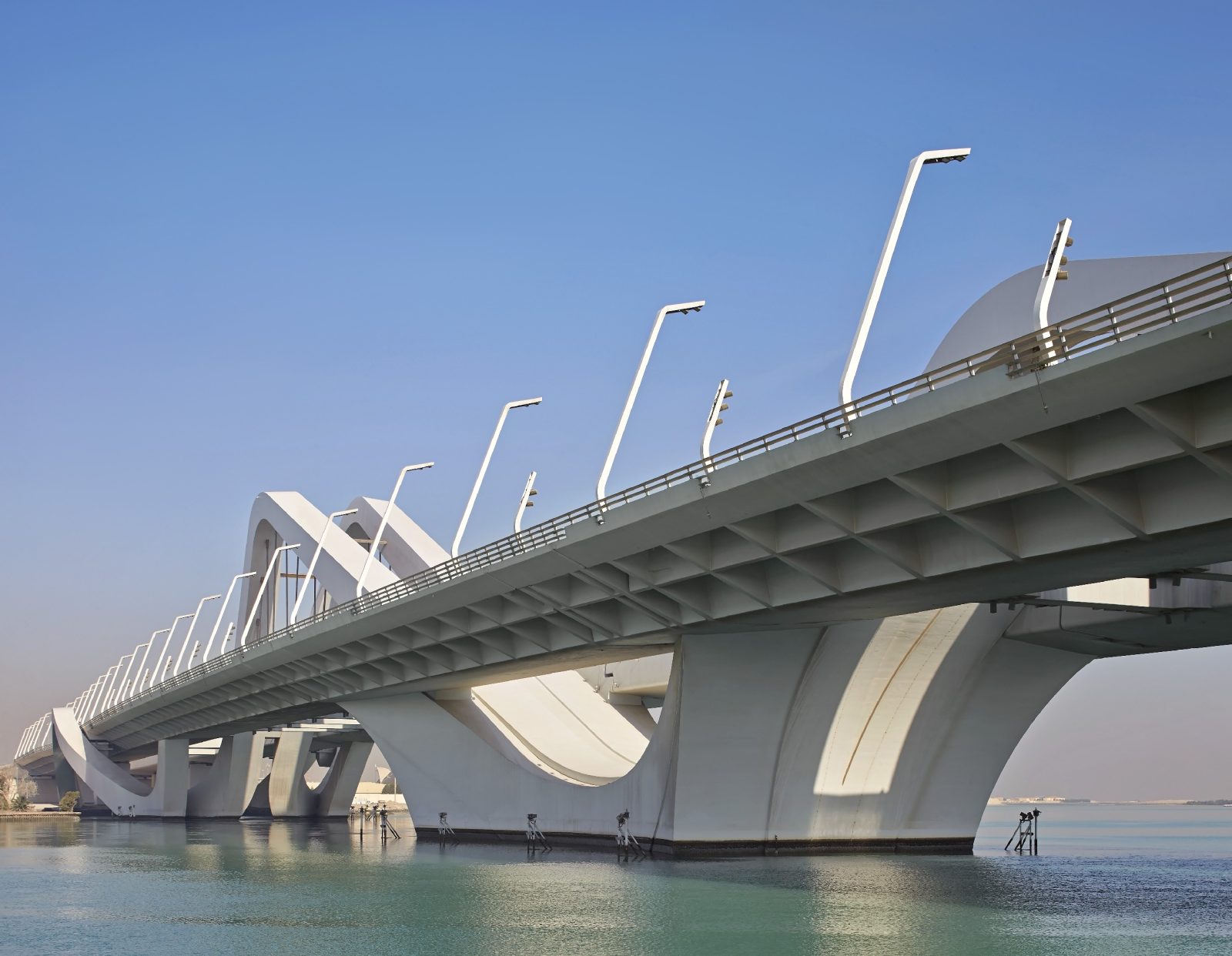
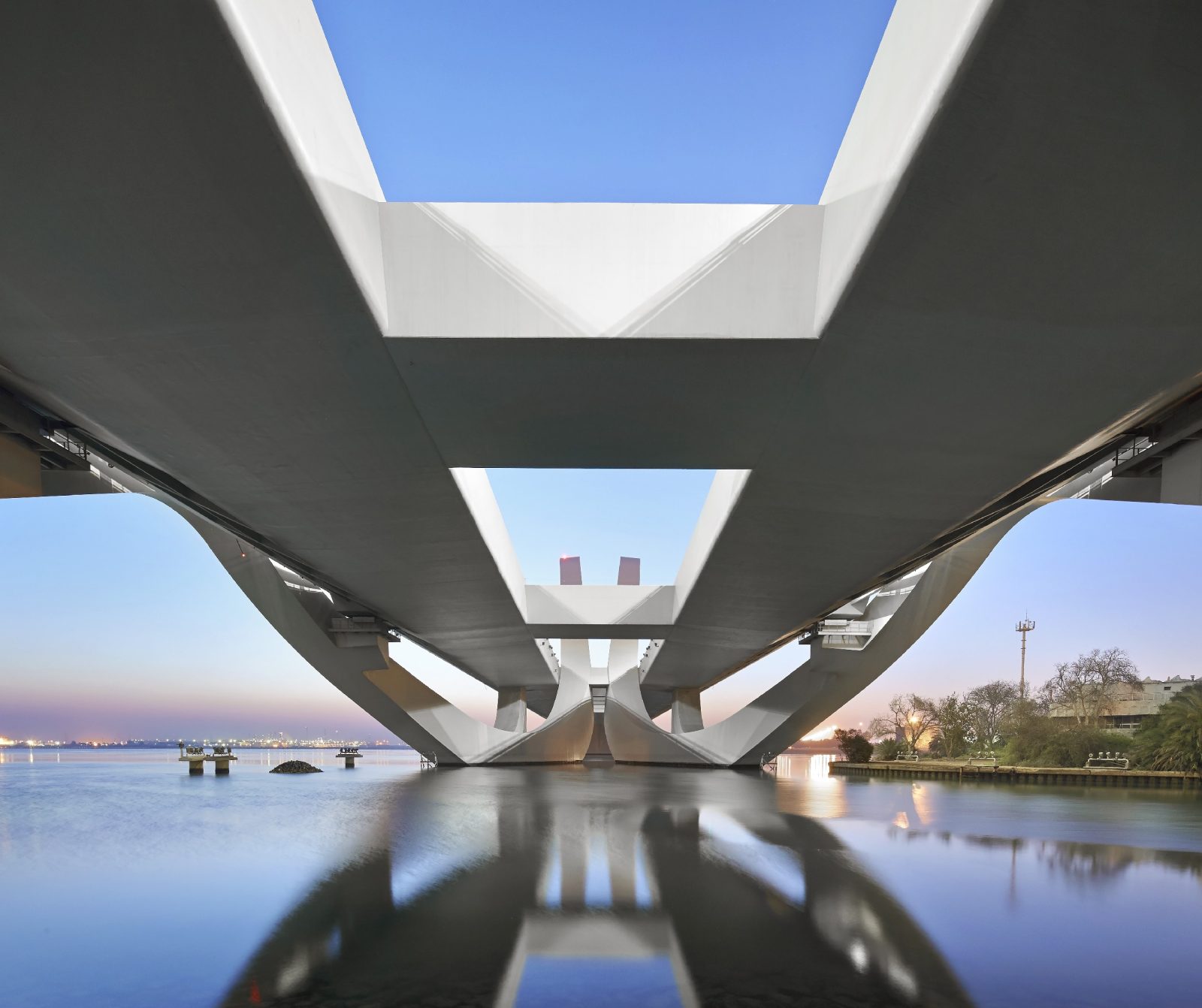
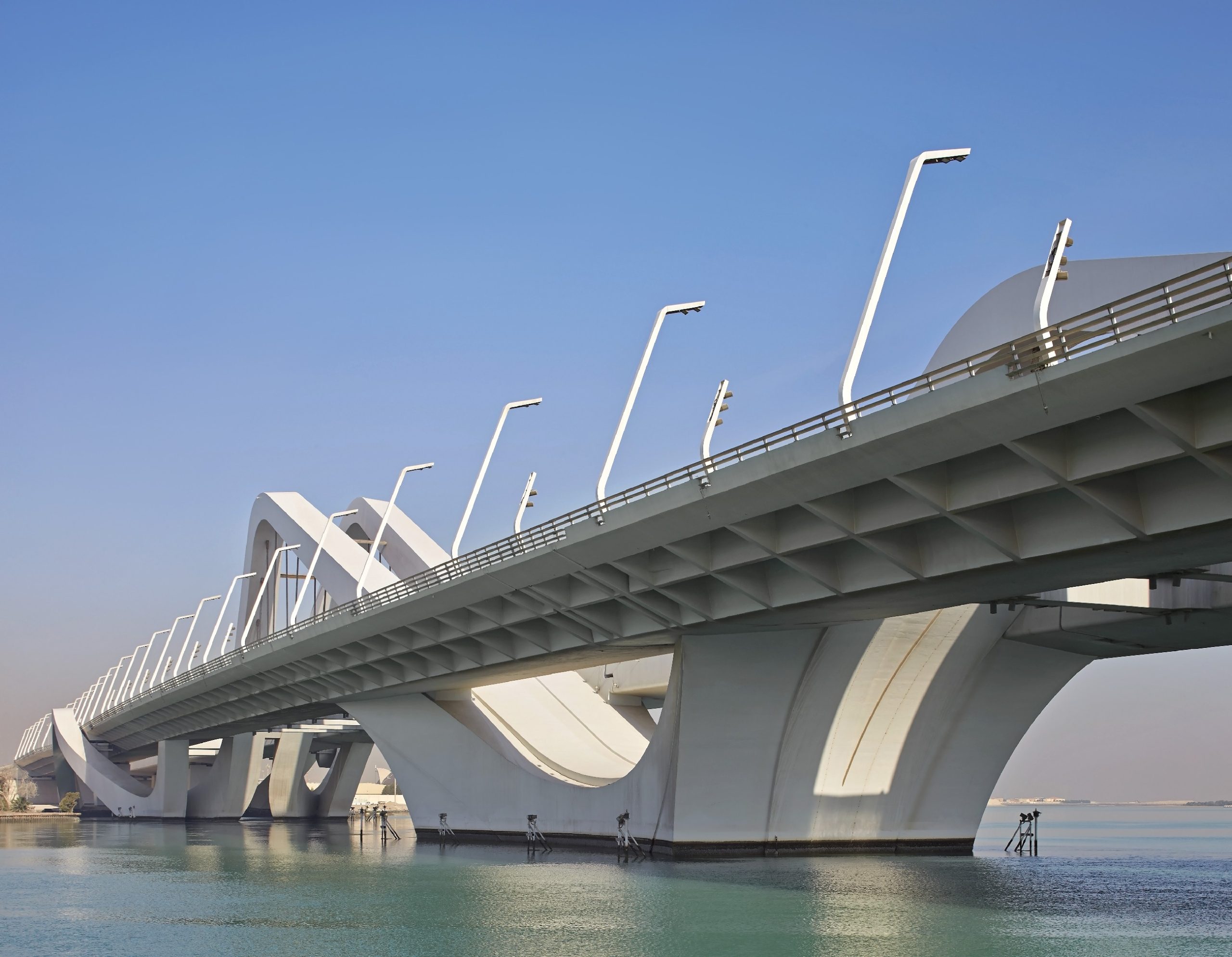
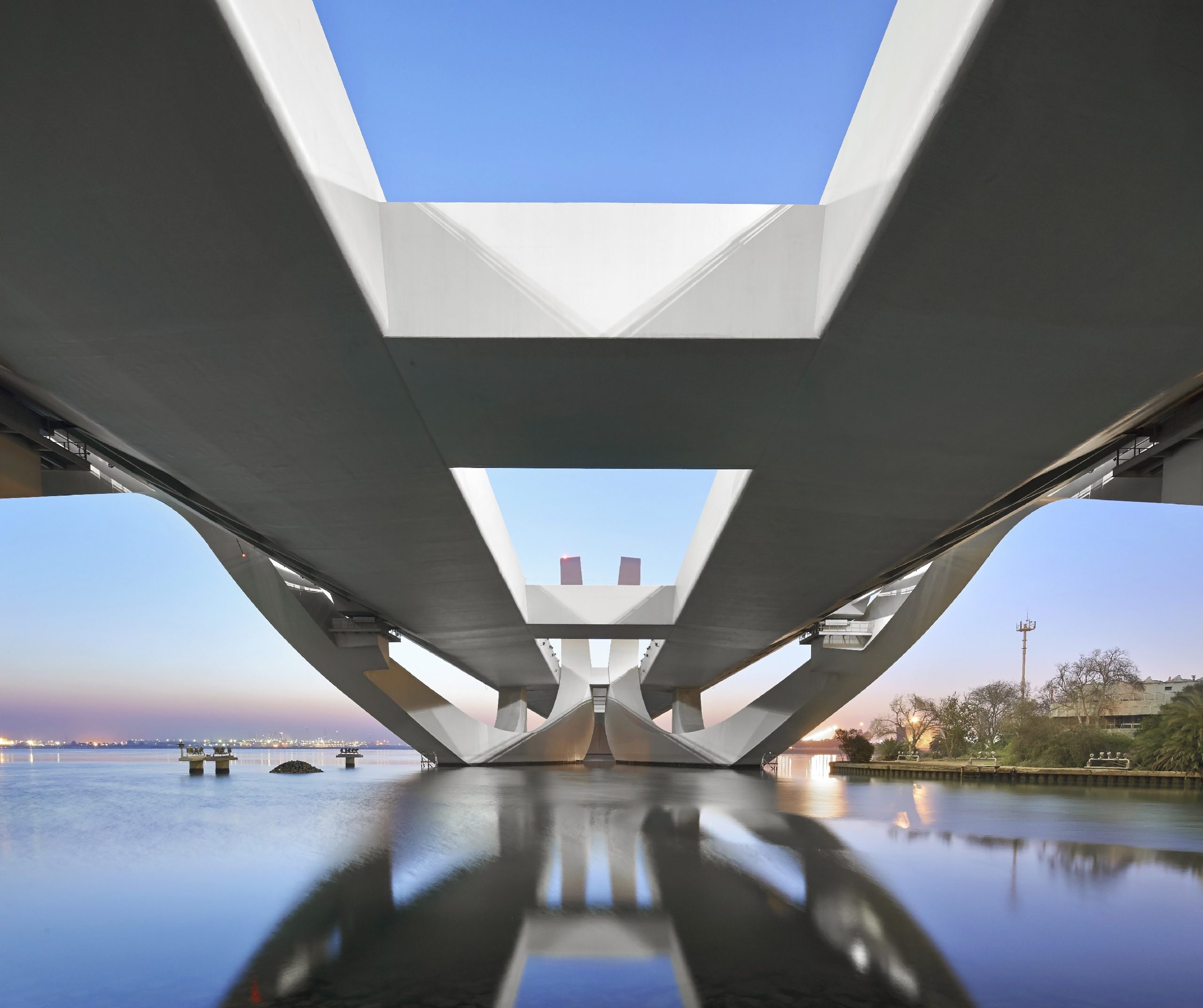
ZHA’s first completed project in the Middle East, the Sheikh Zayed Bridge, was commissioned during a period of rapid urban expansion in the UAE to serve as a definitive landmark redefining the entrance to Abu Dhabi. Inspired by the natural forms of the desert landscape and the flowing lines of water, the structure’s design features arching, fluid lines that evoke the shape of dunes and waves. The complex three-dimensional curves rise, dip, and intertwine to evoke sinuous lines of sand dunes shaped by the wind, with a central arch that ascends to a height of 60 meters above the water.
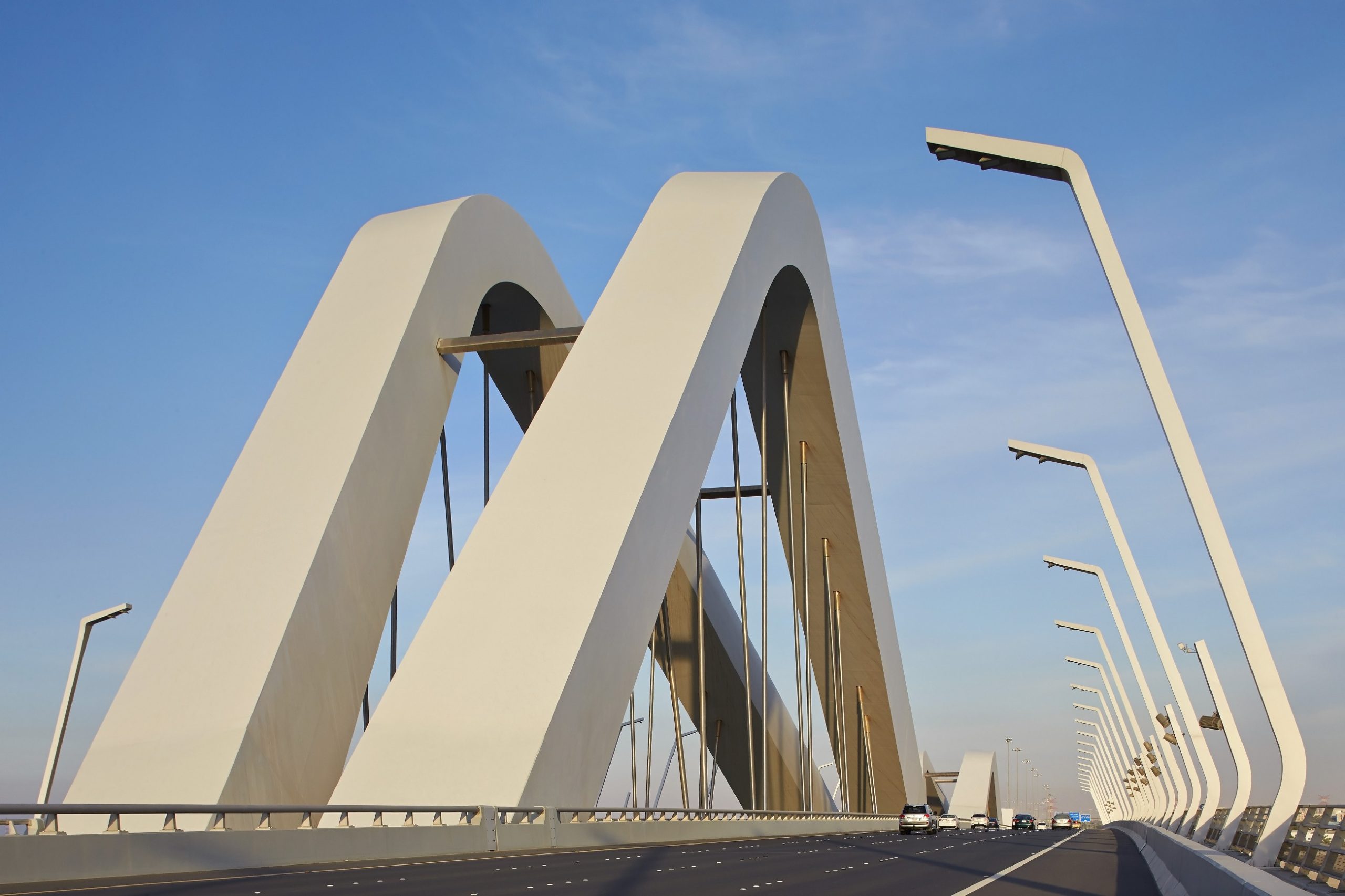
The structural design of the bridge translates kinetic forms into large-scale civil engineering works, with the cantilevered road decks suspended by a network of high-tensile steel cables, creating the illusion that the roadways are floating. One of the most striking features of the Sheikh Zayed Bridge is its lighting design, which uses LED lights that accentuate its fluid curves.
2. Issam Fares Institute (IFI)
Location: American University of Beirut (AUB), Beirut, Lebanon
Completion Year: 2014
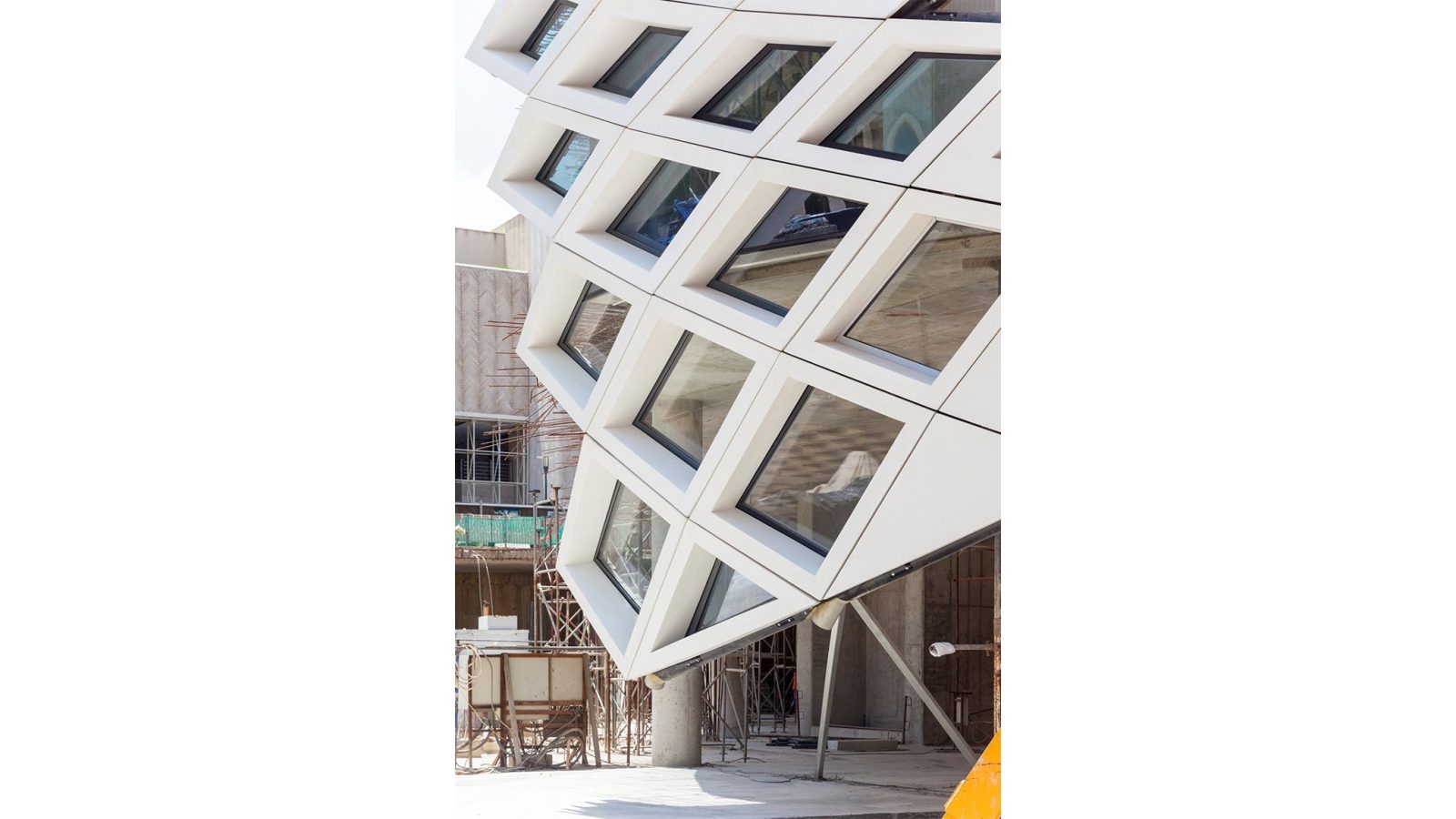
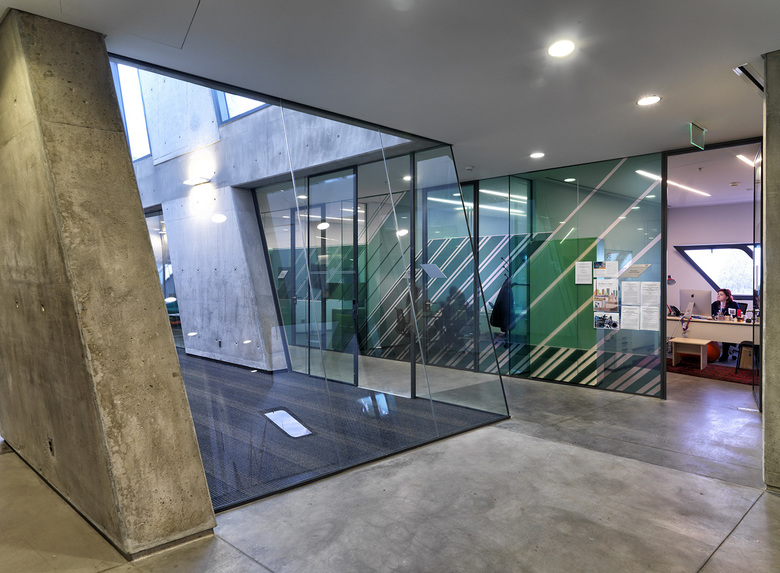
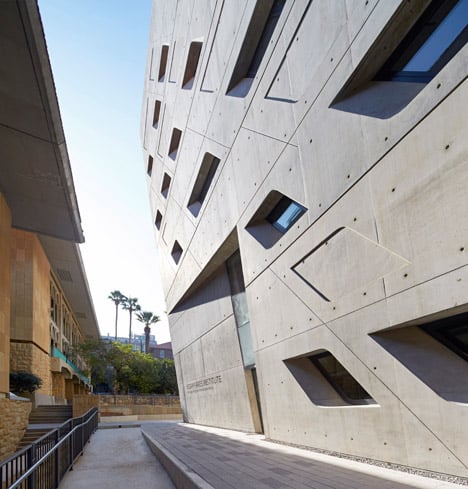
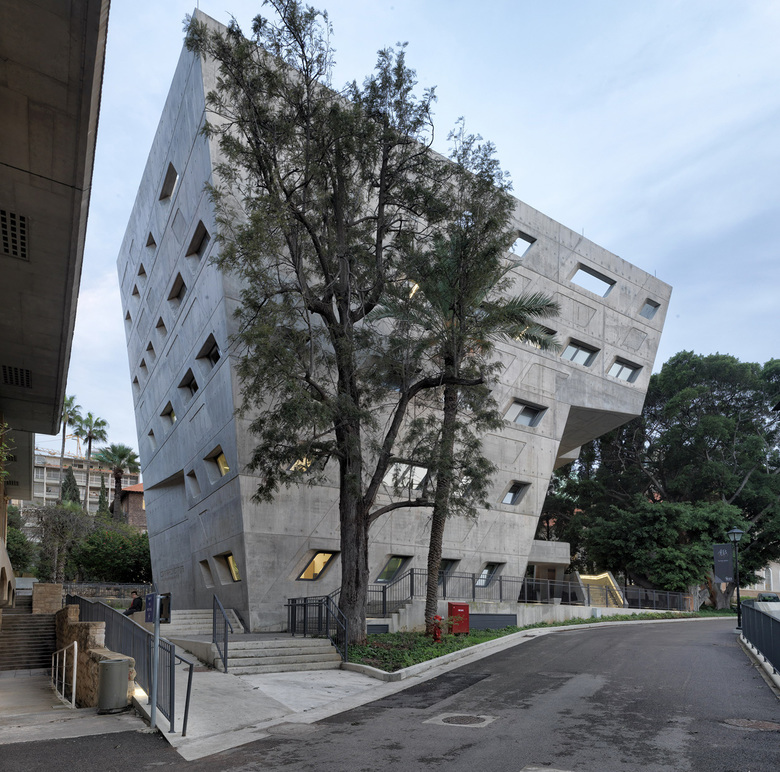
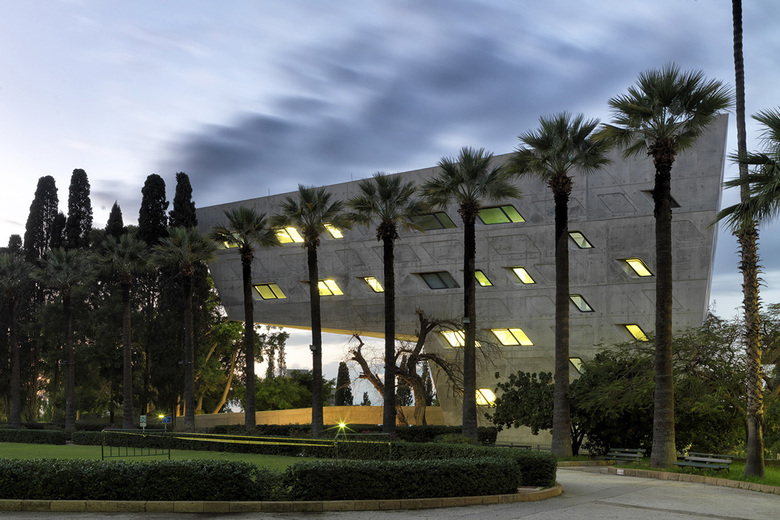
The Issam Fares Institute for Public Policy & International Affairs (IFI) at the American University of Beirut (AUB) is the first built project in Zaha Hadid’s birthplace and on the historic campus where she studied mathematics and engineering. The fluid and organic form evokes the building’s identity, reflecting the sense of motion that integrates into its urban environment while maintaining striking modernity.
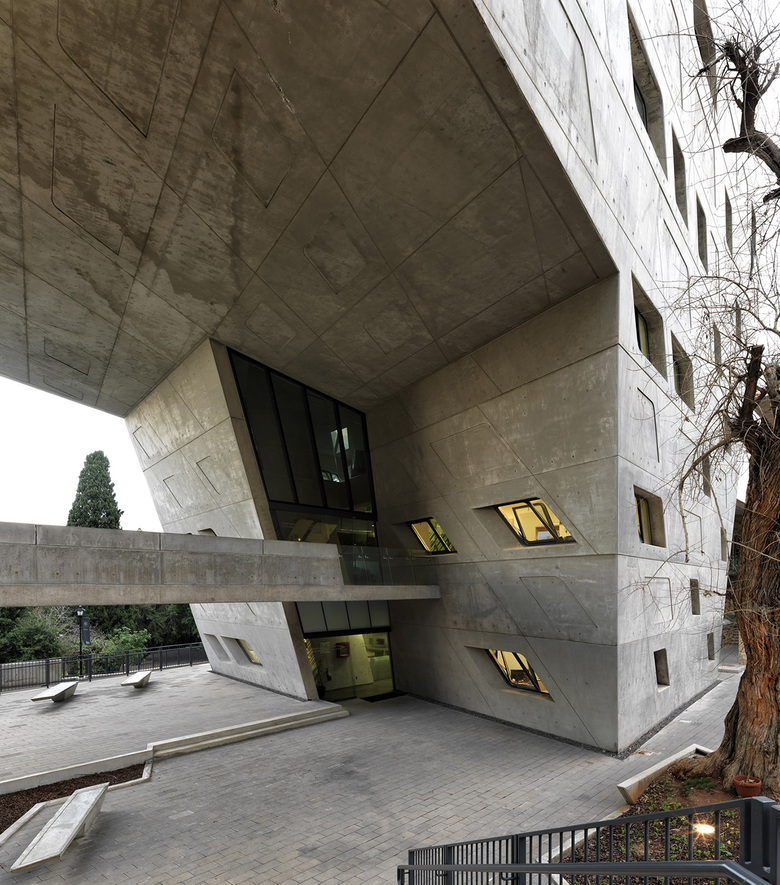
The footprint of the structure was intentionally minimized through the use of a dramatic cantilevered upper structure that floats above a new courtyard, providing essential shading to the outdoor space. This project demonstrates ZHA’s versatility in adapting fluid language to environments where local craft and historic preservation take the place of new, glossy high-technology materials.
3. King Abdullah Petroleum Studies and Research Center (KAPSARC)
Location: Dhahran, Eastern Province, Saudi Arabia
Completion Year: 2017
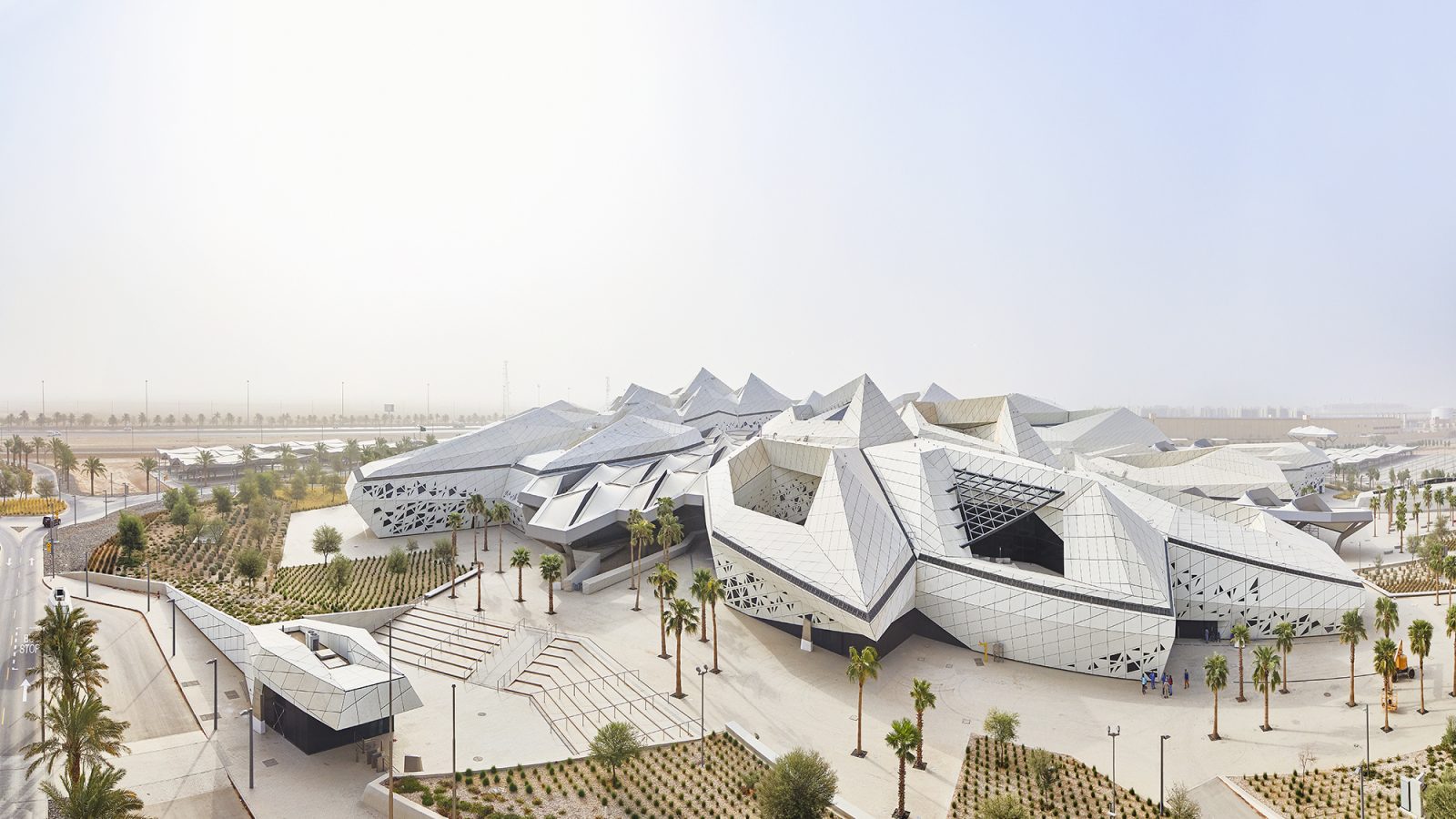
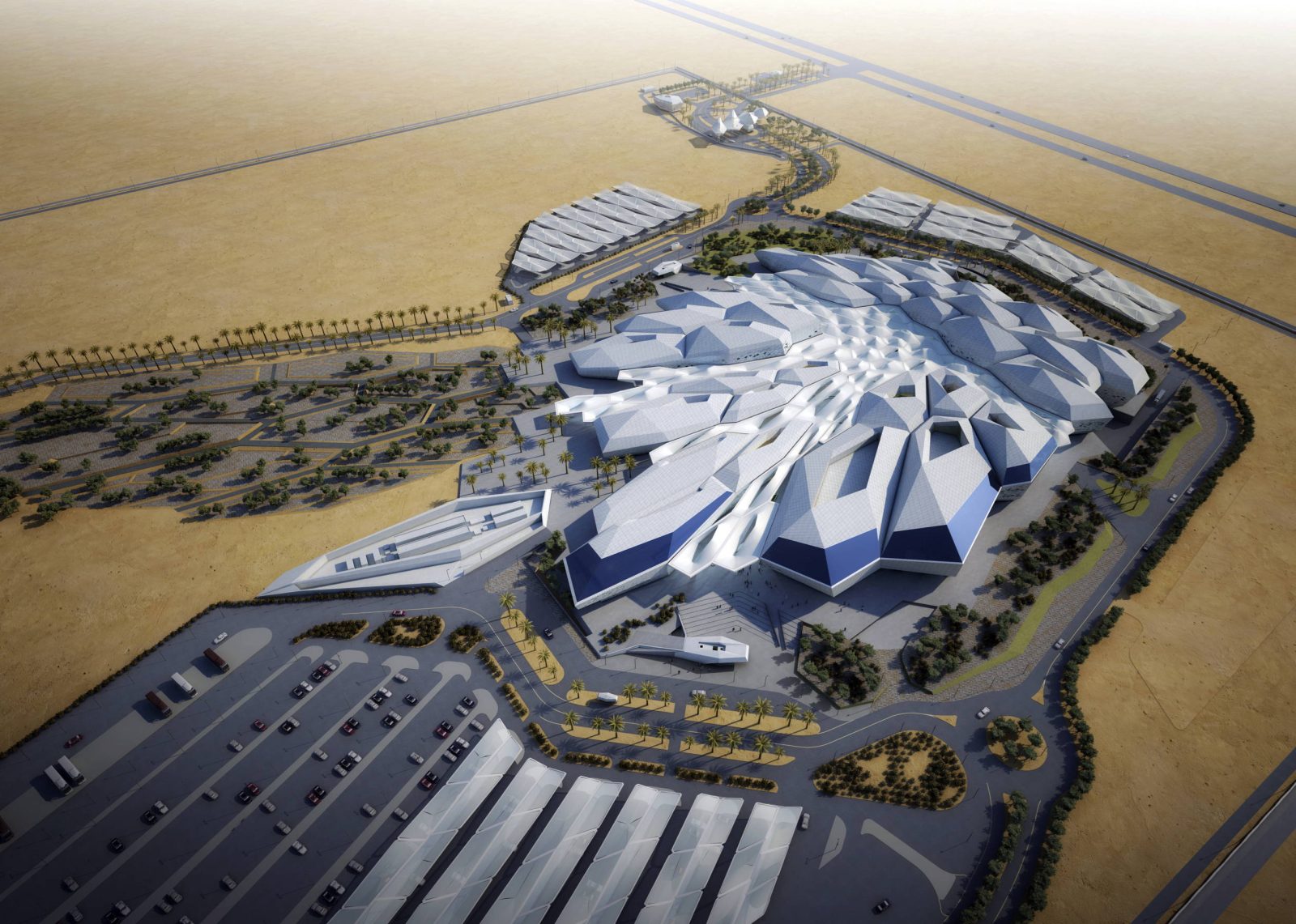
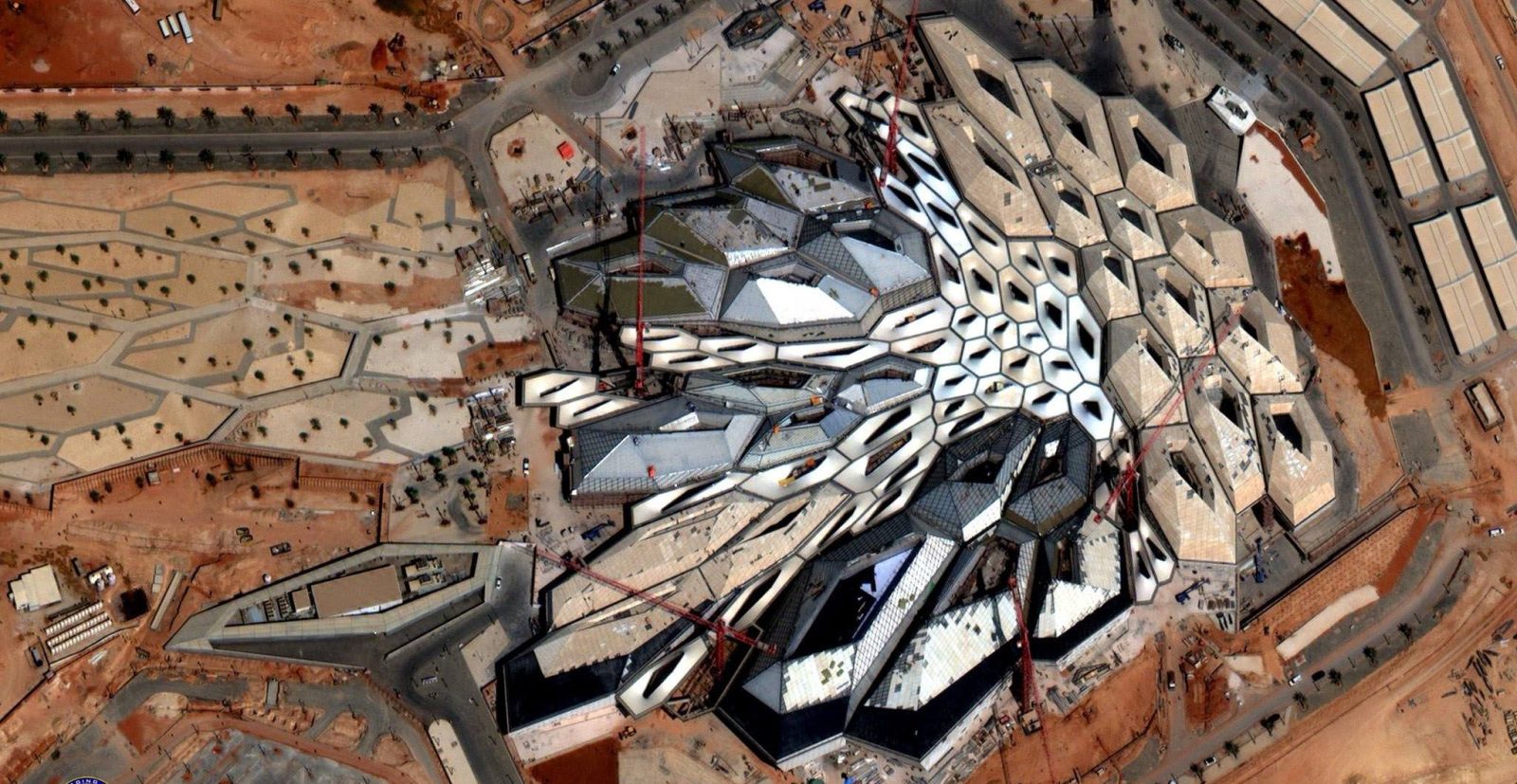
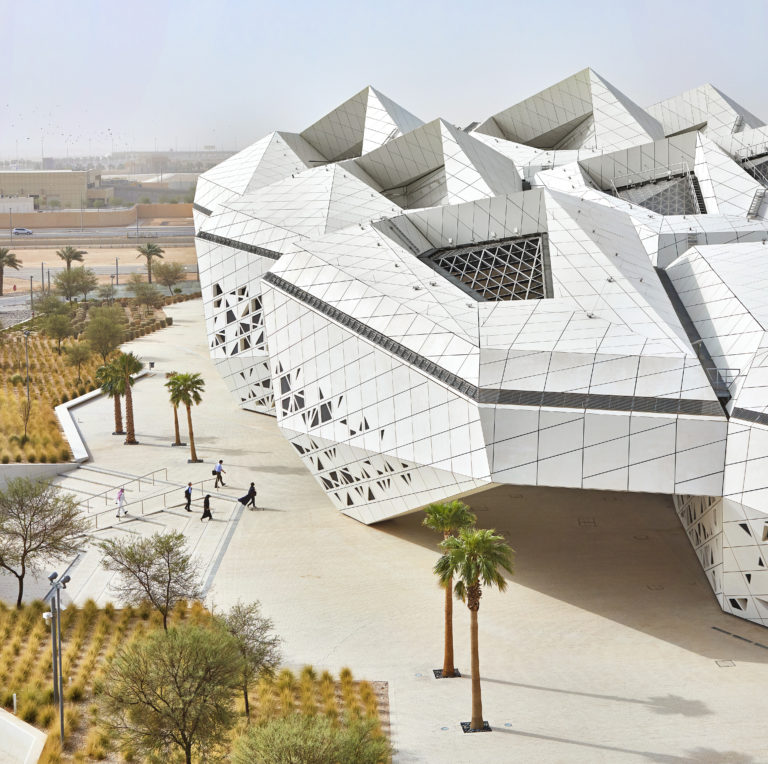
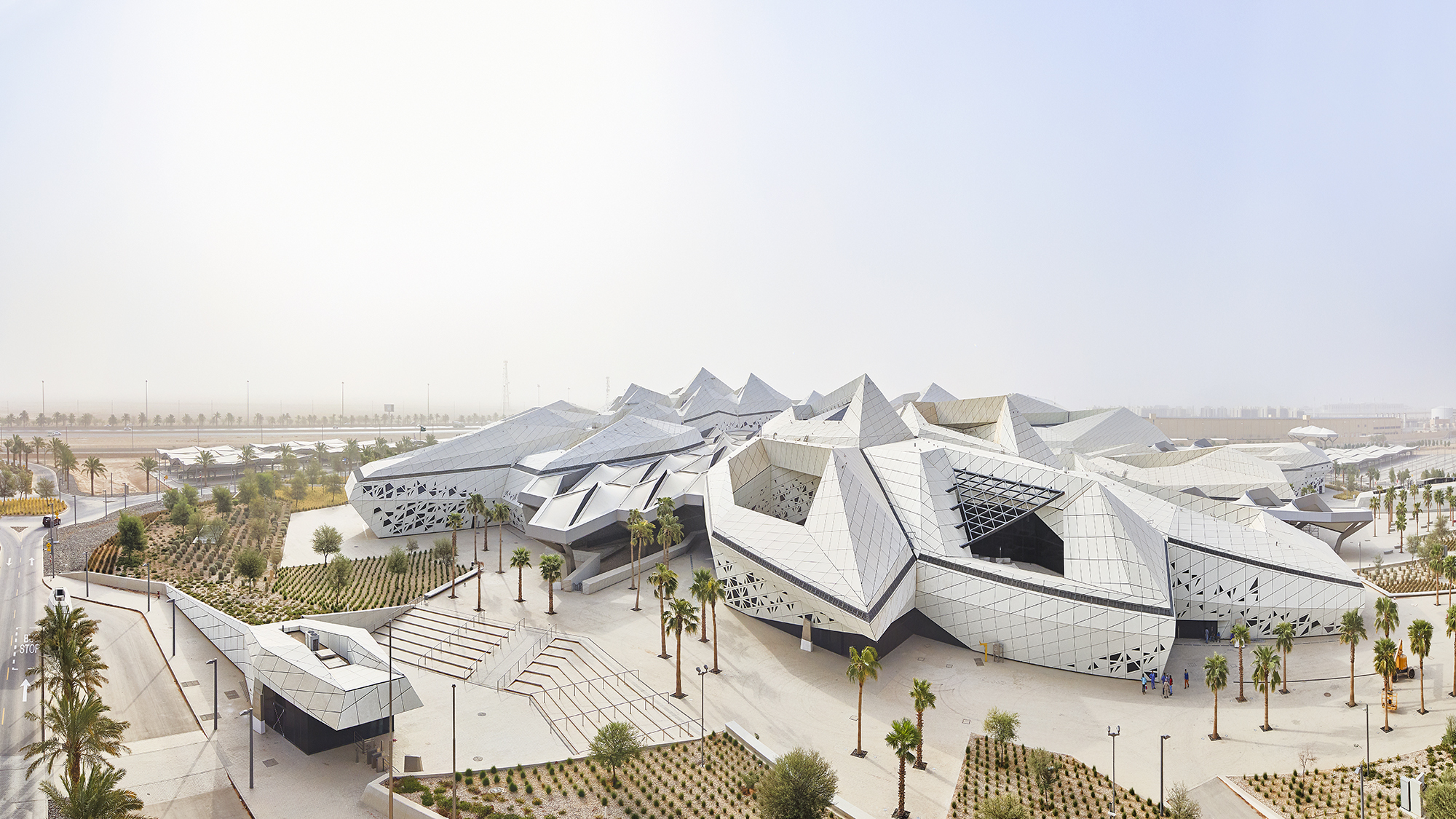
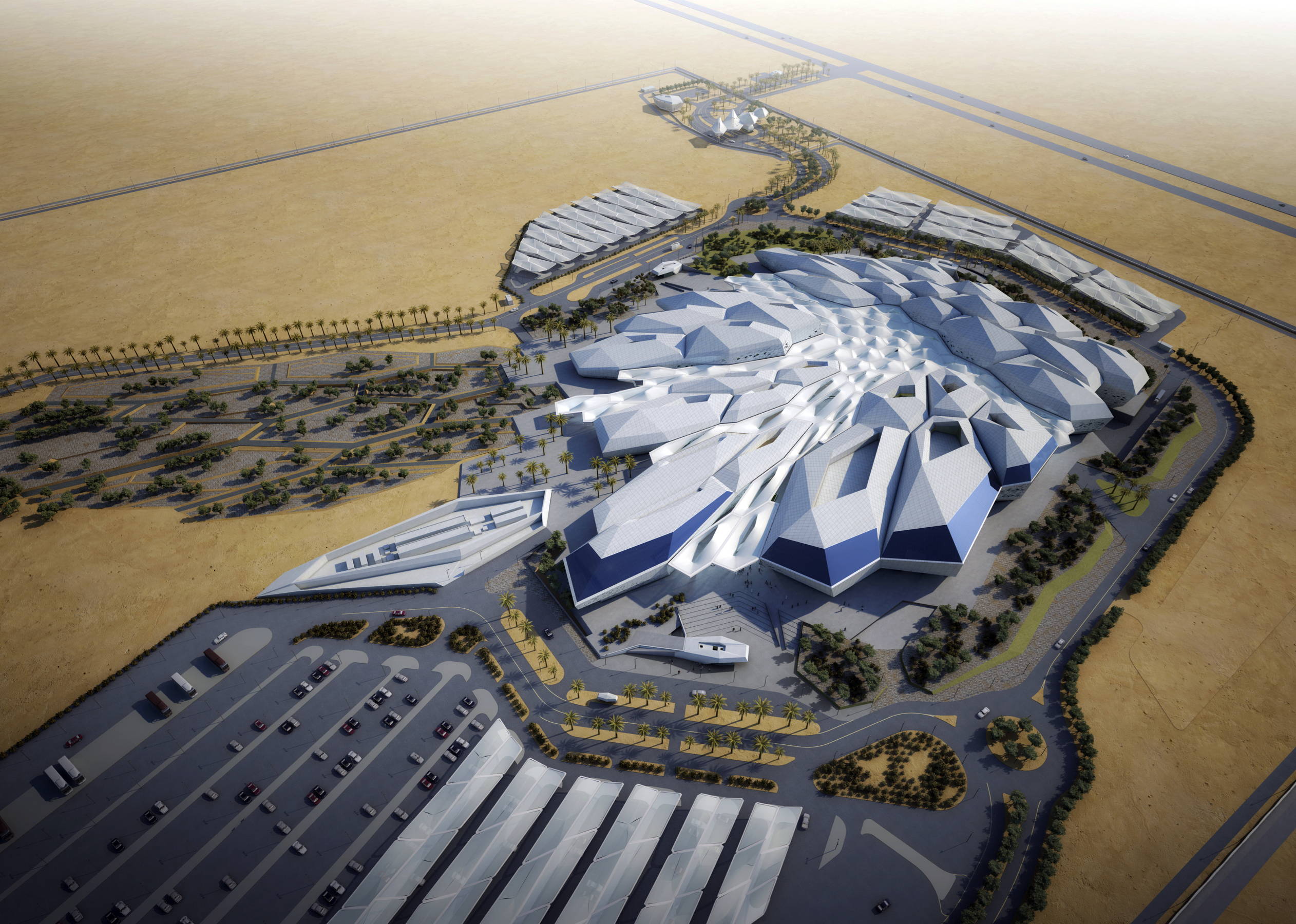
A sprawling, 500,000-square-meter micro-city, the King Abdullah Petroleum Studies and Research Center was established to support the Kingdom’s energy and environmental policies, with a focus on petroleum and natural resources. The sustainable, modern, and innovative architectural design reflects a fusion of traditional Saudi Arabian cultural elements with futuristic reinterpretations.
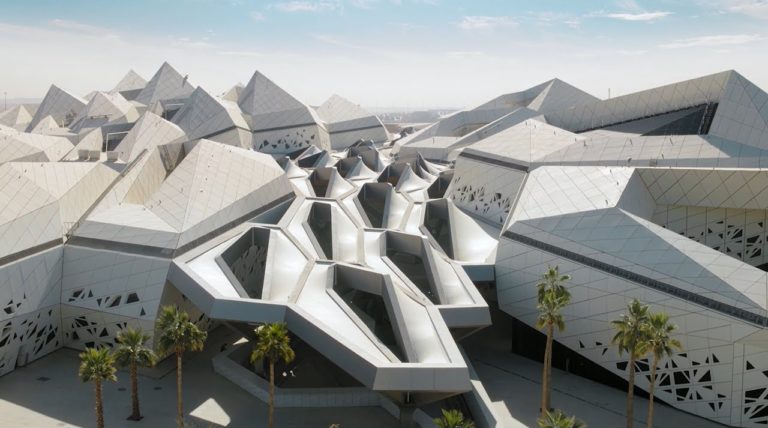
Emerging from the desert landscape, the modular design of six-sided hexagonal cells, which interlock like a honeycomb, creates a robust lattice structure. The modular approach allows for future adaptation and expansion of the research campus. Integration of solar panels at the site helps to store 5,000 megawatt-hours per year, ensuring significant renewable energy integration. KAPSARC enhances high-performance sustainability within large-scale, climate-responsive institutional architecture in the kingdom.
4. Al Janoub Stadium
Location: Al Wakrah, Qatar
Completion Year: 2019
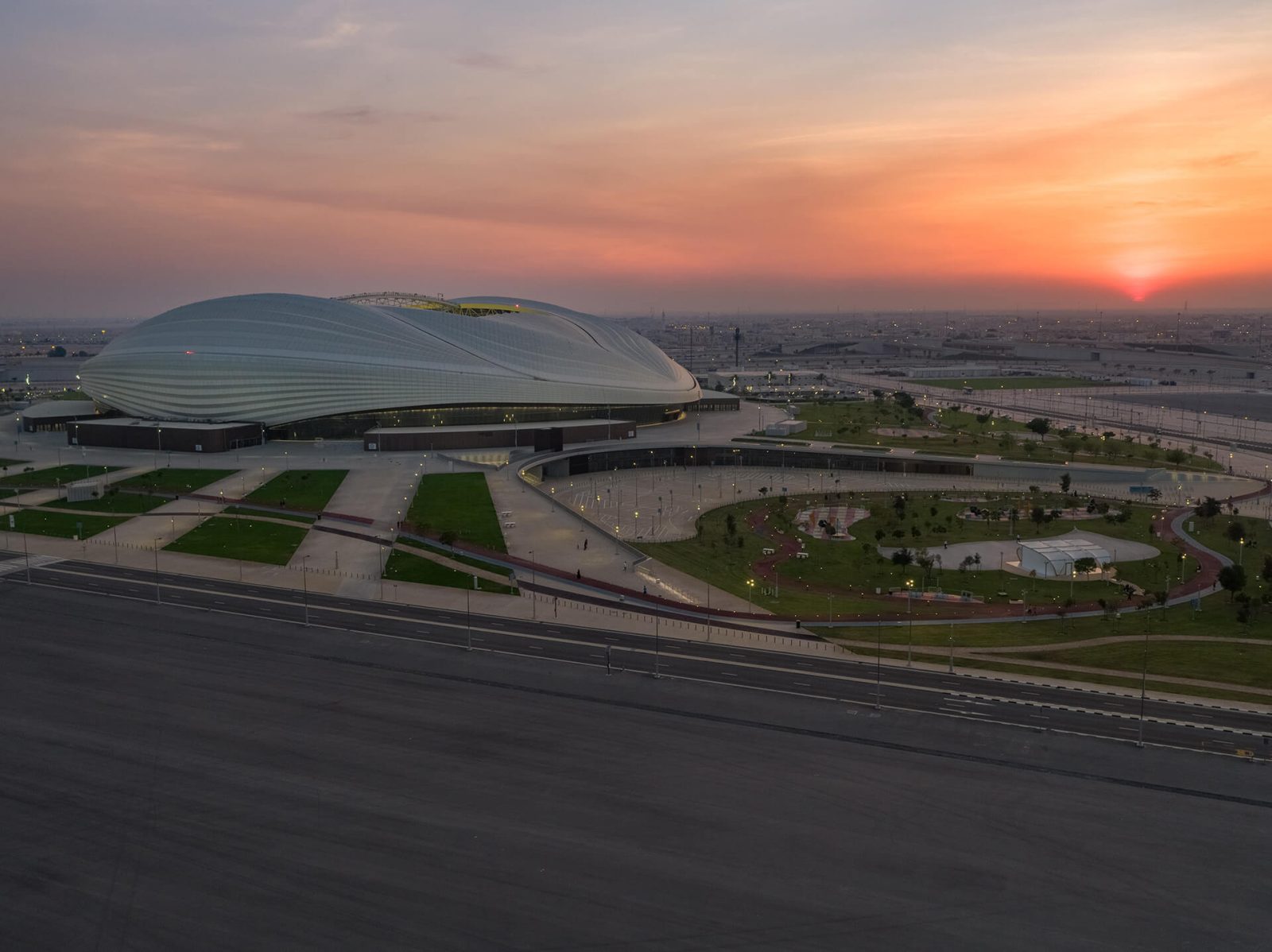
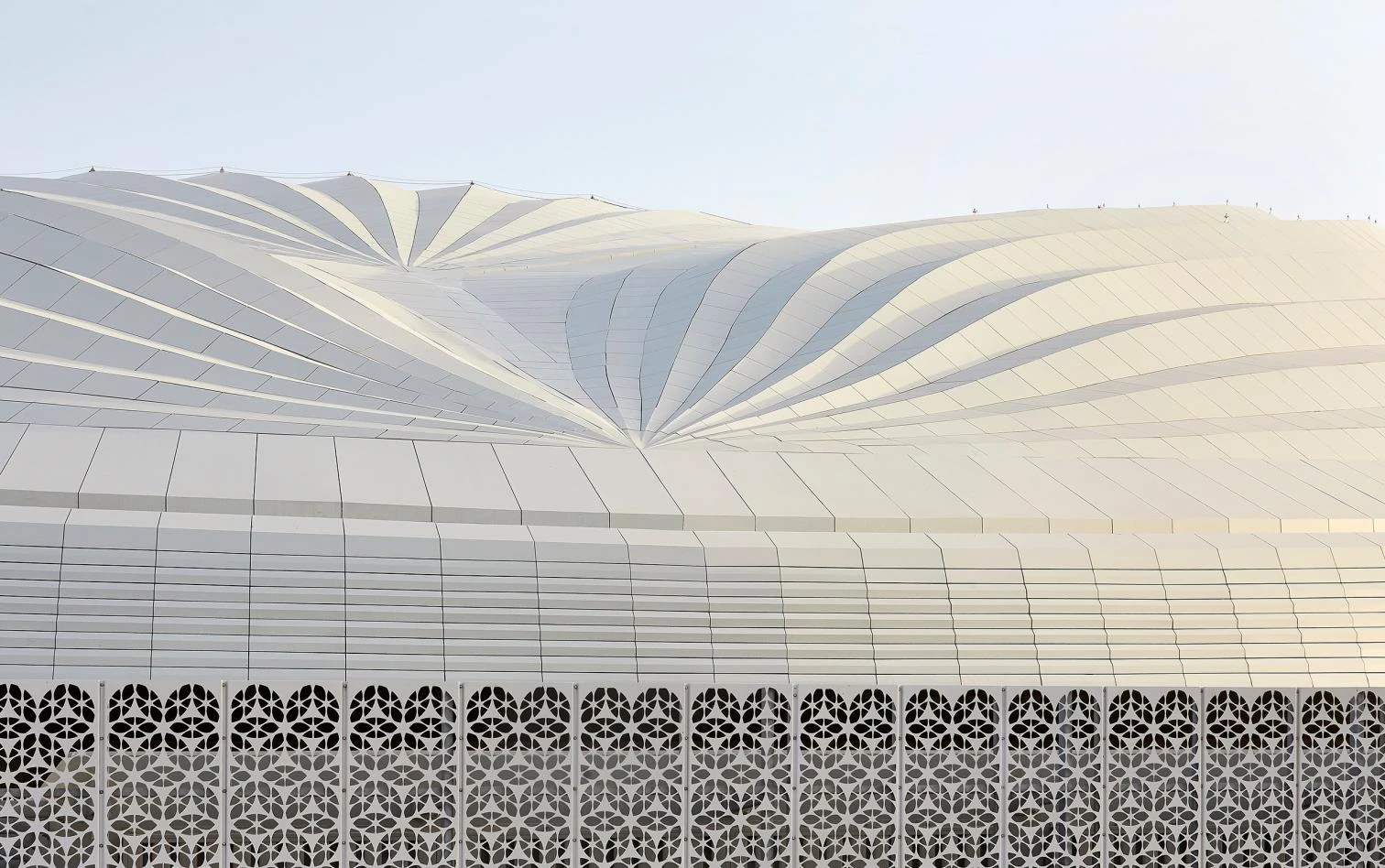
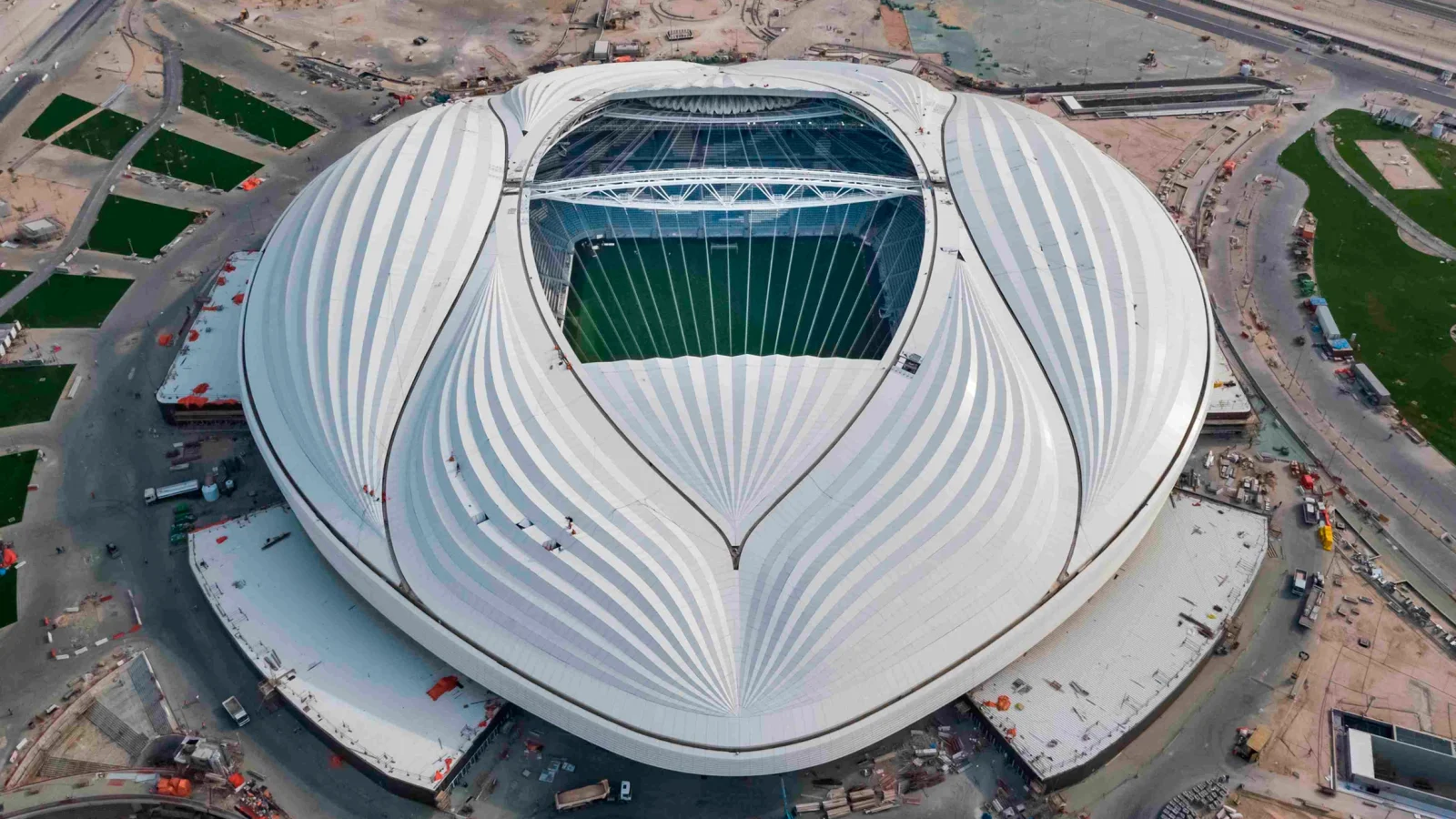
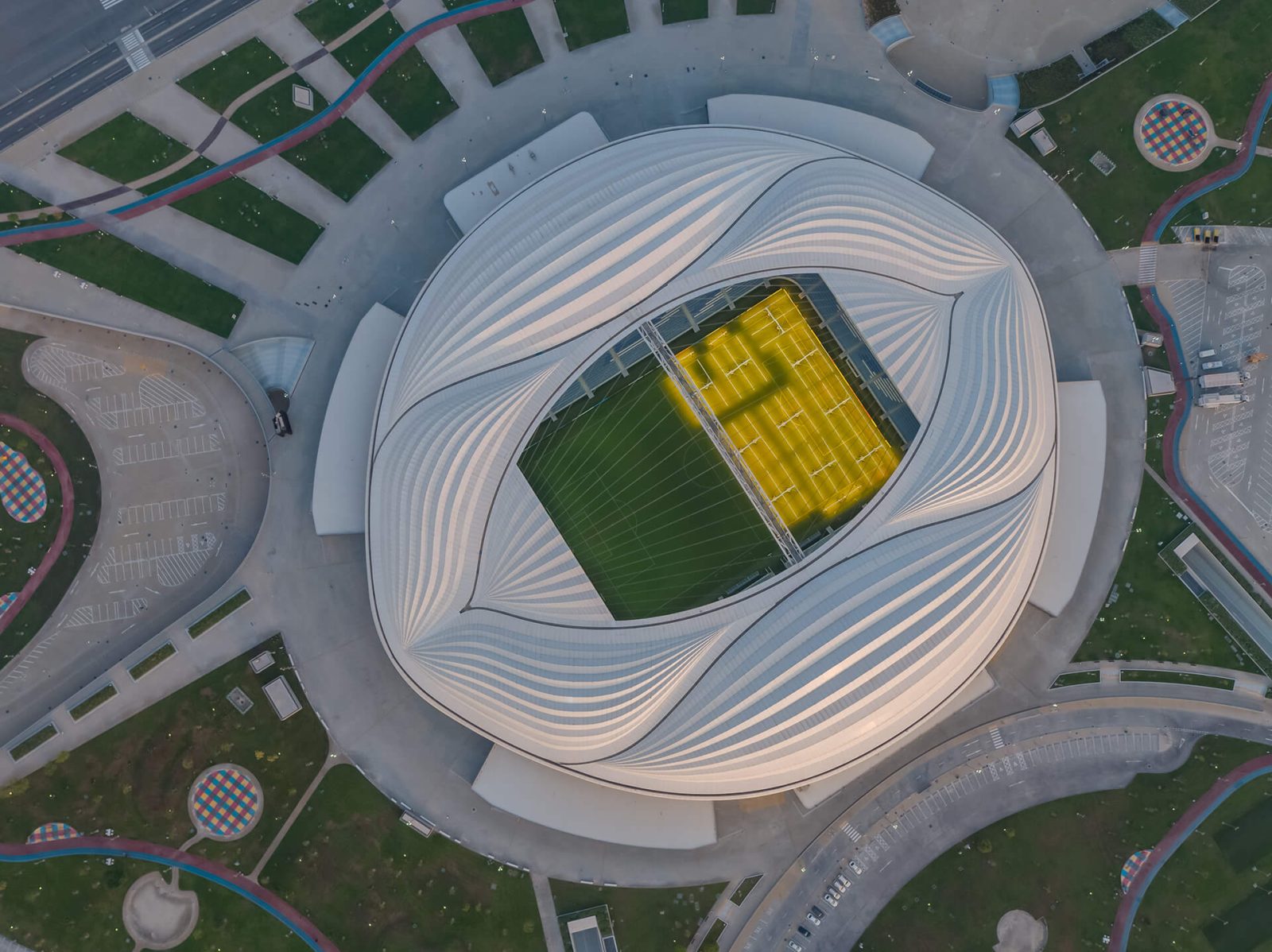
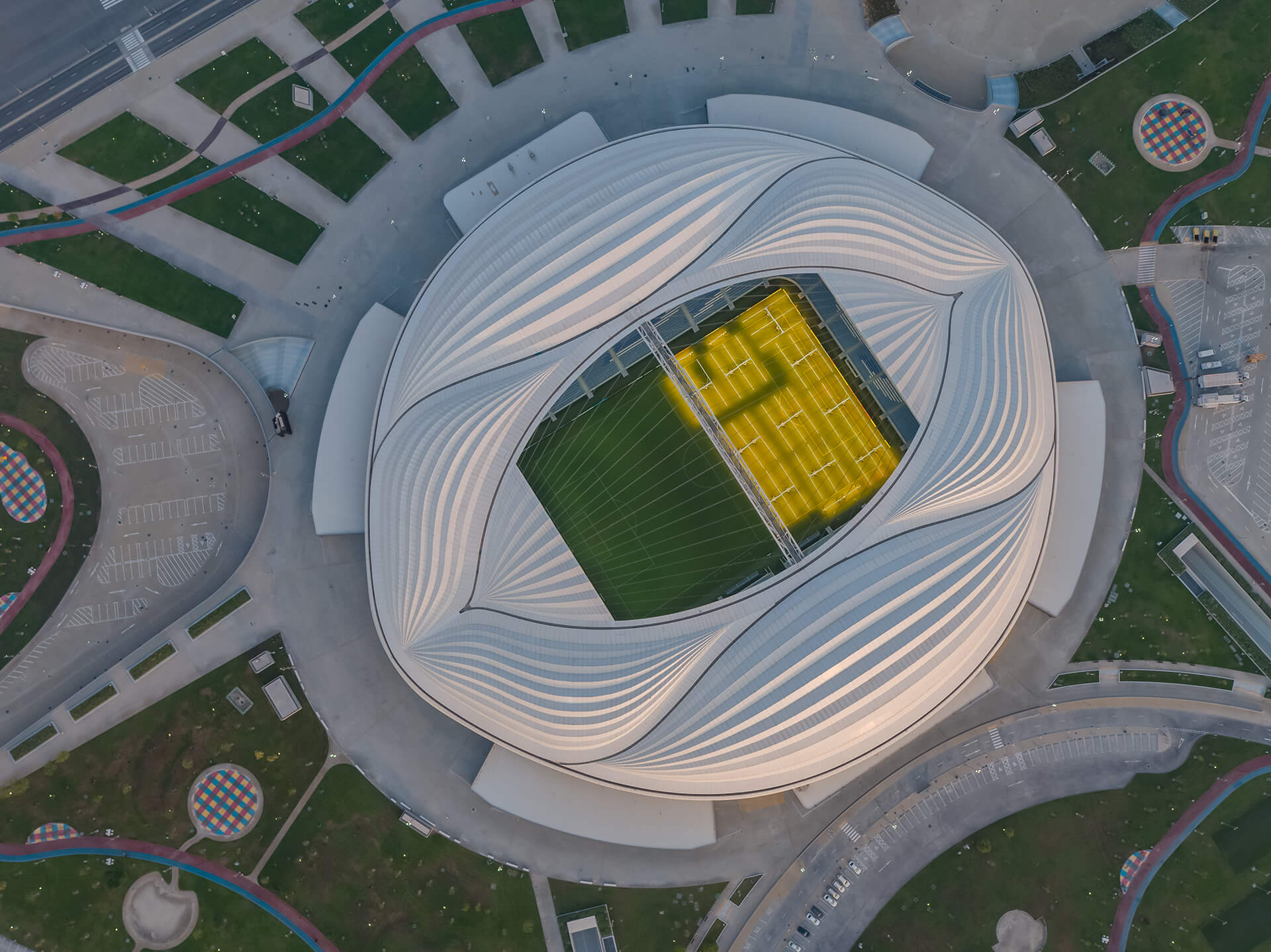
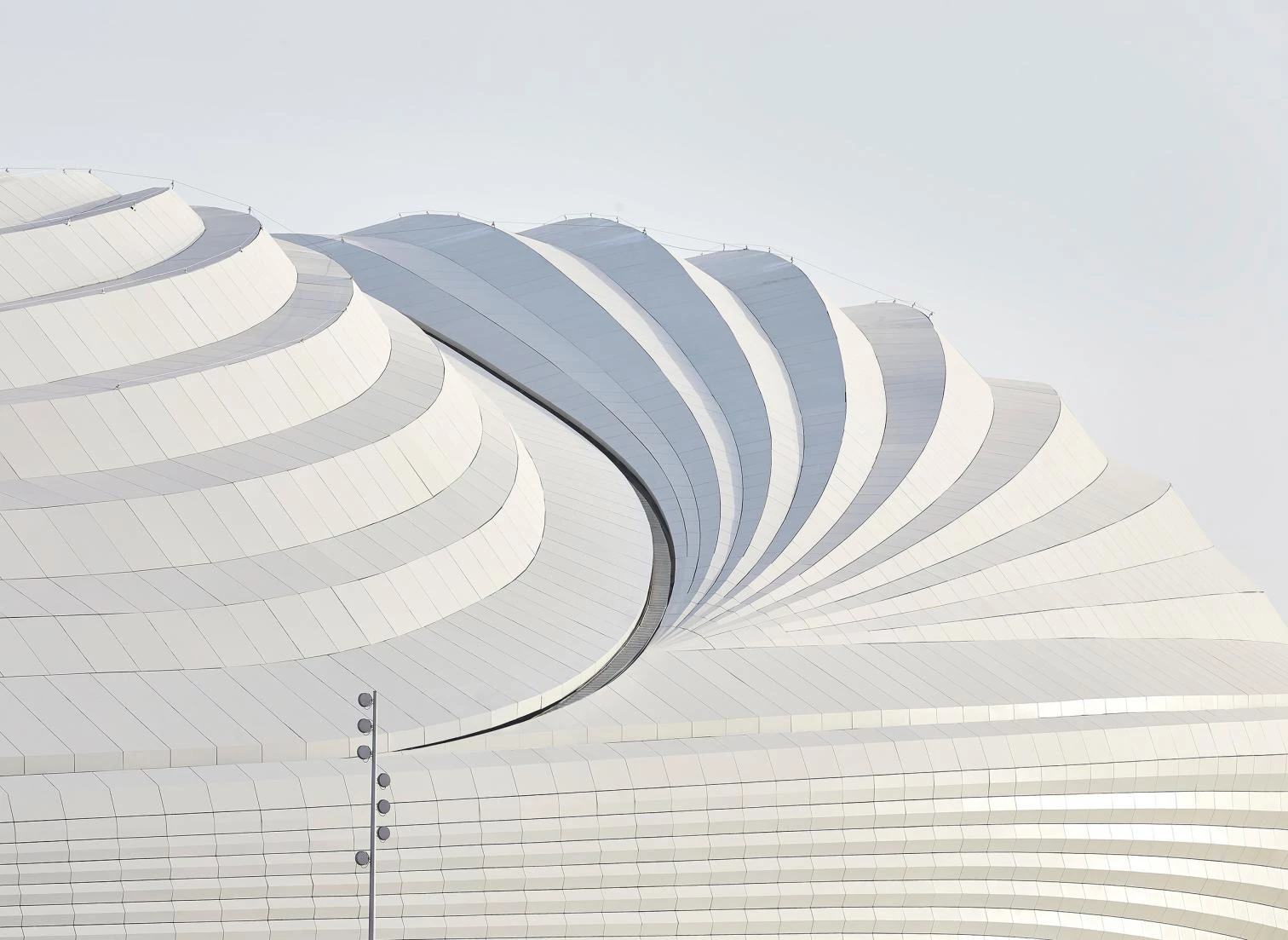
One of the first to be completed for the 2022 World Cup in the coastal city of Al Wakrah, Qatar, Al Janoub Stadium represents a curvilinear postmodernist and neo-futurist design. A visually stunning and functional design is enhanced by the stadium’s sleek, white exterior. Its traditional cultural elements are inspired by the sails of dhows—the traditional Qatari wooden boats used for fishing and pearl diving. This abstraction becomes an iconic feature, with the stadium’s roof beam structure echoing the internal structure of a dhow’s hull.
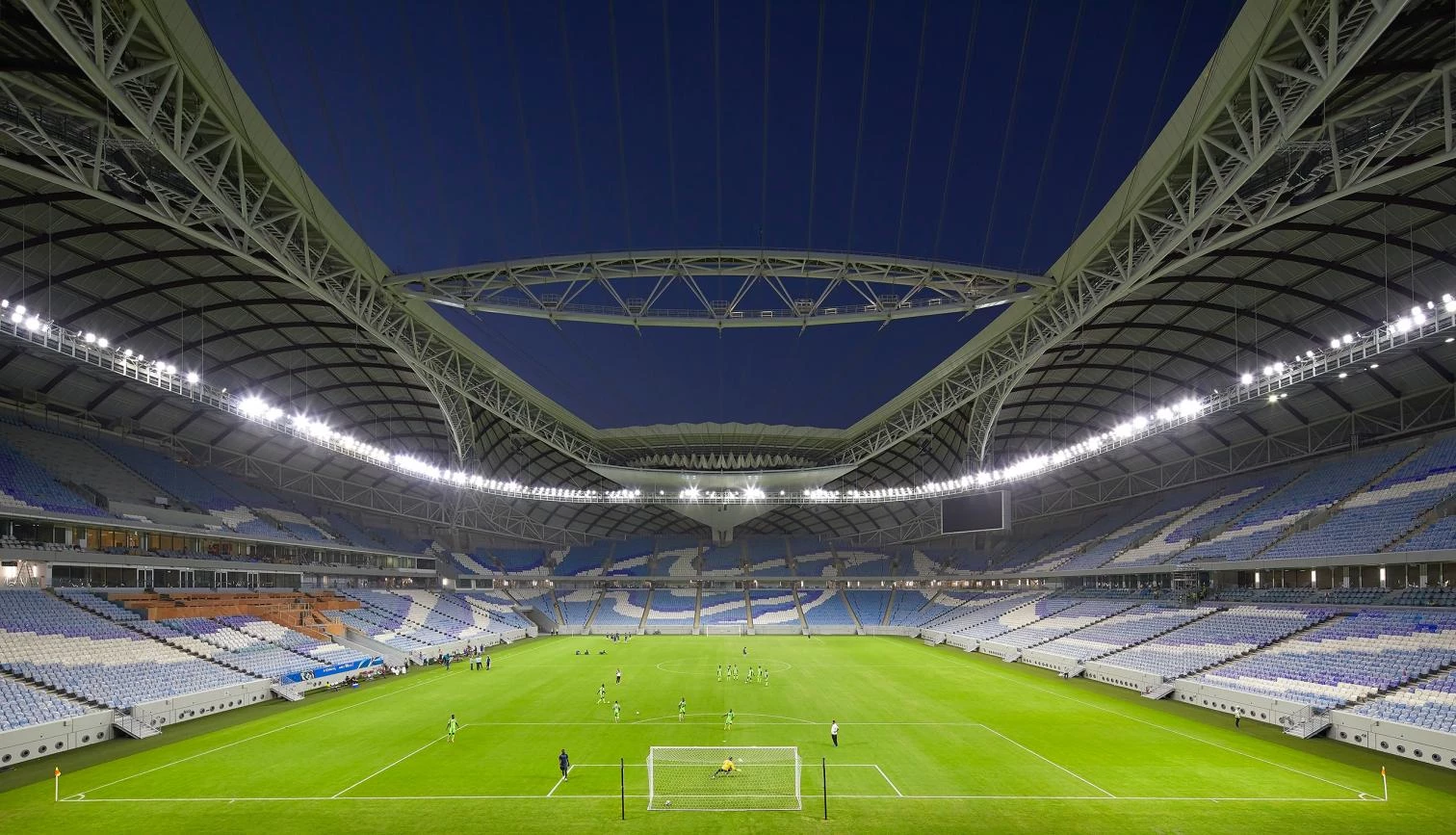
The 40,000-seat stadium integrates an advanced cooling system that circulates conditioned air through unique openings beneath the seats, maintaining spectator areas at 18°C and the field of play at 20°C. A massive 10,800-square-meter retractable roof, made from pleated PVC/PES membrane fabric, provides shade and transforms the stadium into a closed multi-purpose arena within 30 minutes.
5. The Opus, Dubai
Location: Business Bay, Dubai, UAE
Completion Year: 2020
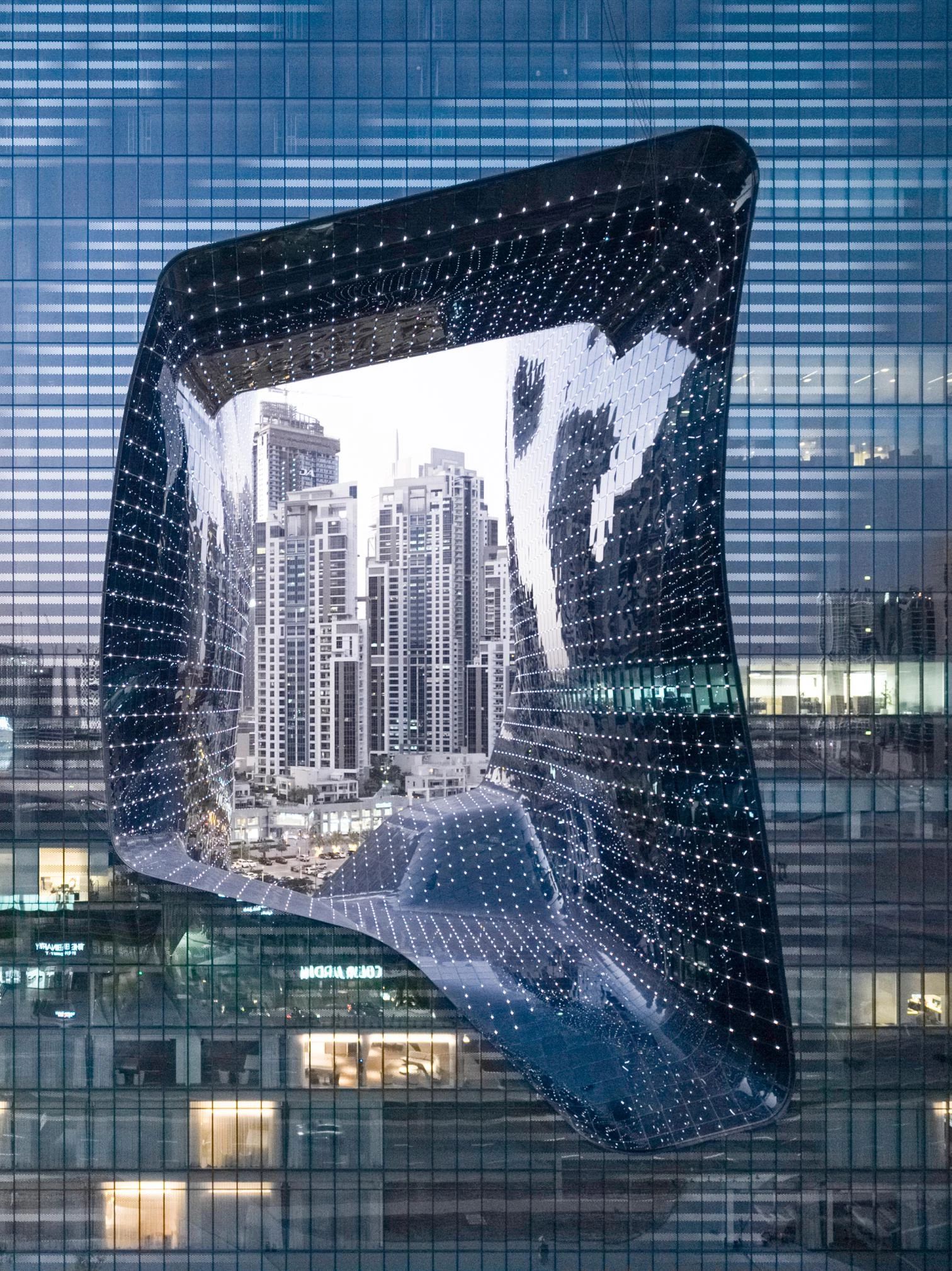
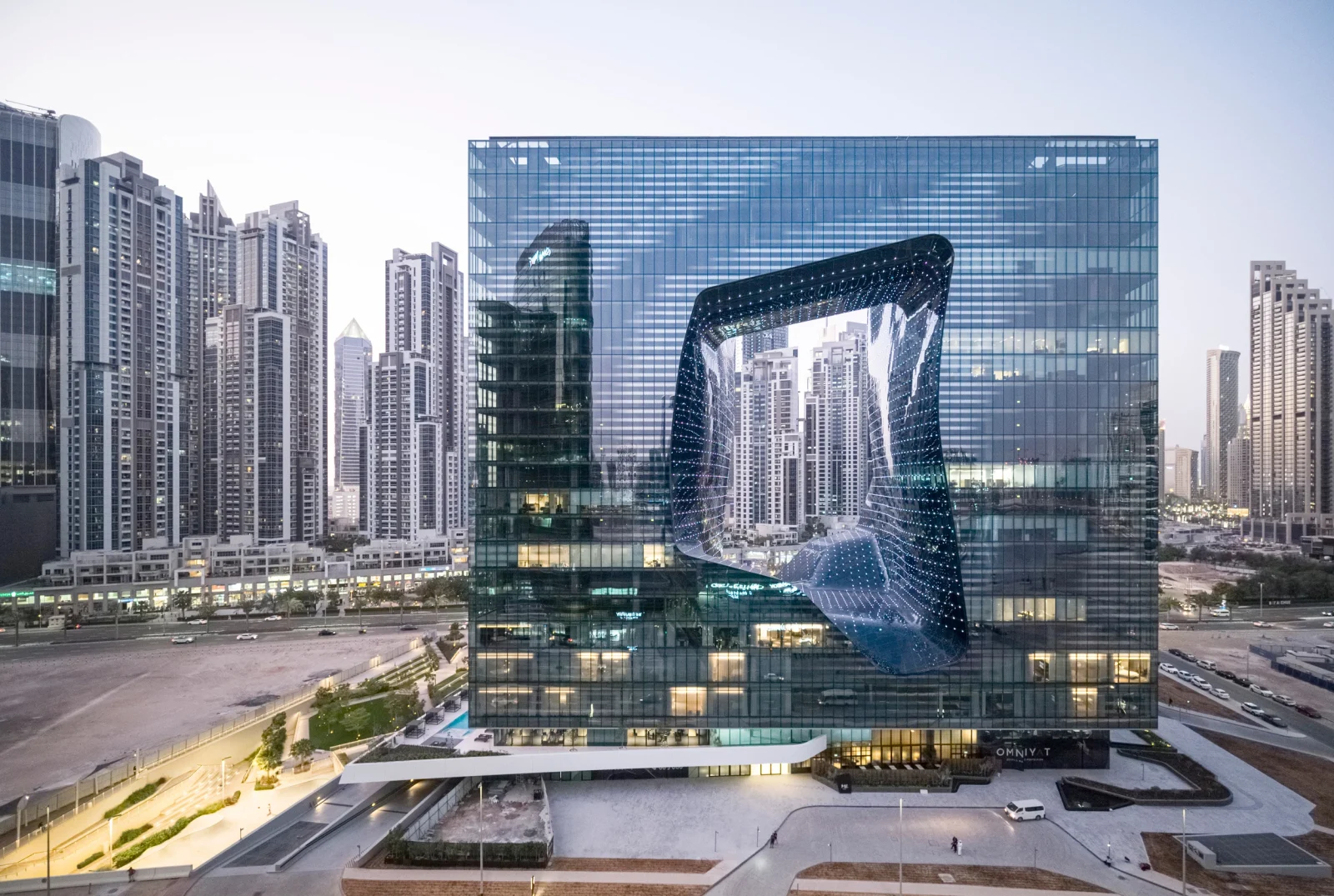
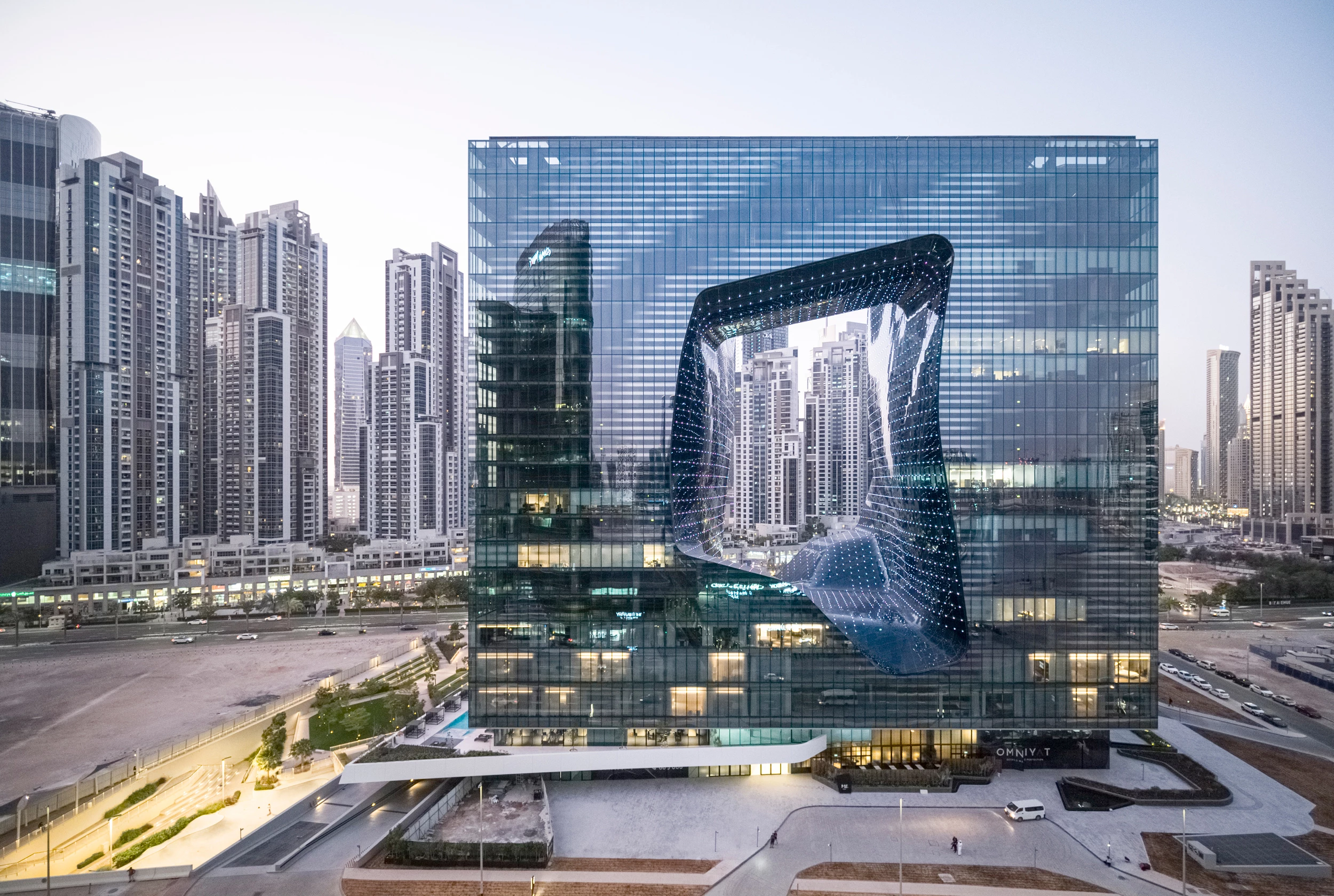
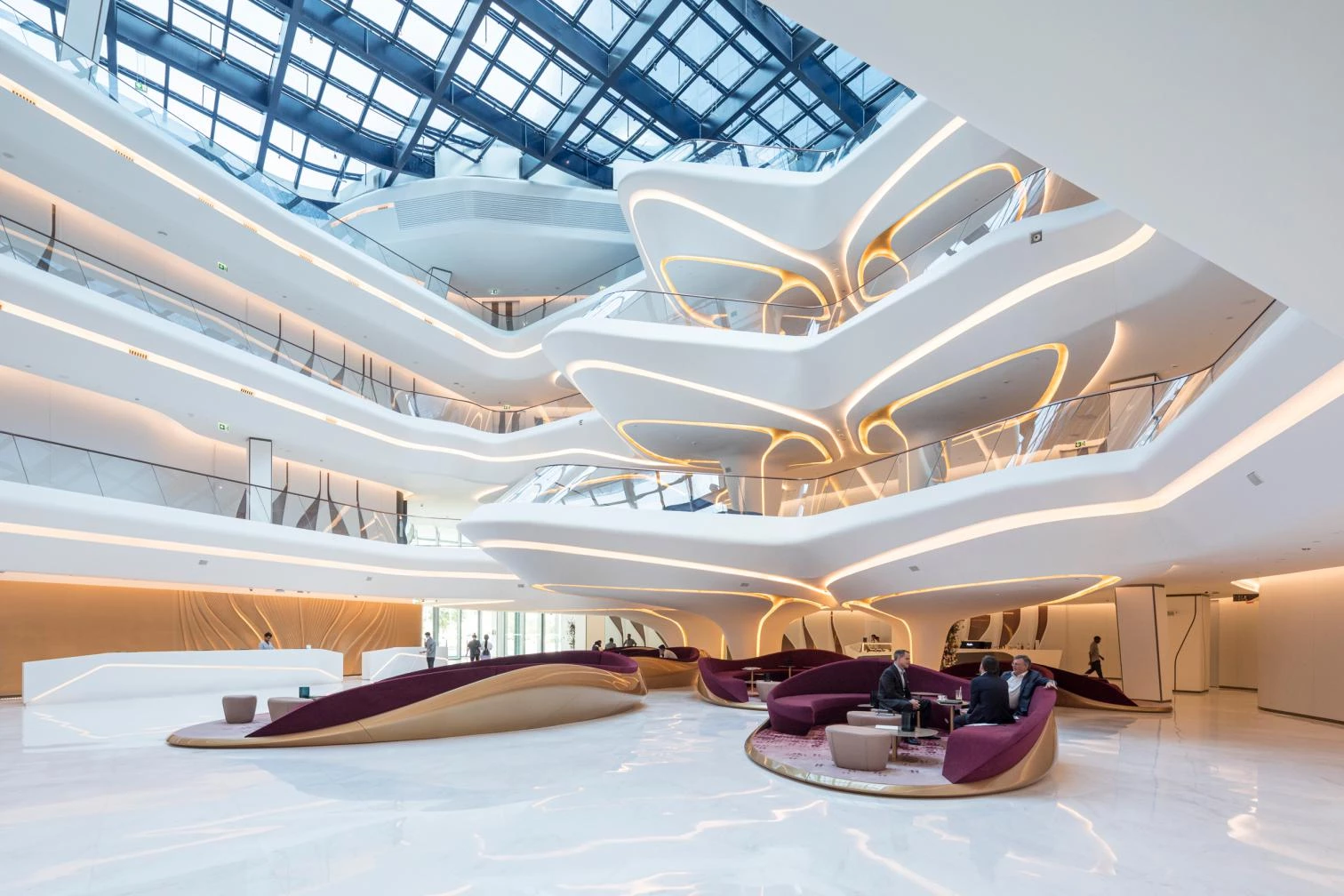
Located in a key area of Dubai known for its modern developments and proximity to Downtown Dubai, The Opus, a mixed-use development conceived as a single elemental glass cube, exemplifies the balance between solid and void, opaque and transparent, and interior and exterior. The building is renowned for its bold and futuristic design, which incorporates both residential and commercial spaces. Structurally, two separate towers are connected at the base by a four-story atrium and 71 meters above the ground by an asymmetric, three-storey steelwork bridge spanning 38 meters in width.
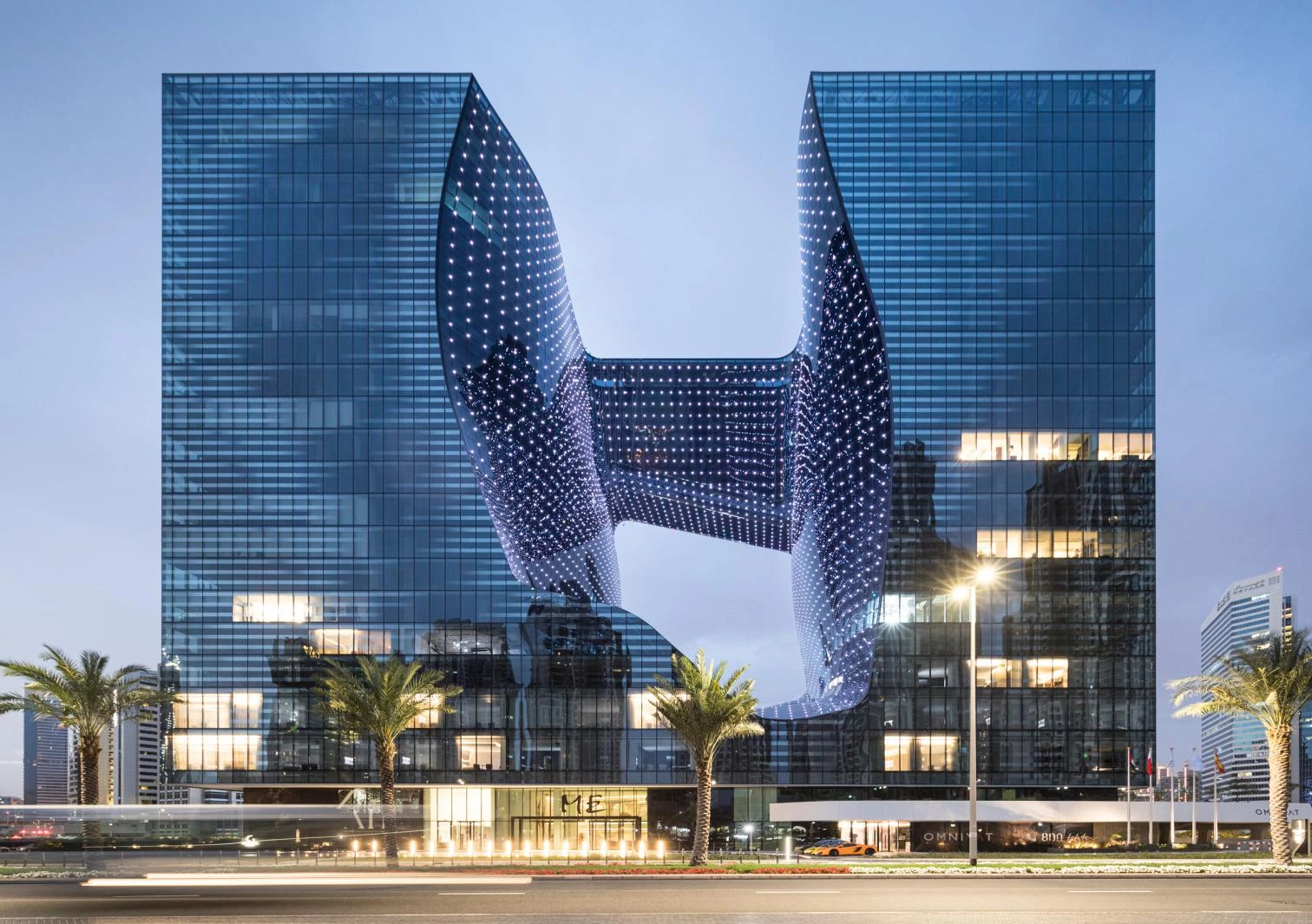
The challenging aspect of the design was executing a void in the center that creates a free-form, dramatic, sculptural appearance. The double-glazed insulating facade is crafted with a mirrored frit pattern to reduce solar gain, dissolving the volume through continuous reflections. Using parametric 3D modeling, the design made it possible to shape 6,000 meters of steel and aluminum tubing into 2,500 unique segments, each contributing to the fluidity of the space.
6. North Souks Department Store
Location: Beirut Central District, Lebanon
Completion: 2021
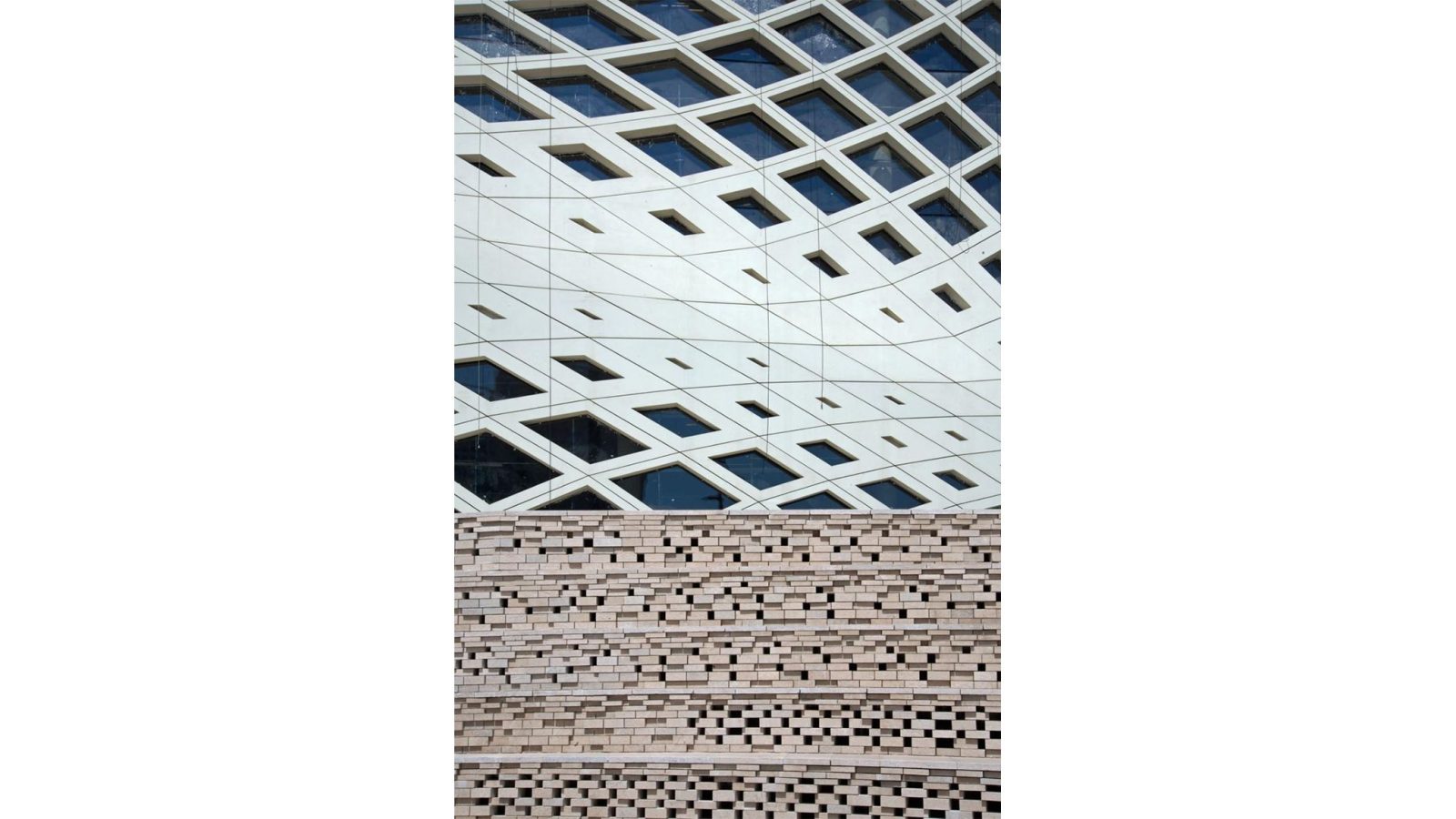
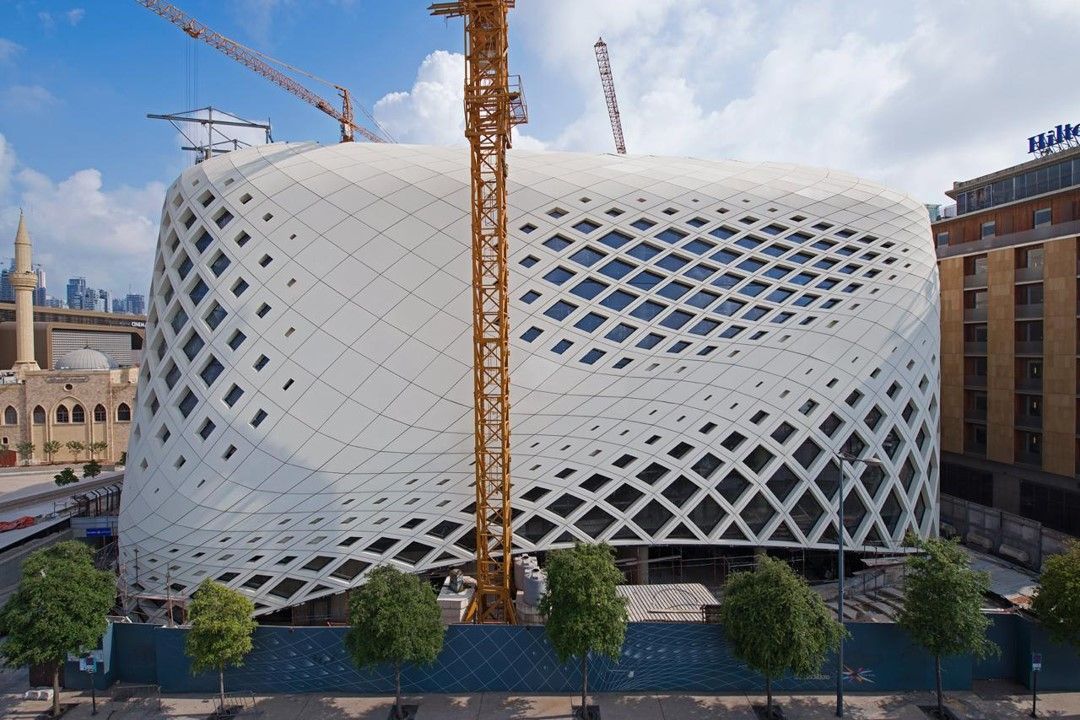
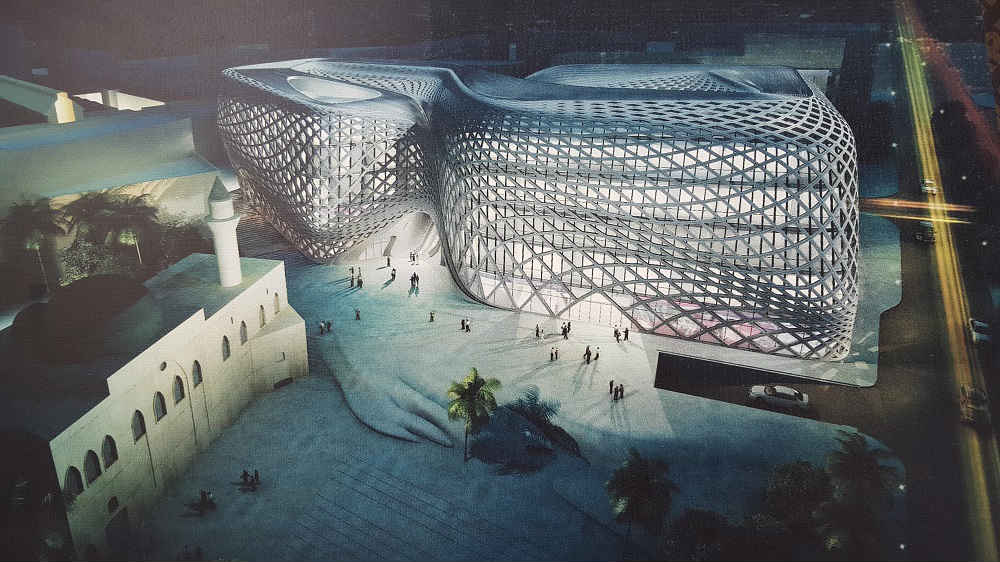
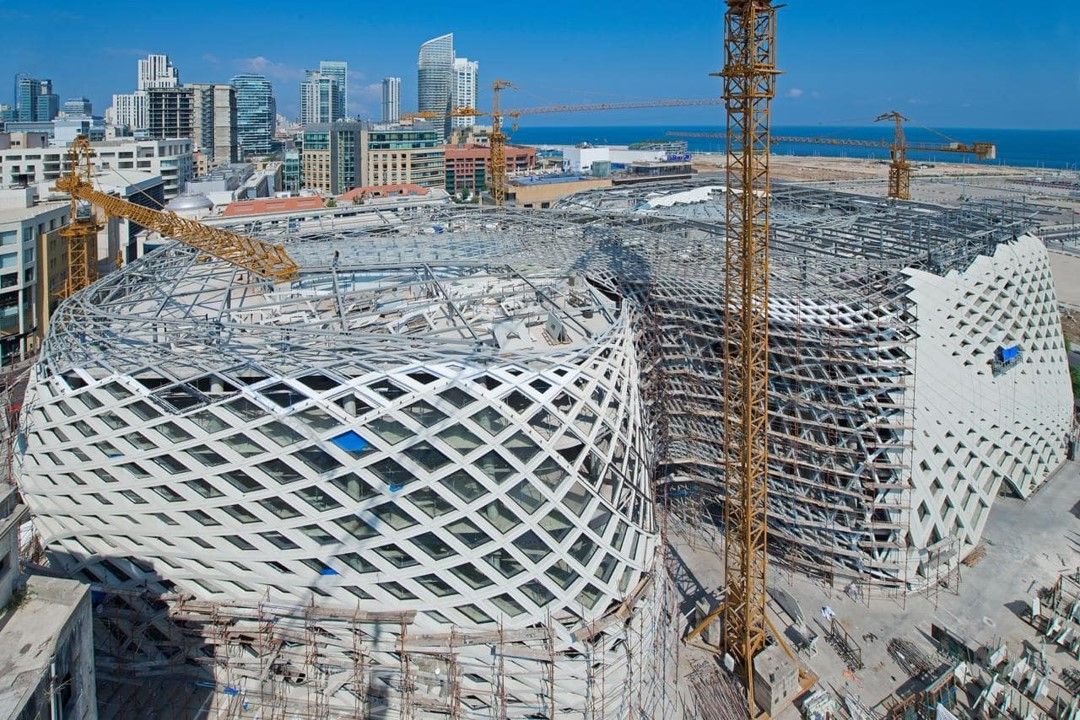
The North Souks department store forms part of the larger reconstruction project, which aimed to blend modern commercial facilities with the preserved ancient street grid and archaeological remains of the historic market. Viewed from above, the structure takes the shape of an infinity sign, blurring the building with the piazza.
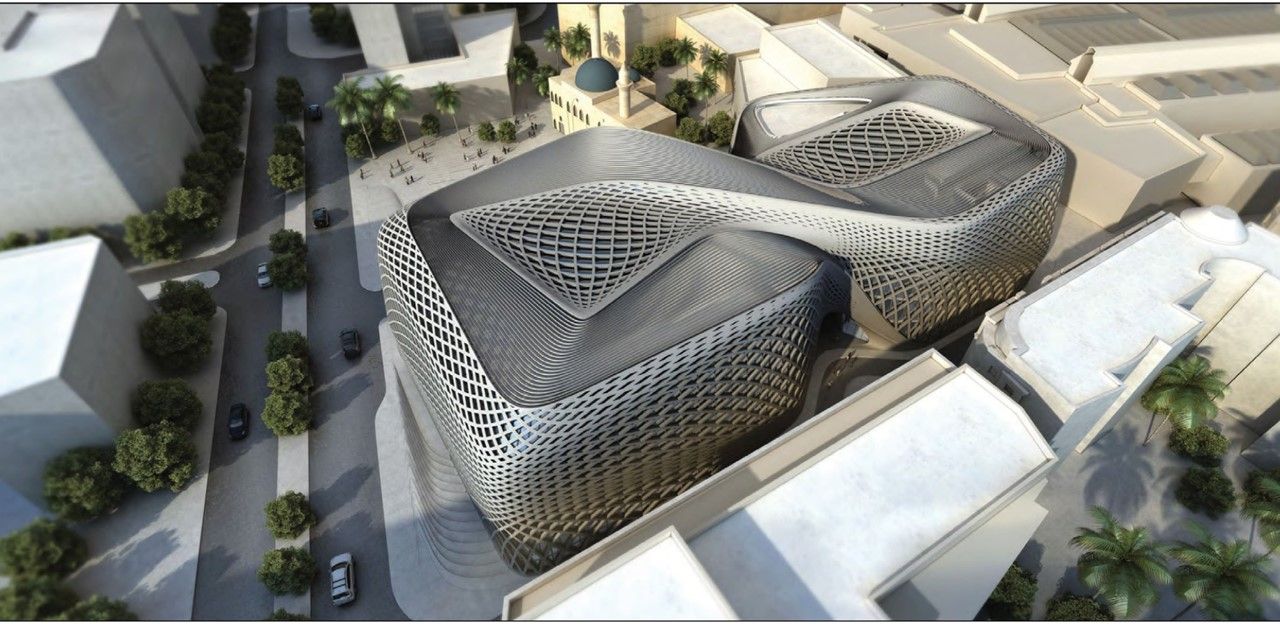
The five-story structure features an asymmetrical, mesh-like pattern created by custom precast concrete elements, developed to enhance fluid and organic design. Inside, a large atrium maximizes natural light and improves circulation, reflecting the bright and airy aesthetic typical of the ZHA approach.
7. BEEAH Headquarters
Located: Sharjah, UAE
Completion Year: 2022
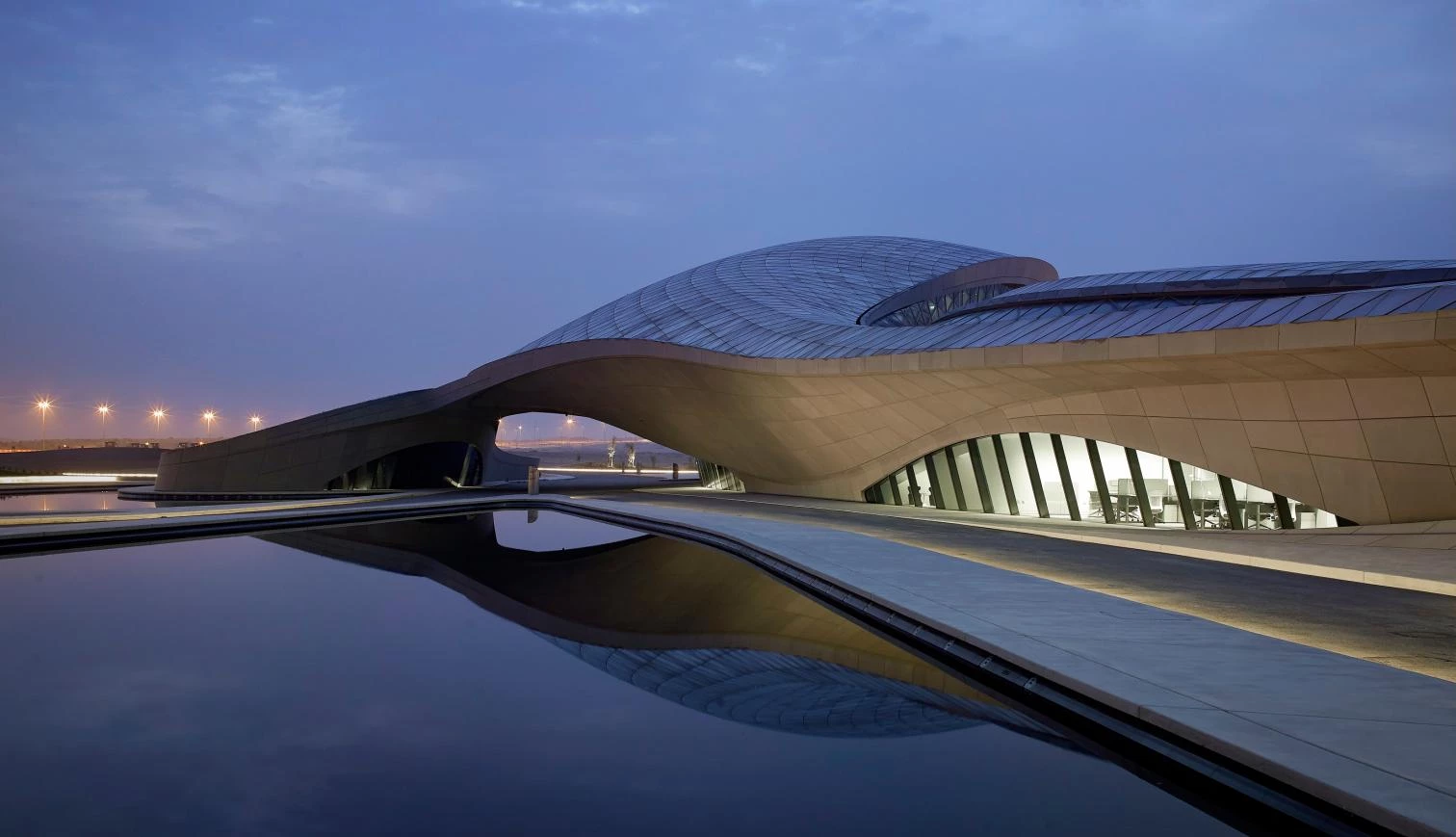
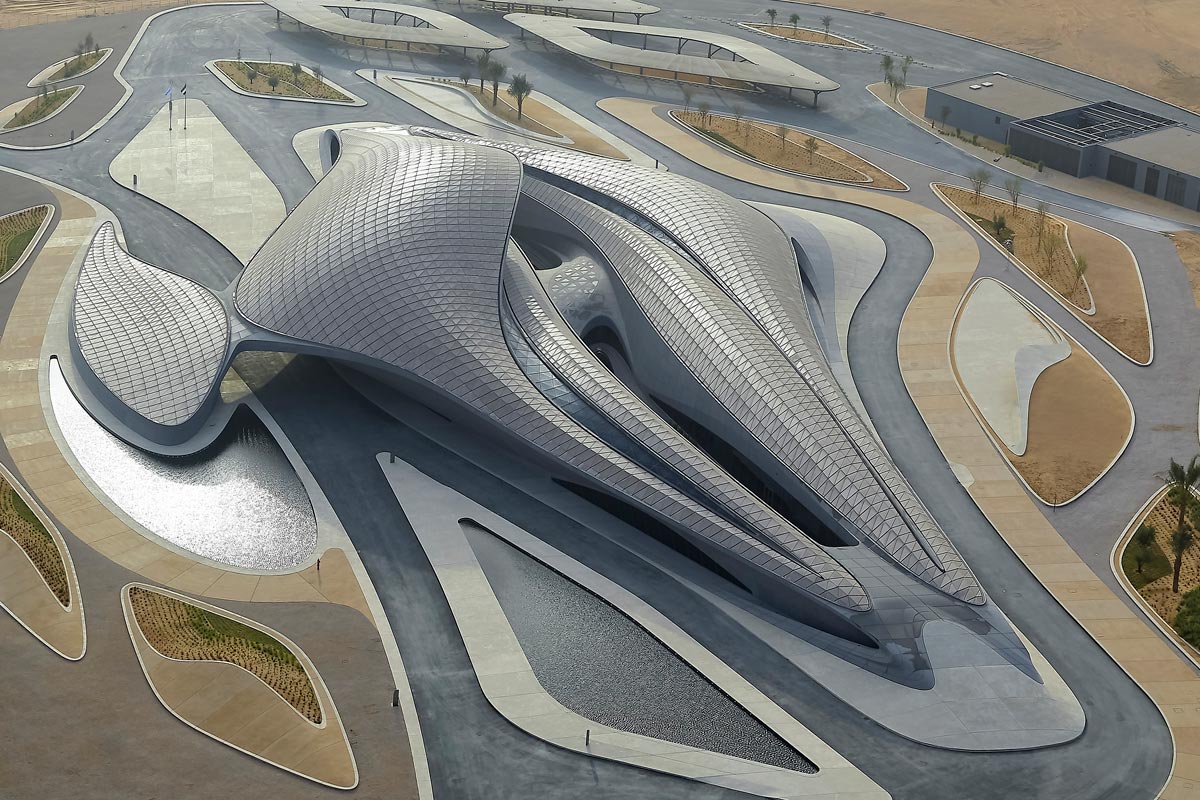
Designed by Zaha Hadid Architects for the environmental management firm BEEAH Group, which focuses on sustainability, waste management, and creating a greener future. Spanning 9,000 square meters, the biomorphic structure represents a futuristic workplace, designed with sustainable principles and digitalization in mind. The design of the headquarters mimics the dynamic forces of nature, with a series of sweeping curves that offer both movement and flexibility.
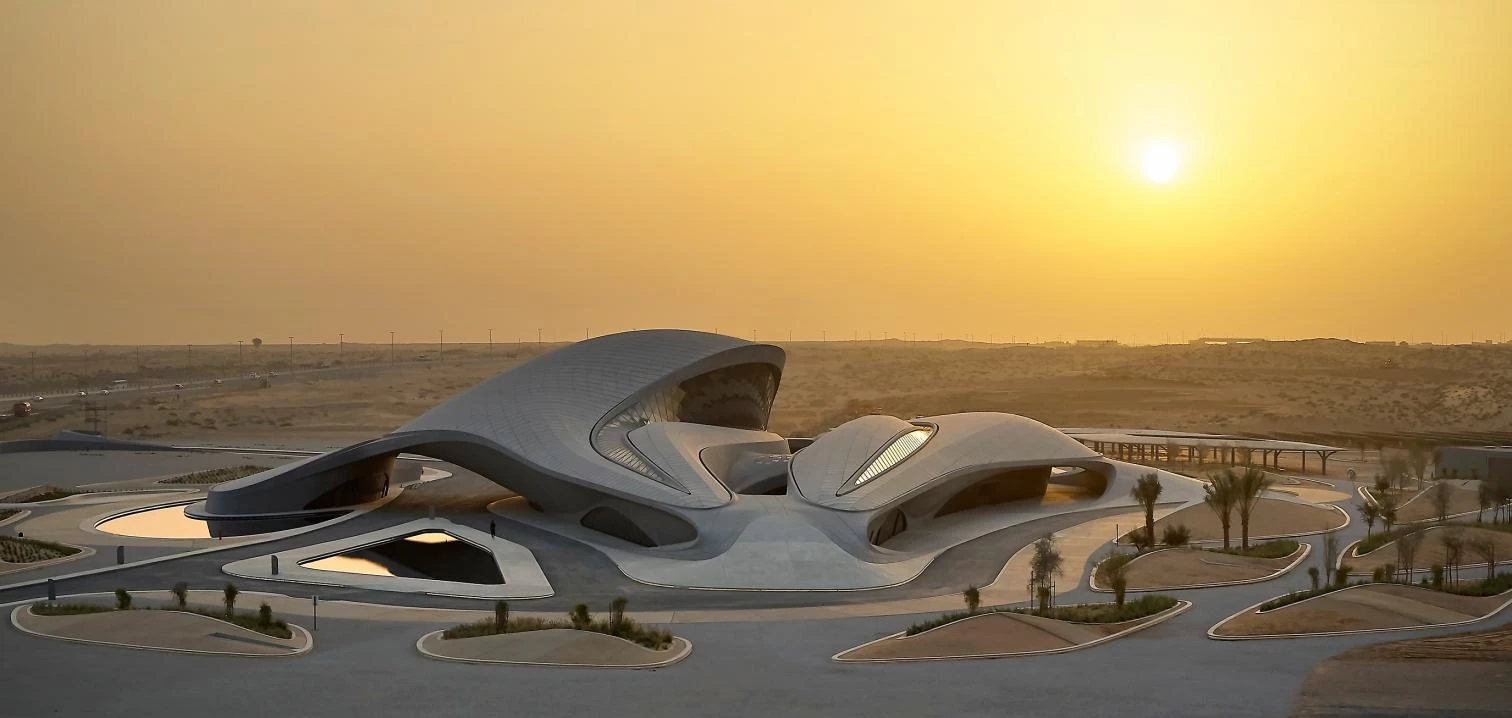
Achieving Net-Zero Emissions, LEED Platinum certification, and a BREEAM Outstanding Rating, the building’s architecture forms interconnected dunes oriented to optimize local climatic conditions, embedding the structure within the desert landscape. Other notable strategies include generating electricity through the building’s own solar panels, recycling grey water on-site, and using smart building technologies to adjust lighting and temperature dynamically.
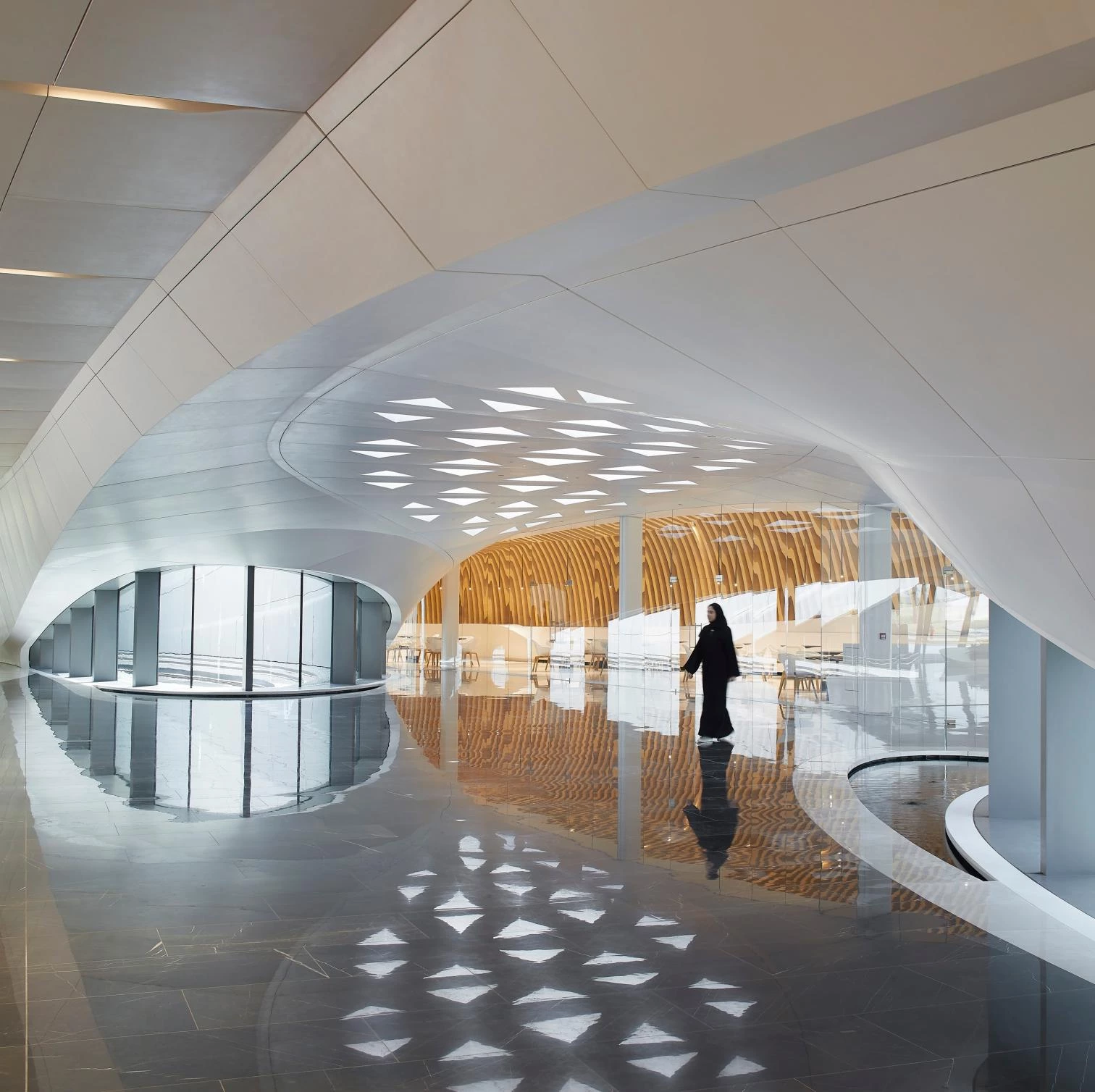
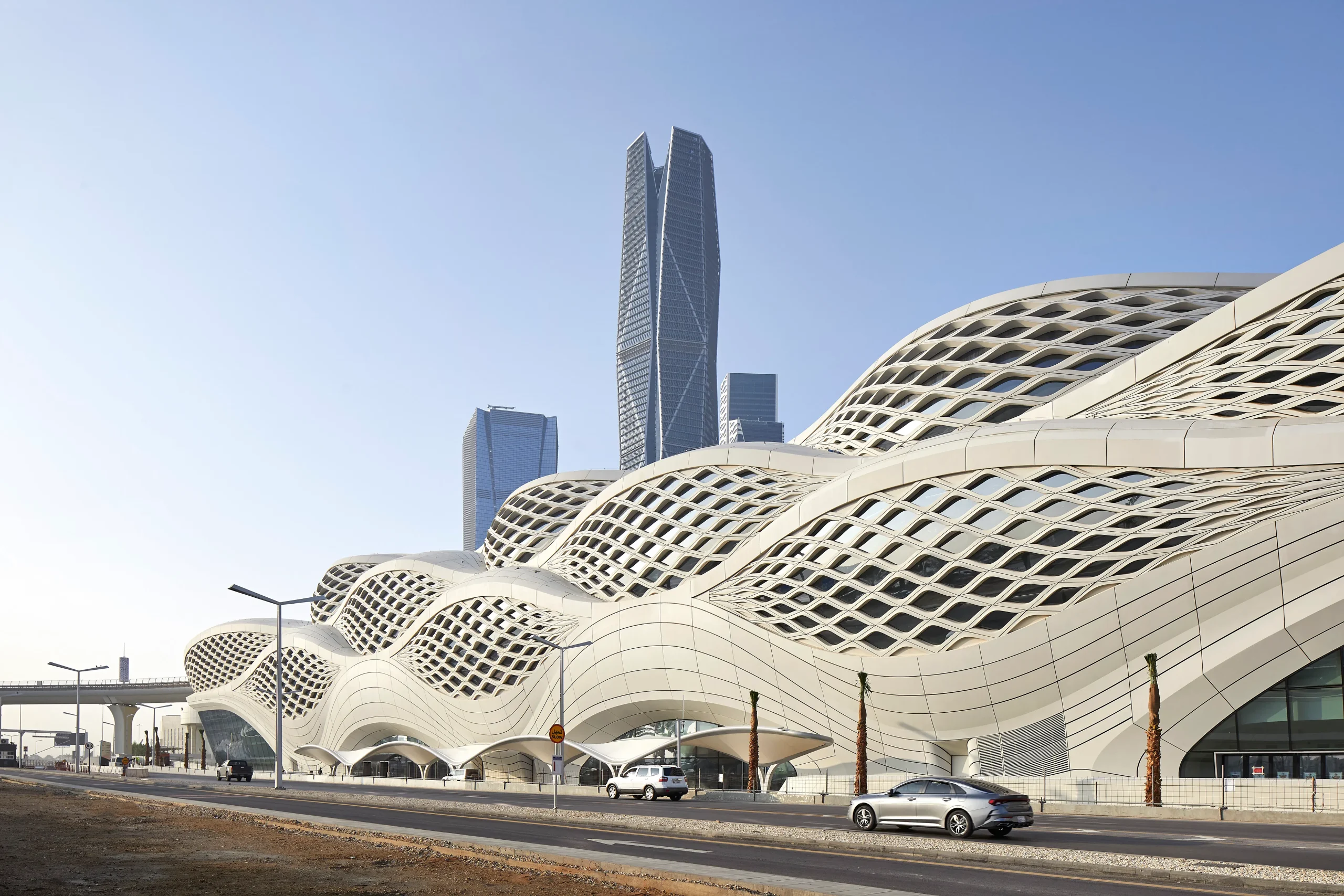
8. King Abdullah Financial District (KAFD) Metro Station
Location: Riyadh, Saudi Arabia
Completion Year: 2024
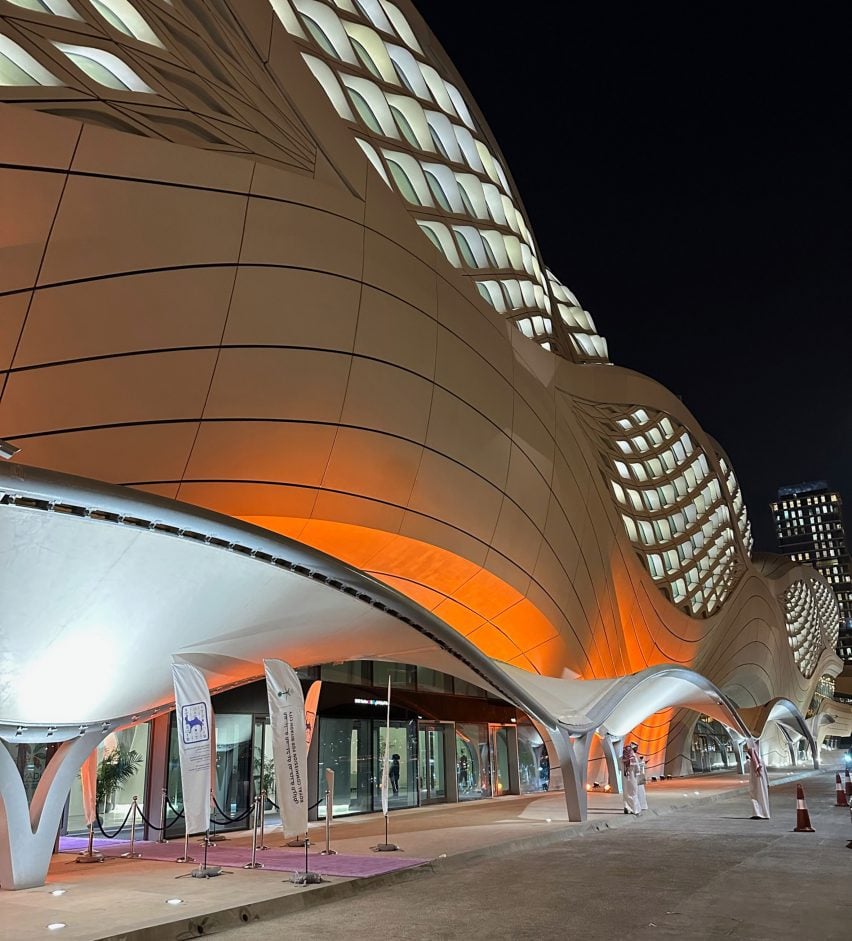
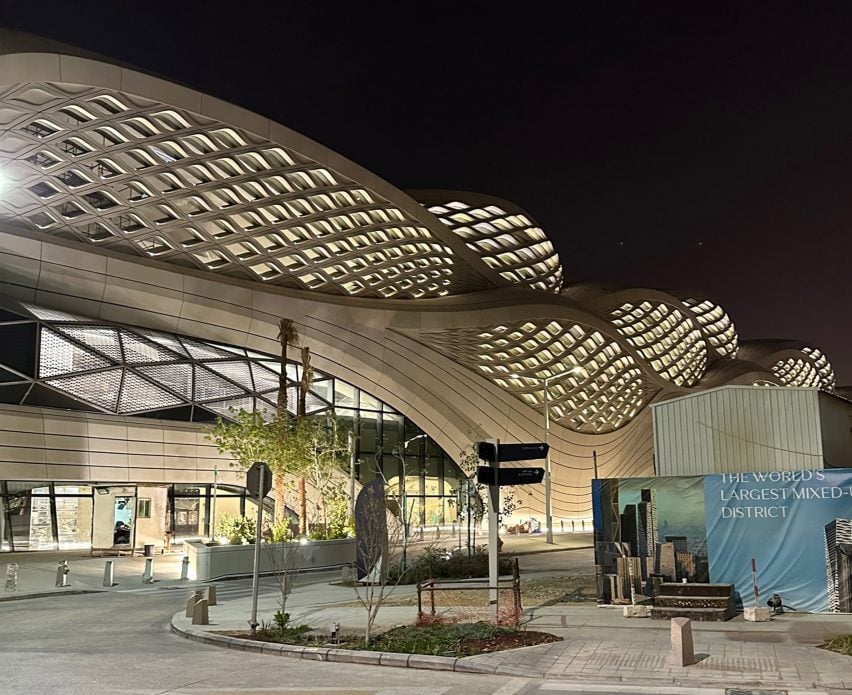
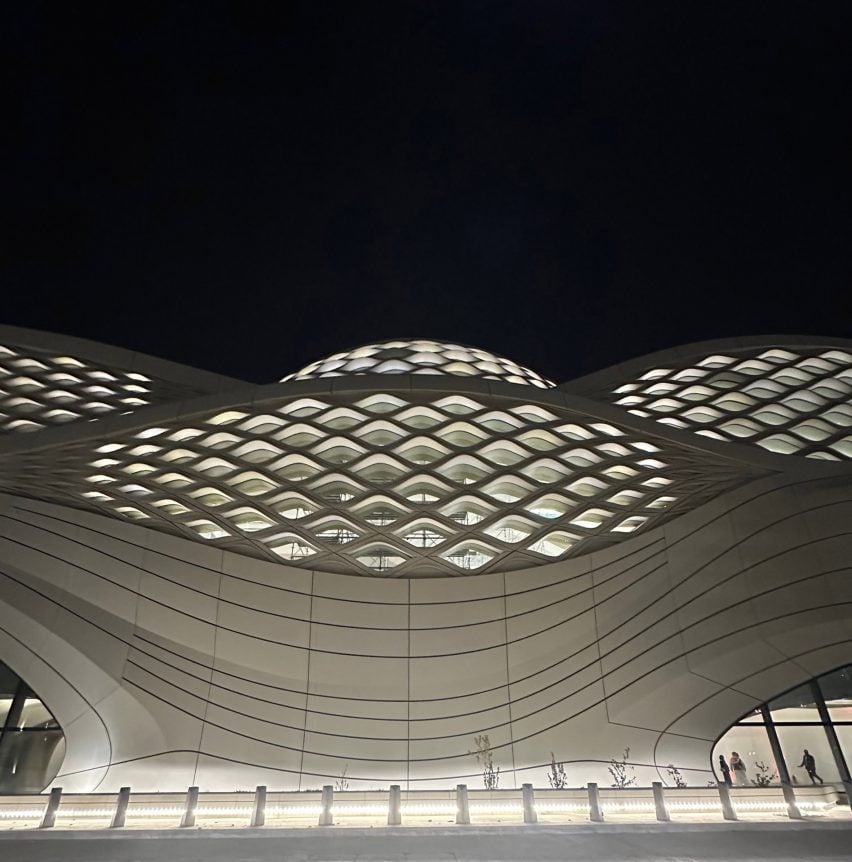
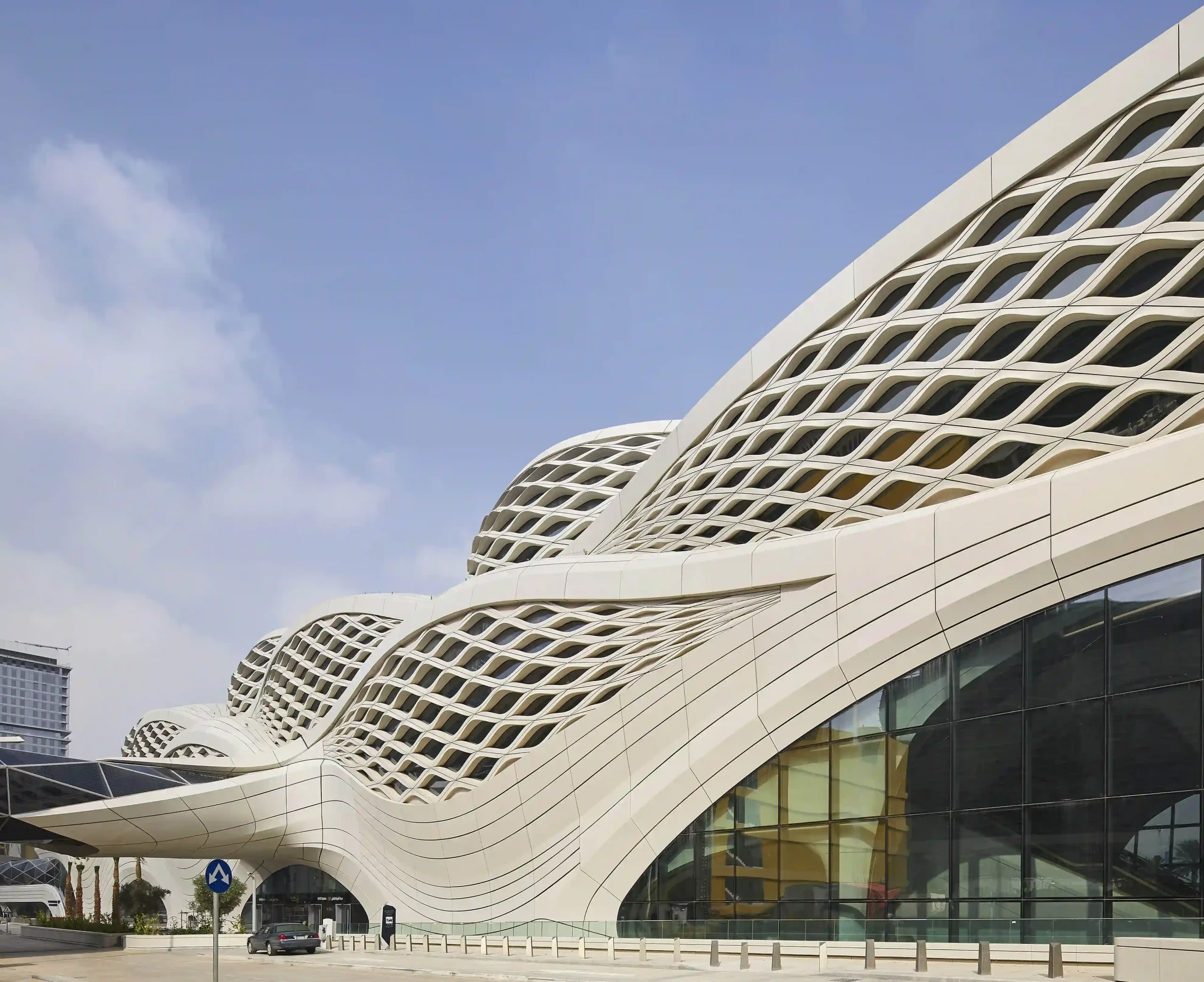
Connecting various districts, the King Abdullah Financial District (KAFD) Metro Station is part of the master-planned financial district developed as a key component of Saudi Arabia’s economic diversification efforts under Vision 2030. A 176-kilometer metro network features six lines and 85 stations, connecting various business districts and cultural landmarks in the Saudi capital.
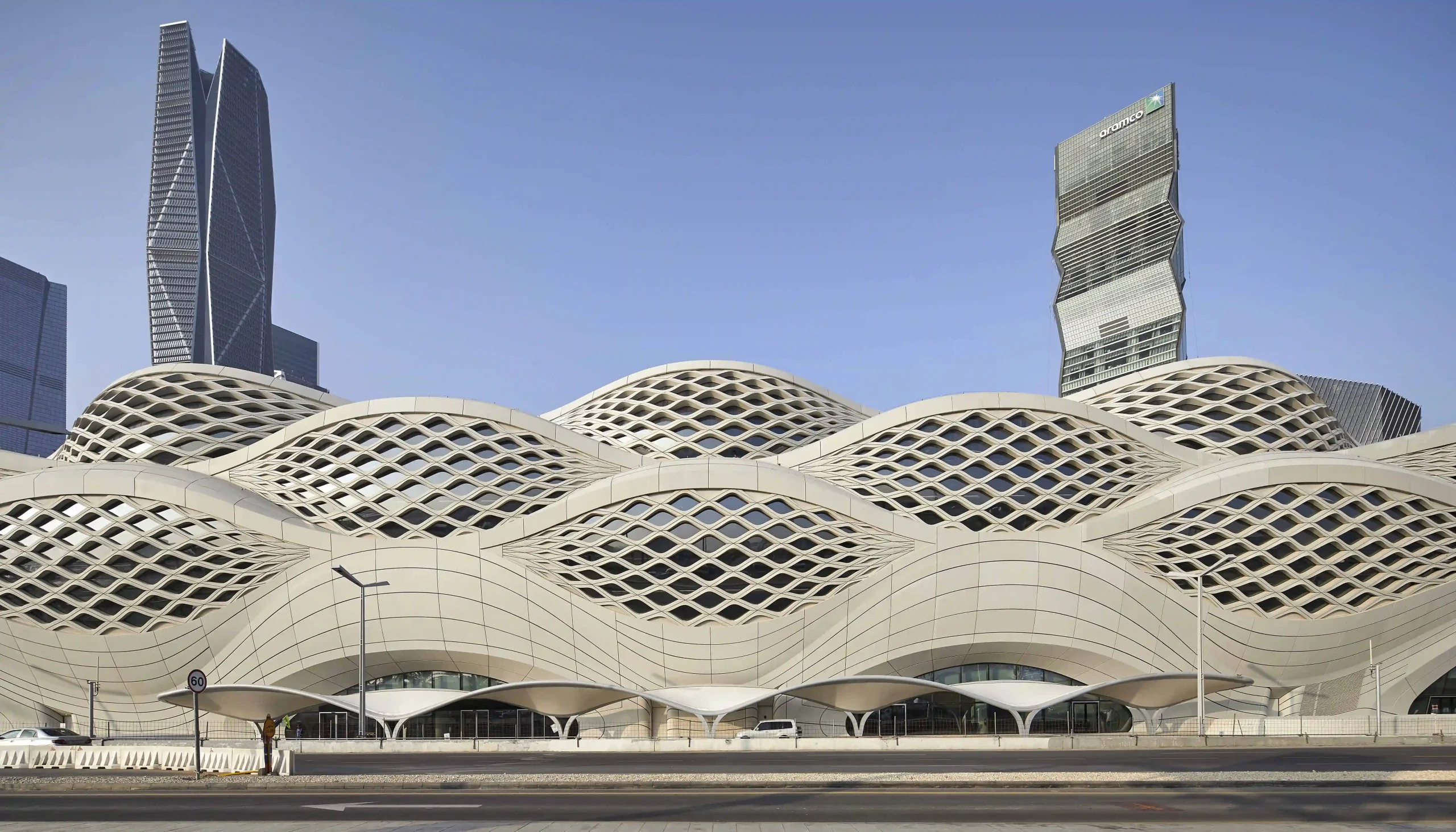
ZHA envisioned the KAFD metro station with a fluid geometry that utilizes elements crafted through repetition, symmetry, and scale variation to manage the kinetic flows of high-volume pedestrian traffic. Its fluid design enhances structural efficiency and environmental performance, while simplifying the construction process, reflecting an advanced computational approach.
9. The Central Bank of Iraq (CBI) Tower
Location: Baghdad
Expected Completion: 2025
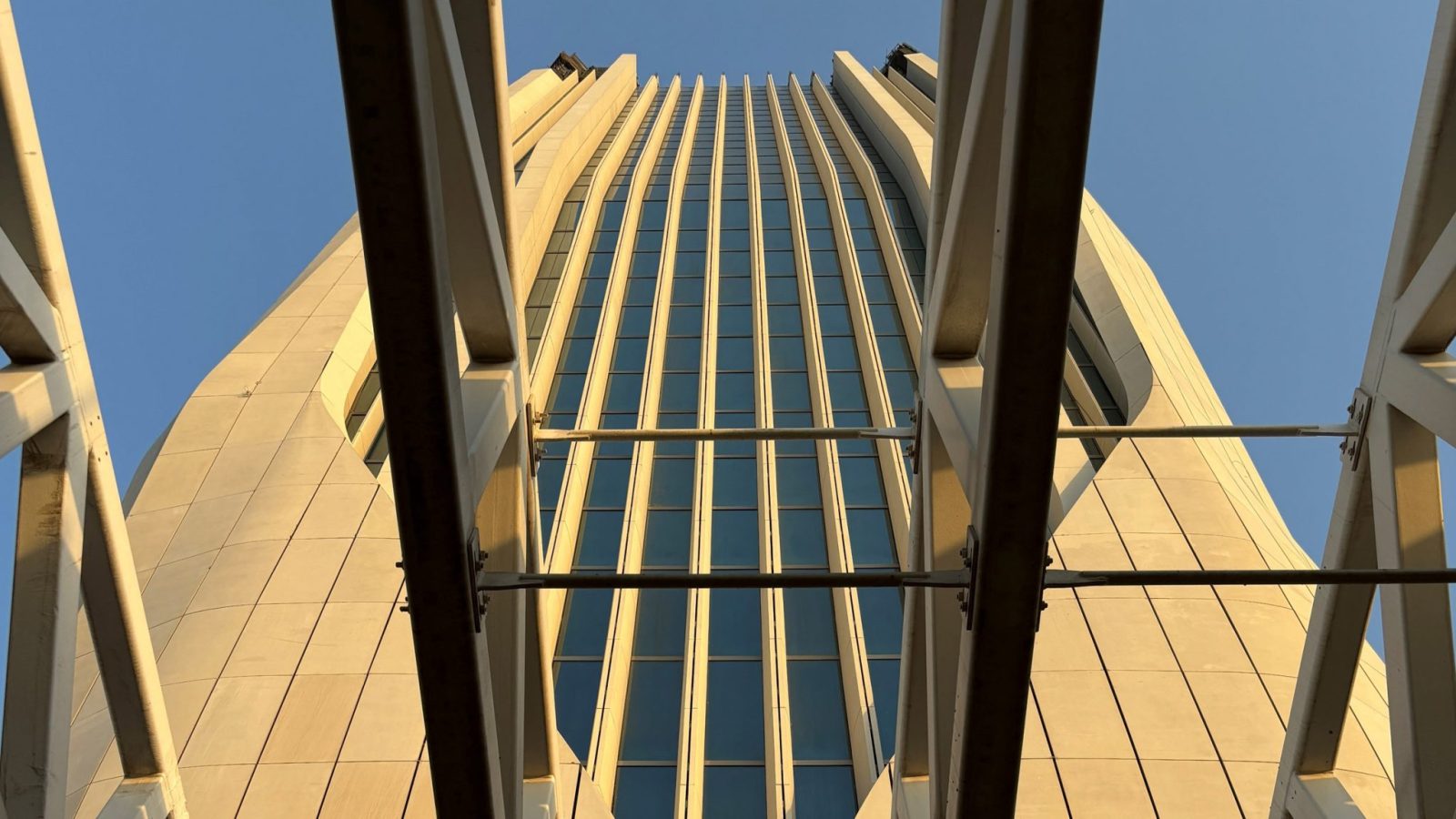
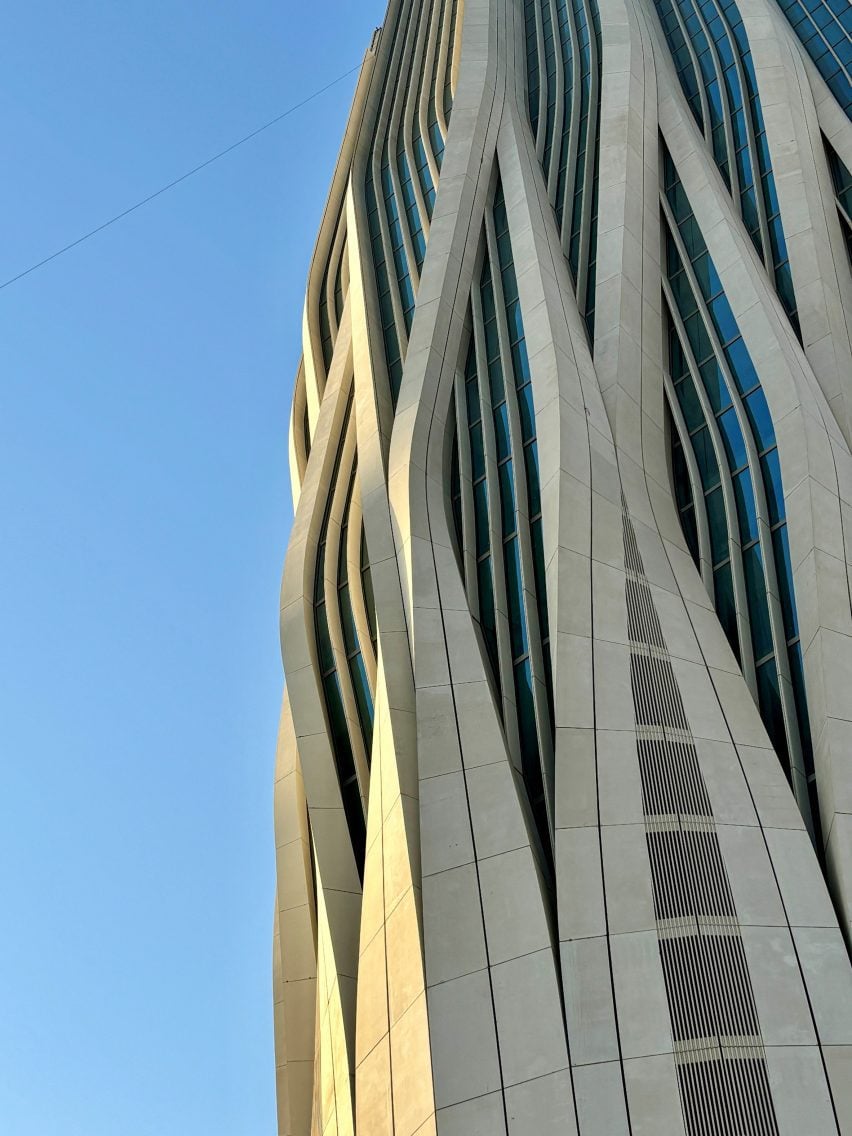
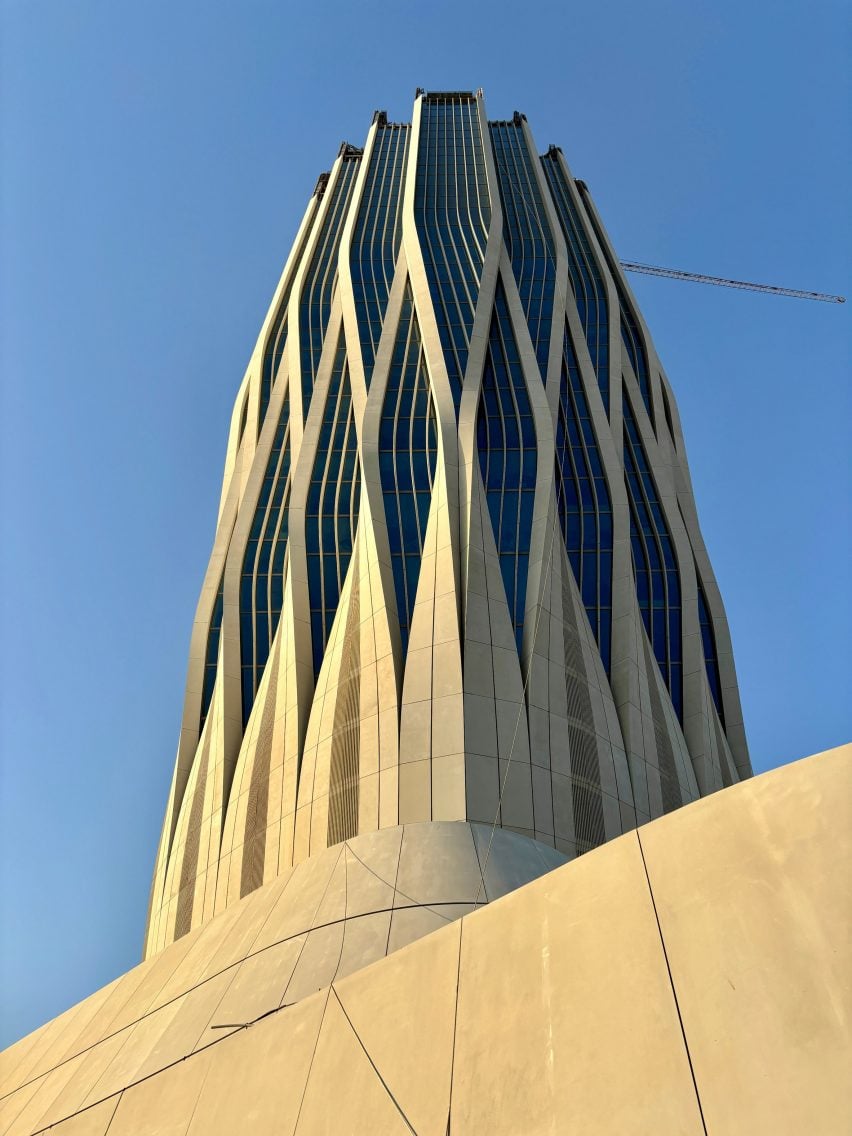
Nearly complete, the Central Bank of Iraq (CBI) Tower is one of the significant high-rise projects in the Middle East, commissioned by the Iraqi government in 2010 to design its new headquarters. A unique twisting exoskeleton frame defines the structural form. The reinforced concrete structure, with a narrow base, widens in the middle and tapers at the top, adding aesthetic value to the building’s functionality. It includes a main lobby, a VIP entrance, a visitor entrance, a cash management area, security and data centers, museums, personnel facilities, and an energy center.
10. Grand Theatre of Rabat
Location: Rabat, Morocco
Expected Completion: 2026
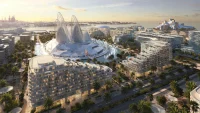
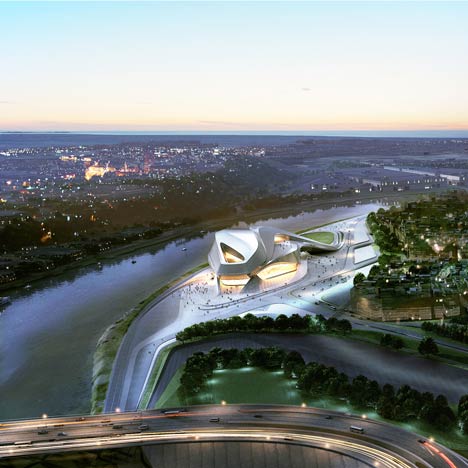
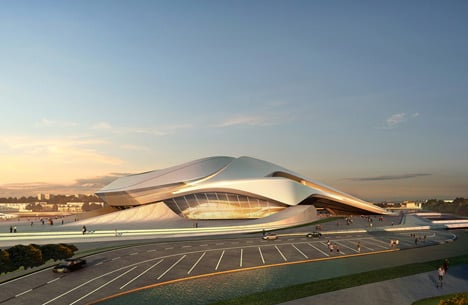
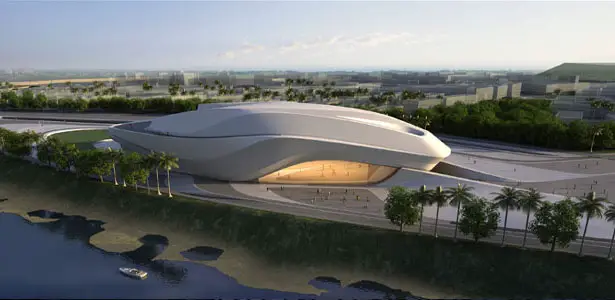
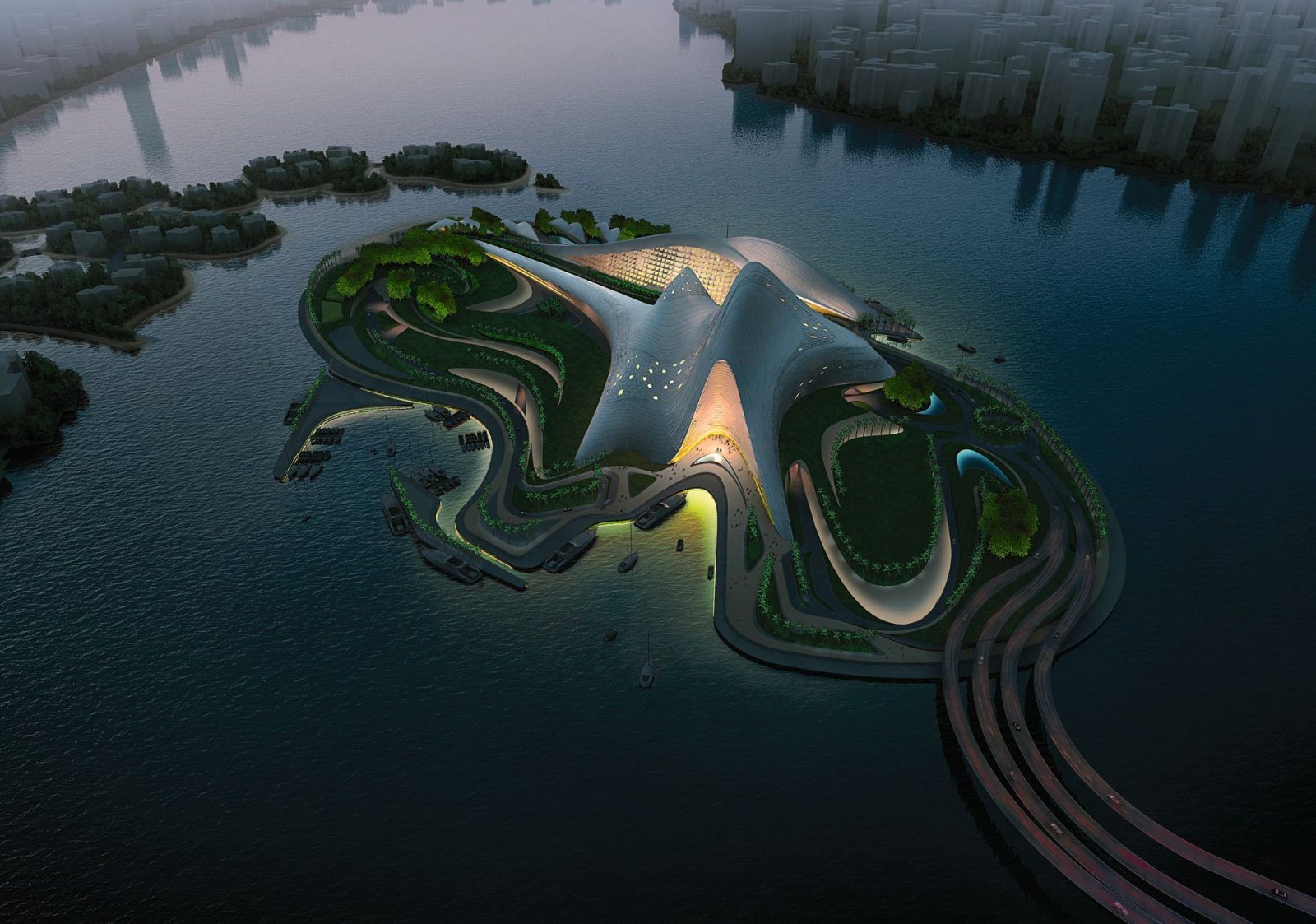
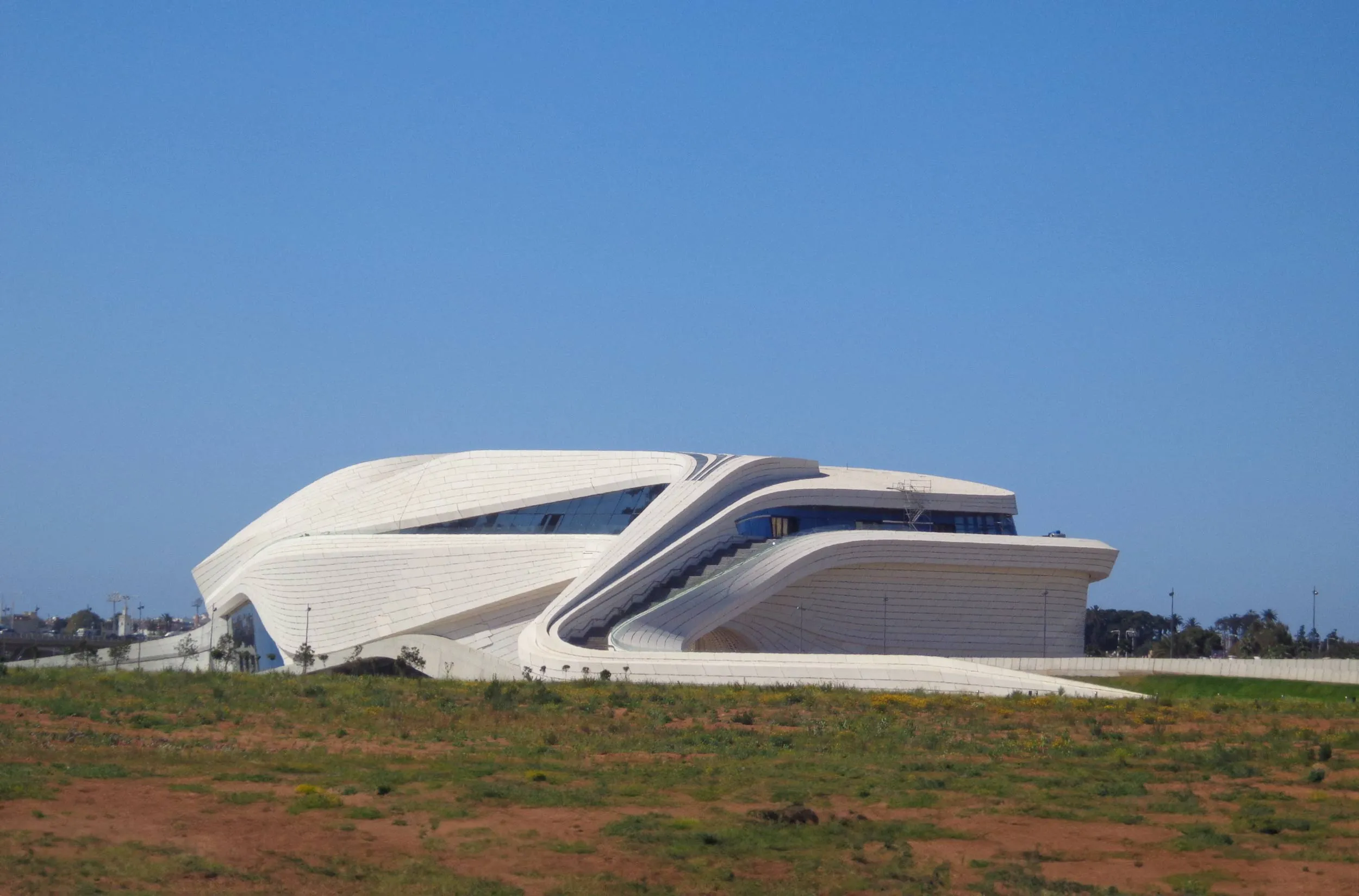
The Grand Theatre of Rabat is one of the largest theaters in Africa and the Middle East, symbolizing Morocco’s commitment to the arts, modernity, and its vision of becoming a cultural leader. Part of the Rabat City Center Development area, it is located near the city’s waterfront and in proximity to other key landmarks, including the Mohammed VI Tower and the Royal Palace.
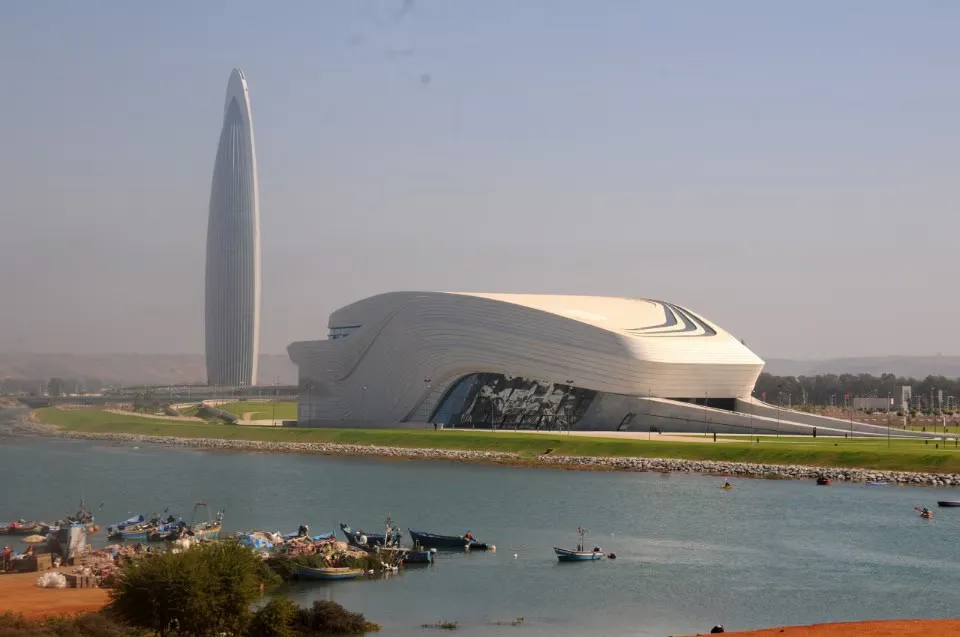
The architecture of the new 110-hectare mixed-use district features a strong visual impact, with astonishing aerodynamic and curving forms. Its fluid geometry was inspired by the winding course of the nearby river and the aesthetic tradition of Arabic calligraphy. Elements are also drawn from the broader tradition of Islamic architecture. A 27,000-square-meter structure includes main venues housing a 1,800-seat interior theater, a massive 7,000-seat open-air amphitheater, creative studios, rehearsal spaces, and a restaurant.
Explore Courses
.jpg "Ondrej Chybik - Rethinking Architecture")