



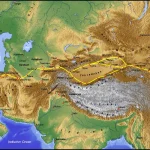
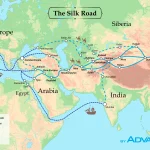
Long before globalization connected continents through air routes and digital networks, the Silk Route linked civilizations through a web of overland trade corridors stretching from China to the Mediterranean. More than a single road, the Silk Route was a network of paths spanning deserts, mountains, fertile valleys, and coastal cities across Eurasia. Along these routes traveled silk, spices, paper, horses, ceramics, and precious stones. Religions, artistic traditions, technologies, and architectural ideas were also exchanged.
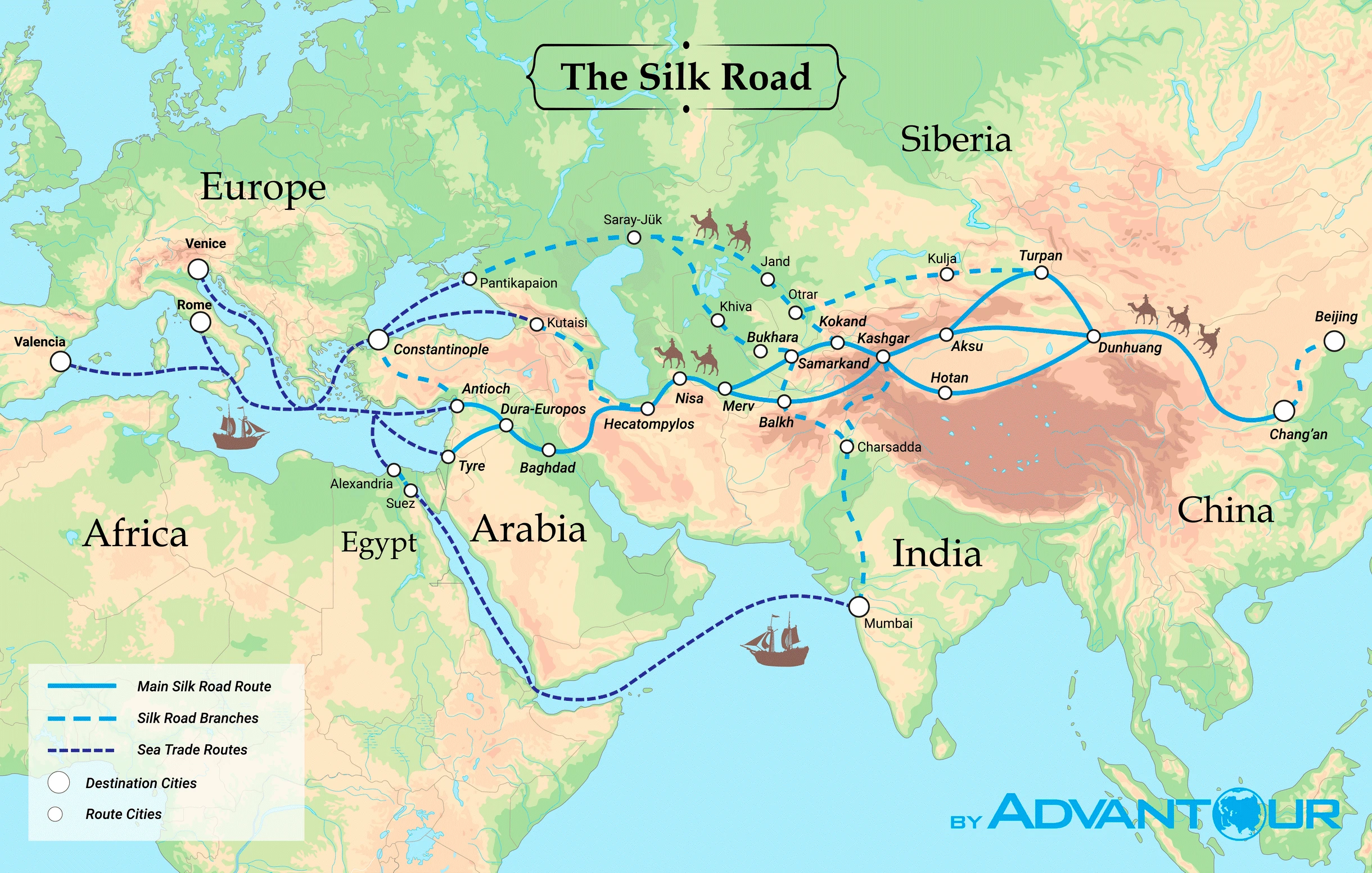
The caravans moved westward from imperial China through Central Asia, Persia, the Indian subcontinent, and eventually toward Europe. In response, architecture evolved with them, and the cities along the Silk Route were shaped as much by climate and geography as by commerce itself. The architecture of the Silk Route was therefore never defined by a single style.
Eastern Gateways: Imperial Capitals and Desert Frontiers
The eastern edge of the Silk Route began in the great imperial capitals of China, where organized urban planning and political power shaped some of the ancient world’s largest cities.
At Xi’an, historically known as Chang’an, broad avenues, palace compounds, defensive walls, and planned markets reflected Chinese urbanism during the Han and Tang dynasties. As the starting point of the overland Silk Route, the city became a gateway through which Chinese goods and ideas moved westward while foreign influences entered the empire from Central Asia and beyond. But as travelers moved farther west, the landscape quickly transformed. Fertile plains gave way to dry frontiers and dangerous desert corridors. Here, oasis settlements emerged as essential points of survival.
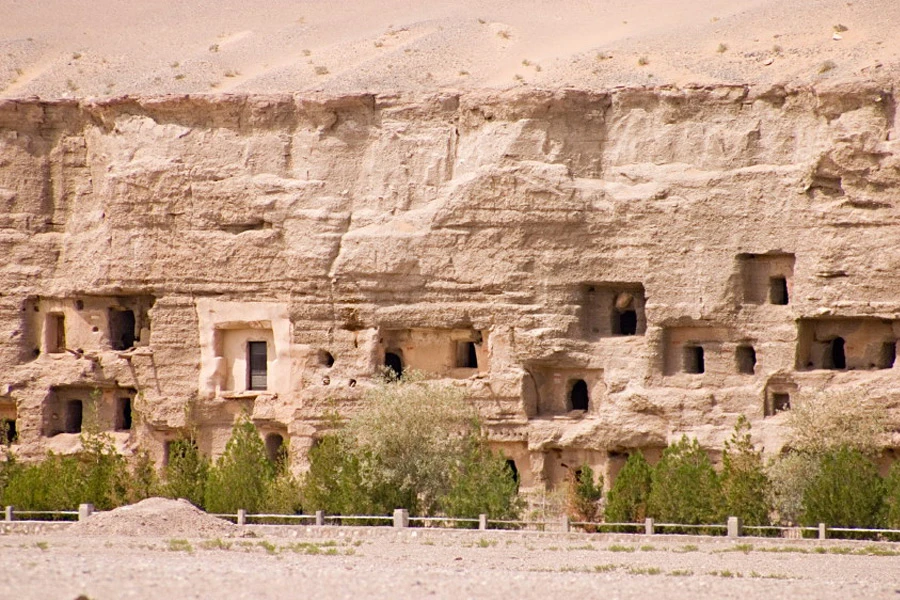
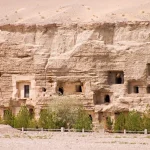
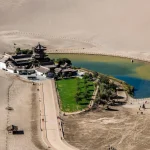
At Dunhuang, located at the edge of the Taklamakan Desert, architecture reflected environmental adaptation. The nearby Mogao Caves, carved into sandstone cliffs over centuries, reveal the spread of Buddhism across Asia through murals, sculptures, and temple spaces influenced by Indian, Persian, and Central Asian traditions. Meanwhile, the city itself developed compact mudbrick structures designed to endure harsh desert conditions.
These were eastern frontier cities that marked the beginning of an architectural transition that would continue across Eurasia.
Deserts: Oasis Cities and Caravan Architecture
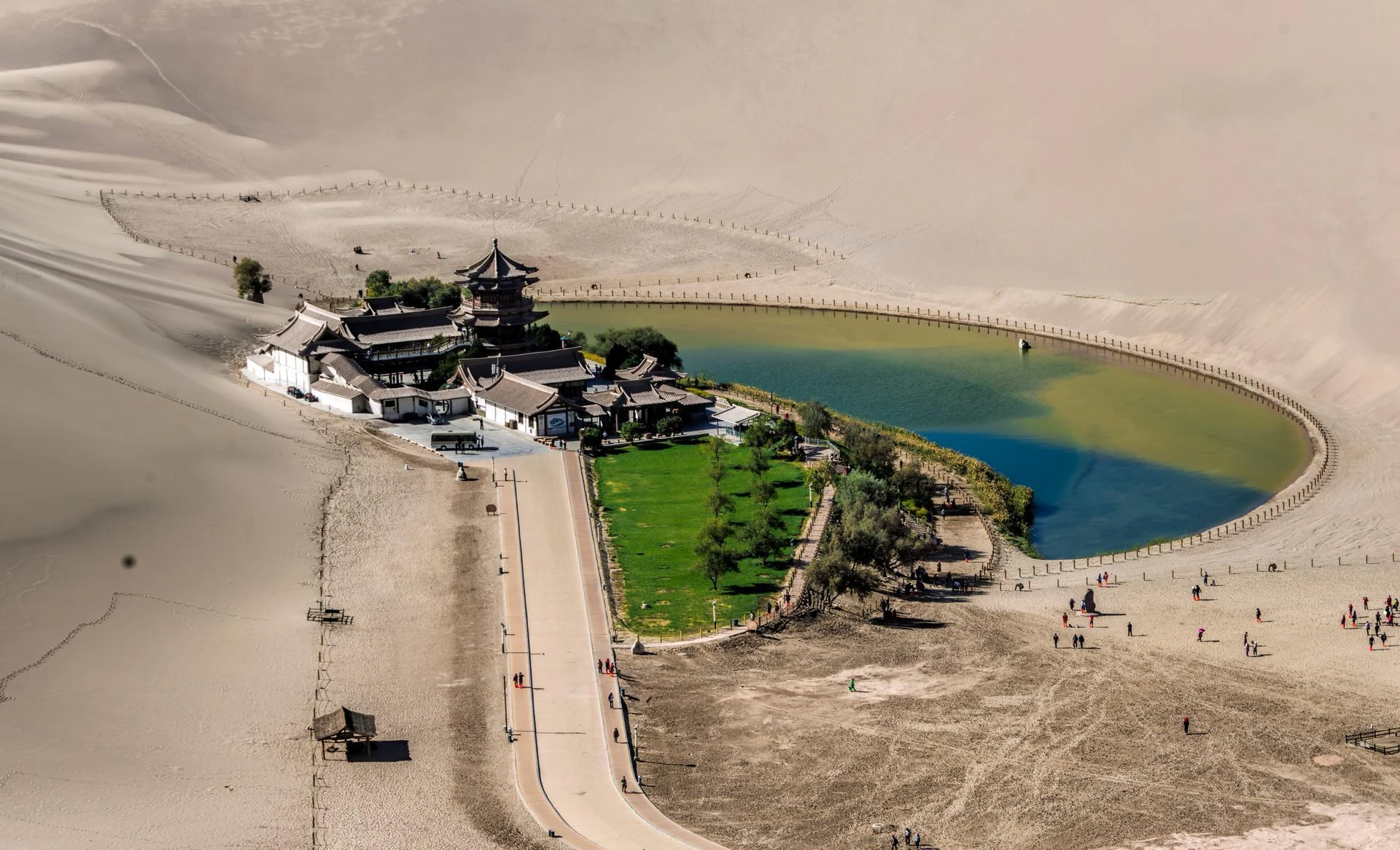
Beyond Dunhuang, the Silk Route entered some of the world’s harshest desert environments. Traders crossing the Taklamakan Desert and the arid plains of Central Asia depended entirely on oasis cities for water, shelter, and commerce. These settlements became the backbone of the Silk Route, forming a chain of interconnected urban refuges across vast and unforgiving terrain.
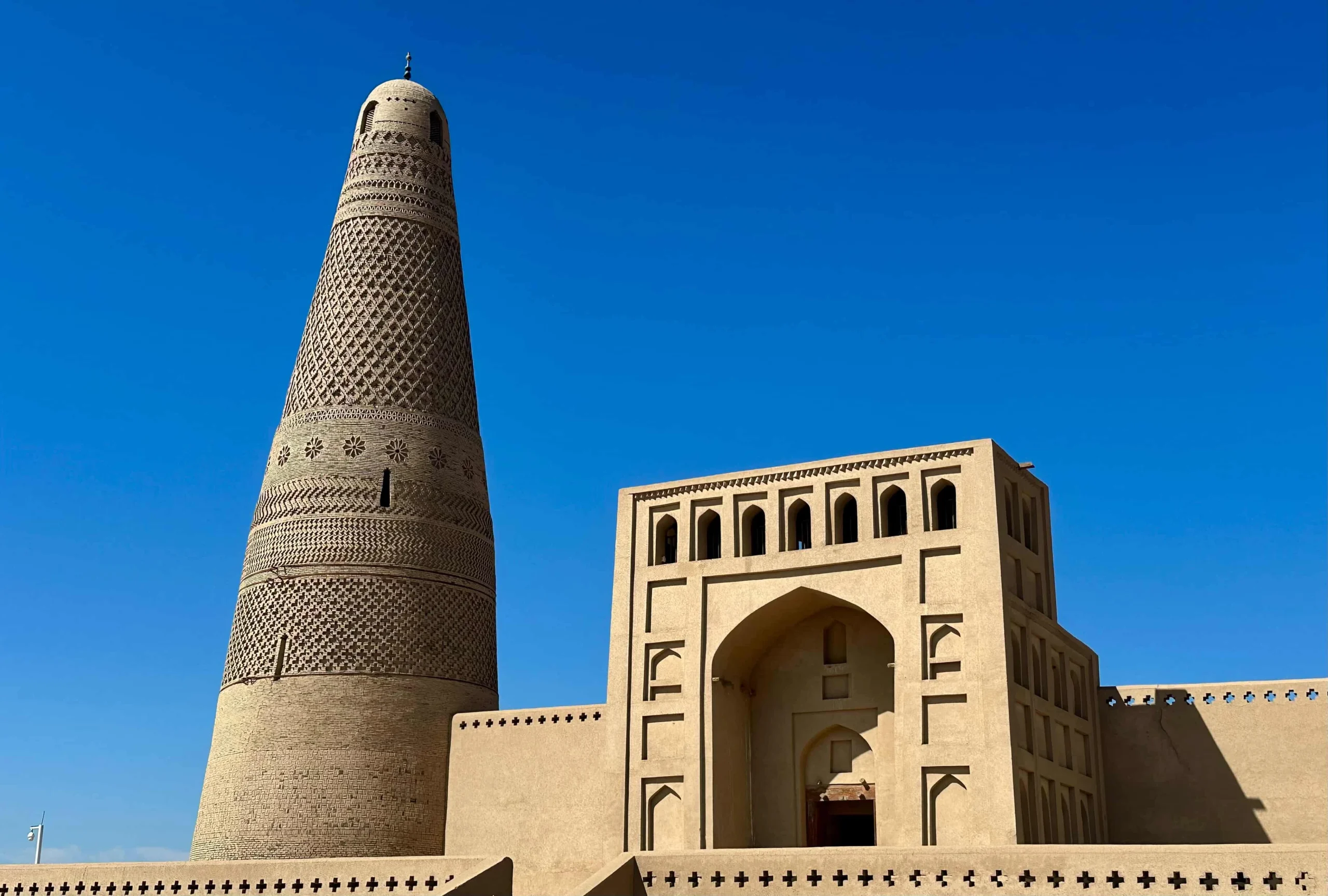
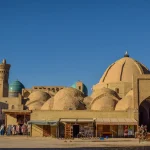
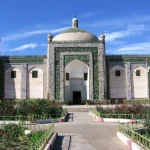
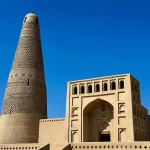
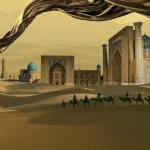
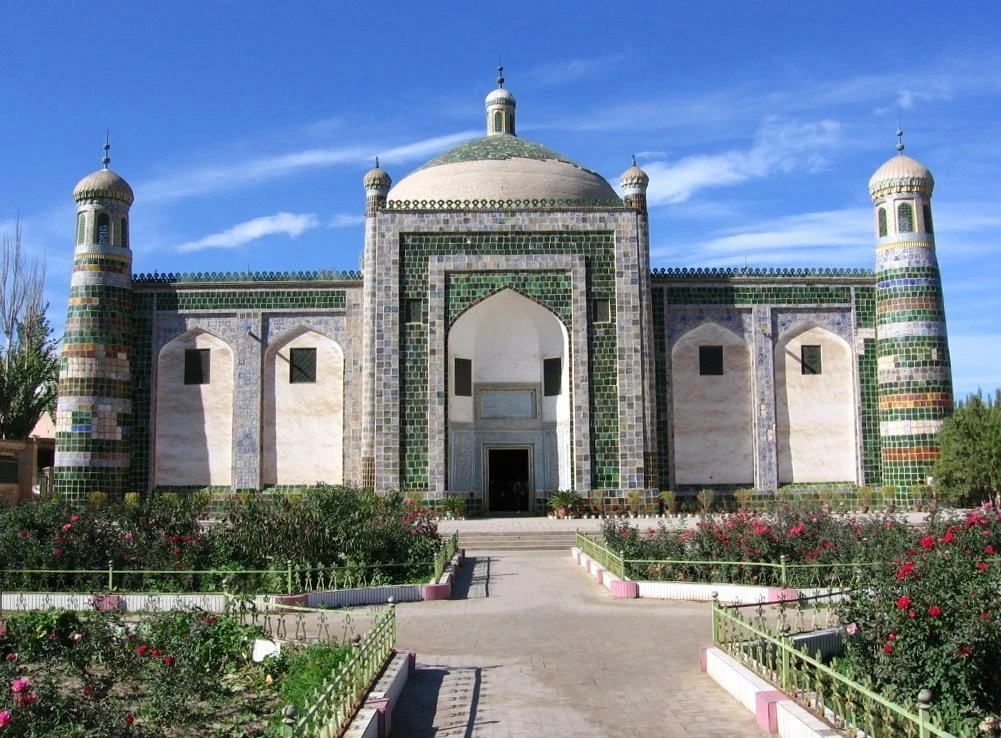
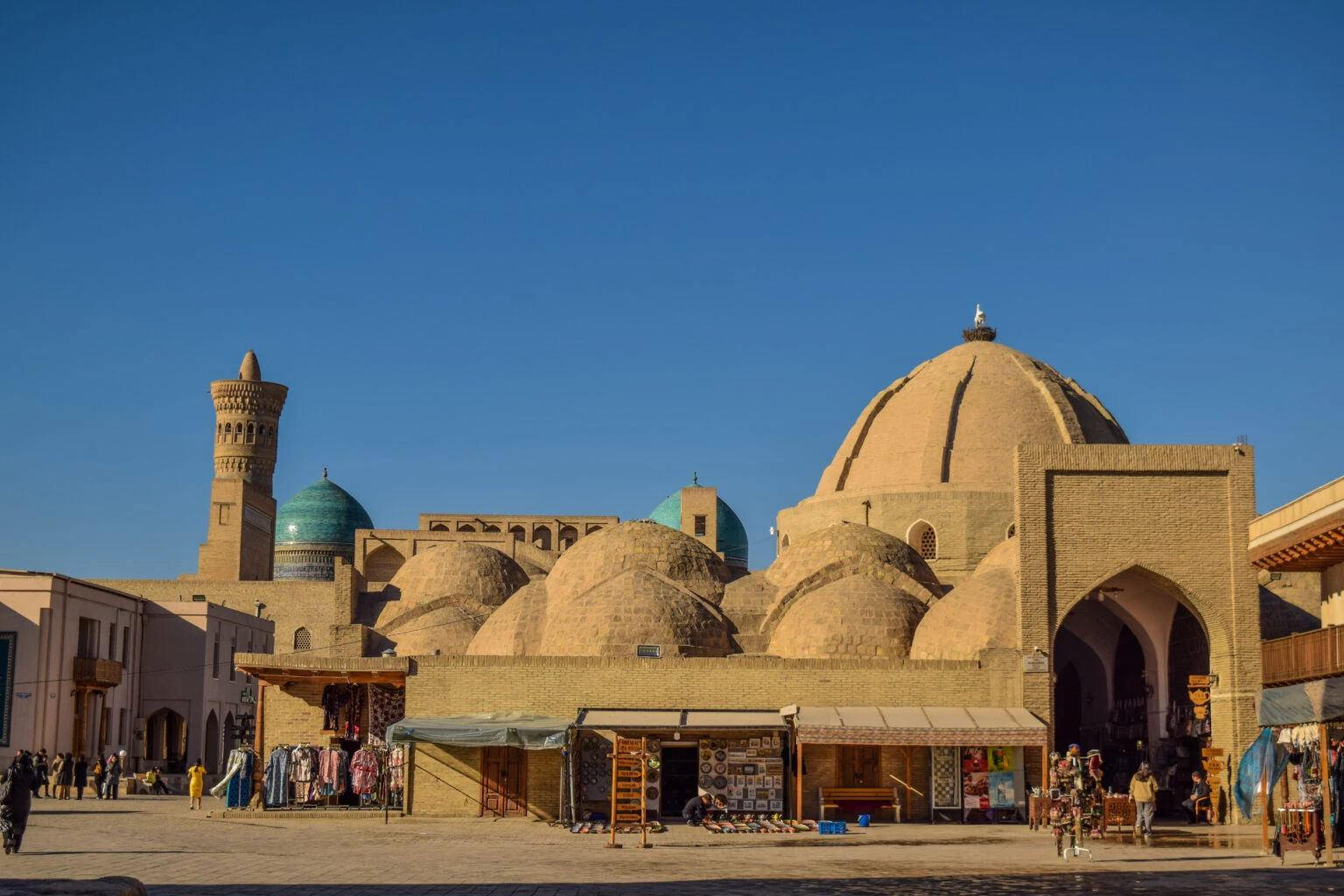
Cities such as Turpan, Kashgar, Merv, and Bukhara developed a similar architectural language despite being separated by great distances. Mudbrick became the defining building material of the desert world. Thick earthen walls protected interiors from extreme daytime heat while retaining warmth during cold desert nights. Streets were intentionally narrow and densely packed to maximize shade and reduce exposure to sandstorms. Courtyard houses created cooler internal microclimates, while domed roofs improved air circulation and thermal comfort. Irrigation systems such as qanats and karez channels carried underground water into cities and agricultural fields, allowing settlements to survive in otherwise inhospitable landscapes.
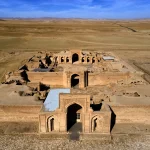
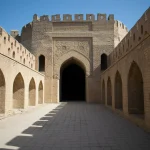
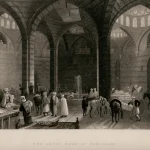
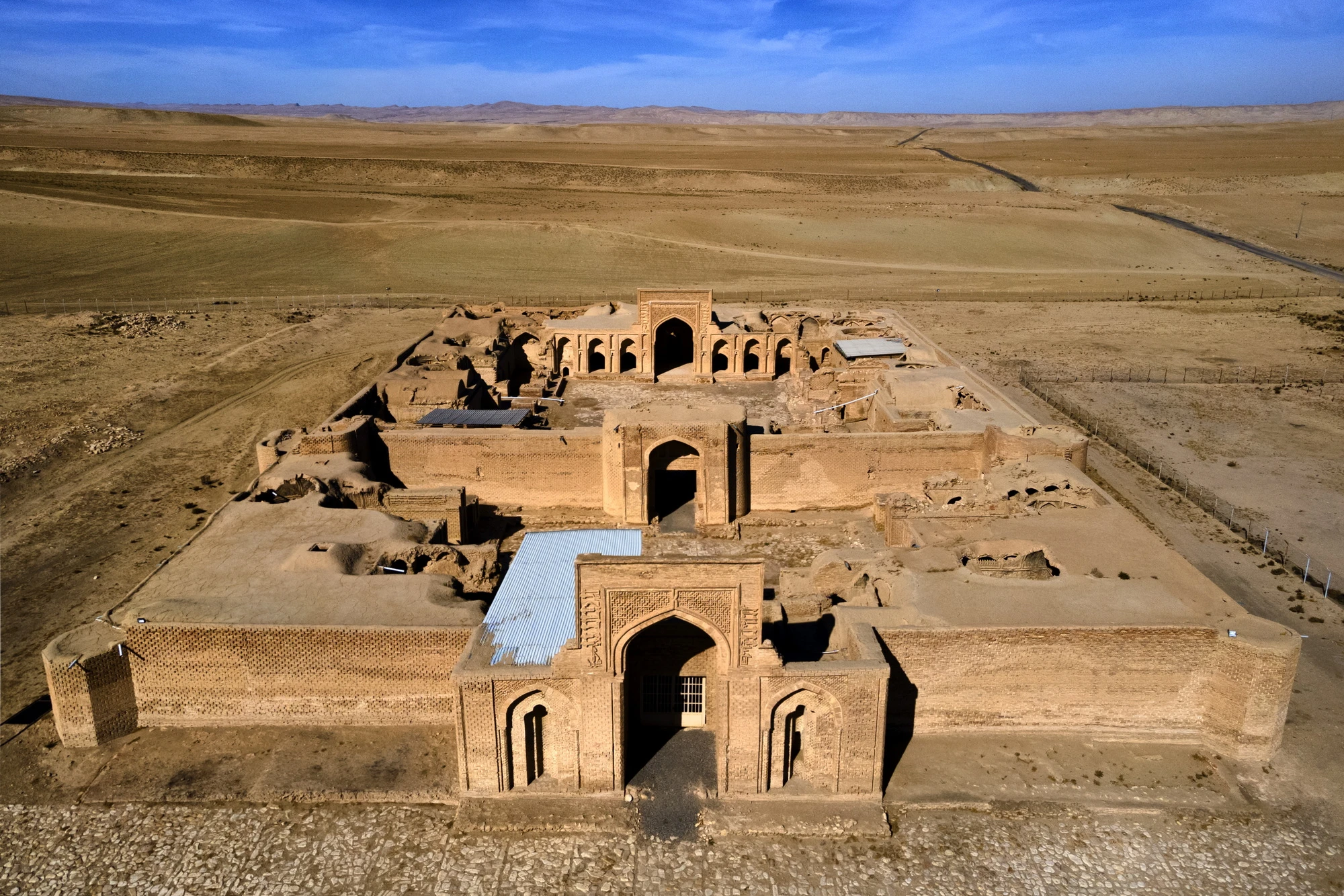
Trade also produced one of the Silk Route’s most recognizable architectural forms: the caravanserai. Found across Central Asia and Persia, caravanserais were large roadside inns designed to accommodate merchants, animals, and goods traveling long distances. Built around central courtyards, these structures functioned as hotels, warehouses, marketplaces, and social gathering spaces all at once.
In cities like Kashgar and Bukhara, bazaars became the heart of urban life. Here, Chinese silk, Persian carpets, Indian spices, and Mediterranean goods circulated through covered markets, which came alive with multiple languages, cultures, and crafts. Architecture in these cities created spaces where commerce and culture constantly intersected.
Mountains and Passes: Himalayan and Highland Settlements
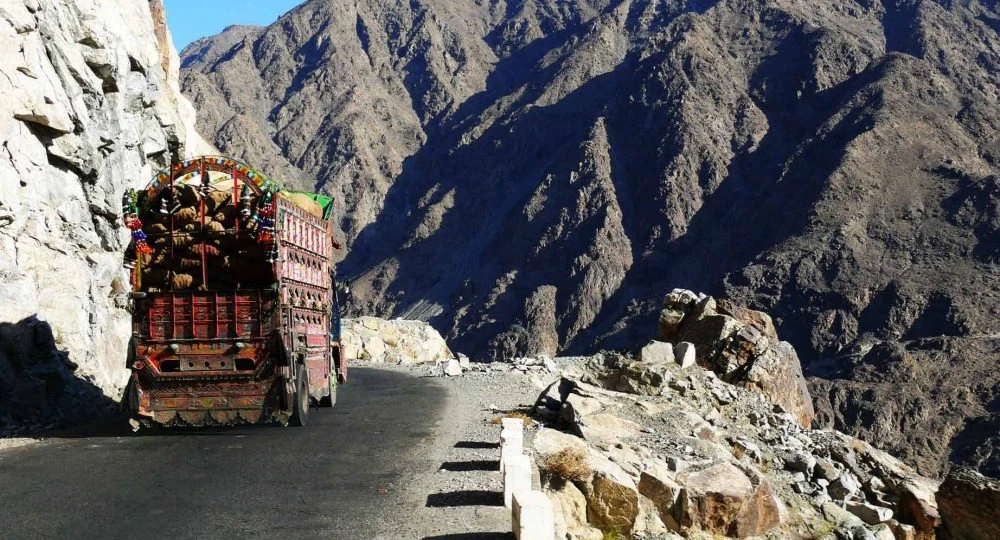
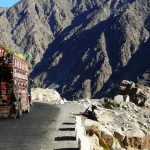
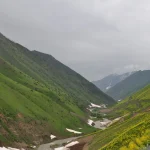
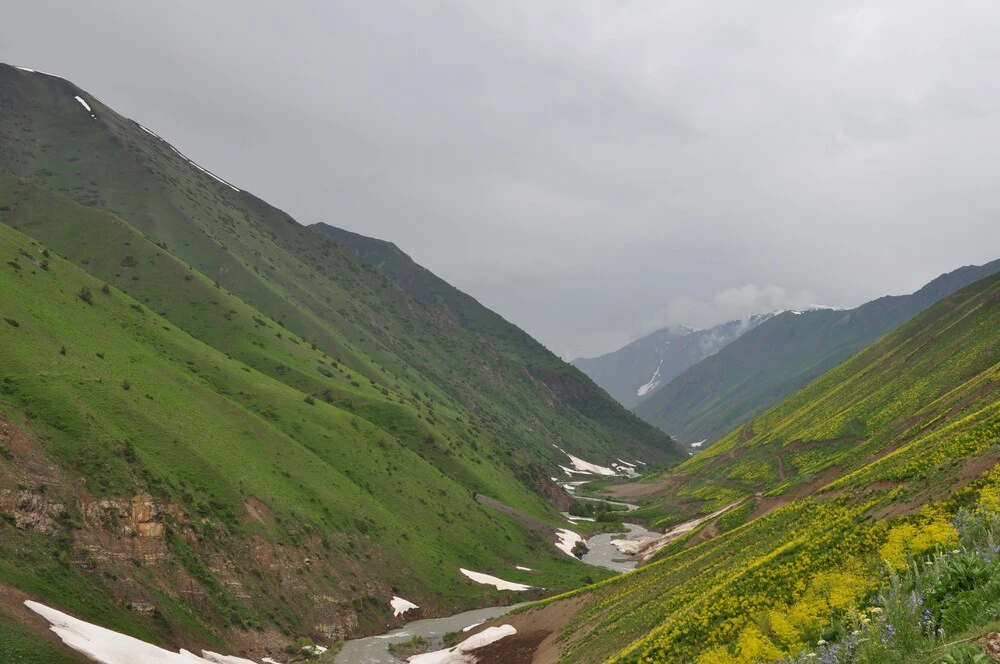
While some Silk Route branches crossed deserts, others passed through steep mountain ranges linking Central Asia with the Indian subcontinent and the Tibetan Plateau. These routes were slower, more dangerous, and heavily dependent on seasonal movement through high-altitude terrain.
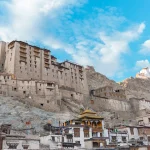
Settlements such as Leh, Taxila, and Peshawar became important cultural and commercial gateways between South Asia, Persia, and Central Asia. Unlike desert-oasis cities, mountain architecture relied heavily on stone and timber. Buildings were compact, thick-walled, and often positioned along slopes or elevated ridges. Fortified settlements and watchtowers reflected the insecurity of mountain trade routes, while monasteries emerged as centers of learning, shelter, and spiritual exchange.
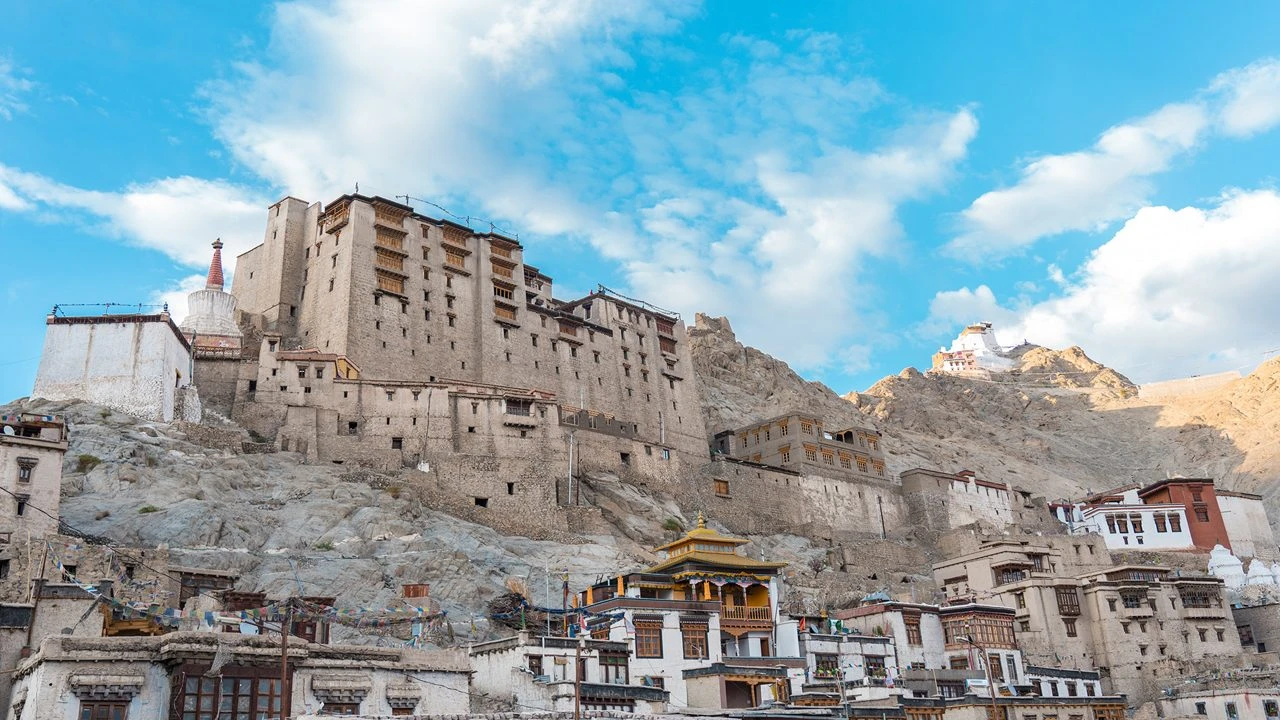
In Ladakh, Buddhist monasteries are perched above valleys and trade corridors, integrating architecture directly into the surrounding landscape. Whitewashed walls, prayer halls, terraced structures, and timber detailing showcased Tibetan influence and adaptation to cold climates.
Further south, Taxila became one of the ancient world’s major centers of Buddhist learning. Monasteries, stupas, and educational complexes revealed how religious architecture spread through trade networks. This created the unique Greco-Buddhist (Gandharan) art and architecture, creating hybrid architectural forms here.
Flourishing Islamic Cities of Central Asia and Persia
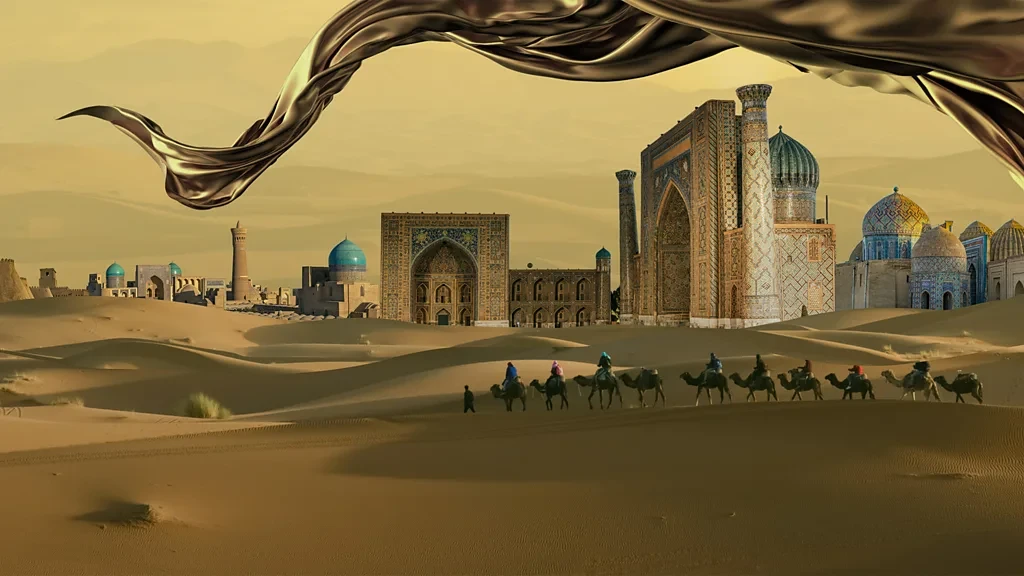
As the Silk Route moved westward into fertile river valleys and prosperous Islamic empires, architecture became monumental. Trade wealth, political patronage, and artistic exchange transformed cities into centers of culture, scholarship, and urban context.
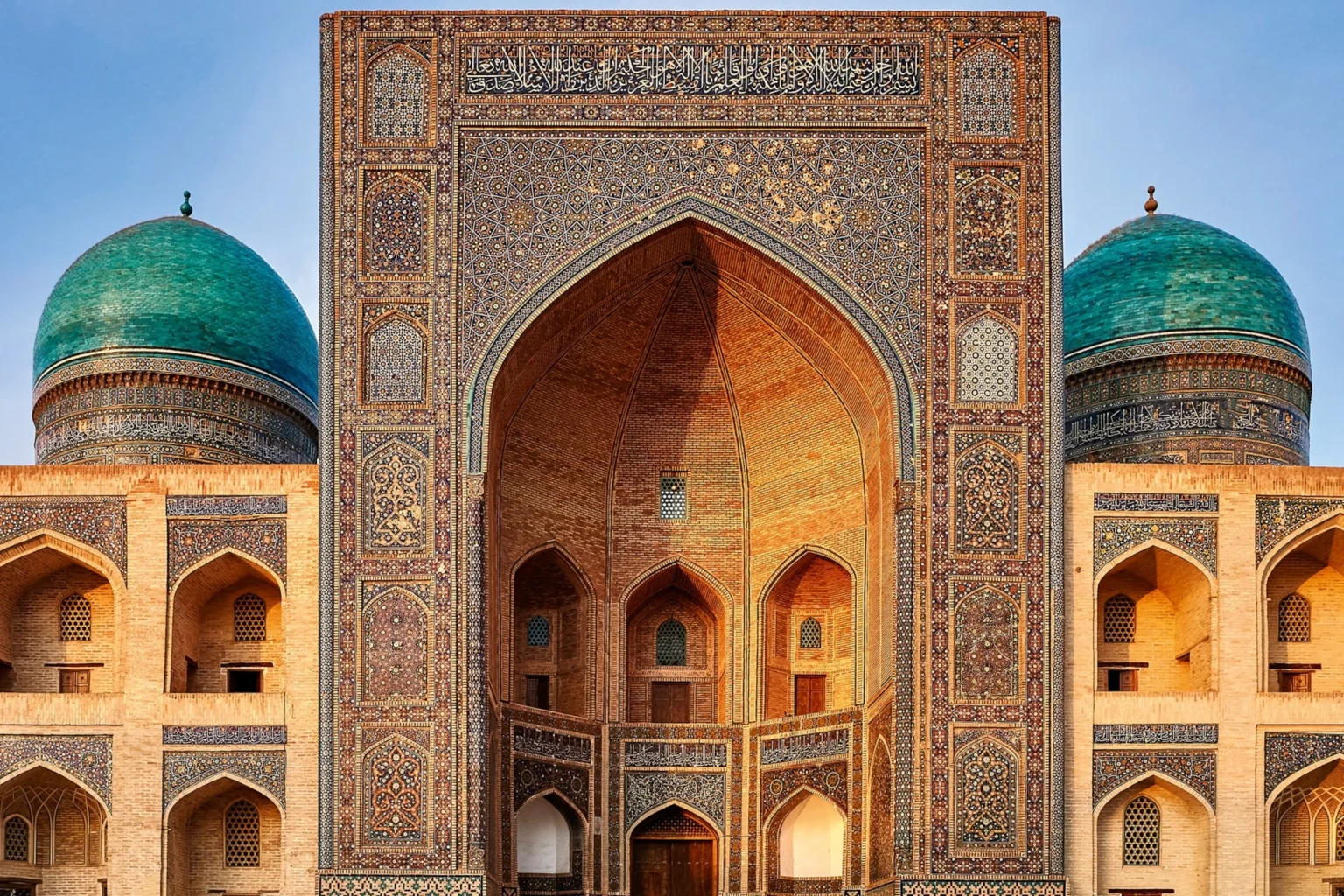
Among the most celebrated was Samarkand, often considered the symbolic heart of the Silk Route. Positioned between East and West, the city flourished under the Timurids, who transformed it into a showcase of Islamic architecture. Massive madrasas, turquoise domes, geometric mosaics, and ceremonial public spaces demonstrated the fusion of Persian, Central Asian, and Islamic artistic traditions. Nearby, Bukhara evolved into a major religious and intellectual center, filled with caravanserais, mosques, libraries, and marketplaces.
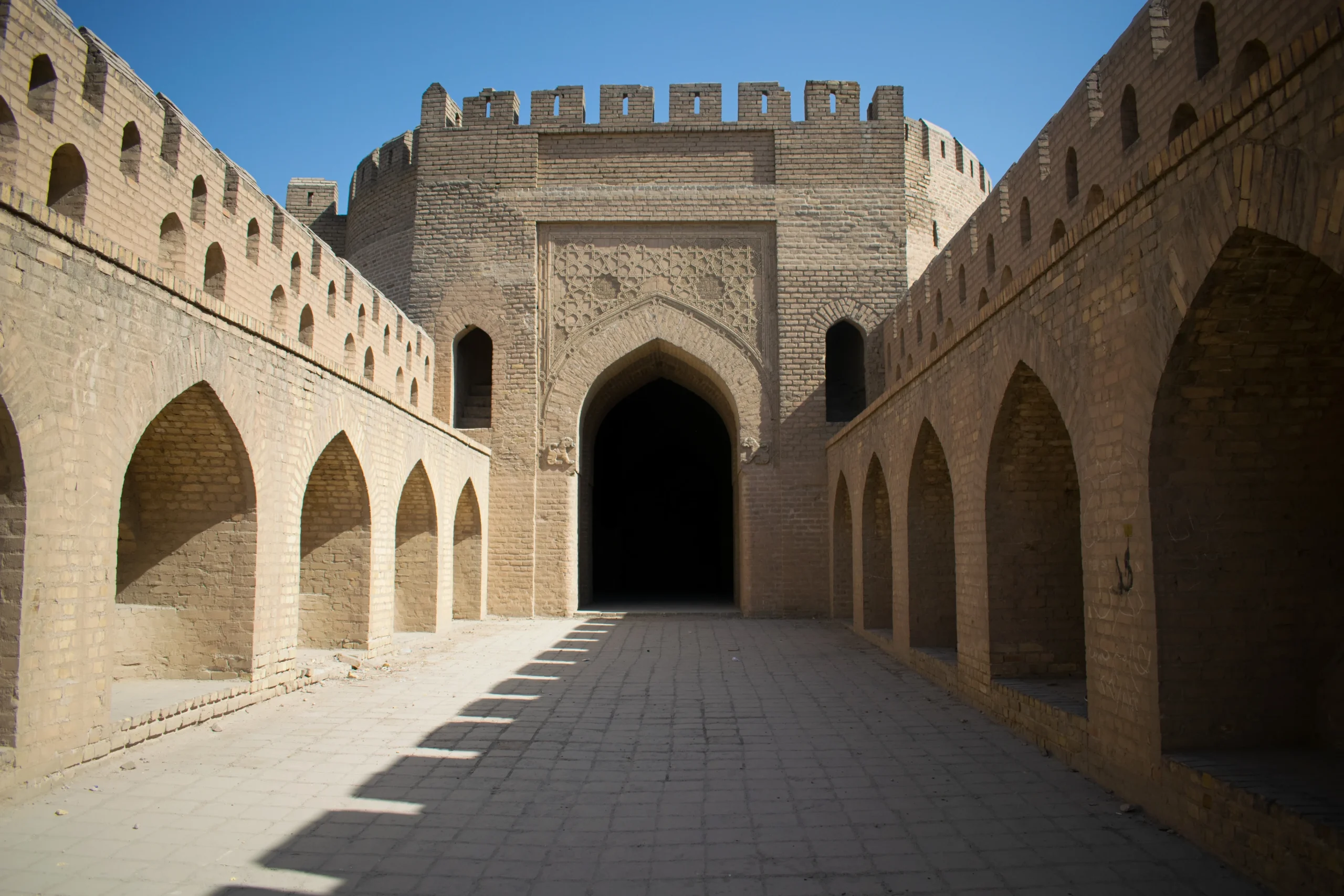
Further west, Baghdad rose to prominence during the Islamic Golden Age. Positioned along vital trade corridors, the city became one of the world’s leading centers of science, philosophy, literature, and architecture. Decorative brickwork, calligraphy, domes, and gardens reflected the Abbasid urban culture.
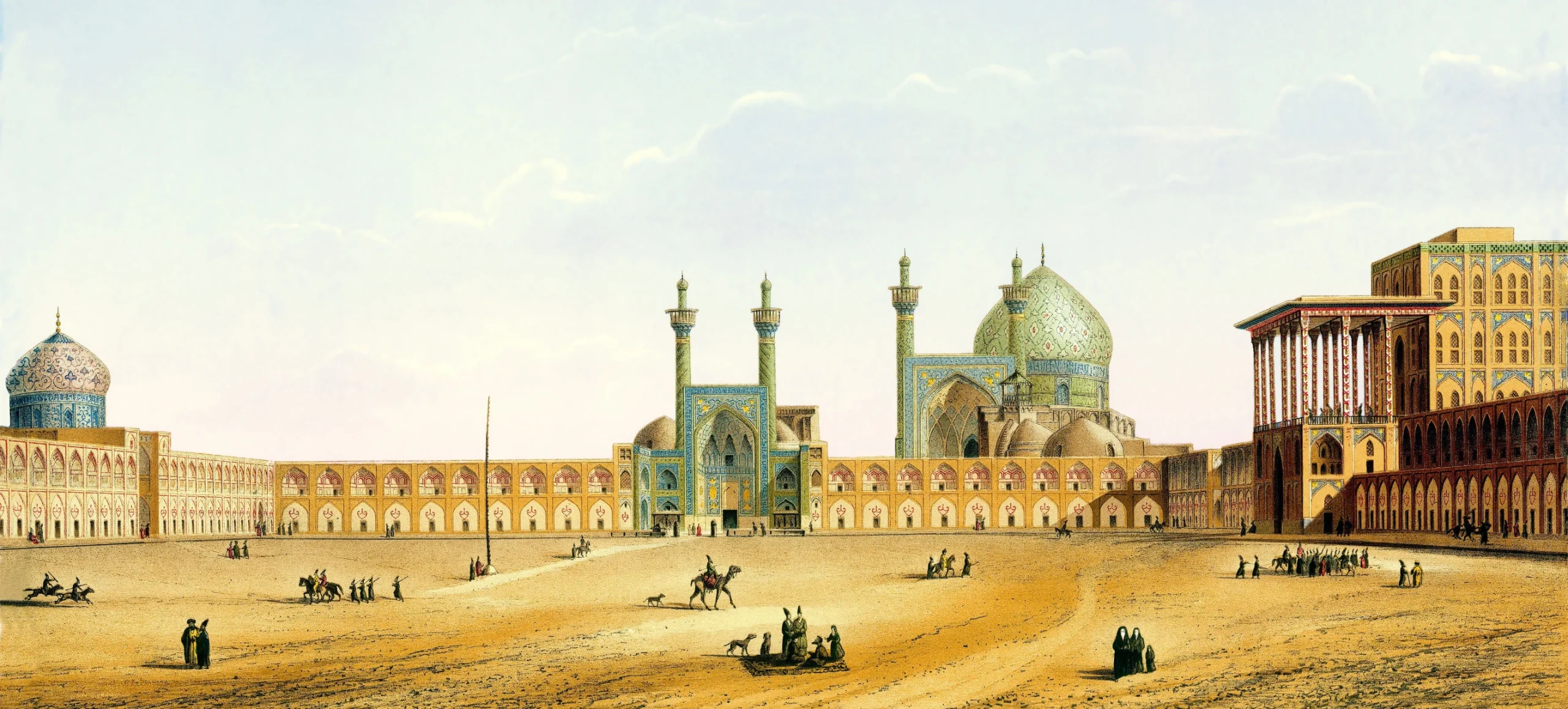
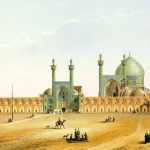
In Isfahan, Persian urbanism reached extraordinary limits. Monumental boulevards, bridges, mosques, gardens, and public squares integrated commerce, governance, and religion into a highly organized urban landscape. Water channels and gardens became essential elements of Persian architecture, transforming arid environments into designed civic spaces.
Mediterranean: Ports, Markets, and Cosmopolitan Cities
At its western edge, the Silk Route connected with Mediterranean trade networks that linked Asia to Europe and North Africa. Here, overland caravan routes merged with maritime commerce, creating some of the most cosmopolitan cities of the medieval world.
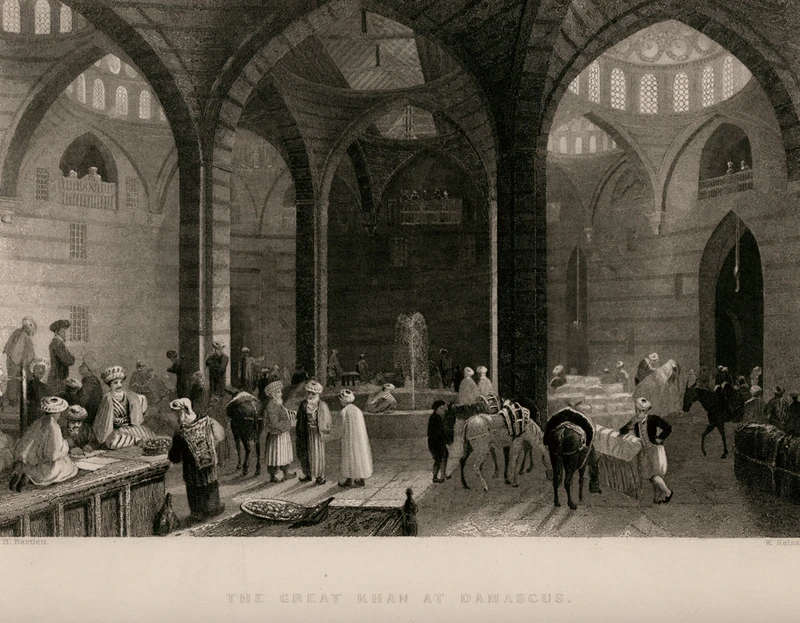
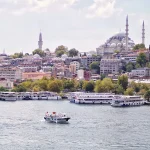
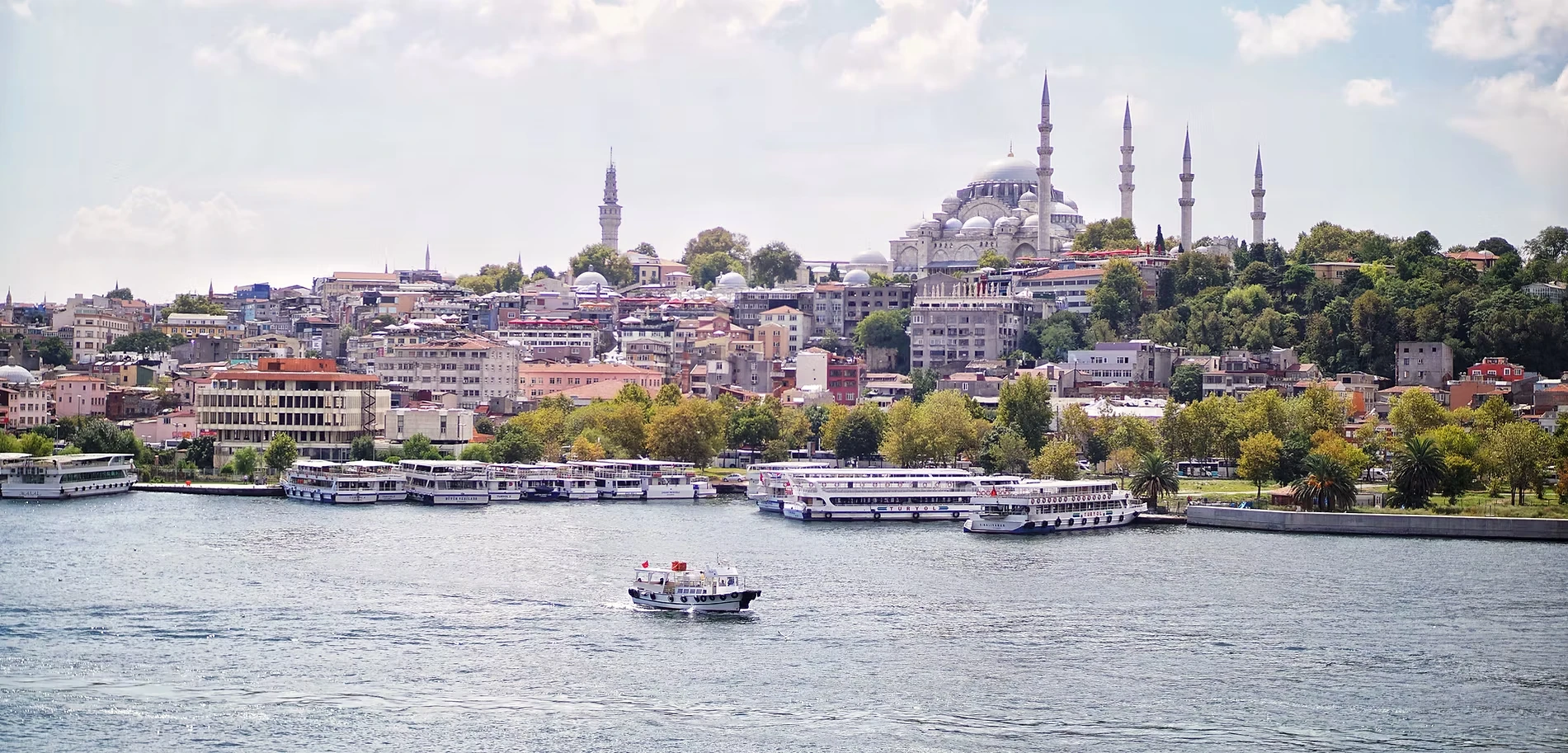
Cities such as Damascus and Aleppo became major commercial gateways through which Asian goods were redistributed to Mediterranean ports. Their dense stone-built urban fabric included caravanserais, covered souks, mosques, baths, and residential courtyards. Positioned between Europe and Asia, Constantinople controlled maritime and land-based trade routes. Roman engineering, Byzantine domes, and later Ottoman architecture gave the city multiple architectural identities over centuries.
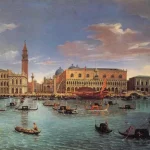
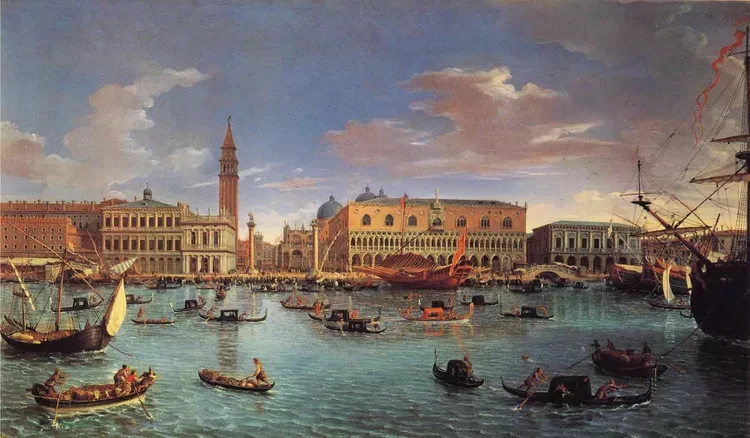
Further west, Venice emerged as one of Europe’s wealthiest maritime powers through trade connected to the Silk Route. Eastern luxury goods transformed Venetian architecture and craftsmanship, influencing decorative motifs, materials, and mercantile urbanism throughout the city.
By the time Silk Route goods reached the Mediterranean, they had crossed deserts, mountains, empires, and climates, leaving traces in markets and in architecture itself.
In the arid desert, compact mudbrick settlements and shaded bazaars protected communities from extreme heat and sandstorms. In mountainous regions, fortified monasteries and stone-built settlements adapted to difficult terrain and harsh winters. Further west, prosperous Islamic capitals used the wealth generated through trade to build monumental mosques, gardens, caravanserais, and public squares.
Though separated by thousands of miles, the cities of the Silk Route shared a common purpose: they were places of encounter. Merchants exchanged goods, travelers shared stories, pilgrims carried beliefs, and artisans transported techniques across borders. The Silk Route eventually faded as maritime lanes and technology took over, but its architectural residue remains.