

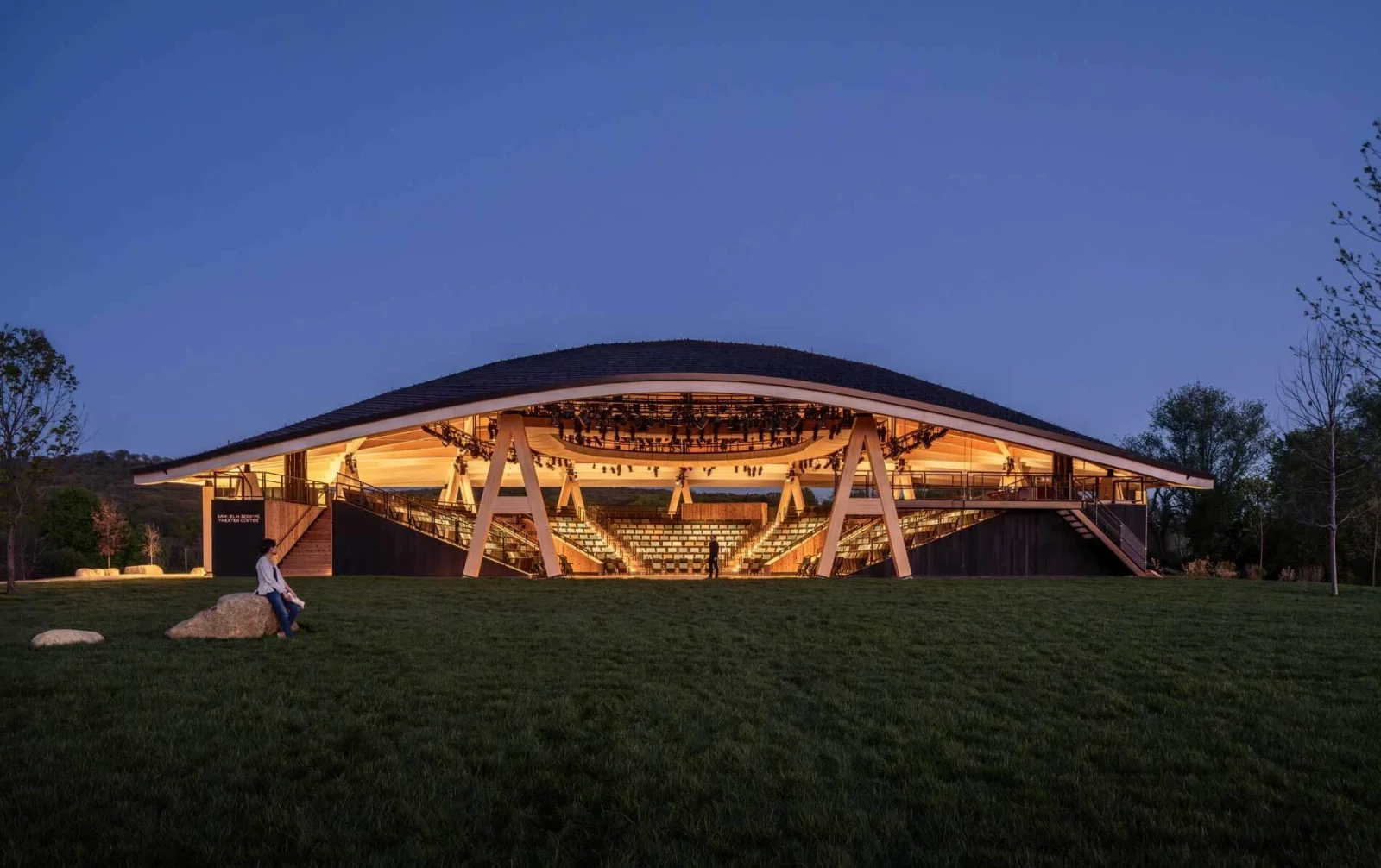
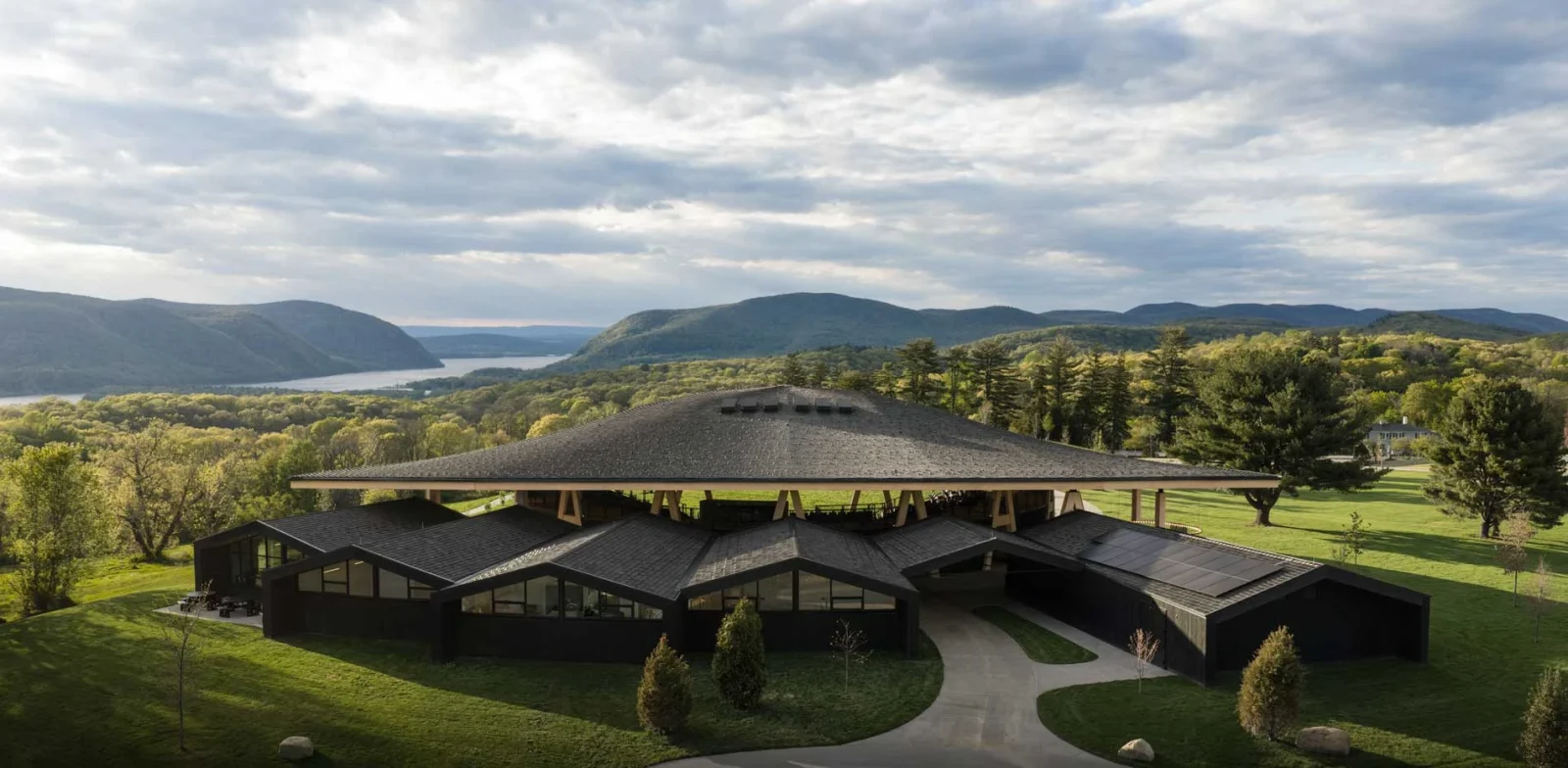
Set into the rolling terrain of Garrison, New York, the Samuel H. Scripps Theater Center for Hudson Valley Shakespeare redefines the relationship between performance, landscape, and the environment. Designed by Studio Gang as the company’s first permanent home, the 26,000-square-foot open-air theater replaces Hudson Valley Shakespeare’s long-standing seasonal tent with a purpose-built cultural venue that remains deeply tied to the ecology and topography of the Hudson Highlands. Targeting LEED Platinum certification, the 451-seat theater combines mass timber construction, passive environmental systems, and landscape restoration into a unified architectural gesture that frames both performance and place.
An Open-Air Theater Embedded in the Hudson Highlands
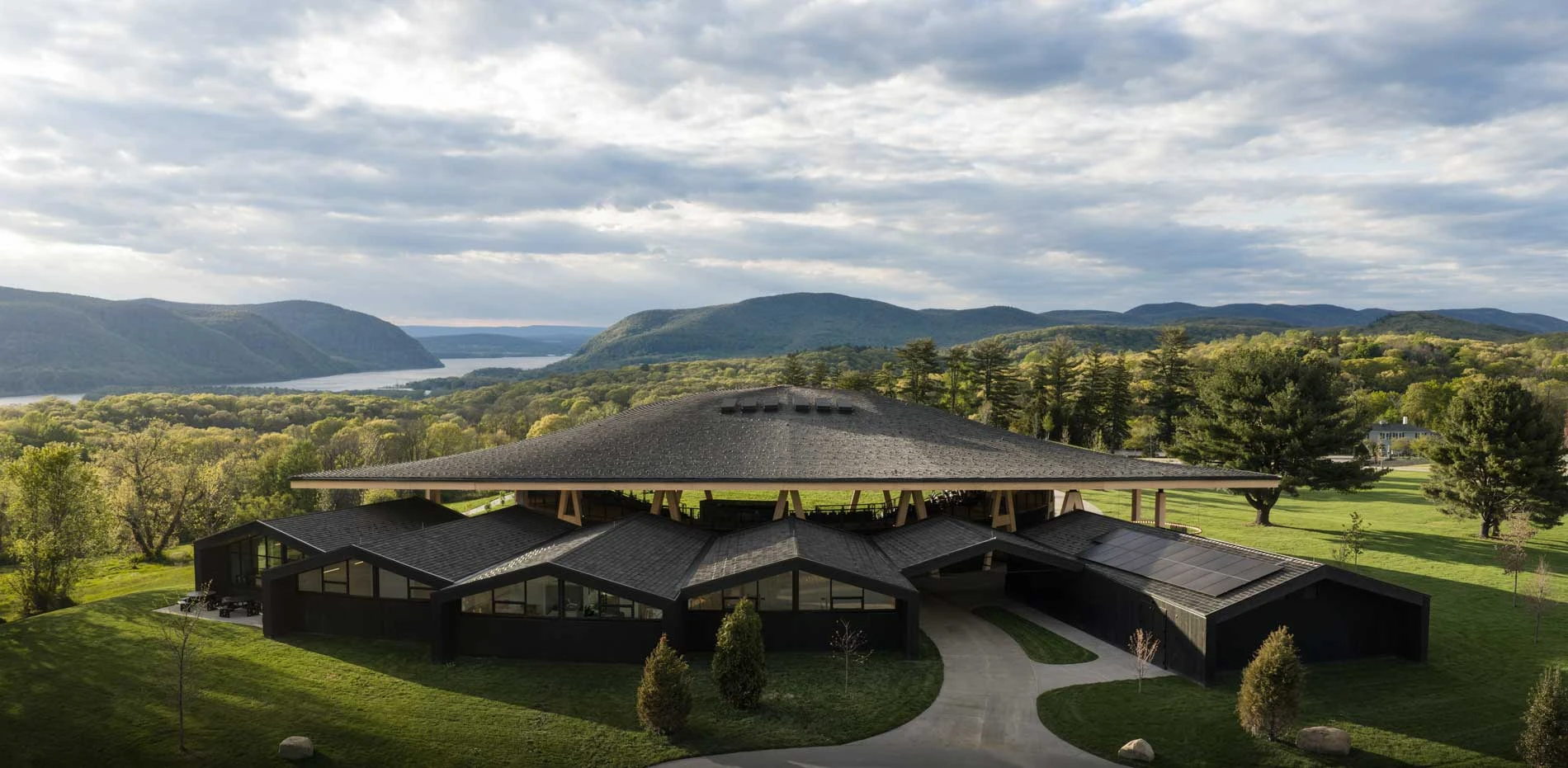
The project was completed in 2026 for Hudson Valley Shakespeare in collaboration with a broad interdisciplinary team of engineers, consultants, and landscape specialists. The design evolves Hudson Valley Shakespeare’s decades-long tradition of outdoor performance. The theater remains open to the surrounding environment, allowing shifting weather, daylight, and seasonal atmosphere to participate directly in the experience of the performance.
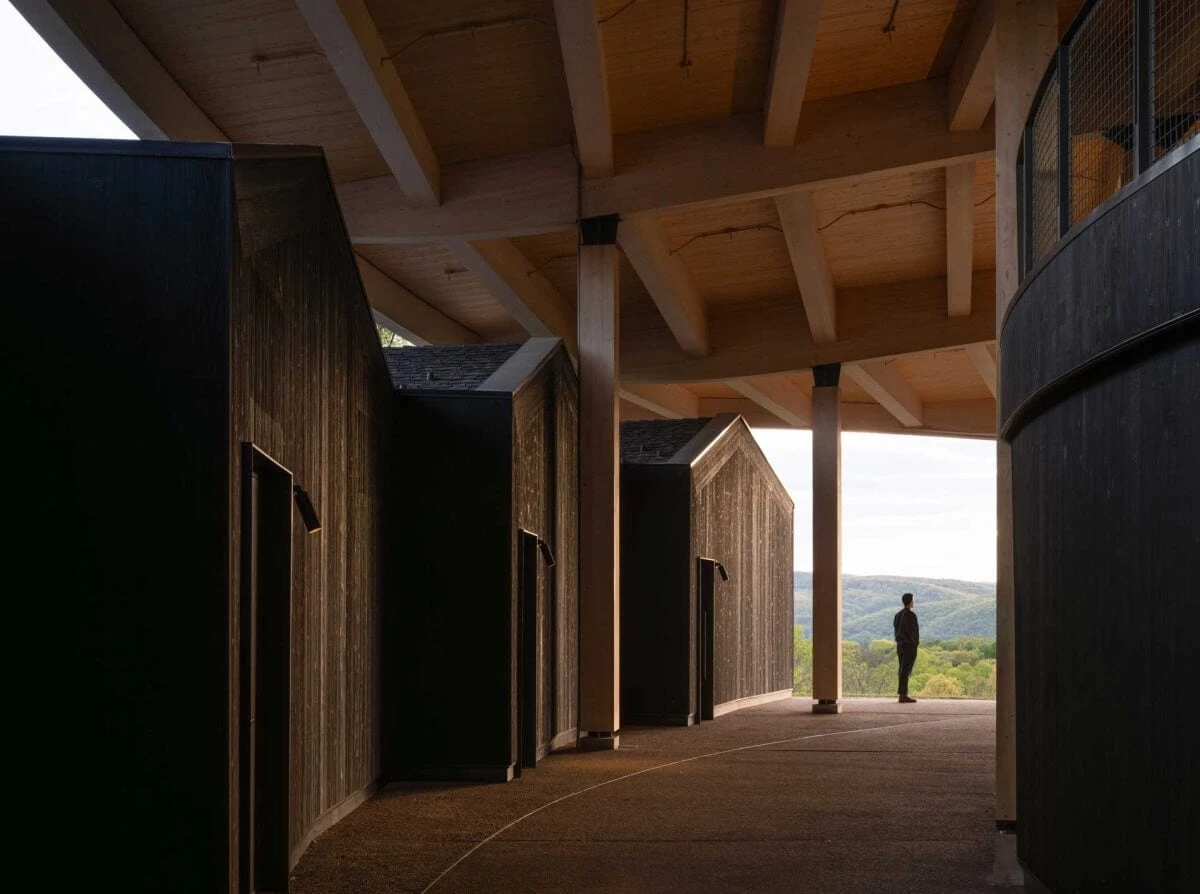
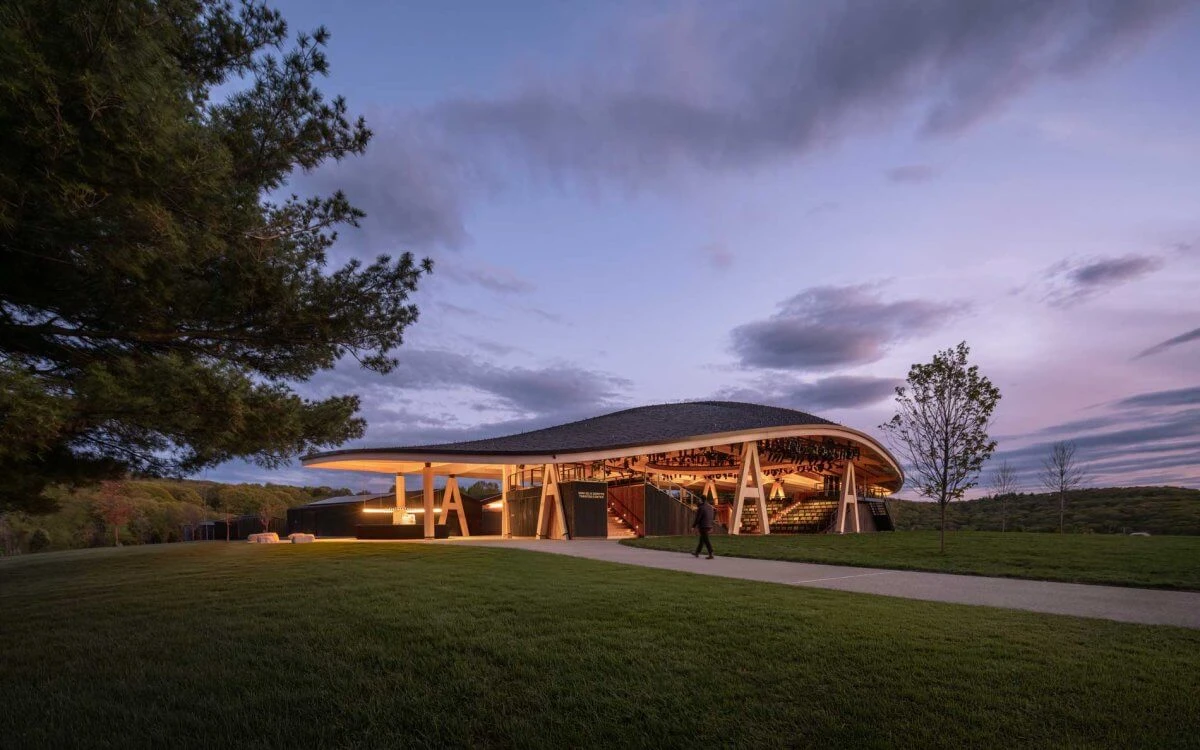
A gently curved timber-framed grid shell shelters the audience while preserving visual openness toward the Hudson River Valley. Supported by exposed A-frame timber columns, the roof structure introduces a rhythmic structural language that recalls agricultural barns and vernacular forms common throughout the region while advancing contemporary mass timber engineering. The sweeping canopy unifies the building’s circulation, gathering, rehearsal, and backstage functions beneath a continuous architectural form that appears embedded within the hillside.
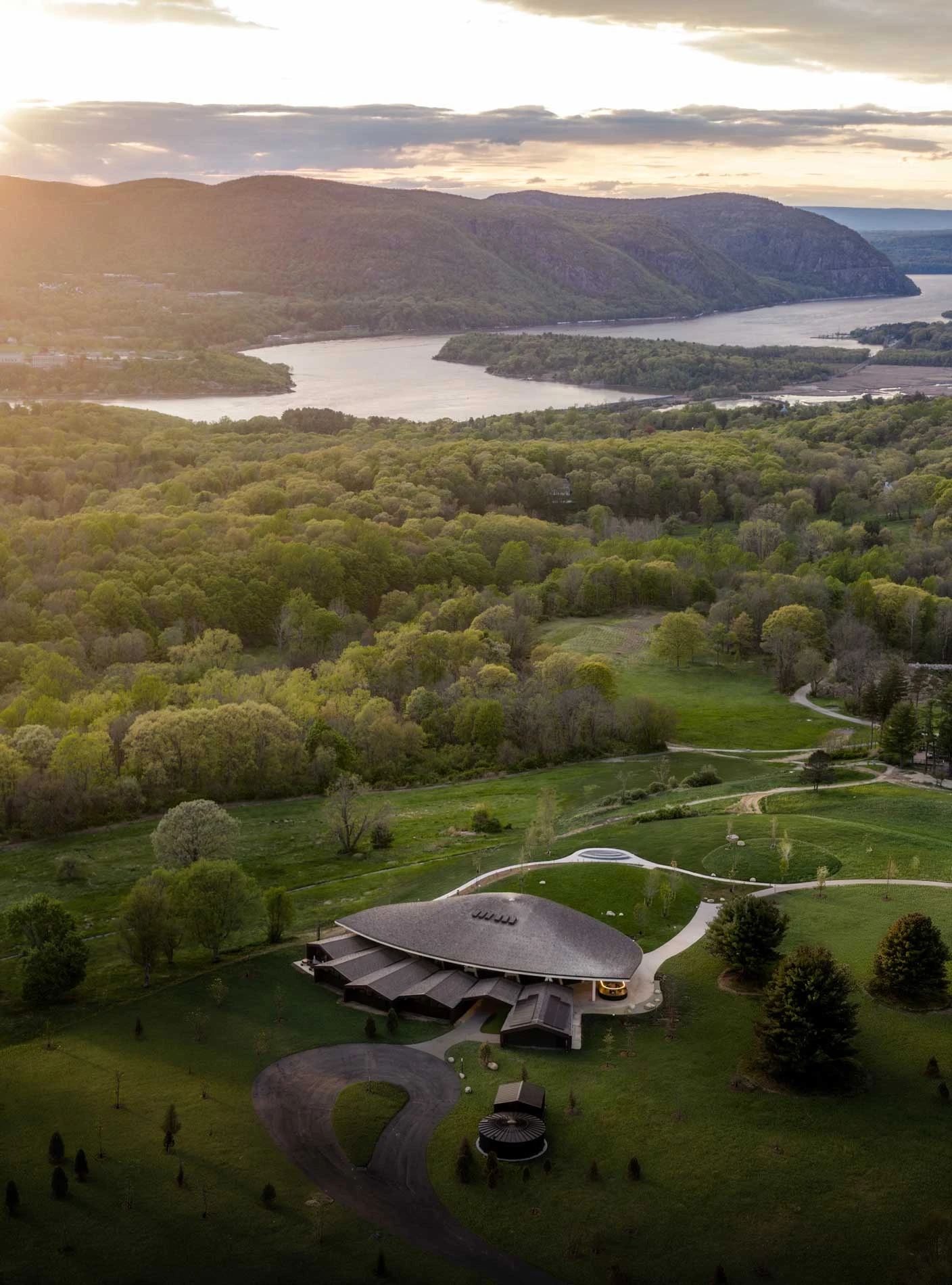
Arrival at the theater is through landscape, and accessible winding paths move visitors gradually uphill through restored native grasses and wetlands before revealing the building in stages. This sequence establishes a deliberate sense of anticipation, where glimpses of timber structure, open sky, and distant ridgelines unfold incrementally across the site. The former golf course landscape has been transformed into a low-water ecological system designed to increase biodiversity and reduce long-term environmental impact. The project restores native meadow ecologies and wetland habitats that reconnect the site to the larger environmental systems of the Hudson Highlands. Architecture and landscape operate inseparably, with the theater positioned as an extension of the terrain.
Studio Gang’s Timber-Framed Theater Opens to the Landscape
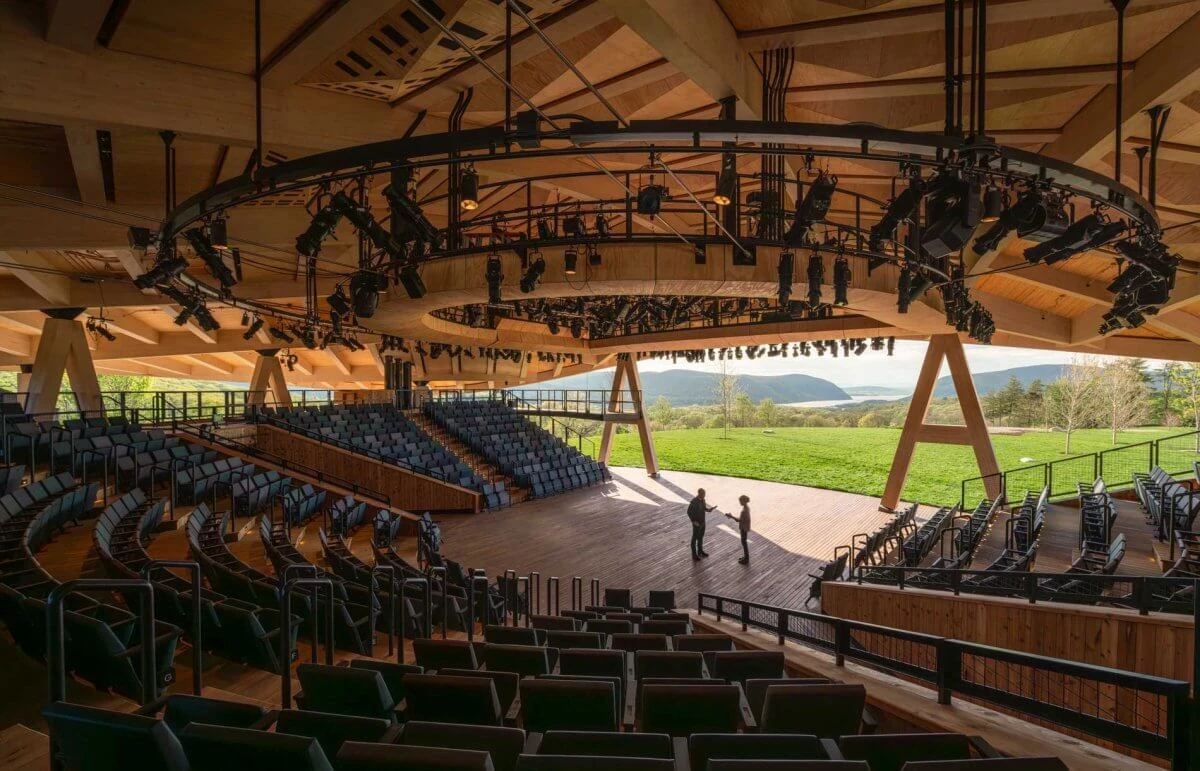
Central to the project is the orientation of the proscenium arch, which frames panoramic views of Storm King Mountain, Snake Hill, Breakneck Ridge, and the Hudson River beyond. The landscape becomes an active theatrical backdrop, dissolving conventional distinctions between stage scenery and natural environment. This alignment reinforces the company’s long-standing interest in immersive Shakespearean performance while situating the productions within the specific geography of the Hudson Valley. The open-stage configuration allows actors, audience, and environment to remain visually interconnected, emphasizing atmosphere and collective experience over enclosure. Surrounding picnic lawns further extend the social life of the theater beyond performance hours, encouraging visitors to gather before and after productions within the broader landscape setting.
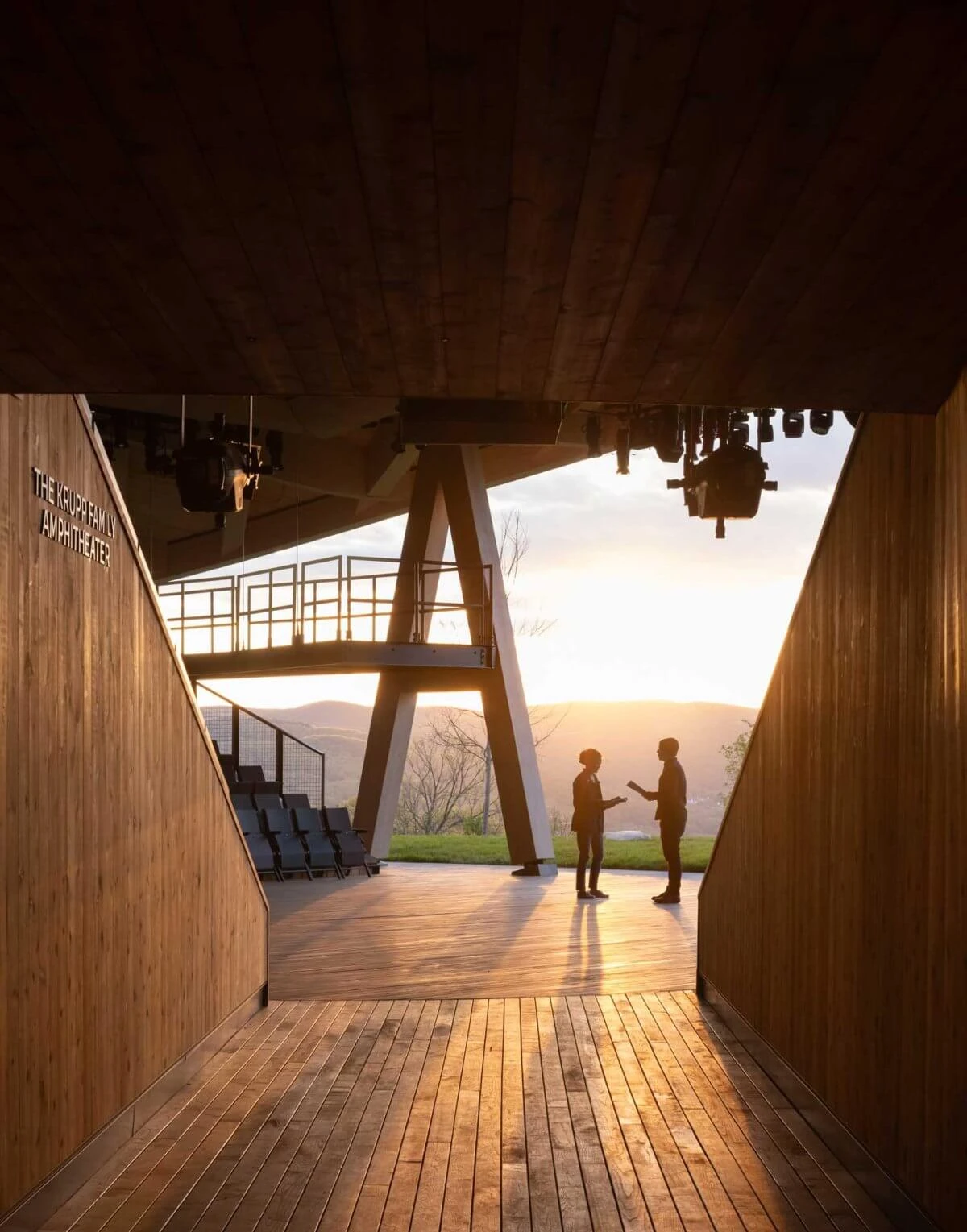
Environmental performance is embedded into the architecture through both passive and active systems. The roof’s extended perimeter provides solar shading while facilitating natural ventilation throughout the theater bowl, reducing mechanical cooling demands during warmer months. These passive strategies are supplemented by photovoltaic panels, rainwater harvesting and reuse systems, and the low-carbon benefits of mass-timber construction. Together, these measures position the project to become the first purpose-built theater in the United States to achieve LEED v4 Platinum certification. Sustainability within the project is treated as a spatial and material framework shaping the theater’s form, orientation, and operational identity.
Samuel H. Scripps Theater Center Project Details
Project Name: Samuel H. Scripps Theater Center
Location: Garrison, New York
Status: Completed, 2026
Client: Hudson Valley Shakespeare
Program Type: Cultural / Performing Arts
Size: 26,000 square feet
Capacity: 451 seats
Sustainability Target: LEED v4 Platinum
Primary Material: Mass Timber
Architect: Studio Gang
Image credit: © Jason O’Rear
Explore Courses
.jpg "Ondrej Chybik - Rethinking Architecture")