
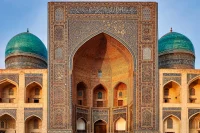
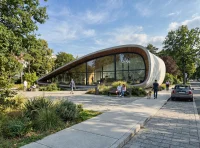
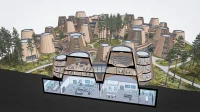

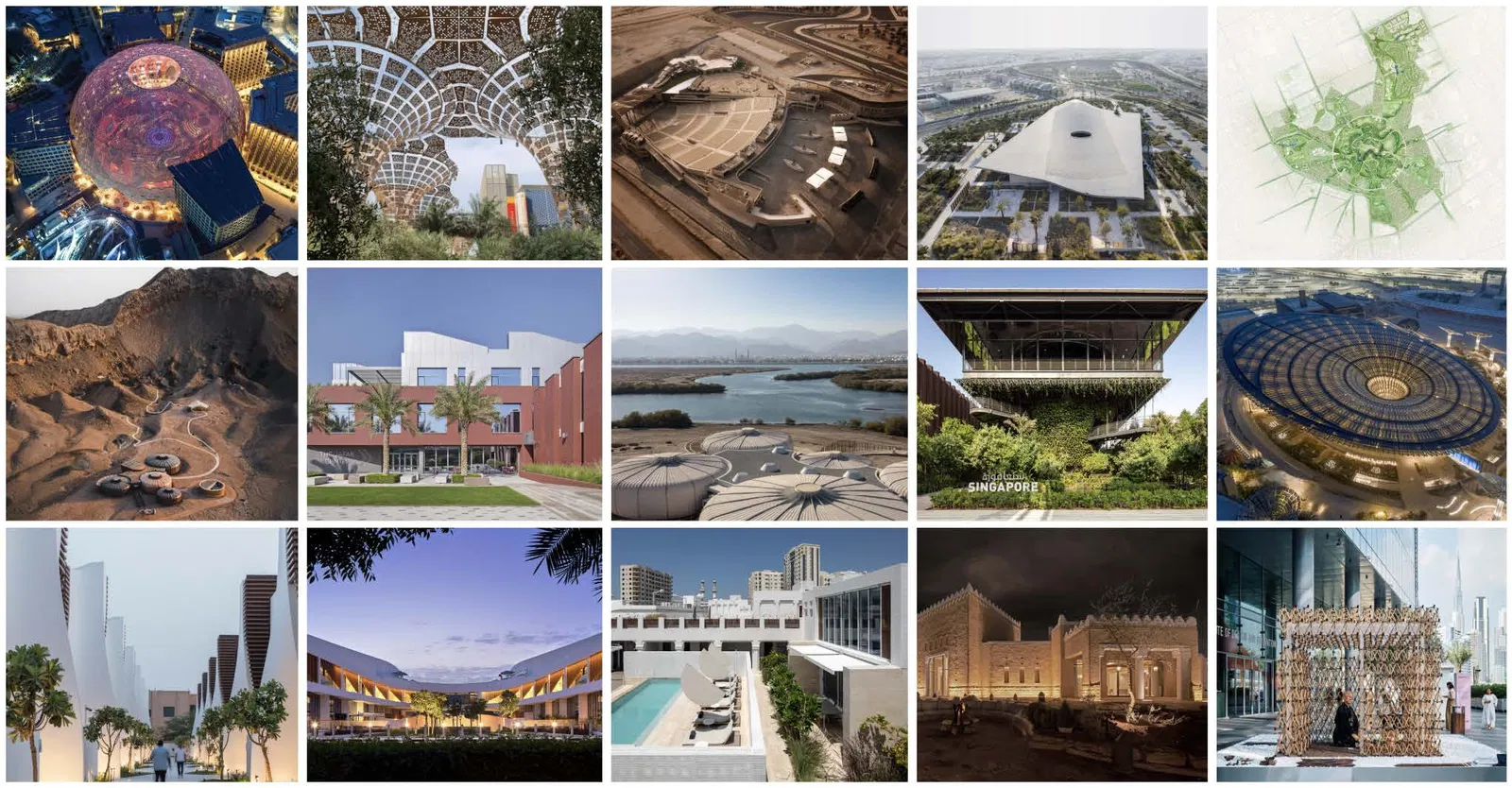
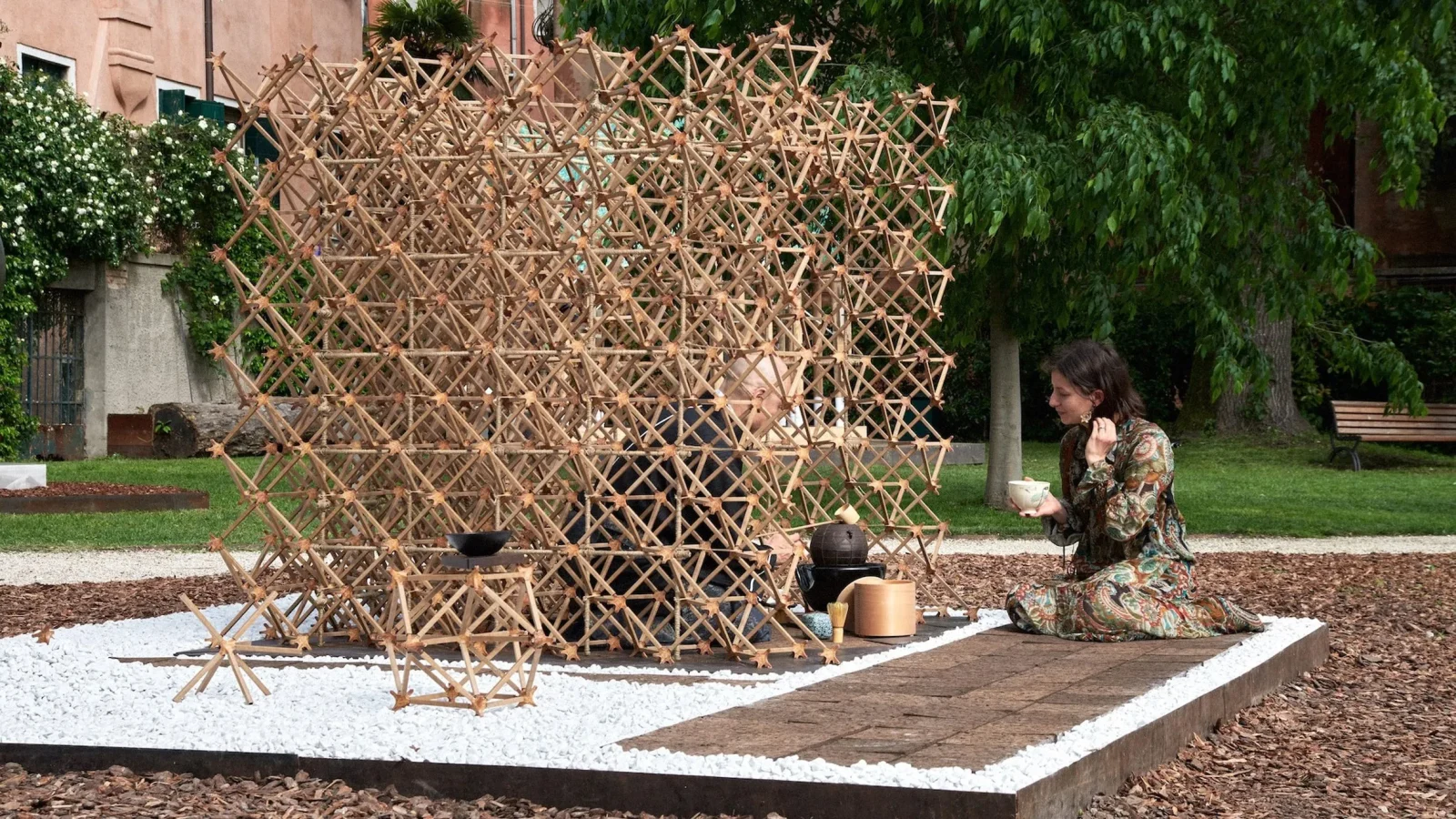
The Royal Institute of British Architects (RIBA) announced the 15 finalists for its inaugural RIBA Middle East Awards 2025, a region-wide shortlist that spans civic, cultural, ecological, and adaptive-reuse projects across the GCC and beyond. RIBA’s shortlist was published as part of its “Middle East’s Most Transformative New Buildings” series. The winner will be revealed during Dubai Design Week (as part of d3 Dubai) on 5 November.
Showcasing a remarkable spectrum of creativity and innovation, the RIBA Middle East Awards 2025 shortlist brings together fifteen groundbreaking projects that span cultural landmarks, sustainable pavilions, adaptive reuse developments, and educational spaces. Each project reflects the region’s evolving architectural identity, where global expertise meets local context and design excellence intersects with environmental responsibility.
The 15 shortlisted projects for the RIBA Middle East Awards 2025
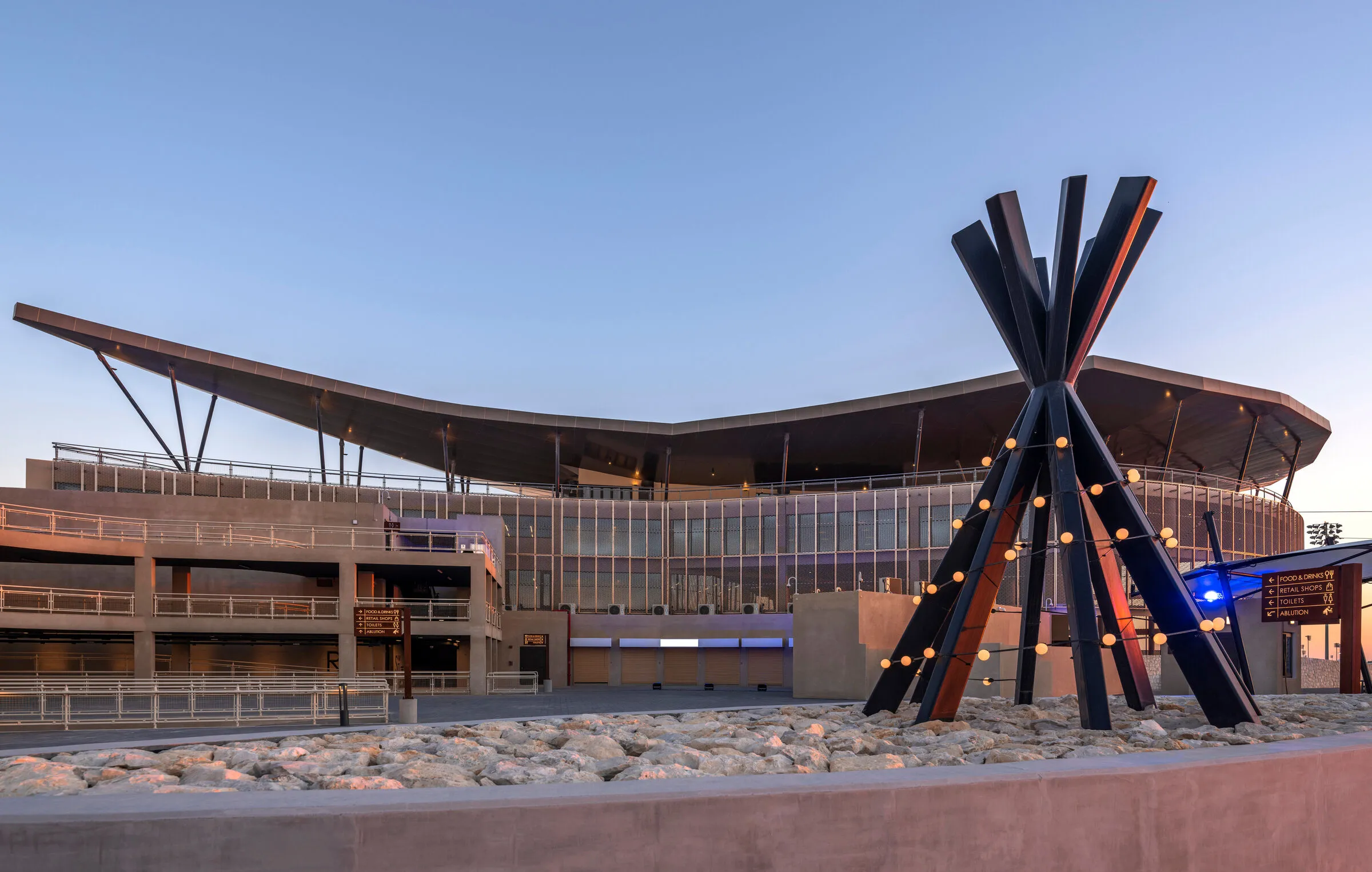
1. Al Dana Amphitheater, Bahrain
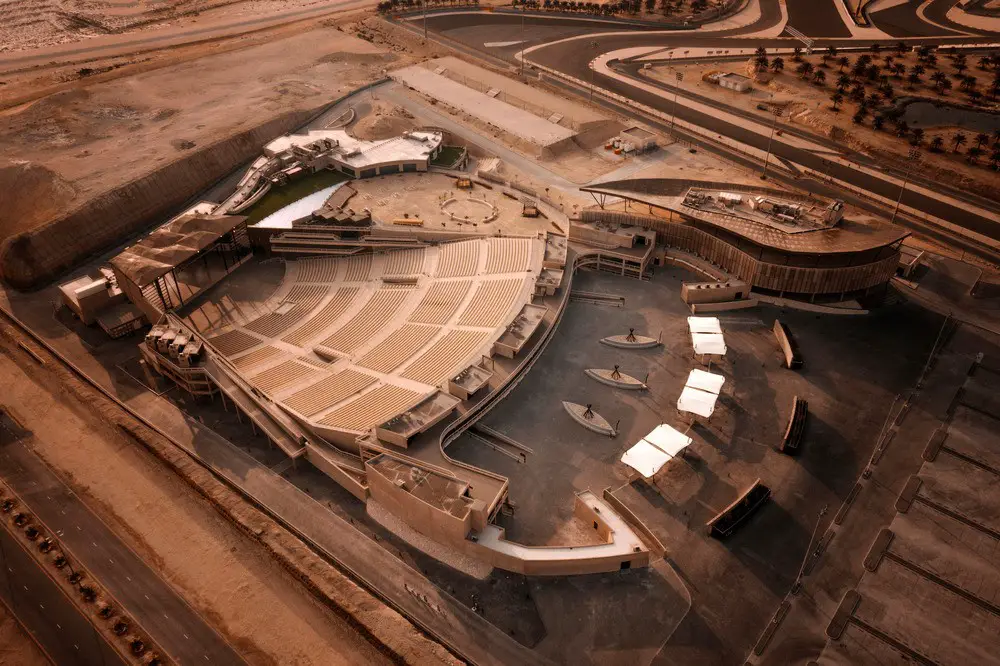
Architect: S/L Architects, led by Marwan Lockman
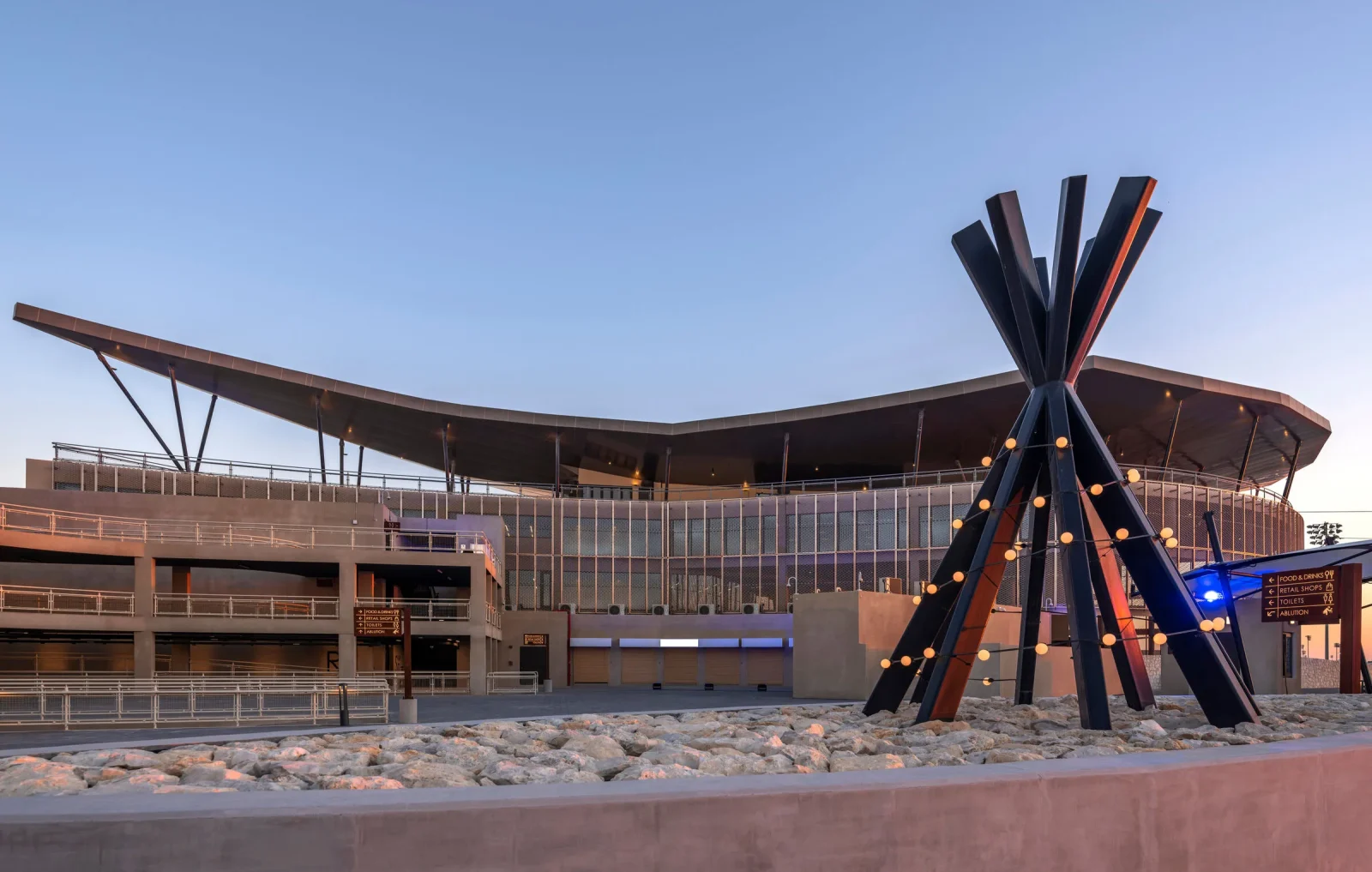
Set within a former limestone quarry in Bahrain’s Sakhir desert, Al Dana Amphitheater by S/L Architects, led by Marwan Lockman, seamlessly integrates architecture with the natural landscape. Its fan-shaped, sunken form uses locally quarried stone, rammed earth, and rusted steel to blend into the terrain while enhancing natural acoustics (a fan form of about 90 m from stage to last seat), minimizing echo, and reducing energy use. Designed with sustainability and inclusivity in mind, the venue features full accessibility and low-energy LED systems.
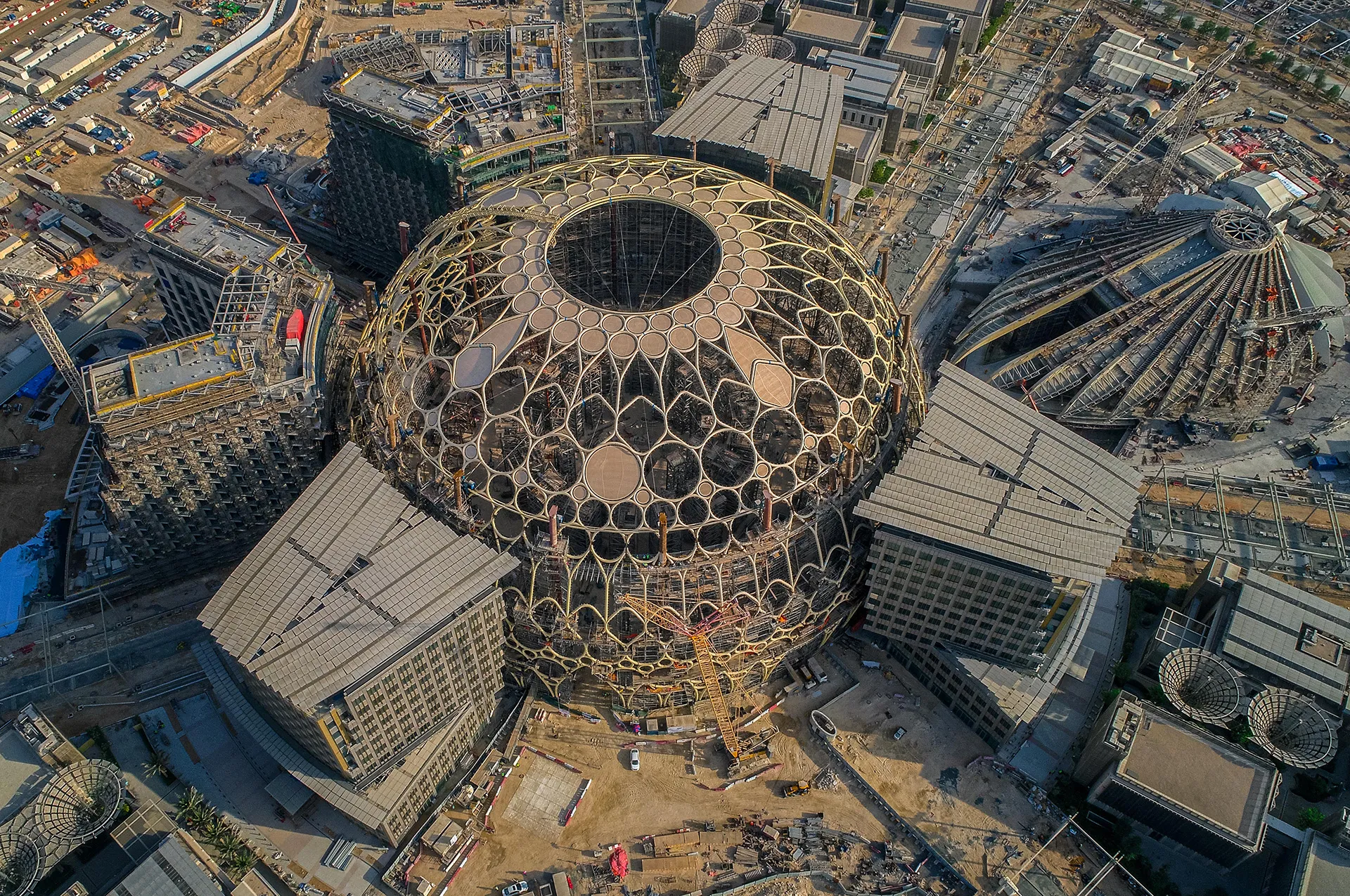
2. Al Wasl Plaza (Al Wasl Dome), Expo City Dubai / Dubai, UAE
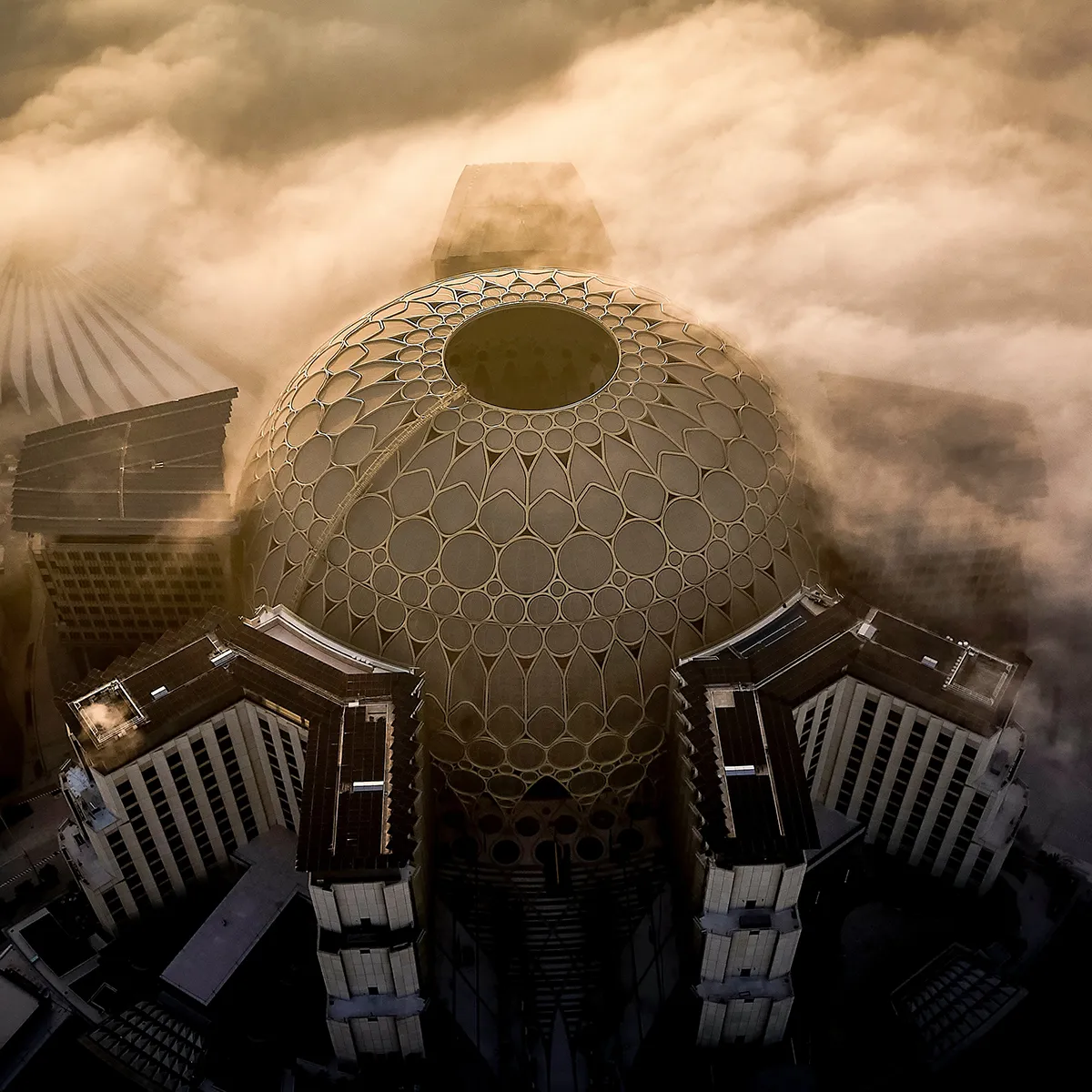
Architect: Adrian Smith + Gordon Gill Architecture
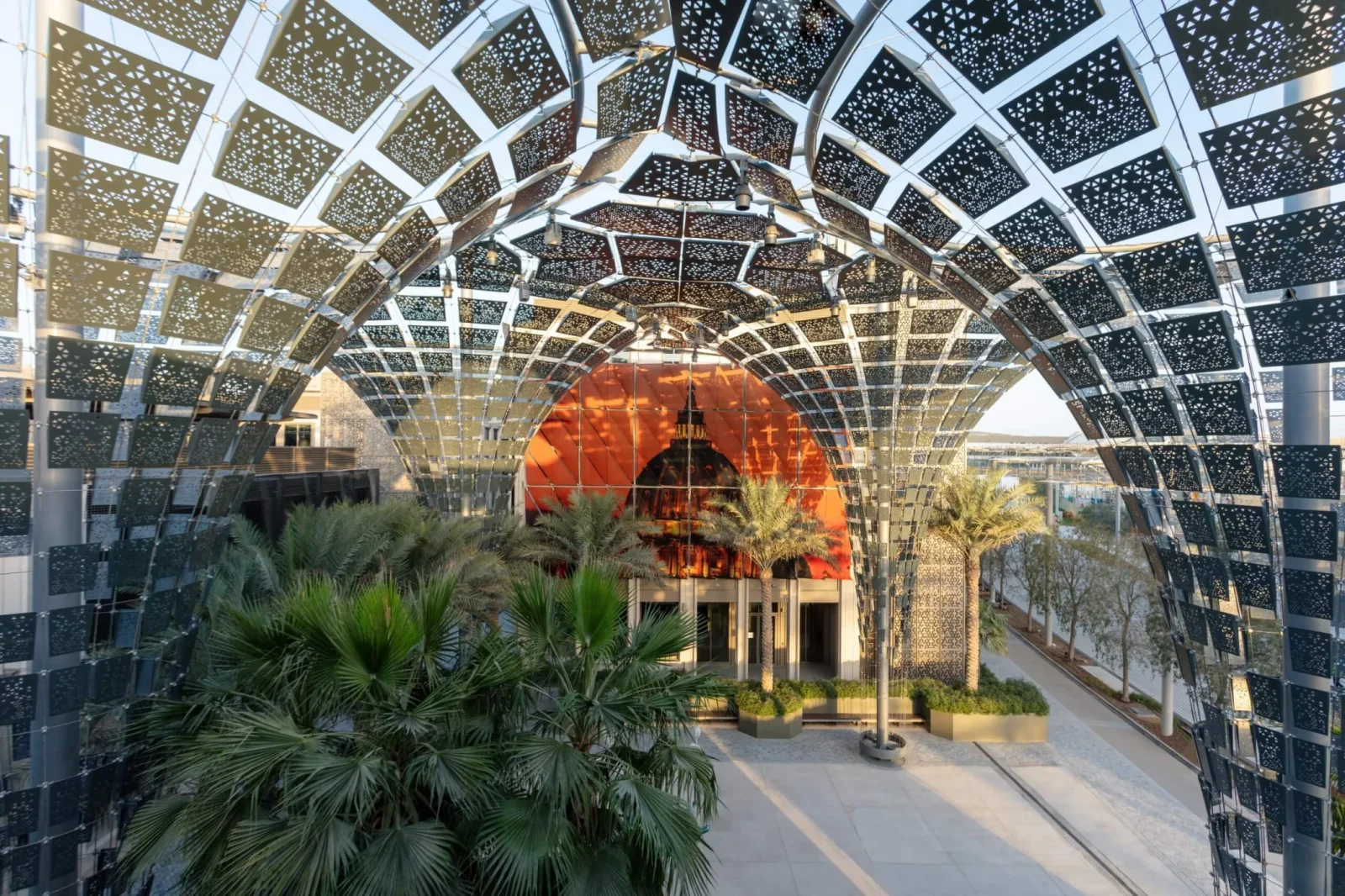
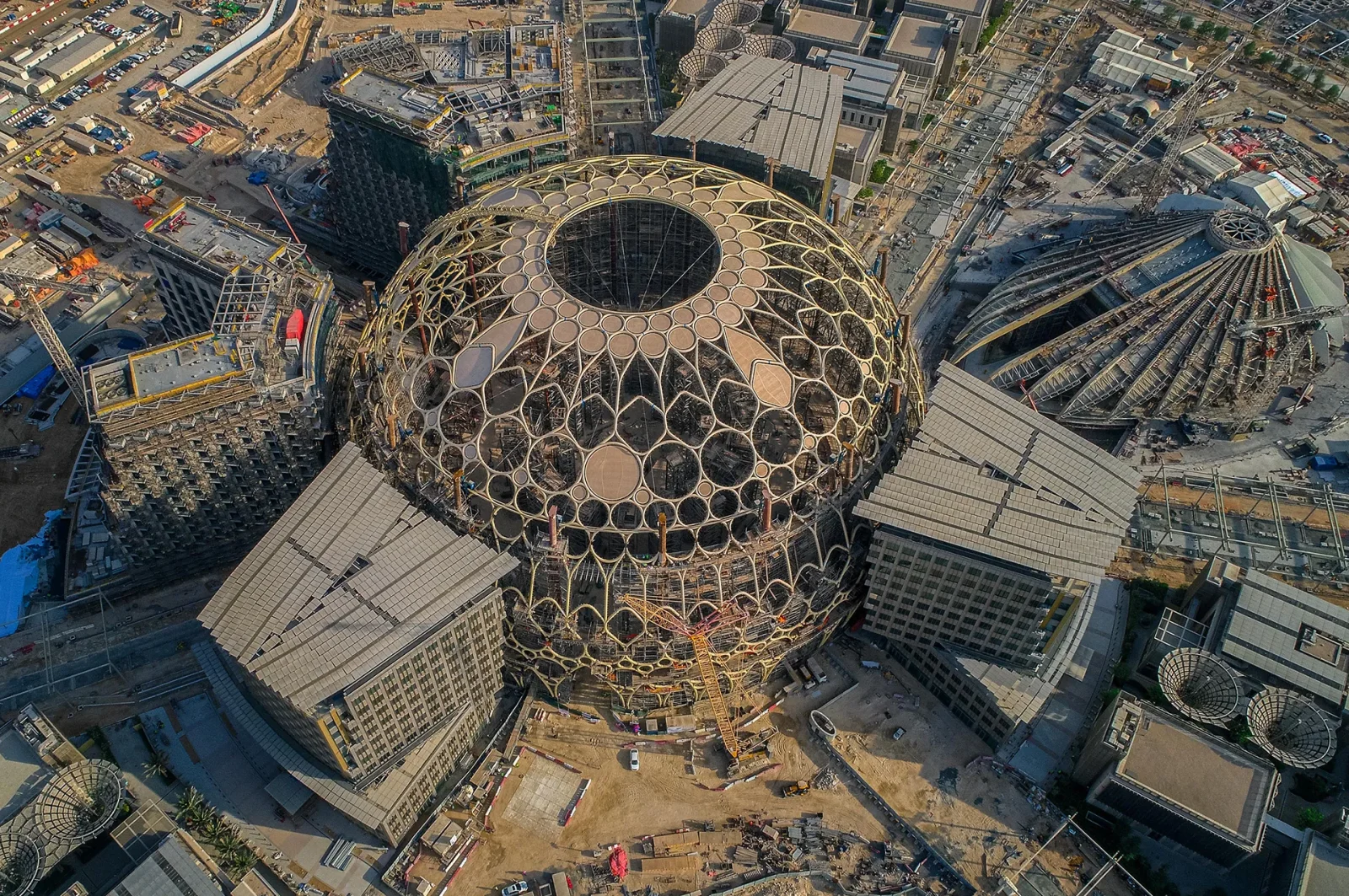
The Expo heartpiece with a 130-m diameter dome (the world-scale domed trellis that acts as a 360° projection surface), designed as the central “urban room” at Expo 2020 and retained in the site legacy (Expo City).
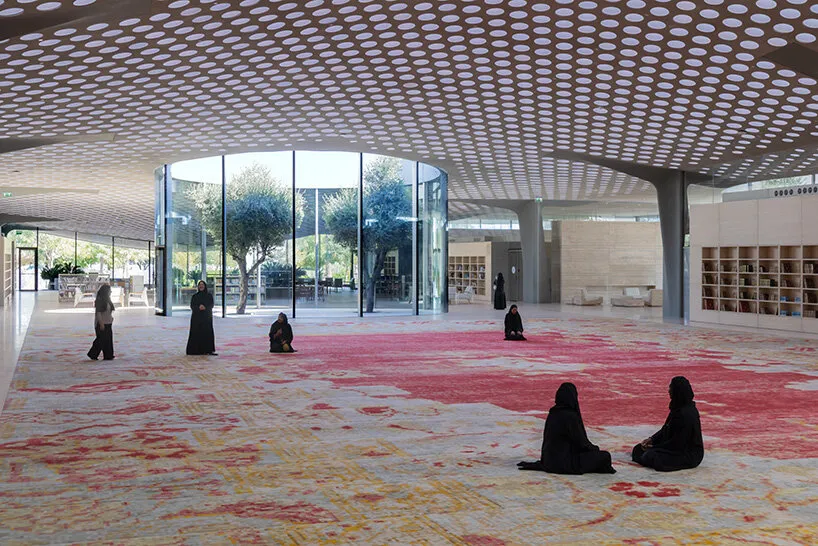
3. Al-Mujadilah Center & Mosque for Women, Education City, Doha, Qatar
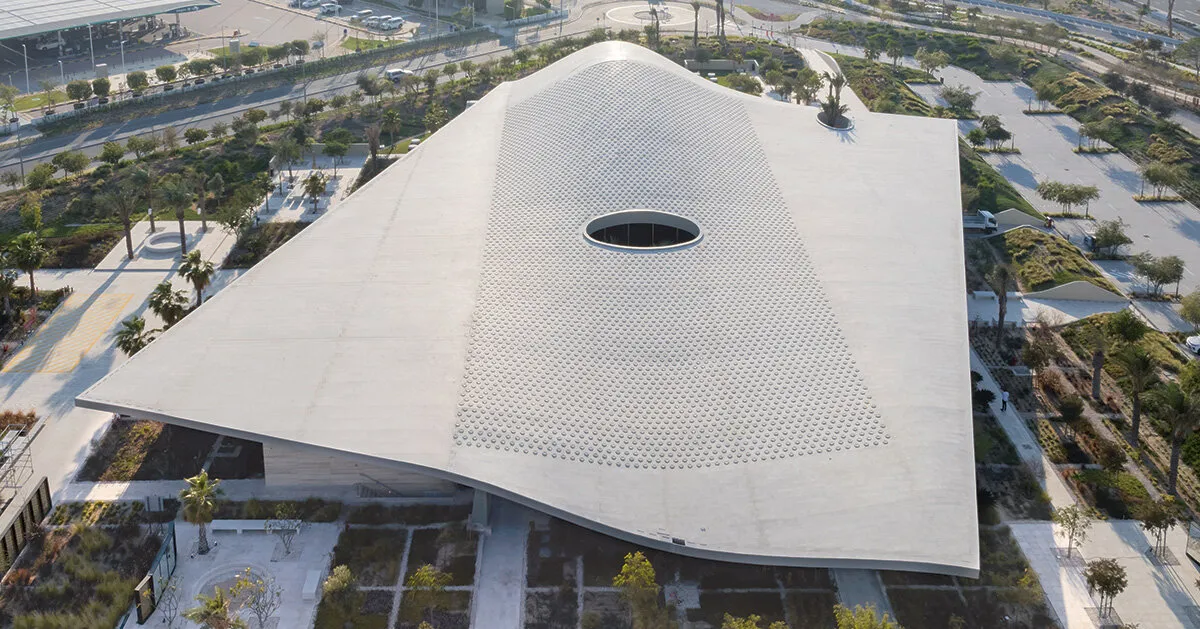
Architect: Diller Scofidio + Renfro (DS+R)
A purpose-built contemporary women’s mosque and education center; DS+R describes a rolling roof pierced by 5,000+ light wells, an internal courtyard with olive trees, and multi-use spaces for prayer and learning explicitly positioned as the first contemporary mosque designed for women in the Muslim world.
4. Buhais Geology Park Interpretive Center, Sharjah / UAE
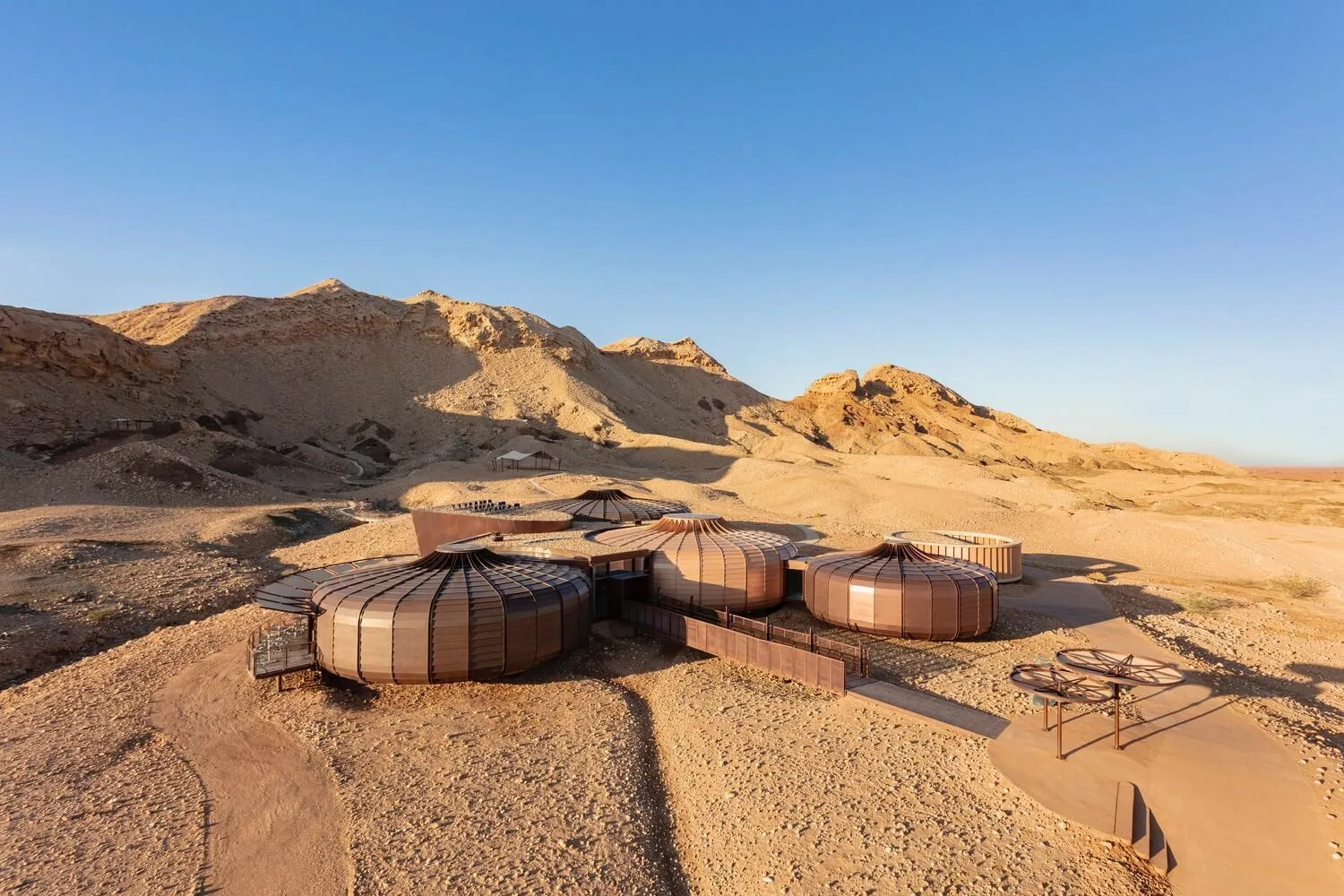
Architect: Hopkins Architects
An interpretive center built for the Buhais Geology Park, developed to communicate deep-time geology and biodiversity. The center’s exhibition strategy and site-specific use of material and landscape integration.
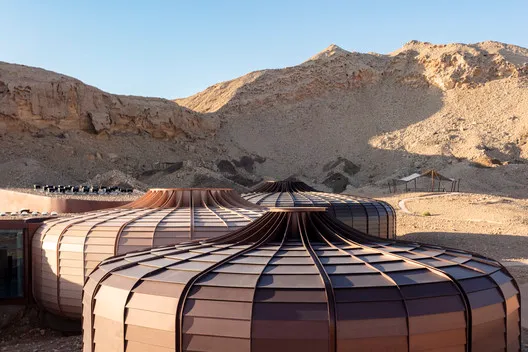
5. Expo 2020—Thematic Districts (masterplan & pavilions), Expo City Dubai / UAE
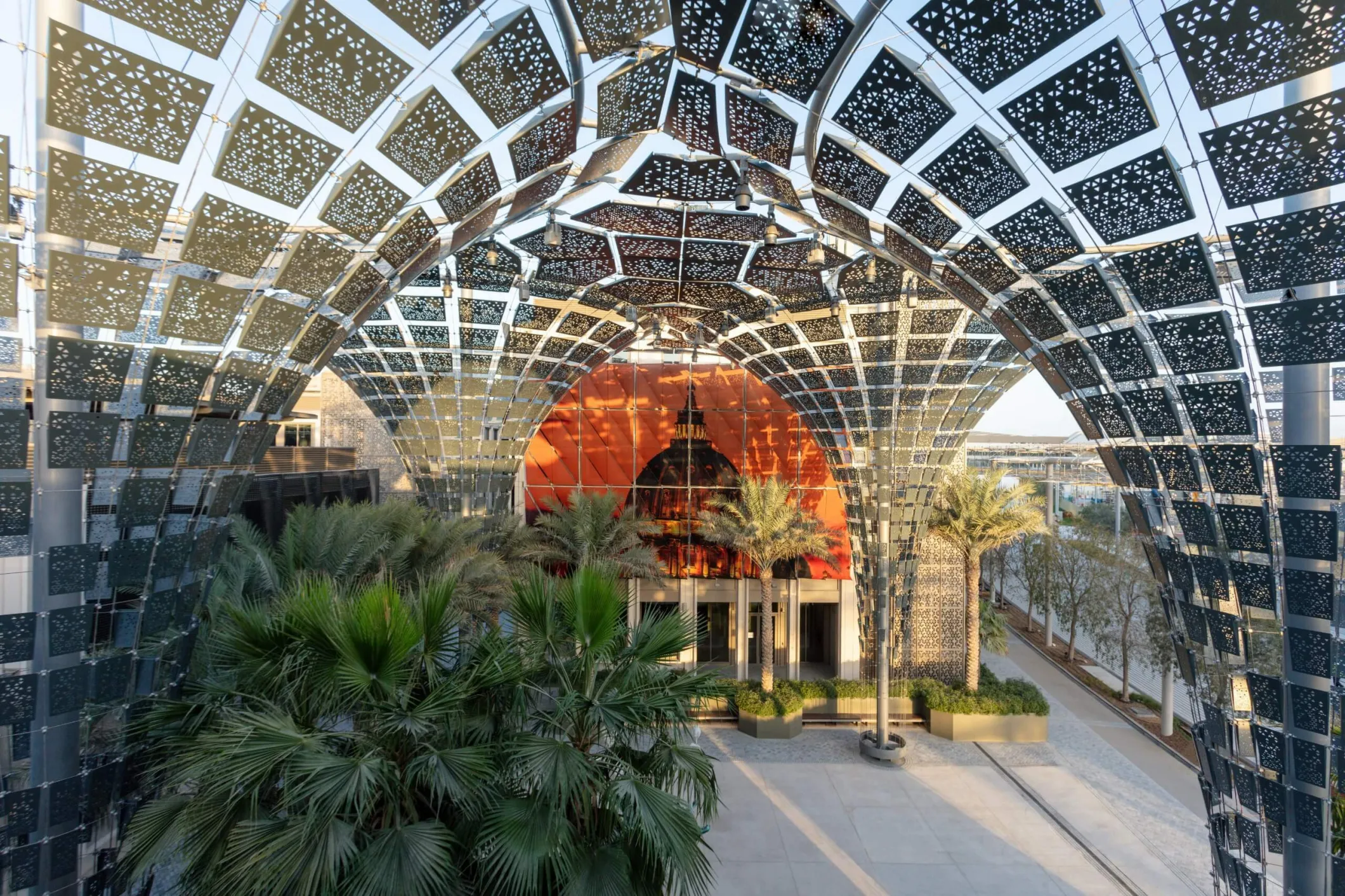
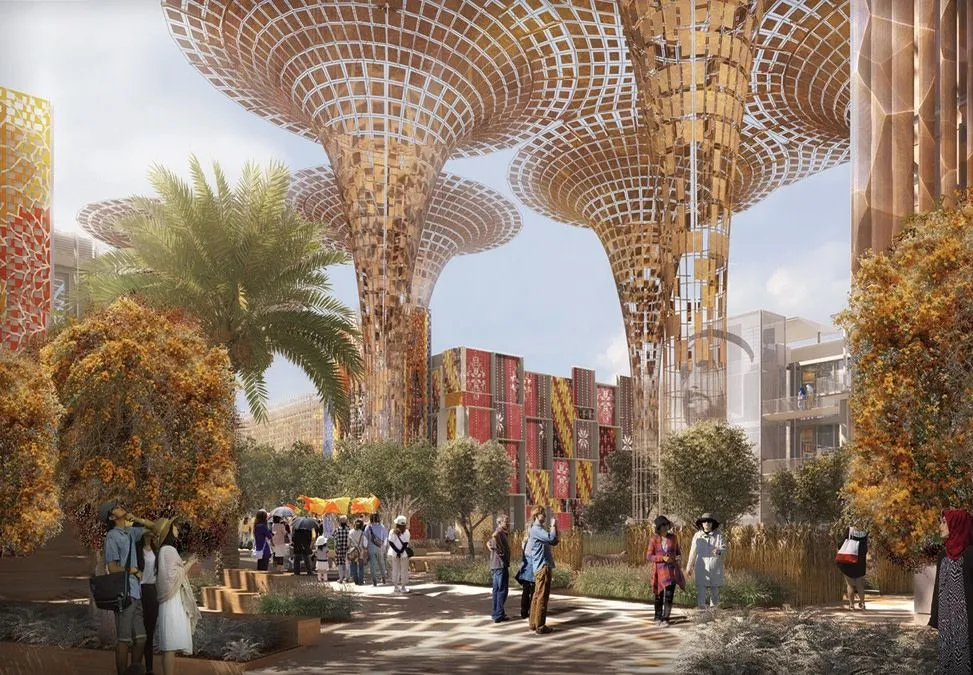
Architect: Hopkins Architects (part of the Expo design team)
Hopkins was the lead for the thematic district/joining infrastructure that organizes the sustainability, mobility, and opportunity districts, widely reported as the spine and visitor circulation strategy that framed the Expo site and its three thematic pavilions.
6. Jafar Center—Dubai College, UAE
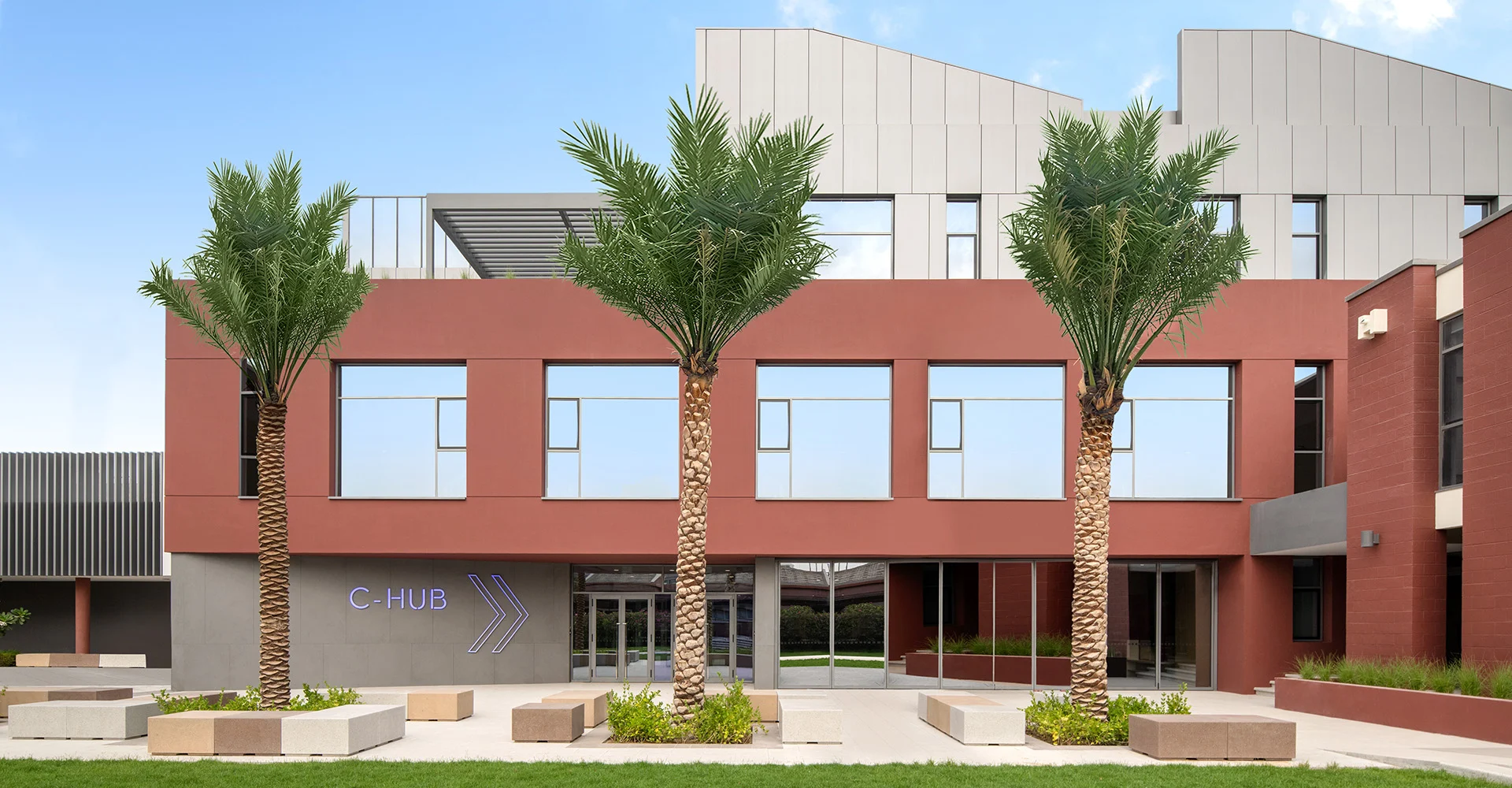
Architect: Godwin Austen Johnson (GAJ)
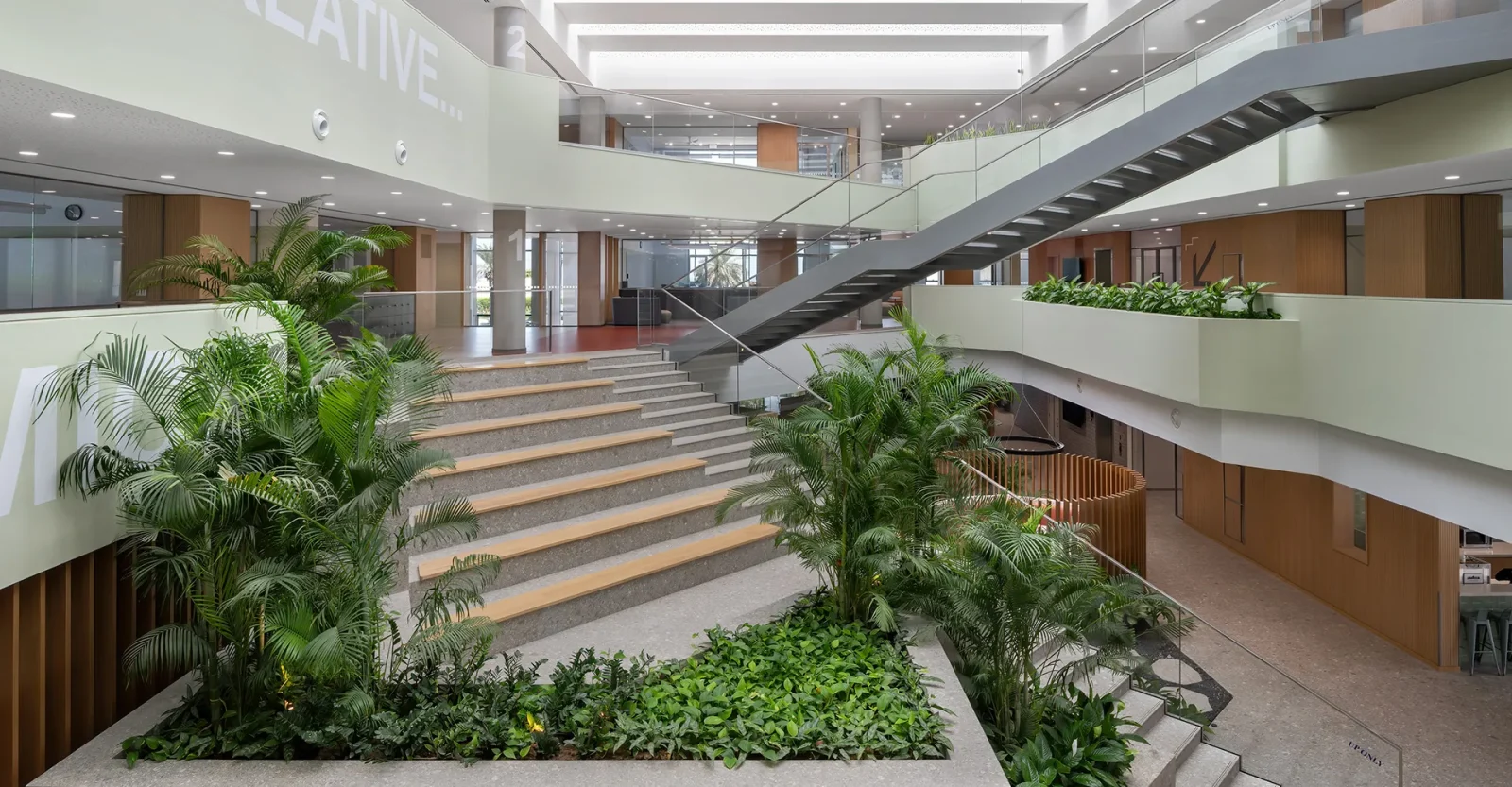
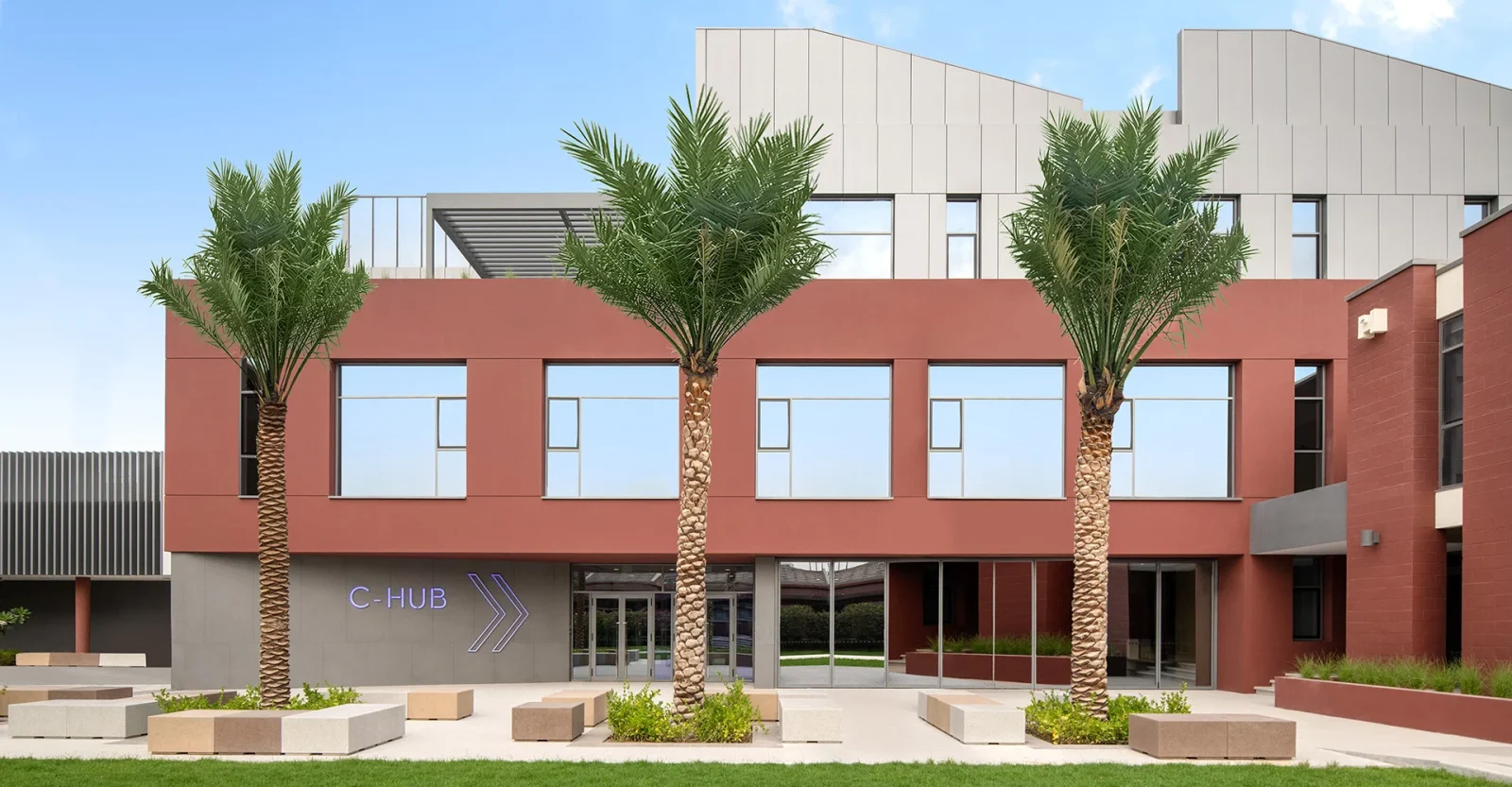
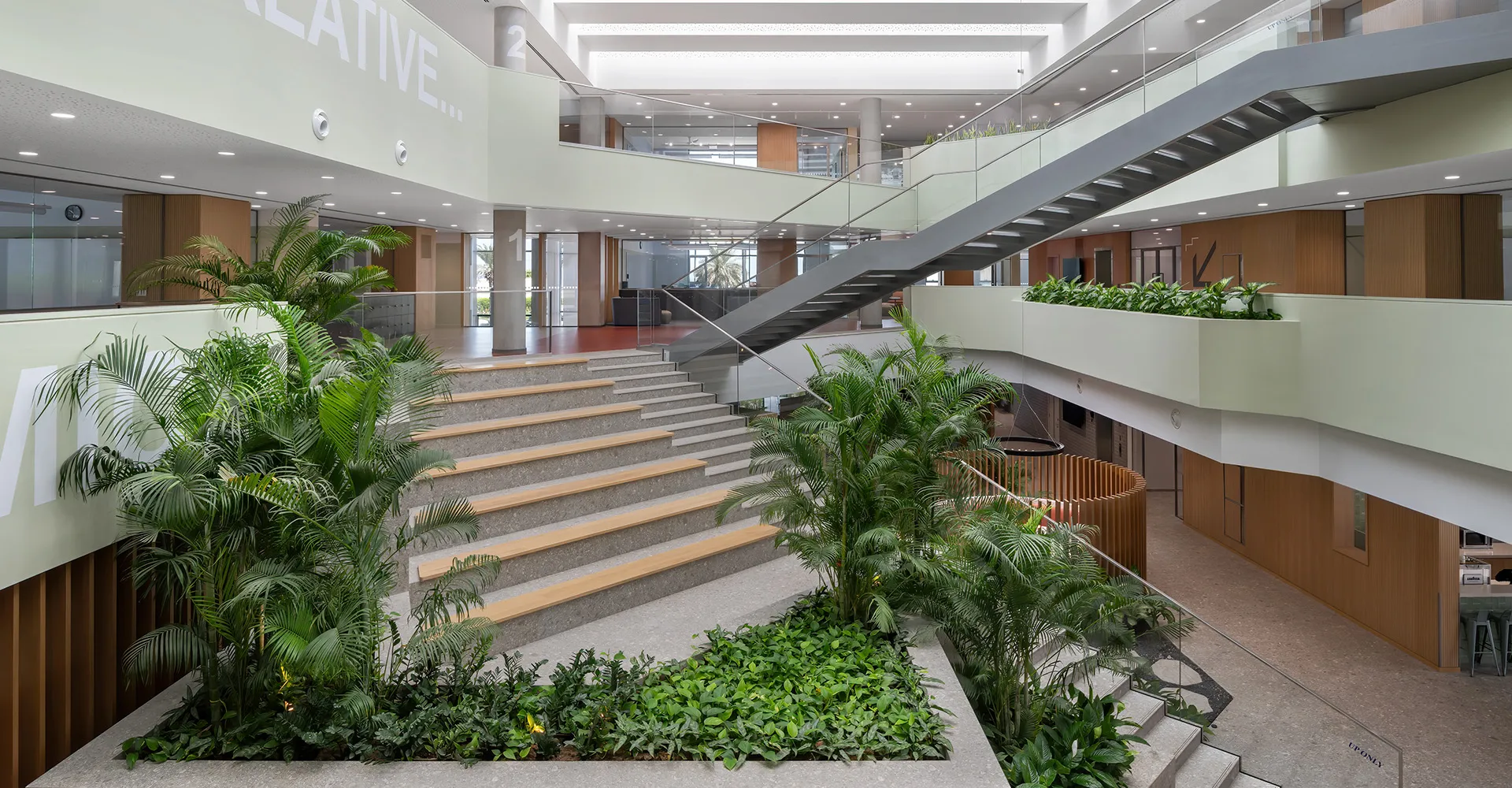
A new STEM and creative learning hub for Dubai College (≈5,200 m² per practice notes), designed for daylight, collaborative learning, and strong sustainability performance (LEED Gold certification and region-leading LEED scores).
7. Khor Kalba Turtle & Wildlife Sanctuary—Kalba, Sharjah, UAE
Architect: Hopkins Architects
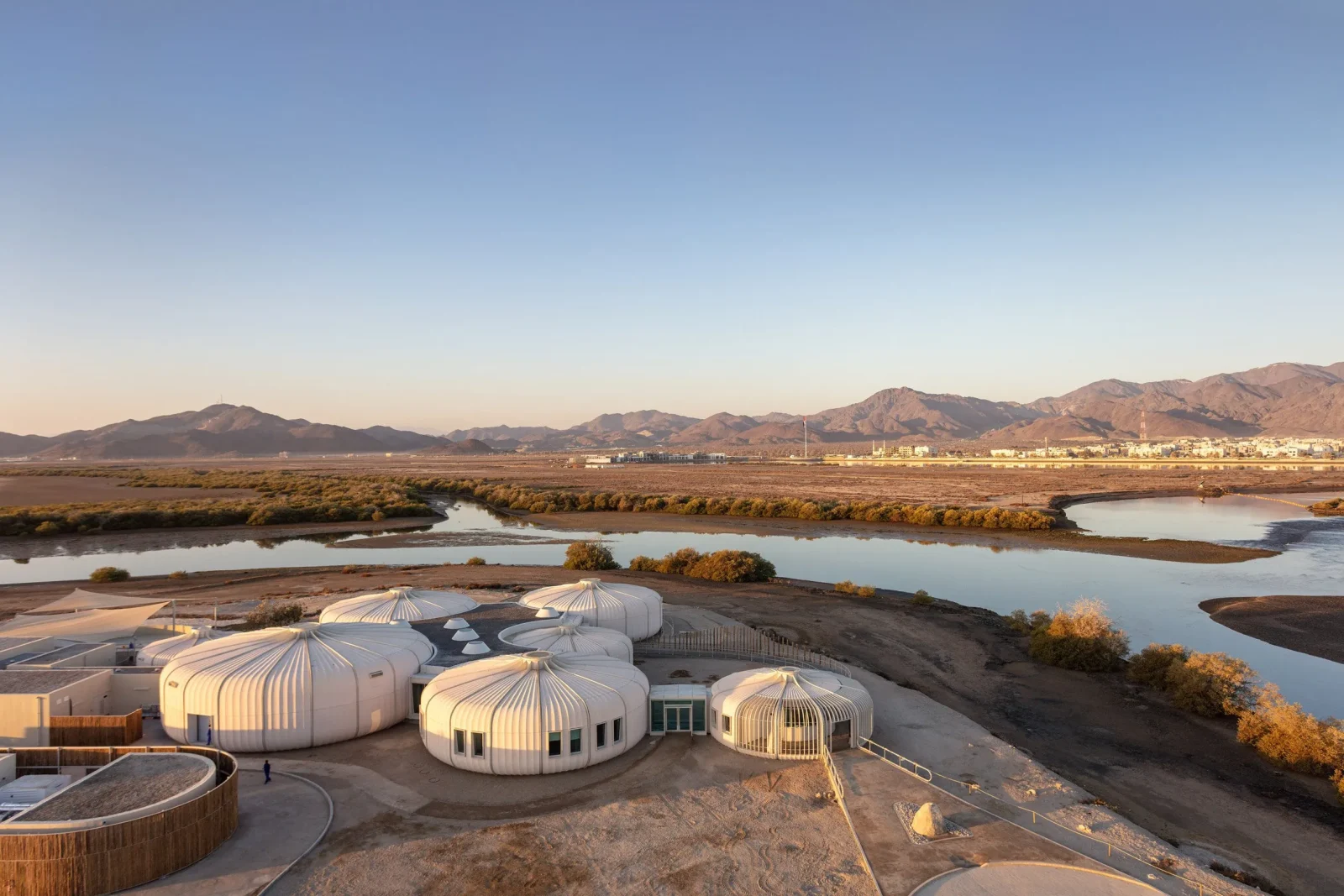
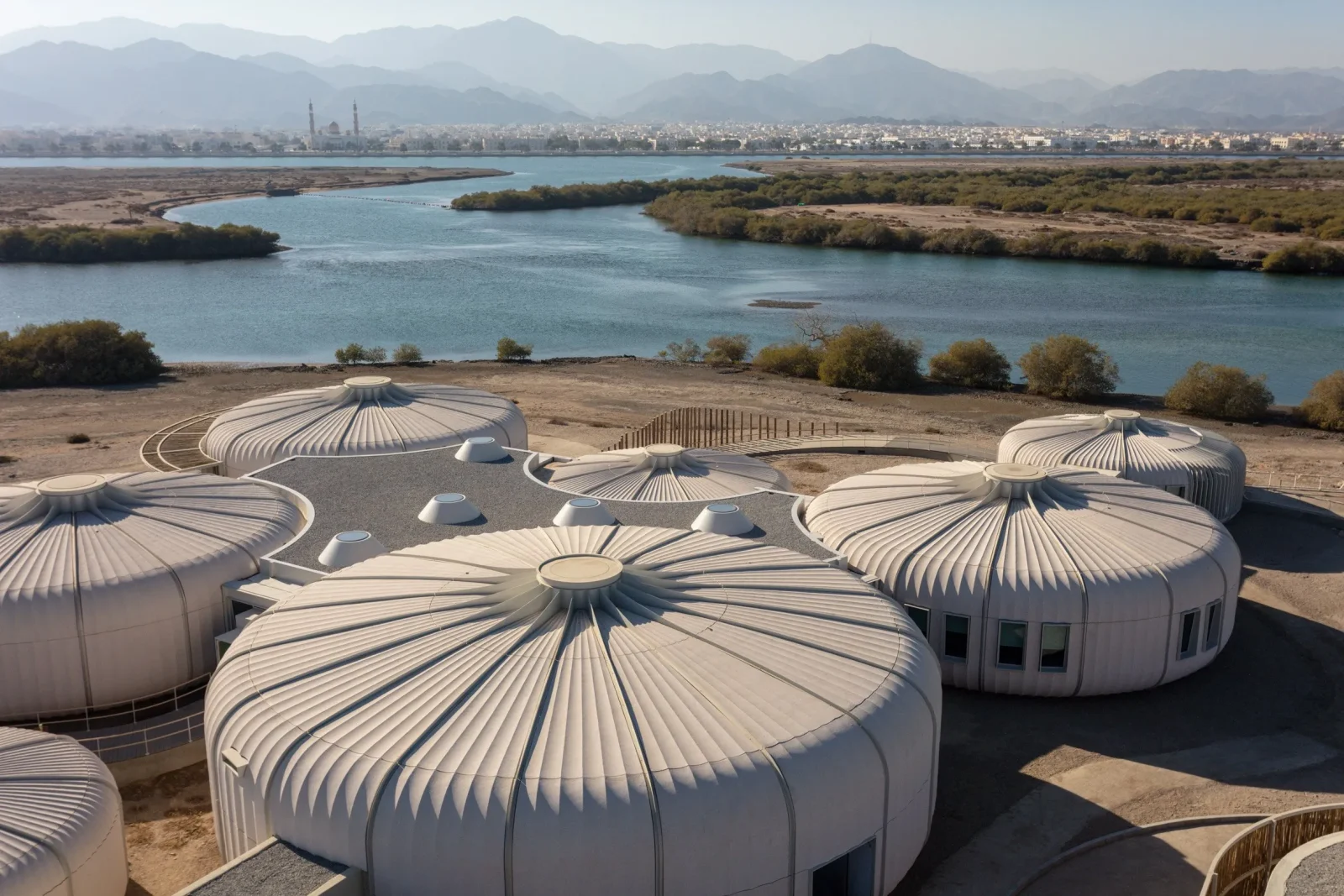
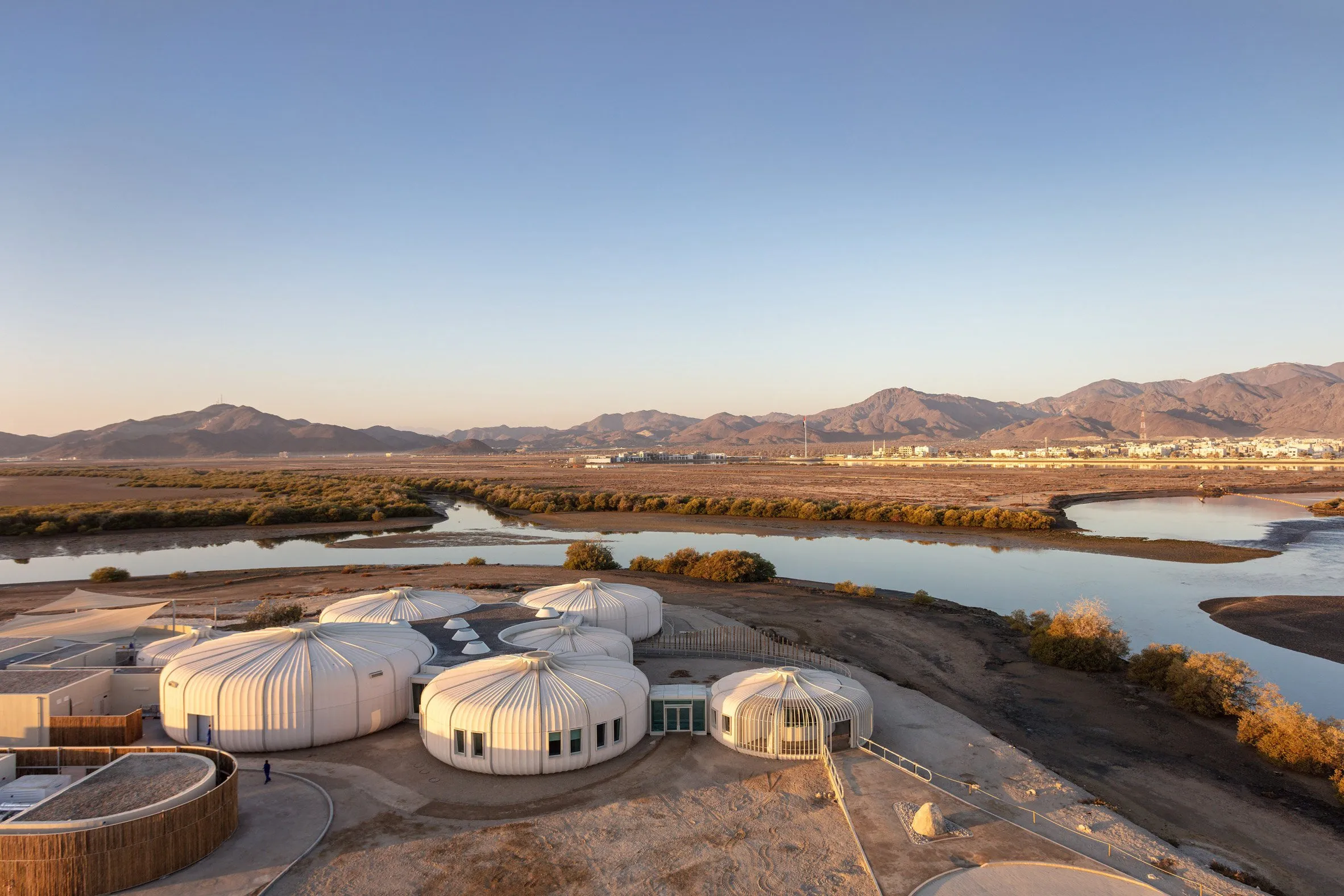
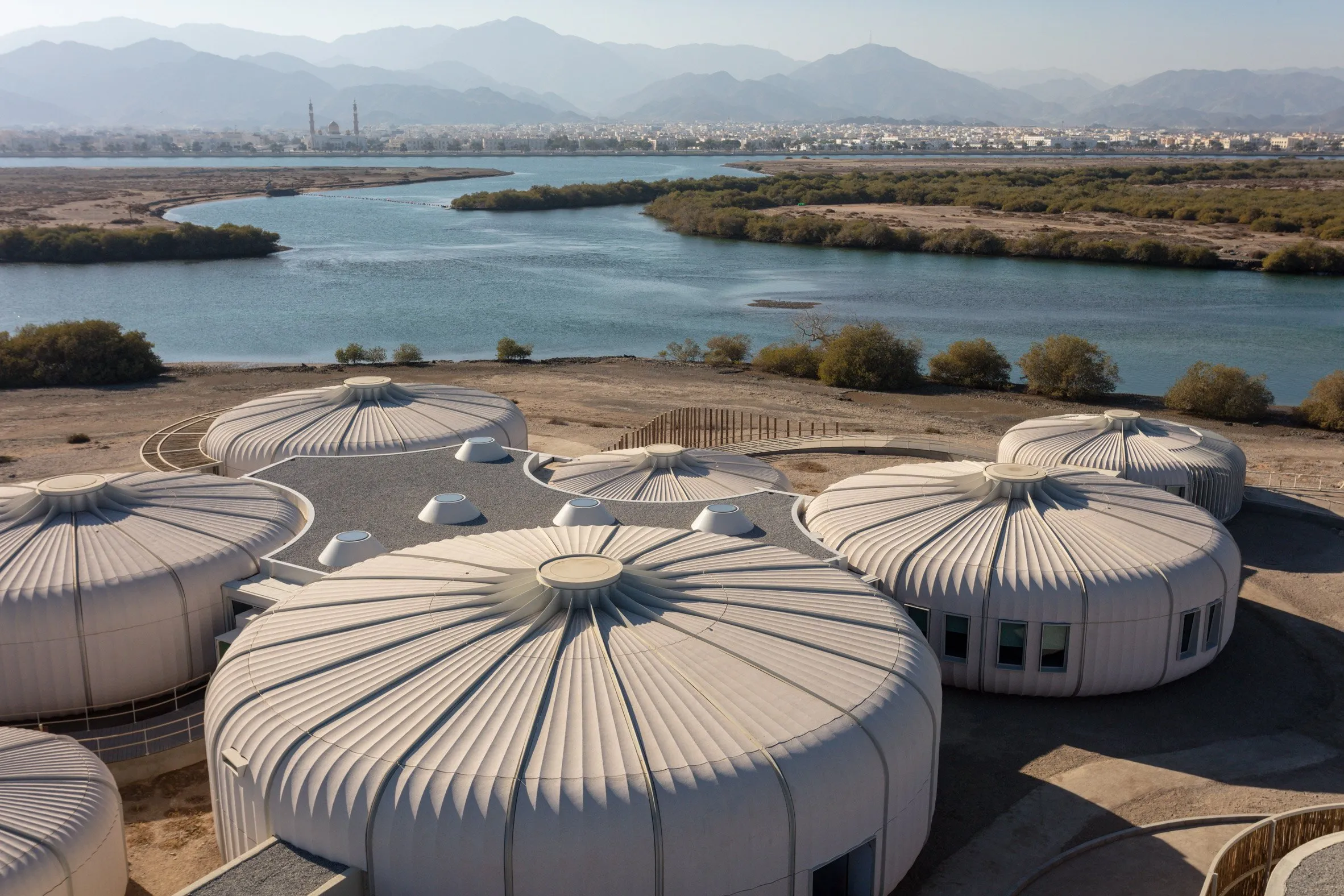
A coastal conservation complex of interconnected, pod-like buildings (seven main pods on completion) providing rehabilitation labs and visitor and education facilities for the Kalba mangrove reserve, designed to minimize environmental impact and as part of the coastal landscape.
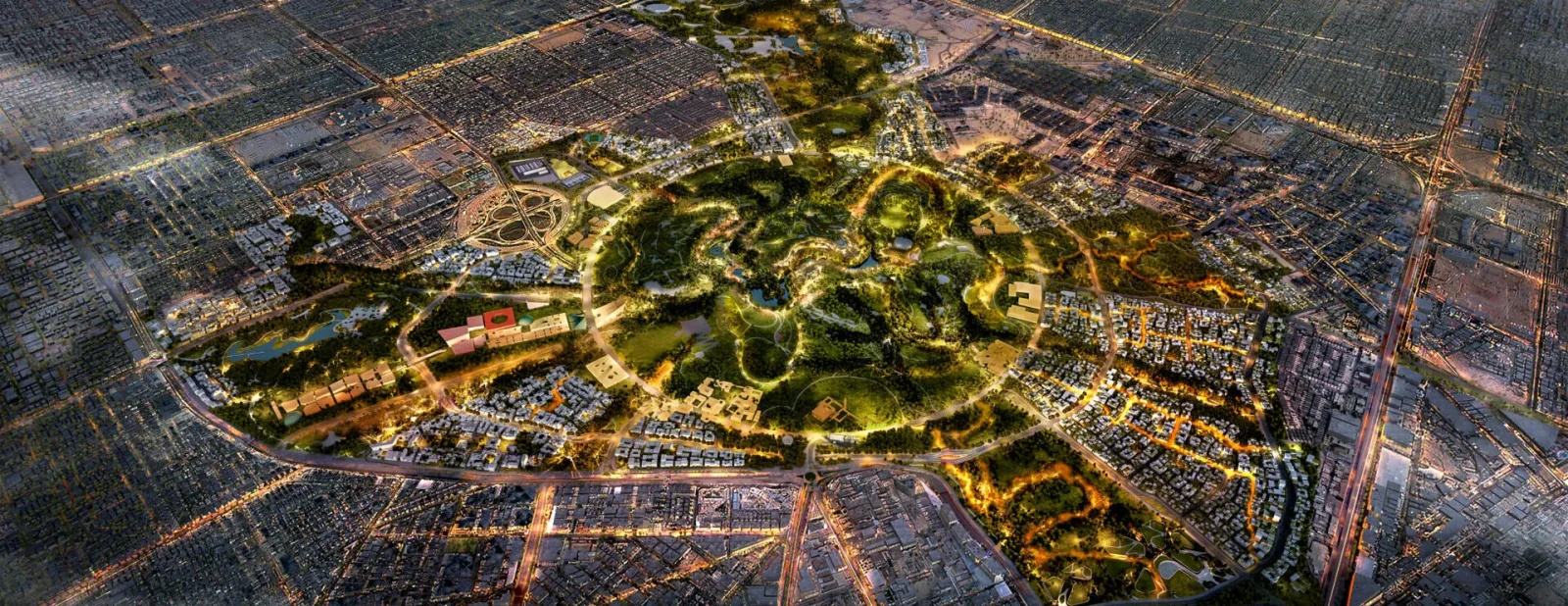
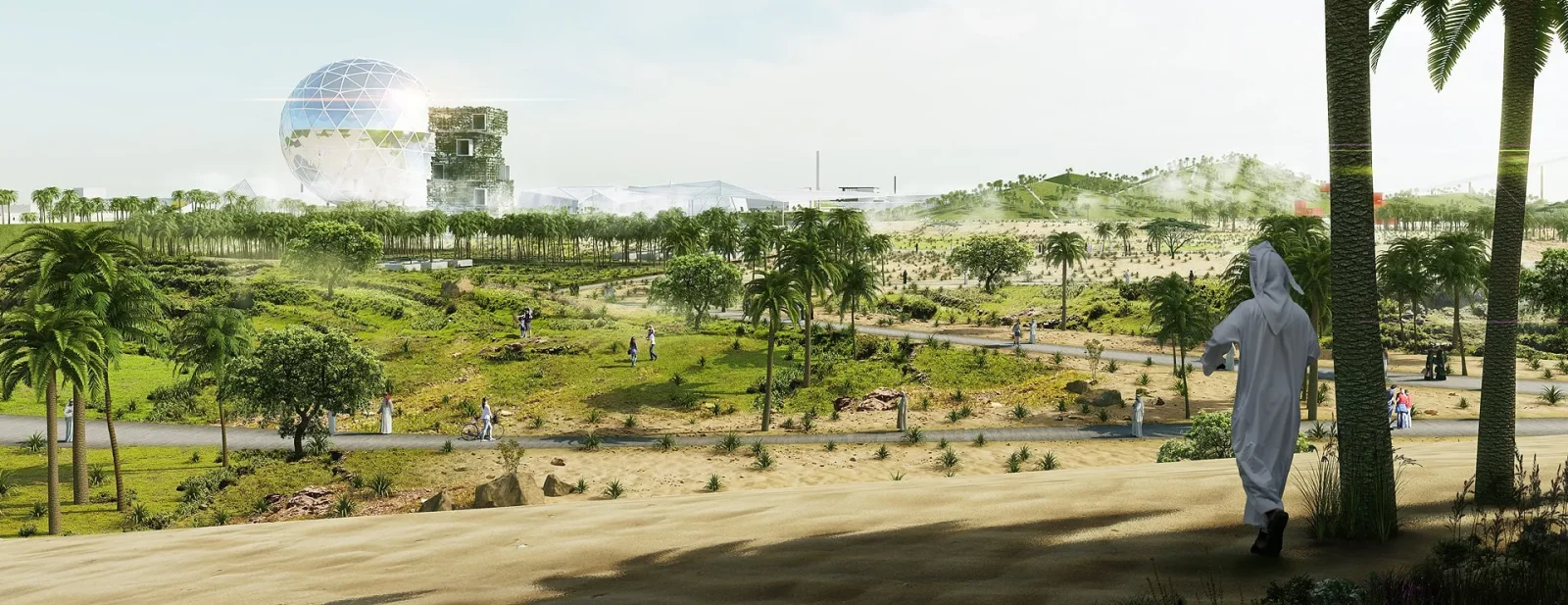
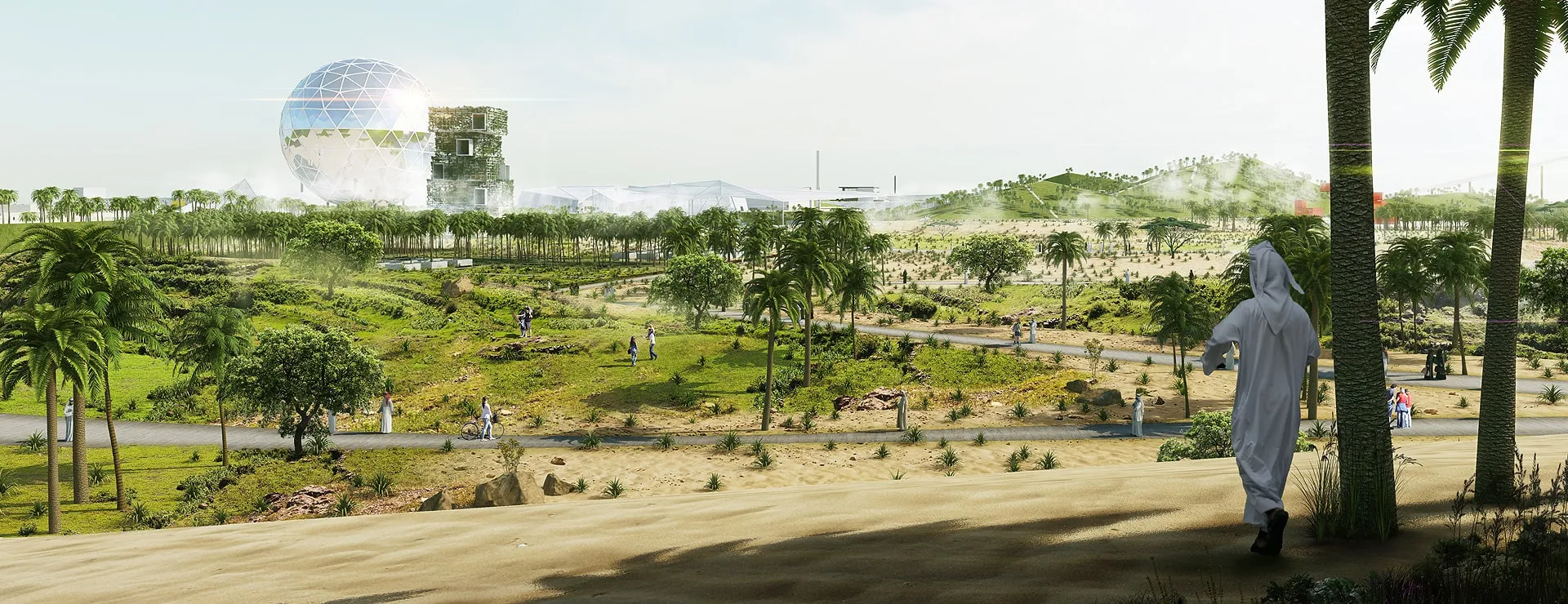
8. King Salman Park—Riyadh, Saudi Arabia
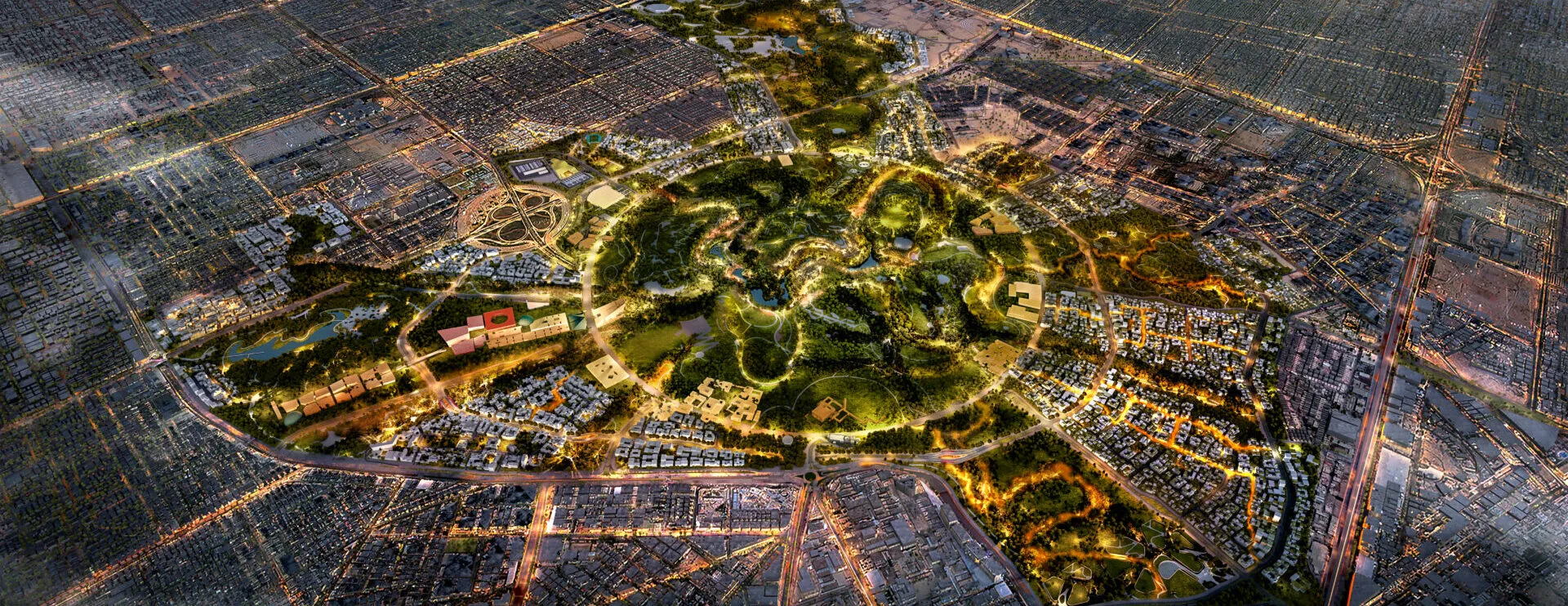
Architect/JV lead: Gerber Architekten (lead) with engineering partners Buro Happold and setec
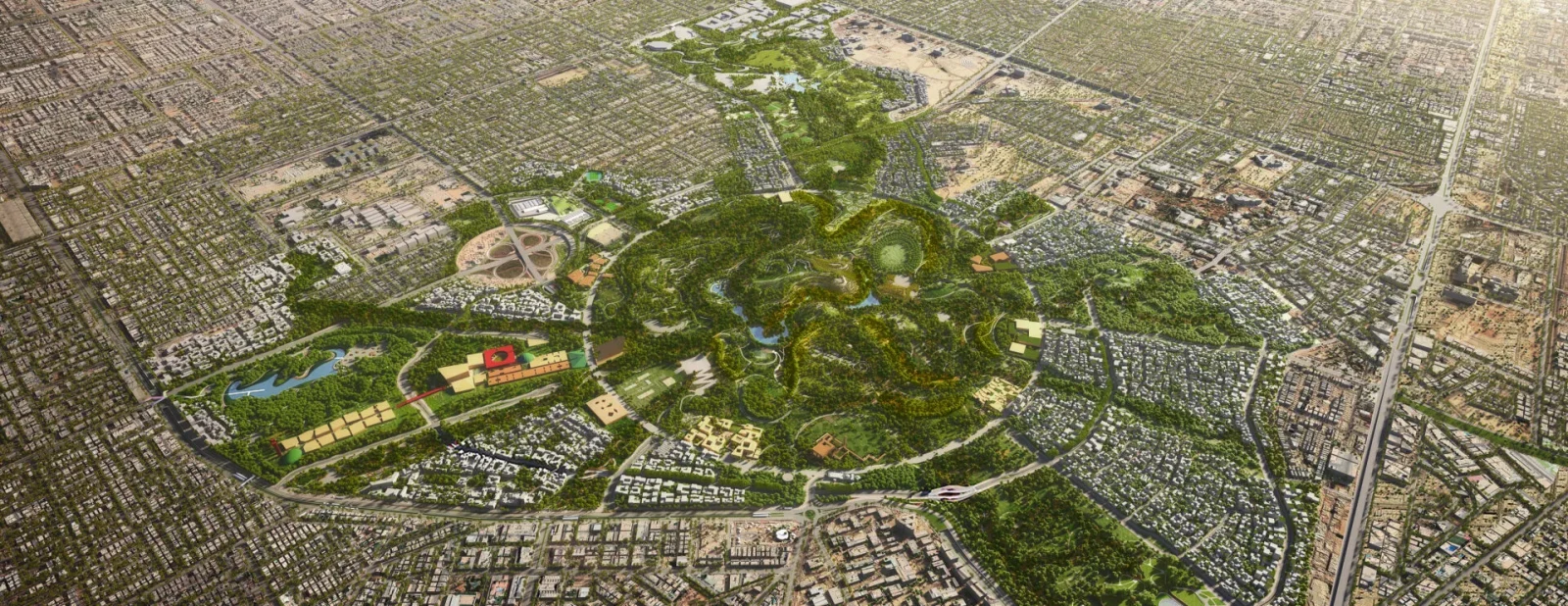
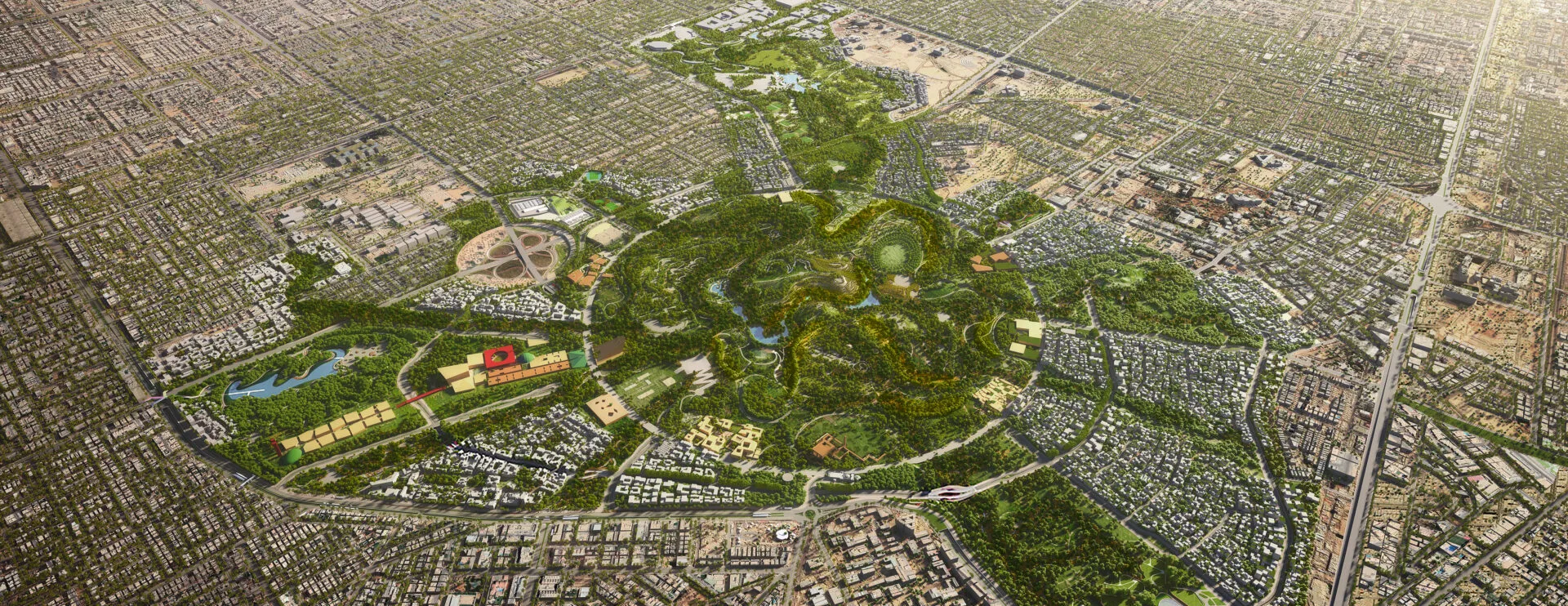
The King Salman Park master plan scales the regeneration of a former airport site into a 16–17 km² urban park, described by the teams as one of the world’s largest inner-city parks. The entry to RIBA’s shortlist is under the Future Projects/large-scale transformation agenda.
9. Singapore Pavilion, Expo 2020—Dubai, UAE
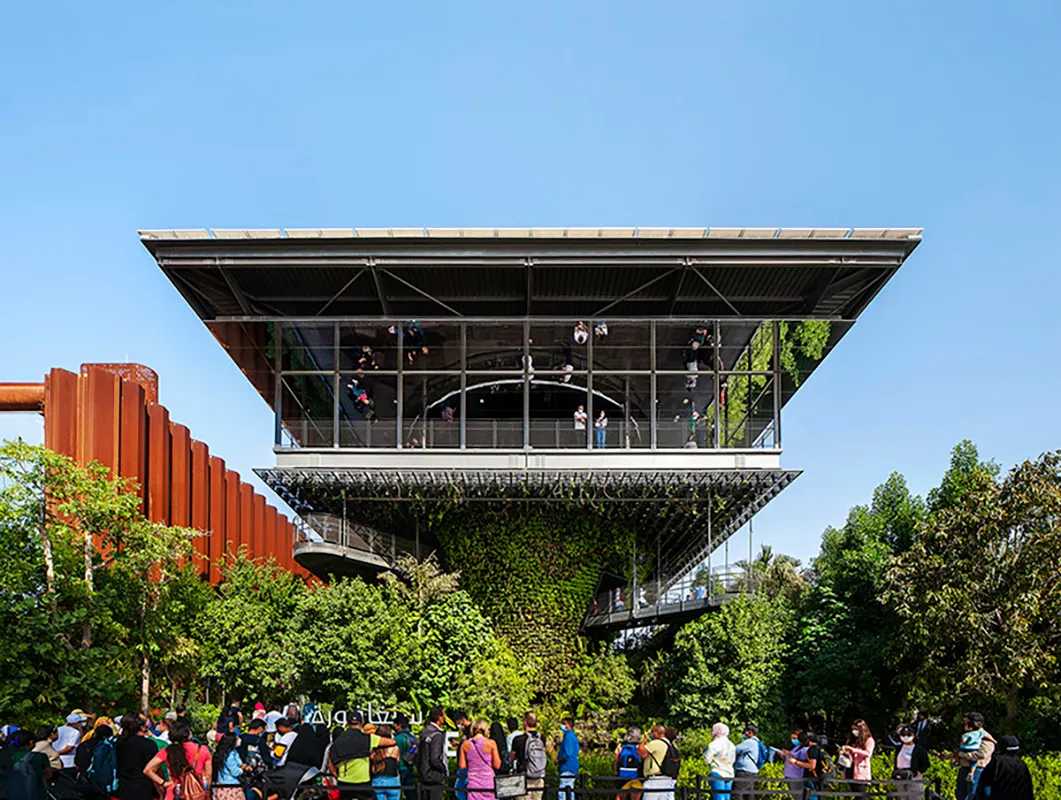
Architect: WOHA (with landscape practice Salad Dressing)
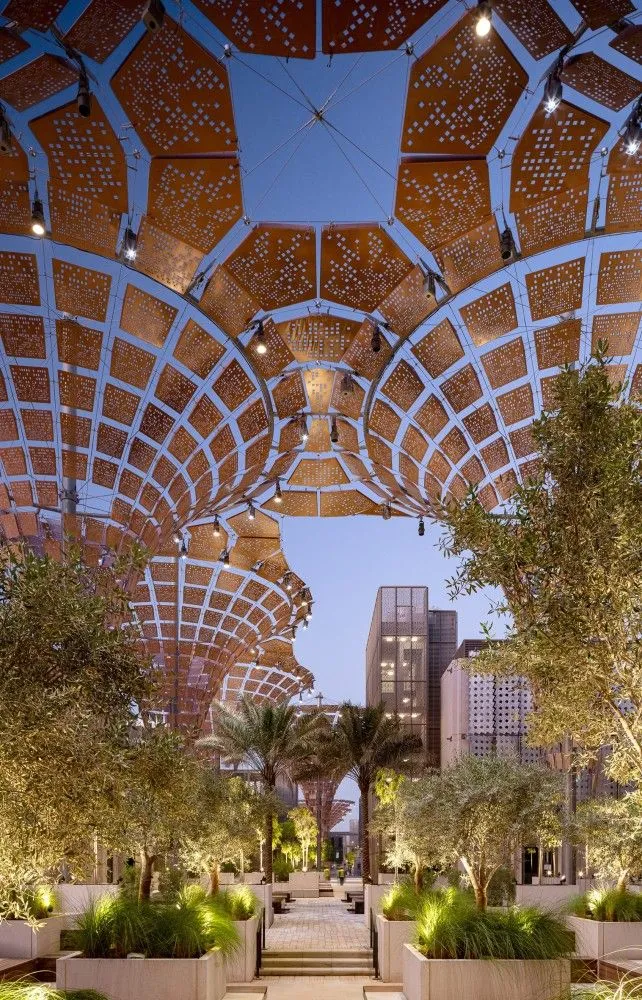
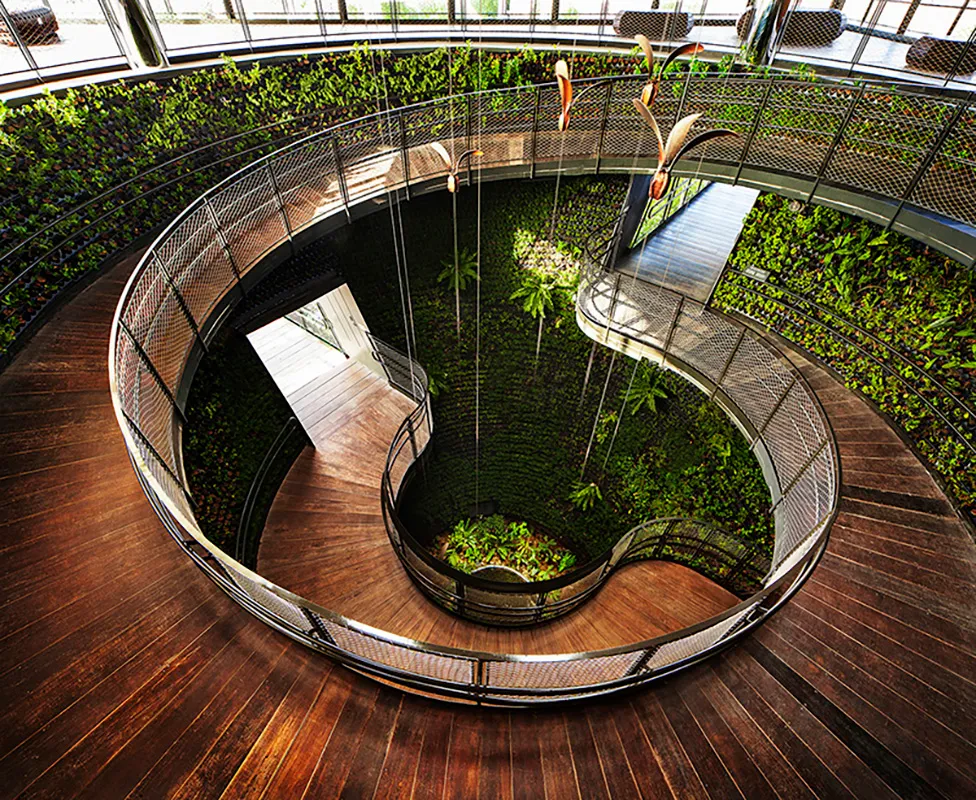
Built as a three-cone “urban rainforest” in the Sustainability District at Expo 2020, the pavilion ran as a net-zero and self-sustaining exhibit (solar canopy, water management) and featured hundreds of plant species and an immersive multi-cone sequence.
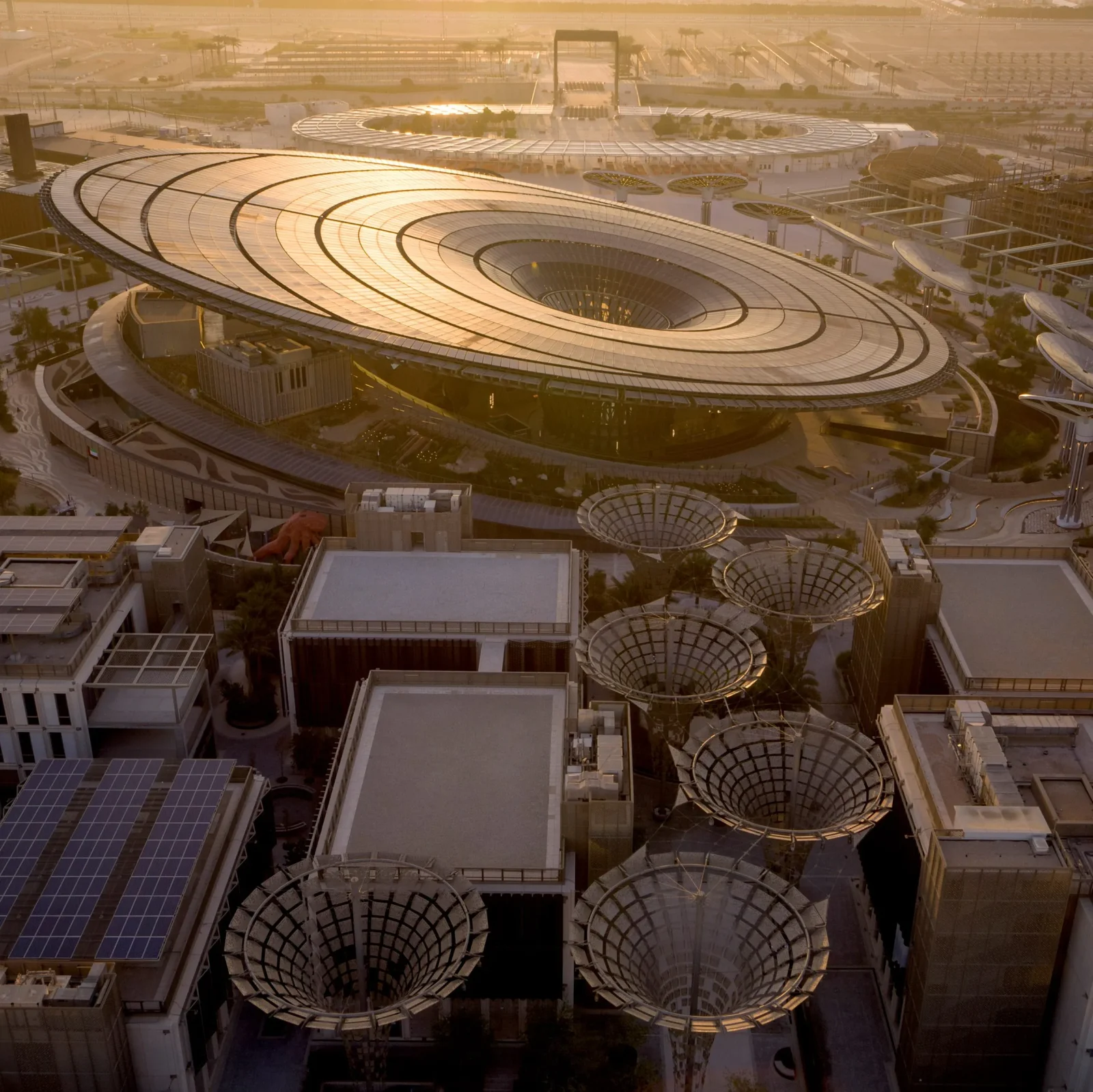
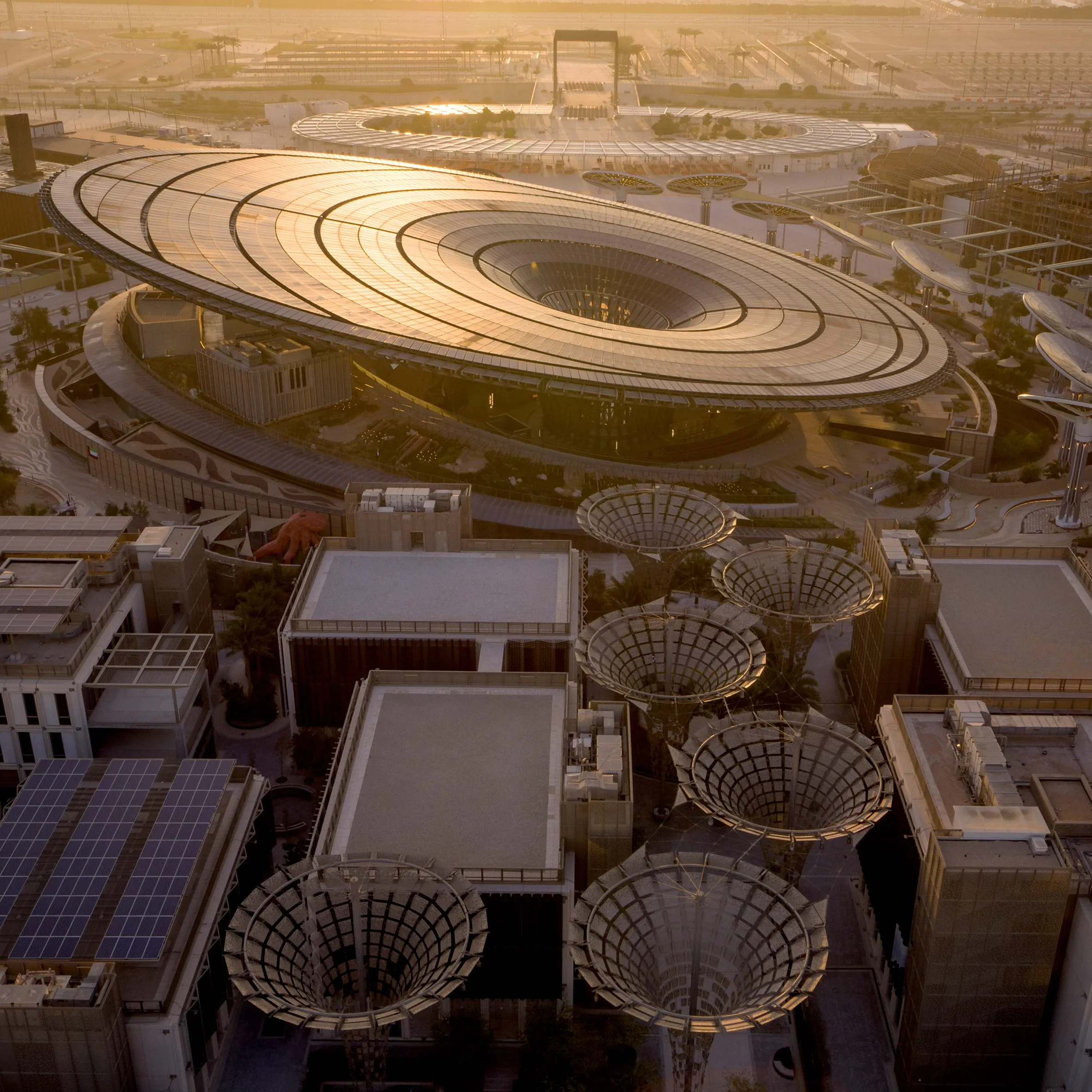
10. Terra—The Sustainability Pavilion (Expo 2020)—Dubai, UAE
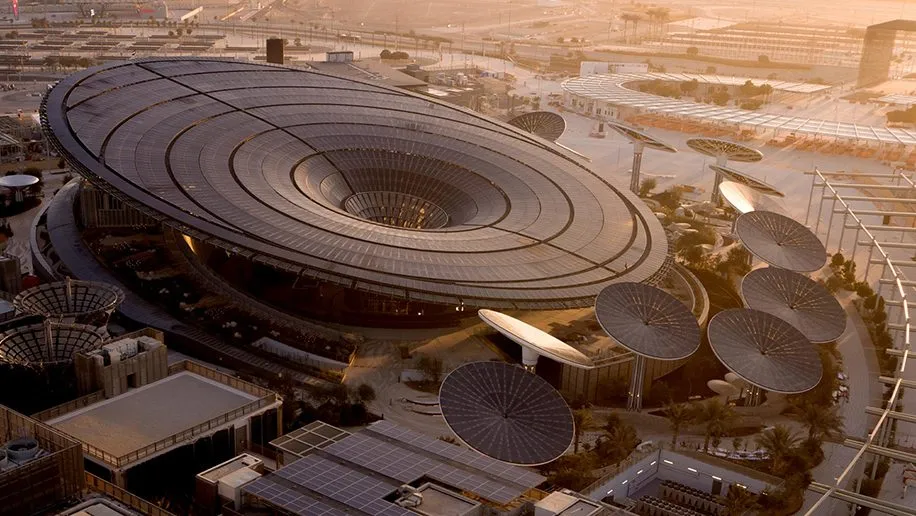
Architect: Grimshaw (lead) with landscape by Desert INK; engineering by Buro Happold
One of Expo 2020’s three thematic pavilions, designed to generate its own energy and water, Grimshaw and Buro Happold detail the canopy, PV array, and water-recovery features intended to make Terra a long-life sustainability museum after the Expo.
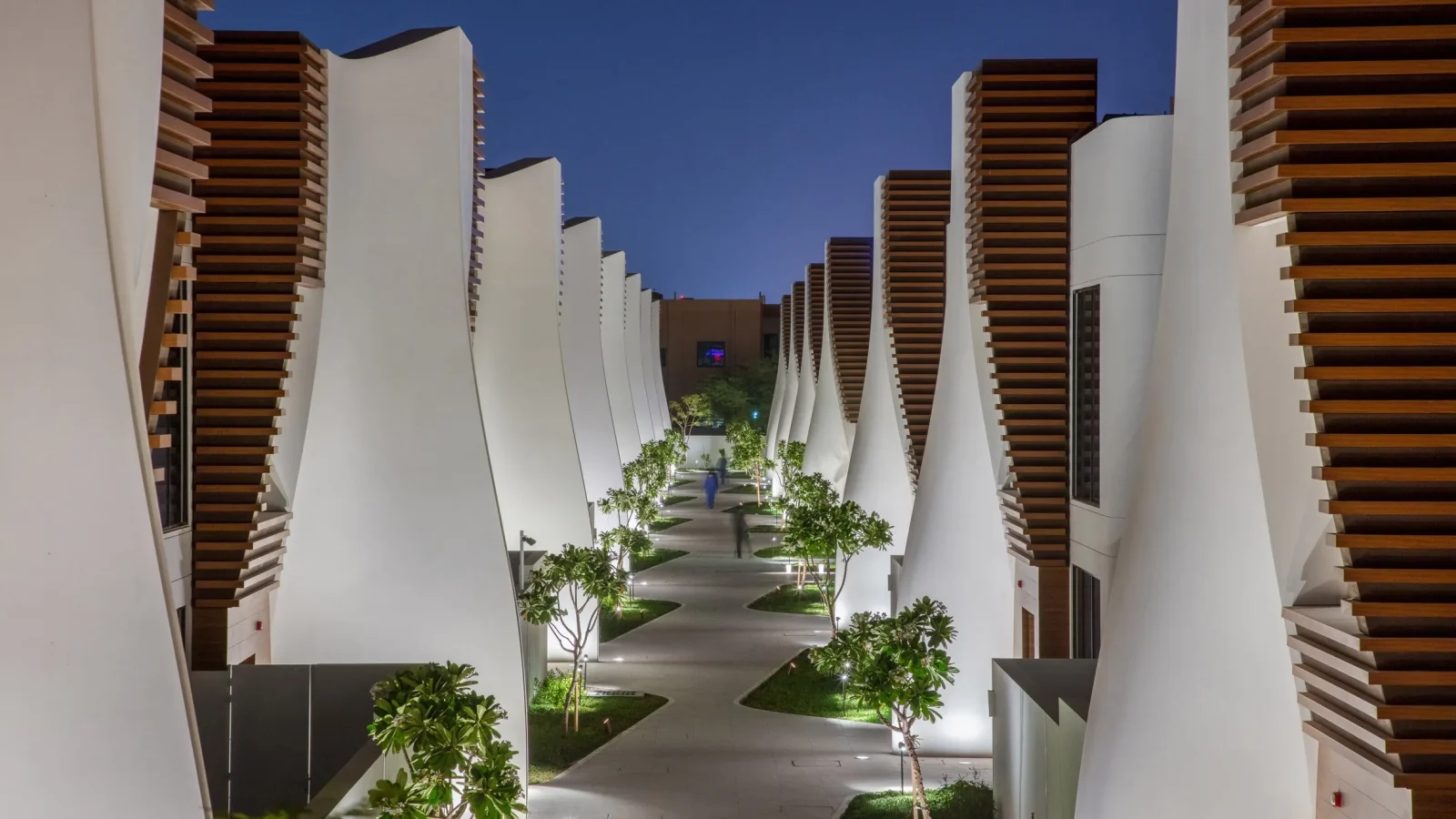
11. The Fold—Jumeirah/Al Wasl Road, Dubai, UAE
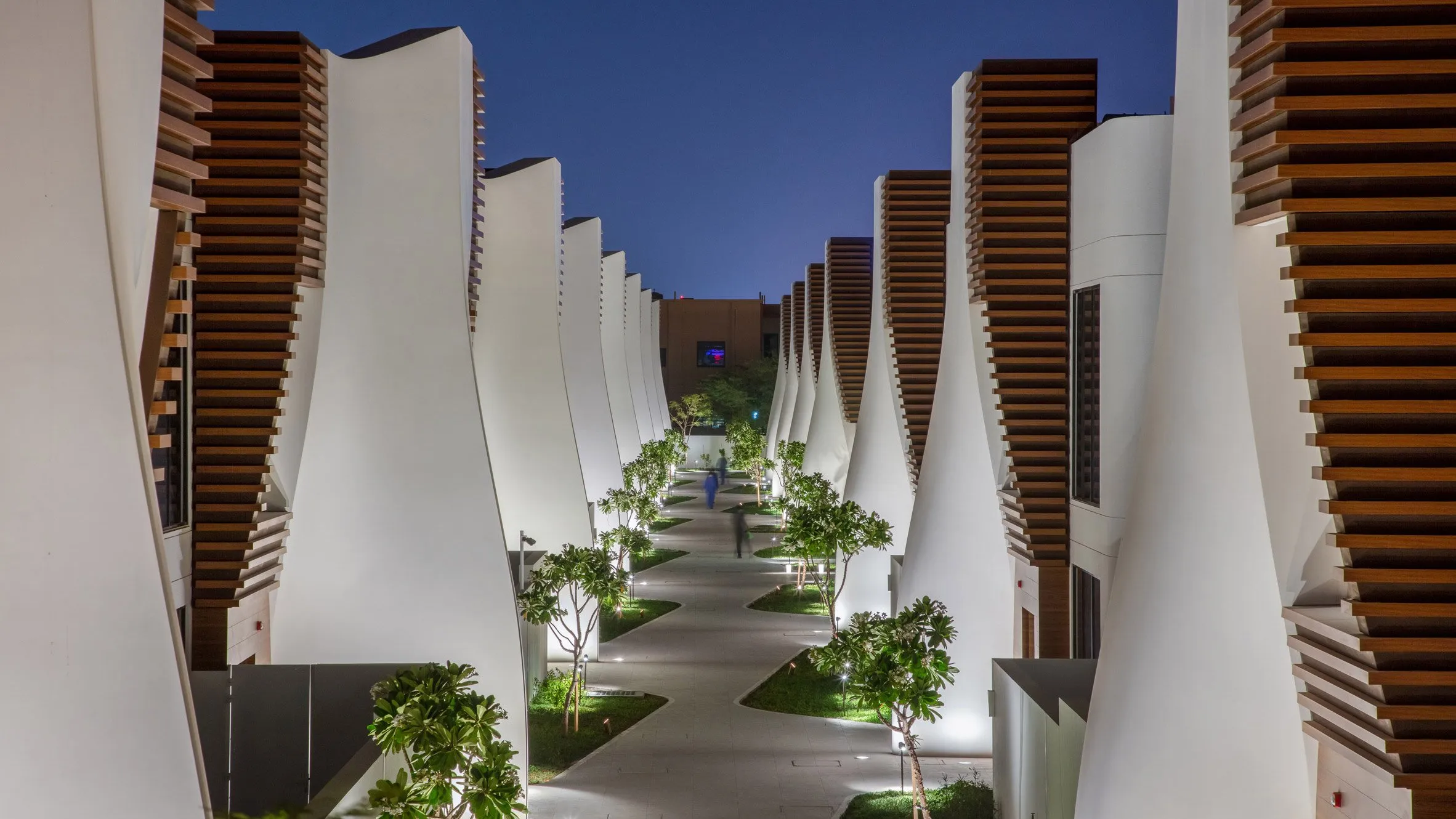
Architect: TKDP (Tariq Khayyat Design Partners)
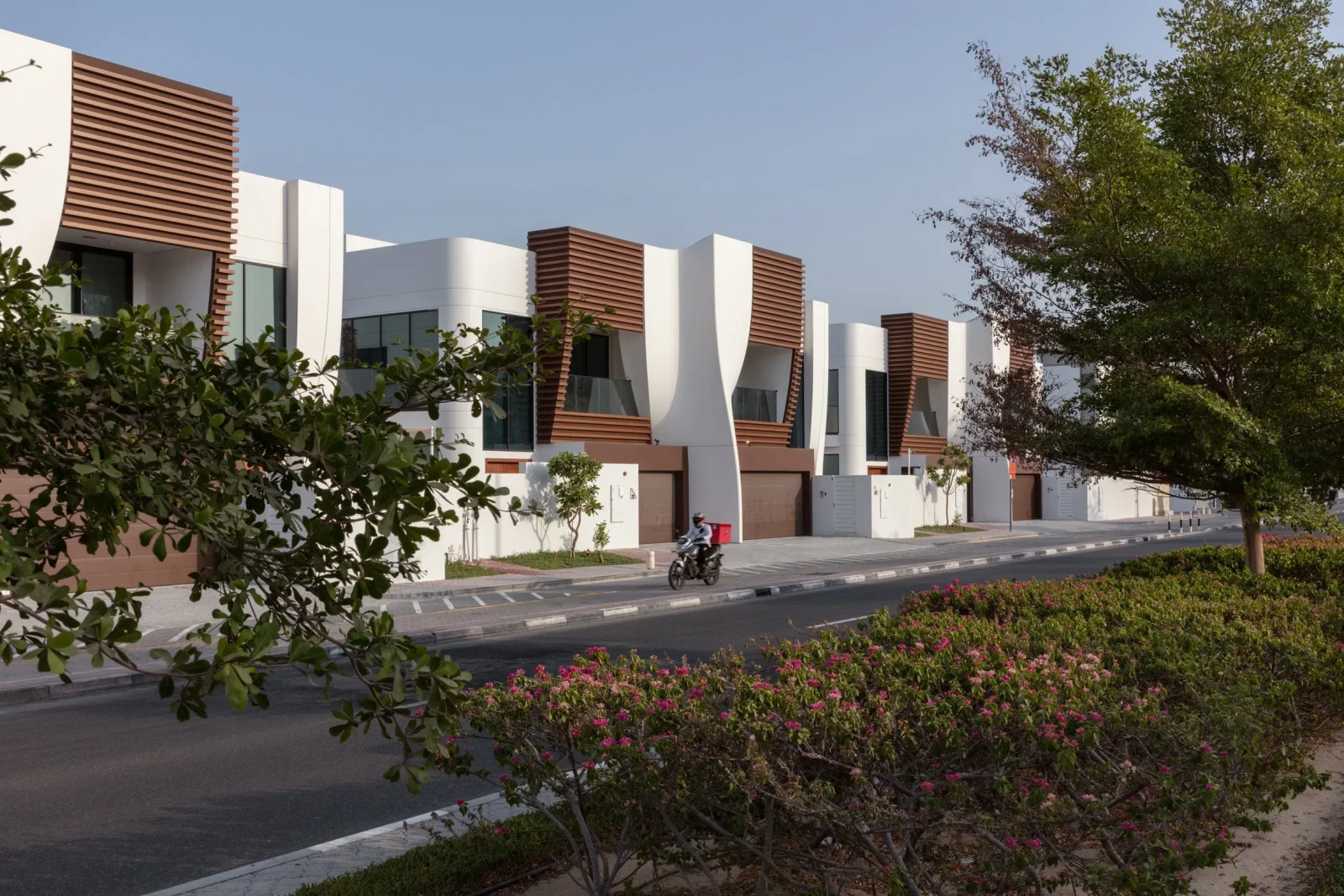
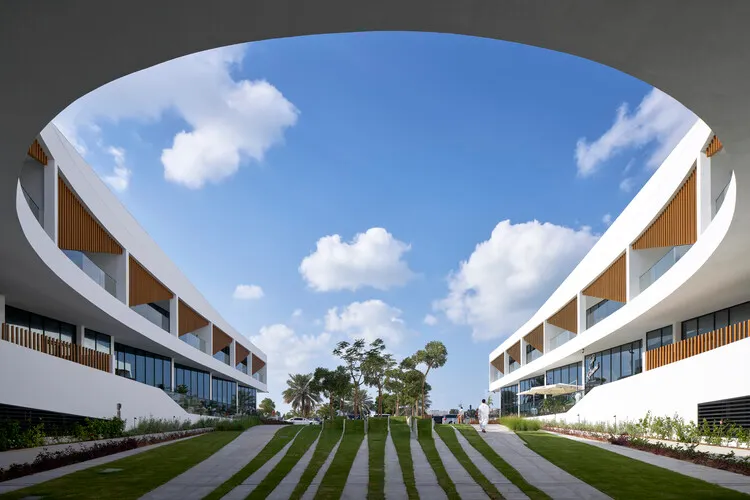
A low-rise residential ensemble of 28 terraced townhouses (completed 2023), arranged along a 200 m pedestrian axis. Material strategy: double-curved GRP façade components, communal spine.
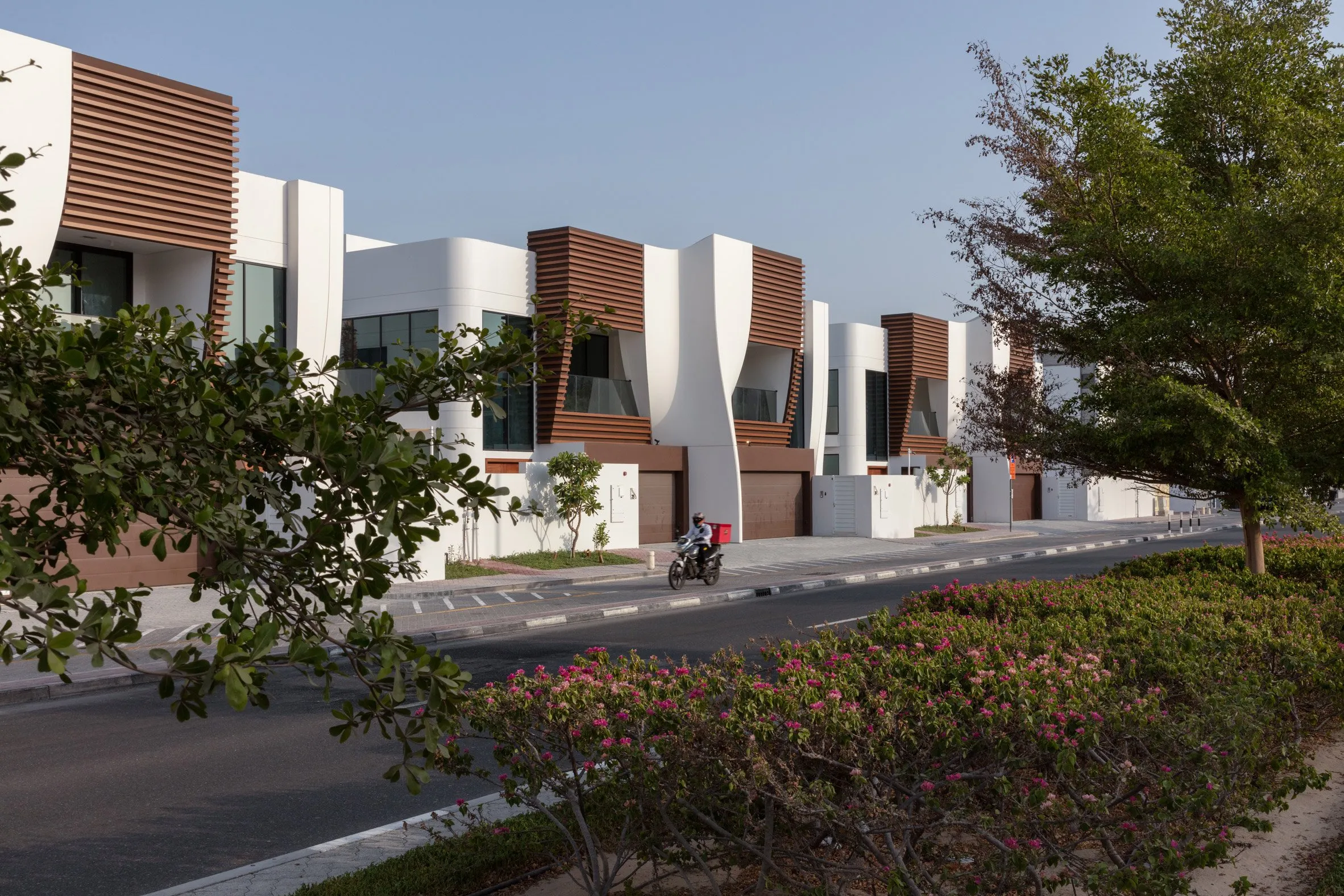
12. The H Residence—Al Safa/Jumeirah, Dubai, UAE
Architect: TKDP (Tariq Khayyat Design Partners)
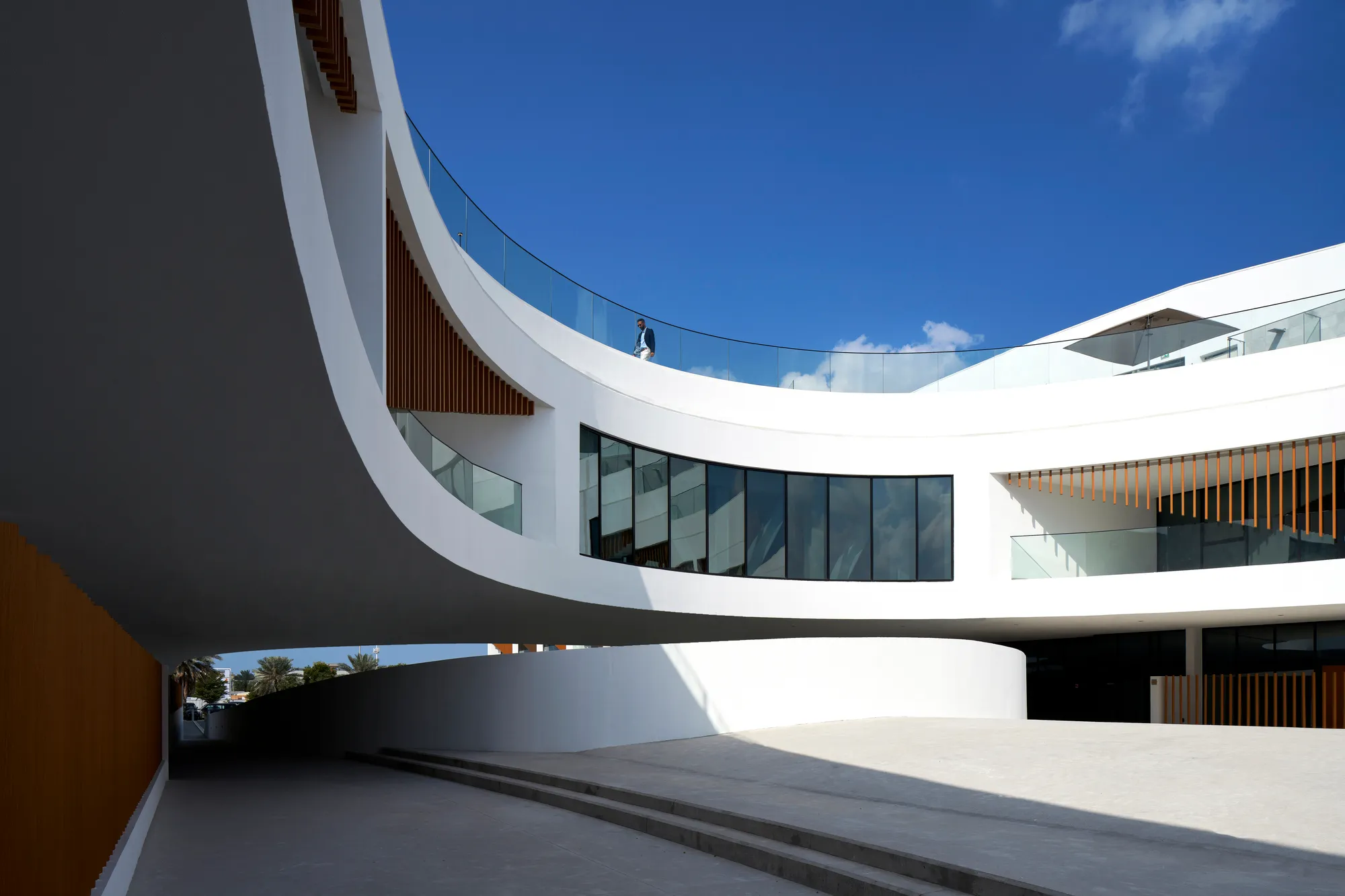
Mixed-use development combining retail/F&B at grade with 37 residential units; features a sloping central plaza and a 30 m sky-bridge with a rooftop infinity pool.
13. The Serai Wing (Bait Khalid bin Ibrahim—The Chedi Al Bait), Heart of Sharjah, Sharjah, UAE
Architect: ANARCHITECT (Dubai/London)
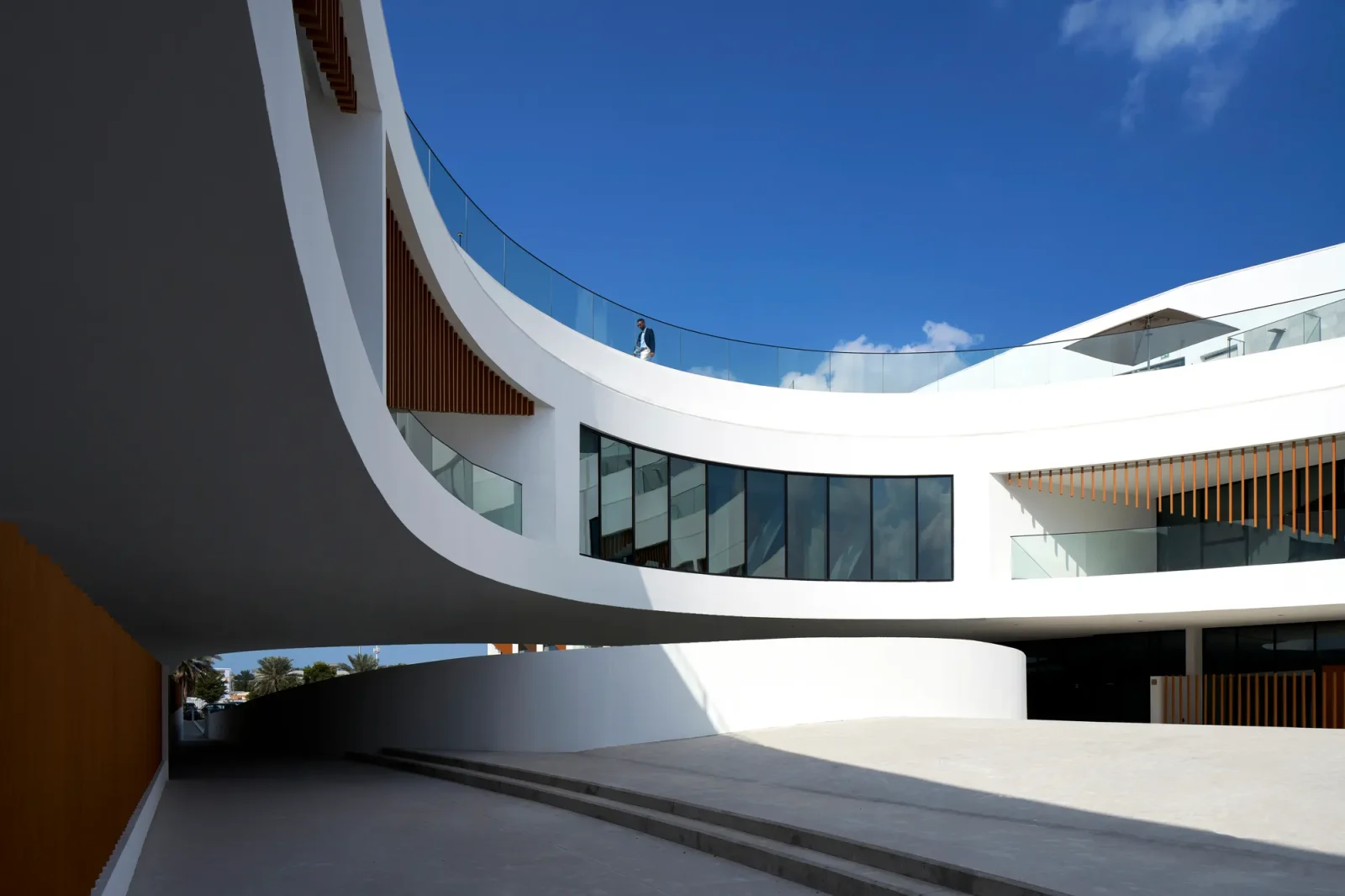
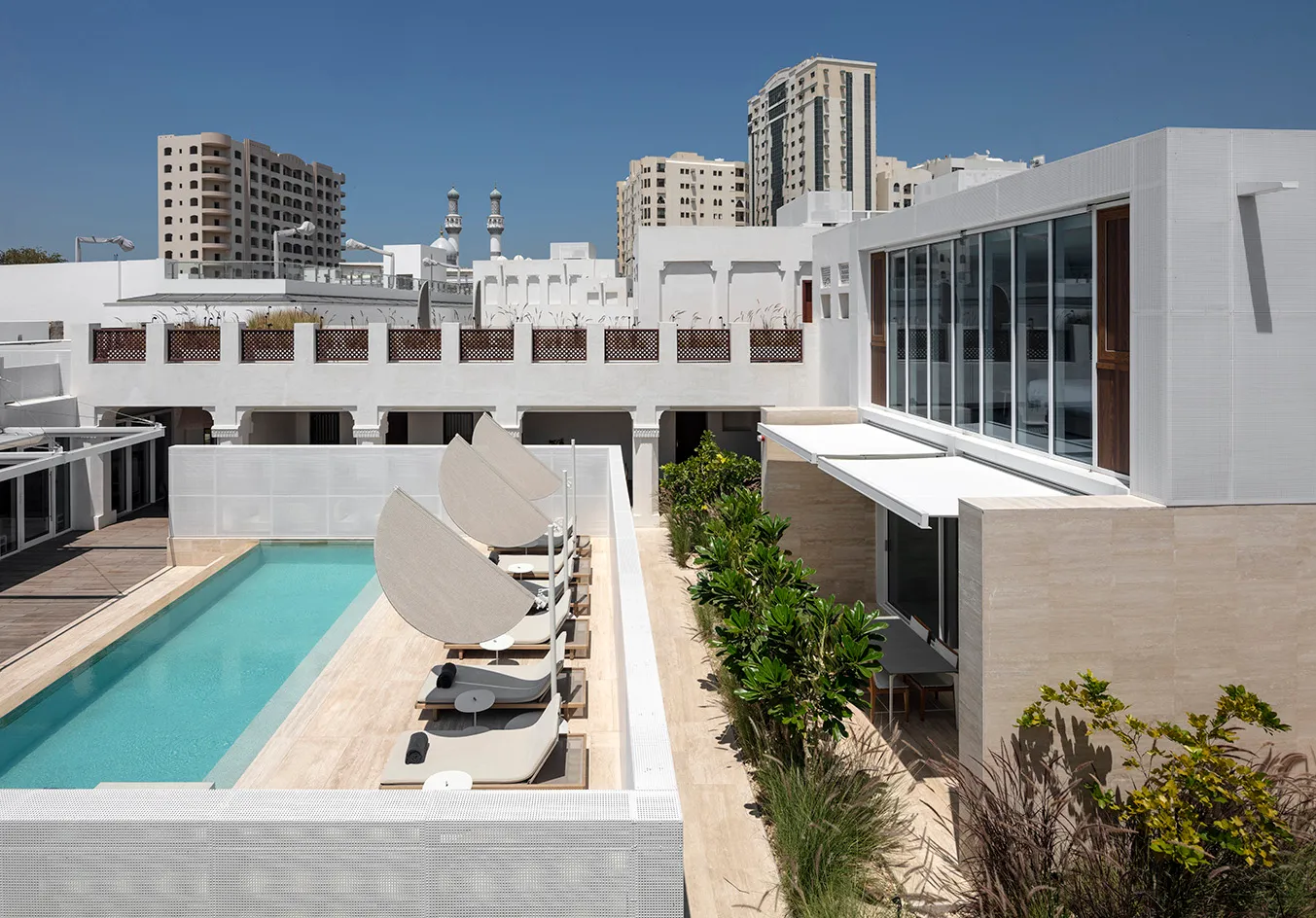
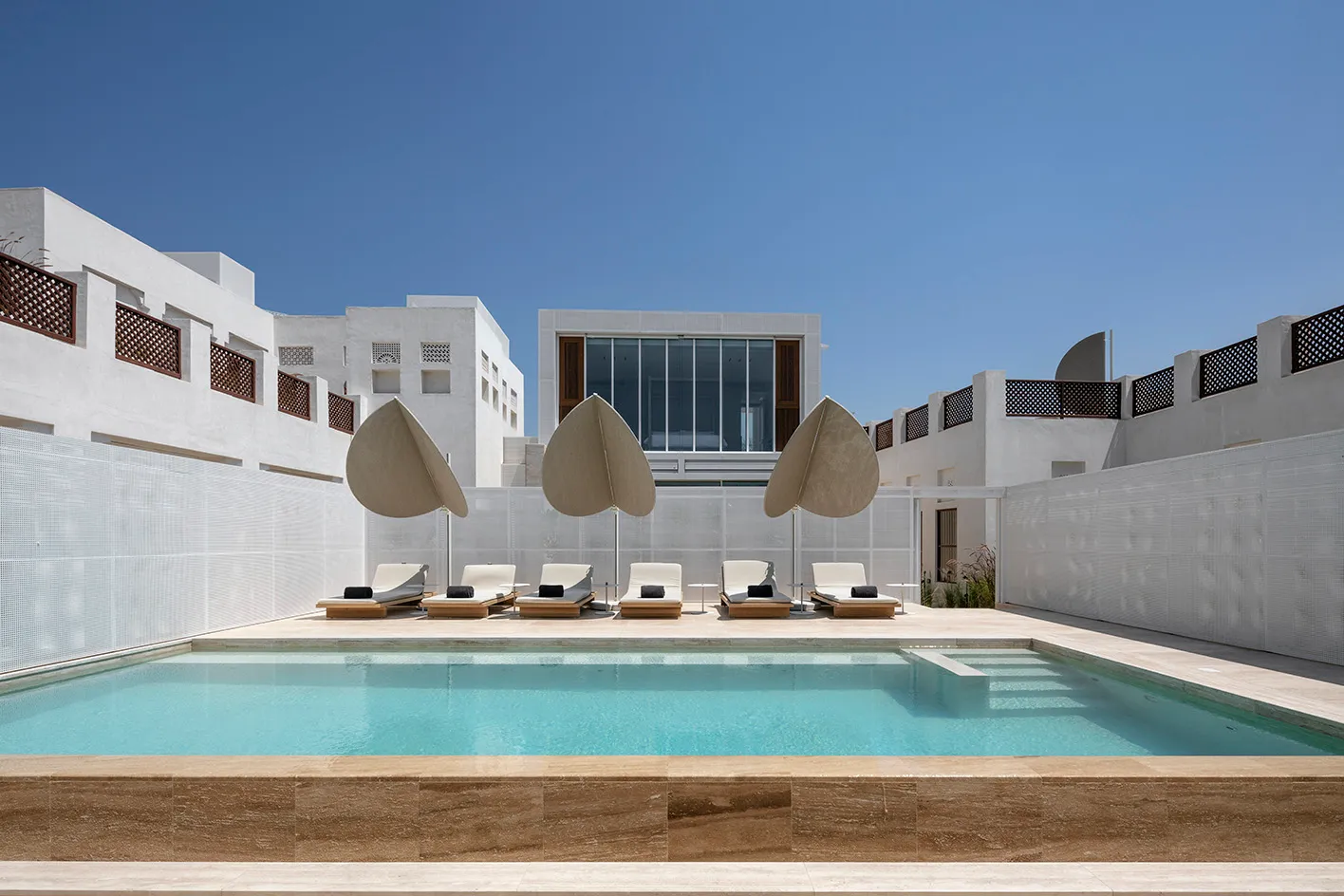
An adaptive reuse project transforming two 1950s merchant houses into a boutique hotel wing featuring 12 elegantly designed rooms and suites. The development aligns closely with the Heart of Sharjah conservation vision, preserving the site’s historical essence while introducing refined contemporary detailing.
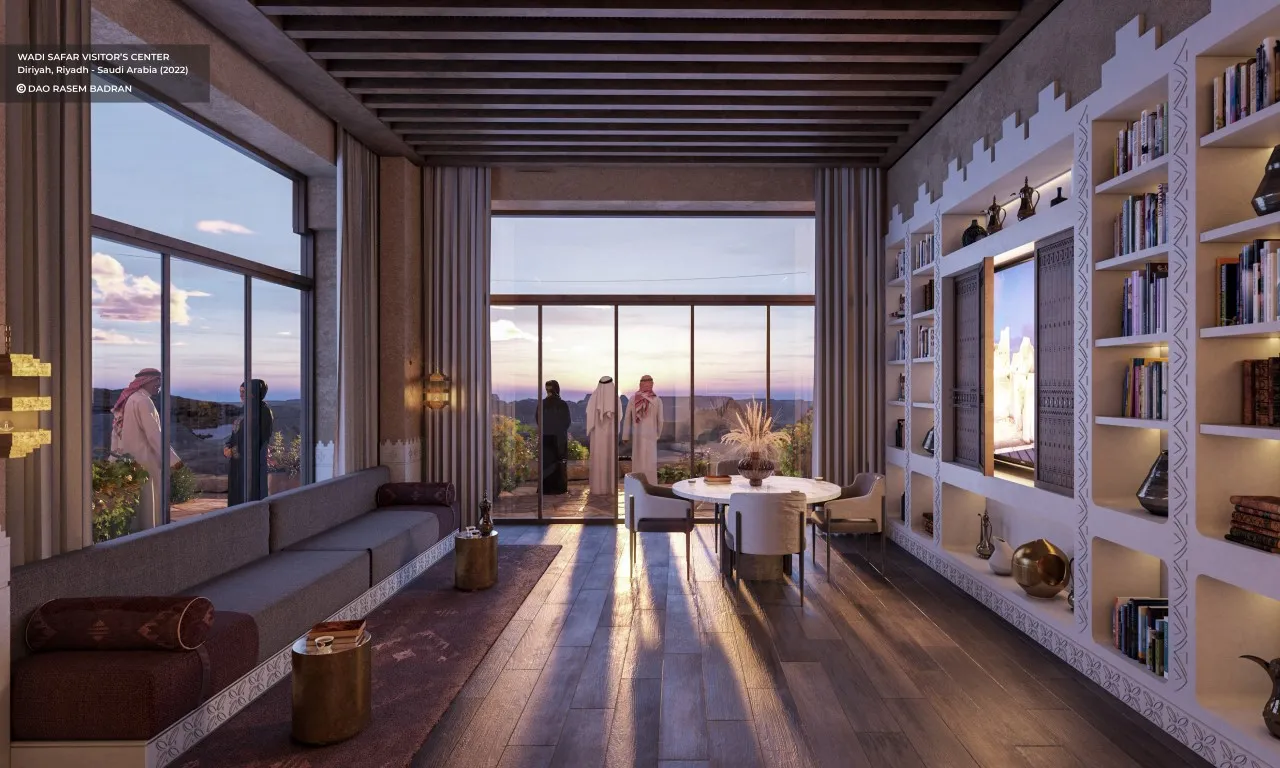
14. Wadi Safar Experience Center—Wadi Safar/Diriyah region, Riyadh, Saudi Arabia ·
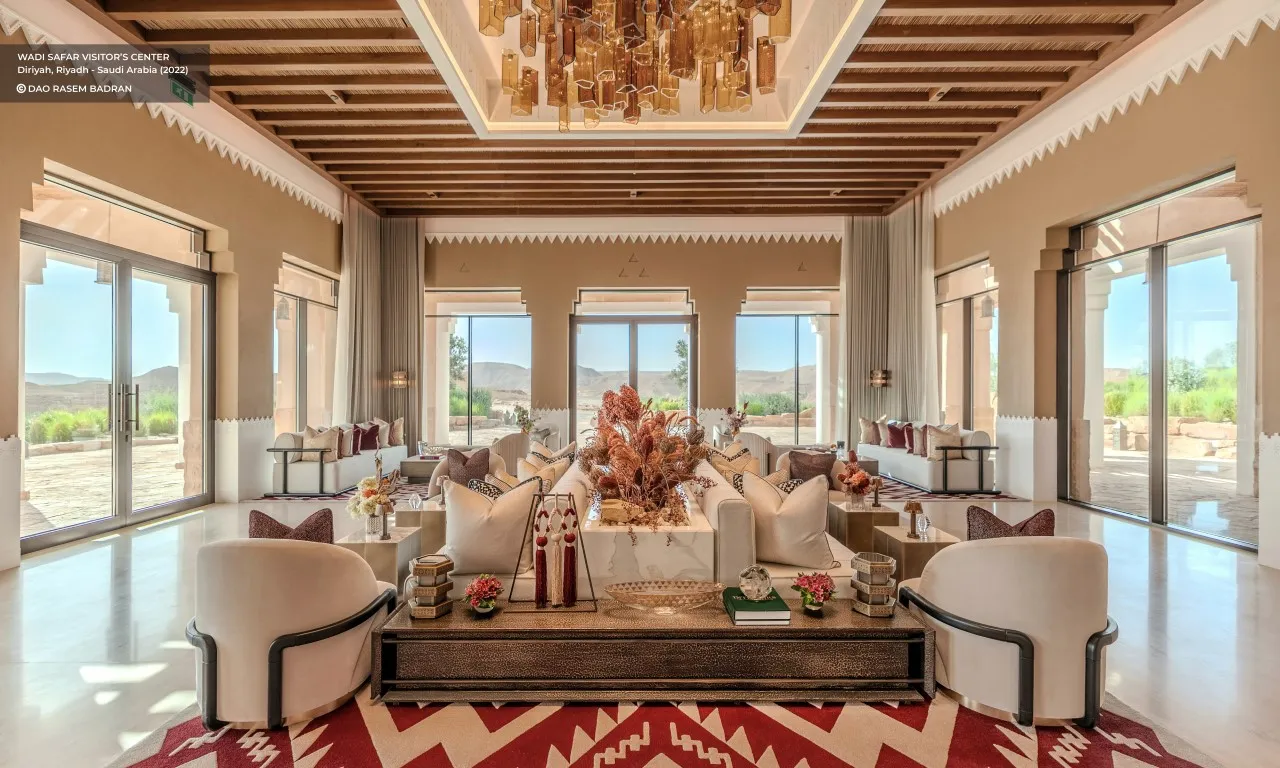
Architect: Dar Al Omran—Rasem Badran (lead design)
The Experience Center functions as a gateway to the wider Wadi Safar master plan design references Najdi courtyard precedents, earth-berm landscaping, and a staged immersive visitor sequence.
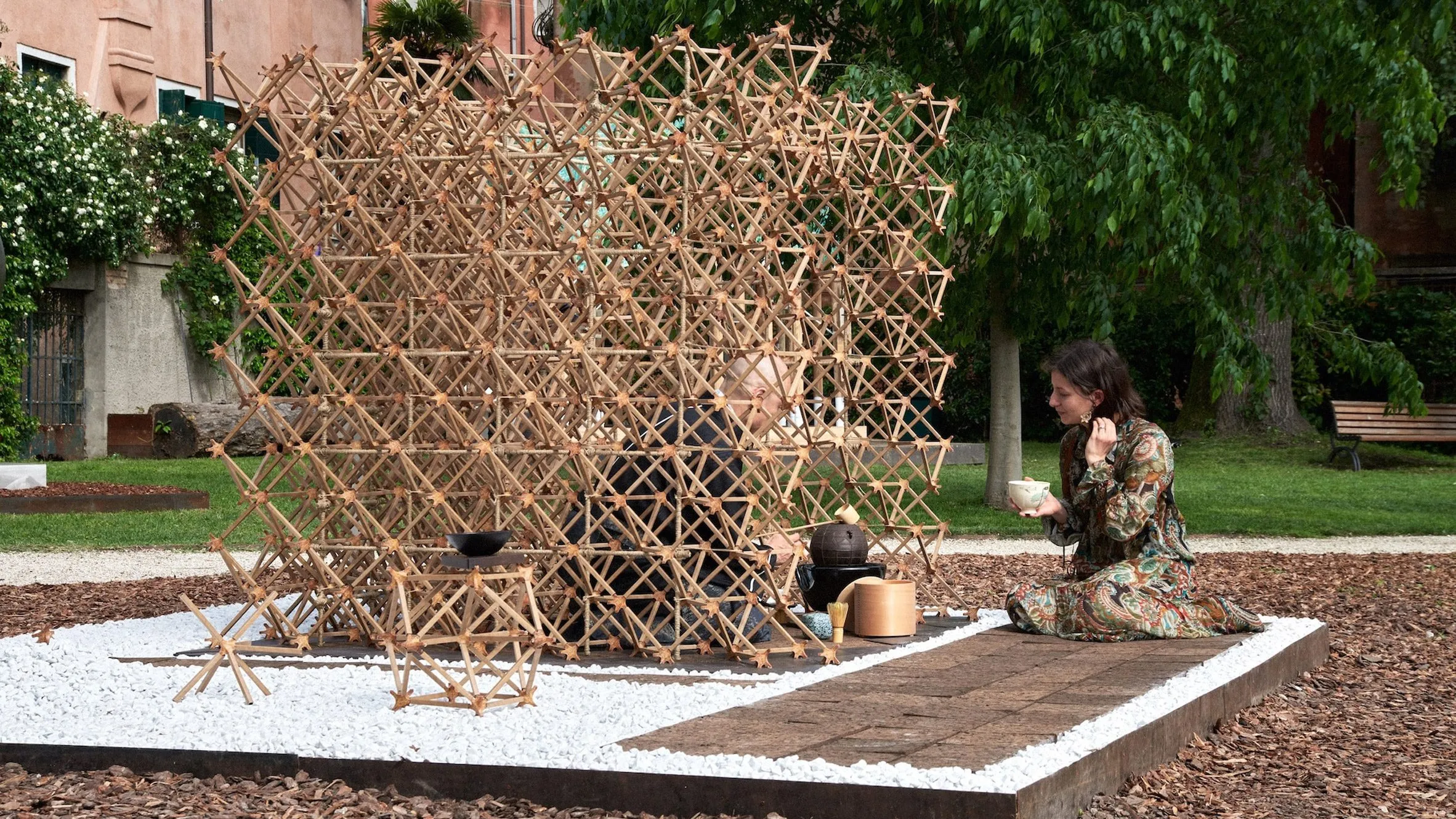
15. World Food-Waste Teahouse (Arabi-An / Veneti-An) — Installations: Dubai (Arabi-An) & Venice (Veneti-An)
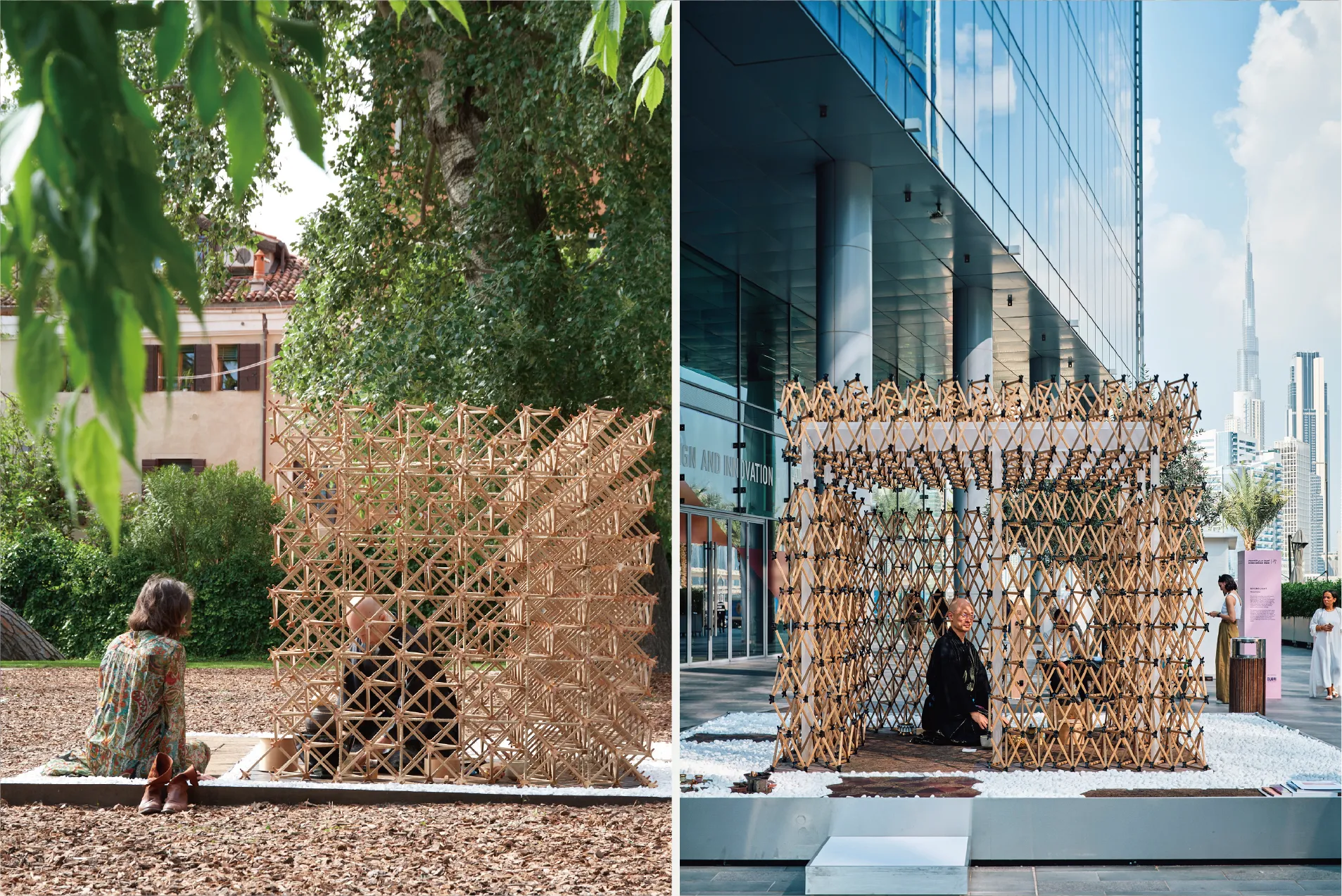
Architect/designer: Mitsubishi Jisho Design (MJD)
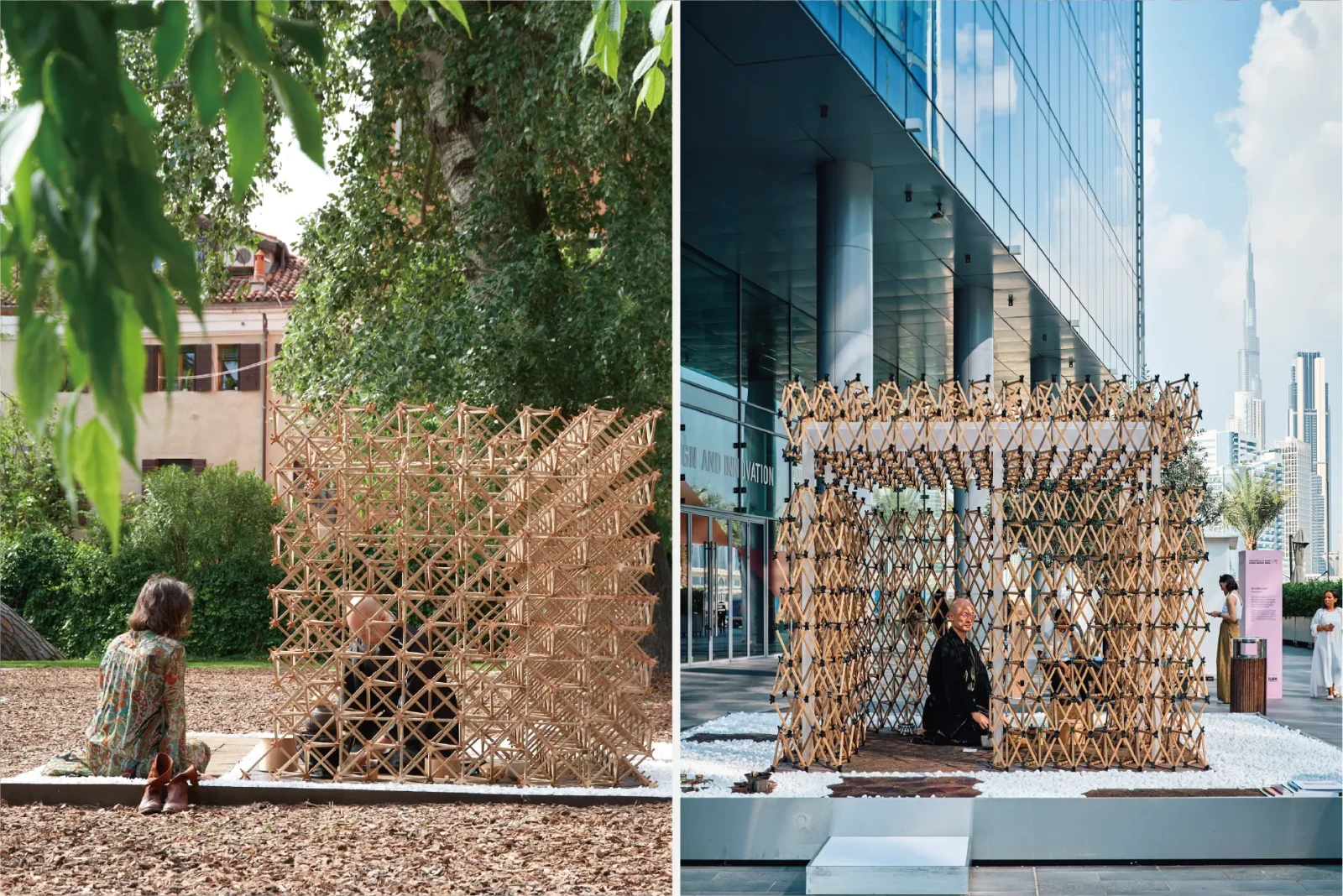
Experimental pavilion series built from food-waste-based materials (coffee grounds, dried fruit matter, recycled paper, and pasta-based joint components in prototypes); Arabi-An was exhibited at Dubai Design Week 2023, and Veneti-An at the Venice Architecture Biennale, MJD, and iF/Good Design awards.
Explore Courses
.jpg "Ondrej Chybik - Rethinking Architecture")