


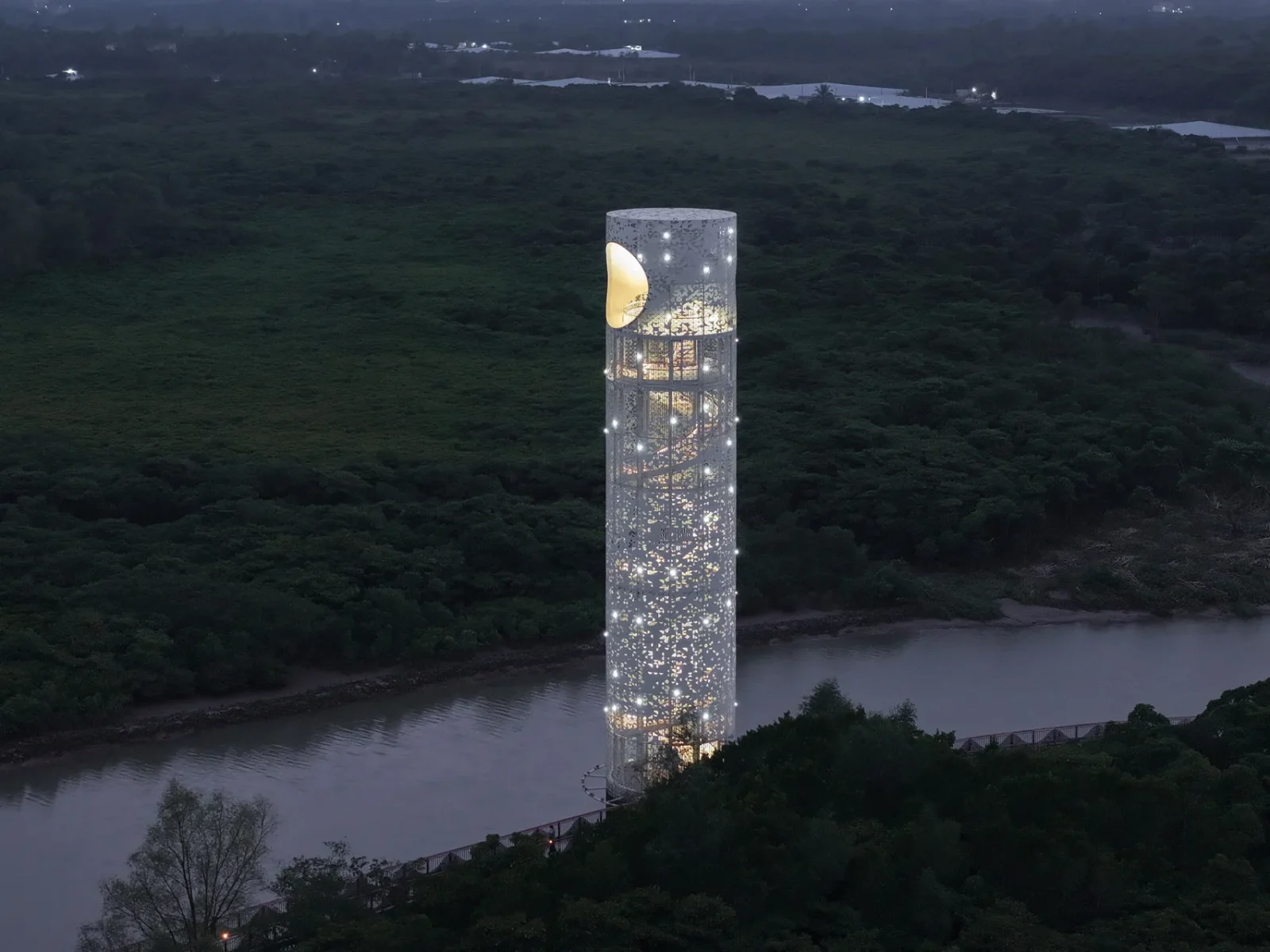
The Lunar Tower is a 33.5-meter-tall observation tower located in the Dongzhai Port Nature Reserve (also known as Dongzhai Harbor Mangrove Natural Reserve), on Hainan Island, China. The tower was conceived and designed by the South China University of Technology Architectural Design and Research Institute Co., Ltd. (SCUT). The client for the project is Hainan Red Mangrove Tourism Co., Ltd.
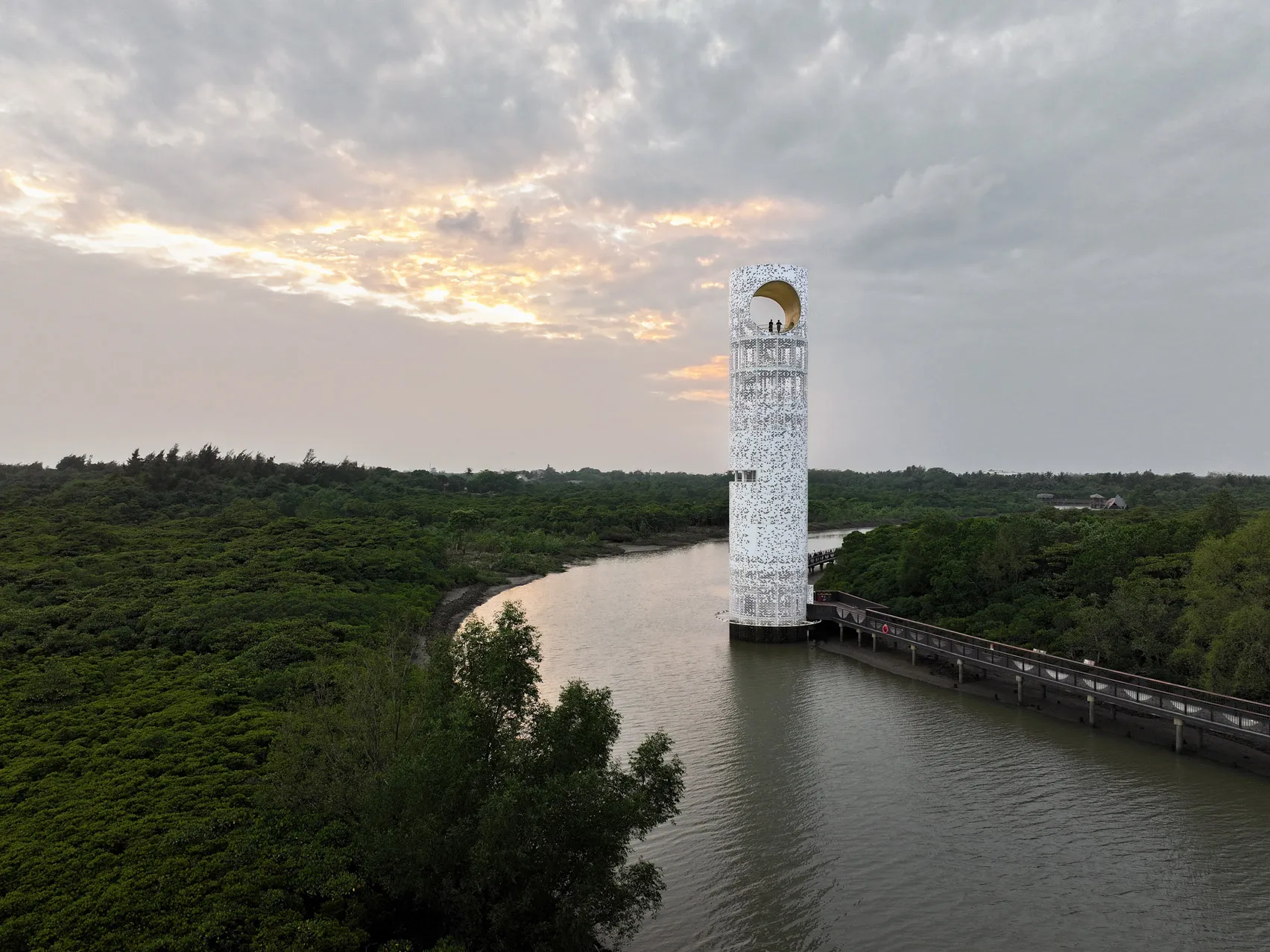
The Dongzhai Port Nature Reserve spans roughly 2,500 hectares and is China’s largest continuous mangrove forest. The area is ecologically rich, supporting a wide variety of flora and fauna, including many bird species, fish, molluscs, and crustaceans, making it a critical habitat and protected wetland. By placing the tower at the eastern edge of the reserve, near the estuary (area where a river meets the sea) and tidal waterways, the designers intended to provide a vantage point for observing the wetlands, the coastal environment, and the nearby sea (the Qiongzhou Strait).
Lunar Tower Designed for the Mangrove Reserve
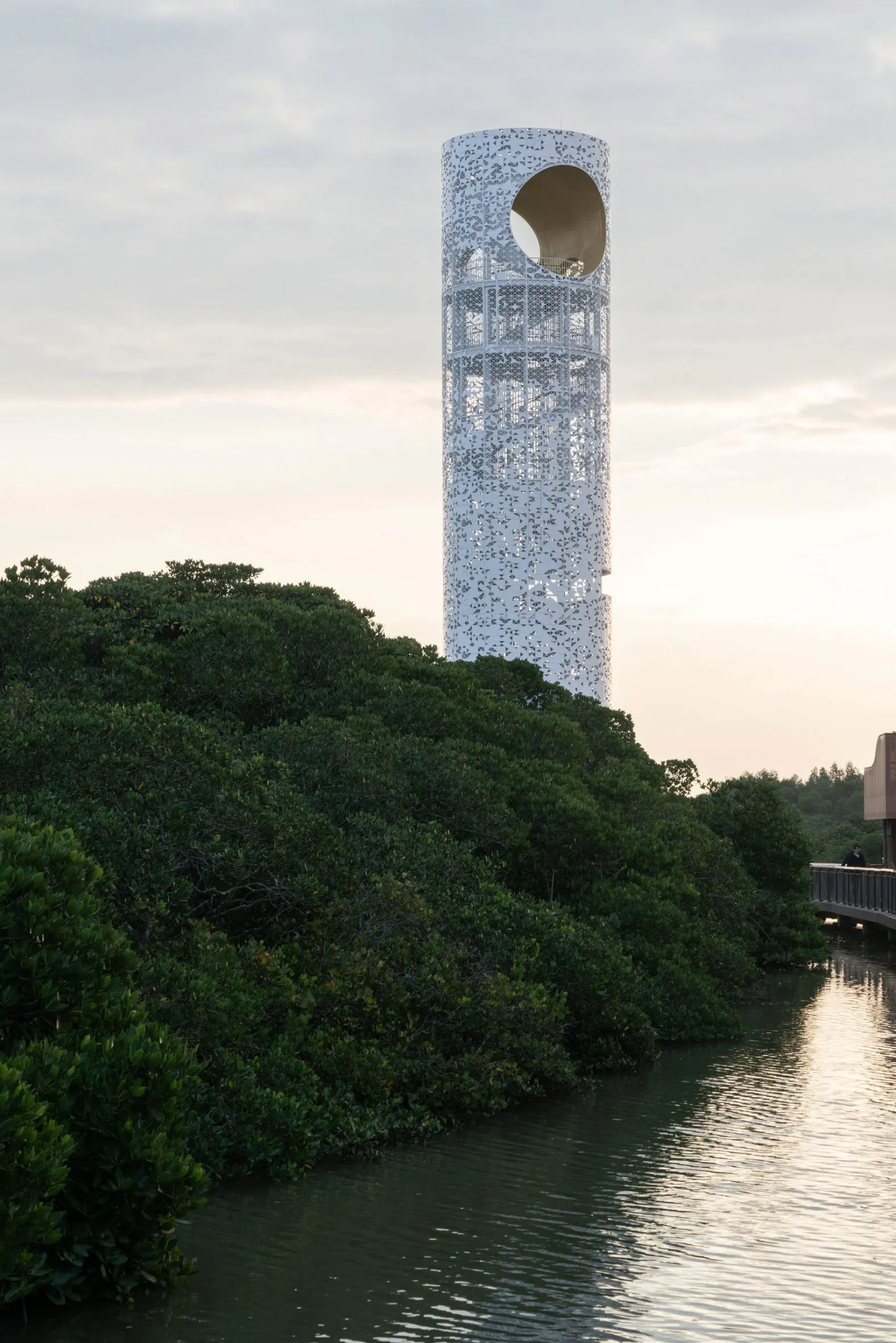
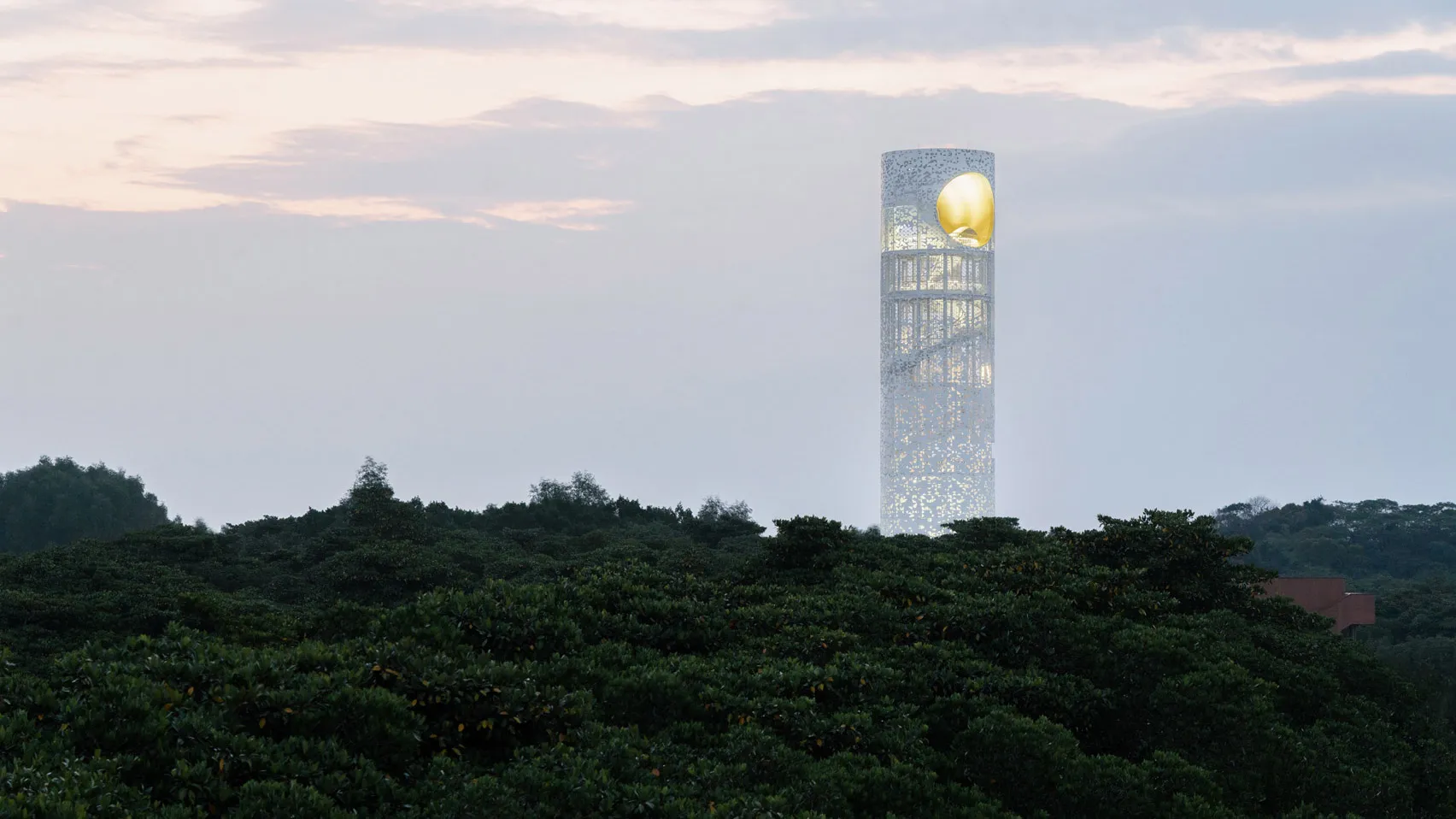
The design philosophy for Lunar Tower emphasizes minimal footprint and maximum ecological sensitivity. SCUT sought to create an observatory and monitoring facility that does not intrude upon or destabilize the wetland environment. Its slender, cylindrical form mimics the verticality of surrounding mangrove trunks, helping the tower visually integrate into the forest.
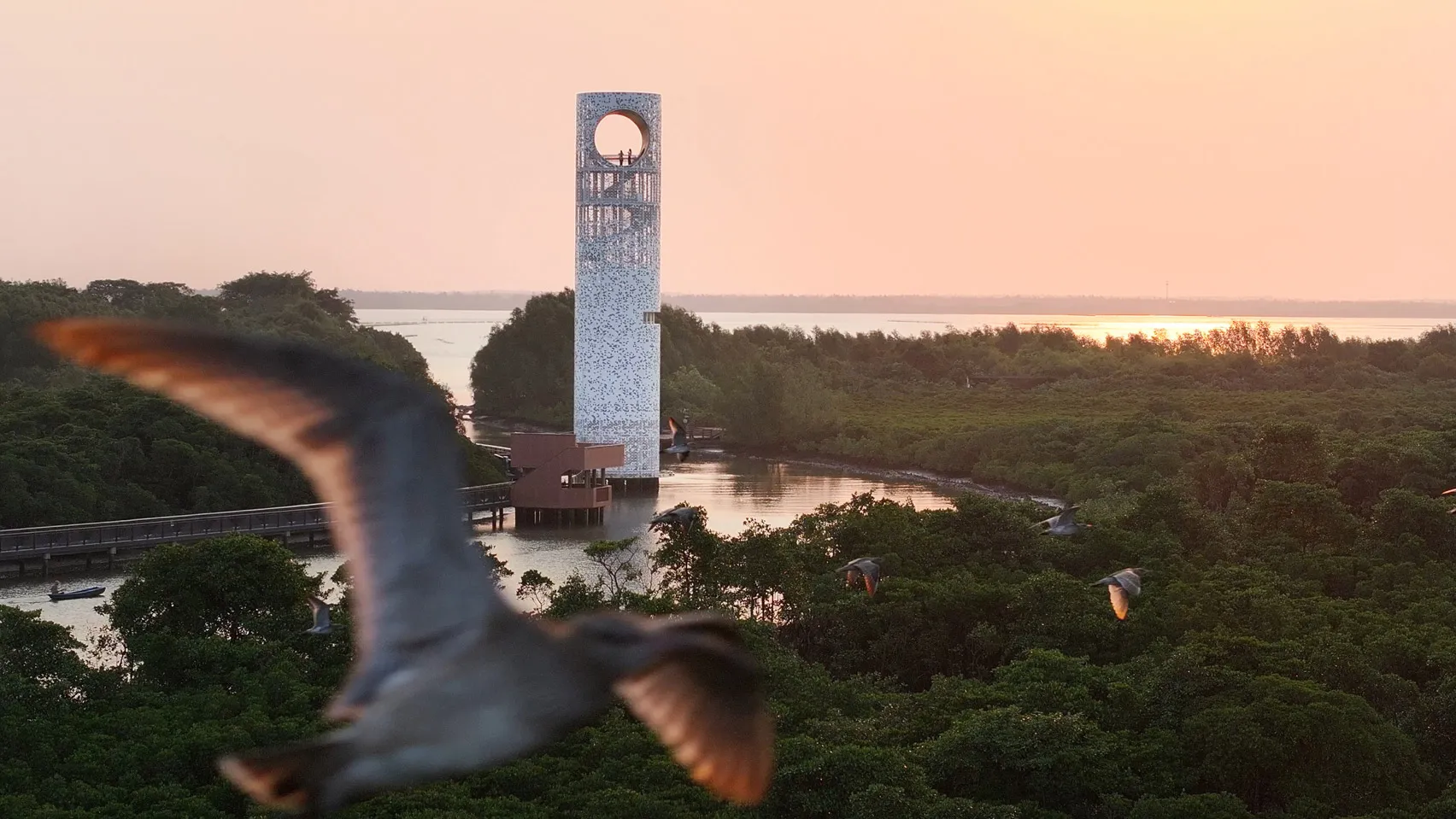
The facade draws inspiration from the shape and rhythm of mangrove leaves. The outer skin is built from perforated, low-reflective white aluminum panels. This design serves multiple functional and ecological purposes: it filters natural light, ventilates the interior stairwell, reduces reflective glare (important for wildlife, especially migratory birds), and softens the visual impact of the structure. The layered façade acts as a buffer between the structural core and the exterior environment, dampening disturbances while allowing for passive ventilation in the humid coastal context.
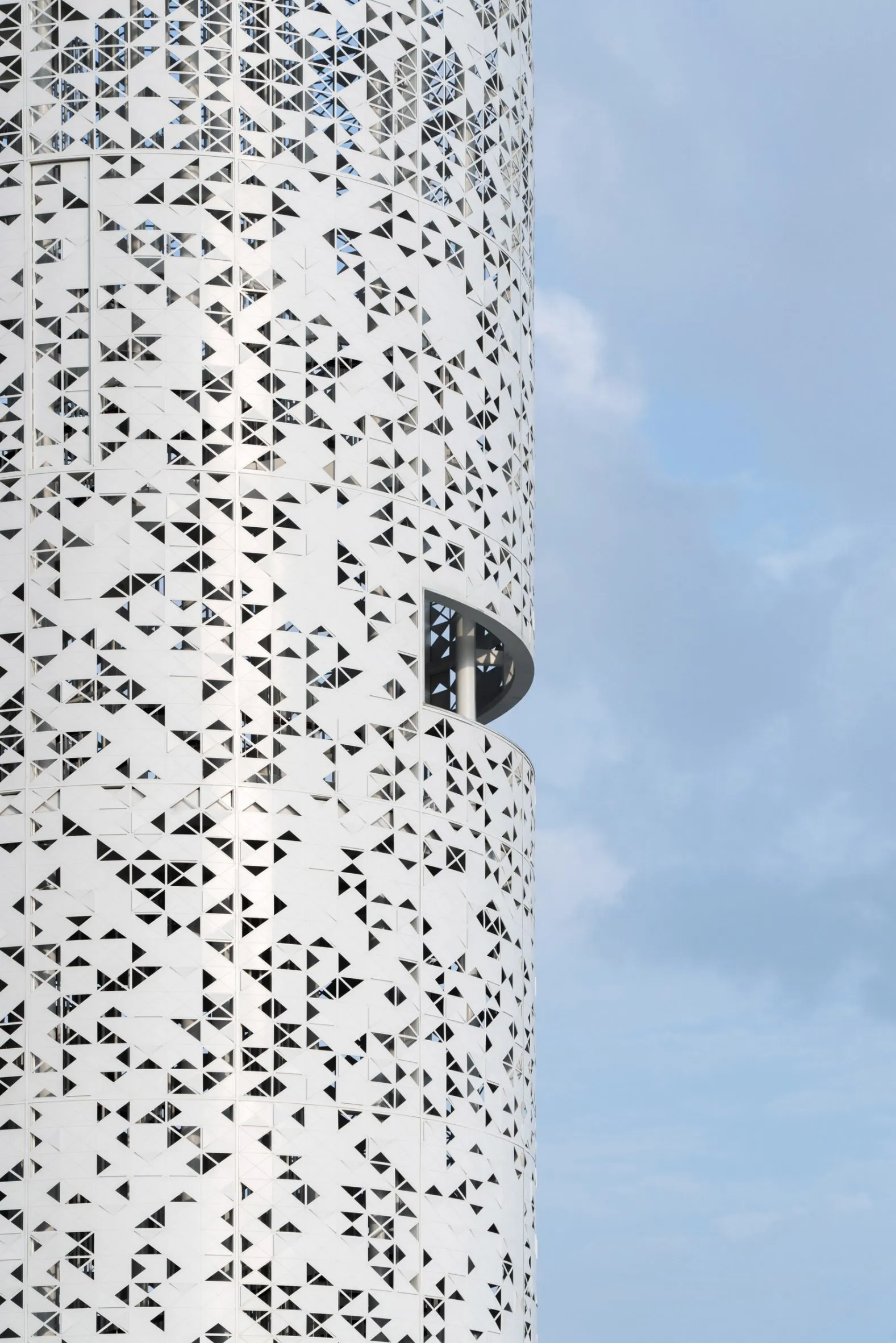
The structural framework of Lunar Tower is composed of 18 vertical steel pipe columns. These are tied together by ring beams and ribs that support a spiral staircase, creating a continuous structural system capable of resisting wind and torsional loads. Given the coastal, typhoon-prone context, SCUT reinforced the lower portion of the tower; the steel columns are concrete-filled in the lower segment (up to the first observation platform), ensuring stability and resistance against strong wind forces. This approach balances structural sturdiness with an overall sense of lightness. The tower appears slender and minimal, yet robust enough for long-term exposure to coastal conditions.
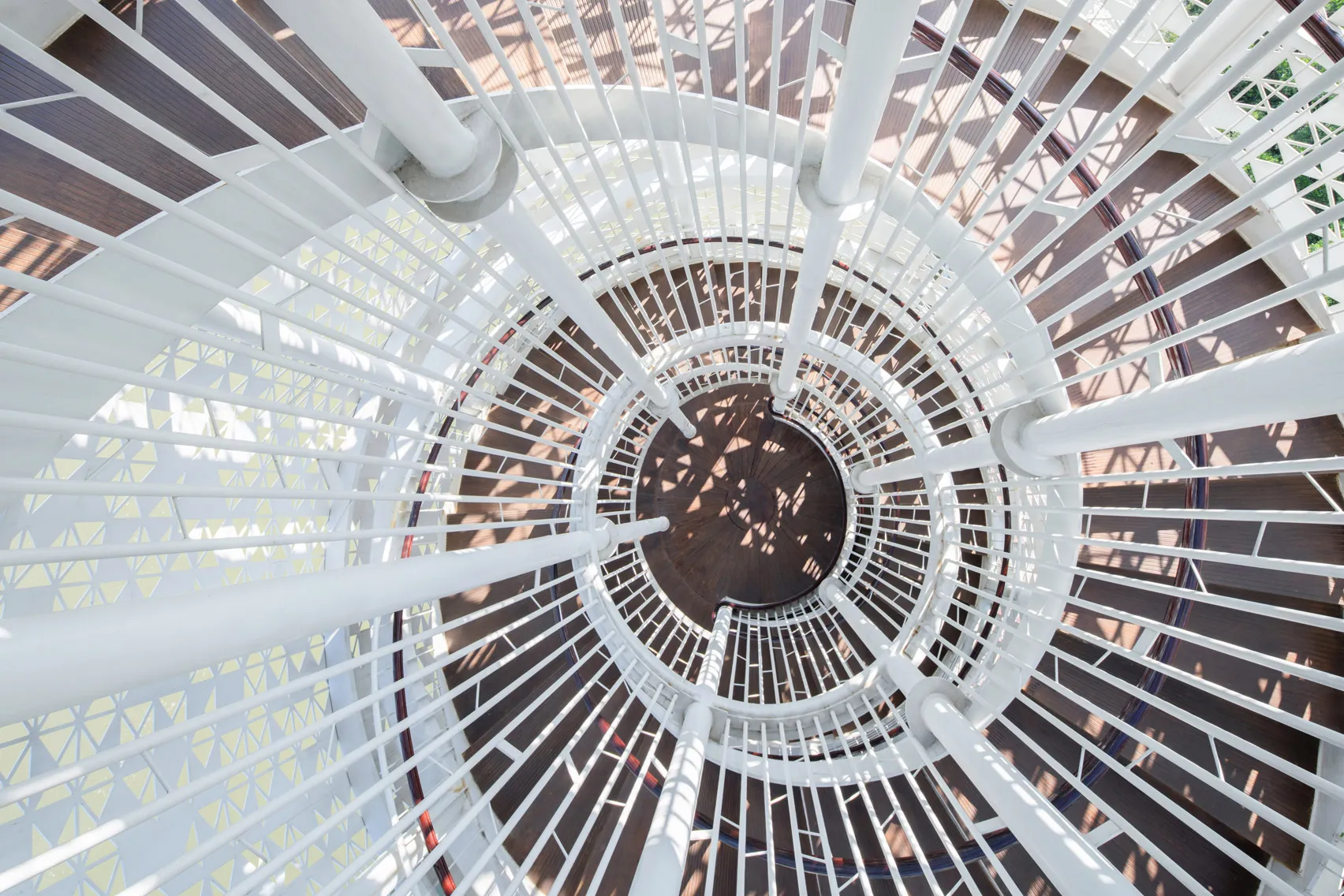
Lunar Tower provides observation at multiple elevations. There are platforms at roughly 12 m, 24 m, and 27 m above ground, all accessible by a central spiral staircase enclosed within the perforated exterior shell.
- 12 m platform: The lowest observation level oriented toward the mangrove forest allows close-up views of the wetland environment, tides, and perhaps birdlife along smaller waterways.
- 24 m platform: Offers elevated views over the forest canopy and glimpses toward distant villages or waterways beyond the mangroves.
m.sayart.net - 27 m platform/top: The uppermost level gives an expansive panoramic view encompassing the mangrove forest, urban edges of Haikou, and the sea beyond.
This progression, both in elevation and visual scope, allows visitors or researchers to absorb the landscape in layers: from intimate interaction with the wetland to the broad coastal context.
Material & Environmental Considerations
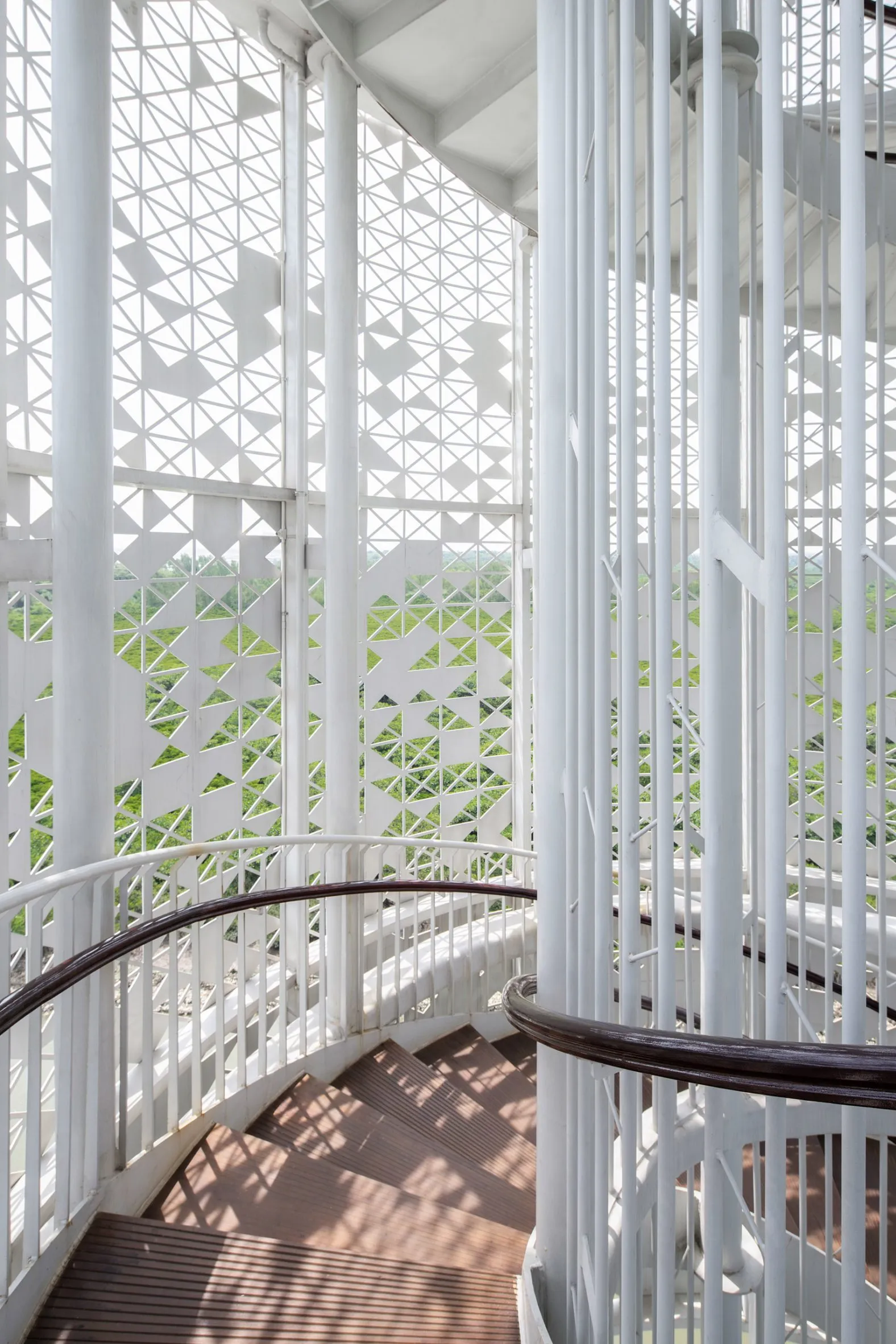
Material choice was central to the project’s ecological and climatic suitability. Aluminum was selected for the outer cladding; its perforated, matte-white form has low reflectivity (reducing glare), is corrosion-resistant (important in a salty, humid coastal environment), and supports natural ventilation, key for comfort in the wetland’s humid climate. The perforated façade also reduces visual intrusion, allowing the structure to merge into the forest while still providing necessary human function. The layered skin, effectively creating a buffer zone, helps minimize disturbance to the local fauna, especially migratory birds, by softening light and movement from within.
Night-time & Lighting Strategy
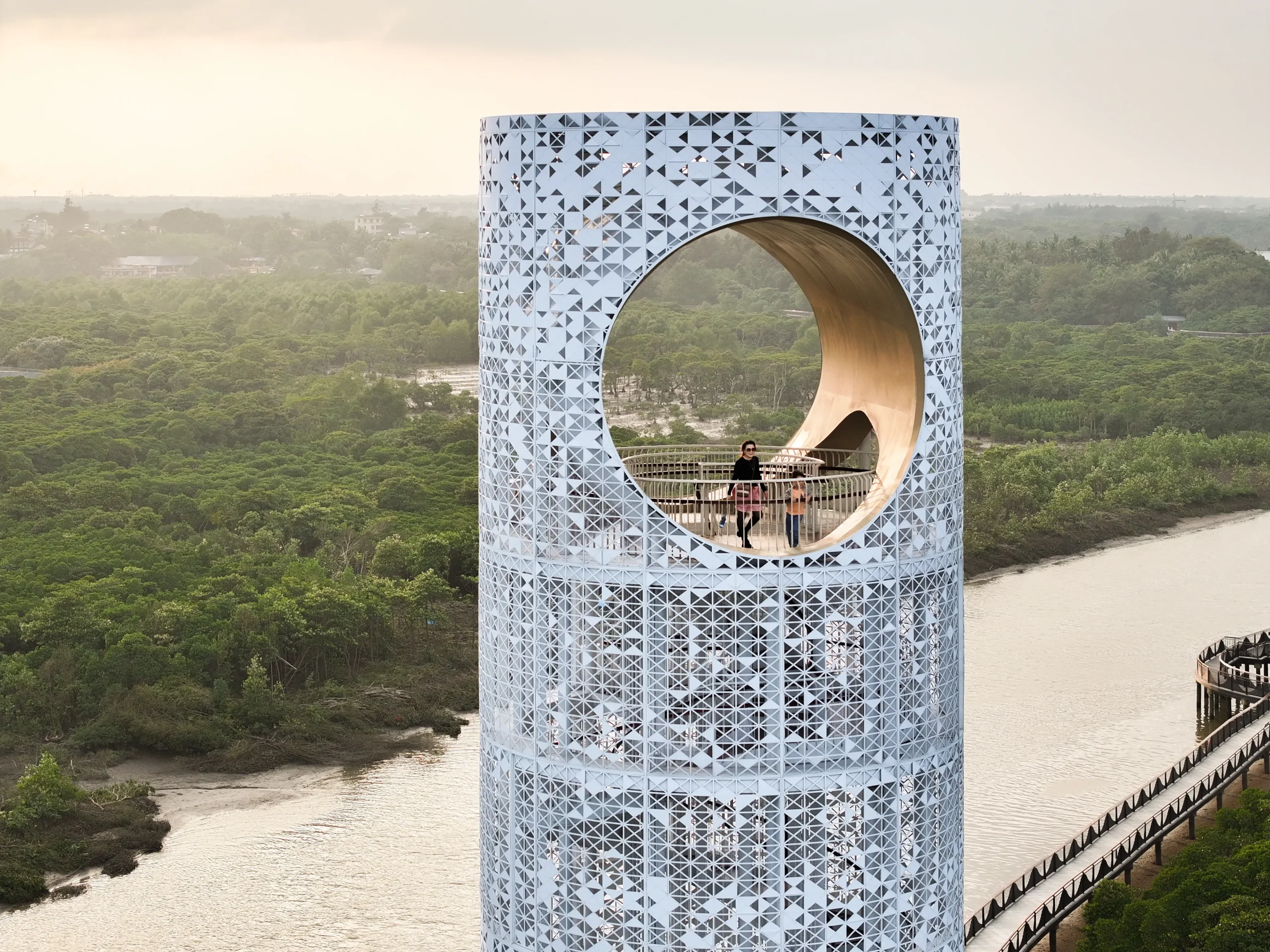
At dusk, the tower transforms; the circular top aperture begins to glow softly. This subtle and controlled glow gives the top of the tower a lunar-disc appearance, justifying its name “Lunar Tower.” The lighting is deliberately restrained; interior lighting is minimal, while façade illumination avoids sudden brightness, aiming to respect bird migration routes and preserve the nocturnal integrity of the reserve. This detailed approach to illumination ensures that the tower remains functional and symbolic at night, without becoming a disruptive presence in the ecosystem.
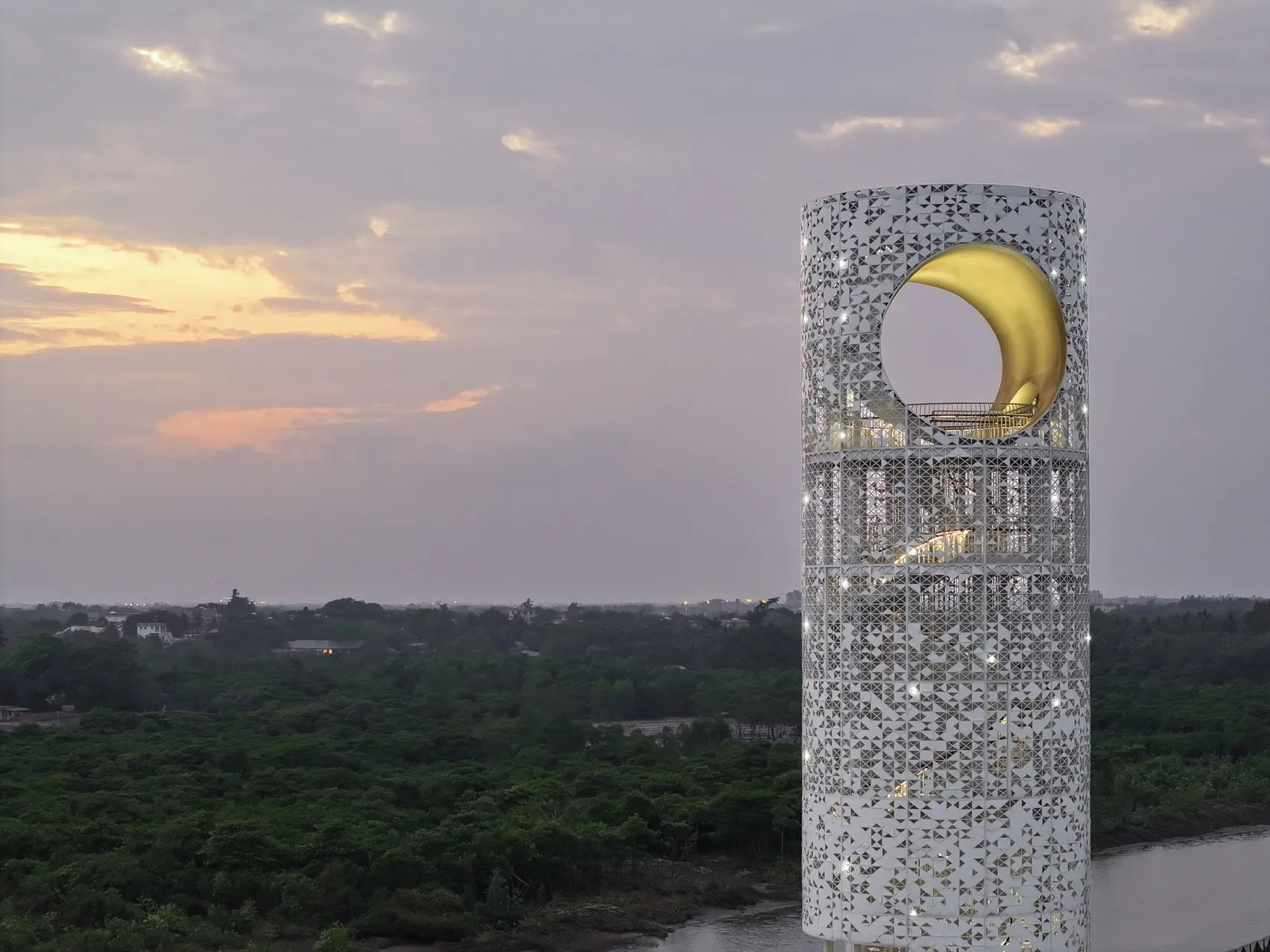
The Lunar Tower fulfills several integrated functions beyond its role as a viewing attraction. It operates first as a practical observation platform, giving visitors clear panoramic views across the mangrove wetlands, the surrounding waterways, and the broader coastal setting. At the same time, the tower supports scientific use, providing elevated points suited for ecological monitoring, environmental assessment, and disaster-prevention activities such as tracking tidal fluctuations, coastal weather patterns, and early signs of typhoon activity without imposing significant disturbance on the landscape.
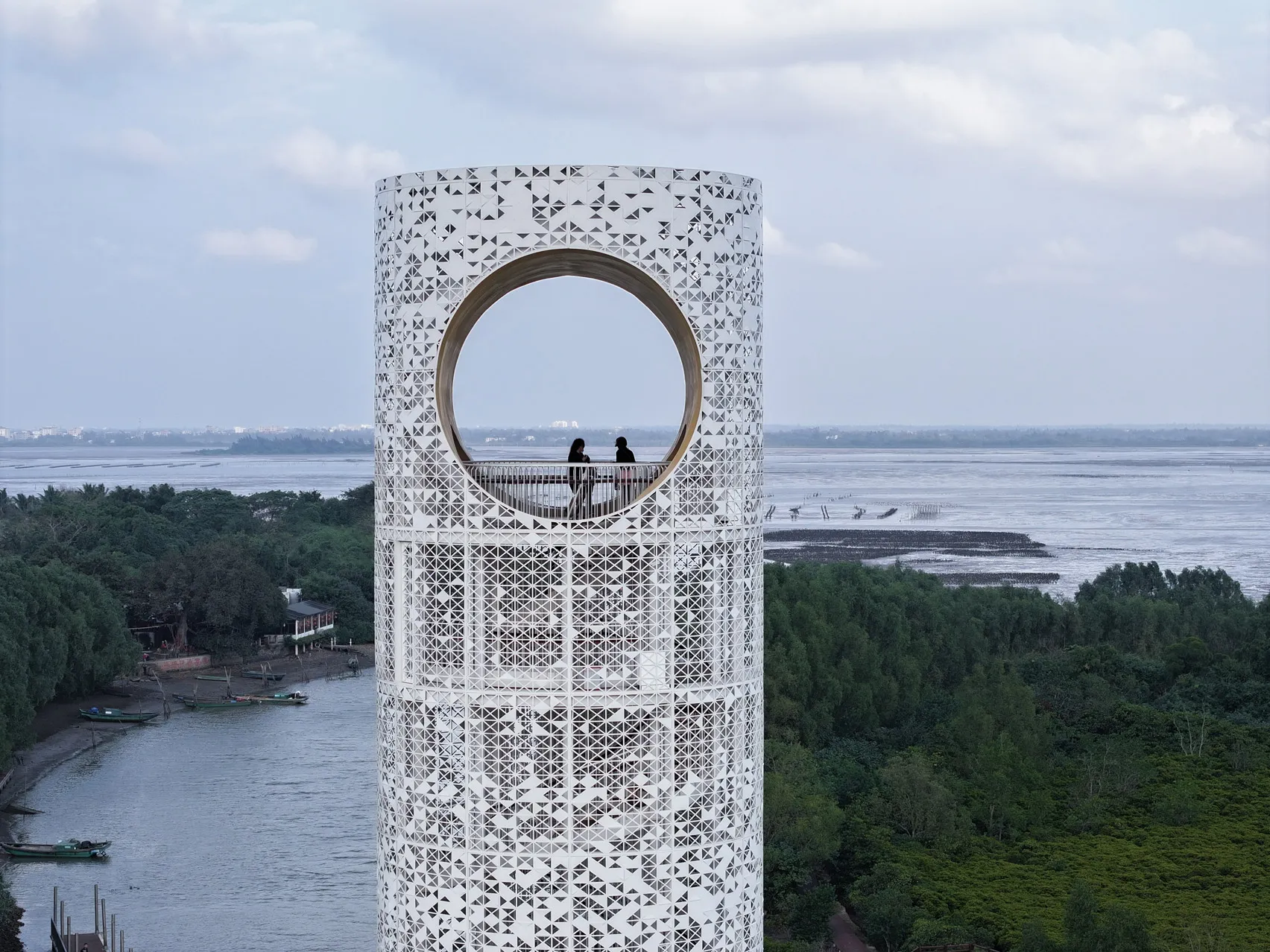
In addition, the tower acts as a recognizable landmark within the reserve; its slender vertical form, refined façade treatment, and subtle moon-inspired upper geometry present a controlled architecture that acknowledges the sensitivity of the mangrove environment while reinforcing the identity of the site.
Lunar Tower Project Details
Project Name: Lunar Tower
Location: Dongzhai Port Nature Reserve, Hainan (Haikou), China
Firm: South China University of Technology, Architectural Design & Research Institute Co. Ltd. (SCUT)
Lead Architects: He Jingtang, Bao Ying, Pei Yue
Client: Hainan Red Mangrove Tourism Co., Ltd.
Height: 33.5 metres
Footprint/Built Area: ~ 206 m²
Observation Platforms: at 12 m, 24 m, 27 m above ground
Image credit: SCUT/Wu Sitong
Explore Courses
.jpg "Architecture Diagram Mastery: Concept to Portfolio")
.jpg%202.jpg "Building Performance with Forma & Opossum")
.jpg "Ondrej Chybik - Rethinking Architecture")