





From ancient axial courtyards to futuristic skylines, Chinese architecture continues to balance heritage and innovation with remarkable fluency. In cities shaped by feng shui and megastructures alike, the built environment reflects both symbolic tradition and technological ambition.
As China’s construction boom surges forward, a new generation of landmark buildings, many slated for completion by 2025 and 2026, are reshaping the urban fabric. Designed by internationally acclaimed studios, these projects explore sustainability, smart systems, and cultural continuity, marking China’s evolving role at the forefront of global architectural discourse.
Here are the 10 most anticipated buildings in China:
1. Suzhou Museum of Contemporary Art
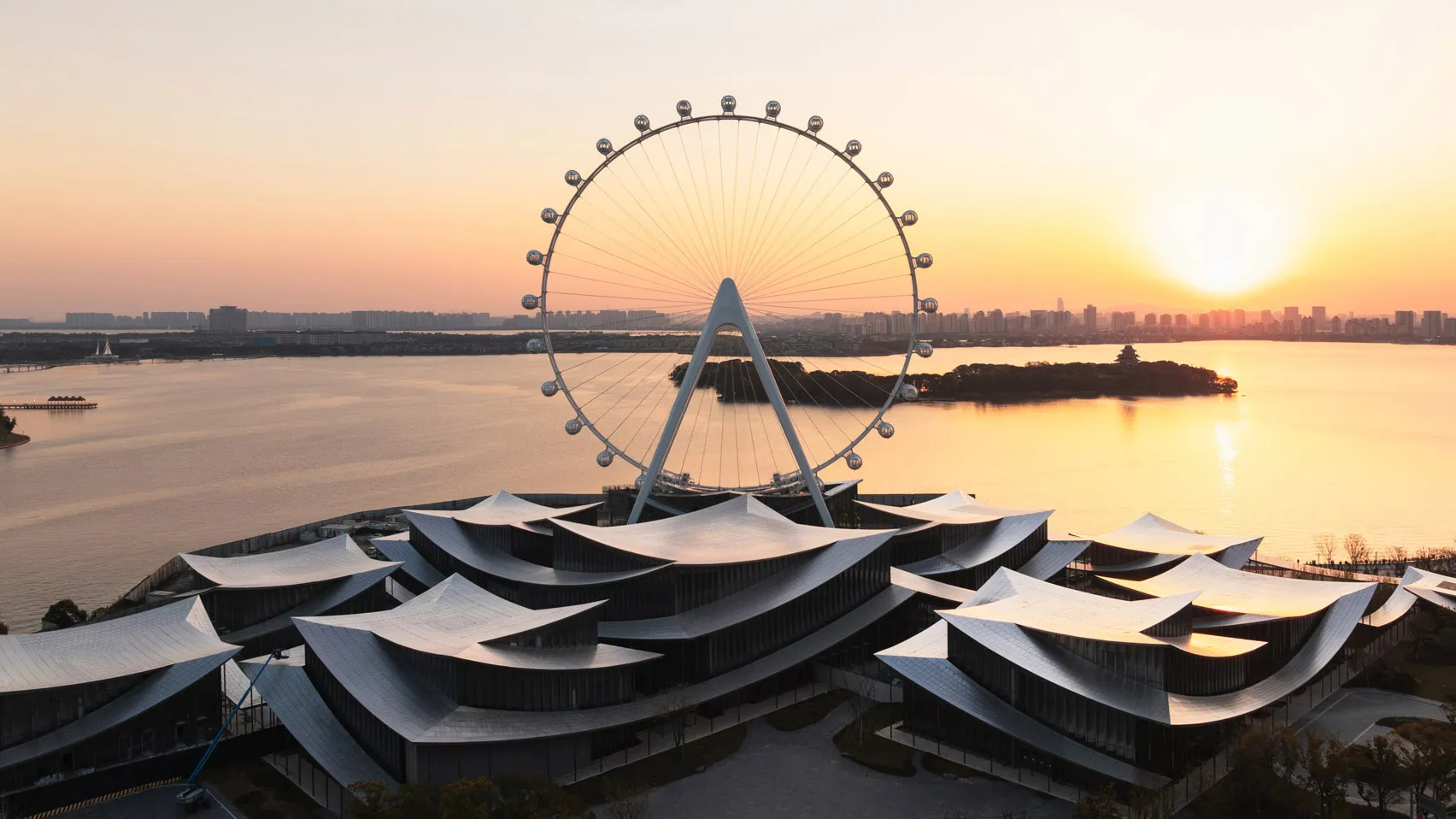
Location: Suzhou, China
Architect: Bjarke Ingels Group (BIG)
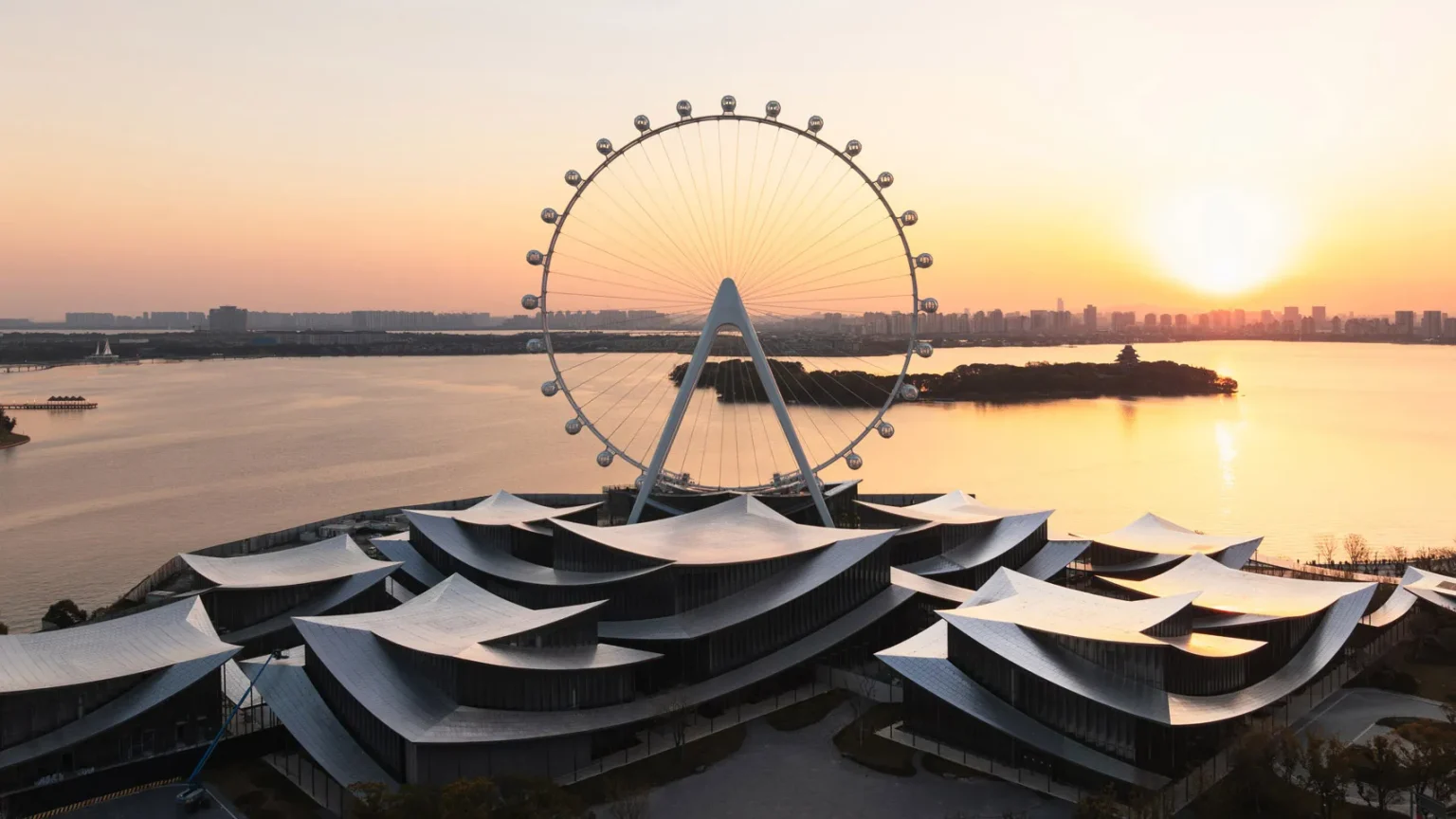
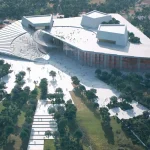
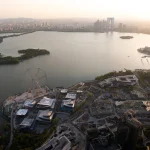
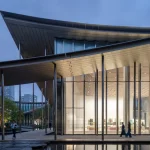
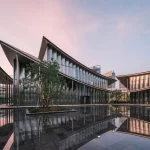
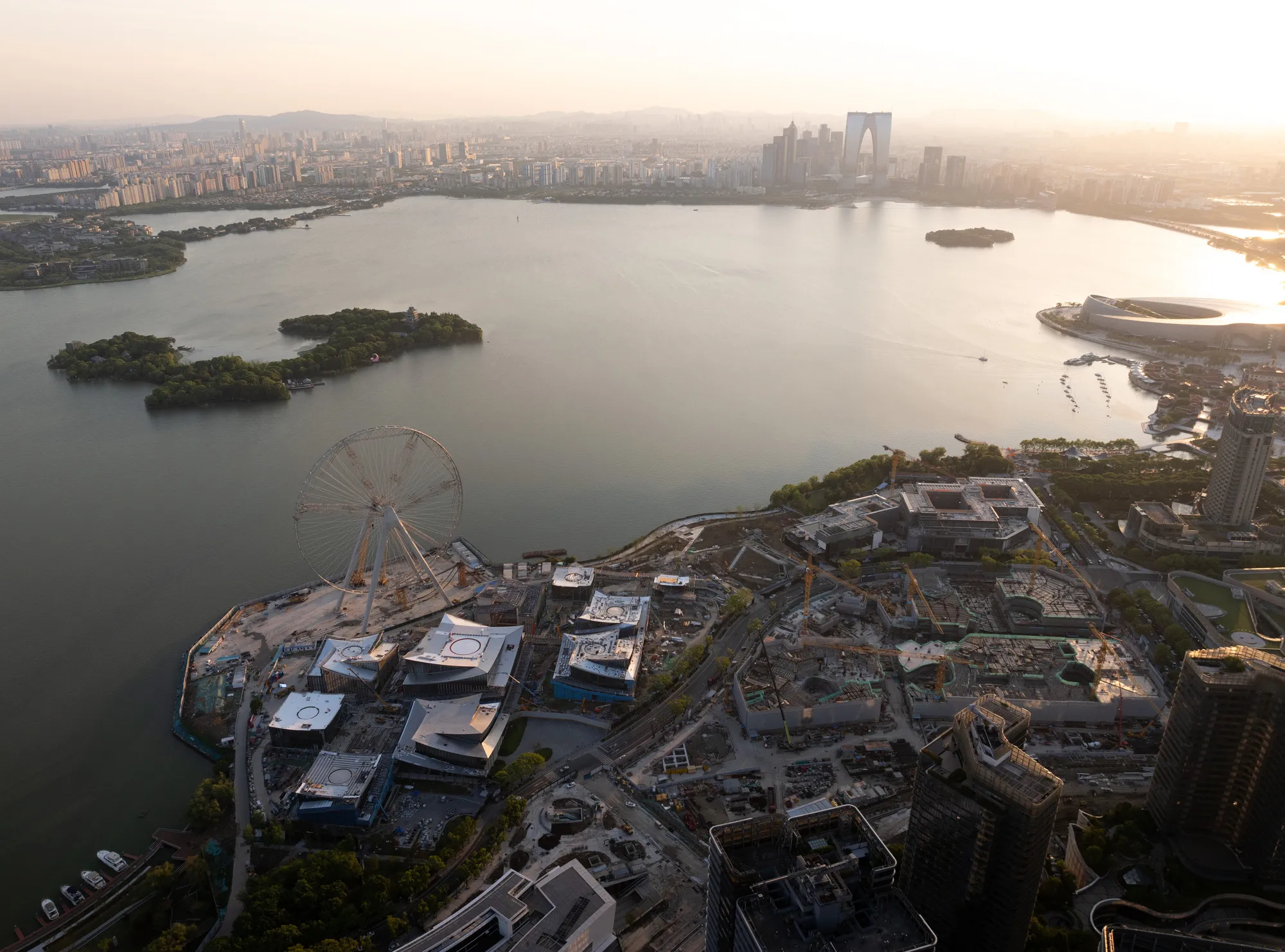
Designed by BIG in collaboration with ARTS Group and Front Inc. and slated to open in 2026, the Suzhou Museum of Contemporary Art is one of China’s most anticipated structures. Located on the shores of Lake Jinji in Suzhou, the 60,000-square-meter museum comprises 12 pavilions under a continuous roof inspired by the traditional Chinese architectural style’s tiled eaves. Designed as a garden of pavilions and courtyards, the project presents a new and contemporary interpretation of the “lang,” a corridor connecting pavilions that has been a feature of Suzhou gardens for centuries.
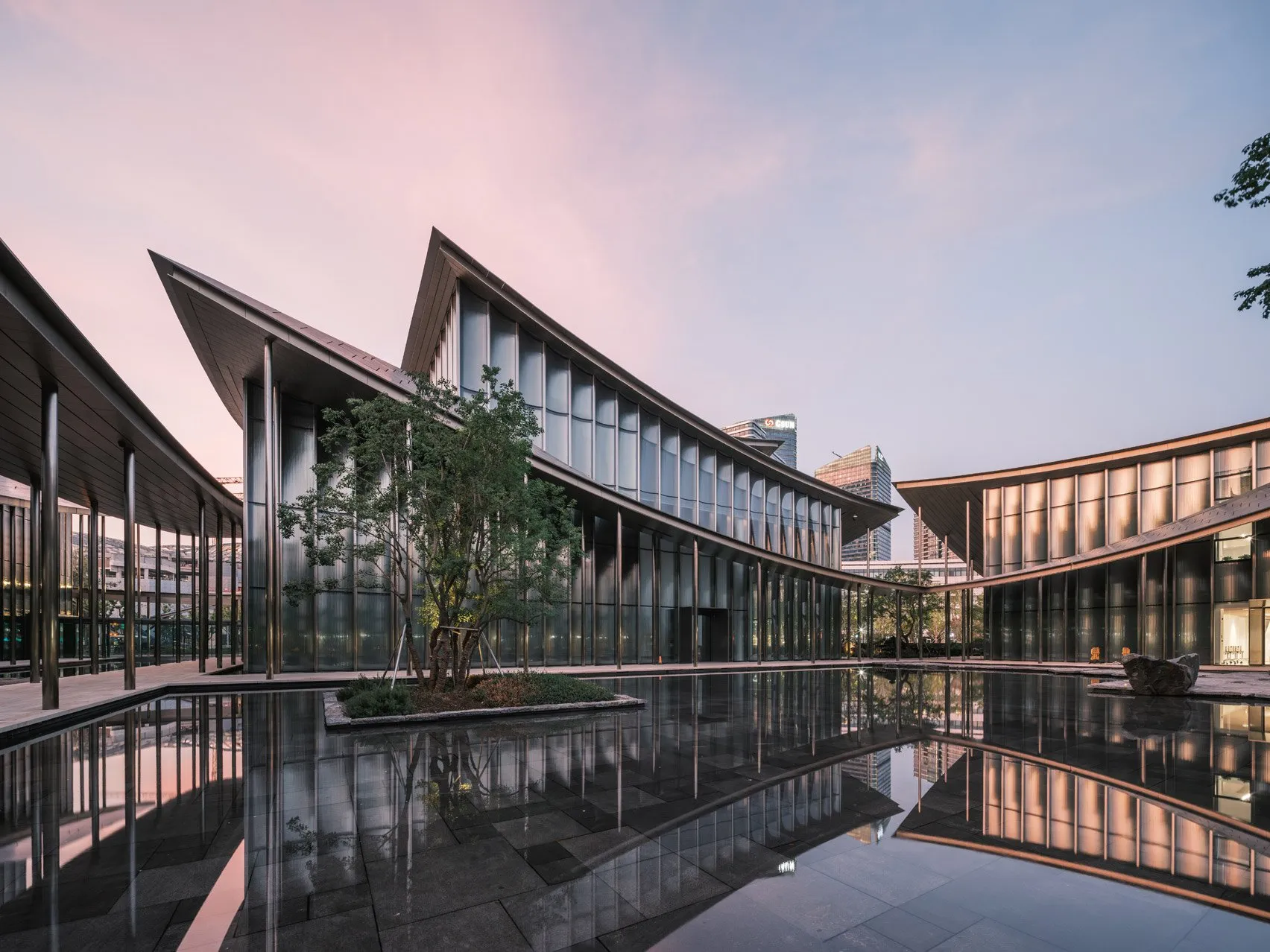
The large plaza at the museum’s entrance leads visitors toward walkways that extend into the museum pavilions and gardens. The four largest of the 12 pavilions house the main galleries, while the remaining eight contain a large entrance area, multipurpose hall, theater, and restaurant. Bridges and underground tunnels connecting the pavilions provide movement within the complex. The museum also offers a beautiful view of the Suzhou Ferris Wheel on the shores of Jinji Lake.
For the pavilion façades, BIG used curved and wavy glass paired with warm-toned stainless steel, reflecting the sky, water, and gardens to blur the boundaries between architecture and nature. Skylights installed within the pavilions naturally illuminate the interiors, creating a playful shadow movement on the gallery walls.
2. Hainan Science Museum
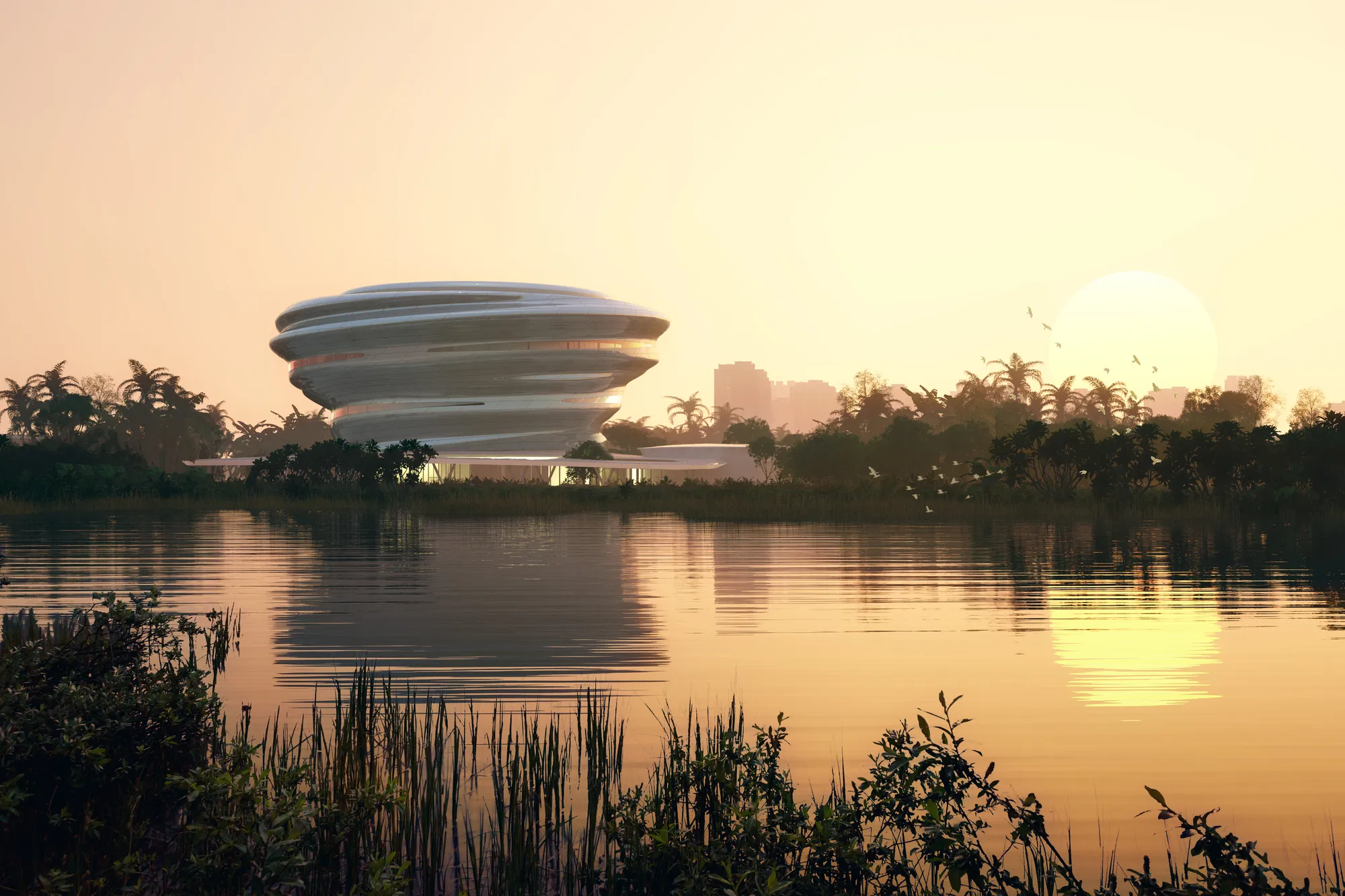
Location: Hainan, China
Architect: MAD Architects
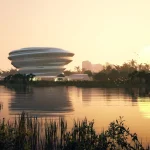
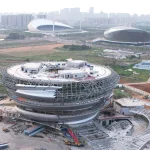
The Hainan Science Museum is located on the western coast of Haikou, surrounded by sports stadiums and the National Wetland Park. Following Cloudscape of Haikou, which opened in 2021, the museum, MAD Architects’ second major public project in Hainan, is designed as a major science center and tourist attraction for Hainan’s free trade port. Construction began in 2021 and was completed in June 2023, and the museum is scheduled to open to visitors in 2025.
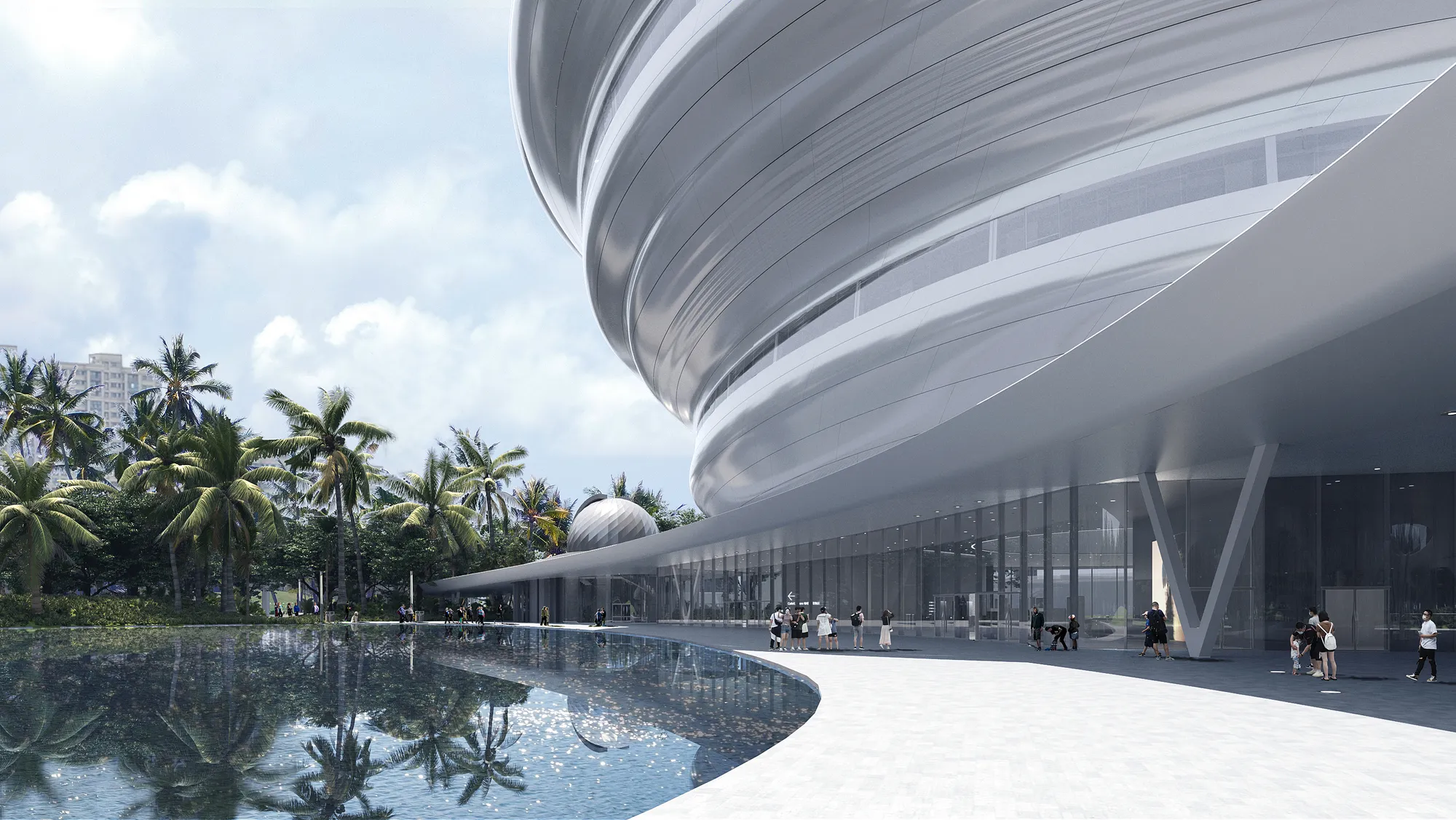
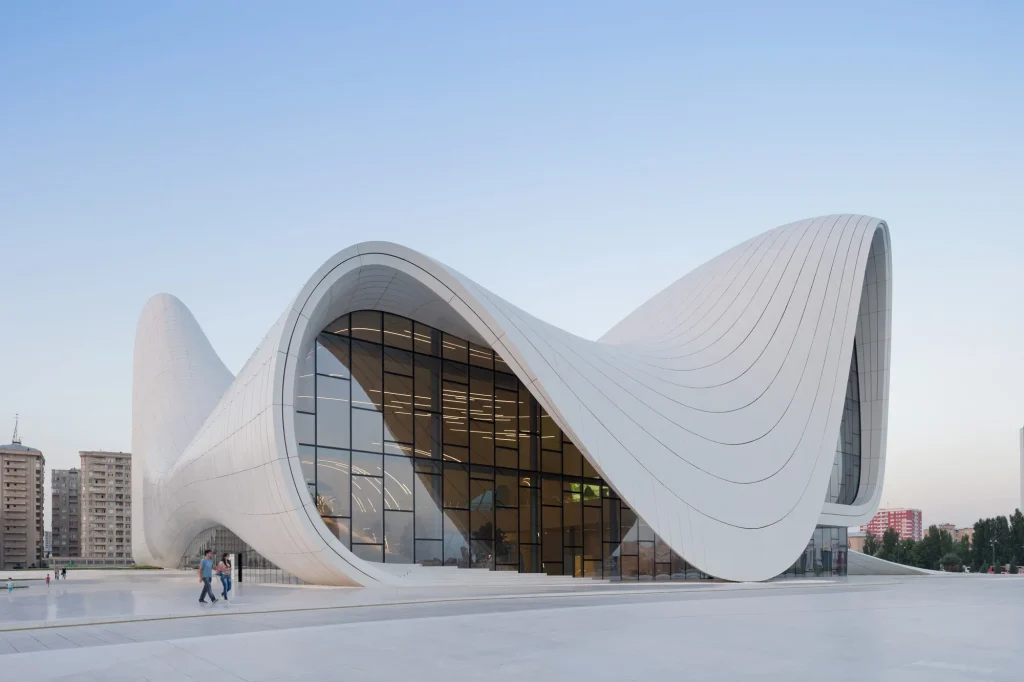
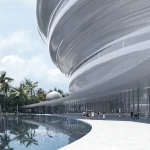
With its biomorphic form defined by fluid and soft curves, the Hainan Science Museum creates a distinctive architectural landmark. The design mimics the movement of hot air rising from the Earth’s surface, resembling an upward air current. The 46,000 m² museum, spread across six floors, features a curtain wall composed of 843 pieces of fiberglass-reinforced plastic that imitates the motion of rising warm air. Designed for Hainan’s tropical climate, the panels feature open joints for effective drainage and grooves that direct water, ensuring the building’s functionality and durability in humid environments.
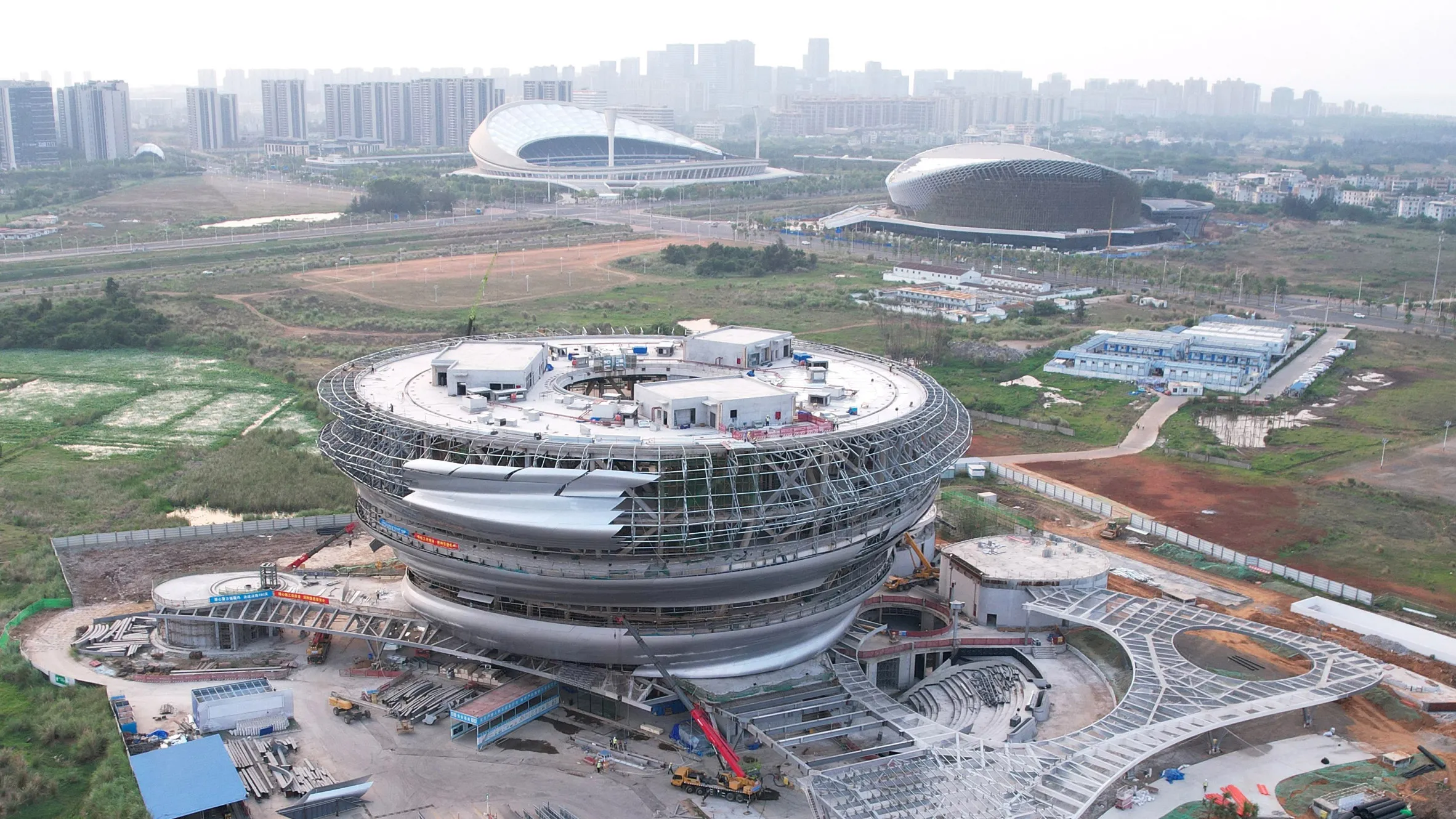
Avoiding unnecessary use of materials, MAD Architects connected the museum’s curved façade directly to the core, floor slabs, and main structure to facilitate resource-efficient use. Above ground, the building consists of five floors totaling 28,000 m², along with one basement level. The second and third floors are designed specifically for young children, while older children and adults are encouraged to experience the museum starting from the top level. The sunken plazas and wetlands surrounding the building provide an interactive public space, offering natural areas for learning and relaxation.
3. Quzhou Sports Park
Location: Quzhou, China
Architect: MAD Architects
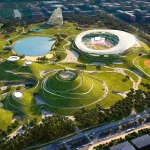
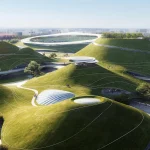
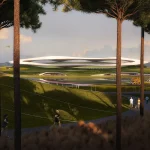
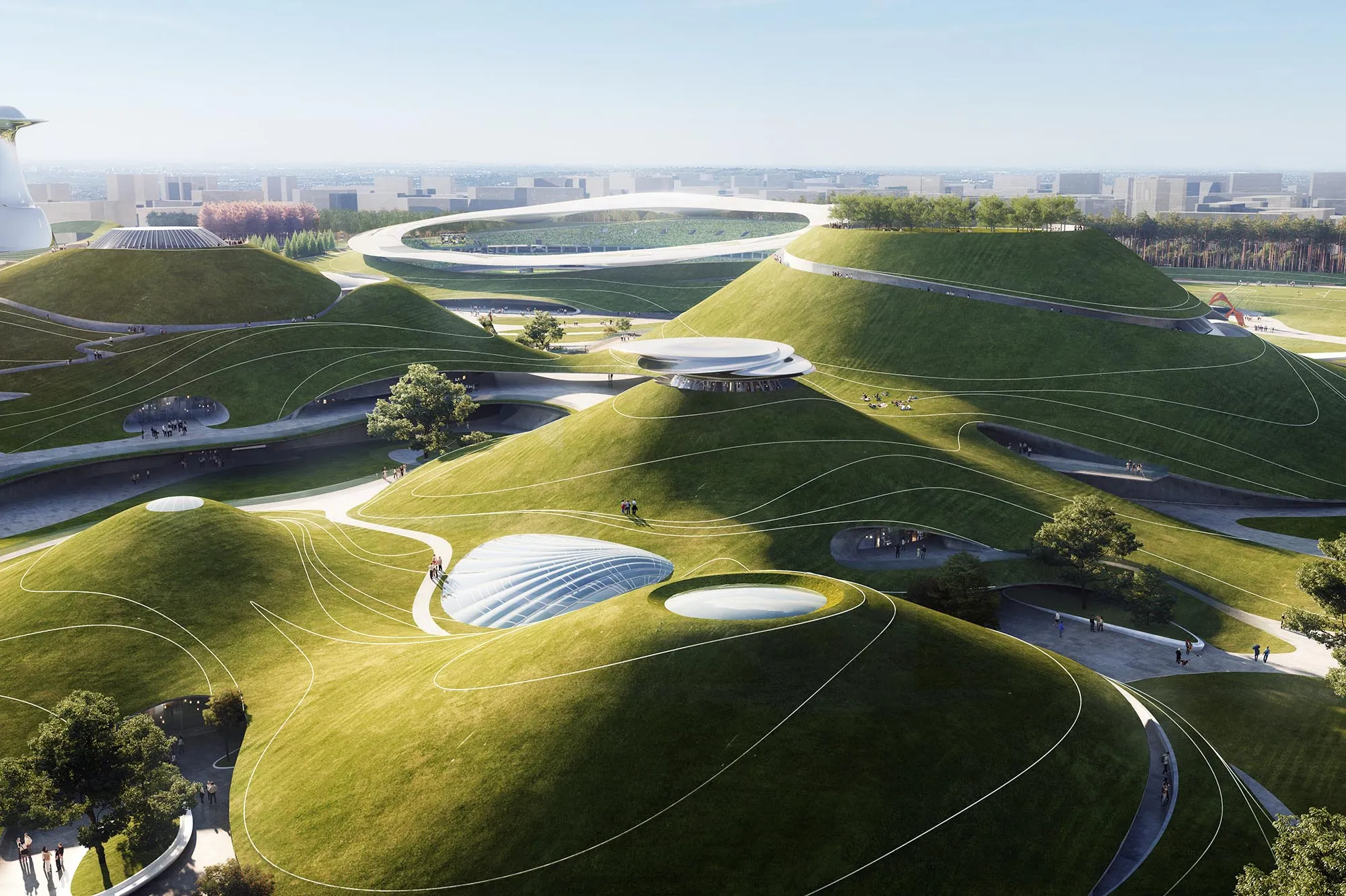
Quzhou Sports Park, slated to hold the title of the world’s “largest earth-covered building” upon completion, is a curving concrete stadium in Quzhou, China, sunk into the ground and covered with grass roofs. Designed by MAD Architects as a “landscape artwork,” the 30,000-capacity stadium’s crater-like interior features undulating seating that follows the surrounding landscape.
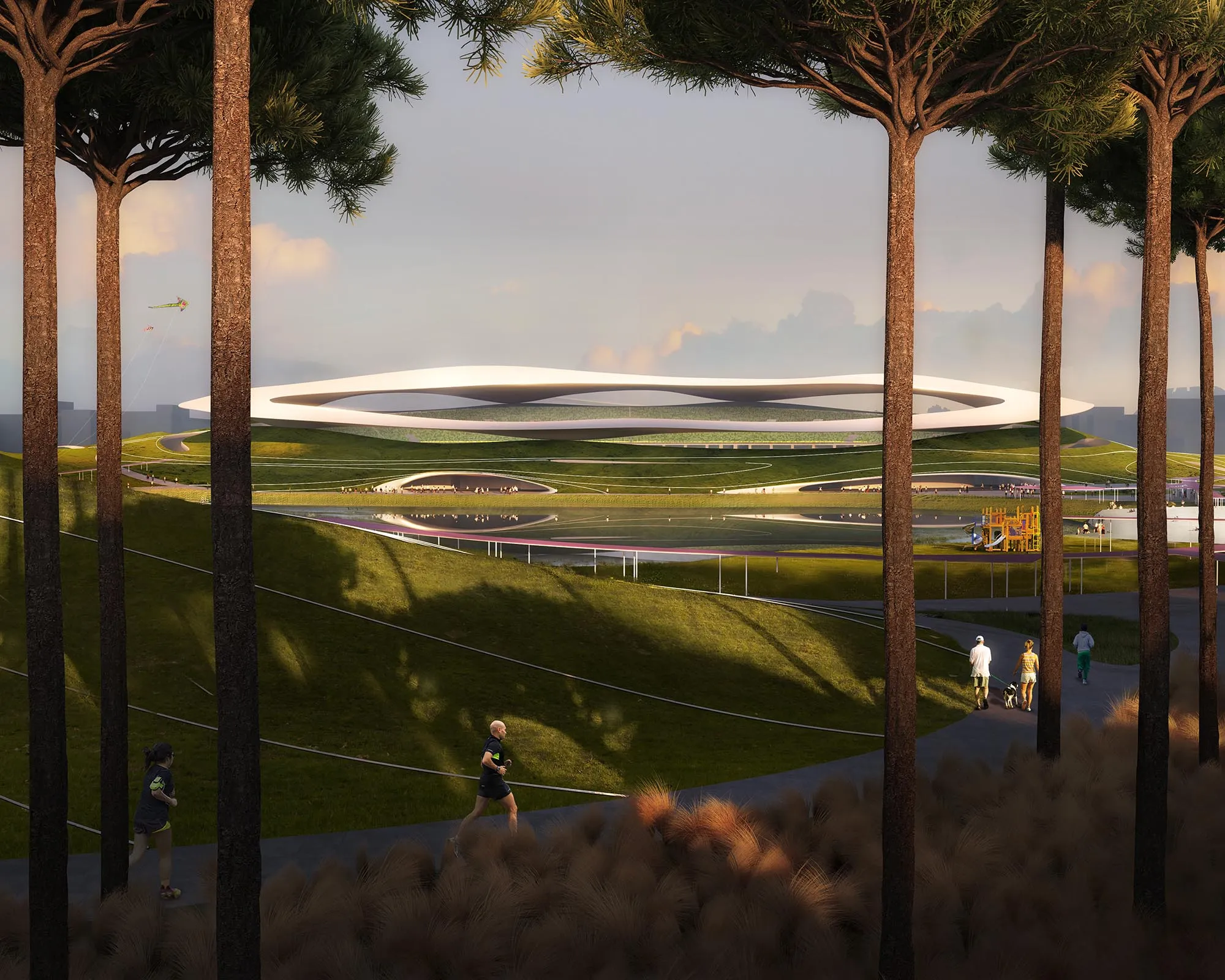
Bringing together both athletic competition and everyday physical activity, Quzhou Sports Park integrates its facilities into a public park. As the façades disappear into the greenery-covered terrain, some of the carved contours form pedestrian paths that weave between the hills and over the architecture. The lawns also provide a place for people to relax, bringing a new public green space to the city.
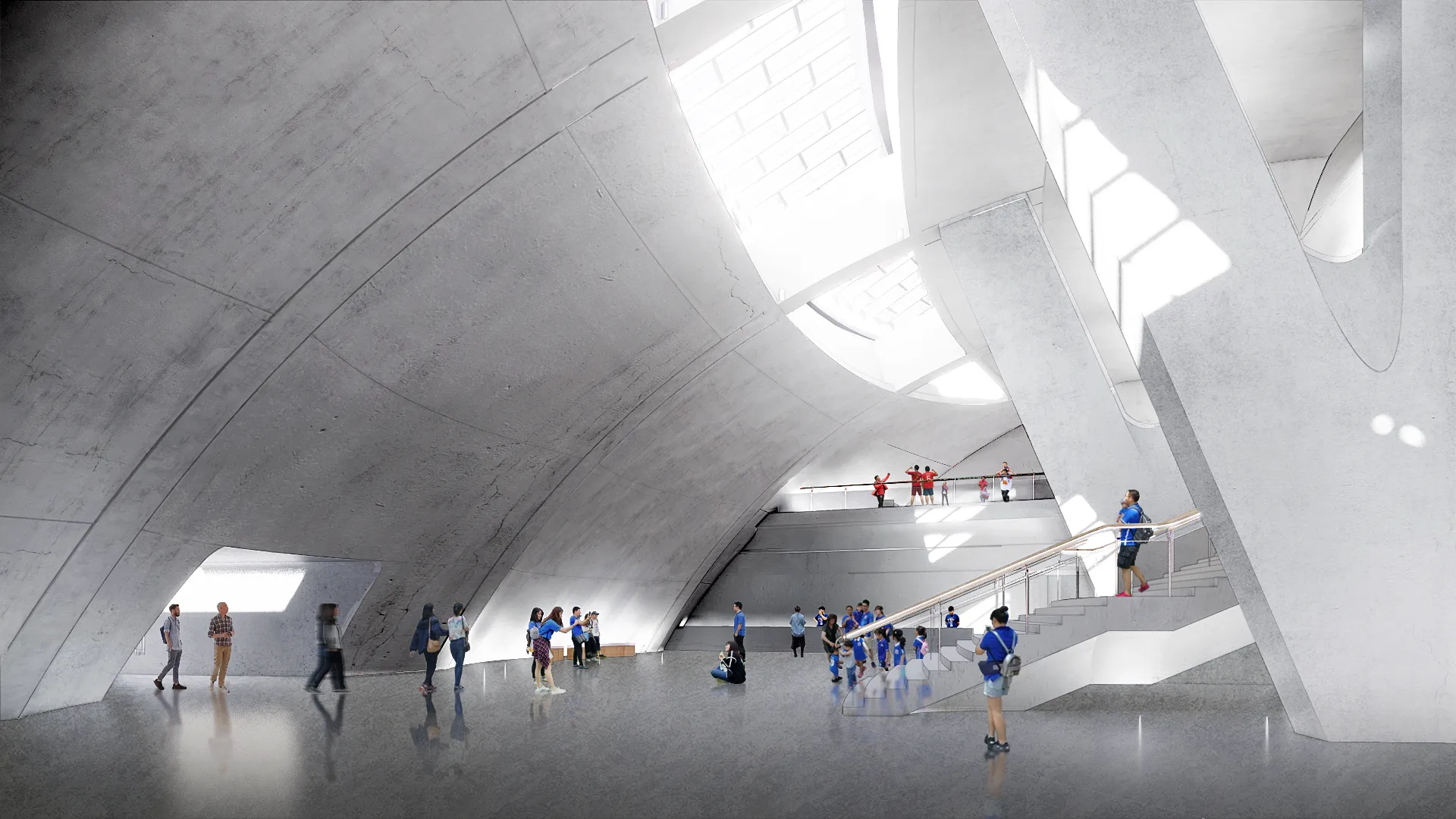
60 locally produced concrete columns support the stadium’s sloping façade. The double-curved surfaces of its nine entrances ripple like ocean waves, while the walls are made from textured, wood-patterned concrete panels. Above the stadium is a long, self-supporting steel canopy.
4. Grand Bayview Qianhai
Location: Qianhai, Shenzhen, China
Architect: Foster + Partners
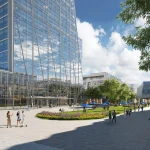
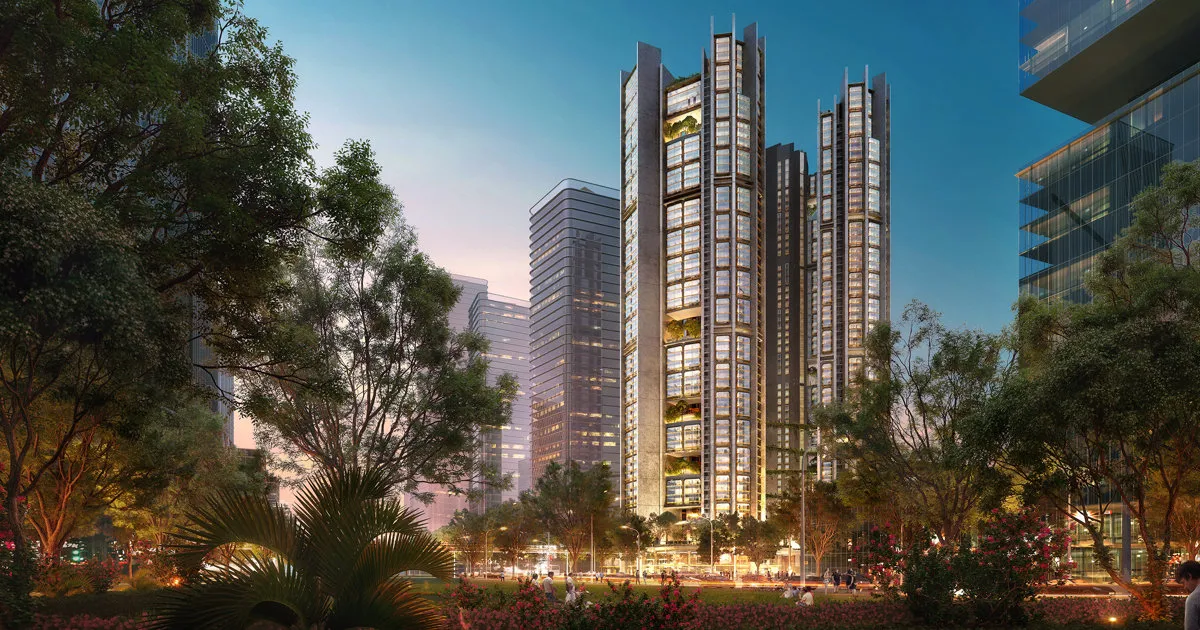
Currently under construction and scheduled to open in 2025, Foster + Partners’ Grand Bayview Qianhai introduces a new building typology specially designed for professionals with demanding work lives. The two interconnected towers feature a fan-shaped layout. This layout maximizes daylighting, maximizes privacy in the outer radius, and creates focused spaces at the project’s core.
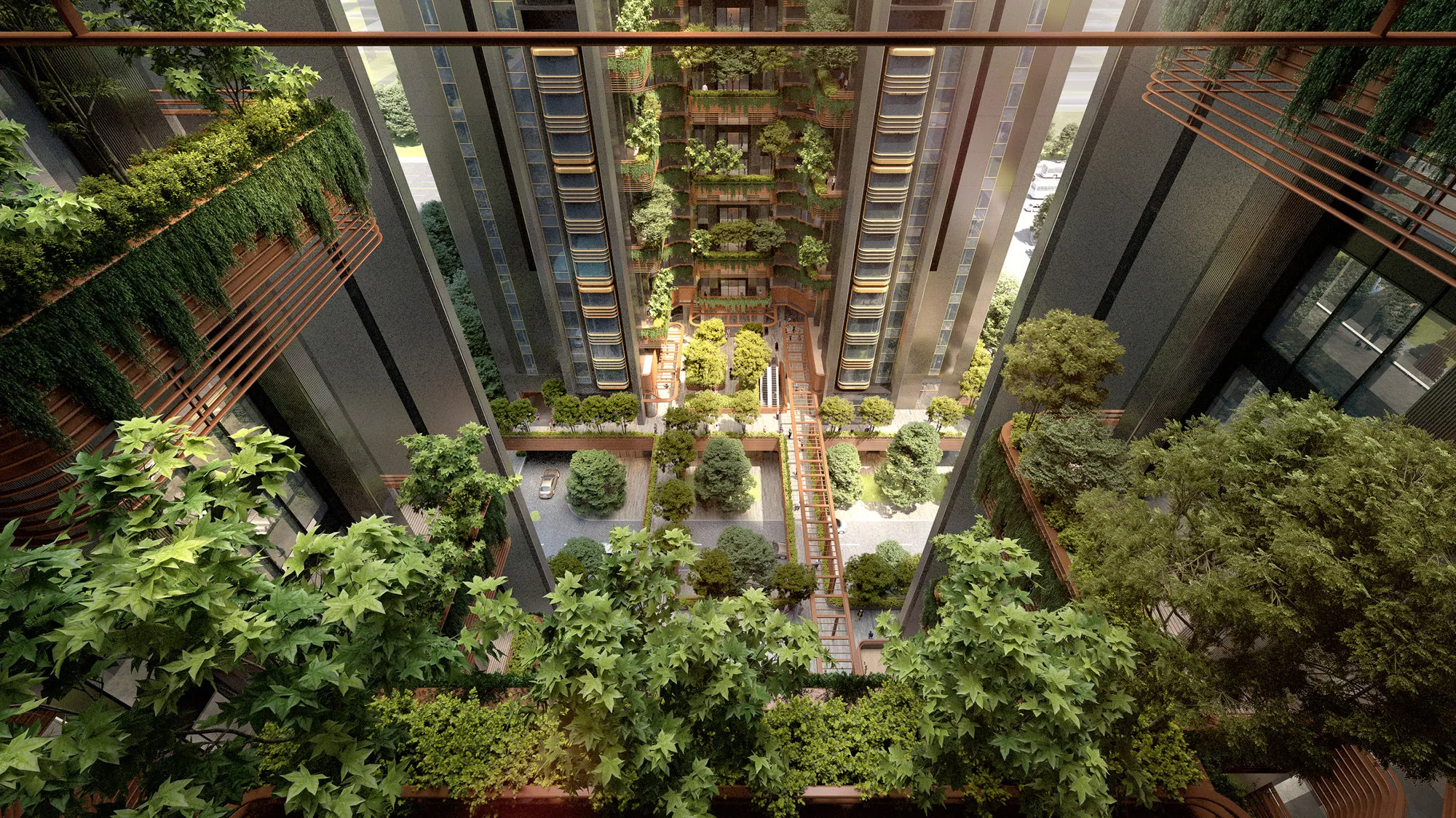
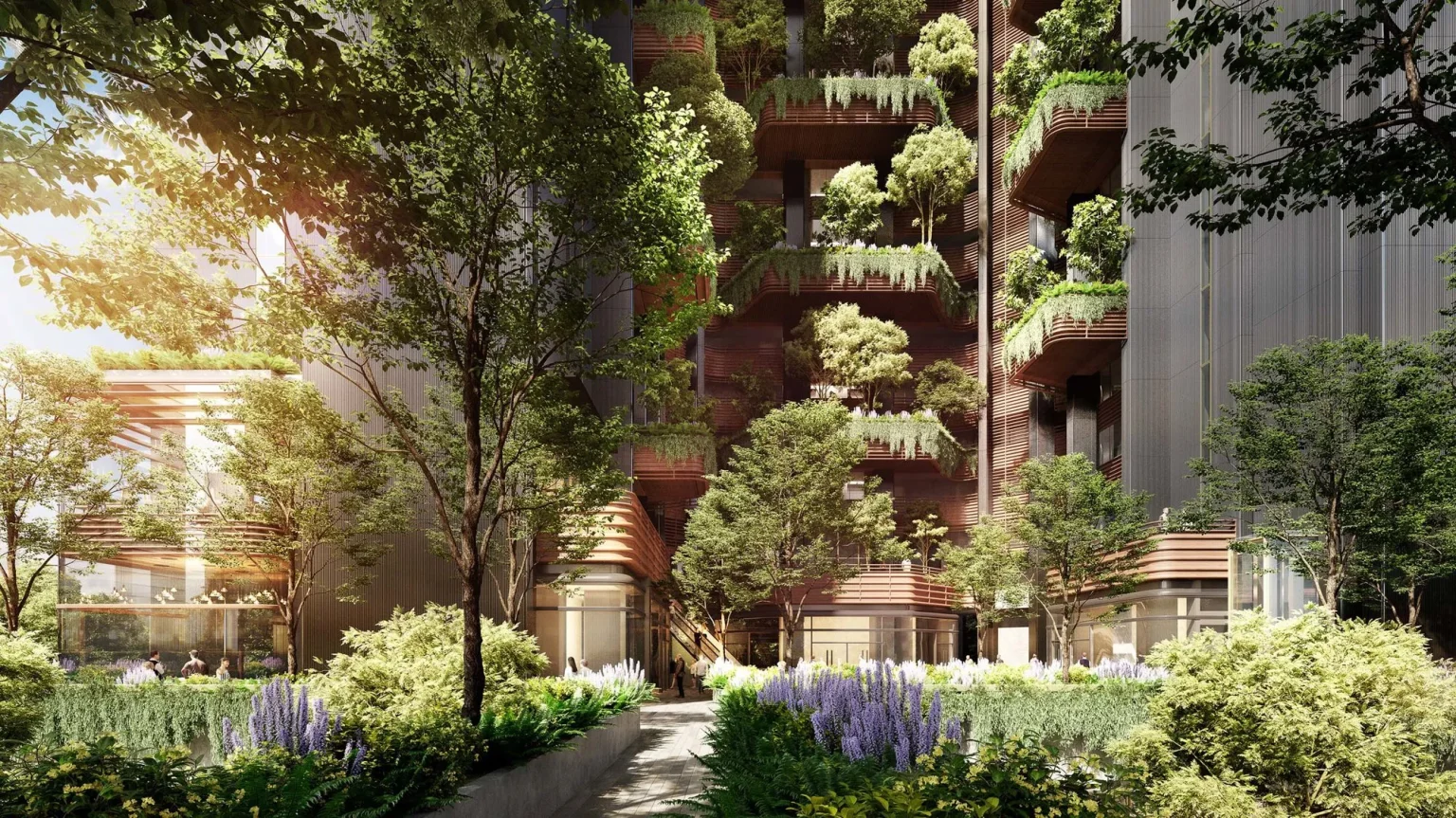
One of China’s most anticipated buildings, these two 180-meter-tall towers are connected by a vast semi-public garden that connects adjacent areas. A terrace on the second floor seamlessly ties into Guiwan’s elevated pedestrian network, providing a transition zone between neighboring spaces and creating a lush urban oasis for public enjoyment. Providing a shared space for all residents, the sky gardens not only offer views of the city but also facilitate a wide variety of activities, such as exercise classes and special events. Each three-story sky garden features shading and planting.
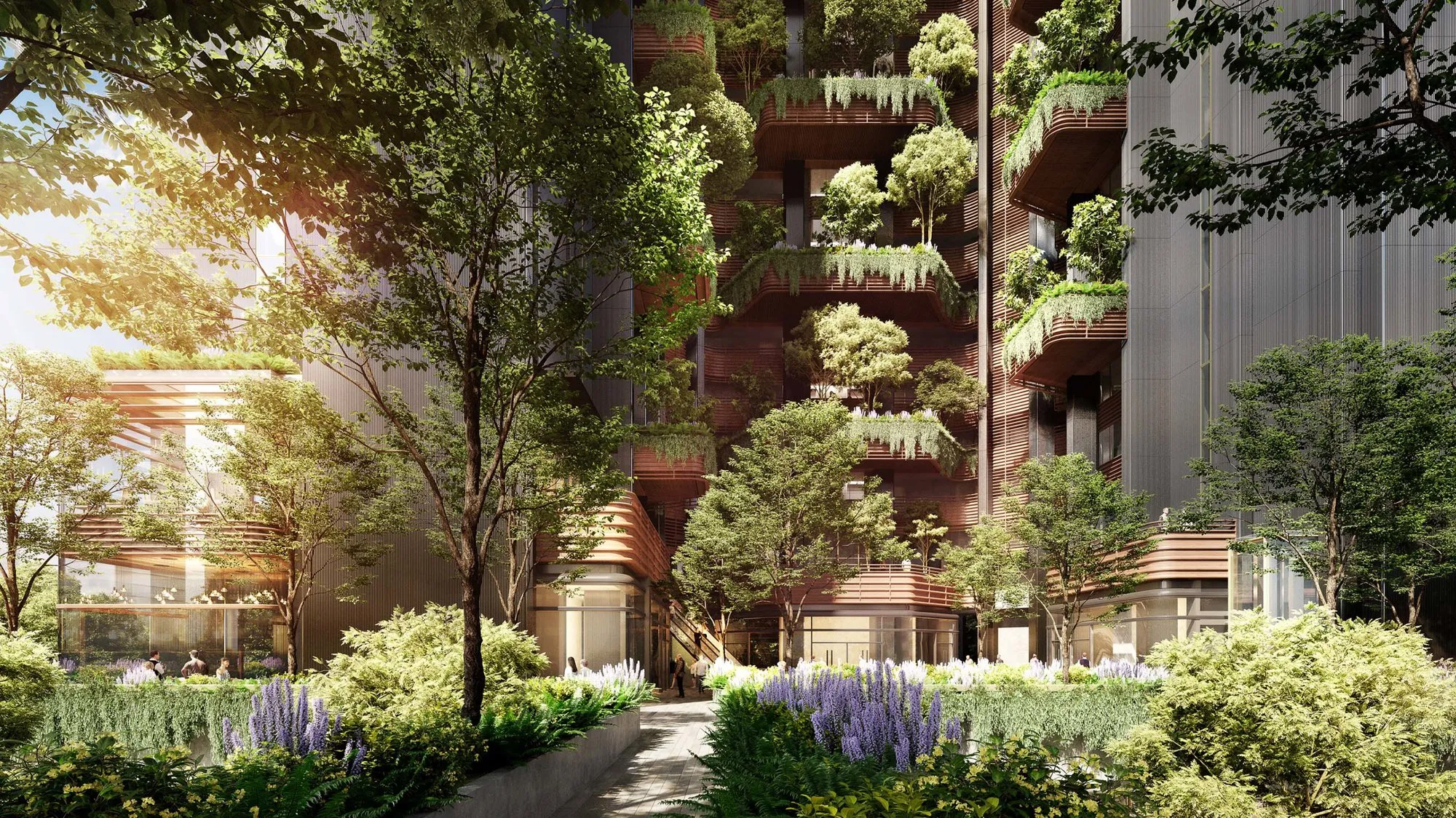
Designed with a modular approach, each flexible unit in Grand Bayview Qianhai can be combined in the future. The entire superstructure above ground is made of lightweight steel and was fabricated in a nearby facility.
5. Shanghai Grand Opera House
Location: Shanghai, China
Architect: Snøhetta
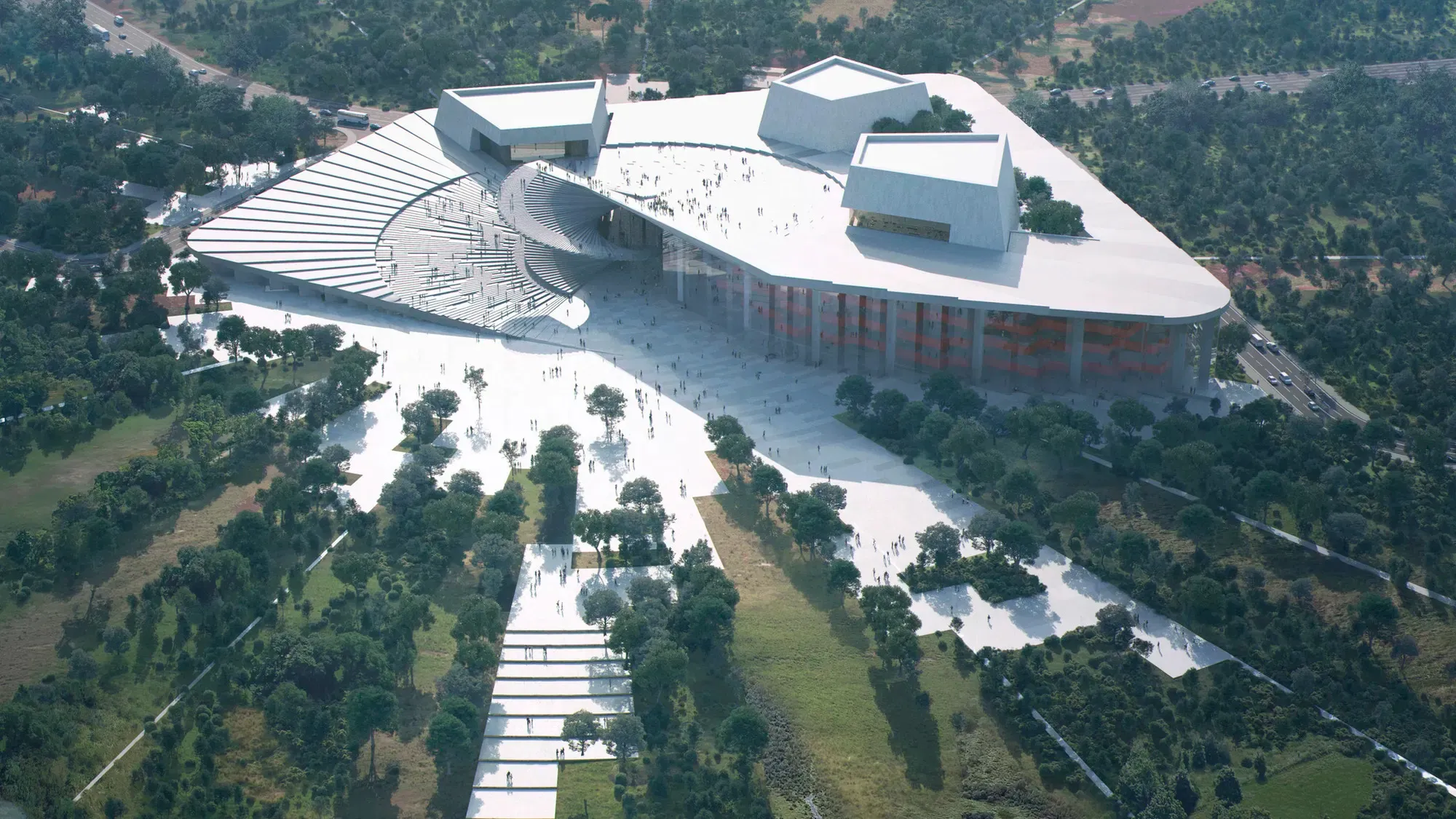
Designed by Snøhetta with the motto “A Destination for Everyone,” the Shanghai Grand Opera House is one of China’s most anticipated structures, with a completion date of 2026. Following its win in an international design competition, Snøhetta is developing the project in collaboration with the local architecture firm ECADI. The project aims to reach a broad audience by offering a diverse range of performances, including traditional and Chinese opera, classical concerts, and experimental pieces that will appeal to a younger audience.
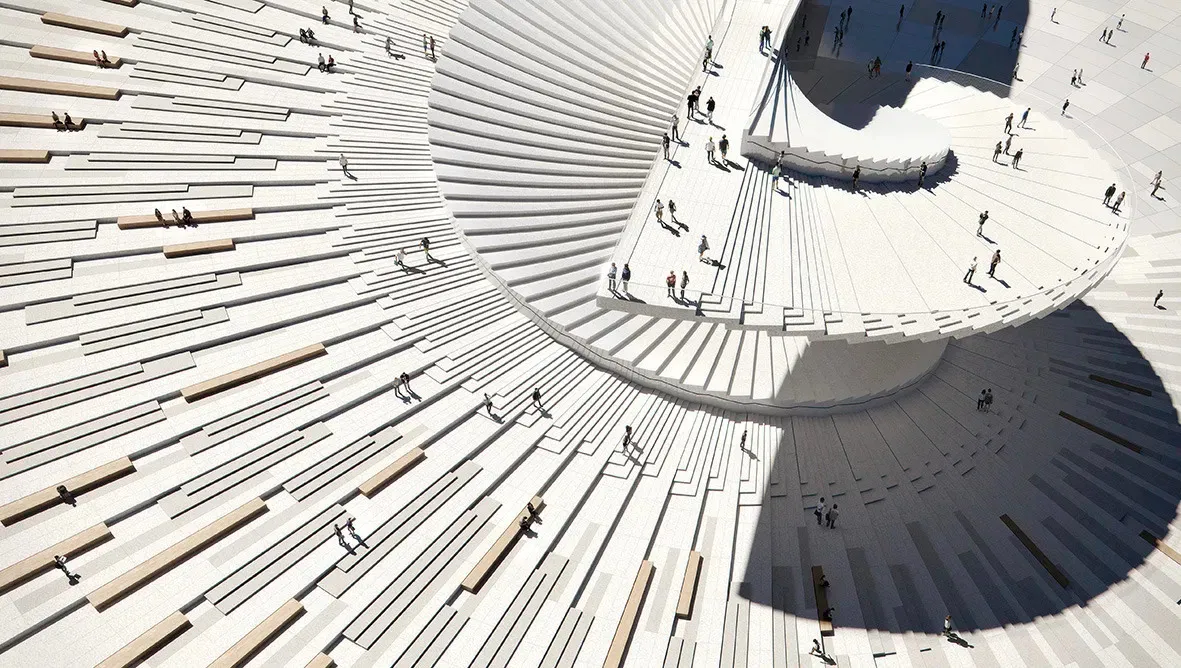
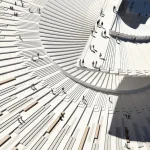
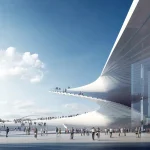
The Grand Opera House, a key component of Shanghai’s 13th Five-Year Plan, one of the most significant initiatives to strengthen Shanghai’s cultural and global influence, is being built in the Expo Houtan district, located on a protruding bank along the Huangpu River. Designed to unite artists and the public under one roof, the building’s expansive form evokes movement. Its spiraling roof, inspired by the dynamism of dance and the human body, unfolds like an open fan. Functioning as both a surface and a spatial element, the roof’s radial motion forms a spiraling staircase that connects the ground to the sky.
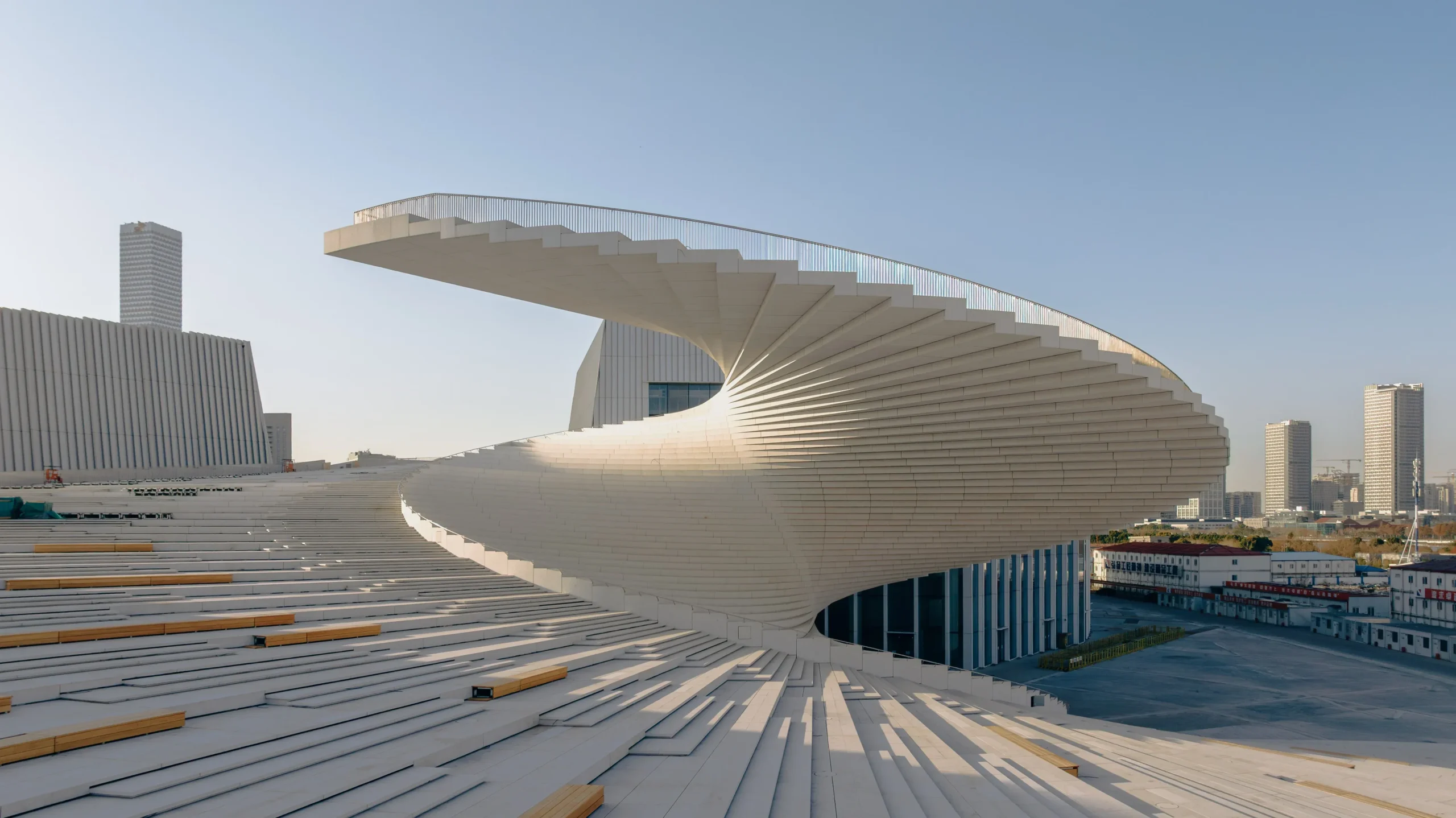
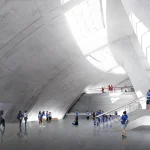
The spiral and fan movement, clearly visible on the roof, continues into the lobby and halls. The 2,000-seat main entrance, located at the heart of the opera house, offers cutting-edge technical solutions and superior acoustics, while the 1,200-seat second stage is designed for smaller productions and a more intimate setting. The 1,000-seat third stage, offering a flexible stage and seating arrangement, was created with a new generation of opera-goers in mind.
6. Pujiang Viewing Platform
Location: Pujiang, China
Architect: MVRDV
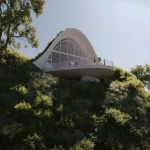
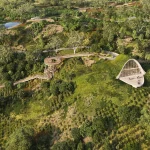
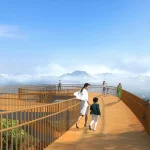
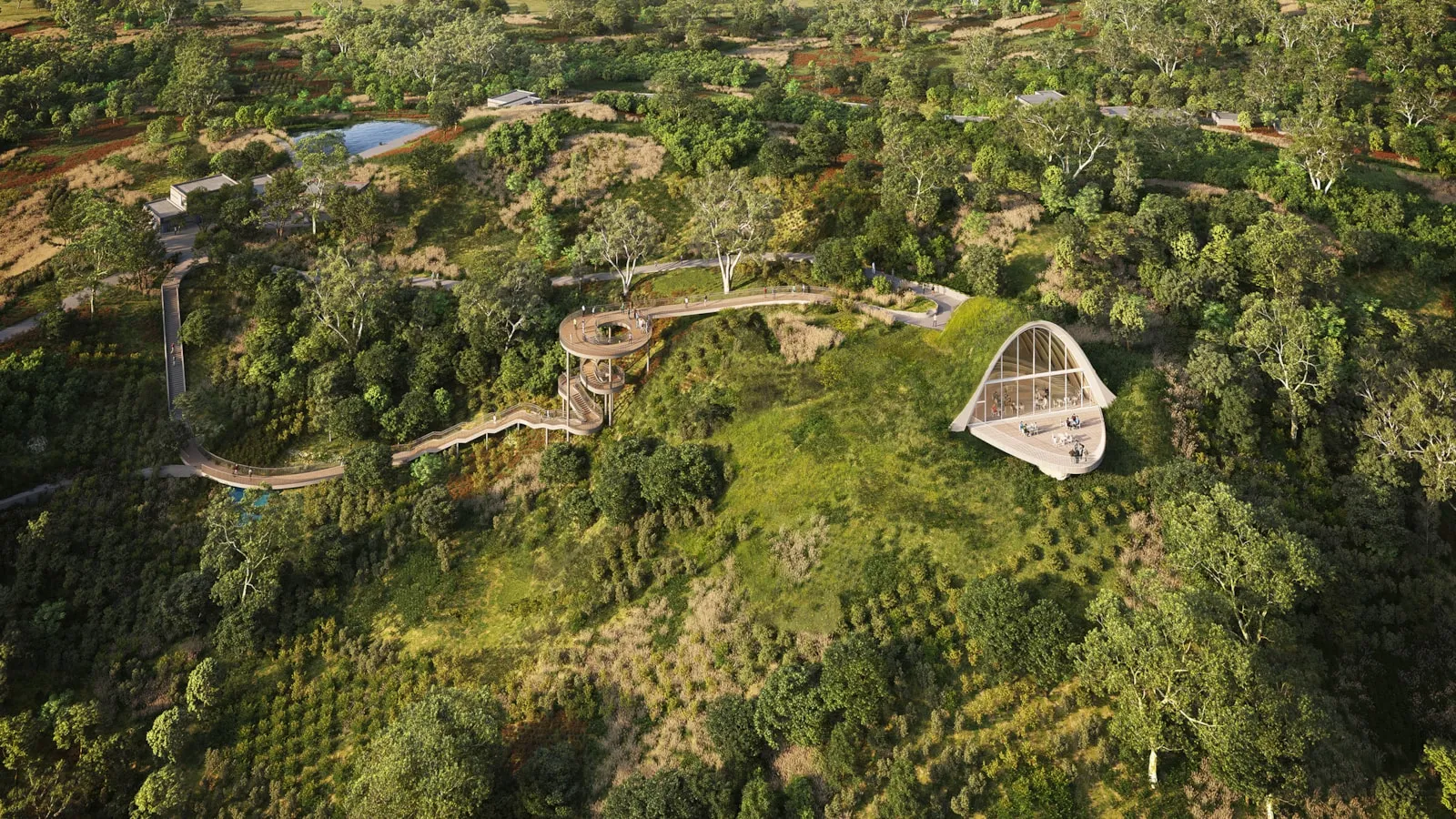
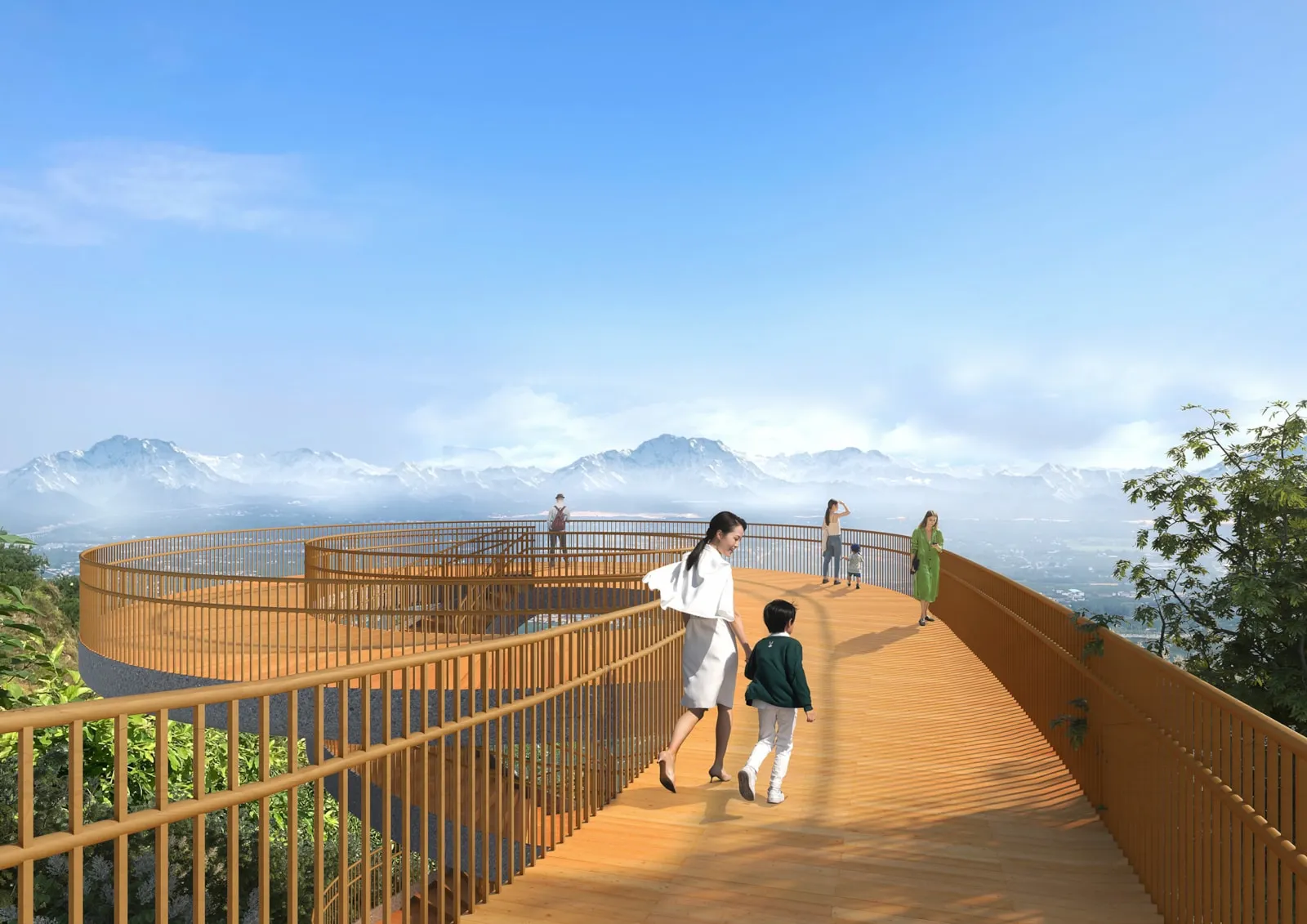
The Pujiang Viewing Platform, one of China’s most anticipated projects, is designed both as a visitor destination and an event space that takes advantage of the natural beauty of Central China. The structure, designed by MVRDV to harmonize with its surroundings, appears like a flare when viewed from below.
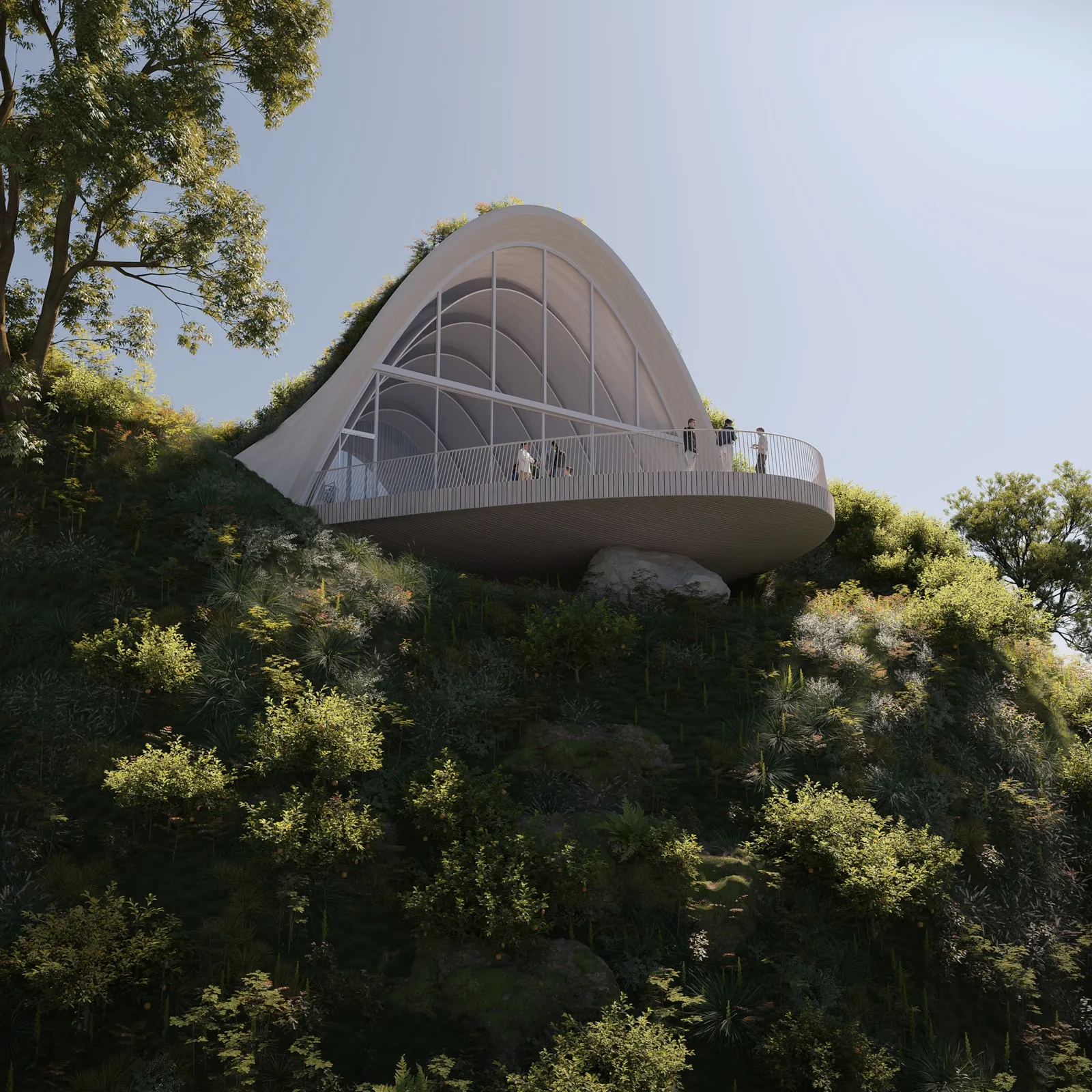
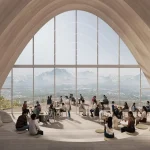
The arched structure, covered with earthenware and integrated with the landscape, is accessed through a small glass wall set into the earthen embankment on the southeast side. Inside, the roof slopes upward while the floor slopes downward, following the hill’s natural incline. These opposing slopes create an ideal tribune for presentations or for enjoying the view through the 115-square-meter glass wall at the far end. This glass wall, comprised of a pair of sliding doors measuring 4.5 meters high and 8.4 meters wide, opens the interior to the outdoor observation balcony. Constructed of lightweight steel, this balcony rests on a structural support set into the rock, reinforcing the impression of a design in harmony with its natural surroundings.
Built in timber as a model for future designs, the pavilion reduces the project’s construction-related carbon emissions. The earthen berm and greenery provide significant insulation and thermal mass, mitigating the impact of temperature fluctuations. The ceiling is designed to allow natural ventilation to cool the space. With the large window facing north and shading from the roof overhang and surrounding trees, solar gain is minimized.
7. China Science Academy Tech Campus
Location: Songjiang District, Shanghai, China
Architect: PEI Architects
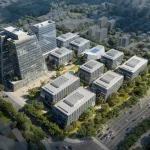
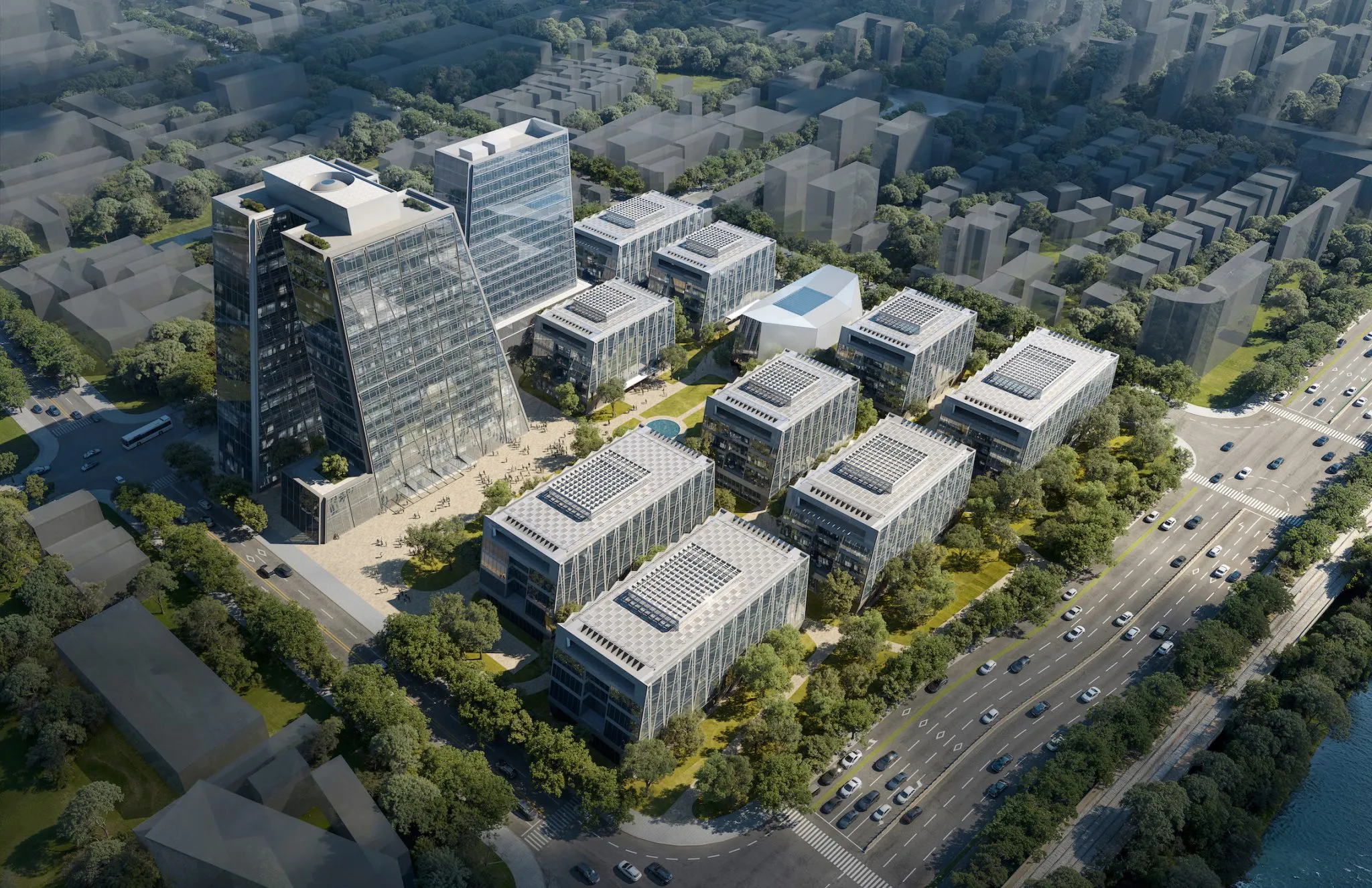
The buildings of the China Science Academy (CSA) Tech Campus, designed to foster creativity, imagination, and productivity among its residents, are integrated into a natural, park-like environment. Designed by PEI Architects and scheduled for completion in 2026, this project serves as a prototype for modern urban science facilities in China.
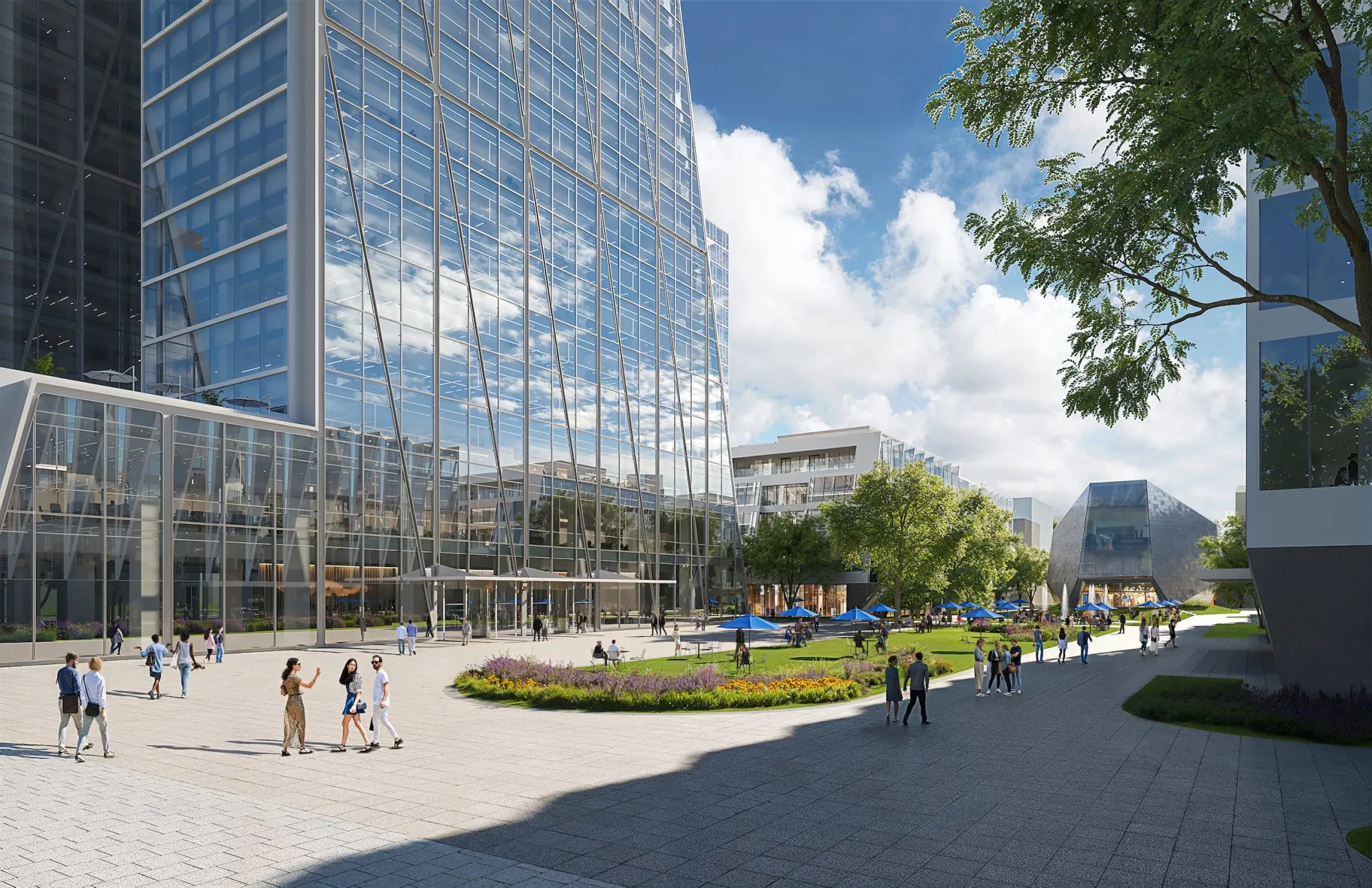
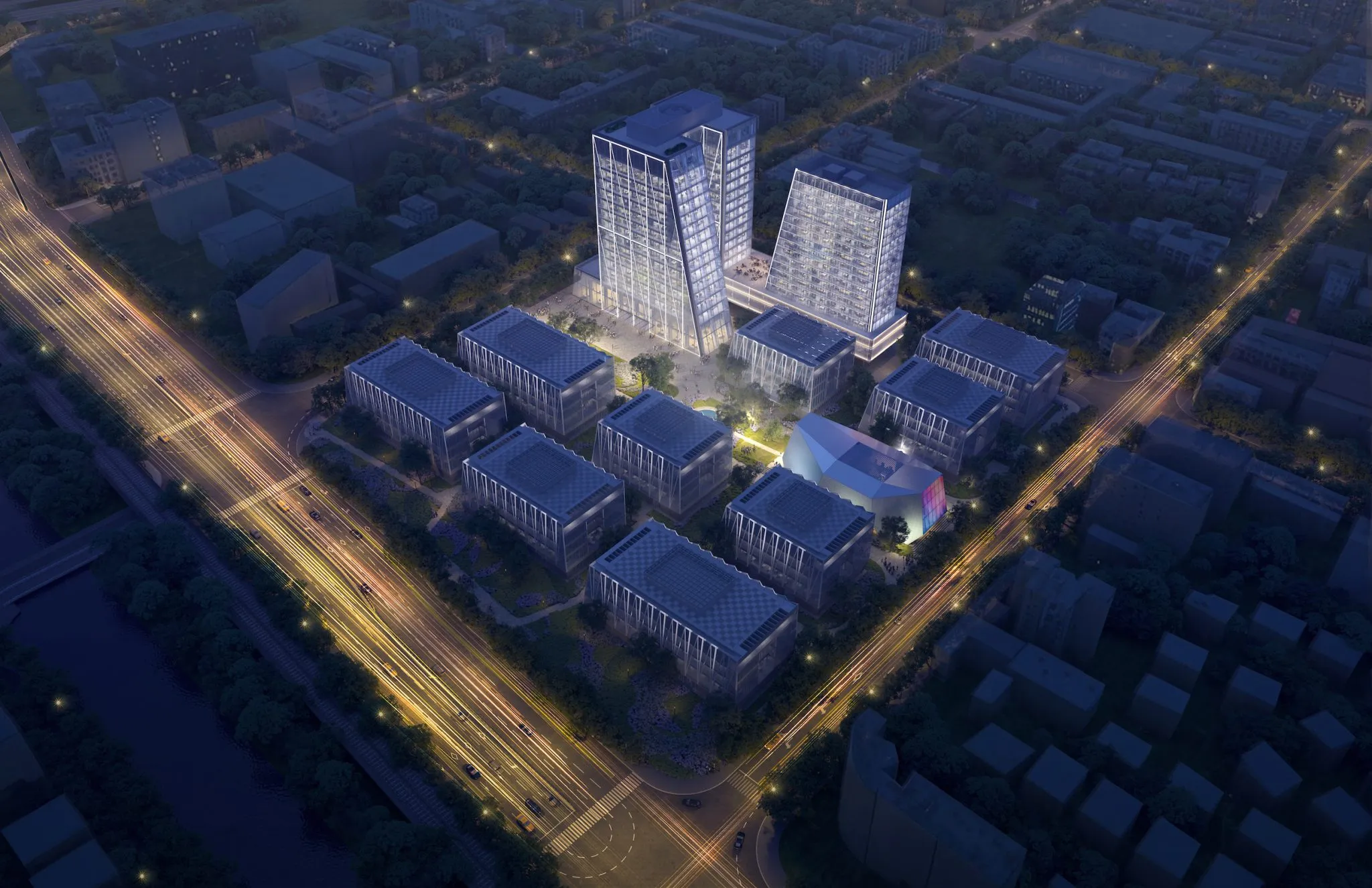
The campus organizes its incubation centers around a central park, which forms the backbone and focal point of the entire area. At the heart of the CSA campus, a reflective pool and an open-air amphitheater function as a gathering space and social hub. The building layout and spacing are designed to maximize views and light throughout each building, allowing visitors to connect with the natural environment visually.
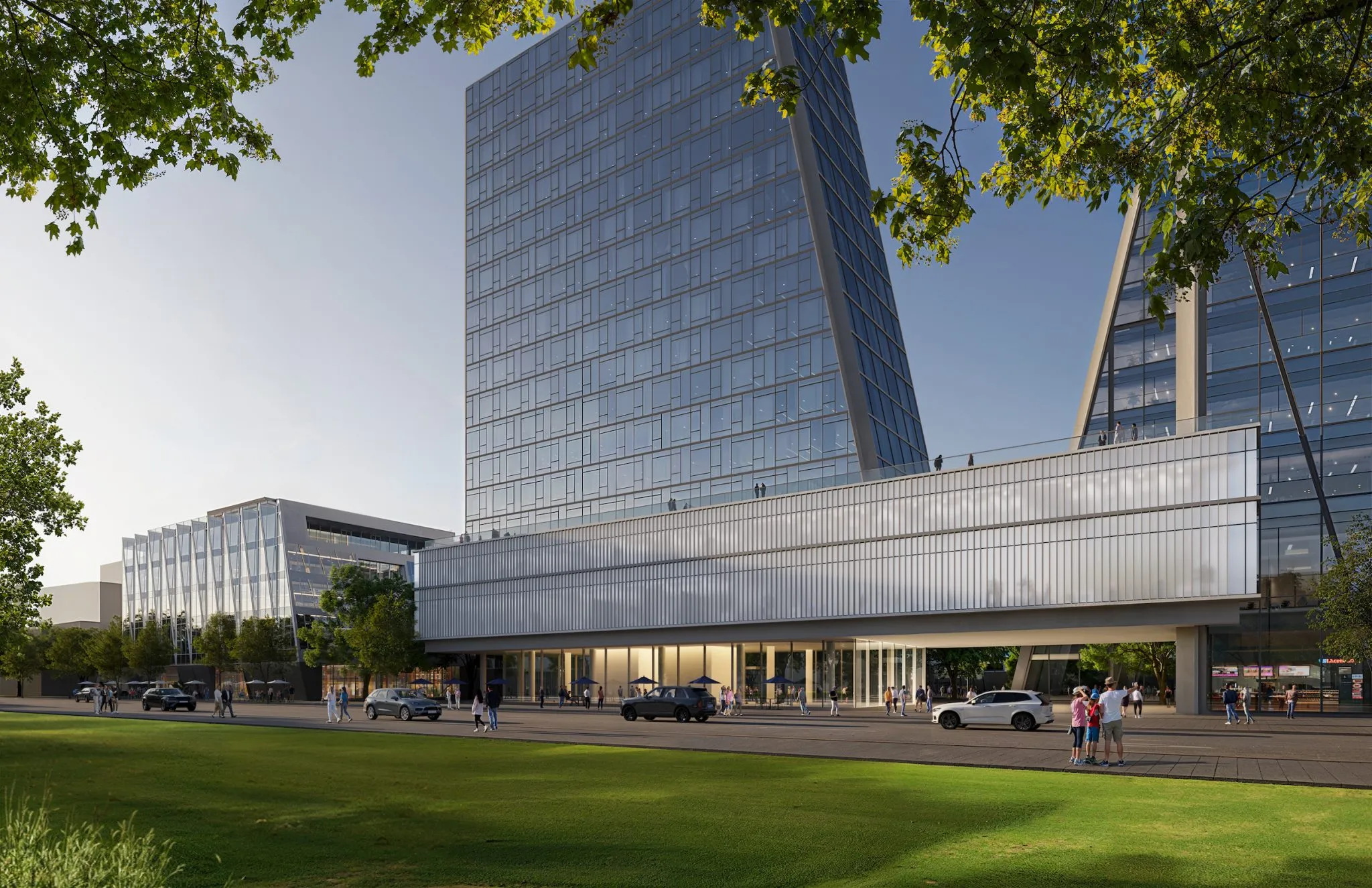
Based on fractal geometry, each incubation building features a unique geometric pattern on its façade while remaining visually connected to the overall campus design. The various scales and shapes of the facade geometries are combined to form a singular design. The buildings’ façades are clad in lightly reflective glass with multi-angled surfaces to mirror the natural landscape, visually integrating the structures with the surrounding park. Furthermore, the abundant use of glass on each floor provides unobstructed views, while multiple terraces on each building ensure a complete integration of interior and exterior spaces.
8. Guangzhou International Cultural Center
Location: Guangzhou, China
Architect: FGP Atelier
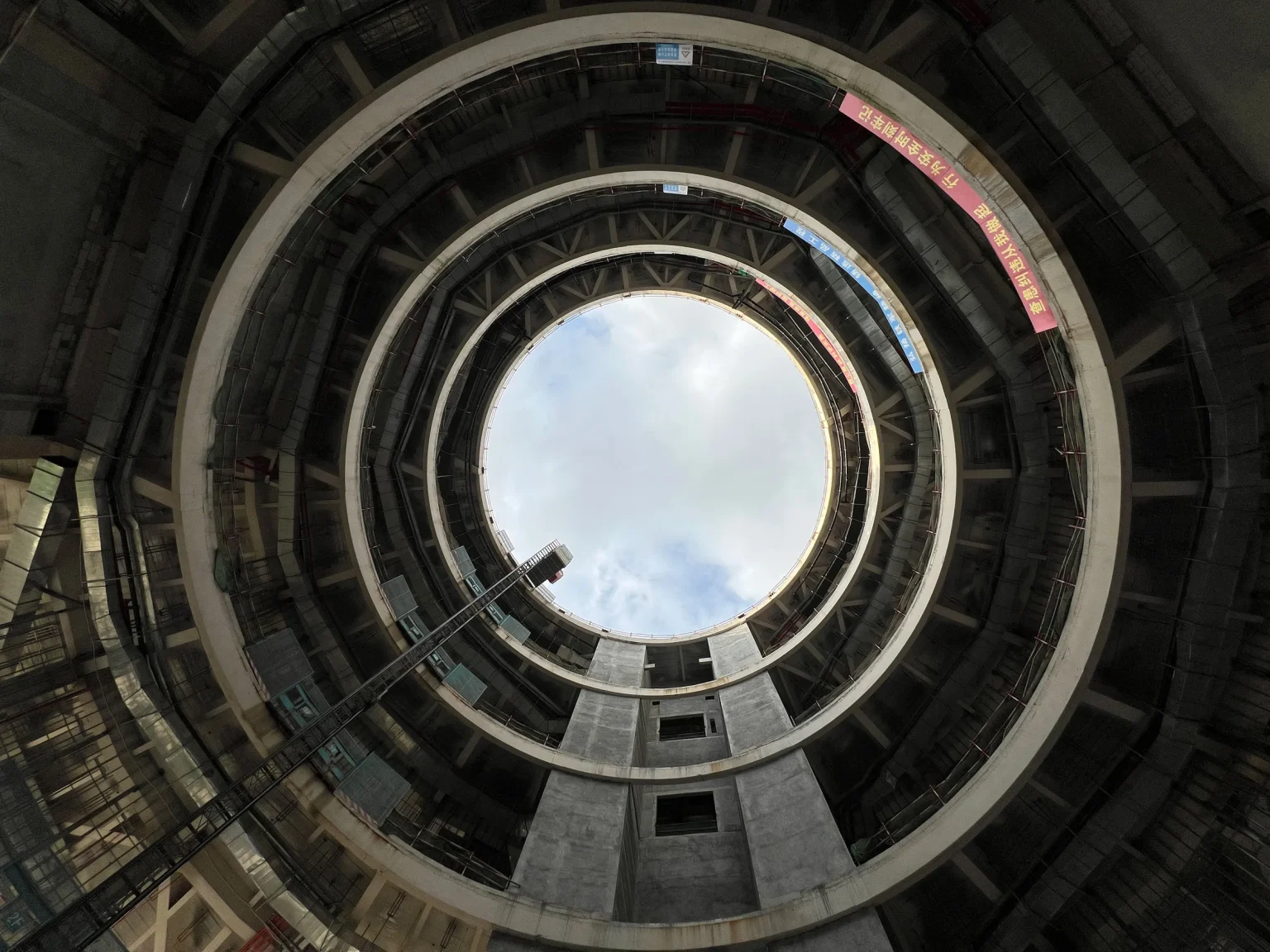
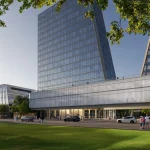
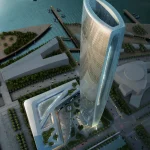
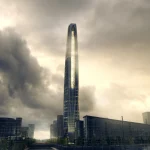
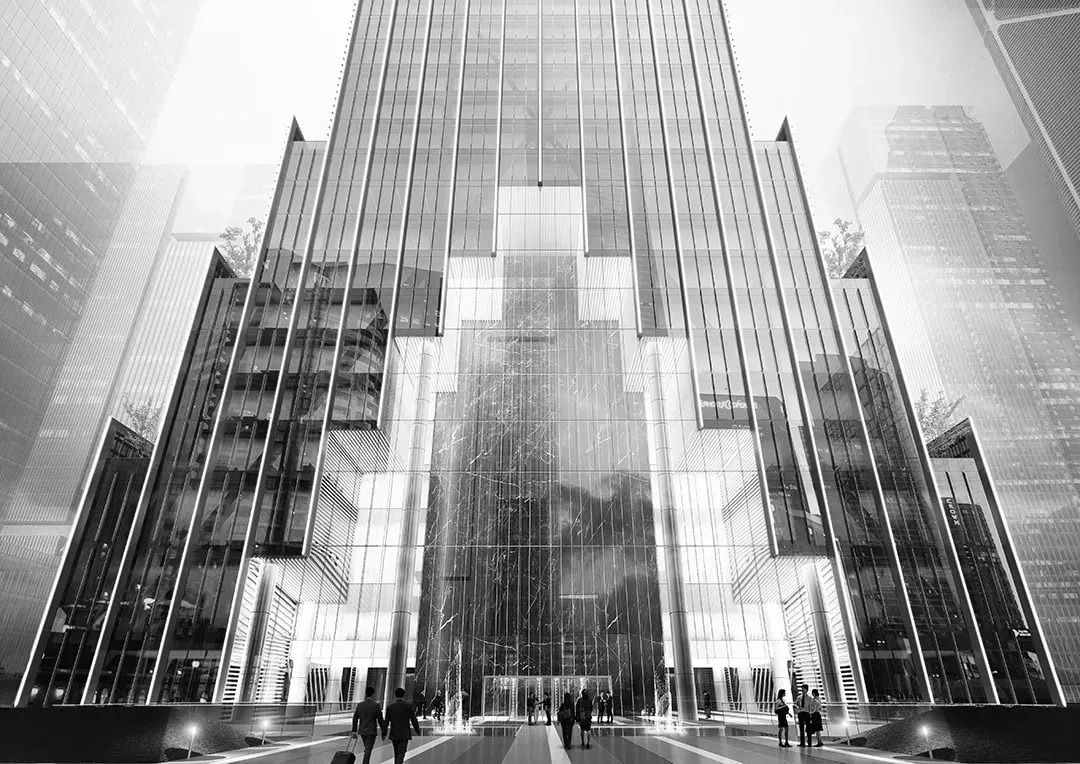
One of China’s most anticipated projects, the Guangzhou International Cultural Center (GICC) is designed with a holistic approach in which architectural, engineering, environmental, functional, and technological principles harmonize to create a timeless landmark. The 320-meter-tall tower, covering 150,000 m² and designed as the headquarters for a leading Chinese publishing house, aims to continue the legacy of state-of-the-art office environments. The building incorporates a public plaza, an underground link to the subway, a main lobby, a multi-level bookstore, a sky lobby, and a sky club.
Built around a logical and efficient core, the GICC seeks to achieve functional coherence while softening the boundaries between public and private spaces. The building’s hill-like form allows for a series of terraces with city views. These terraces create a dynamic tension between the tower’s ascent as a hill and its resolution as an ideal rectangular form. The stepped design establishes a unique relationship between the lobby and the terraces at the tower’s base, giving the entire structure a sense of large-scale cohesion.
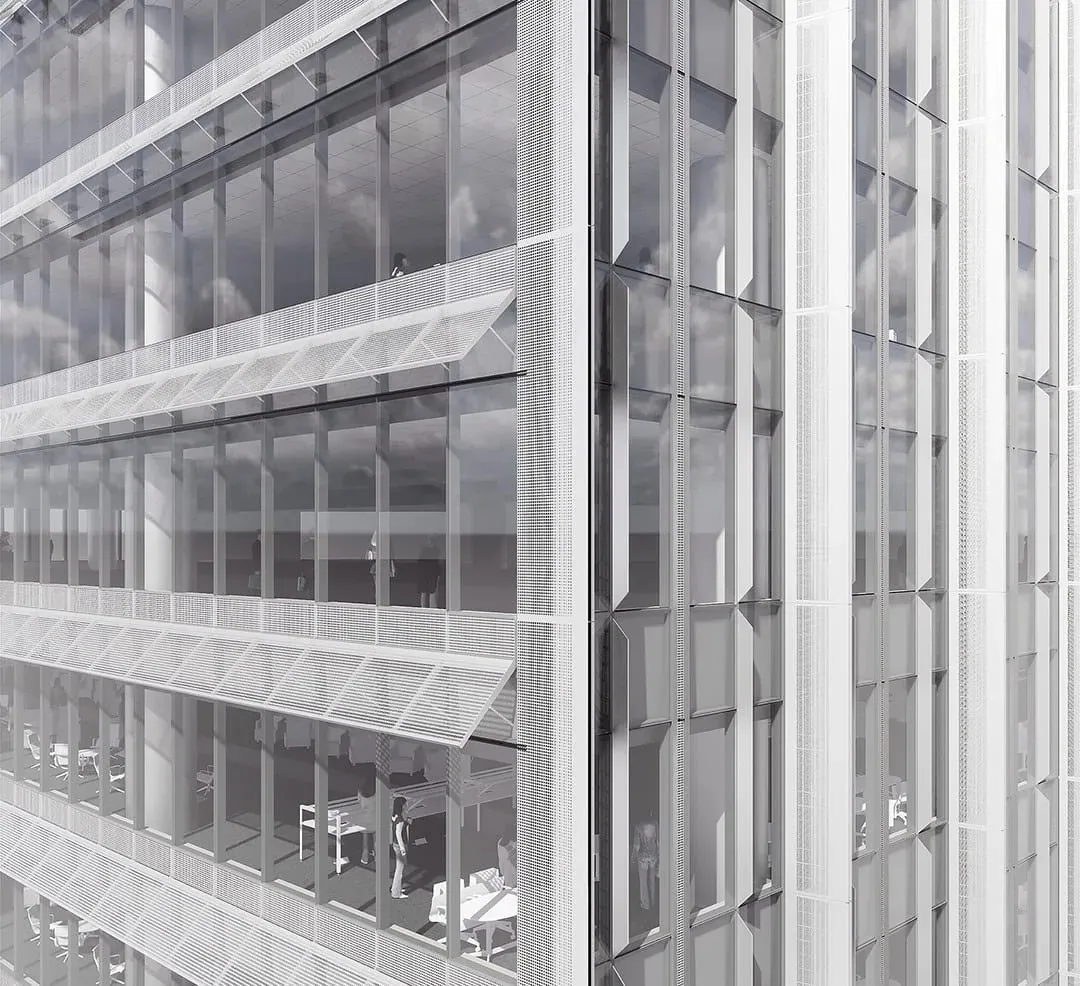
The GICC, with its robust, classic, and inviting image, includes a bookstore for displaying publications, a lobby, private office space, a sky lobby for the publisher, and a sky club. The bookstore occupies the first three floors of a podium extending into the tower’s shaft. Horizontal fins on the east and west façades support the building’s desired energy performance, while the north and south façades emphasize the tower’s verticality.
9. Qianhai International Financial Exchange Center
Location: Shenzhen, China
Architect: OMA
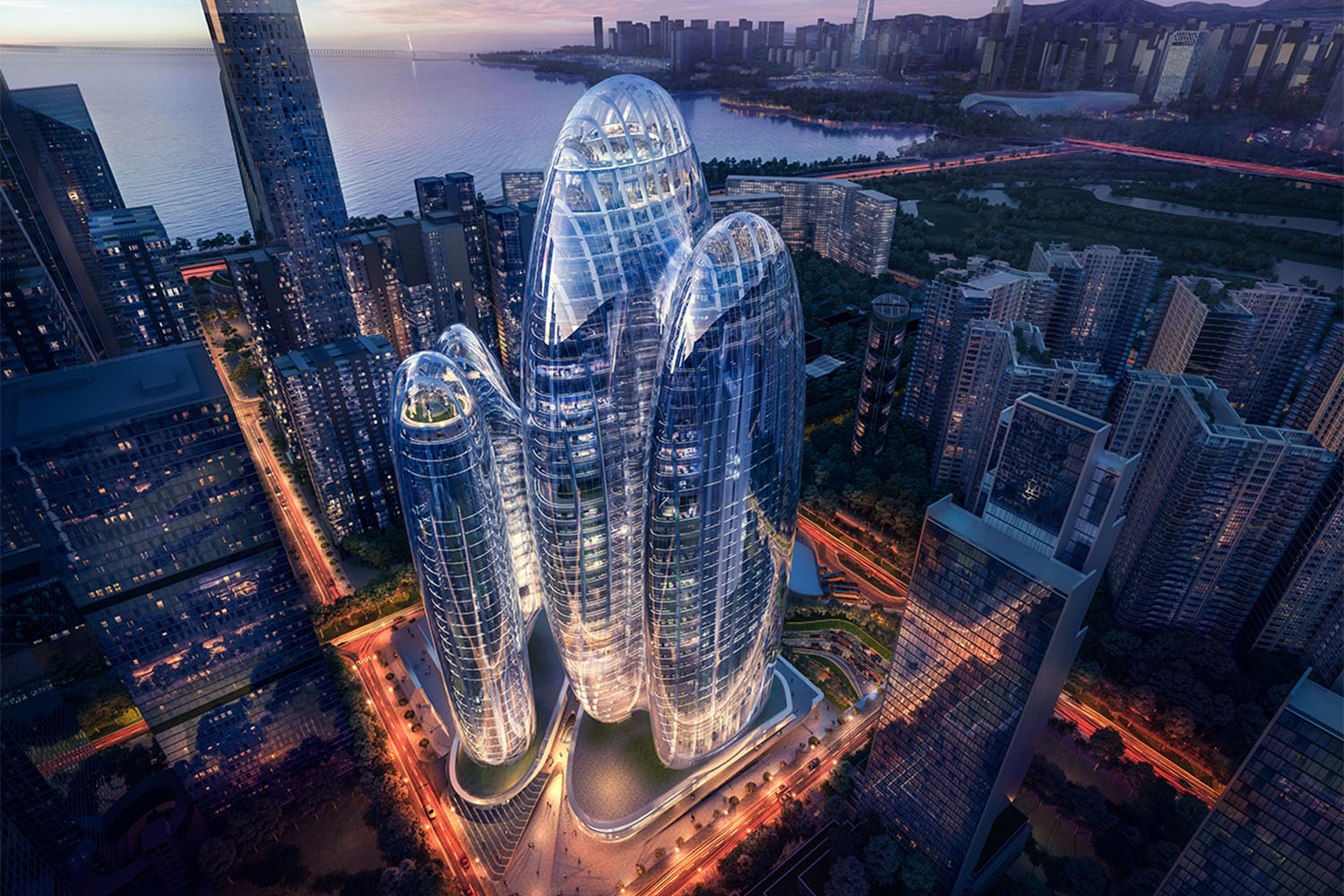
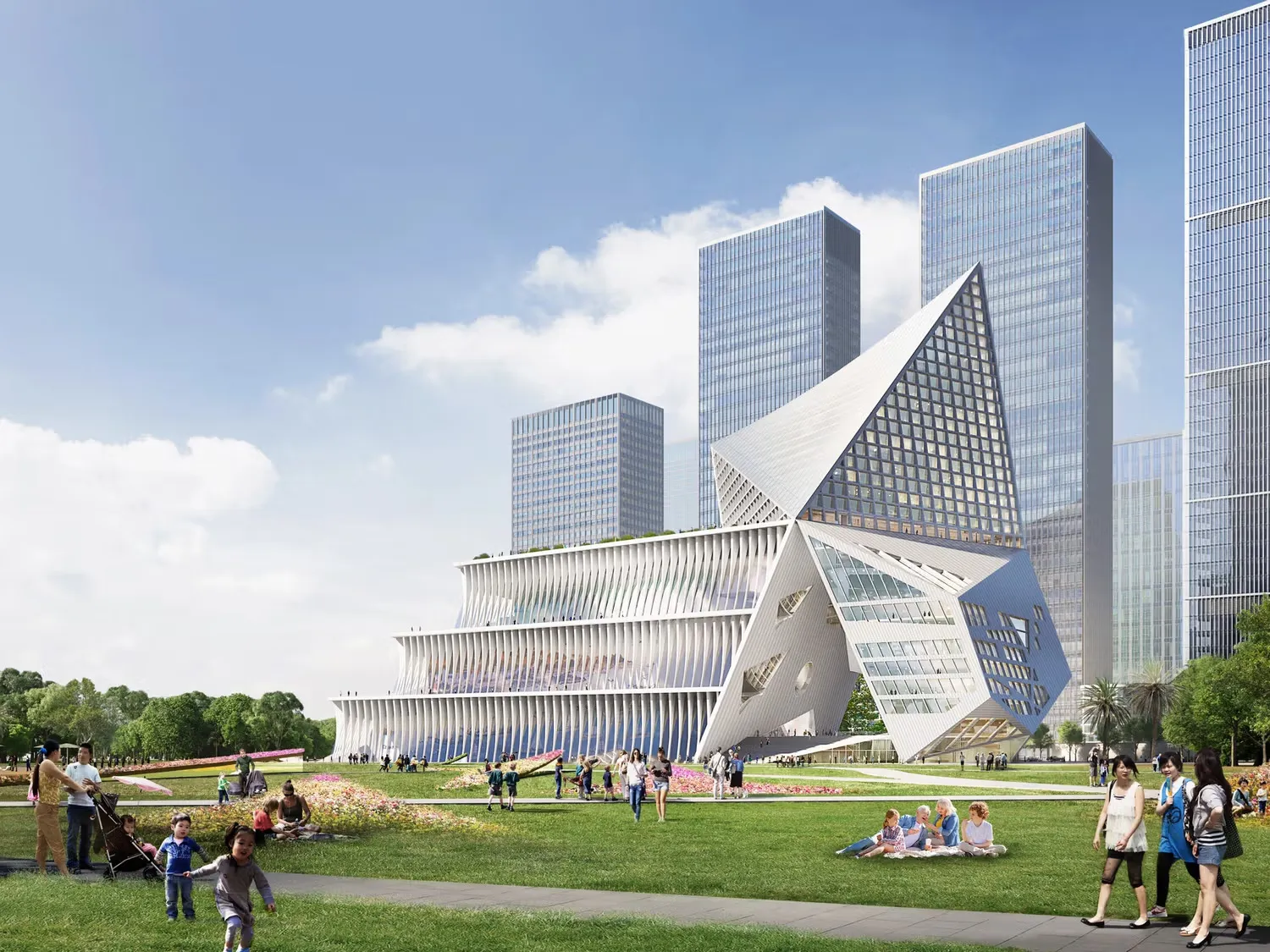
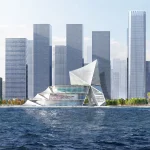
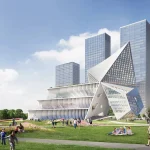
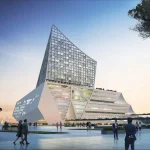
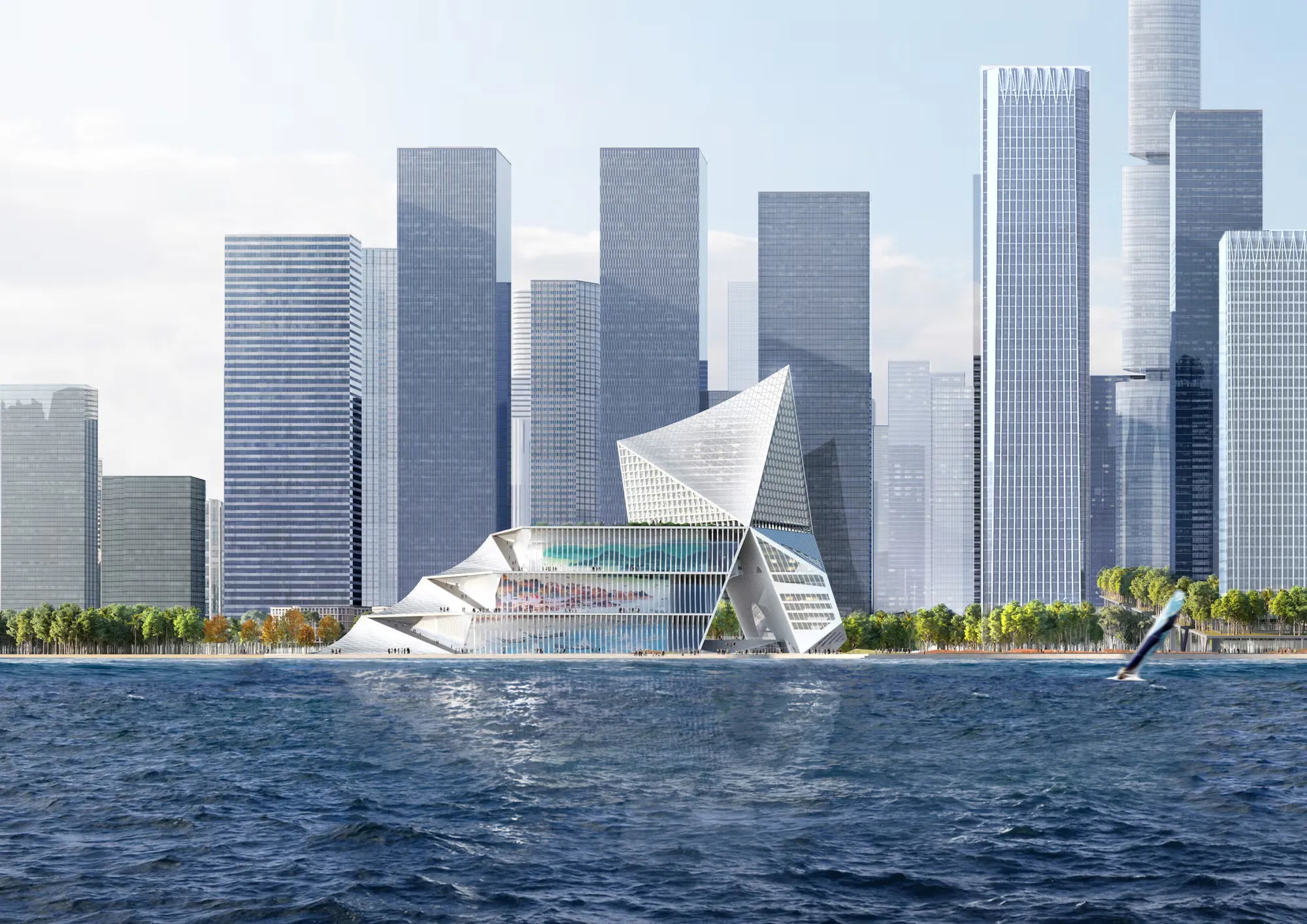
The Qianhai International Financial Exchange Center, designed by OMA, is primarily conceived as a conference center and serves as a connective hub between the entire Qianhai district and the waterfront, comprising a hotel and public spaces. One of China’s most anticipated projects, the center consists of three distinct volumes: a terraced conference center with views of the bay and park, a second volume containing hotel facilities oriented toward the business district’s central axis and accommodating public programs, and at the top, a polygonal 400-room hotel with panoramic views in all directions.
Together, the three volumes create a large open space and an urban atrium. This urban atrium, shared by the conference center and hotel foyers, brings public activities to the heart of the complex.
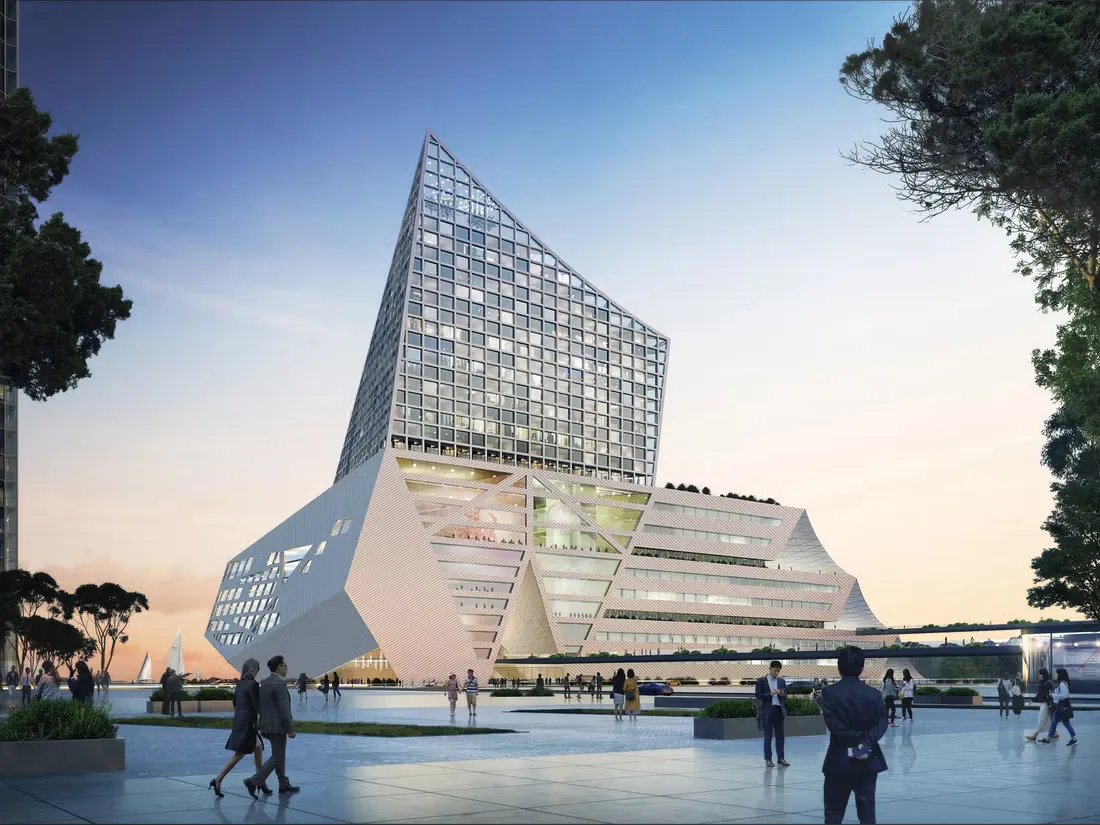
Designed to respond to context, the building’s facades overlooking Qianhai Bay blend with the coastal scale with a light, porous appearance characterized by curved surfaces reminiscent of sails. The urban facades, meanwhile, reflect the scale and density of the surrounding buildings in Qianhai’s central business district. Beneath the sail-like façades, a pedestrian bridge connects visitors to a series of publicly accessible event spaces across all floors of the conference center, supporting public life even on days when no major events are taking place.
10. Greenland Group Suzhou Center
Location: Wujiang, China
Architect: Skidmore, Owings & Merrill (SOM)
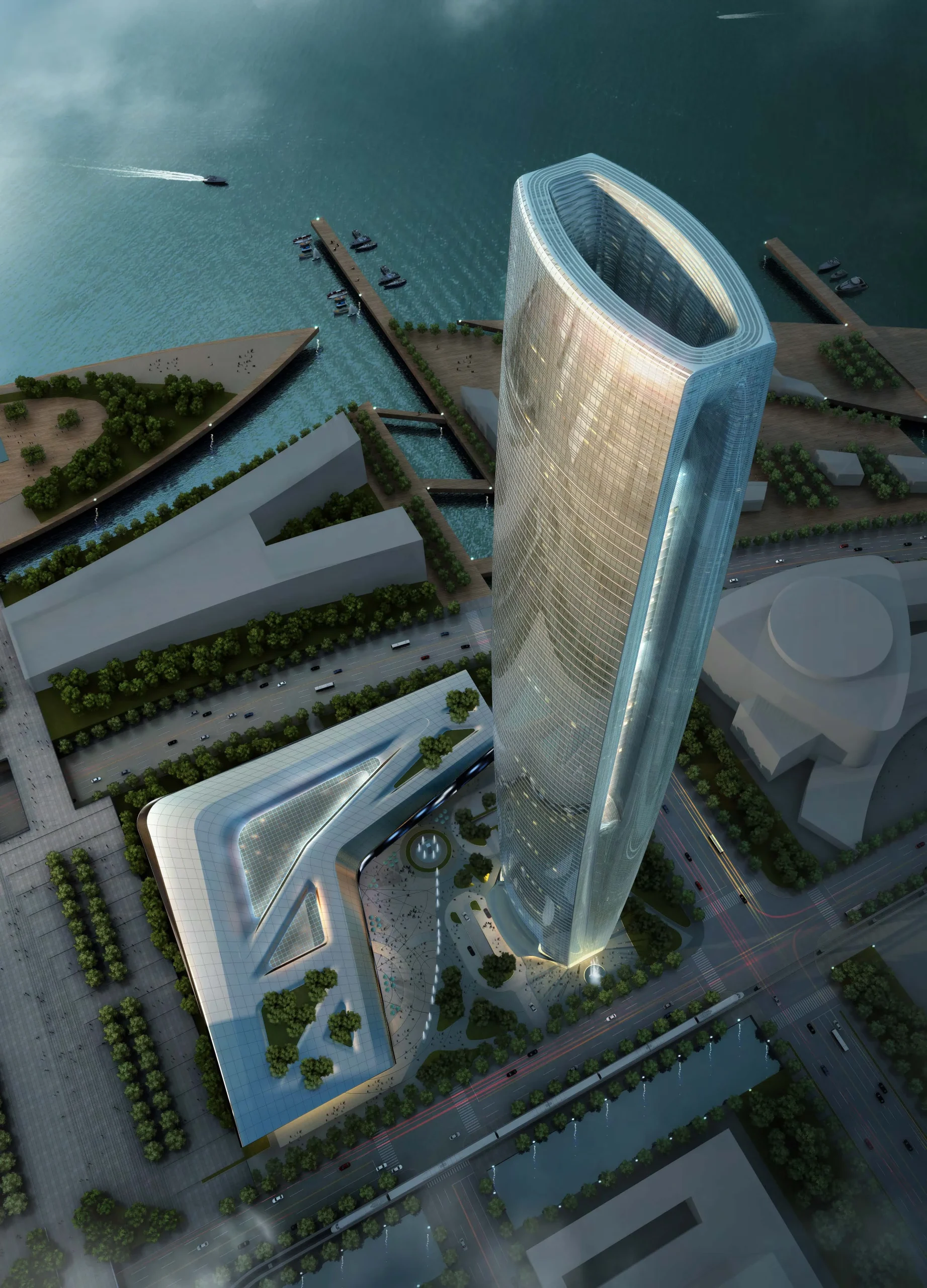
Greenland Group Suzhou Center, which began construction in 2016 and is scheduled for completion in 2026, is located on the shores of Lake Taihu, covering 284,000 m². The building’s curvilinear form brings together a mixed-use program consisting of a hotel, serviced apartments, and offices via a 30-story atrium at the top of the tower. A 30-story operable window extending down the tower’s narrow elevations in the atrium acts as a lung, allowing air to enter the tower and filling the interior with natural light.
The center places special emphasis on reducing energy consumption and conserving water, incorporating a range of high-efficiency measures based on ASHRAE 90.1 2007 standards to achieve significant energy savings. Other key energy-saving strategies include a high-performance façade, daylight-responsive controls for natural light harvesting, energy recovery systems, and optimized lighting using efficient fixtures and occupancy sensors.
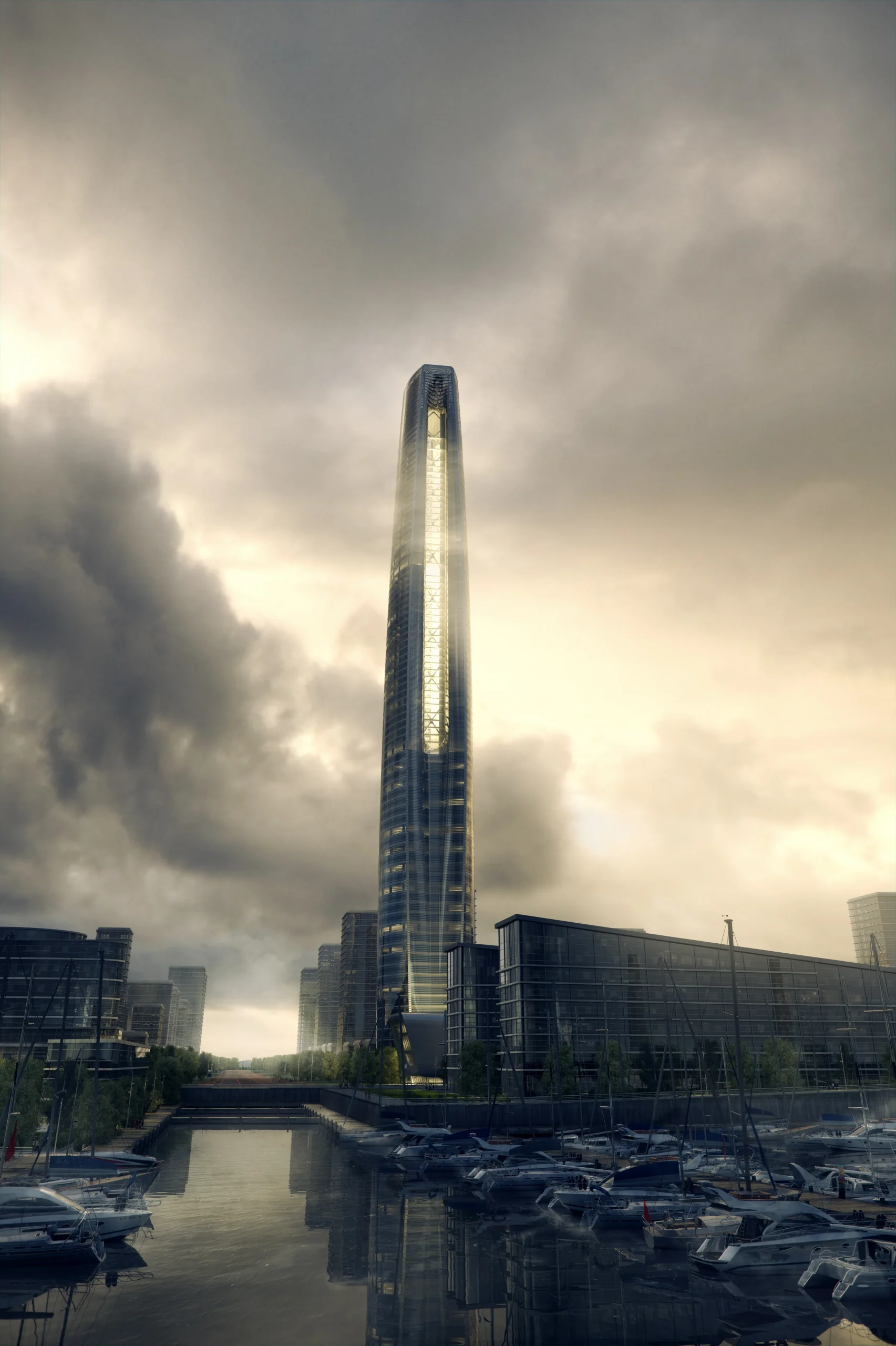
The building’s shape, which contributes to its sustainable performance, was designed using highly advanced aerodynamic modeling techniques. Through extensive testing, convex main façades and concave short façades were shaped to reduce structural loads while enhancing natural ventilation. A high-performance digital control system measures and directs airflow into and through the main atrium, while also controlling the opening and closing of windows throughout the building.