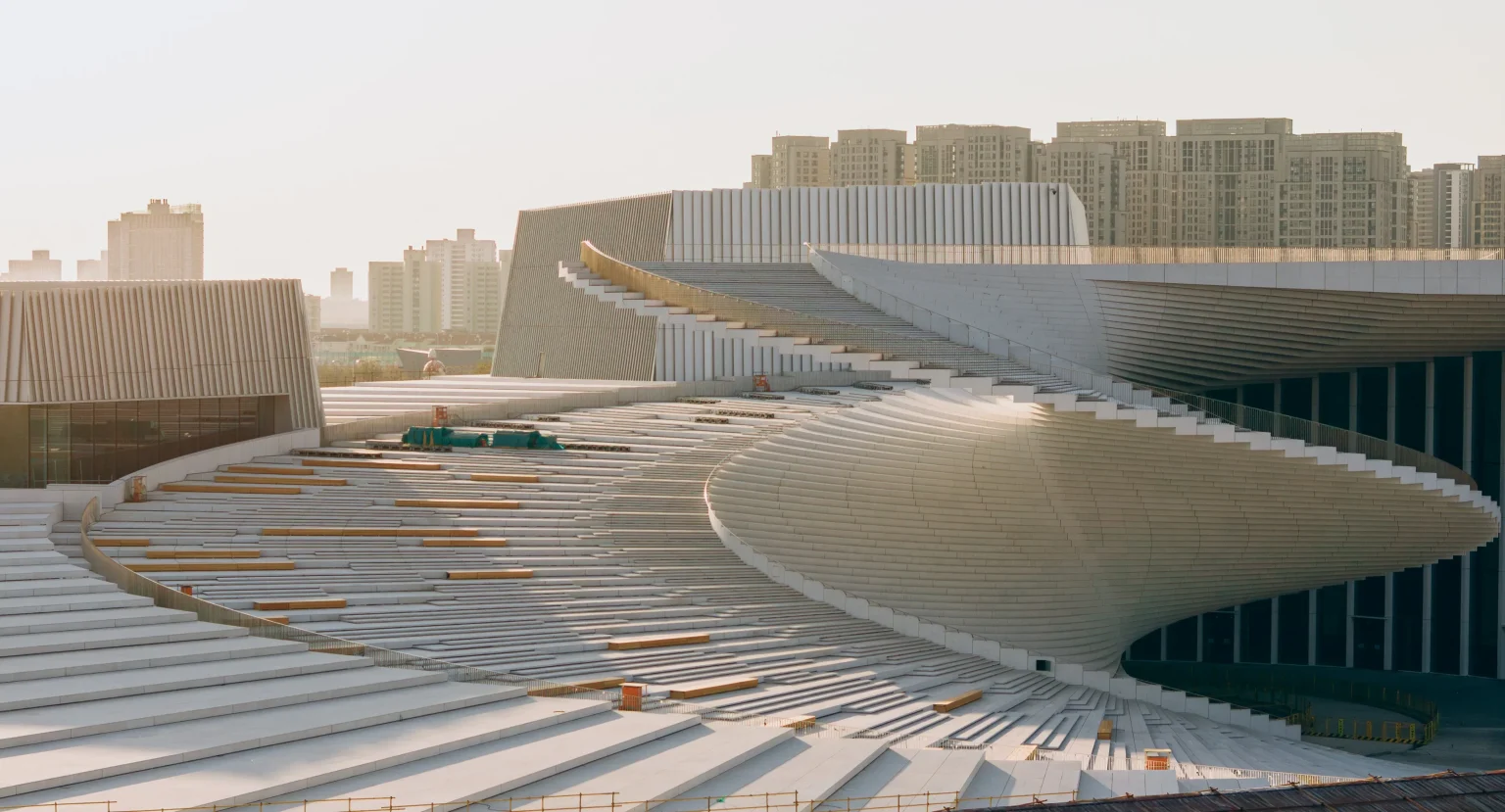
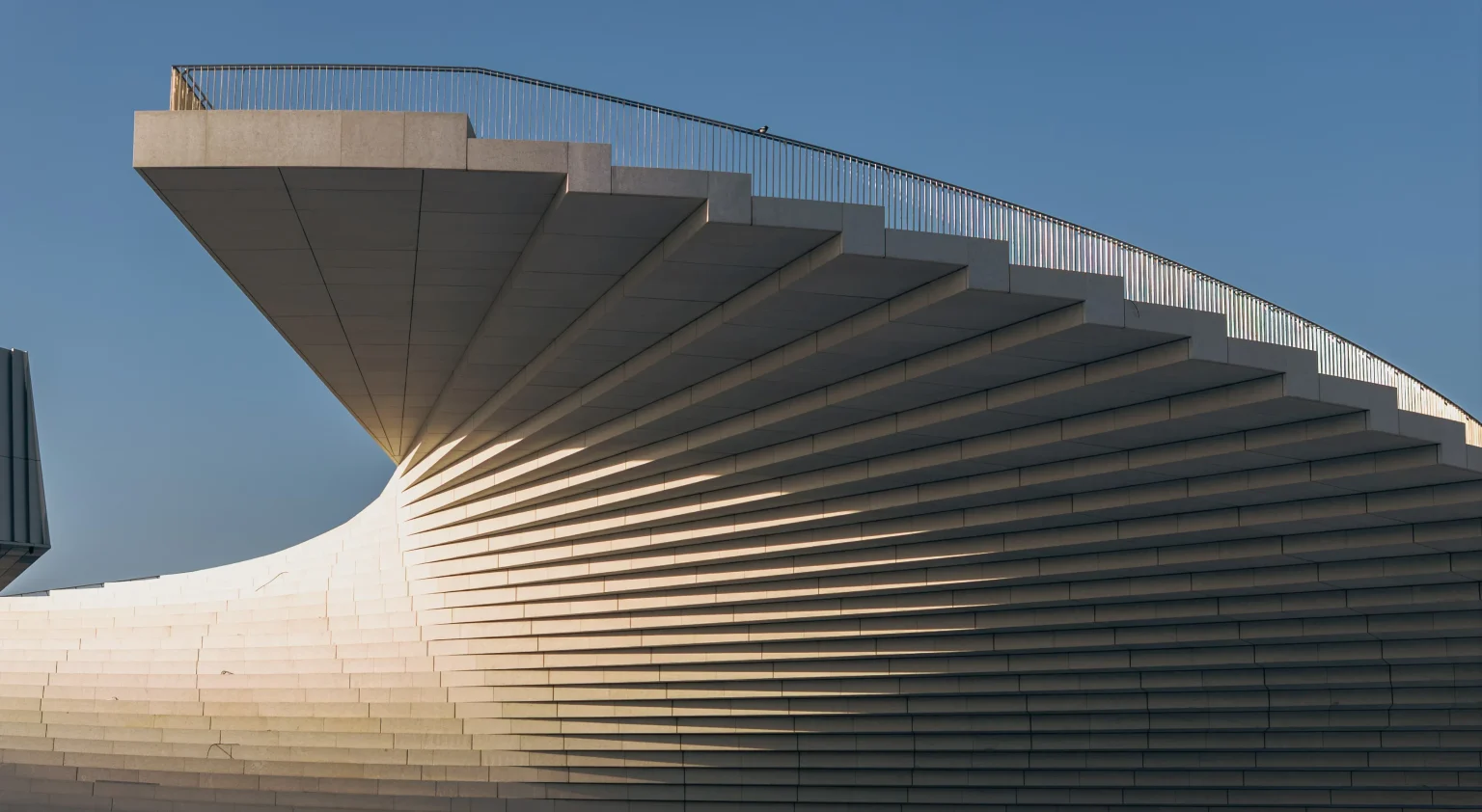


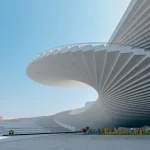
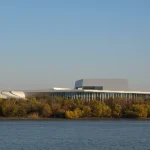
One of China’s most ambitious cultural projects is nearing completion. The Shanghai Grand Opera House, designed by the international firm Snøhetta, is taking on a sculptural form along the Huangpu River, with its defining spiral roof now visible over the West Bund.
The project was first unveiled in 2019 through an international design competition, envisioned from the start as a symbolic cultural landmark. With the roof structure now largely in place, the building has entered its final phase of construction ahead of a late 2025 opening.
Snøhetta’s Vision for the Shanghai Grand Opera House
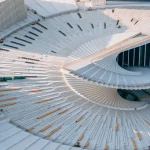
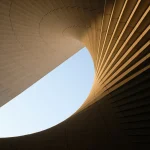
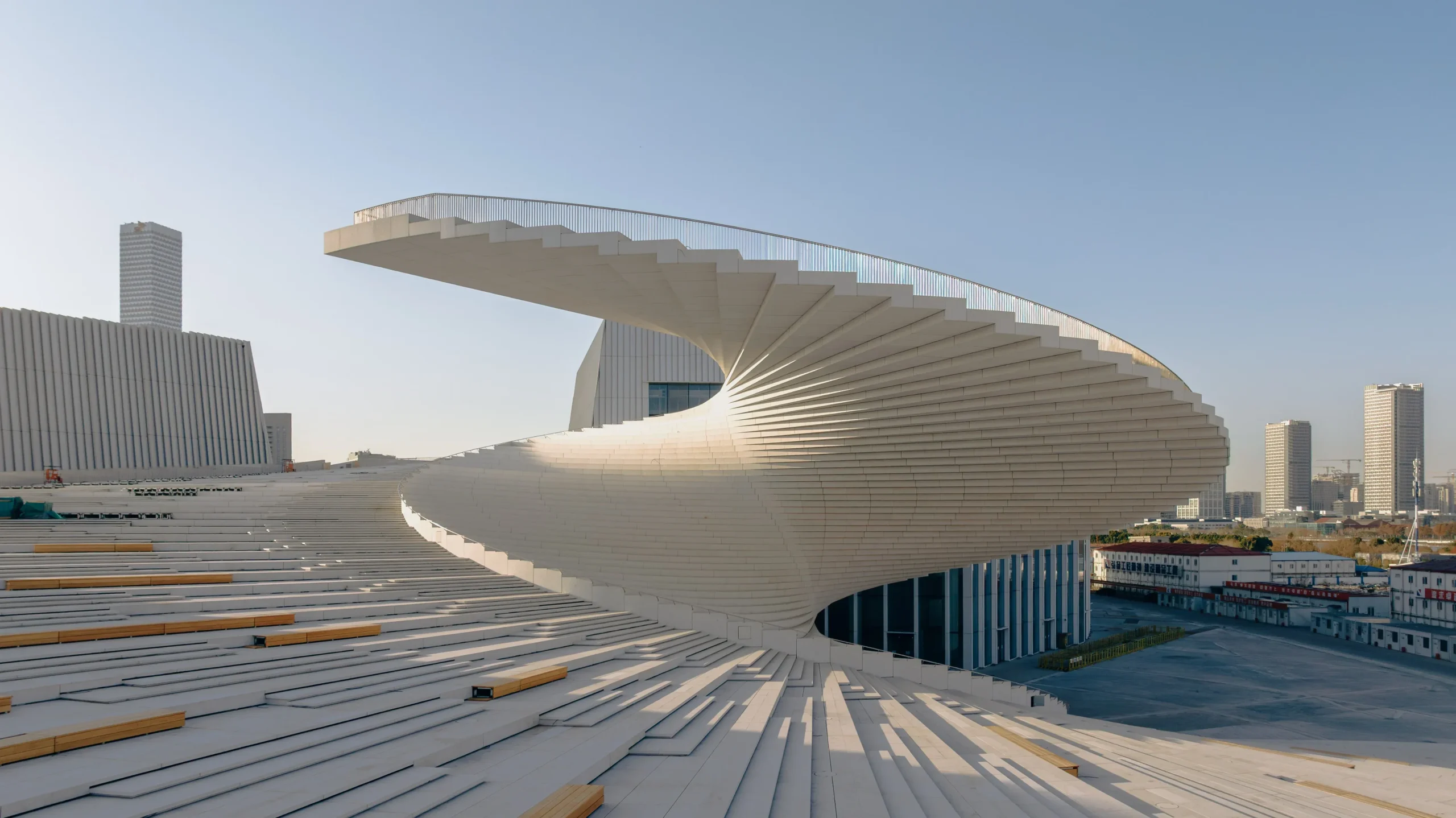
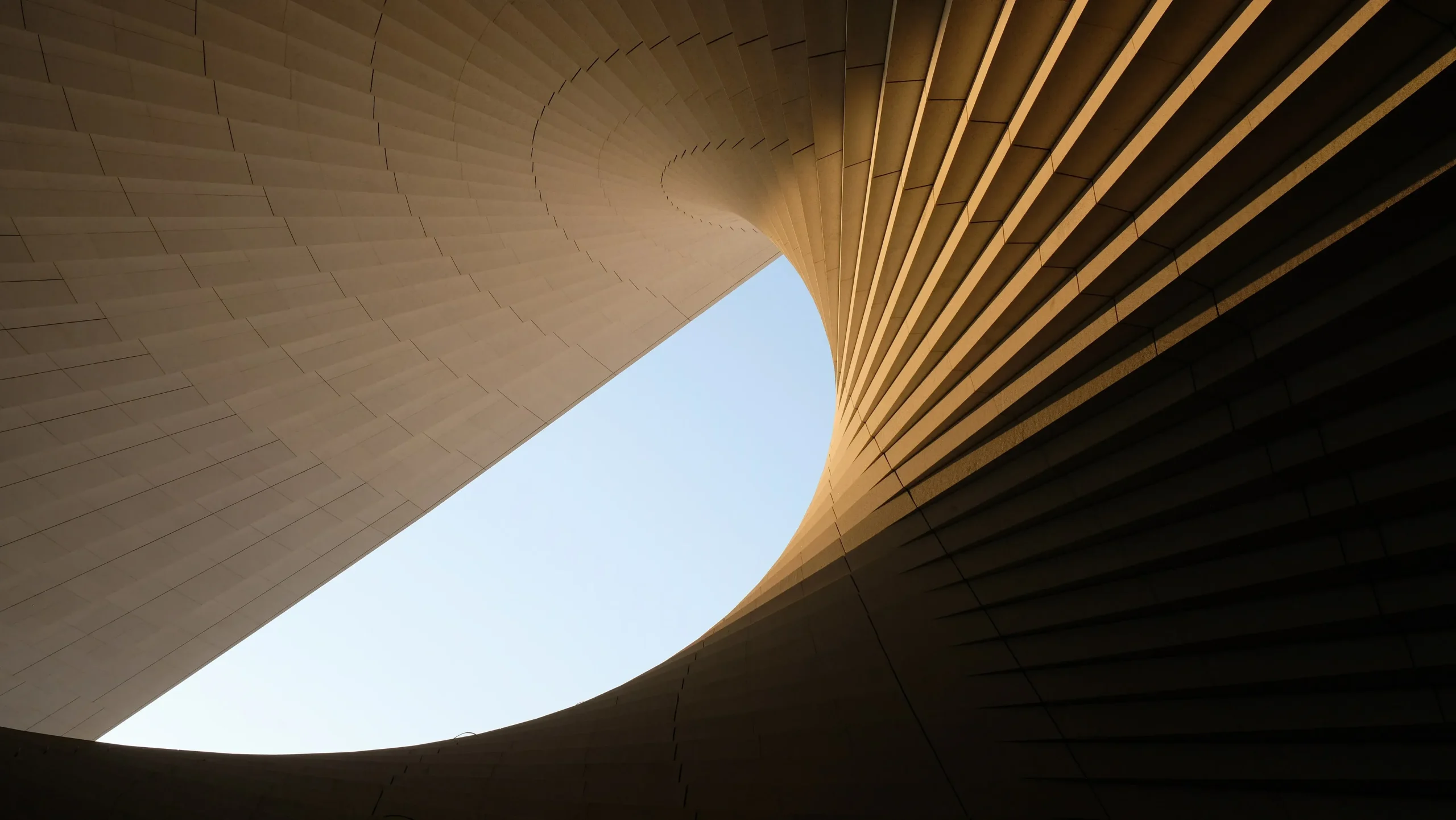
Inspired by the unfolding of a traditional hand fan, the Opera House’s roofline spirals upward, wrapping and opening at once. This movement informs the entire architectural composition, creating a structure shaped as much by circulation as by form.
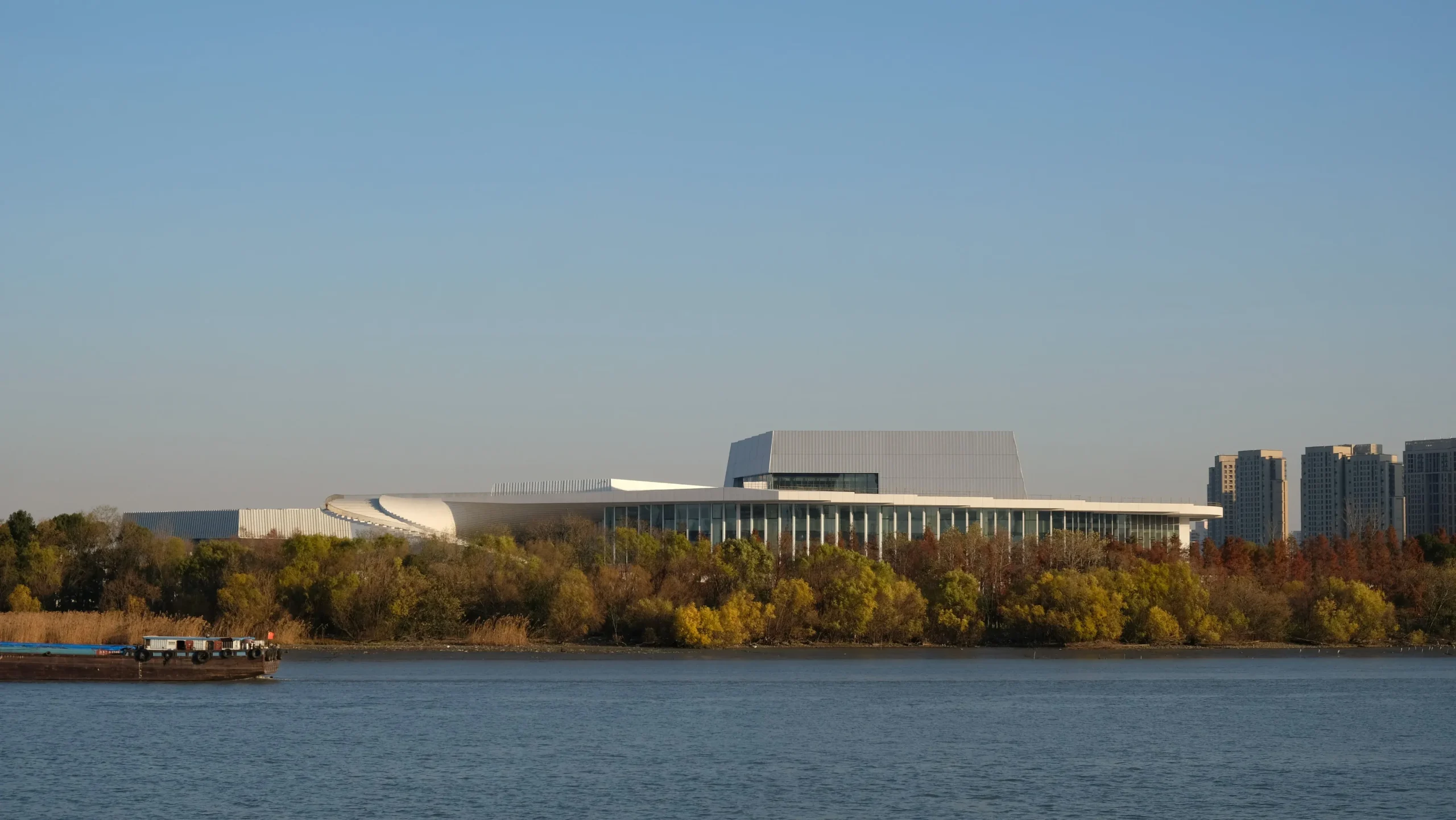
From a distance, the silhouette is a subtle nod to classical form, but up close, the structure’s complexity becomes apparent. Steel, concrete, and glass come together in layered assemblies that carry the full weight and ambition of the project.
A Landmark You Can Climb
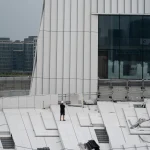
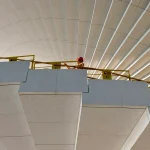
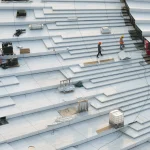
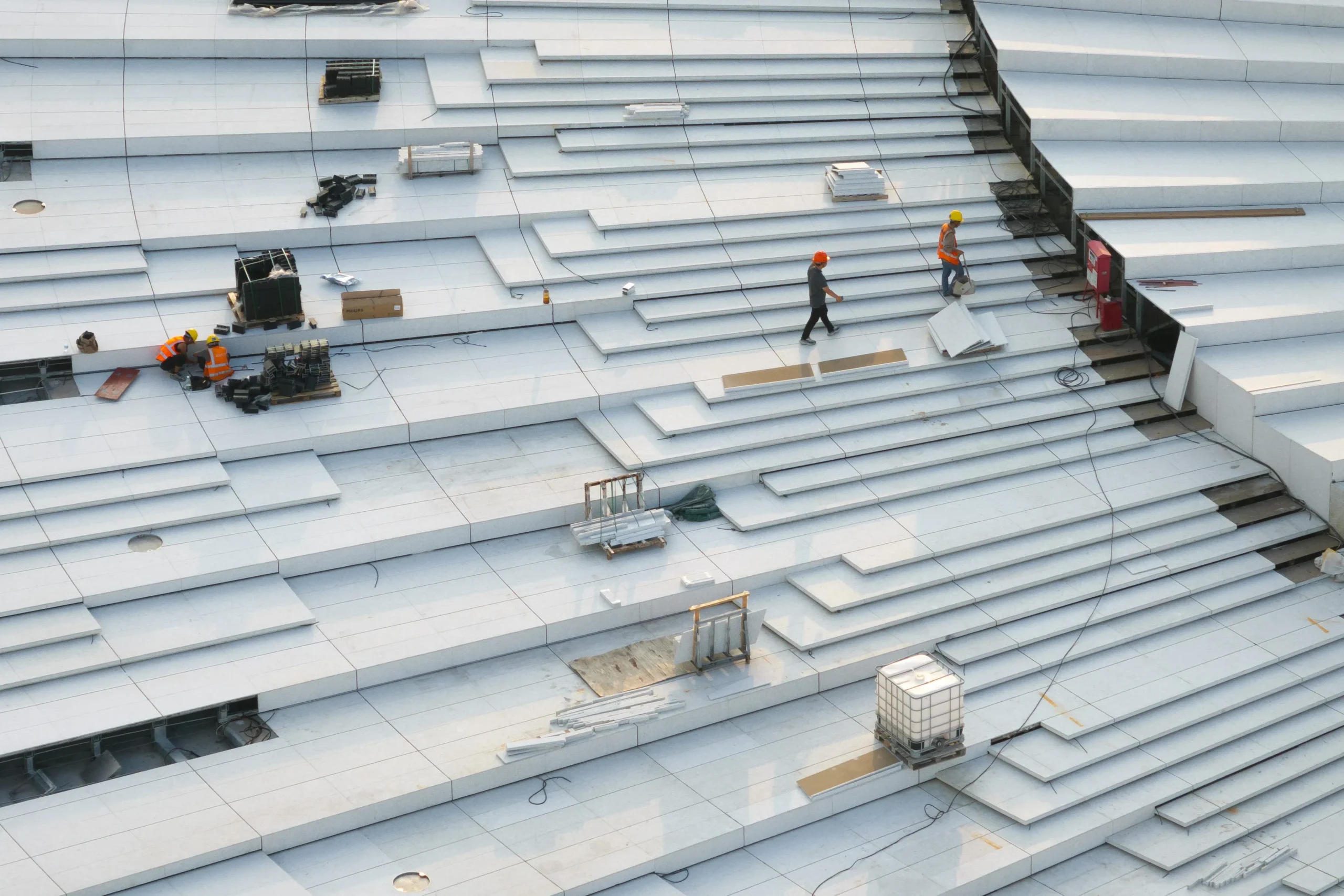
More than a landmark, the roof becomes a walkway. Visitors will be able to move along the slope of the roof, stop at points along its path, or look out over the river. Recent construction images show steel ribs and concrete stairways rising in a radial pattern around the central core.
Beyond Cultural Identity
From the start, the Opera House was conceived as both a cultural landmark and public infrastructure. It connects directly to a riverside plaza, walkways, and other public venues in the West Bund. Landscaping now underway will link the rooftop path with street level, allowing uninterrupted pedestrian flow from ground to roof.
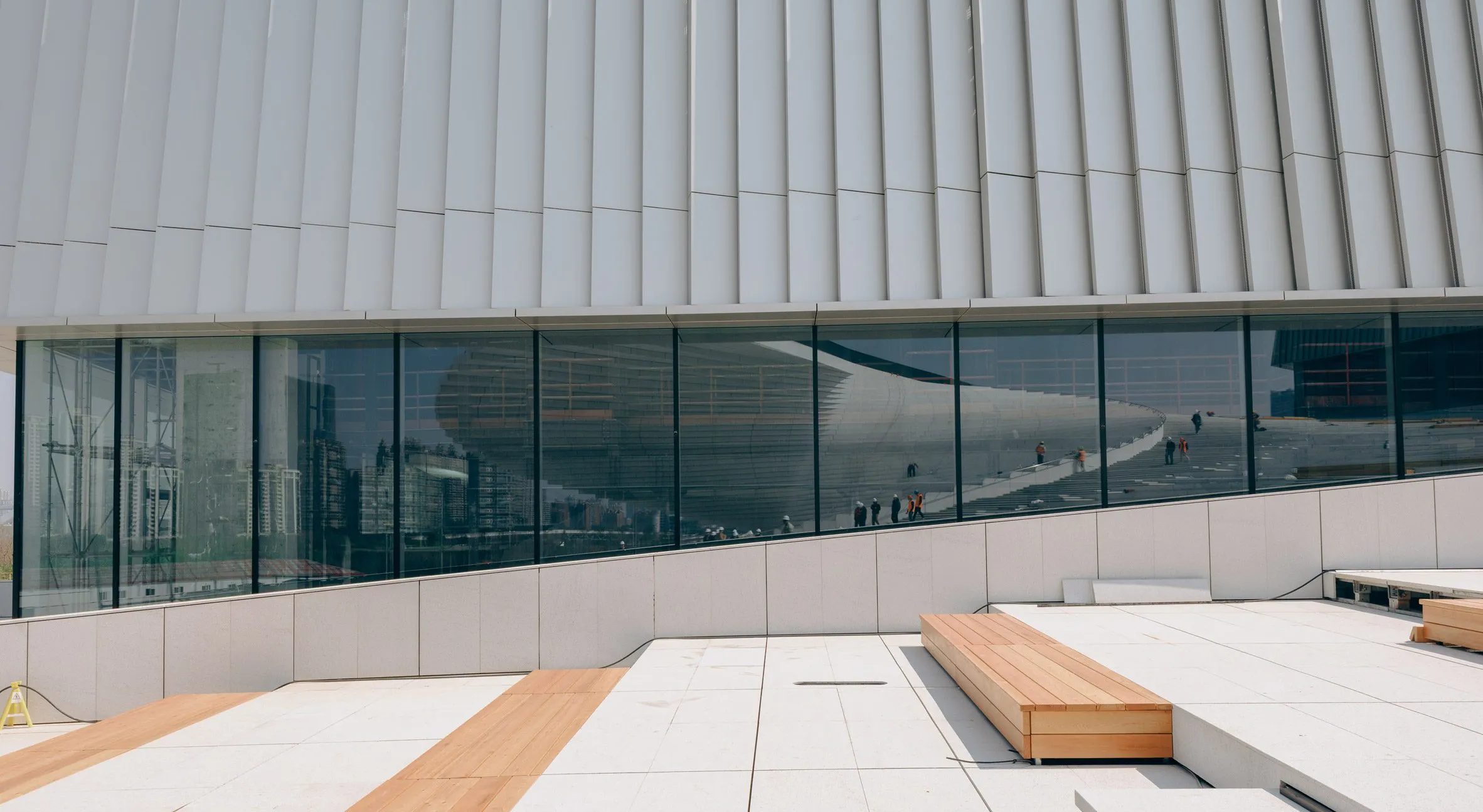
The spiral wraps around three main performance halls, including a 2,000-seat opera theatre. Around its edges, cinemas, rehearsal rooms, terraces, and restaurants ensure that the building remains alive and accessible throughout the day.
Each element is tied back to the central spiral, allowing circulation and program to unfold as a continuous experience.
Material Expression Grounds the Spiral Form
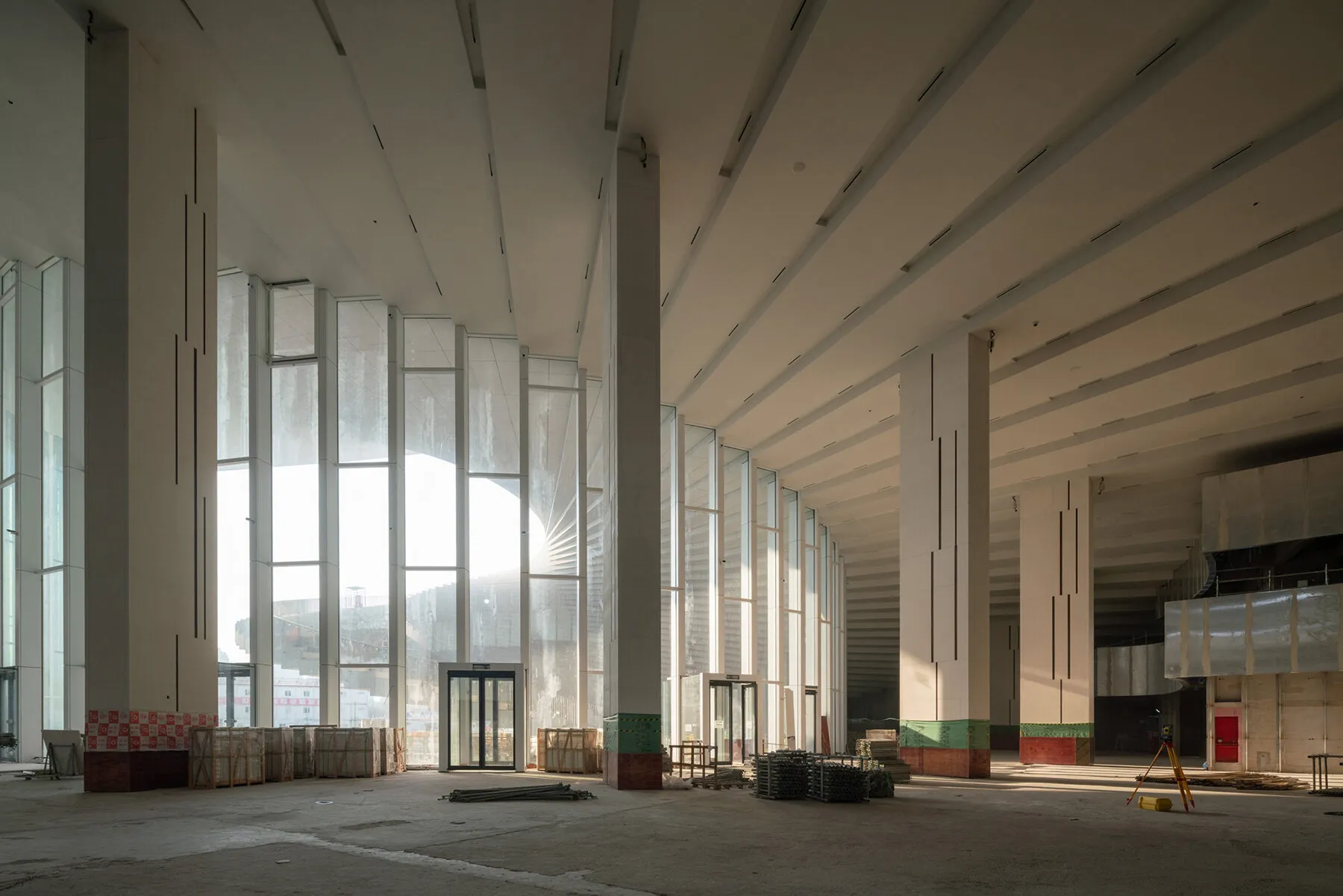
With the project now moving from concept to structure, its refinements are becoming visible. The spiral geometry remains close to Snøhetta’s early models, but the way materials are coming together on site shows a more deliberate approach. Translucent glass sits alongside polished concrete, offering contrast without competing with the overall form.
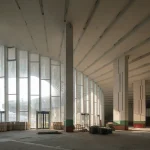
The interior takes a different tone. Oak and silk will soften the white exterior, creating a warmer atmosphere. Large glass panels draw daylight deep into public zones. While at night, the stage towers glow from within, giving the building a unique presence along the river.
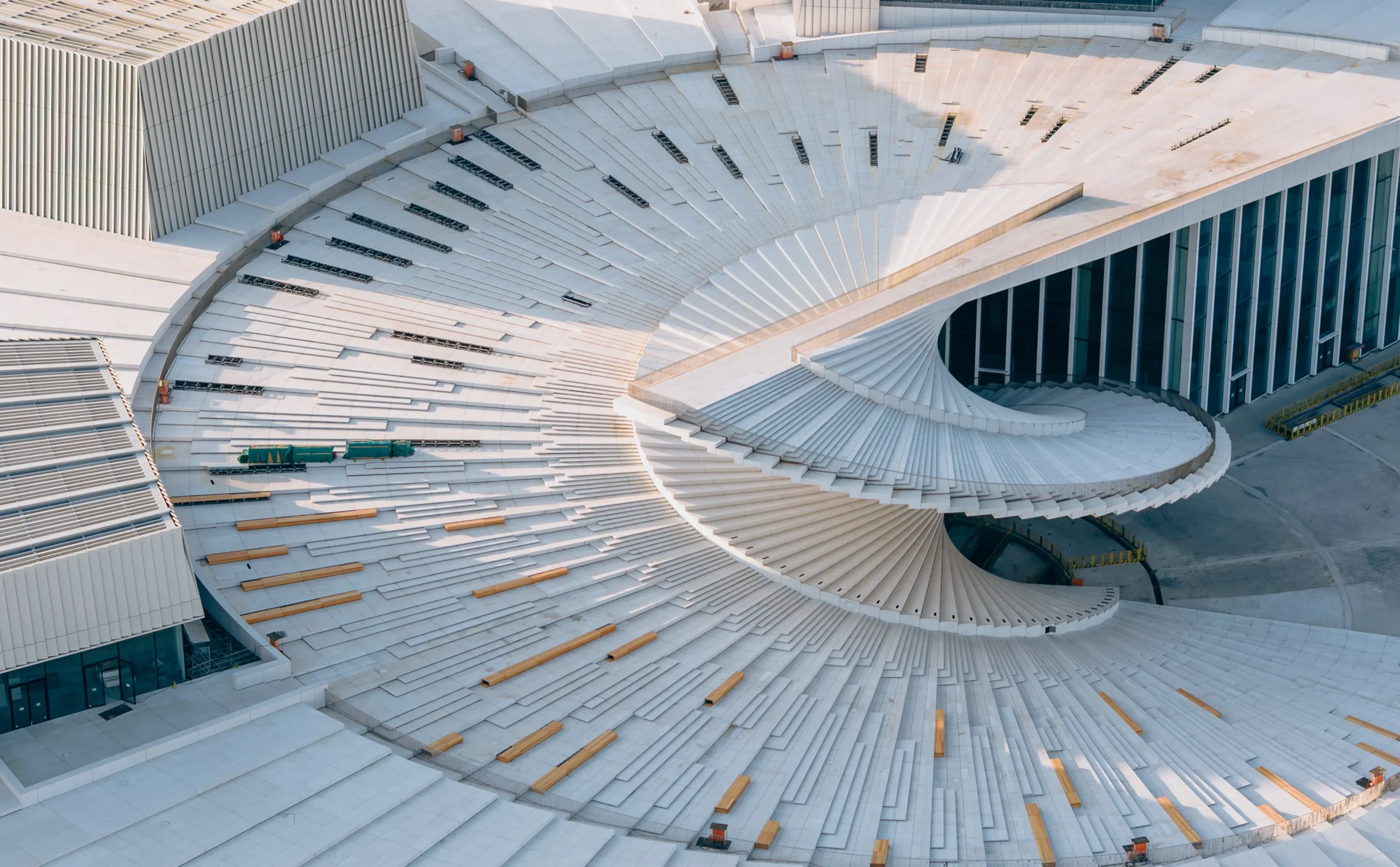
The spiral connects the experience into a single, seamless whole by defining the roof and forming the flow via hallways, lobbies, and common areas.
The building’s response to climate and public life is also starting to take shape. High-performance glazing, shaded walkways, and permeable boundaries keep the building responsive to light, weather, and public movement.
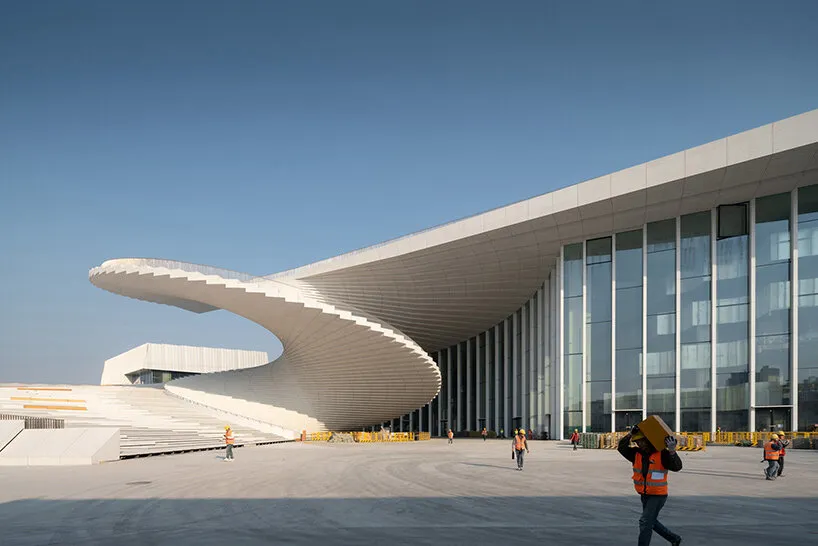
Construction began in 2020 and progressed steadily alongside the West Bund’s cultural transformation. The steel frame and auditorium cores are complete, with tiered seating installed and stairways rising through the spiral roof. Final steps include facade cladding, interior fit-outs, and plaza landscaping. The building remains on track for its late 2025 debut.
As the spiral roof continues its ascent, it signals more than structural progress. It marks a shift in how civic buildings might behave as part of the city itself. This is not an icon to admire from a distance, but a civic platform shaped by access and circulation. A structure where architecture and public life unfold together.