

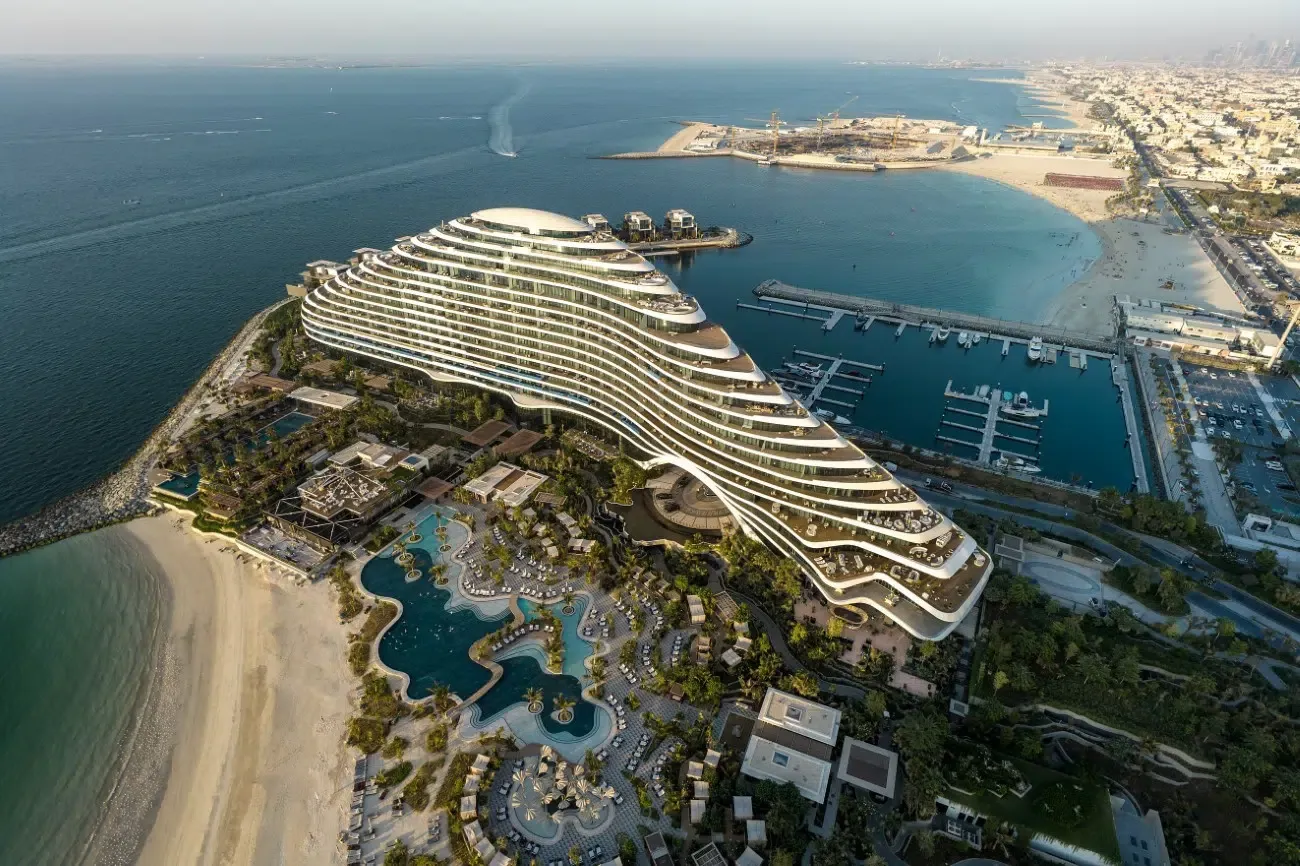


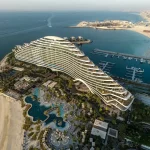
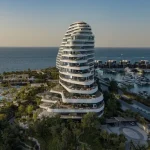
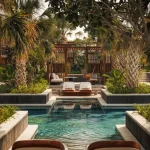
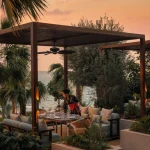
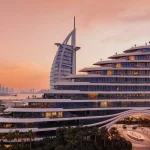
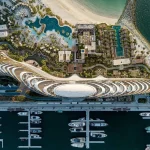
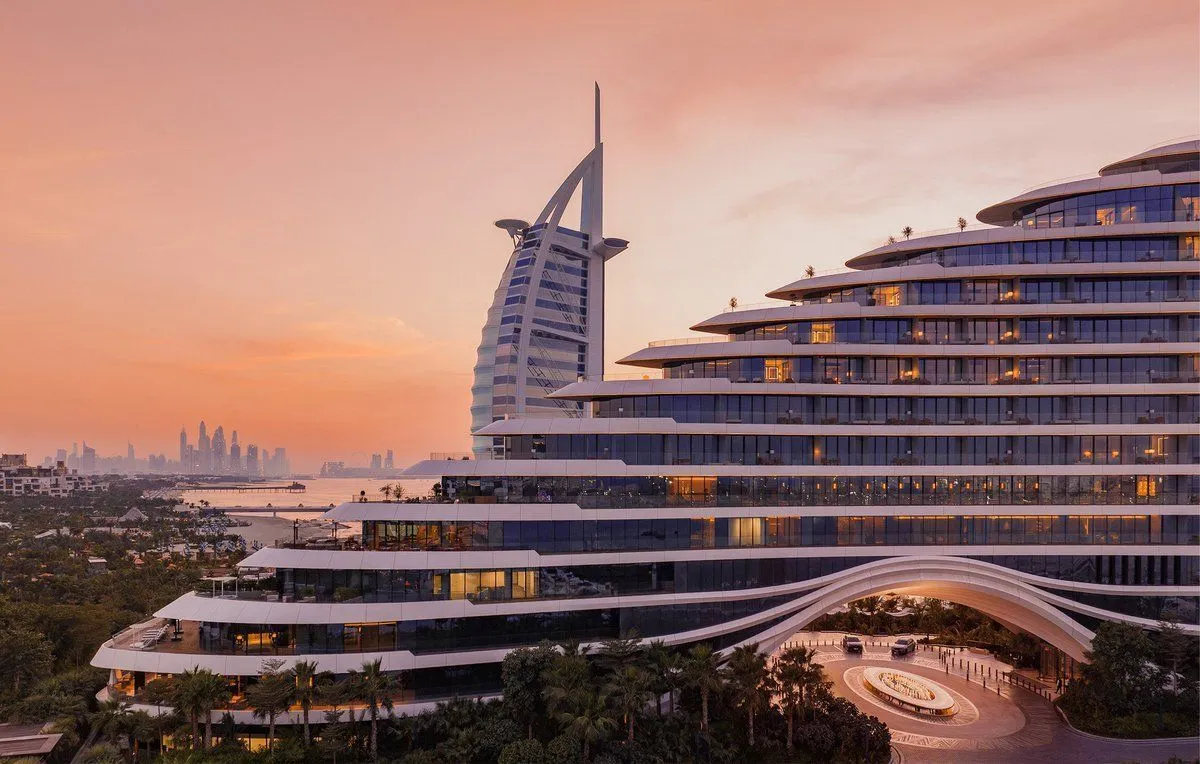
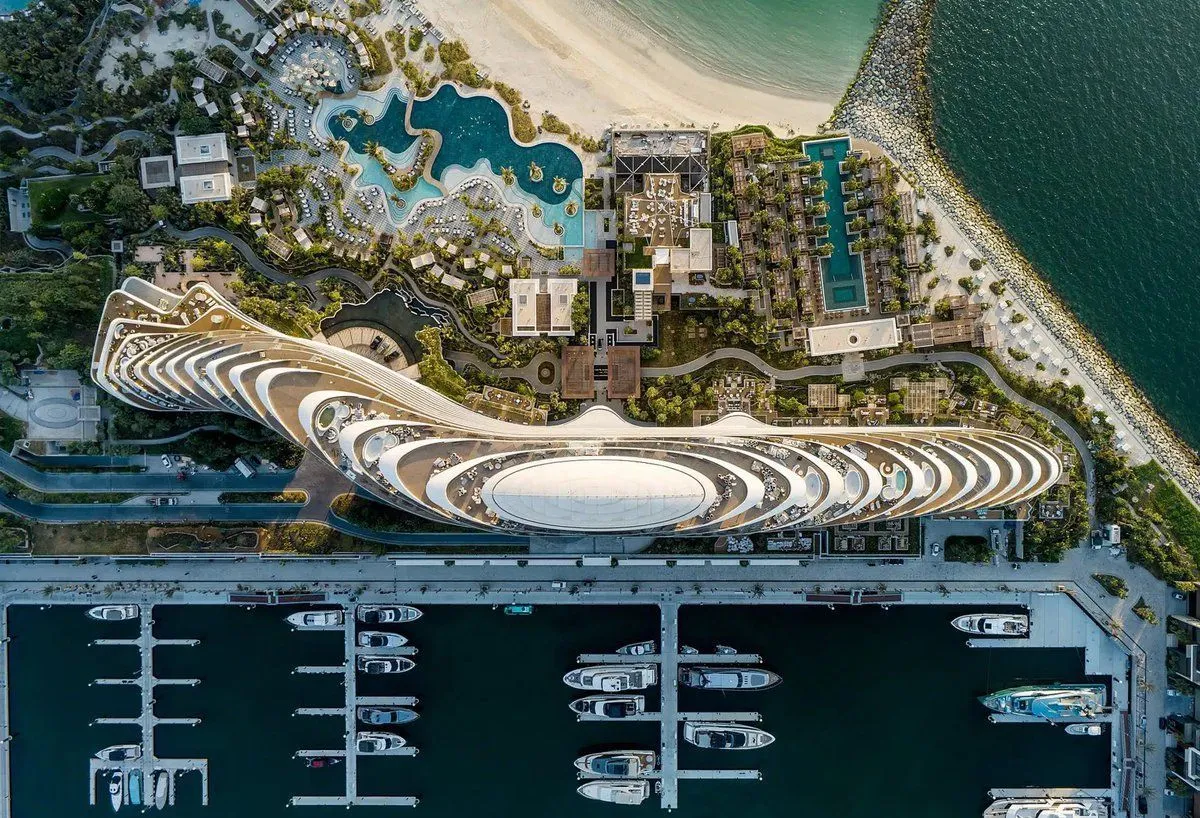
Jumeirah Group has officially opened Jumeirah Marsa Al Arab, its new resort on the Dubai waterfront, designed with flowing lines and refined geometry reminiscent of a luxury superyacht. Positioned between the Burj Al Arab and Jumeirah Beach Hotel, the new development completes a long-standing design trilogy that began with sail and fluid forms, culminating here in a vessel-like structure that seems to rise from the sea.
How Fluid Form and Function Merge in Marsa Al Arab’s Facade
Designed by Killa Design, under the direction of principal architect Shaun Killa, the building presents a bold architectural design with a 36-metre steel arch spanning its entry. The arch, which slices across nine floors, is meticulously aligned with views of the Burj Al Arab, forming a kind of cinematic gateway that introduces the resort while connecting it visually to its prototypes. As with Killa Design’s previous work on Dubai’s Museum of the Future, the Marsa Al Arab project relies heavily on parametric modeling and advanced structural coordination to achieve its sculptural complexity.
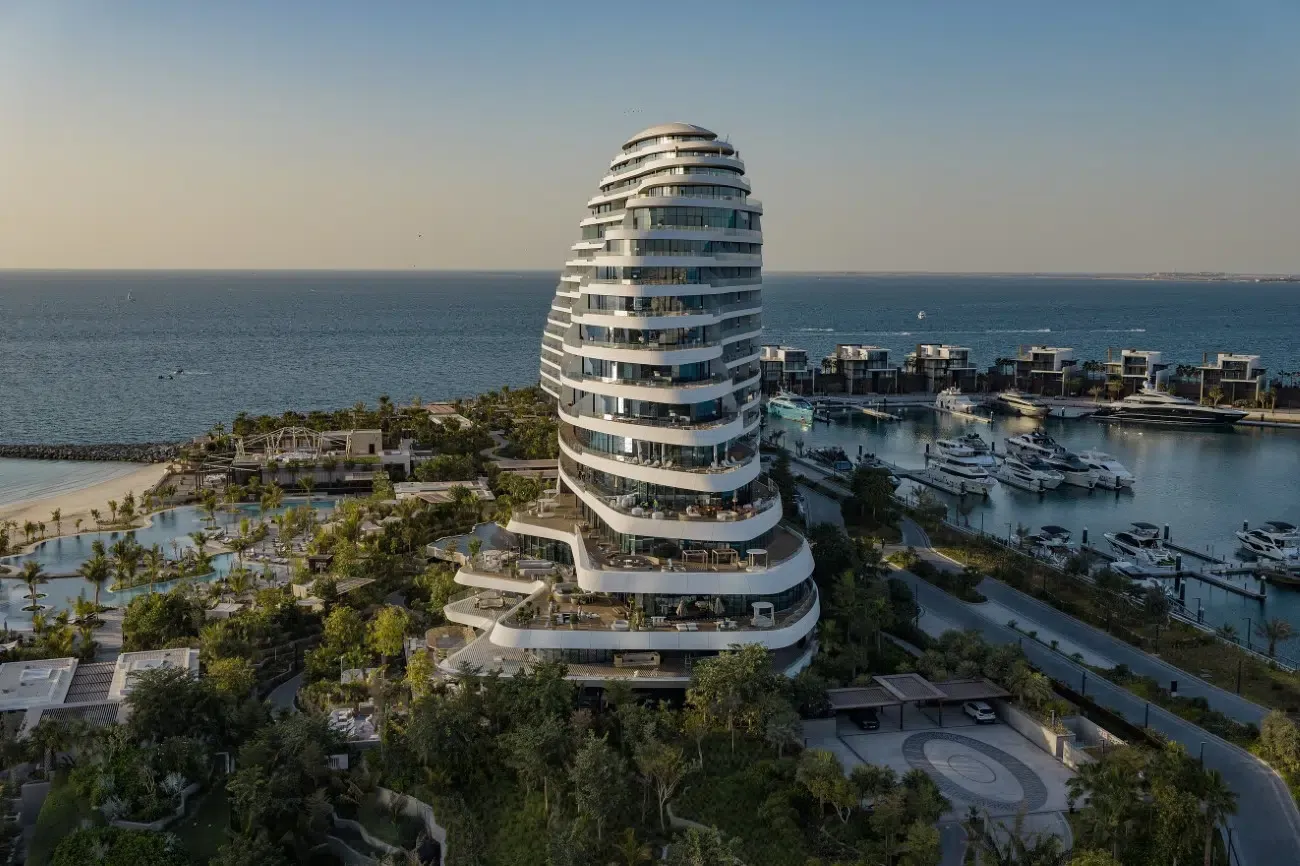
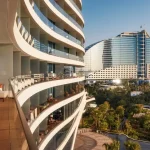
The facade features undulating terraces that echo the motion of the sea, characterized by double-curved balconies and cascading terraces that echo the movement of a yacht’s hull through water. These organic forms shape the visual identity of the project and also serve environmental purposes, shading terraces and minimizing solar gain to improve energy performance.
Interiors Channeling 1960s Riva Yachts and Dubai’s Coastal Light
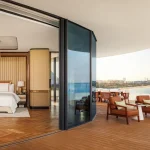
Inside, the resort offers 386 guestrooms and suites, including four signature penthouses that crown the structure. Each guestroom is designed to dissolve the boundaries between interior and exterior space. Floor-to-ceiling glazing, operable walls, and expansive private terraces, each no smaller than 22 square meters, for uninterrupted views of the Arabian Gulf. Interior design by HBA, AvroKO, and LTW Designworks draws on the golden hues of dusk, natural stone, lacquered wood, and the refined detailing of 1960s Riva yachts to create an understated yet tactile luxury.
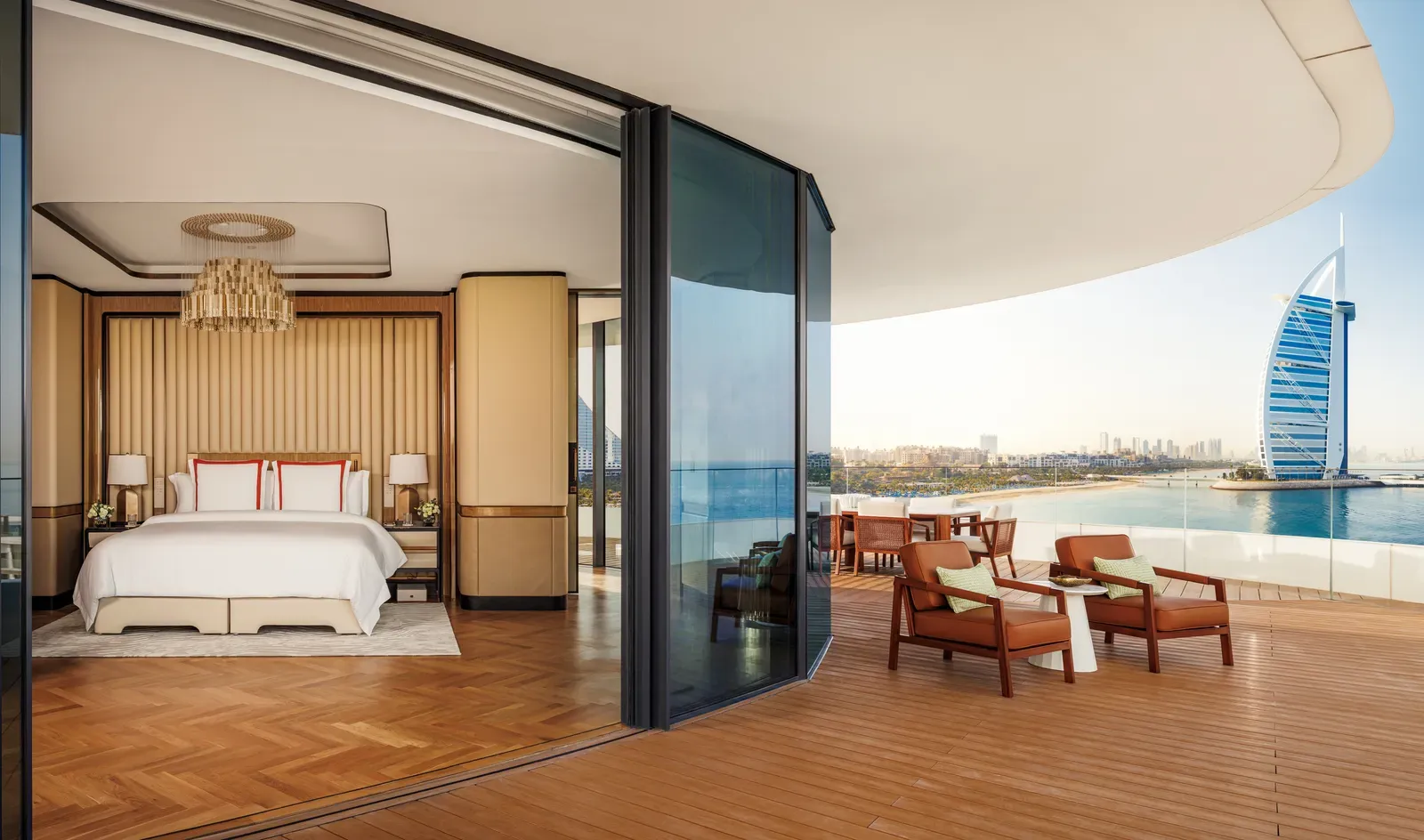
Suite configurations include the Royal Suite, featuring a 310-square-meter terrace with a private plunge pool that projects over the shoreline, and the Pearl Suite, which wraps around the building’s curvature, offering panoramic views and a spacious kitchen. Ocean Grand Terrace Suites, meanwhile, cantilever outward like the prow of a ship, emphasizing the sensation of overwater living.
Exclusive Residences, World-Class Dining, and a Multi-Level Spa
In addition to its hotel spaces, the development includes 82 serviced residences ranging from one to three bedrooms. These private units, sized between 79 and 229 square meters, offer full access to the hotel’s pools, spa, and dining venues while also featuring private entrances, concierge services, and berth access to accommodate yachts up to 200 feet in length.
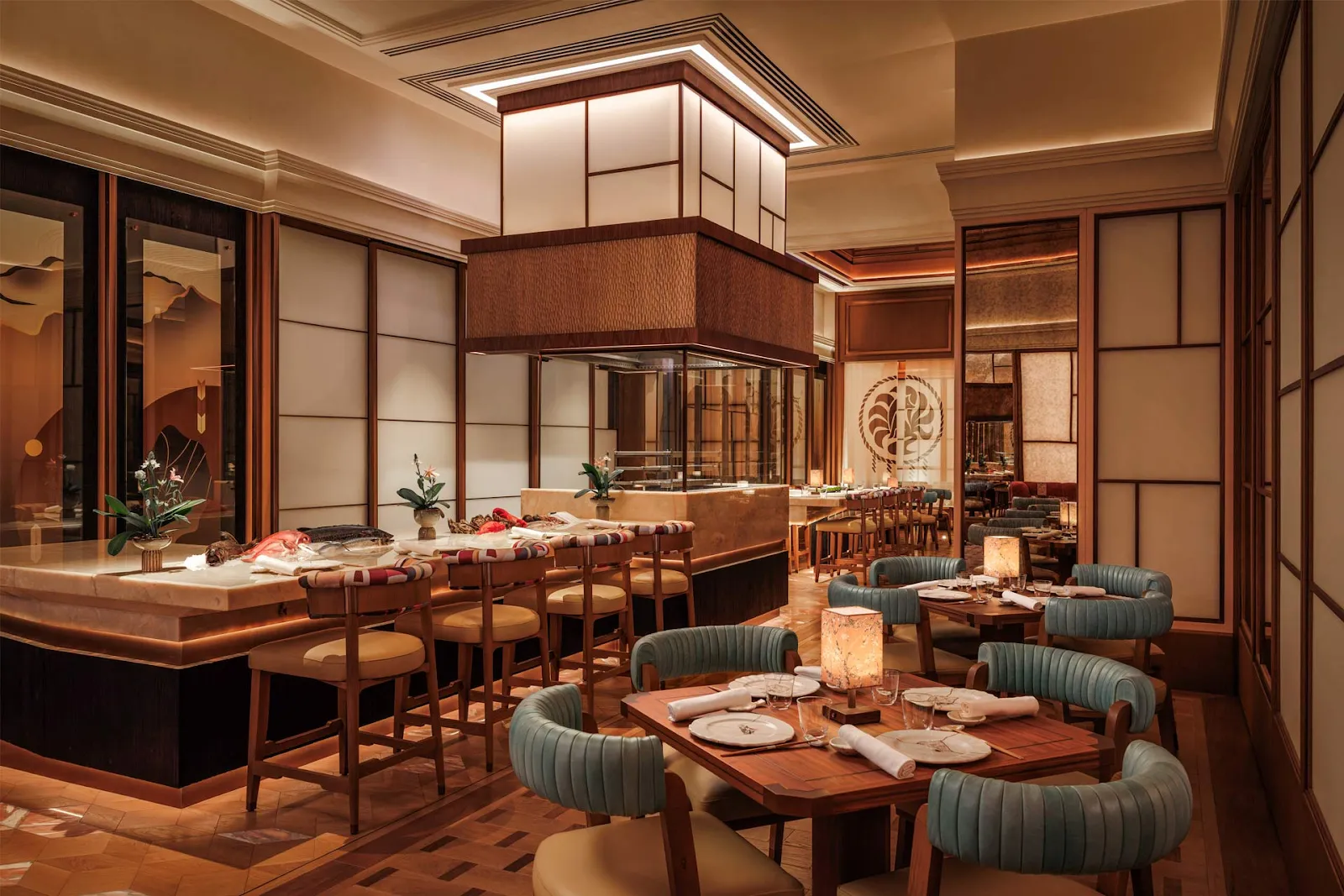
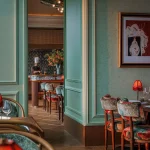
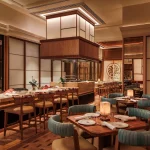
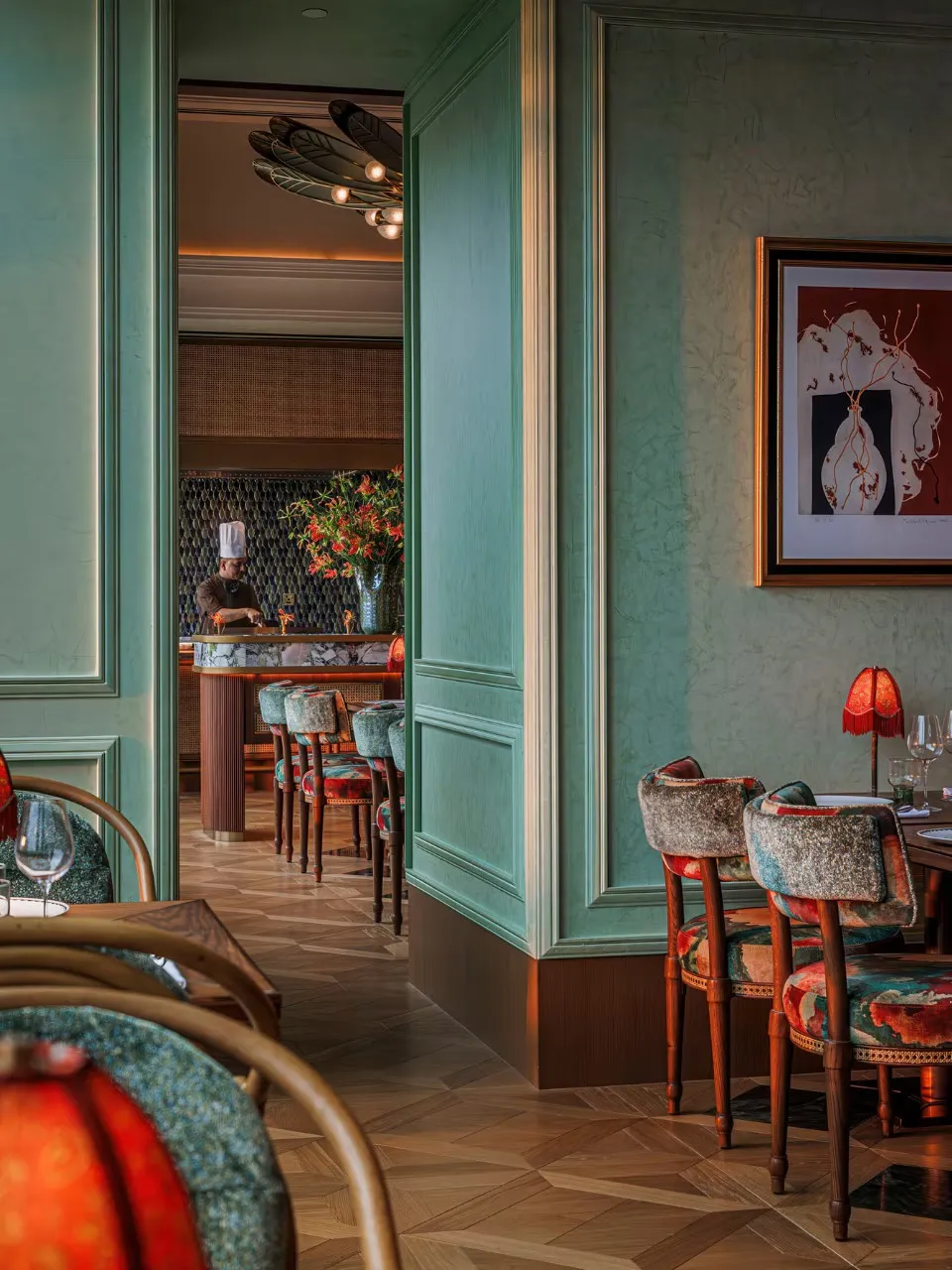
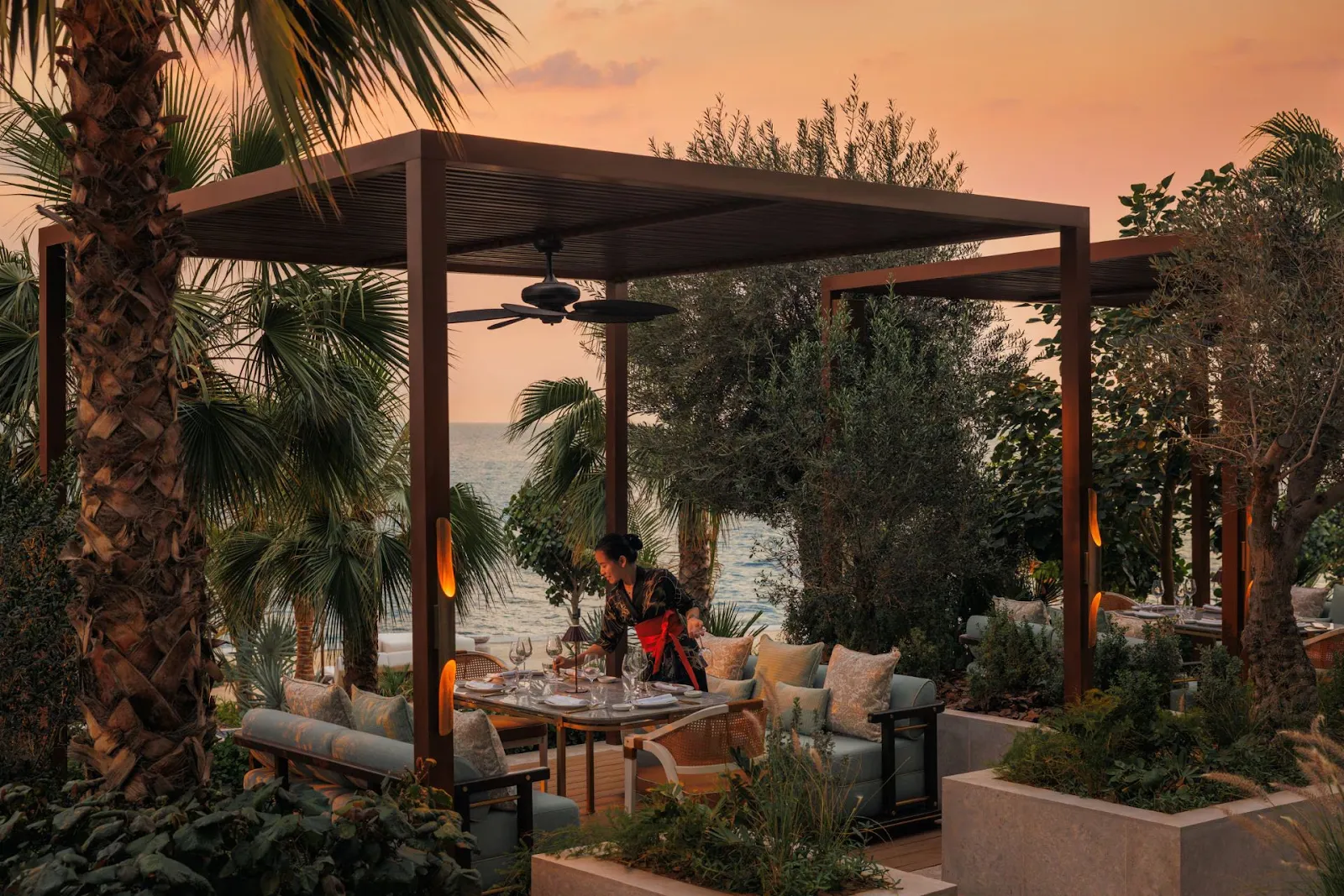
The resort features 11 restaurants and 4 destination bars, each designed with a distinctive material palette and lighting concept. Flagship dining venues include The Fore, a central dining space surrounded by live kitchens; Kinugawa, which interprets Japanese and French culinary techniques; and The Bombay Club, a contemporary reimagining of Indian fine dining. Additional venues such as Iliana, Mirabelle, and Salt by the Marina extend along the promenade, creating a lively waterfront atmosphere with six open-air eateries woven into the pedestrian zone.
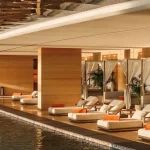
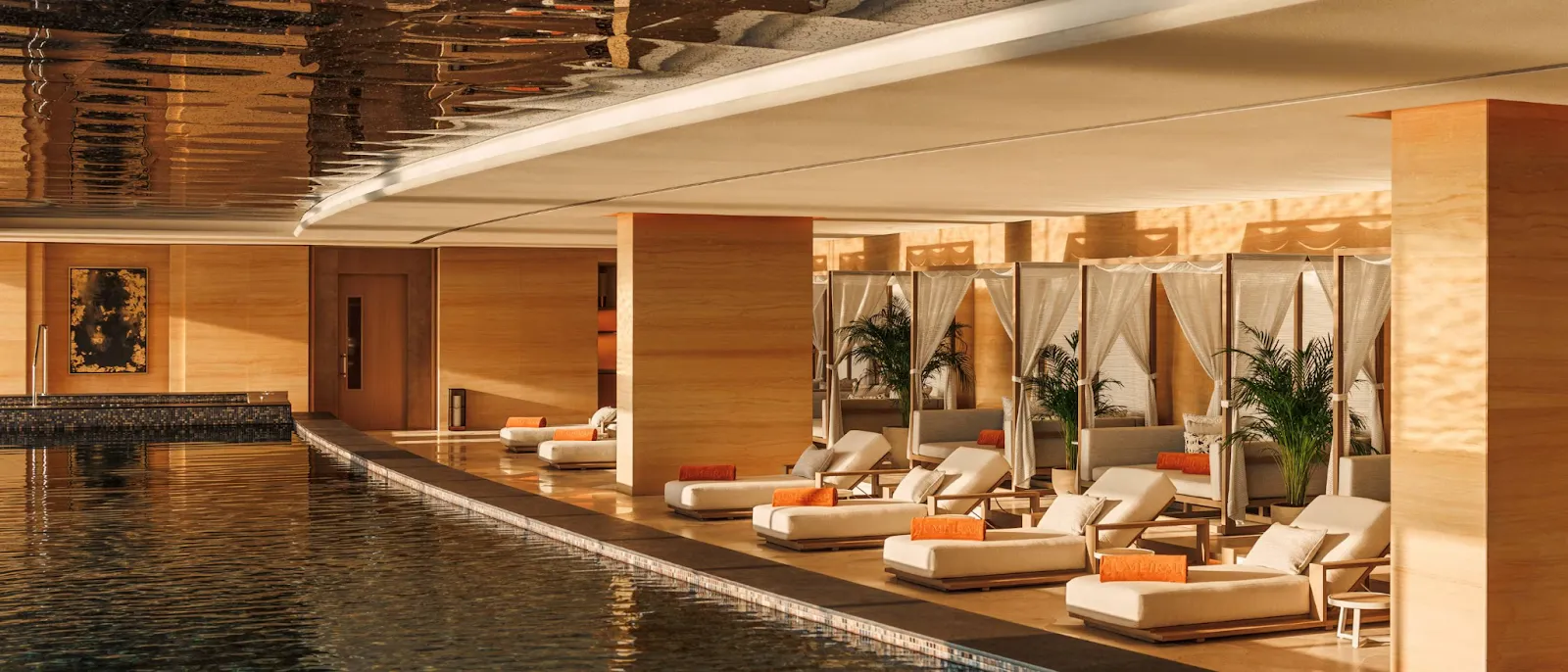
Wellness is addressed across a dedicated three-level Talise Spa, designed as a vertical sanctuary. The spa features 13 treatment suites, each equipped with an outdoor terrace, a 20-meter indoor pool, hydrotherapy zones, and a women-only fitness area.
Sustainable Architecture and Structural Design of Marsa Al Arab
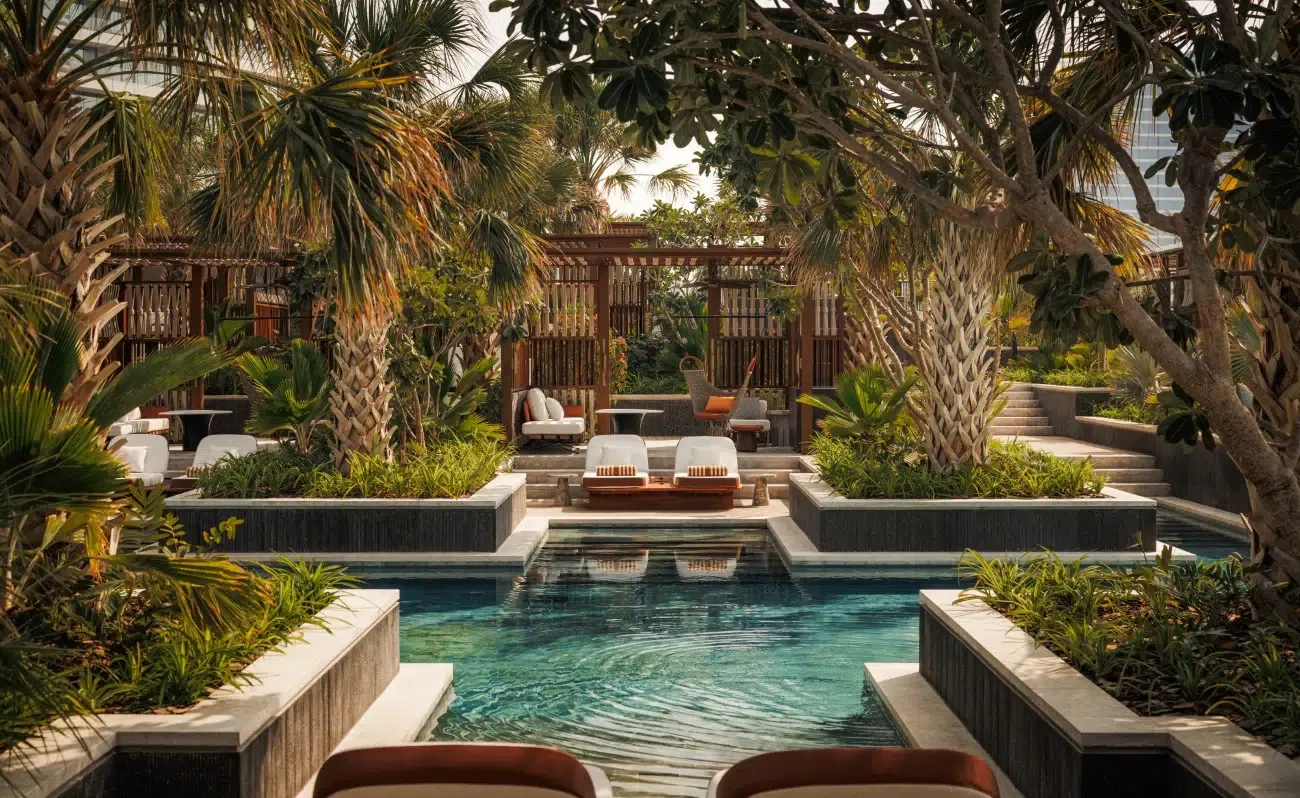
The building is visually iconic and technically progressive. Sustainability initiatives are embedded into the project’s architecture and landscape strategy. Over 3,100 palm trees and 260,000 native shrubs have been planted across the grounds.
Terraces incorporate self-shading geometry, reducing energy consumption by up to 40%. The resort features greywater recycling systems for irrigation, hydro-perlite landscaping, dual piping infrastructure, and the complete elimination of single-use plastics. Lighting throughout the resort utilizes high-efficiency LEDs, and HVAC systems are optimized for low carbon impact.
The lobby atrium is animated by a picturesque installation of 1,500 hand-blown glass shells, suspended to catch and refract natural daylight. These pieces, crafted by Czech glassmakers, create a kinetic dialogue between light, structure, and sea. Elsewhere on the property, over 300 curated artworks and 29 site-specific sculptures are strategically placed throughout guestrooms and public spaces to encourage moments of visual engagement and spatial reflection.
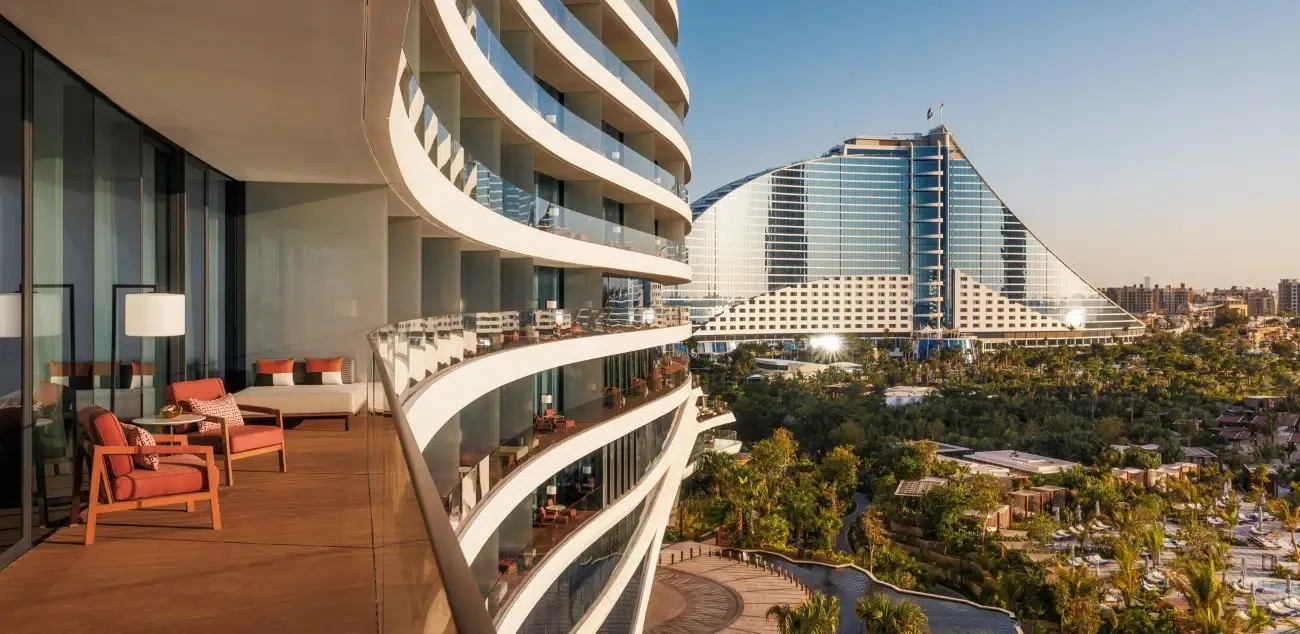
Structurally, the resort’s complexity presented significant engineering challenges. The 3,000-tonne steel arch was prefabricated and assembled with millimeter precision to support upper-level loads without compromising visual transparency. Key suites and terraces are cantilevered over a reinforced seawall to create the illusion of floating above the Gulf. Specialized marine engineering techniques were employed to mitigate wave impacts while preserving unimpeded sea views from the lower levels.
With its combination of sculptural design, hospitality innovation, and technical precision, Jumeirah Marsa Al Arab represents a landmark moment in the evolution of Dubai’s built environment. As the final installment in a trilogy of nautical icons, it closes the narrative arc between past and future with architectural clarity.
Jumeirah Marsa Al Arab introduces a new mode of coastal luxury, one that is deeply tied to place, shaped by design, and anchored in sustainability.