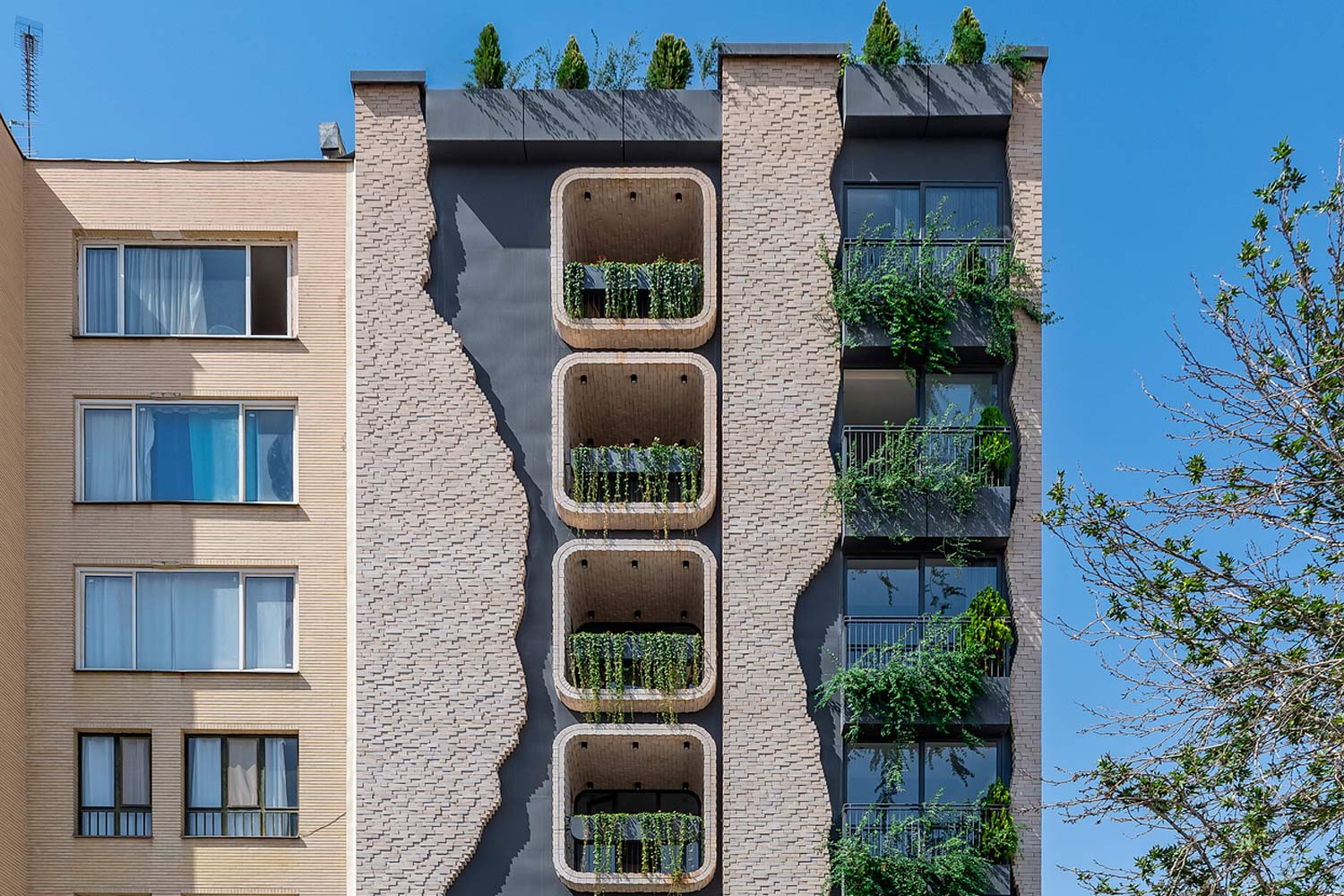

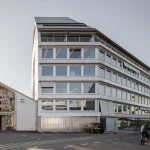
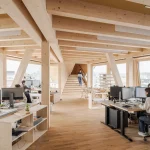
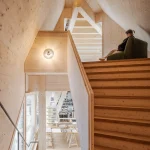
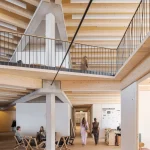
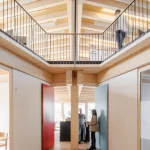
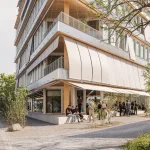
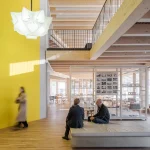
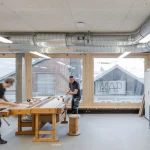
Architecture studio Herzog & de Meuron has unveiled its new headquarters on Mailand-Strasse in Basel’s Dreispitz district. Designed to accommodate more than 300 employees, the building reimagines the traditional office as a dynamic vertical campus. Drawing inspiration from the firm’s long-established St. Johann complex, the project combines collaboration, sustainability, and material innovation within a single structure while responding to the industrial character of its surroundings.
Shaped by an Industrial Past
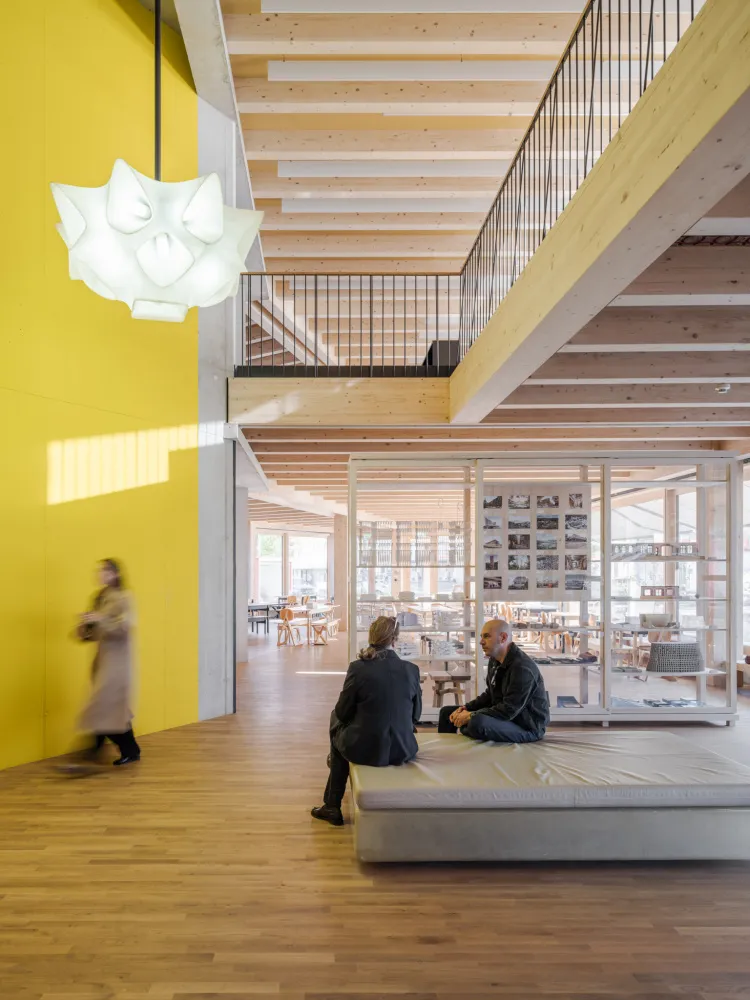
Set within a former logistics and industrial zone, the building takes cues from the area’s robust architectural language. Historic rail lines, warehouses, loading platforms, and infrastructural elements influenced its form and organization. The design integrates the site’s functional heritage, translating it into a contemporary architectural expression that contributes to the ongoing transformation of Dreispitz.
Conceptualizes the Campus as a Vertical Workplace
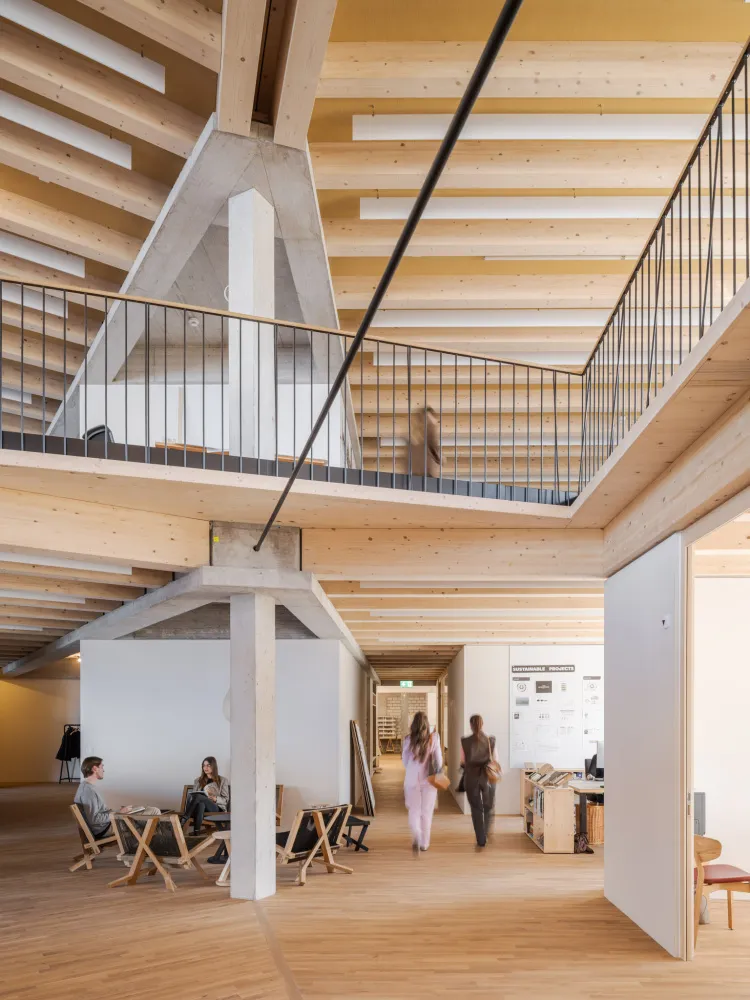
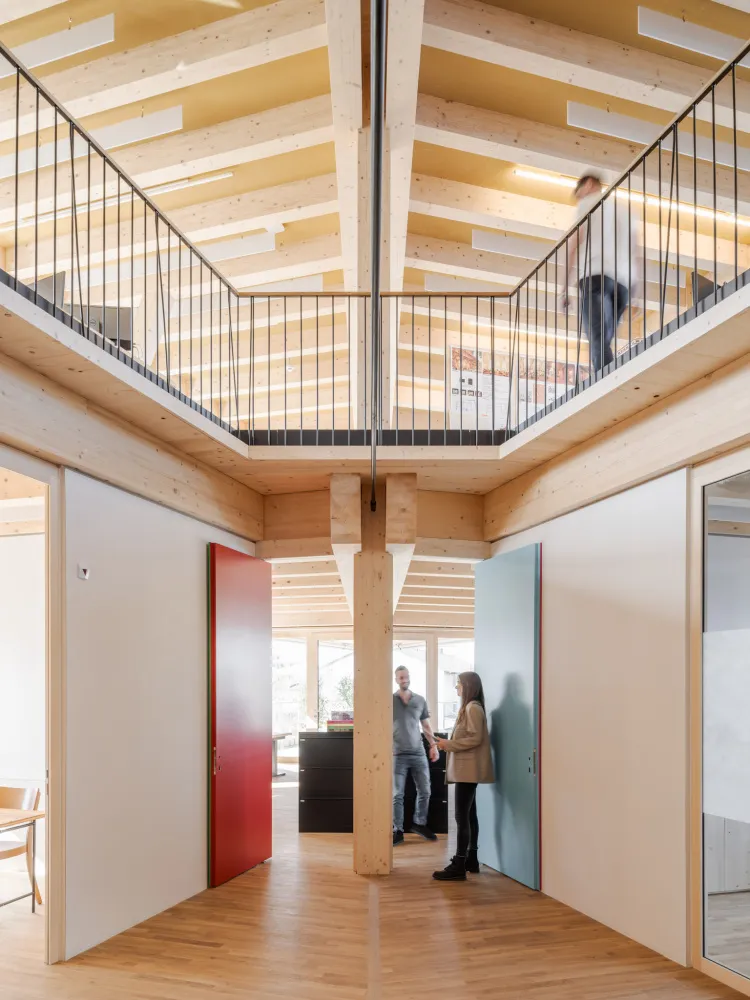
A key ambition of the project was to recreate the richness and diversity of a traditional campus within a single building. While the firm’s St. Johann headquarters evolved over decades through the addition of multiple structures, the new office achieves a similar sense of variety through carefully articulated floor plans and sectional arrangements.
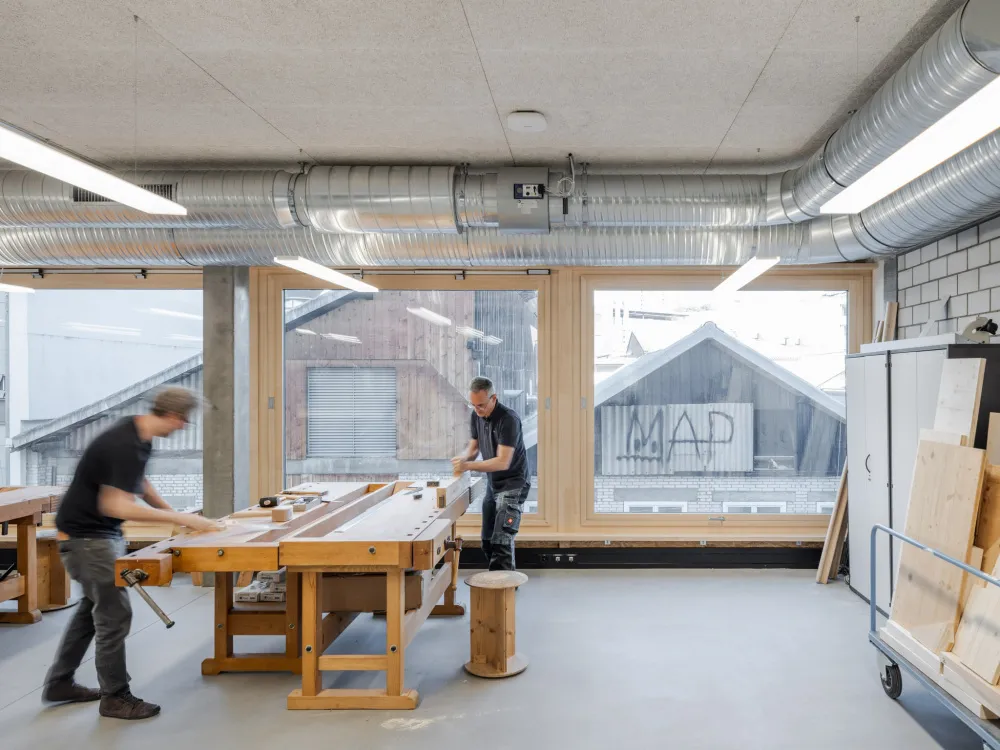
Diverse workspaces, shared areas, and interconnected environments encourage interaction, creativity, and exchange among employees.
A Timber Structure Designed for Circularity
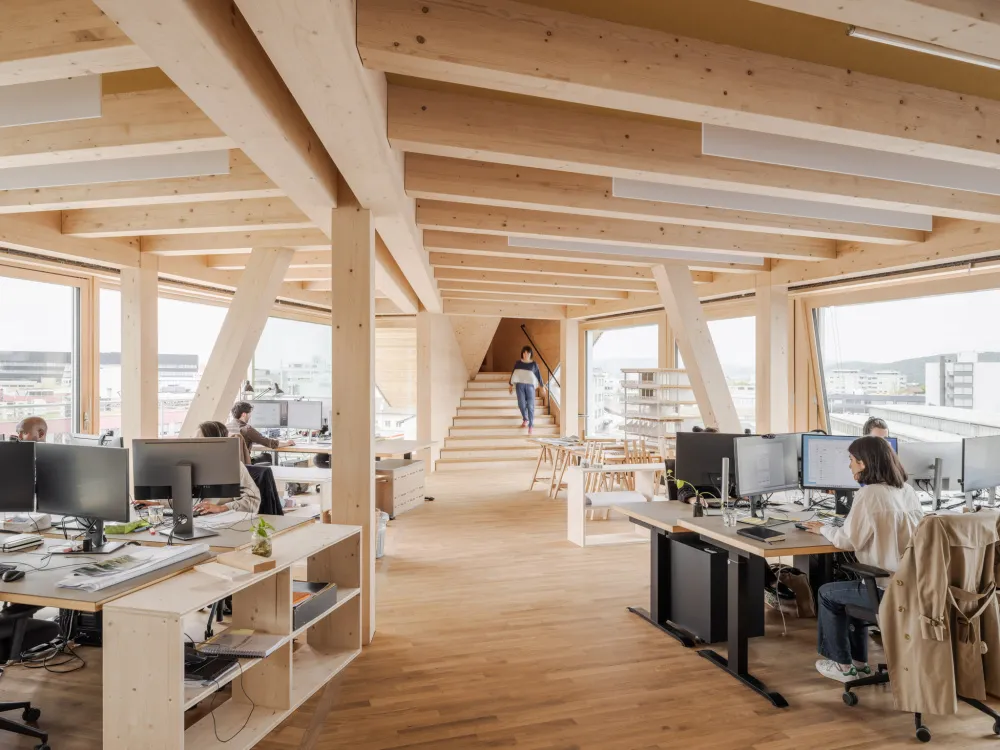
Sustainable design is embedded throughout the building’s design. Massive timber components form the primary structure, while concrete is used only where necessary, including the foundations, cores, and seismic elements.
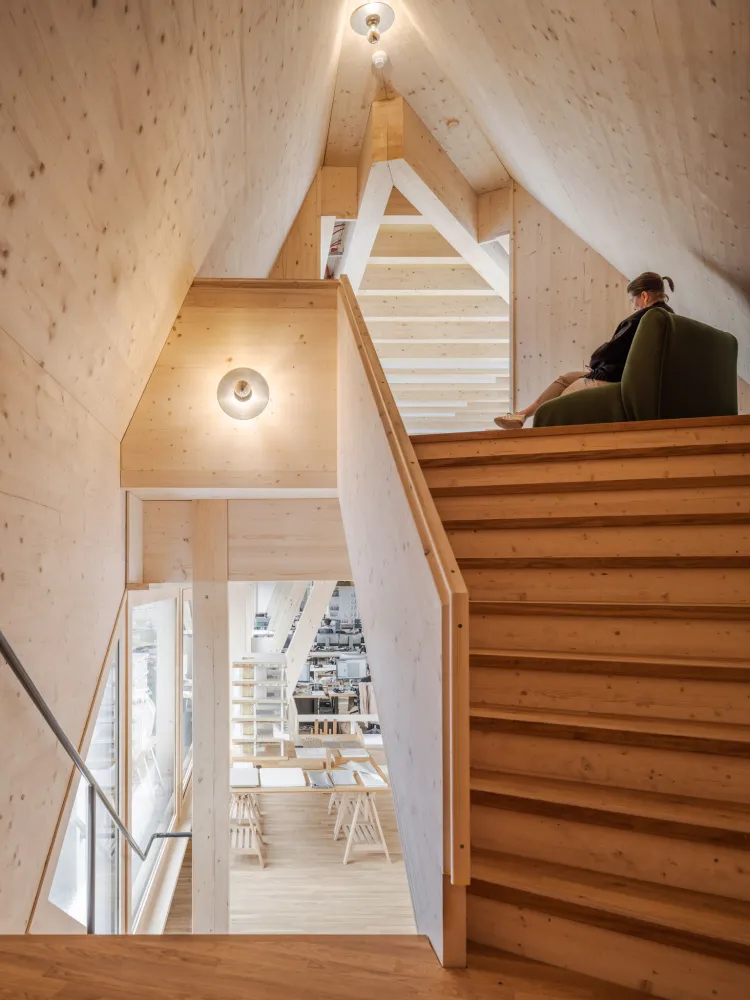
The building is conceived as a layered assembly in which glazing, insulation, weatherproofing, and photovoltaic systems remain distinct from the timber frame. This strategy allows individual components to be removed, upgraded, or replaced over time, supporting longevity, adaptability, and a more circular approach to construction.
Image Credit: Herzog & de Meuron