

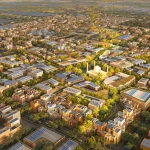
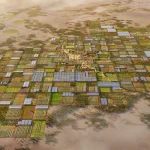
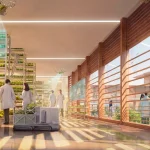
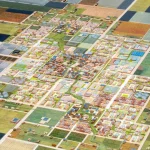
Architecture studio Foster + Partners, in collaboration with Dar Al-Handasah, has revealed the masterplan for Al Najd Agricultural City, a large-scale agricultural development in Dhofar, southern Oman.
Commissioned by the Ministry of Housing and Urban Planning and the Ministry of Agriculture, the project spans approximately 54 million square feet and is aligned with Oman Vision 2040. Designed as a self-sustaining urban and agricultural hub, the development seeks to enhance food security, support agricultural innovation, diversify the national economy, and establish Oman’s first zero-waste agricultural city.
Inspired by Oman’s Agricultural Heritage
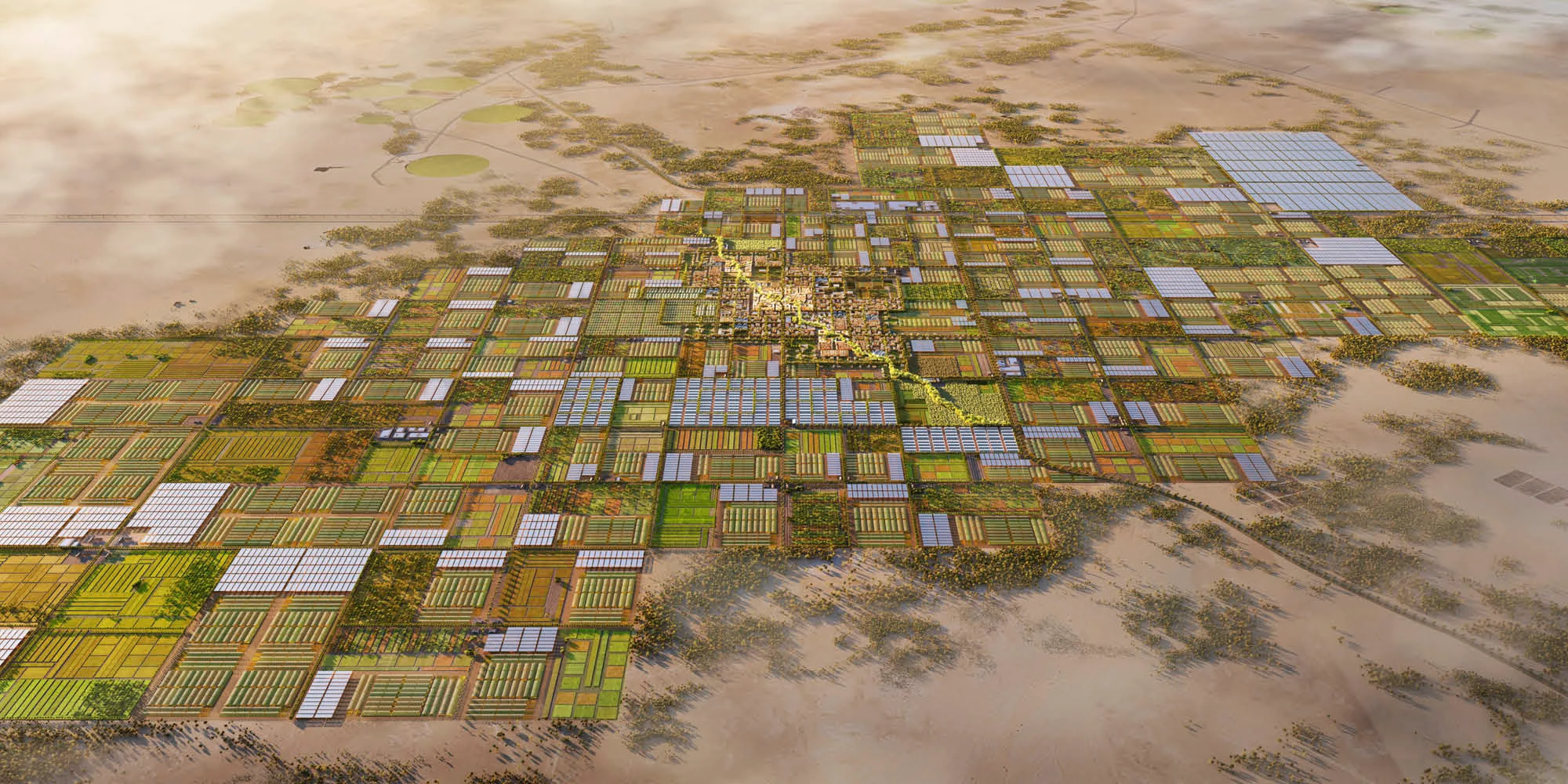
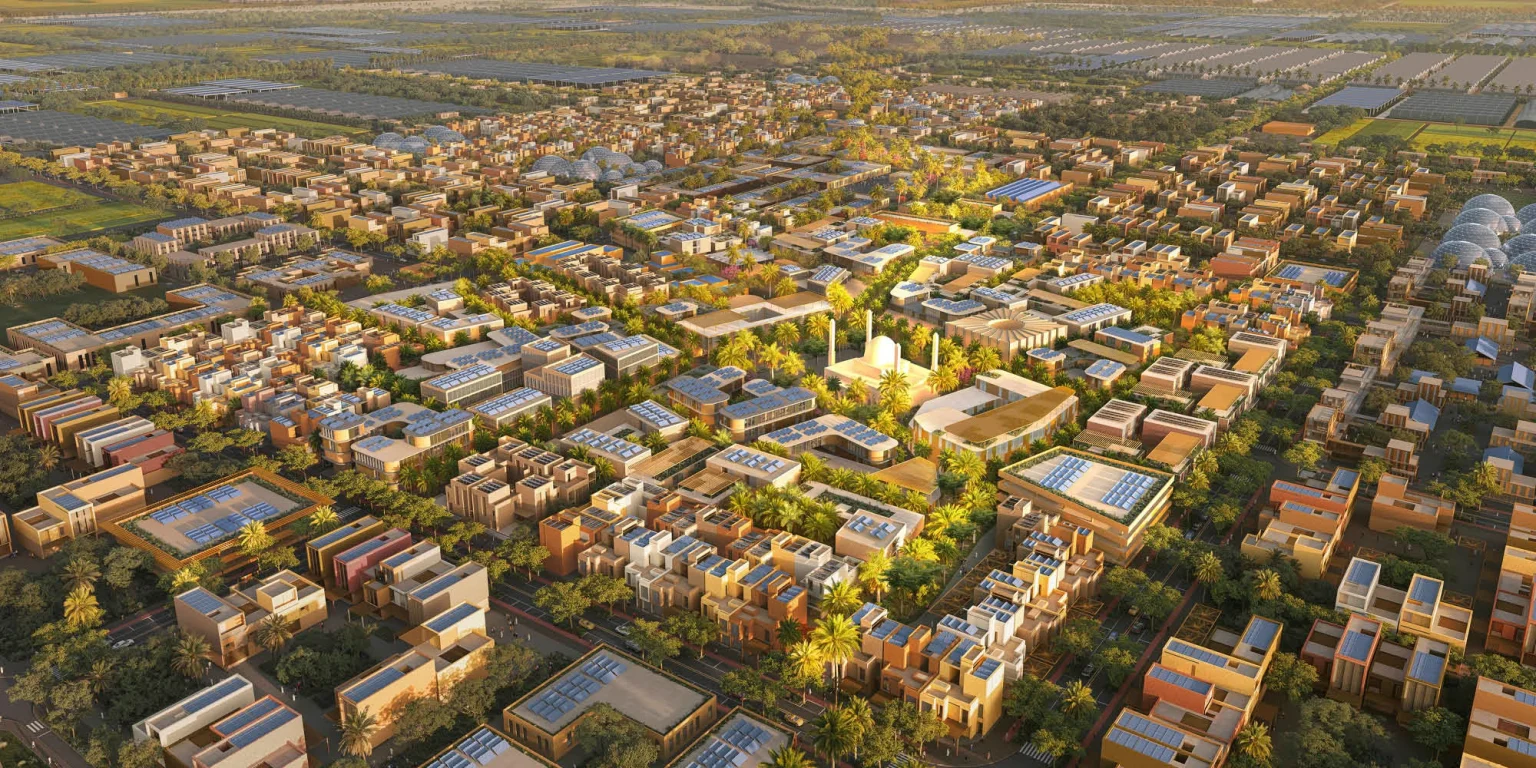
The masterplan draws inspiration from historic settlements across Oman, where agriculture has traditionally played a central role in community life. The project integrates food production directly into the city’s structure.
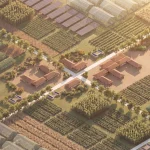
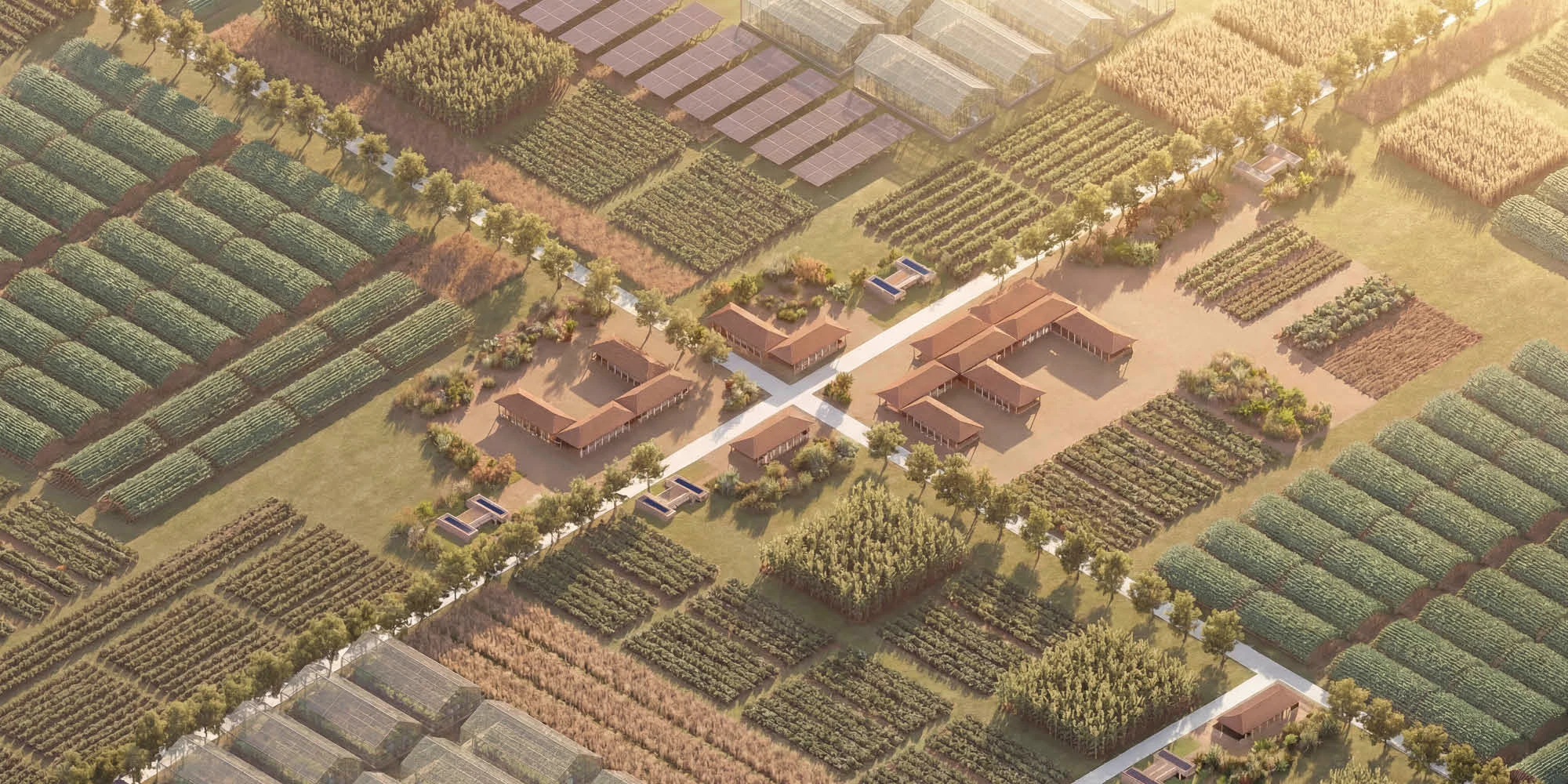
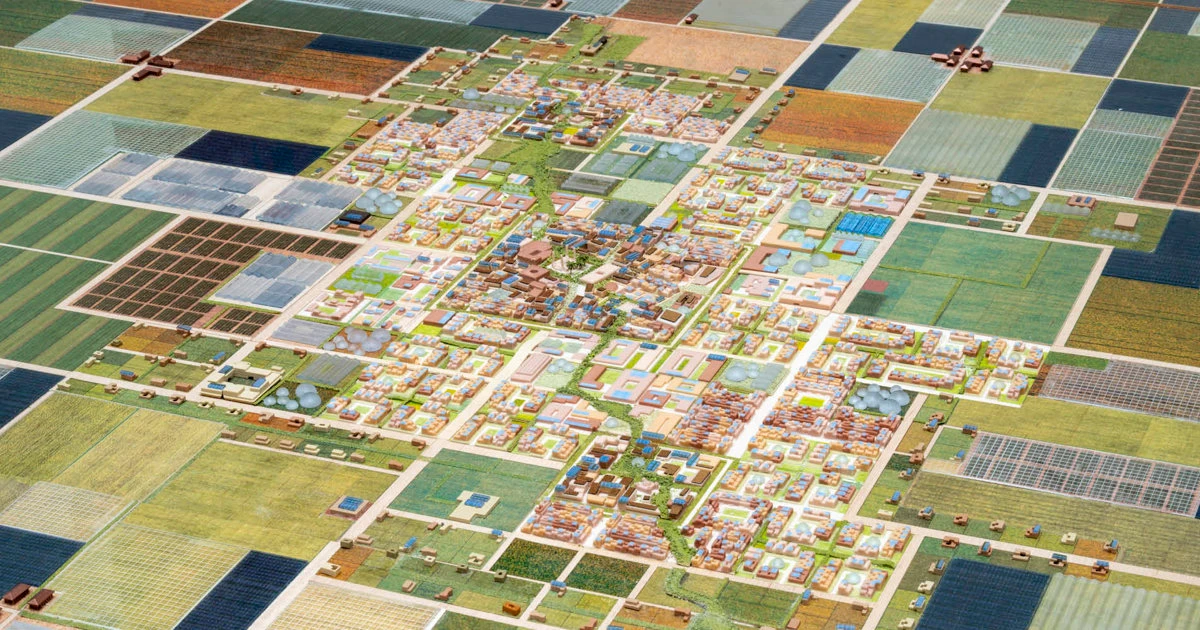
At the core of the proposal is a compact urban center surrounded by clusters of rectangular farms ranging from 10 to 200 hectares. These agricultural zones radiate outward from the centre, creating a planning framework that combines cultivation, processing, research, and residential functions within a single ecosystem.
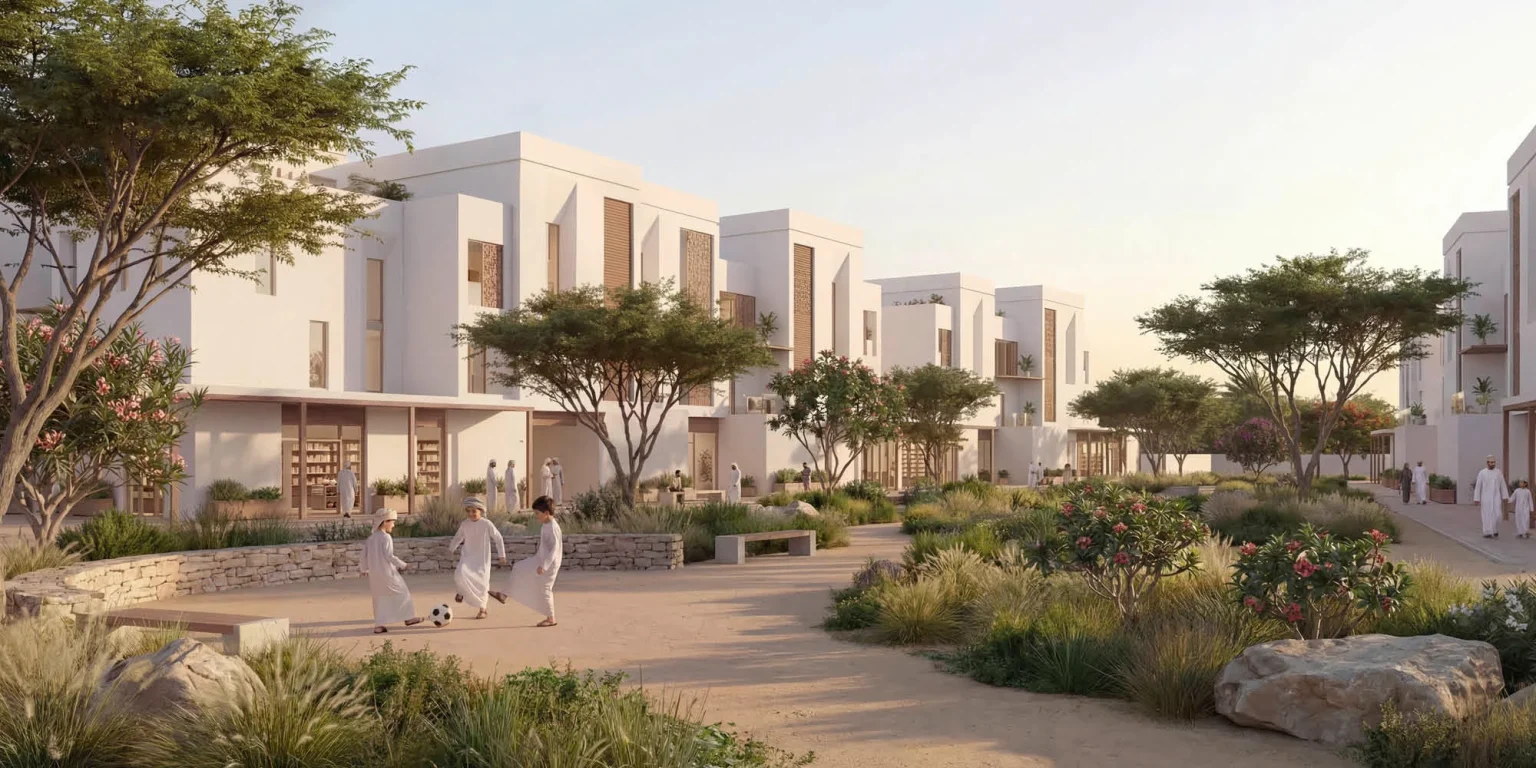
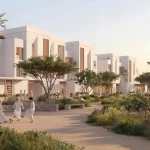
Agricultural landscapes are also woven into public spaces, including parks, boulevards, courtyards, and community areas, helping define the city’s identity while strengthening connections between residents and food production.
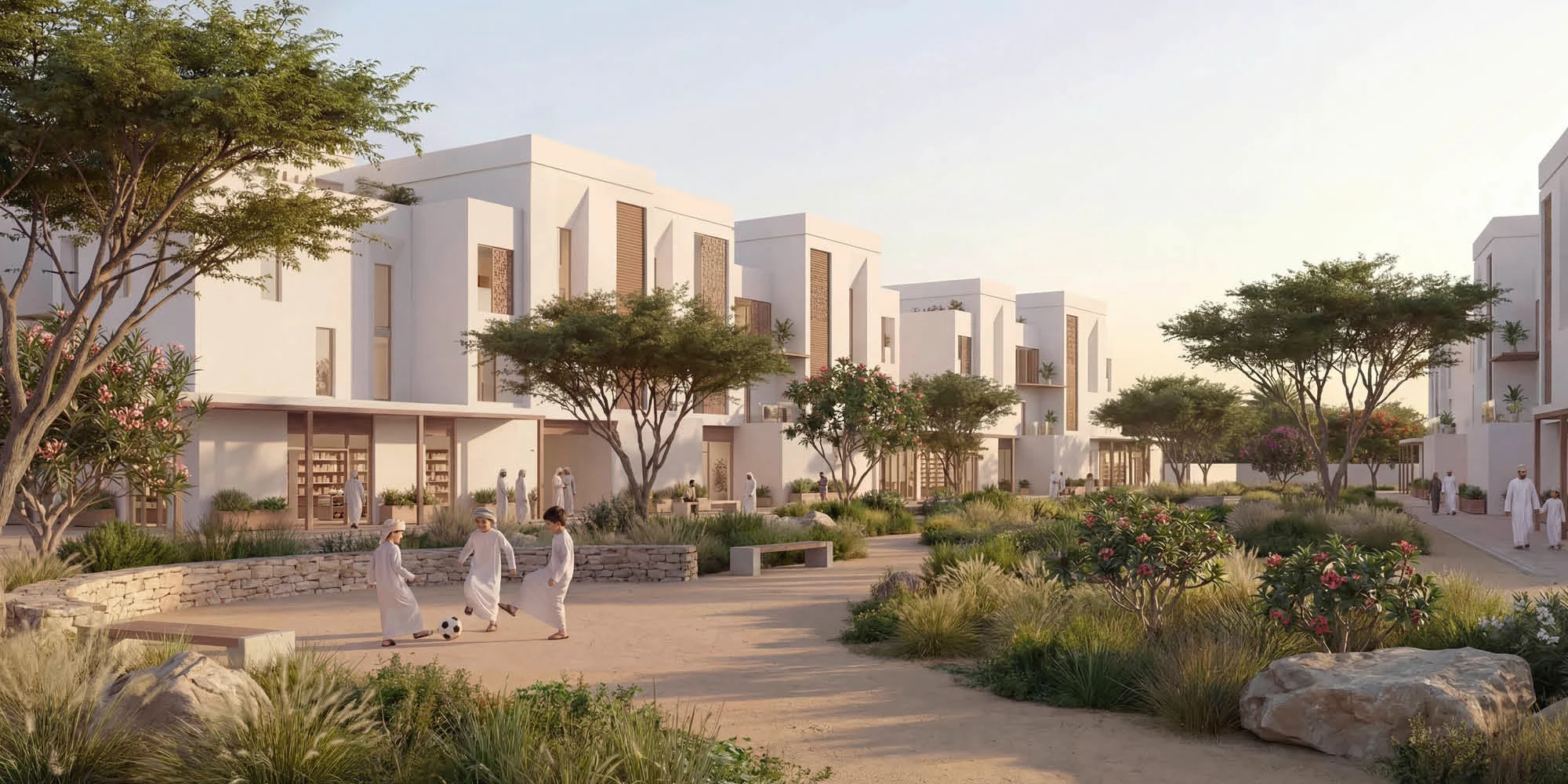
A Walkable City Center for 13,000 Residents
The urban centre is designed to support a projected population of approximately 13,000 residents while generating around 6,500 new jobs.
Key components of the city include:
- Shaded pedestrian networks
- Integrated public transport connections
- Educational institutions
- Healthcare facilities
- Cultural and religious buildings
- Retail and leisure amenities
The development is also planned to connect strategically with surrounding farms and regional hubs, creating a resilient agricultural network that can support both local consumption and broader economic growth.
Agriculture at the Core of the Masterplan
Agricultural consultants working on the project have carefully selected crops suited to Dhofar’s climate and environmental conditions. The proposed cultivation strategy includes date palms, greenhouse-grown tomatoes, and industrial crops that can provide raw materials for various agricultural and manufacturing processes. This crop selection is intended to support both local food production and broader economic opportunities within the agricultural city.
Beyond farming, the city is intended to support agro-processing industries and export opportunities. Potential outputs include dried and frozen produce, edible oils, compost, and fertilizers, helping extend value chains beyond cultivation.
Technology-Driven Sustainability Strategies
Sustainability is embedded throughout the masterplan through a range of integrated agricultural and environmental technologies.
The proposal incorporates:
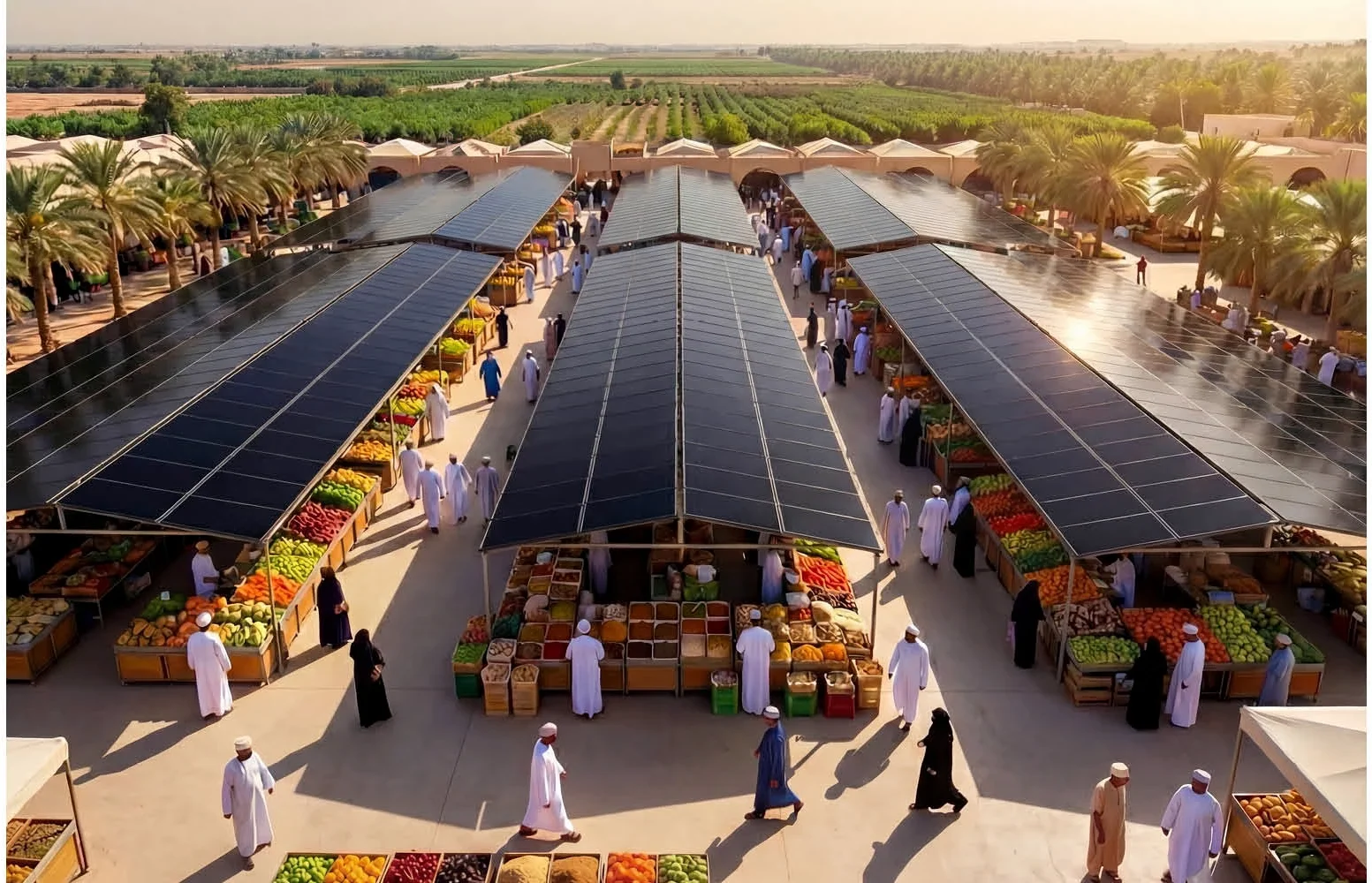
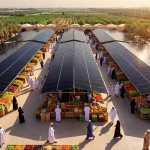
Agrivoltaics and Shade Systems
Agrivoltaic installations will provide renewable energy while simultaneously protecting crops from excessive sunlight. Shade nets will help regulate temperature and create more favorable growing conditions.
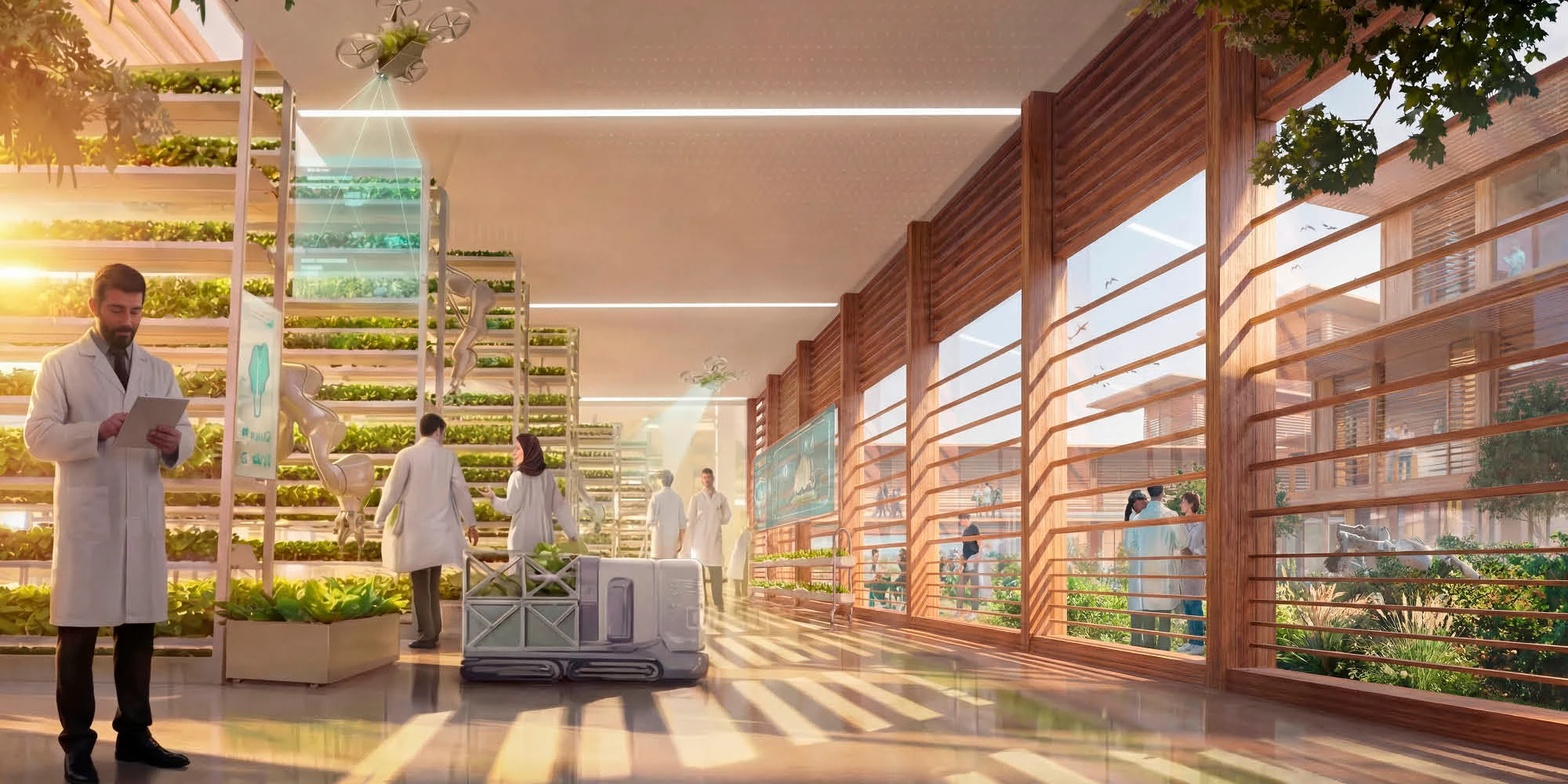
Closed-Loop Aquaponics
Aquaponic systems will combine fish cultivation with crop production in interconnected cycles, reducing resource consumption and supporting efficient food production.
Advanced Resource Management
Water and energy systems have been designed to maximize efficiency through monitoring technologies and climate-responsive strategies.
The project’s diversified water network includes:
- Groundwater resources
- Runoff water collected from nearby mountains through dams
- Desalinated seawater
Combined with water-efficient crop selection and carefully managed irrigation systems, these measures aim to improve long-term resilience in an arid environment.
Creating a Self-Sufficient Future
According to Foster + Partners, the master plan balances technological innovation with lessons drawn from the region’s agricultural history.
Commenting on the project, Stefan Behling, Head of Studio at Foster + Partners, stated that the design is “informed by history and driven by technology,” creating a self-sufficient and resilient centre for the region.
Partner Stephanie Tunka added that the master plan is guided by Dhofar’s landscape and climate, embedding sustainable strategies that strengthen connections between people, place, and nature.
With agriculture, housing, industry, and public life integrated into a single framework, Al Najd Agricultural City proposes a new model for urban development, one where food production becomes a defining element of the city itself.
Project & Image Credit: Foster + Partners