

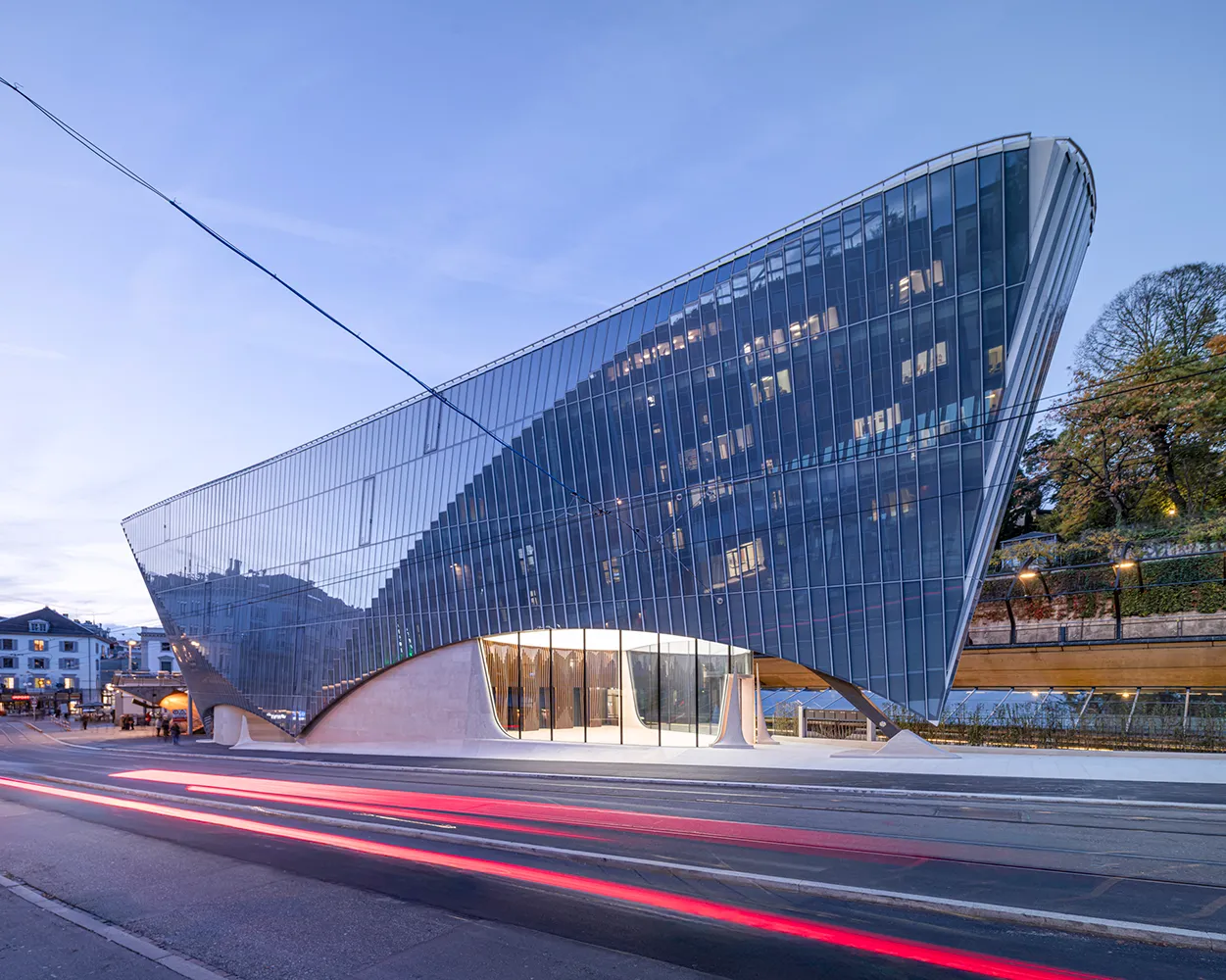
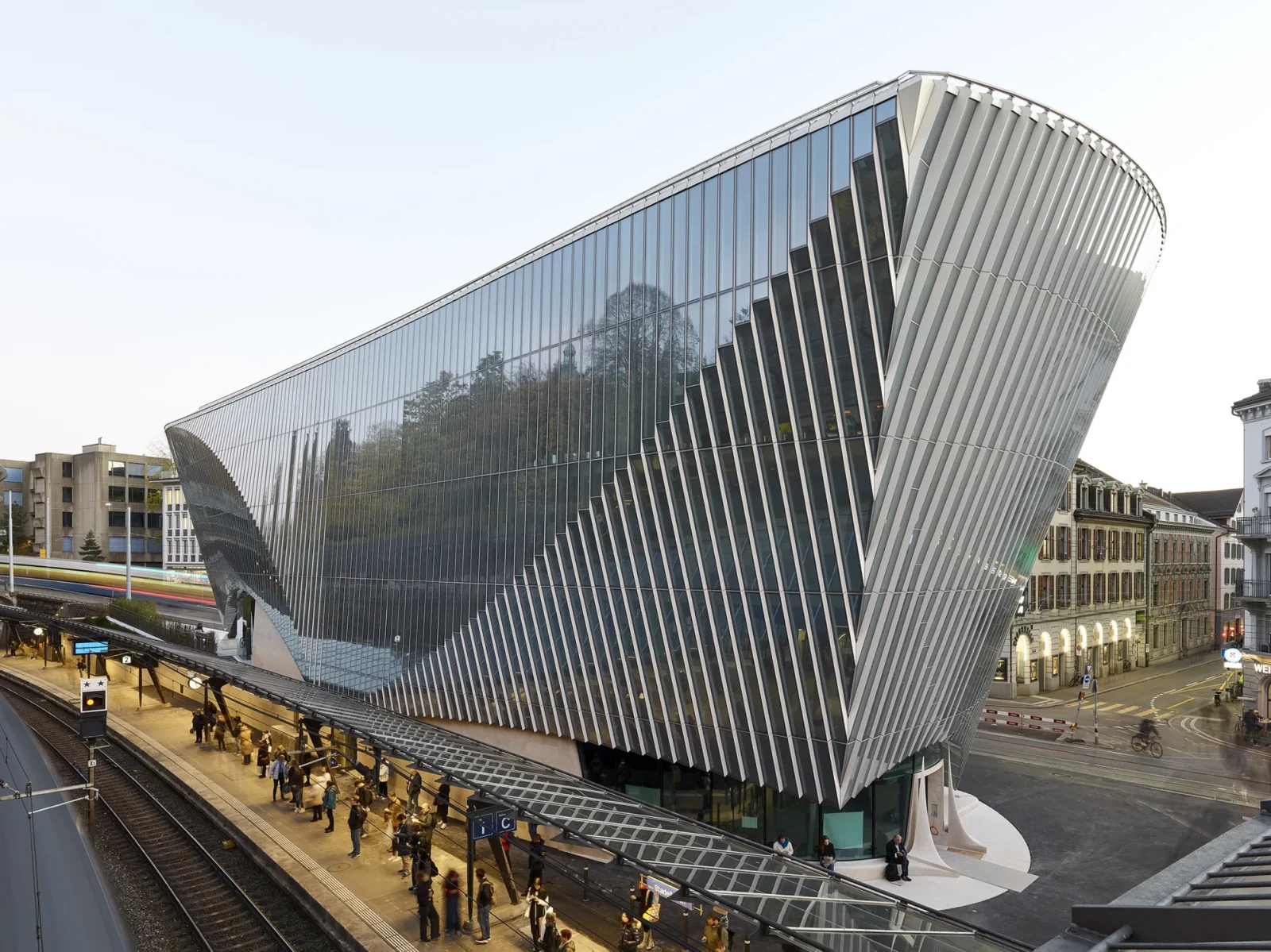
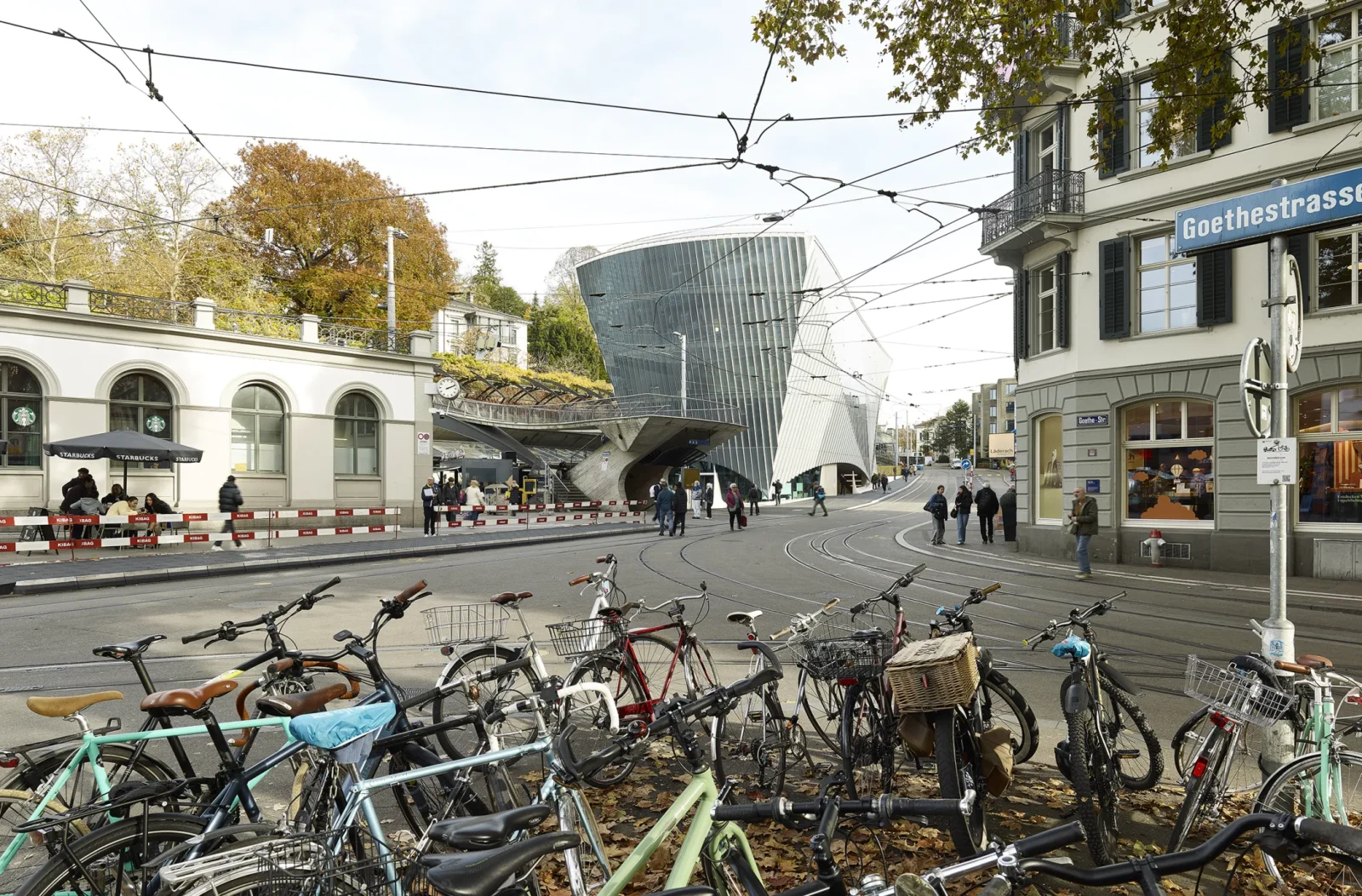
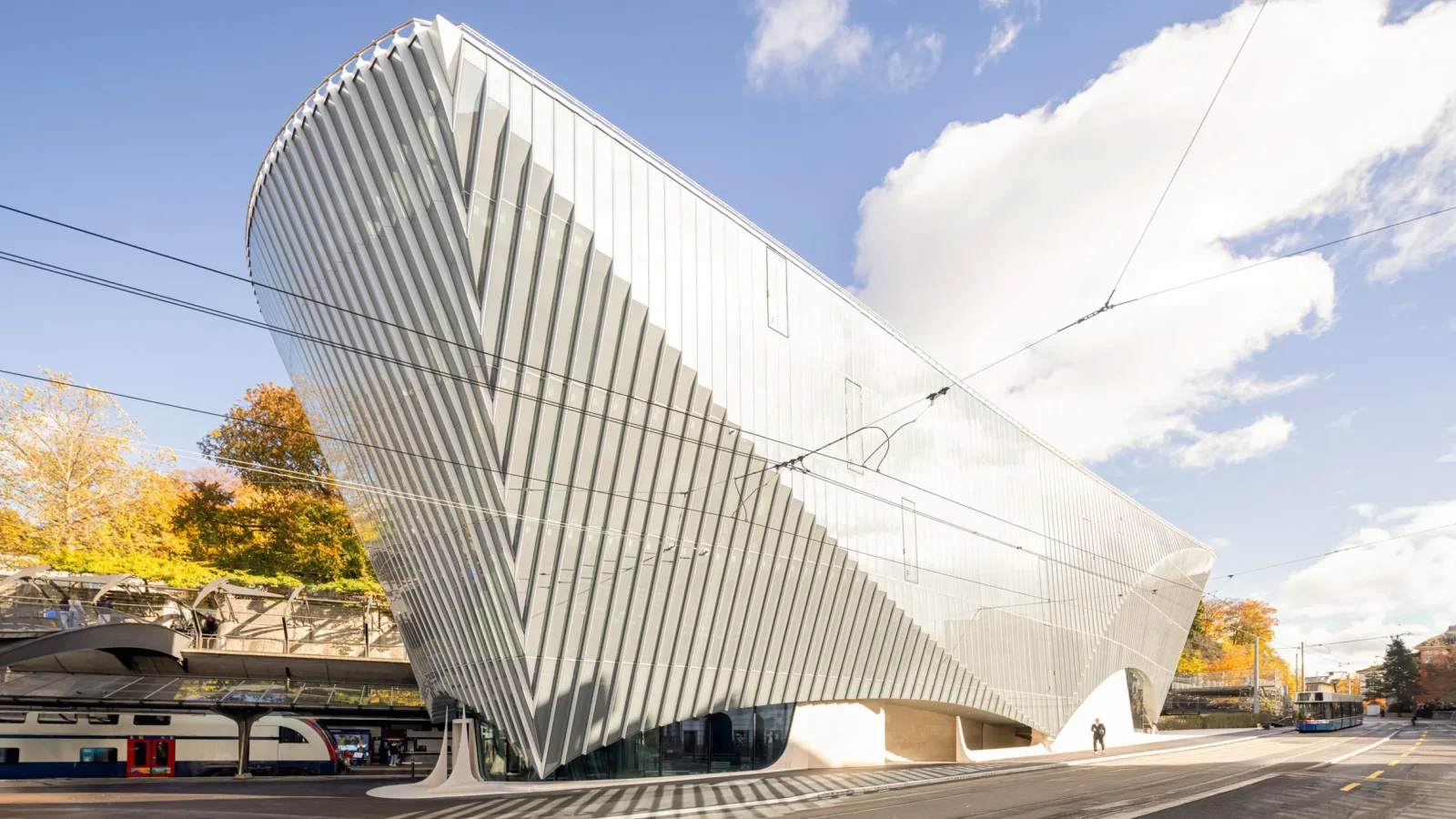
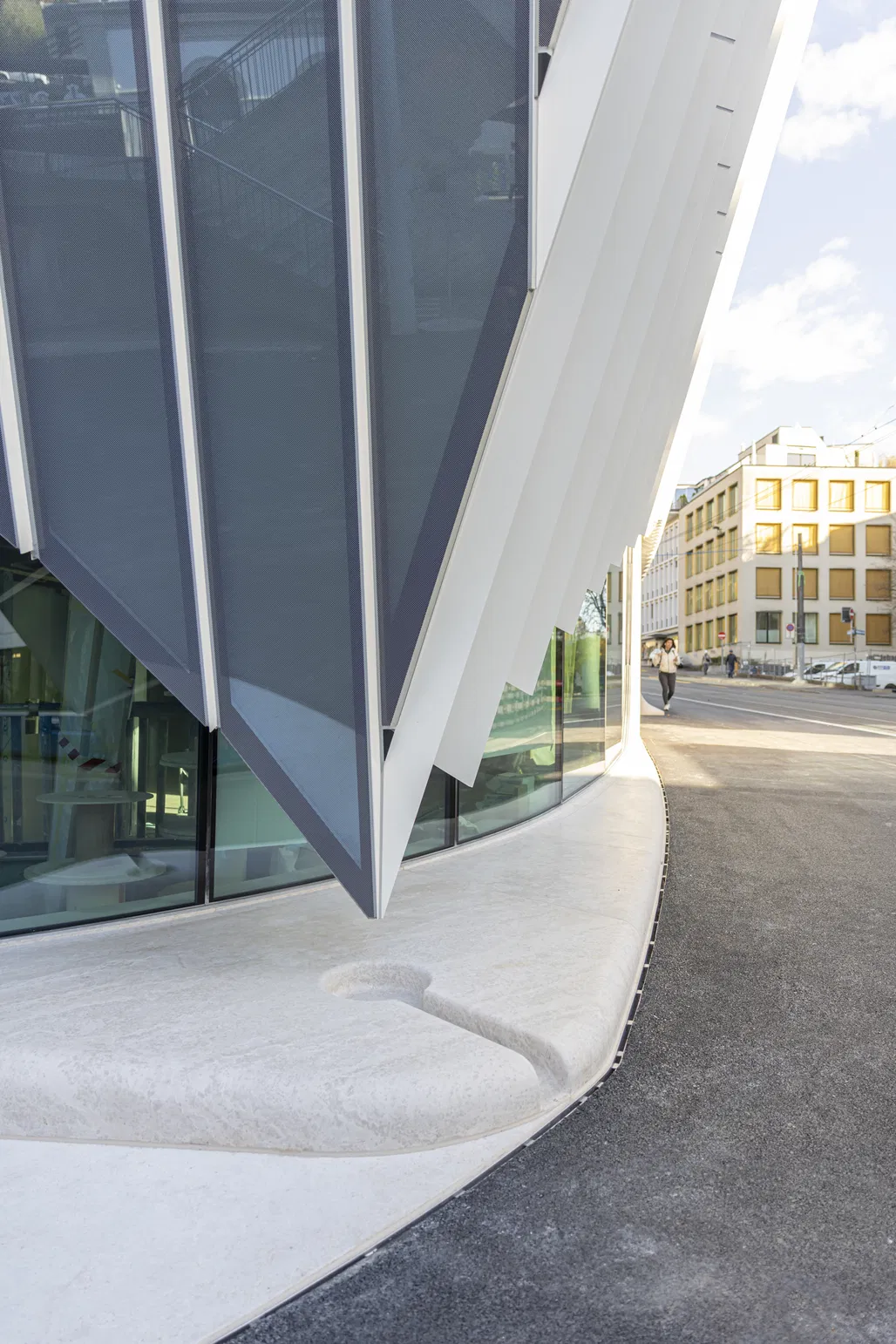
Santiago Calatrava, the Spanish architect known for merging engineering precision with sculptural form, has completed the Haus zum Falken in Zurich. The mixed-use commercial building combines office and rental spaces and brings a contemporary sensibility to the city’s historic center. Its defining feature is a dynamic facade made up of 260 individually fabricated glass panels, a composition that reflects Calatrava’s ongoing exploration of movement, light, and structure within urban contexts.
The Folded Glass Facade of Haus zum Falken
Located at the eastern side of the Stadelhofen Railway Station, the eight-story office building actively engages with the urban environment. Its strategic placement completes a vital network of interconnected public spaces, stretching from Lake Zurich to the Opera House and Sechseläutenplatz. Designed on a narrow, triangular plot, Calatrava envisioned the structure with a powerful civic purpose, responding to the intense demands of the adjacent transport hub.
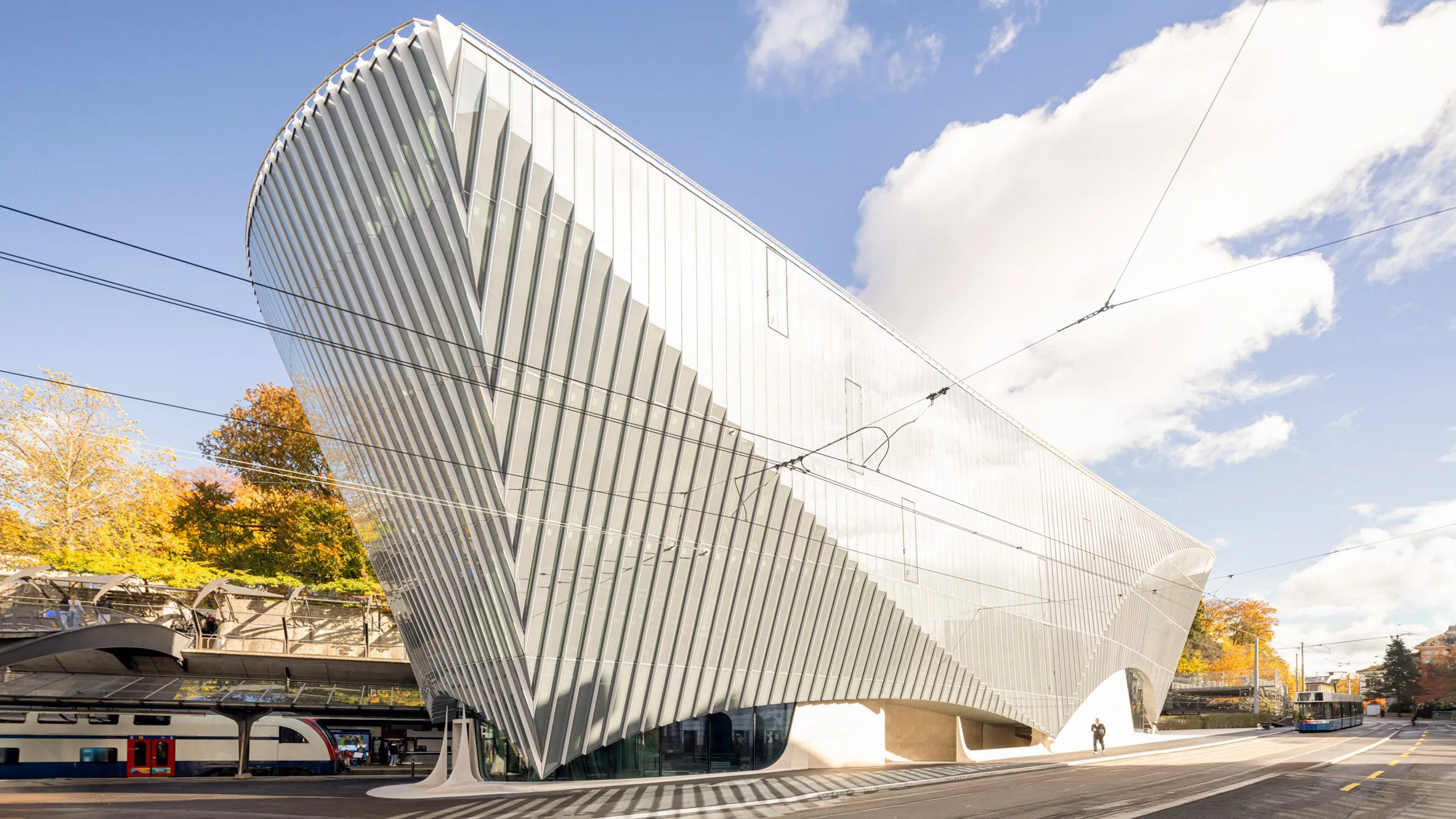
The inspiration for Haus zum Falken is deeply rooted in Calatrava’s 1983 competition-winning design for the Stadelhofen rail station, which marked his early recognition for sculptural forms and rhythmic, repetitive structures. The striking architectural feature of the Haus zum Falken is its highly articulated glass facade, defined by a vertical rhythm of structural profiles and glazing.
Spanning five levels, the glass facade is placed on the undulating surface, challenging the static monotony of a traditional planar wall. The folded glass envelope is not only visually captivating but also creates a sense of dynamic, kinetic phenomenology.
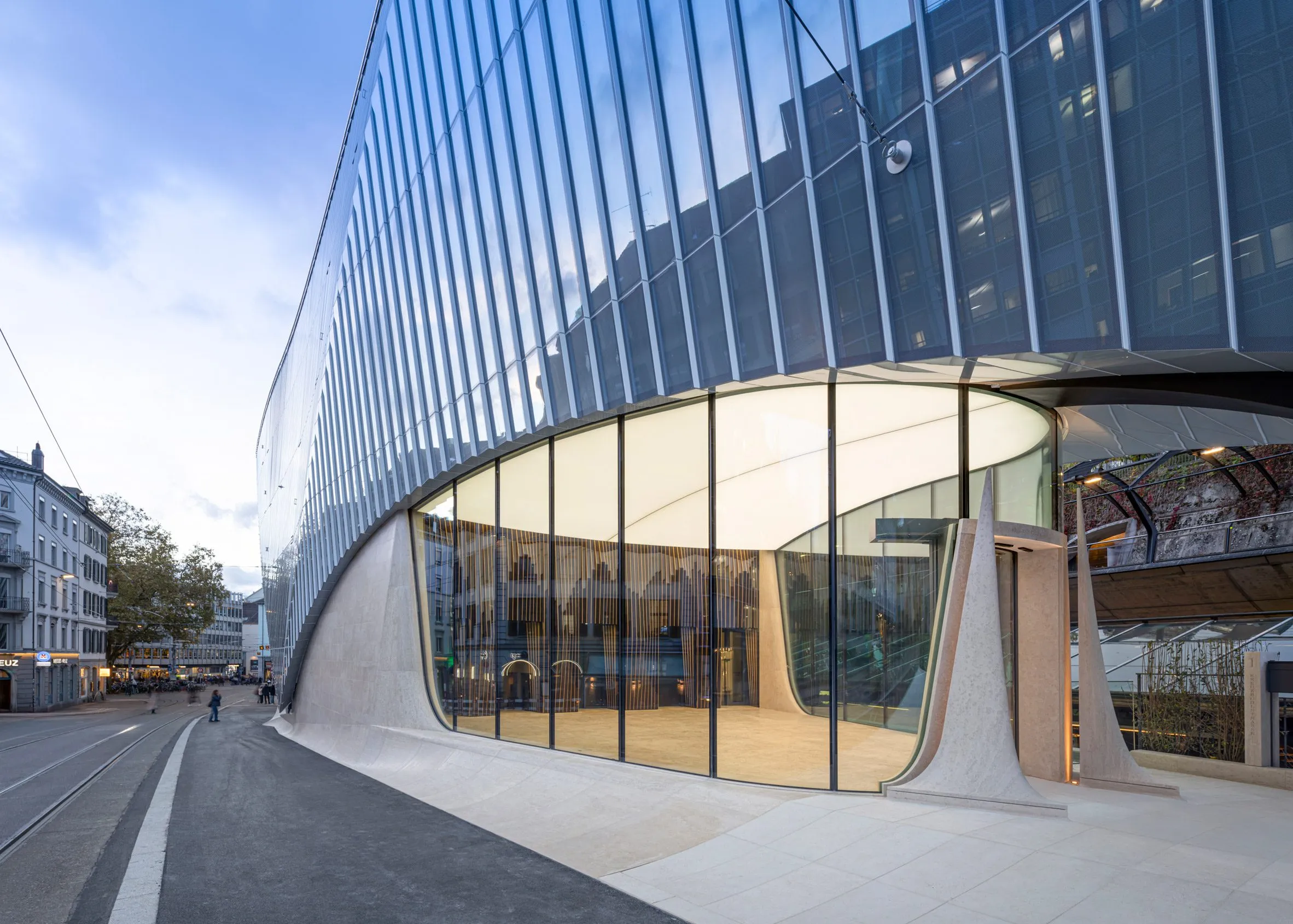
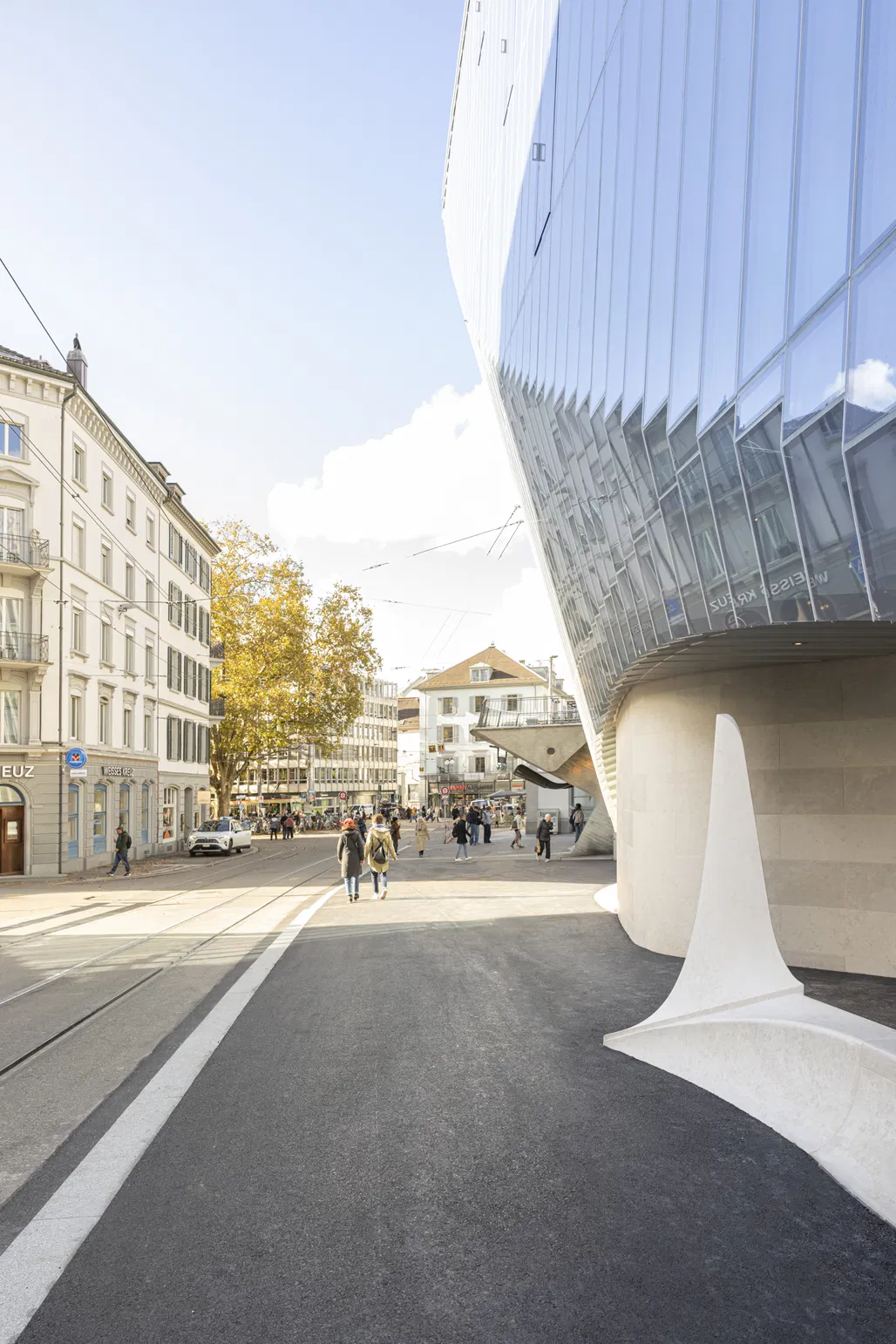
At the core of the spatial design lies a philosophy that transcends mere functionality. The folded geometry, combined with the vertical elements, creates shifting reflections and patterns of light, giving the building a kinetic presence that evolves throughout the day. Every detail is meticulously articulated, drawing attention to the sculptural quality of the architectural elements.
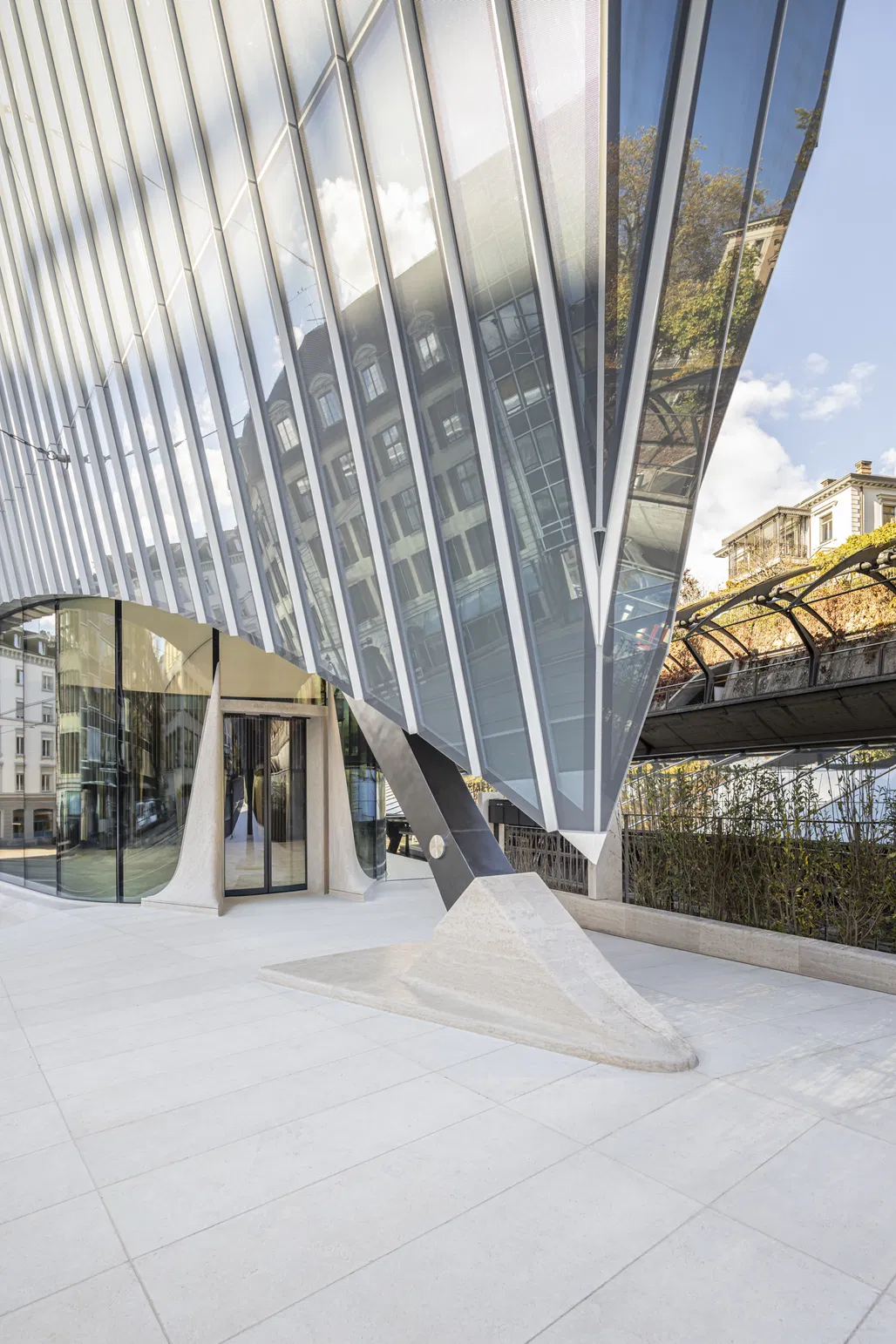
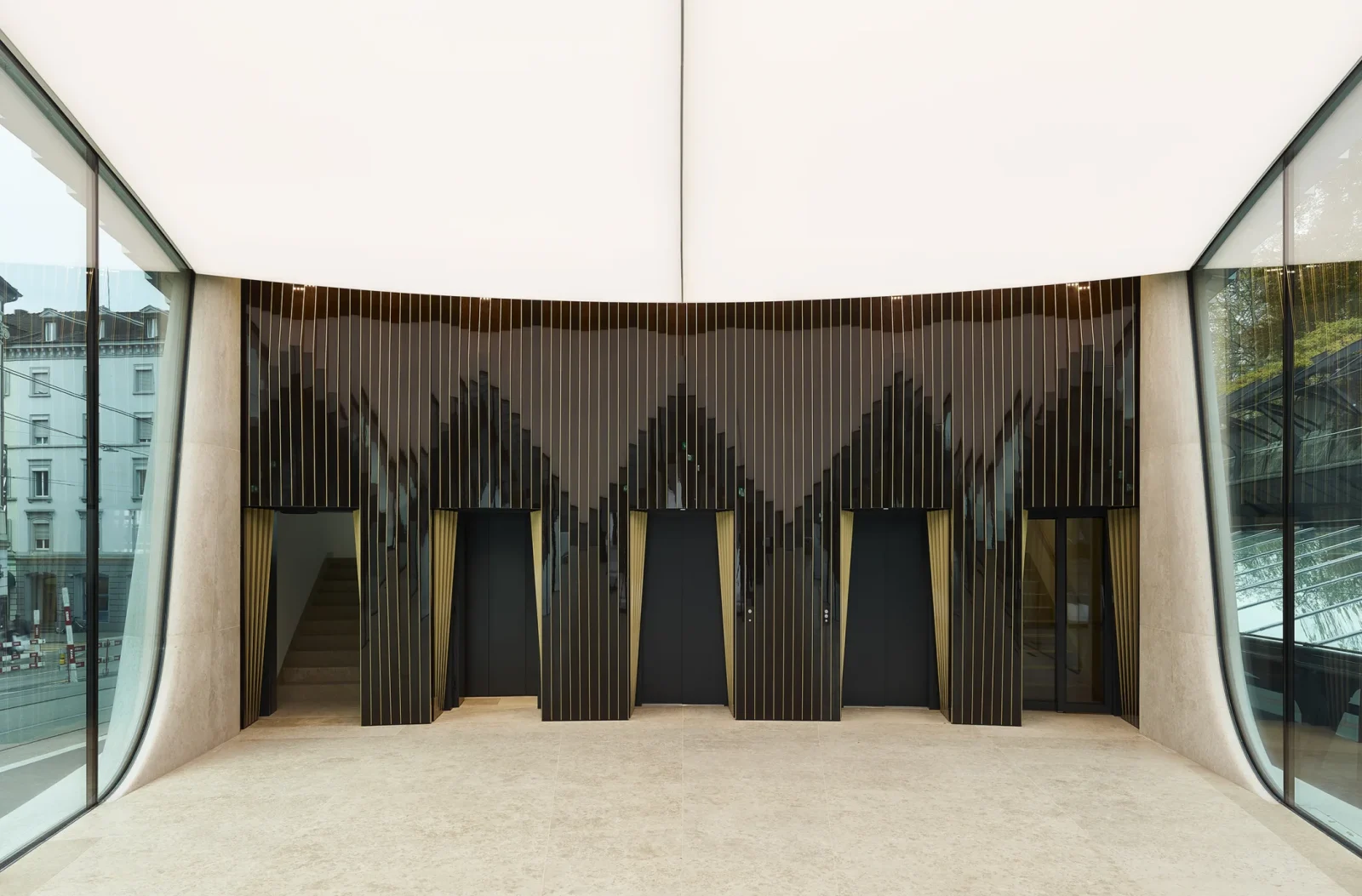
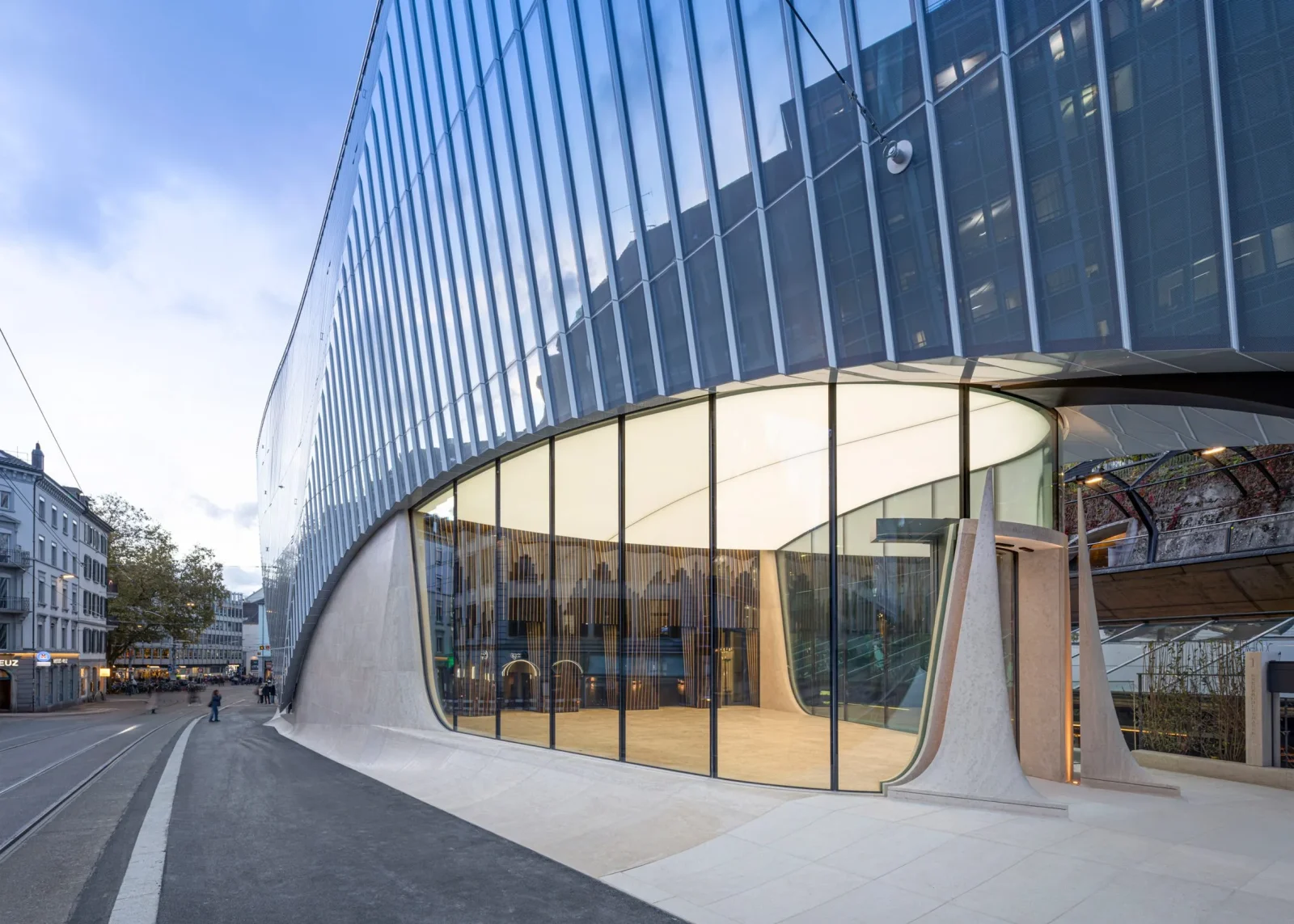
Constructed from steel, stone, and glass, the mass of the eight-story structure reflects the city’s architectural history. Grounded on a solid stone plinth, the structure with the glass facade rises in an arched form. The building’s entrance, covered by the upper floors, features a glazed front framed by soft-edged stone pillars. The use of stone at the pedestrian level provides a tangible sense of durability and context, while the glass and steel above allow for lightness and formal fluidity.
Rhythm, Reflection, and the Art of the Fold
With a deep technical understanding of foldability, the design team developed a framework based on principles of geometric complexity. The glass structure relies on self-bracing qualities that extend beyond the two-dimensional limitation of planar glazing, ensuring rigidity and stability that support the internal requirement for column-free office spaces on the upper four levels.
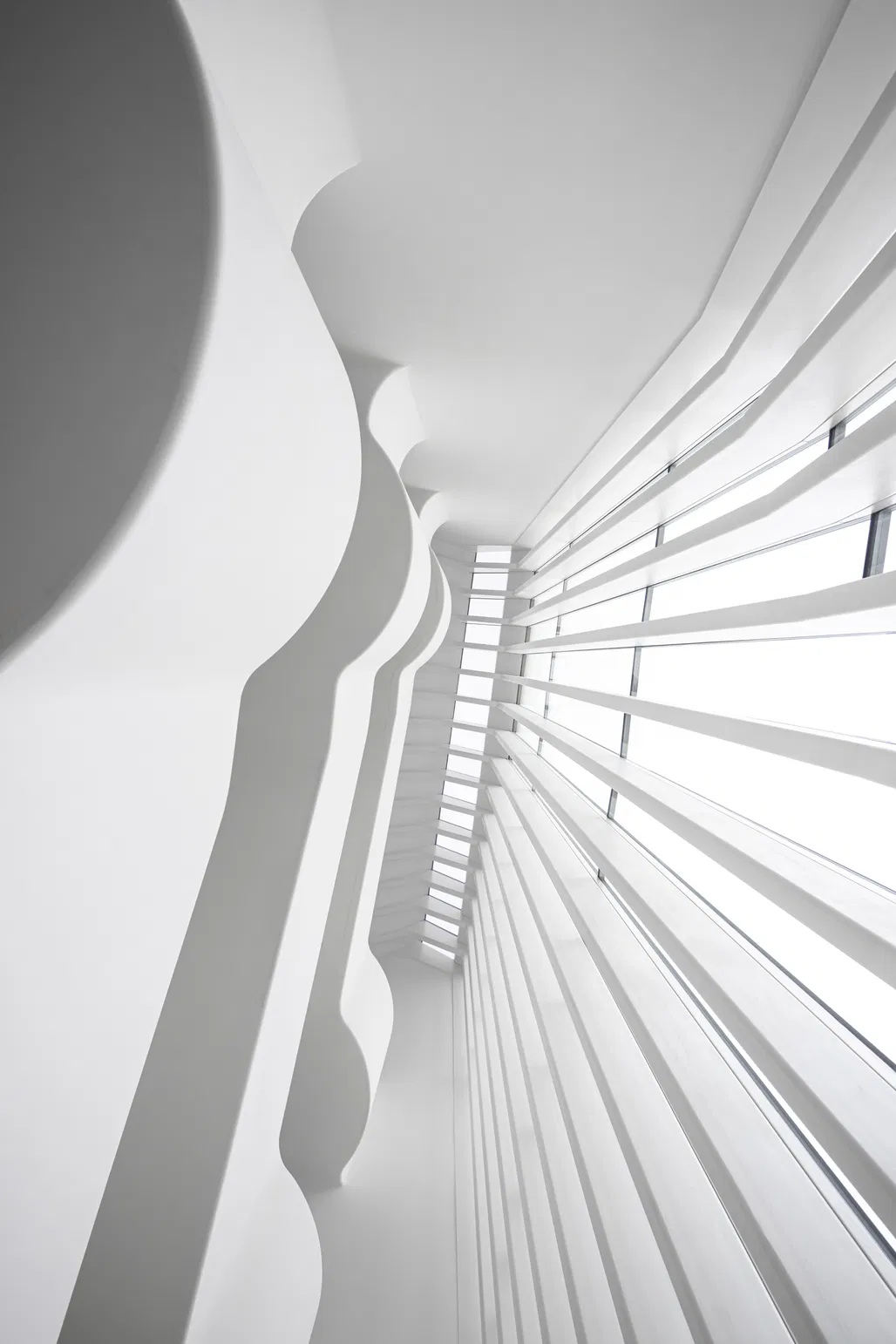
The primary engineering challenge for the building was acoustic isolation due to its location adjacent to one of Switzerland’s busiest railway stations. The resulting solution, characterized by folded geometry and a dense rhythmic structure, acts as an advanced acoustic buffer. By introducing numerous non-parallel surfaces and varied angles of reflection and transmission, the sound waves are scattered and diffused before reaching the inner envelope. The interiors are column-free office spaces, emphasizing open floor plans, flexibility, and adaptability.
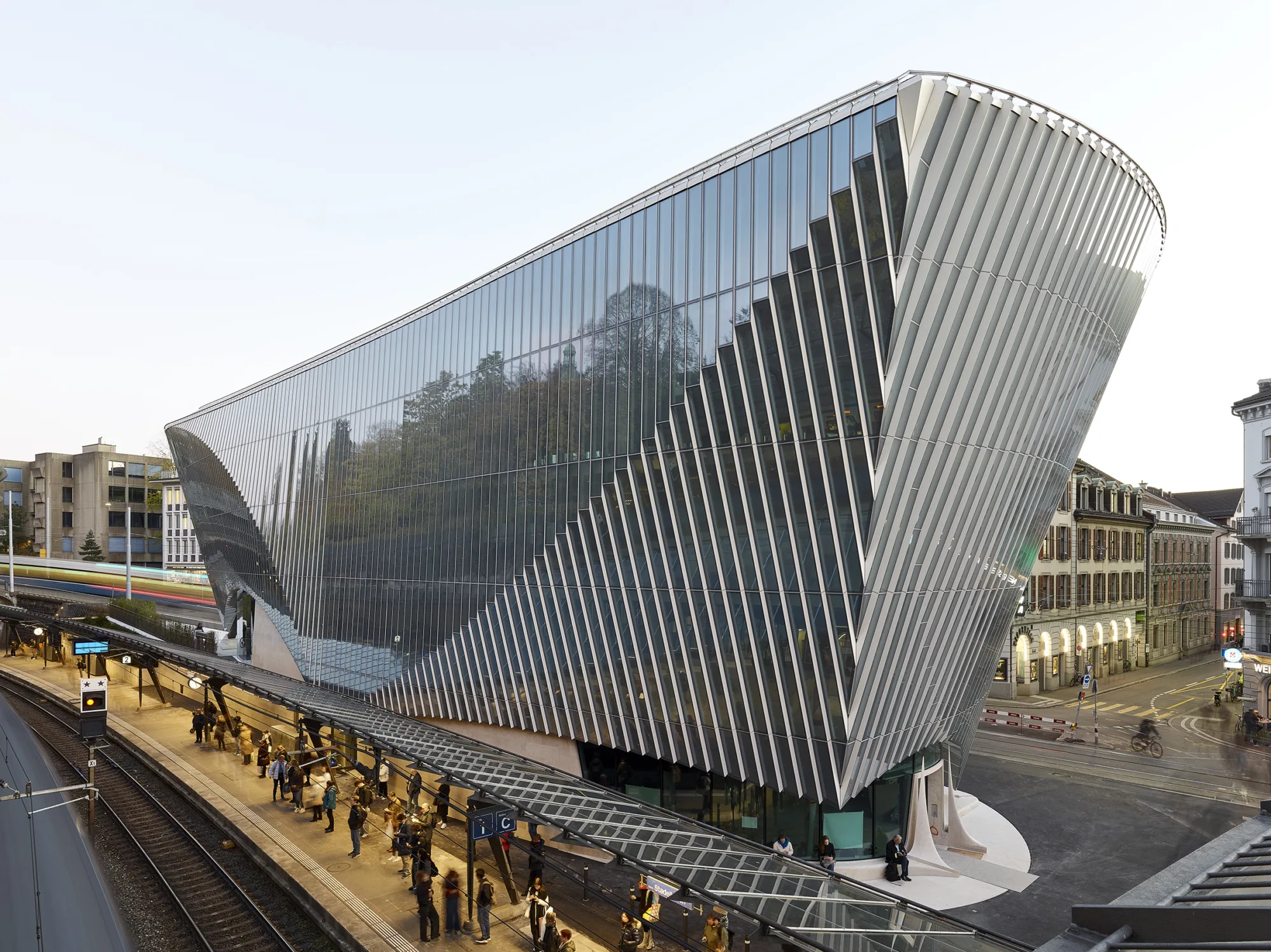
The design strategically enhanced pedestrian movement and urban connectivity around the station. A recessed ground-floor plane forms Falkensteg Square, an open public space integrated with an existing stair bridge connecting the station to the neighborhood above. On the eastern edge, along Kreuzbühlstrasse, the building introduces a green-lined forecourt that carefully frames views of the iconic Grossmünster towers.
Photo Credits: © Ingo Rasp
Explore Courses
.jpg%202.jpg "Building Performance with Forma & Opossum")
.jpg "Ondrej Chybik - Rethinking Architecture")