

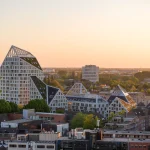
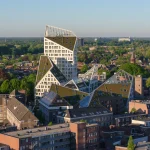
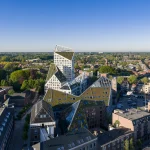
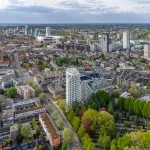
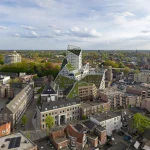
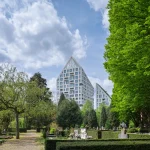
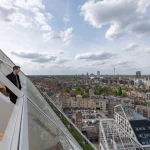
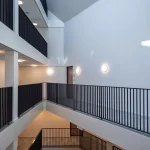
In Eindhoven’s historic De Bergen neighborhood, architecture studio MVRDV has completed Nieuw Bergen, a mixed-use residential development that explores how urban density can coexist with sunlight, greenery, and a strong sense of place. Comprising seven buildings, the project introduces 237 homes, commercial spaces, and communal areas while transforming a former cluster of municipal buildings and parking lots into an active urban destination.
Designed by MVRDV and developed by SDK Vastgoed, Nieuw Bergen combines five newly constructed buildings with two carefully transformed historic structures. The project offers a diverse mix of housing types, ranging from single-person apartments and family homes to social housing units and luxury penthouses, creating a varied residential community within Eindhoven’s city centre.
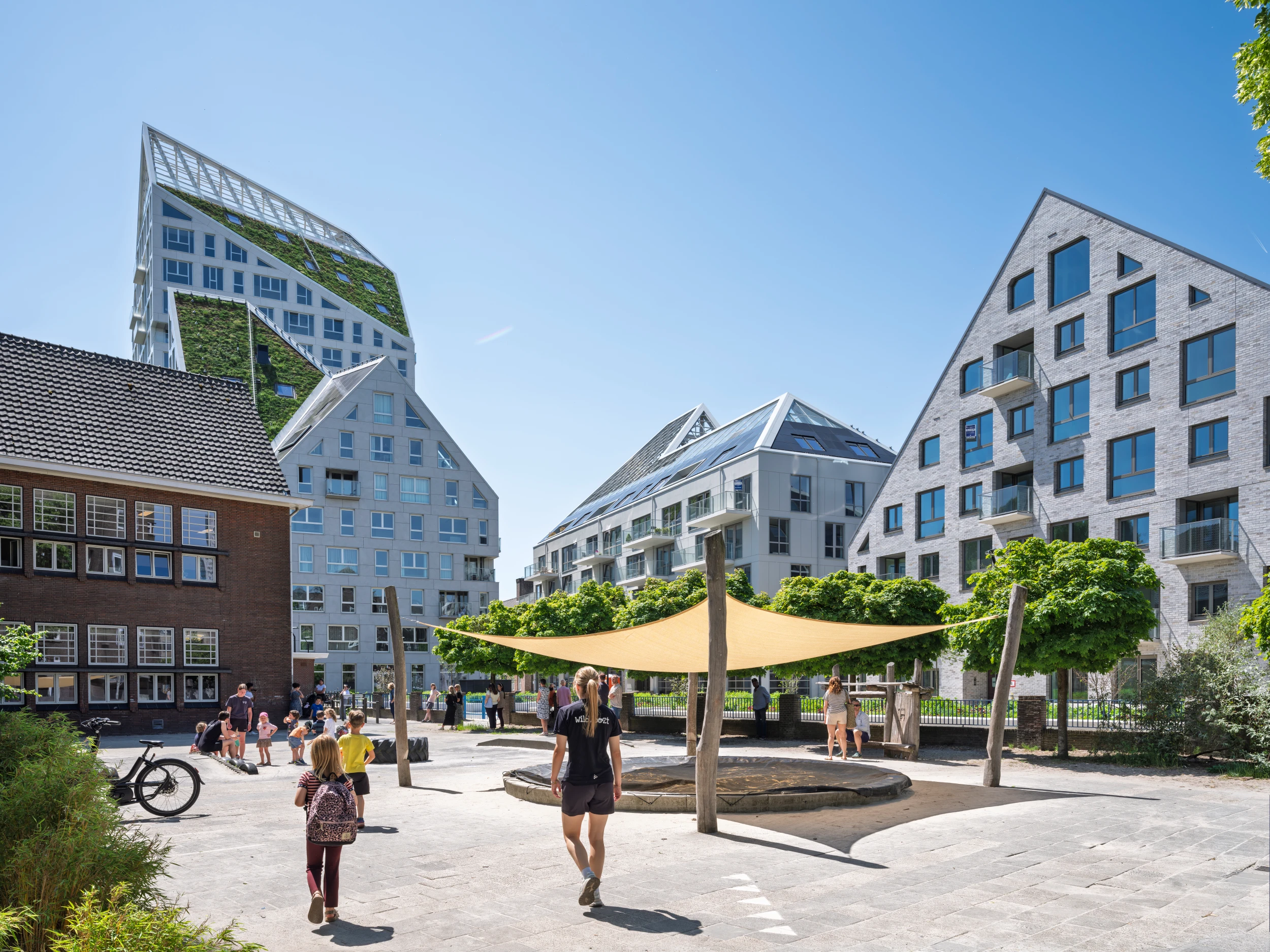
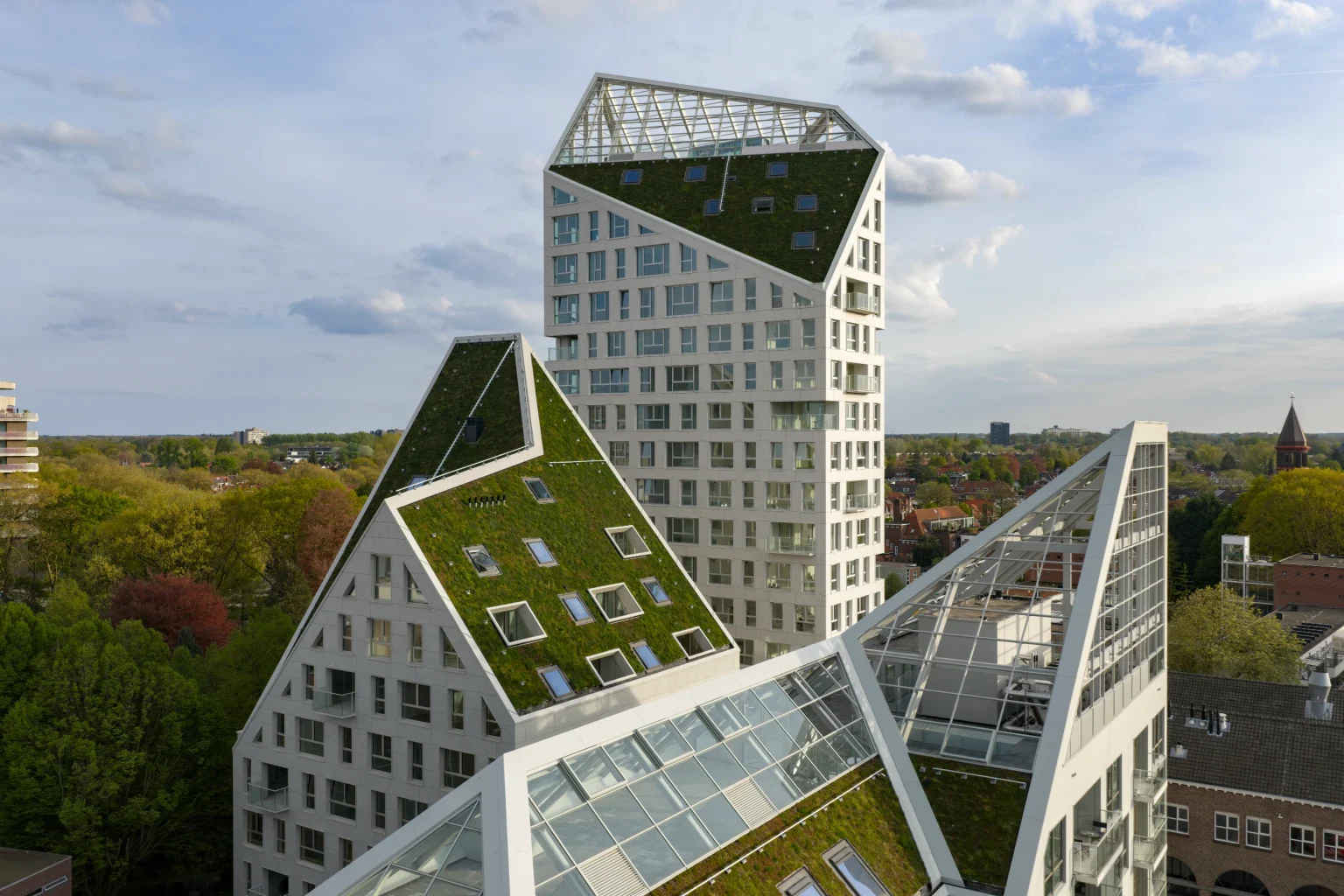
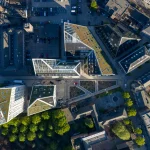
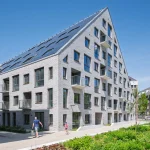
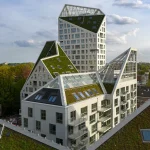
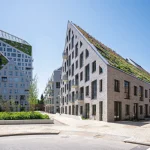
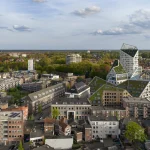
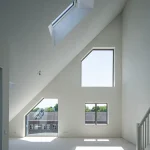
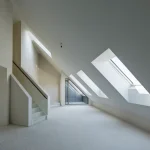
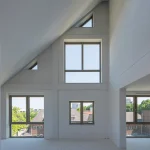
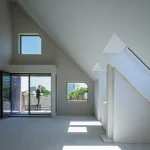
The defining feature of Nieuw Bergen is its distinctive jagged roofscape, which gives the development a mountainous silhouette while responding to practical environmental considerations. The sloping forms were designed to maximize daylight access, ensuring that homes and public spaces receive ample sunlight despite the project’s high density. This approach creates an open and airy atmosphere while adding a new architectural identity to the neighborhood.
A Contemporary Addition to Eindhoven’s Historic De Bergen
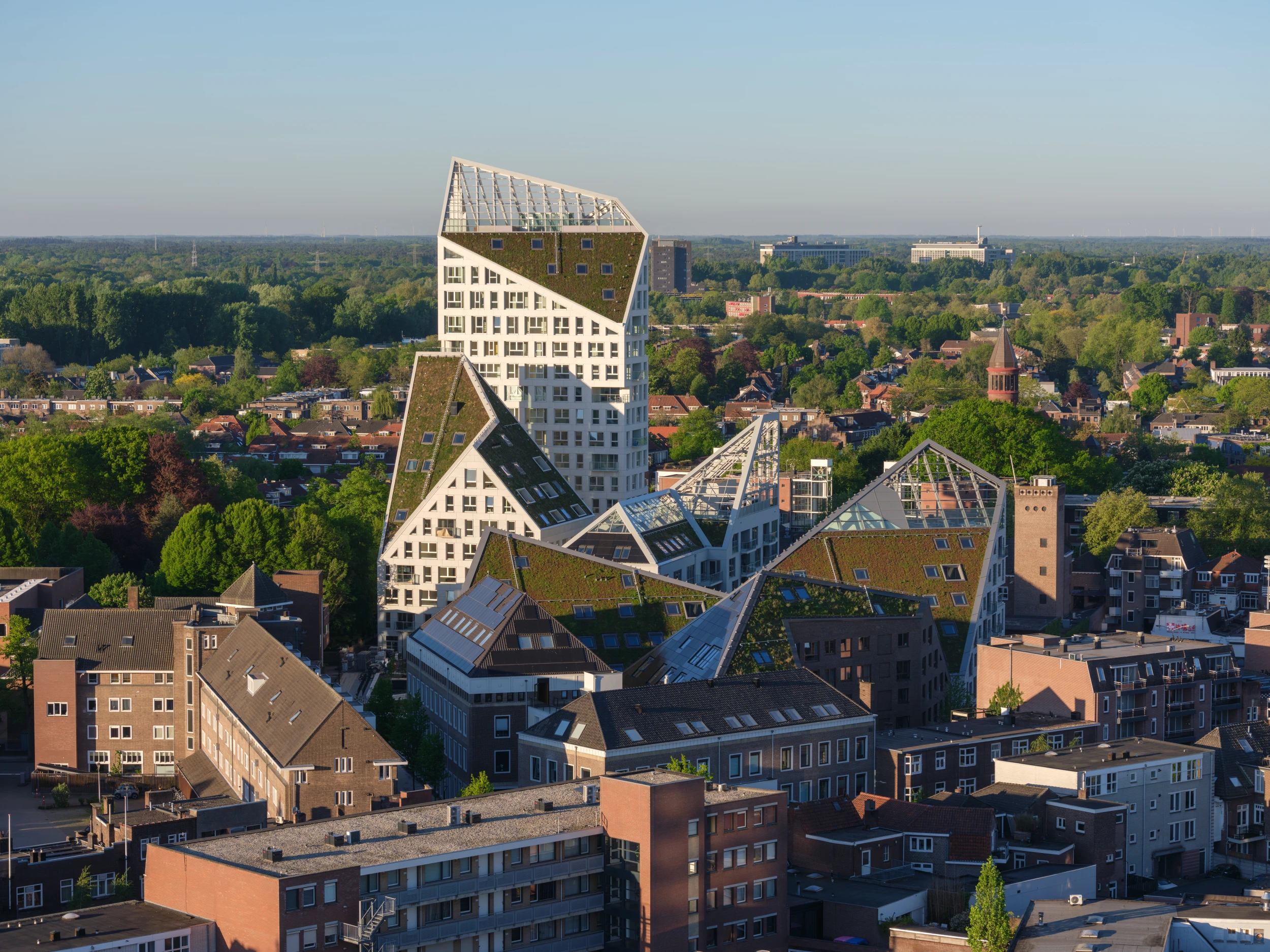
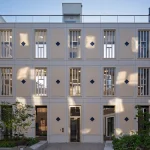
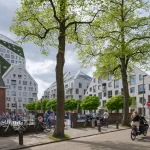
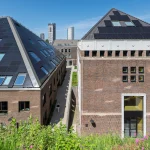
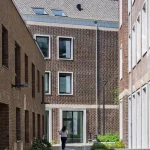
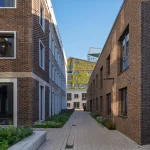
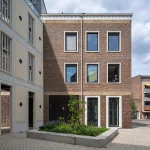
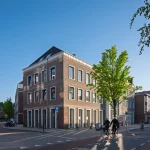
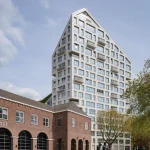
The seven buildings of Nieuw Bergen — Indigo, Violet, Bleu, Rouge, Orange, Jaune, and Vert — are arranged as a gradual transition between the existing low-rise character of De Bergen and the new residential development. Located close to Grote Berg Street, Vert and Jaune preserve the memory of the site by transforming two 20th-century buildings that previously served as the neighborhood’s police station.
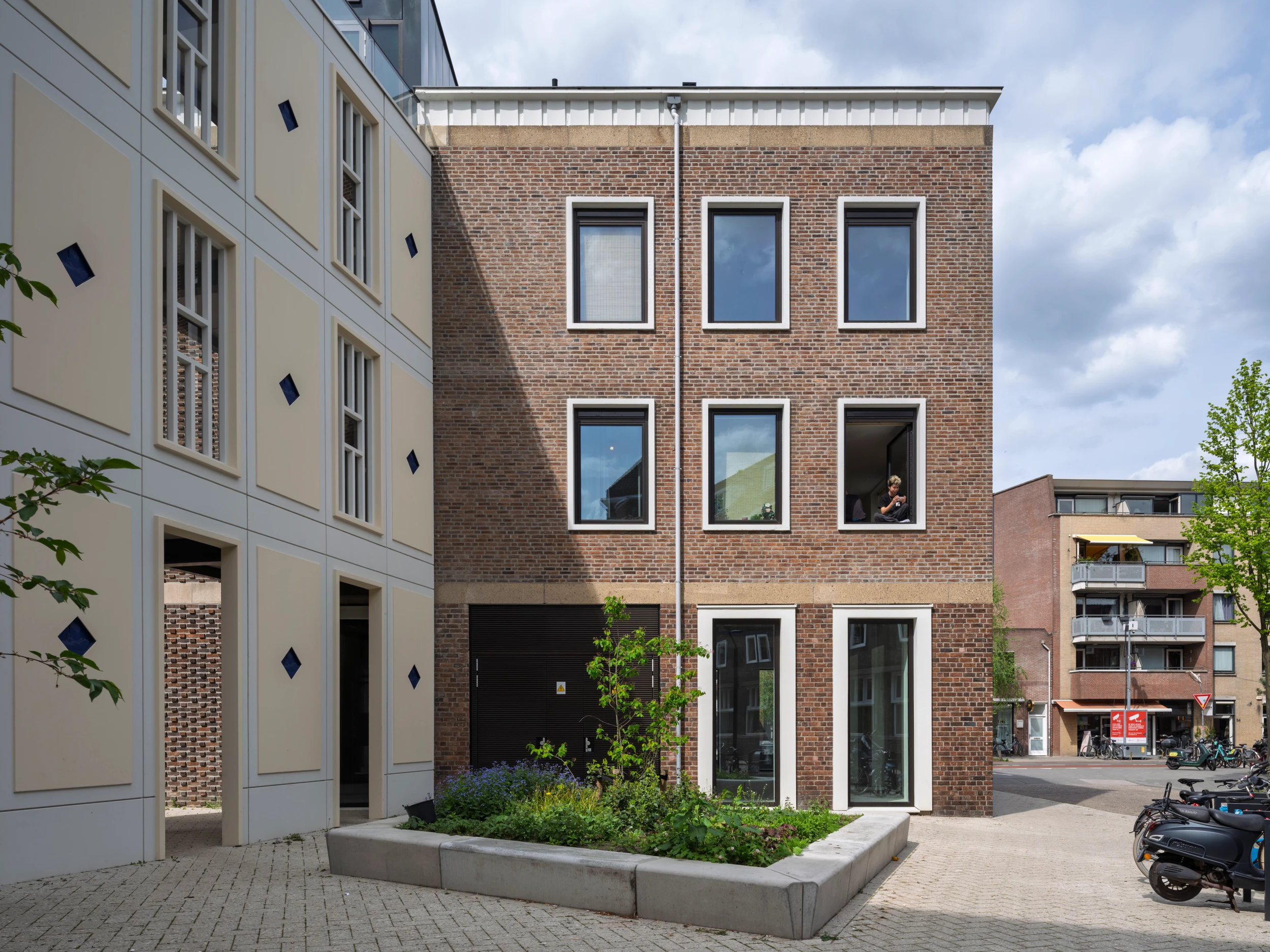
The two historic structures are connected through a recreated façade that recalls the building once positioned between them, forming a colonnade-like element that maintains the architectural memory of the original ensemble. Behind these restored buildings, the five new structures rise progressively in scale, creating a carefully balanced relationship between old and new.
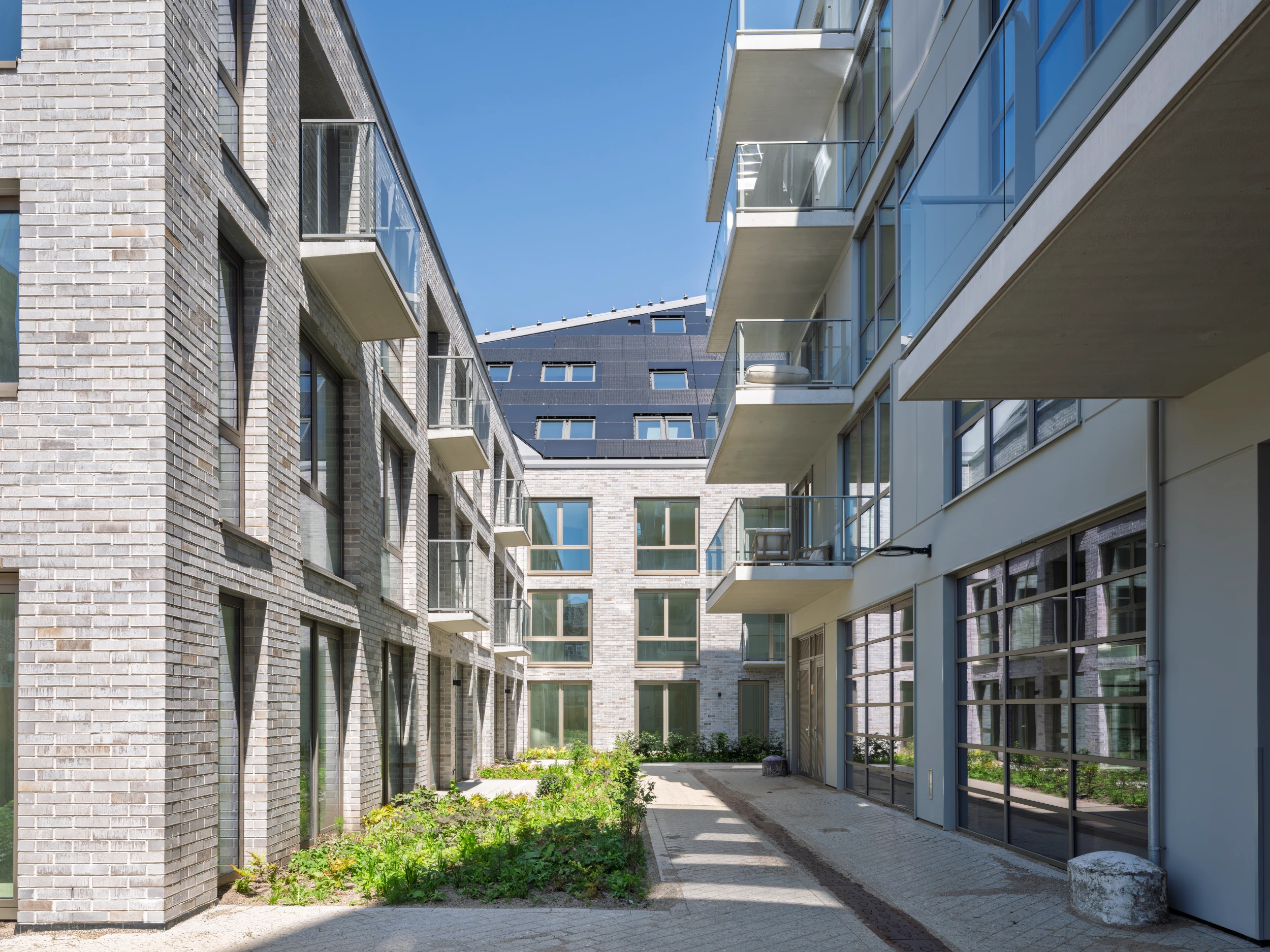
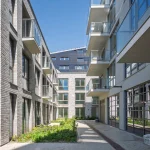
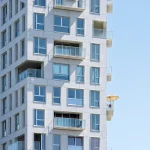
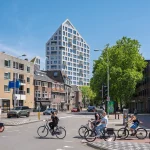
Orange, the smallest of the new buildings at six stories, accommodates 48 social housing apartments, while Indigo rises to 17 stories as the tallest element of the development. This shift in height is complemented by a gradual change in façade tones—beginning with the dark red brick of the historic buildings and moving through brown, beige, and light gray shades before reaching the white stone façade of the tower.
Designing Density Through Daylight and Roof Geometry
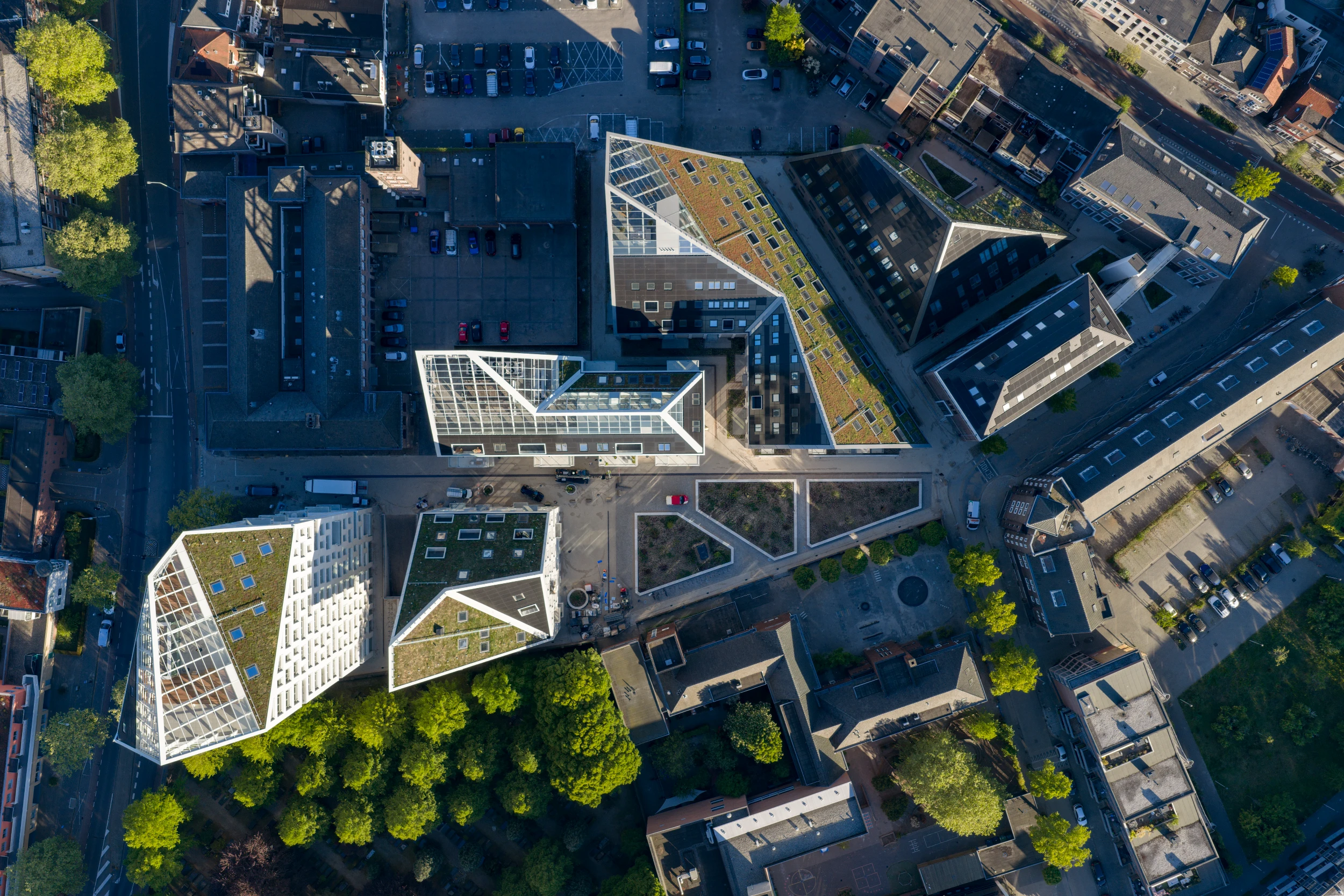
The striking roof forms of Nieuw Bergen are a response to daylight requirements. MVRDV developed the roof geometry using a systematic approach where surfaces follow a 45-degree angle from neighboring buildings, allowing sunlight to penetrate deeper into apartments and shared spaces.
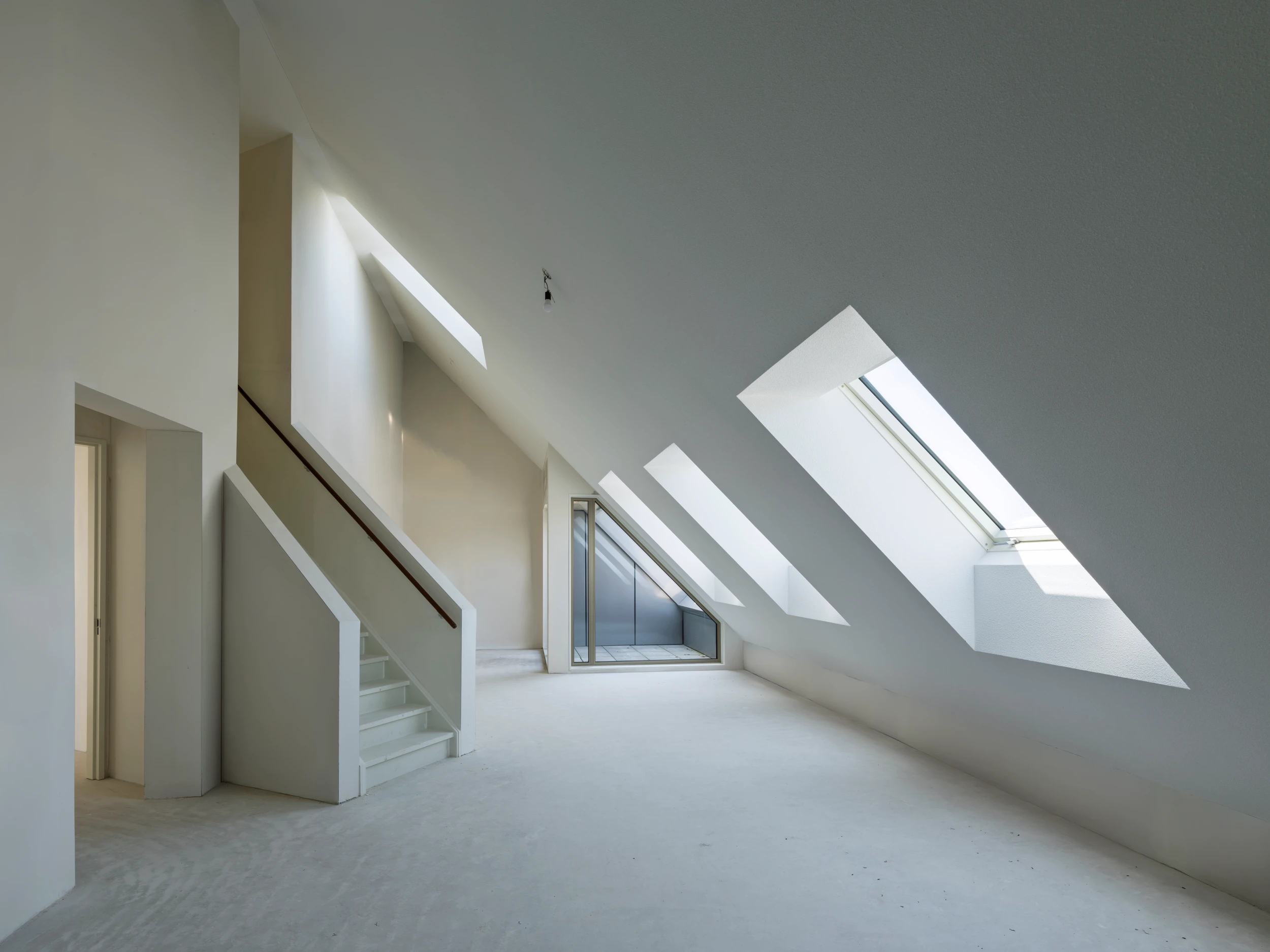
These angled roofs also create opportunities for sustainable features, including photovoltaic panels and green roofs. By combining renewable energy generation with planted surfaces, the project reduces environmental impact while improving biodiversity, rainwater management, and the overall quality of the residential environment.
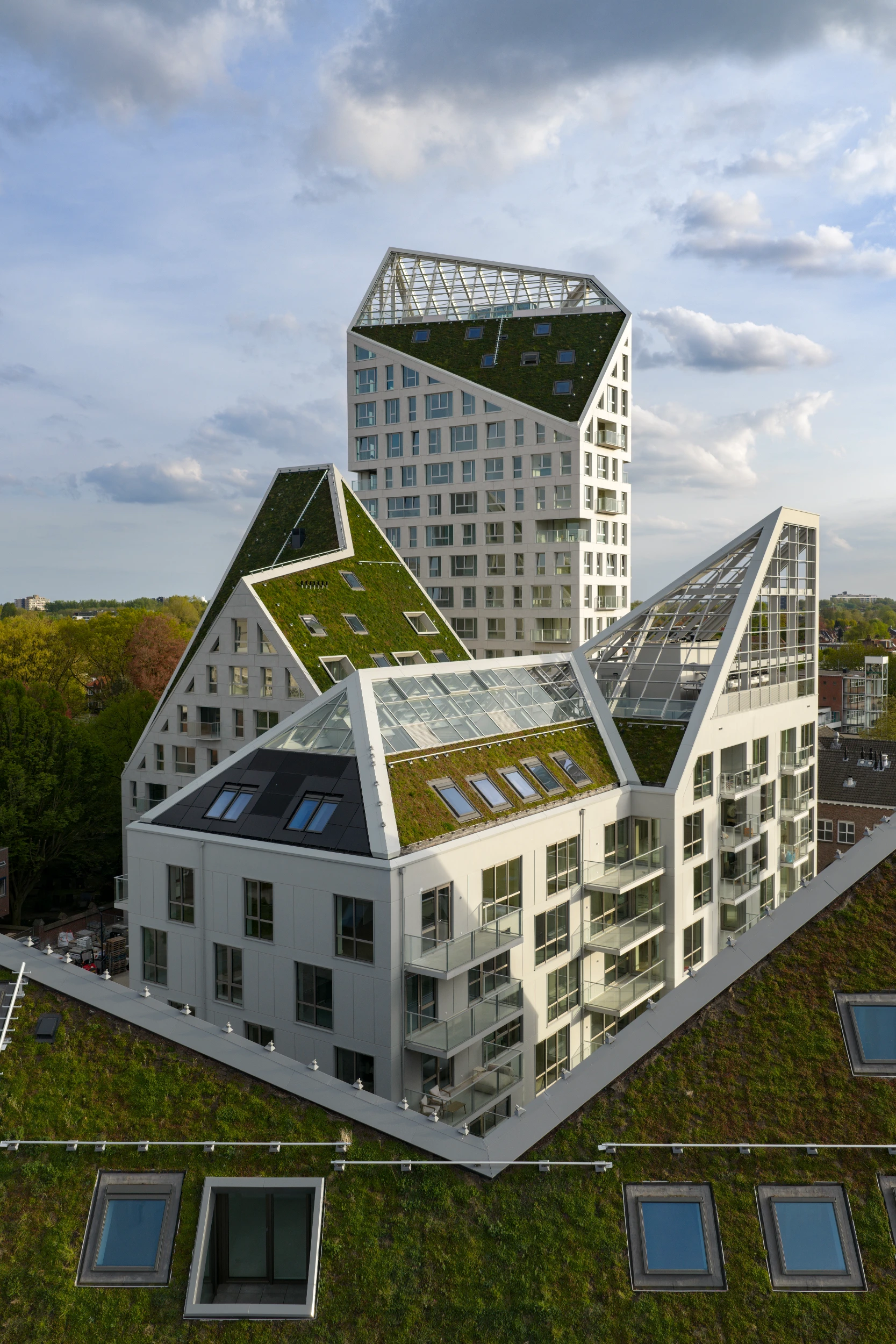
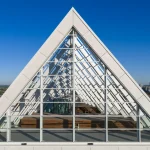
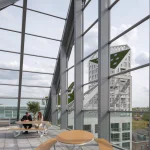
Three of the buildings feature open rooftop terraces at their peaks, with glass parapets acting as wind barriers. These elevated communal spaces encourage interaction between residents, with Bleu incorporating a glass-enclosed greenhouse for shared gardening activities. The rooftop gardens and gathering areas support social connections while extending the neighborhood’s green infrastructure.
Creating an Active Urban Neighborhood
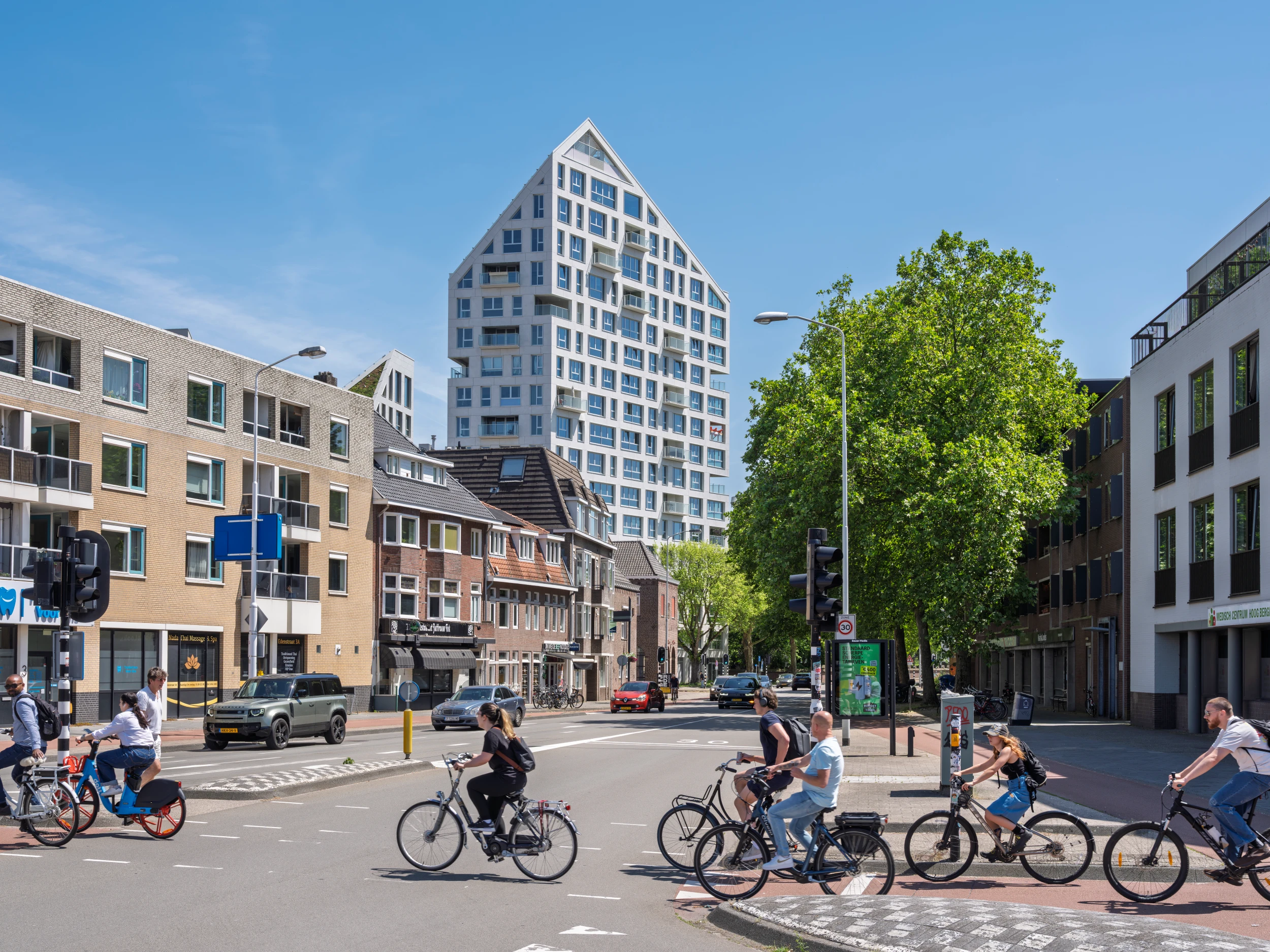
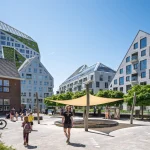
Beyond housing, Nieuw Bergen introduces commercial spaces at ground level in Indigo, Violet, Bleu, Vert, and Jaune. These spaces activate the surrounding streets and benefit from the project’s largely car-free public areas, where residents and visitors can gather, dine, and spend time outdoors.
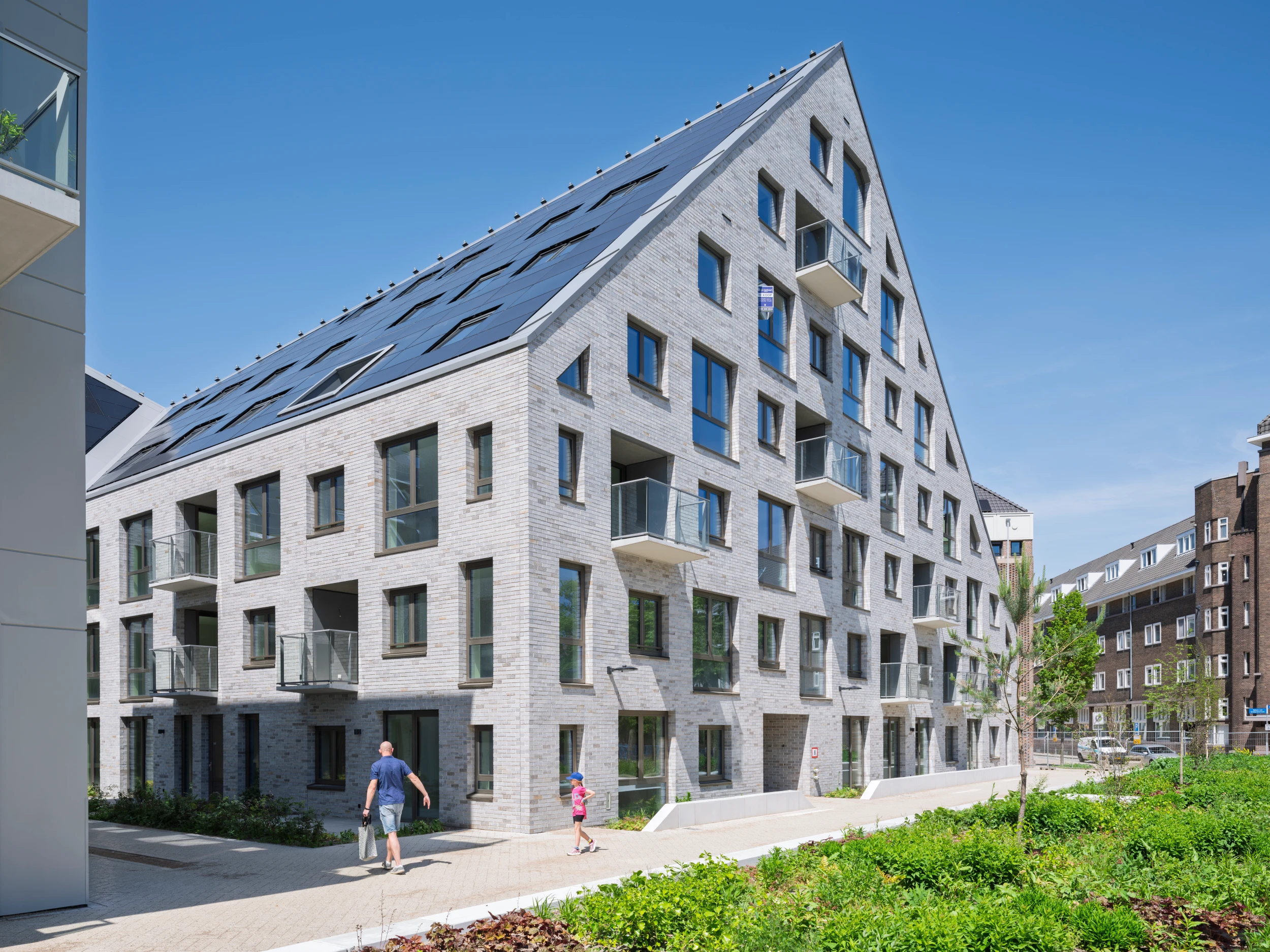
According to MVRDV founding partner Jacob van Rijs, the project aimed to create architecture that felt connected to the existing identity of De Bergen rather than standing apart from it. “The neighborhood of De Bergen is one of the oldest and most authentic parts of Eindhoven, known for its small restaurants and boutique shops, making it a charismatic neighborhood close to the city center.”
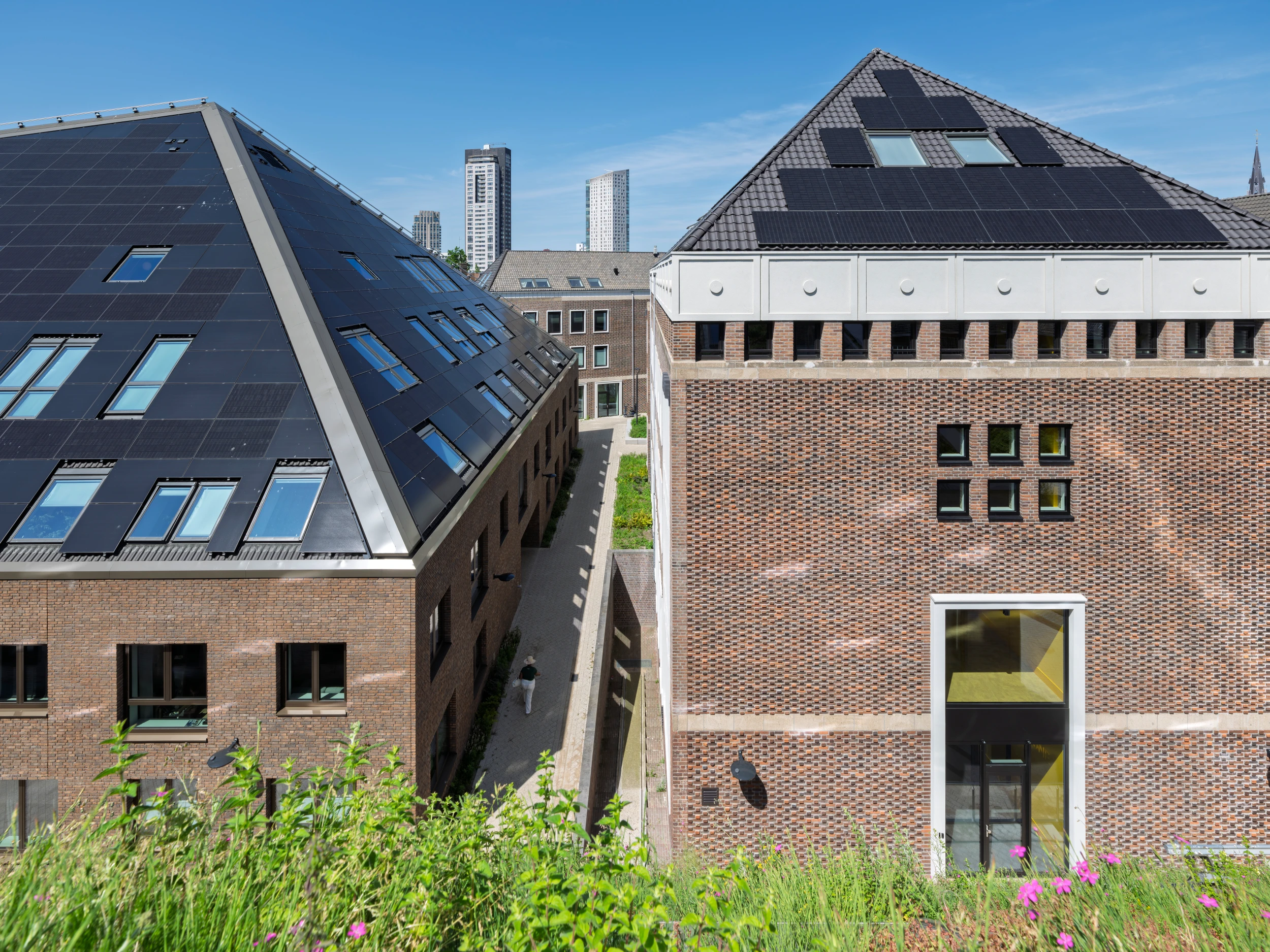
He further explains that the design sought to transform the former municipal site into a lively urban environment: “To turn this site from a cluster of municipal buildings and parking lots into a place to live and stay, with activity throughout the day, we wanted buildings with character, embedded into the neighborhood in a way that feels natural.”
The resulting architecture combines a familiar neighborhood scale with a bold contemporary expression. As van Rijs describes, the project creates “a chain of polite, yet simultaneously radical buildings with an exciting contour resembling a mountainous landscape—adding ‘bergen’ in De Bergen!”
Sustainability and Future-Oriented Urban Living
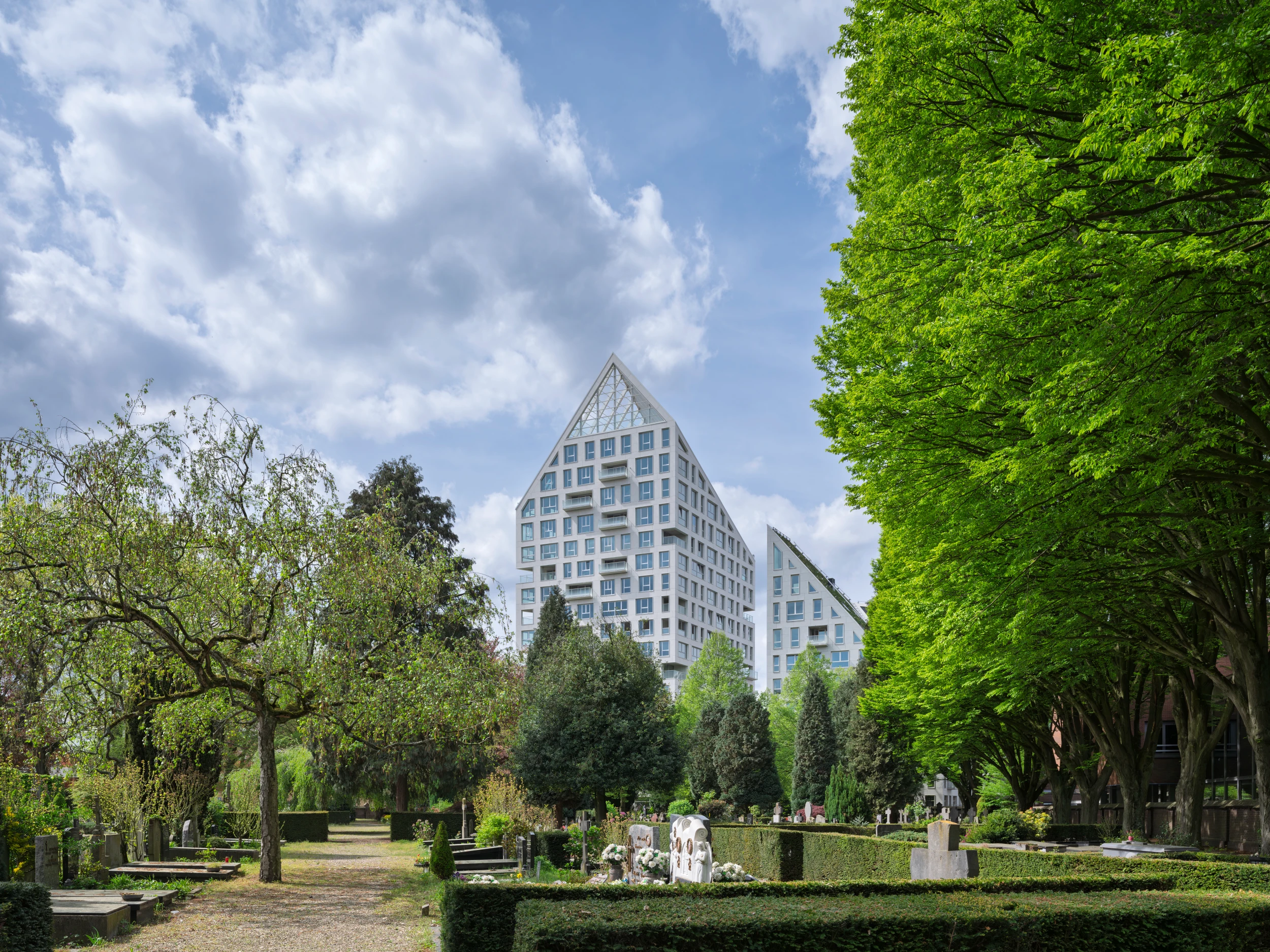
Sustainability is integrated throughout Nieuw Bergen, from the adaptive reuse of existing structures to energy-efficient building systems, solar panels, and extensive rooftop planting. Retaining parts of the existing buildings reduces embodied carbon, while green roofs contribute to biodiversity, reduce heat impact, and support rainwater retention.
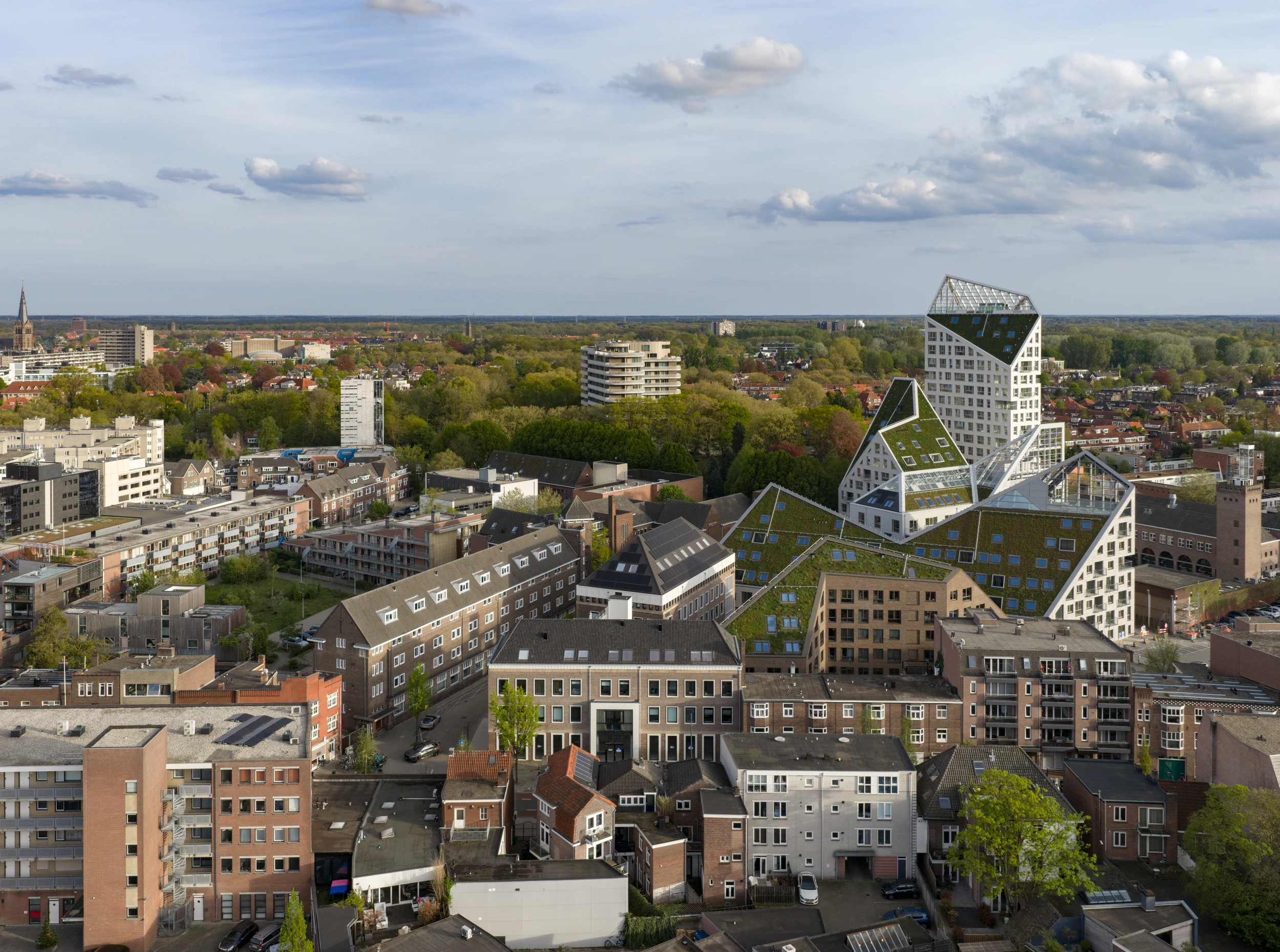
Through its combination of housing diversity, heritage-sensitive transformation, and climate-responsive design, Nieuw Bergen demonstrates how compact urban development can create a stronger connection between architecture, nature, and community. The project presents a model for future city center housing—one where density does not come at the expense of openness, identity, or environmental responsibility.
Nieuw Bergen Project Details
Project Name: Nieuw Bergen
Location: Eindhoven, Netherlands
Year: 2016–2026
Architect: MVRDV
Client: SDK Vastgoed bv (VolkerWessels)
Area: 31,246 sqm
Programme: 237 housing units, hospitality and retail spaces
Contractor: Stam + De Koning Bouw
Landscape Architect: MTD Landschapsarchitecten
Structural Engineer: Adviesbureau Tielemans
MEP Consultant: Huisman & van Muijen
Building Physics: DPA Cauberg-Huygen
Technical Design: INBO
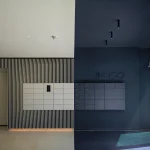
Interior Design (Lobbies) Partner: Fokke Moerel
Copyright: MVRDV (Winy Maas, Jacob van Rijs, Nathalie de Vries)