



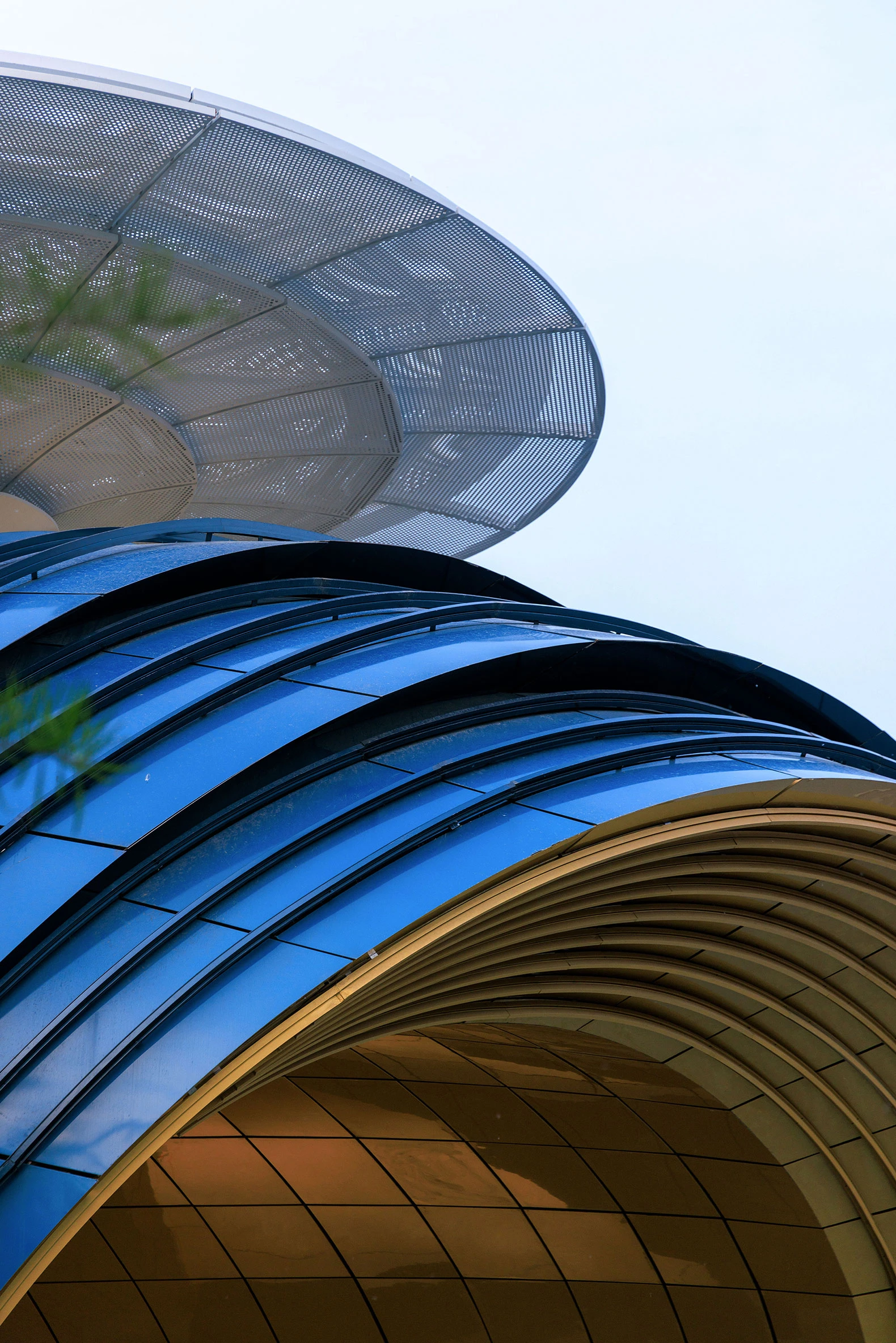
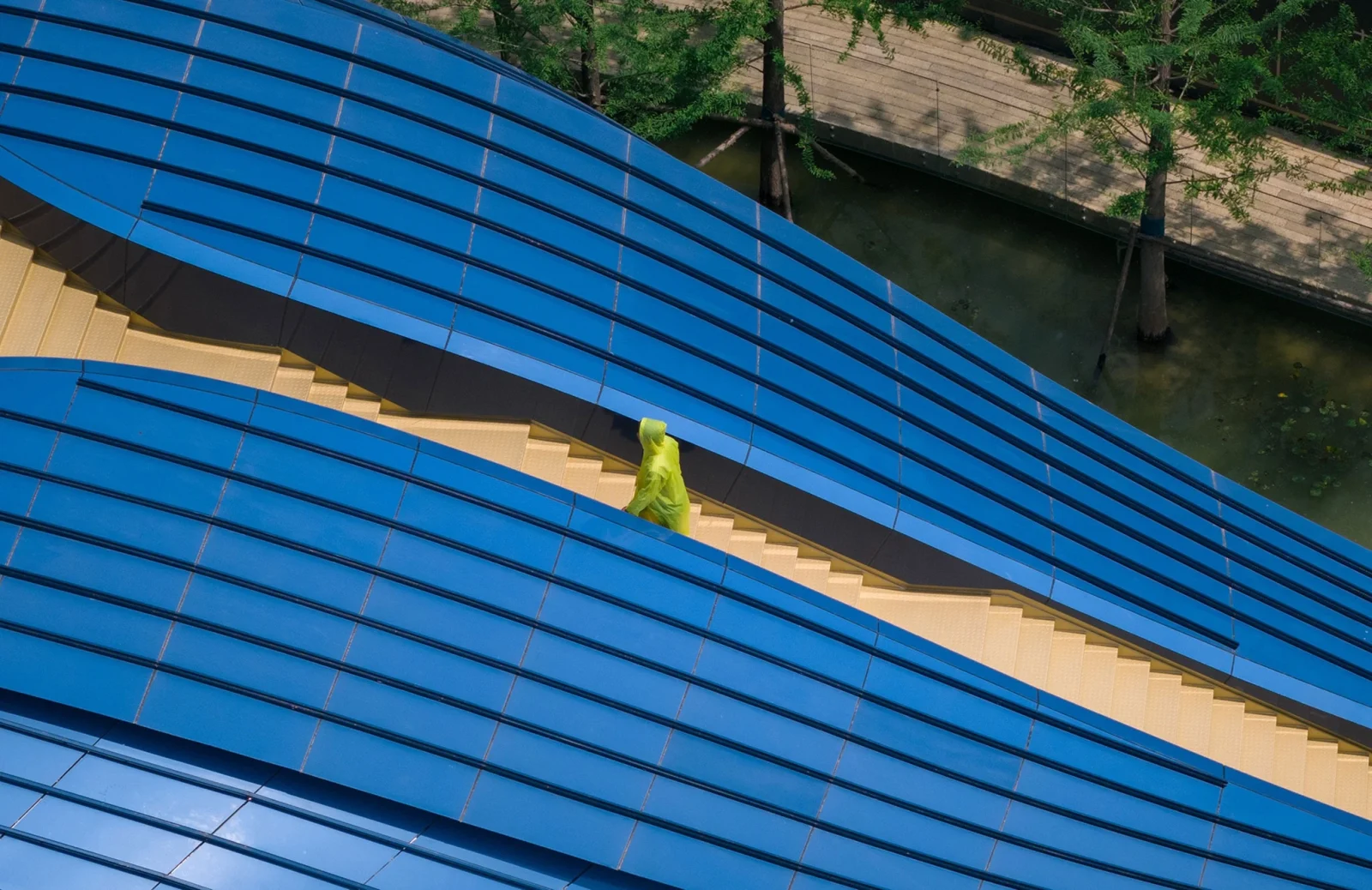
What if a residential gateway could do more than mark an entrance? With Whale Gate, Wutopia Lab turns a common point of passage into a journey through myth and memory. Completed in 2026 for the Jinsha Golden Island development in Shangqiu, Henan, the project changes the simple act of coming home into a symbolic journey through mythology, landscape, and memory. Whale Gate operates as an architectural narrative that blurs the boundary between everyday life and imagination.
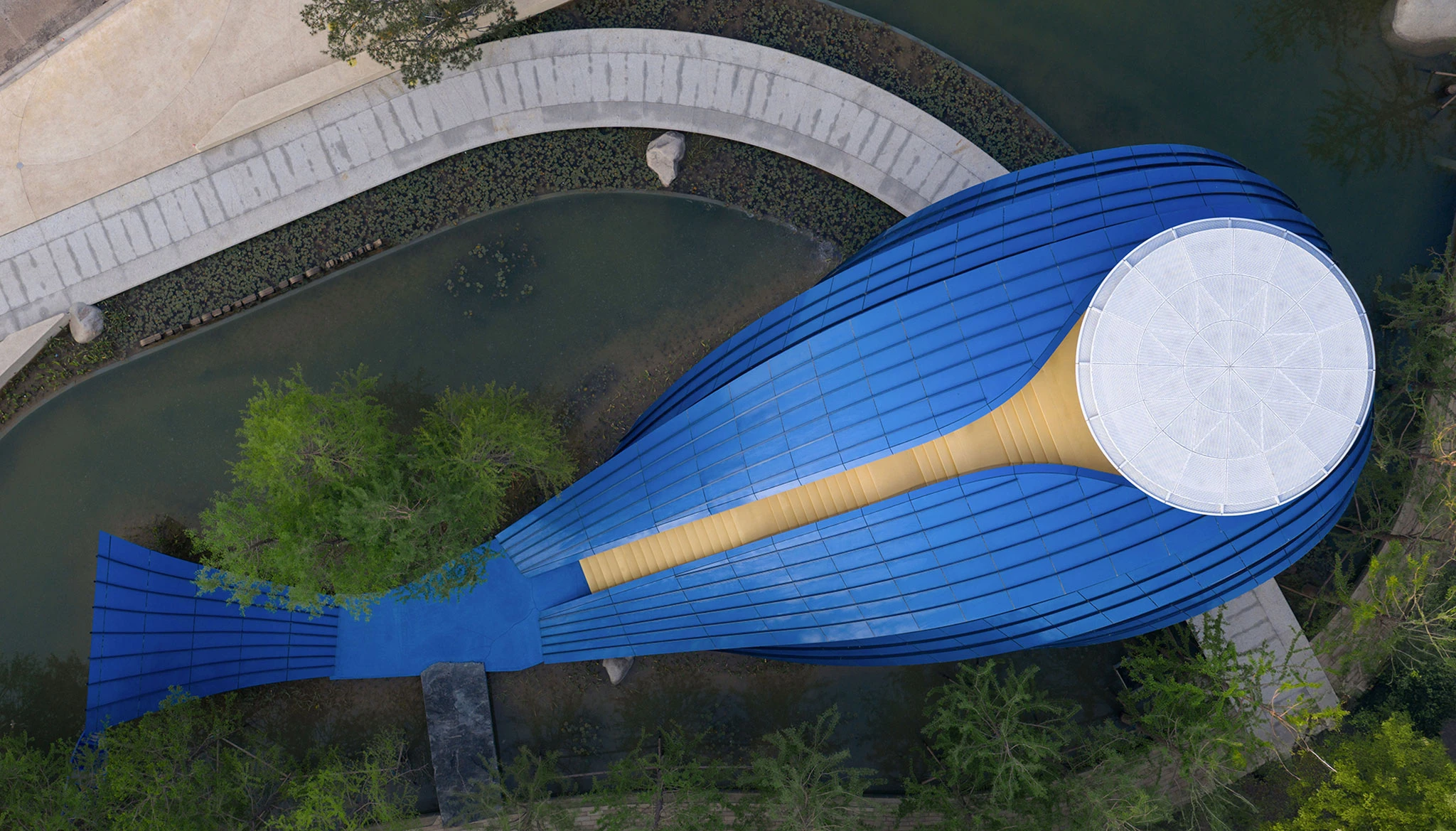
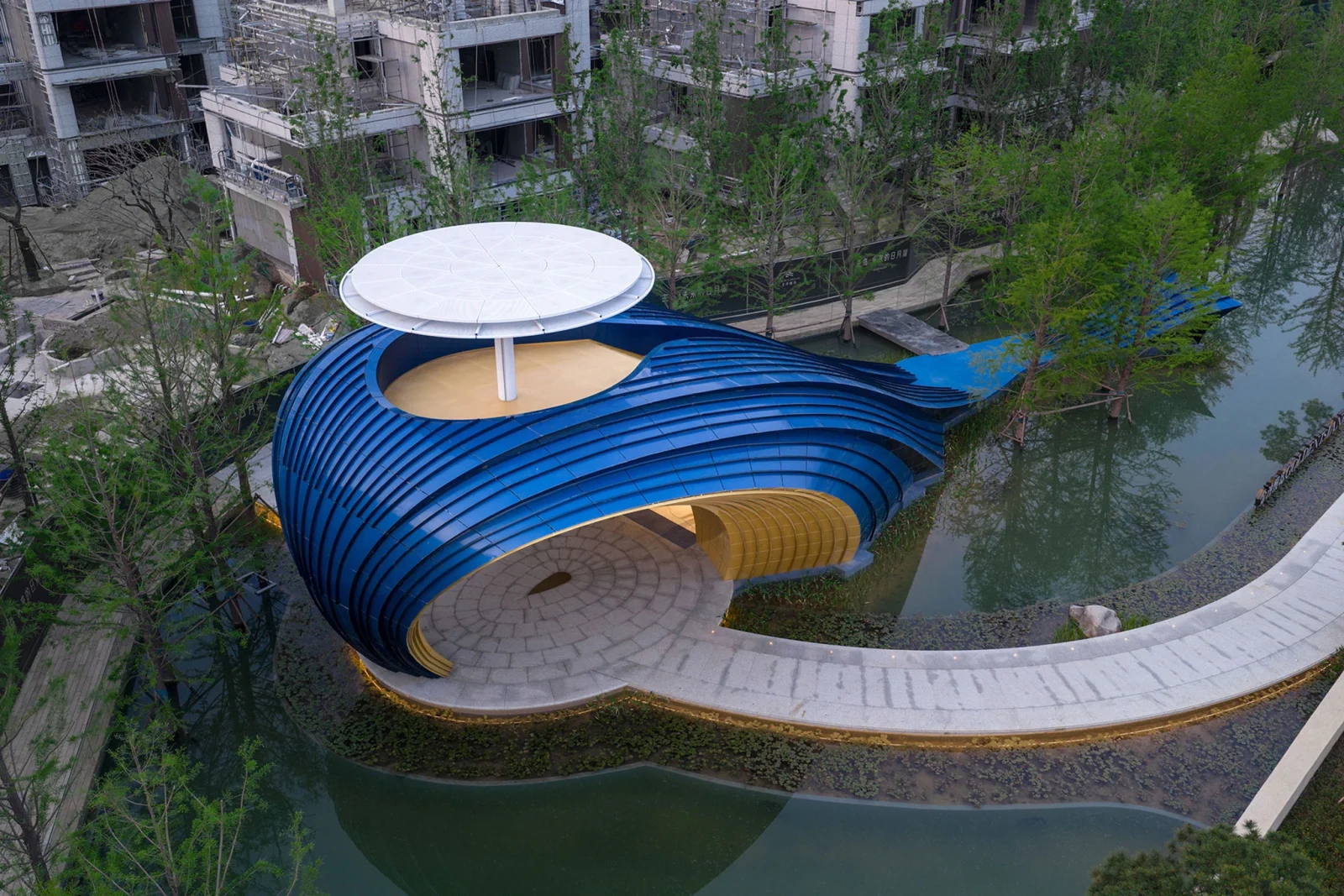
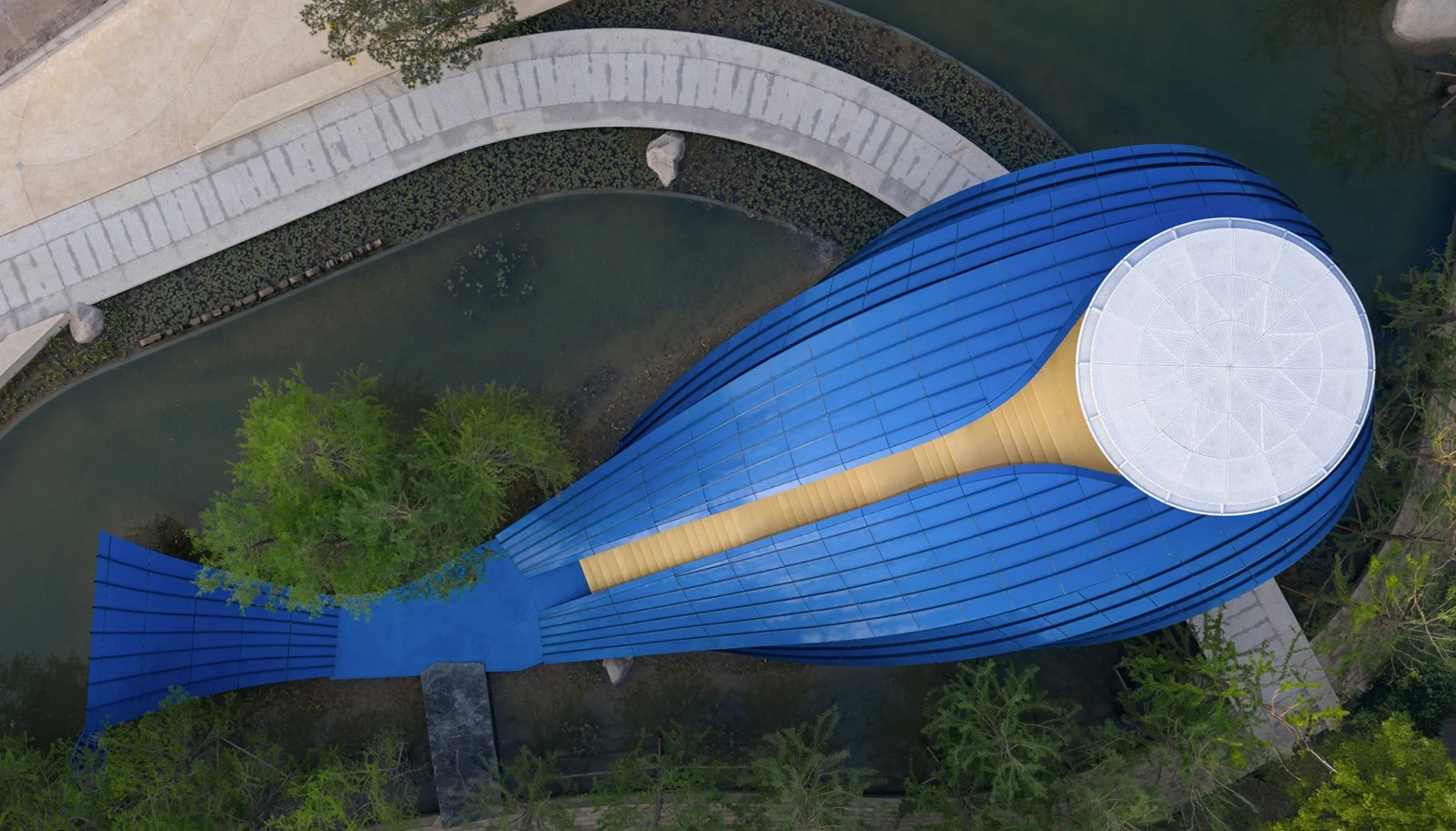
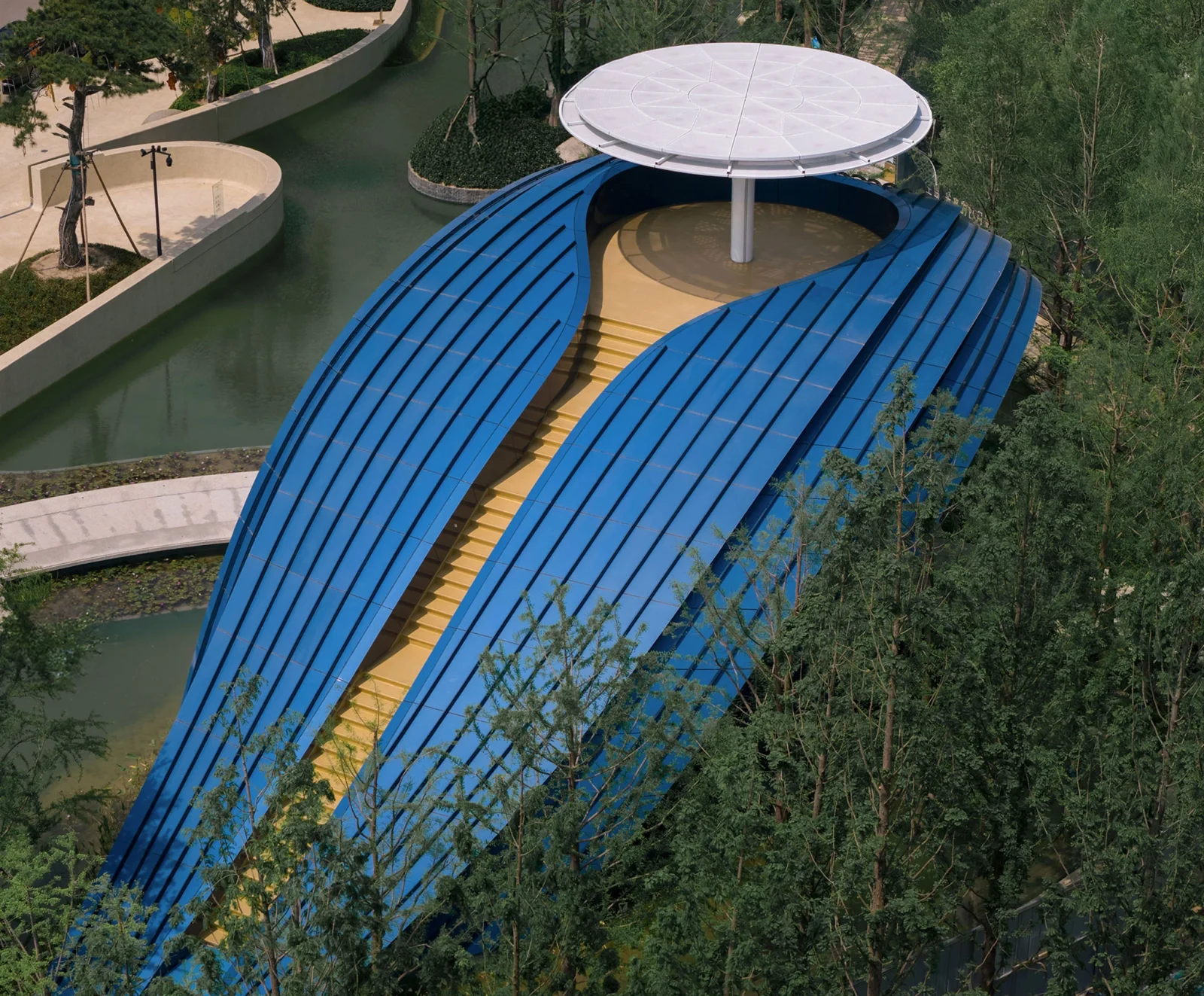
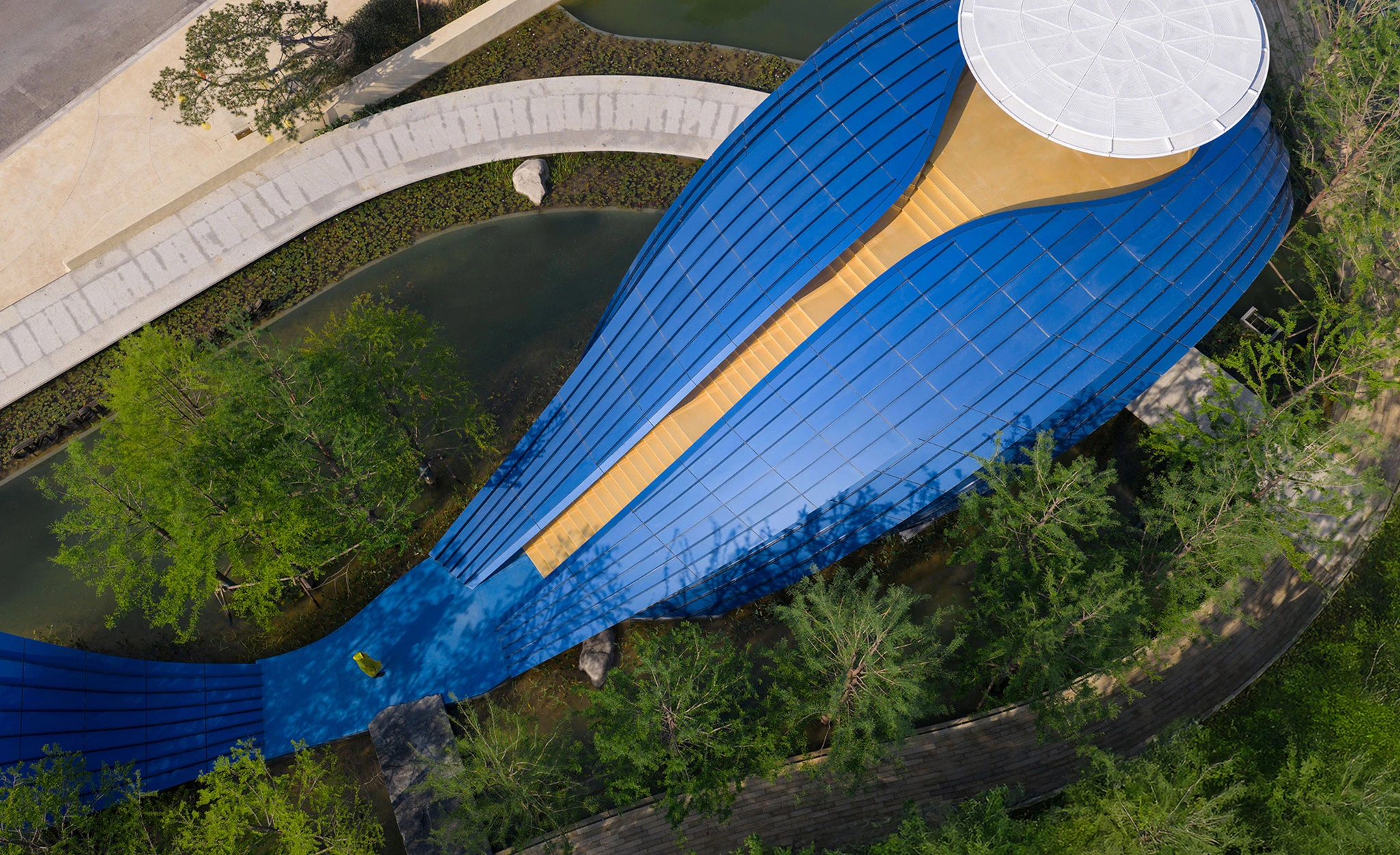
Designed by architect Yu Ting, the 242-square-meter structure emerges from a water-filled landscape as a colossal blue whale frozen in the moment of breaching the ocean’s surface. Visible from a distance yet partially concealed among trees and gardens, the gateway appears less like a building and more like a mythical creature surfacing from another realm.
A Gateway Inspired by Ancient Chinese Imaginations
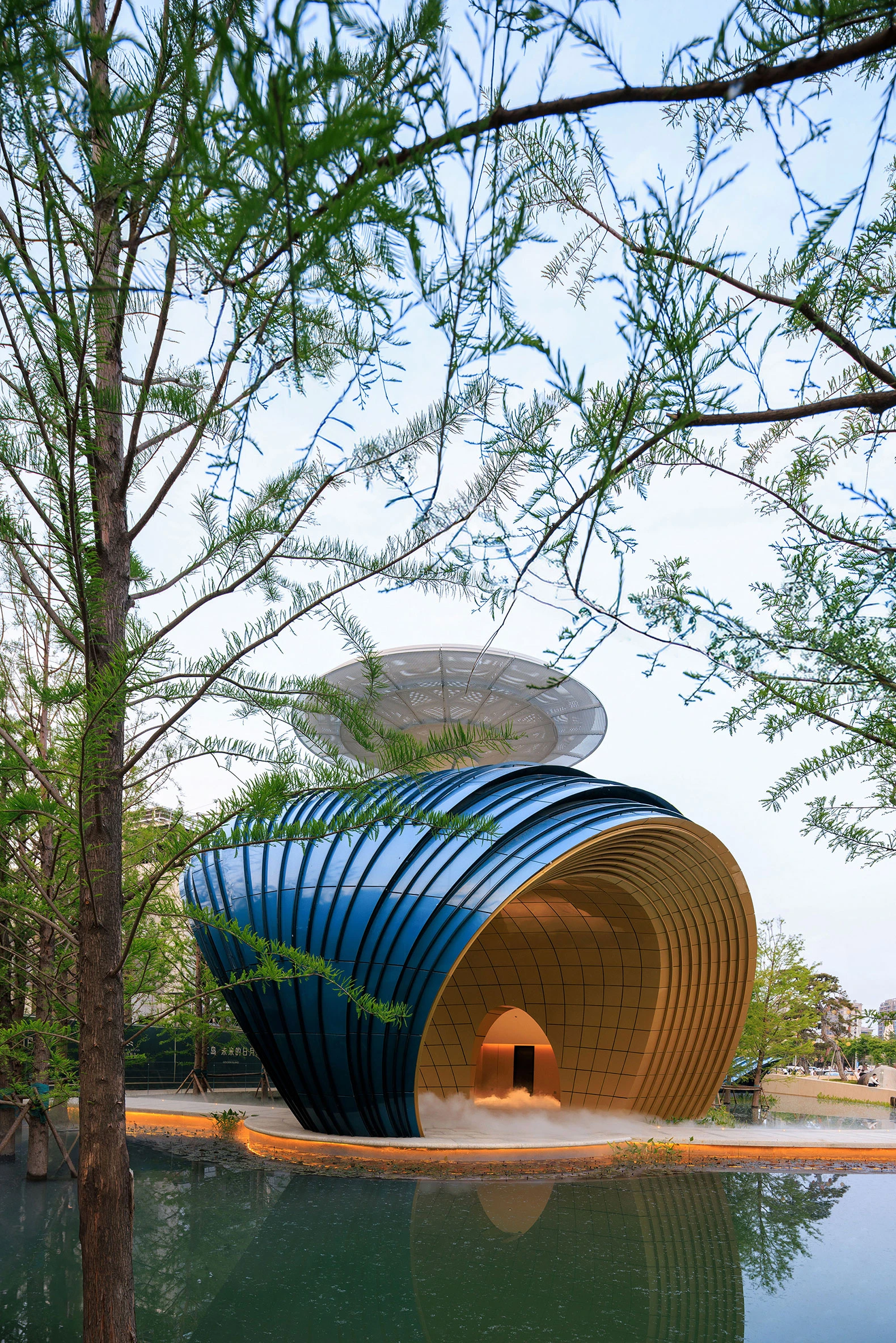
The conceptual foundation of Whale Gate lies in a request from the developer: create an arrival experience that feels like entering a xian jing—a legendary island paradise found in Chinese mythology. The larger Jinsha Golden Island masterplan already embraced an archipelago-like composition, with residential blocks appearing to float within a landscape of water and greenery. Wutopia Lab responded by introducing the mythical creature traditionally associated with journeys between worlds—the whale.
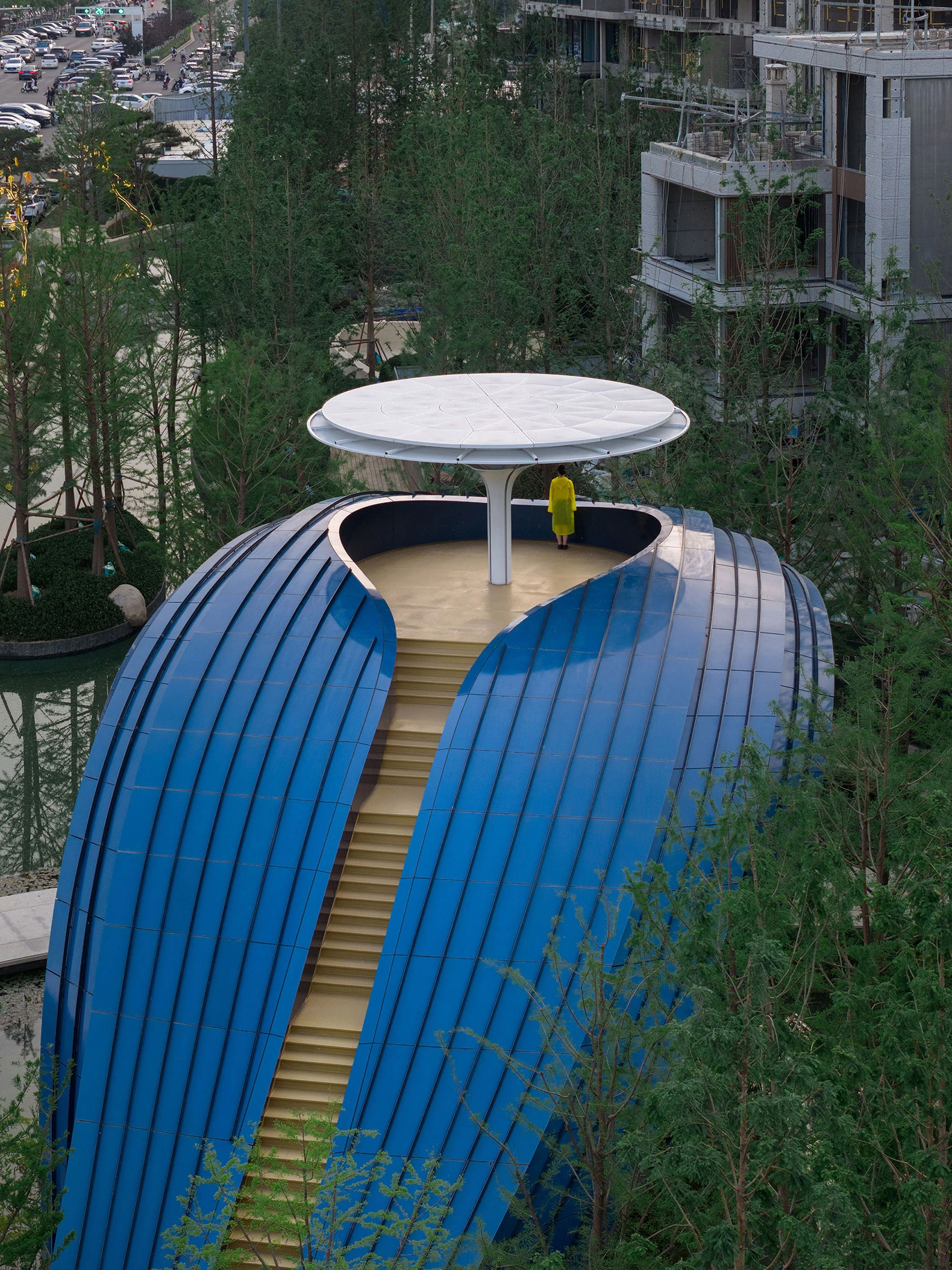
Wutopia Lab embedded it into the architectural experience itself. Residents do not simply pass through an entrance gate; they symbolically move through the eye of a whale before entering their residential sanctuary. The gateway becomes a threshold between urban reality and an imagined world of retreat and belonging.
Wutopia Lab Chose a Whale to Welcome Residents Home
One of the most striking aspects of Whale Gate’s contemporary architecture is that it often abstracts natural forms until their original references become nearly invisible. Whale Gate takes the opposite approach.
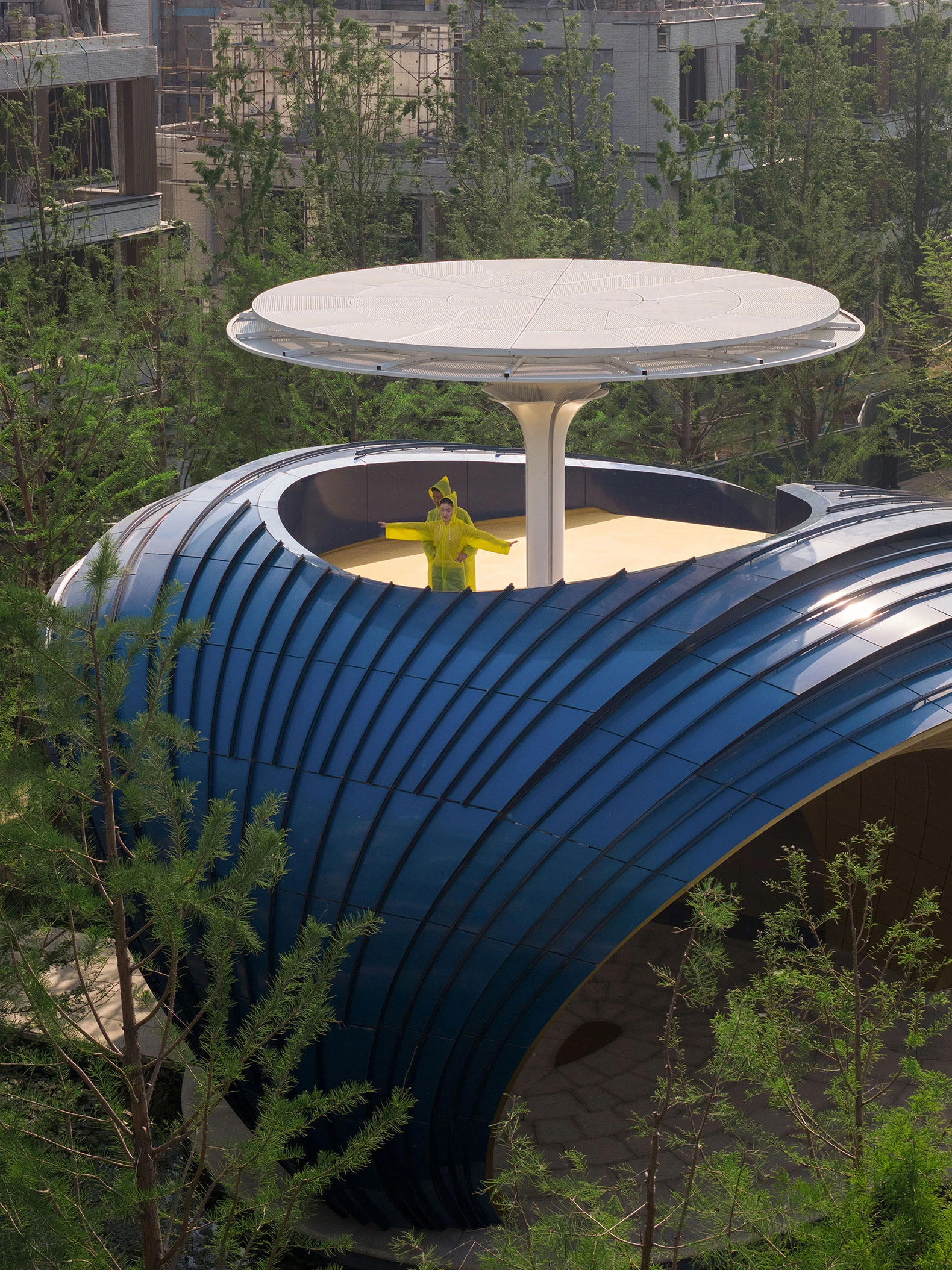
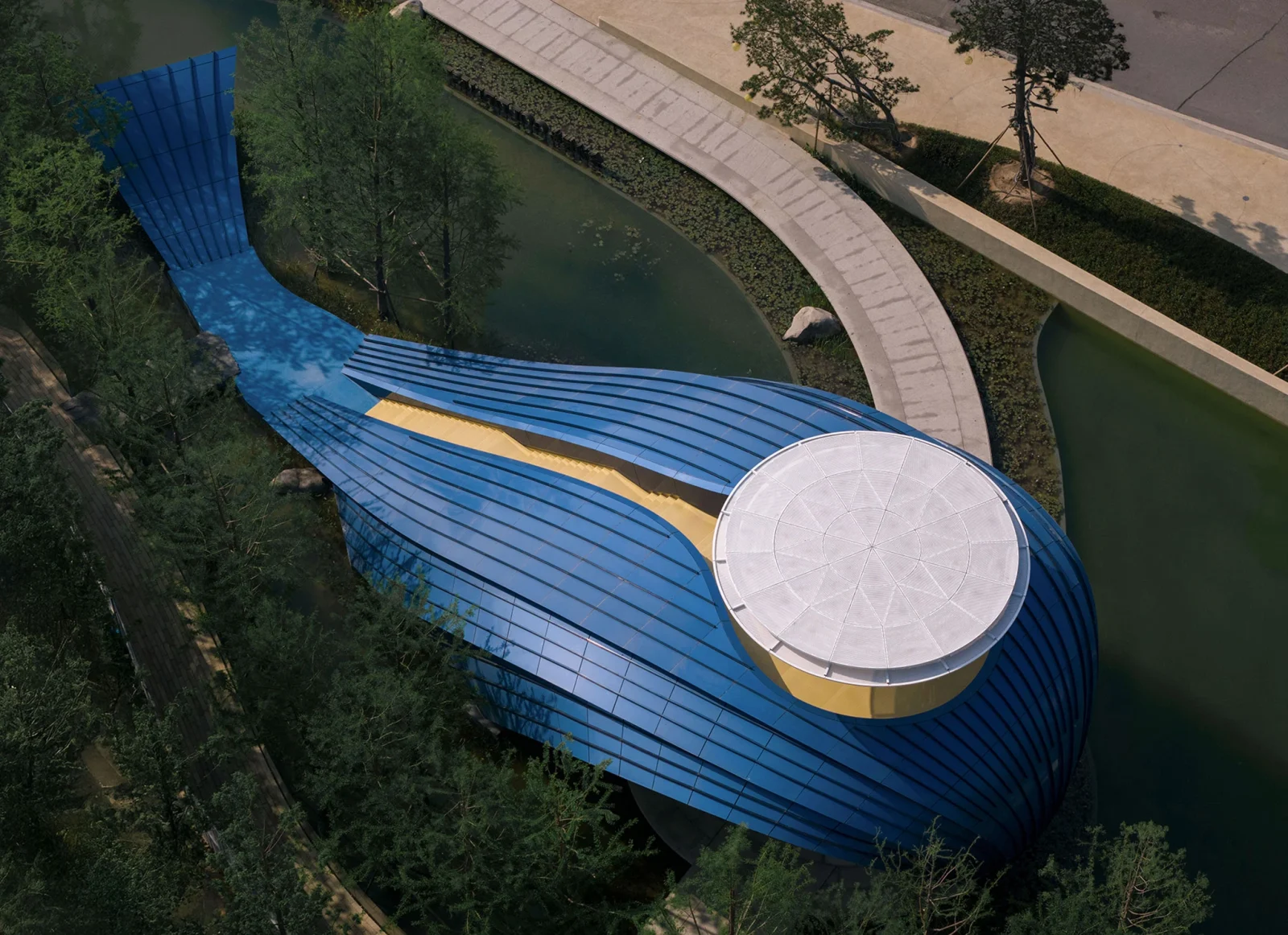
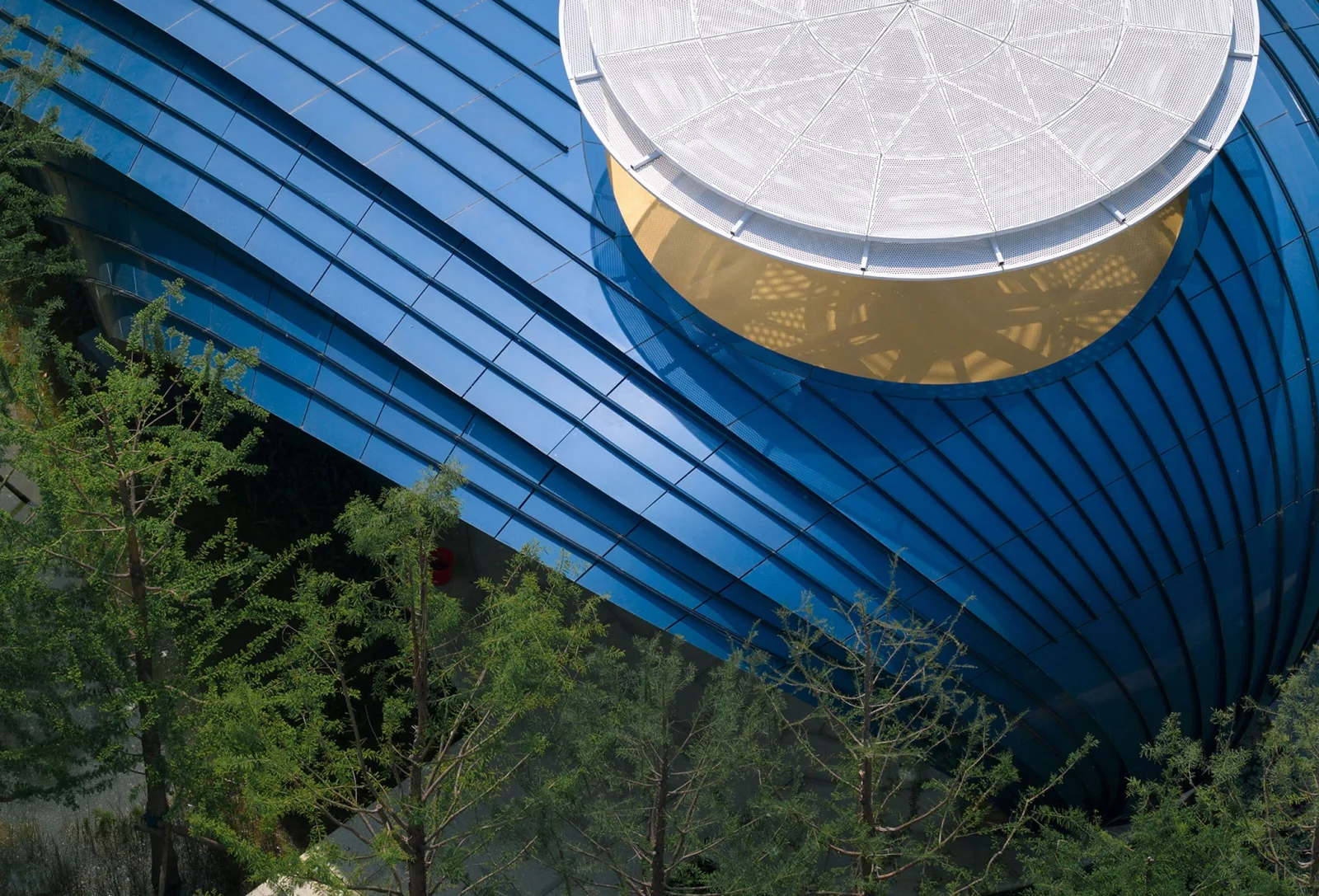
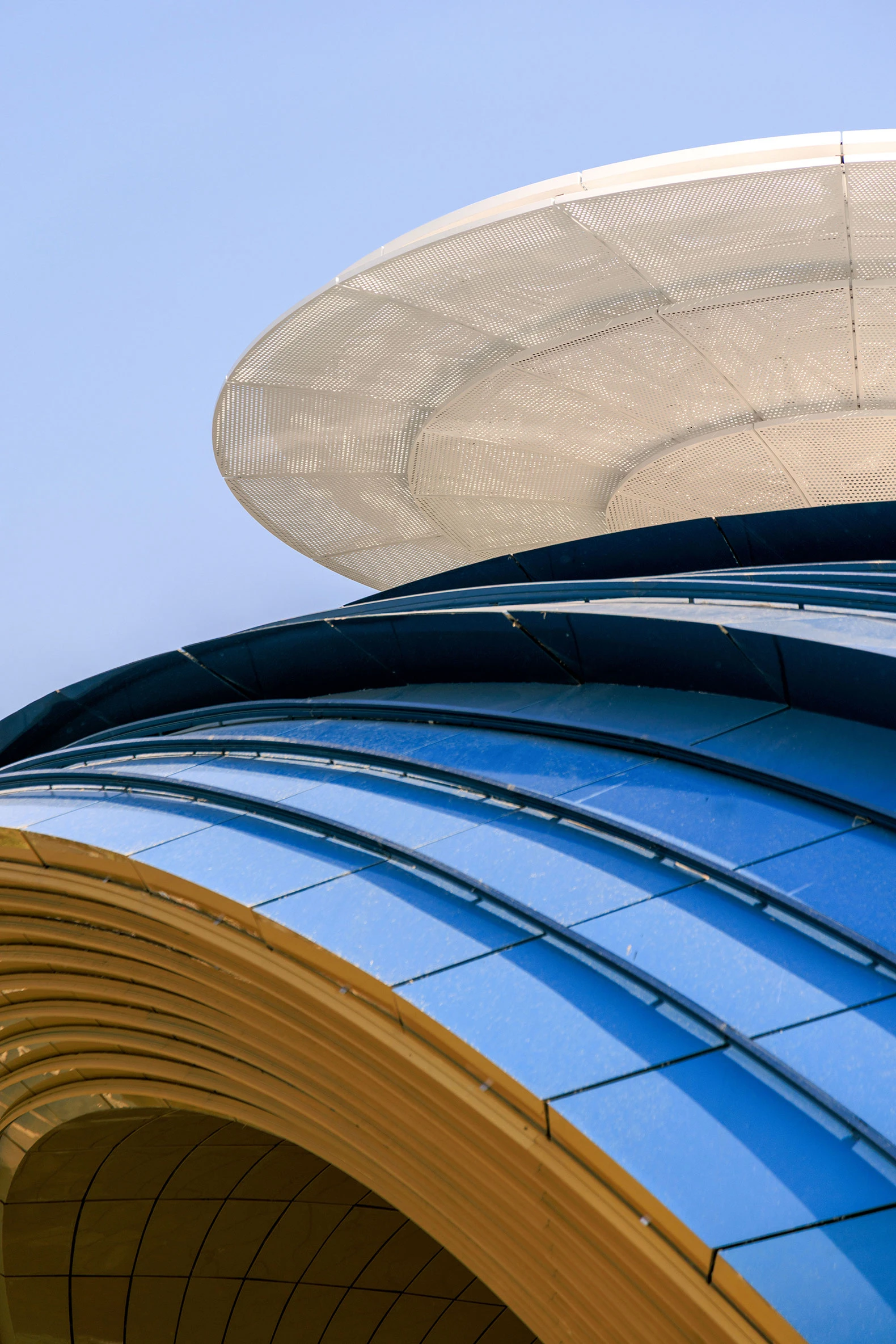
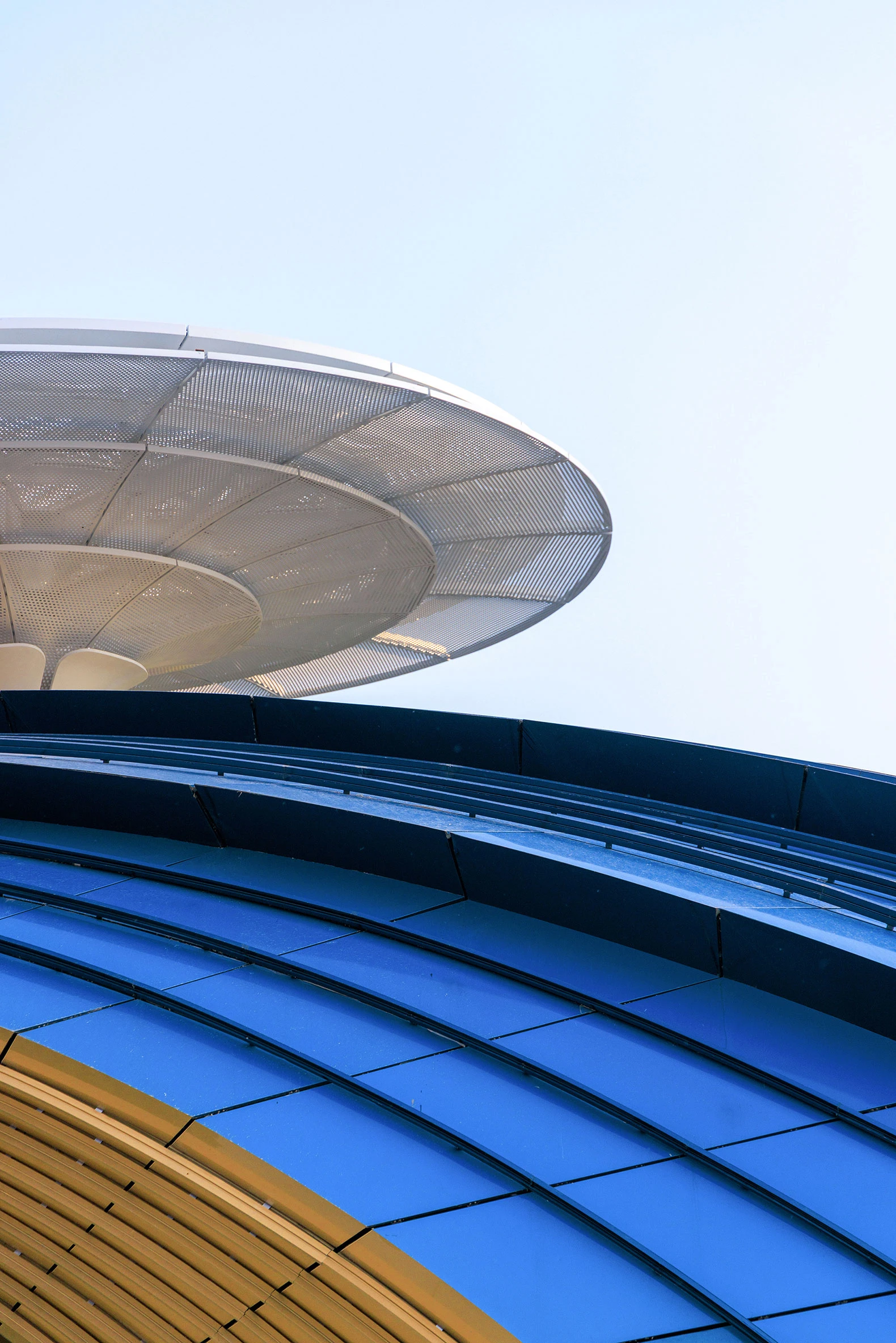
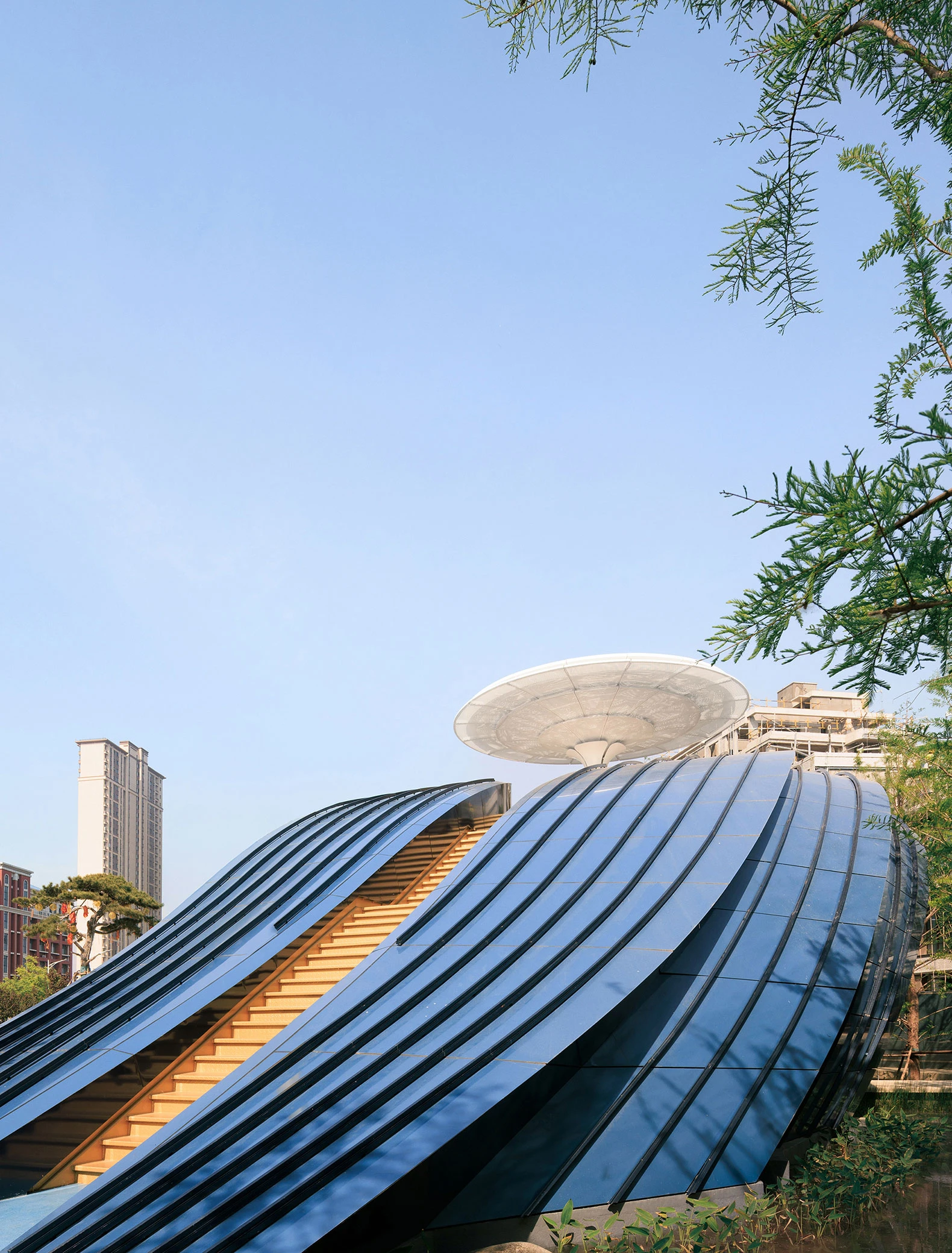
Its curved blue body rises from the landscape, while a golden vertical opening slices through its form to create the primary entrance. Above, perforated white aluminum panels suggest the burst of water released as the whale breaches the ocean surface. These panels simultaneously function as a protective canopy, demonstrating how imagery and utility can coexist within a single architectural gesture.
This directness is central to the project’s significance. Whale Gate argues that storytelling itself can be an architectural function. The structure is designed to be immediately understood by residents, children, and visitors alike, creating an emotional connection that extends beyond formal aesthetics.
Engineering a Creature at Architectural Scale
Behind the whimsical appearance lies an exceptionally sophisticated construction process.
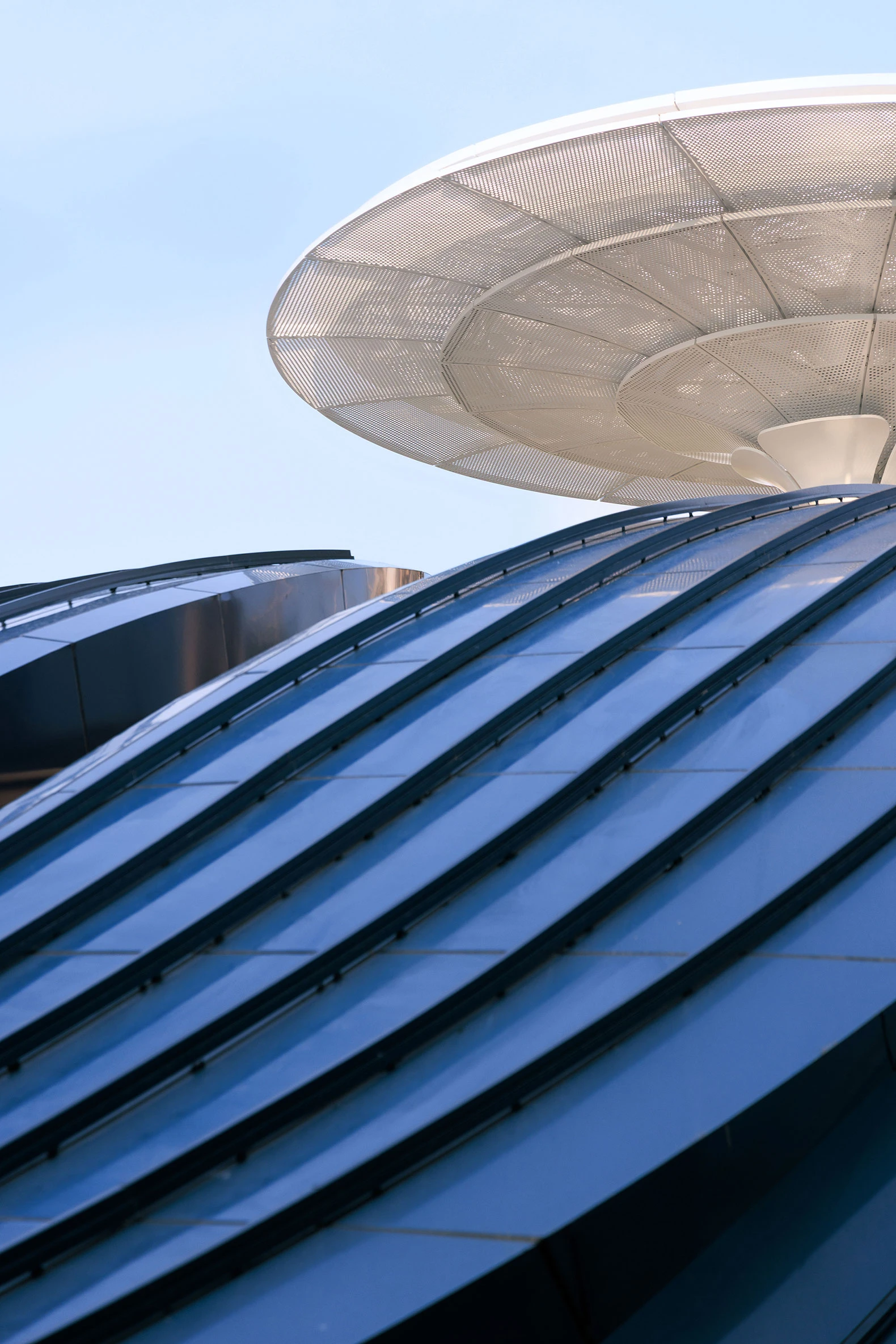
The gateway weighs approximately 60 tonnes and is composed of a six-layer structural system that includes a steel framework, connection rods, an aluminum substructure, waterproofing layers, double-curved aluminum honeycomb panels, and fin-like profiles. To achieve the whale’s complex geometry, nearly 10,000 three-dimensional coordinate points were used during fabrication and assembly.
Perhaps most remarkable is the fact that all 1,170 aluminum panels used on the exterior are unique. Steel columns were divided into multiple segments to accommodate constantly shifting curvatures and torsional forces across the surface. This extraordinary level of customization allows the whale’s body to read as a continuous sculptural form rather than an assembly of individual components.
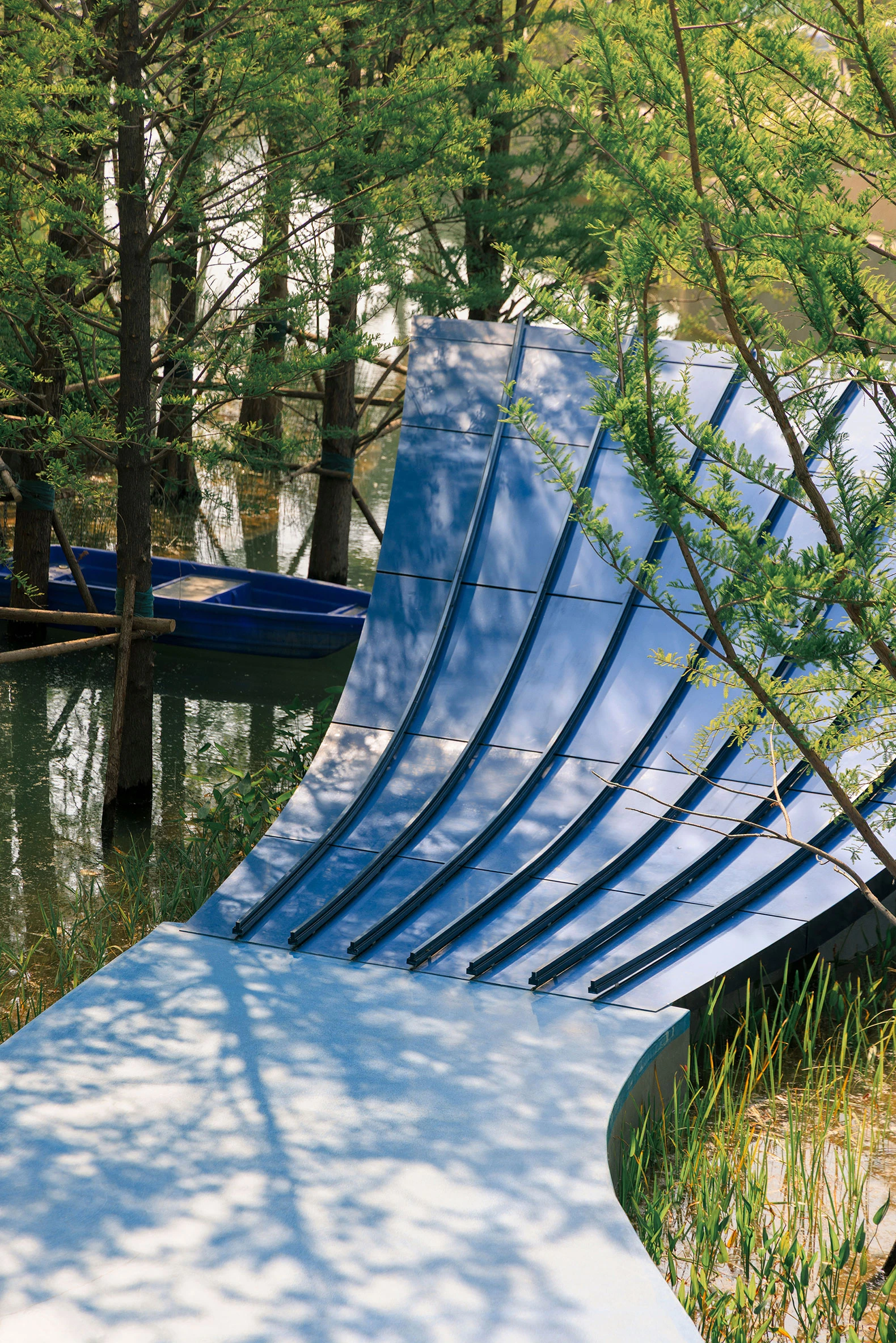
The engineering complexity remains largely invisible to visitors, reinforcing the illusion that the giant creature has effortlessly emerged from the landscape.
Climbing the Whale
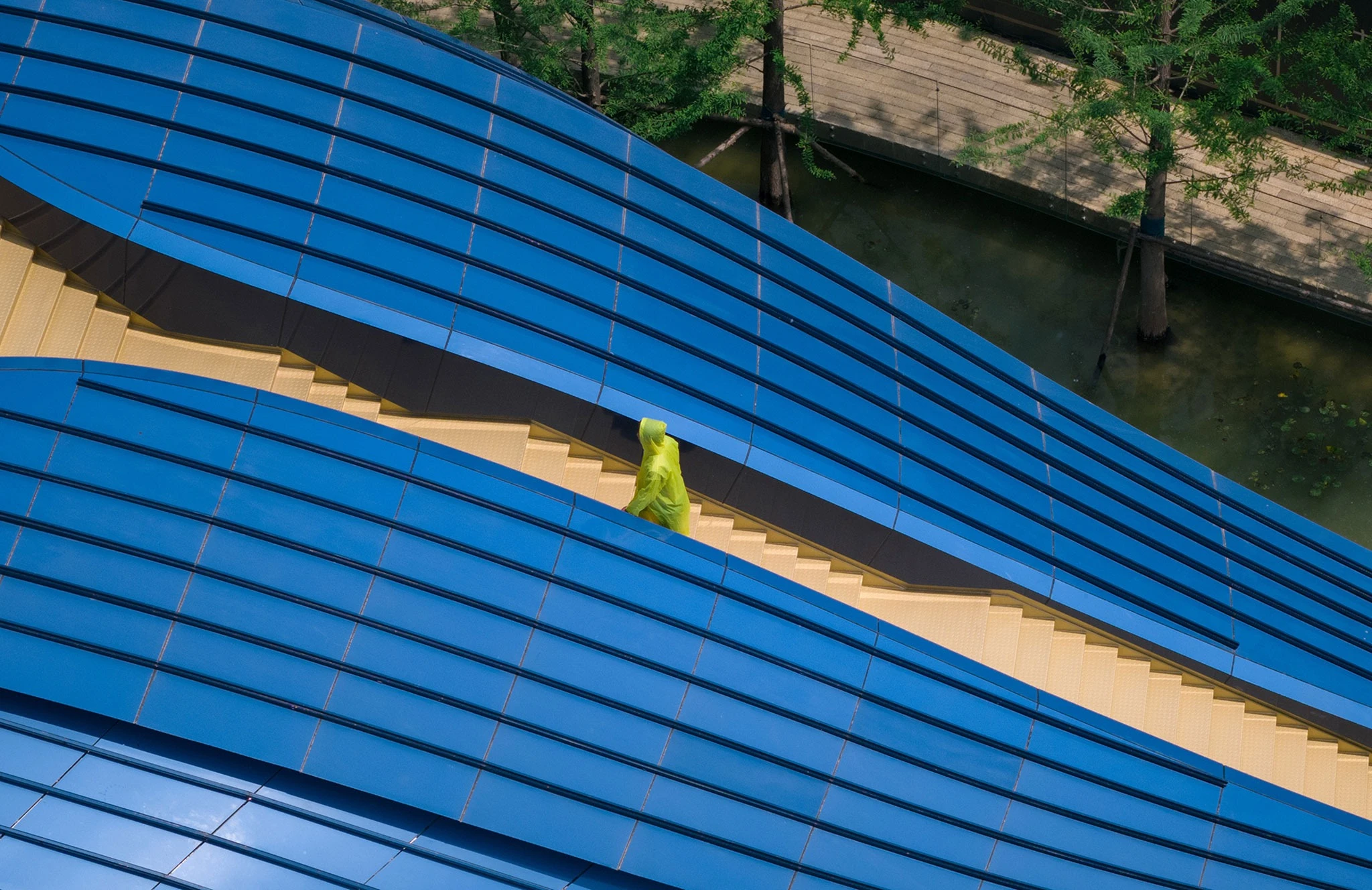
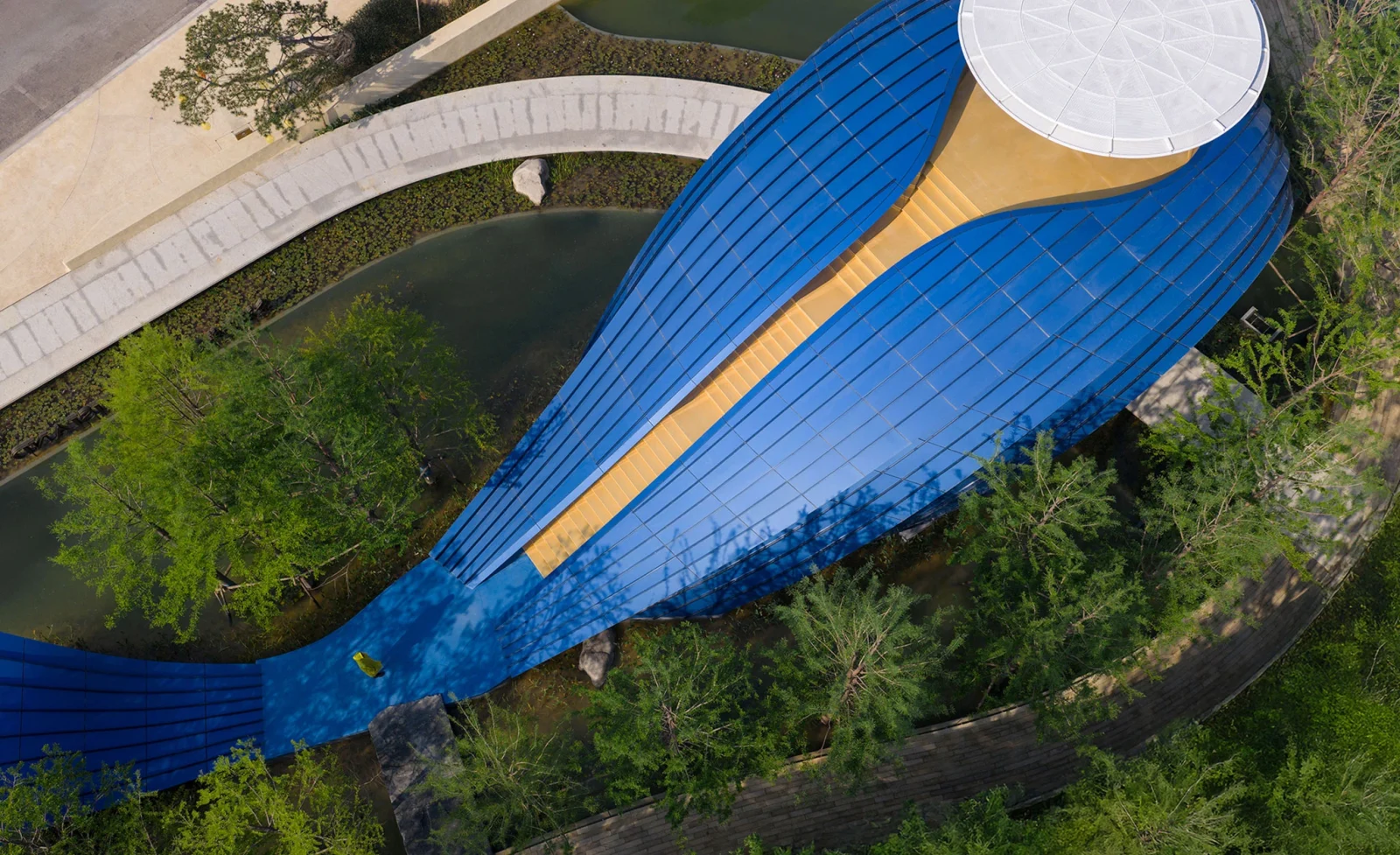
A golden staircase ascends through the structure and leads residents to an observation platform positioned atop the whale. From this elevated point, occupants can overlook the entire residential development, its waterways, gardens, and surrounding urban landscape. Access is reserved exclusively for residents, transforming the platform into both a viewing space and a subtle expression of community identity. It becomes an inhabitable landmark—part sculpture, part architecture, part lookout tower.
The Language of Blue and Gold
Color plays a crucial role in the project’s storytelling. The whale’s vibrant blue aluminum skin references both oceanic imagery and Wutopia Lab’s broader exploration of color as an emotional and narrative device. Contrasting with this is the golden entrance and staircase, which create a visual path into the development while emphasizing the gateway’s role as a portal.
In Whale Gate, blue evokes the mythical creature itself, while the gold transforms movement through the gateway into a ceremonial experience.
A Myth Hidden in Everyday Life
Perhaps the most compelling achievement of Whale Gate is its ability to infuse an ordinary routine with wonder. Residents pass through the structure while returning from work, walking pets, or running errands. Yet each journey home is framed by a monumental symbol that encourages a momentary shift in perception.
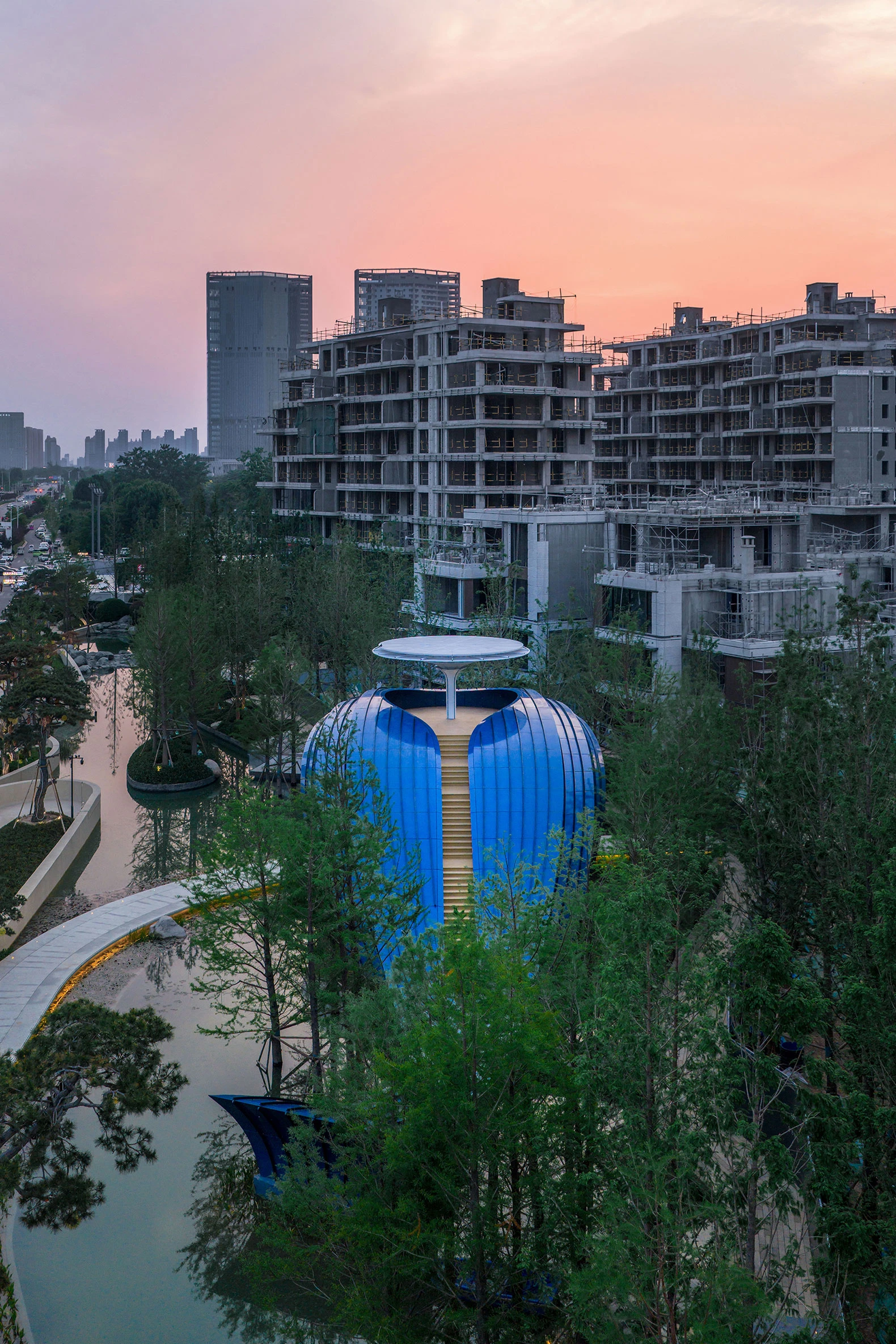
Wutopia Lab believes that architecture can elevate everyday experiences through imagination, atmosphere, and carefully constructed narratives. The studio seeks points where the two can coexist.
.jpg "Fran Silvestre - Rethinking Architecture")
.jpg2.jpg "Carlo Ratti - Rethinking Architecture")