



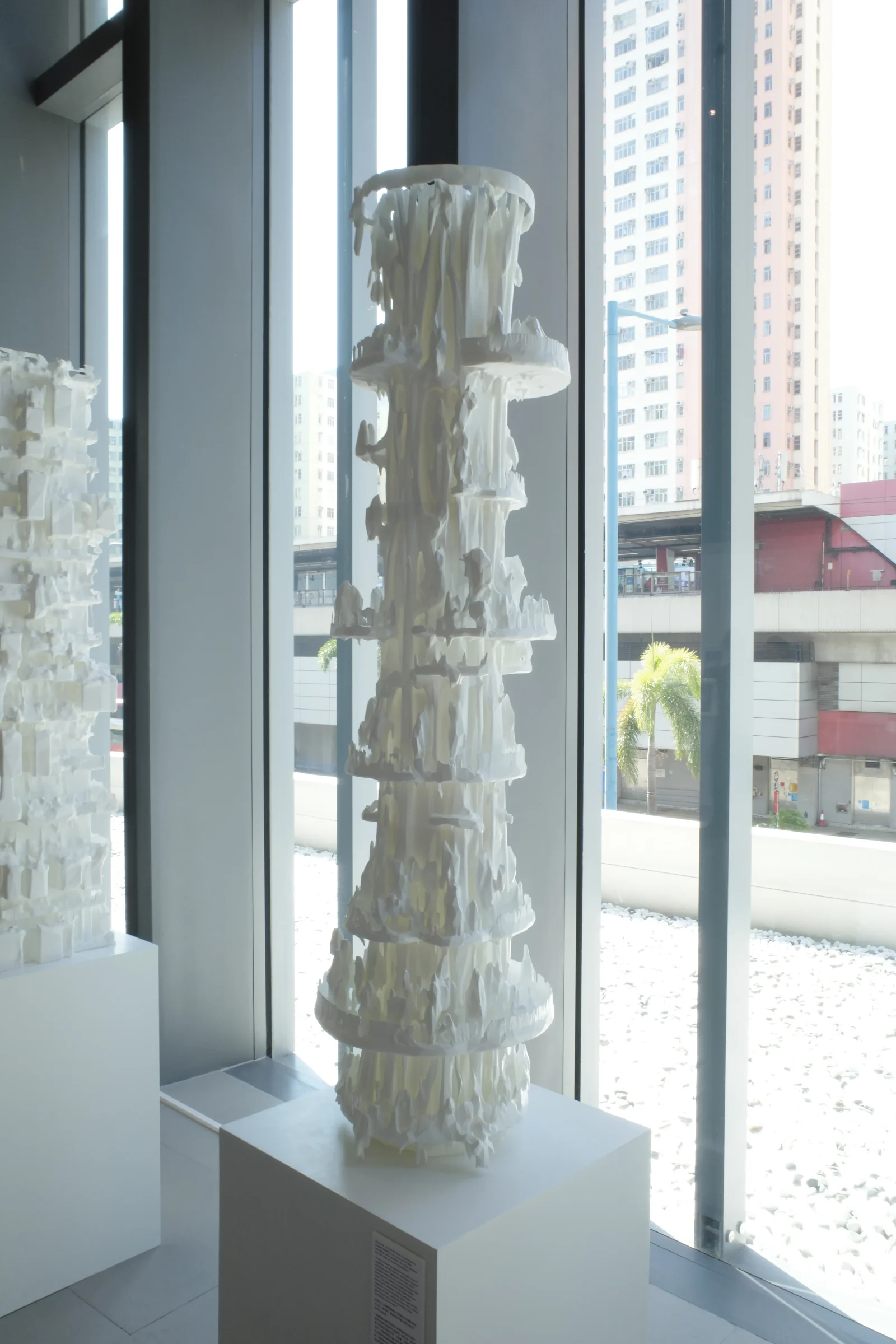
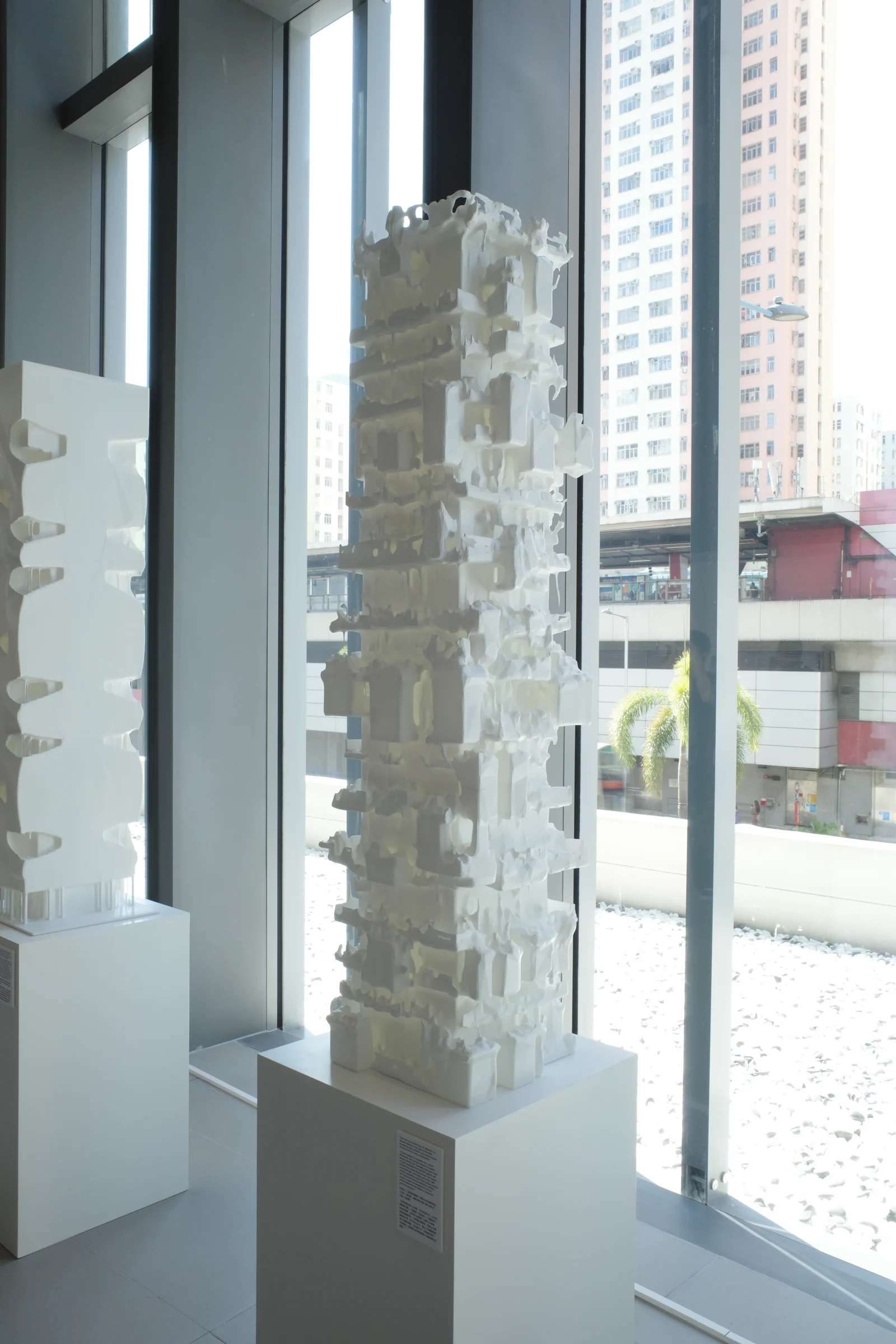
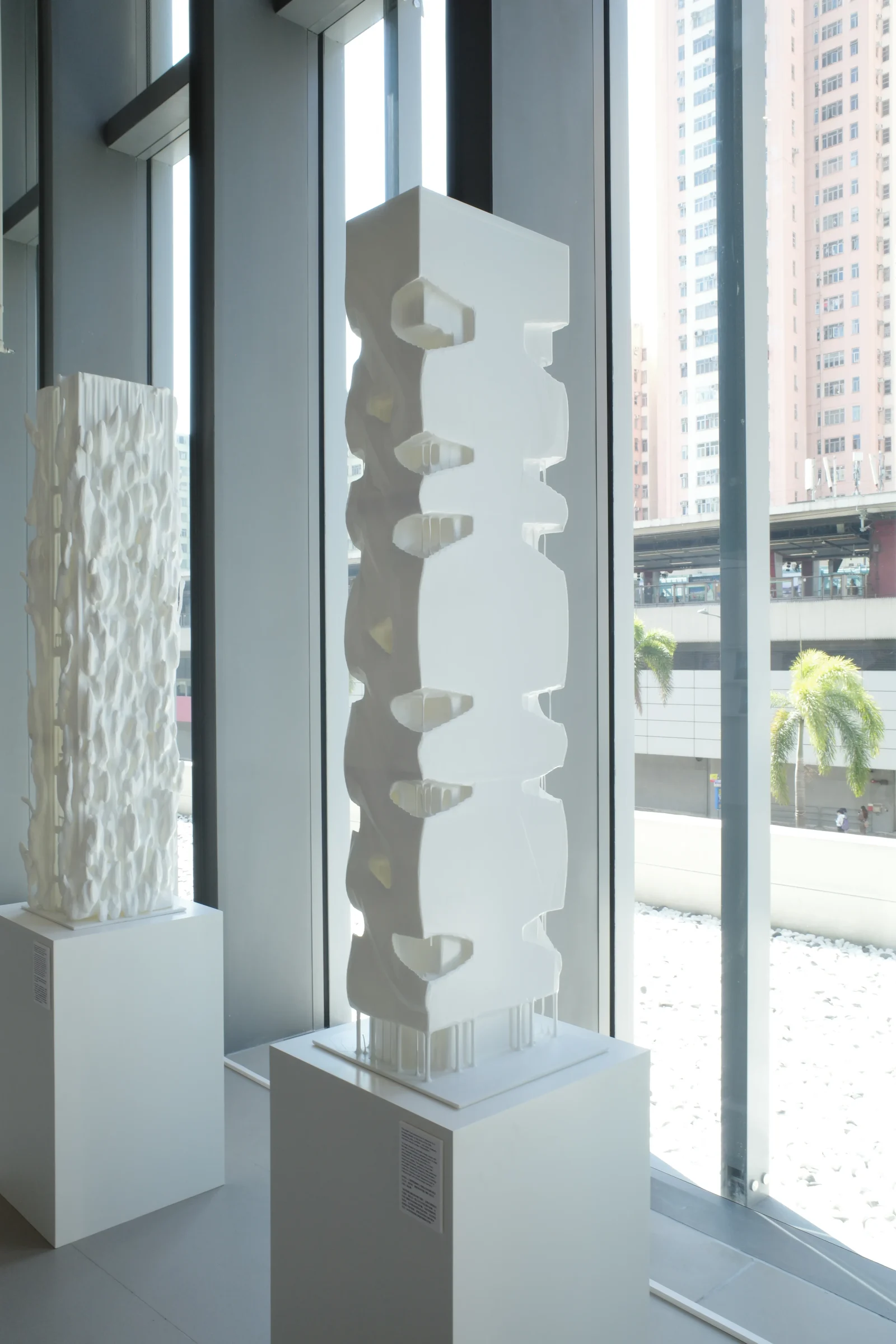
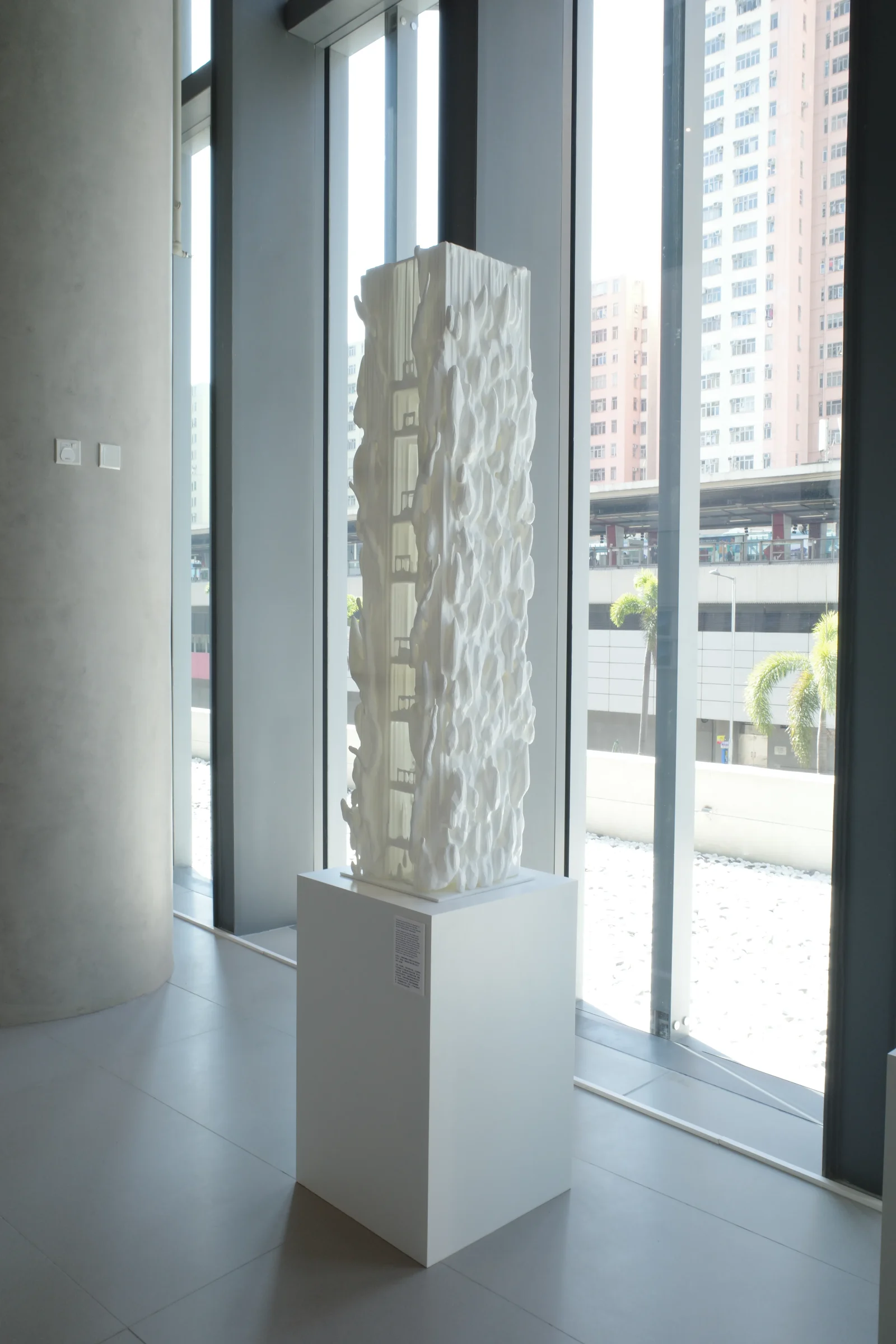
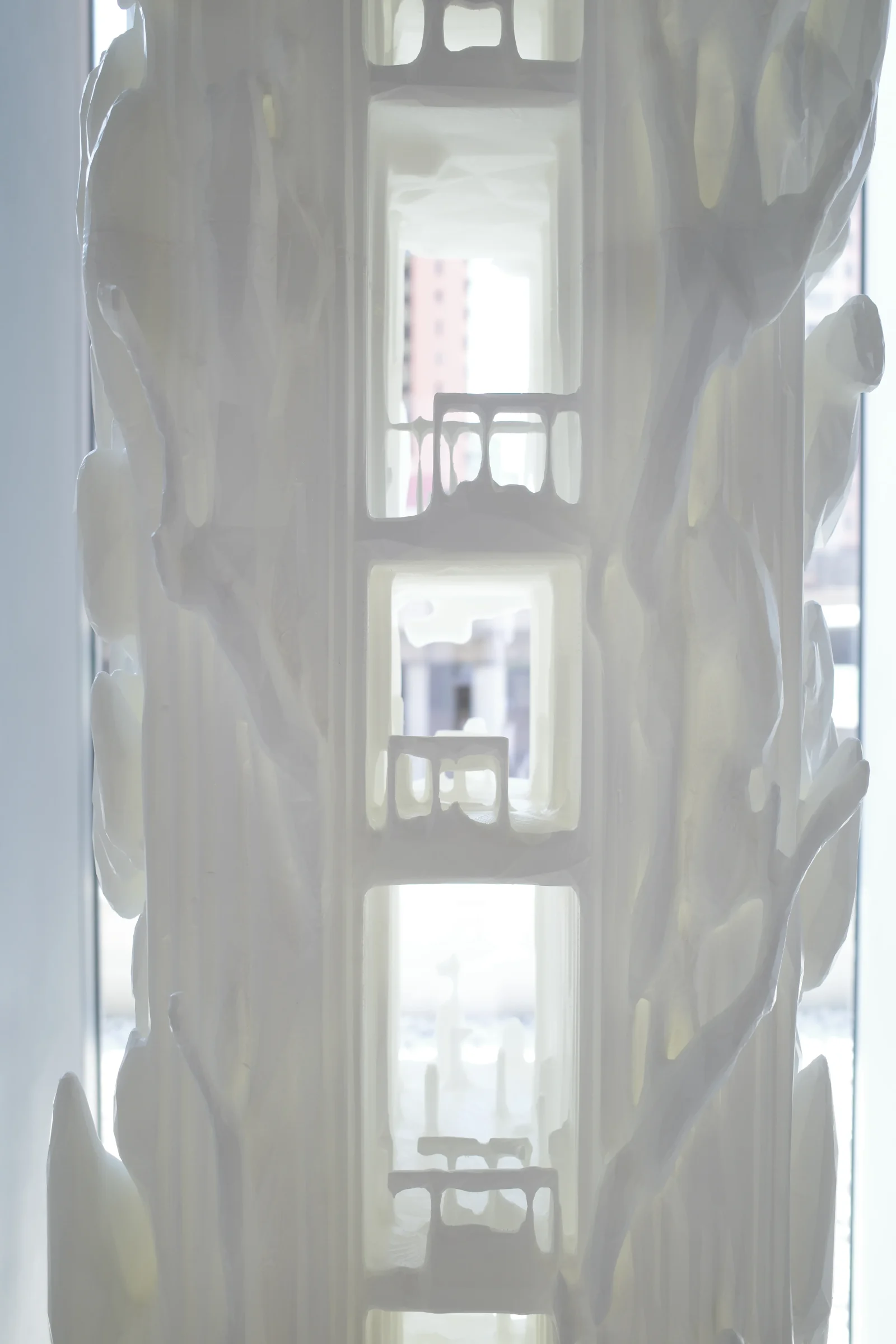
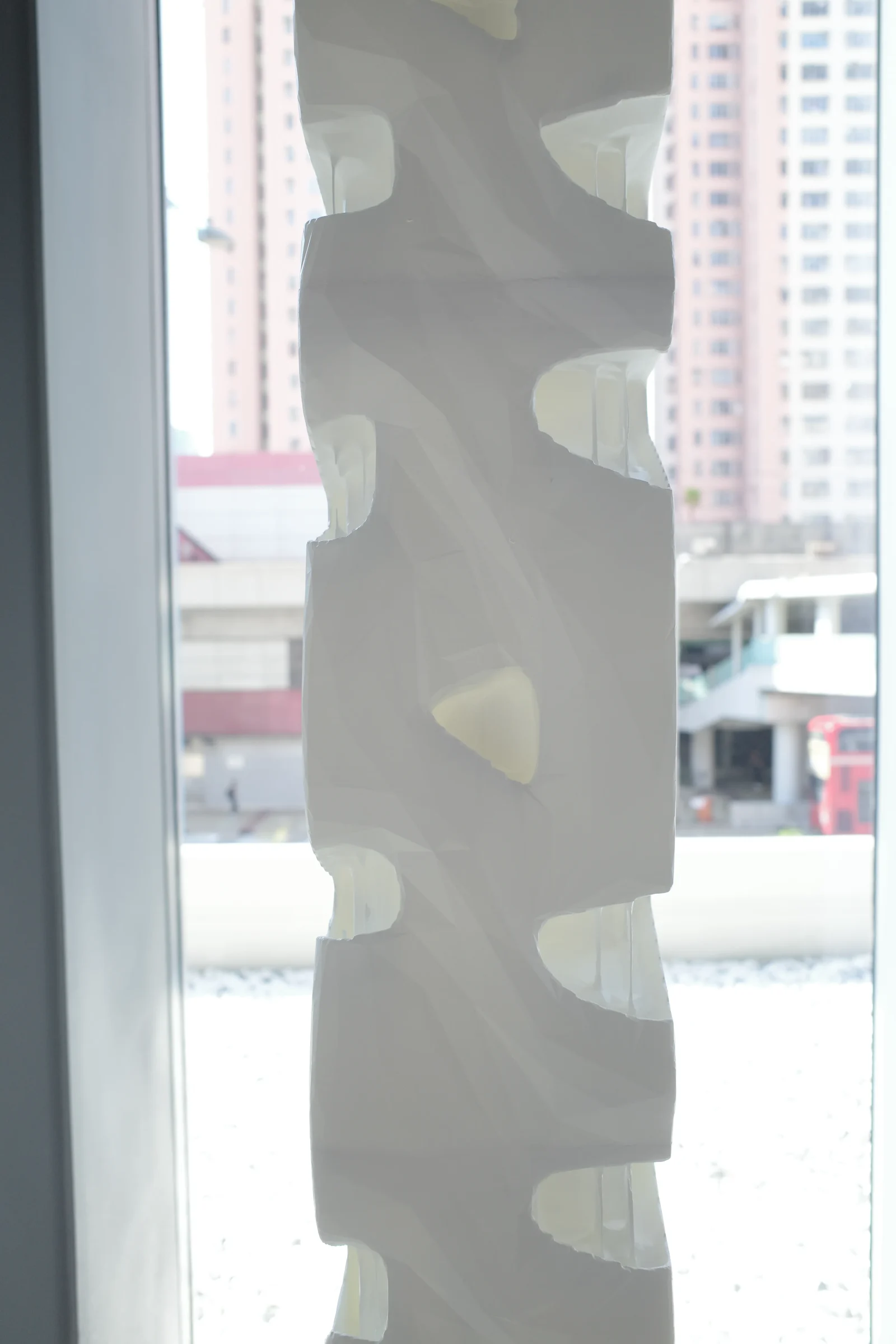



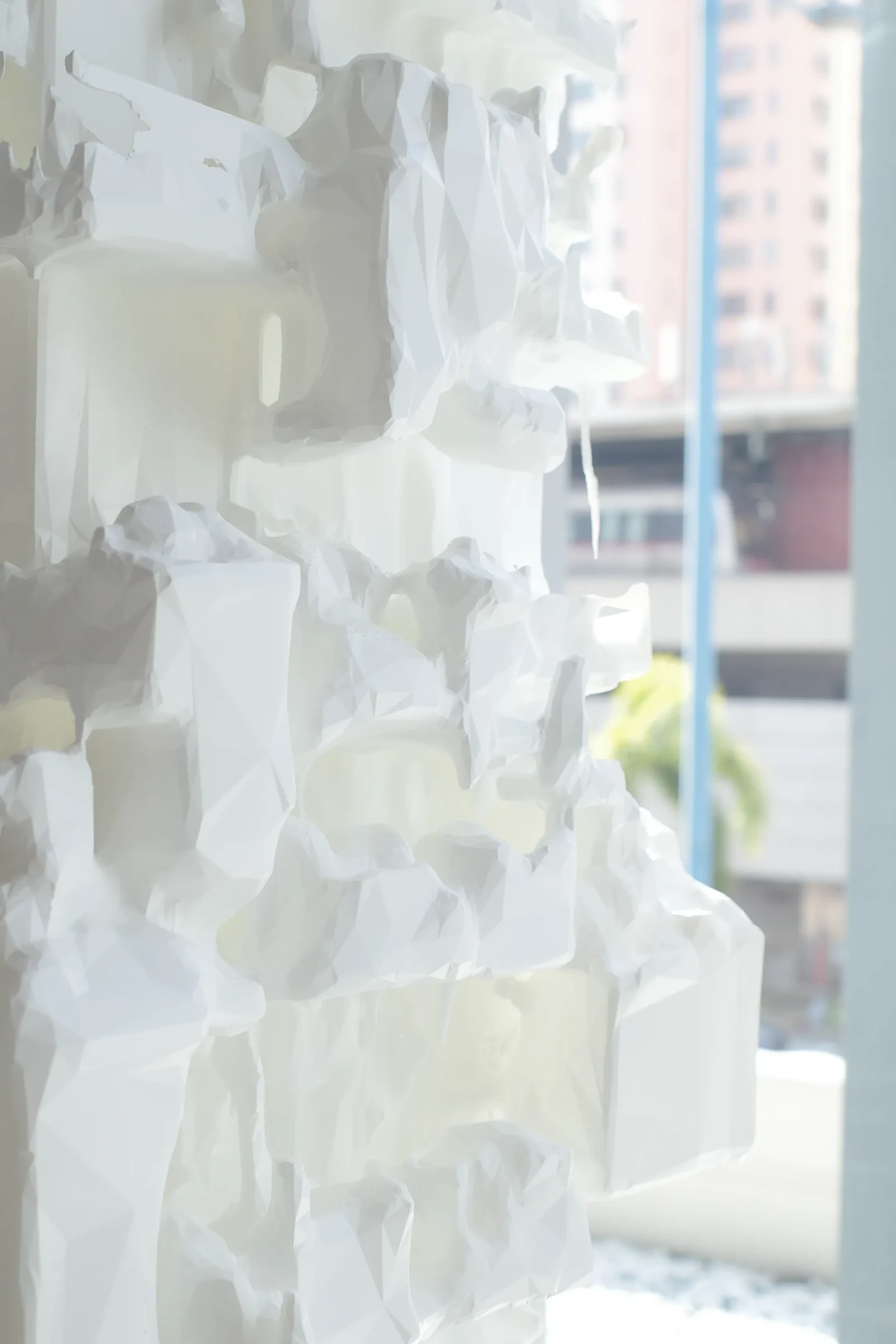

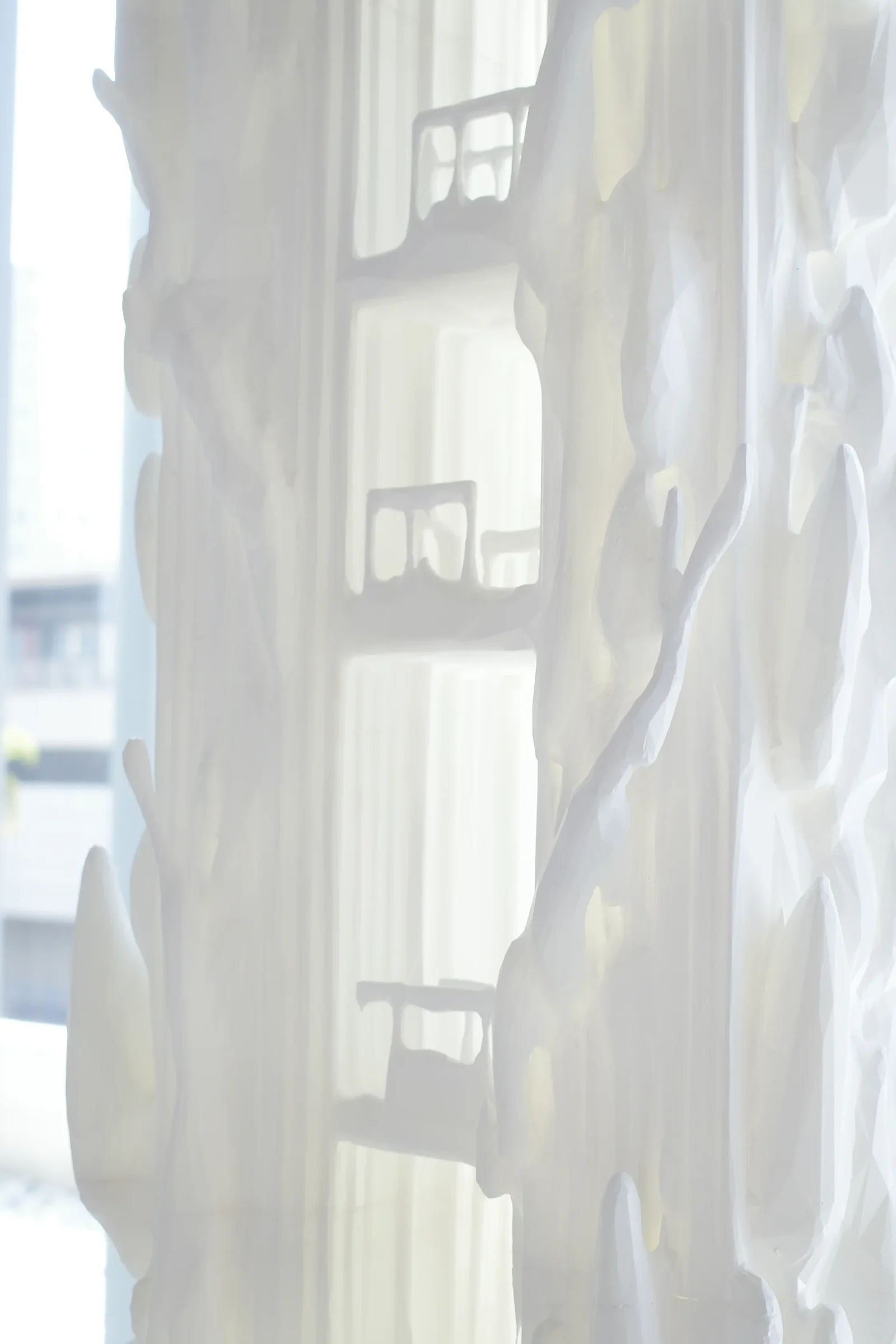
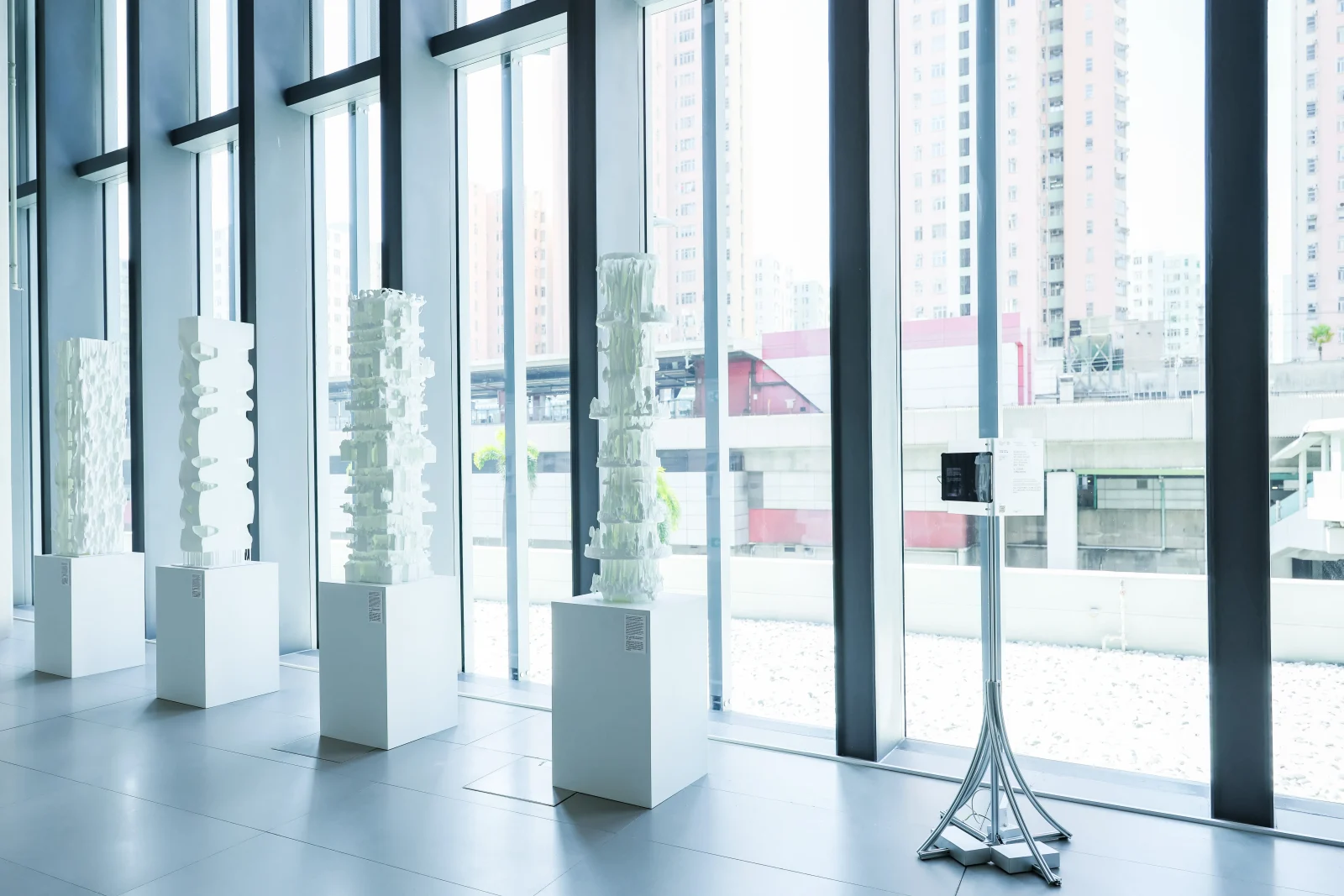
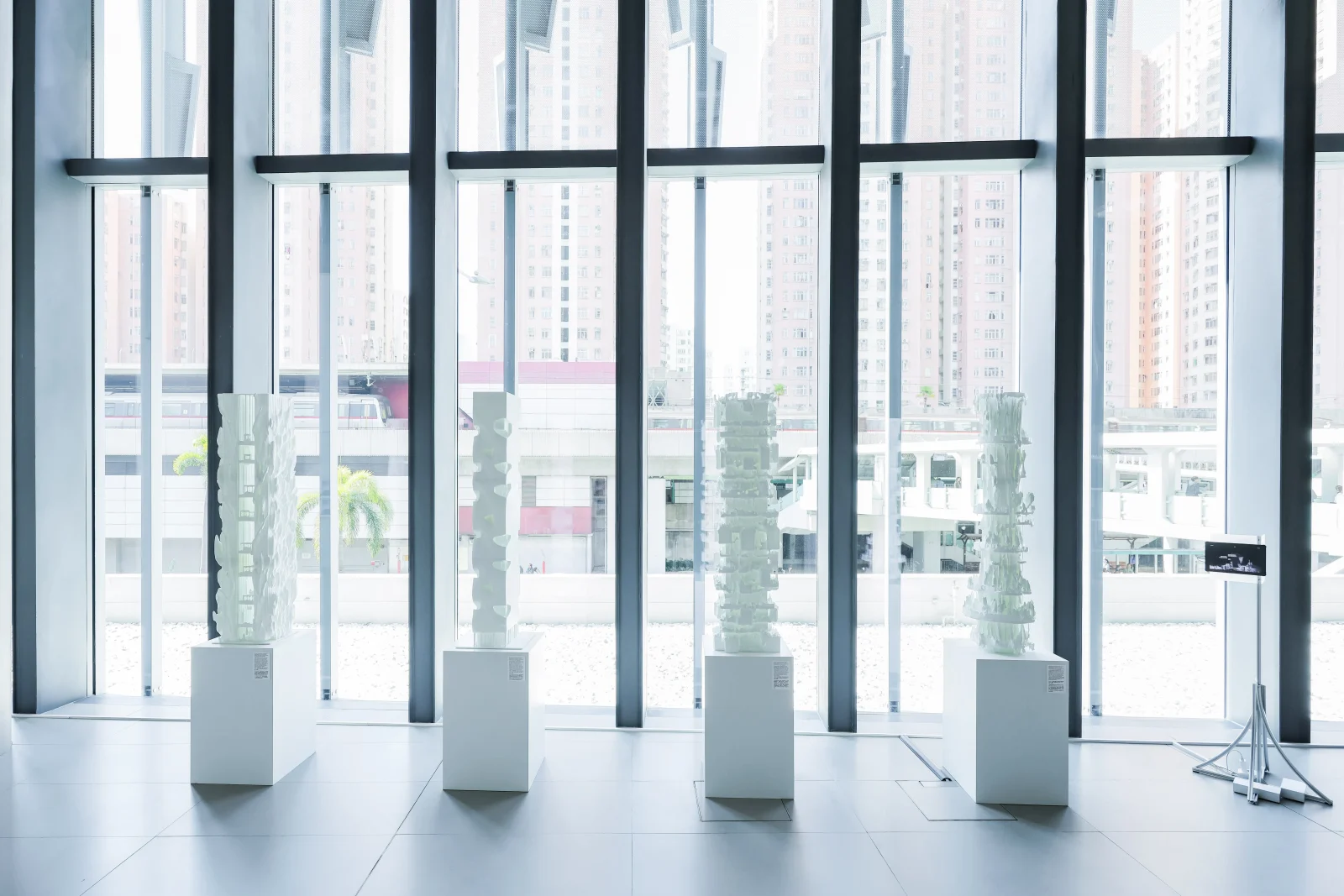
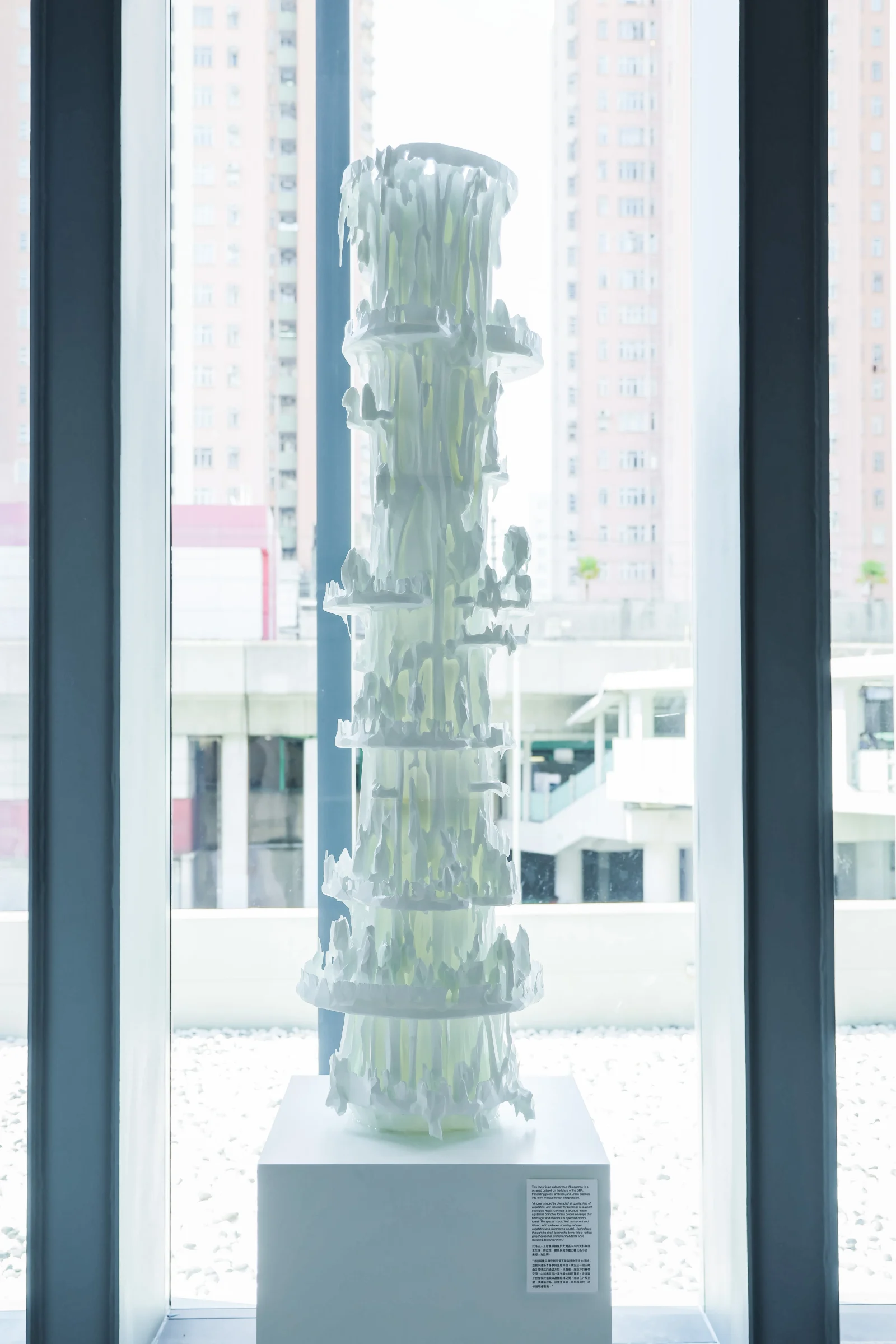







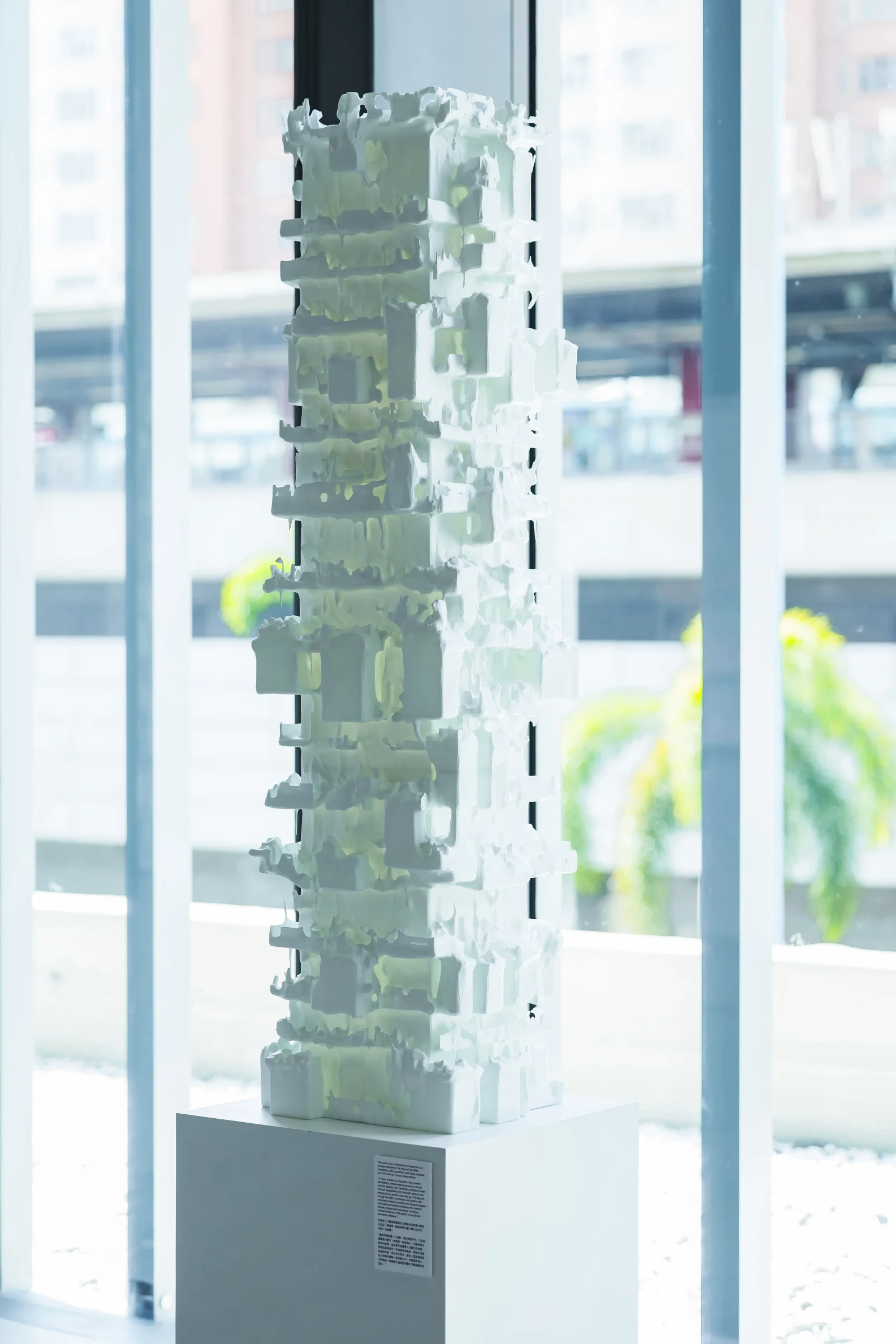



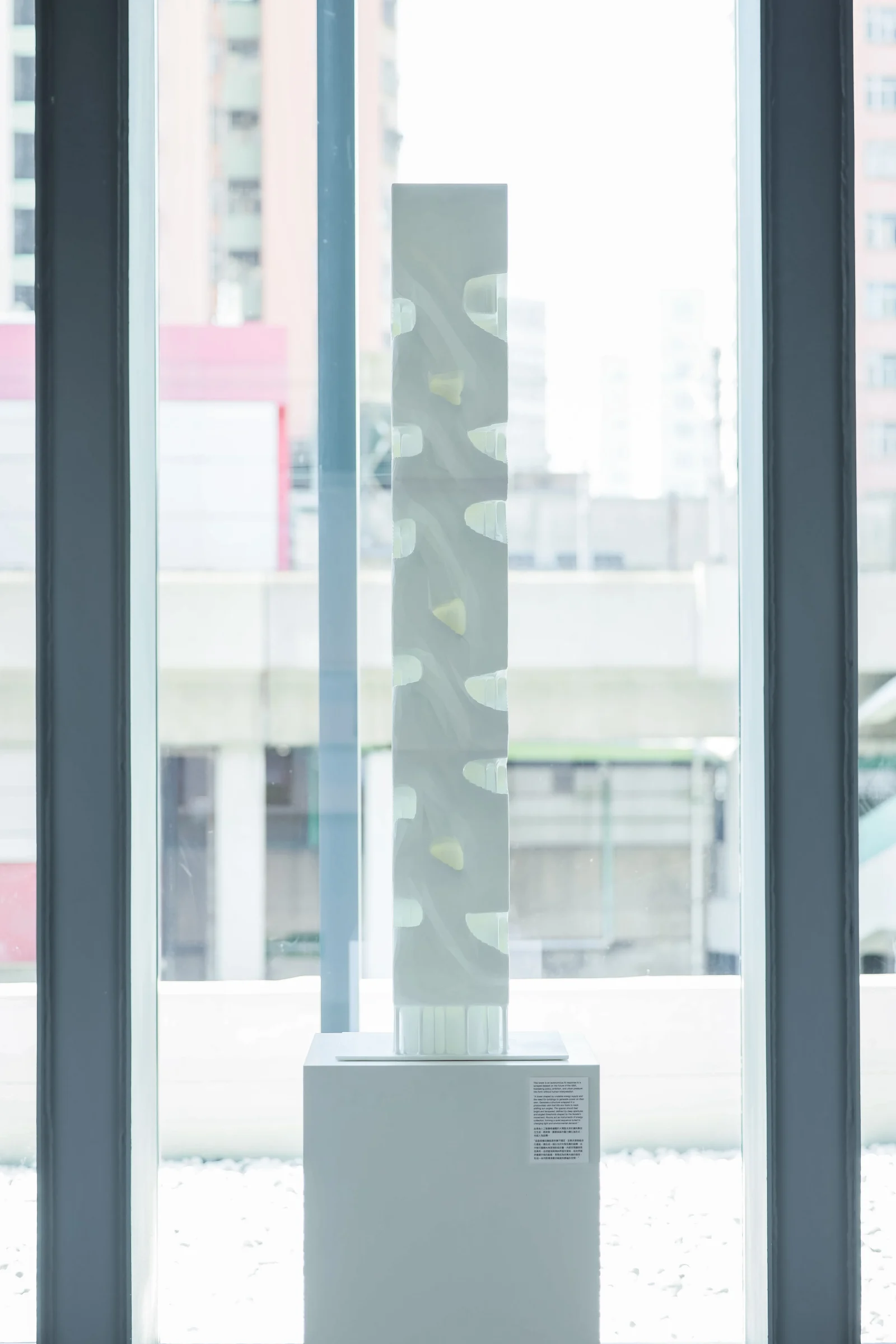



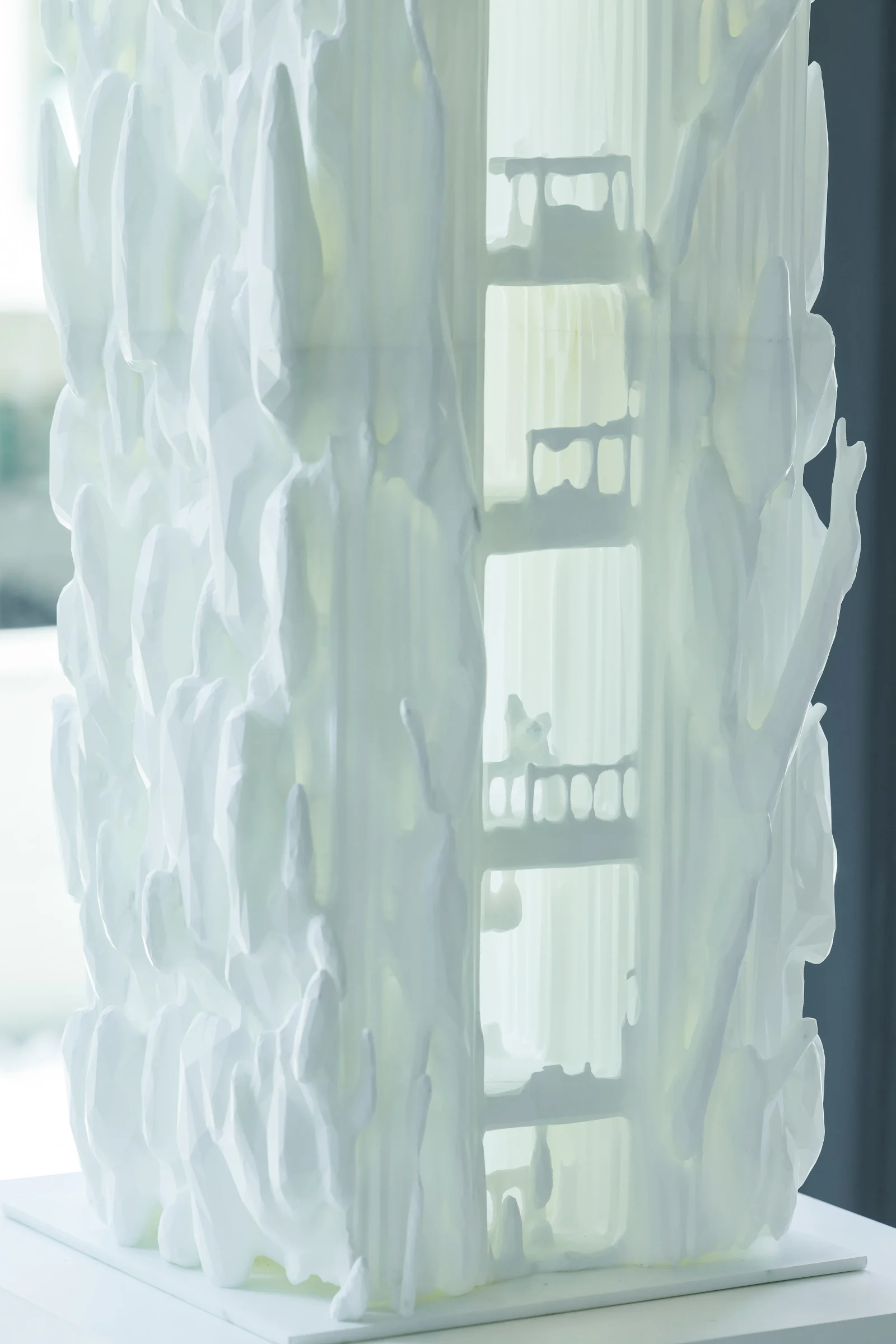

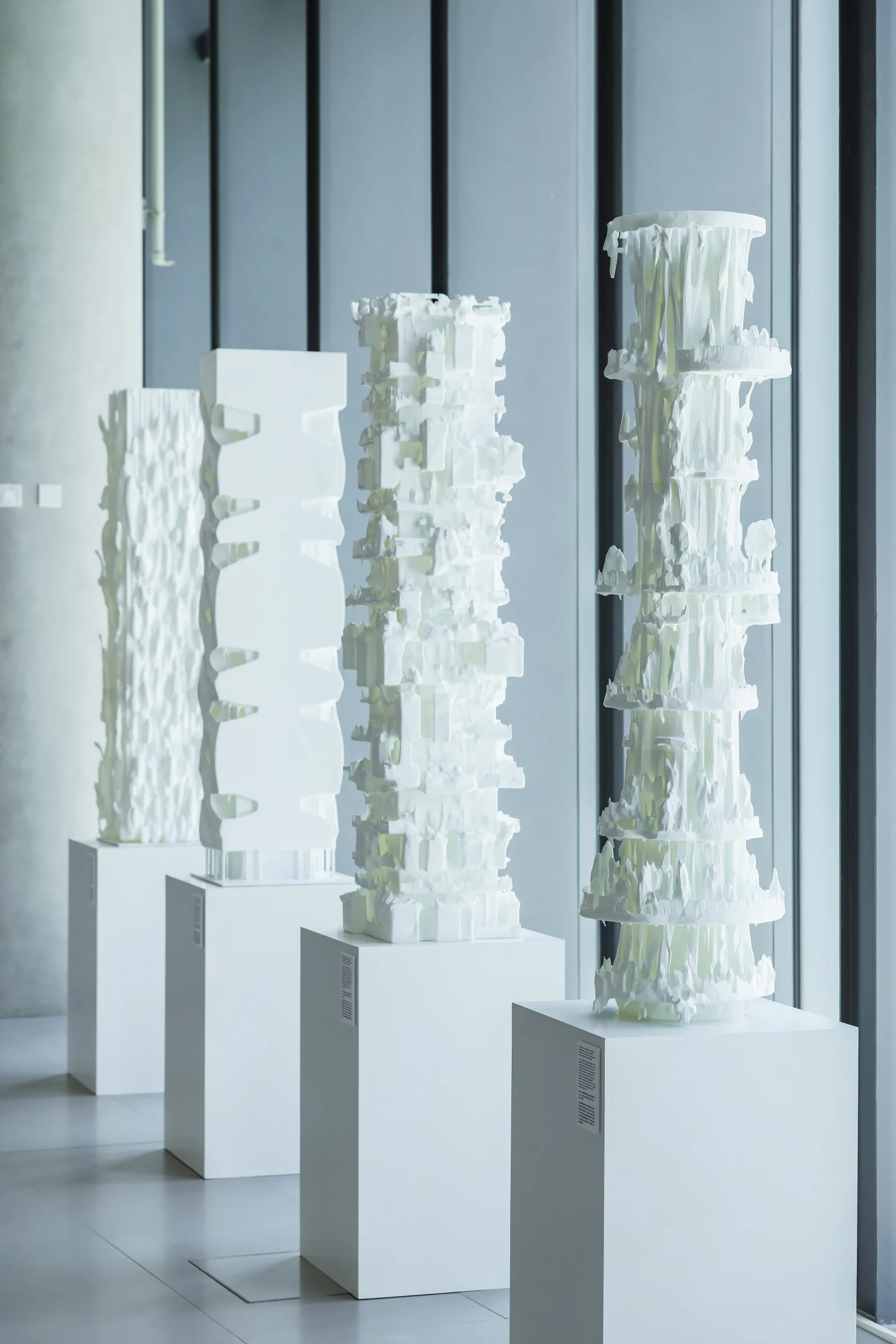
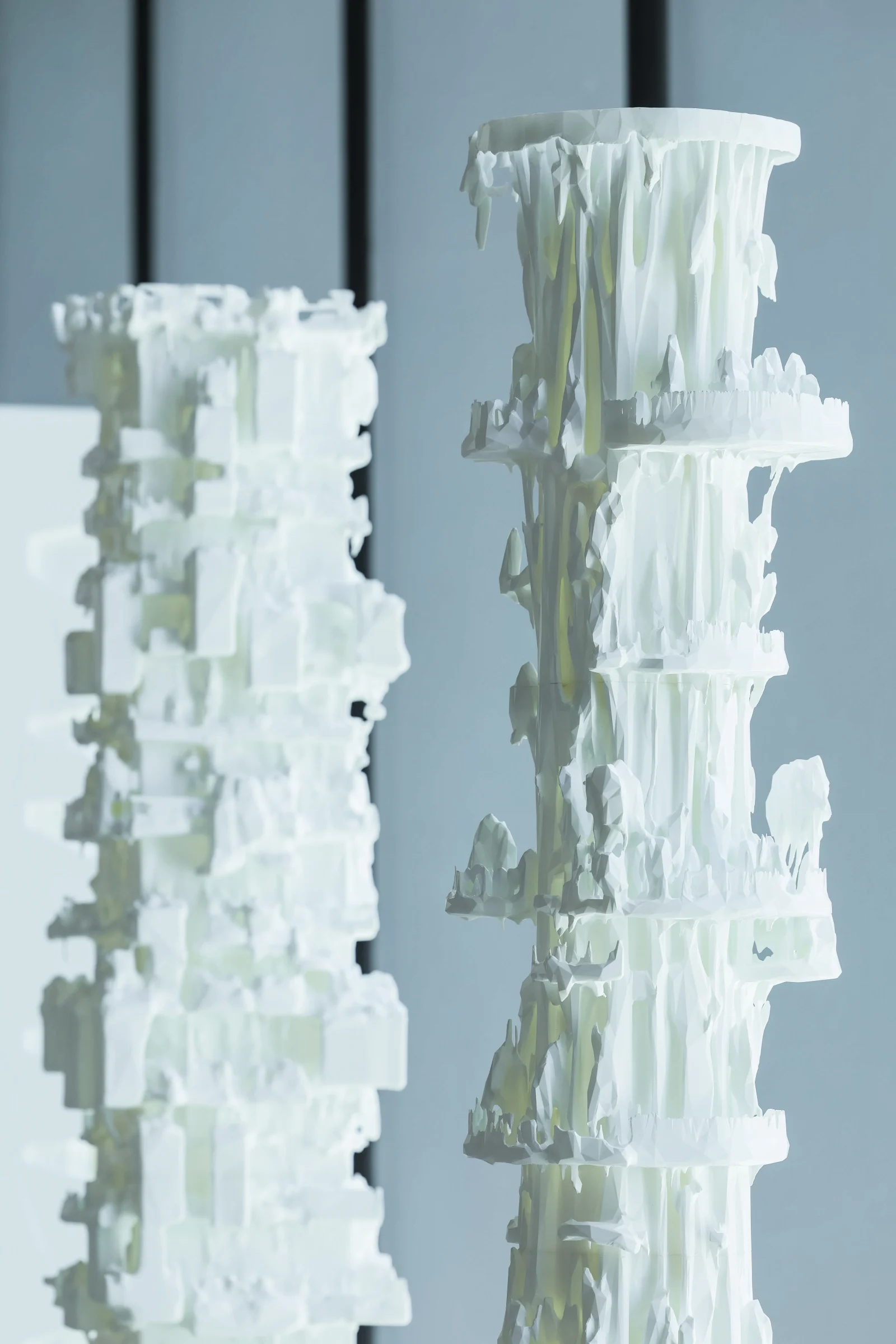
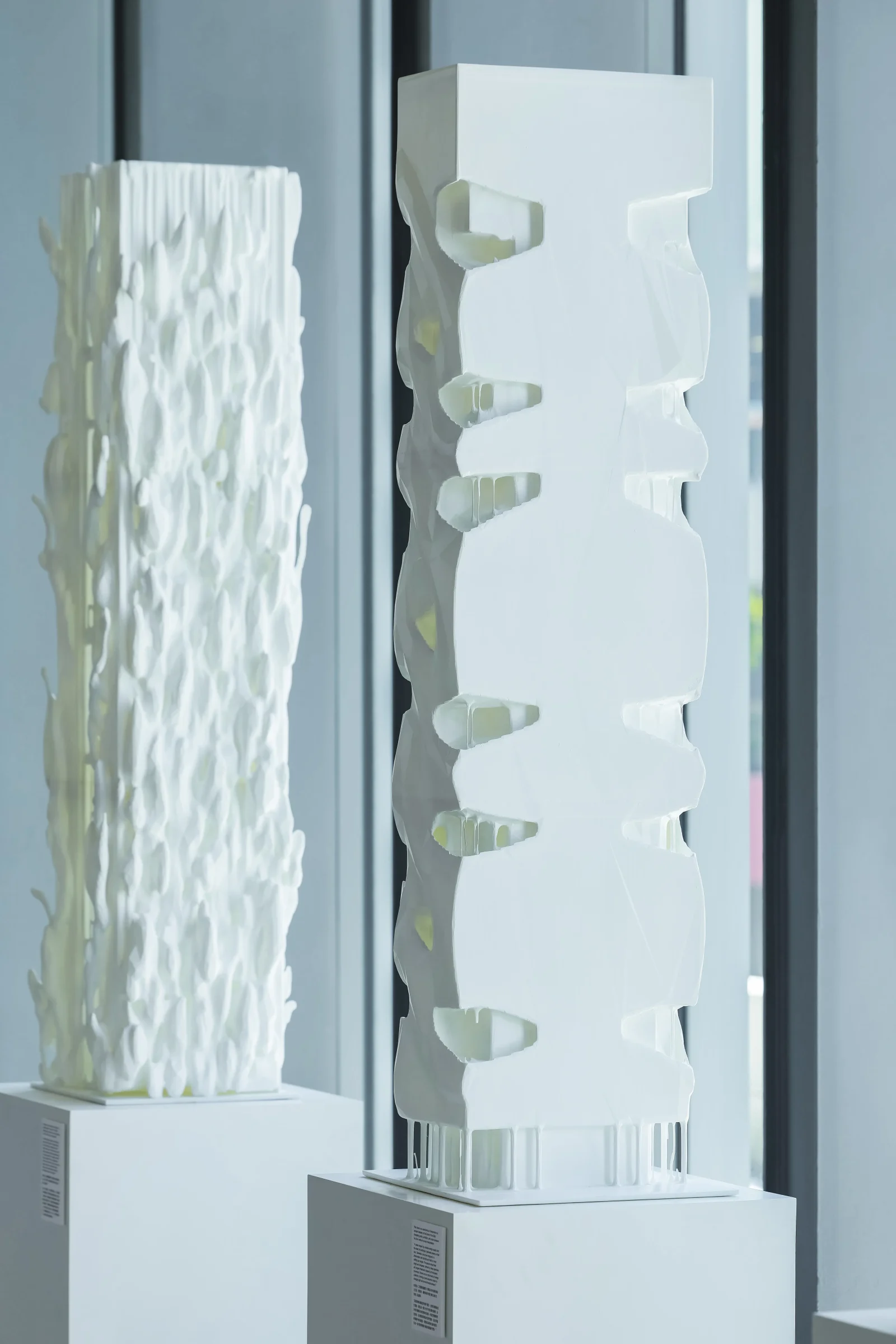
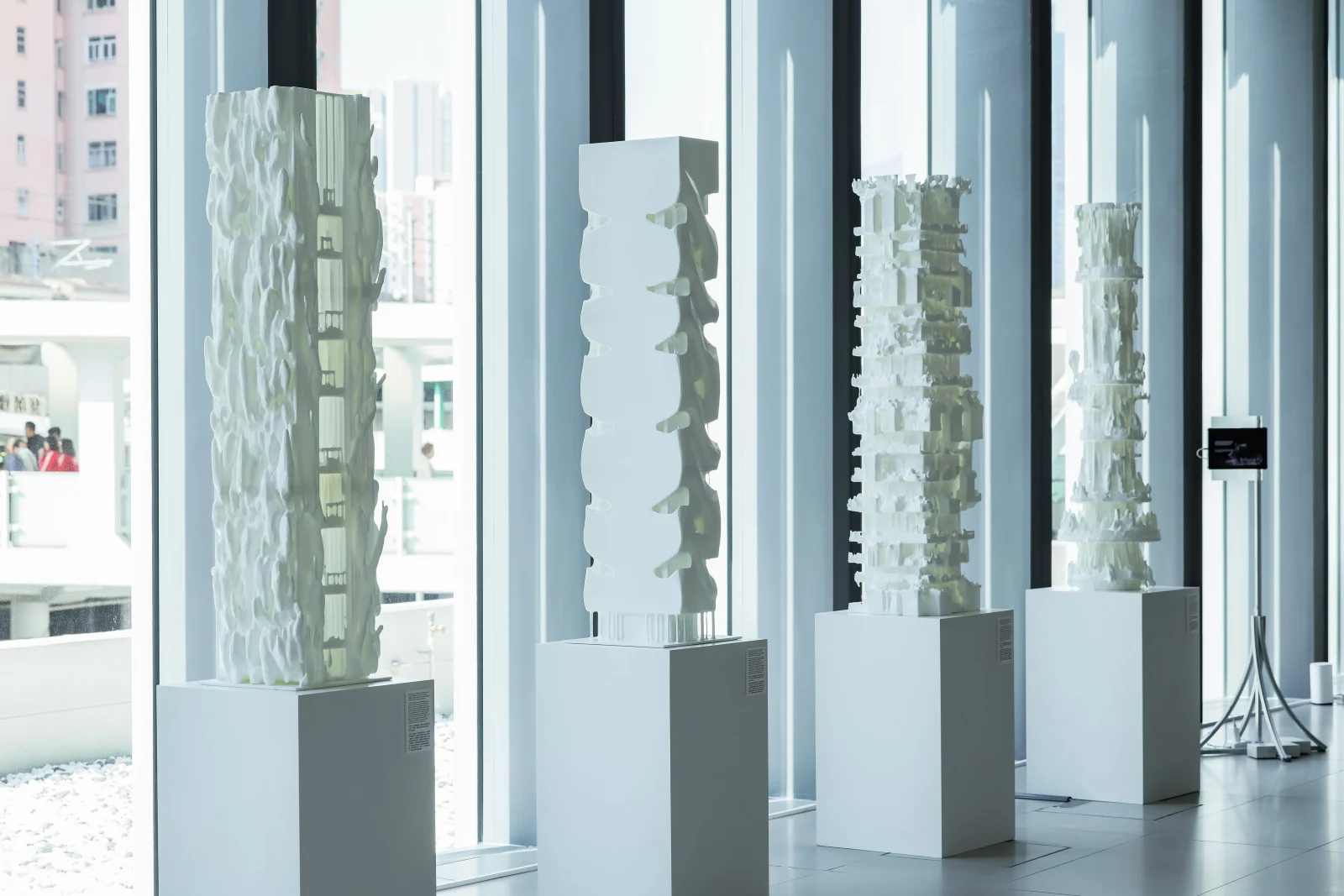
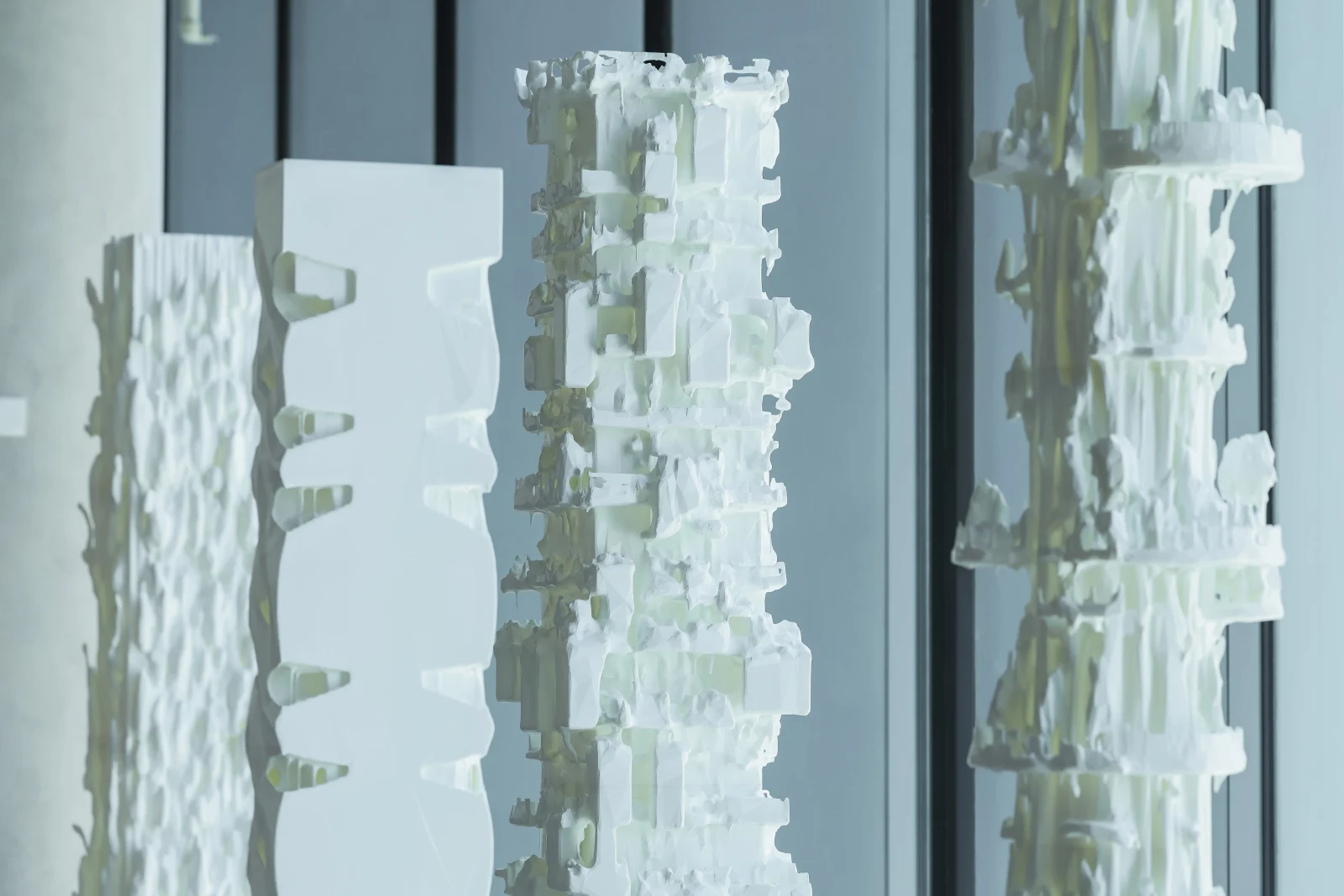


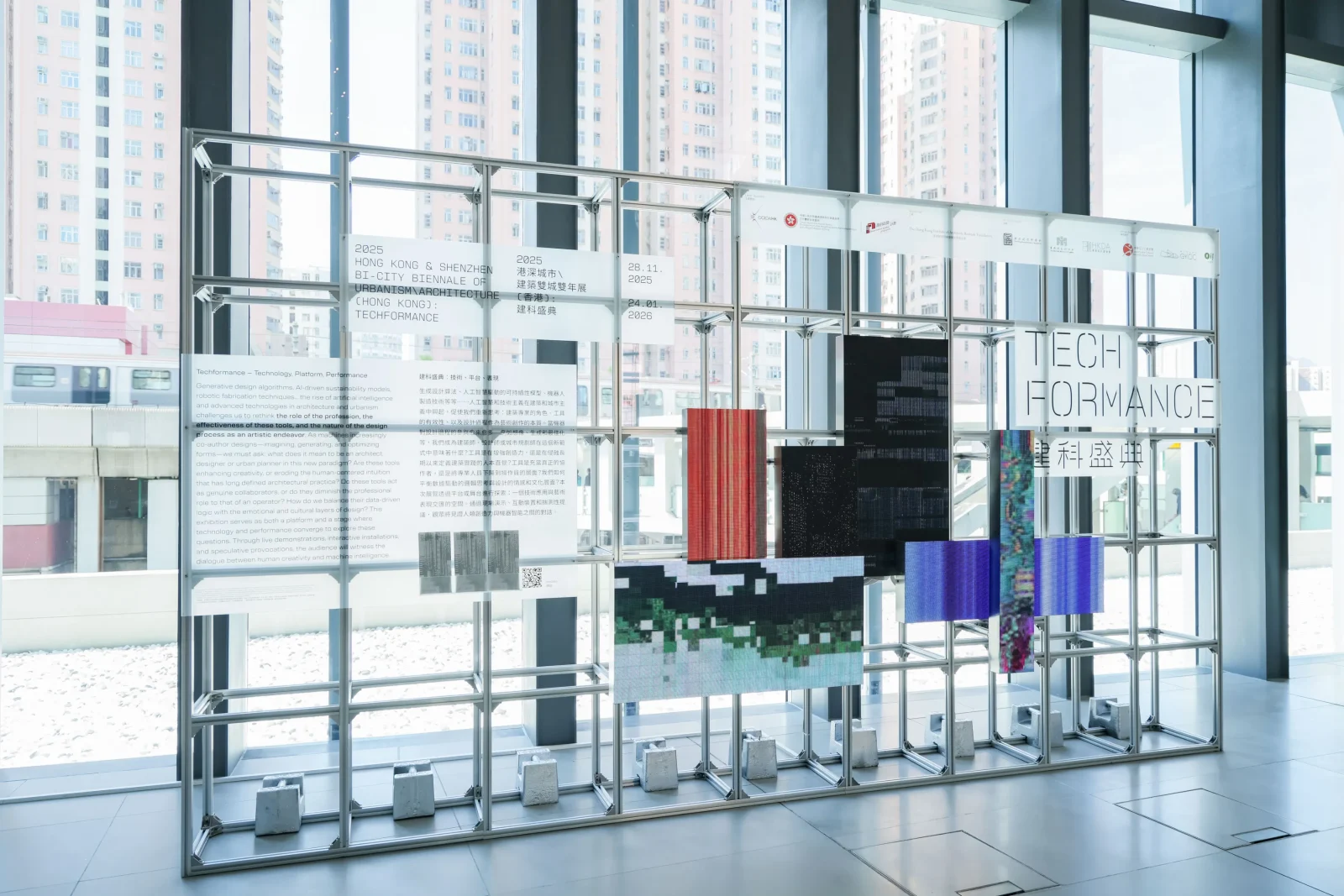
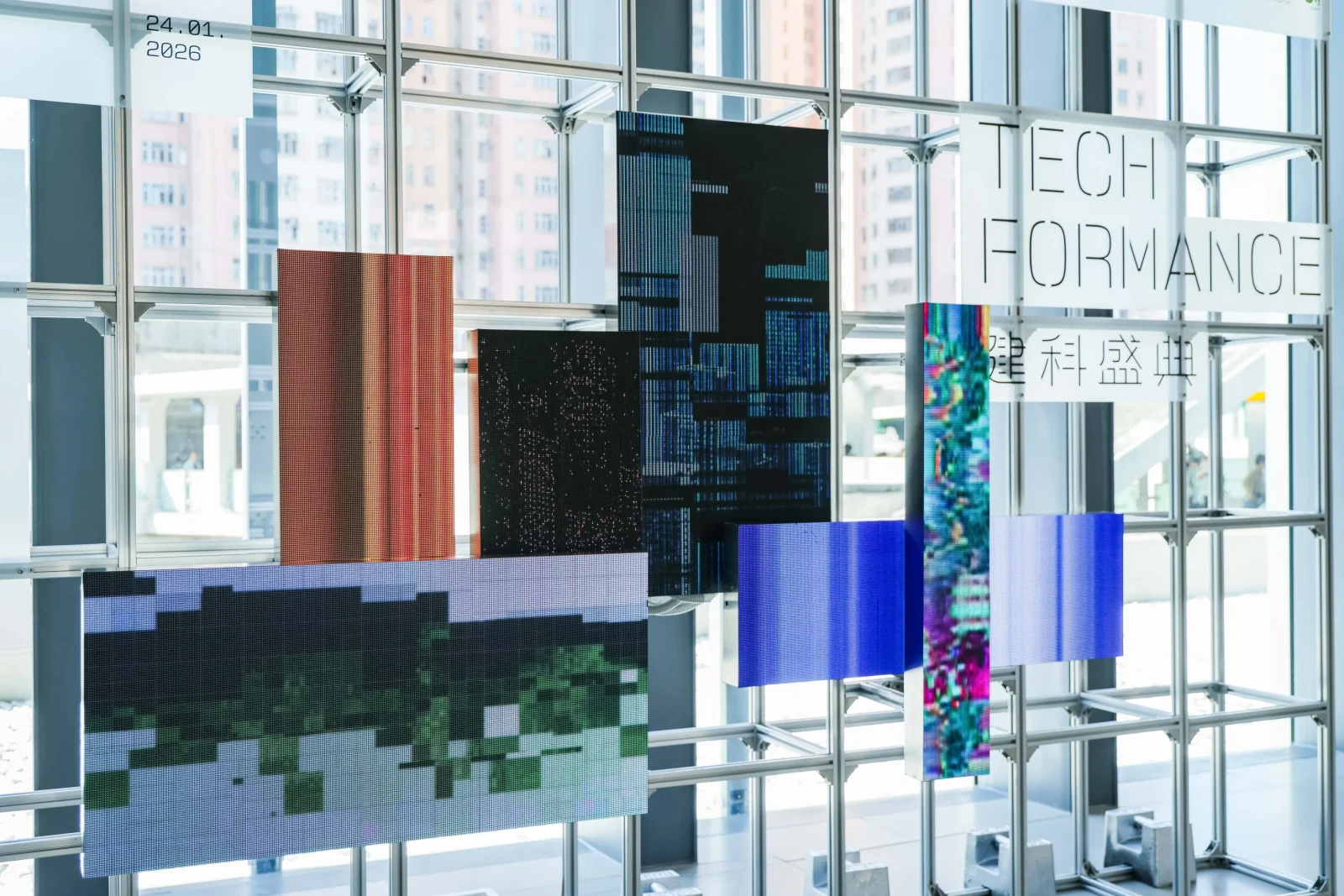
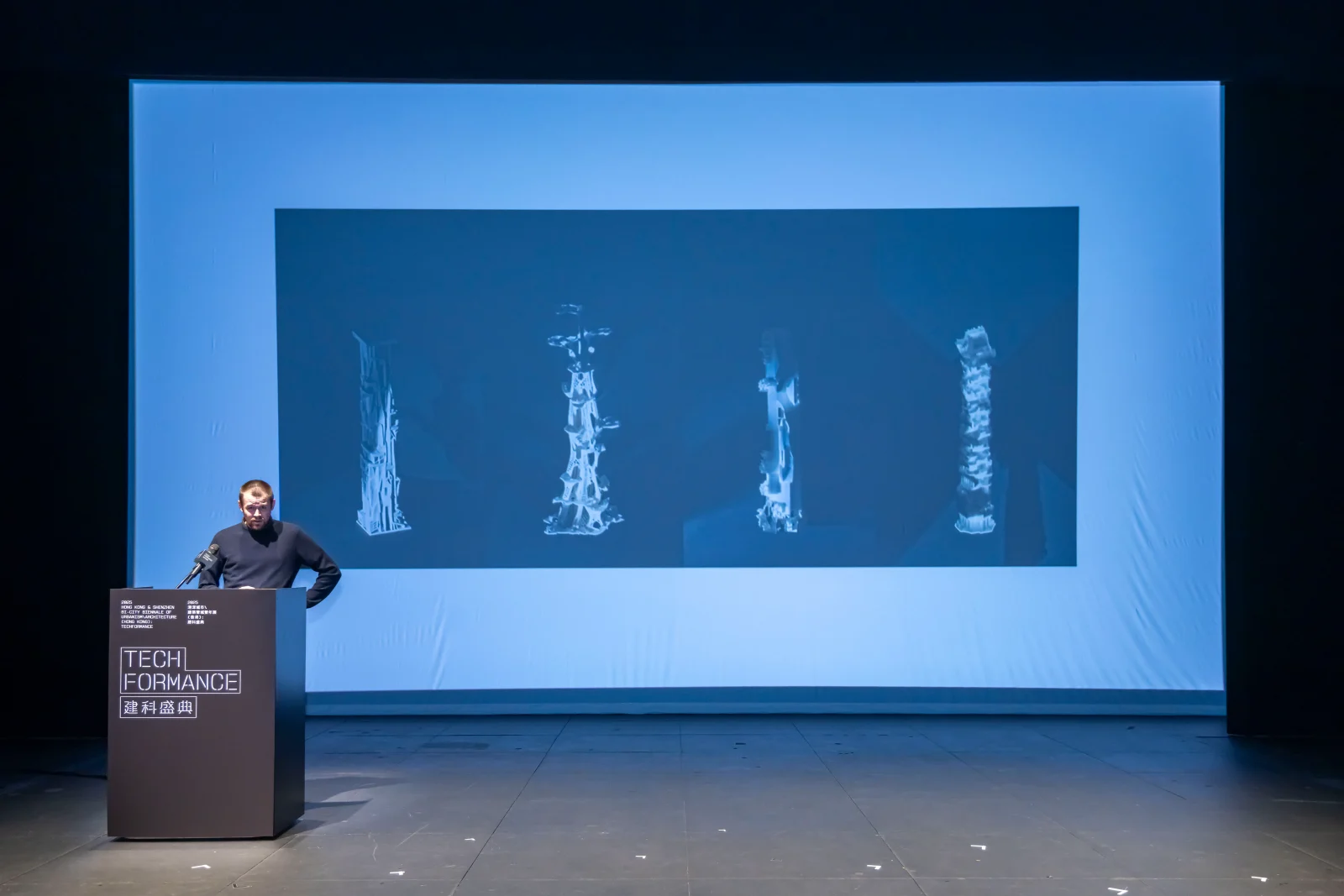

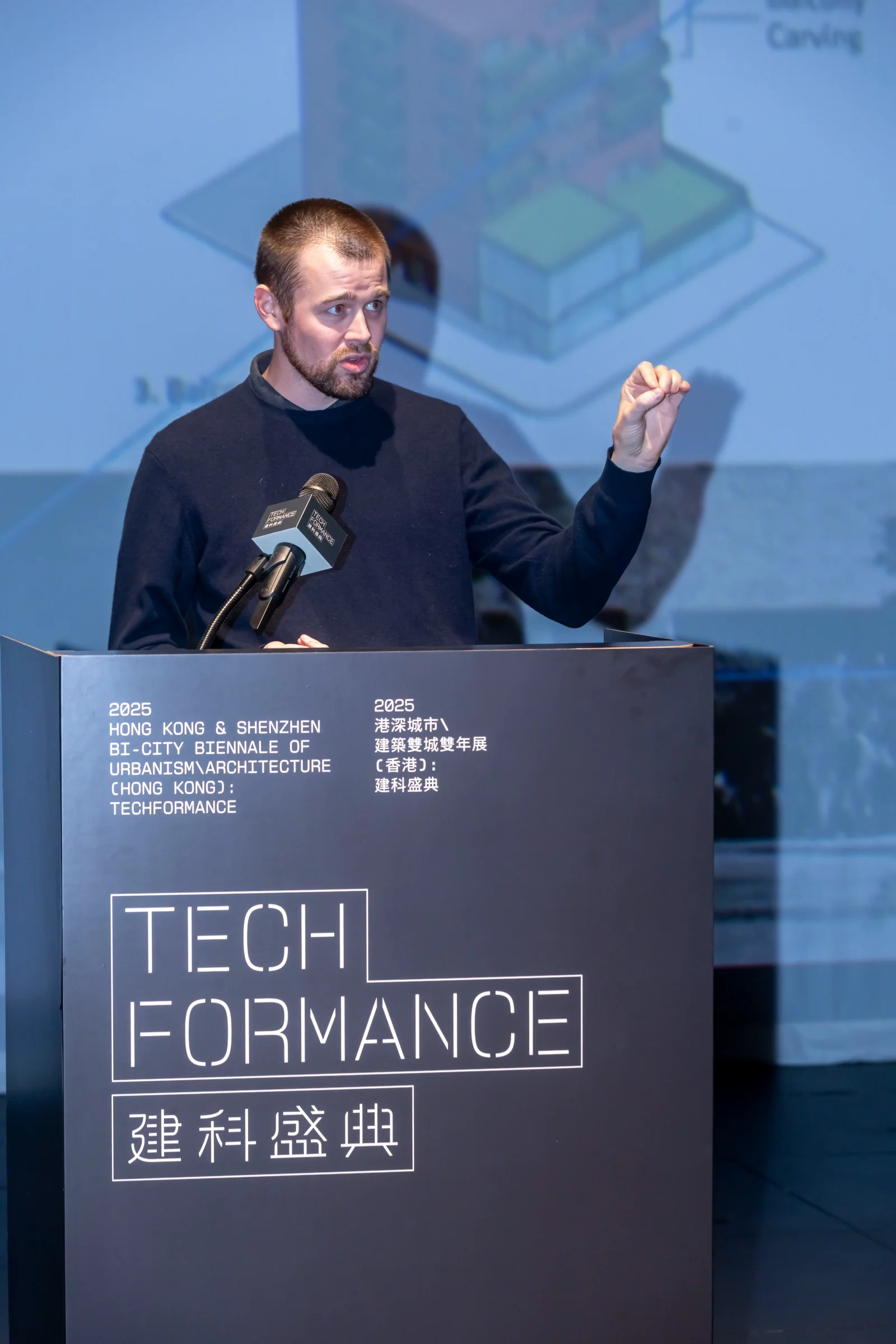
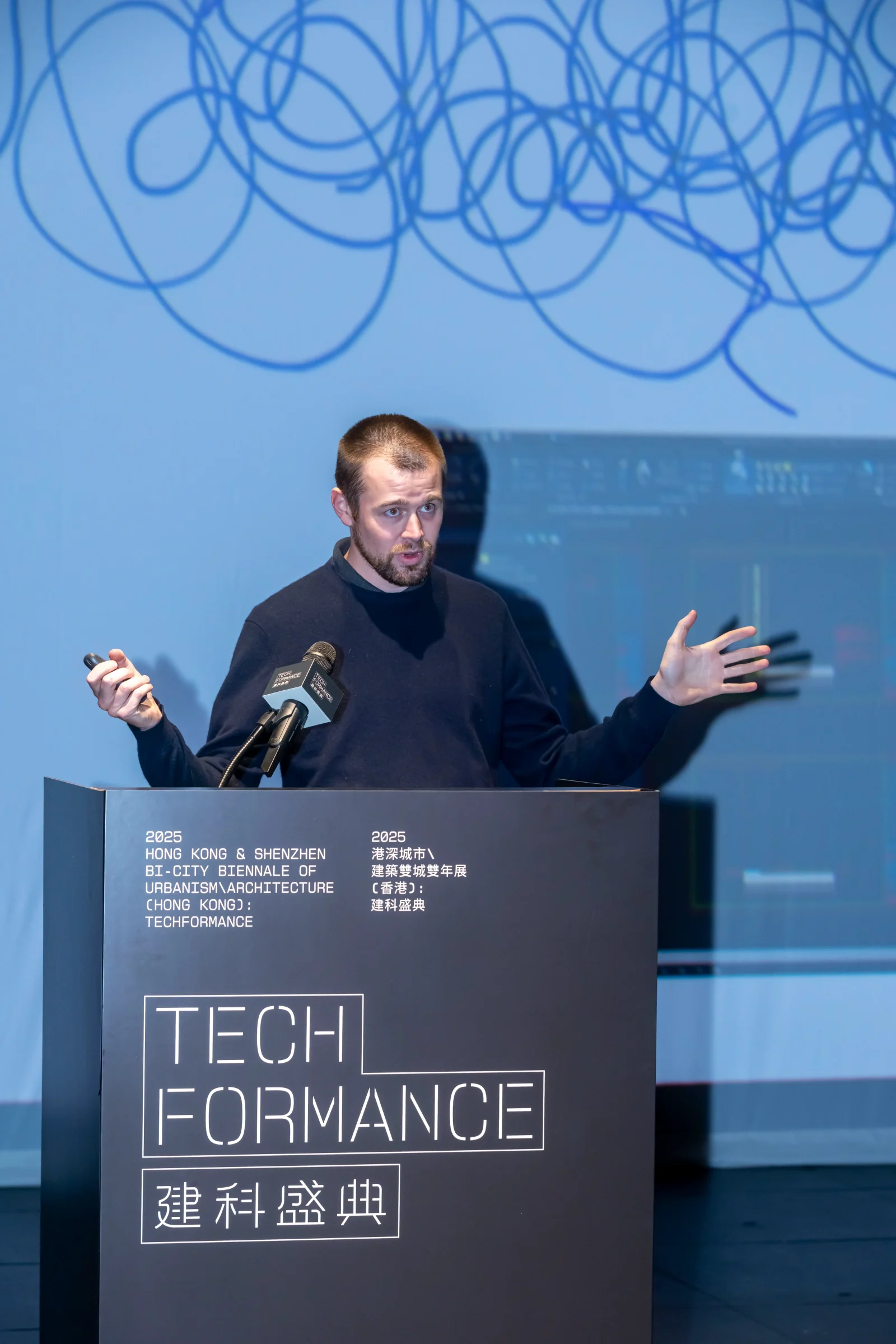
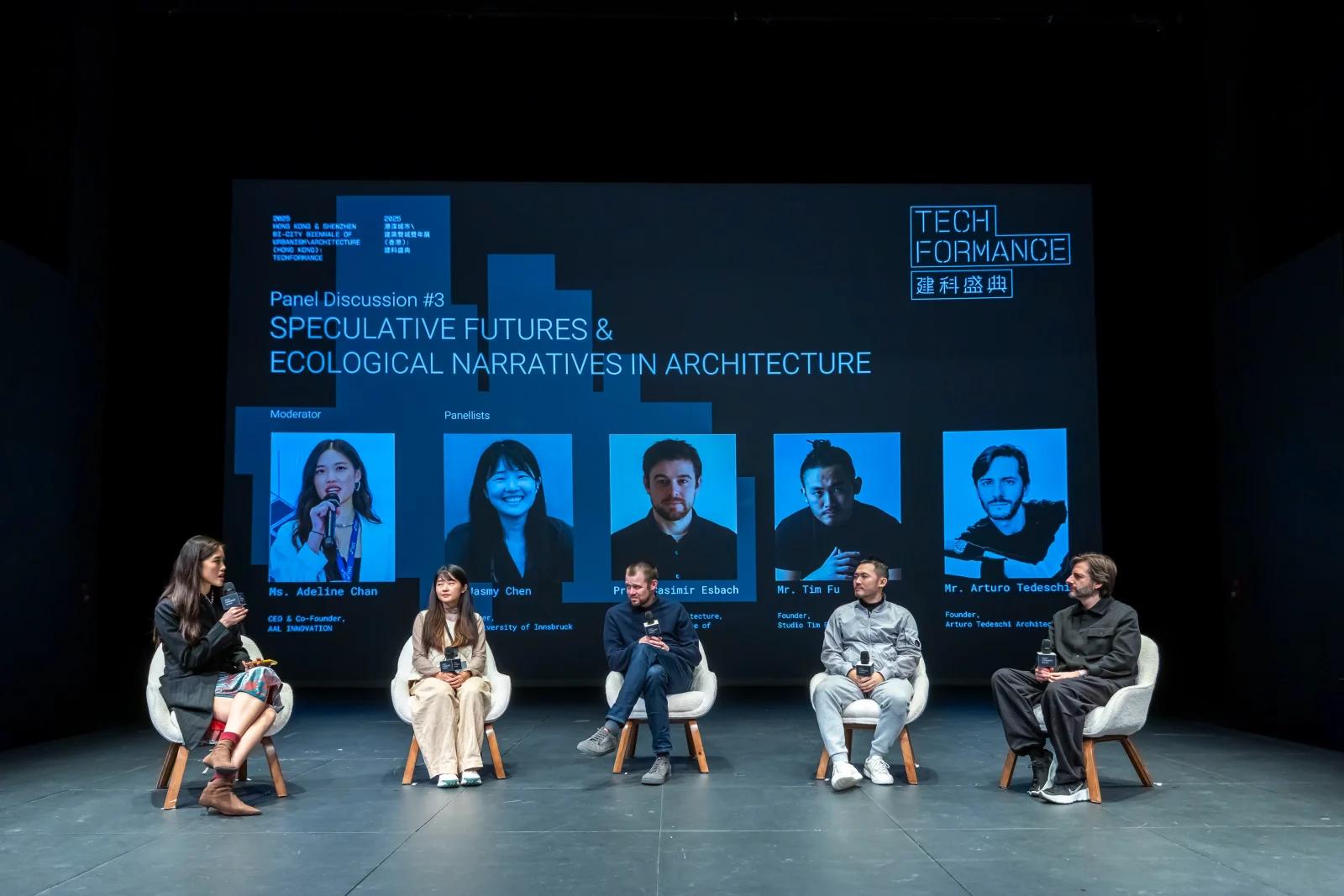
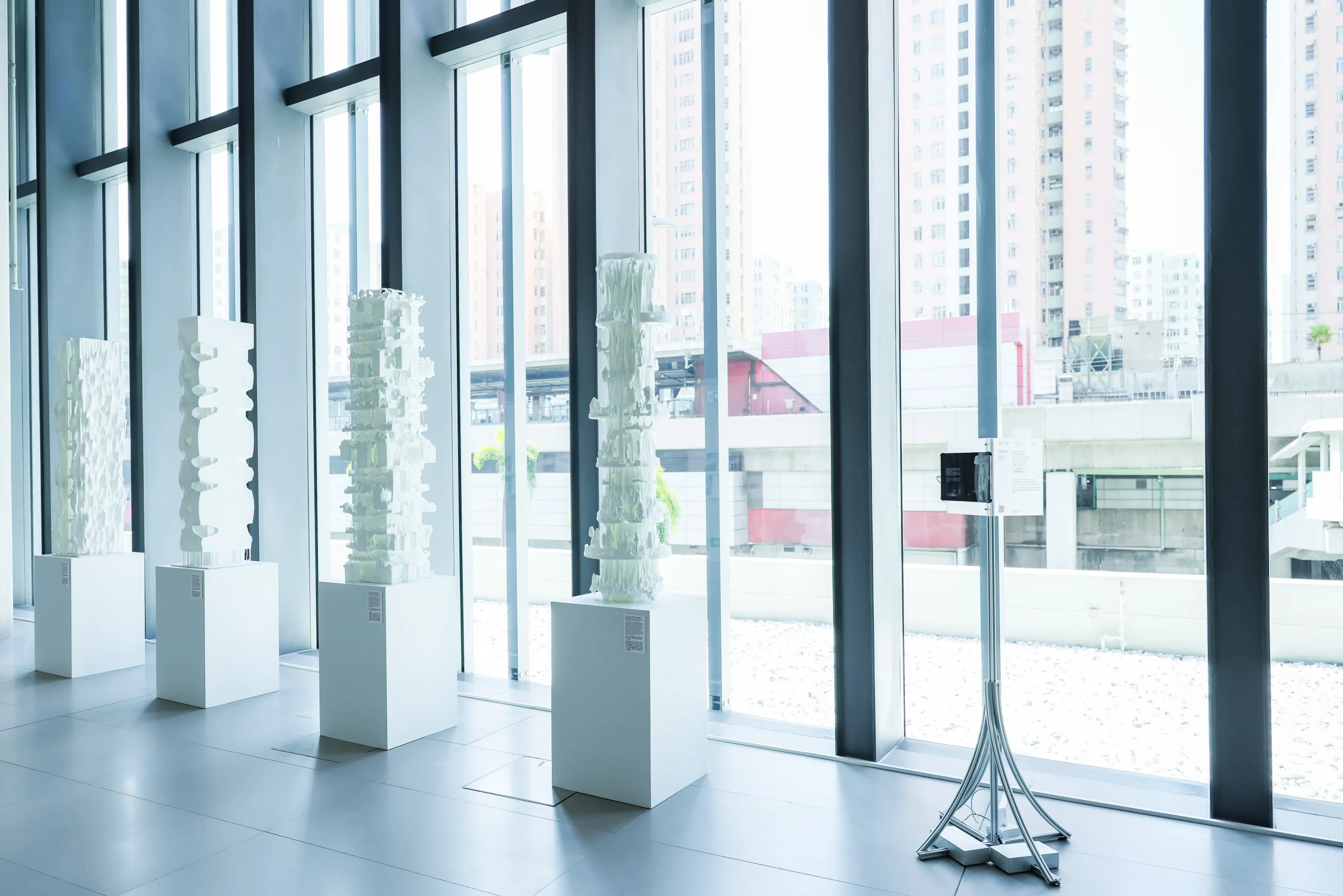
Exporting Aesthetics examines how artificial intelligence shifts architectural authorship from drawing buildings to designing systems. Presented at the 2025 Hong Kong–Shenzhen Bi-City Biennale of Urbanism and Architecture, the exhibition features a series of large-scale, AI-generated tower models developed through fully automated workflows.
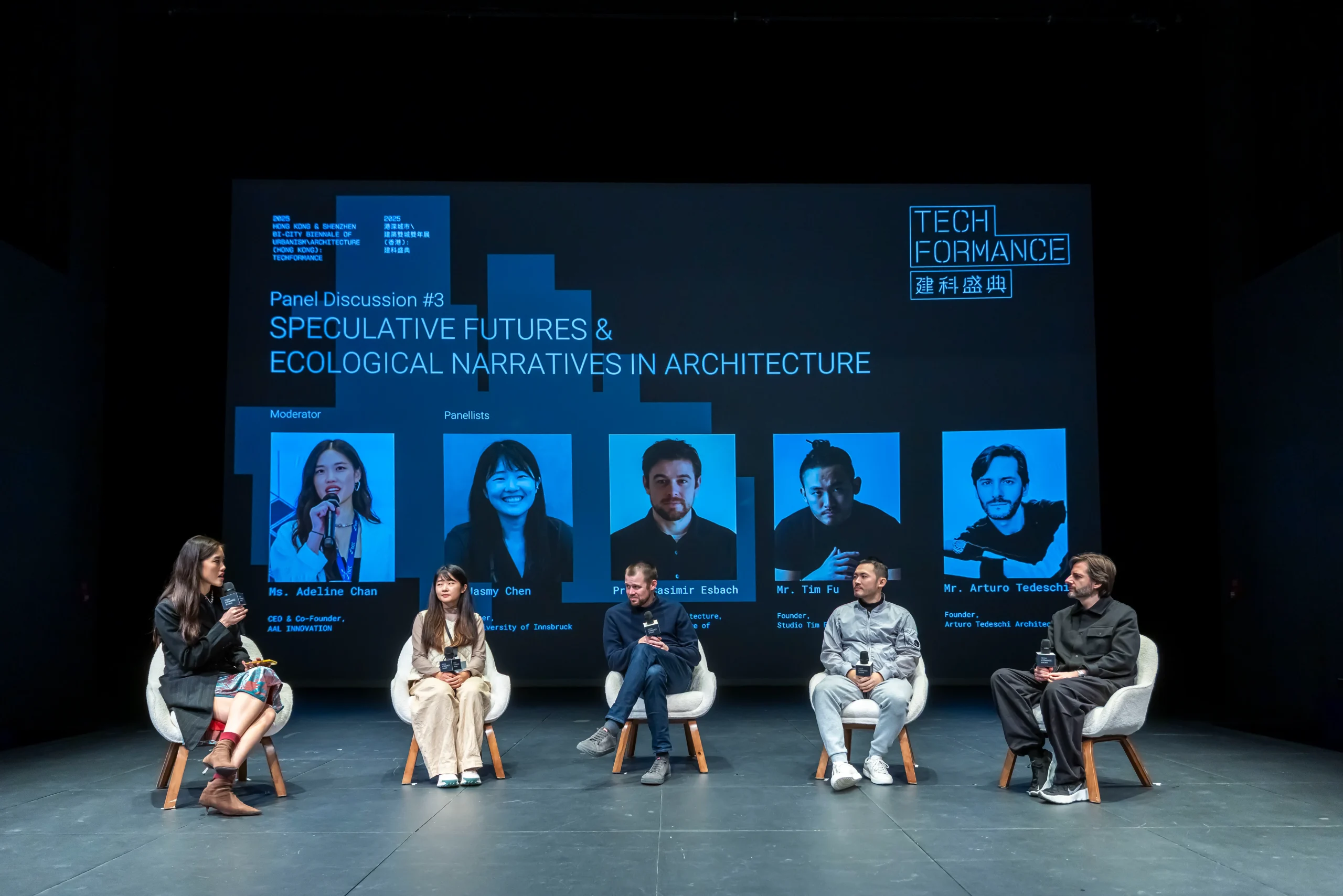
The towers emerge from datasets, prompts, and recursive machine logic. Regional narratives of the Greater Bay Area are translated into speculative architectural forms through computation, rather than direct design authorship.
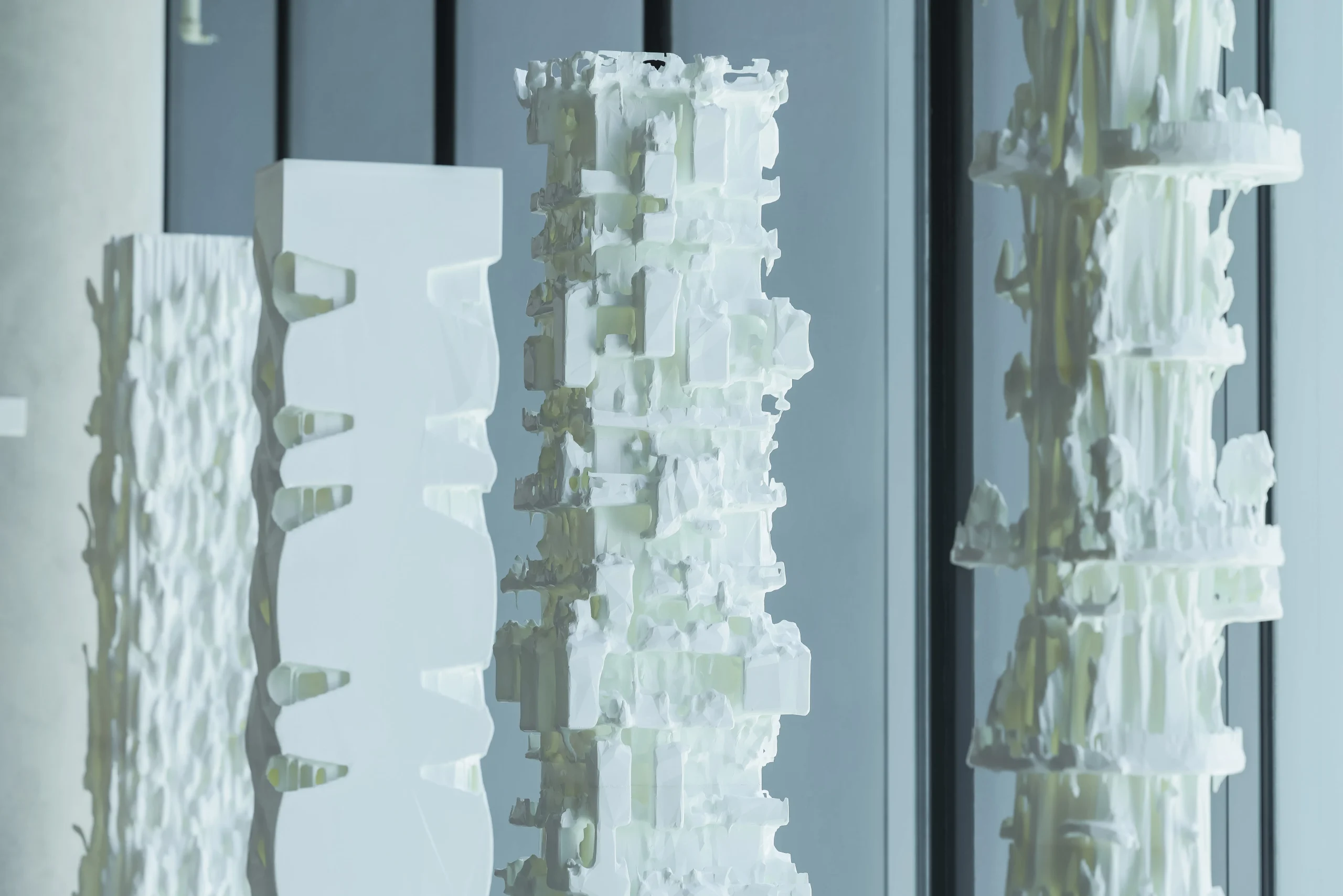
The project poses a direct question: when architecture is generated by machines trained on cultural, spatial, and economic information, where does authorship reside, and what kinds of aesthetics are produced?
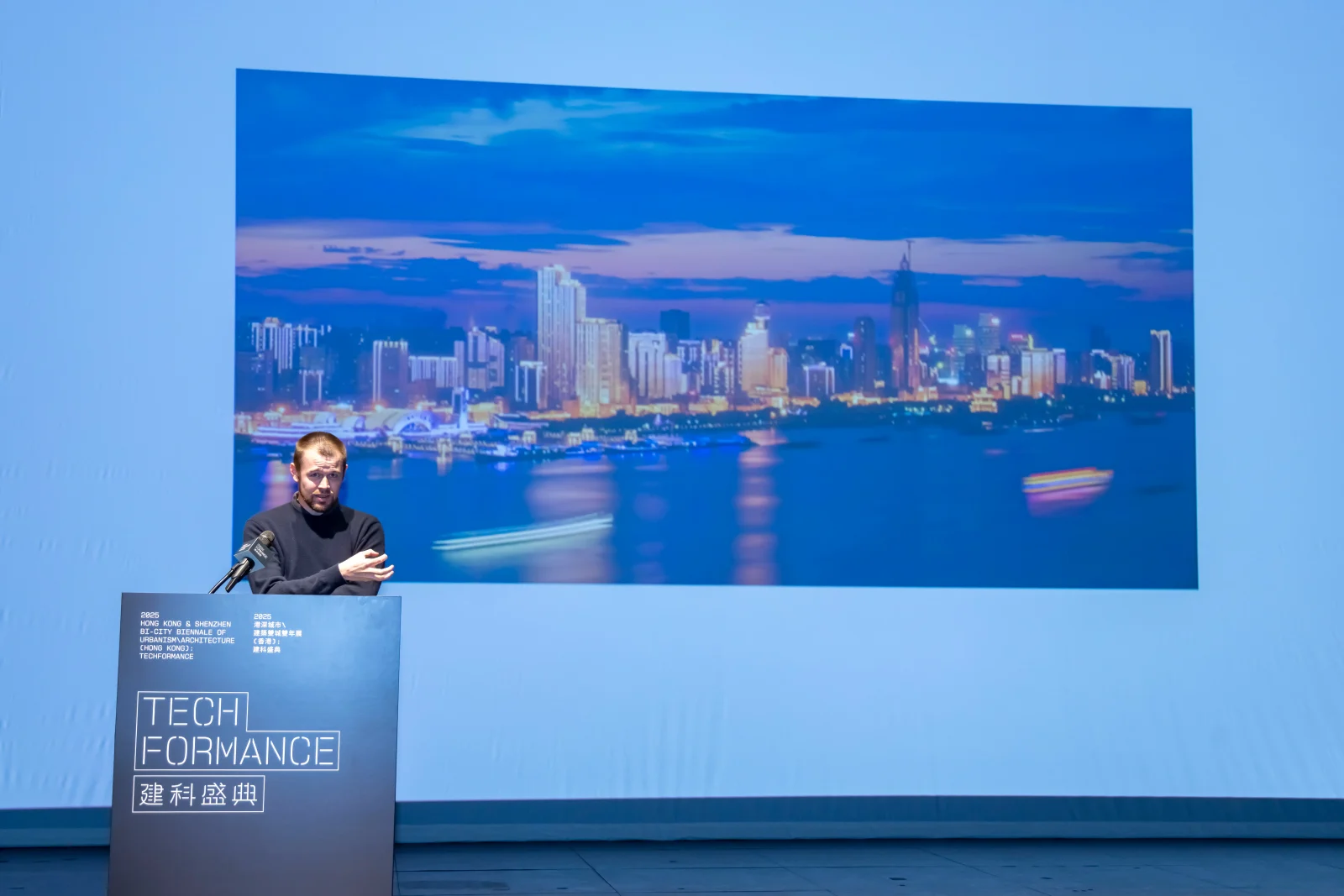
The Greater Bay Area as Input
One of the most compressed and rapidly evolving urban regions in the world, the Greater Bay Area is characterized by extreme density, infrastructural intensity, and continuous redevelopment.
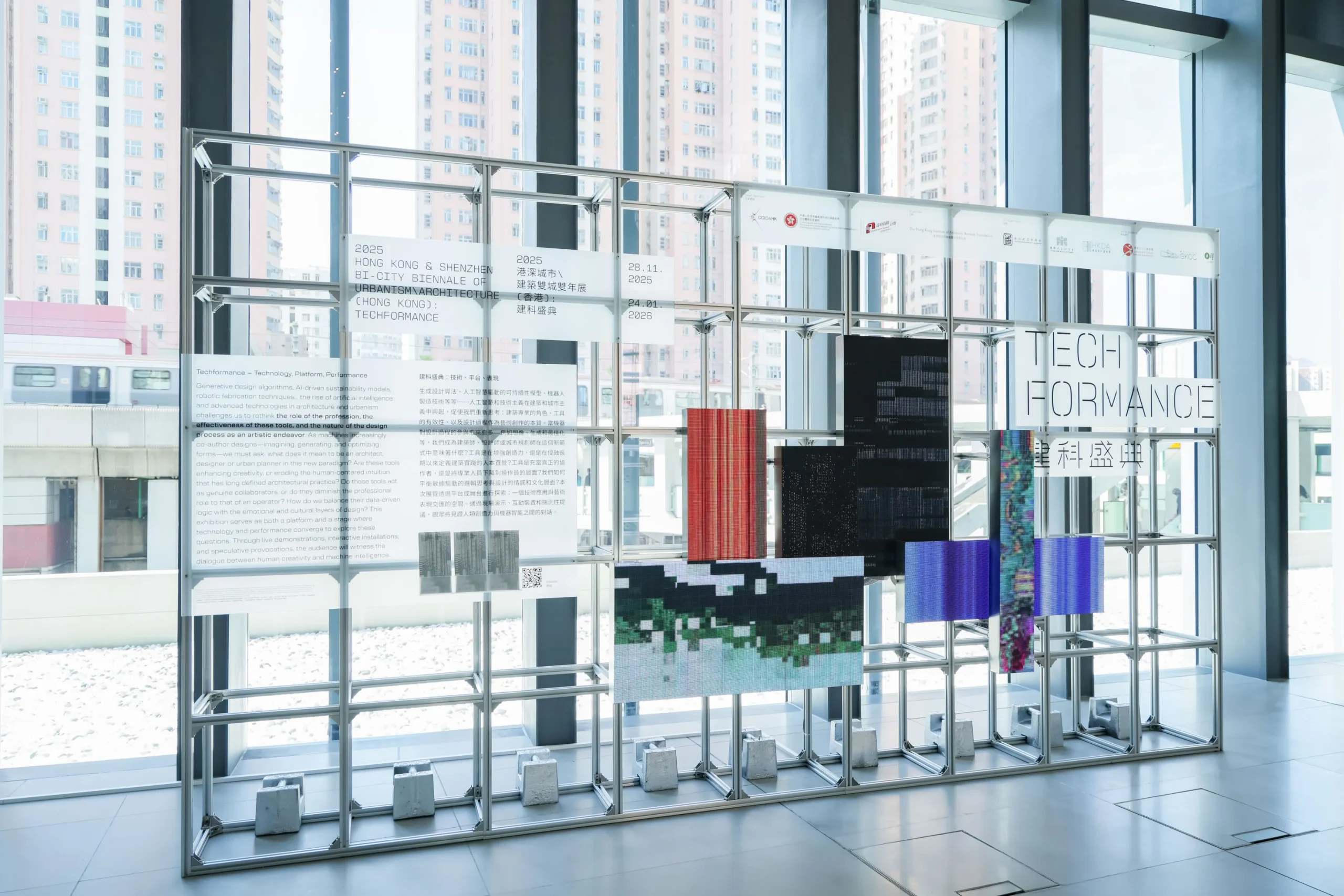
Urban narratives, visual references, and contextual data related to density, climate, energy, and spatial organization are curated into datasets that inform AI model training and structured prompting strategies. These systems generate architectural massing and typological variations without direct formal intervention.
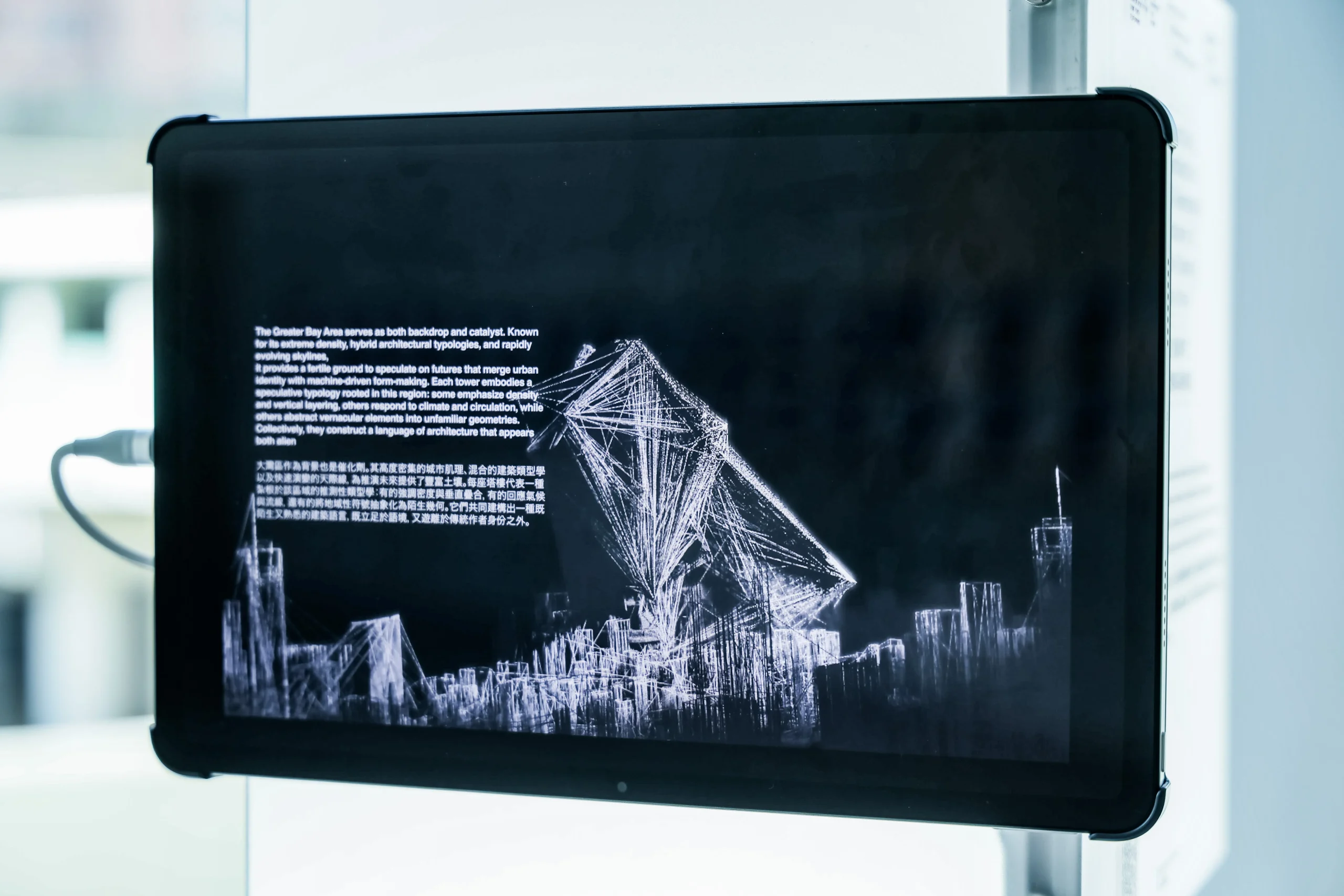
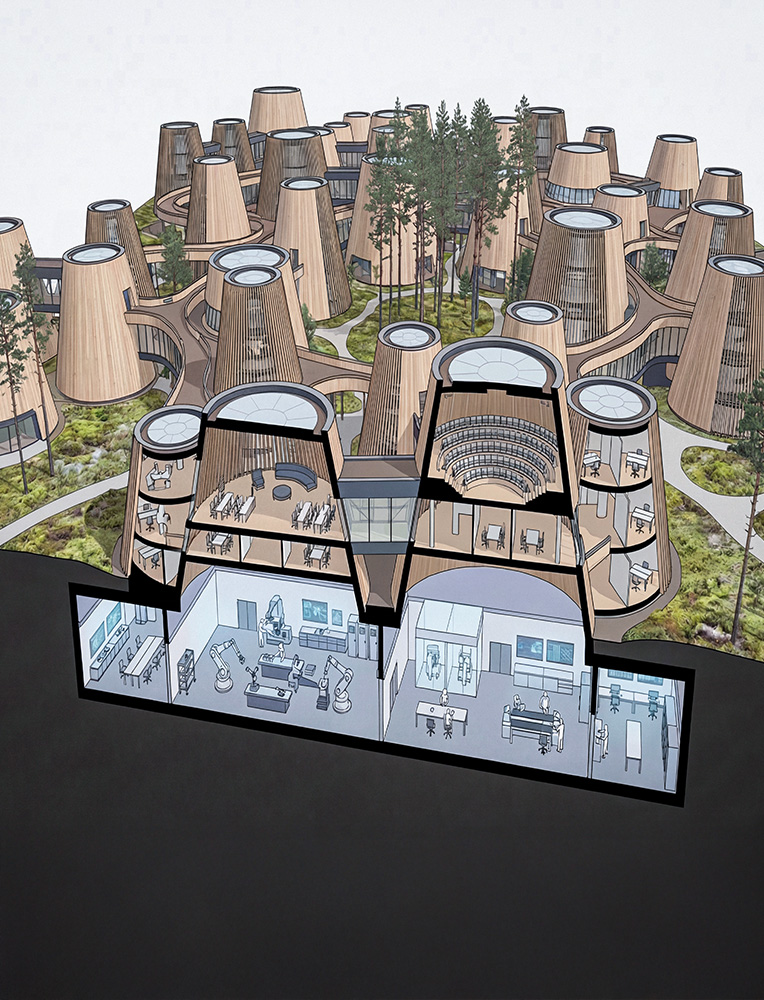
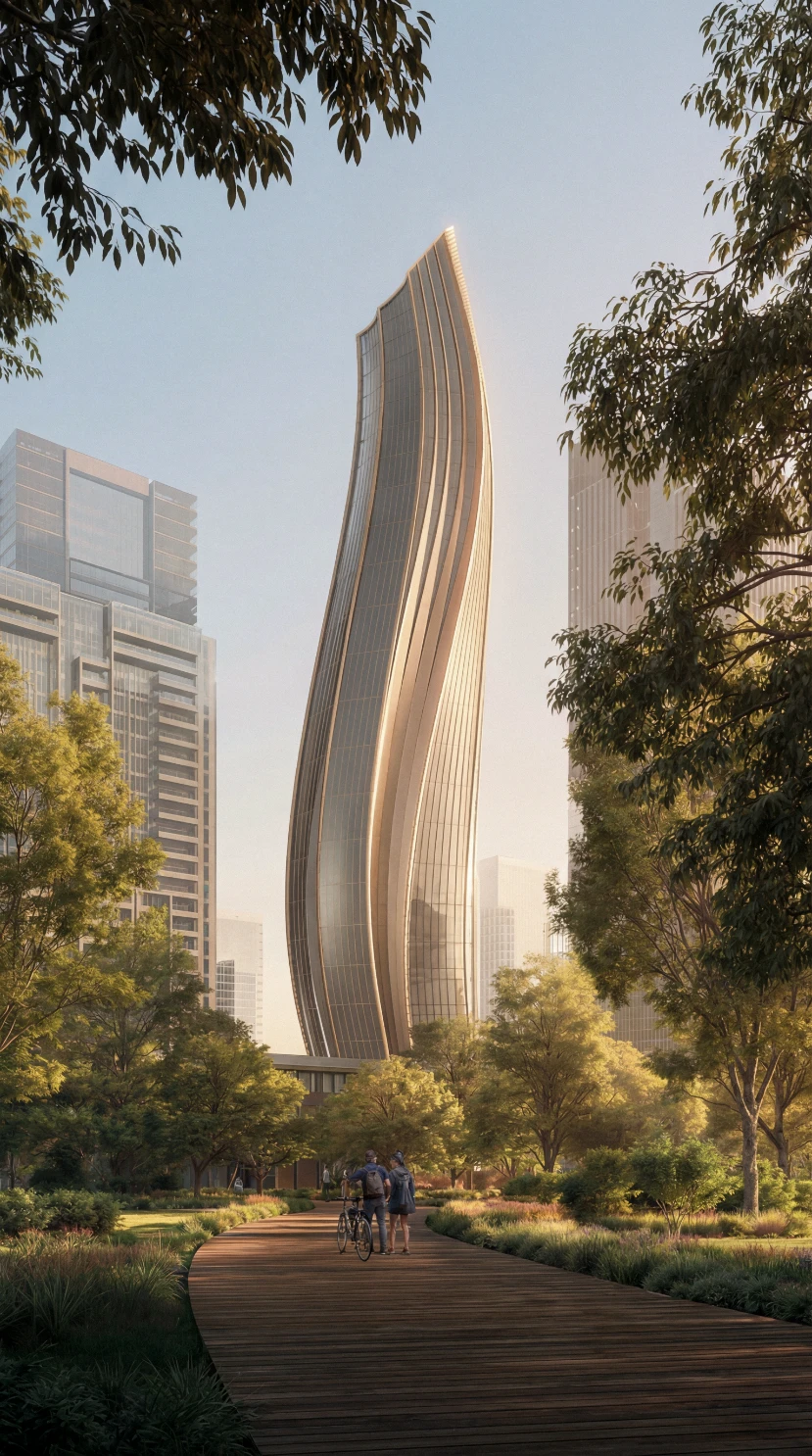
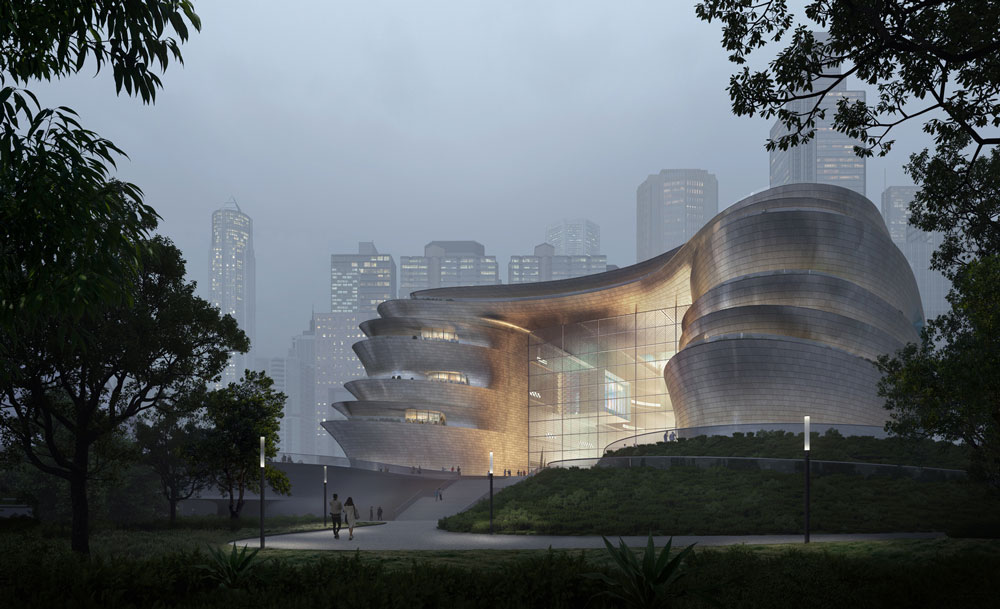
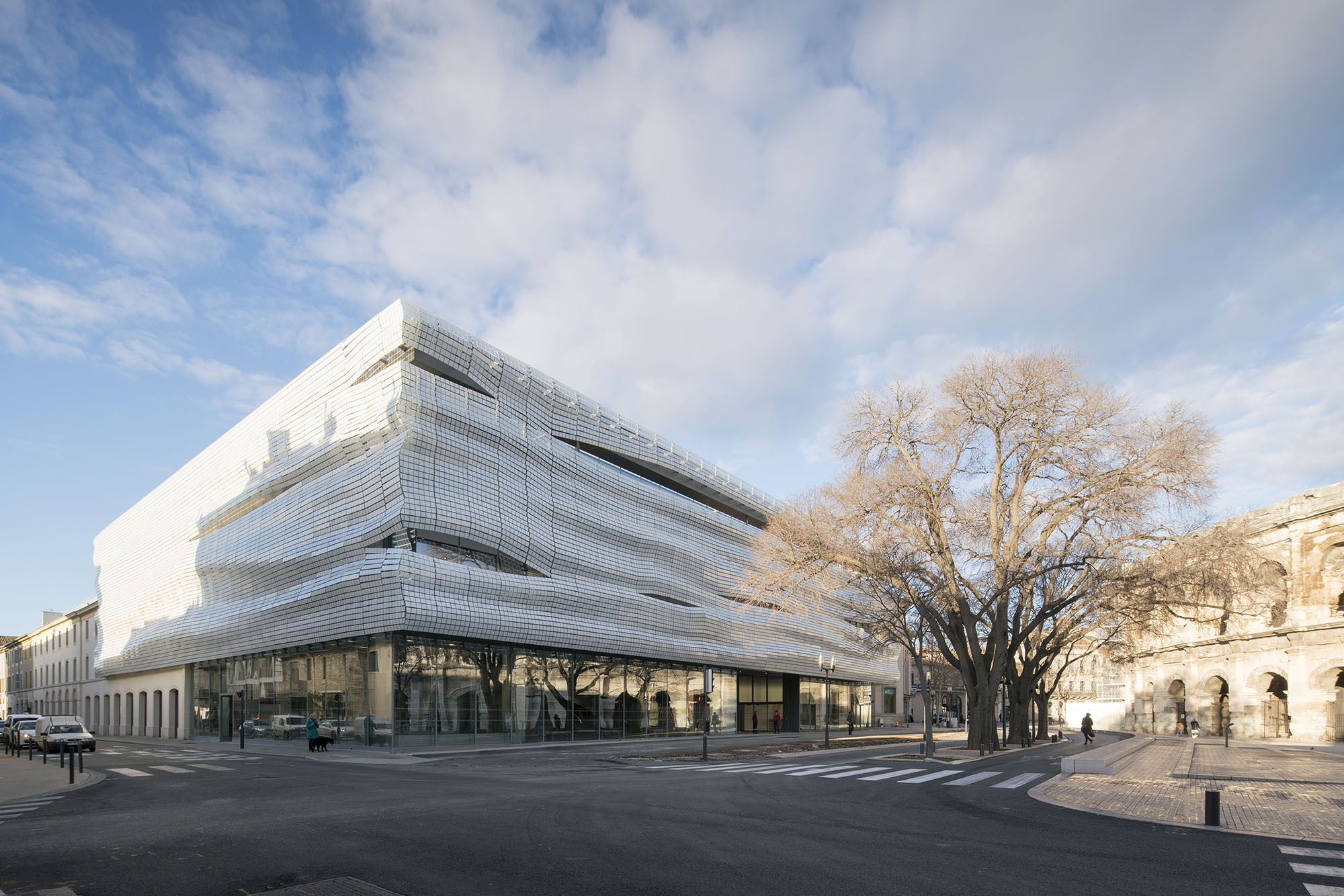
The project exposes how regional conditions are abstracted, amplified, and distorted through machine interpretation. Each tower reflects a distinct architectural logic. Some exaggerate vertical density and stacking. Others respond to environmental forces or abstract vernacular elements in unfamiliar geometries. The resulting forms feel both contextual and alien, grounded in regional characteristics yet detached from human authorship.
Redefining Authorship Through AI

A central ambition of Exporting Aesthetics is to challenge conventional ideas of architectural authorship. Human involvement is intentionally limited. Instead of shaping form through design intuition, the team defines datasets, prompt structures, and selection criteria. Architecture emerges as a byproduct of system behavior.
This shift reframes the architect’s role from author to editor. Design intelligence moves from the drawing to the dataset and from form-making to decisions about what information is encoded. Developed by KANS, the design studio founded by architect and educator Casimir Esbach, the project reflects ongoing research into AI-integrated architectural workflows and speculative aesthetics.
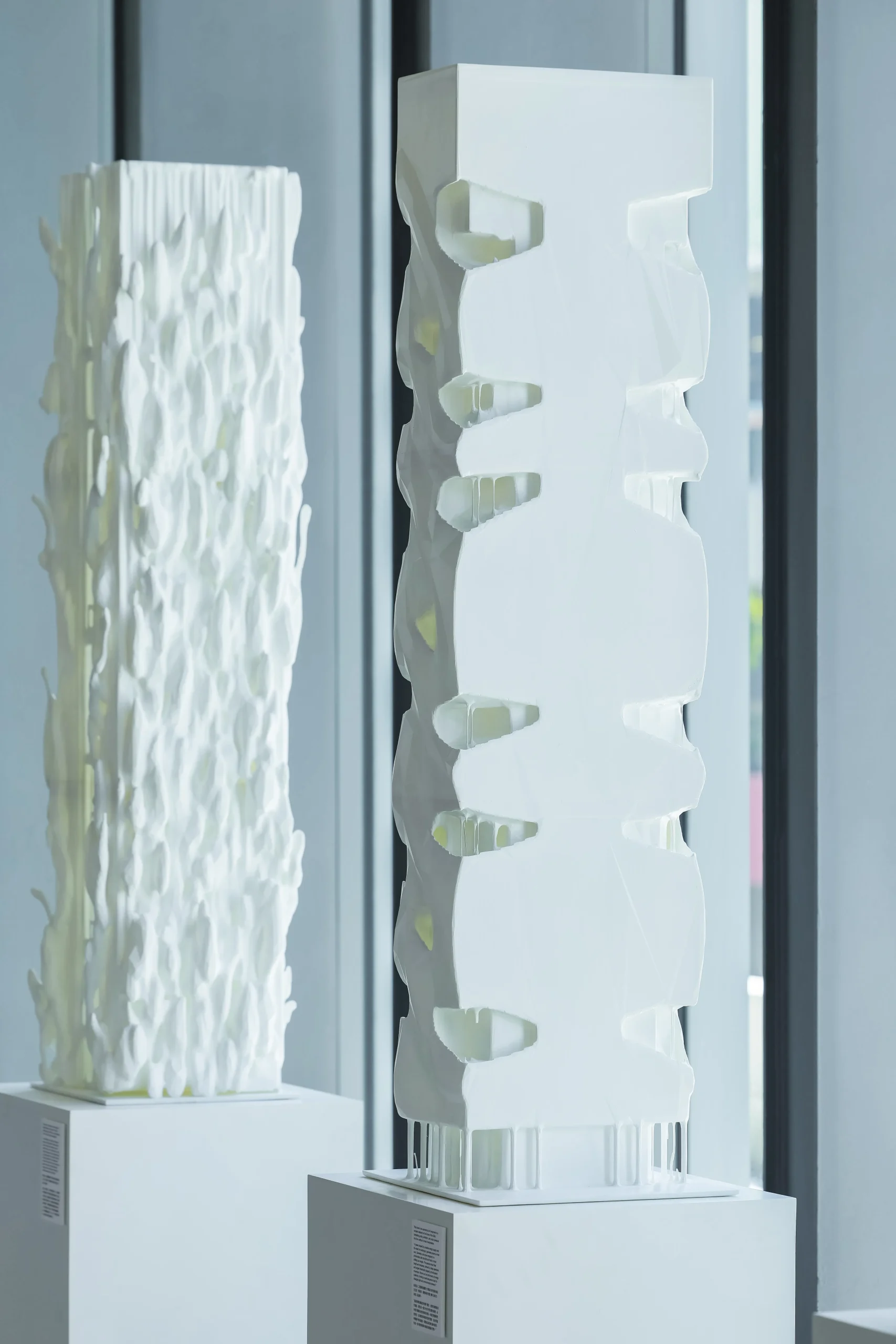
The exhibition highlights how values, biases, and assumptions embedded in training data directly influence architectural outcomes, raising questions of responsibility in AI-mediated practice. The towers are artifacts of the information they were trained on. In this sense, the project positions AI as a cultural mirror that reflects and reinforces existing narratives.
Process and Materialization
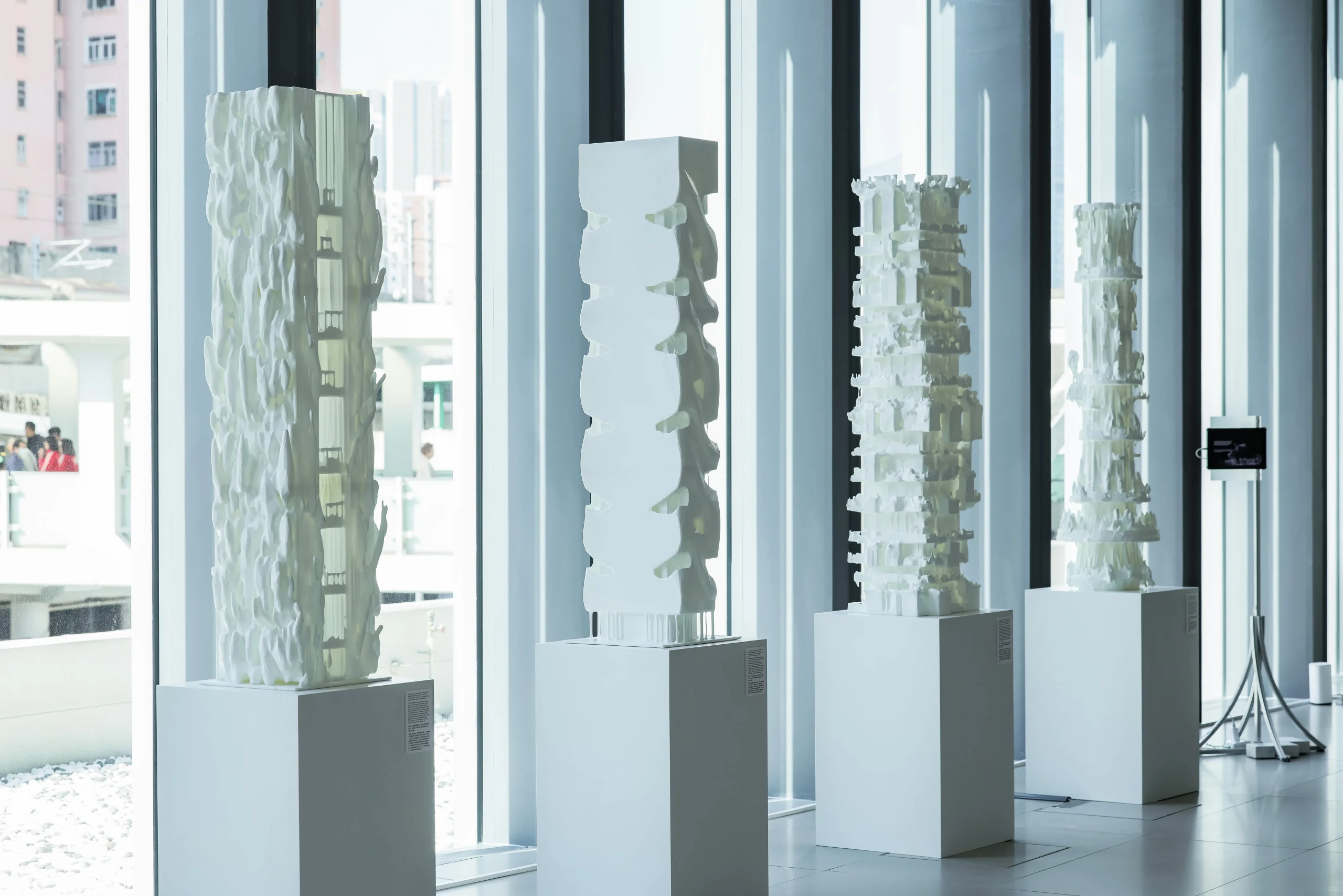
The project operates through a continuous pipeline connecting data, generation, and fabrication. Curated datasets inform AI models that generate architectural geometry through text-to-image and image-based workflows. Selected outputs are translated directly into fabrication models without manual refinement.

The towers are realized as large-scale resin 3D-printed objects. Due to their complex geometries, each model is internally reinforced with threaded rod systems and finished through surface sealing and coatings. Fabrication is treated as an extension of the generative process, emphasizing that AI-driven design operates across the full architectural workflow.
Exporting Aesthetics Exhibition as Disclosure
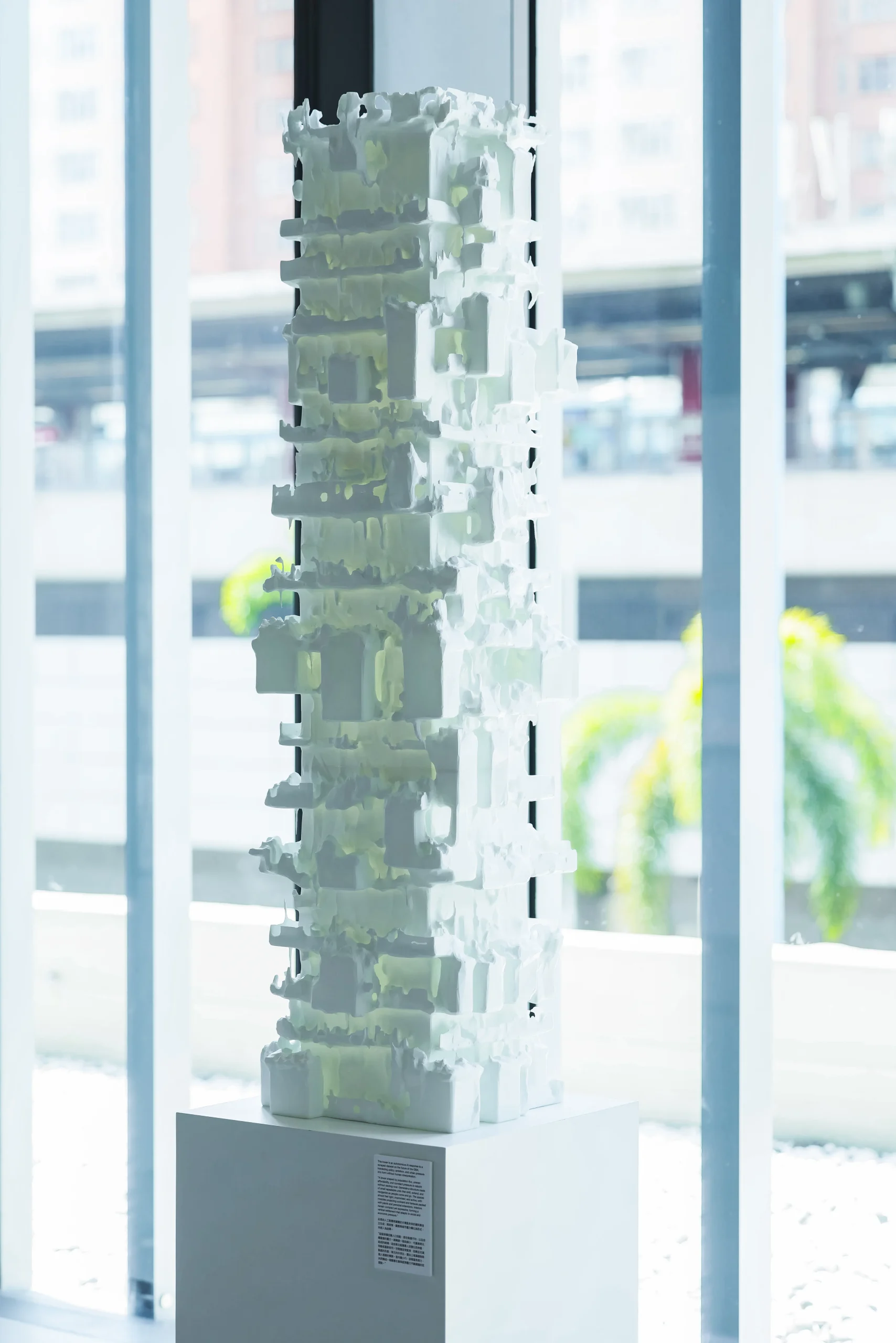
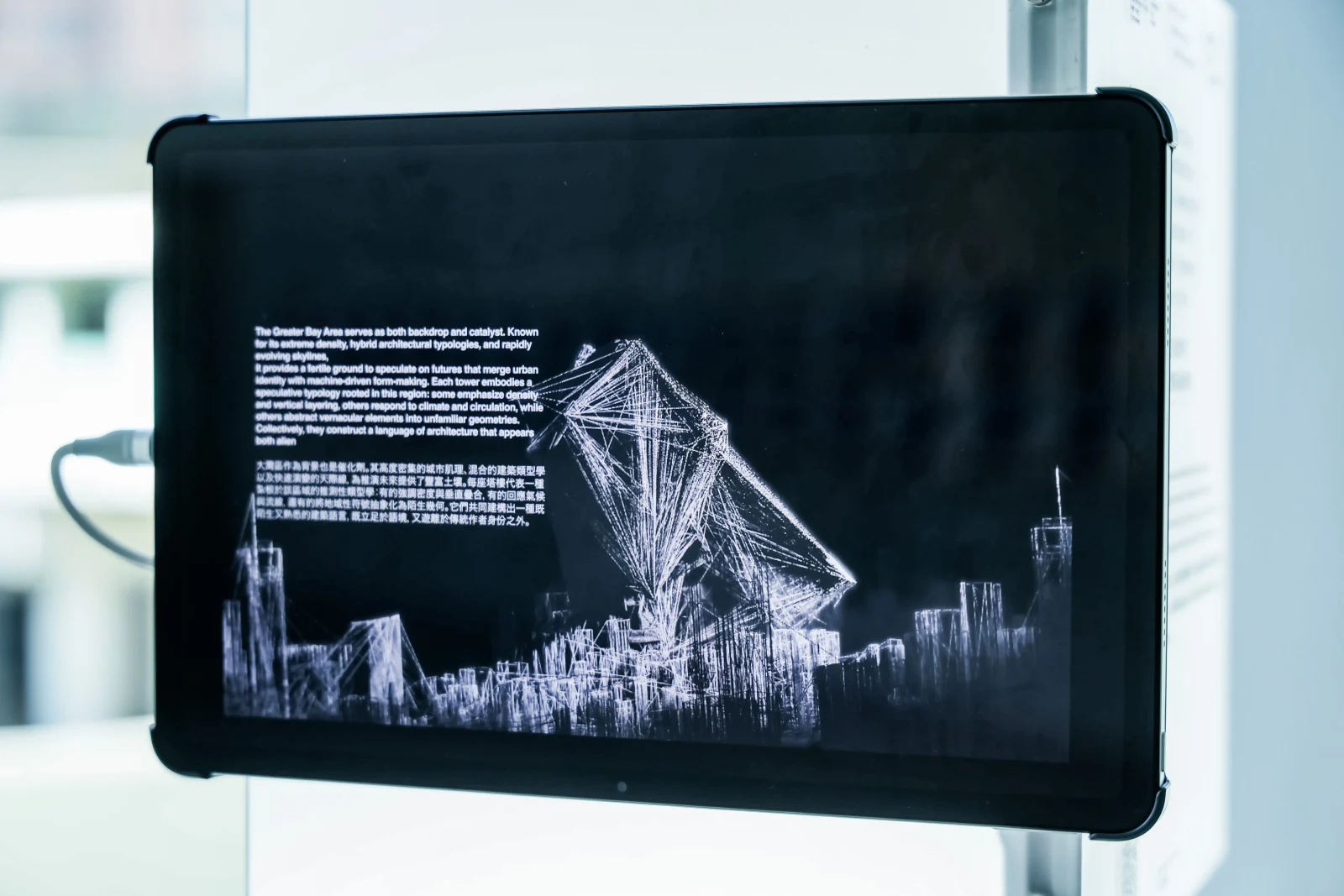
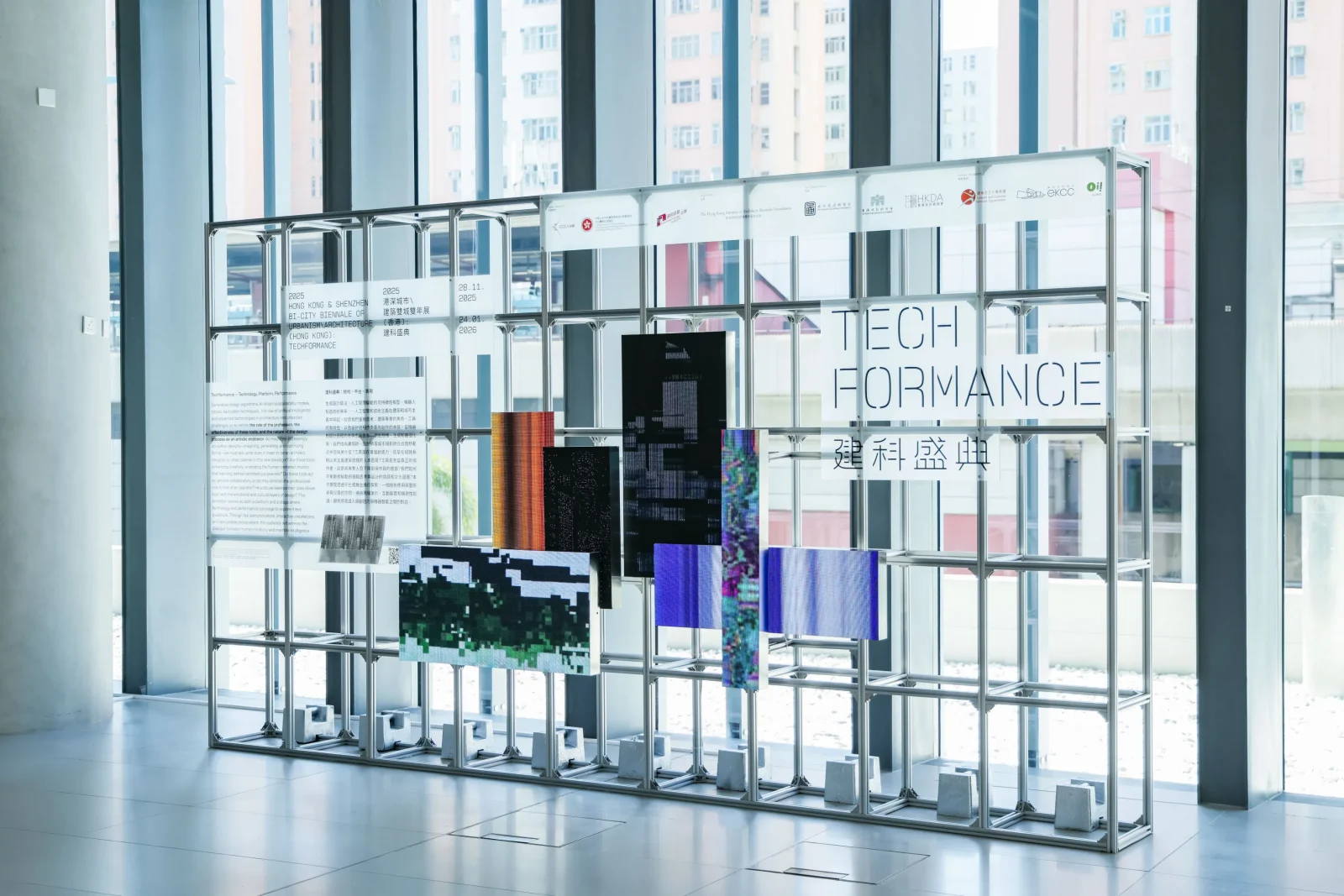
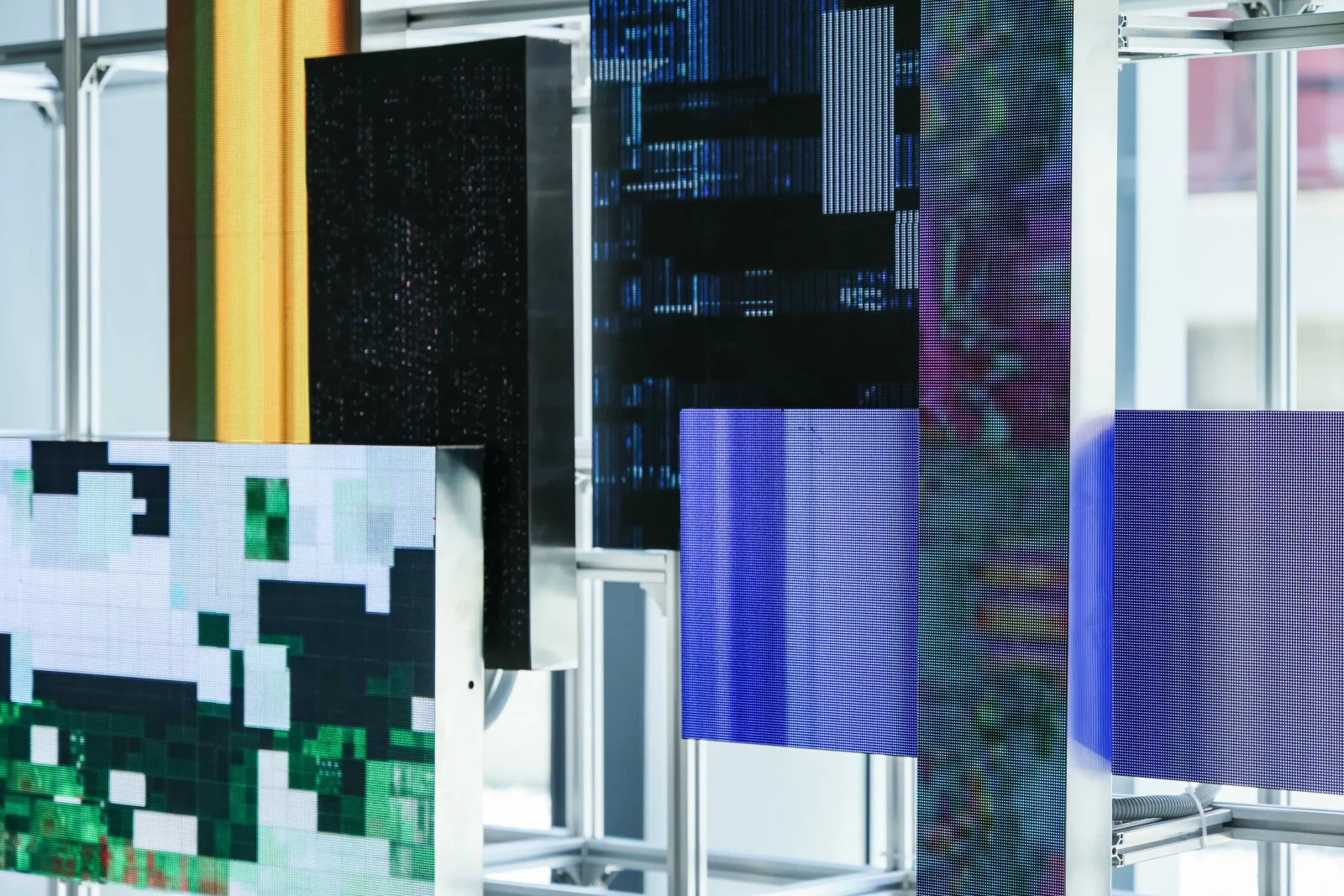
The exhibition prioritizes process transparency over spectacle. Alongside the physical models, visitors encounter the digital workflows that produced them, including prompts, datasets, and intermediate outputs. This curatorial approach shifts attention from the final objects to the systems that generate them.

By exposing these mechanisms, Exporting Aesthetics invites critical reflection on where agency resides in AI-driven design and how machine systems increasingly mediate architectural decisions.
Collaboration and Context
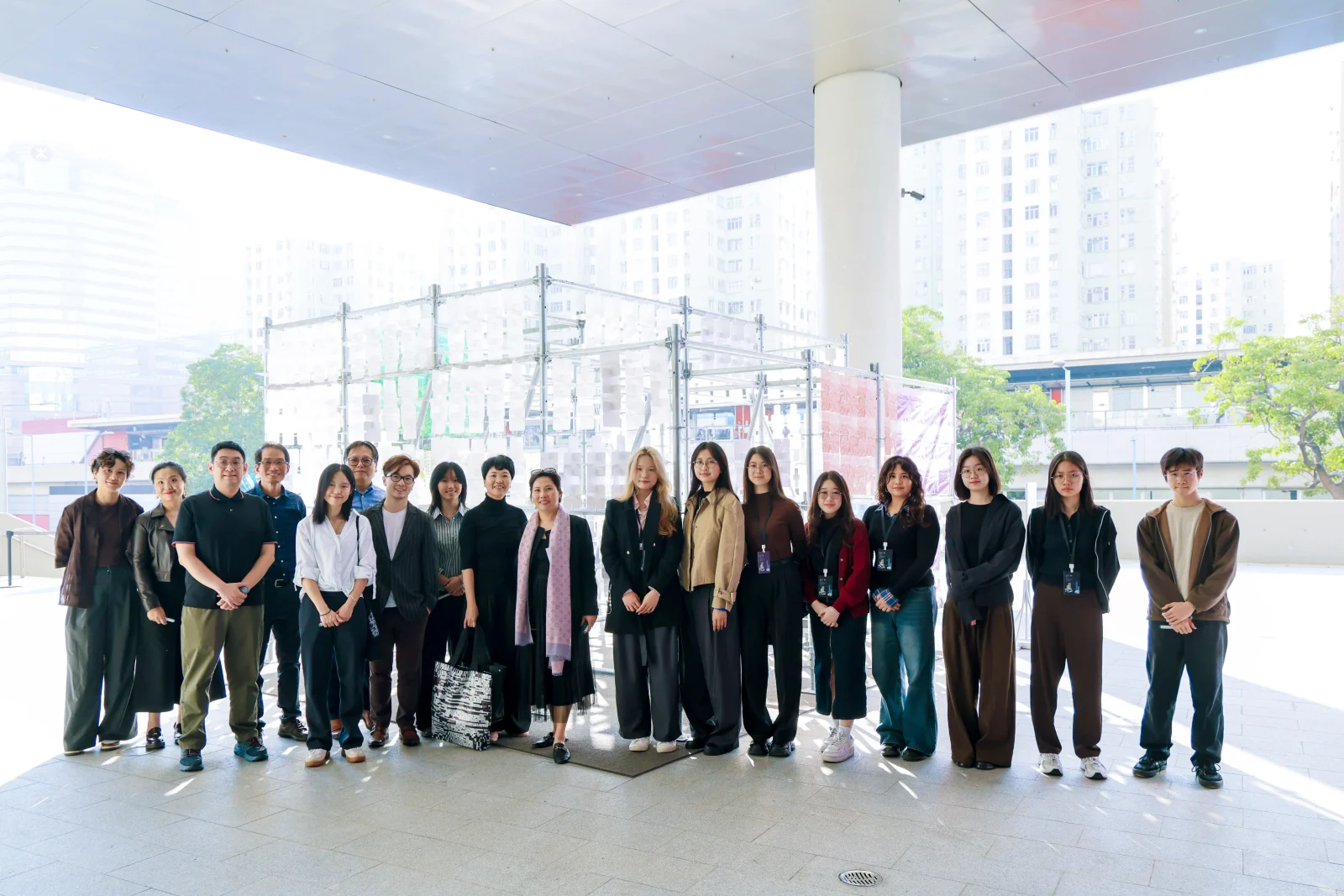
The exhibition is developed by KANS in collaboration with Sandra Baggerman and Stella Zhang, bringing together professional practice, academic research, and regional insight across Europe, the United States, and China.
Sandra Baggerman’s work in architectural pedagogy and experimental spatial thinking informs the project’s emphasis on authorship and process, while Stella Zhang’s leadership at InVision Wuhan grounds the research in the realities of urban transformation within the Greater Bay Area.
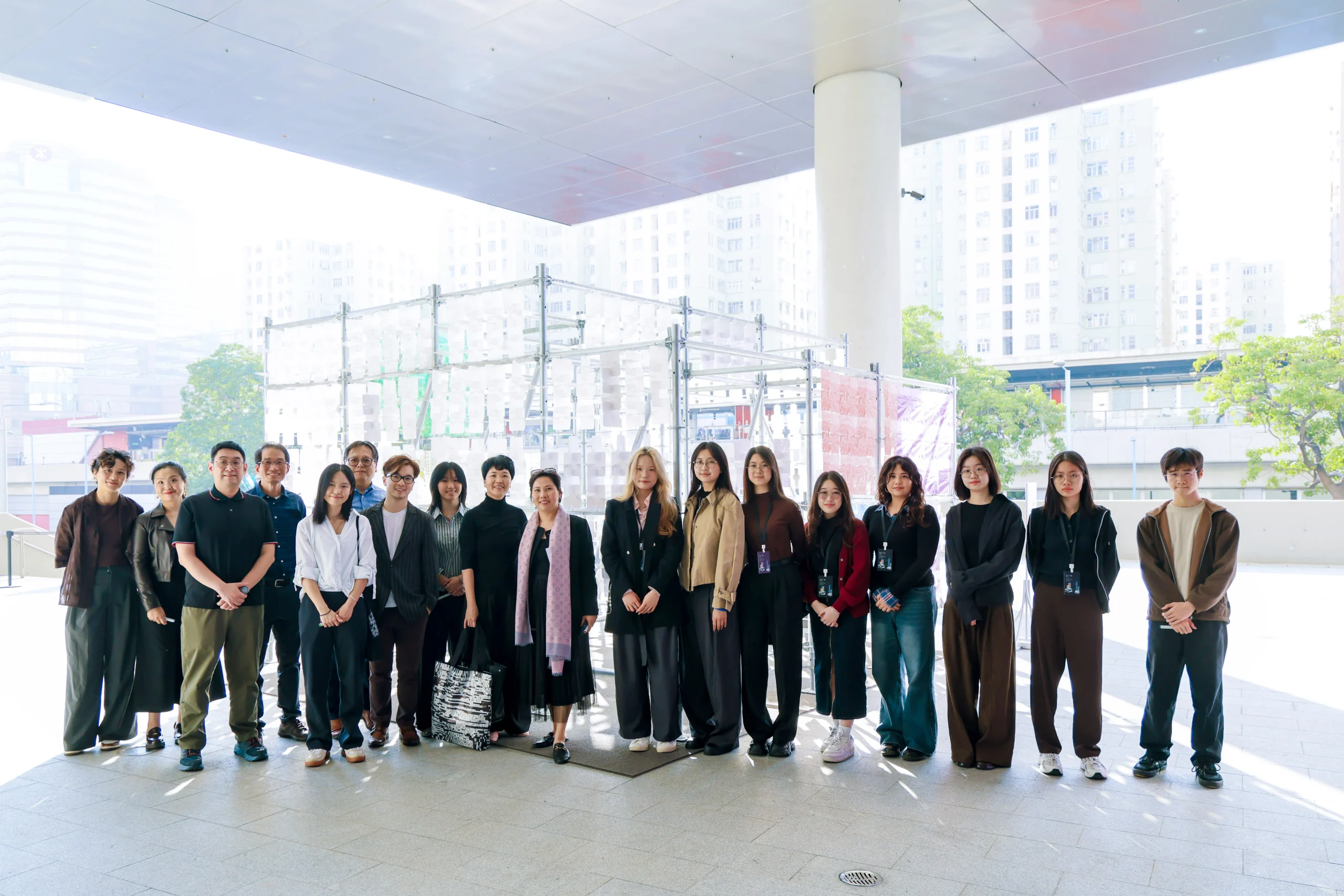
The team frames AI as a design condition that reshapes how architecture is designed, produced, and evaluated, rather than a replacement for architects. The towers function as provocations, asking how future cities might look when aesthetics are exported through algorithms.
Exhibition Details
Title: Exporting Aesthetics: AI-Generated Futures of the Greater Bay Area
Location: Greater Bay Area, China
Exhibition: 2025 Hong Kong–Shenzhen Bi-City Biennale of Urbanism and Architecture
Type: Architectural research exhibition & Speculative AI-generated architectural models
Studio: KANS
Collaborators: Casimir Esbach, Sandra Baggerman & Stella Zhang
Curatorial Team: Jimmy Ho, Aron Tsang, Owen Lam, Adeline Chan
Acknowledgments: Kazunari Kaneko, Yeung Ho Lam, Tinglan Li (Toto), Qiahan Liu (Stella), Yiheng Liu (Hannah), Wuyuzhen Zhang (Nicholas), Jiayu Xu (Tommy)
Jinkai Chen (Beck), Qinhong Sun (Qinhong), Xunhao Zhang (Bai), Wenxi Zhang (Vivian), Hongyi Sun (Yolanda)
Explore Courses
.jpg%202.jpg "Building Performance with Forma & Opossum")
.jpg "Ondrej Chybik - Rethinking Architecture")