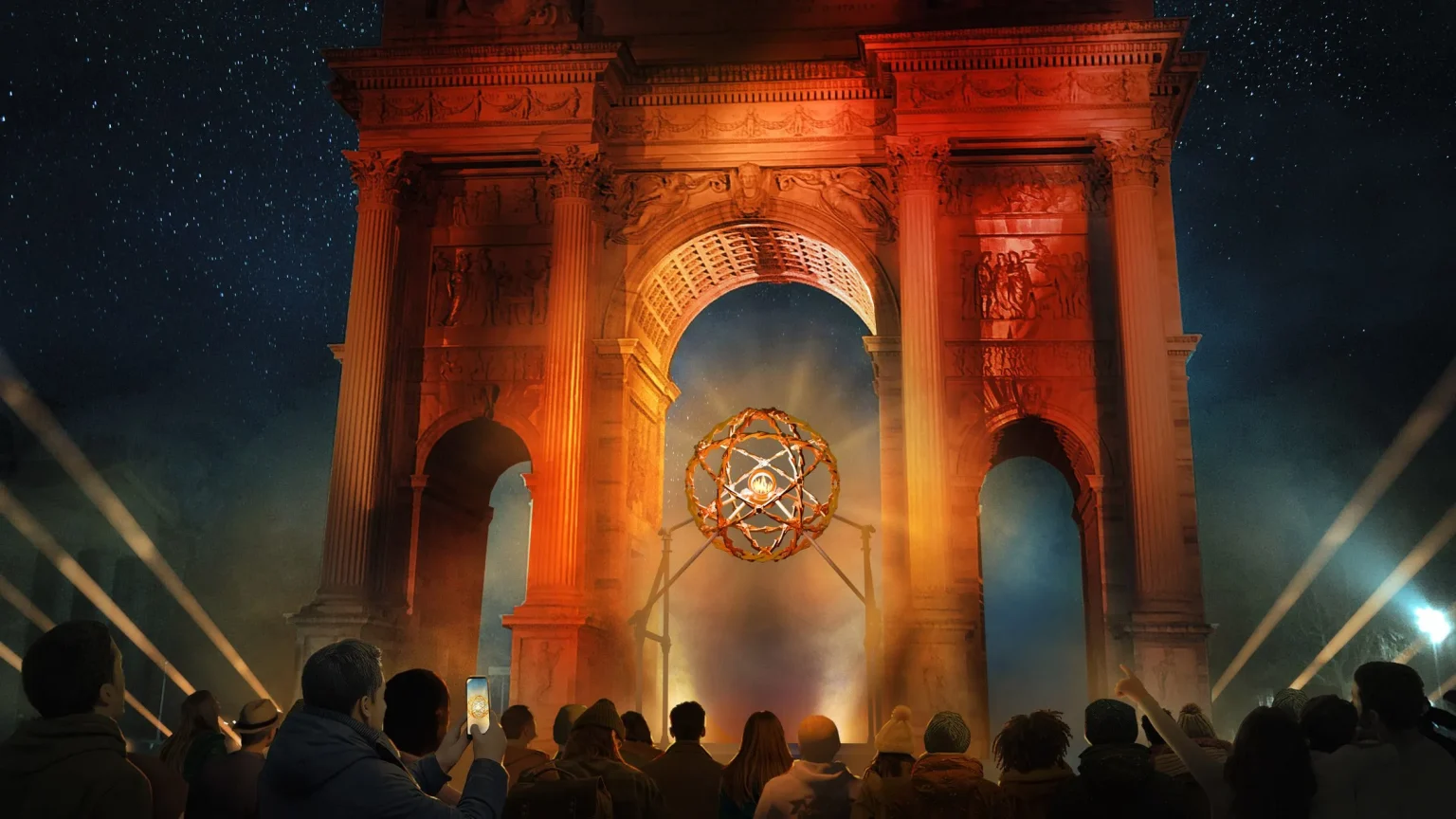

The Milano Cortina 2026 Winter Olympics have revealed one of their most powerful symbols: the Olympic Cauldrons. For the first time in Olympic and Paralympic history, two cauldrons will be lit and extinguished at the same moment in two different cities. The announcement, made in Milan on 20 January 2026, underlines the unique, shared nature of these Games and the close connection between Milano and Cortina d’Ampezzo.
Two cities, one flame
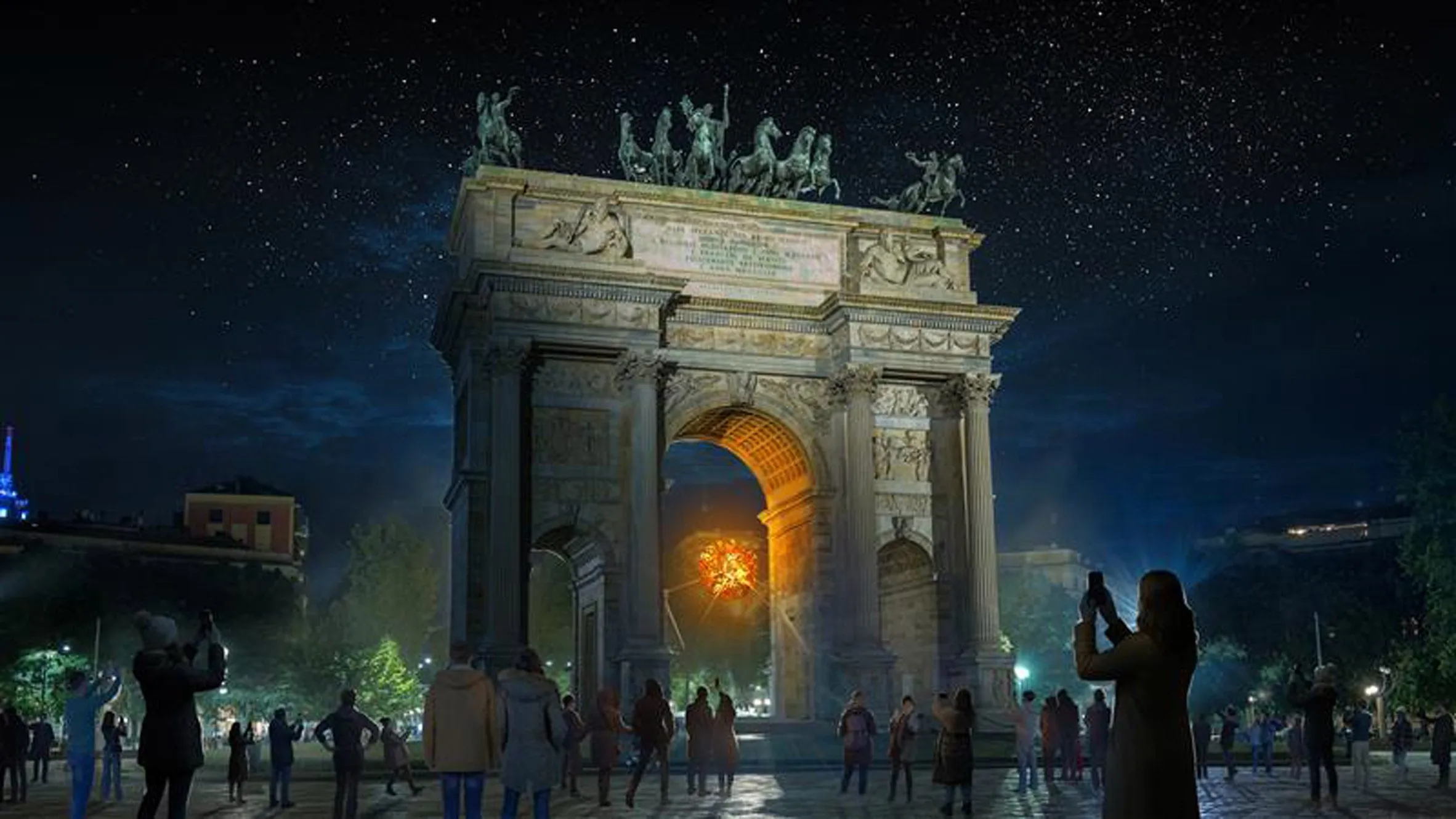
Milano Cortina 2026 embraces a “widespread Games” concept. That idea is made tangible through the twin cauldrons, which will stand in two highly symbolic places: the Arco della Pace in Milan and Piazza Dibona in Cortina d’Ampezzo. Though separated by distance, the two structures are designed to act as one. They will ignite together, burn together, and be extinguished together, reflecting constant dialogue between the urban and alpine worlds that define these Games.
The cauldrons were created through a partnership with Fincantieri, an official sponsor of Milano Cortina 2026. The design concept comes from Marco Balich, developed in collaboration with Lida Castelli and Paolo Fantin. Their work draws inspiration from the sun, long seen as a universal symbol of life, renewal, and continuity. This theme aligns with the Olympic Flame itself, which has always represented endurance and rebirth.
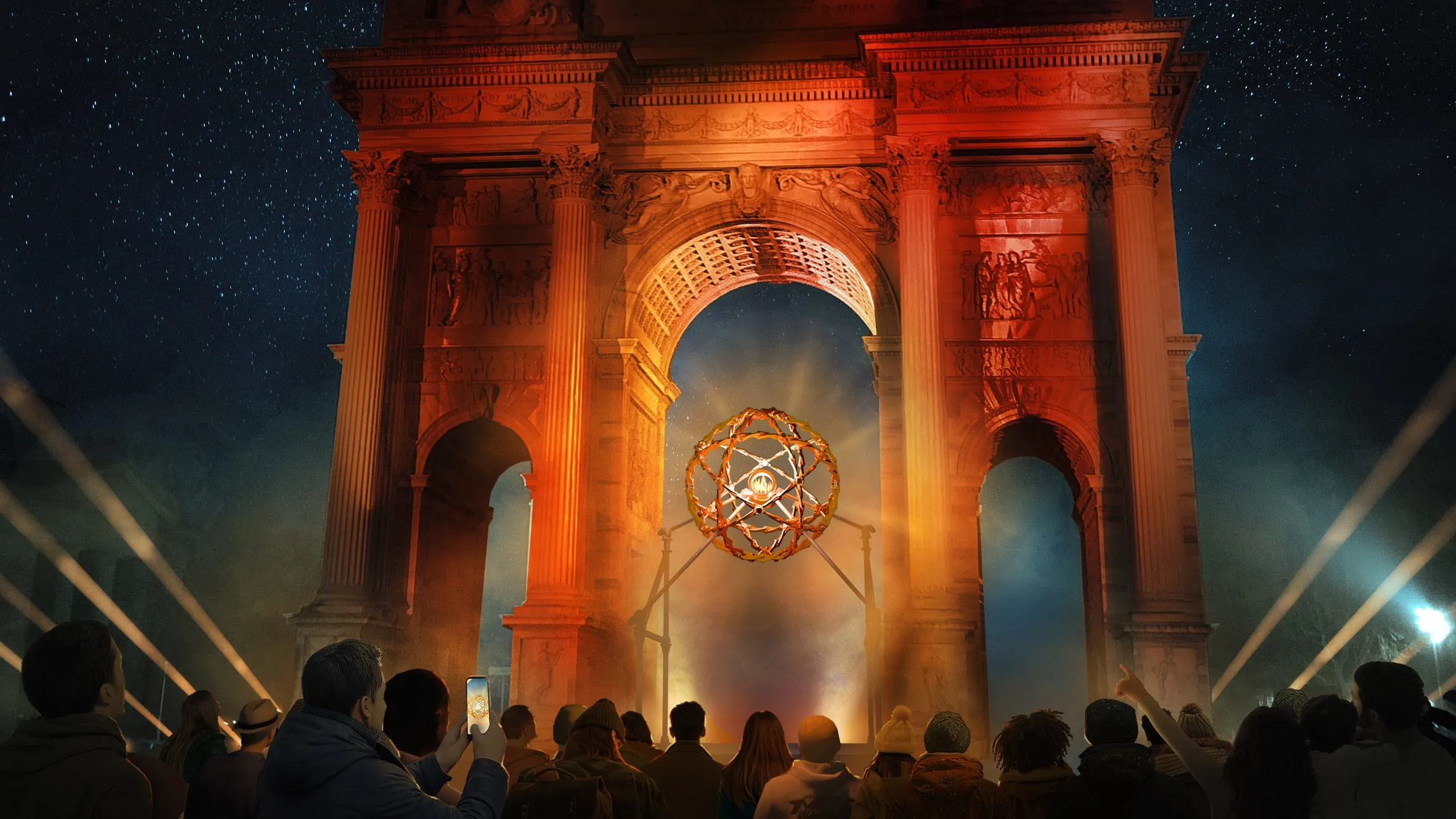
There is also a strong nod to Italian cultural heritage. The form recalls Leonardo da Vinci’s famous knots, intricate geometric interlacings that symbolize harmony between nature and human ingenuity. The reference is particularly fitting for Milan, a city deeply linked to Leonardo’s life and work and known today for innovation and design.
The Design That Powers the Milano Cortina 2026 Cauldrons
The Milano Cortina 2026 cauldrons are impressive feats of engineering. Made from aeronautical-grade aluminum, they balance strength and lightness while allowing for motion. Each cauldron opens and closes through a dynamic mechanical system, echoing the passage of time and the rhythm of day and night.
When closed, the structure measures 3.1 meters in diameter. When fully open, it expands to 4.5 meters. This movement is made possible by a complex system featuring 244 pivot points and 1,440 individual components, all assembled with precision pins and bearings. At the center, the flame is protected within a glass-and-metal enclosure, like a casket guarding something precious.
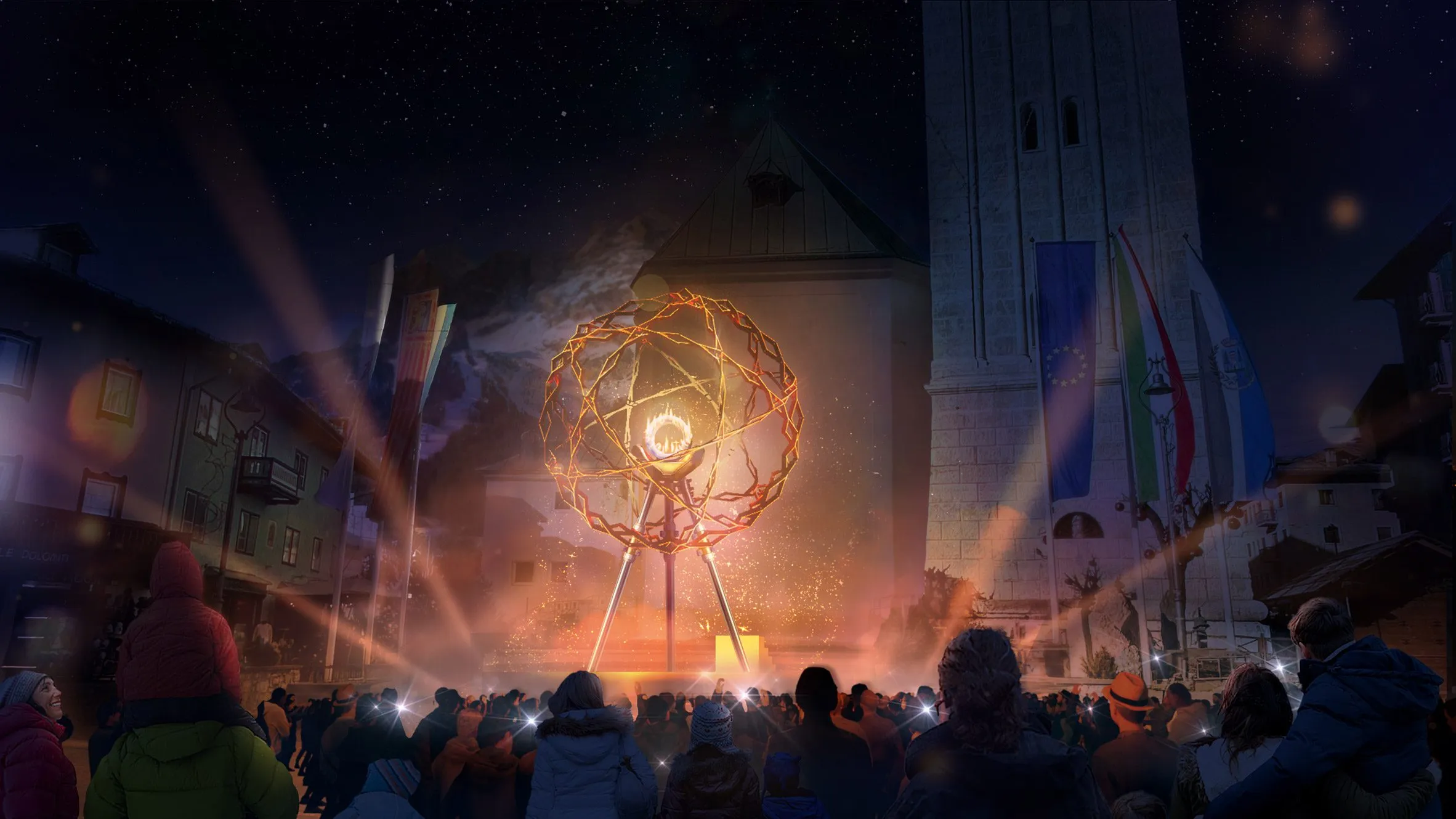
The flame effects are engineered to produce minimal smoke, low noise, and no material fallout, ensuring safety for spectators and surrounding spaces. These choices reflect a broader commitment by Milano Cortina 2026 to stage a forward-looking and responsible edition of the Games.
The lighting of the cauldrons on 6 February 2026 will mark the end of the Olympic Flame Journey, which spans 63 days, crosses all 110 Italian provinces, passes through 60 cities, and covers around 12,000 kilometers. This moment will stand as one of the emotional highlights of the Opening Ceremony, officially ushering in the Olympic Winter Games.
From 7 February, the Milan cauldron at the Arco della Pace will become the focus of a daily public event. Every hour, on the hour, from 5:00 pm to 11:00 pm, a short 3- to 5-minute show will take place, accompanied by music by composer Roberto Cacciapaglia. The ritual will continue each day until the Olympic Flame is extinguished on 22 February.
From Olympics to Paralympics
The story of the twin cauldrons does not end with the Olympics. On 6 March, with the arrival of the Paralympic Flame and the opening of the Paralympic Games, both cauldrons will be relit. They will burn throughout the Paralympic competition and be extinguished for the final time on 15 March, closing a historic chapter for Milano Cortina 2026.

The two cauldrons stand as a shared gesture between cities, landscapes, and communities. Together, they capture the spirit of unity, continuity, and renewal that the Milano Cortina 2026 Winter Games aim to represent.
Image credit: © Fondazione Milano Cortina 2026