

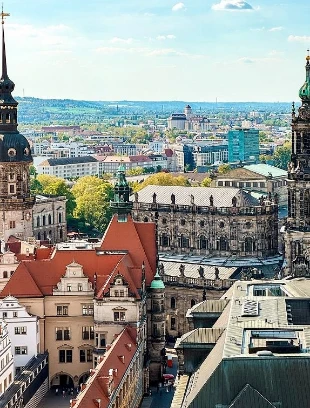
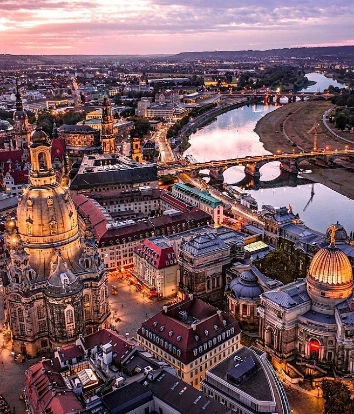
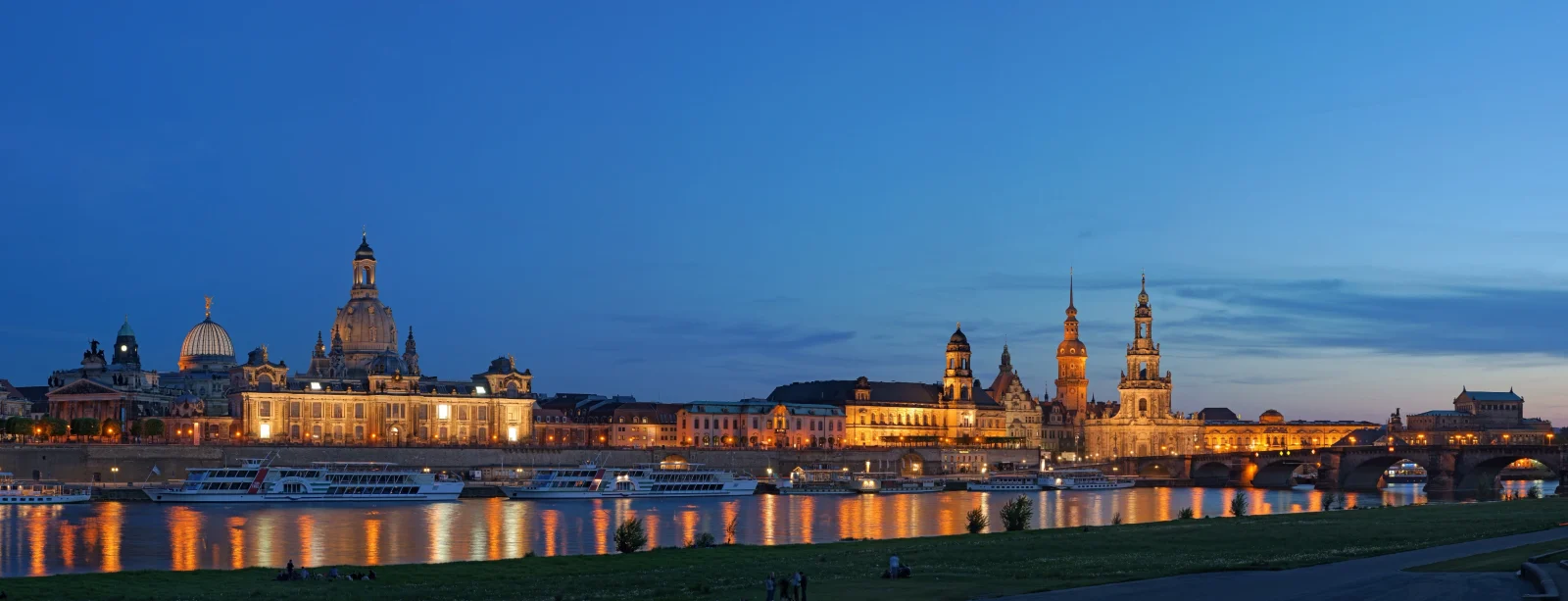
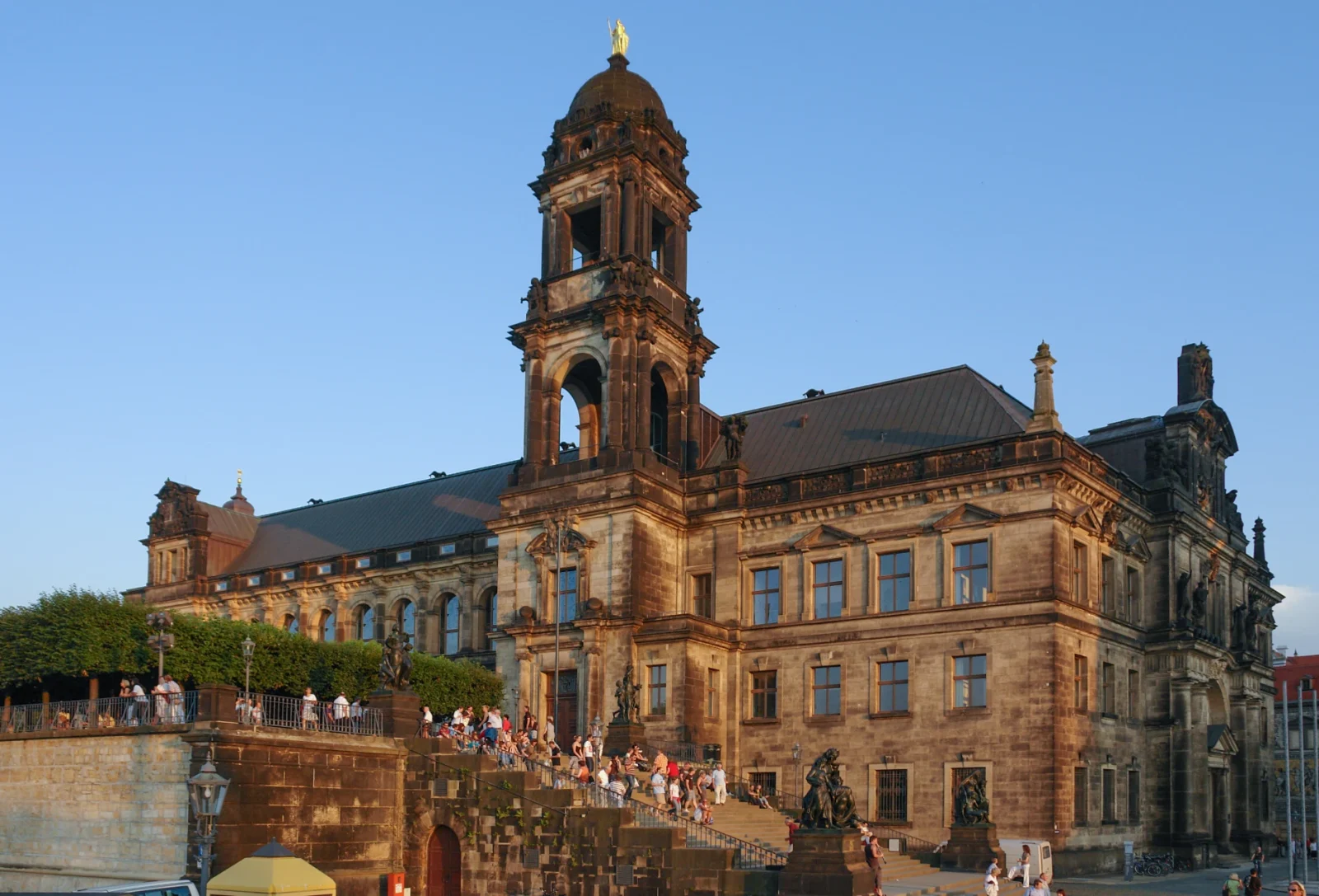
Long before domes and palaces defined Dresden’s skyline, it was a modest Slavic settlement along the Elbe River, a trading node shaped by geography. Its transformation came in the early 18th century, when Augustus the Strong set out to recast the city as a seat of power. What followed was an act of image-making. Dresden was envisioned as a Baroque capital, where architecture could project authority, wealth, and culture.
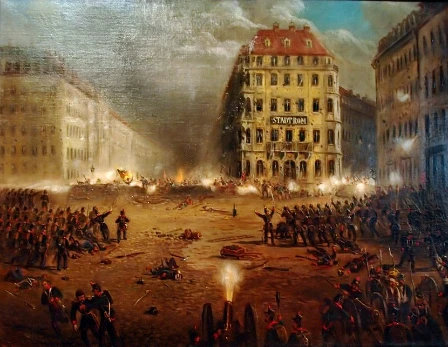
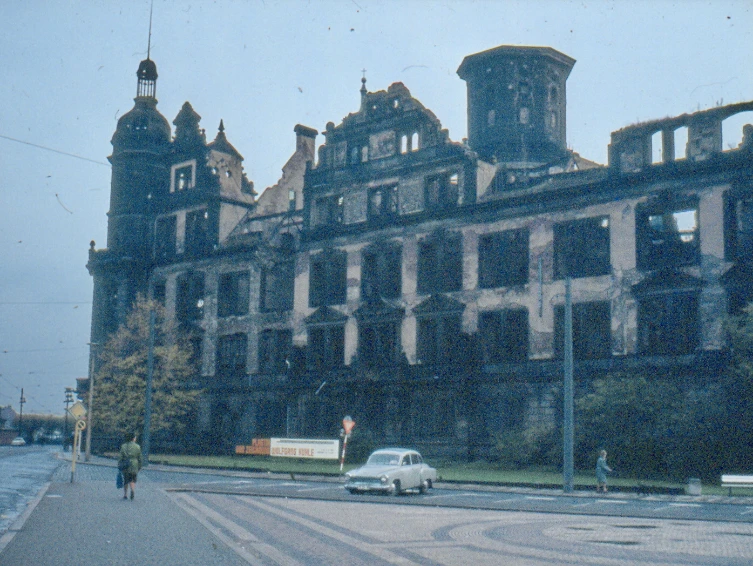
But this staged identity did not survive for long. The Bombing of Dresden marked a violent break, collapsing centuries of architecture into a field of ruins. When reconstruction began, it did so in layers. Under East German governance, large parts of Dresden were rebuilt in the language of socialist modernism, which was ideologically distant from its Baroque past. Wide boulevards and prefabricated housing introduced a new urban logic.
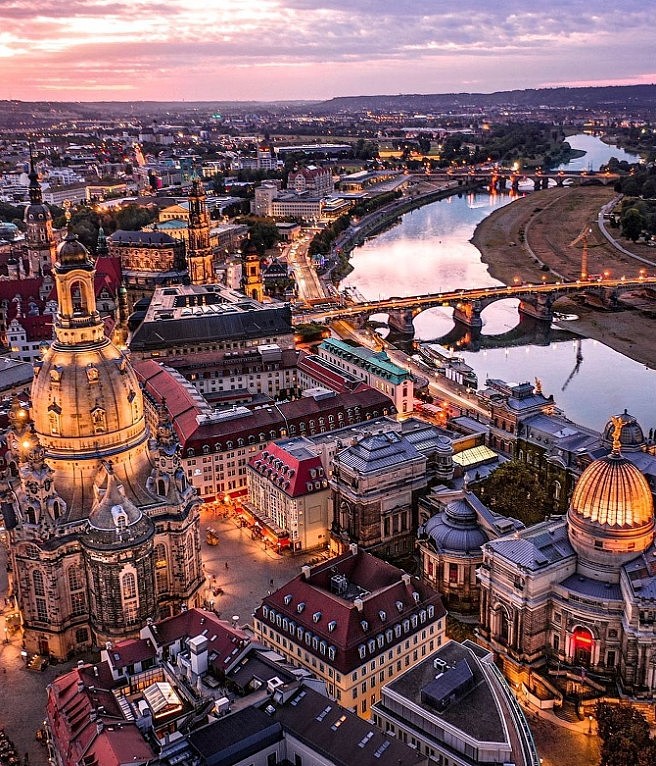
And then, after reunification, the city shifted again. Dresden turned toward its past but not by simply restoring it. Landmarks were reconstructed, reusing original stones while leaving visible traces of damage. Entire streets were reimagined.
Today, Dresden sits in eastern Germany, close to the borders of the Czech Republic and Poland. It is the capital of Saxony, stretched along the banks of the Elbe River.
To understand Dresden, this guide breaks the city into three lenses – a clear way to navigate the city. First, the Baroque core that showcases power and a dramatic urban centre. Second, the palaces and landscapes along the Elbe that open into gardens and hills. And third, the contemporary interventions.
Core Baroque & Historic Landmarks
1. Frauenkirche & Neumarkt Ensemble: The Heart of Baroque Dresden
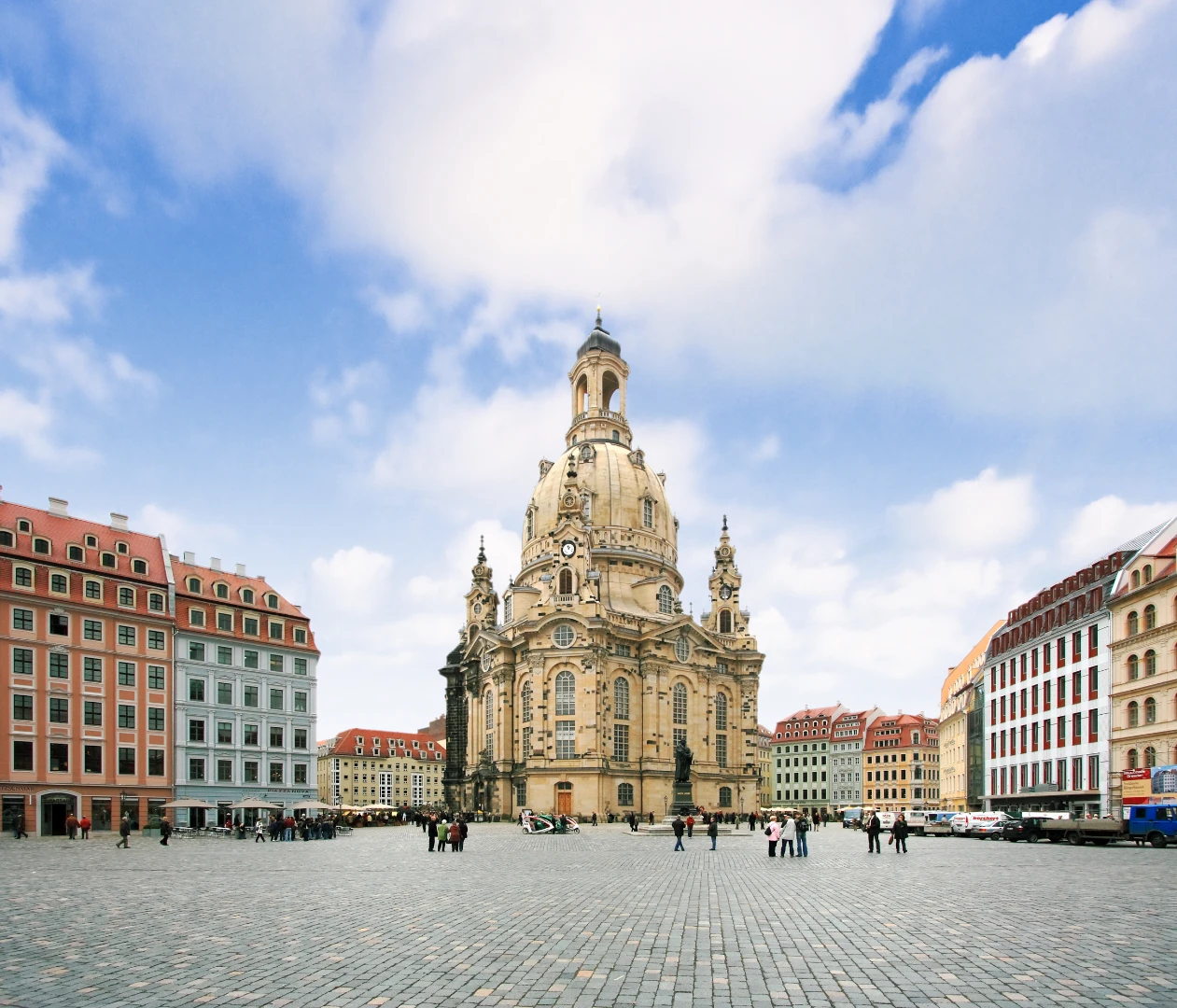
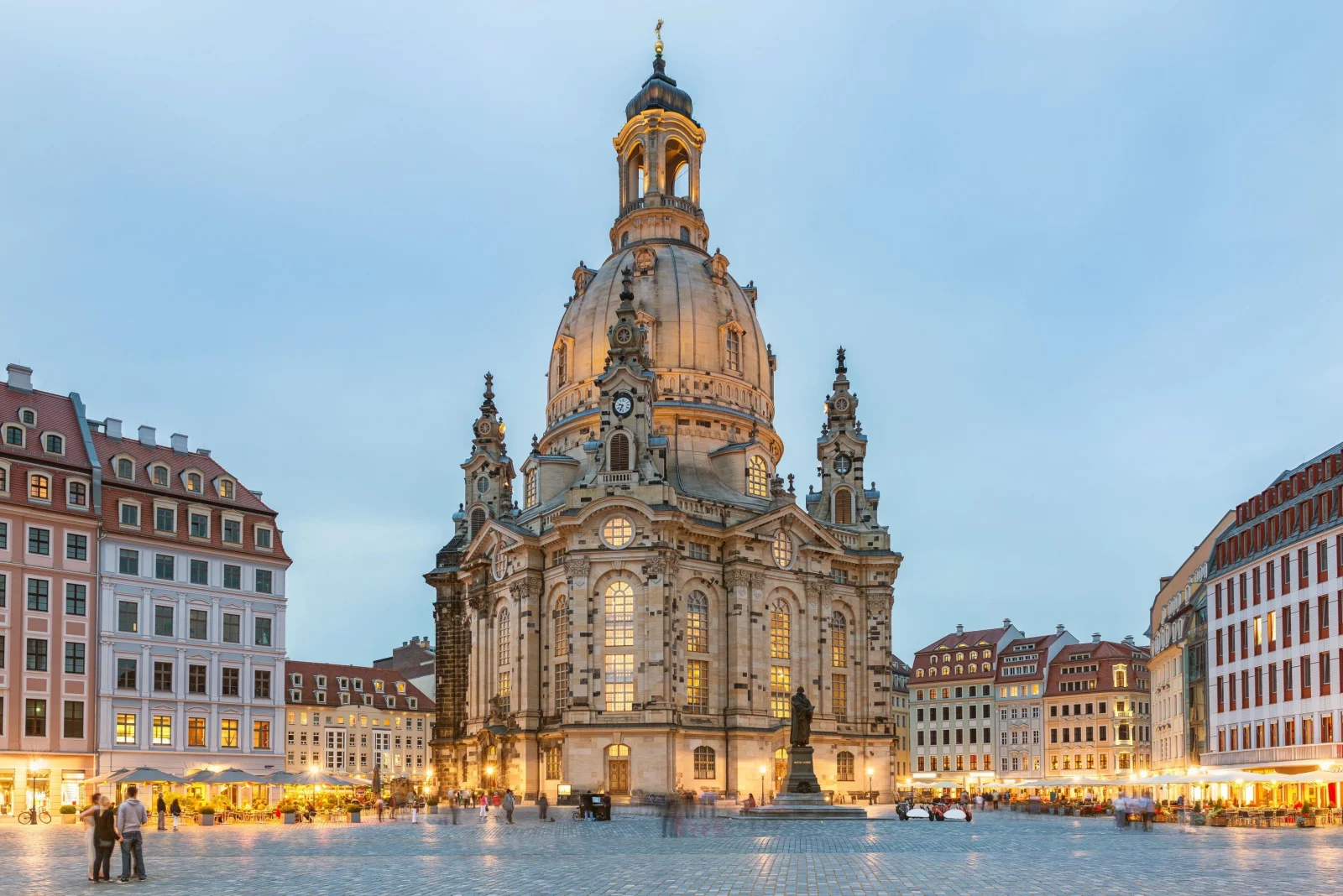
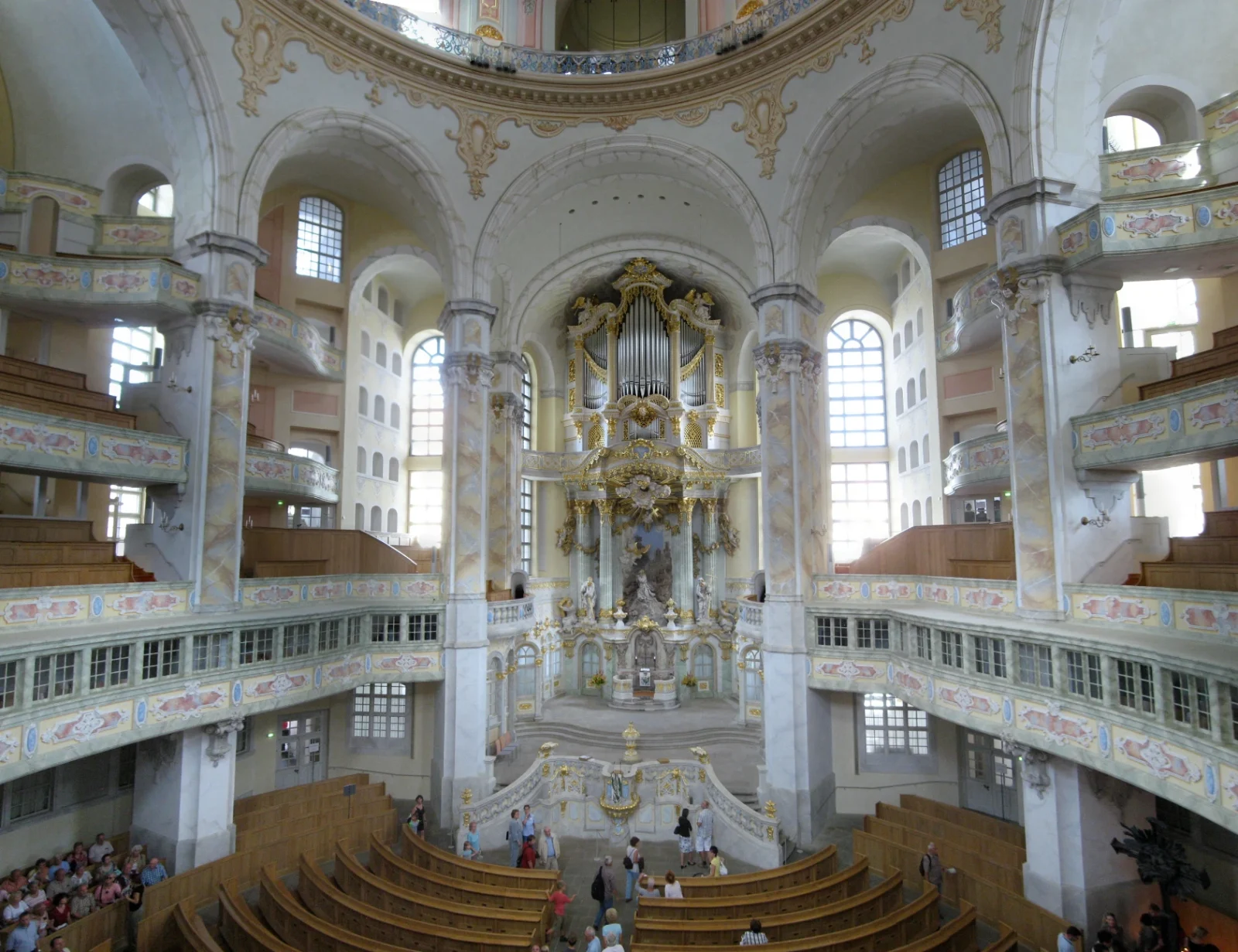
At the centre of Dresden stands the Frauenkirche Dresden, surrounded by the rebuilt square of Neumarkt. This is where the city feels most complete and also where its history is most visible.
The church was built between 1726 and 1743, designed by architect George Bähr. Unlike older churches that follow a long, linear plan, the Frauenkirche is organised as a central space. The seating wraps around the altar, bringing everyone closer to the centre. This was important in Protestant worship, where clear hearing and seeing mattered more than hierarchy. Its dome is made entirely of sandstone. It rises directly from the main structure without internal support. From the outside, it gives Dresden its most recognisable silhouette. From the inside, it creates a bright, open space, with galleries stacked in curves around the central altar.
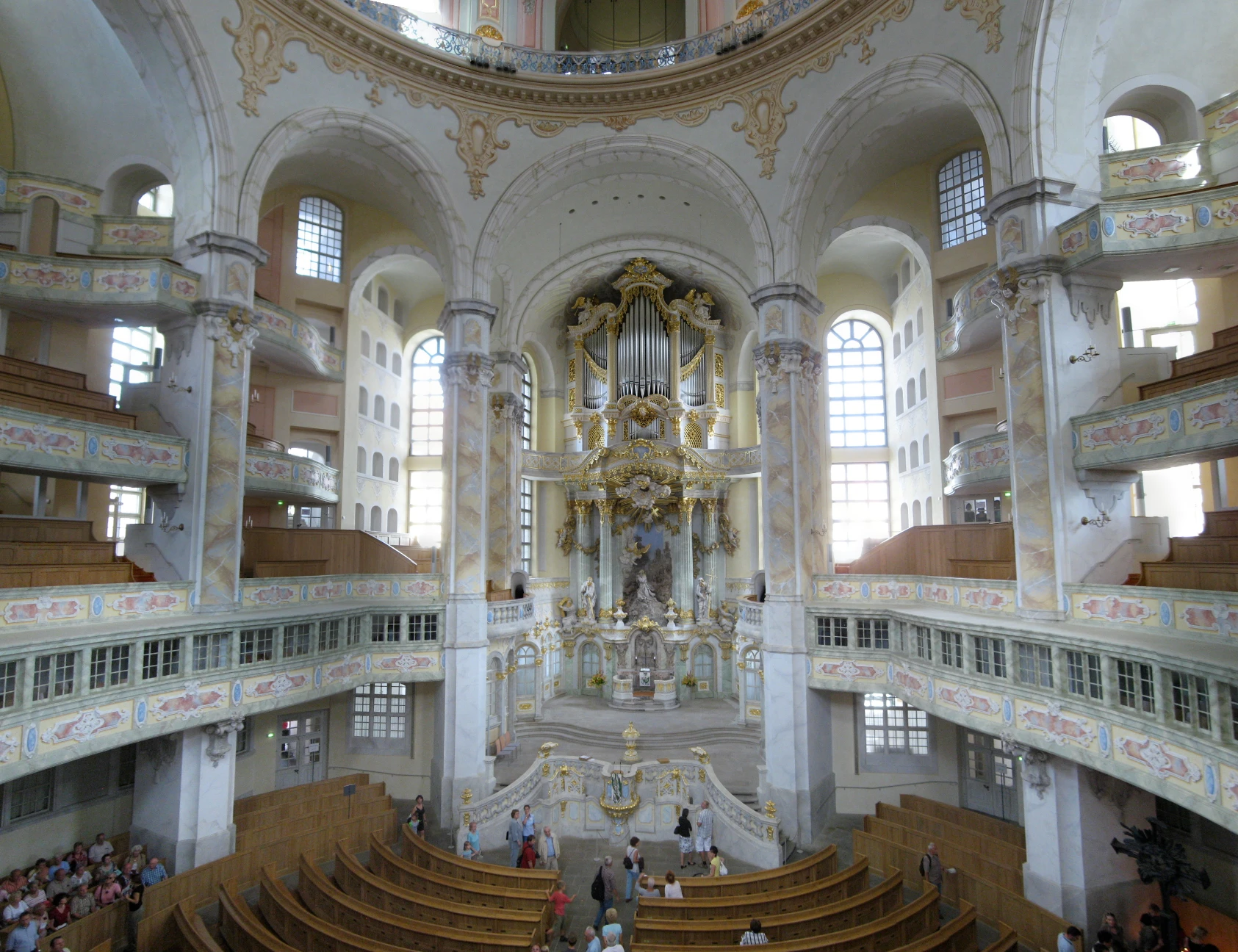
In 1945, during the Bombing of Dresden, the church survived the initial attacks but collapsed a couple of days later due to intense heat. What remained was a large pile of rubble in the middle of the city. For nearly 50 years, it was left as it was. People didn’t rebuild it, but they treated it as a memorial. Reconstruction started only after German reunification. The process was precise. About 8,000 original stones were recovered and reused. You can still spot them today. They appear darker than the new stone and are scattered across the facade. This is what makes the building feel real.
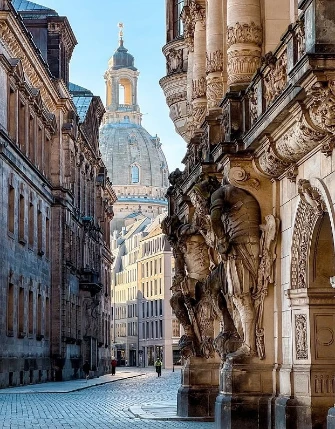
Around it, Neumarkt has been rebuilt to restore the old city square. The buildings follow historic designs, including narrow plots, sloped roofs, and detailed facades. Together, they recreate the scale of an 18th-century square without pretending to be entirely original. What works here is the balance. The Frauenkirche gives the space its identity, while Neumarkt brings back the everyday life of the city, such as shops, cafes, and streets. It doesn’t feel frozen or overly staged.
2. Zwinger Palace
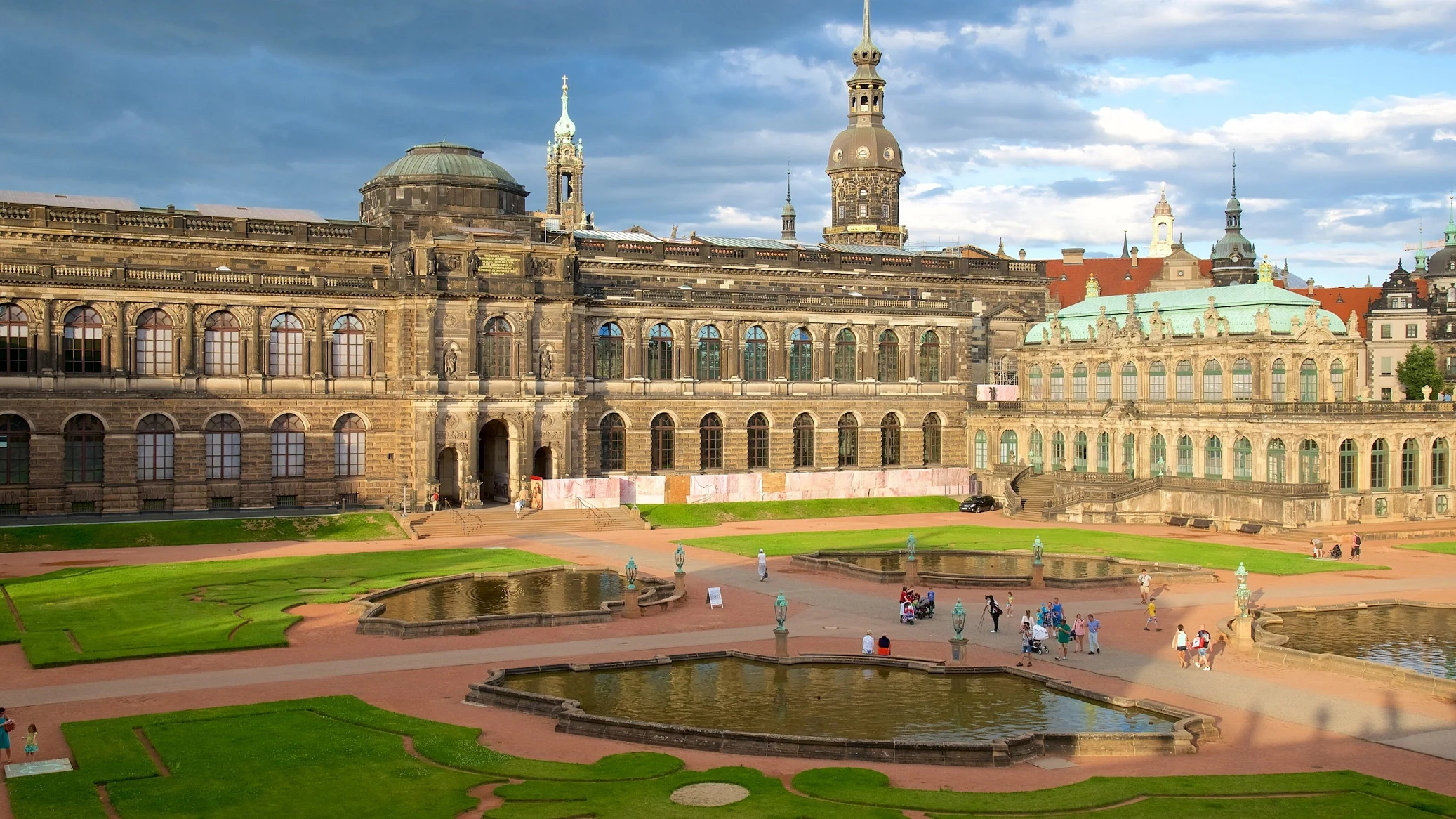
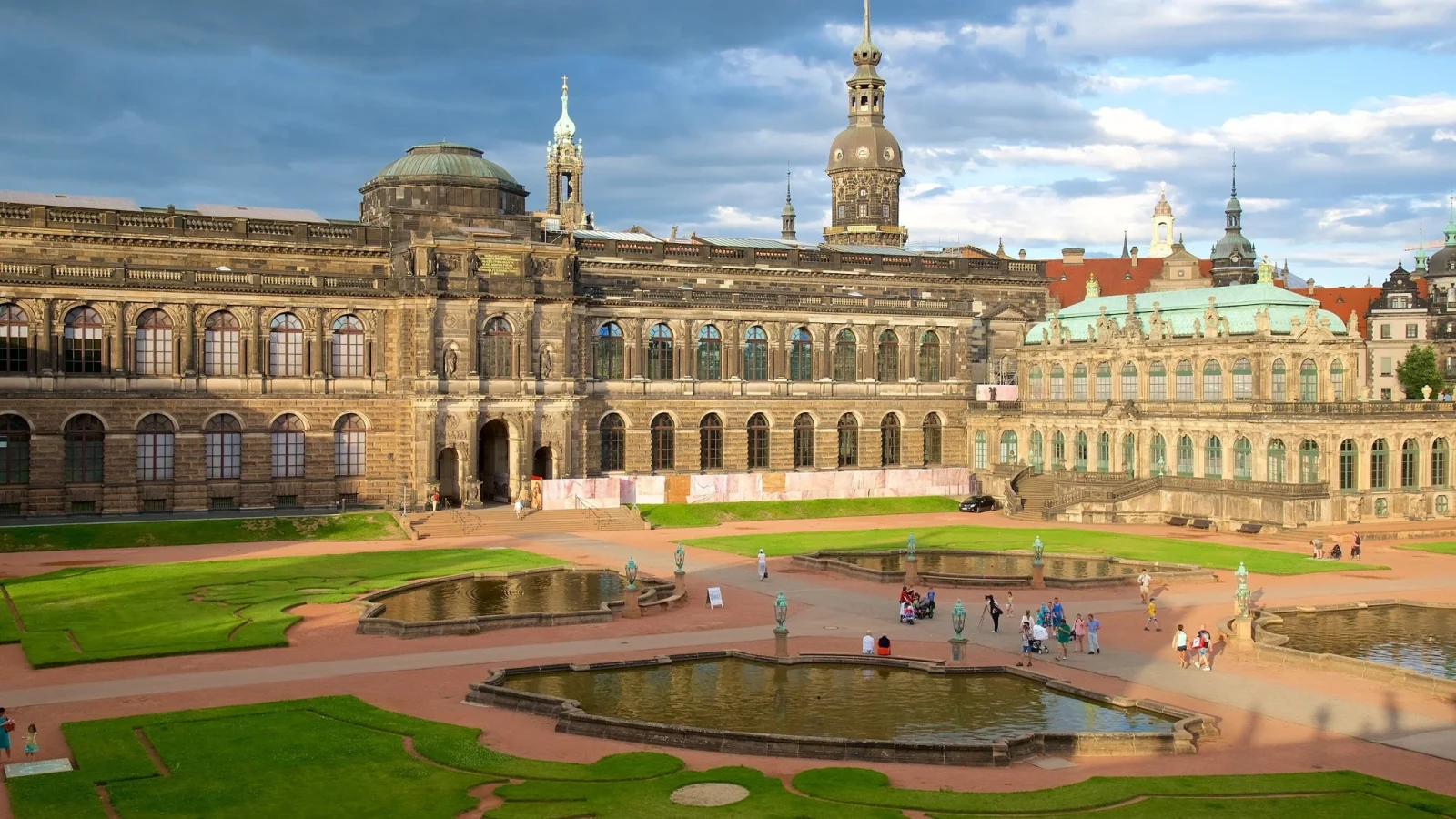
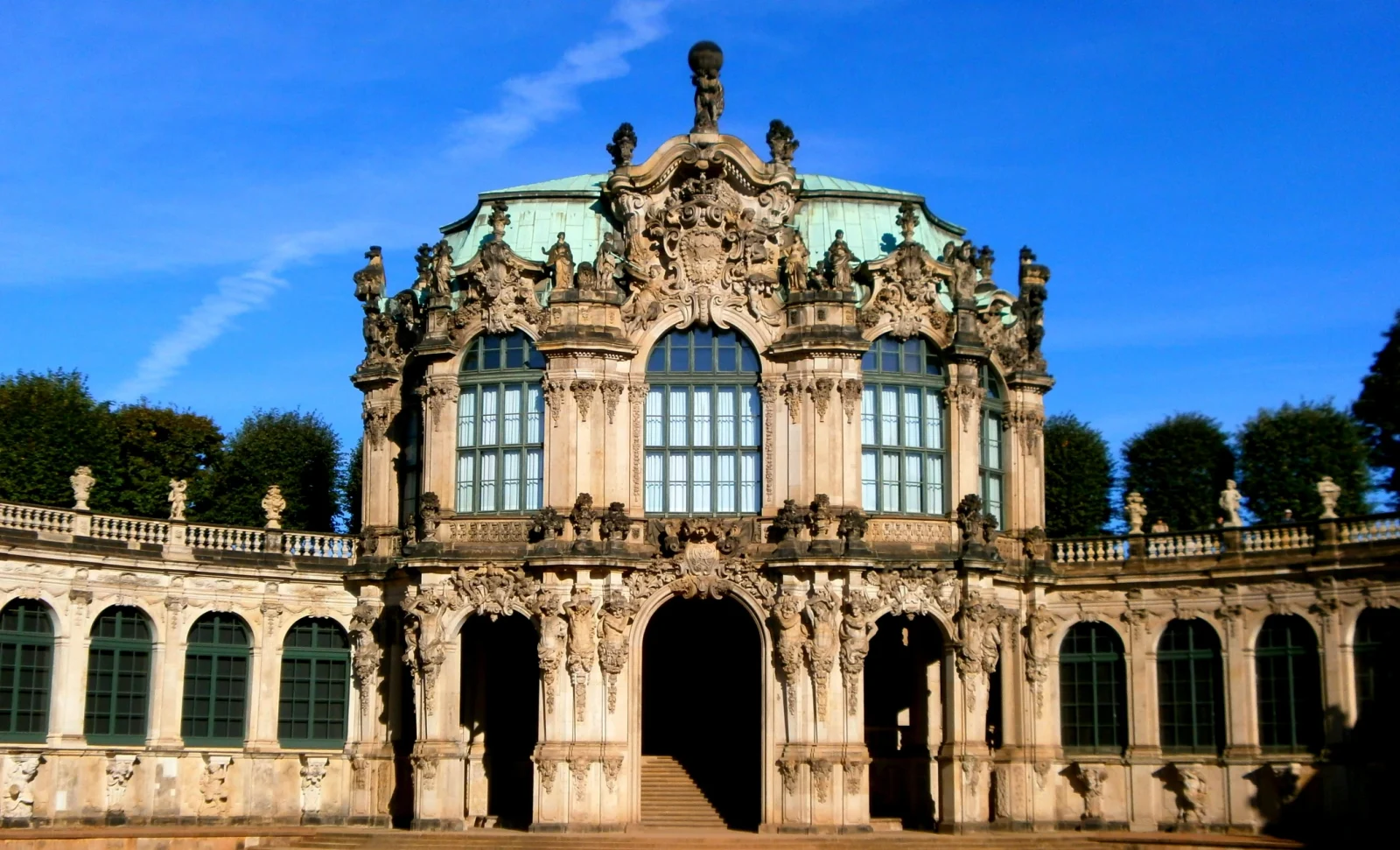
The Zwinger is where Dresden’s Baroque ambition is at its most expressive. Built in the early 18th century under Augustus the Strong and designed by Matthäus Daniel Pöppelmann, it was a space for events, festivals, ceremonies, and court life.
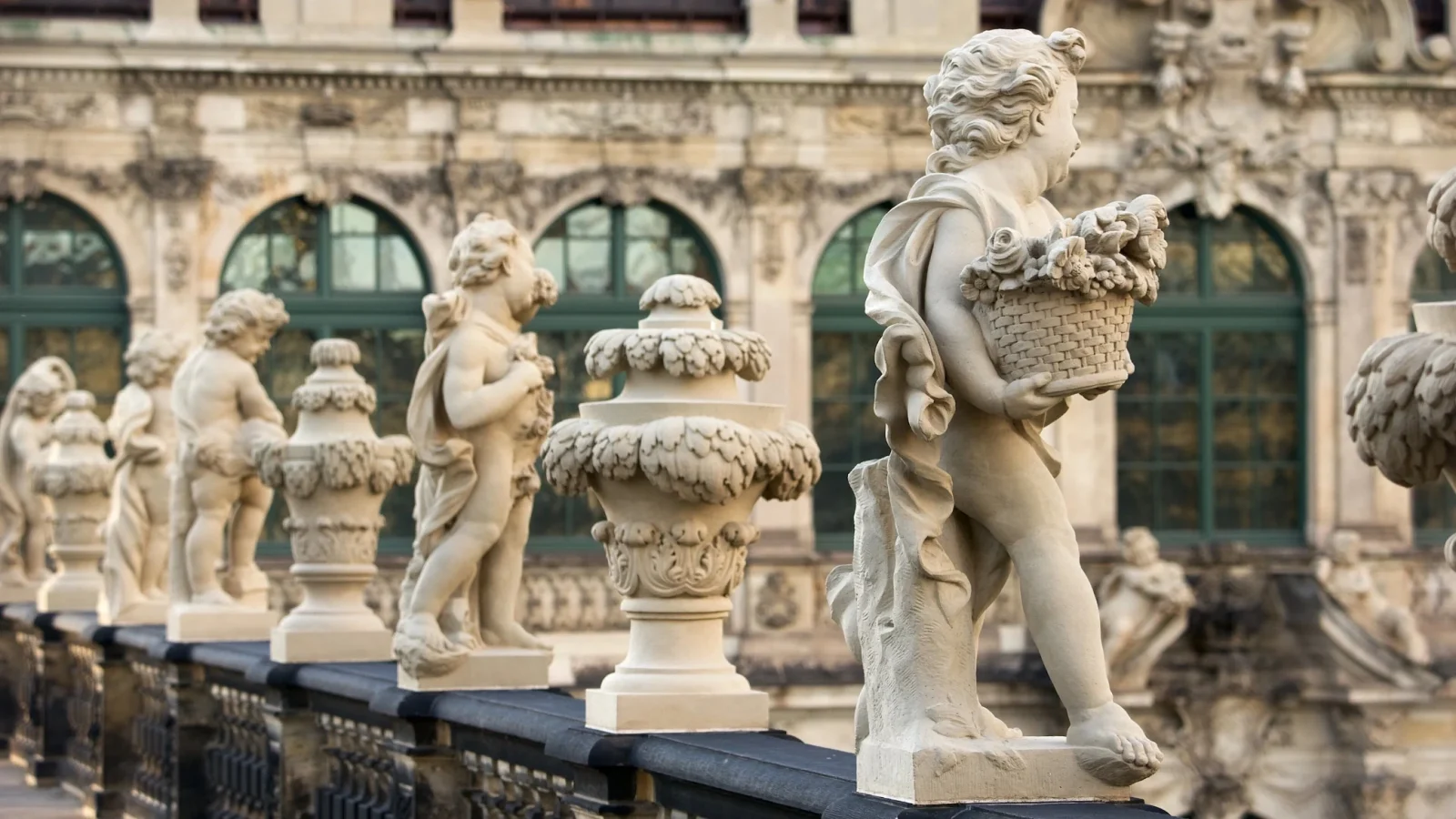
The layout is simple: a large rectangular courtyard surrounded by pavilions and galleries. Sculptures spill over balustrades, facades are layered with ornament, and every surface feels animated. The famous Crown Gate, with its oversized royal emblem, reassures that this was architecture meant to impress.
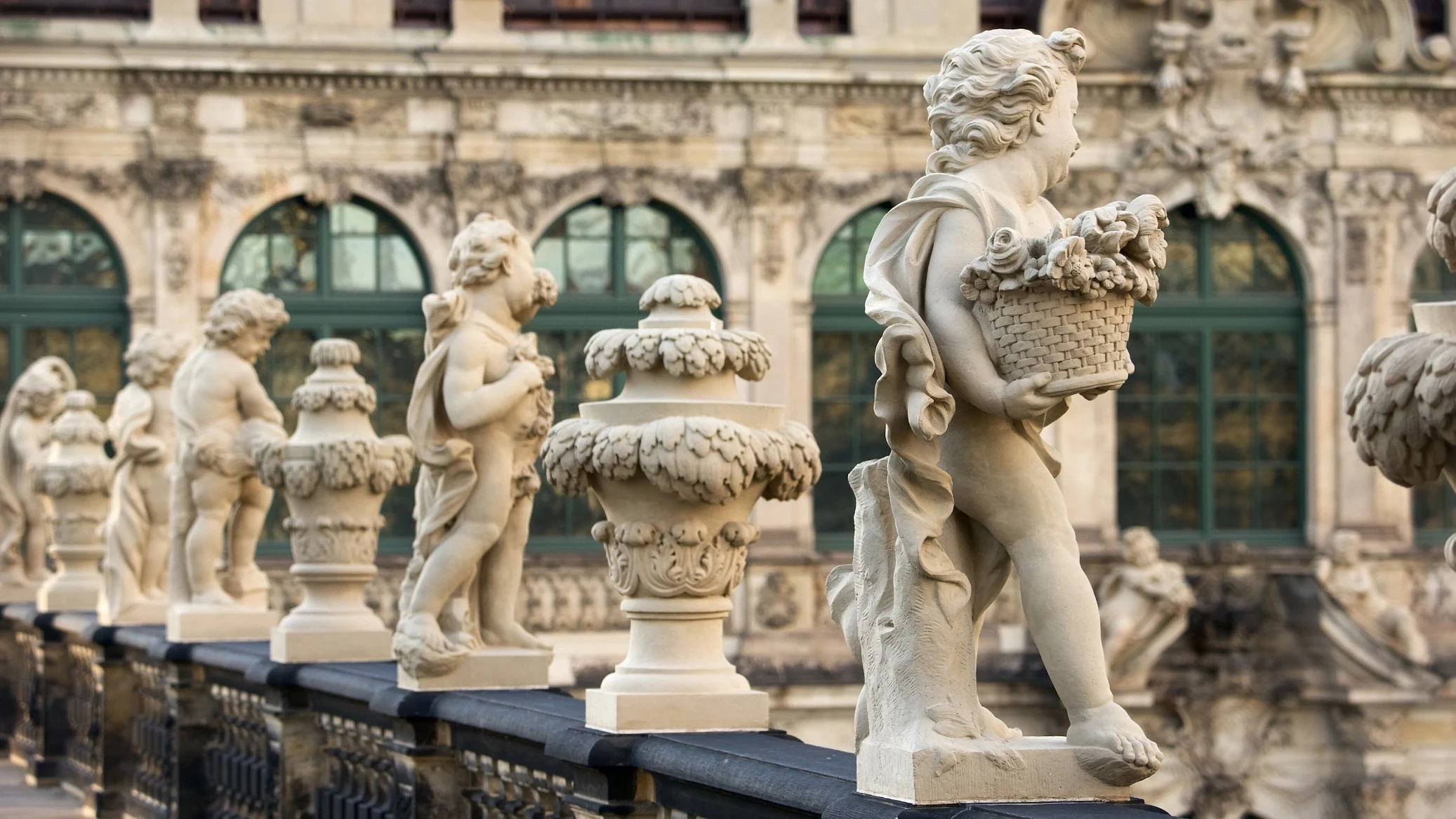
One of the most interesting parts is the Nymphenbad, a smaller courtyard filled with fountains and sculptures. It feels almost like a hidden stage within the larger complex. The Zwinger was heavily damaged during the Bombing of Dresden, but much of it was restored in the following decades. Today, it houses museums, including the Old Masters Picture Gallery.
3. Semperoper
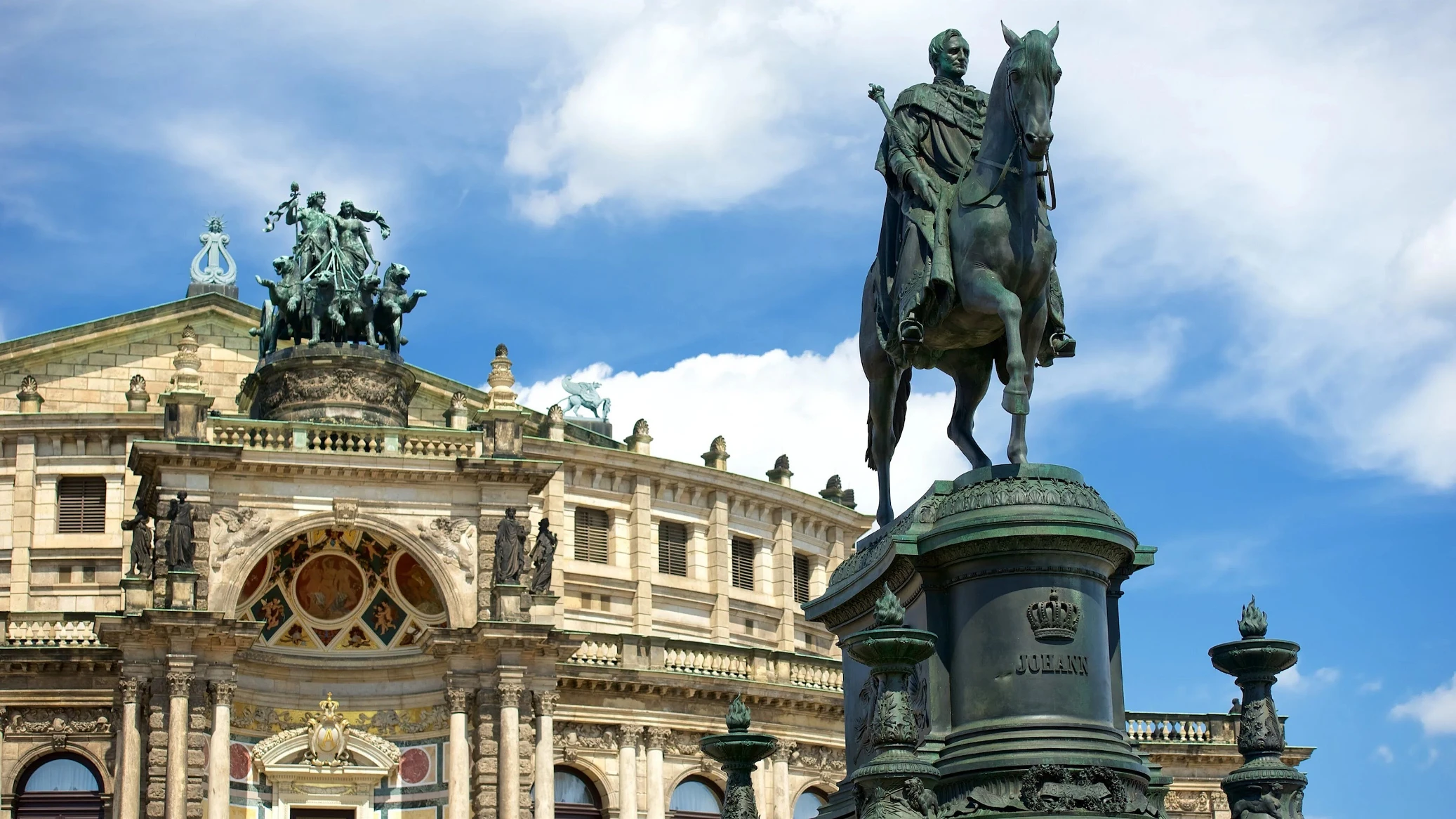
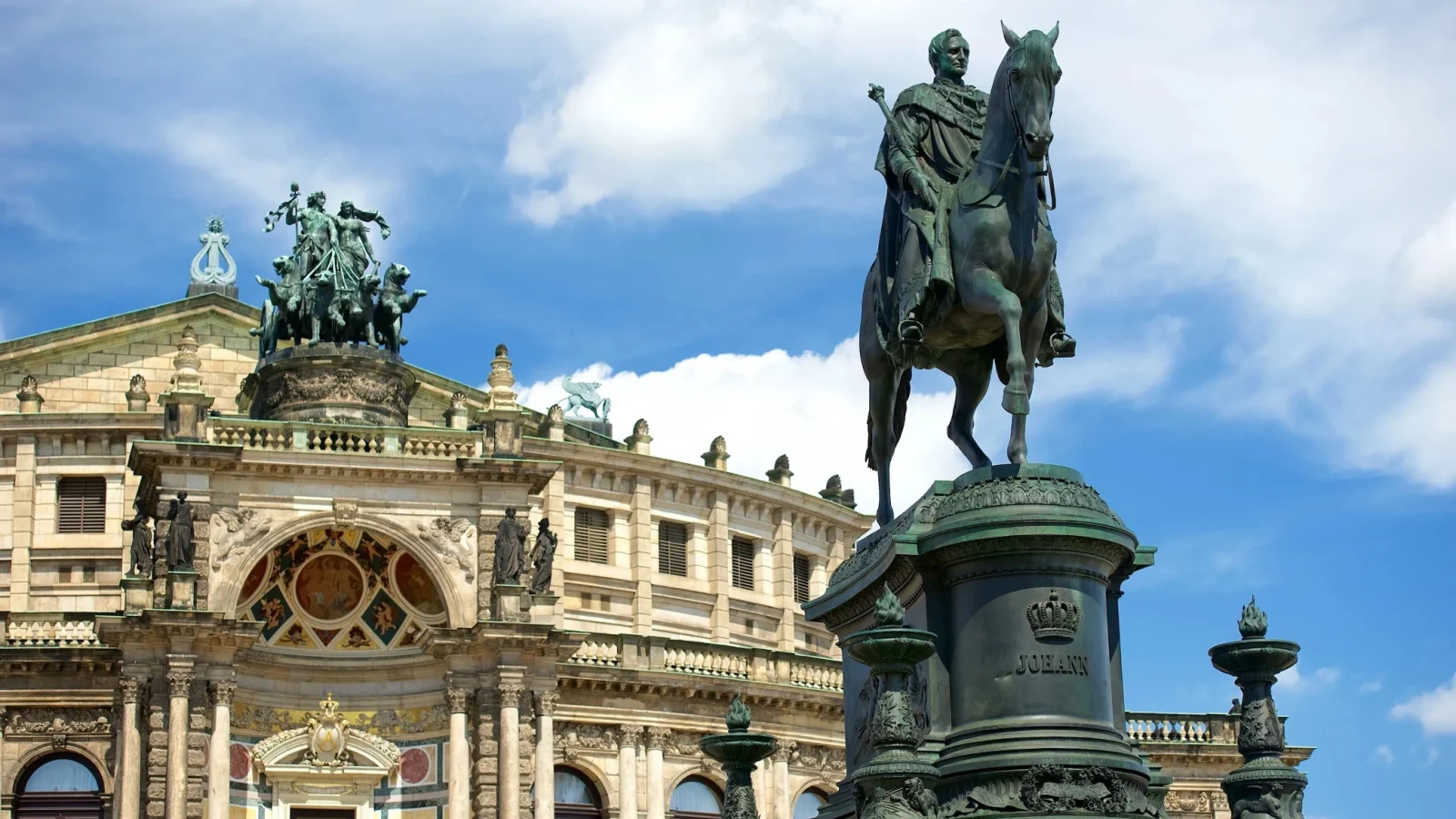
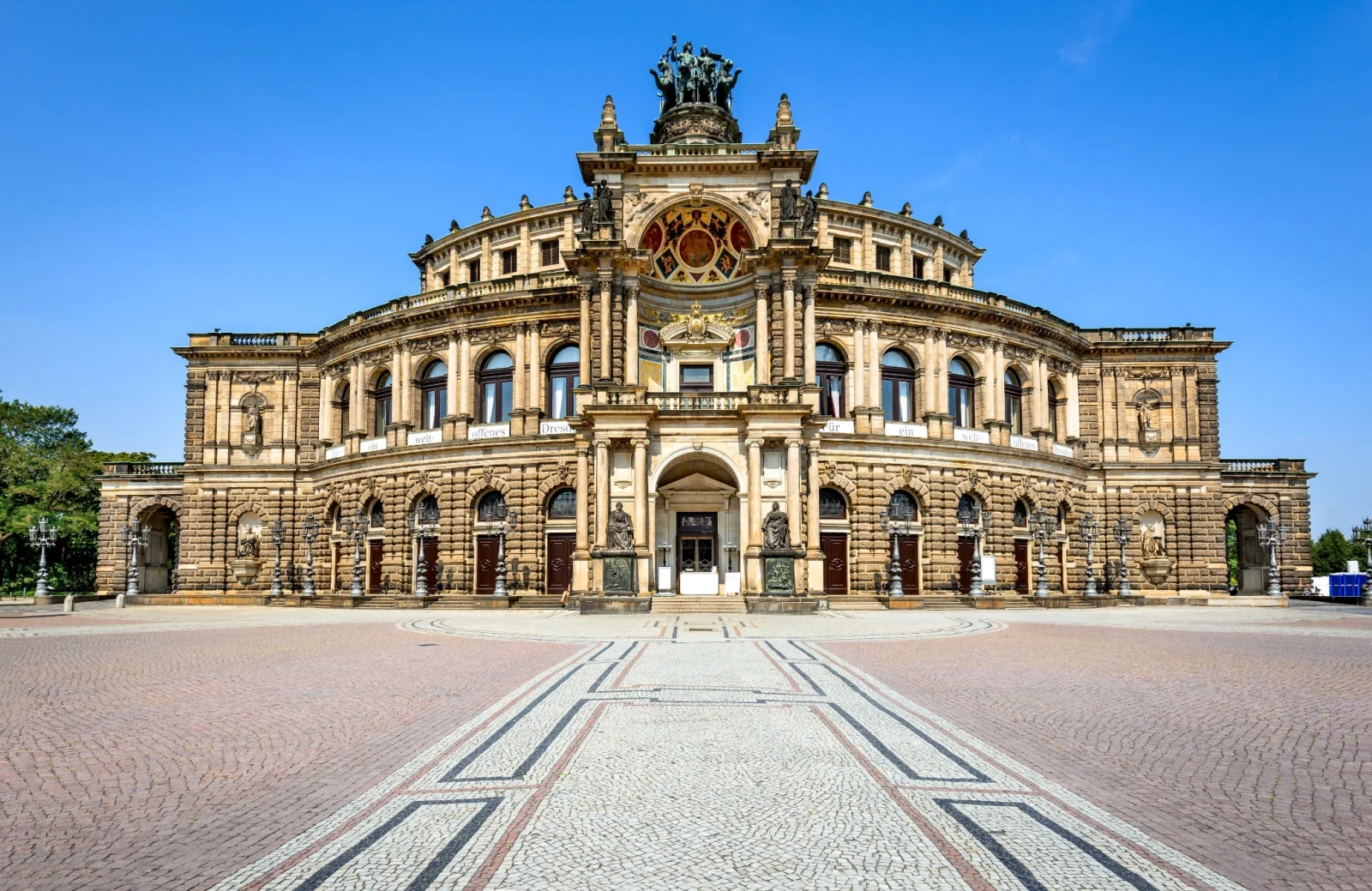
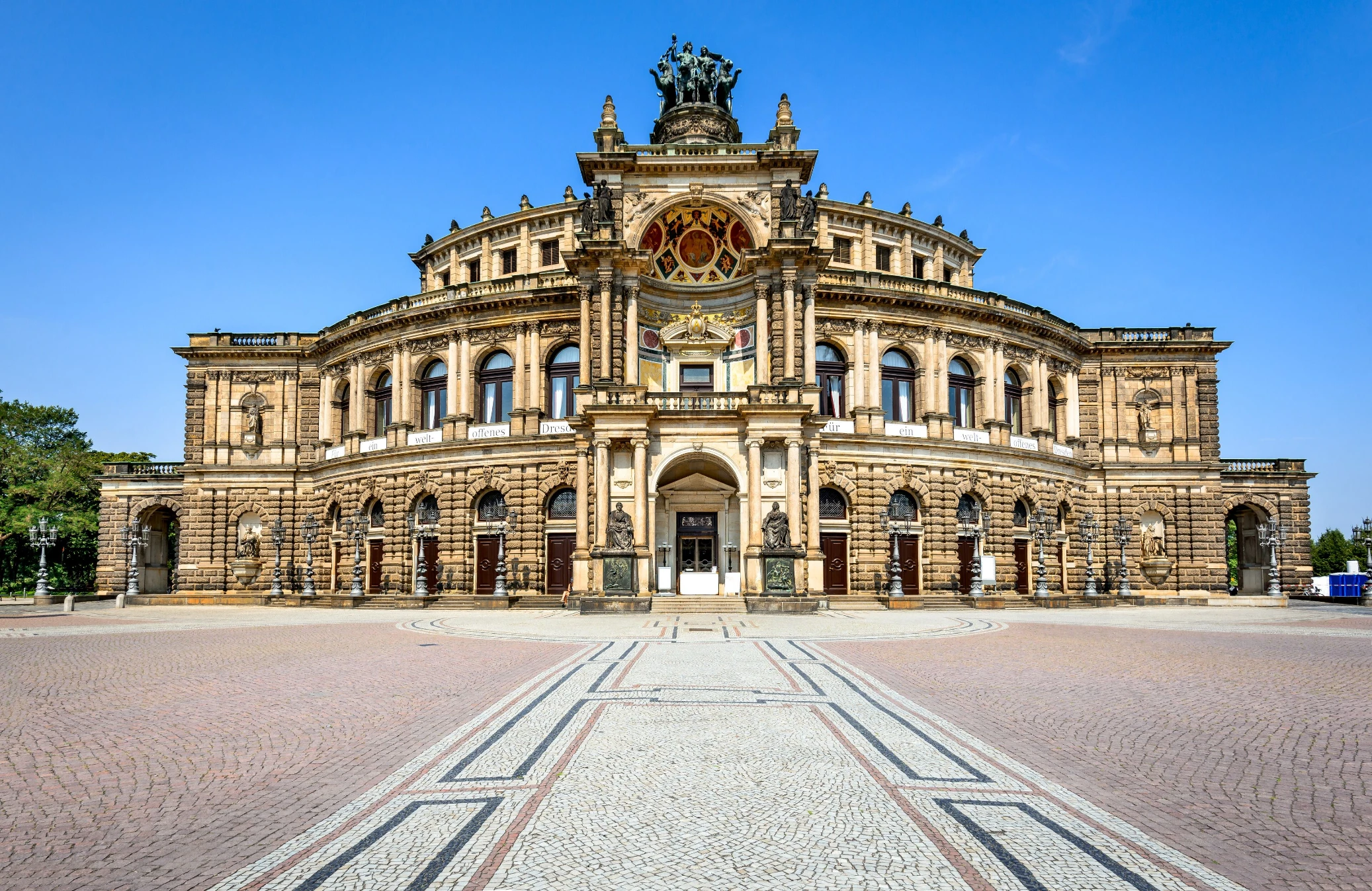
The Semperoper Dresden stands at Theaterplatz as one of Dresden’s key cultural buildings. The original opera house was designed by Gottfried Semper and opened in 1841. It introduced a Neo-Renaissance style to the city, moving away from Baroque while still maintaining a strong sense of form and detail.
After a fire destroyed the first building in 1869, it was rebuilt between 1871 and 1878 by Semper’s son, Manfred Semper, following the original design but with improvements. The structure you see today largely follows this second version. The facade is composed of arched openings at the ground level, columns and pilasters above, and sculptures of writers and composers integrated into the design. It faces an open square, which allows the building to be viewed fully, almost like a set piece.
Inside, the auditorium is arranged in a classic horseshoe form. Rich materials like velvet, gold detailing, and wood create a strong interior atmosphere focused on performance. The building was destroyed again in 1945 and rebuilt in the 1980s, reopening in 1985. The reconstruction stayed close to the historic design, including the interior detailing. The Semperoper reflects Dresden’s long-standing role as a centre for music and performance, with premieres of works by composers such as Wagner and Strauss.
4. Dresden Castle (Residenzschloss)
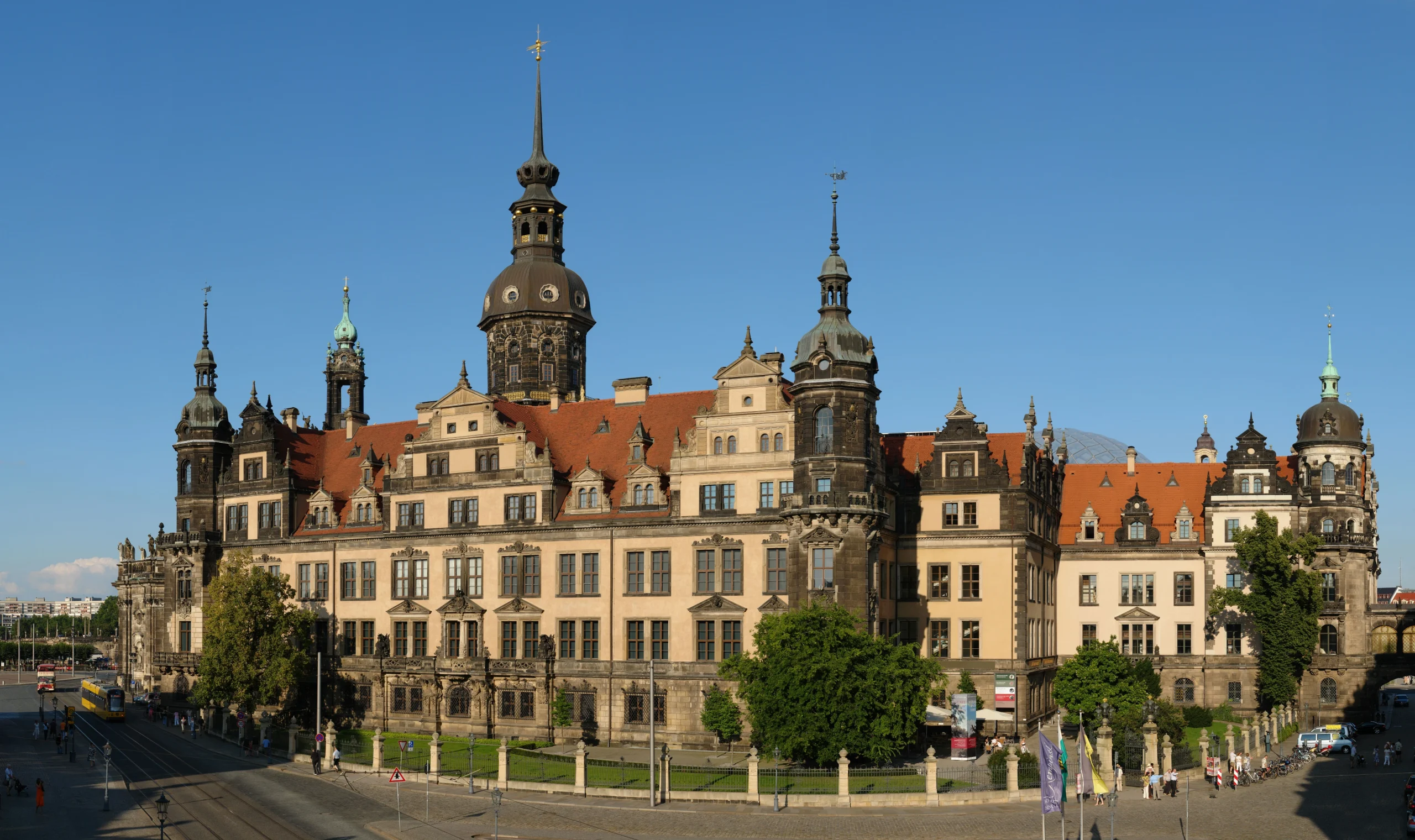
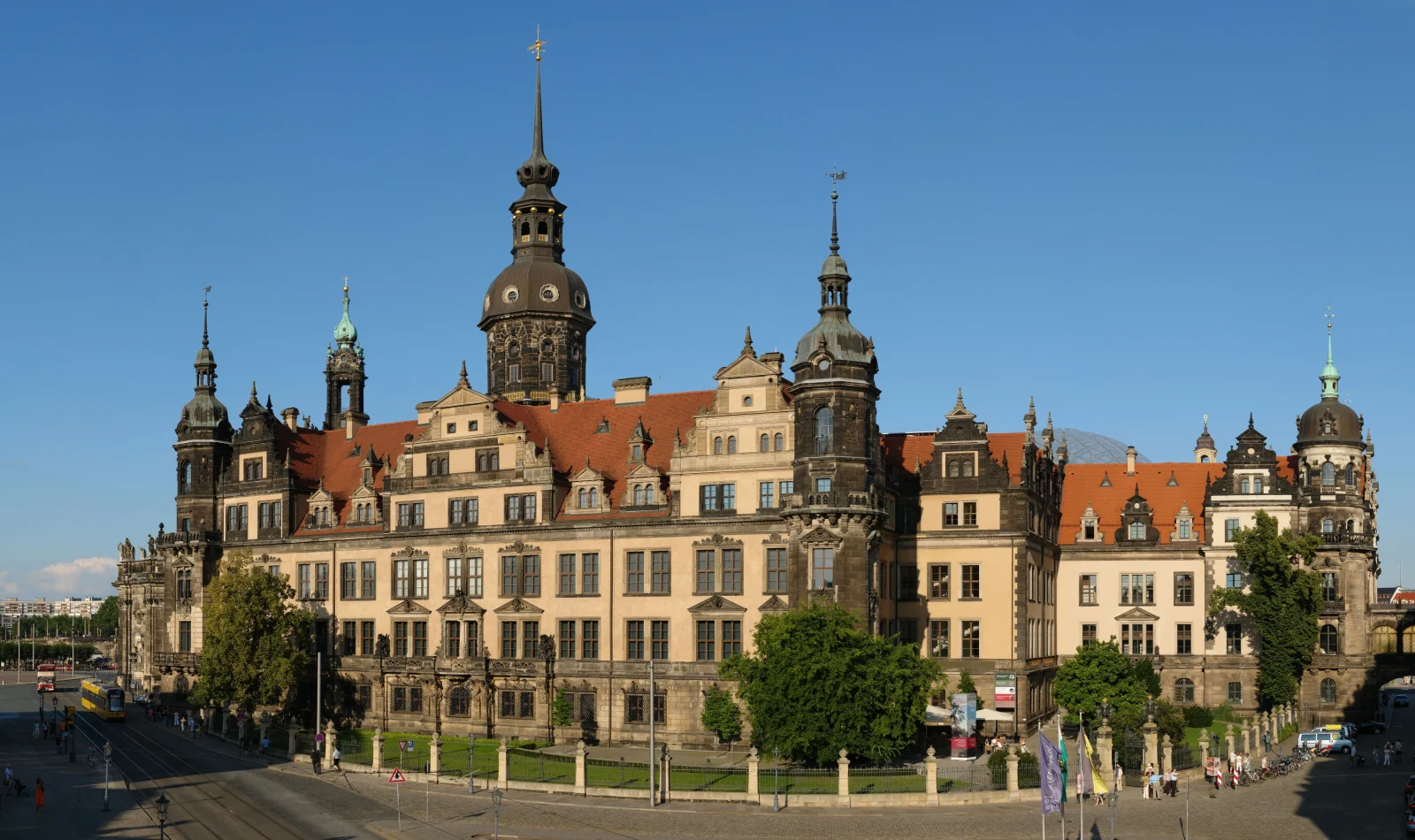
The Dresden Castle is one of the oldest buildings in the city, with origins going back to the 13th century. It began as a fortified residence and was gradually expanded as the seat of Saxon rulers.
Unlike the Zwinger, which follows a clear Baroque vision, the castle is a mix of styles. Major changes in the 16th century introduced Renaissance elements. These were arched courtyards, decorative facades, and sgraffito work. Later additions brought in Baroque features, creating a building that reflects different periods.
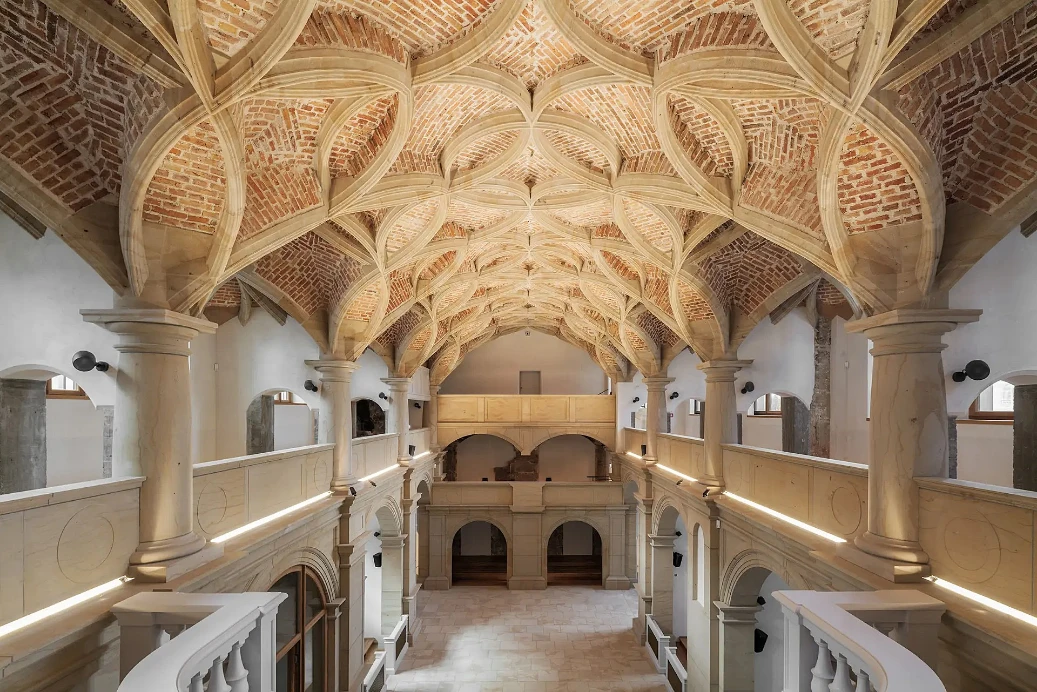
The layout is organised around multiple courtyards, each with its own character. The Hausmannsturm tower rises above the complex, acting as a visual anchor within the city. Inside, some of the most important spaces include the Green Vault (Grünes Gewölbe), established by Augustus the Strong in the 18th century to display royal treasures.
These rooms were designed as much for display as for storage, with mirrored walls and rich ornamentation. The castle was severely damaged in 1945 and left in ruins for decades. Reconstruction began slowly and is still ongoing in parts.
5. Brühl’s Terrace: Balcony of Europe
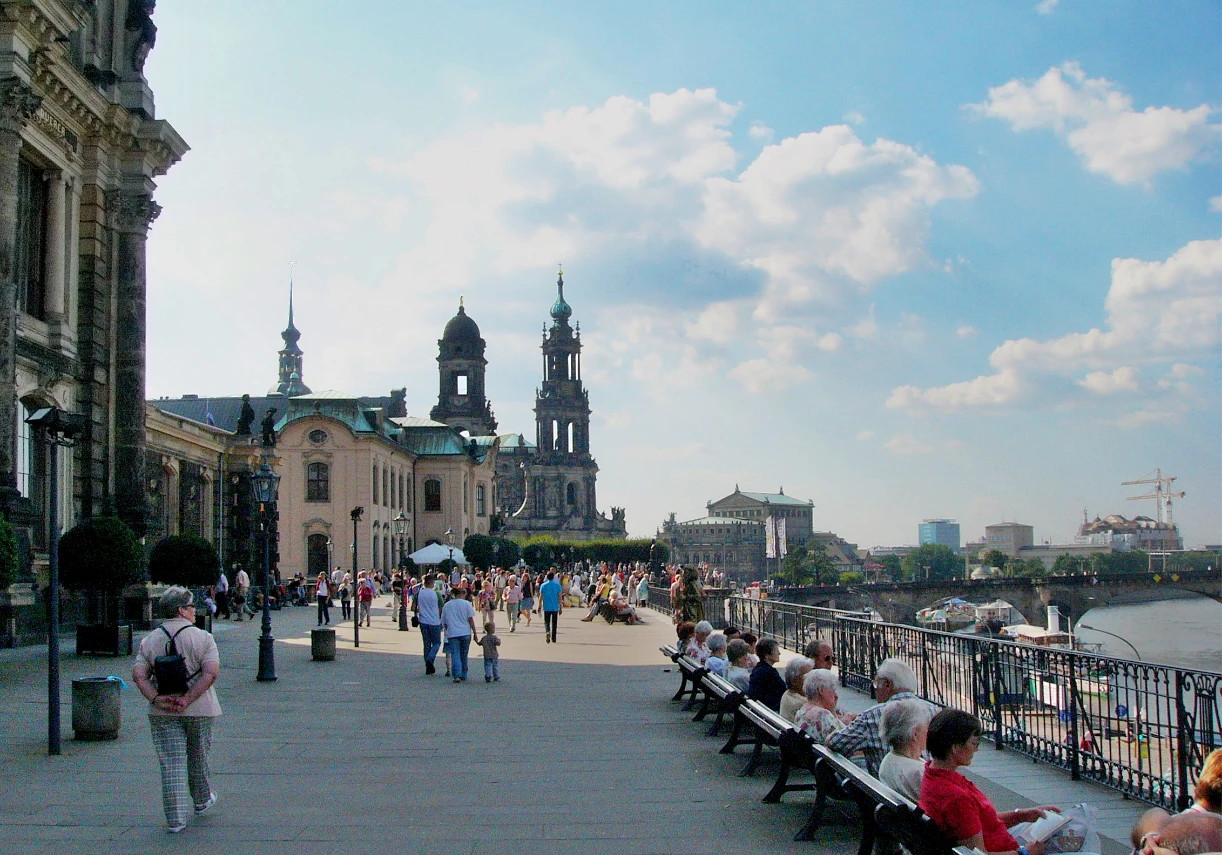
Brühl’s Terrace was originally part of Dresden’s fortifications in the 16th century, later transformed in the 18th century into a private garden for Count Heinrich von Brühl. In the 19th century, the space was opened to the public and turned into a promenade. Wide steps connect it to the city below, while a continuous walkway runs along the edge, offering views of the Elbe River.
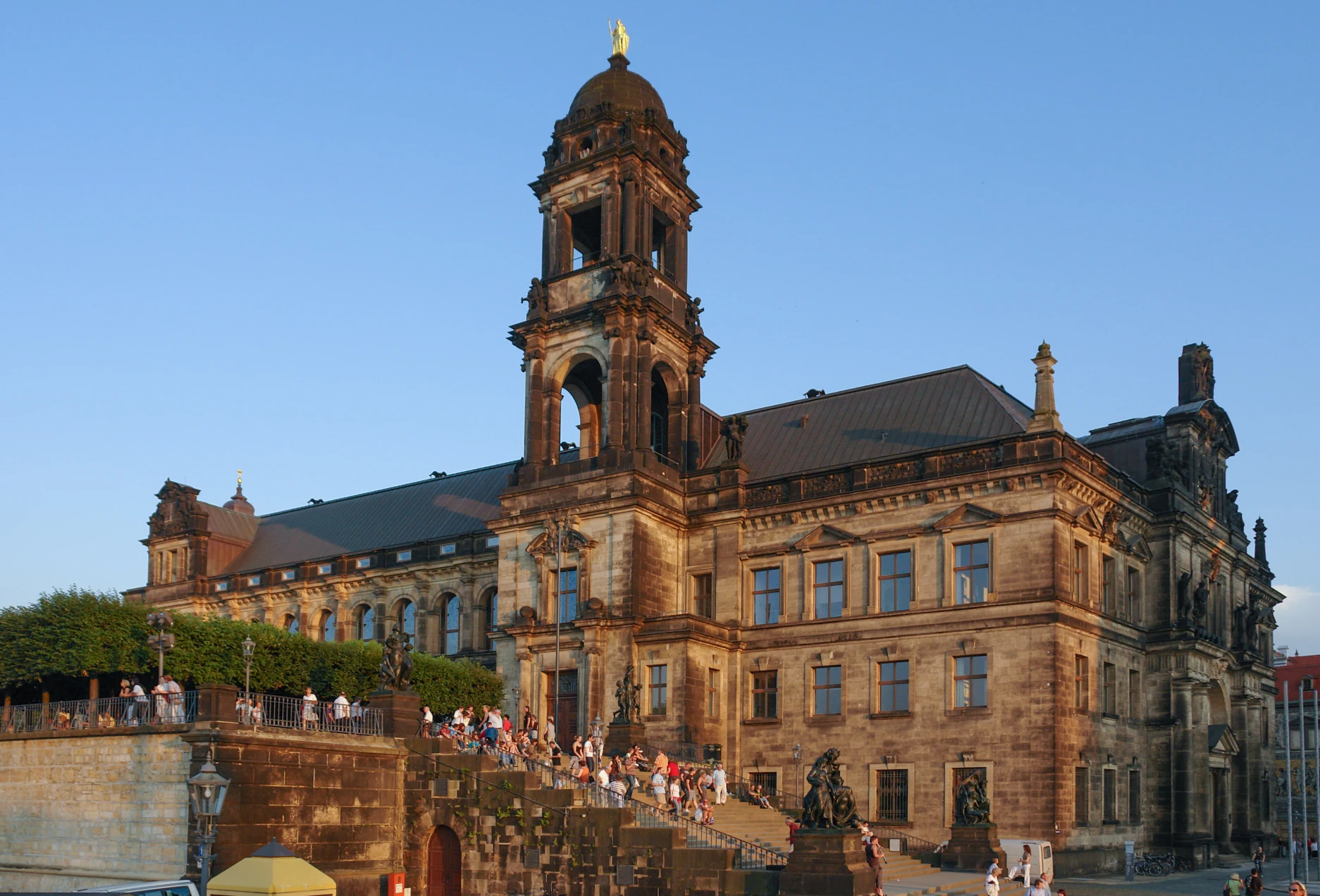
What makes it important architecturally is its role in structuring the city. It links major landmarks: the Frauenkirche, the Zwinger, and the Semperoper. This also opens the dense urban fabric toward the landscape. Statues, balustrades, and historic buildings along its edge create a visual frame without blocking the view. It’s one of the few places where you can clearly understand Dresden as a composition. City on one side, river on the other.
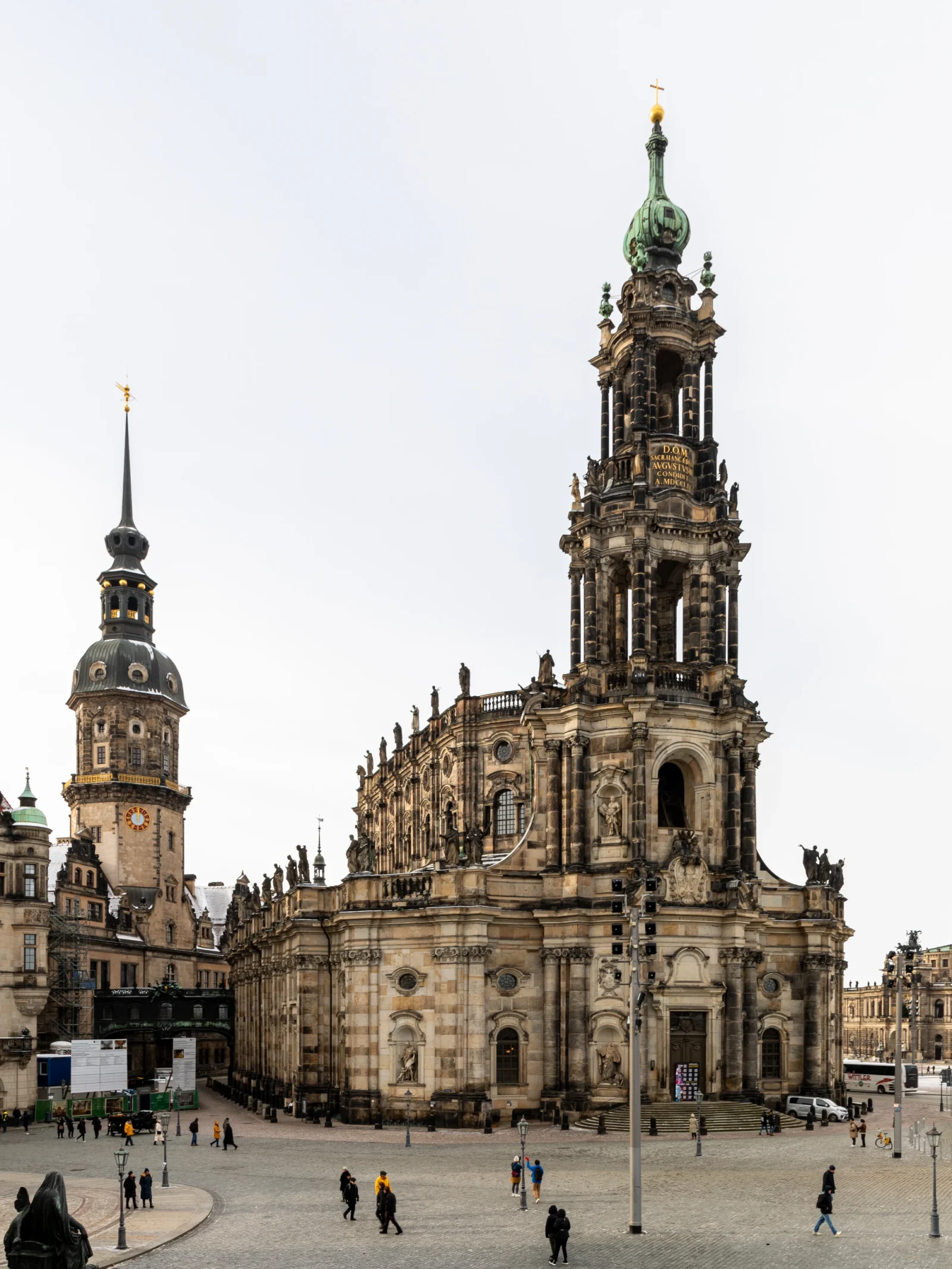
6. Hofkirche (Dresden Cathedral)
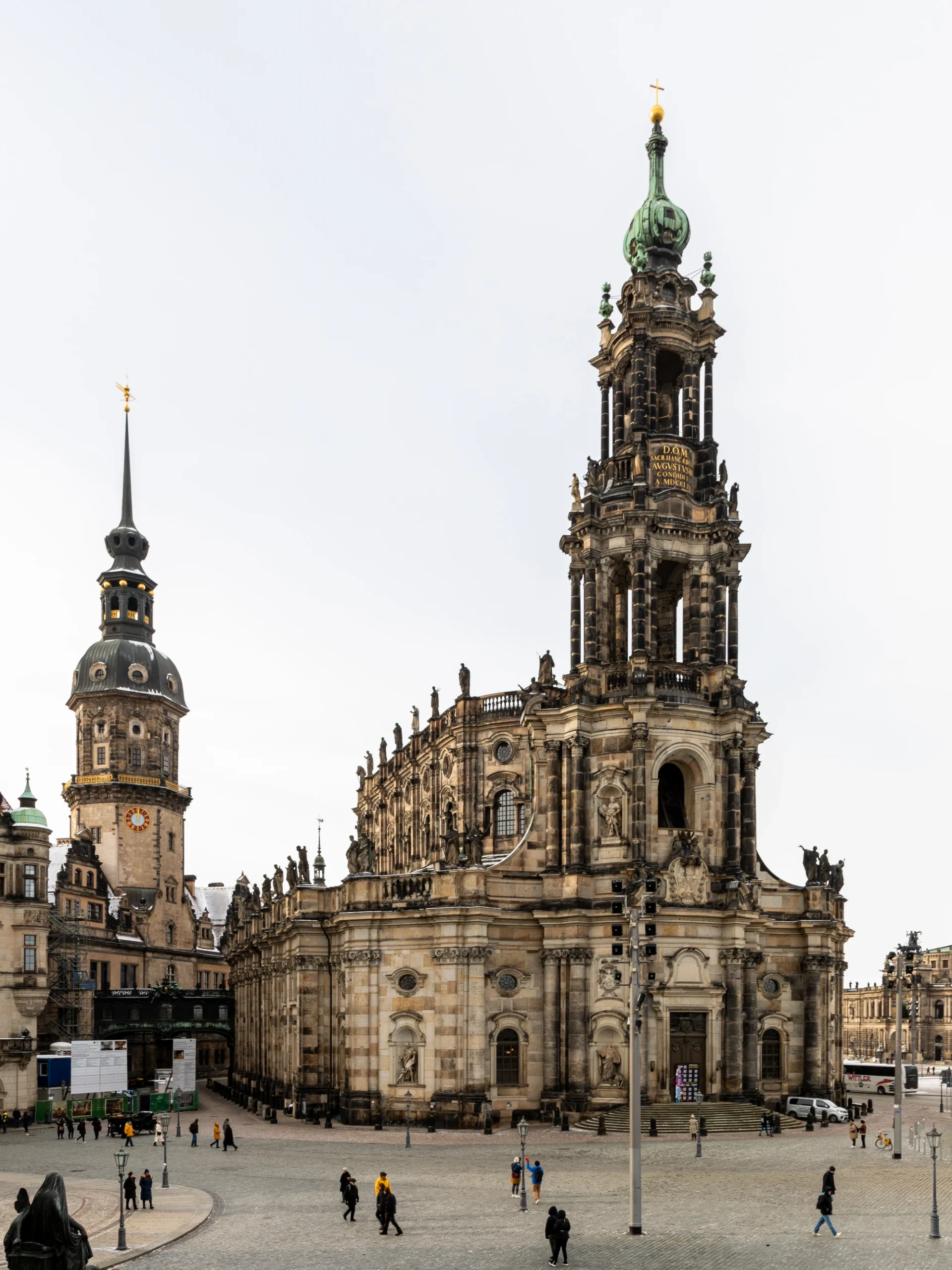
The Dresden Cathedral, built between 1739 and 1755, was designed by Italian architect Gaetano Chiaveri. It was commissioned by Augustus III of Poland, reflecting the Catholic court in an otherwise largely Protestant city.
This difference shows in the design. Unlike the centrally planned Frauenkirche, the Hofkirche follows a longitudinal layout, guiding movement toward the altar. It’s more in line with traditional Catholic church planning. Vertical elements define the exterior. It showcases tall windows, pilasters, and a roofline lined with 78 statues of saints. The tower adds height to the skyline, especially when seen from across the river.
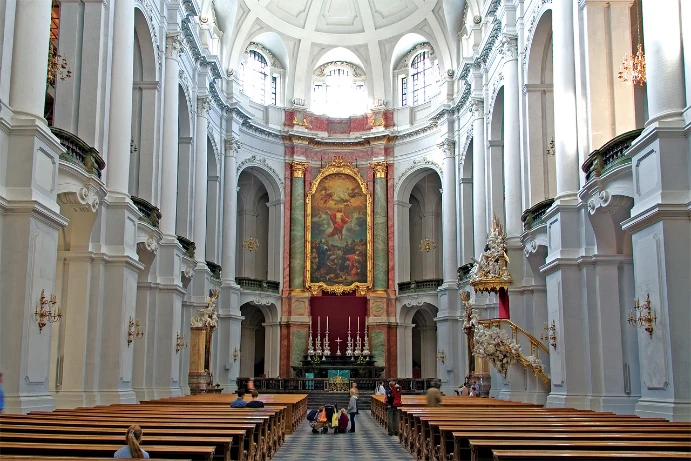
Inside, the space is more subdued compared to other Baroque interiors. It’s darker, more focused, and structured around processional movement. The Silbermann organ inside is one of its notable features. The church was damaged in 1945 and later restored. Today, it stands next to the river, close to the palace and the opera house, forming part of Dresden’s main architectural ensemble.
Palaces, Villas & Landscape Architecture
7. Pillnitz Palace
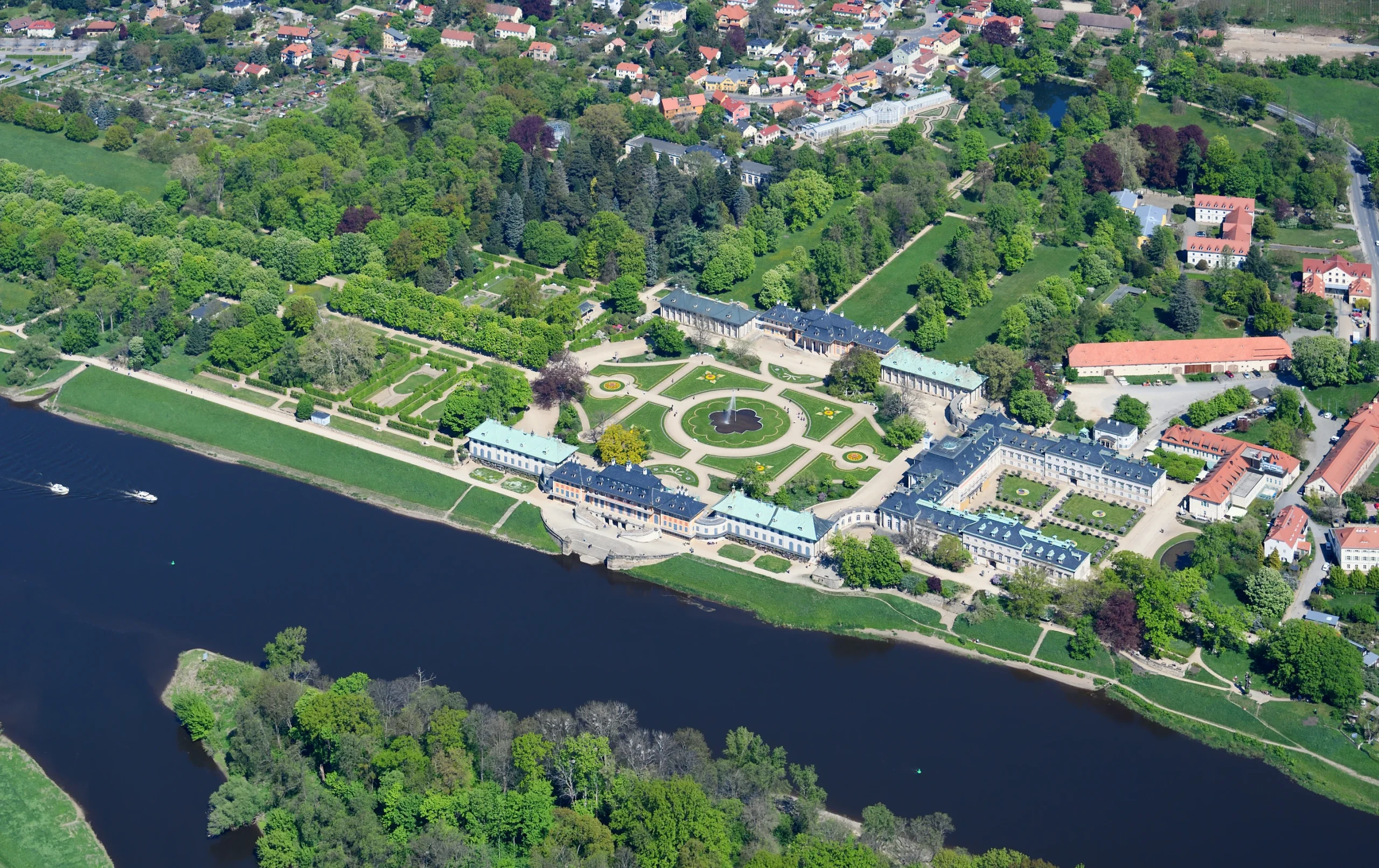
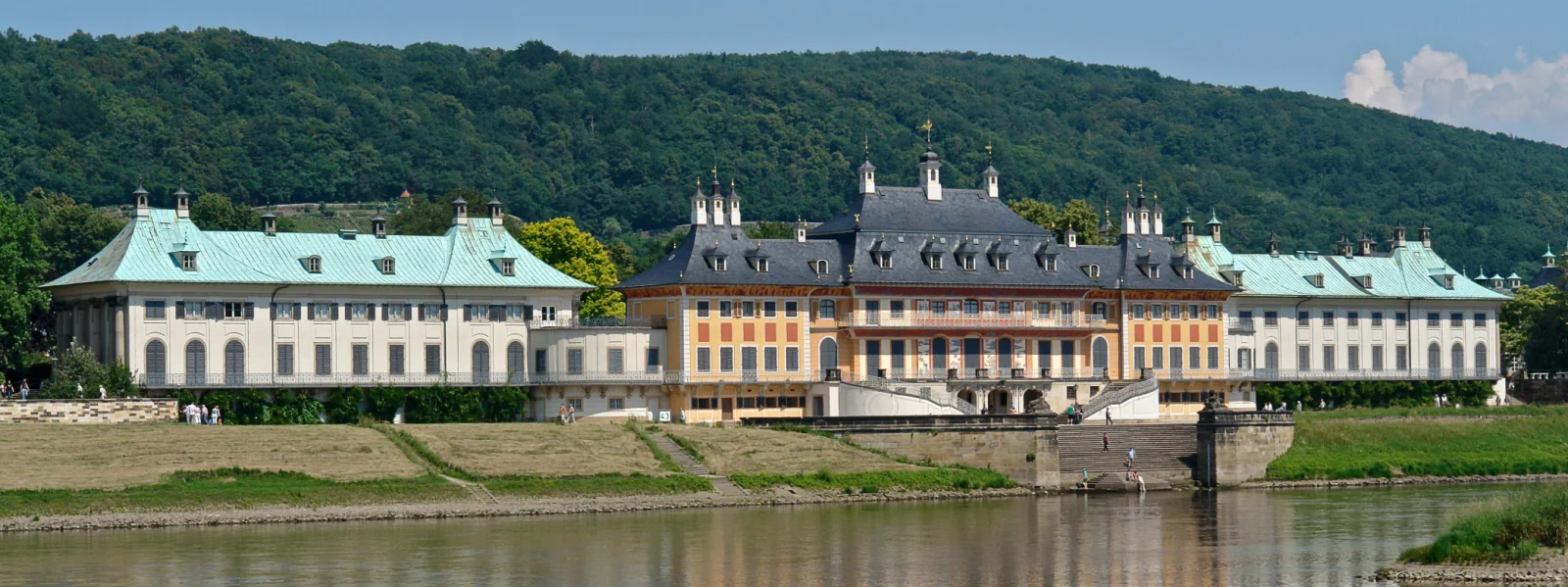
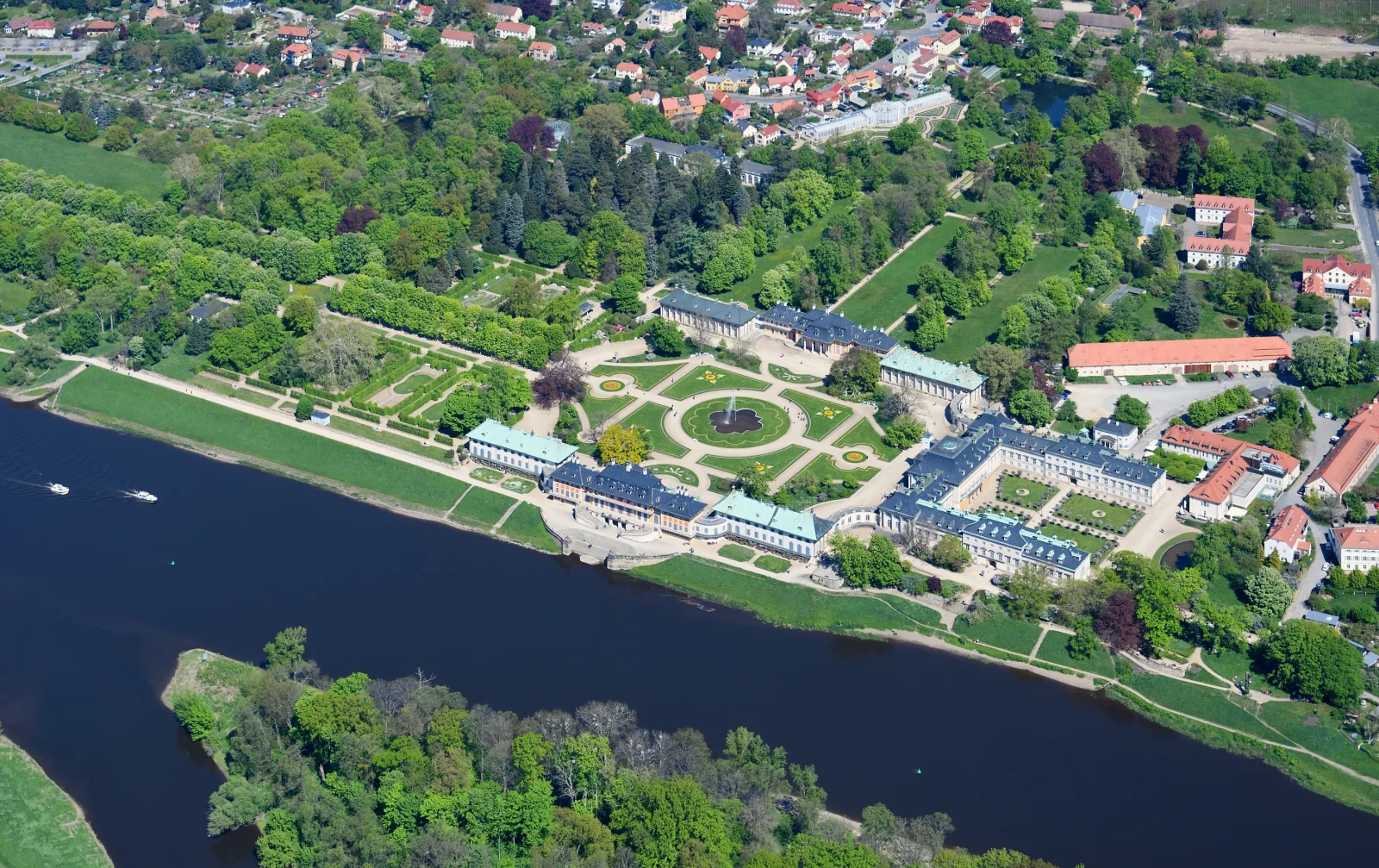
Set along a quiet stretch of the Elbe River on the eastern edge of the city, Pillnitz Palace feels very different from Dresden’s dense historic core. The site began as a riverside estate, but it was transformed in the early 18th century under Augustus the Strong into a summer residence.
The main buildings include the Water Palace (Wasserpalais) facing the river and the Mountain Palace (Bergpalais) set slightly back. They are designed in a Chinoiserie style, with curved roofs and decorative elements inspired by East Asian architecture. This was a European interpretation of the “exotic,” popular at the time. The layout is clear and controlled. A central axis runs between the two palaces, extending into formal gardens behind. These gardens follow Baroque planning principles. Symmetry, geometry, and long sightlines gradually open out into a more natural landscape. The river itself becomes part of the composition, acting almost like a foreground to the palace.
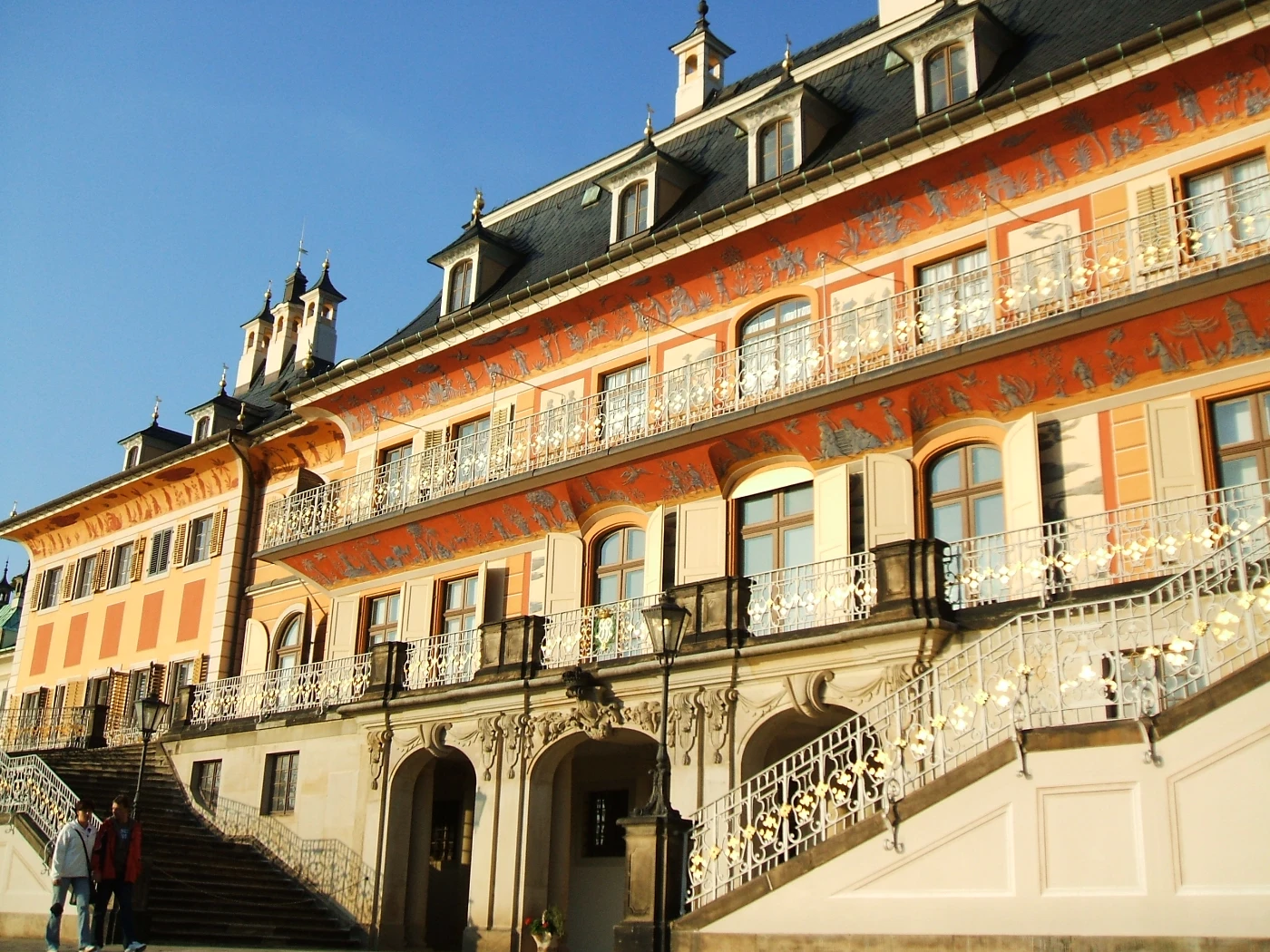
In the 19th century, the complex was expanded, most notably with the addition of a long orangery. It was one of the largest in Europe, used to house exotic plants. This added another layer to the site, shifting it from a royal retreat to a place of collection and display. Pillnitz survived the Bombing of Dresden with relatively little damage compared to the city centre, which is why it feels less interrupted. Today, it works as a museum complex.
8. Albrechtsberg & the Elbe Castles
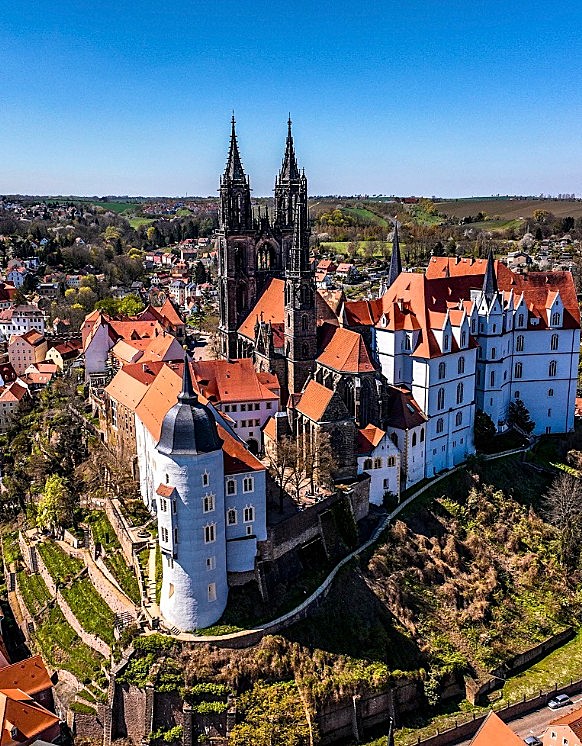
On the hills above the Elbe, three 19th-century villas, often referred to together as the Elbe Castles, offer another version of Dresden’s relationship with architecture and landscape. The most prominent among them is Albrechtsberg Palace, built between 1850 and 1854 for Prince Albrecht of Prussia.
Designed by architect Adolf Lohse, the palace follows a Neo-Renaissance style, inspired by Italian villas. The building is positioned on a slope, with terraces stepping down toward the river. The entire composition is designed to work with the view. From the palace, you look out across the Elbe valley; from below, the building becomes part of the skyline. Next to it is Lingnerschloss (Villa Stockhausen), and slightly further along is Schloss Eckberg, designed in a Neo-Gothic style. Together, these buildings create a sequence along the hillside, each with its own architectural language but all tied together by the landscape. Gardens, vineyards, and pathways connect the buildings, softening their edges and extending their presence outward.
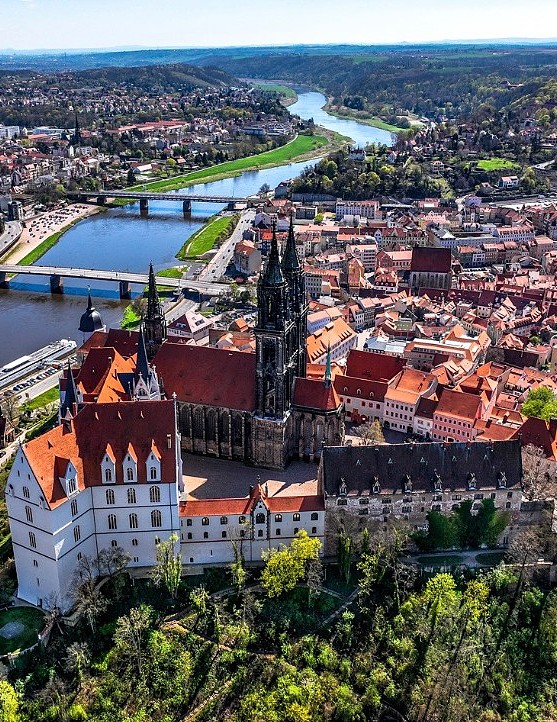
Unlike the Baroque core of Dresden, which is dense and inward-looking, this part of the city opens out. The scale is larger, the spacing wider, and the experience slower. These were not public buildings. They were private residences, designed for retreat, views, and interaction with nature.
Contemporary & Cultural Interventions
9. Military History Museum Extension
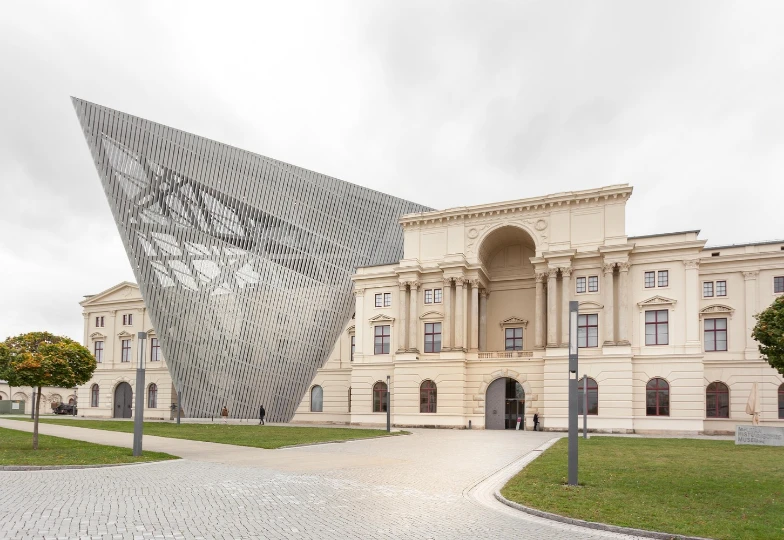
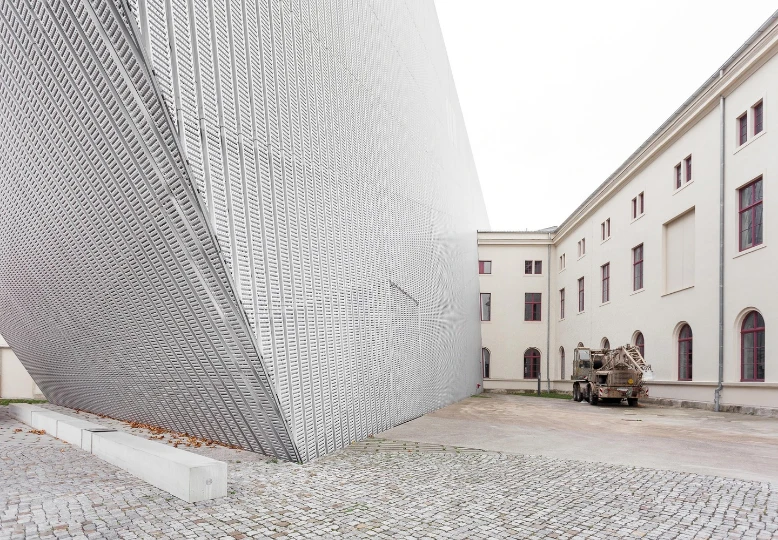
The original building, a 19th-century arsenal completed in 1876, was designed in a strict, symmetrical Neo-Classical style. It was solid, ordered, and representative of military authority.
In 2011, architect Daniel Libeskind introduced a sharp, angular extension that cuts directly through this symmetry. A large steel-and-glass wedge slices into the old structure. The wedge points toward the area of Dresden most heavily destroyed during the Bombing of Dresden.
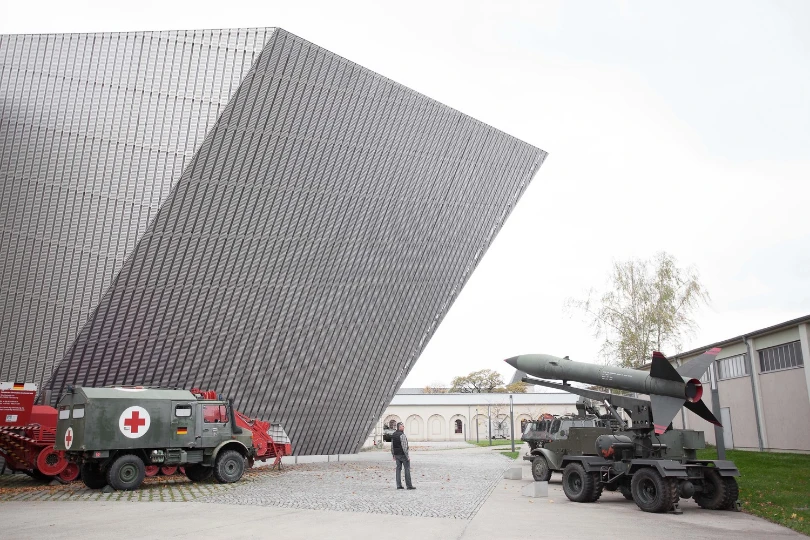
It acts as a reminder of the city’s history. Inside, the museum is organised into two parts. The original building presents a chronological history of military events, while the new extension takes a thematic approach. It looks at the human, social, and psychological aspects of war. The old spaces feel ordered and controlled; the new ones are sharp, slanted, and disorienting.
At the top of the wedge is a viewing platform. From here, you can see the city laid out below. This is one of Dresden’s most important contemporary projects because it doesn’t try to blend in.
10. Kunsthofpassage (Neustadt)
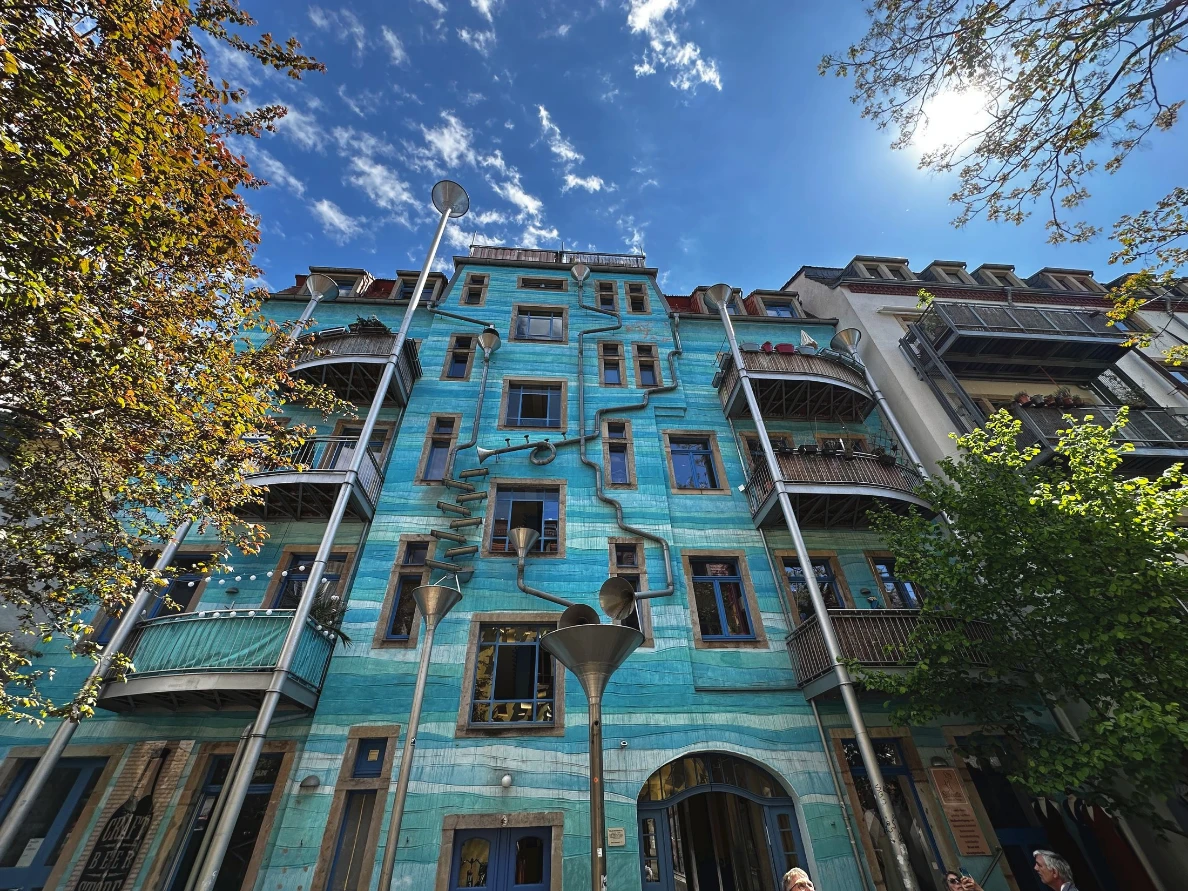
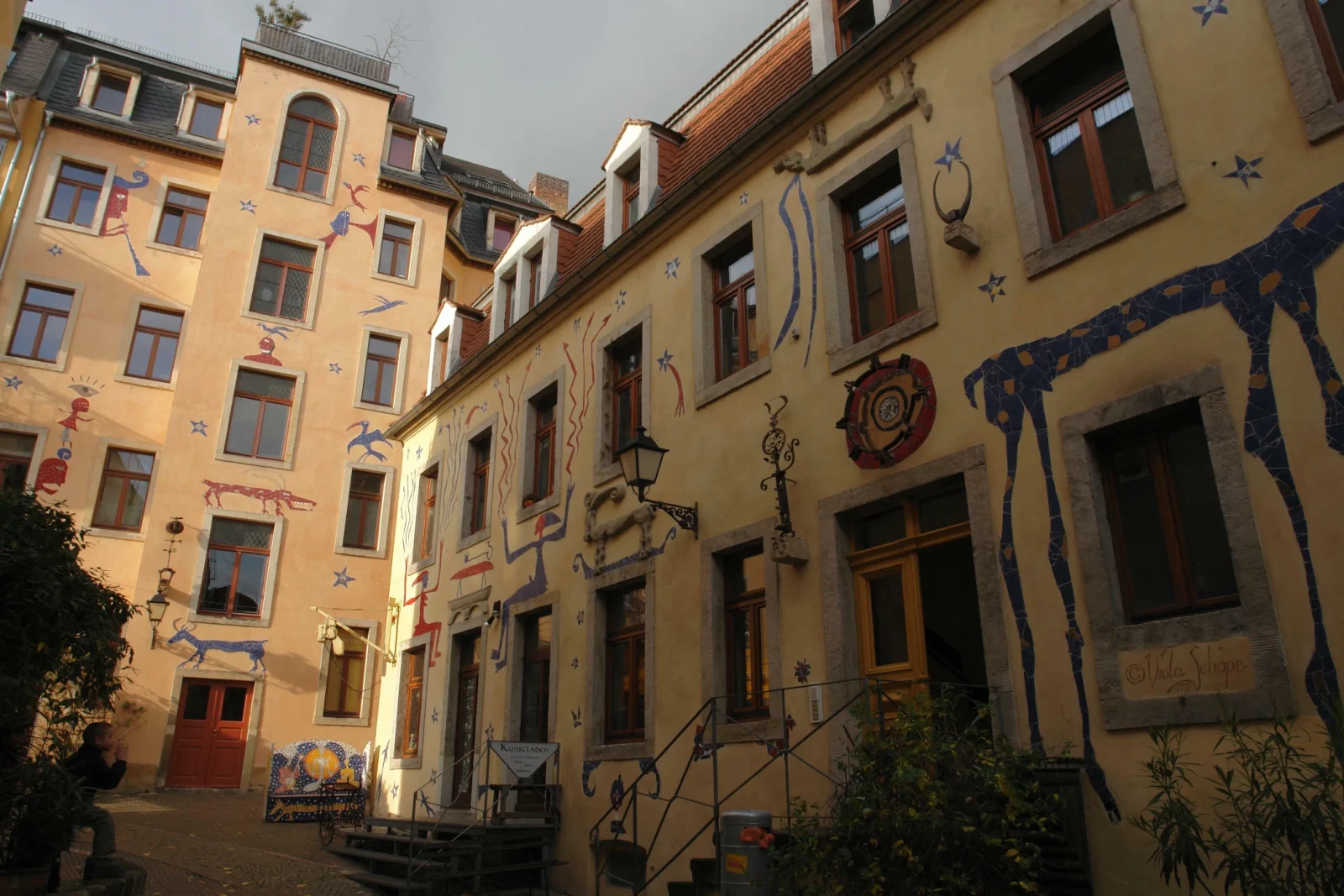
Across the Elbe, in the Neustadt district, the Kunsthofpassage Dresden offers a completely different experience. Developed in the early 2000s, Kunsthofpassage is a series of interconnected courtyards within a residential block. Each courtyard has its own theme, designed by different artists and designers. The most well-known is the “Singing Drain Pipes” courtyard, where a network of pipes and funnels turns rainwater into sound.
Architecturally, the buildings themselves are fairly typical. Mid-rise structures form enclosed courtyards. There are no grand axes or monumental forms. What changes is how these surfaces are treated. Facades become interactive elements. Walls are painted, sculpted, or fitted with installations. Colour, texture, and movement replace traditional ornament. This project is about reworking existing ones. It shows how architecture can evolve without large-scale demolition or reconstruction.
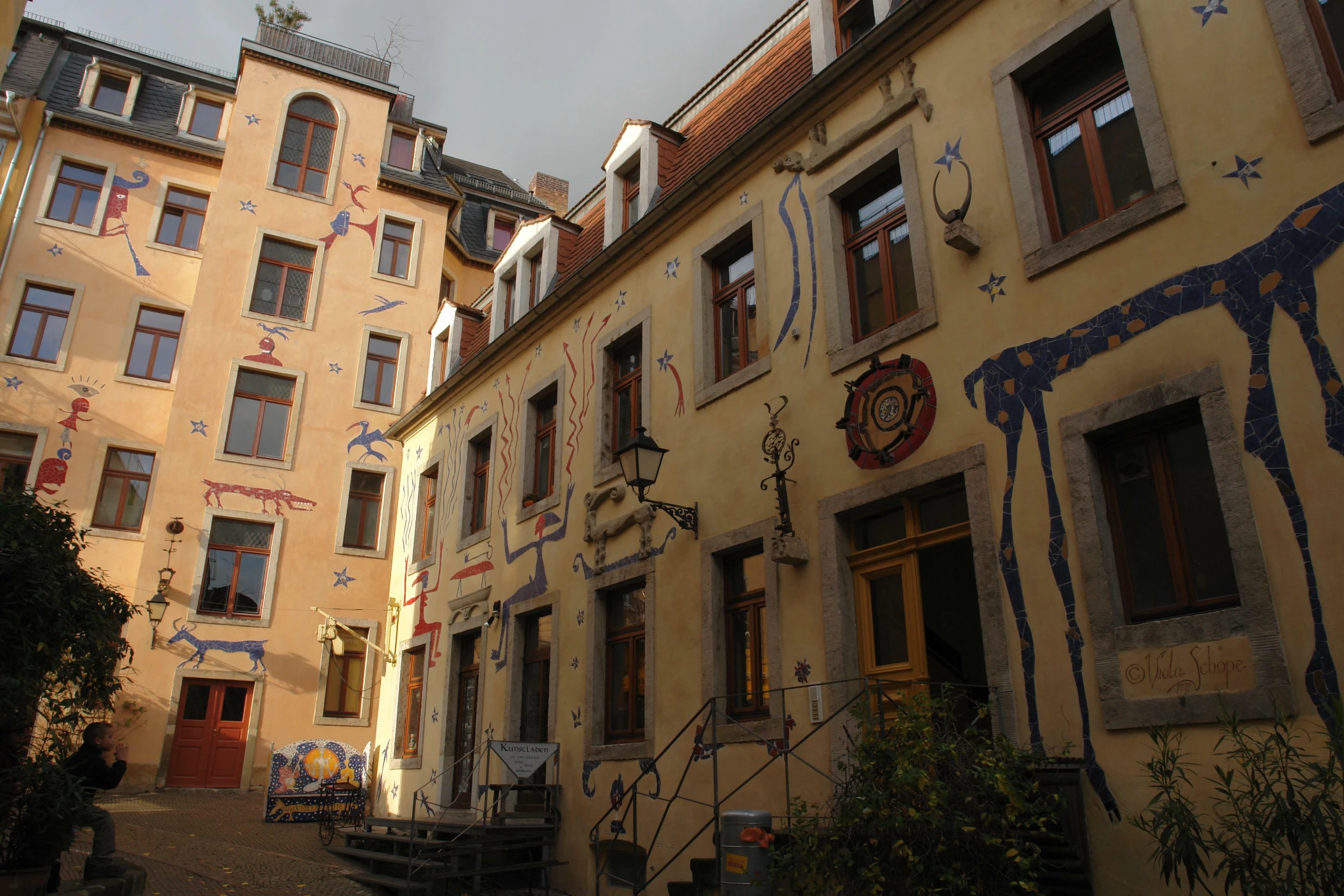
The Neustadt area itself has a different history from the old town. Much of it survived the war, and over time, it became a hub for alternative culture, art, and independent businesses. Kunsthofpassage fits naturally into this context.
Dresden does not reveal itself all at once. One moment, you’re standing before the luminous dome of the Frauenkirche Dresden, its sandstone glowing as it has always been there; the next, you’re reminded that almost everything you see was once reduced to ash.
Dresden carries the weight of what it has been, what it has lost, and what it has chosen to become.
Explore Courses
.jpg "Ondrej Chybik - Rethinking Architecture")