

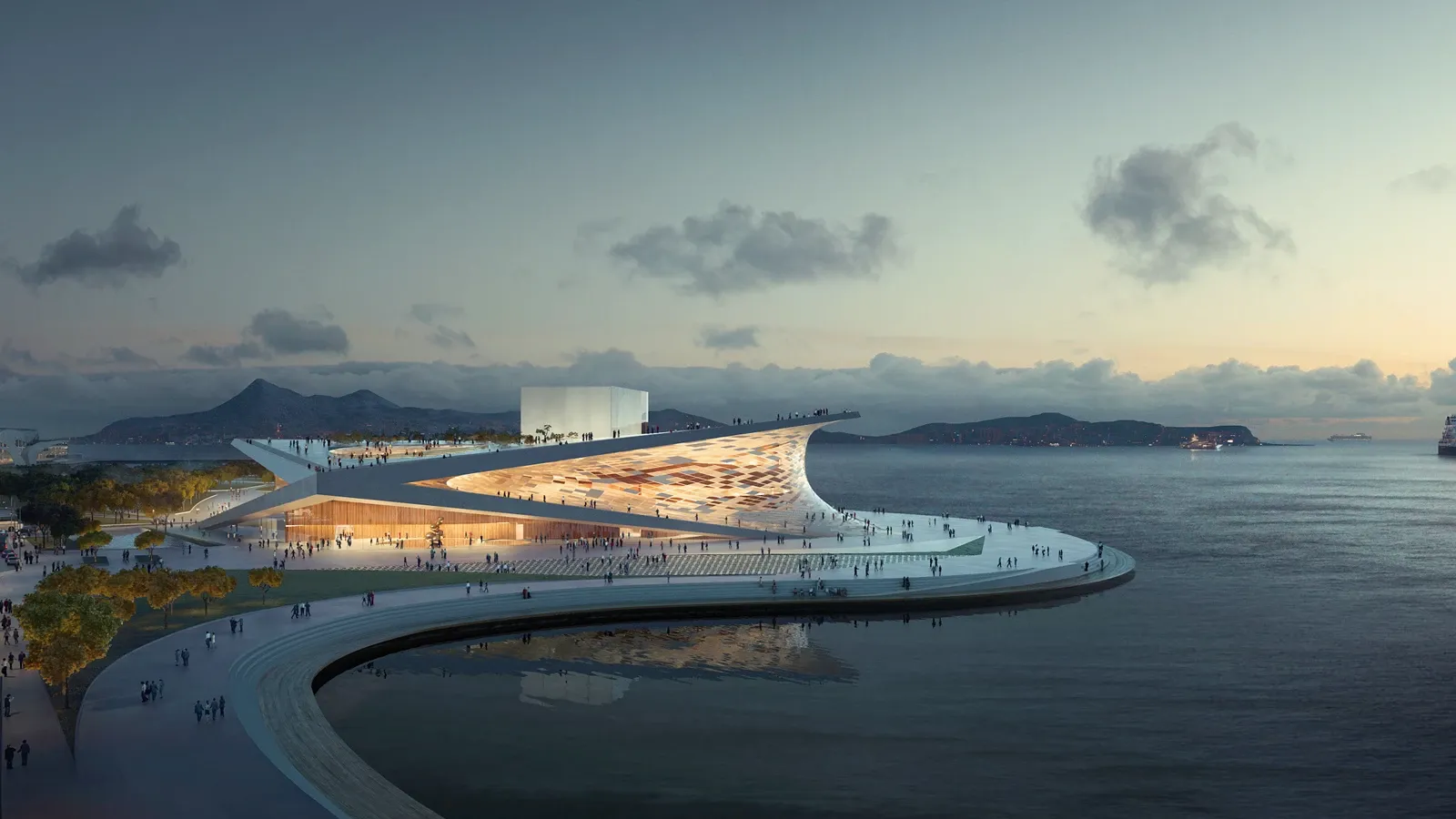
The Busan Opera House, designed by Norwegian architecture studio Snøhetta in collaboration with Ilshin Architects, is set to become one of South Korea’s most important cultural landmarks. Rising on the edge of Busan’s North Port redevelopment zone, the project transforms a reclaimed waterfront into a new stage for art, performance, and public life.
First announced after an international design competition in 2011, the opera house has since moved into advanced construction, with completion scheduled for late 2026 and an official opening in July 2027.
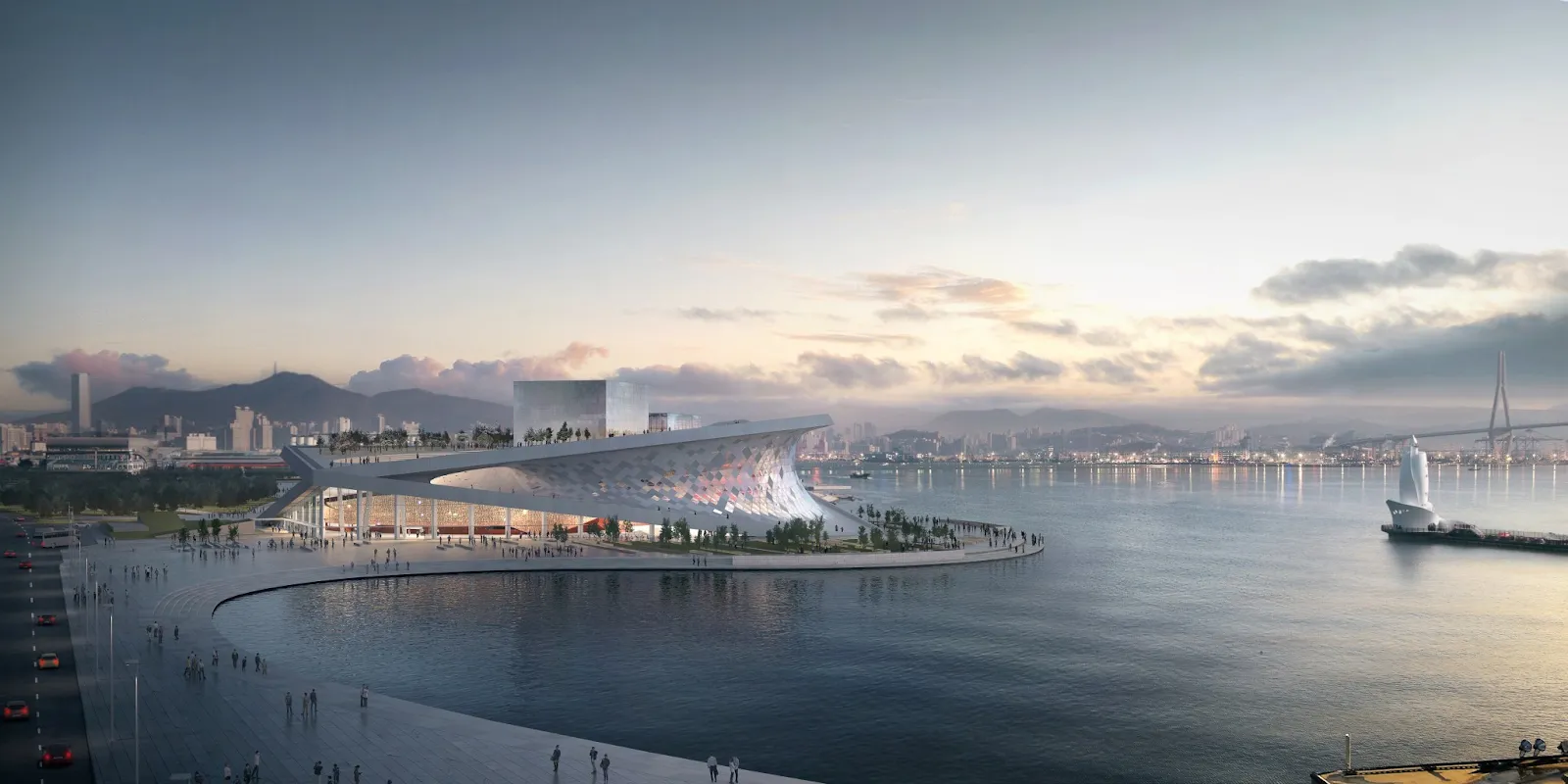
The building is an opera venue and a symbol of Busan’s urban renewal and global cultural ambitions. With its sweeping curved form, rooftop public park, and world-class performance halls, the project merges architectural expression with civic openness. At a scale of nearly 30,000 square meters, the complex will host a 1,800-seat grand auditorium, a 300-seat multipurpose theater, rehearsal spaces, and public plazas, making it a cornerstone for the city’s growing international arts scene.
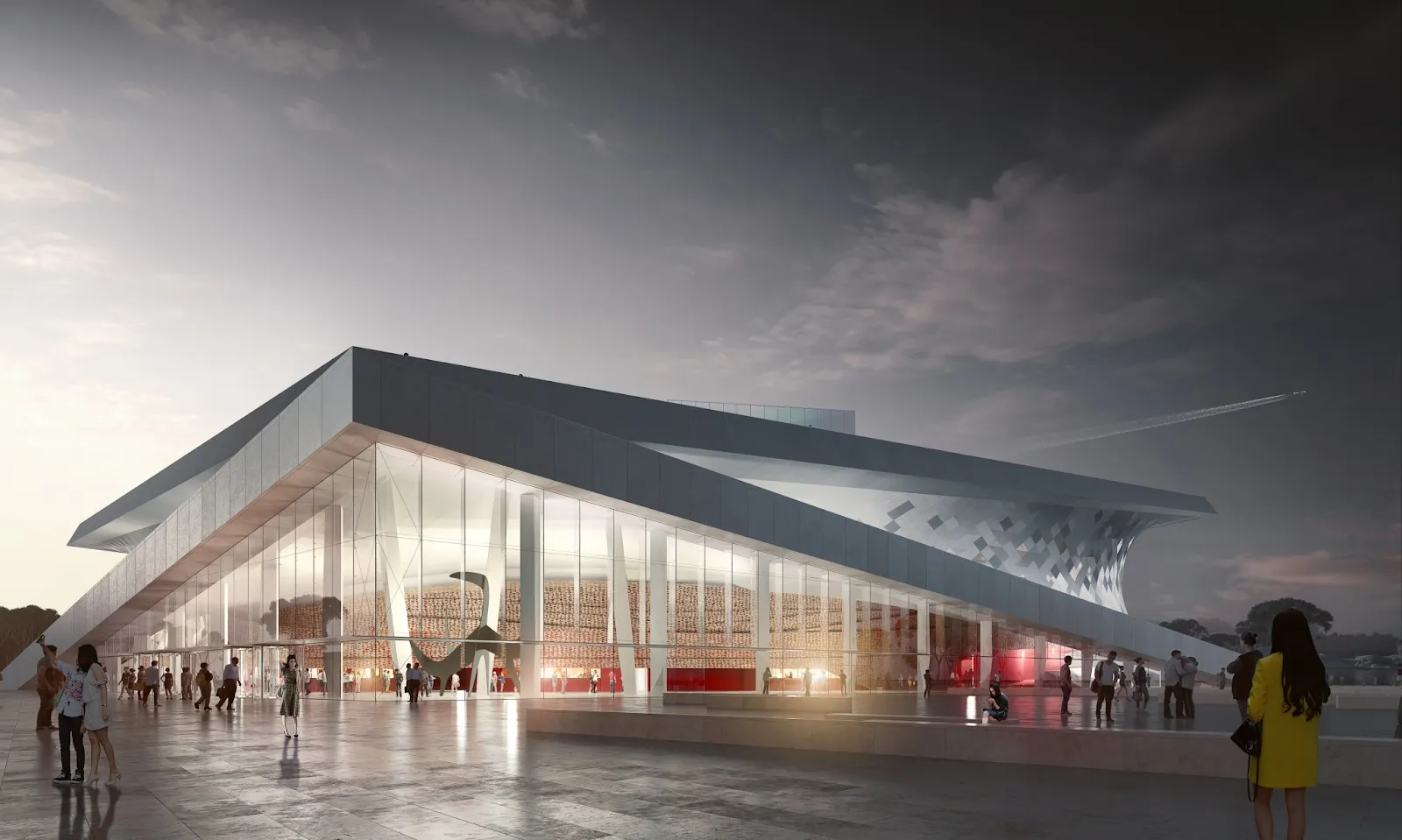
Chosen through an international design competition, the project reflects Snøhetta’s approach to combining cultural symbolism with public accessibility. The opera house is strategically located on reclaimed land along Busan’s waterfront, at the North Port redevelopment site. This area, once dominated by shipping and industry, is being reimagined as a cultural and civic destination, with the opera house serving as its centerpiece.
Snøhetta’s Architectural Form and Korean Cultural Symbolism in Busan Opera House
The design of the Busan Opera House is deeply rooted in Korean philosophy and cultural symbolism. Snøhetta’s concept draws inspiration from the trigrams Kun (Heaven), Kon (Earth), and Kam (Water), translating these abstract elements into architectural form.
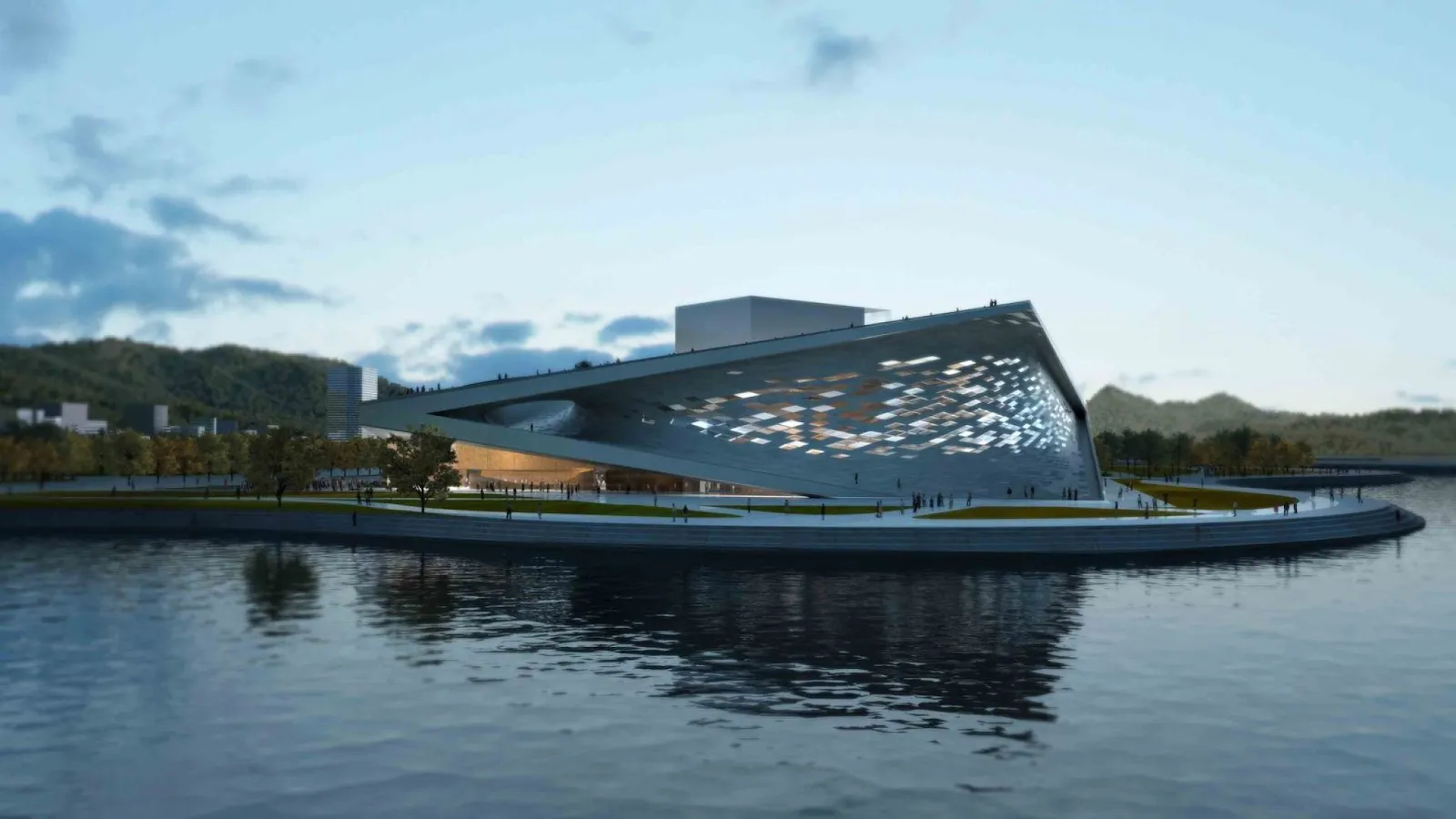
The building’s sweeping curves are symbolic lines that intersect, creating a balance between grounding and elevation. The lower curve anchors the structure firmly to the reclaimed waterfront, while the upper curve reaches outward, connecting the opera house visually with the sea and the sky. This duality, anchored yet ascending, underscores the building’s role as both a civic landmark and a cultural gateway.
Public Access and Walking Roof Design
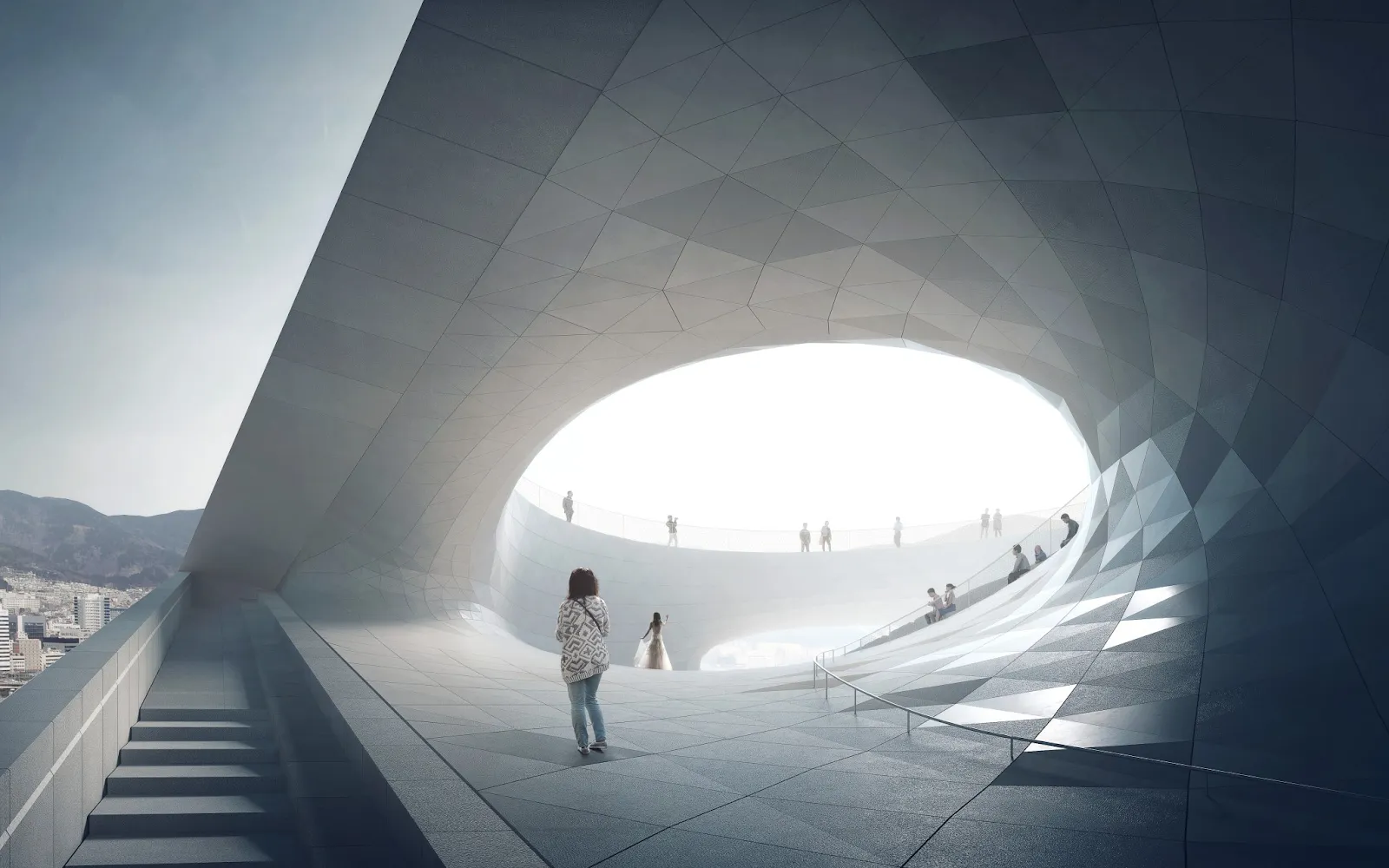
Unlike many traditional opera houses that emphasize grandeur and exclusivity, Snøhetta designed the Busan Opera House as an open pavilion for the city. Two lifted corners act as gateways, inviting visitors to enter from both the urban side and the waterfront. This creates a sense of inclusiveness, positioning the building as a public space rather than a closed cultural monument.
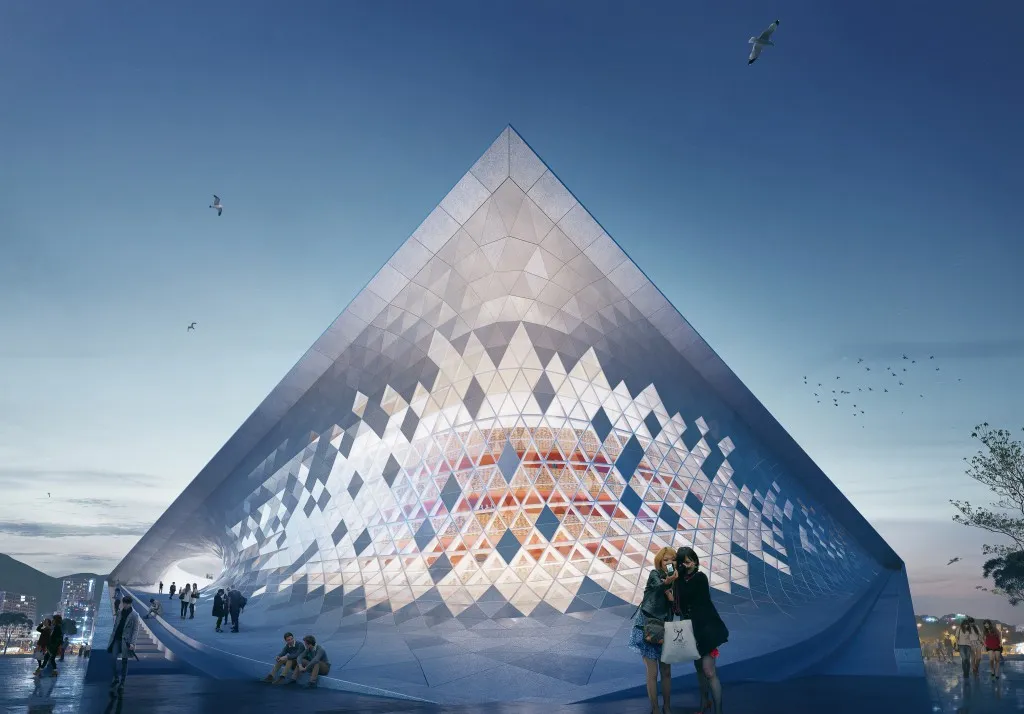
The opera house is wrapped in a continuous, flowing façade that links the ground-level plaza with the rooftop. This curved “skin” not only shapes the building’s sculptural identity but also serves a functional purpose, guiding visitors upwards to the accessible rooftop park. Known as the “walking roof,” this landscaped public terrace offers panoramic views of the mountains, harbor, and Busan’s skyline, turning the roof itself into an urban stage and lookout point.
Interior Design and Acoustics
Inside, the main opera hall is conceived as a musical instrument in its own right. Every detail of the interior has been shaped to enhance acoustic quality and visual warmth. The auditorium walls and balcony fronts are clad in solid cherry wood panels, chosen for their ability to enrich sound resonance while creating an intimate atmosphere. The design team carefully calibrated the angles and surfaces to ensure that sound reflections reach every seat with precision, supporting performances of opera, classical music, and theater alike.
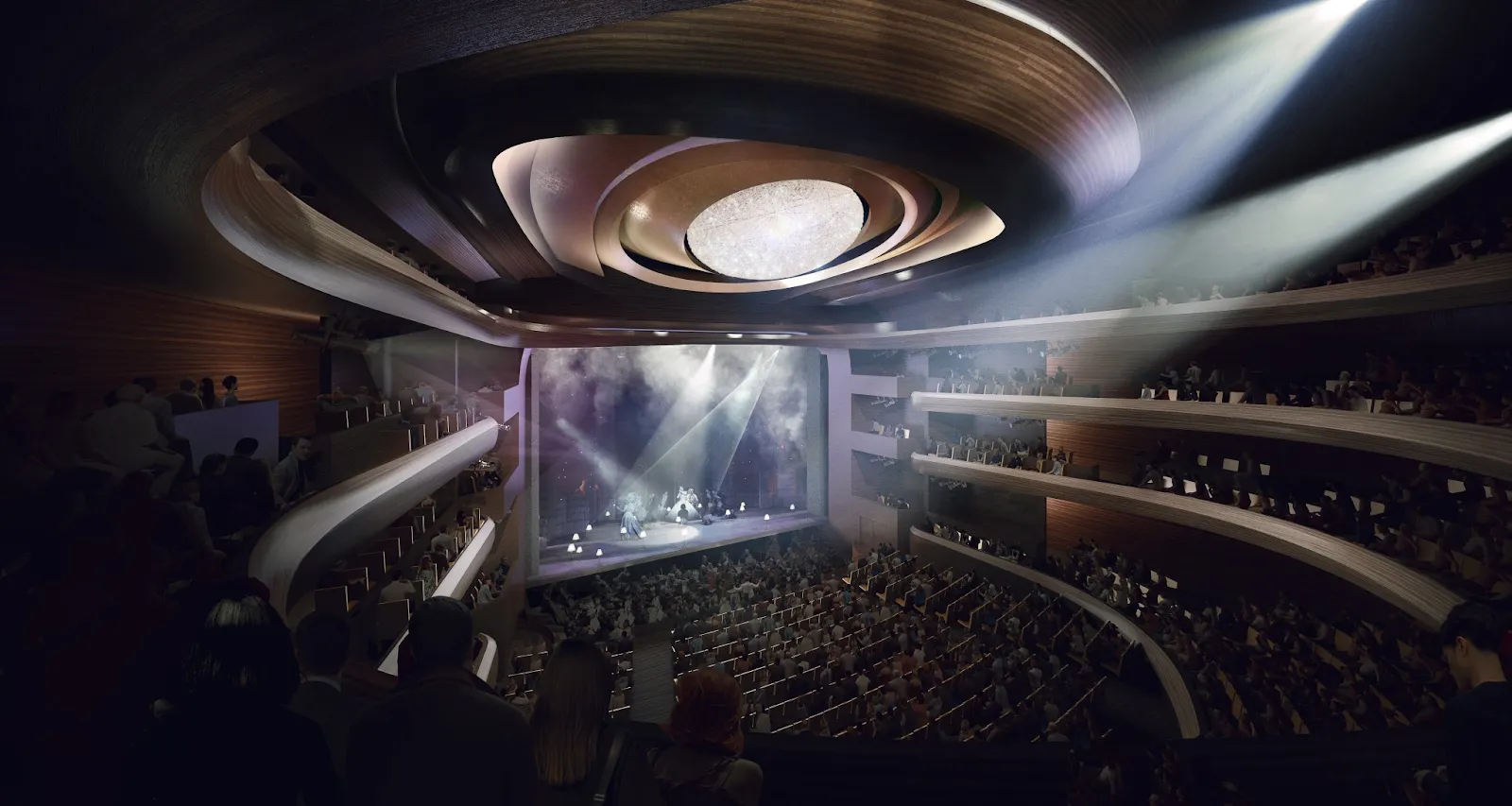
Above the audience seating, a large lantern-like light fixture provides a soft glow before and after performances, emphasizing the hall’s ceremonial character without interfering with stage lighting during shows. This combination of technical rigor and crafted ambiance reflects Snøhetta’s commitment to making the performance space as immersive as the art it hosts.
Construction Progress and Facade Completion
During construction in 2023, progress slowed due to technical challenges with the twist construction method used for the building’s complex curved form. These issues were later resolved, allowing work to move forward quickly. Today, the outer shell of the opera house is nearing completion, marking a major milestone in the project’s progress.
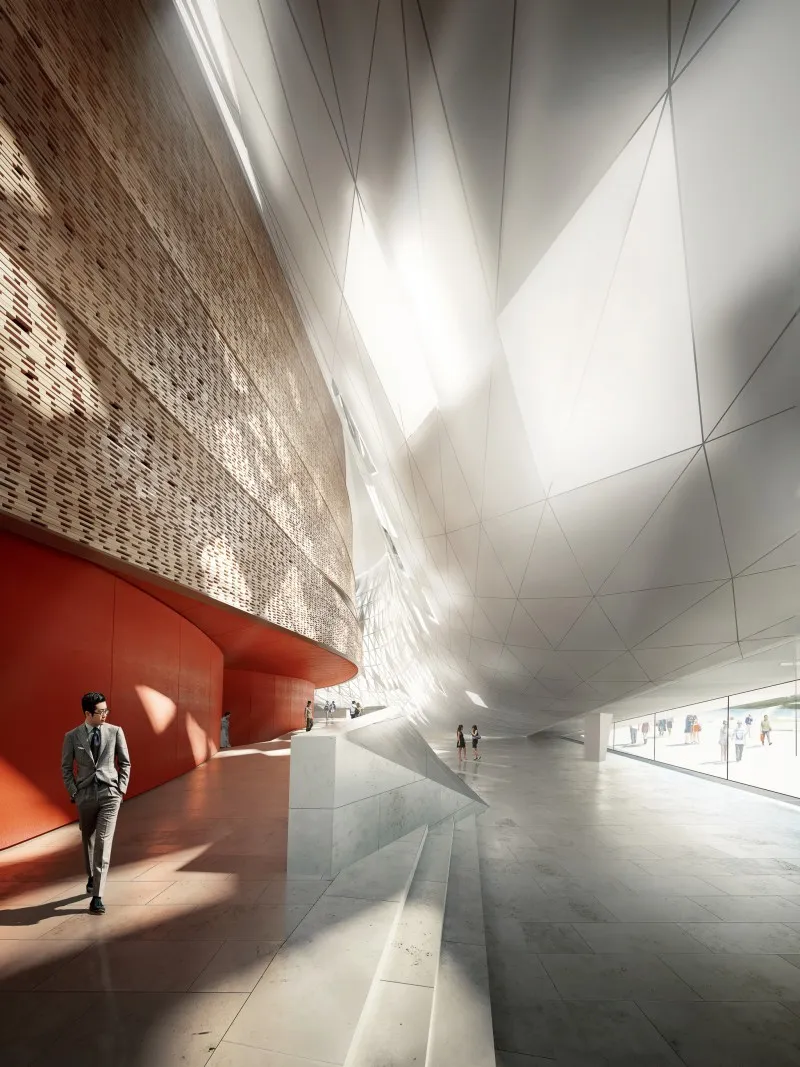
The interior finishes have seen notable changes from the original design. Where carbonized bamboo was first planned, the scheme has been updated to oak finishes, paired with state-of-the-art lighting and acoustic equipment. These enhancements raise the quality of the performance environment but have also pushed costs above the original budget of 311.7 billion won.
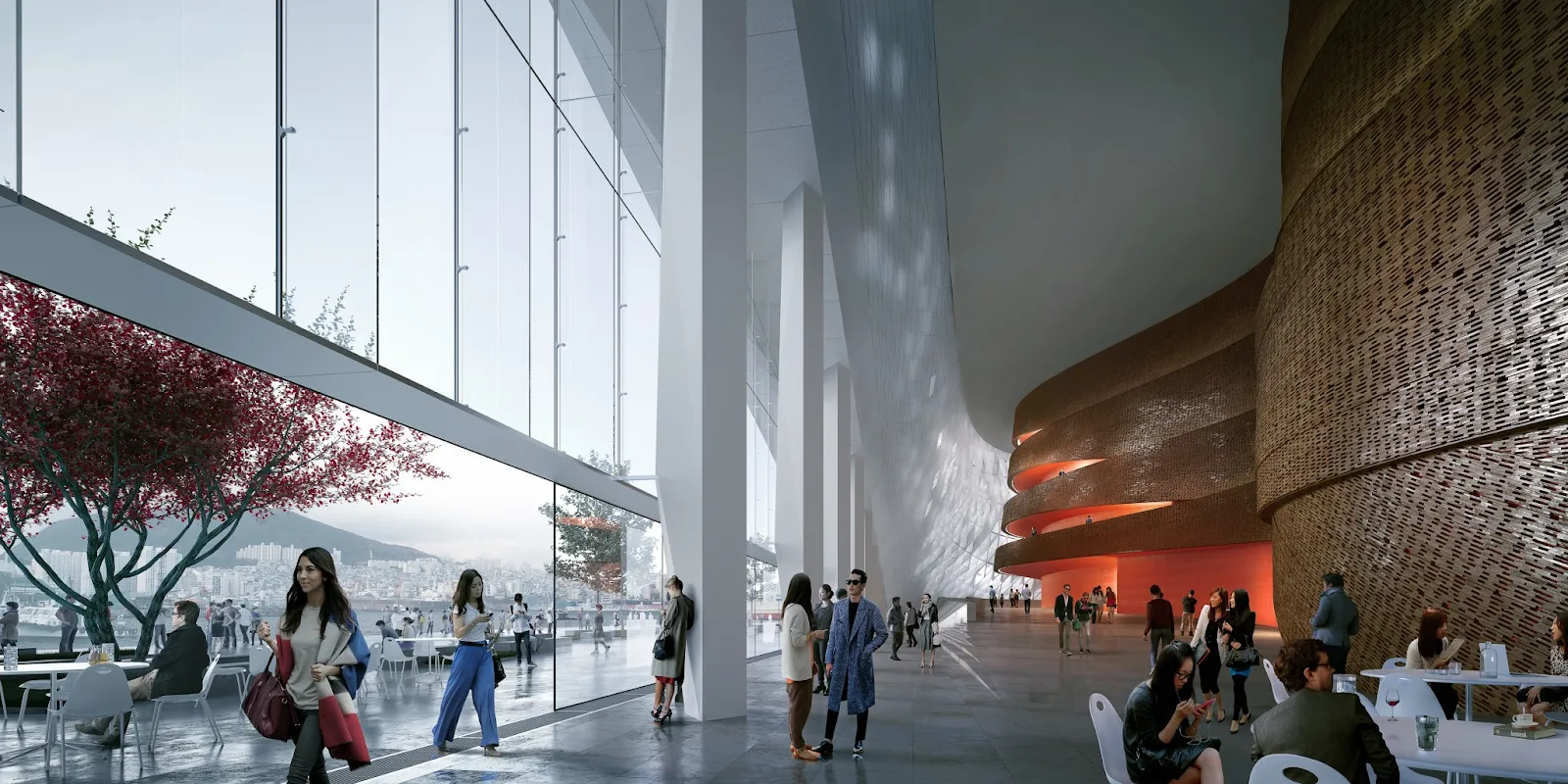
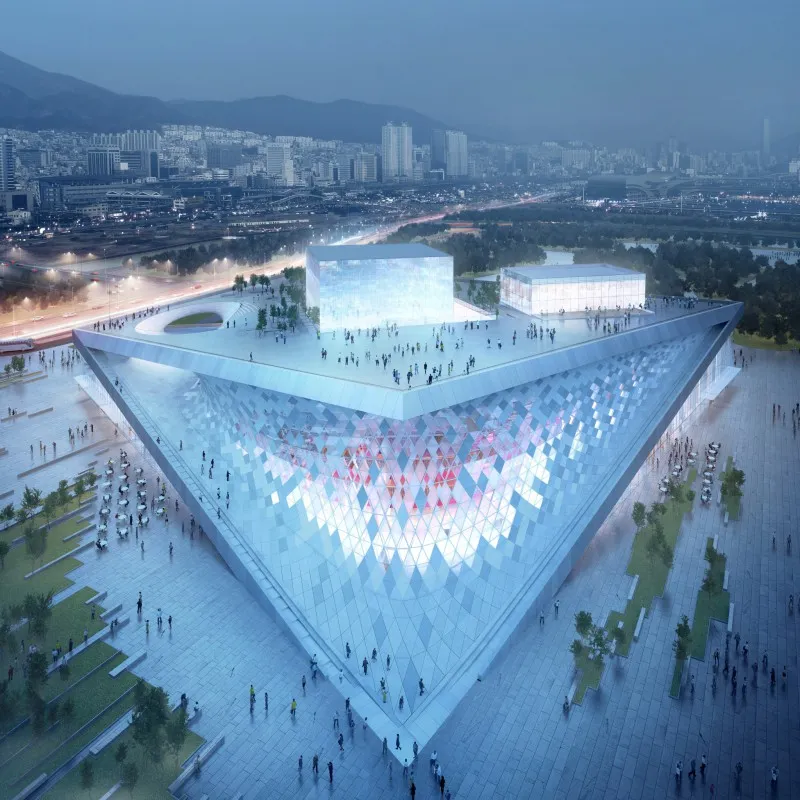
One of the opera house’s most distinctive features is its accessible rooftop, designed as a landscaped public terrace. Lit at night and open for strolling, the roof transforms the building into a gathering space where visitors can enjoy views of the harbor and city or simply pause in a green retreat above the water.
Snøhetta partners with Ilshin Architects to build something that reflects Korean tradition, connects people, and shifts architecture from isolation to community. It’s about giving culture back to the public, and the process is as thoughtful as the design.
Image credit: Snøhetta and Tegmark
Explore Courses
.jpg%202.jpg "Building Performance with Forma & Opossum")
.jpg "Ondrej Chybik - Rethinking Architecture")