

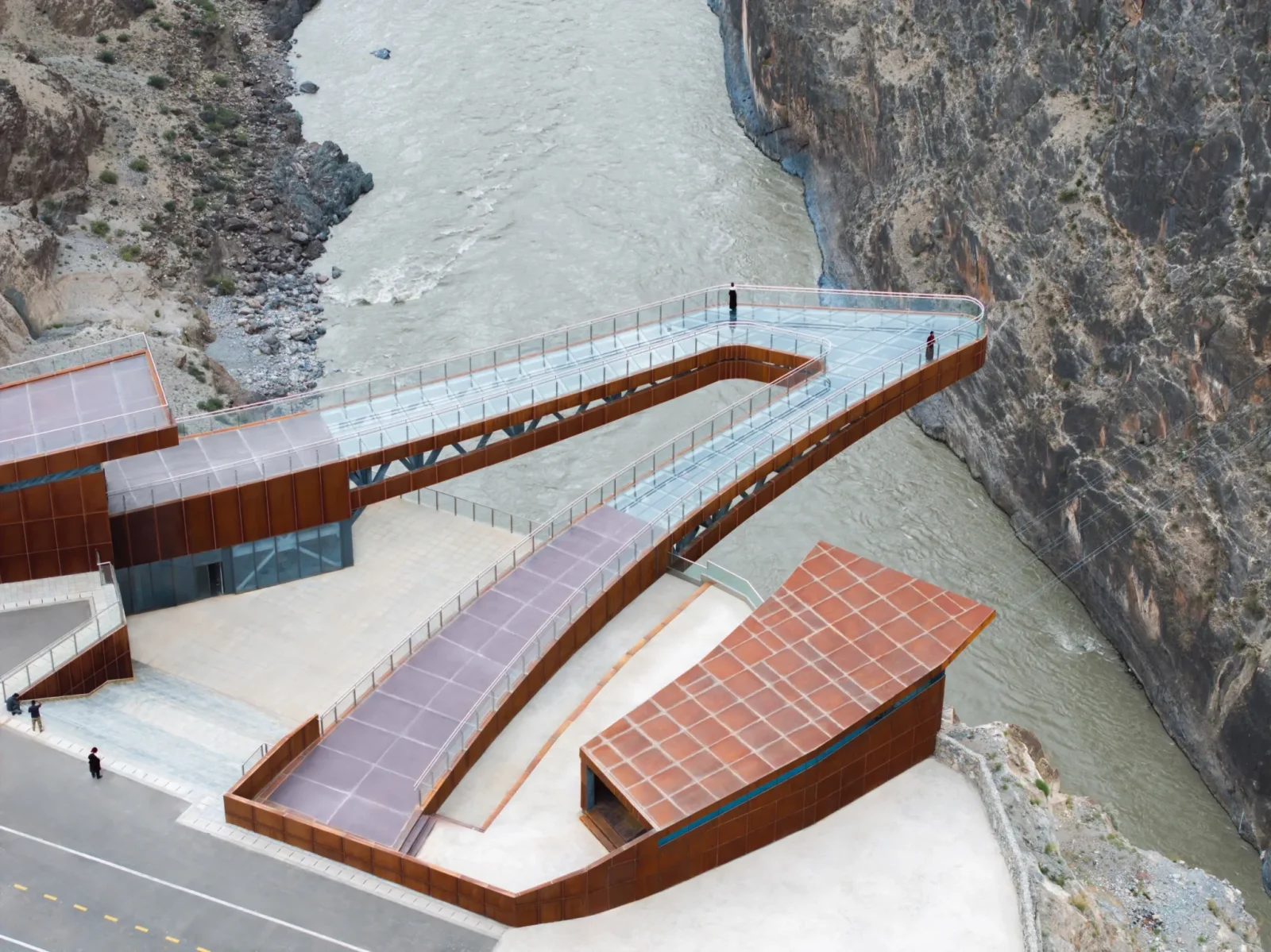
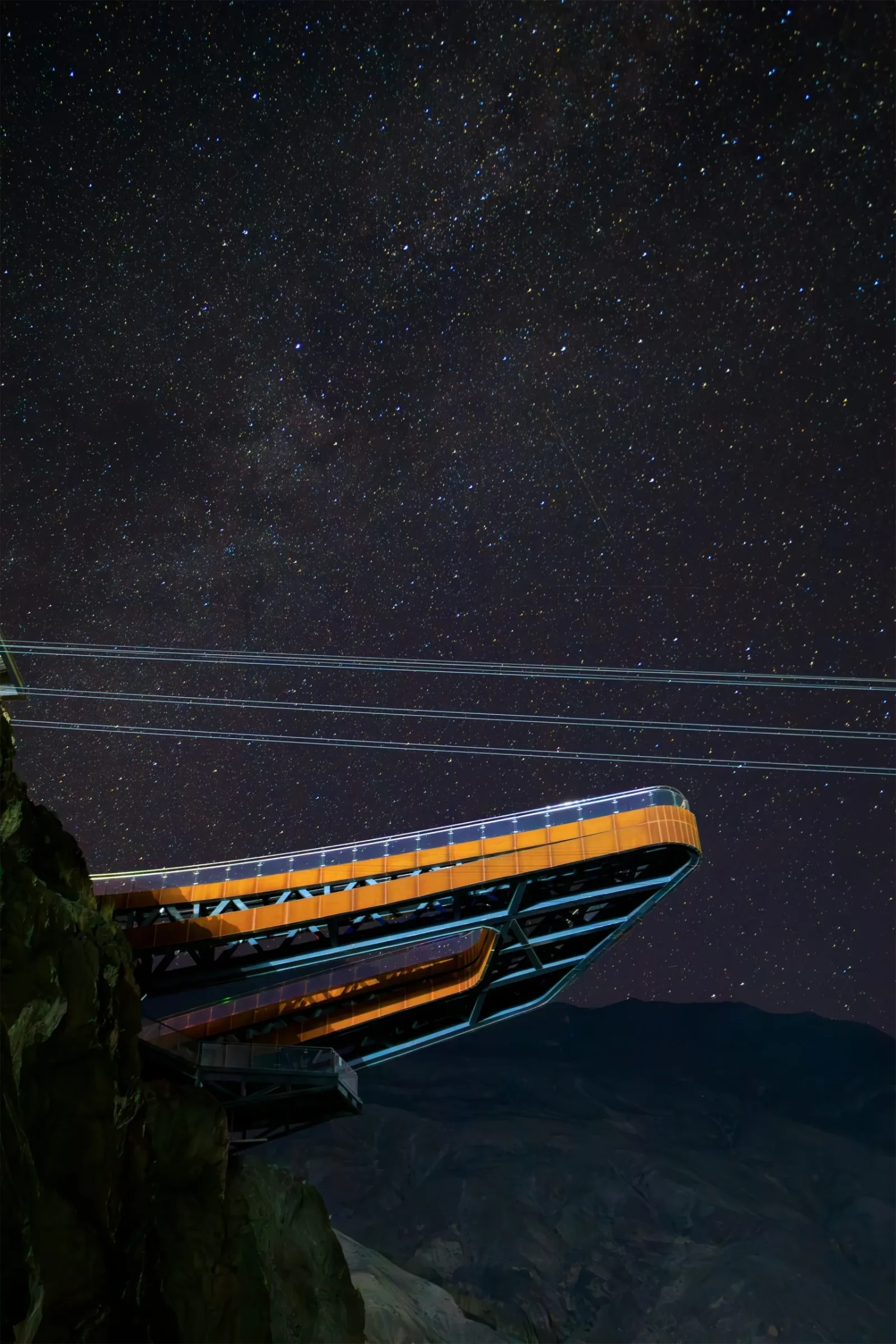
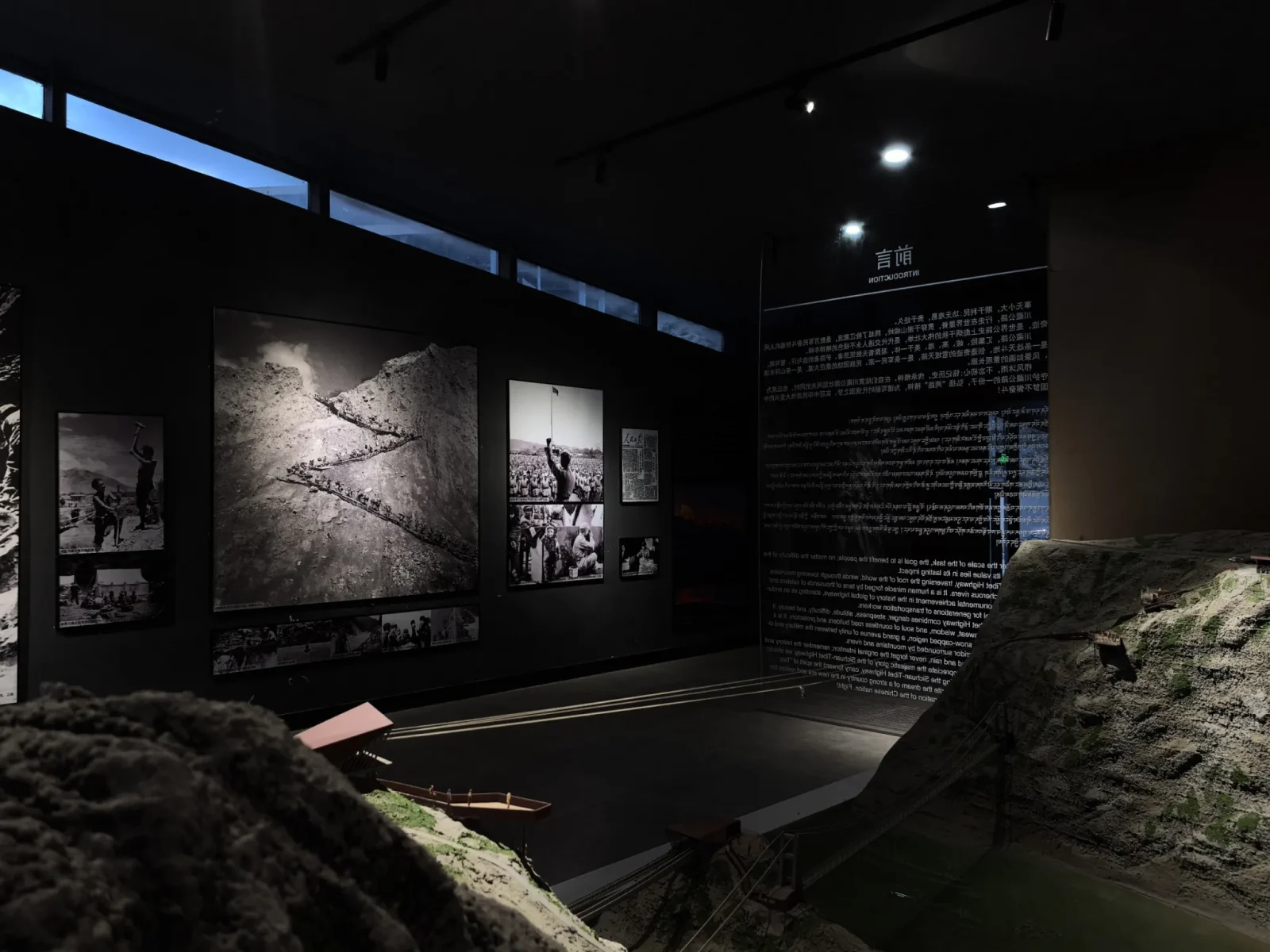
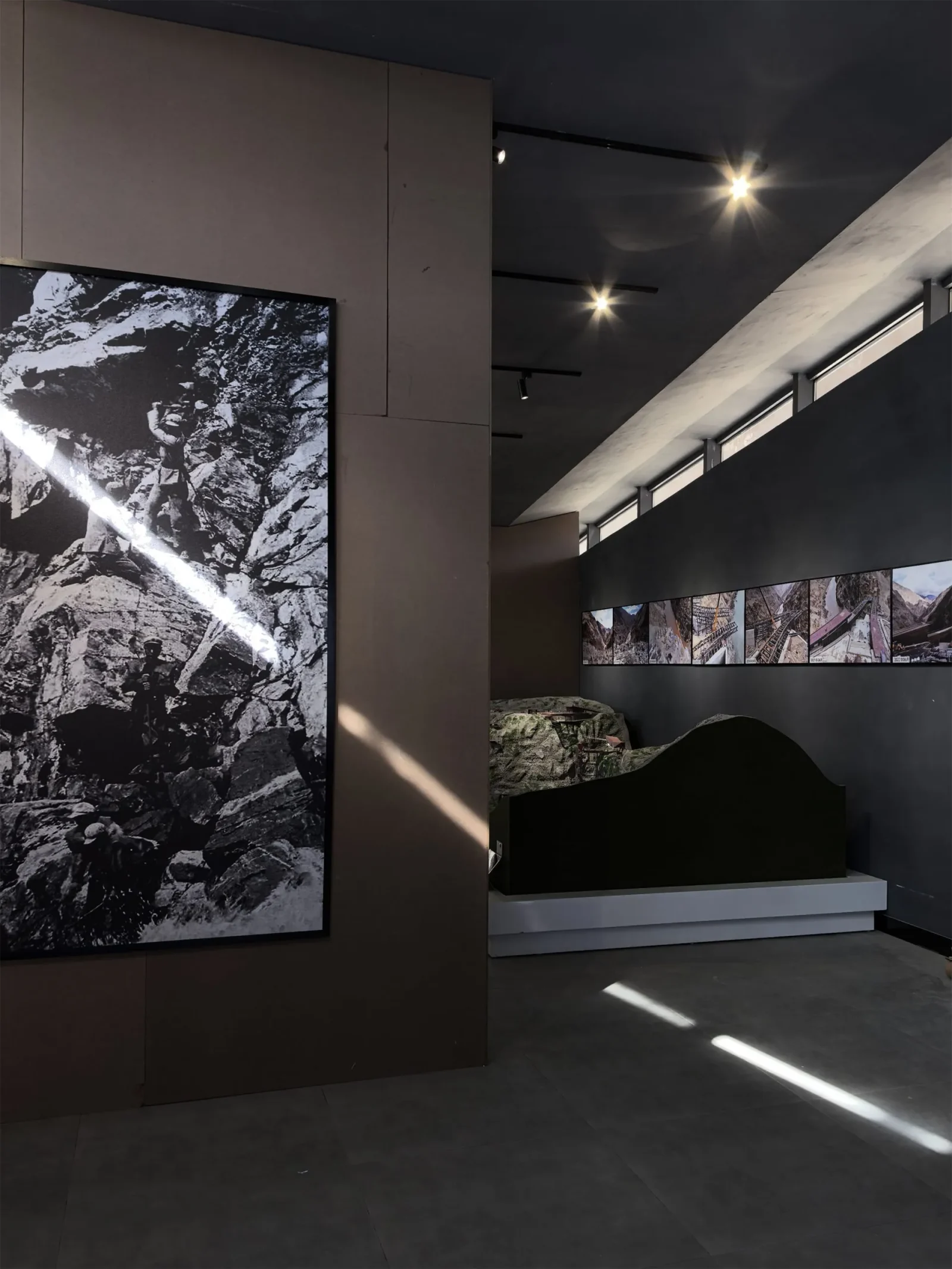
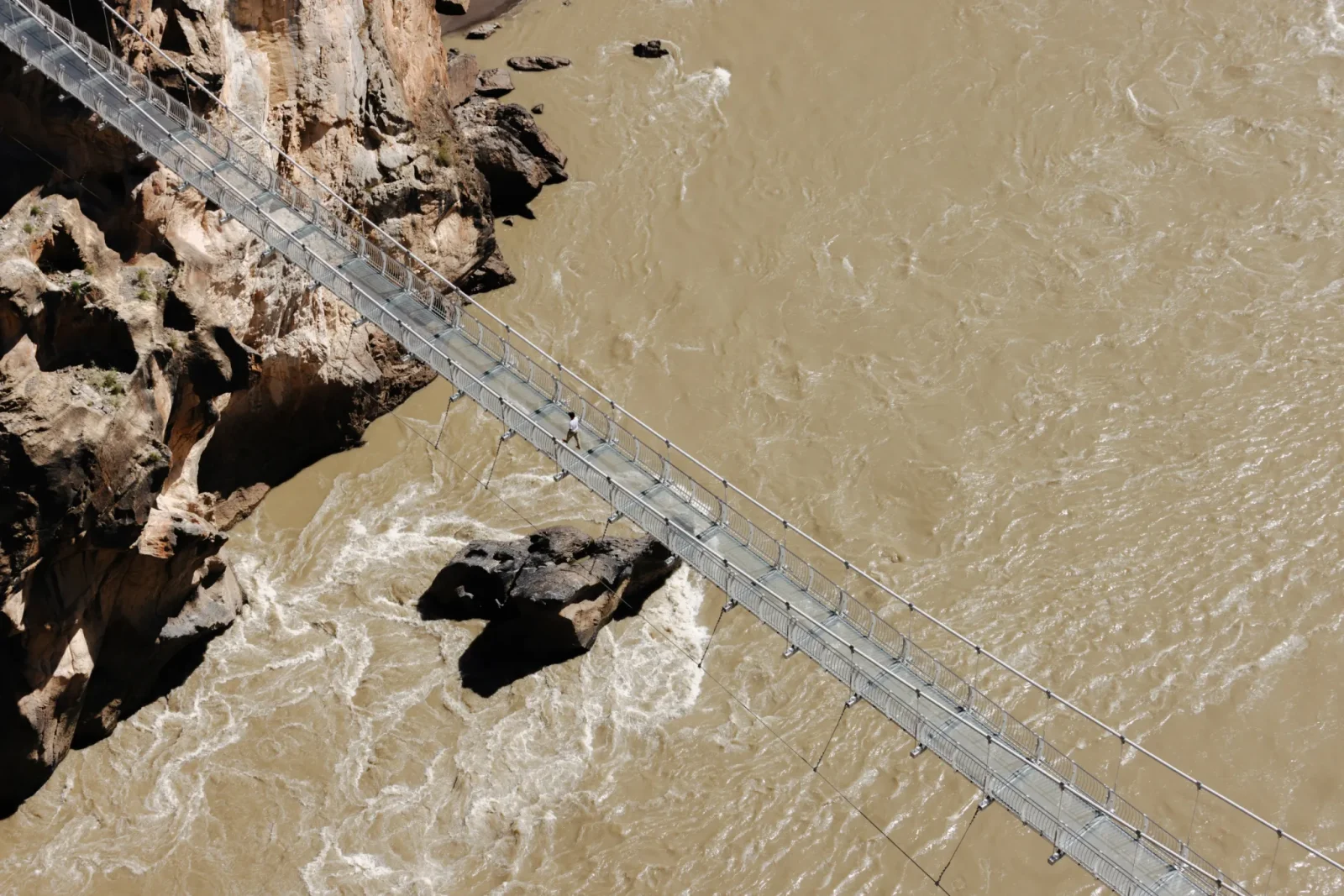
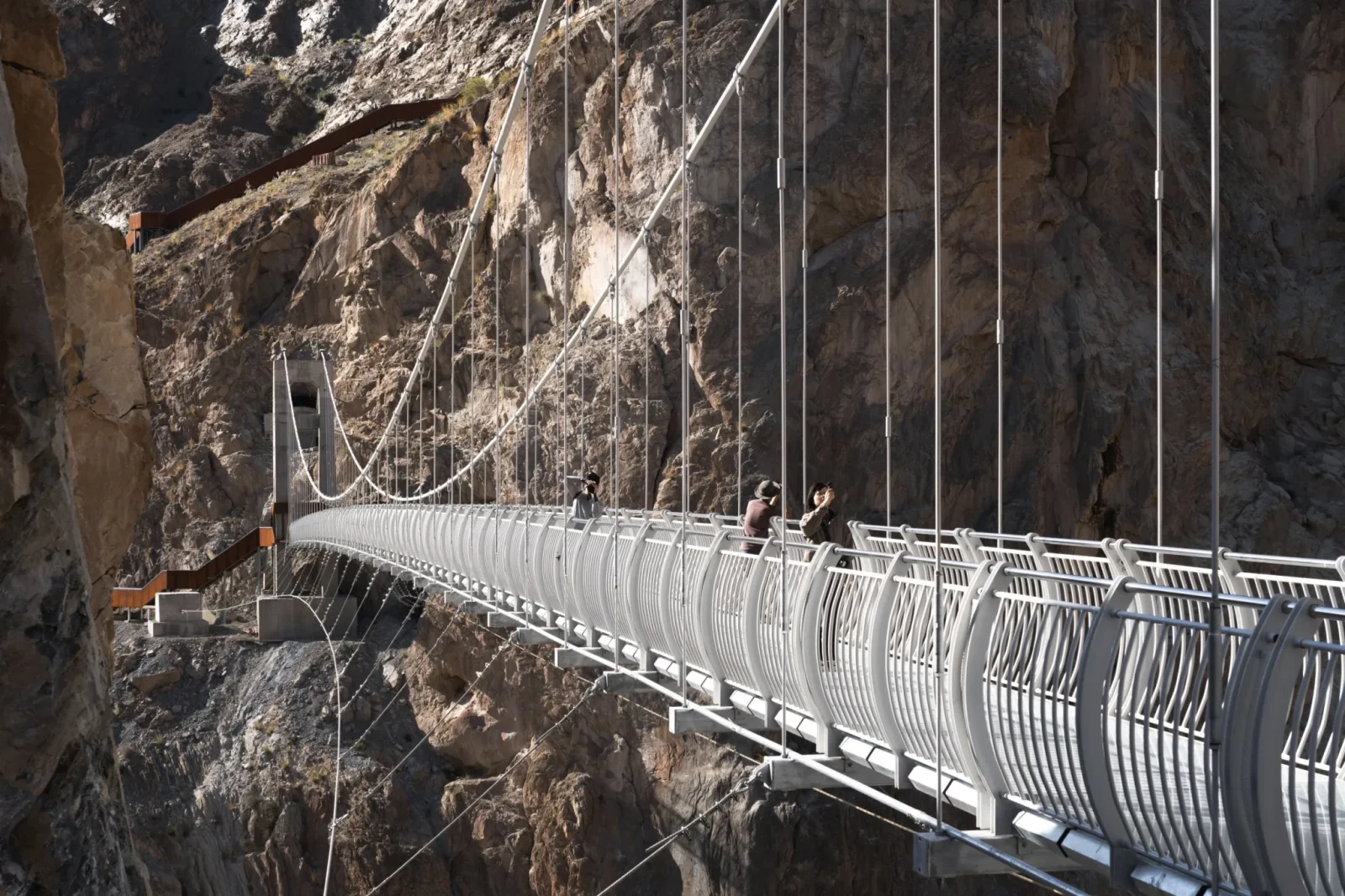
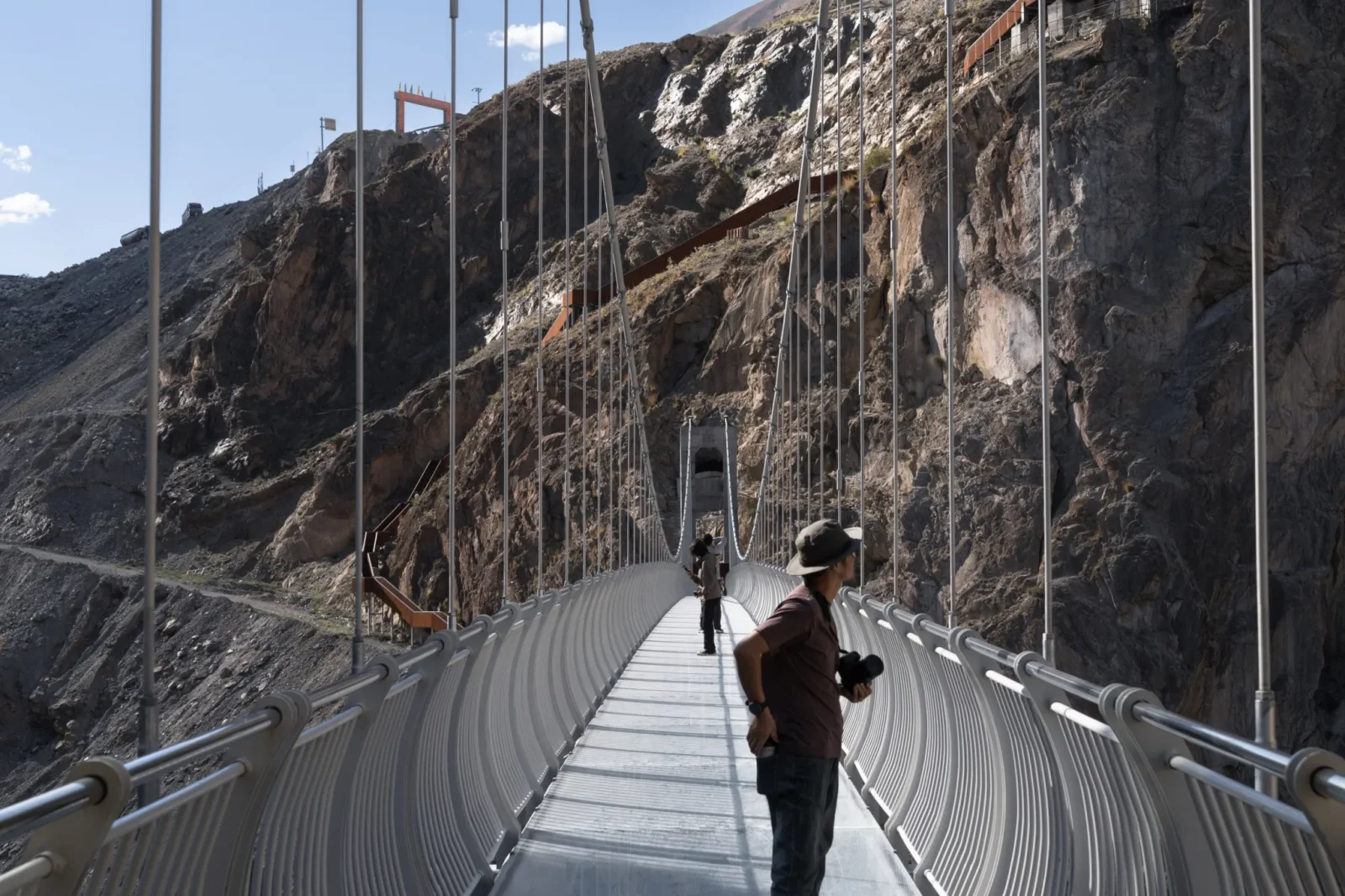
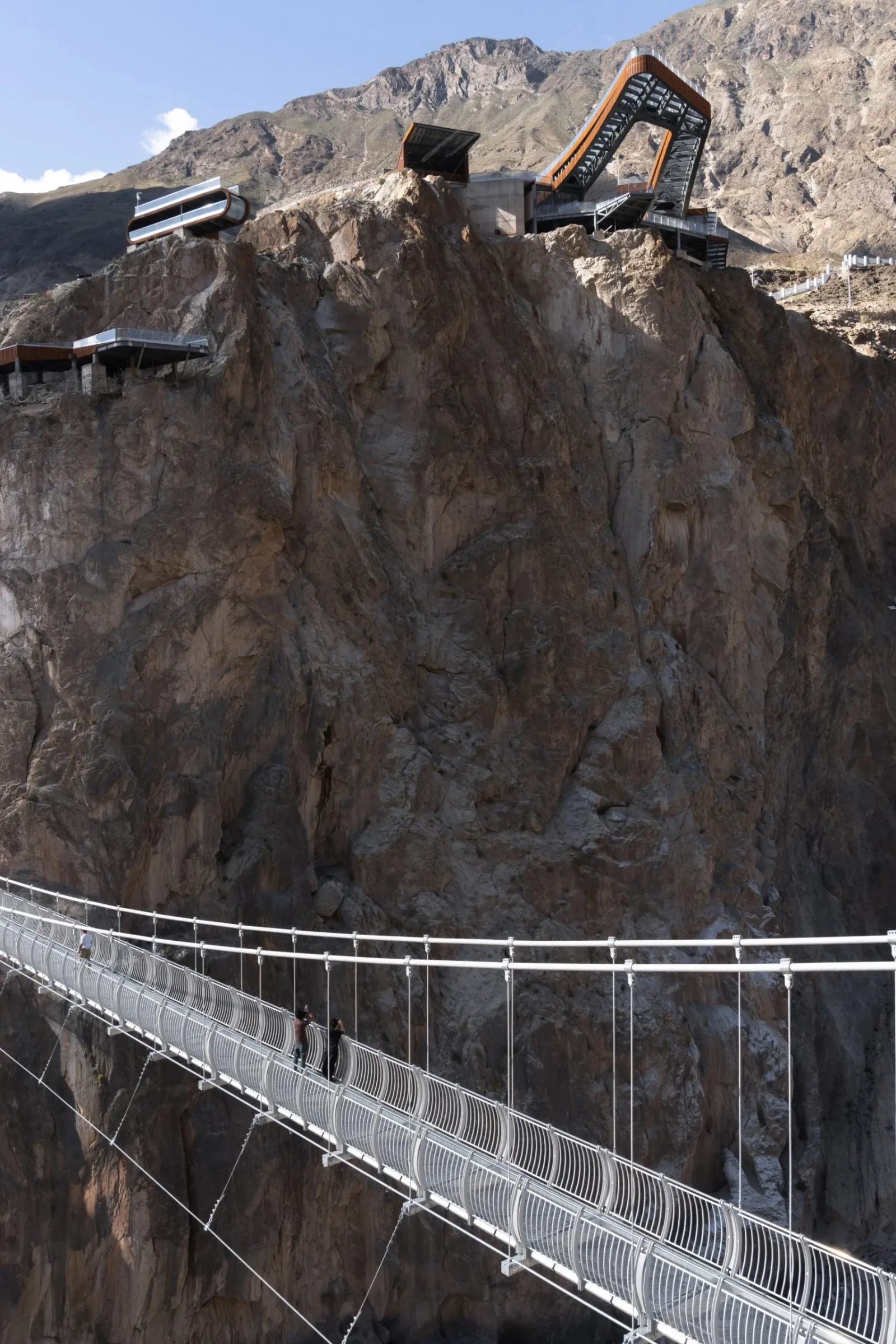
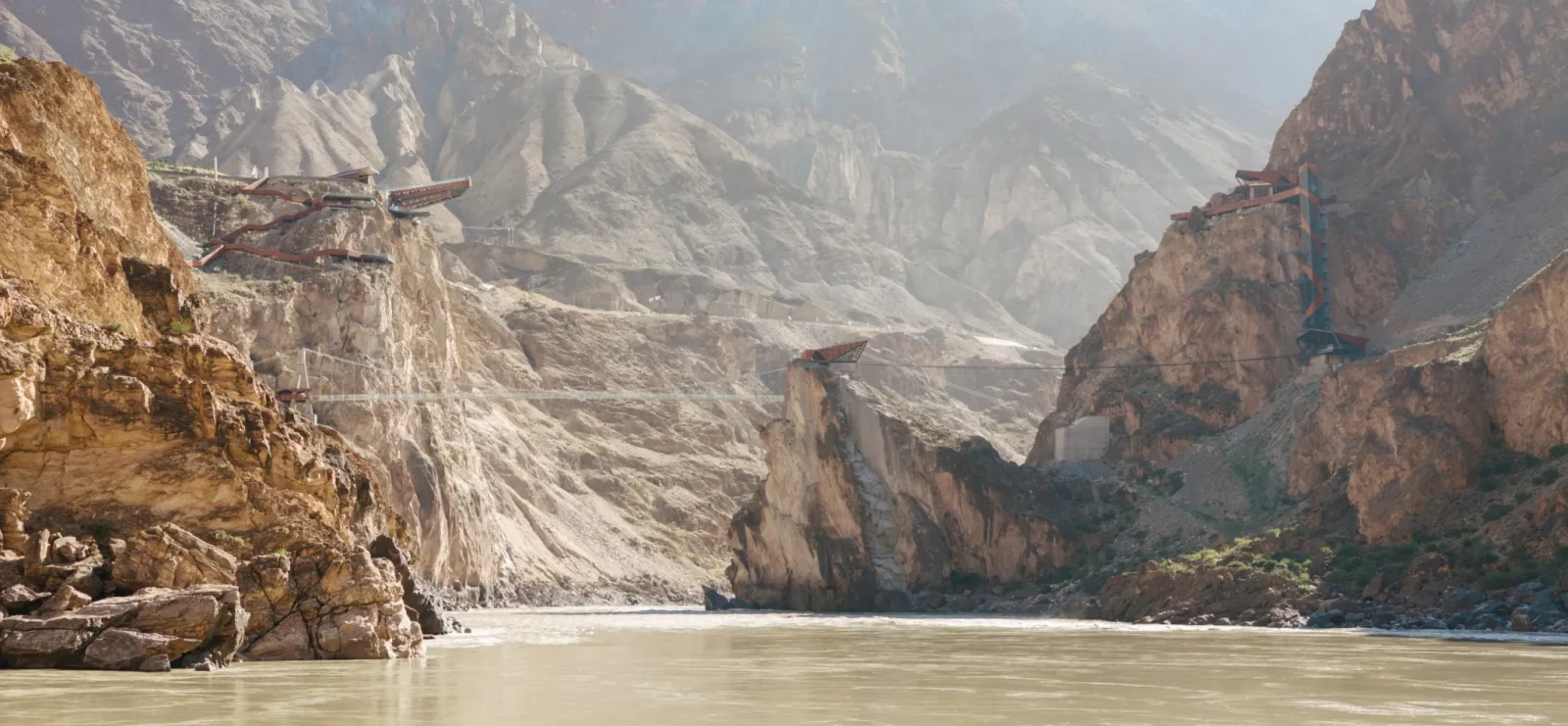
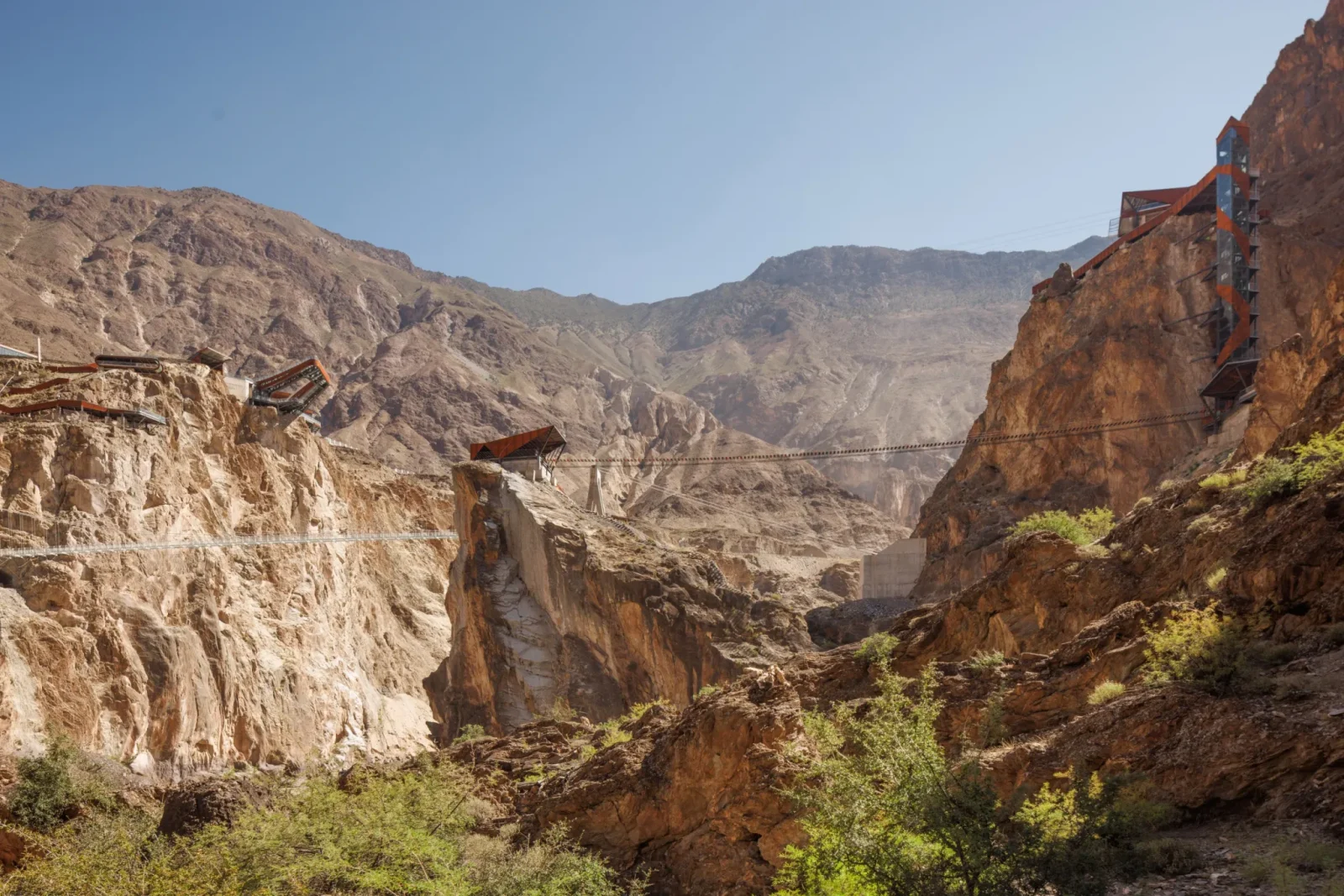
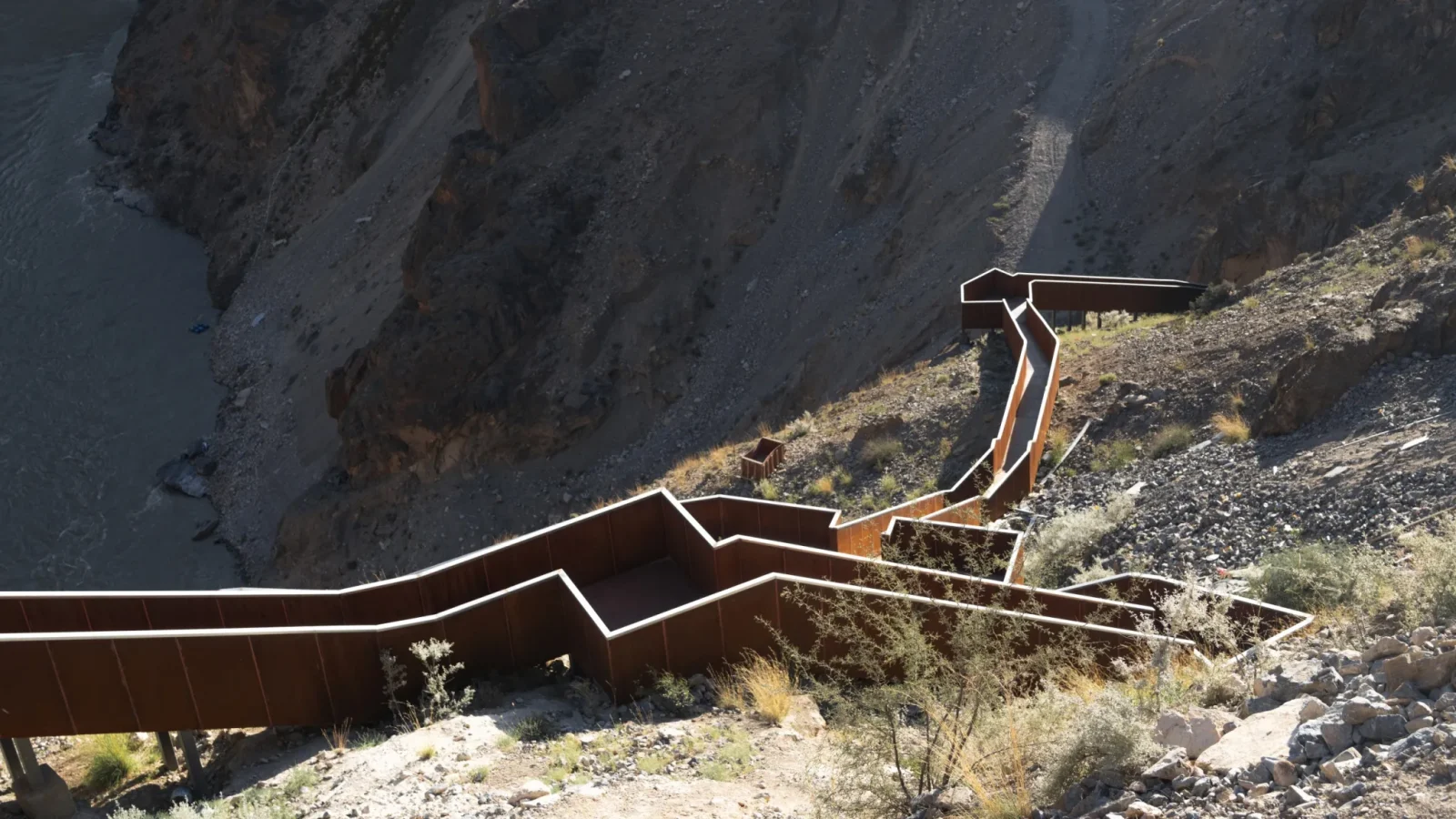
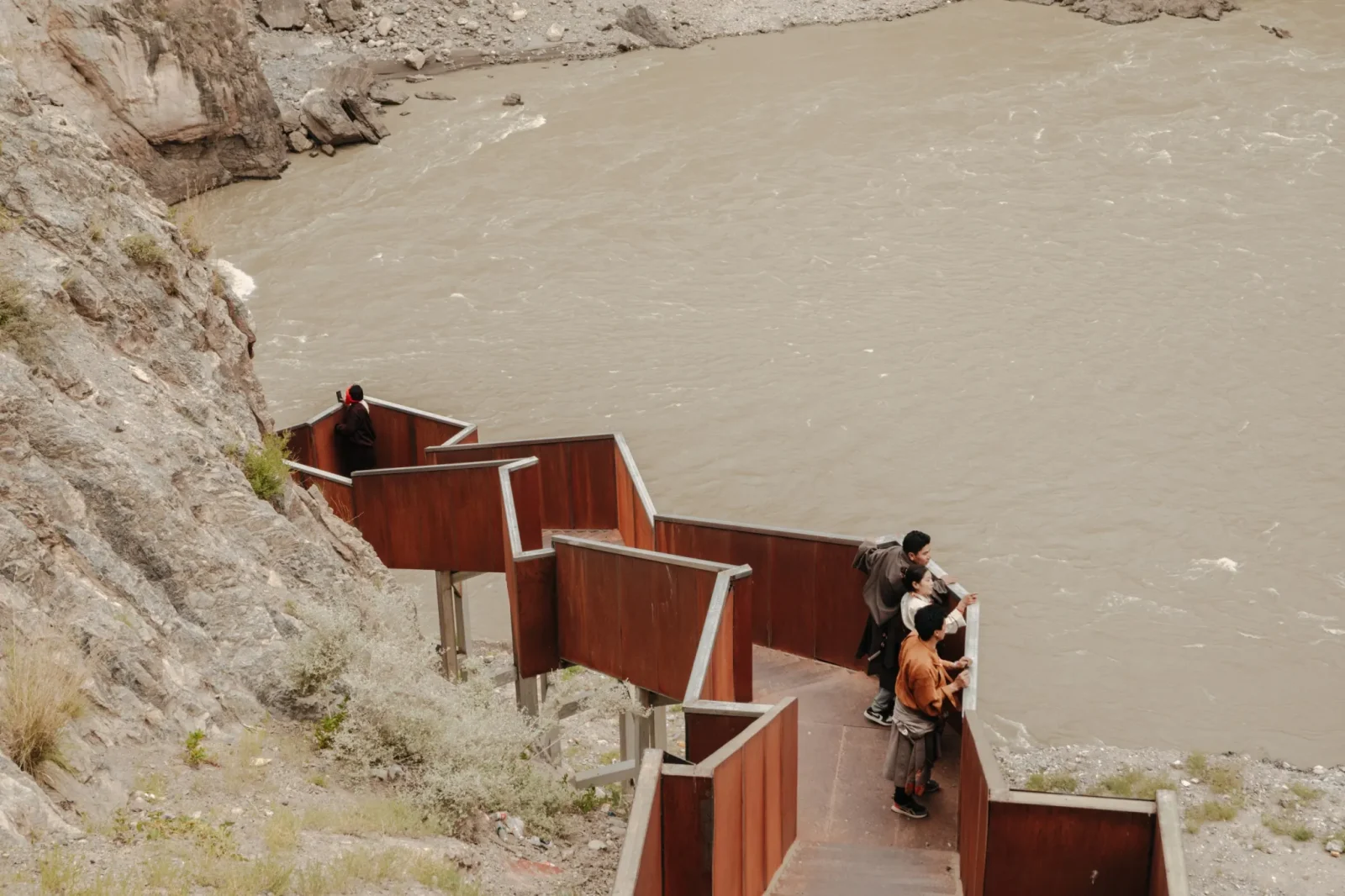
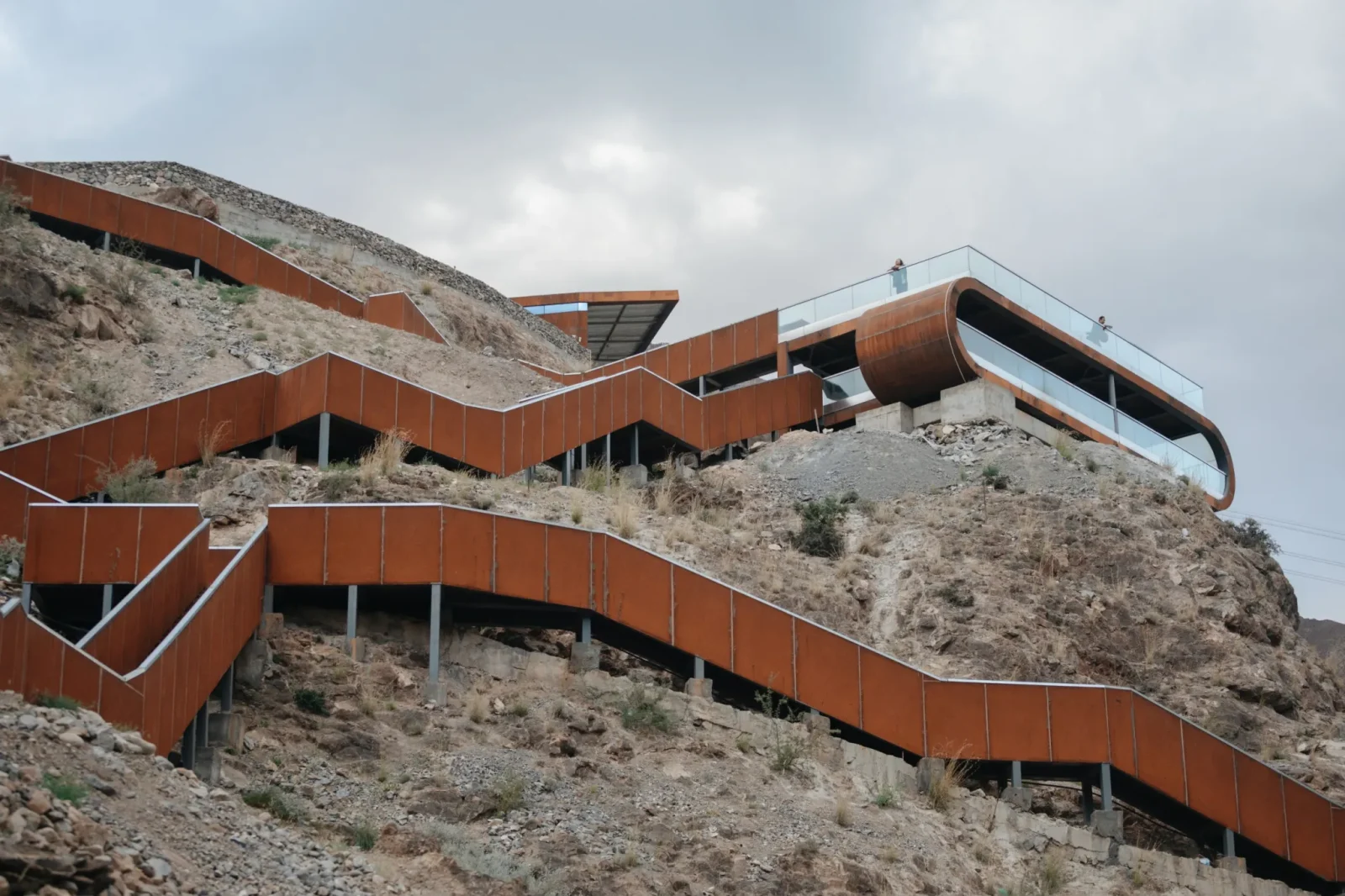
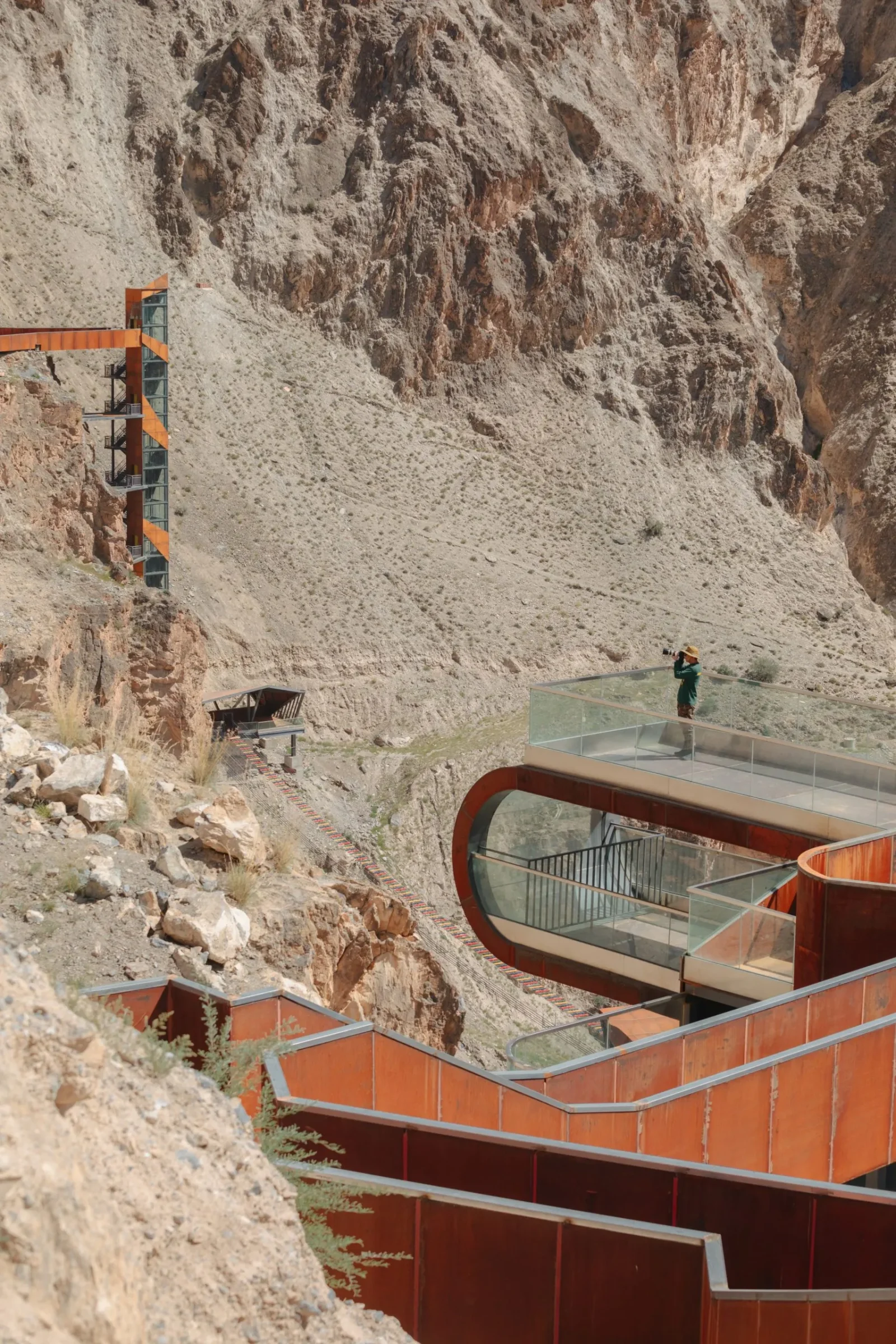
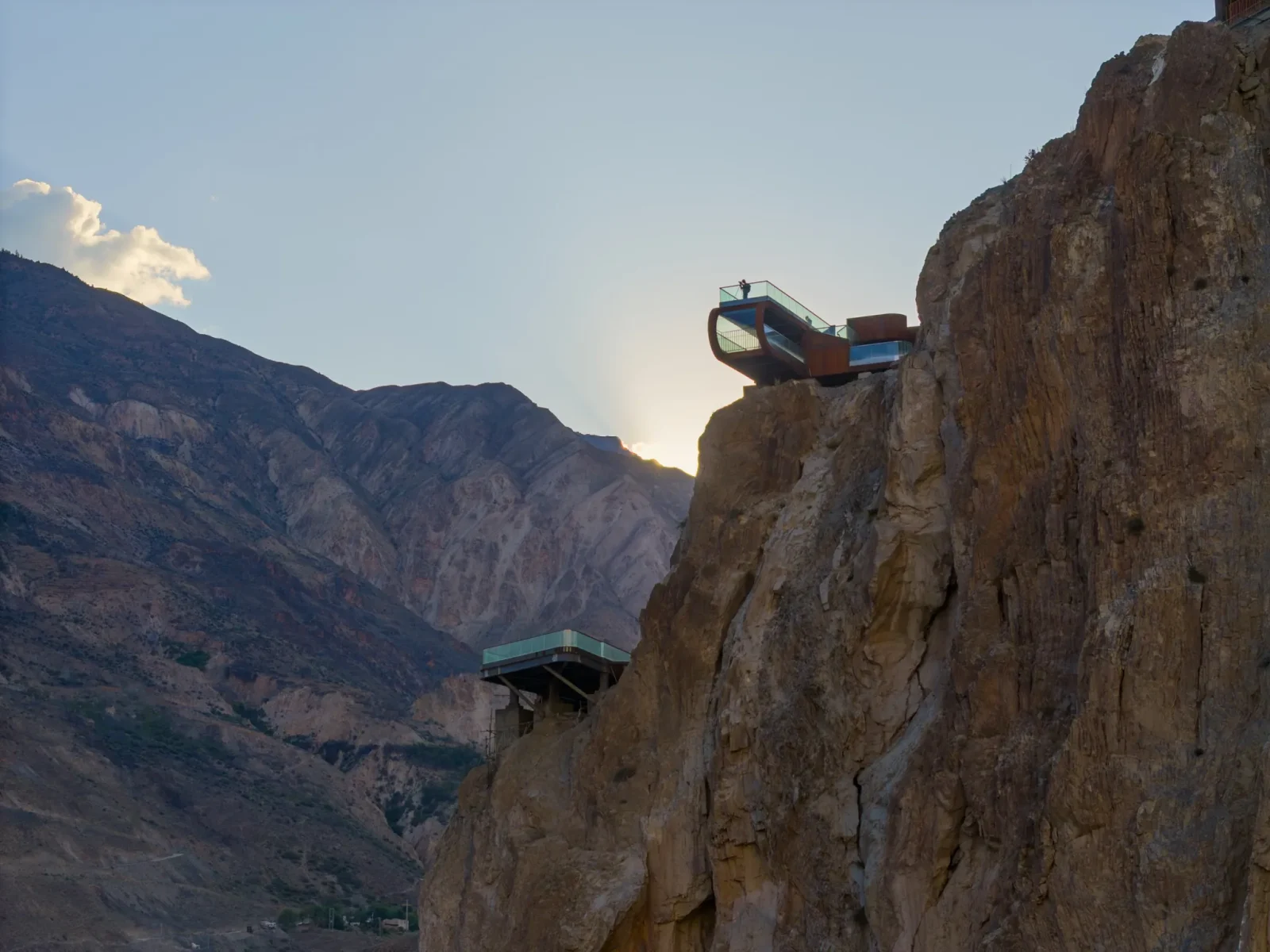
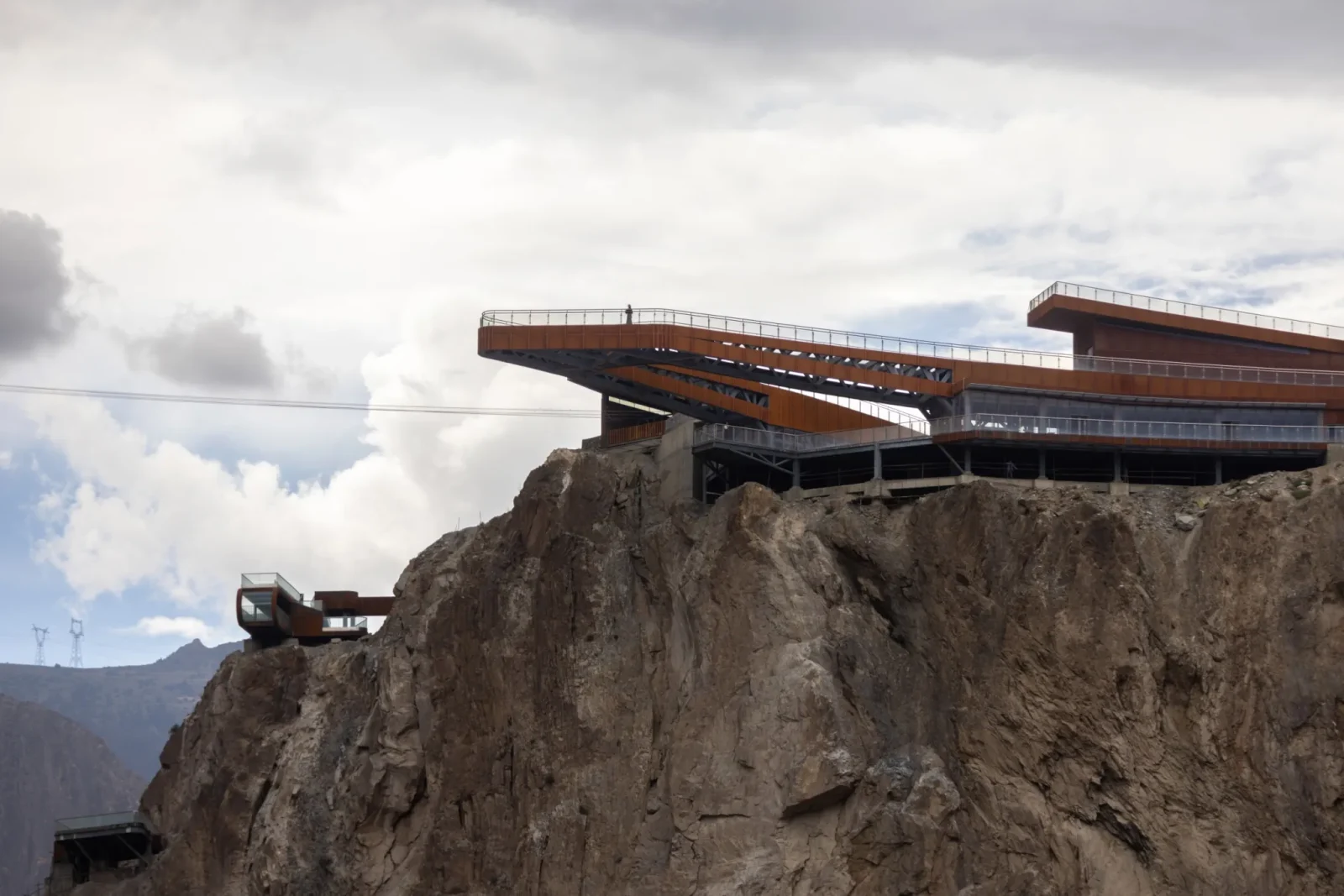
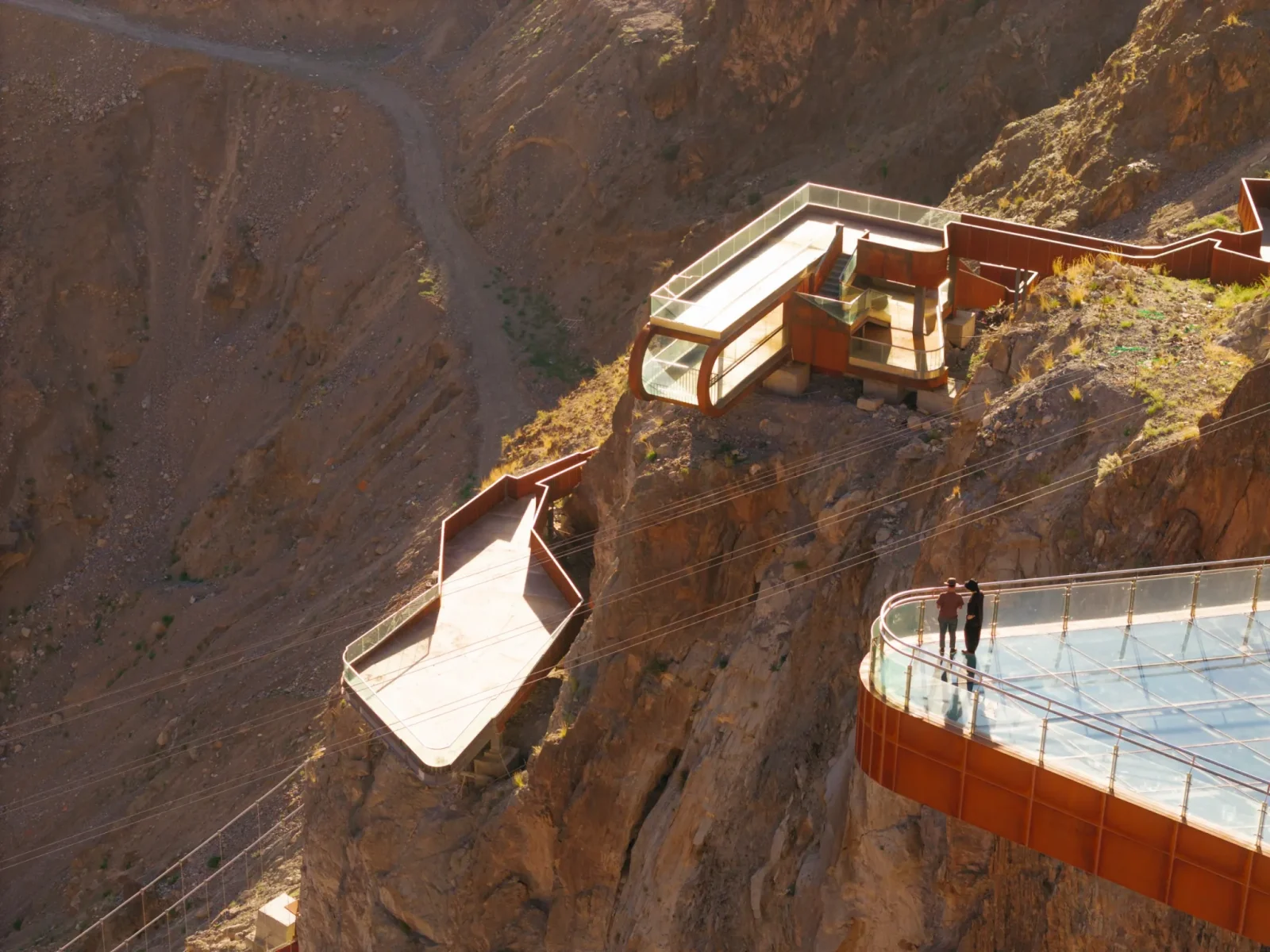
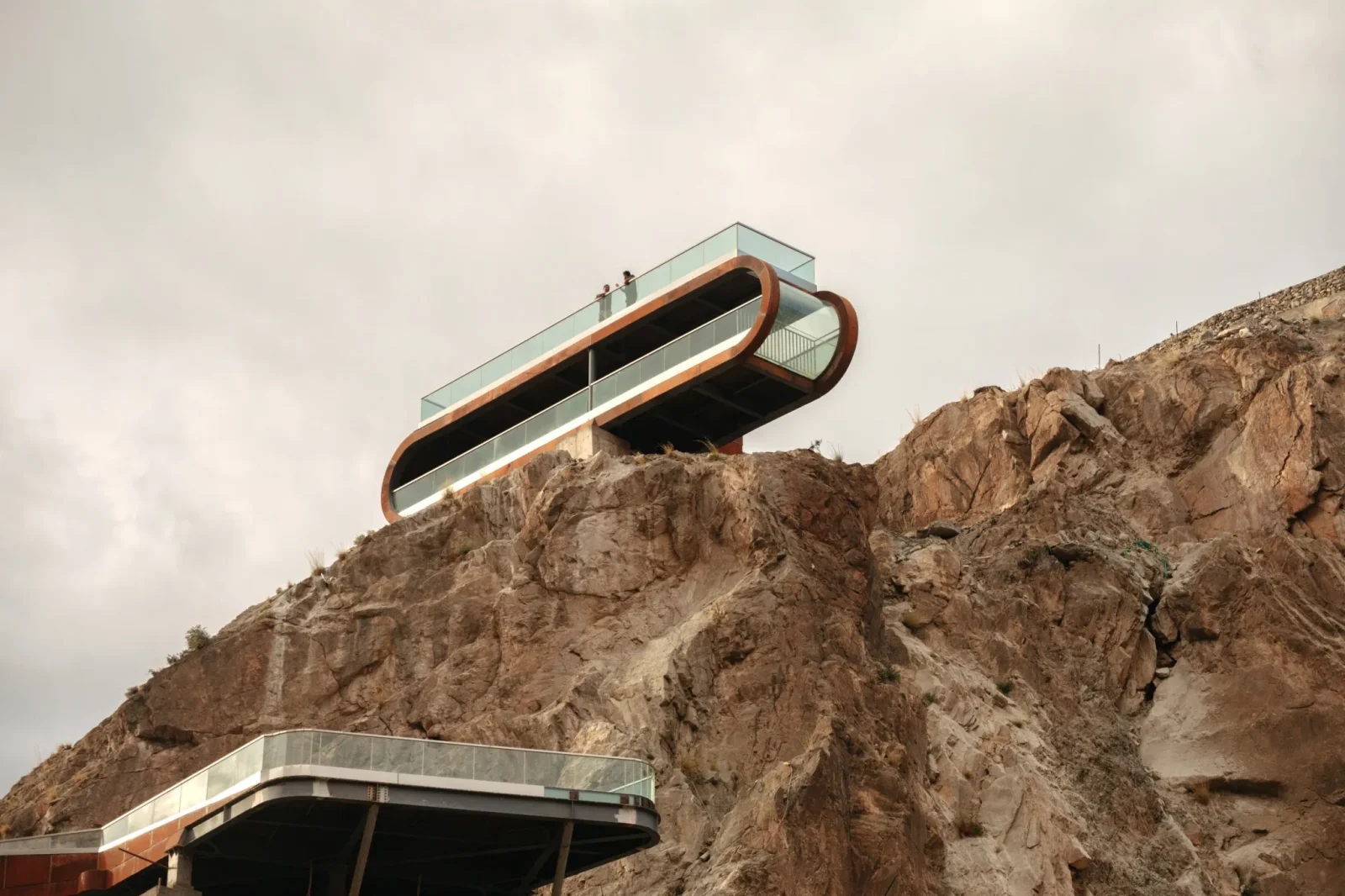
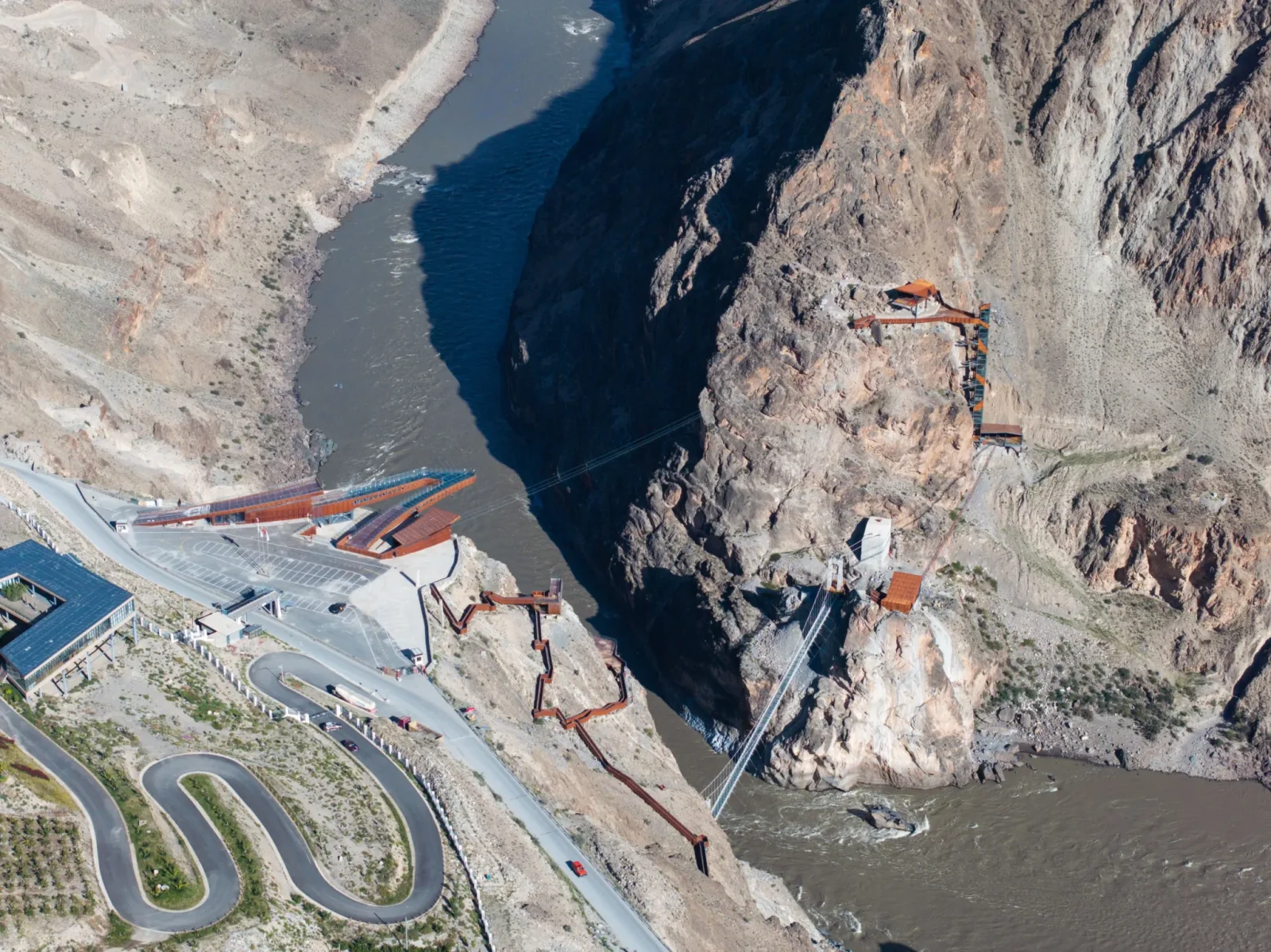
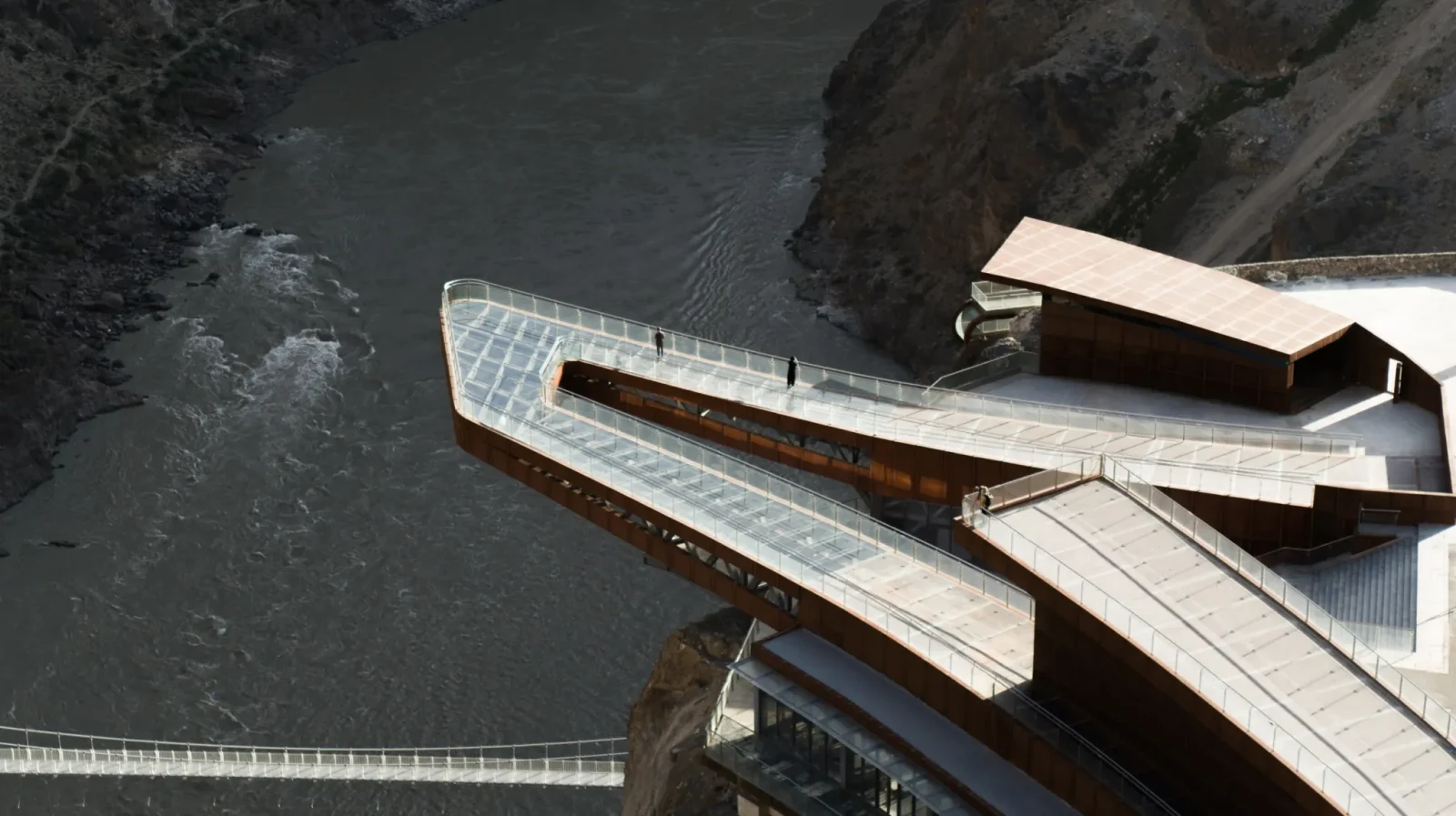
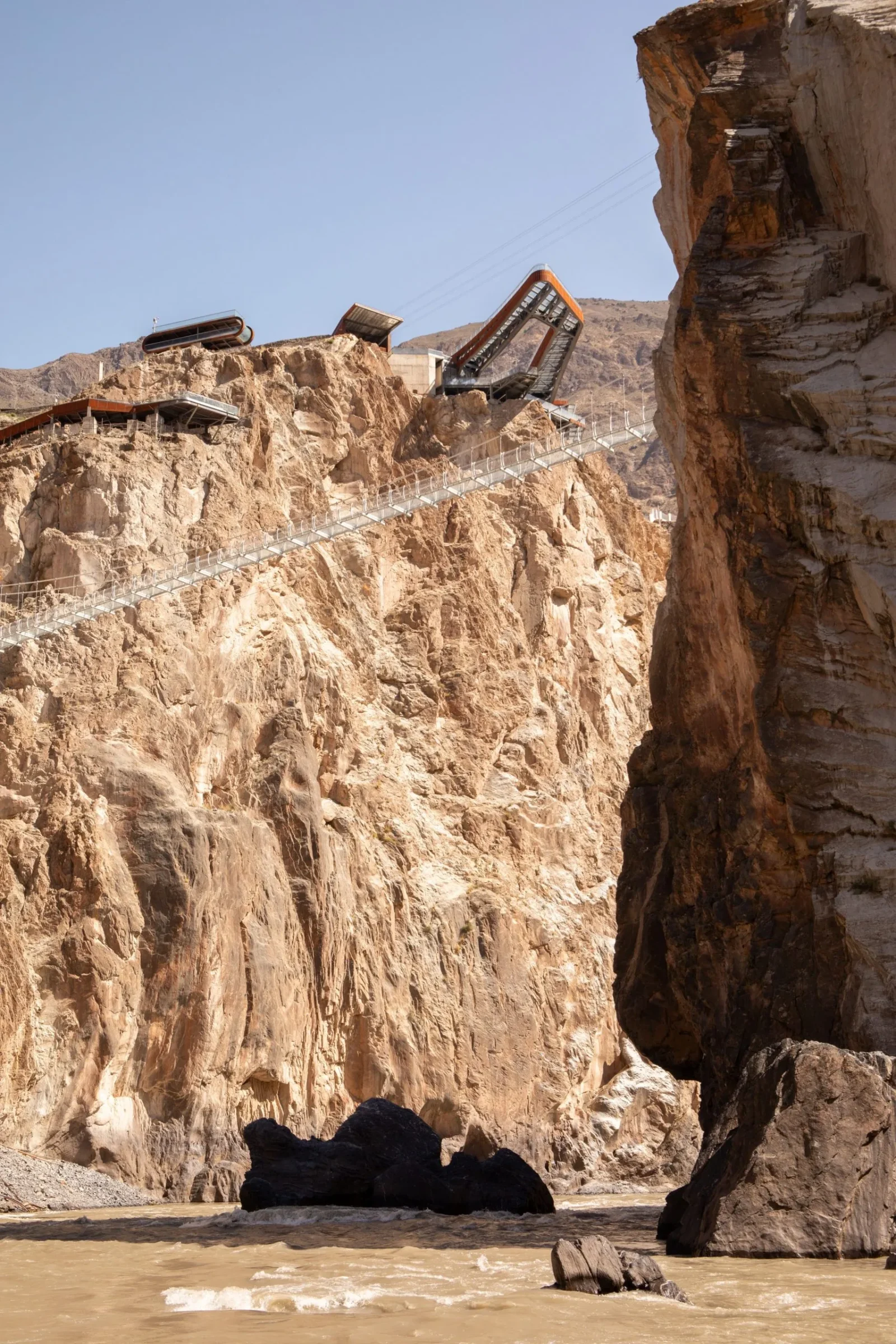
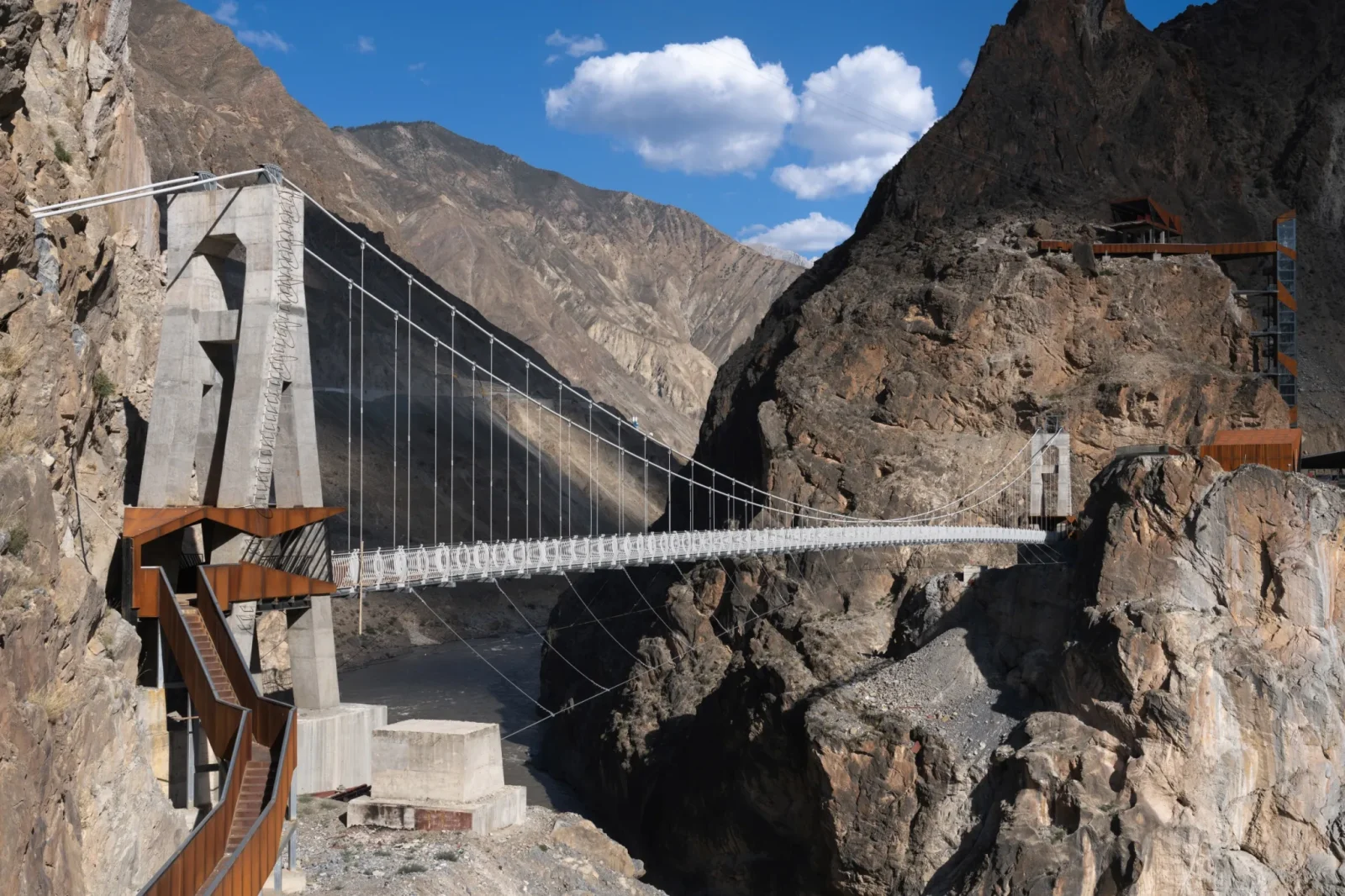
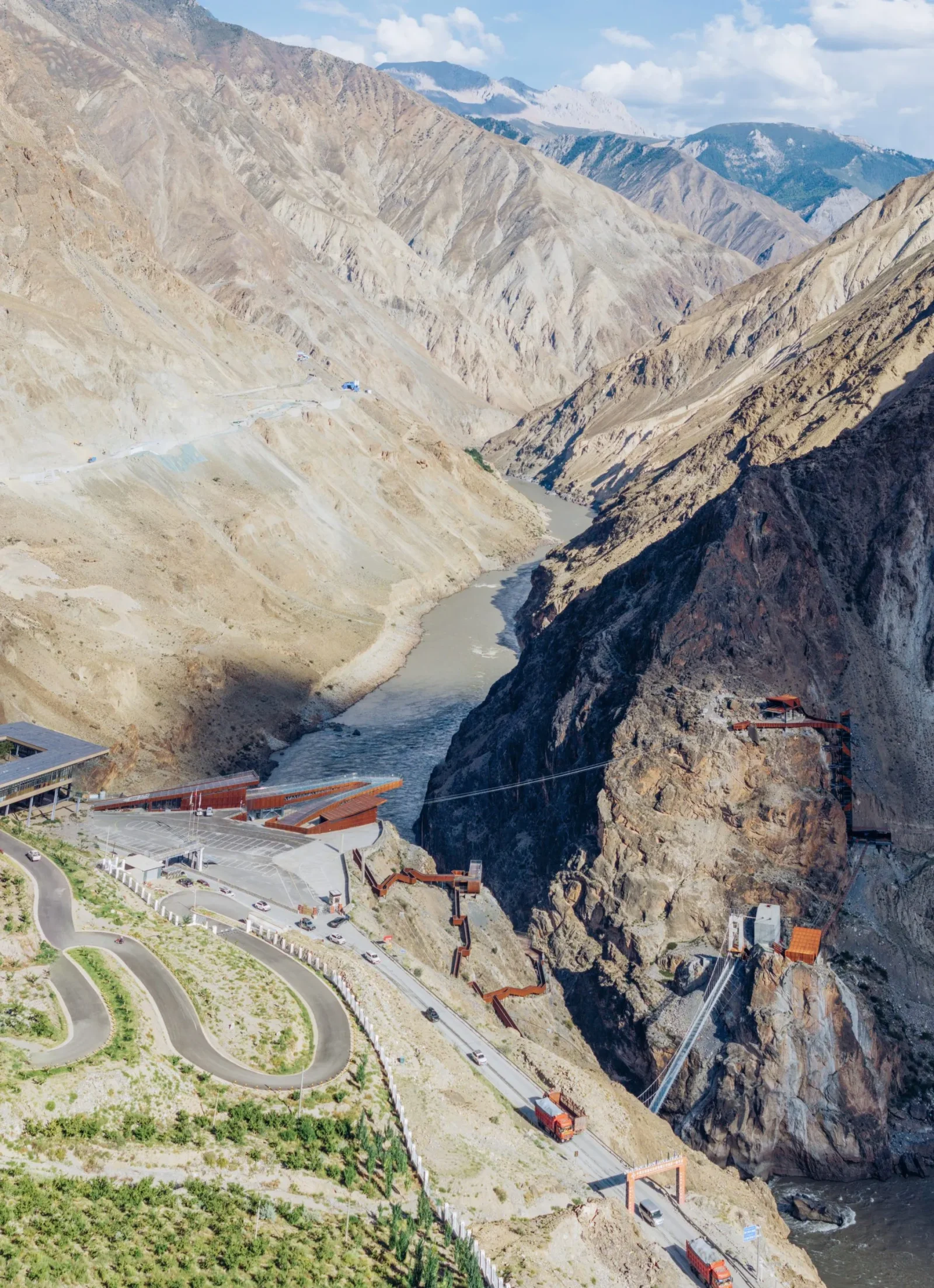
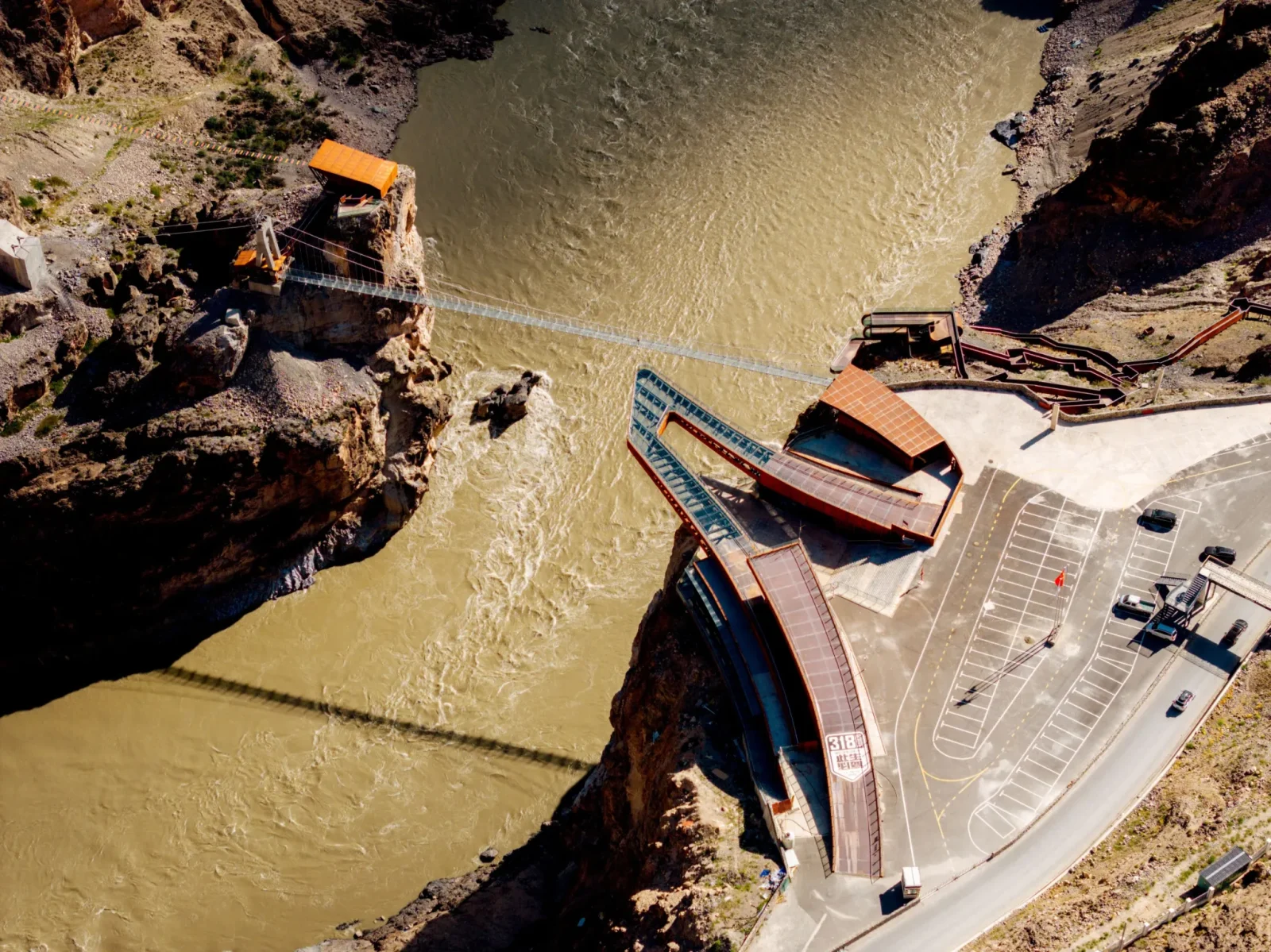
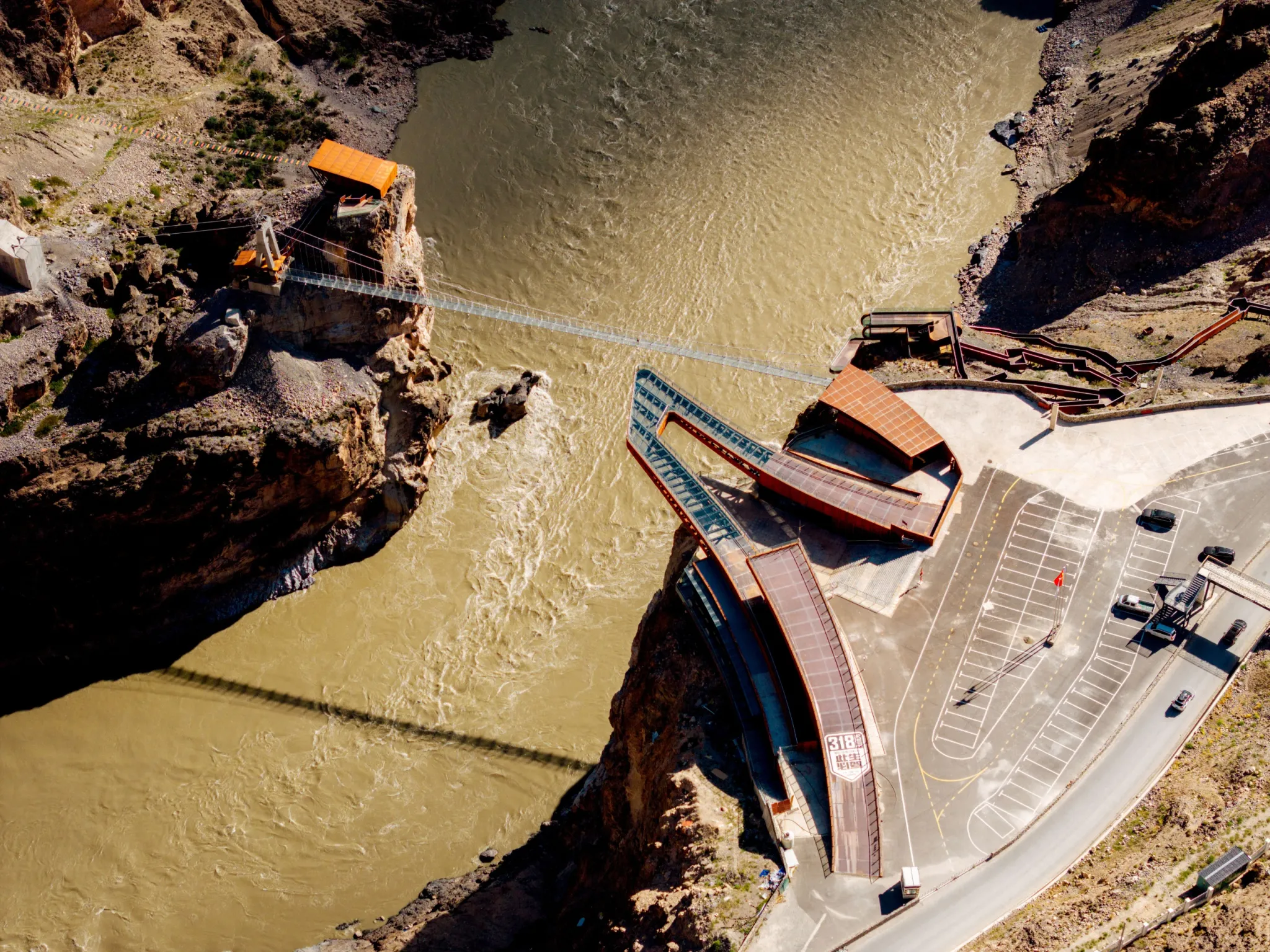
Archermit, a Chinese architecture studio, unveils a 37-metre single-glass cantilever viewing platform at the Nujiang River 72-turn canyon scenic area in Baxu County, Tibet. Drawing inspiration from 72 Turns, the most hazardous section of the G318 Sichuan-Tibet Highway, a route known for its sharp edges and extreme topography, the project aspires to convert the danger and sublime beauty of Nujiang Grand Canyon into an immersive high-altitude pedestrian experience.
Translating the 72 Turns Highway into Architecture
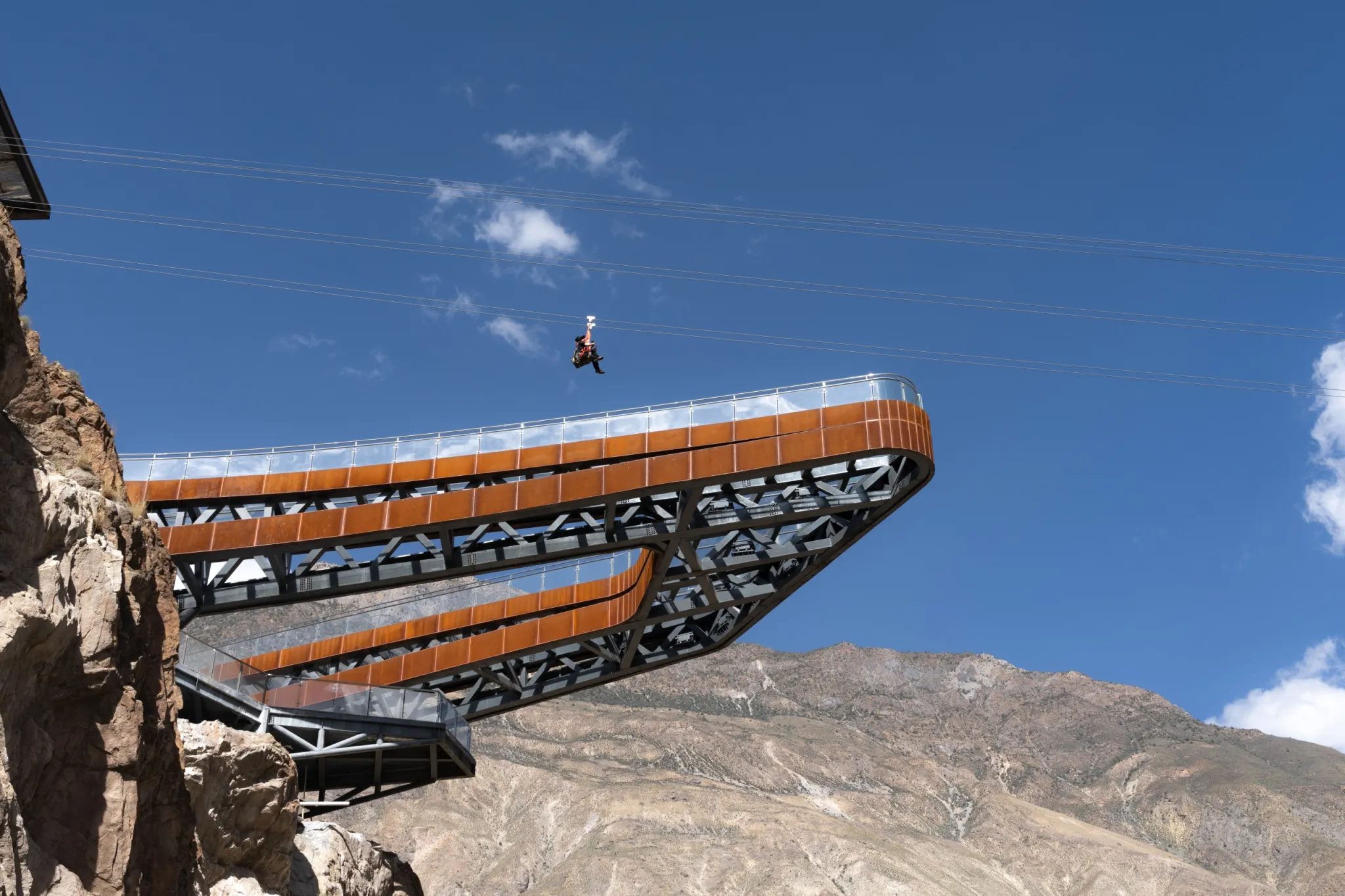
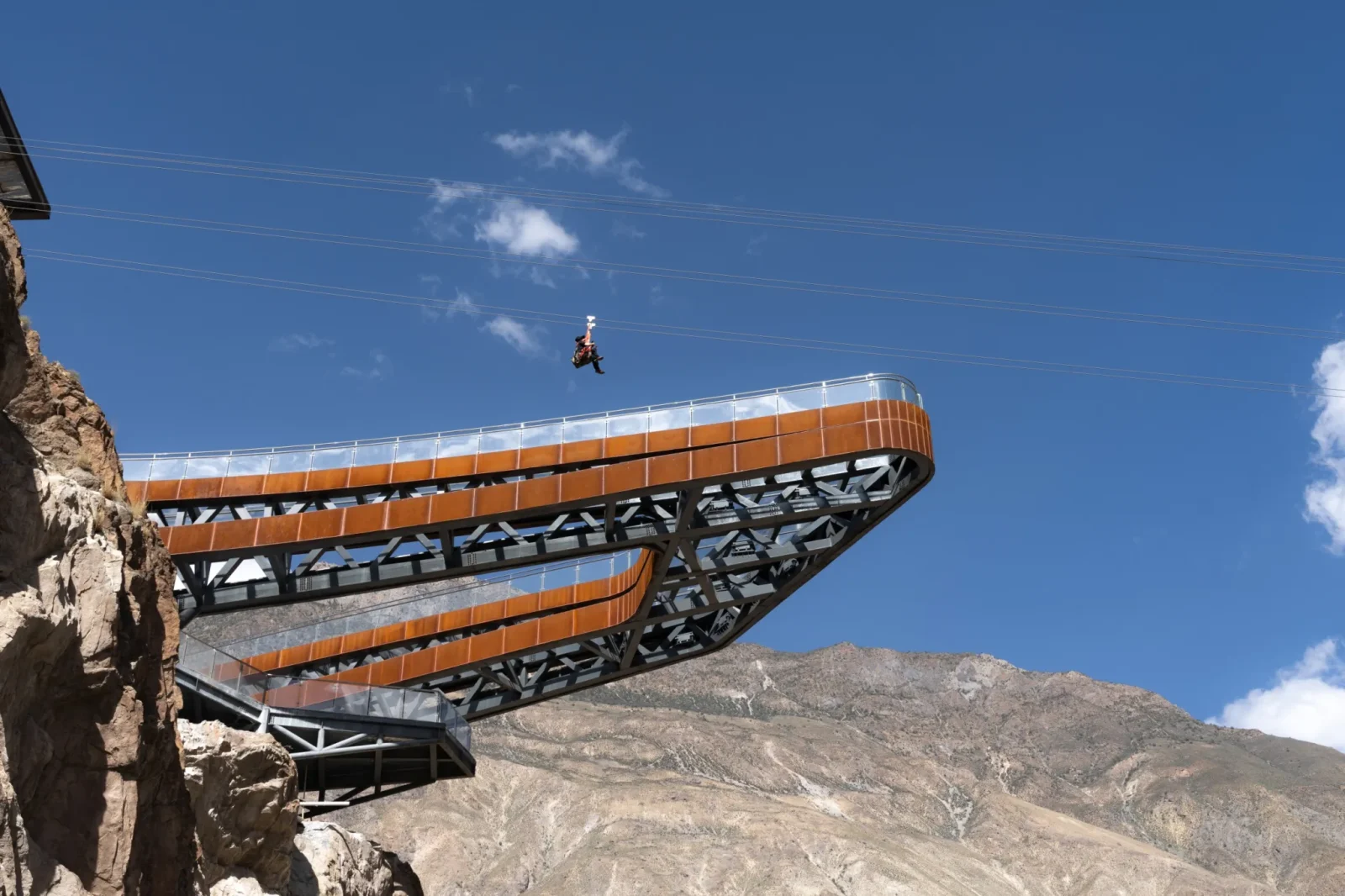
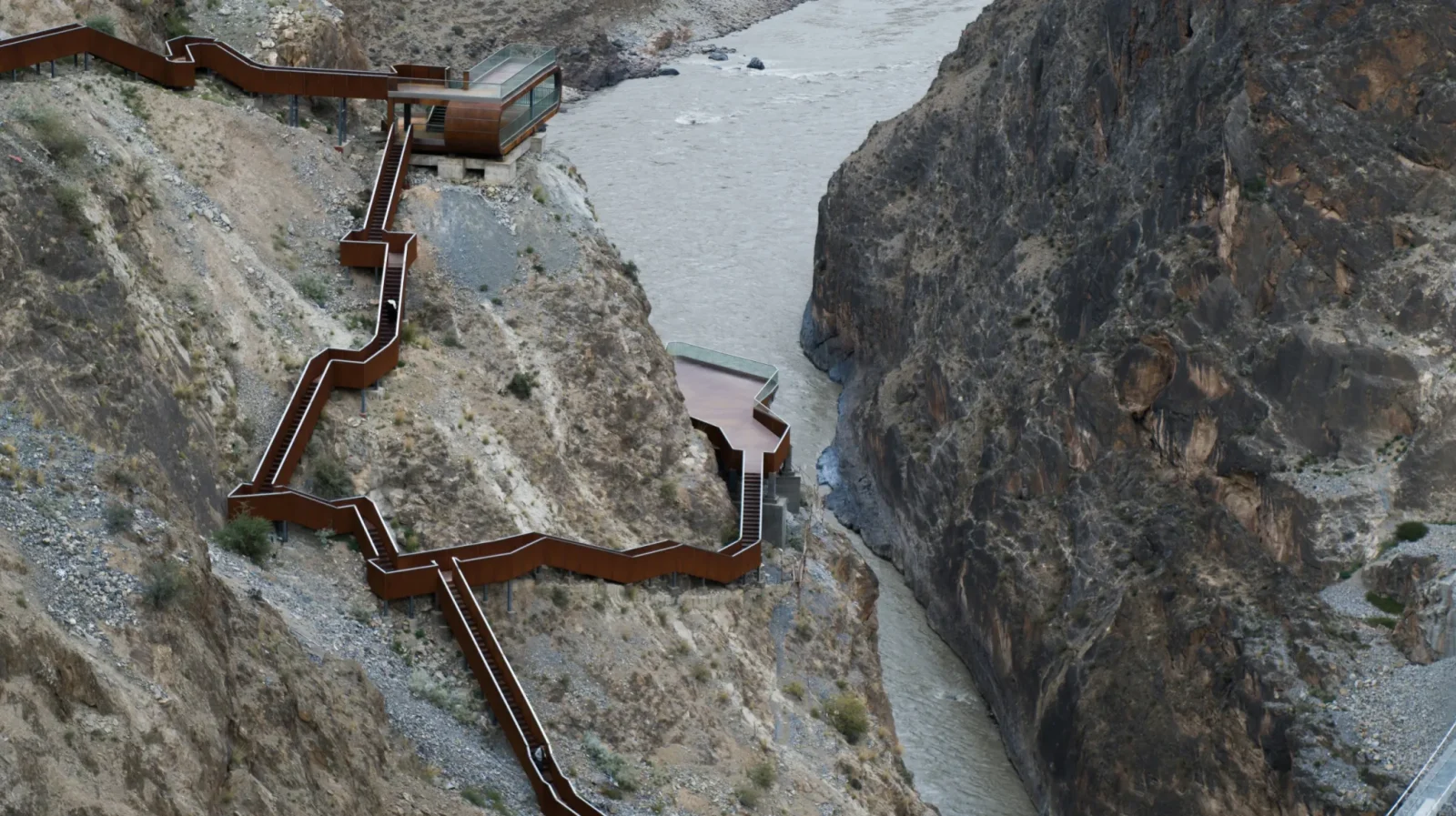
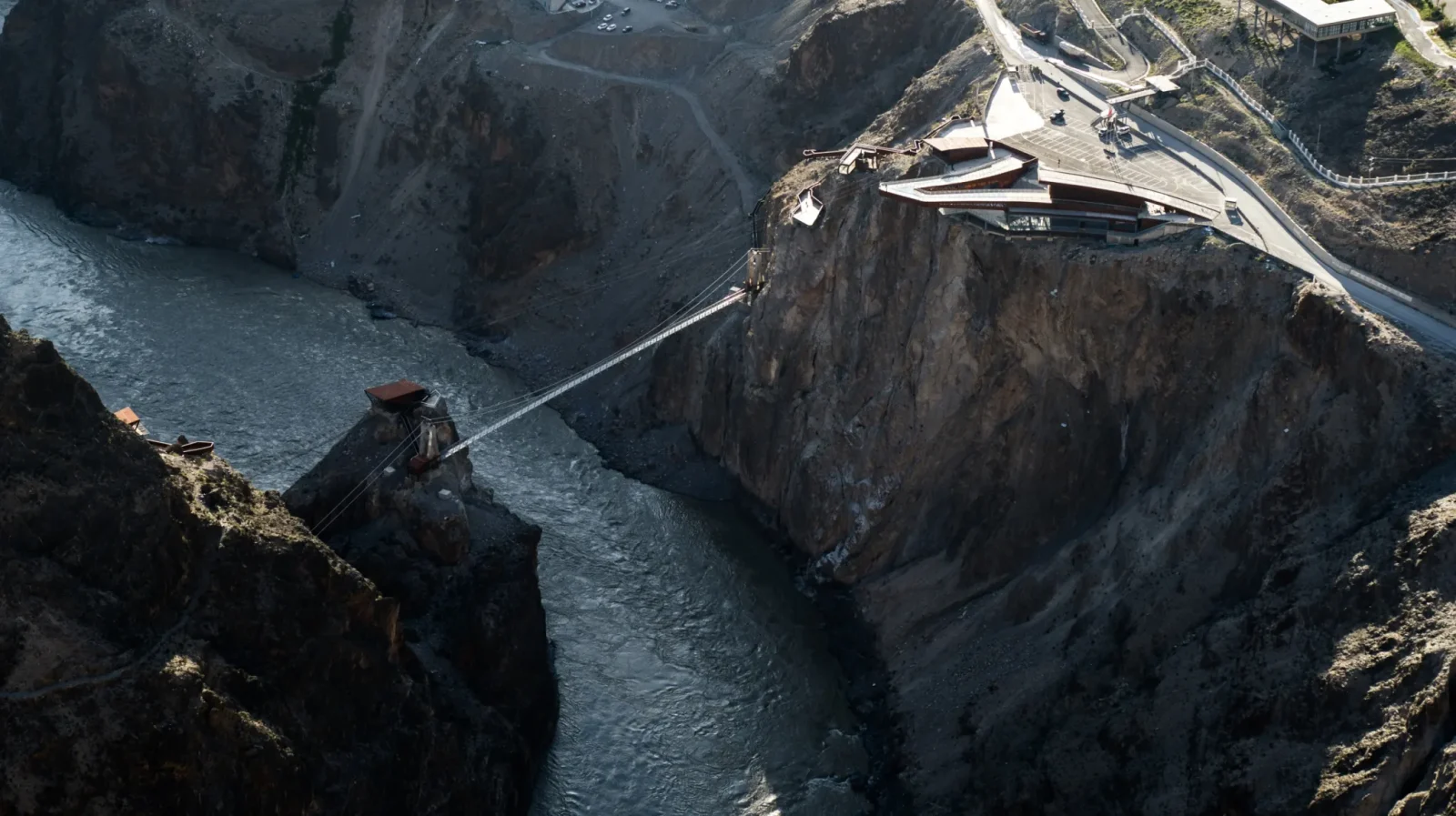
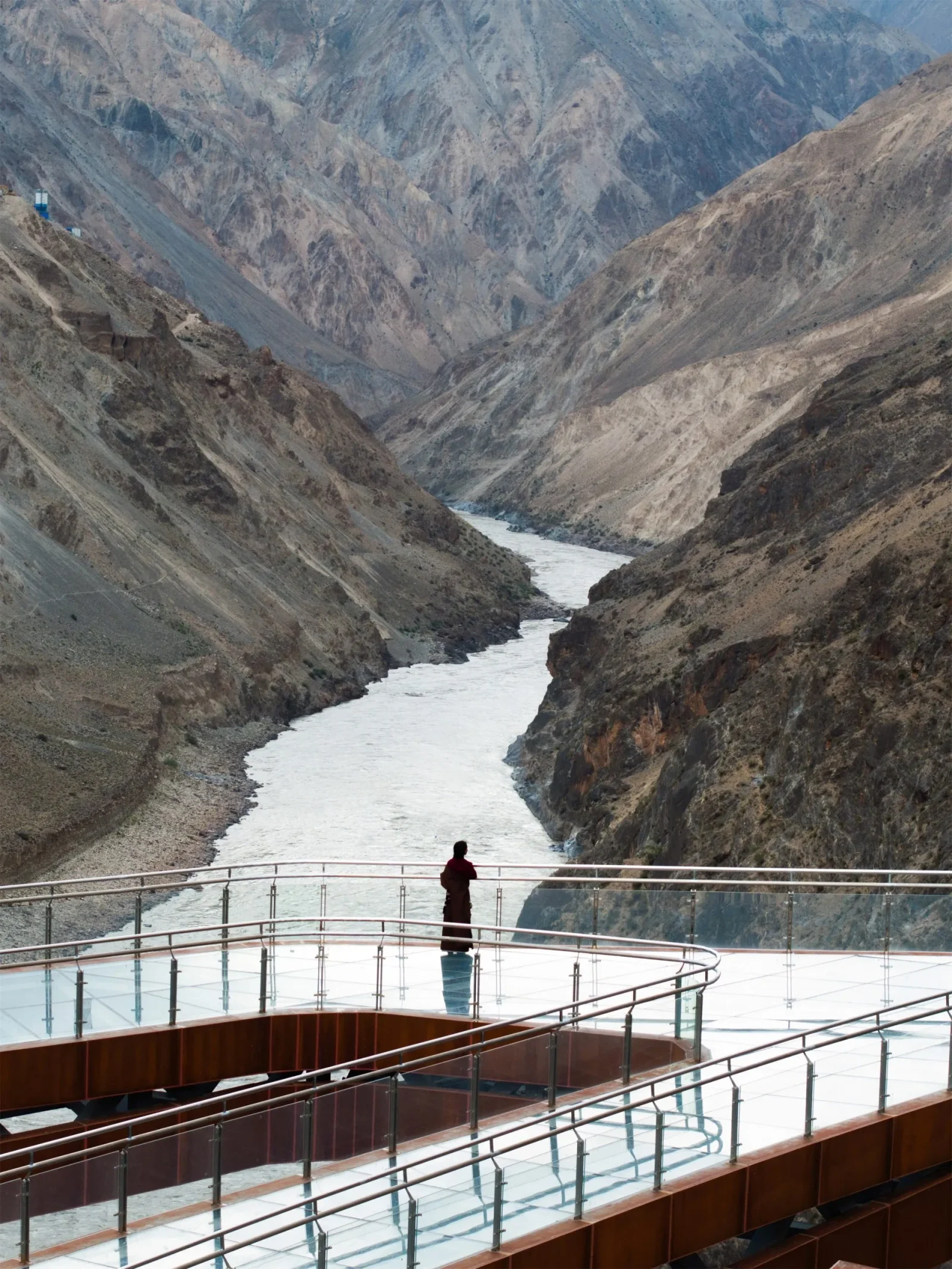
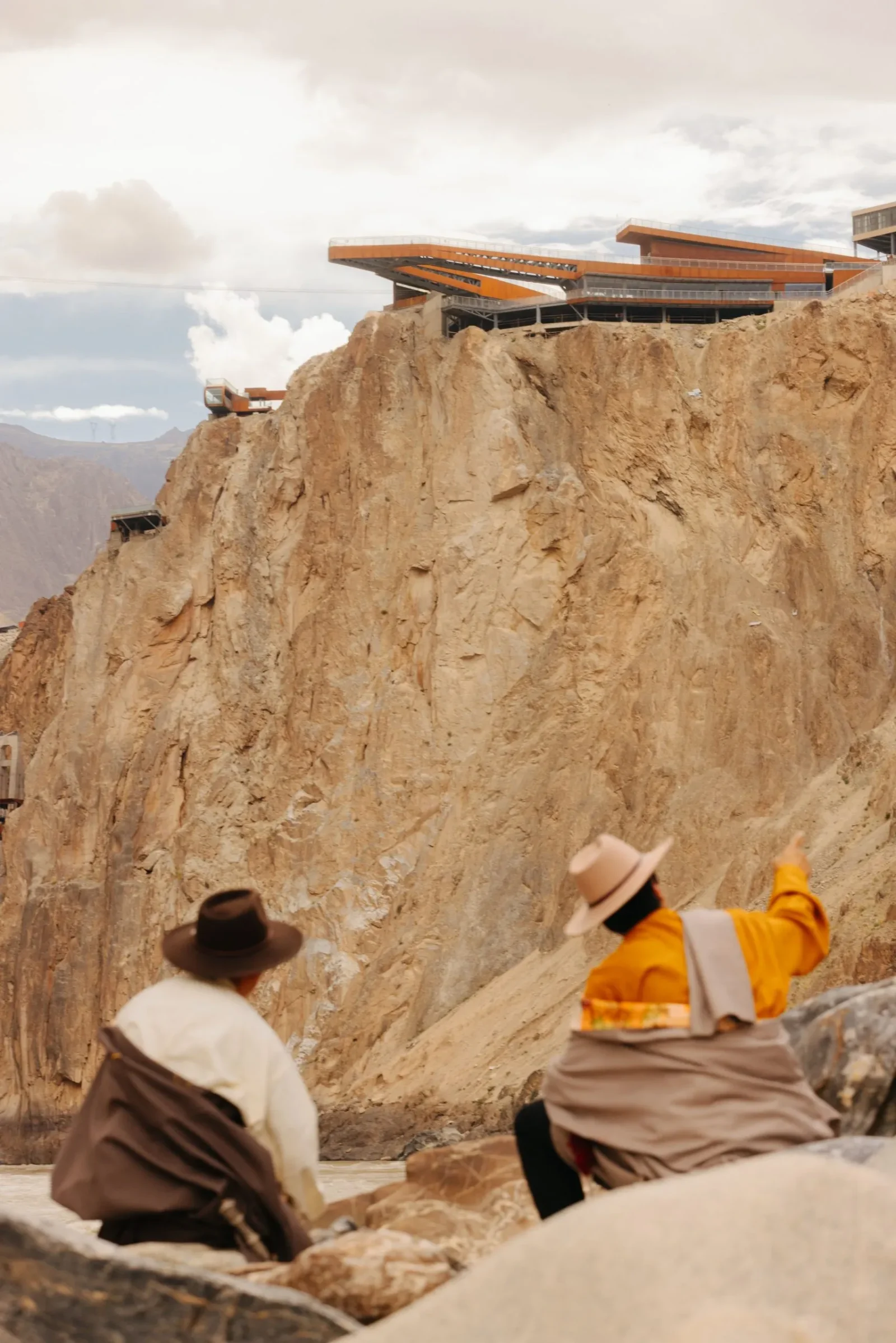
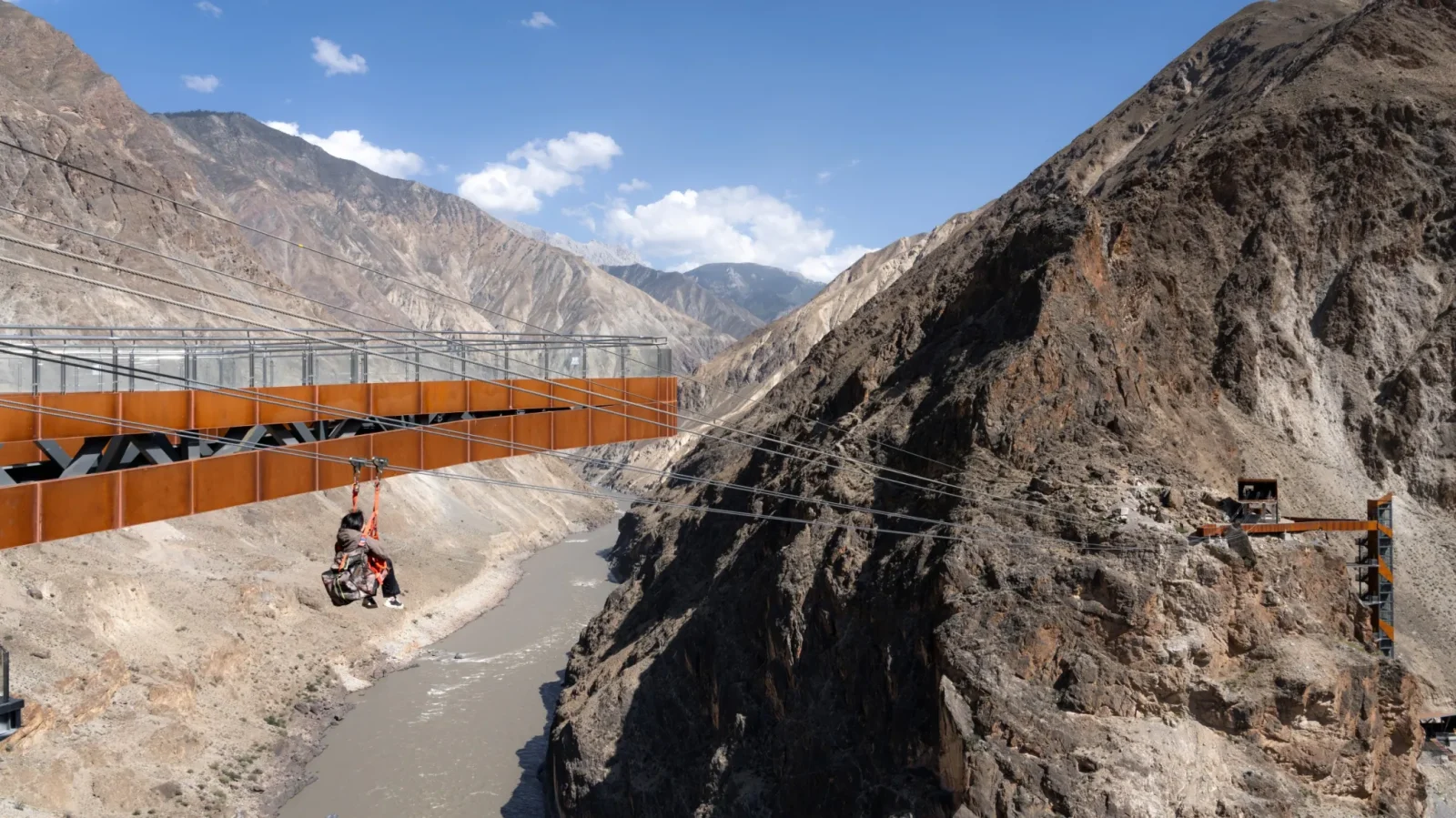
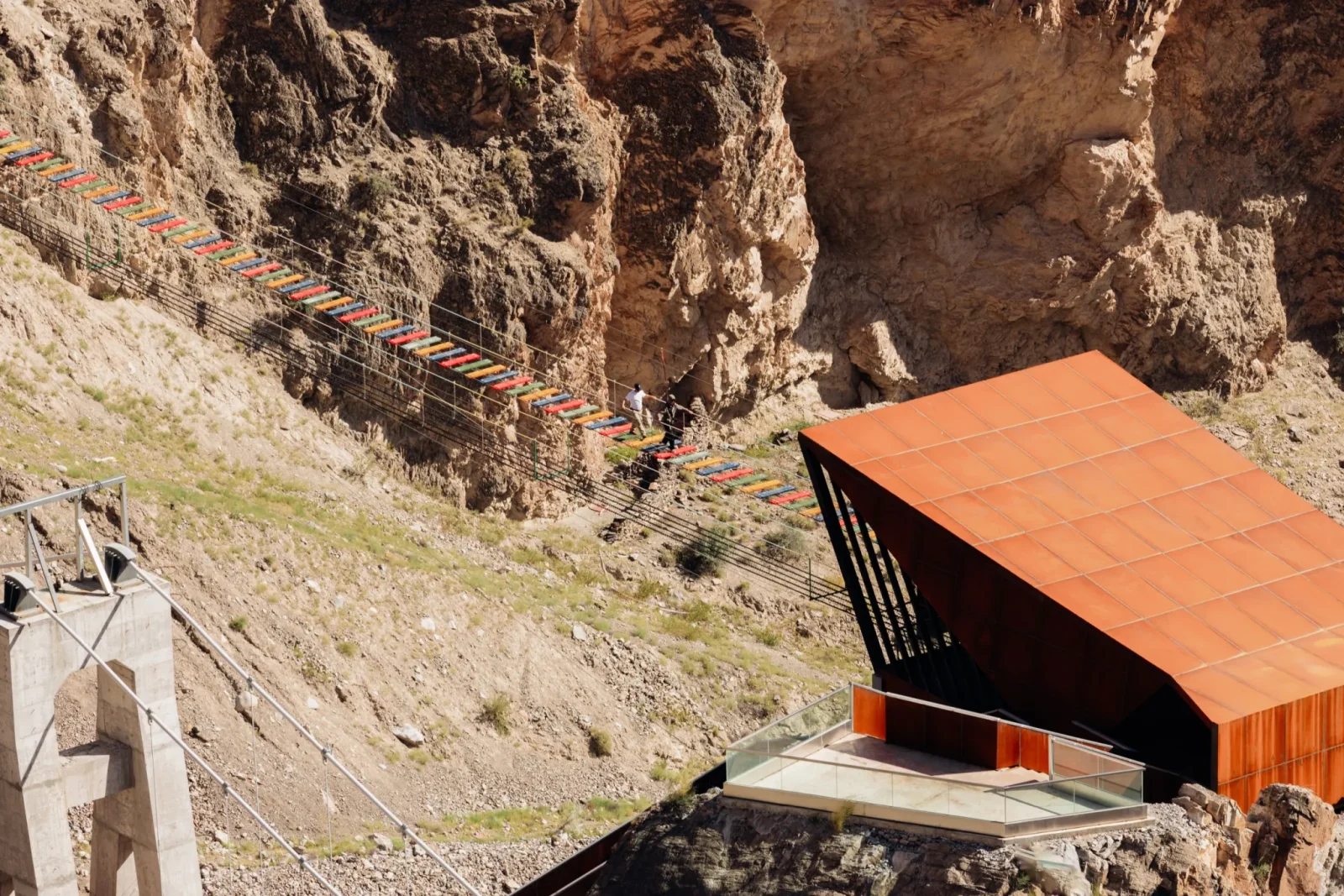
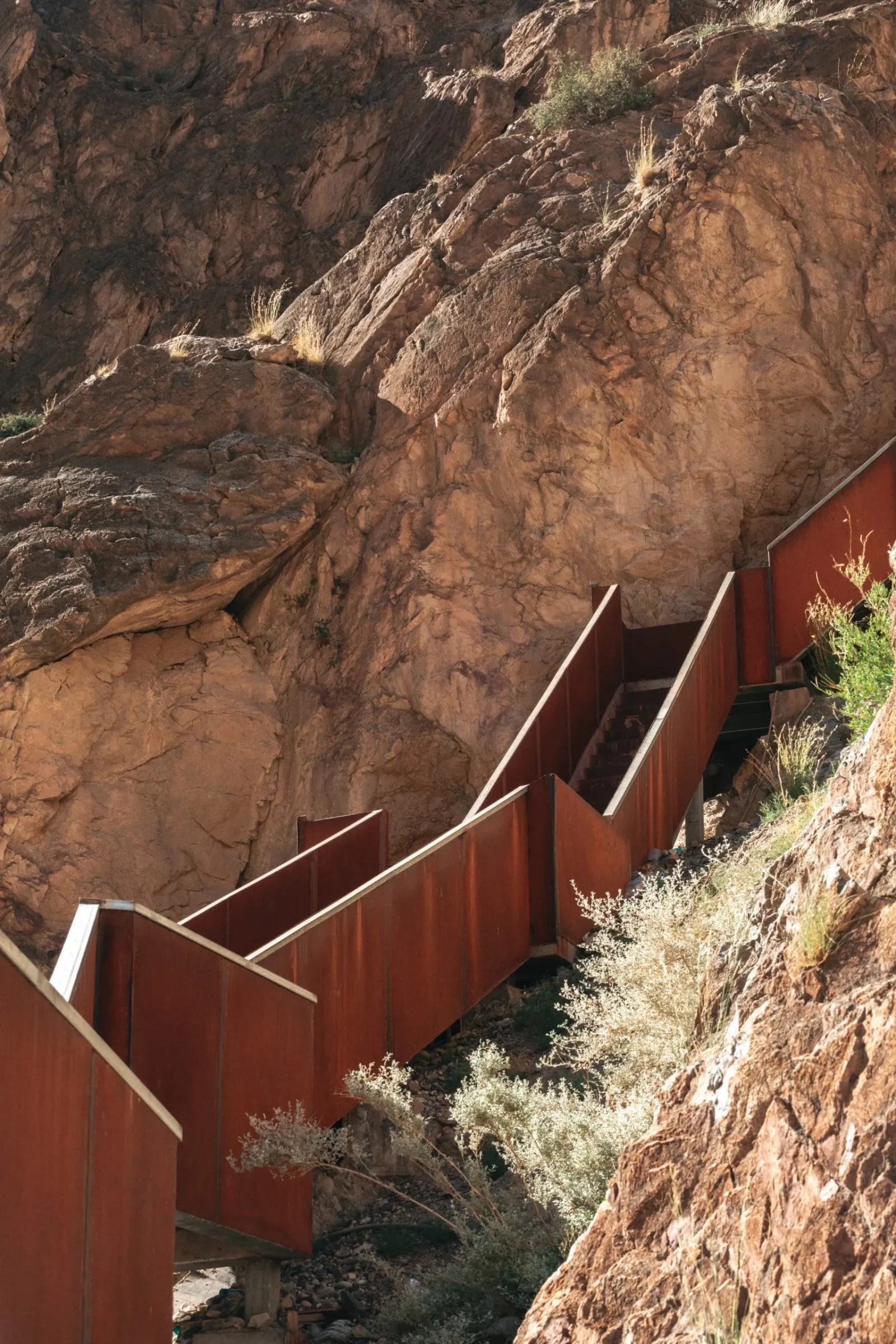
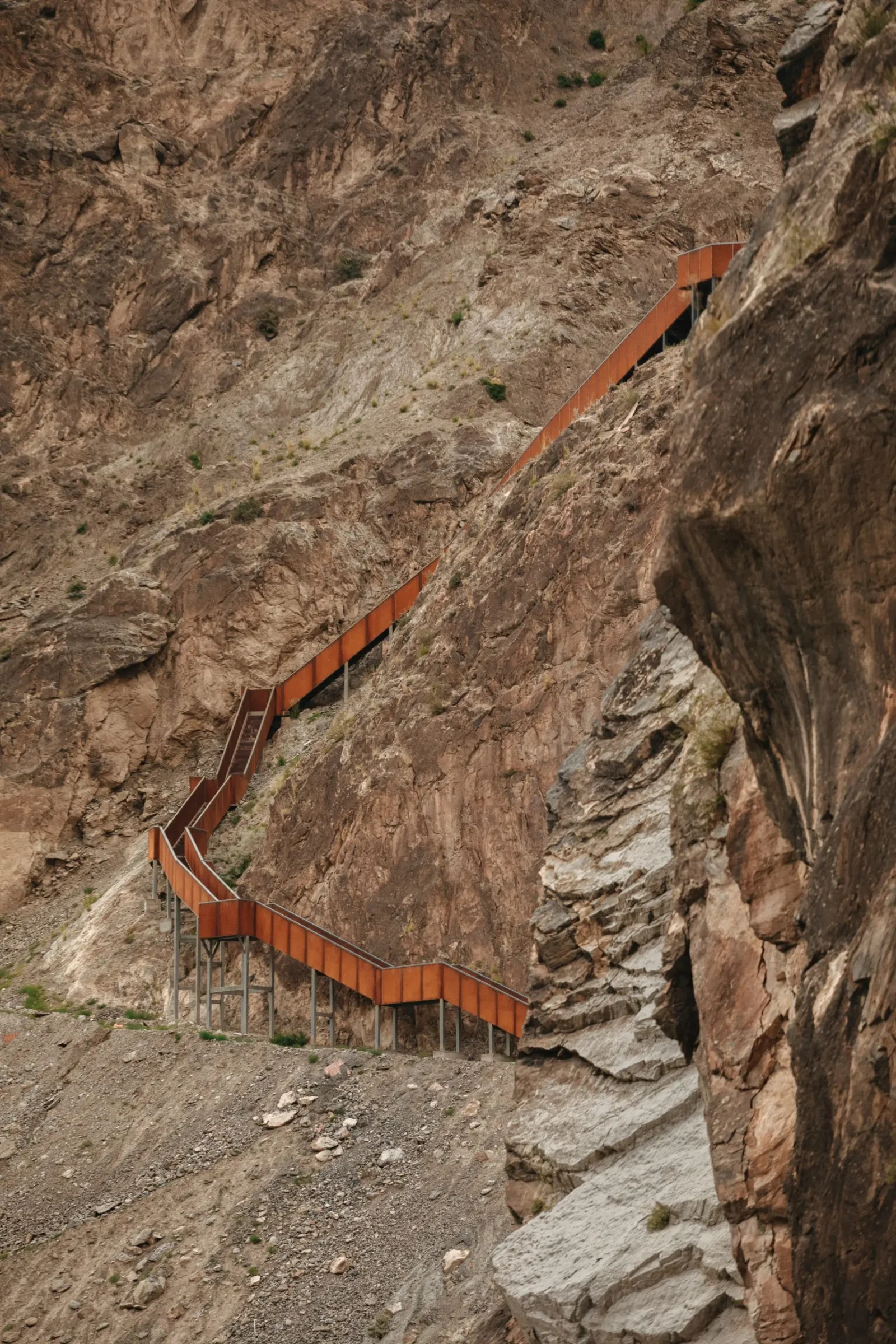
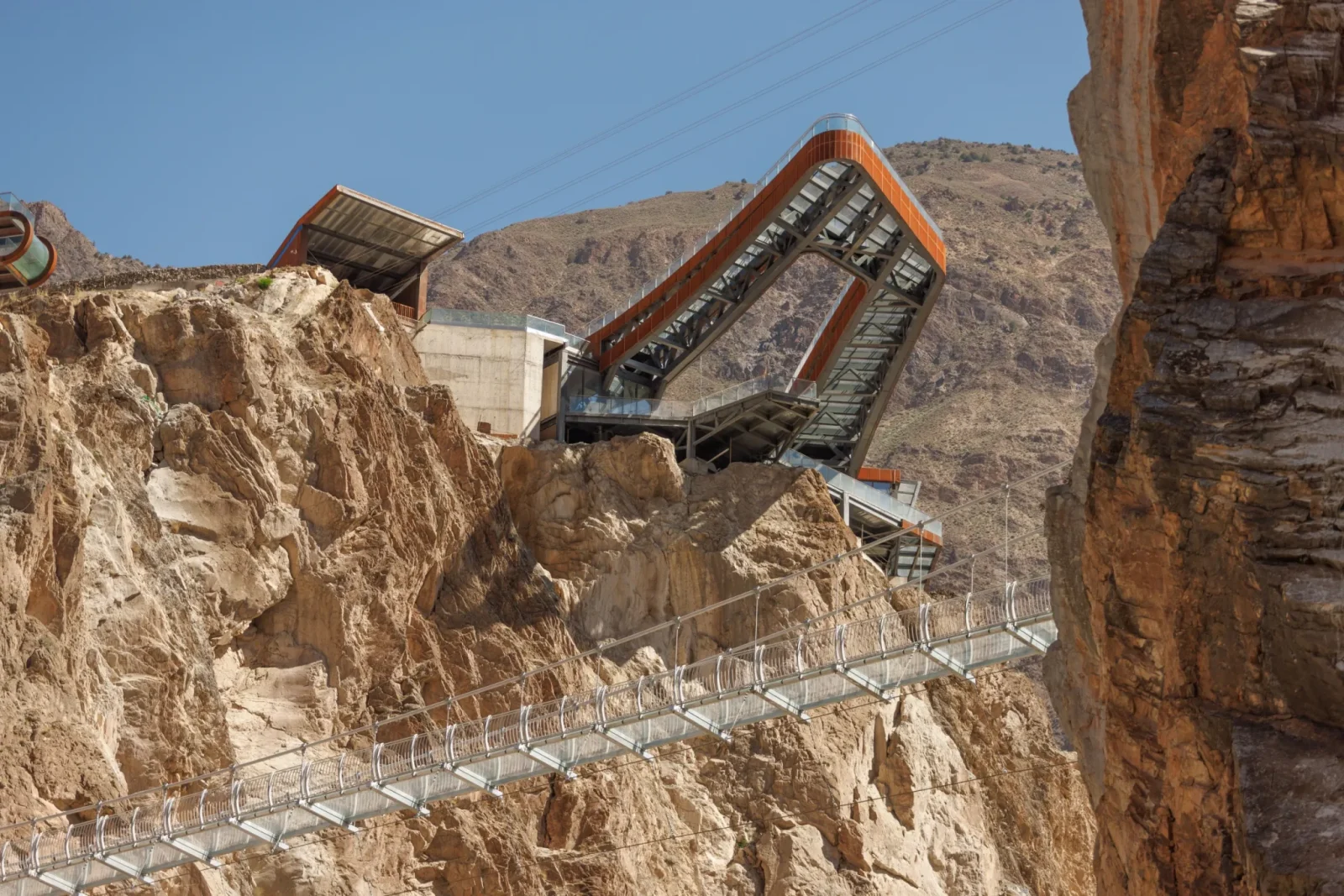
Positioned on a new waypoint on G318 and known for narrow roads, frequent rockfalls, and being one of China’s most dramatic roads, the design of a single-arm steel truss cantilever glass platform extends 37 metres out from the cliff, creating the undulating bends in a serpentine form that is suspended more than 130 metres above the river valley. Taking references from Tibetan architectural styles, the design features a reddish structure constructed from a weathering steel truss system and topped with transparent structural glass. The deliberate choice of material combines durability and resistance to corrosion in the plateau’s harsh climate.
37-metre Glass Cantilever as a Visitor Experience
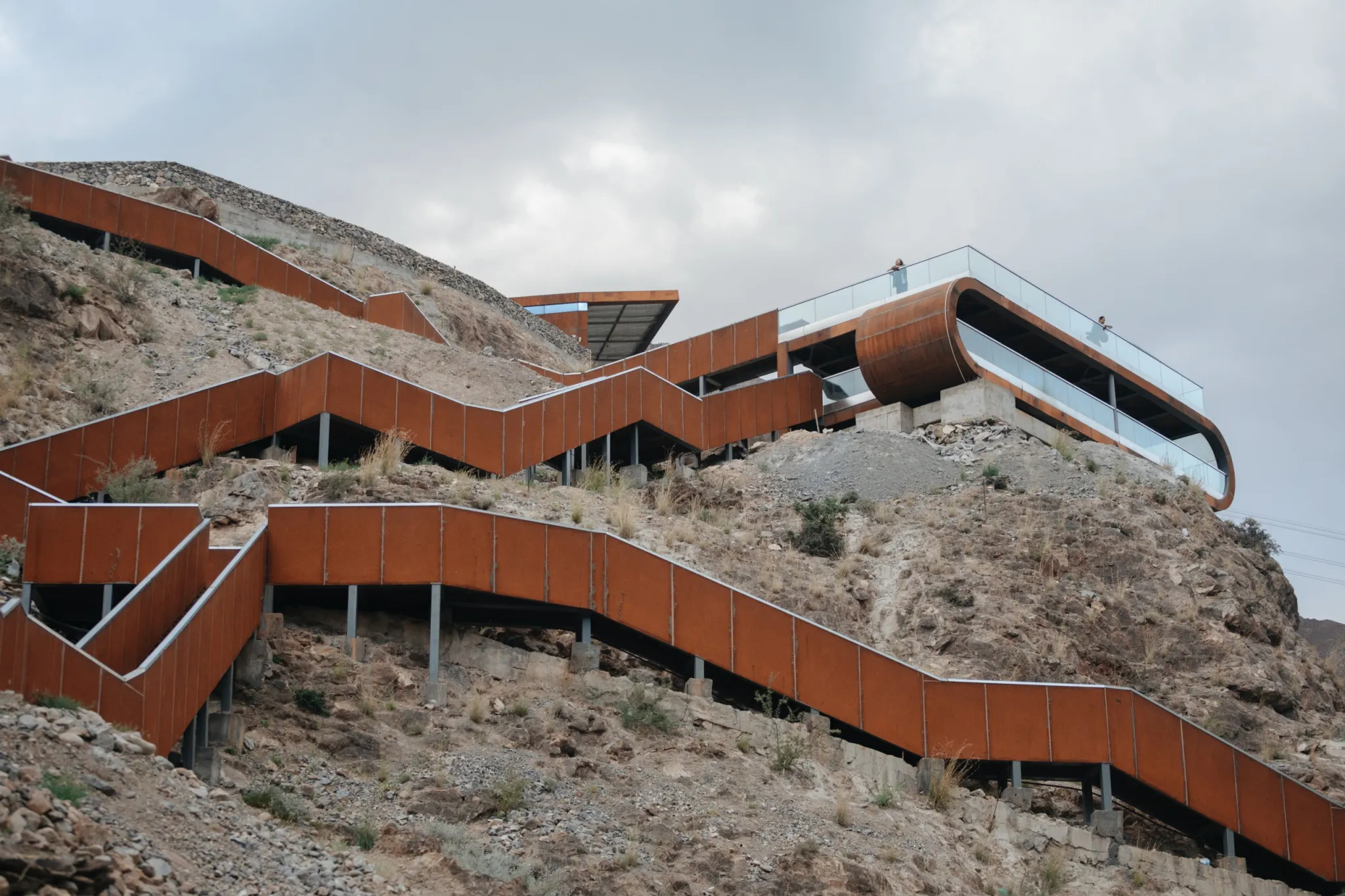
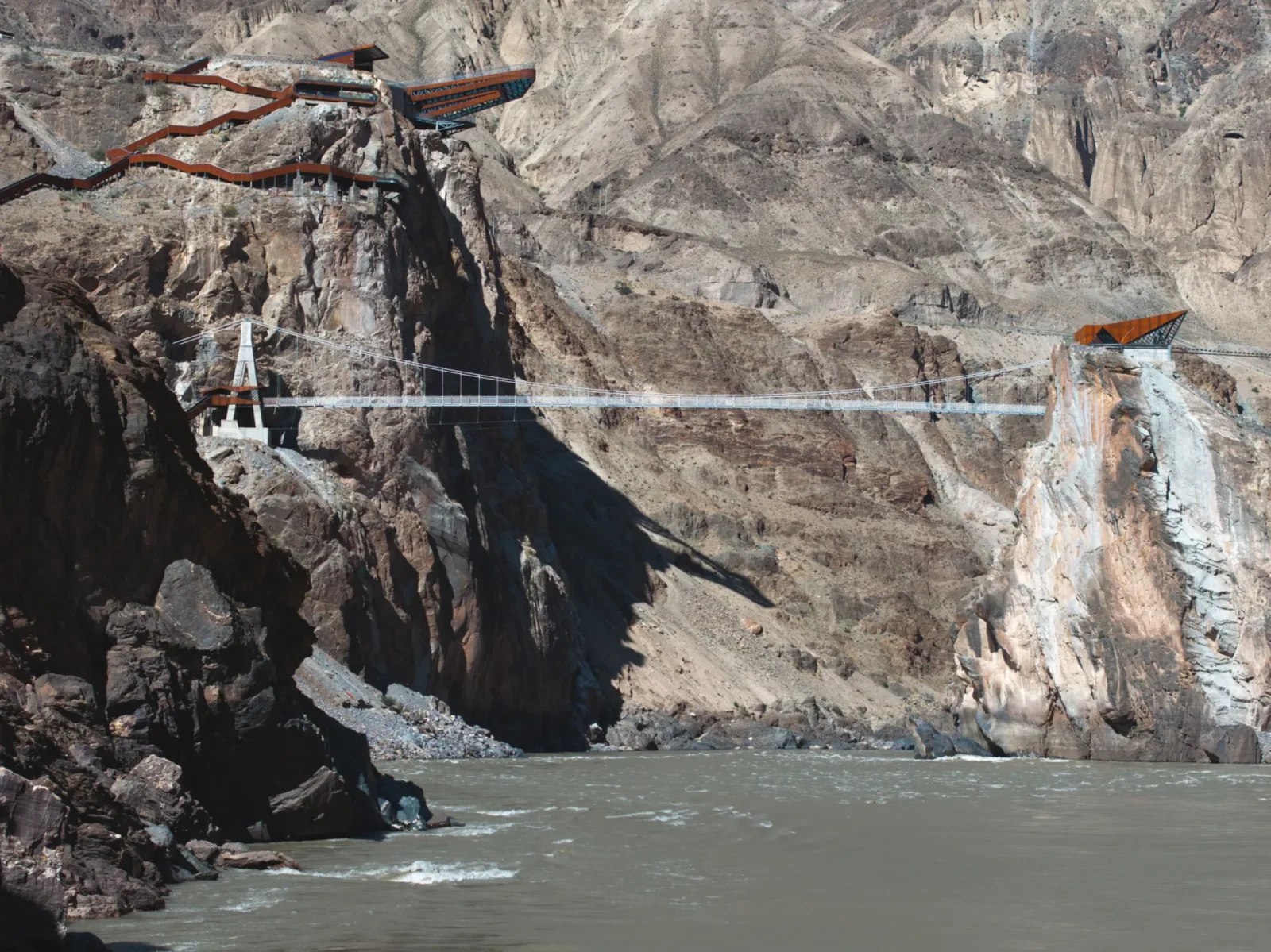
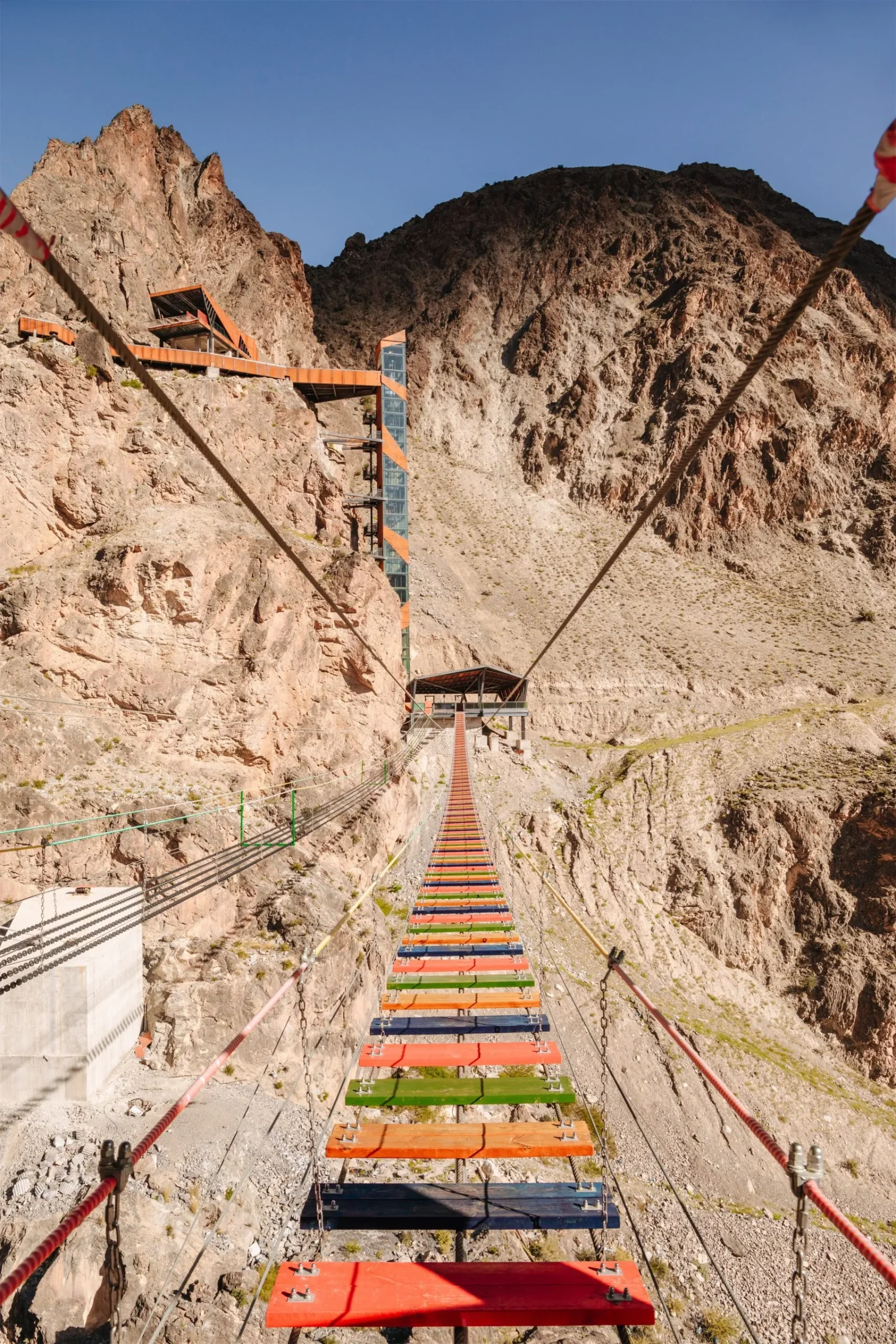
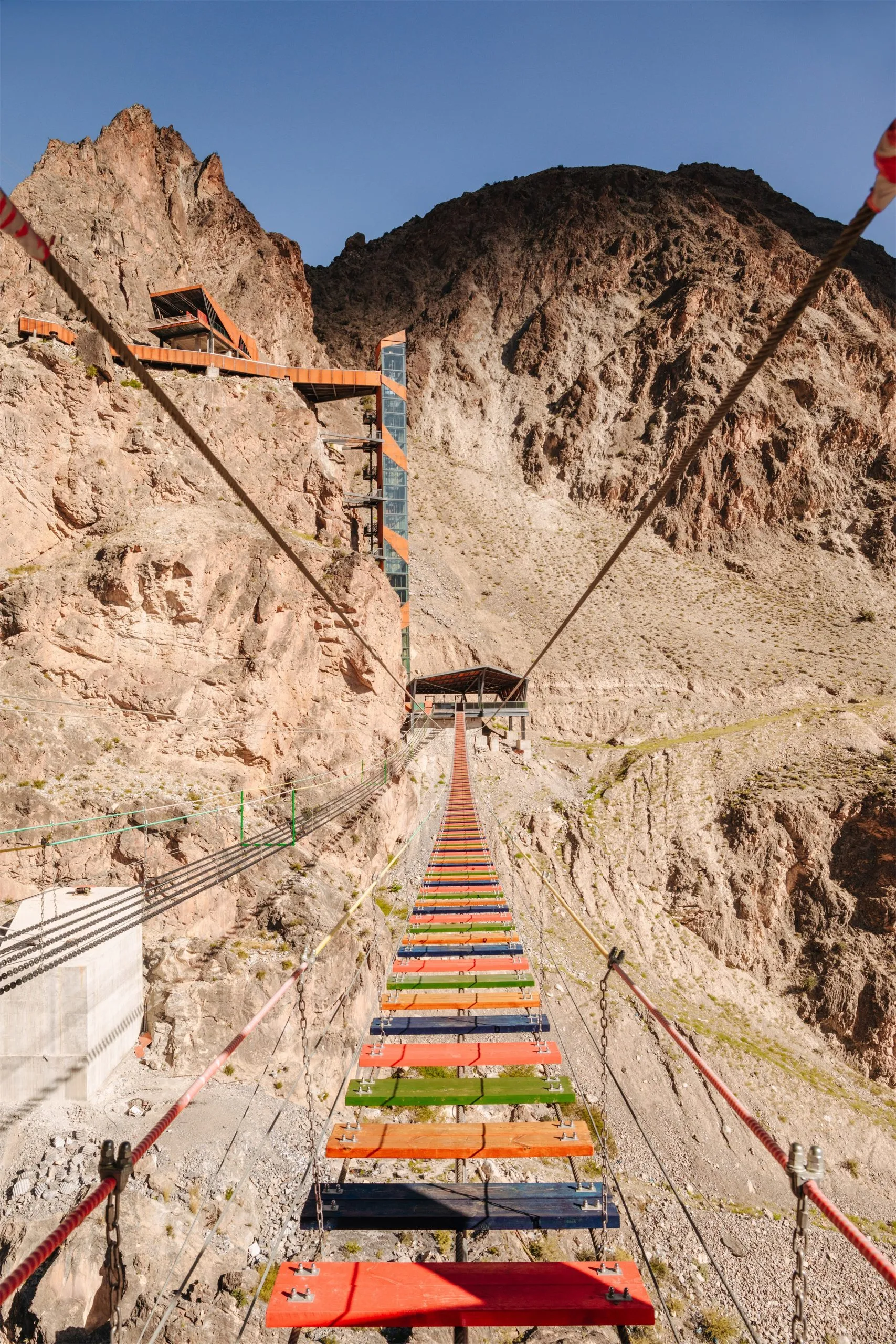
The spatial functionality is integrated with multiple scenic attractions, allowing visitors to move along a continuous cliffside skywalk ending at the glass cantilever viewing platform, a 46-segment factory-fabricated structure for on-site assembly. Amenities include a restaurant, coffee bar, and convenience store supporting daily tourism. A zipline crossing the canyon, a thrilling step bridge, and a 666-step ladder carved into the cliffs are intended for experiential tourism.
Lead architect Youcai Pan expressed the project’s design and construction methods as a significant modern-day challenge in high-altitude engineering, framing not only the visitor’s experience but also achieving technical success.
Engineering Strategies for Extreme Terrain
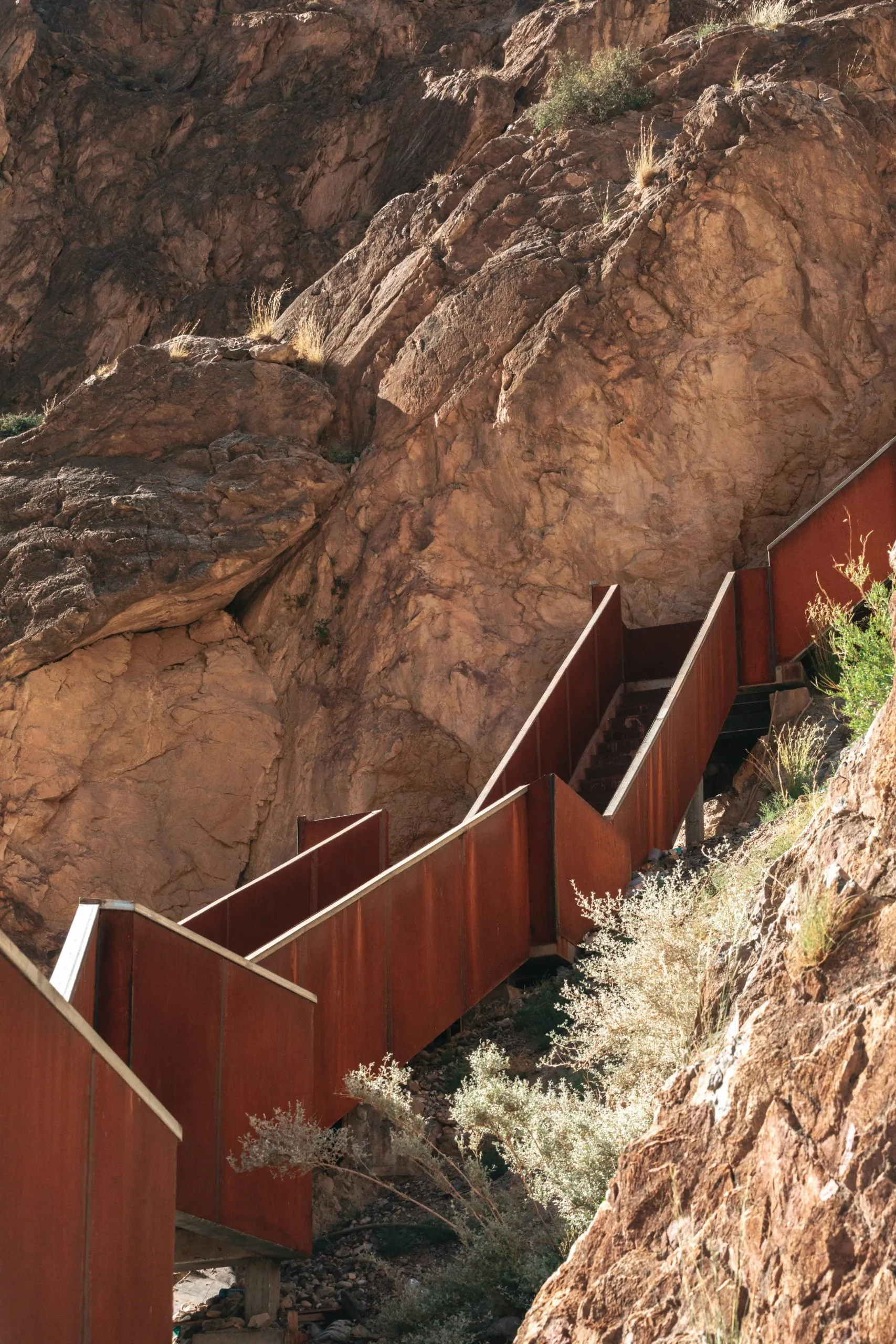
The project encountered advanced engineering challenges due to its remote location, high altitude, and cantilevered construction. The structure was anchored deep into the cliff with advanced rock bolting and foundation. The materials were chosen considering the harsh conditions of weather, strong winds, cold, and high UV exposure, with limited access to transport heavy machinery and materials.
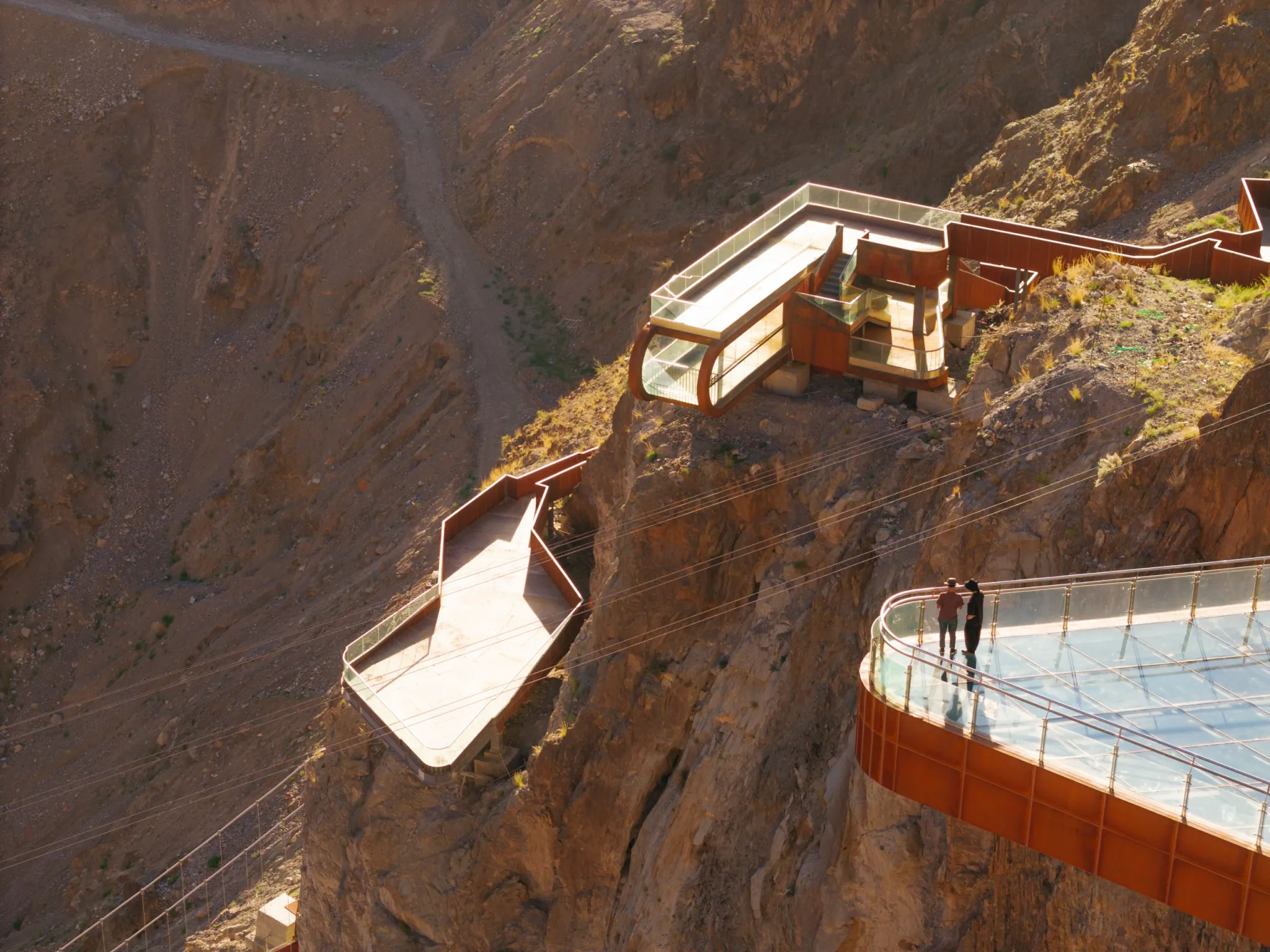
The engineering reflected contemporary limitations, and a lack of heavy machinery led to extensive manual labor, including hand-drilled foundations and the use of cables to move materials. To ensure safety and resilience, architects extensively examined wind tunnel testing, disaster assessments, and vibration control calculations (TMD)
Balancing Spectacle with Environmental Responsibility
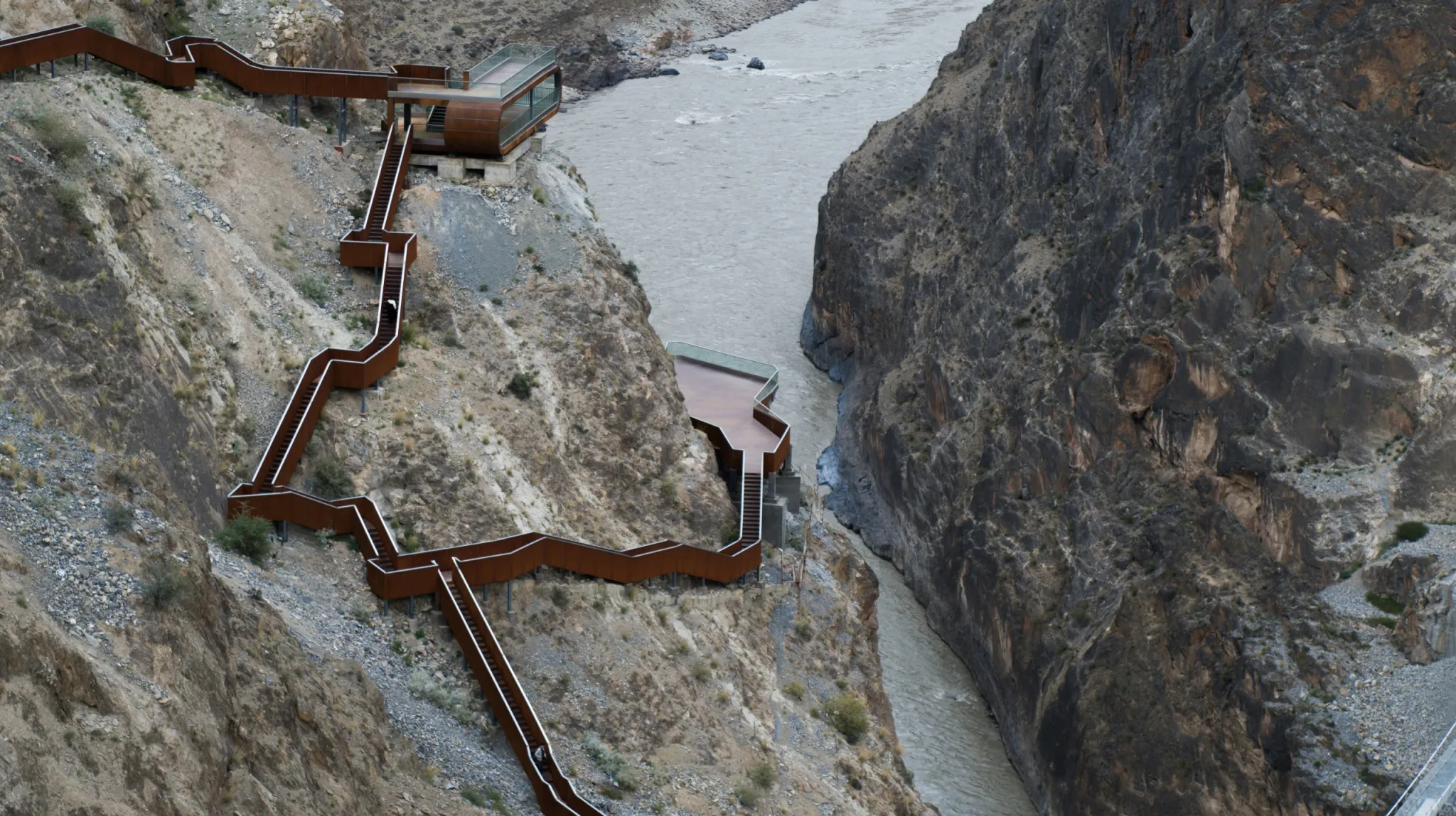
The Nujiang River 72 Turns Canyon Scenic Area demonstrates site-responsive design by adopting advanced engineering with the traditional way of working to create an architectural experience that respects the heritage of Tibet. Working with extreme conditions and engineering challenges, the project has gained attention and influenced local tourism strategies and construction methods.
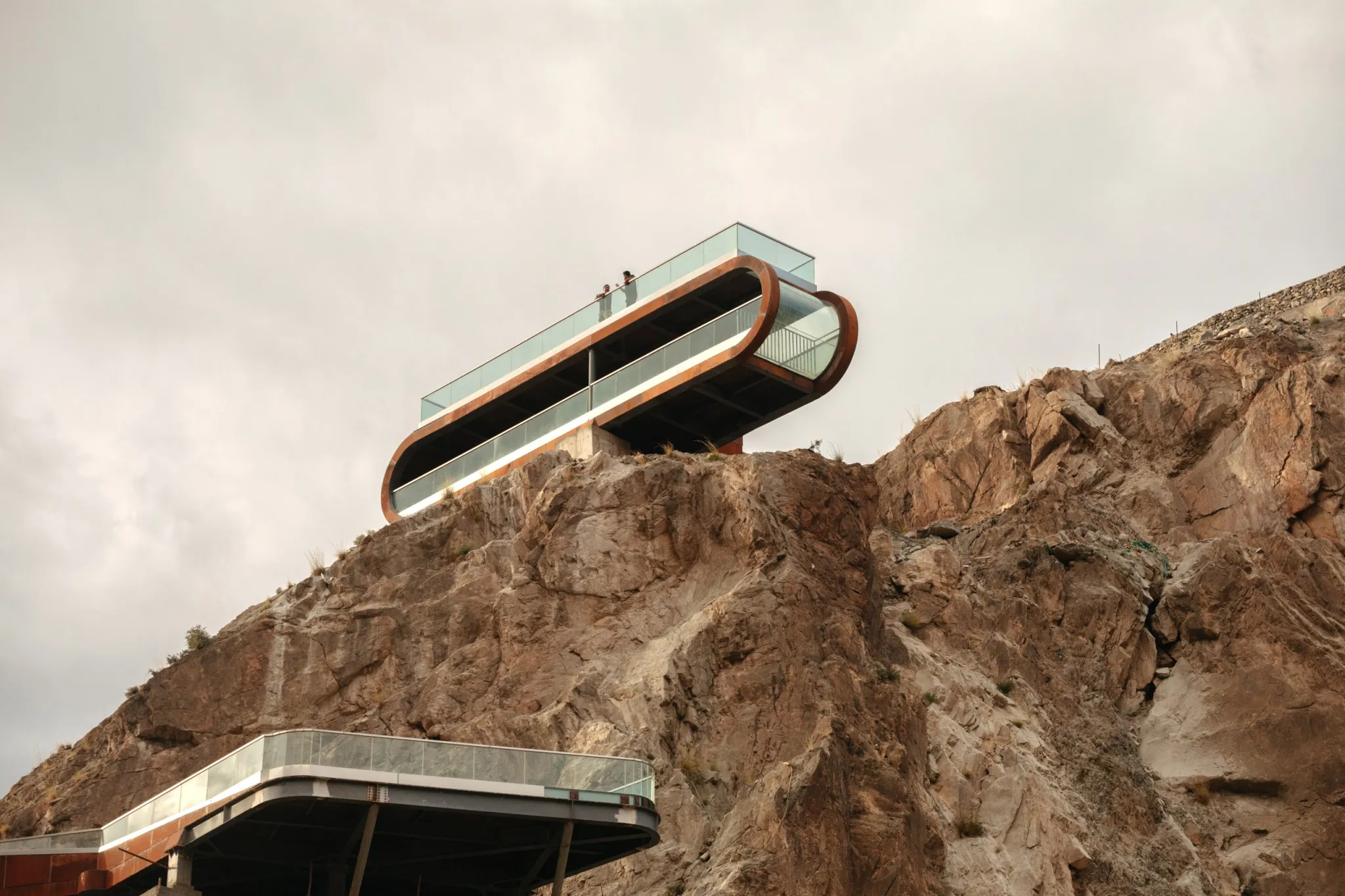
With its cutting-edge engineering solutions, the design intends to inspire not only tourists but also architectural enthusiasts. The project frames the Nujiang Grand Canyon from above, highlighting Tibetan colour, reconnects to the traditional skill workers, and encourages tourism in the region’s fragile and dramatic landscape. Recently, to preserve the remote environment, 500 acres of orchard have been planted to promote local employment and sustainable tourism.
Nujiang River 72 Turns Canyon Scenic Area Project details
Location: Buze Village, Baxoi County, Changdu City, Tibet, China
Architect: Archermit (Lead Architect: Youcai Pan)
Photographers: Arch-Exist, Chill Shine
Client: Baxoi County People’s Government, Baxoi County Eastern Tibet Source Venture Investment Co., Ltd.
Area: 800 m²
Explore Courses
.jpg "Ondrej Chybik - Rethinking Architecture")