




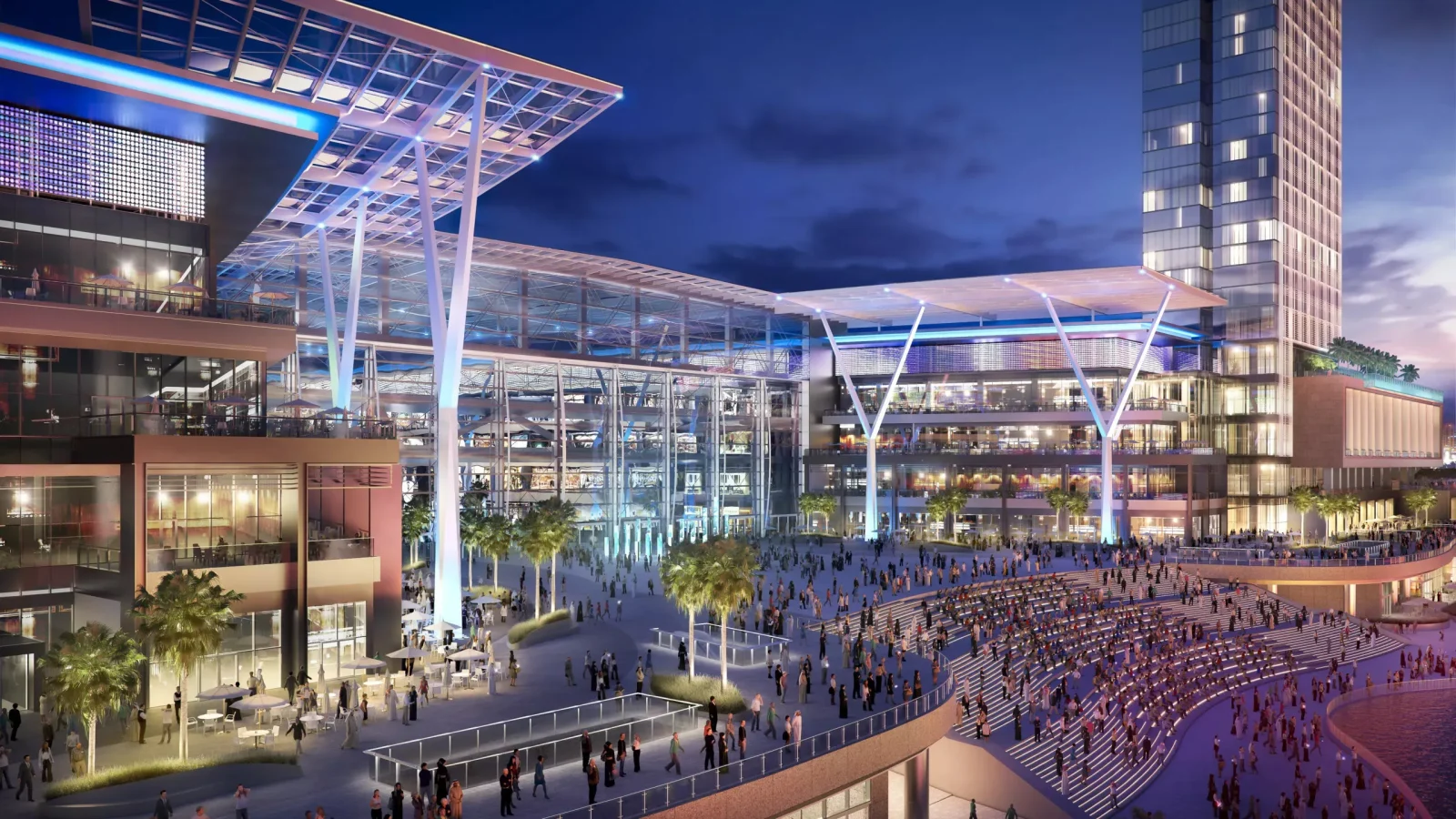
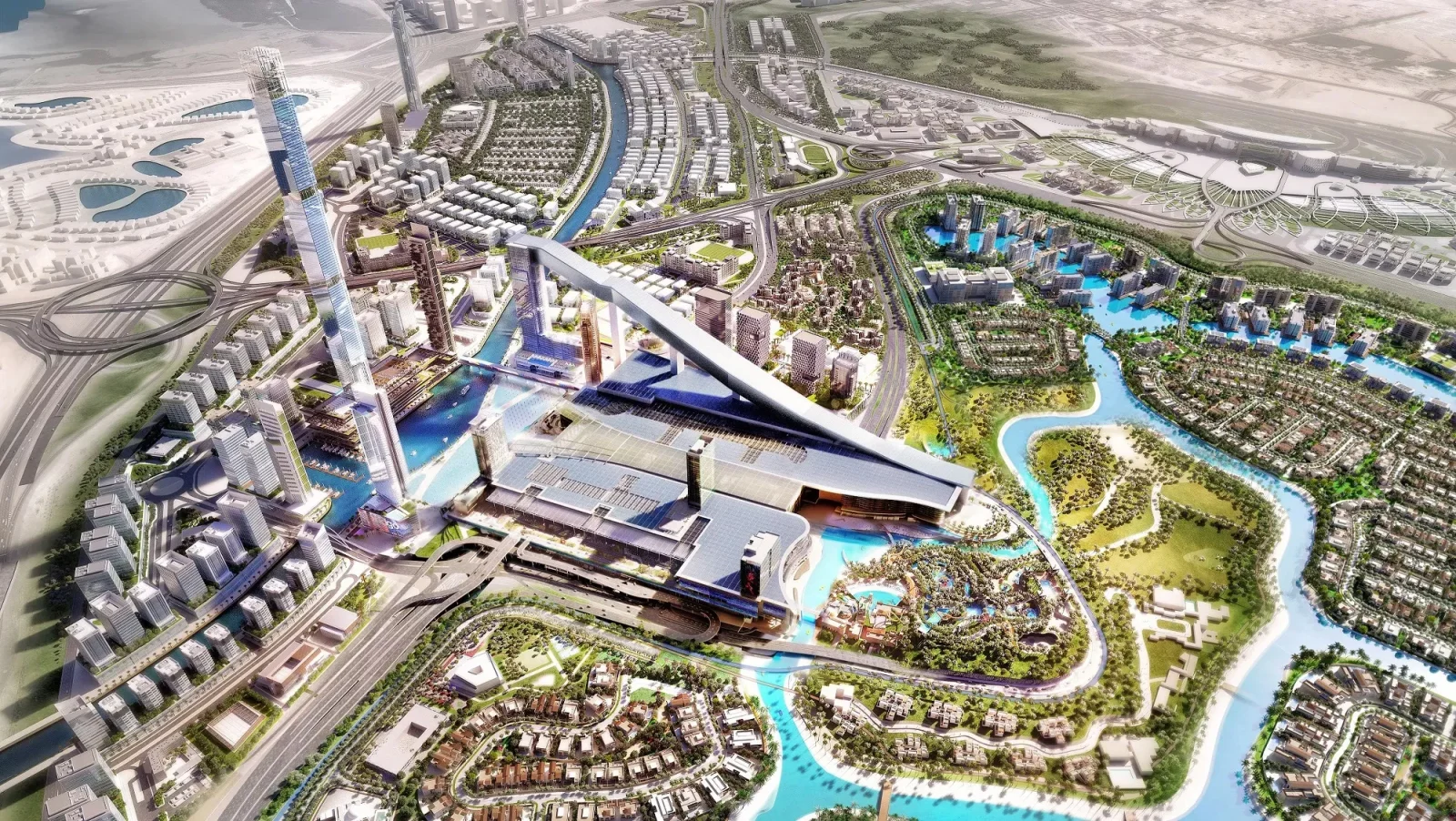
In the United Arab Emirates, architecture is both an expression of ambition and a tool for shaping identity. Over the past two decades, the country has steadily positioned itself at the crossroads of innovation and tradition, where desert landscapes give rise to cultural landmarks, research hubs, and vertical cities. Guided by a forward-looking ethos, the UAE’s ongoing wave of megaprojects, some nearing completion, others still on the drawing board, reflects a broader commitment to rethinking how we inhabit space in a rapidly changing world.
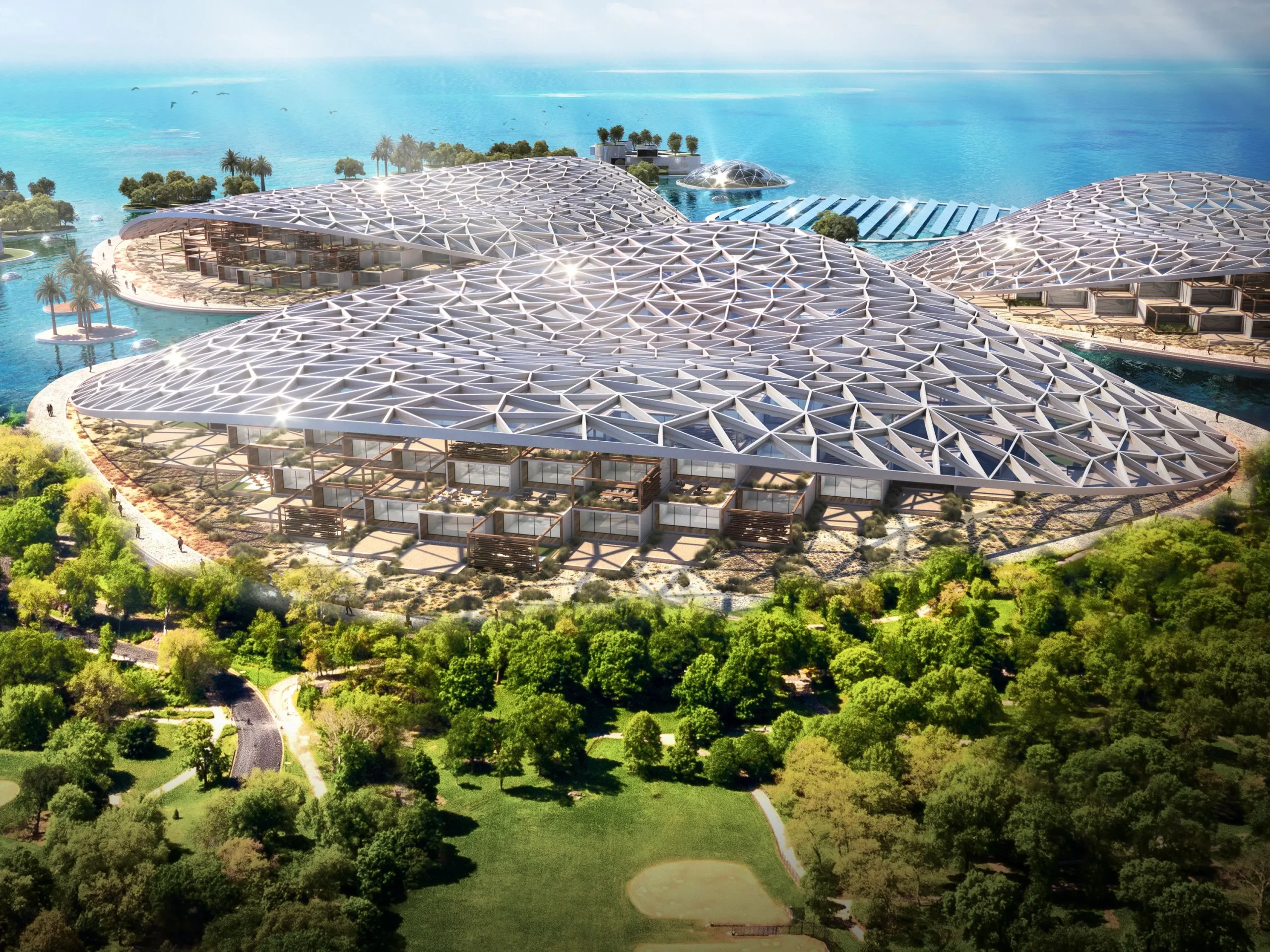
Here are the 10 Most Exciting Upcoming Megaprojects in the United Arab Emirates:
1. Dubai Creek Tower
Location: Dubai, UAE
Architect: Santiago Calatrava
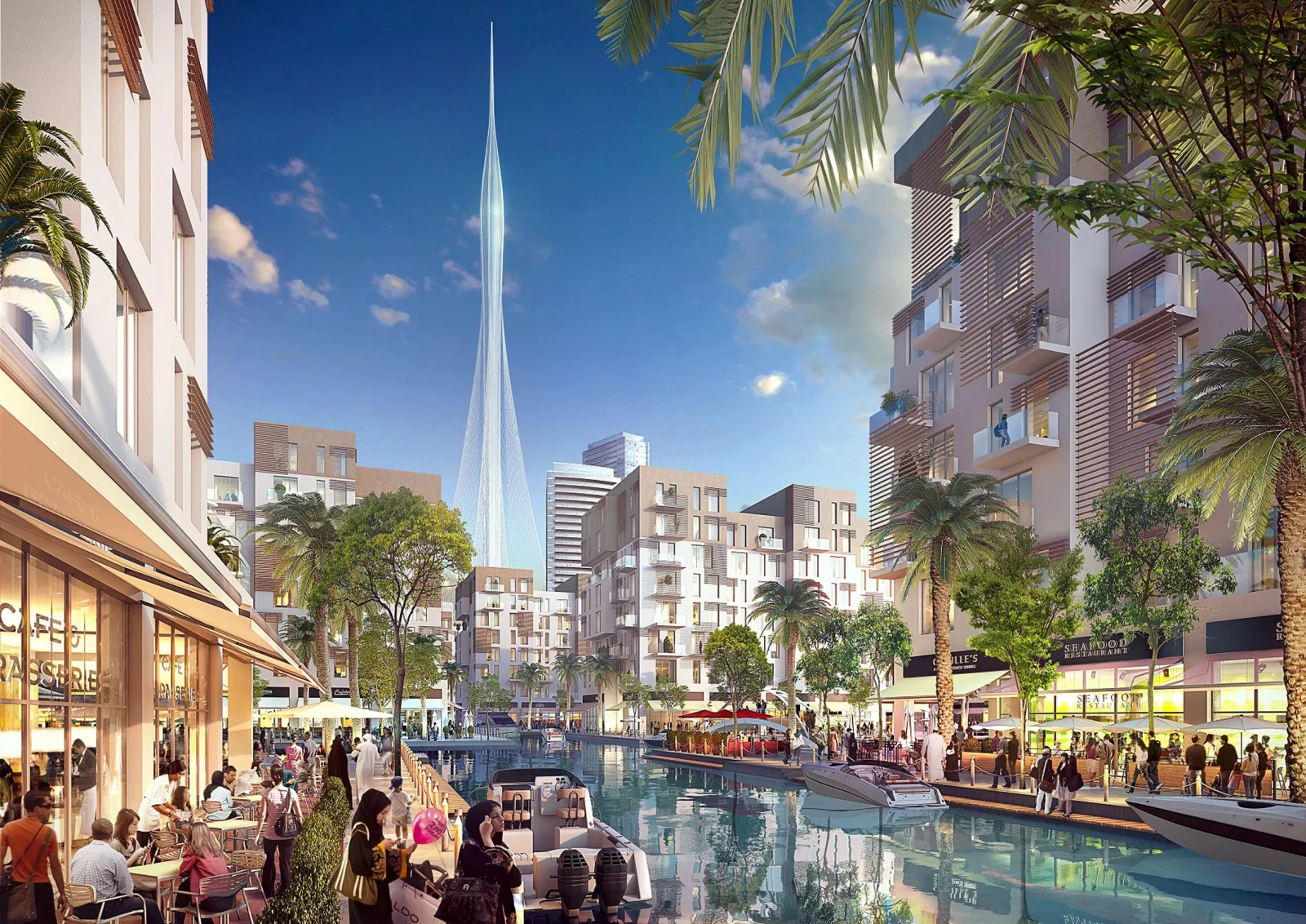
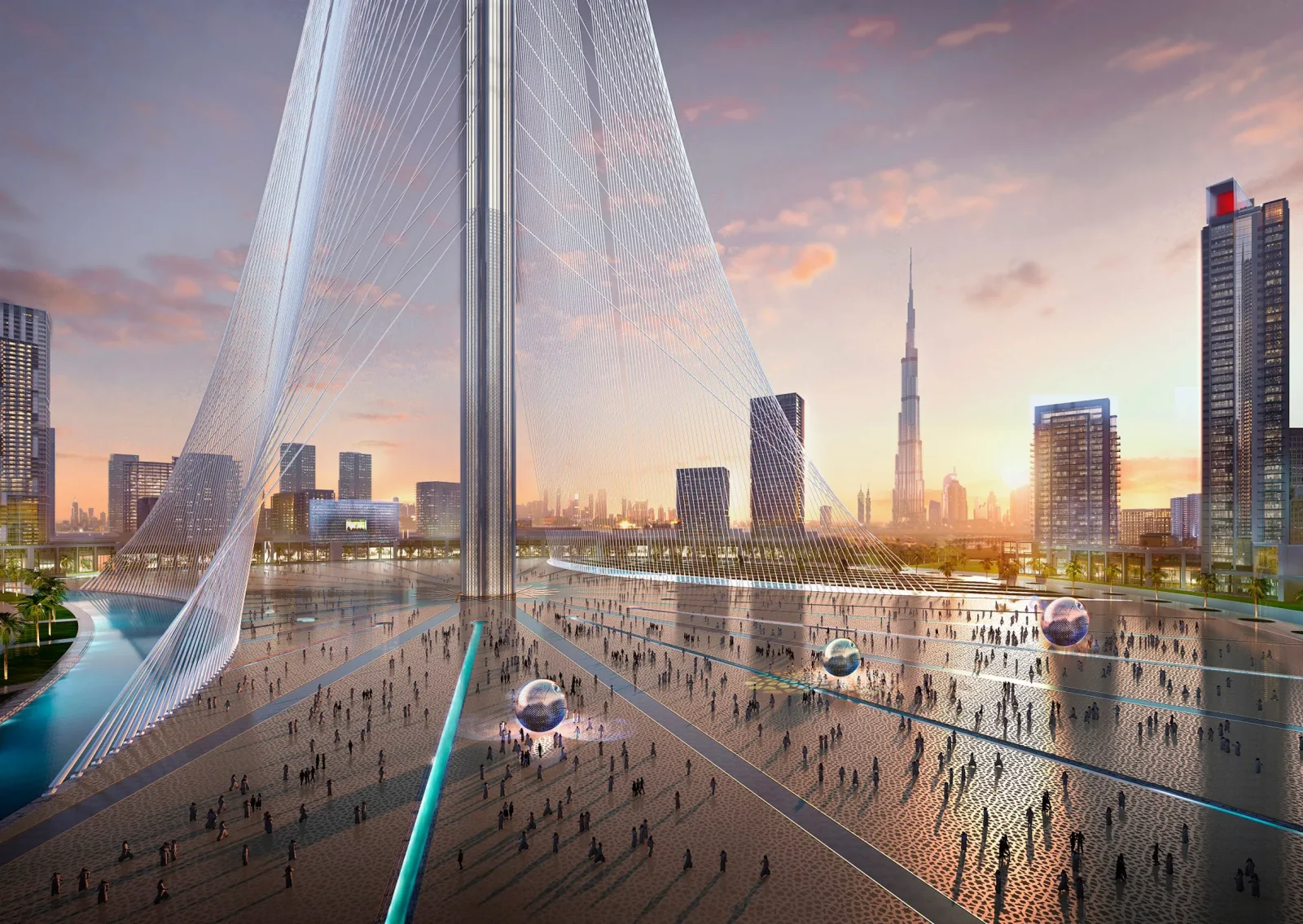
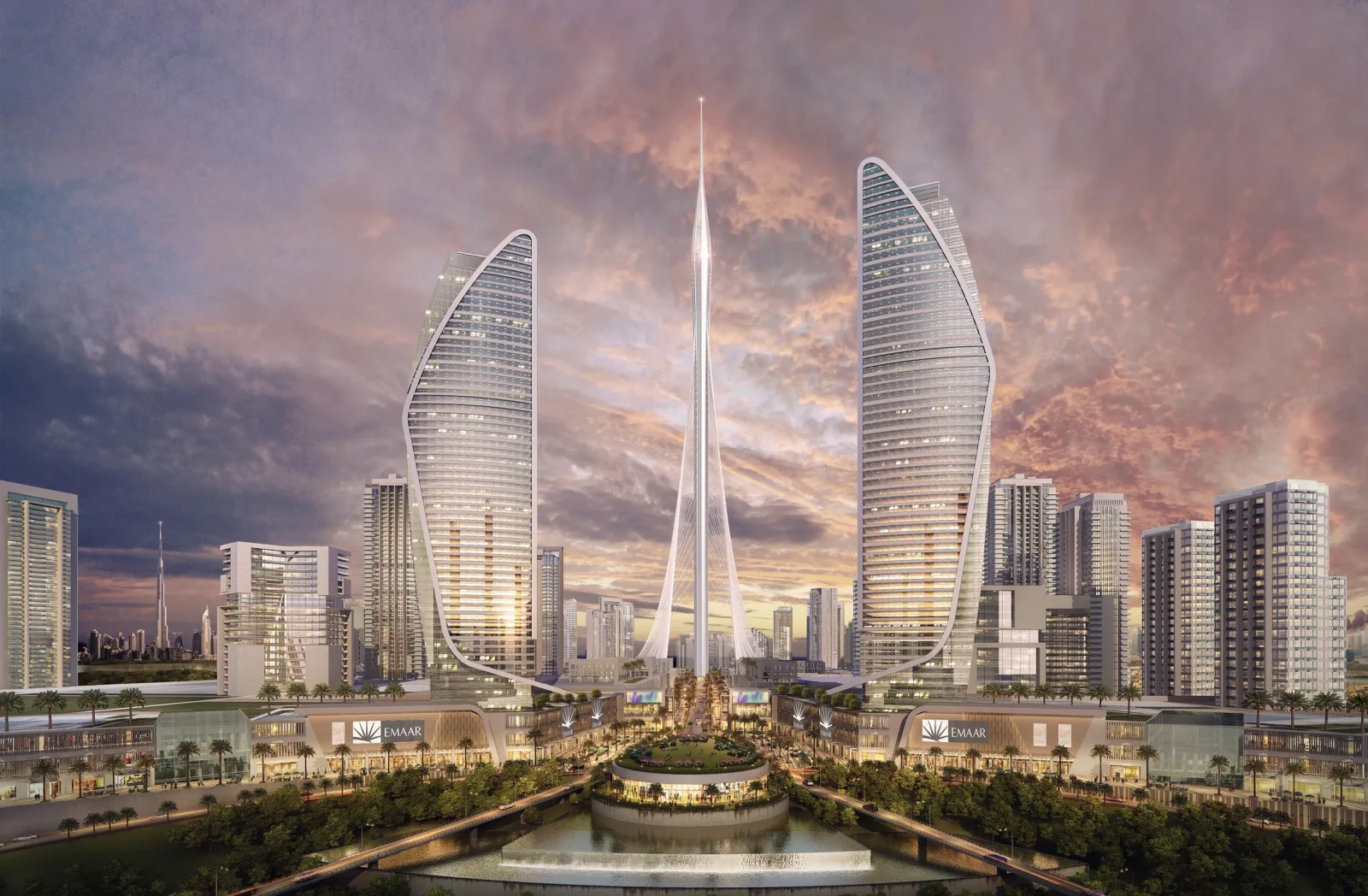
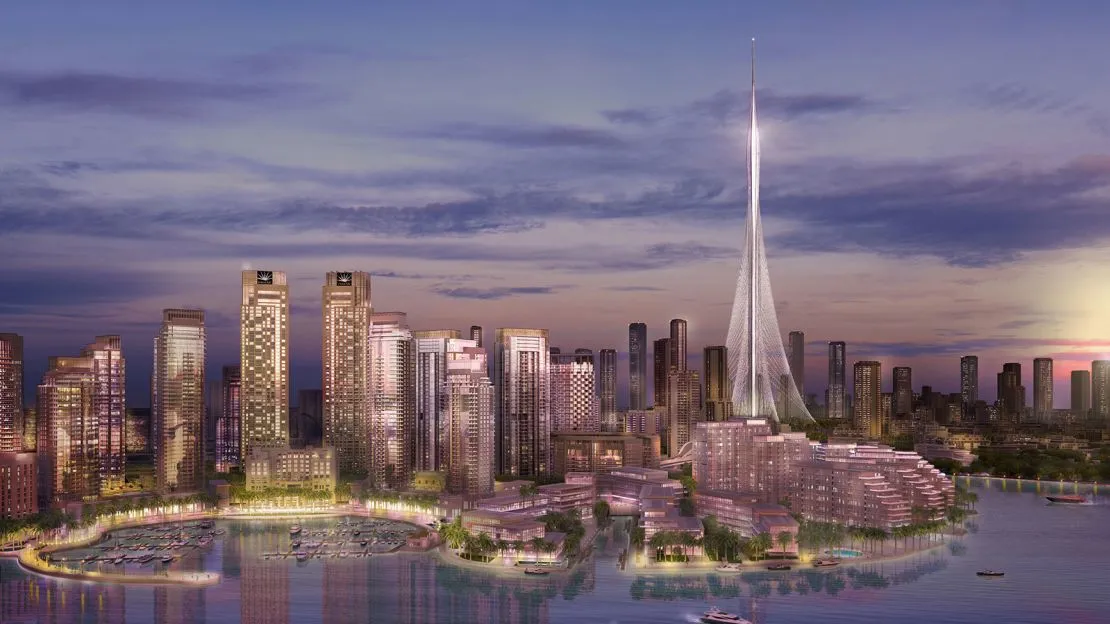
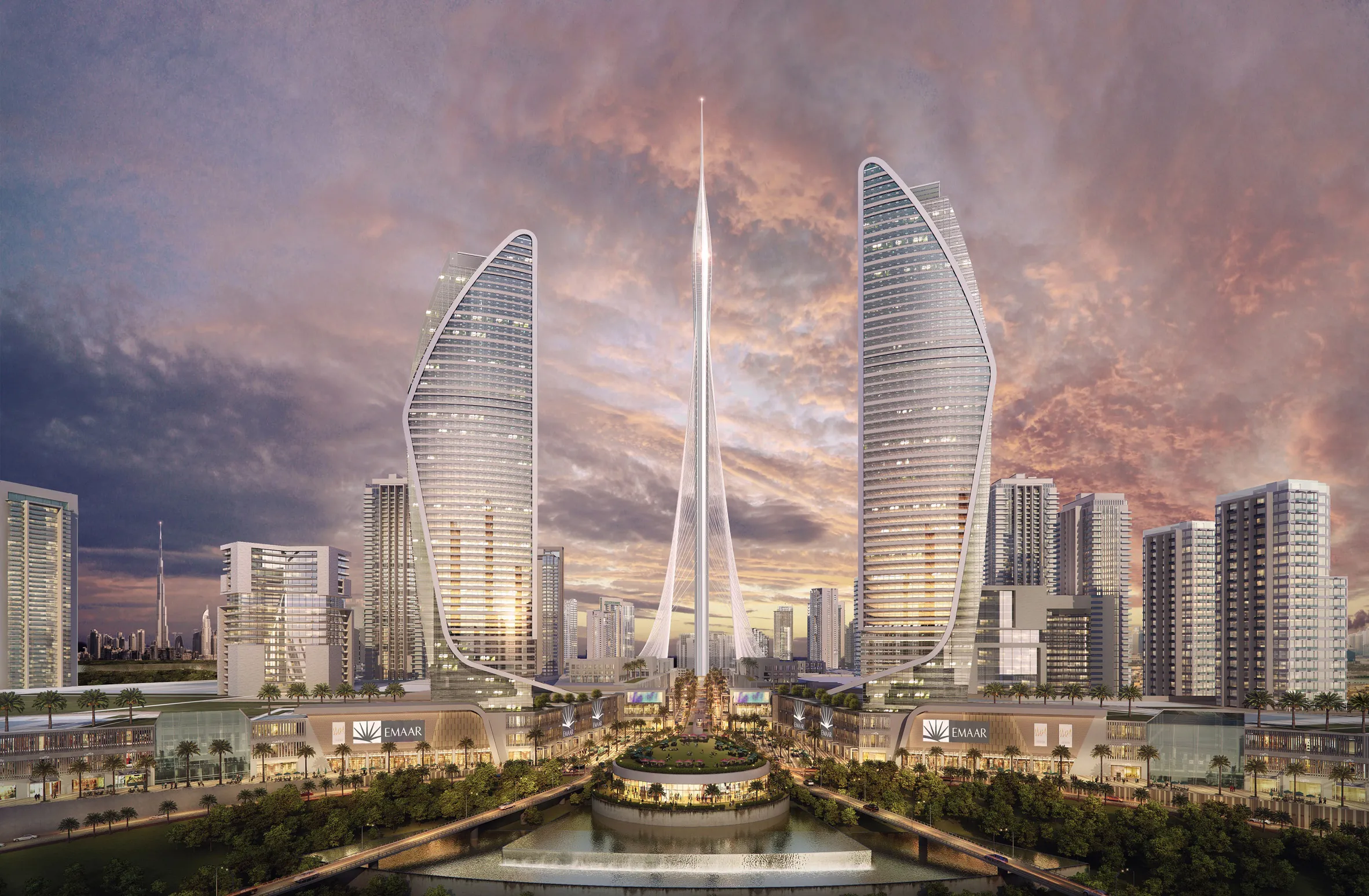
One of Dubai’s most exciting and anticipated mega-projects, Creek Tower, is designed by Spanish architect Santiago Calatrava. Set to become the landmark of Dubai Creek Harbour, the tower will surpass the 828-meter Burj Khalifa upon completion, earning the title of the world’s tallest tower.
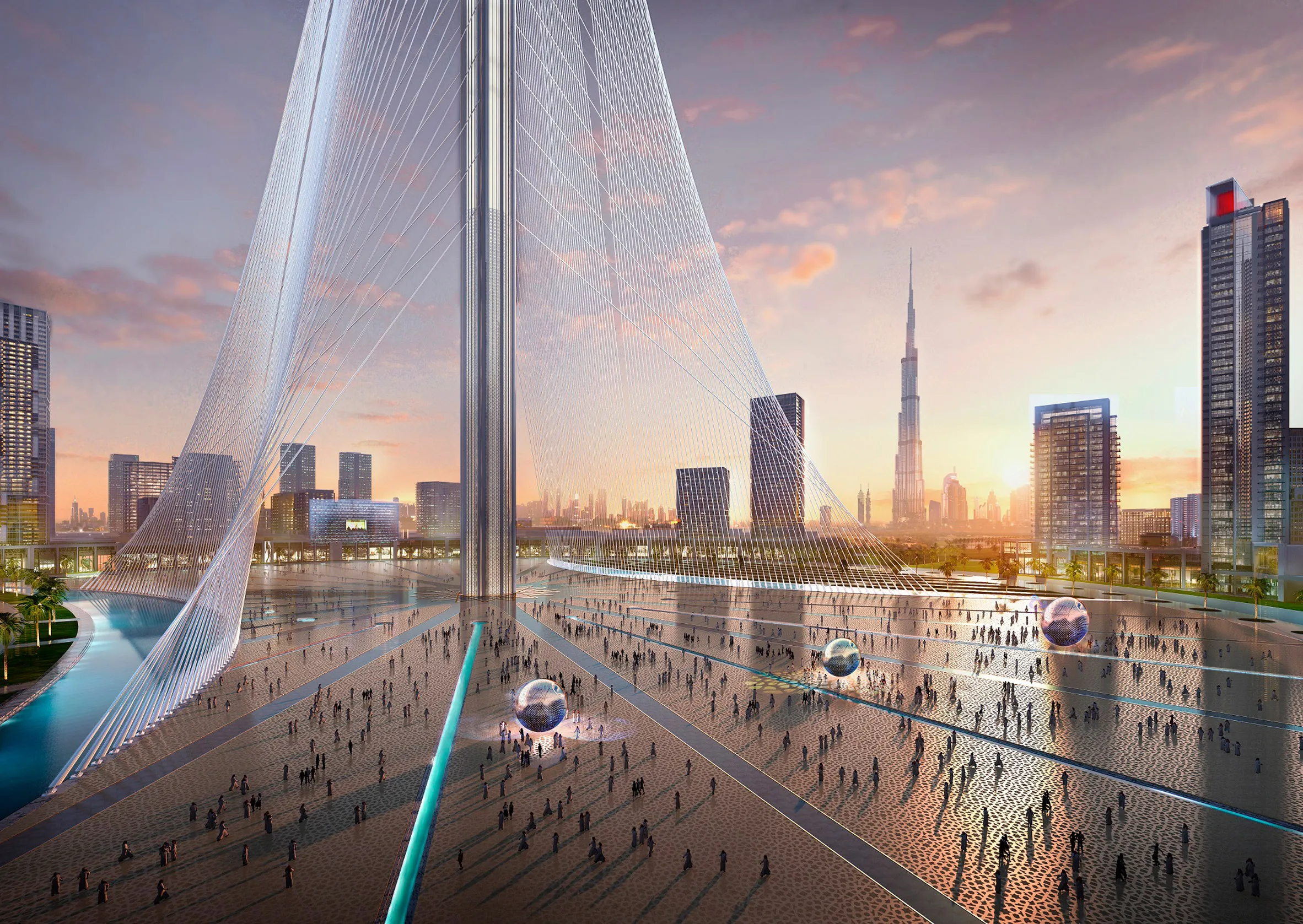
Poised to become the new global icon of the 21st century, Creek Tower was designed with a curvilinear form inspired by the lily flower and traditional Arabian minarets. The elegance and beauty of architectural marvels such as the Alhambra and the Great Mosque of Córdoba are combined with mathematics and geometry. Reflecting the rich culture and heritage of the United Arab Emirates, the building’s multiple observation decks are housed within a long, oval-shaped bud at the top of the tower. The slender stem acts as the structure’s spine, while the cables anchoring the tower to the ground evoke the delicate lines of lily leaves. The structure also provides a beacon of light at night, highlighting the building’s flower bud design.
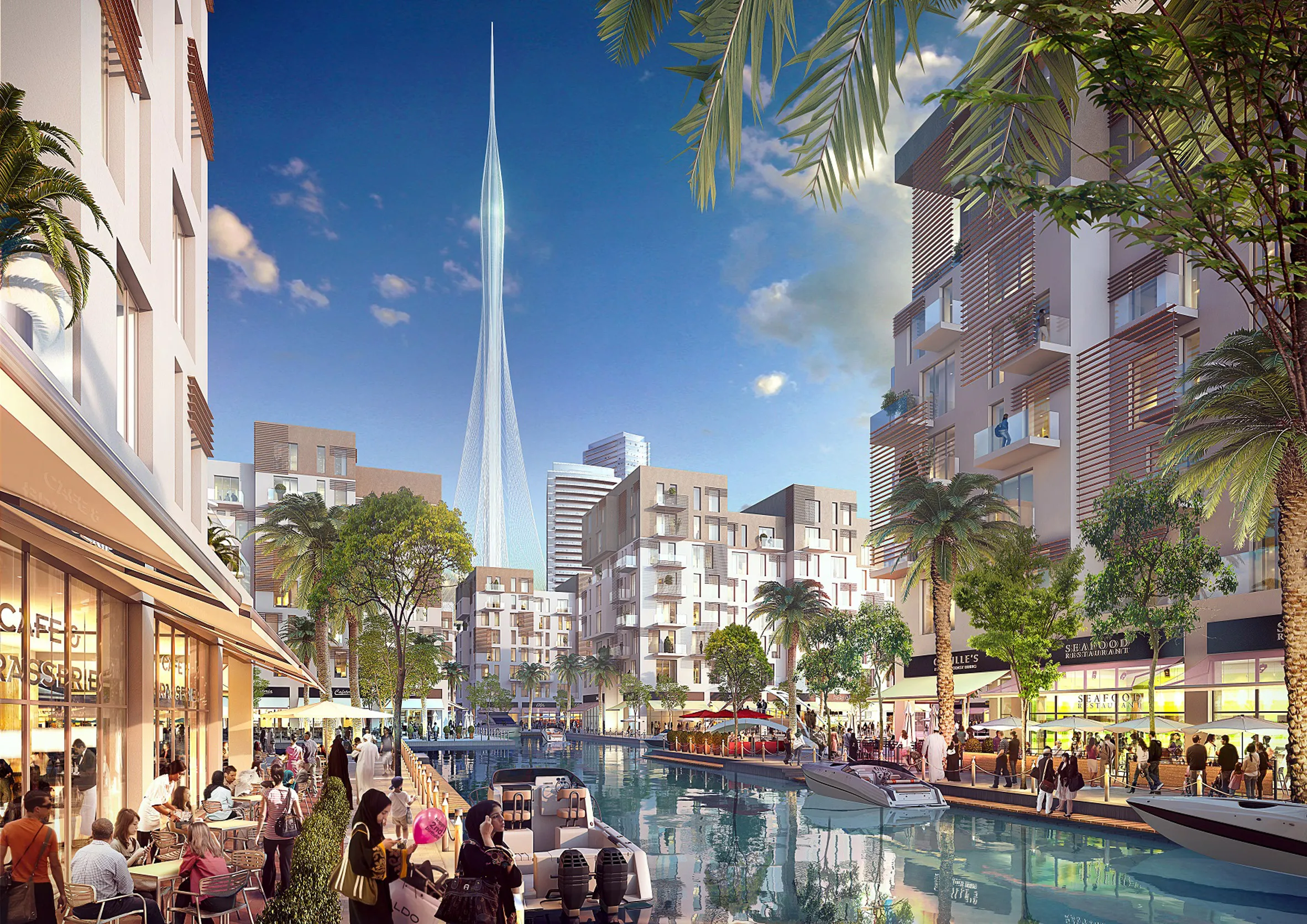
With its revolutionary design and record-breaking features, the Creek Tower will also include elevated gardens inspired by the Hanging Gardens of Babylon and enchanting observation decks offering 360-degree views of the metropolis. The Central Plaza at the tower’s base will serve as a vibrant neighborhood hub with world-class retail stores, a museum, educational facilities, and an indoor auditorium.
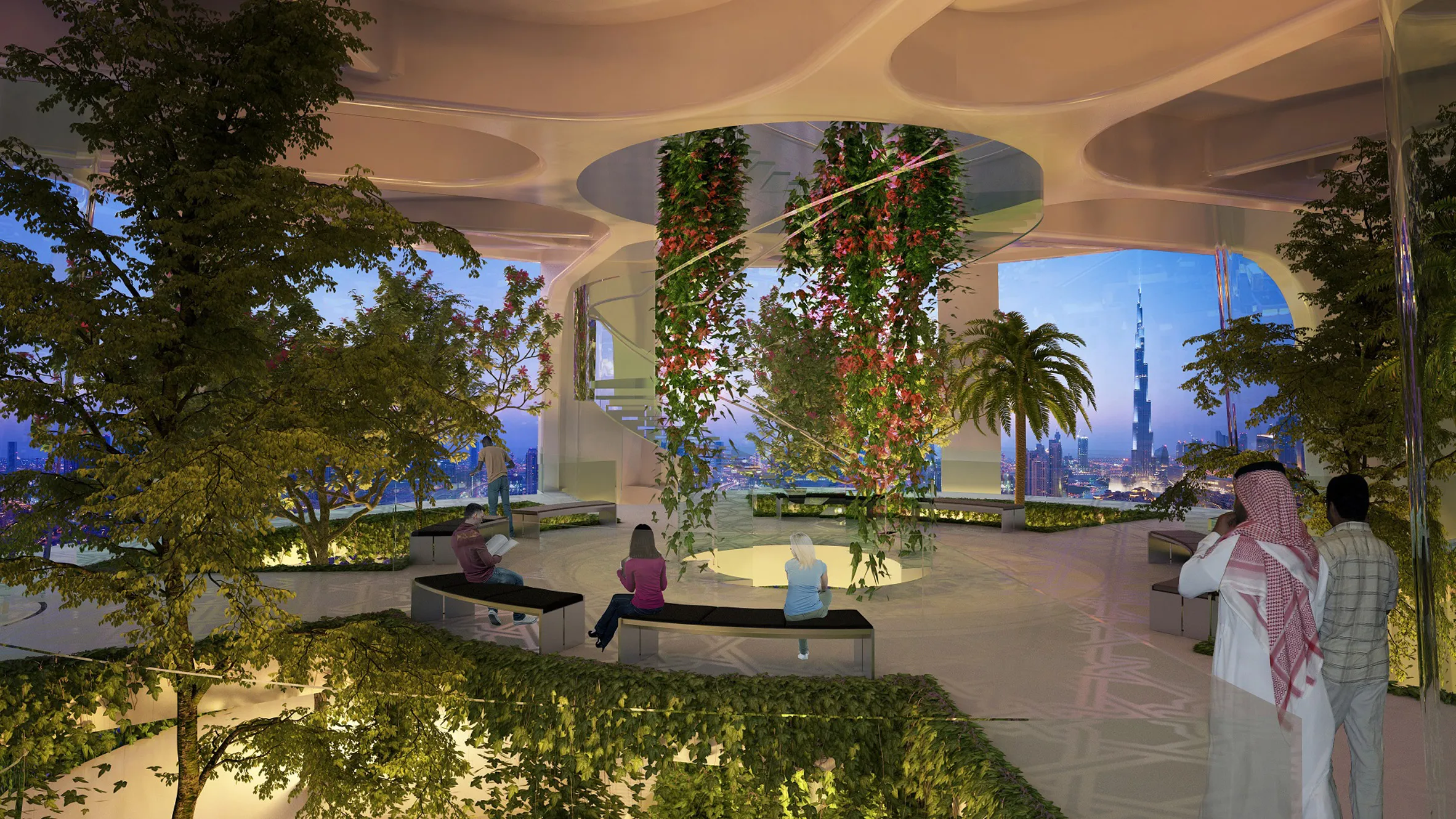
Designed with emphasis on energy efficiency and sustainability, the tower’s highly efficient cooling system collects water to clean the building’s façade. Elegant landscaping and vegetation protect from the Dubai sun, while an integrated shading system and winged doors also contribute to energy efficiency.
2. Burj Binghatti
Location: Dubai, UAE
Architect: Binghatti / Jacob & Co.
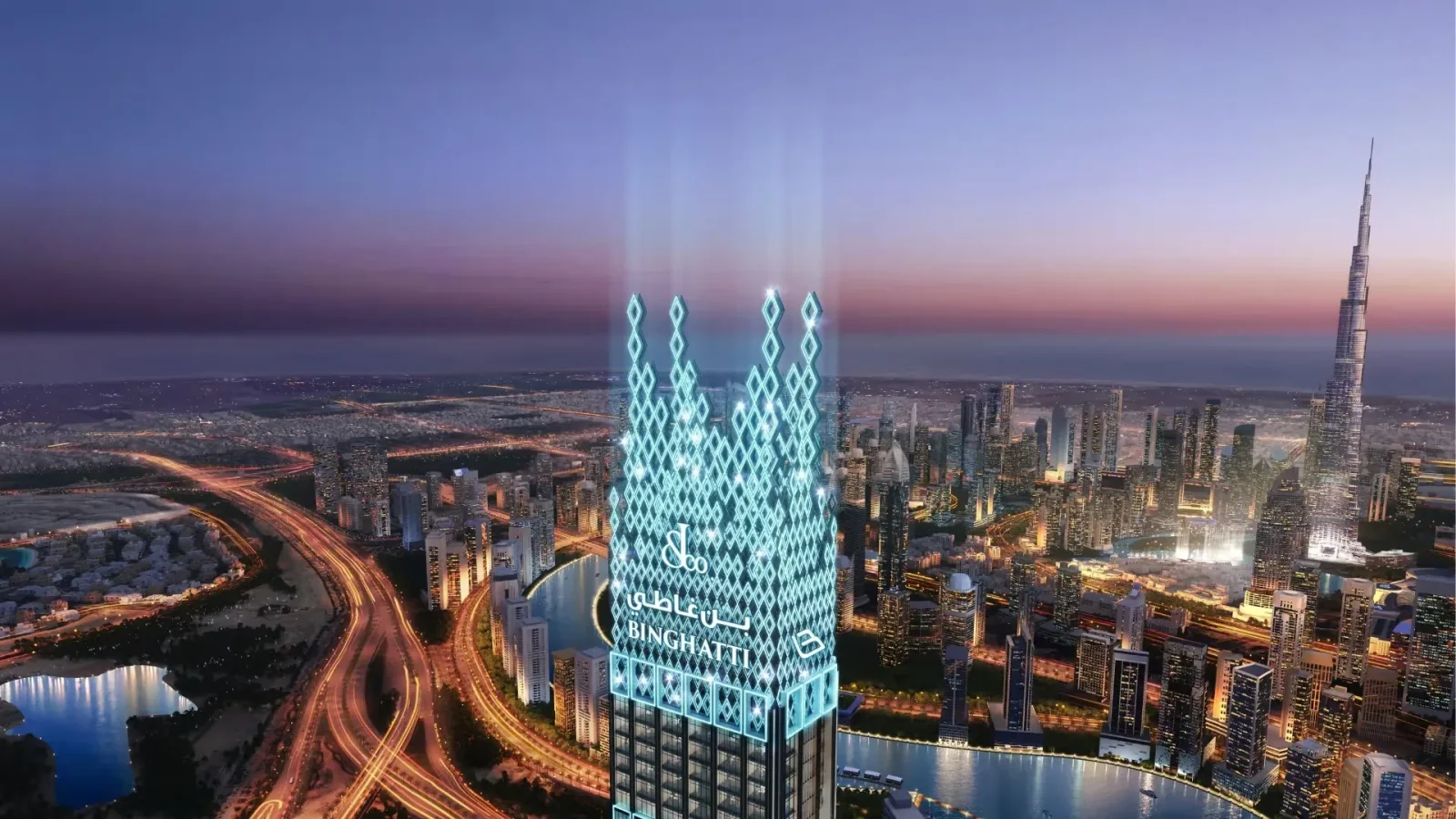
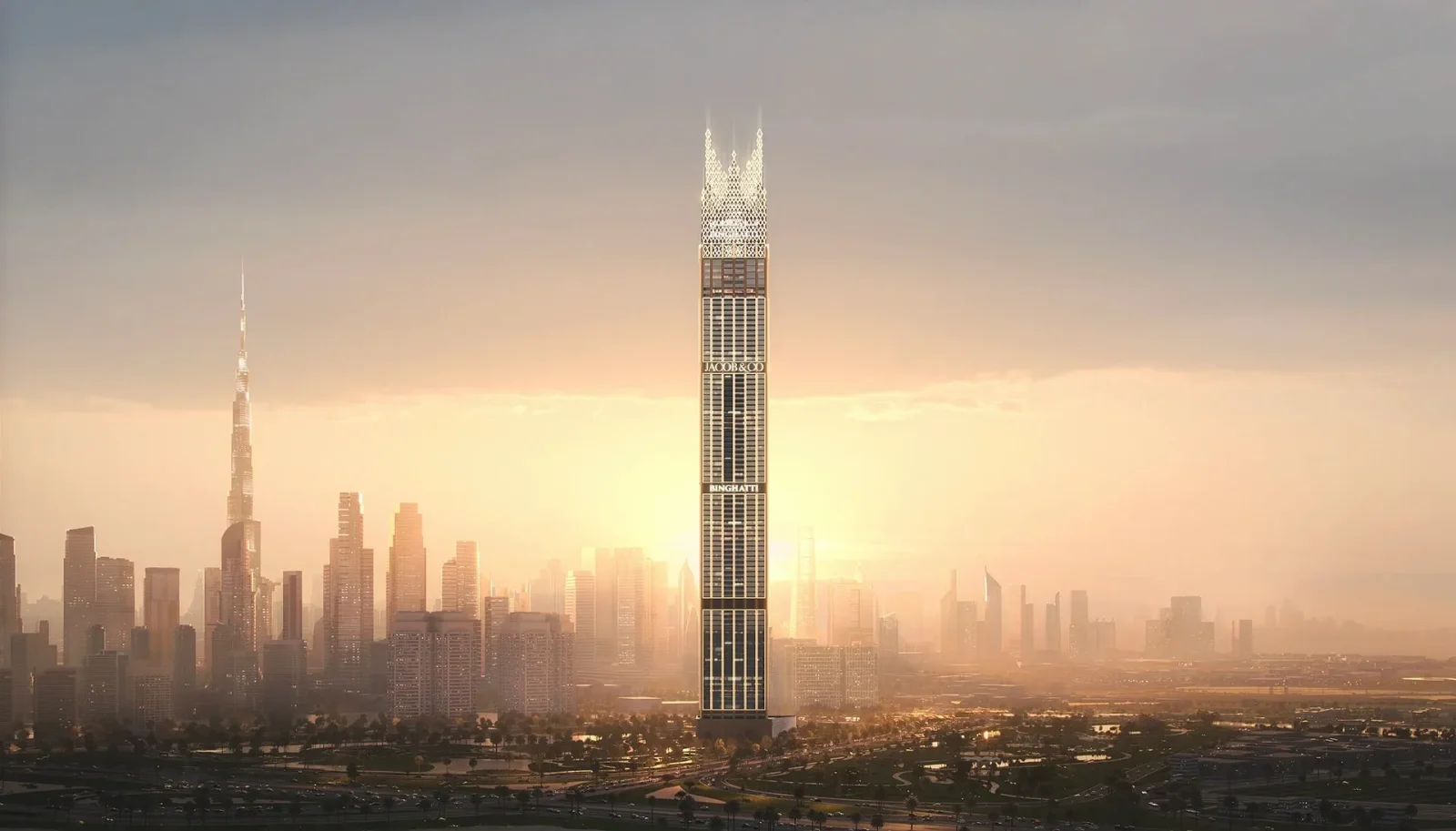
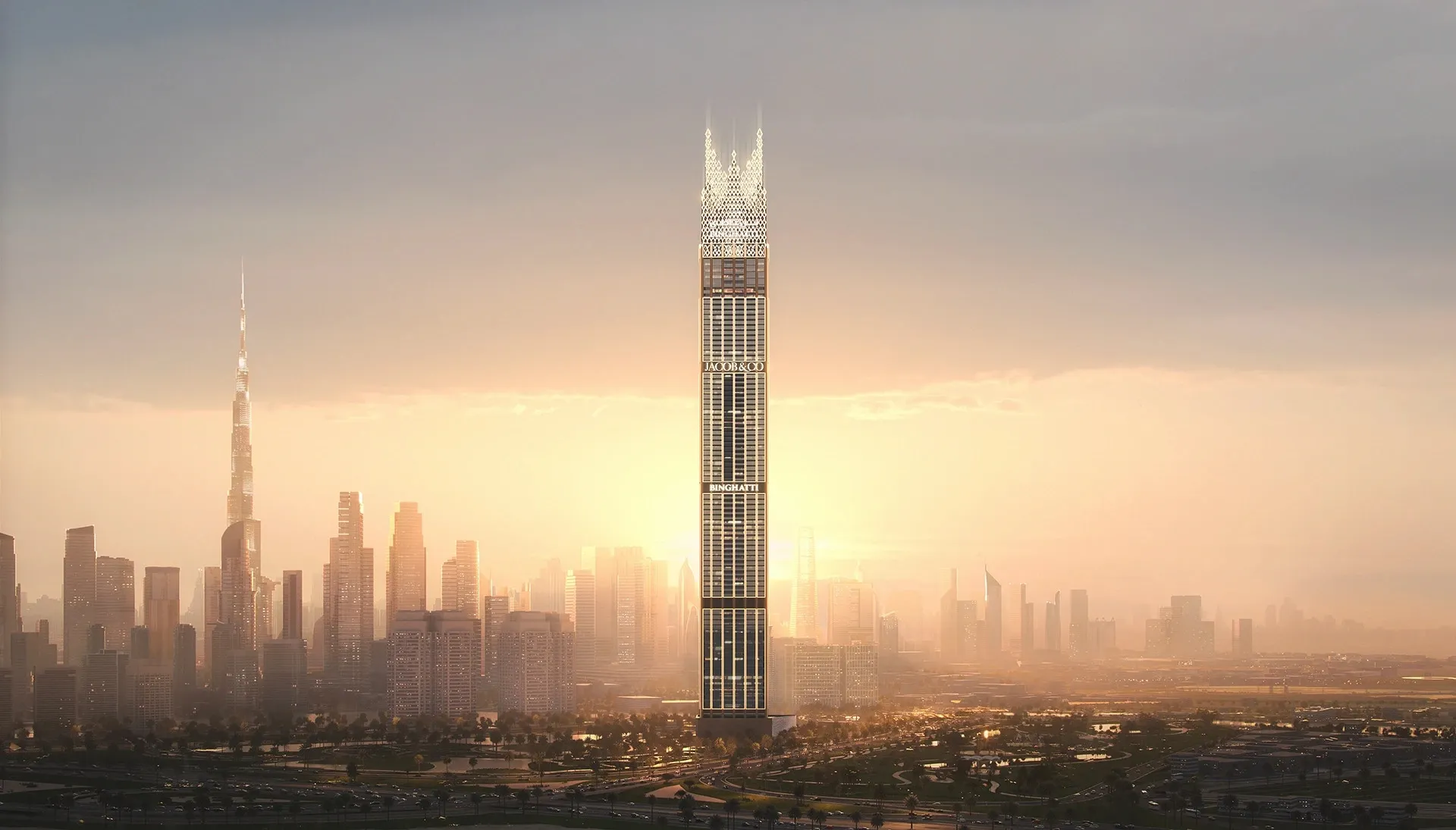
Burj Binghatti, scheduled for completion in 2027 and poised to become the world’s tallest residential skyscraper upon completion, is a collaboration between Dubai-based real estate developer Binghatti and renowned jewelry brand Jacob & Co. Expected to reach approximately 557 meters, the tower will feature 104 floors and seven basement levels, offering a blend of advanced engineering, contemporary design, and unparalleled luxury. More than just a residential building, each property in Burj Binghatti is a masterpiece that seamlessly combines the spirit of luxury with practicality.
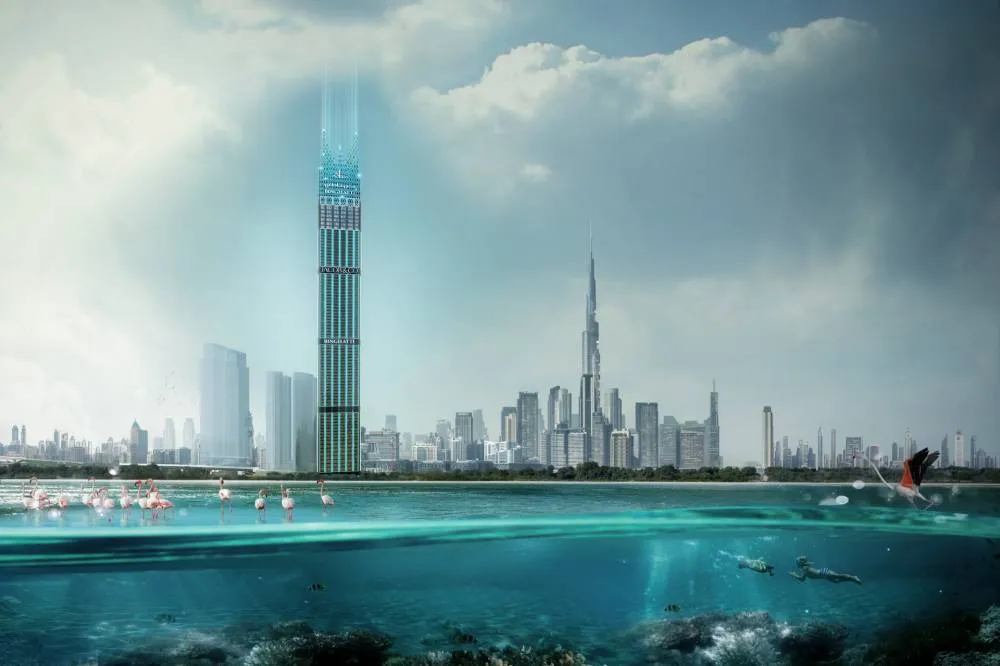
With its intricate details and minimalist elegance, Burj Binghatti stands out from traditional high-rise designs and is poised to leave an unforgettable mark on the Dubai skyline. Reflecting the fusion of architecture and luxury, the tower’s crown-like spires reflect the precision and brilliance of delicately cut diamonds. These diamond-like spires capture and reflect sunlight throughout the day, creating a captivating dance of light and shadow on the tower’s façade. This interplay is not only visually compelling but also contributes to energy efficiency by optimizing natural light and shading.
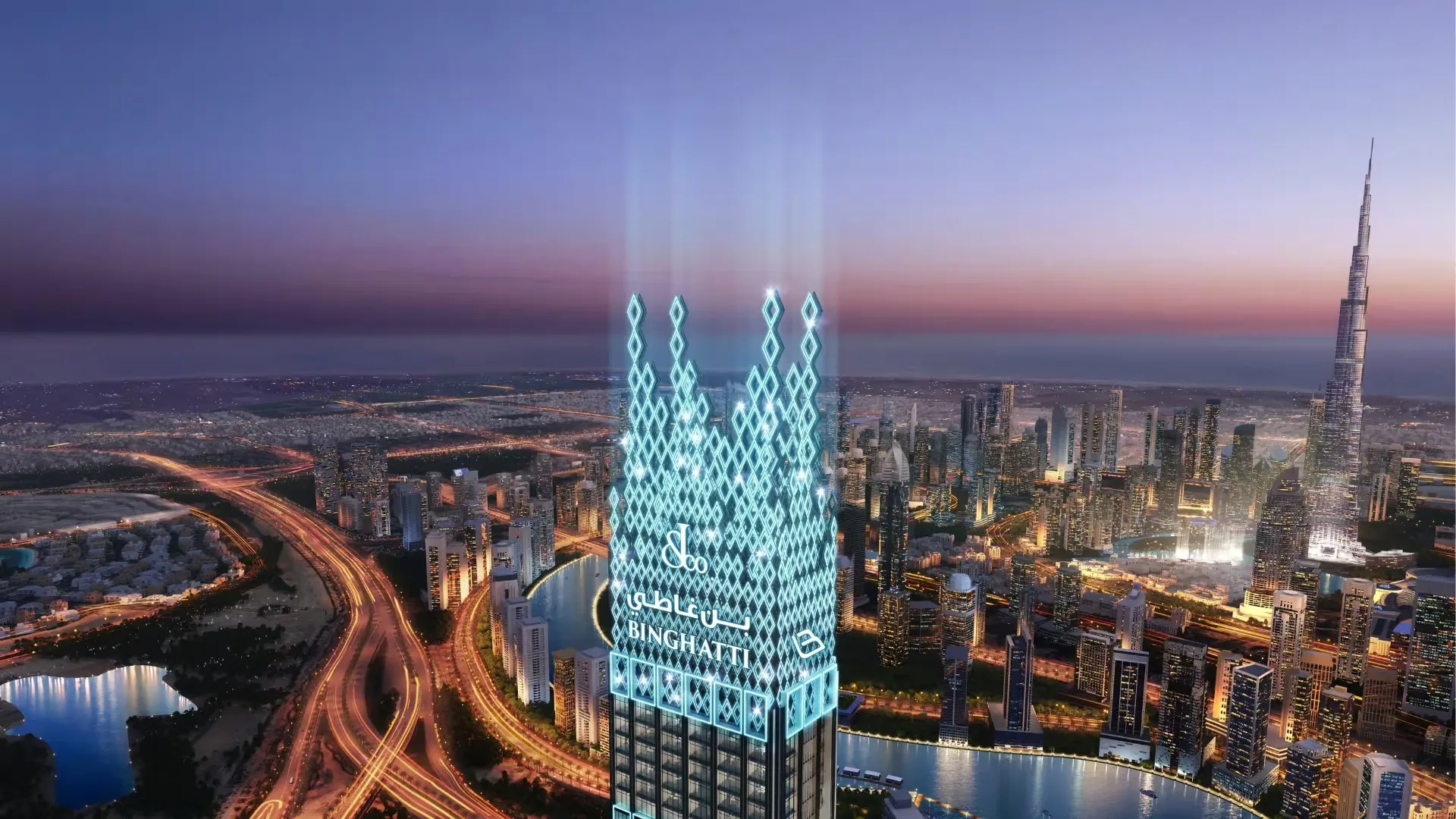
Burj Binghatti houses a parking garage, swimming pool, gyms, and various other building amenities on its first 20 floors, while a variety of exclusive apartments are located between these floors and the penthouses on the upper floors. Each residence’s interior design maximizes space, maximizes natural light, and cleverly redefines modern residential living.
3. Meydan One Mall
Location: Dubai, UAE
Architect: AE7
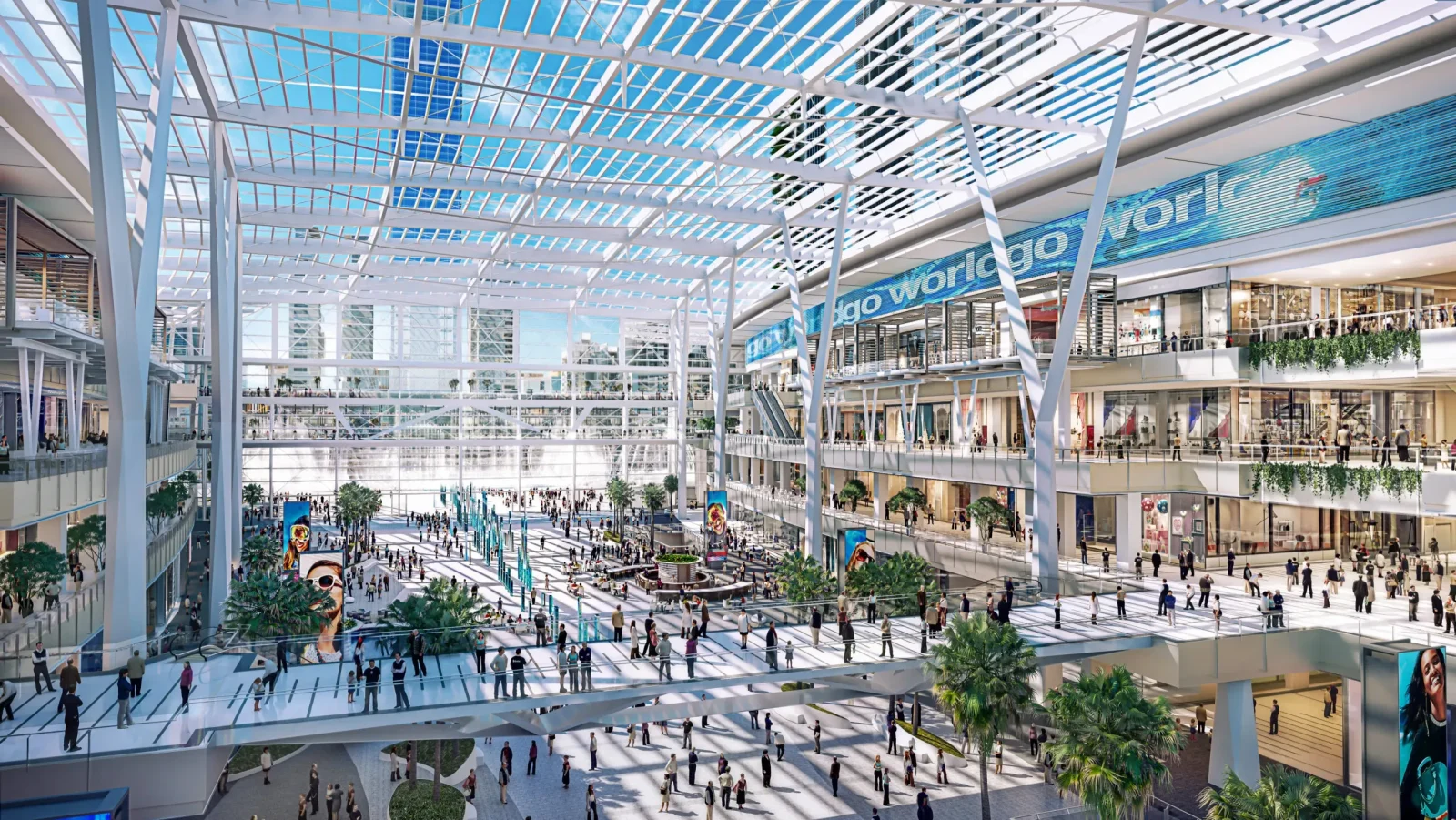
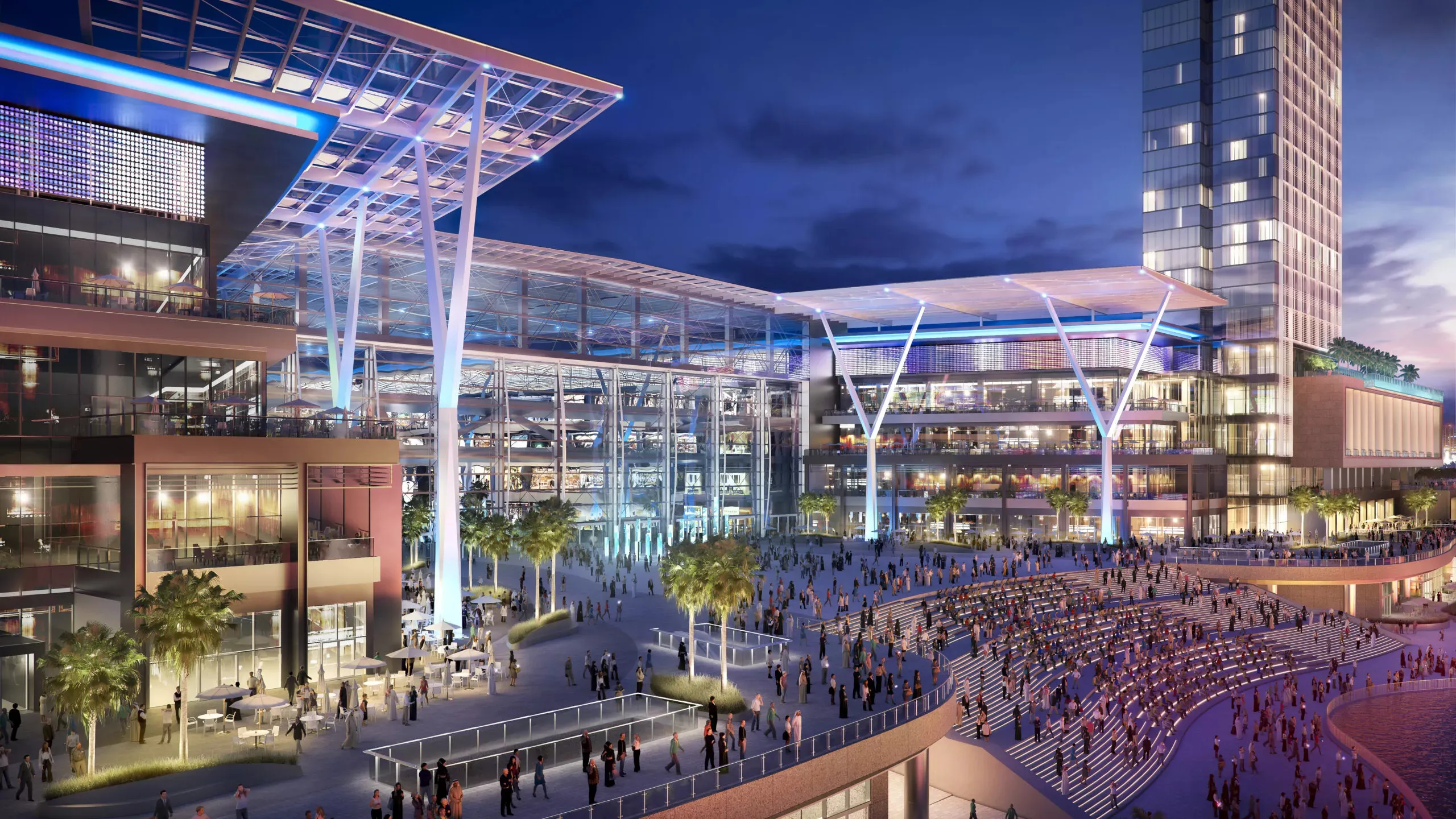
Combining adventure, natural wonders, and luxury with a unique and all-encompassing visitor experience, Meydan One Mall transcends retail destinations. Offering much more than a world-class shopping experience, the 15.6 million square meter megaproject seamlessly integrates 650 chain, boutique, and luxury stores, along with hundreds of dining options in carefully curated food courts and a host of attractions.
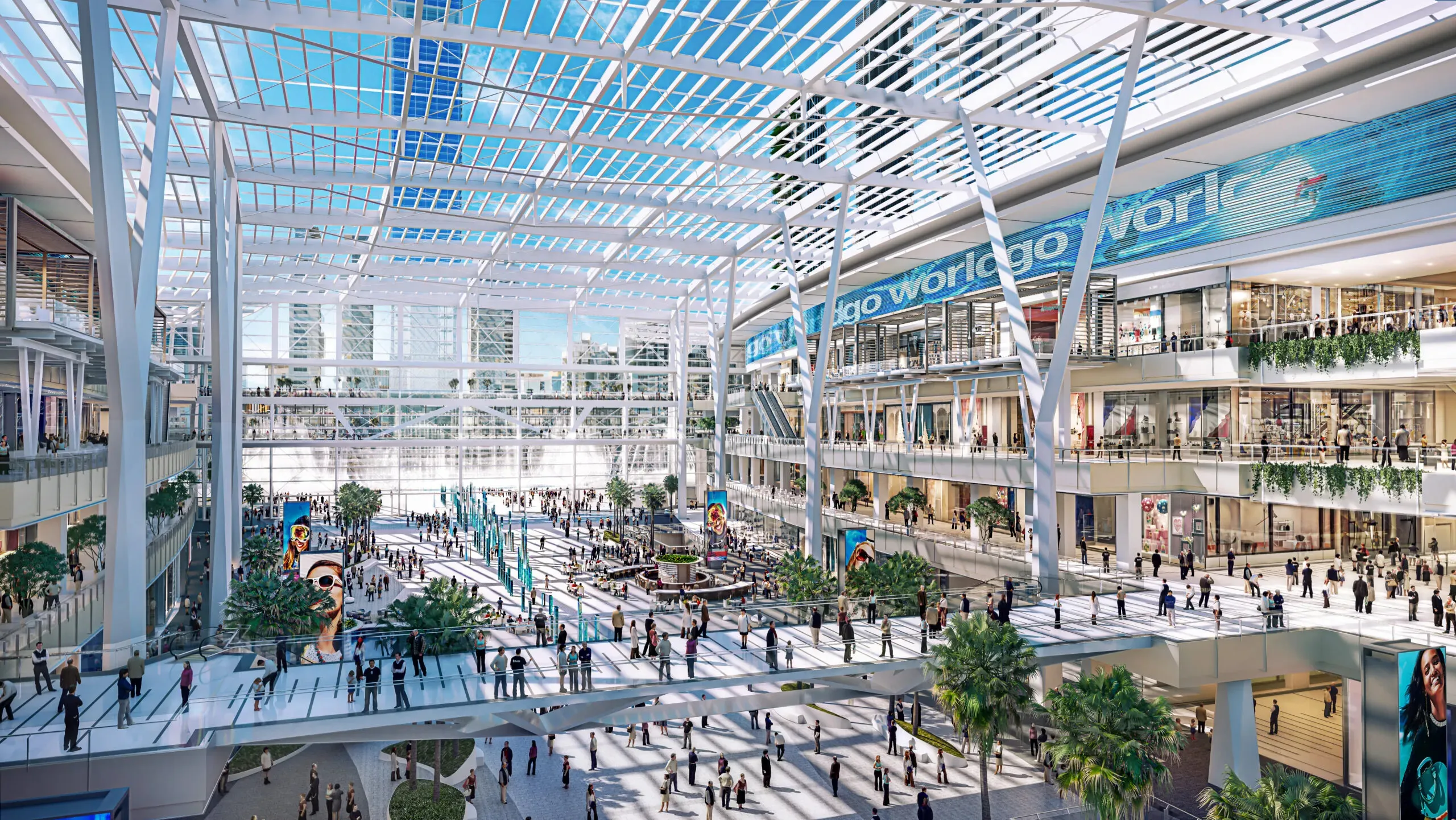
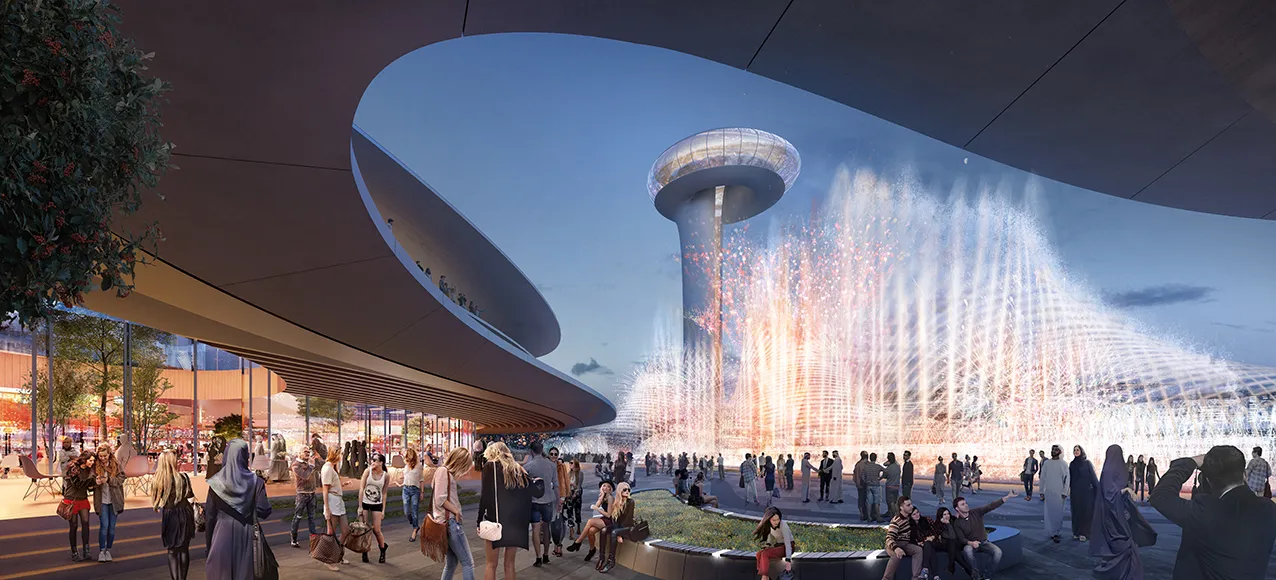
The central gallery, a canyon-like corridor beneath a retractable skylight, transports visitors from the canal at one end to the central plaza at the other. Designed as an attraction in its own right, the plaza features a large gathering space and a monumental water structure overlooking the nearby water canal. Transforming into an adventure hub with numerous recreational options, Meydan One Mall includes indoor facilities for football, table tennis, mixed martial arts, a BMX track, a skate park, and a climbing wall. The mall’s half-mile ski slope, which contrasts with Dubai’s climate, holds the title of the world’s longest indoor ski slope.
4. Therme Dubai
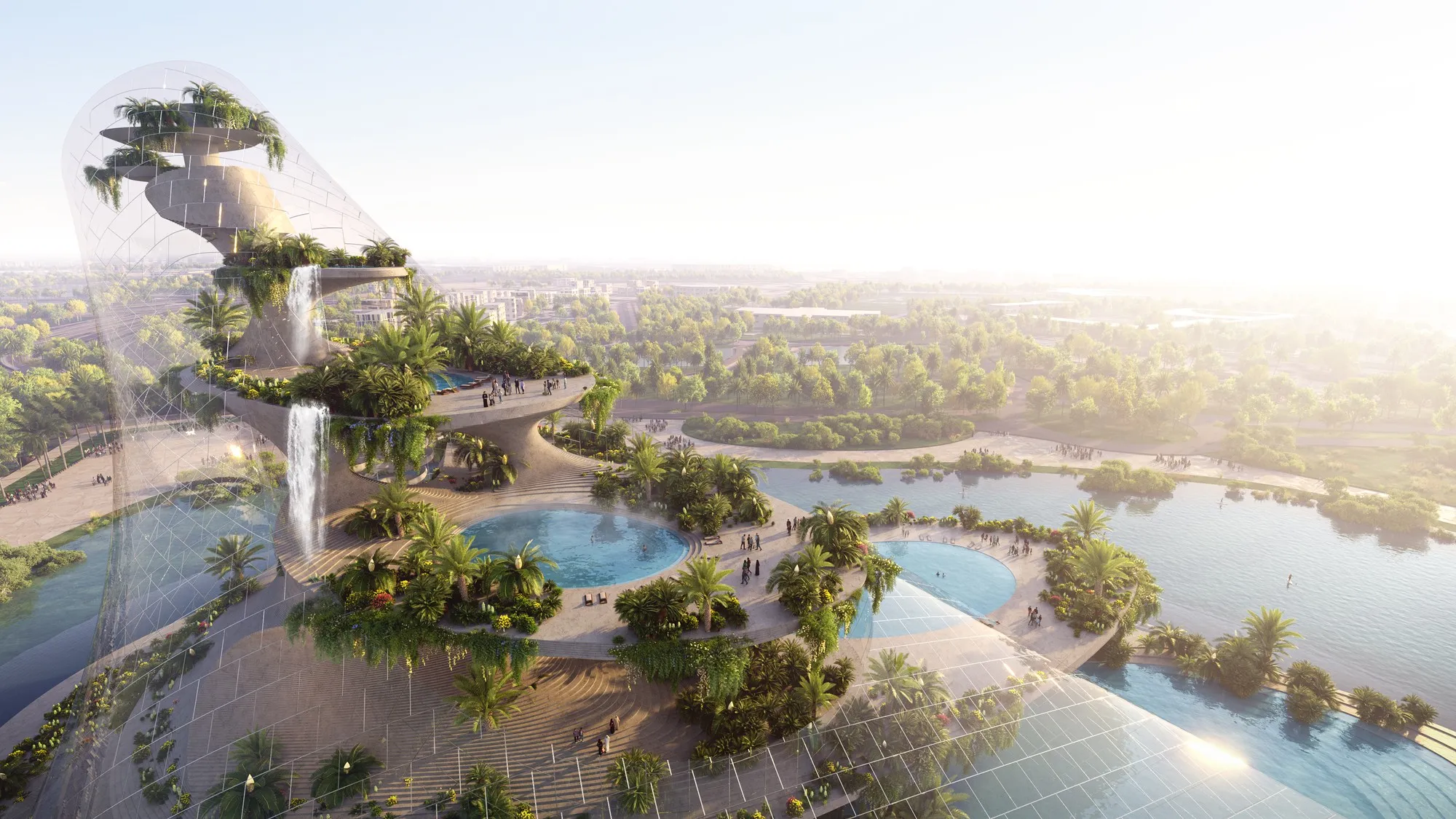
Location: Dubai, UAE
Architect: Diller Scofidio + Renfro
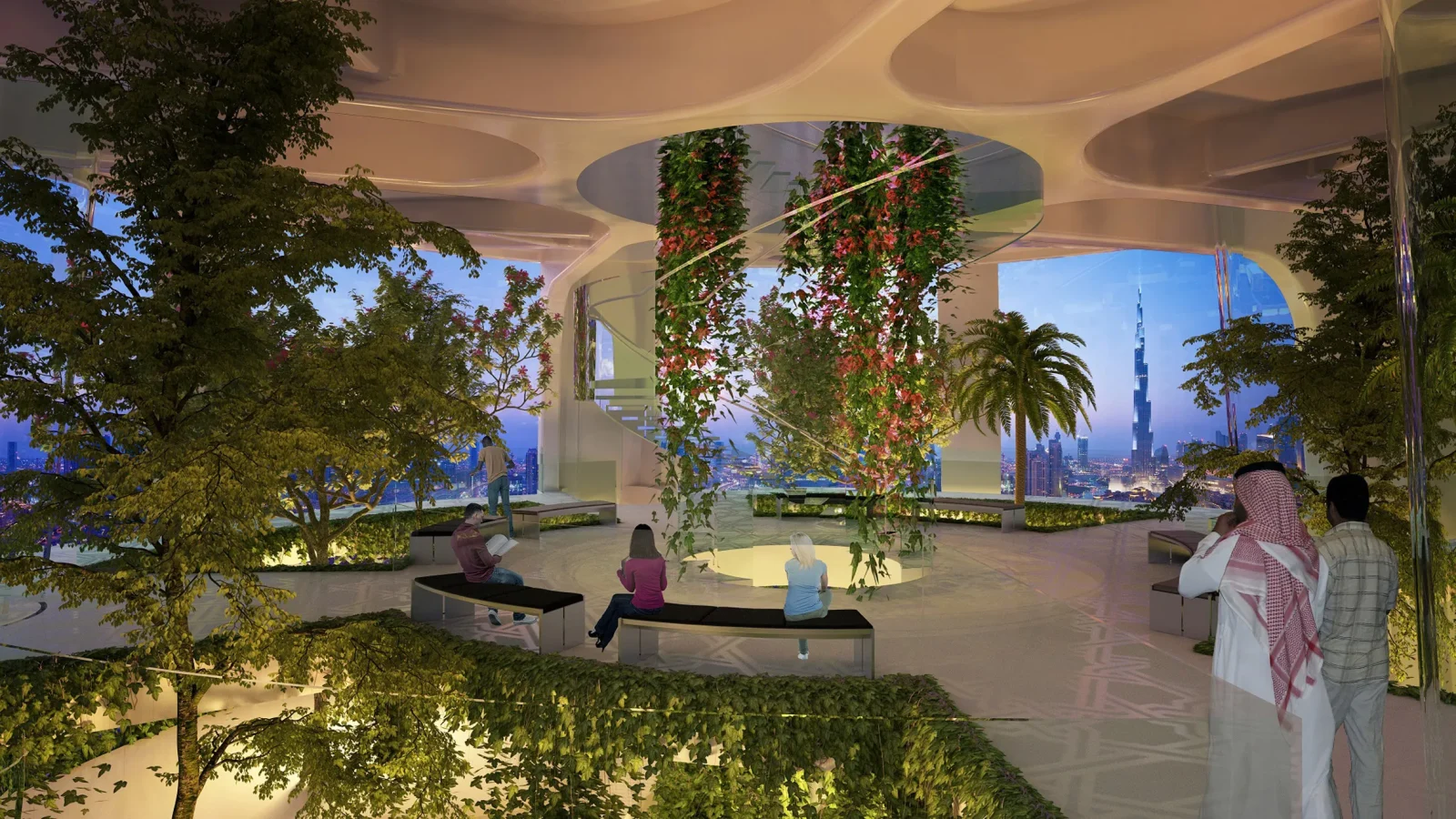
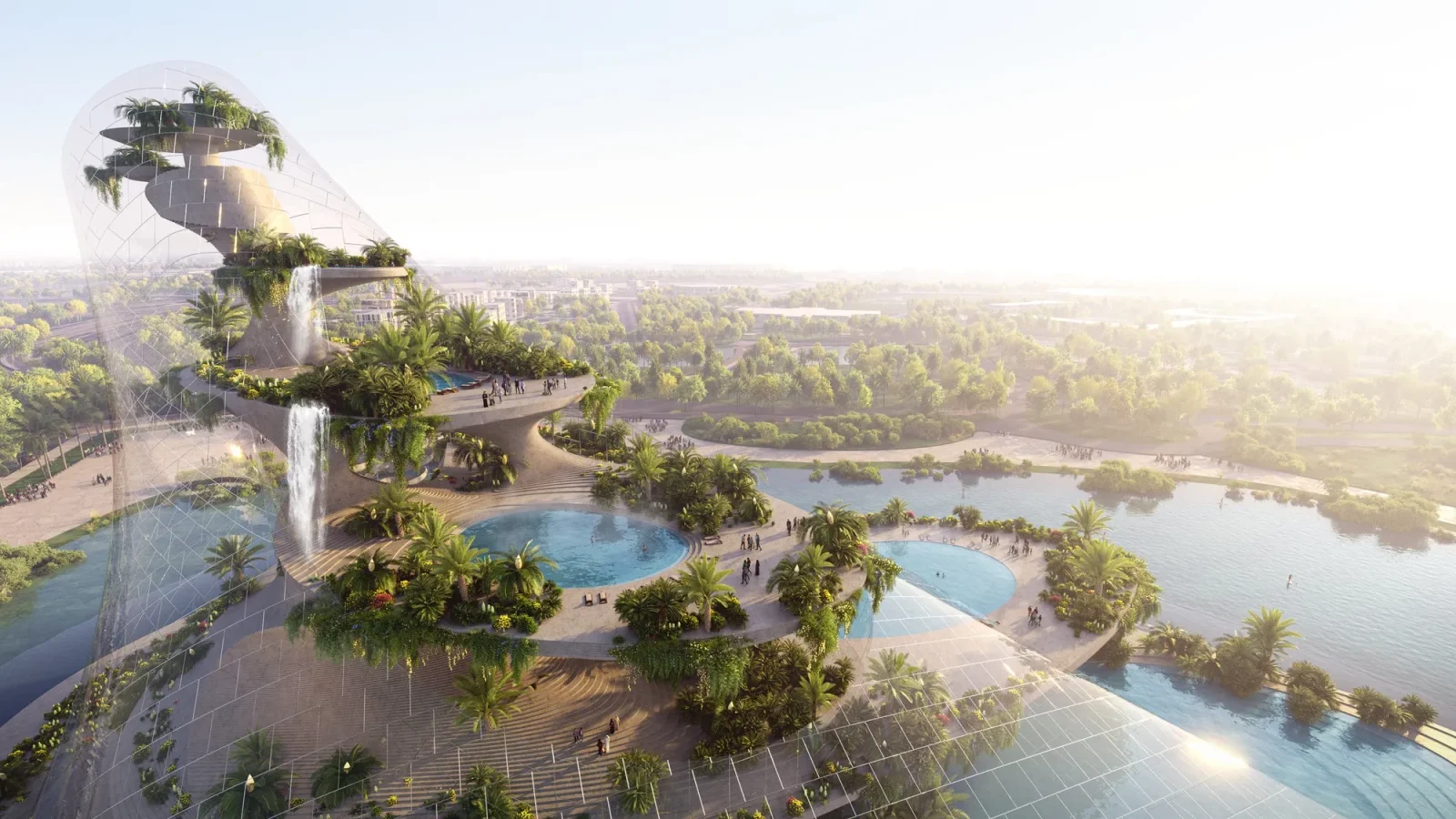
Therme Dubai, one of the United Arab Emirates’ most eagerly anticipated upcoming projects, rises from the lake of the revitalized Zabeel Park as a tower composed of stacked botanical islands. Each island serves as a platform for thermal pools, terraces, and lush indoor and outdoor greenery, offering striking views of the Dubai skyline. Designed by Diller Scofidio + Renfro, this mega project will consist of a series of tiered, circular platforms filled with vibrant plants and cascading waterfalls. A massive interactive park will include the world’s largest indoor botanical garden and three 18-meter waterfalls.
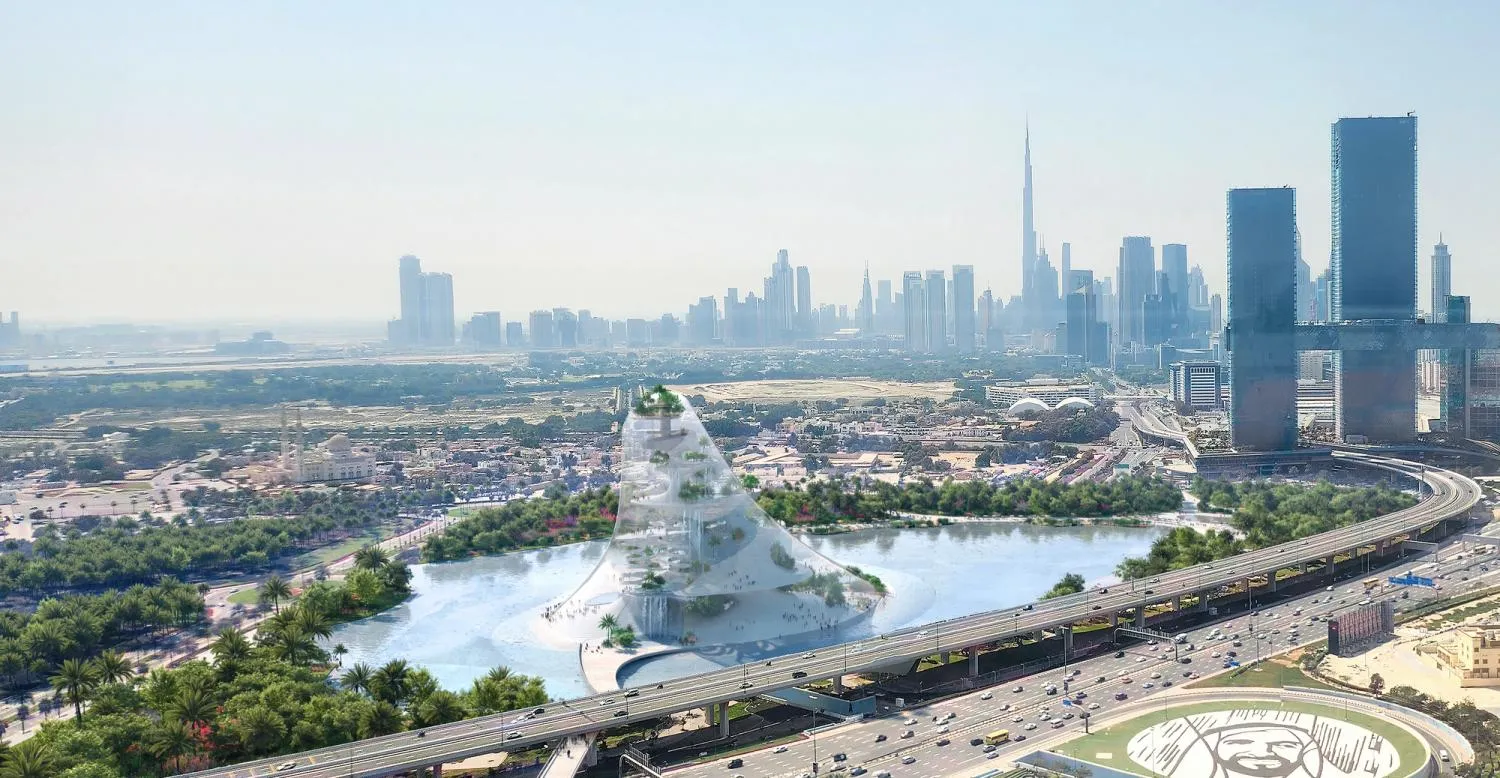
Created for what is envisioned to be the healthiest lifestyle destination in the world and referred to as “islands in the sky,” Therme Dubai will be divided into three zones: Play, Rest, and Rejuvenation. These sections will include thermal pools, saunas, steam rooms, mineral baths, waterslides, restaurants, a botanical garden, and an event space. Designed in accordance with the city’s 2033 Quality of Life Strategy, the mega-project will recycle 90% of the resort’s thermal pool water.
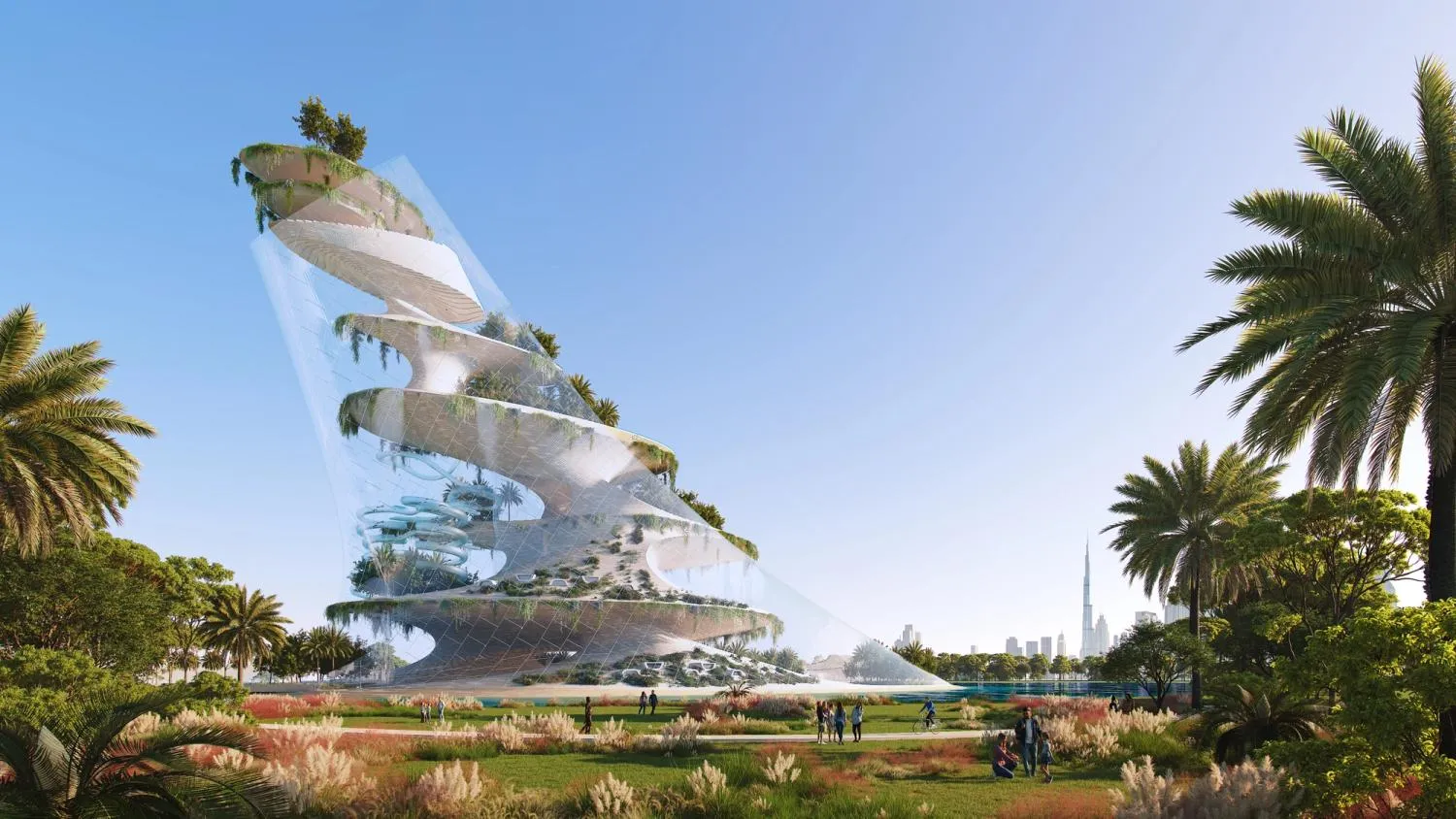
Rising 100 meters over an area of 500,000 square meters, Therme Dubai is designed to become a significant addition to the Dubai skyline. During the day, the structure will offer a contemplative and calming atmosphere, while at night the spaces will come alive with music, artistic performances, and events.
5. The Loop
Location: Dubai, UAE
Architect: URB
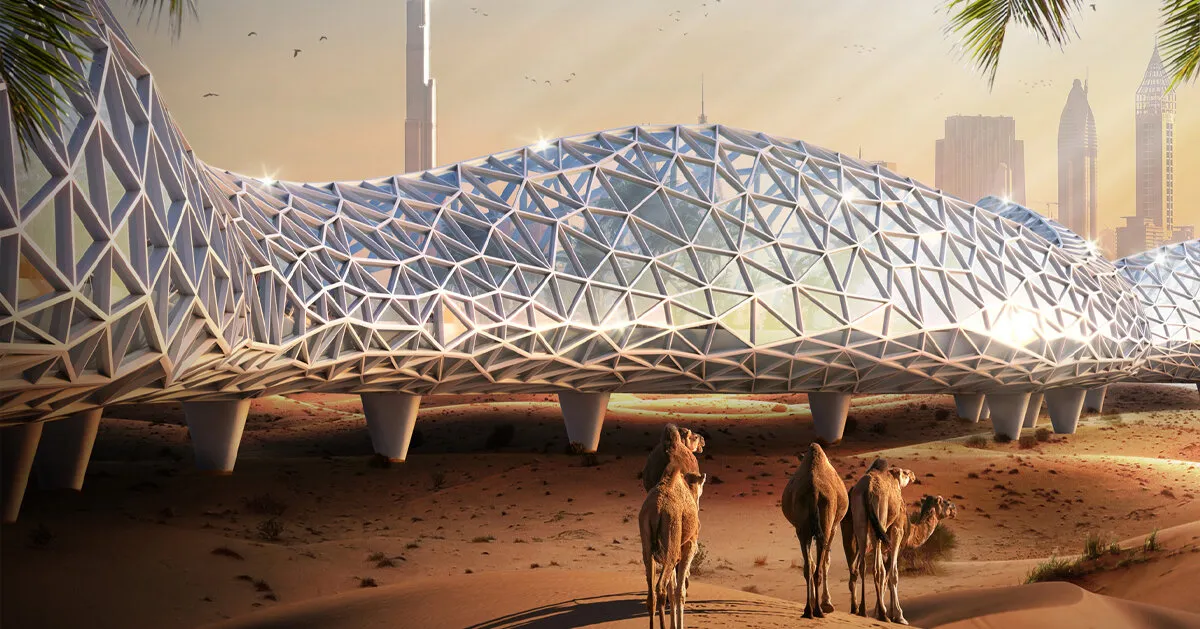
The Loop, which aims to transform Dubai into a 20-minute city by 2040, is one of the most exciting upcoming megaprojects in the United Arab Emirates. Designed as the world’s smartest cycling and running infrastructure, the 93-kilometer urban highway will connect more than 3 million residents to essential services and locations in minutes using a convenient transportation system.
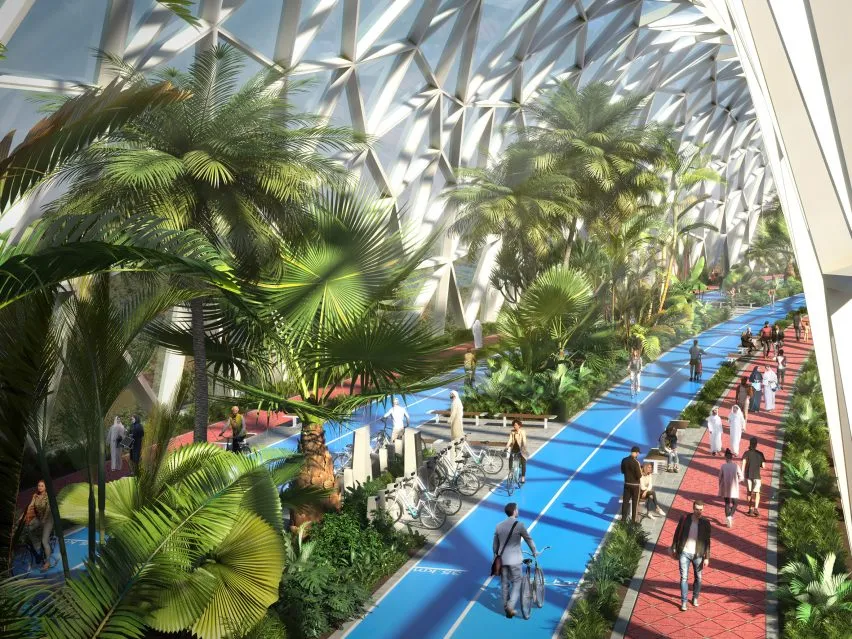
This mega-project, which will transform Dubai, currently predominantly built for car travel, into the world’s most pedestrian- and bicycle-connected city, aims to have more than 80% of its residents cycle daily. The Loop will feature climate-controlled conditions and host a wide range of interconnected functions such as vertical farms for food security, parks and recreational spaces, various amenities, and entrepreneurship opportunities. Harnessing kinetic energy to provide a renewable energy source, the mega-project also plans to utilize recycled water for irrigation systems to reduce resource consumption.
6. Dubai Reefs
Location: Dubai, UAE
Architect: URB
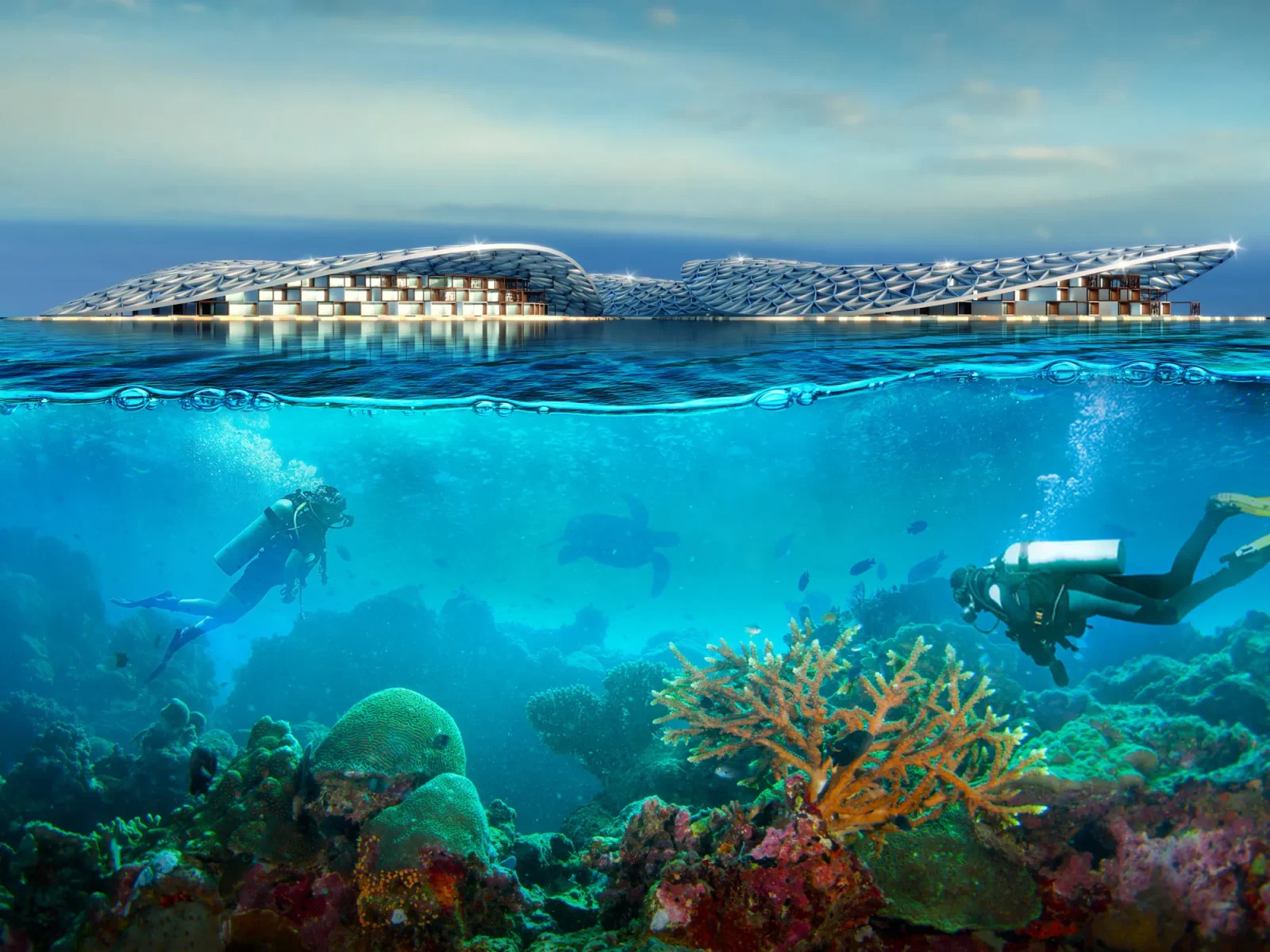
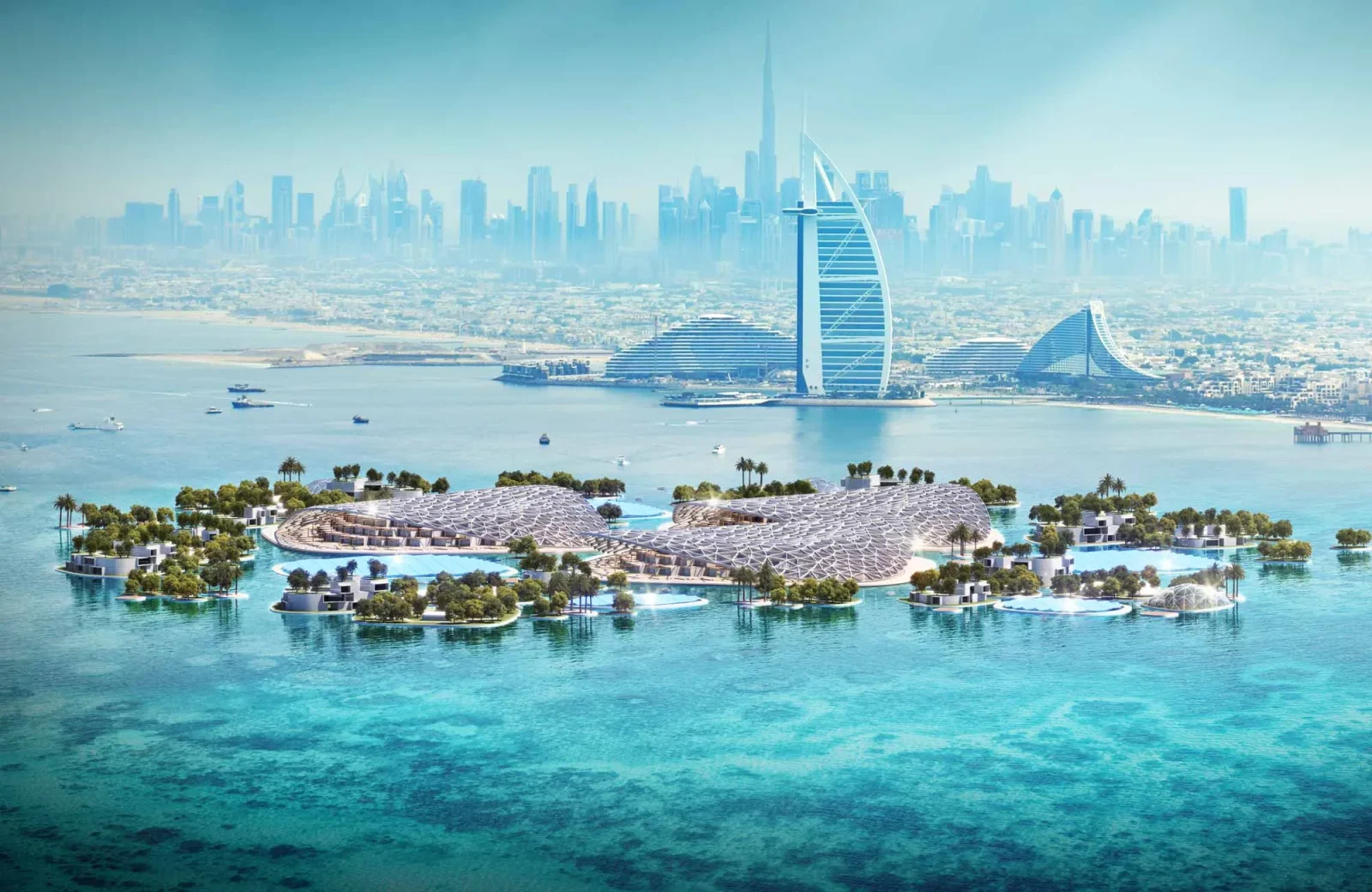
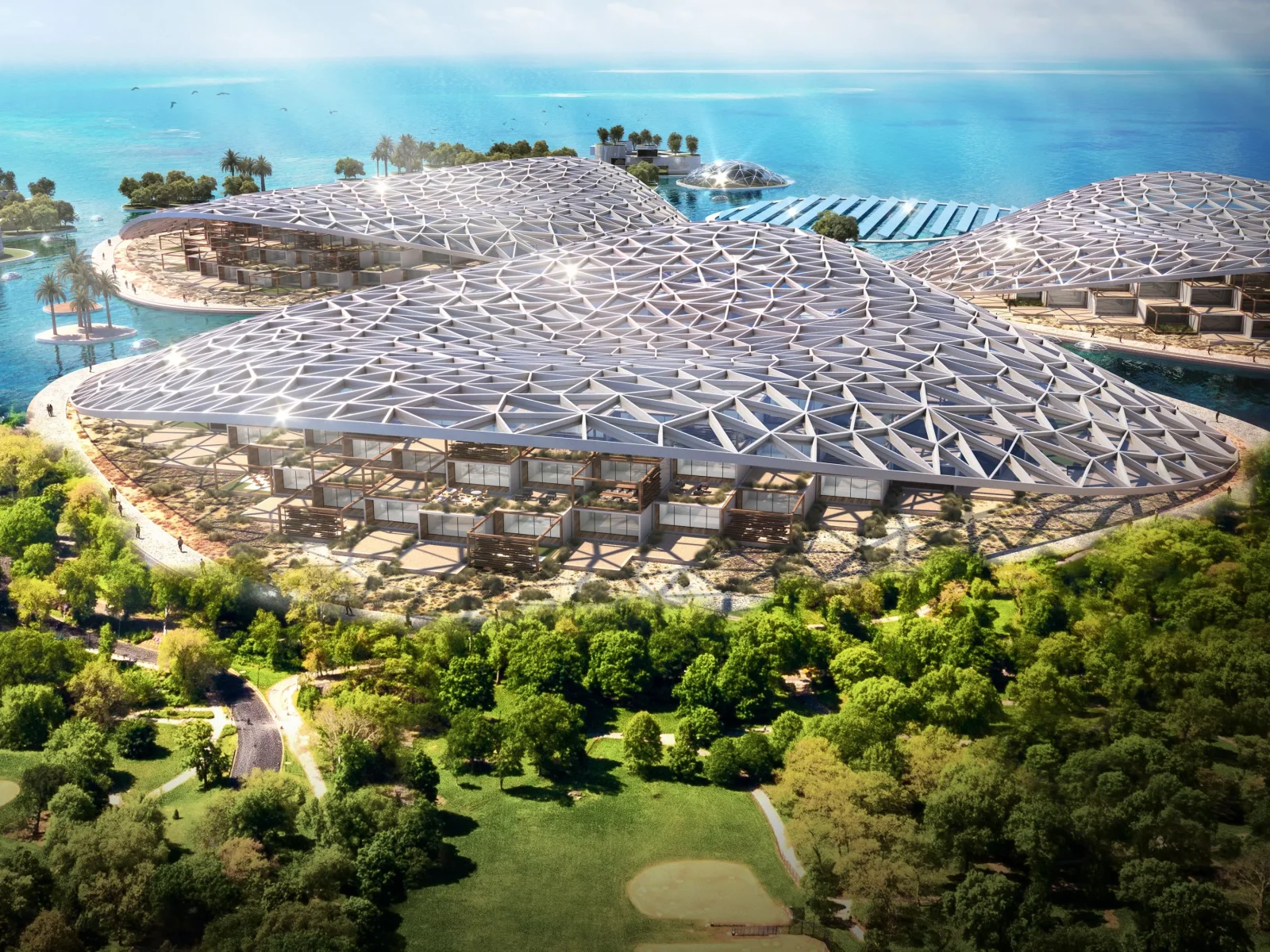
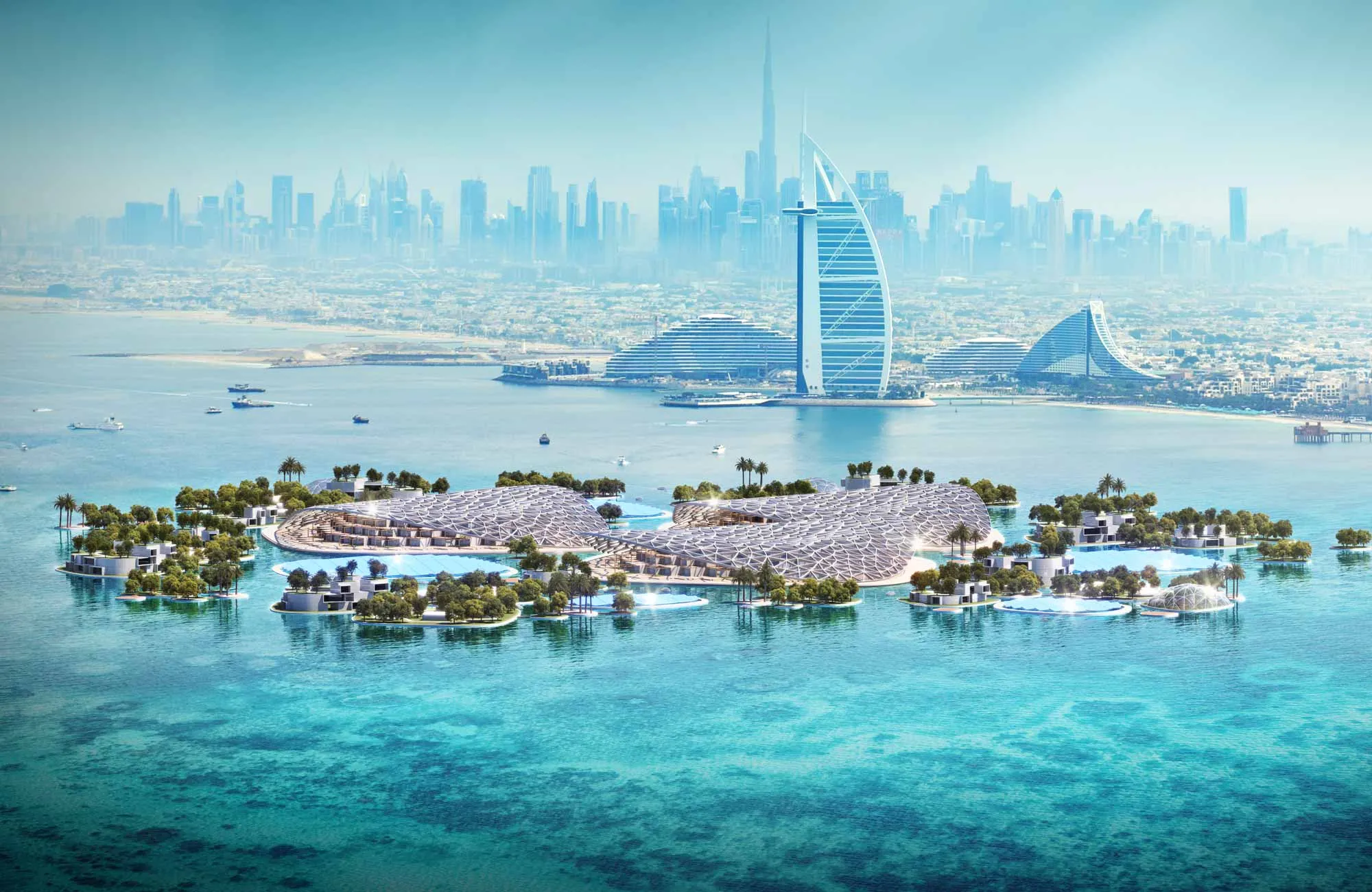
Dubai Reefs, one of the United Arab Emirates’ most eagerly anticipated megaprojects, is a living laboratory for marine restoration and ecotourism. Aiming to create jobs for over 30,000 people in a green economy, the project consists of a sustainable floating community for marine research, regeneration, and ecotourism. At the heart of Dubai Reefs, which includes housing, accommodation, education, and research facilities, is the Marine Institute, dedicated to better protecting Dubai’s marine and coastal environment.
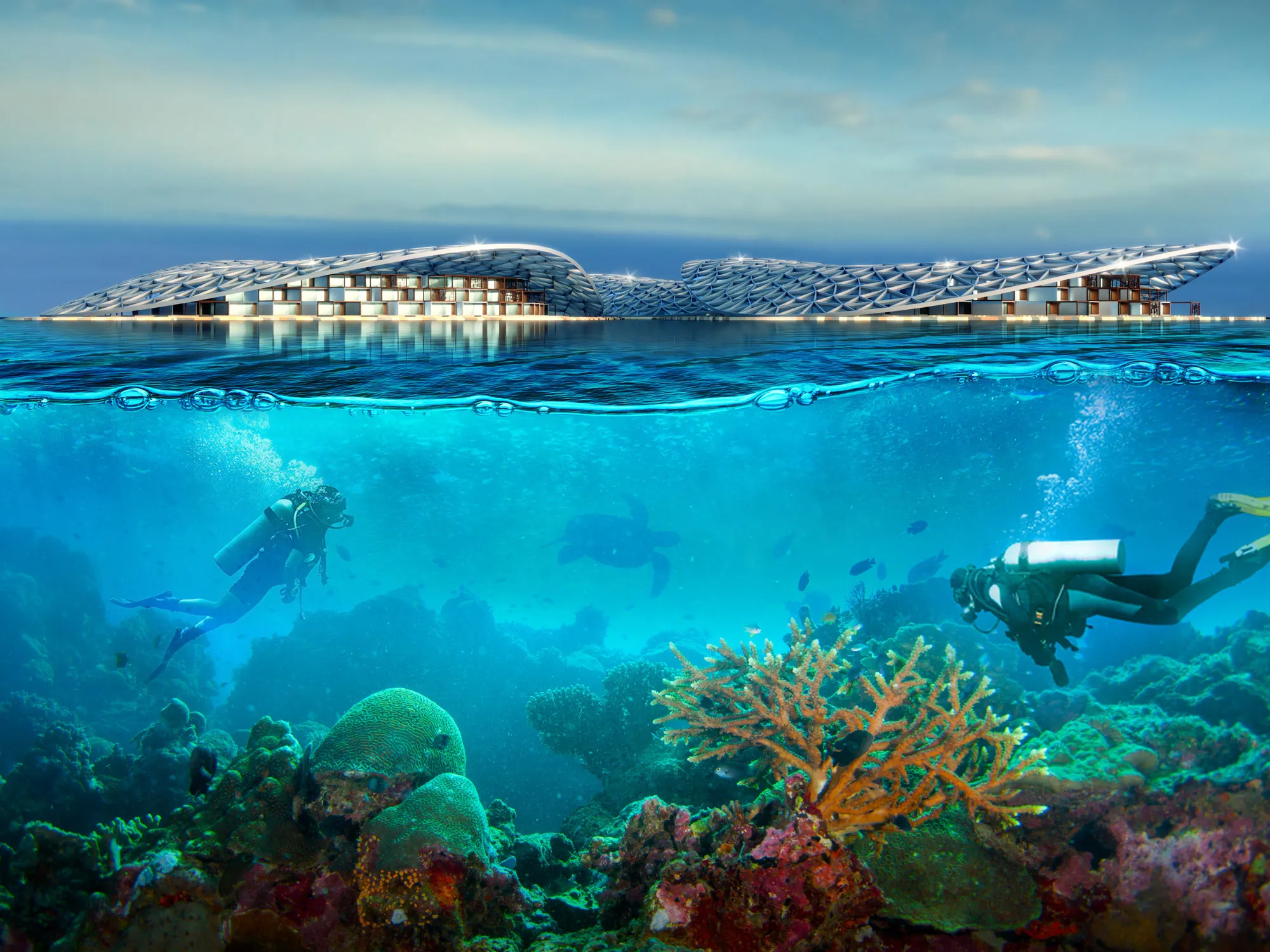
The Institute plans to lead a global ocean cleanup campaign to eliminate 5.25 trillion pieces of plastic litter in our ocean. This megaproject, which plans to build the most diverse artificial reefs covering an area of 200 kilometers, will also be home to over 1 billion corals and 100 million mangrove trees.
Dubai Reefs, the world’s largest ocean restoration project, features a variety of floating eco-lodges powered by renewable energy sources such as solar and hydroelectric power plants. The project will also include wave farms that generate additional clean energy for Dubai’s growing population, as well as regenerative ocean farming, a climate-friendly food production technique. Dubai Reefs will ultimately promote social, environmental, and economic benefits, aiming to transform Dubai into an eco-destination where ocean and city thrive in balance.
7. Al Maktoum International Airport
Location: Dubai, UAE
Architect: Lesli Jones Architecture / Coop Himmelb(l)au
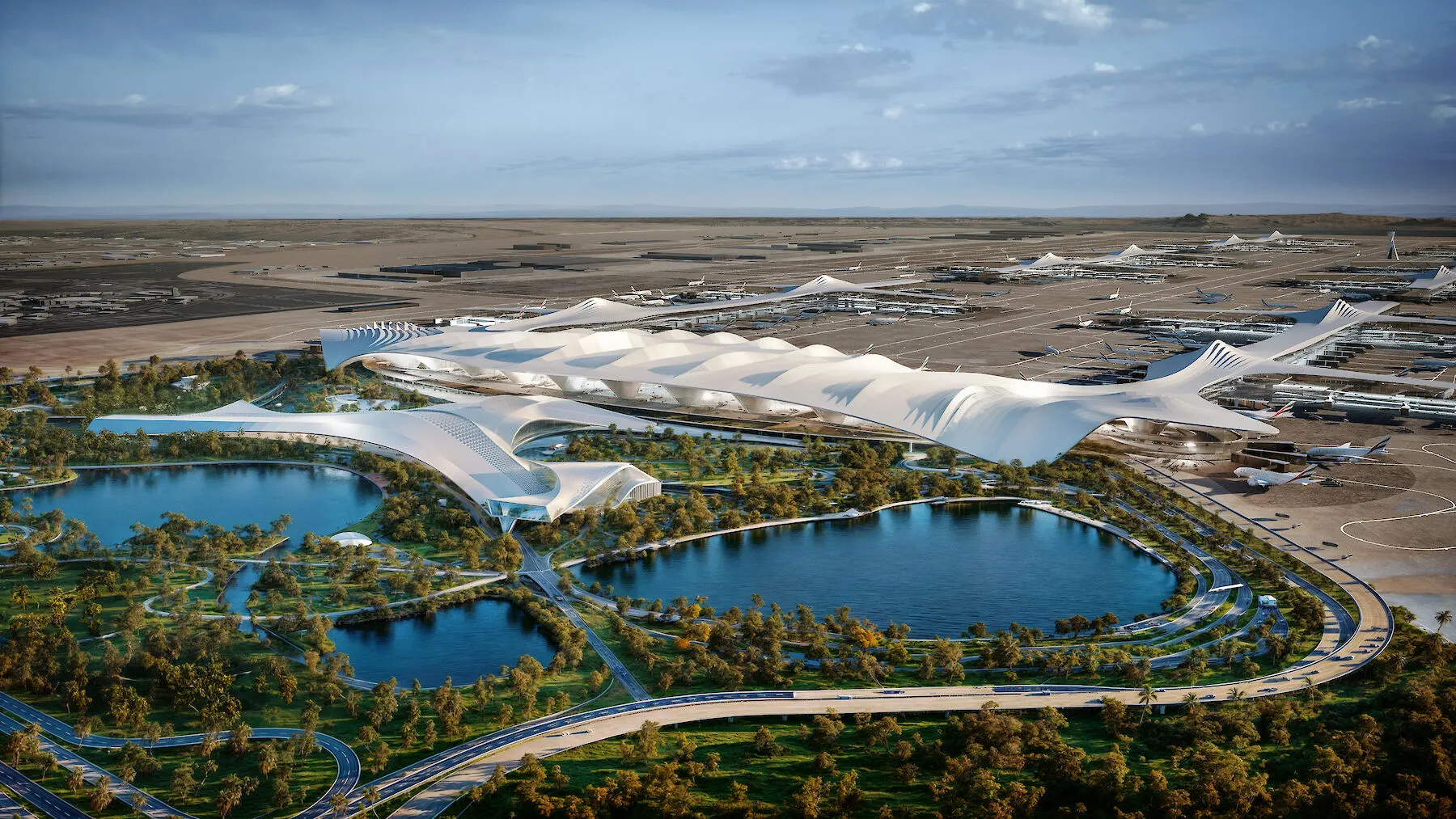
Opened in 2010 solely for cargo flights, Al Maktoum International Airport is poised to become one of the world’s biggest airports following an expansion targeting 220 million passengers and 12 million tons of cargo. This highly anticipated Dubai mega-project spans 14,000 hectares. The first phase of the three-phase expansion is scheduled to be completed within 10 years.
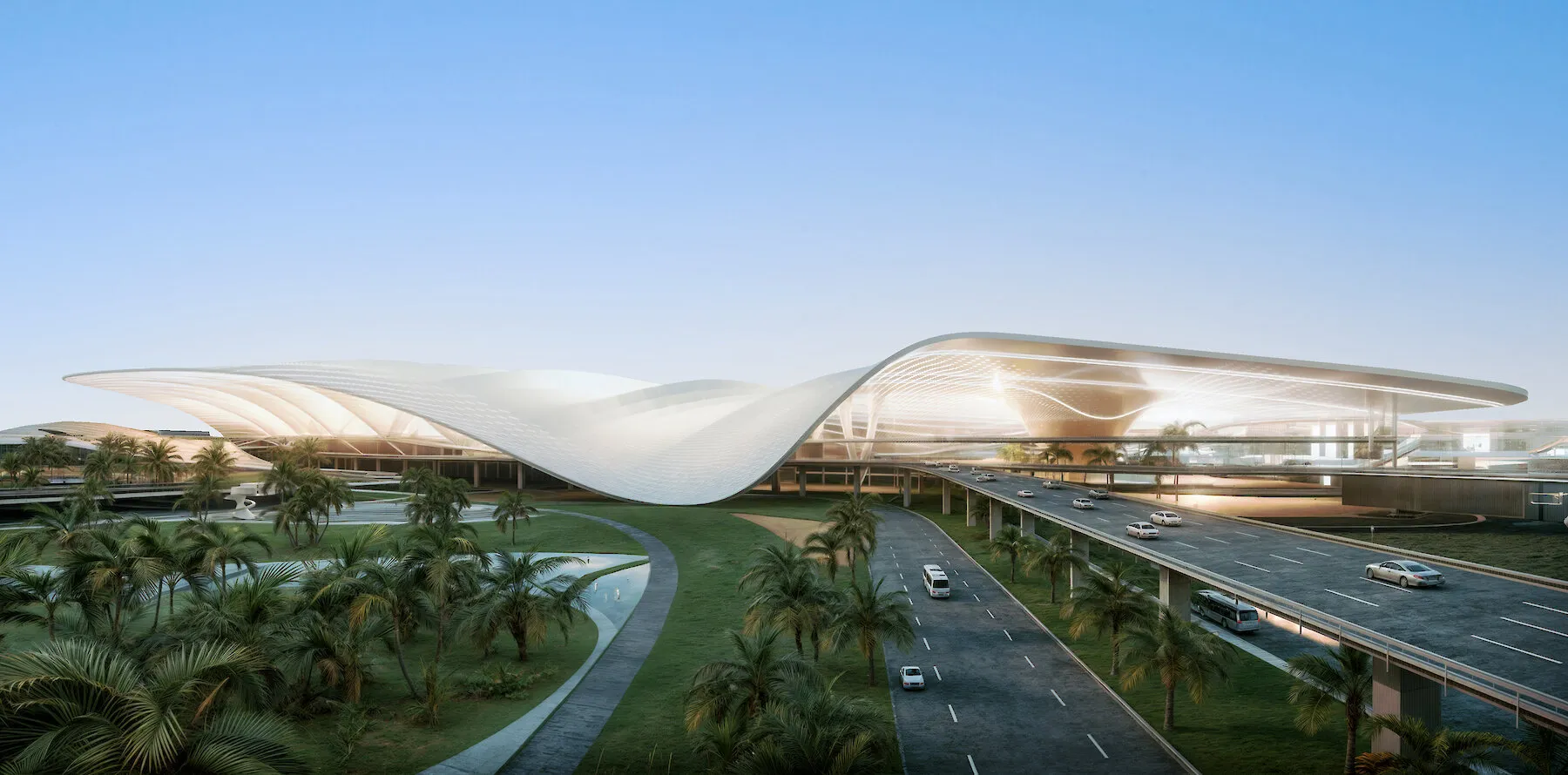
Featuring a futuristic, wave-like white canopy, the airport’s design aims to create a user-focused travel environment with spatial efficiency, while proactively supporting non-aviation commercial opportunities through strong partnerships and concepts suitable for the development of this scale. With a surface area of over 280 square kilometers, Al Maktoom International Airport aims to accommodate all types of aircraft. It has three large passenger terminals: two luxury facilities, one for Emirates and the second for other carriers, and the third for low-cost carriers. The airport also houses executive, private, and royal jet centers, hotels, and shopping malls, a support and maintenance center, and 100,000 parking spaces.
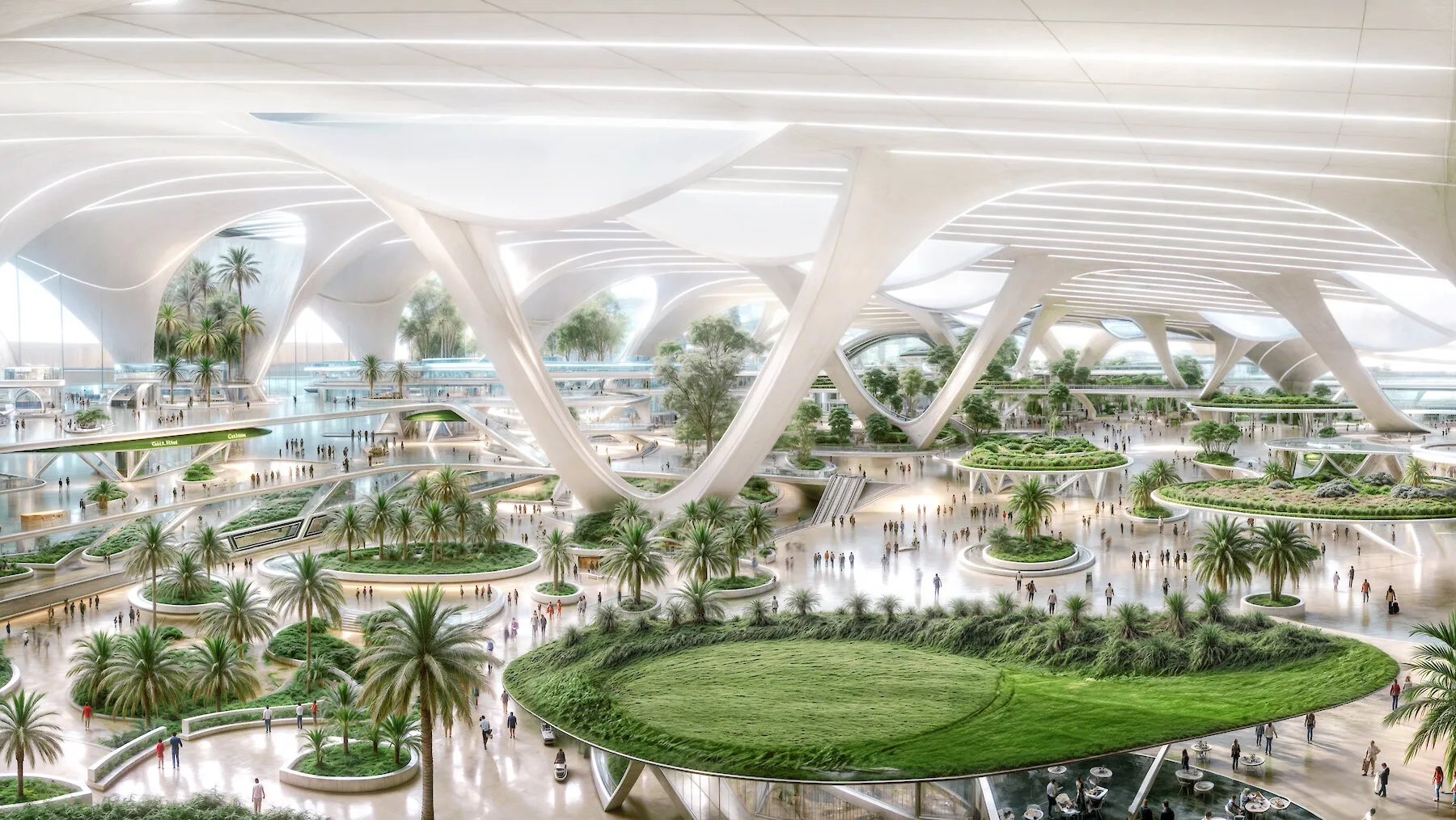
Complementing Dubai International Airport, located about 40 km away, Al Maktoum International Airport includes several large distribution centers and warehouses positioned at the western end of the terminal. Extending from the beginning to the end of the western runway, these interconnected extensions are equipped to accommodate A380 aircraft. The coordination center surrounding the airport houses a golf course, a currency exchange, and an exhibition office with 3 million square meters of display space, a business center, and a dedicated area.
8. Guggenheim Abu Dhabi
Location: Abu Dhabi, UAE
Architect: Frank Gehry
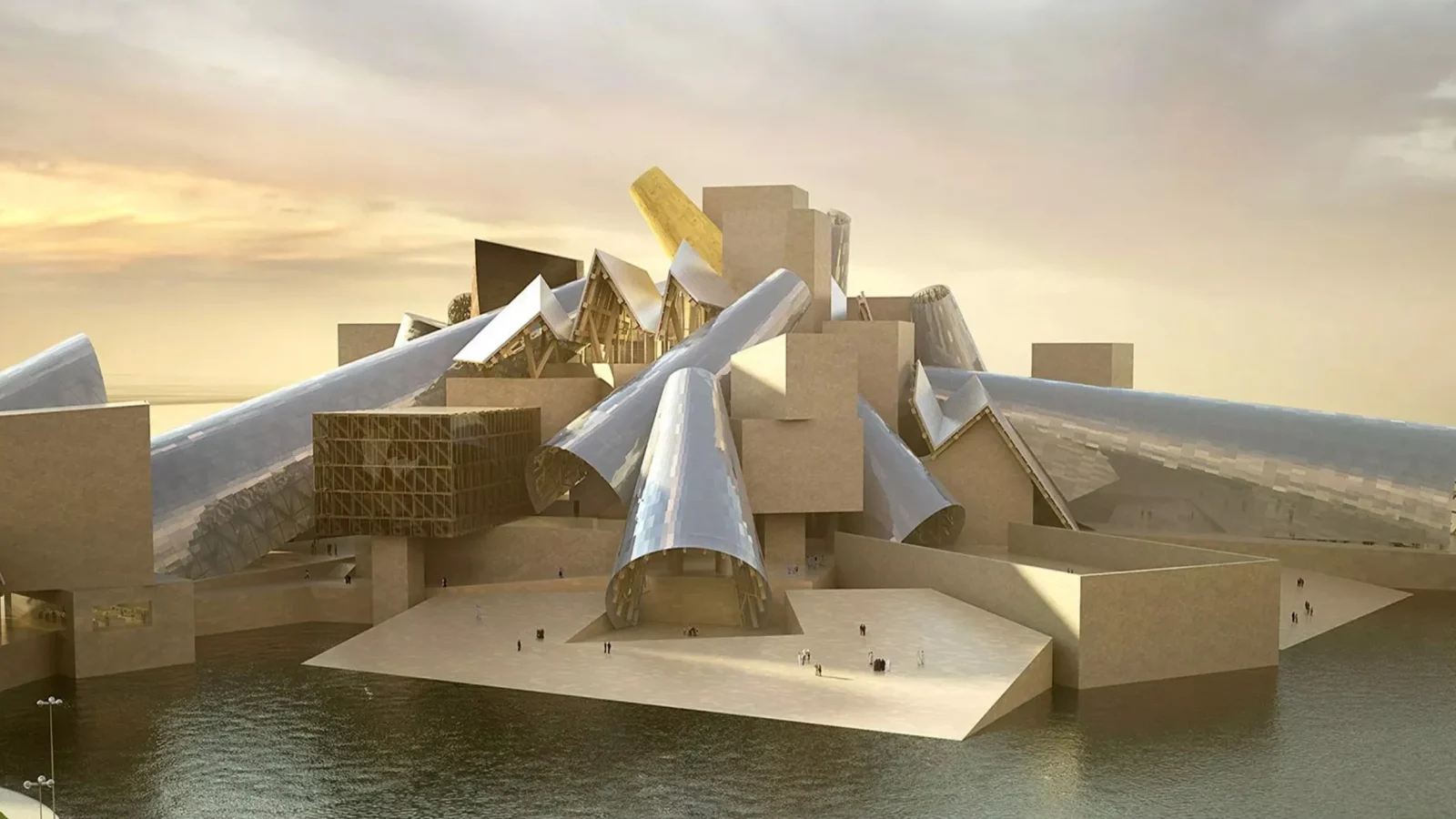
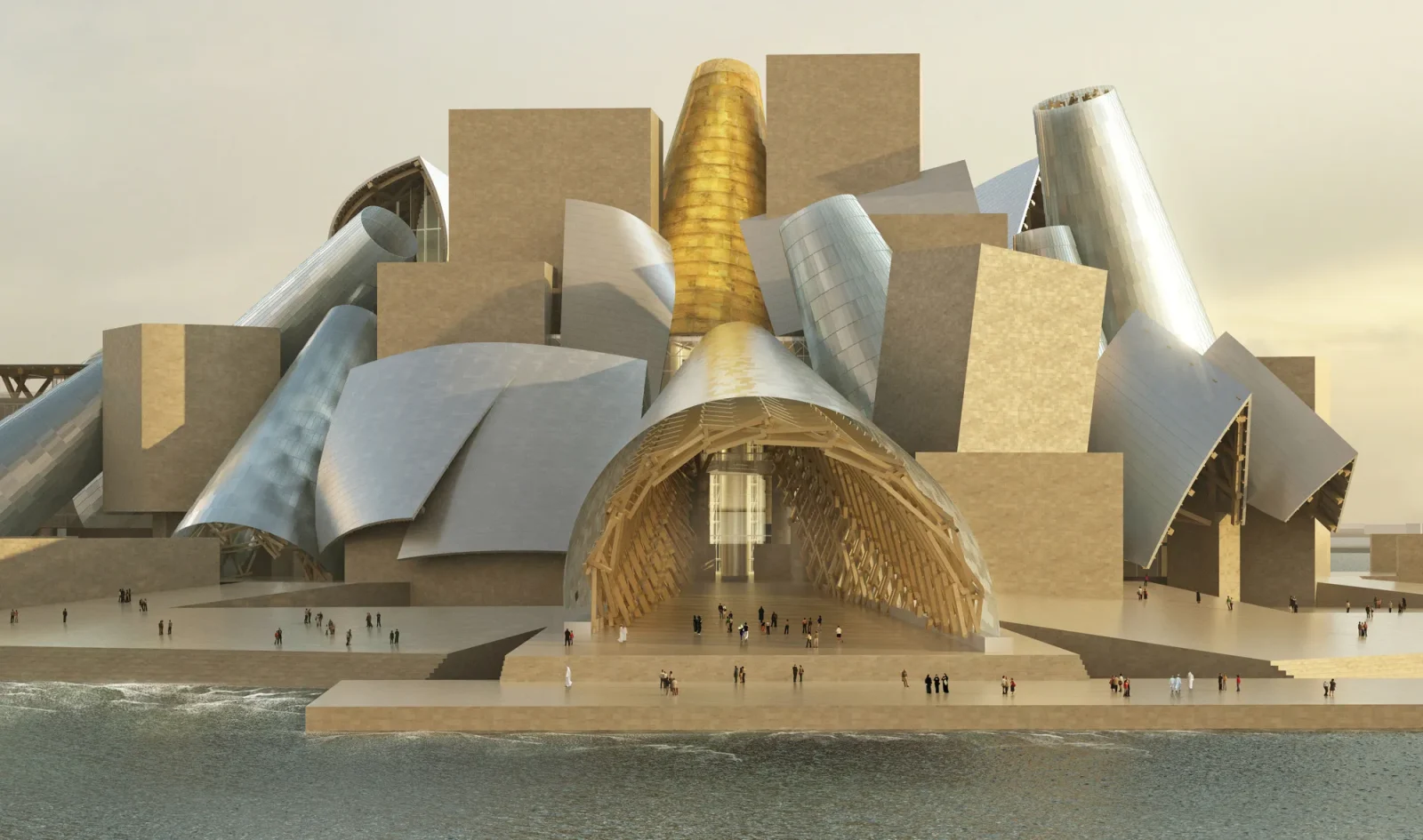
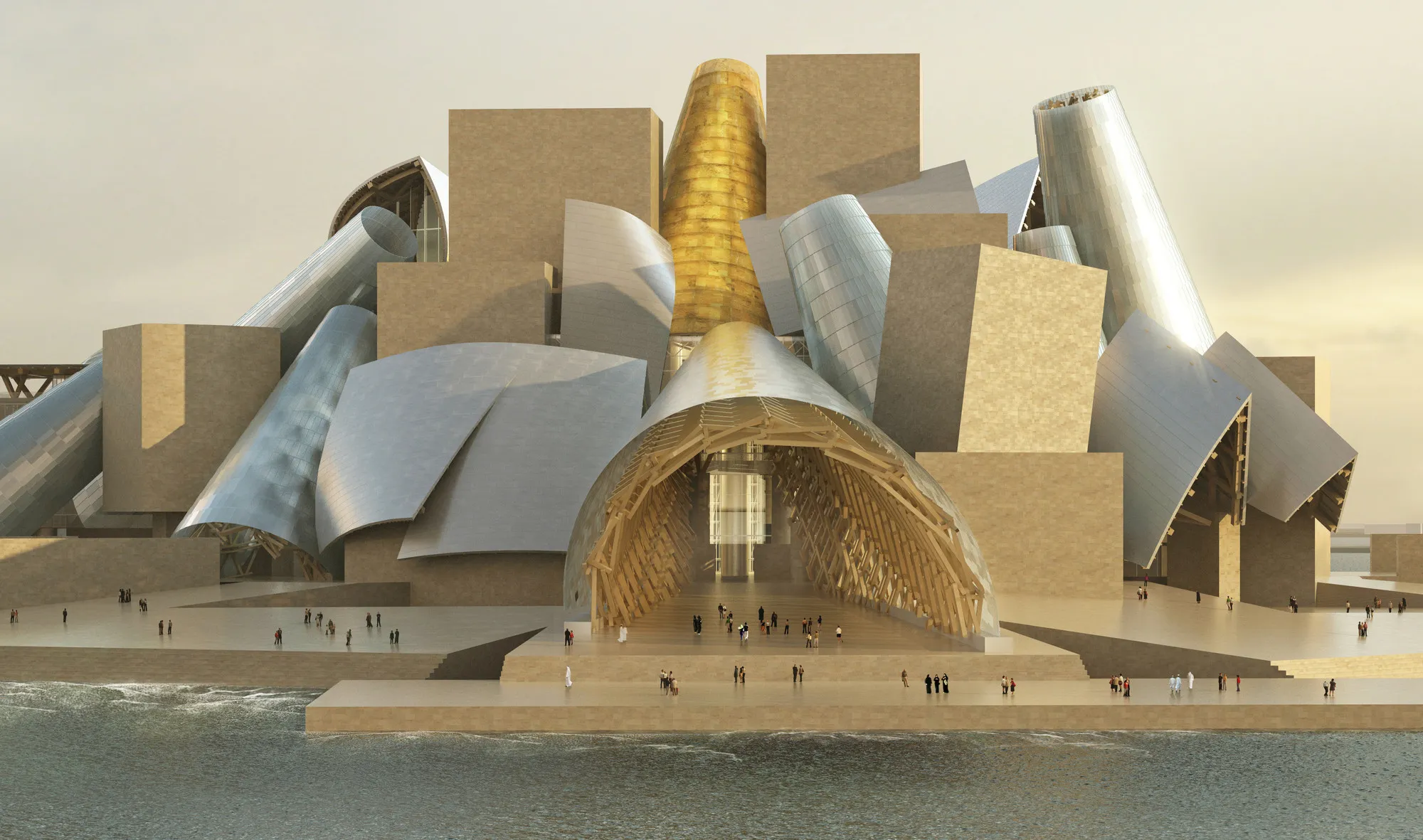
Designed by Frank Gehry, the Guggenheim Abu Dhabi is one of the United Arab Emirates’ most exciting upcoming megaprojects. Representing a creative experiment in 21st-century museum design, the building introduces a new approach to the visitor experience, offering an innovative vision for experiencing contemporary art within the context of the desert landscape. Built on Saadiyat Island, the largest of the Guggenheim’s four outposts, at 30,000 m² and 88 meters high, the museum comprises cone-shaped galleries of varying heights, shapes, and characteristics. Unparalleled in scale, these galleries are distributed around an atrium on four floors connected by glass bridges.
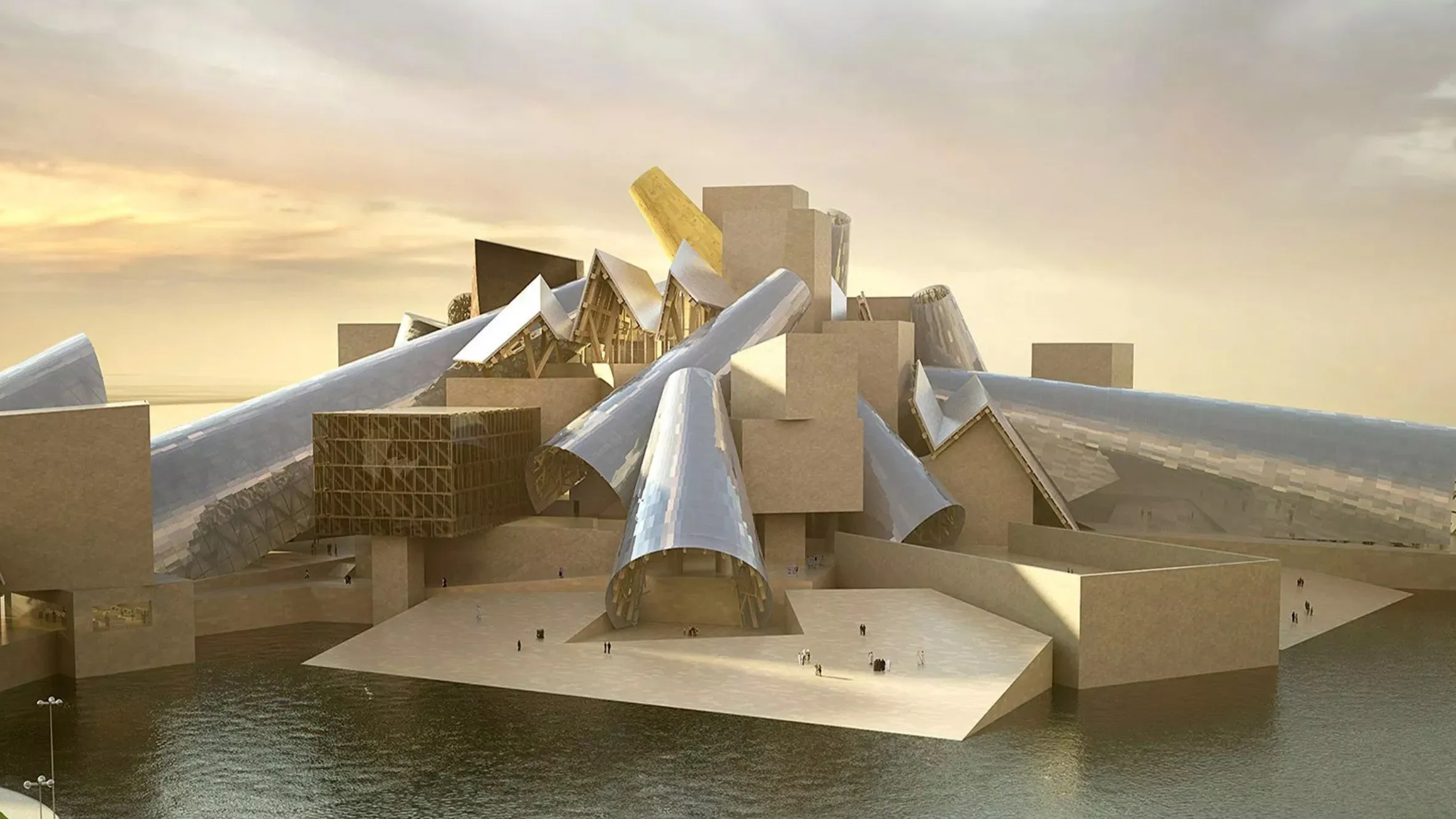
The Guggenheim Abu Dhabi, which will house significant modern and contemporary art from West Asia, North Africa, and South Asia, draws inspiration from industrial studios and the traditional architecture of the Middle East. The design also incorporates sustainable features suited to the region, such as enclosed courtyards derived from the traditional wind tower concept, providing natural cooling and ventilation. Featuring art and technology spaces, children’s education facilities, an archive, a library, and a conservation laboratory, the Guggenheim Abu Dhabi is more than just a museum; it also serves as a cultural center.
9. Zayed National Museum
Location: Abu Dhabi, UAE
Architect: Foster + Partners
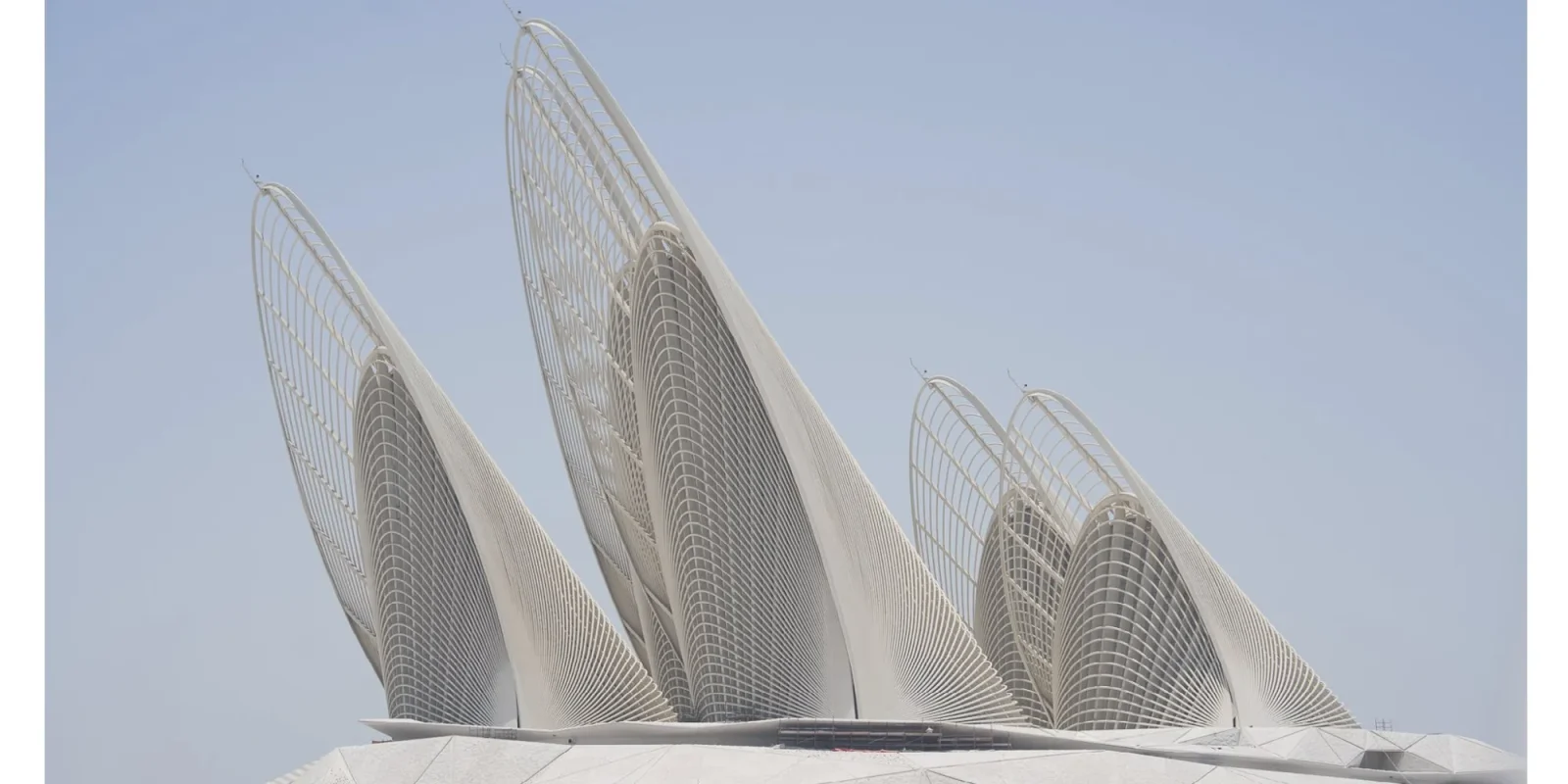
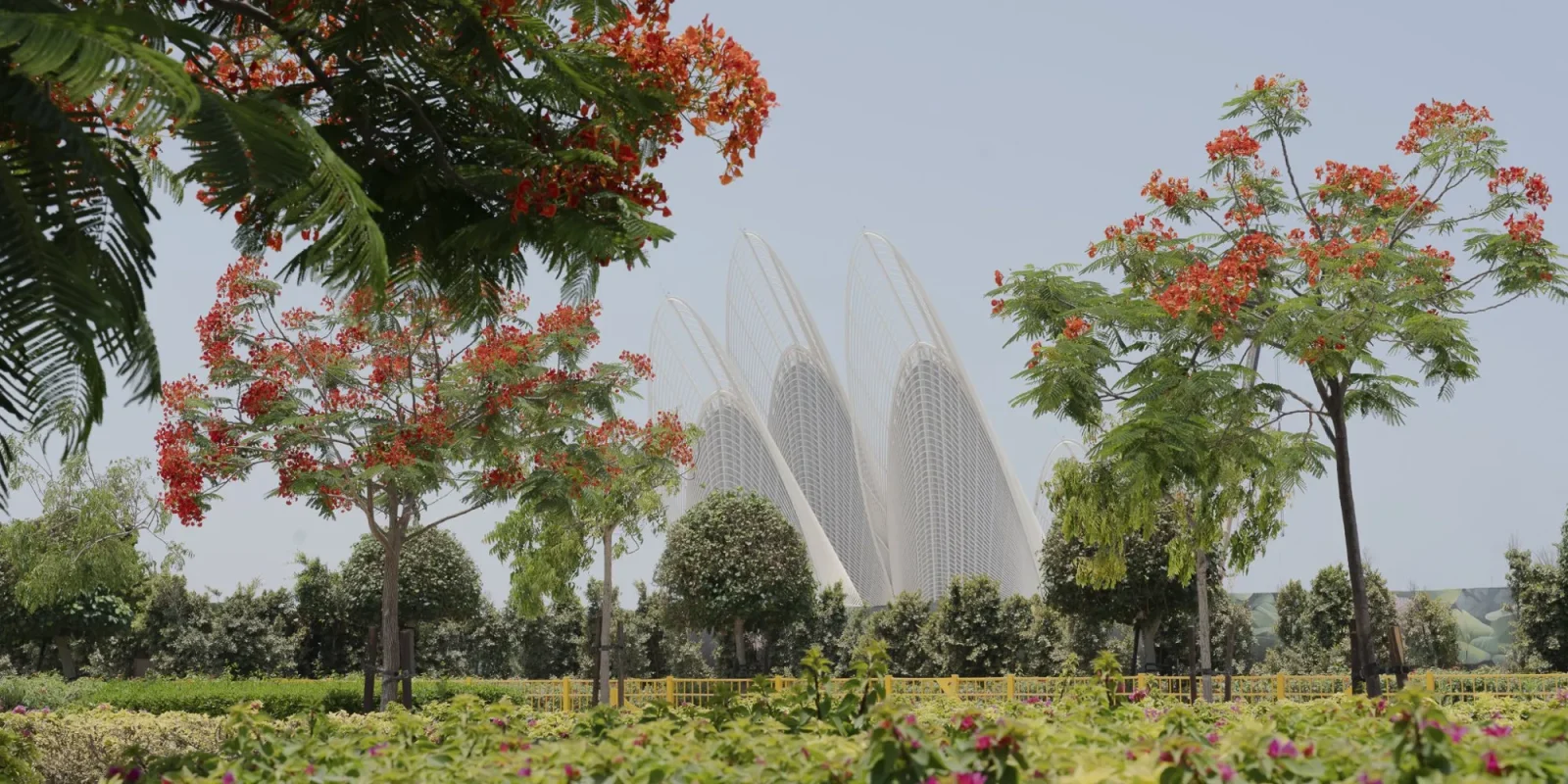
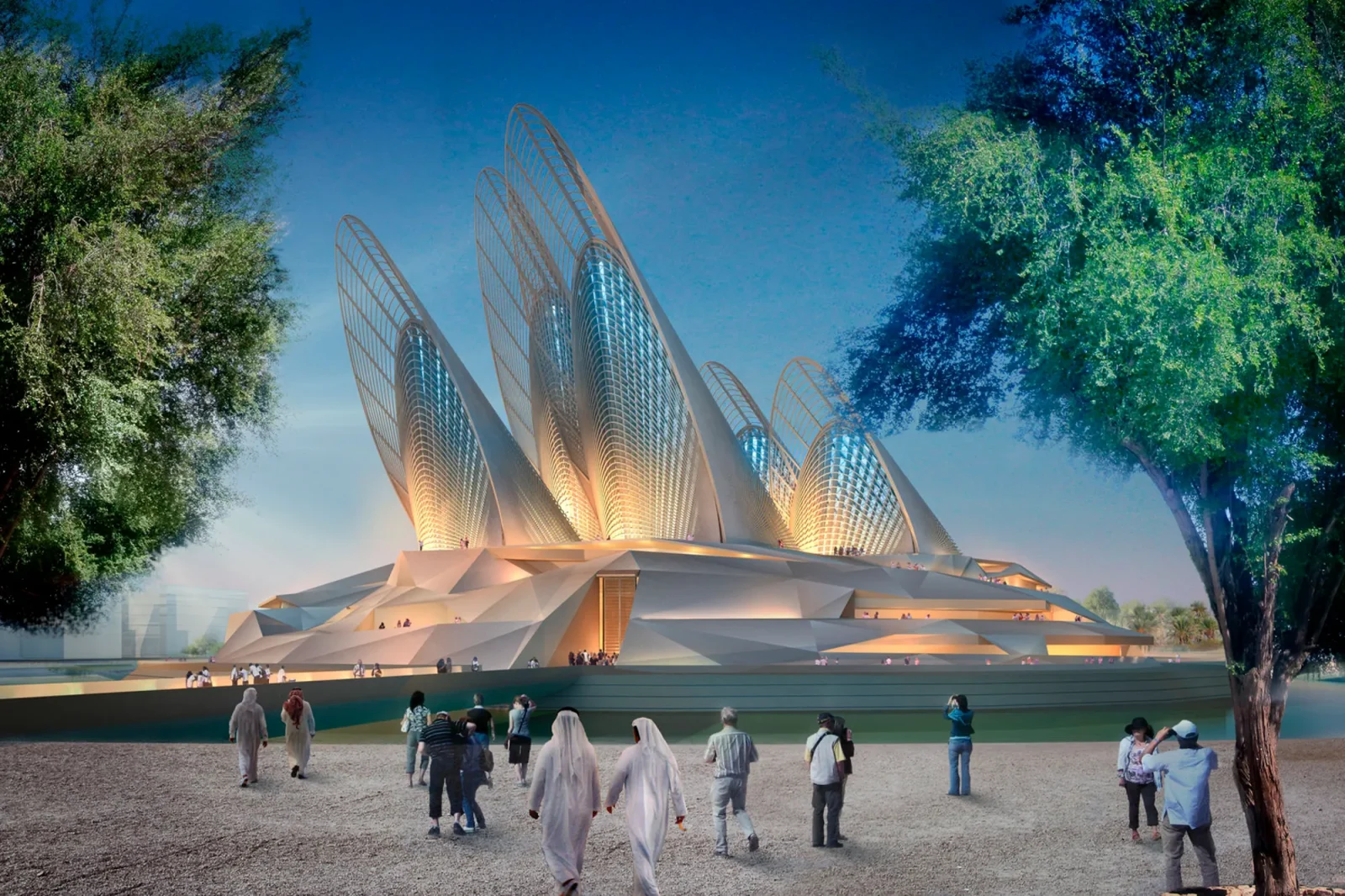
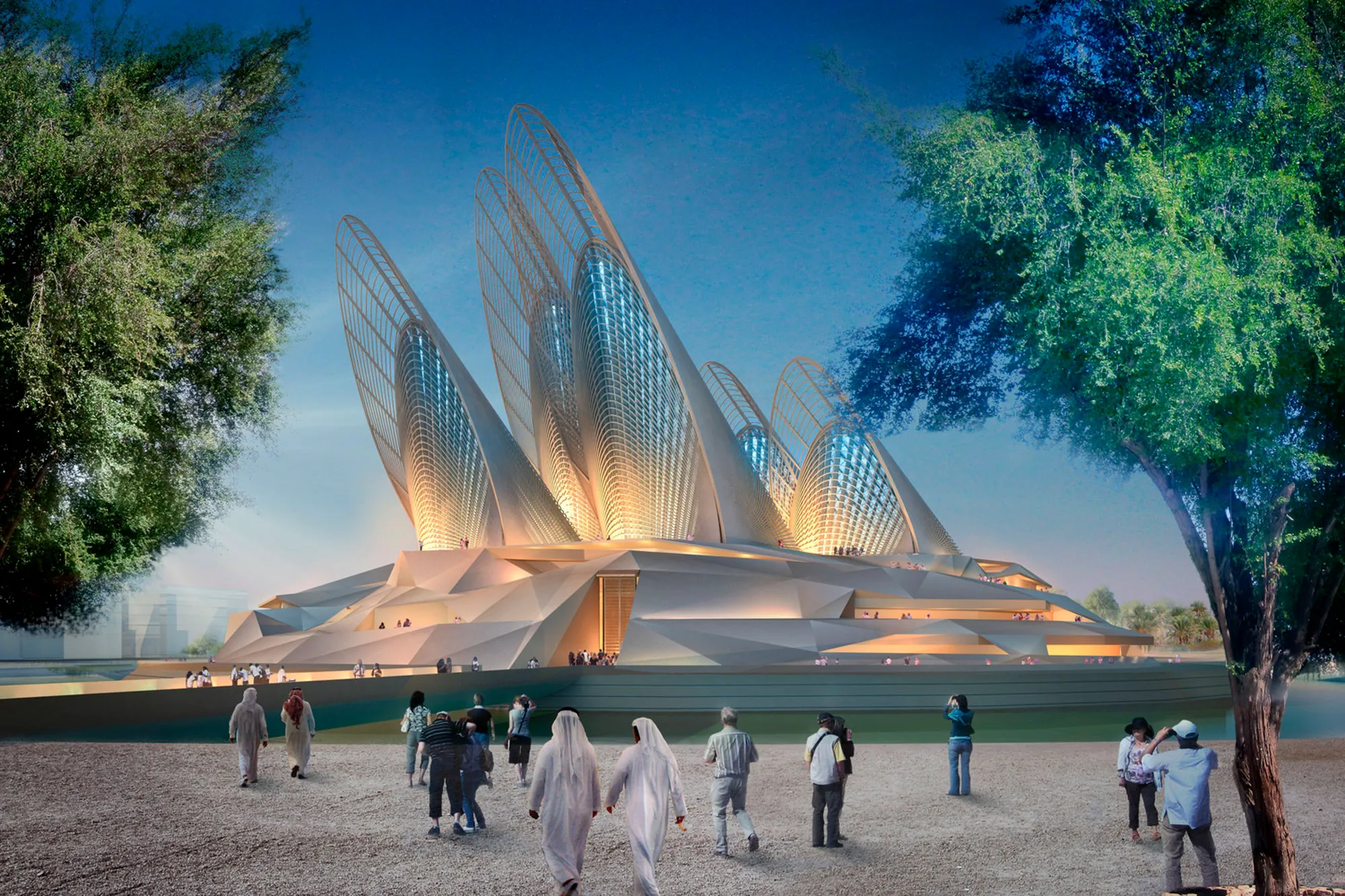
Zayed National Museum, designed by Foster + Partners and scheduled to open in December 2025, is one of the United Arab Emirates’ most anticipated megaprojects. Located in the Saadiyat Cultural District, the museum will showcase the country’s history, culture, and recent social and economic transformation. Situated within a mound, the museum’s spaces feature faceted panels reflecting the UAE’s topography. Above this elevated base, five lightweight steel structures are aerodynamically shaped. These towers function as thermal chimneys, drawing cool air into the galleries below. The design of the museum is inspired by the enduring values of Abu Dhabi’s founder, Sheikh Zayed bin Sultan Al Nahyan.
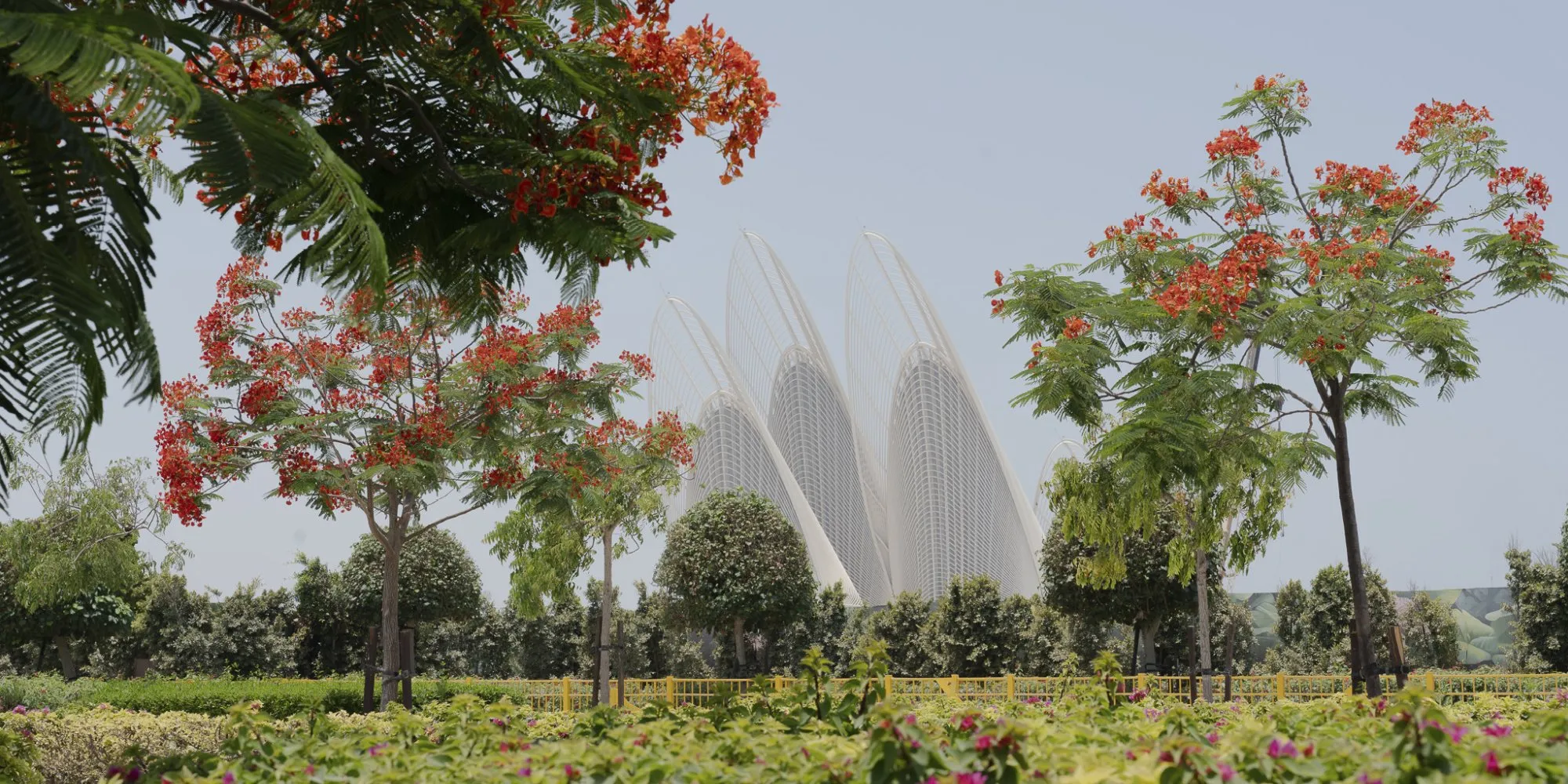
Housed in a multifaceted concrete structure, the museum will feature six permanent galleries spread over two floors showcasing artifacts from across the emirate, dating from the Paleolithic, Neolithic, Bronze, and Iron Ages. A separate gallery will also be available for temporary exhibitions.
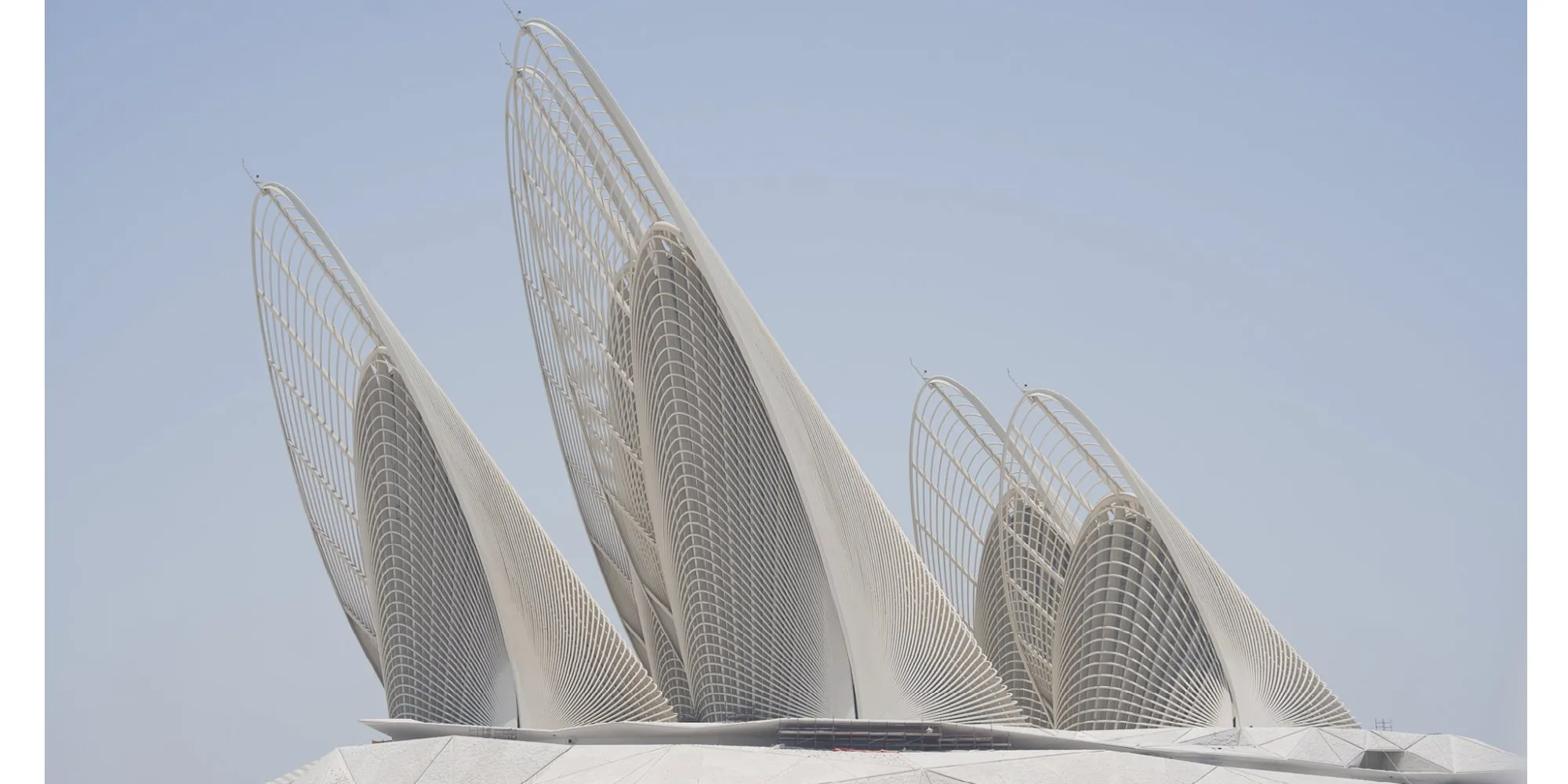
Matching the ambition of its exterior, the Zayed National Museum features capsule-shaped galleries suspended above a centrally lit atrium. The gallery capsules are controlled environments with air conditioning to protect the delicate artifacts on display. The museum’s galleries and dining areas reinterpret the unique aspects of the UAE’s culinary heritage, while its stores sell products created by local designers and artisans.
10. Aljada Central Hub
Location: Sharjah, UAE
Architect: Zaha Hadid Architects
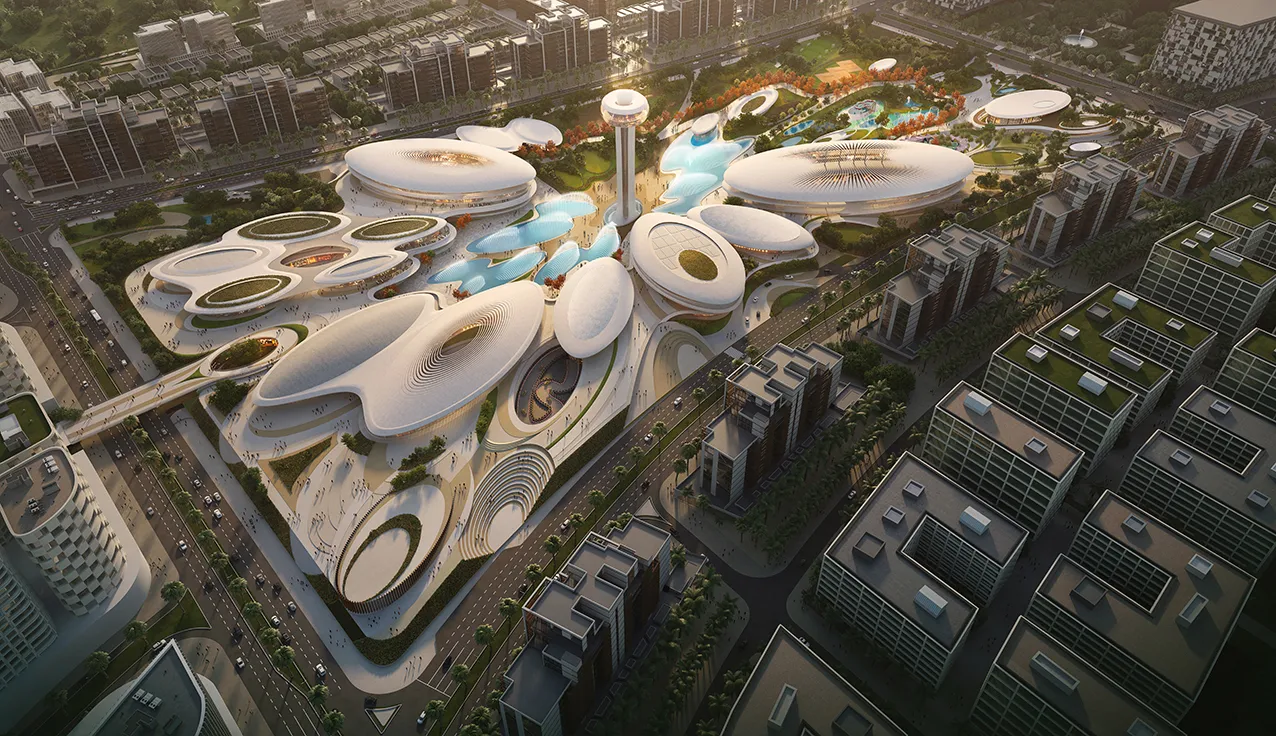
Designed as a new entertainment and leisure hub for the United Arab Emirates, Aljada Central Hub is a transformative project for Sharjah. Designed by Zaha Hadid Architects, this mega project serves as the focal point of the $6.5 billion Aljada development by ARADA in Sharjah. Conceptualizing the first moment a drop of water hits the ground, Central Hub comprises a series of elliptical buildings that channel prevailing winds into public spaces and courtyards, contributing to natural cooling. These public spaces are filled with water features irrigated with recycled water, while tensile canopies create a microclimate for gardens featuring indigenous plant species.
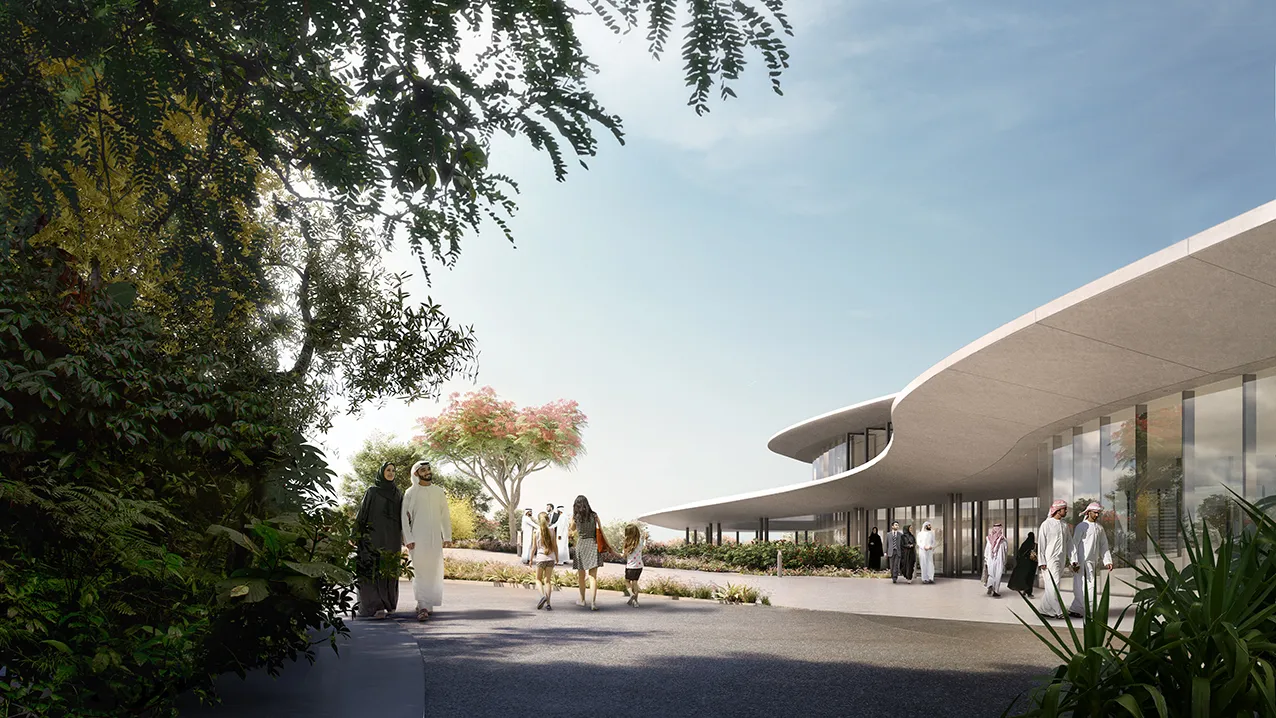
Prioritizing walkability and green spaces, the Central Hub adopts a human-centered approach, featuring an adventure activity zone, a food market showcasing local flavors, and outdoor event spaces. Designed with natural cooling strategies for enjoyment along the way, even in summer, Central Hub brings together various urban spaces. The development includes a total of 732,000 square meters of public plazas and gardens, including a large community park occupying one-quarter of the complex and featuring thousands of carefully selected native trees and plants.
Explore Courses
.jpg "Ondrej Chybik - Rethinking Architecture")