

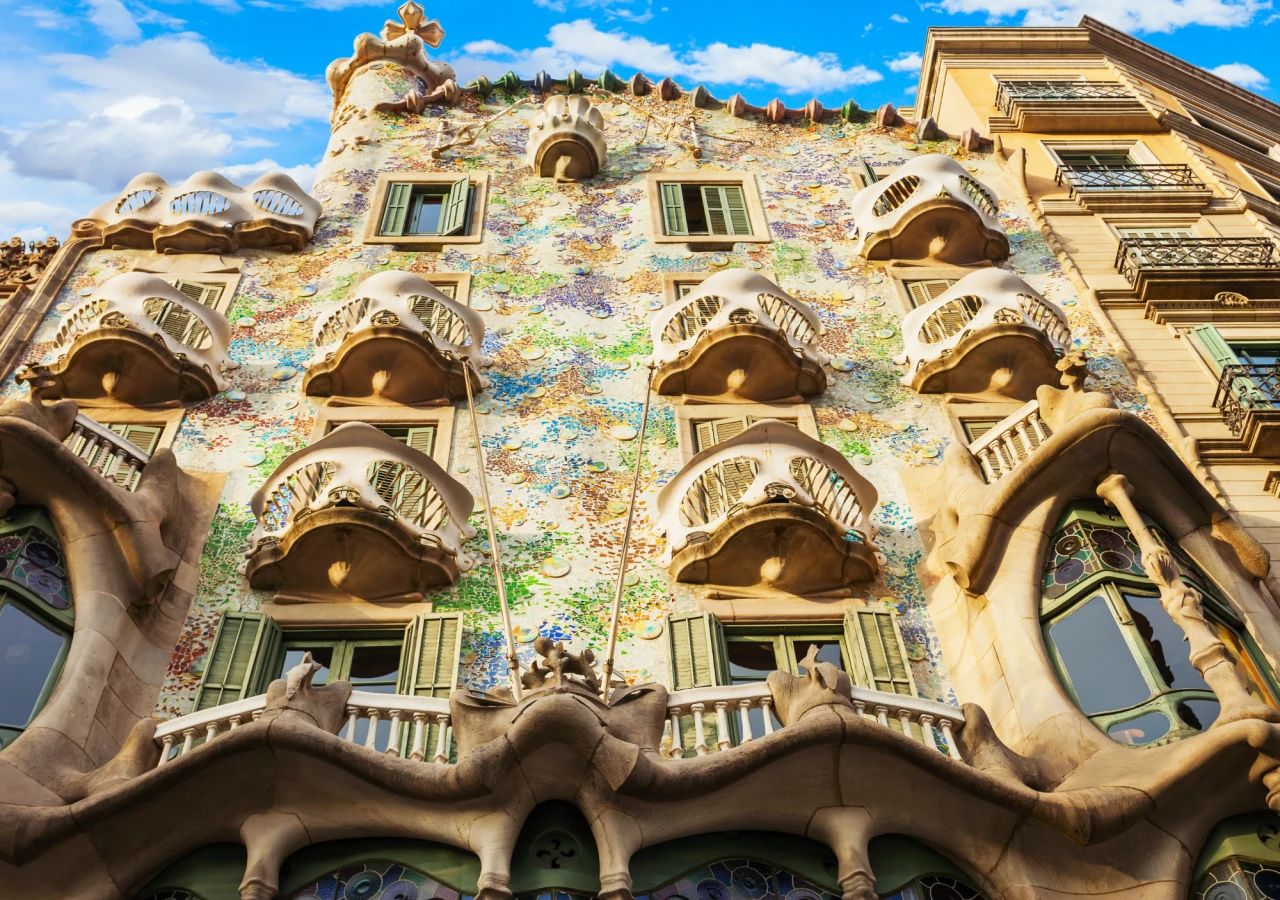
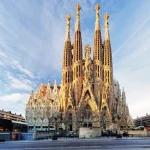
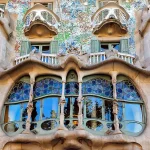
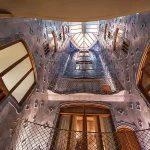

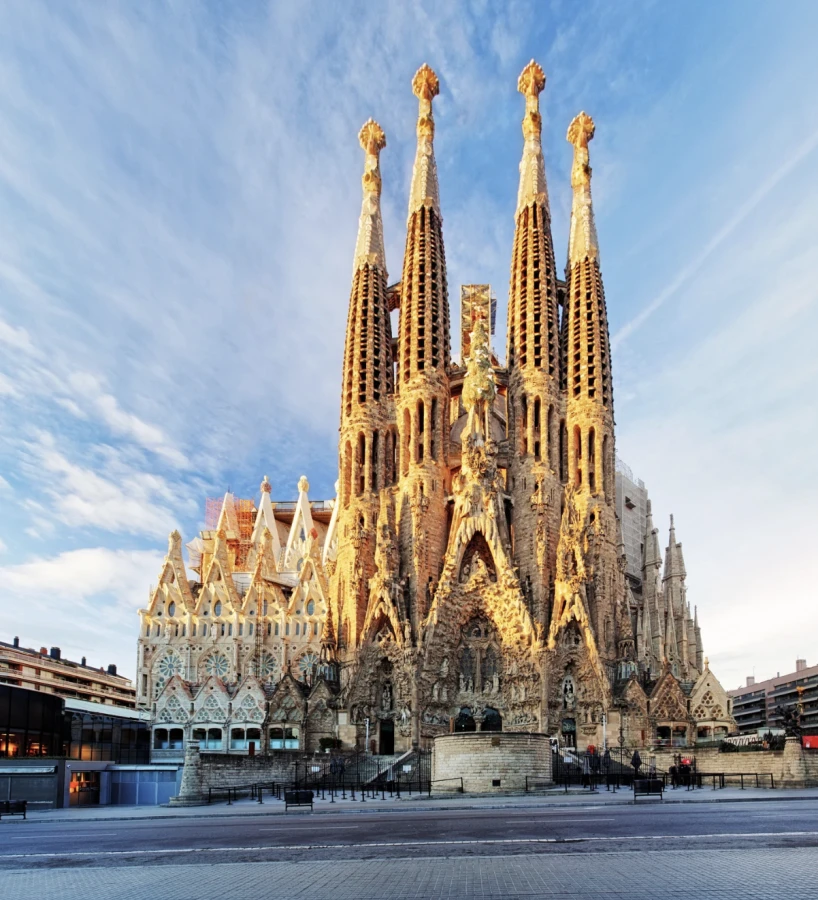
Barcelona is often seen through the lens of Antoni Gaudí, whose flowing facades, mosaic-covered surfaces, and visionary designs continue to define the city’s global image. As 2026 marks 100 years since Gaudí’s death, his legacy remains deeply embedded in Barcelona’s architectural identity, drawing millions of visitors to its streets and landmarks each year.
Yet Barcelona today is also a city of reinvention. Through pedestrian-first superblocks, community-led urban interventions, and evolving approaches to public space, it continues to reshape the relationship between architecture and everyday life.
To look beyond Gaudí, then, is to discover a city where architecture is not only a celebration of artistic expression but also a continuous negotiation between people, politics, and place.
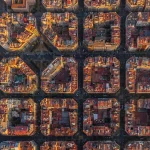
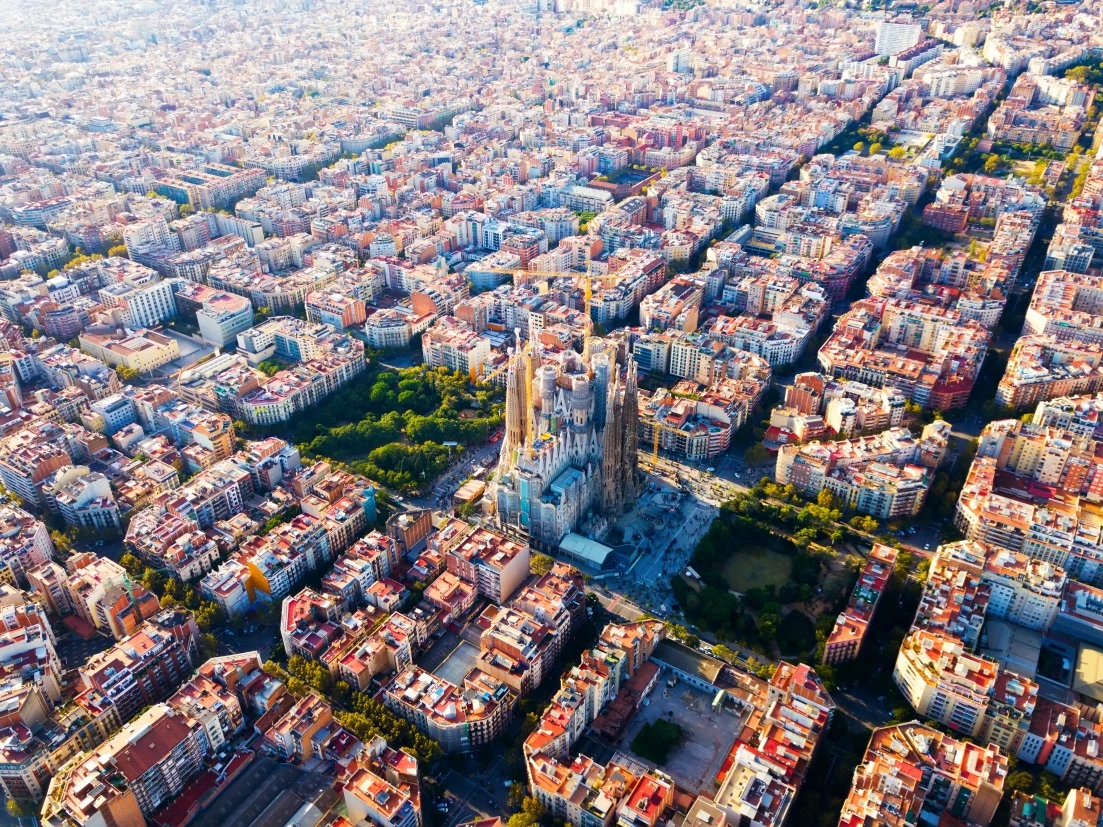
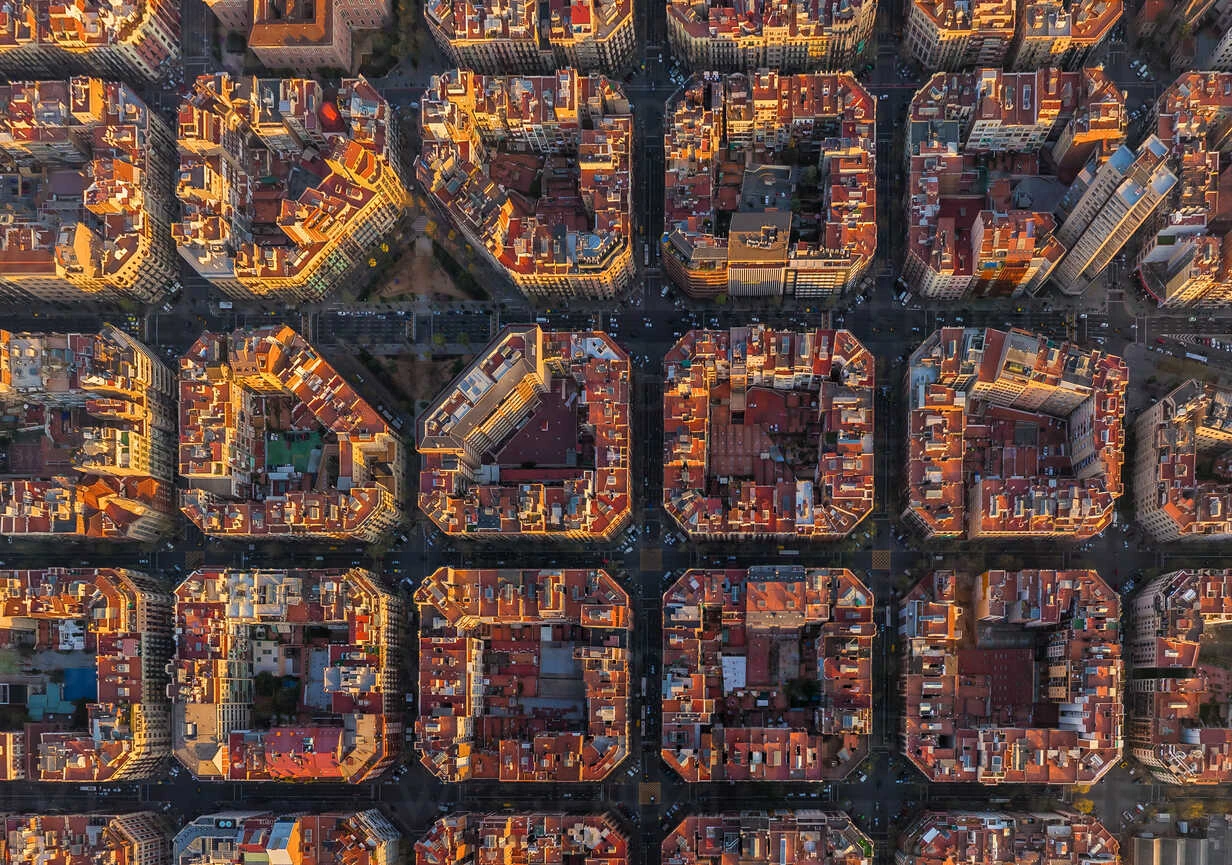
Long before urbanism became a global conversation, Barcelona was experimenting with ideas of light, movement, public life, and equality through its streets. At the center of this vision was Ildefons Cerdà’s Eixample grid, a bold 19th-century plan that redefined how a modern city could function. Its orderly geometry was not only about expansion; it was about creating healthier, more democratic spaces for everyday life. Wide streets, chamfered corners, and open courtyards were designed to bring air, sunlight, and accessibility to all, turning urban planning into a social act.
Egalitarian Grid: Ildefons Cerdà’s Eixample
The density of the old city, particularly in areas like El Raval, had created catastrophic public health crises, where cramped, unsanitary quarters became breeding grounds for yellow fever and cholera epidemics, such as the outbreak of 1854 that claimed over 6,000 lives. When the military classification of the surrounding plain was lifted, the city required an expansion plan to connect the ancient core with outlying municipalities such as Gràcia.
The Spanish government bypassed local municipal preferences to mandate the implementation of Ildefons Cerdà’s 1859 plan. Cerdà, who coined the term “urbanization” in his foundational 1867 text Teorìa General de la Urbanización, approached planning not through the lens of aesthetic baroque monumentalism, which characterized Baron Haussmann’s contemporary redesign of Paris, but through a rigorous, data-driven framework of social justice, public health, and mobility.
The most revolutionary element of this geometry was the 45° chamfered corner on every block. While Cerdà mathematically calculated these chamfers to accommodate the wide turning radii of steam trams, this open design inadvertently future-proofed the city for the automobile age and, later, for pedestrian reclamation.
He categorized the city into roads and inter-road spaces. He mandated that buildings only occupy two parallel sides of each block, restricted heights to 16 meters, and reserved the interior courtyard for communal public gardens of at least 800 square meters. The residential units were designed with a narrow depth to guarantee double ventilation, drawing air from both the street front and the inner garden courtyard, while blocks were oriented northwest-southeast to ensure all apartments received direct sunlight during the day.
Architecture as Urban Conversation
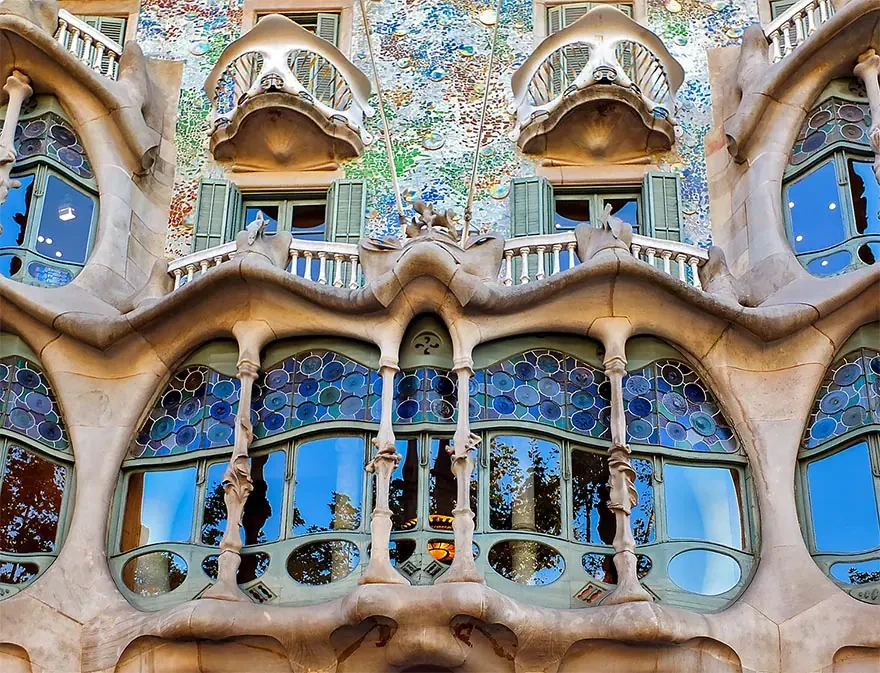
Barcelona’s architecture differs from that of many global cities because its buildings actively engage the street. Rather than isolated towers detached from public life, architecture here participates in a collective urban theater. The Eixample’s repetitive block structure created a disciplined framework, but architects transformed that repetition into experimentation. Balconies, facades, courtyards, and entrances became opportunities for artistic and social expression.
Casa Milà: Breaking the Grid from Within
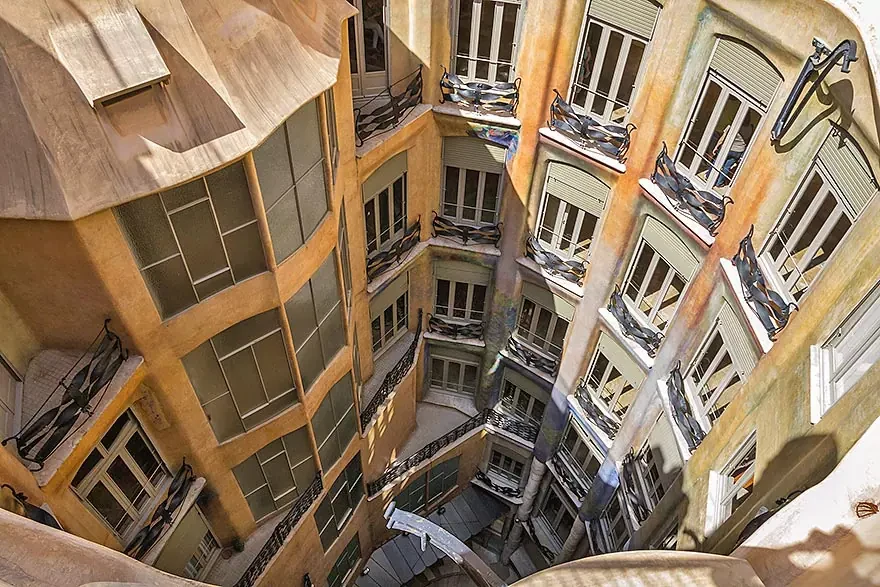
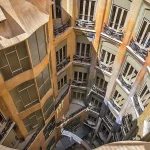
Casa Milà, designed by Antoni Gaudí between 1906 and 1912, demonstrates how Barcelona’s architecture often resists the rigidity of the grid while simultaneously depending upon it. Situated within the rational Eixample framework, Casa Milà erupts like a geological formation. Its undulating stone façade appears almost anti-urban, organic, fluid, and unstable against the disciplined geometry surrounding it.
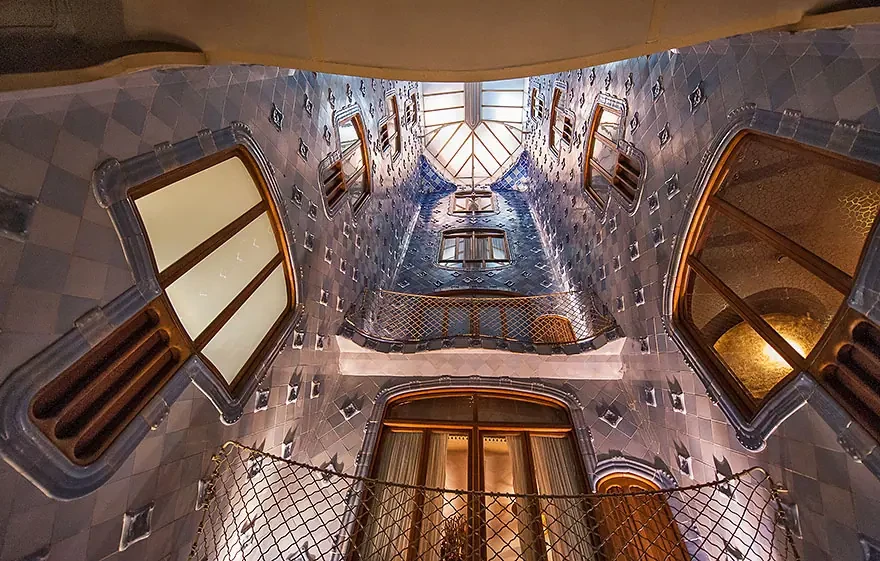
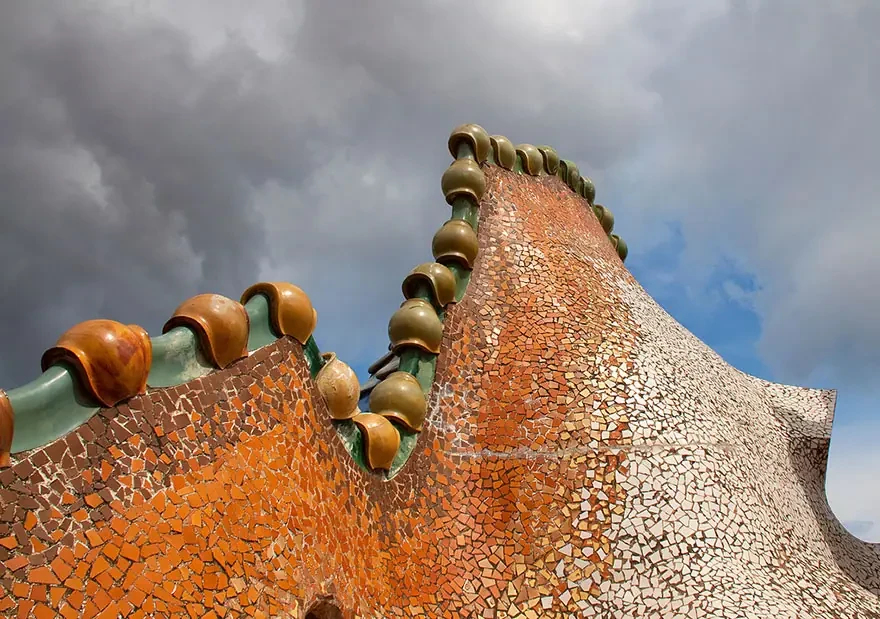
Gaudí transformed the corner building into a sculptural urban event. The curved facade amplifies the chamfered intersection itself, softening the city edge into movement and spectacle. The rooftop, populated with surreal chimney forms resembling masked warriors, dissolves the distinction between architecture and landscape.
Structurally, the building was equally radical. Gaudí employed an iron frame system allowing flexible floor plans and reduced structural dependency on load-bearing walls. Natural ventilation and light wells improved environmental performance long before sustainability became institutionalized.
The Superblock Experiment
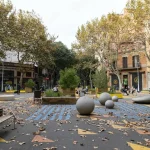
Barcelona’s contemporary urbanism continues Cerdà’s legacy through one of the most closely watched experiments in modern cities: the Superilla, or Superblock model. Introduced in the 21st century, the superblock reorganizes clusters of city blocks to drastically reduce through-traffic. Cars are restricted to perimeter roads while interior streets prioritize pedestrians, cyclists, children, and public activity. The superblock system transforms streets from mobility corridors into social infrastructure. Asphalt becomes playgrounds, seating zones, gardens, and cultural spaces.
Poblenou Superblock
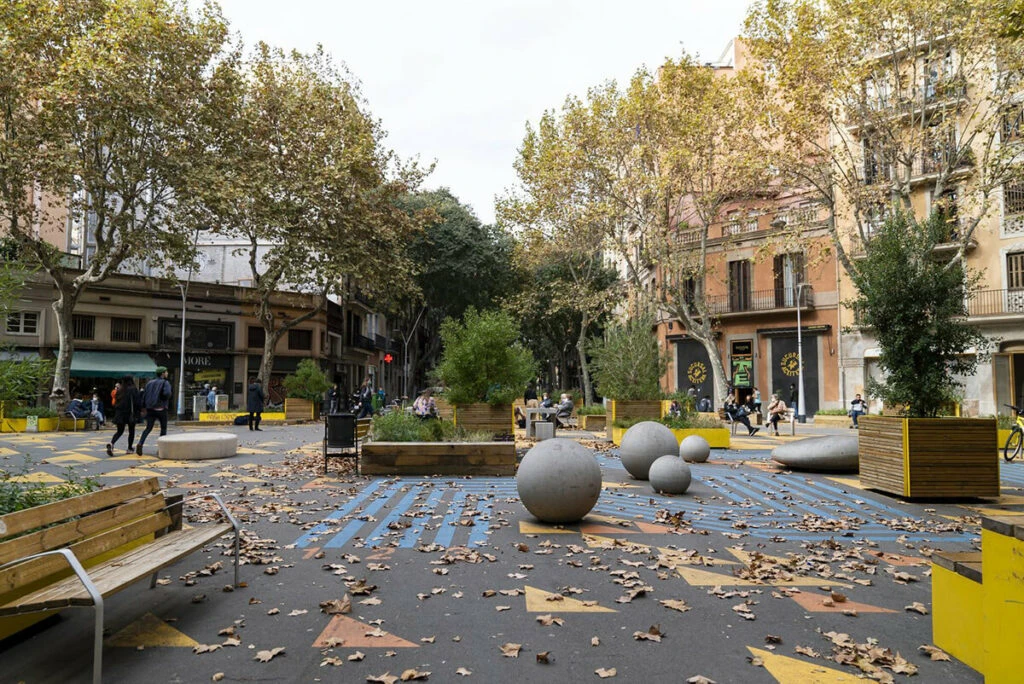
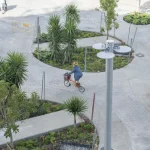
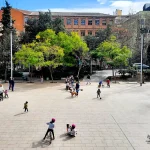
Poblenou became the testing ground for Barcelona’s first major superblock intervention. Once an industrial district dominated by vehicles, Poblenou was reimagined through tactical urbanism, painted surfaces, temporary furniture, vegetation, and community-led spatial activation. Rather than massive demolition, the project used minimal interventions to produce maximum behavioral change.
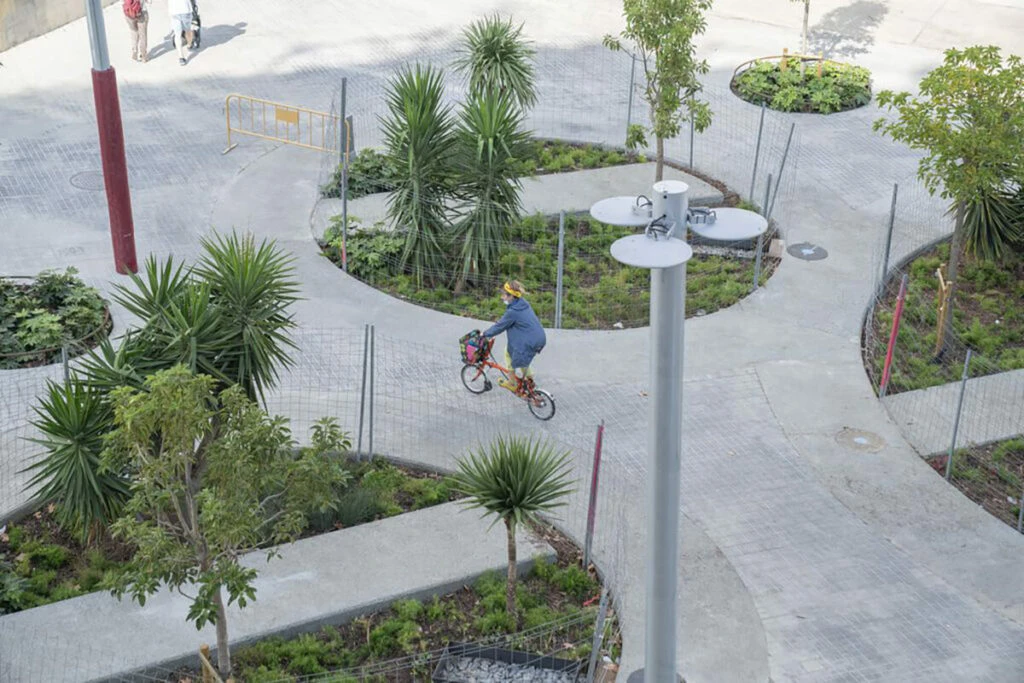
The results extended beyond aesthetics. Studies observed reductions in air pollution and noise alongside increased pedestrian activity and public occupation of streets. Elderly residents and children, often marginalized by car-centric urban design, reclaimed space within the neighborhood.
Adaptive Reuse and Industrial Memory
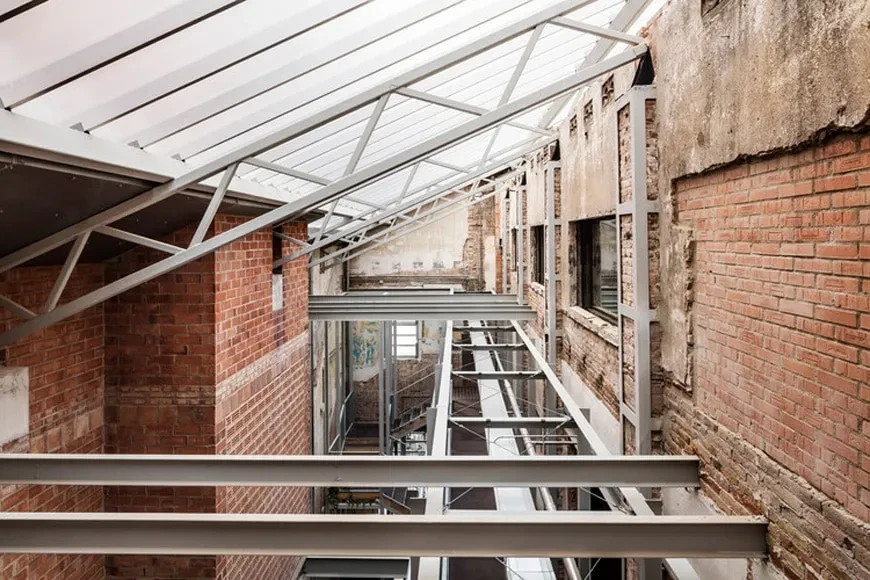
Barcelona’s architectural evolution is also marked by adaptive reuse, transforming industrial remnants into contemporary cultural infrastructure. Instead of erasing history through tabula rasa development, the city frequently layers new programs into existing structures, preserving memory while enabling transformation.
Can Framis Museum
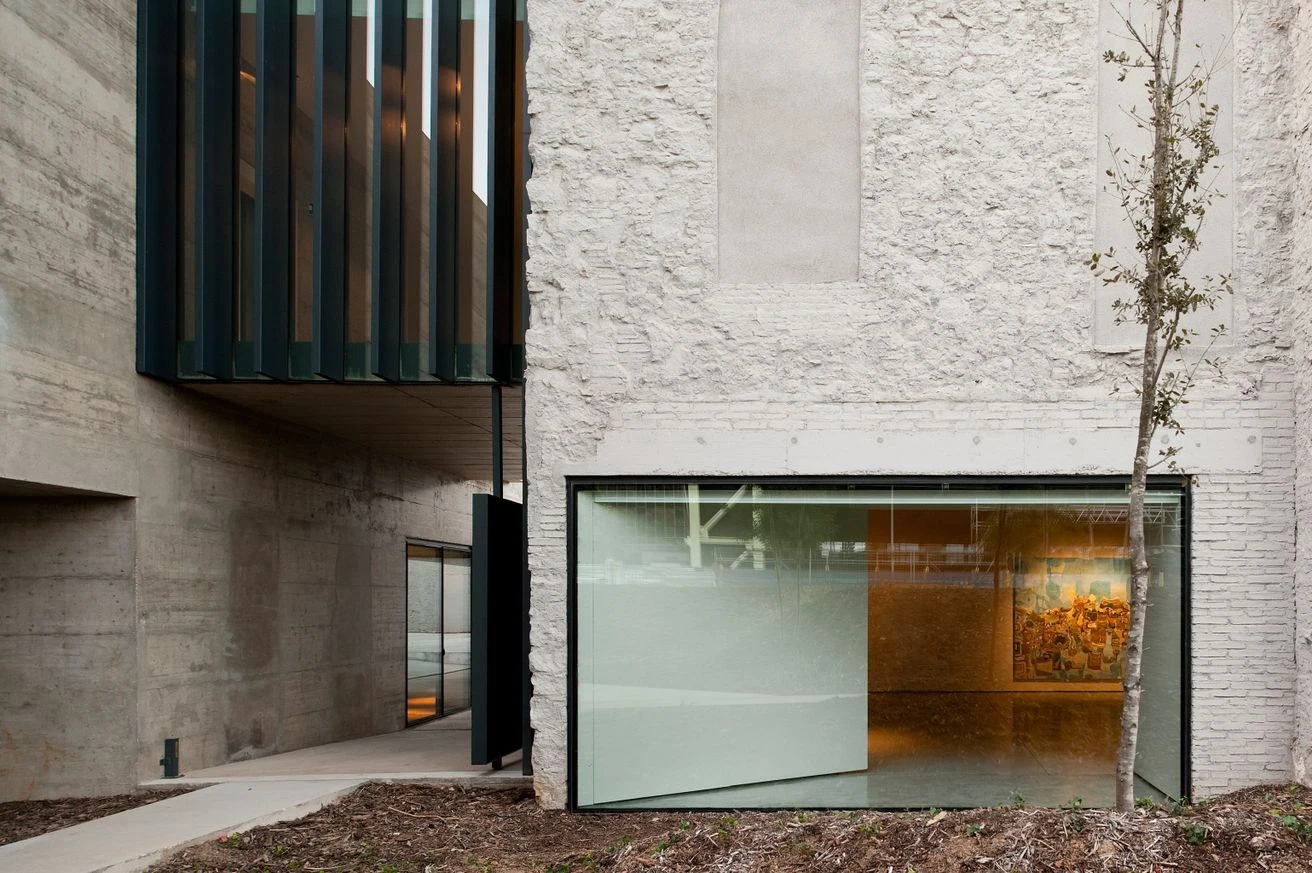
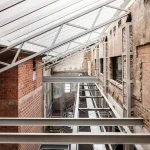
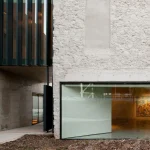
Located in Poblenou, Can Framis Museum exemplifies Barcelona’s nuanced relationship with industrial heritage. Originally a 19th-century textile factory, the complex was transformed by BAAS Arquitectura into a contemporary museum while retaining fragments of the original industrial fabric. Cracked masonry walls, rough textures, and traces of ruin coexist with minimalist concrete additions.
Public Space as Civic Identity
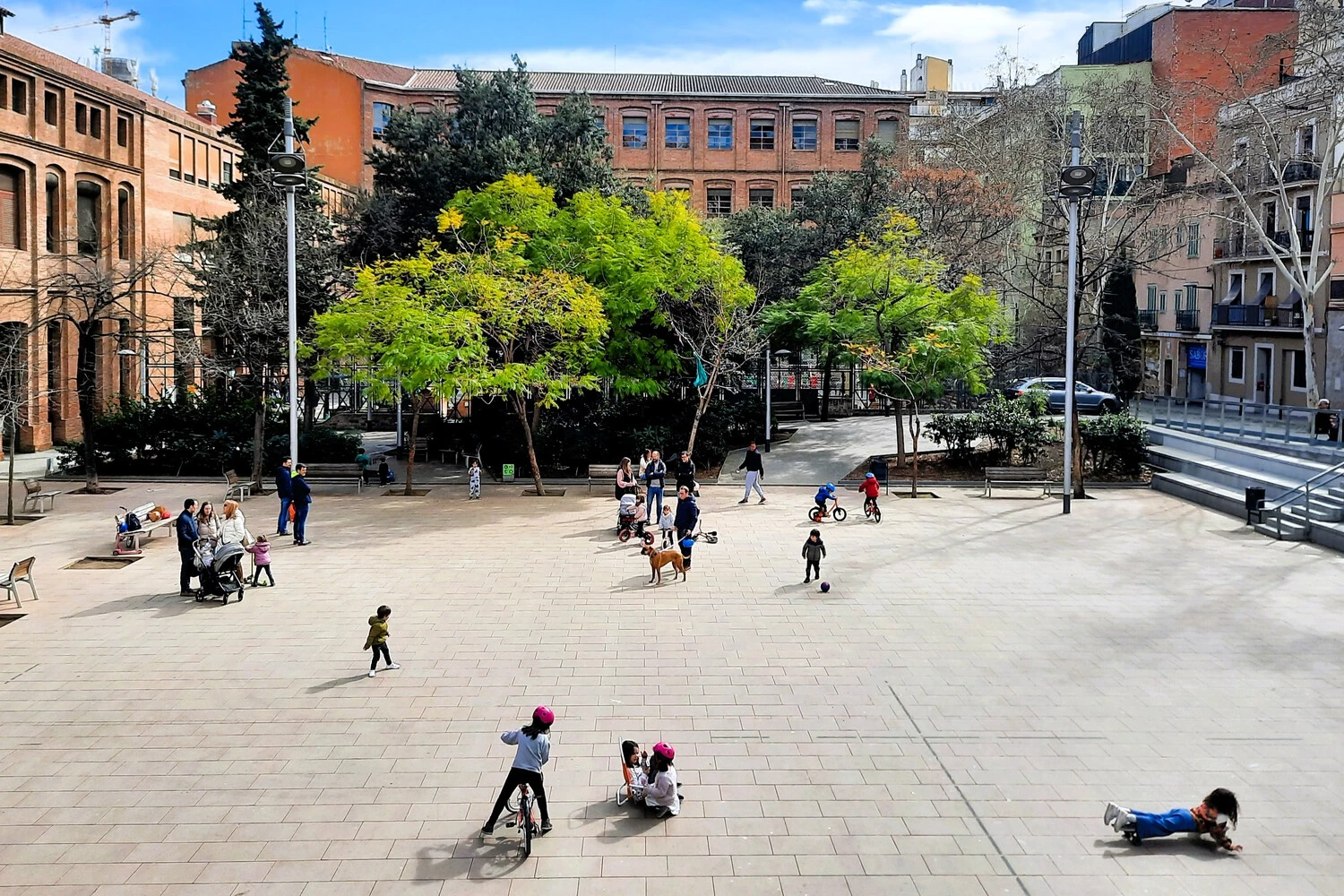
Barcelona’s most enduring architectural achievement may ultimately be its public realm. Squares, markets, sidewalks, and waterfronts function as democratic spaces where urban life unfolds collectively. The city’s transformation accelerated ahead of the 1992 Olympics, when neglected industrial waterfronts were reconnected to the Mediterranean.
The Barcelona Waterfront Renewal
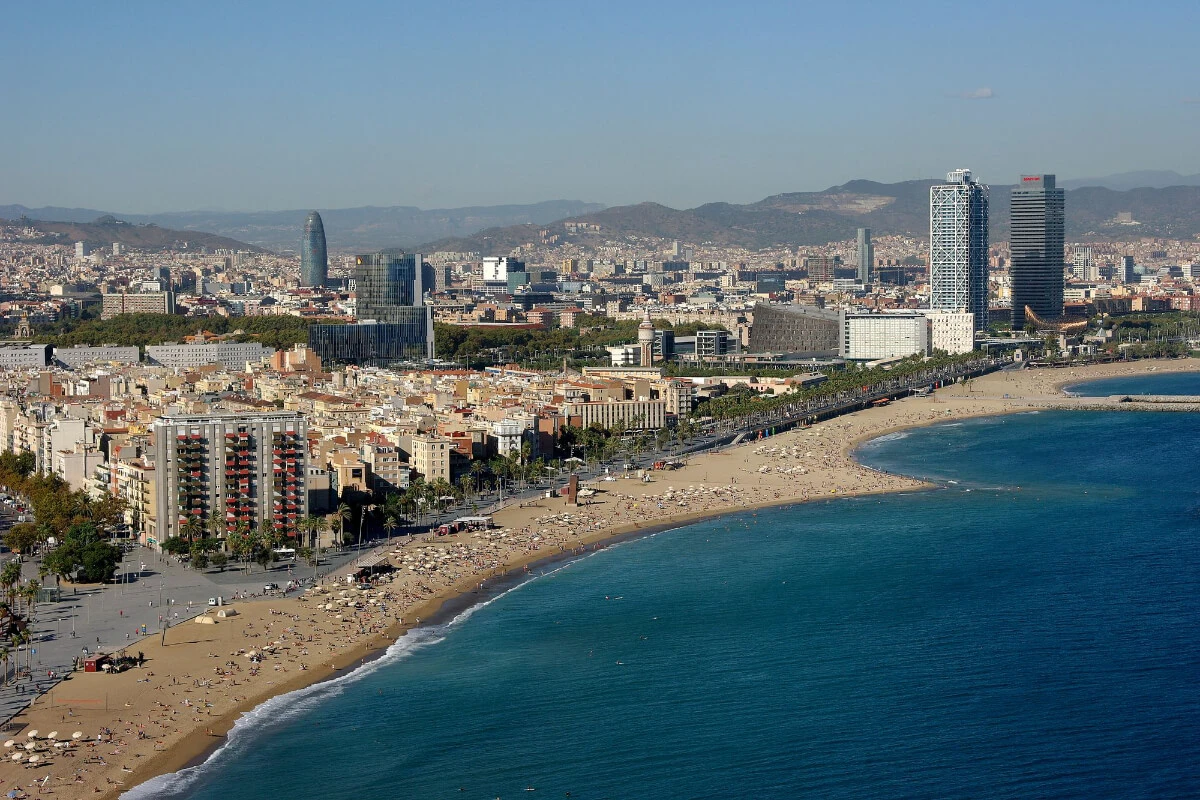
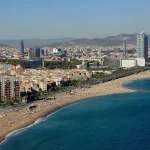
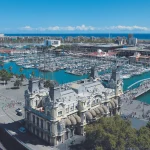
Before the Olympics, much of Barcelona’s coastline was industrialized and disconnected from citizens. The redevelopment introduced beaches, promenades, public spaces, and mixed-use districts that reoriented the city toward the sea. This intervention fundamentally altered Barcelona’s identity.
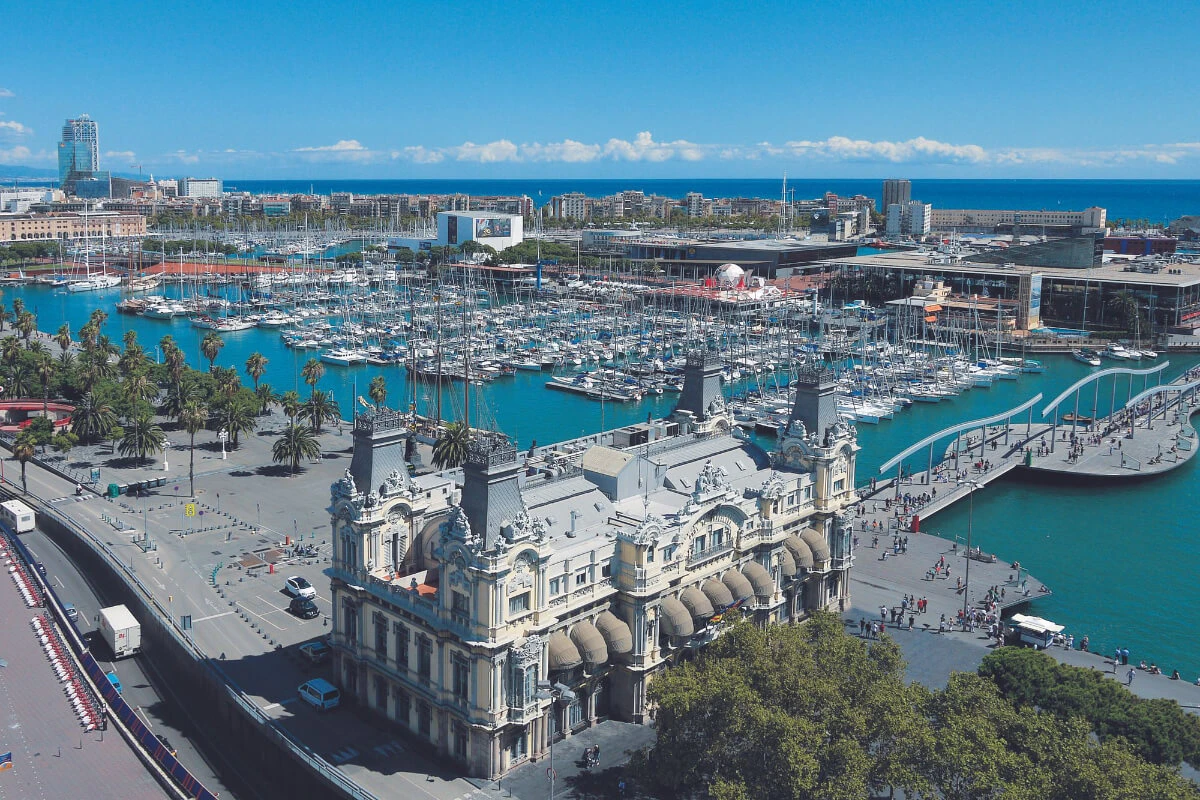
Importantly, the project succeeded because it operated as urban stitching rather than isolated spectacle architecture. Infrastructure, transportation, landscape, and public accessibility were prioritized together. The waterfront today functions not merely as a tourist attraction but as civic territory, used simultaneously by residents, workers, athletes, migrants, and visitors.
Beyond Iconic Architecture
Barcelona challenges the contemporary obsession with isolated architectural icons. While Gaudí remains globally celebrated, the city’s deeper significance lies in its systemic intelligence. The Eixample grid, superblocks, adaptive reuse projects, and public waterfronts all reveal a city constantly negotiating between control and freedom.
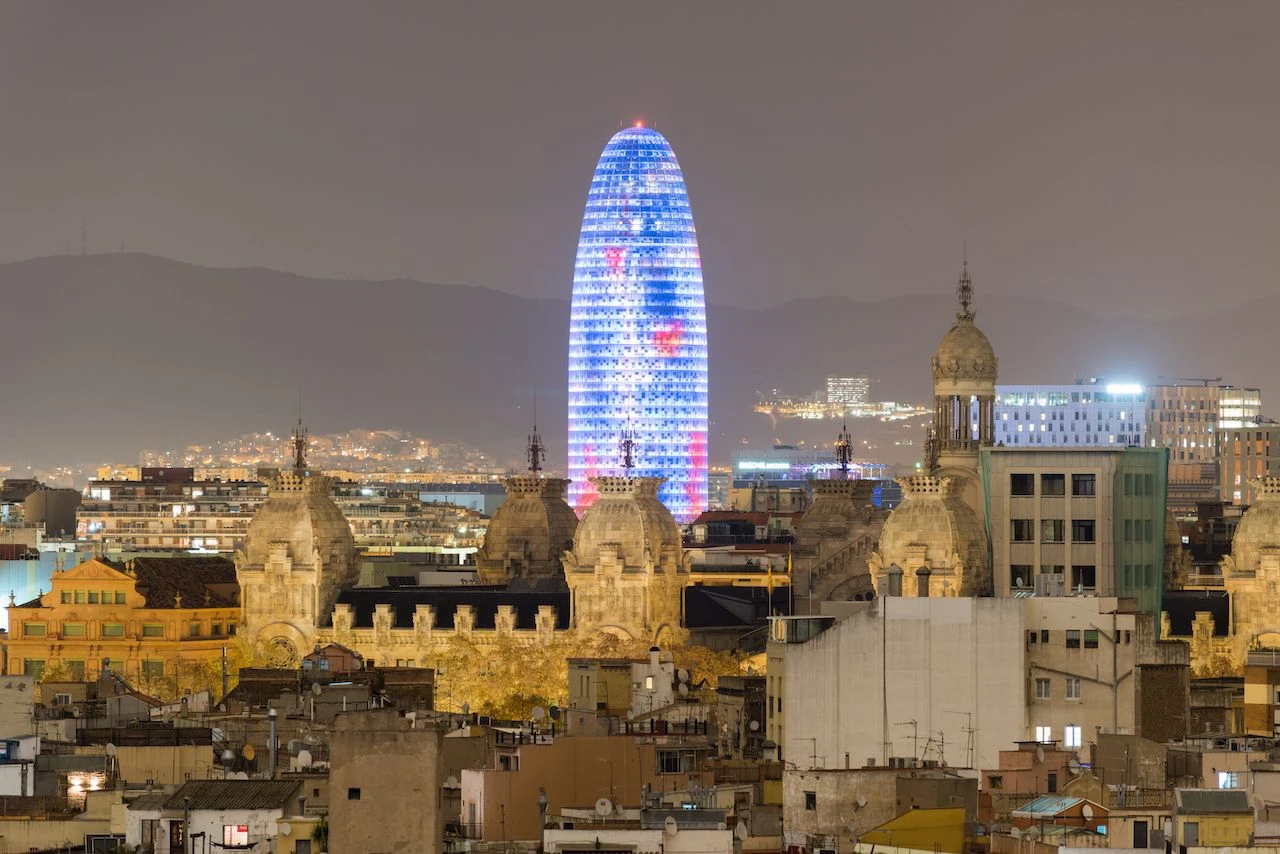
In many global cities today, architecture is consumed visually, through skylines, Instagram imagery, and iconic branding. Barcelona offers an alternative lesson: architecture matters most when it shapes collective urban experience. Gaudí may symbolize Barcelona’s imagination, but Cerdà’s grid enabled that imagination to become civic reality. Together, they produced one of the most influential urban experiments in modern history, a city where architecture is not merely seen, but lived.