

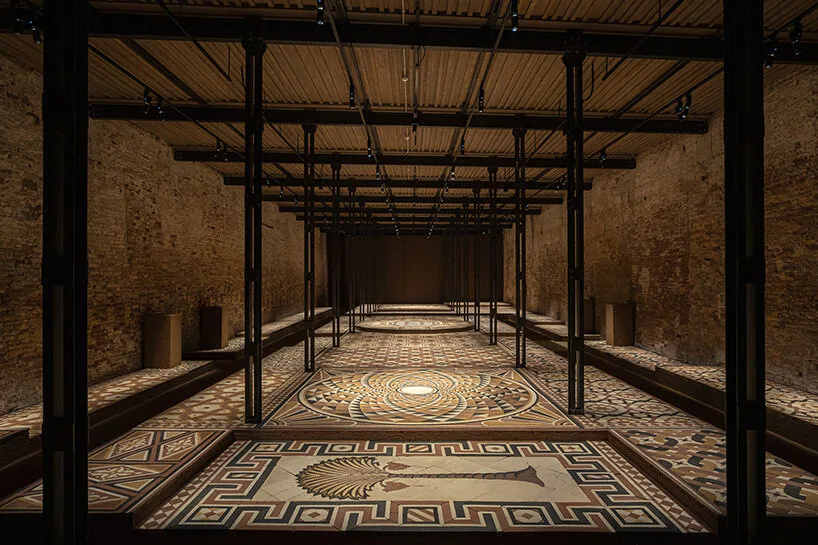
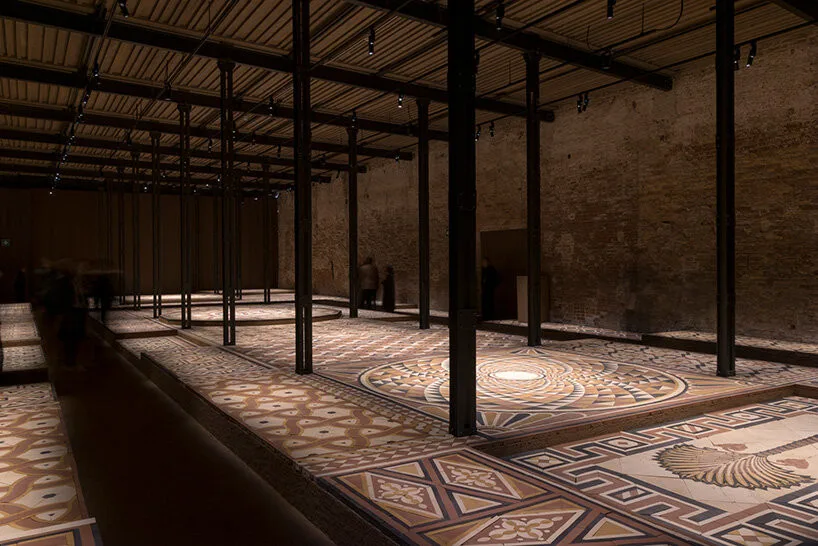
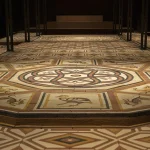
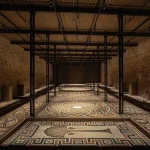

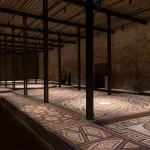
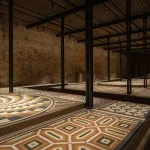
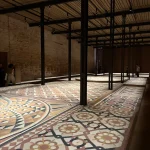
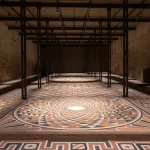
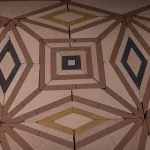
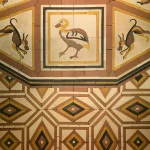
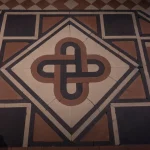
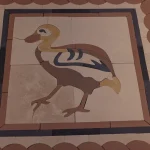
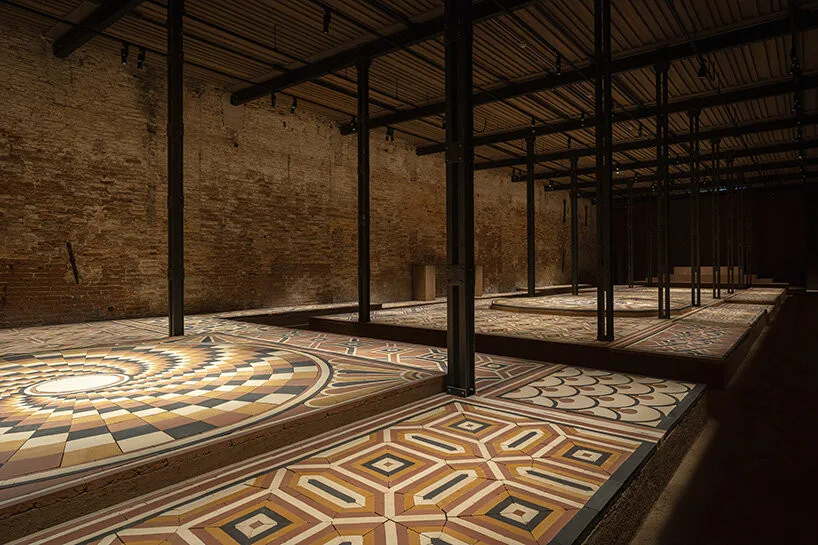
At the 61st International Art Exhibition of La Biennale di Venezia 2026, the National Pavilion of Saudi Arabia presents one of the most remarkable and emotionally resonant installations of the event. Titled May your tears never dry, you who weep over stones, the pavilion is conceived by Saudi-Palestinian artist Dana Awartani and curated by Antonia Carver, with Hafsa Alkhudairi serving as assistant curator. The project transforms the entire floor into a vast earthen landscape composed of more than 29,000 handcrafted clay bricks, inviting visitors to walk through a meditation on memory, heritage, and collective loss.
The installation arrives at a moment when discussions surrounding cultural preservation have become increasingly urgent. Across the Middle East and beyond, historic sites, archaeological remains, and traditional craft practices continue to face threats from conflict, displacement, urbanization, and neglect. Awartani responds to these realities through an immersive spatial experience that asks visitors to consider what remains when cultural memory is lost.
An Artist Rooted in Heritage and Craft
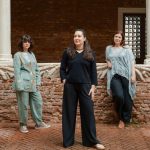
Born in Jeddah and of Saudi and Palestinian heritage, Dana Awartani has built an internationally recognized practice centered on the preservation and reinterpretation of traditional artistic knowledge. Working across painting, installation, sculpture, and performance, she frequently engages with Islamic geometry, architectural ornament, and endangered craft traditions. Her work explores how historical forms can remain relevant within contemporary cultural conversations while addressing questions of identity, displacement, and continuity.
For the Venice Biennale, Awartani extends these concerns on an unprecedented scale. The pavilion represents her biggest project to date, both in terms of physical production and conceptual depth. The installation emerged from extensive research into historically significant sites across the Arab world that have suffered destruction or irreversible damage through war and human conflict. The work gathers fragments of visual memory from multiple locations into a single shared landscape.
Reimagining the Pavilion Floor as an Archaeological Landscape
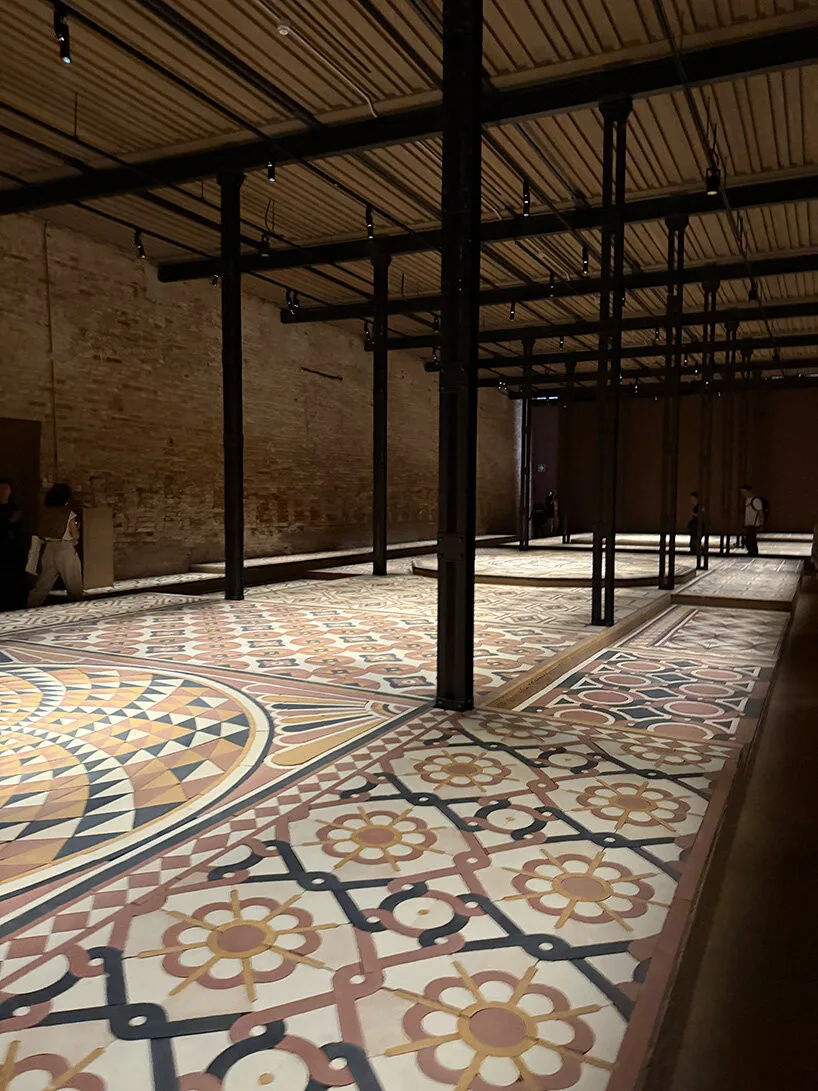
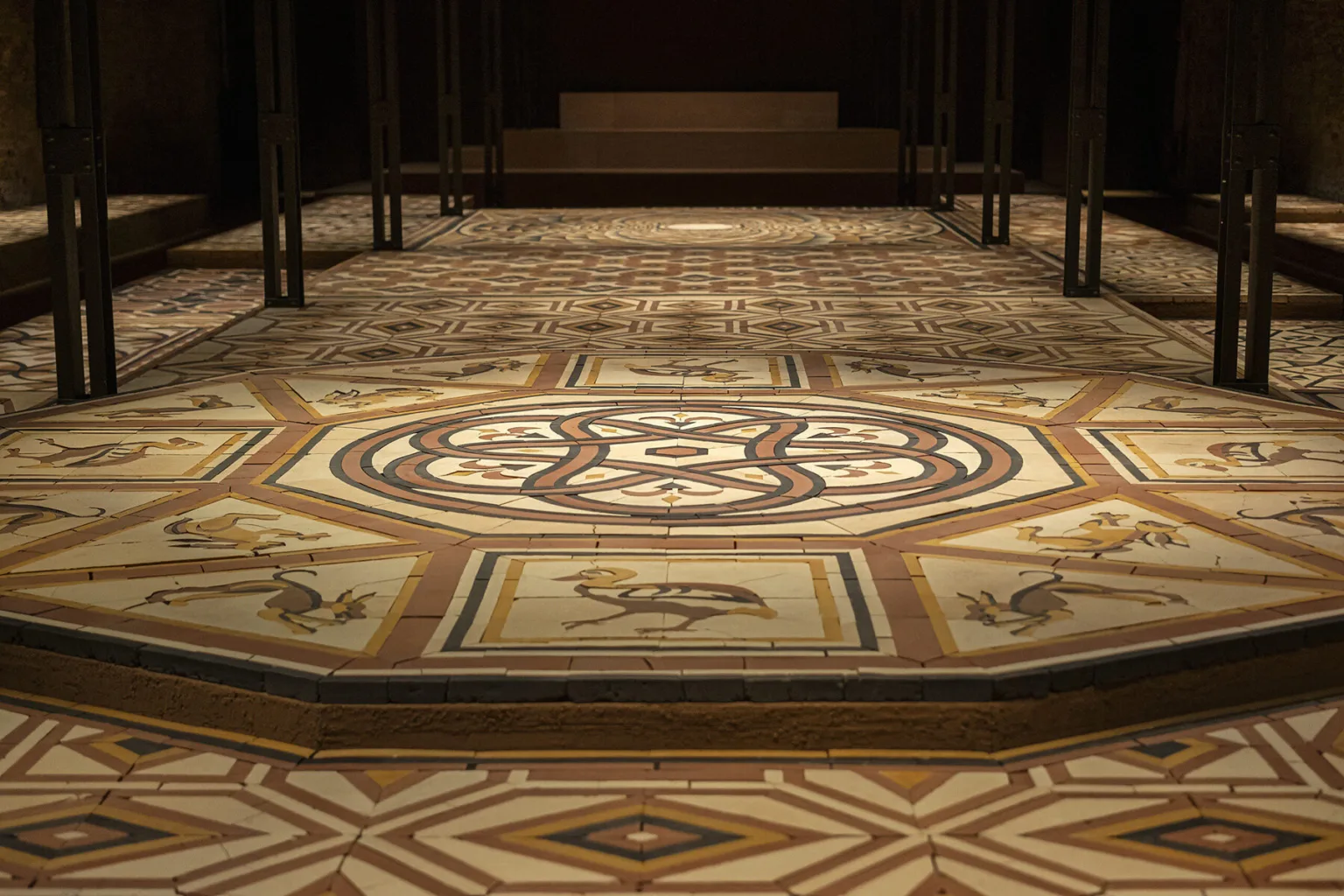
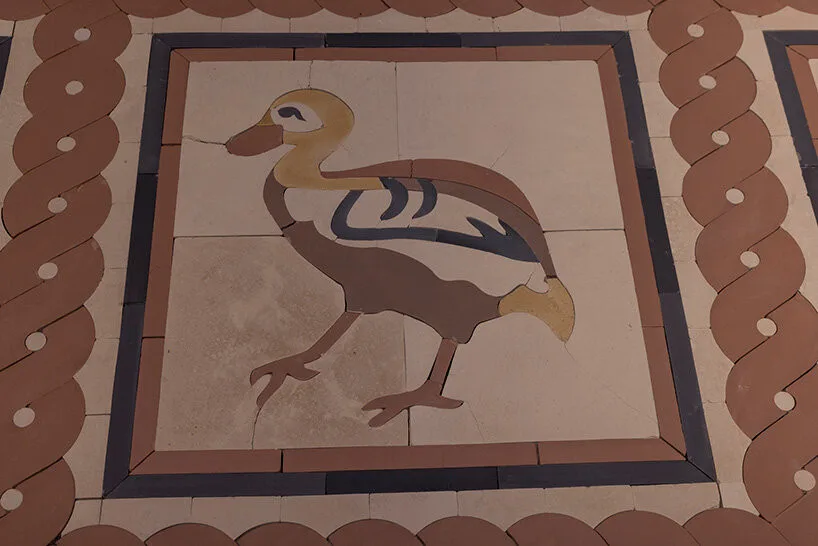
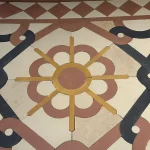
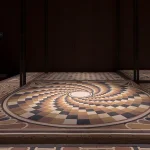
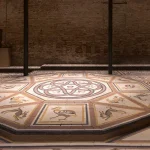
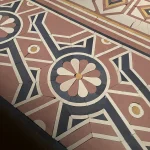
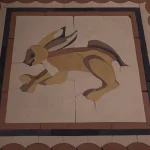
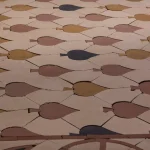
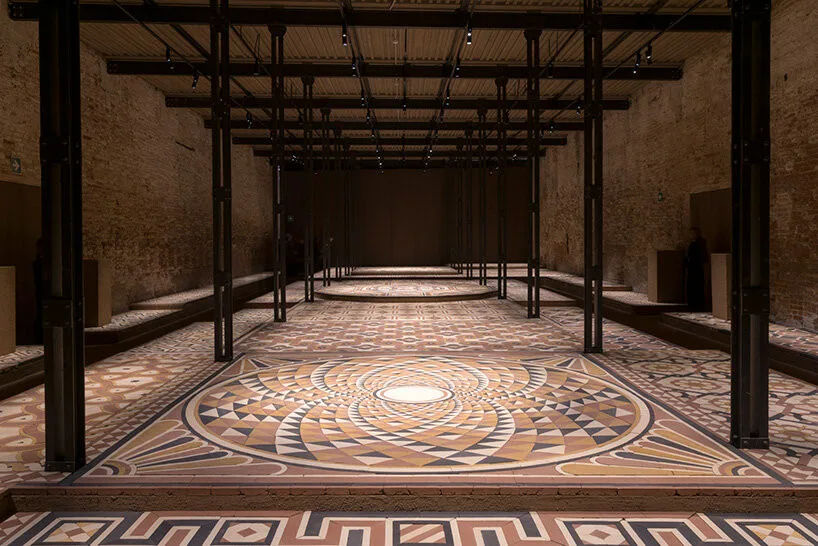
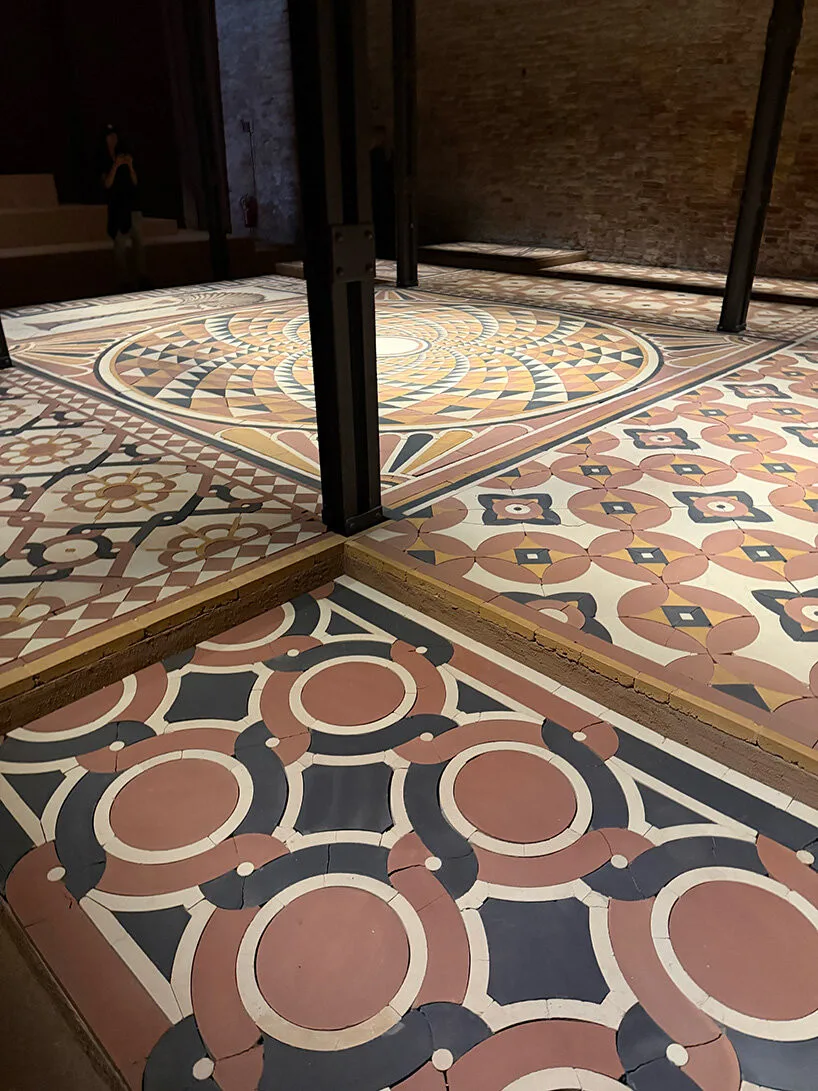
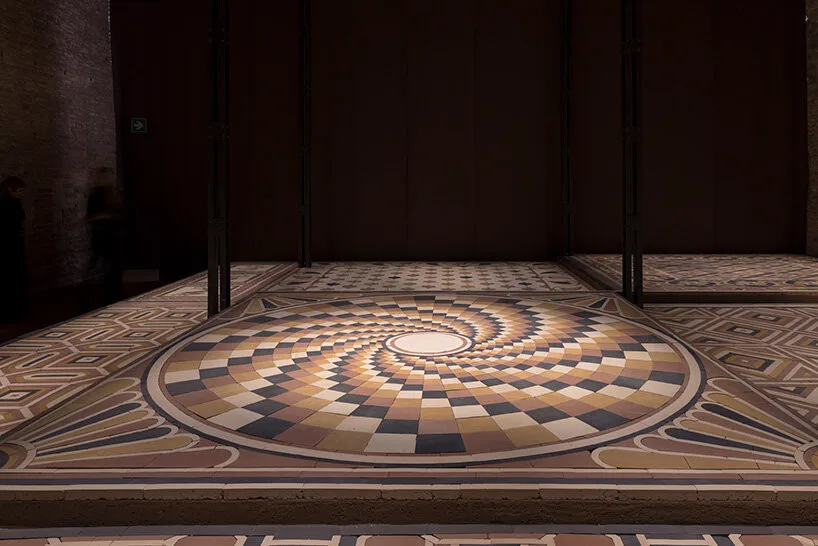
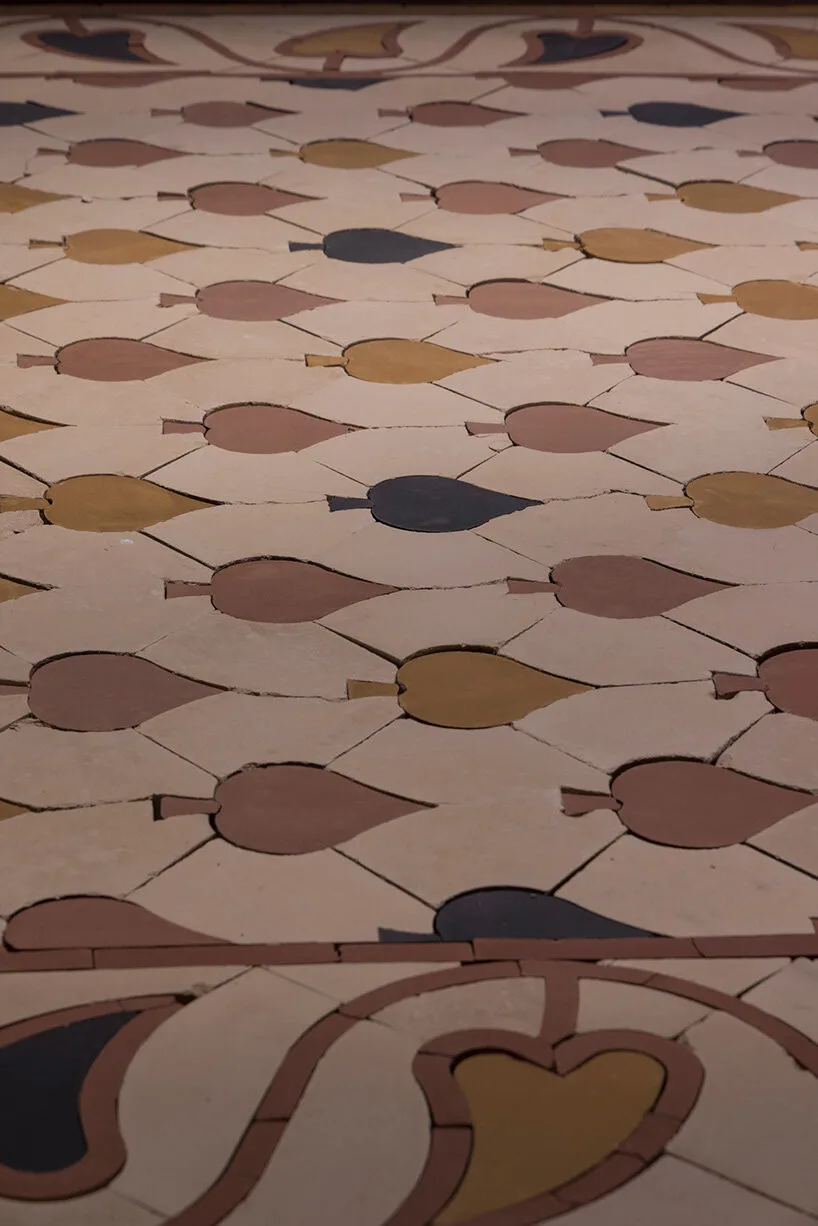
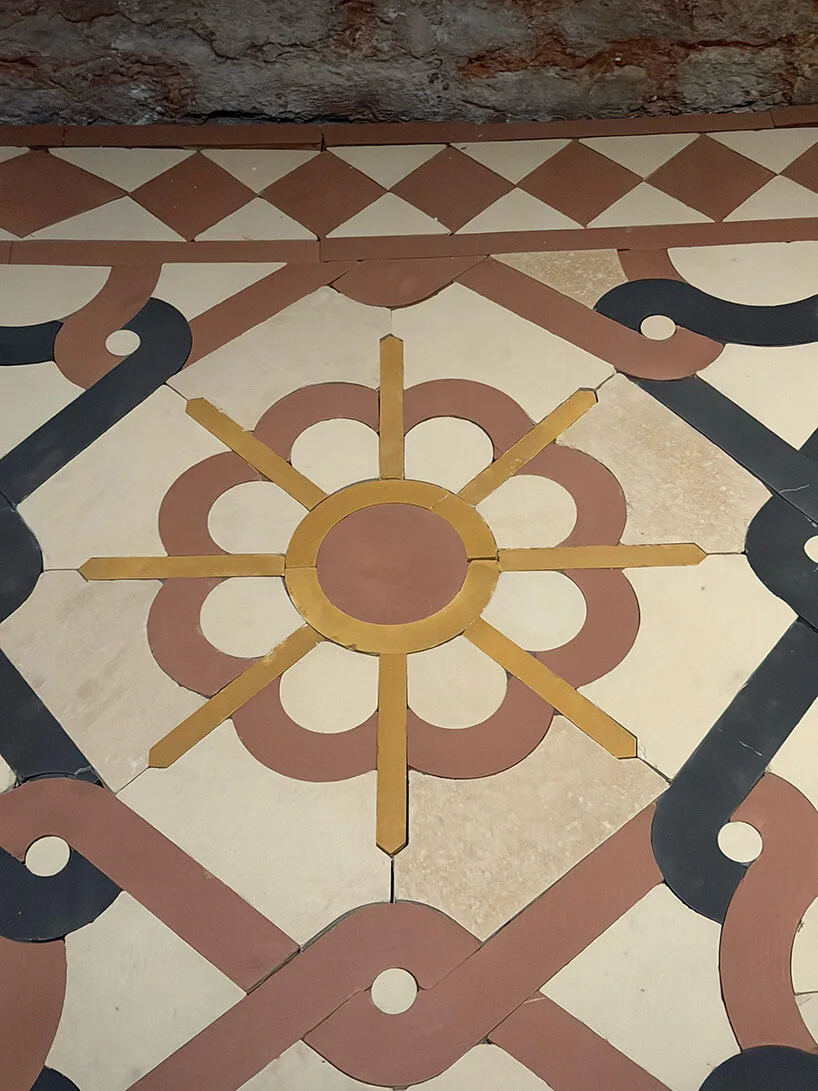
The first encounter with the pavilion is striking. Visitors step into what resembles an archaeological terrain unfolding beneath their feet. The installation spreads across the entire floor, creating pathways that weave through geometric compositions, floral motifs, animal imagery, and intricate ornamental patterns. The effect is neither a ruin nor a reconstruction. Instead, it exists somewhere between memory and excavation, as though fragments of multiple histories have surfaced together in one place.
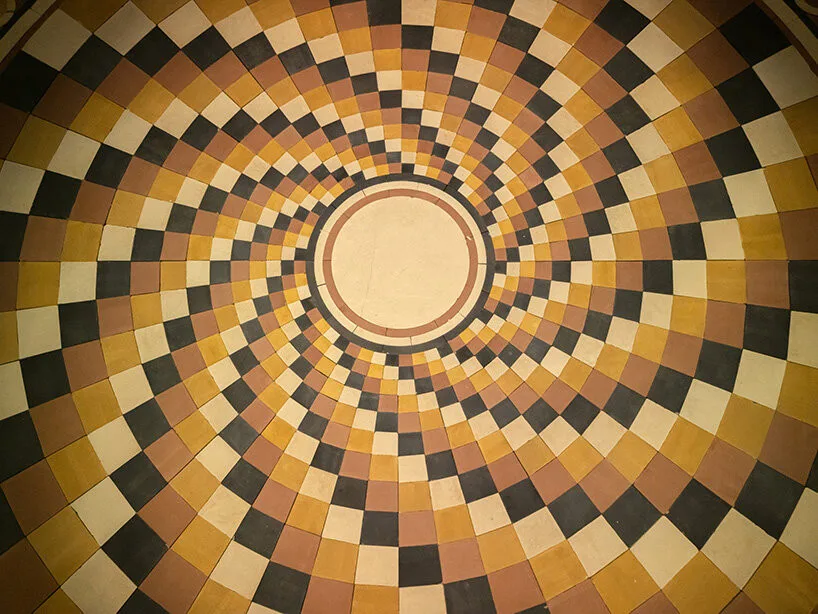
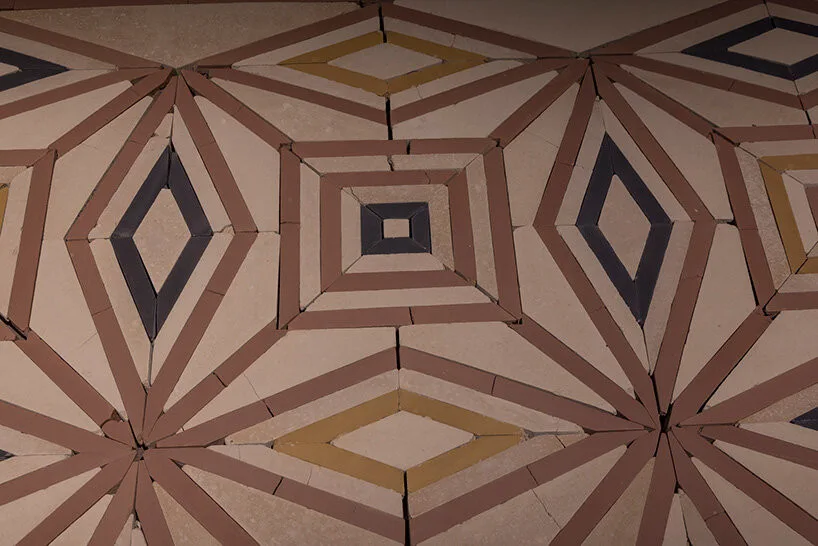
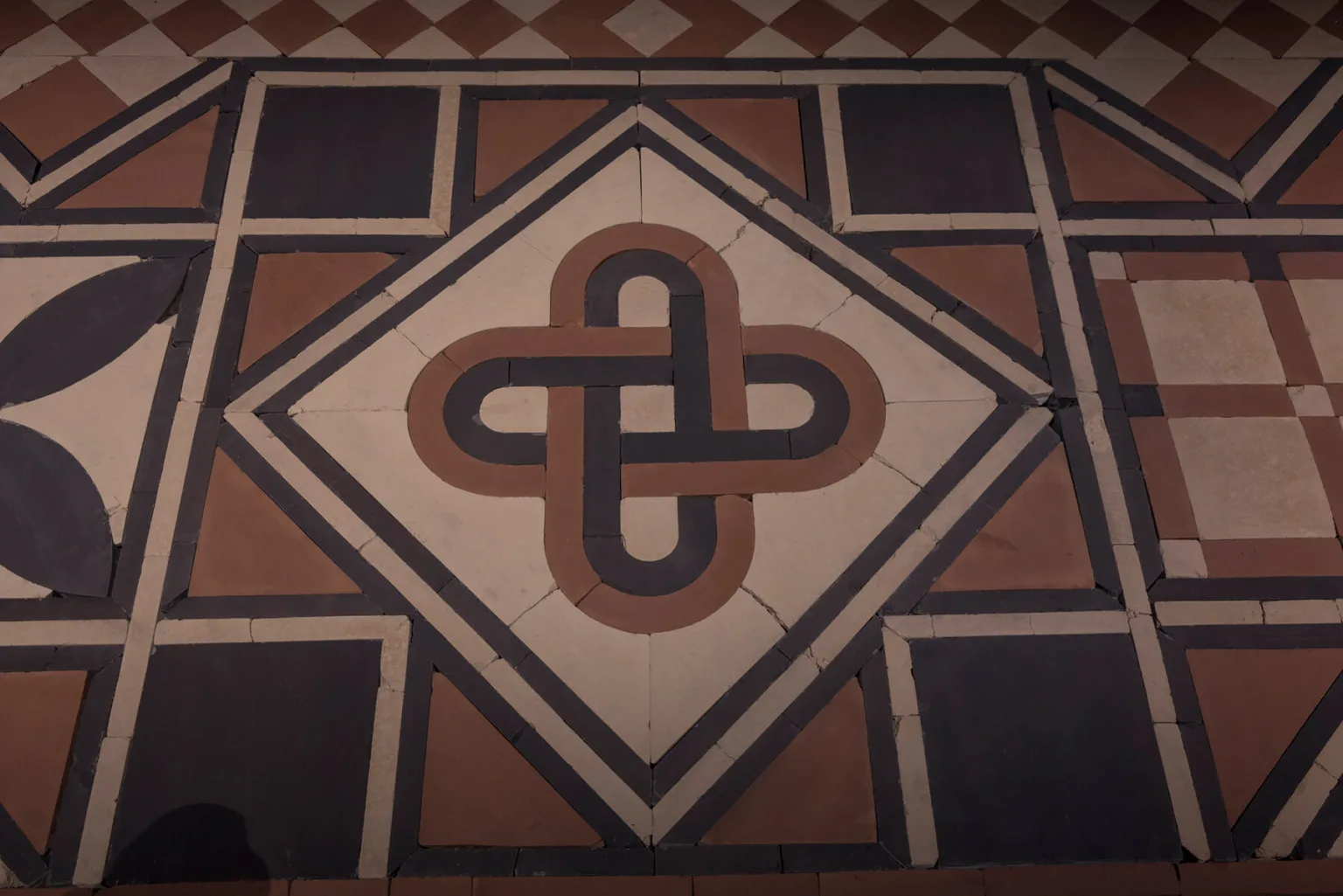
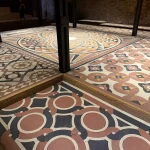
The visual language of the installation draws from mosaic traditions found throughout Palestine, Lebanon, and Syria. These references reveal centuries of cultural exchange across the region, emphasizing that artistic traditions have long transcended contemporary political borders. By bringing these motifs together, Awartani highlights shared histories that stretch back nearly three millennia, positioning cultural heritage as a collective inheritance.
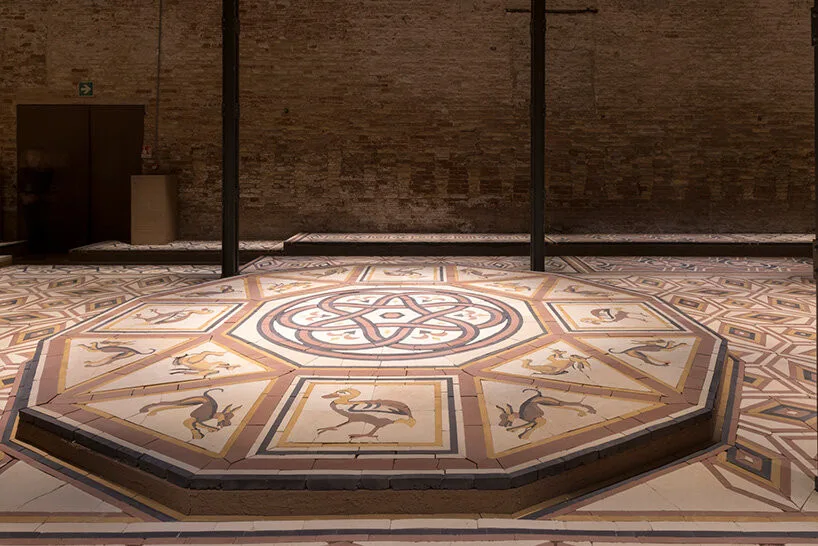
The pavilion, therefore, functions as an artwork and cartography of cultural memory. Each motif serves as a reminder of the connections among communities, traditions, and places whose histories have often been fragmented by conflict and displacement.
The Material Language of Clay
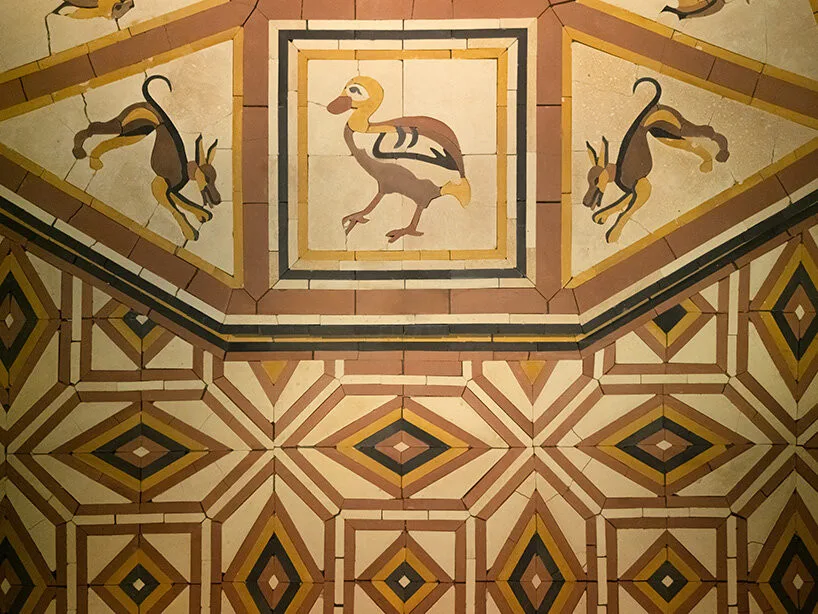
Materiality plays a central role in the pavilion’s narrative. The installation is composed of over 29,000 clay bricks produced from four different earths sourced from distinct regions across Saudi Arabia. Each clay possesses its own natural coloration, creating subtle shifts in tone throughout the composition. The project embraces them as evidence of geographical diversity and material authenticity.
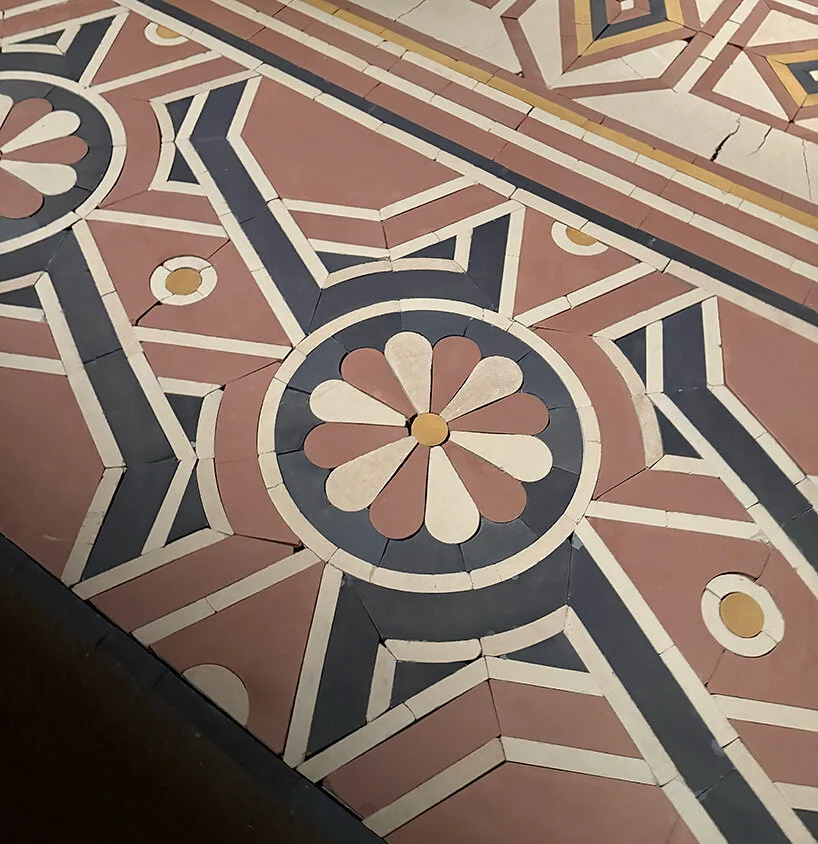
The bricks were formed using traditional techniques and left to dry naturally beneath the Saudi sun. Importantly, the installation avoids the use of binding agents. As a result, the clay slowly dries, contracts, and develops visible cracks over time. These fissures are essential components of the work. They transform the installation into a living metaphor for cultural vulnerability, suggesting how histories can fracture when disconnected from the communities that sustain them.
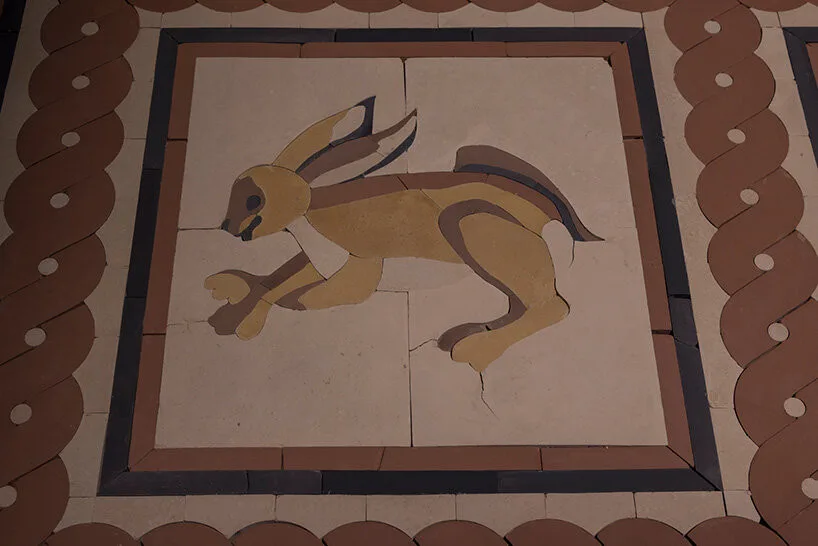
This deliberate fragility distinguishes the pavilion from conventional exhibitions that seek permanence. Awartani presents it as something inherently vulnerable—requiring continuous care, attention, and stewardship.
Many Hands, One Collective Memory
Equally important to the installation is the process through which it was made. The project required nearly 30,000 hours of artisan labor and involved extensive collaboration with craftspeople working in a studio located in the mountains outside Riyadh.
Awartani describes this approach through the concept of “many hands,” a principle deeply embedded within traditional craft cultures. Knowledge is transmitted across generations through practice and collaboration. The pavilion celebrates this form of cultural production by foregrounding the contributions of artisans whose expertise often remains invisible within contemporary art narratives.
By emphasizing collaborative making, the installation becomes an act of preservation in itself. The work safeguards visual traditions, as well as the skills, techniques, and human relationships that allow those traditions to survive. At a time when automation and displacement threaten many forms of traditional craftsmanship, the project argues for the continued relevance of handmade knowledge.
Architecture Without Building
Although presented within an art biennale, the pavilion carries strong architectural qualities. Visitors observe the installation as they move through it. Pathways guide circulation, patterns establish spatial hierarchies, and material textures shape the sensory experience. The floor becomes architecture, generating an environment that is experienced through movement.
The project also reflects contemporary discussions about adaptive interpretations of heritage. Awartani extracts spatial ideas, ornamental systems, and material memories from historical sources and reassembles them into a new environment. This approach allows the pavilion to engage with history while remaining firmly situated in the present.
A Reflection on Cultural Loss and Responsibility
At its core, May your tears never dry, you who weep over stones is a reflection on grief. The title itself evokes mourning for physical structures and for the cultural knowledge embedded within them. Yet the installation is not solely about destruction. It is equally concerned with resilience, care, and the possibility of cultural continuity through collective action.
By combining endangered craft traditions, regional mosaic histories, and locally sourced materials, Awartani creates a work that transforms mourning into a form of preservation. The pavilion suggests that cultural heritage survives not because monuments endure indefinitely, but because communities continue to remember, reinterpret, and remake their histories.
Among the national pavilions of Venice Biennale 2026, Saudi Arabia’s presentation stands out for its ability to merge contemporary art, craft knowledge, material experimentation, and cultural research into a single immersive environment. Through more than 29,000 handcrafted clay bricks, Dana Awartani constructs a powerful meditation on memory and belonging—one that extends beyond national narratives to address the shared cultural histories of an entire region. The result is a pavilion that transforms the language of architecture, craft, and art into a poignant reflection on what societies choose to preserve and what they risk losing.
Image credit: Alvise Busetto / Visual Arts Commission / Ministry of Culture