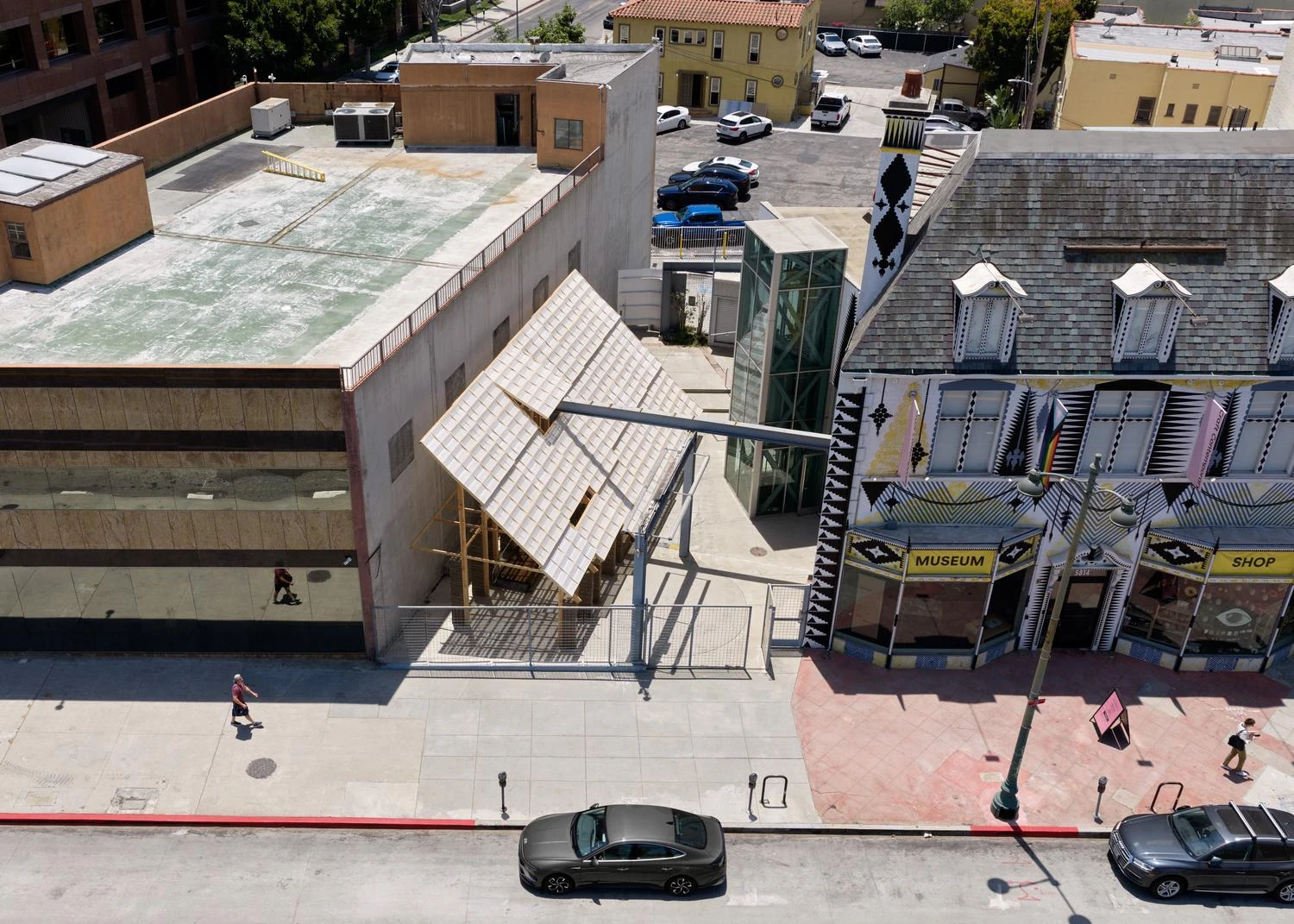
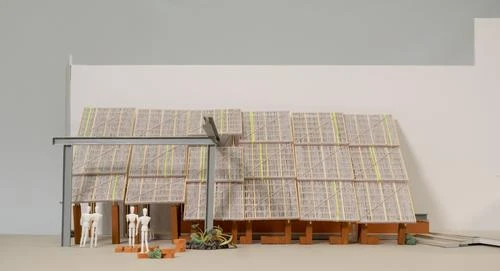
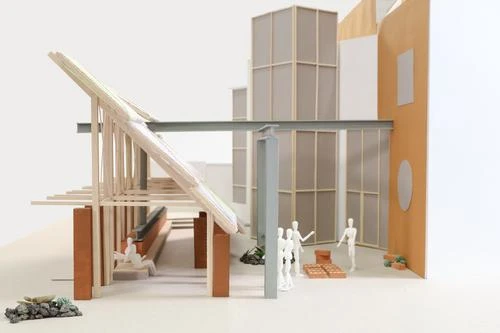
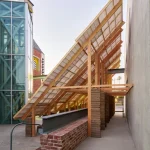
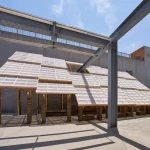
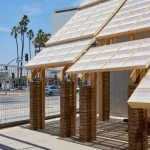
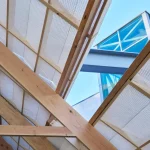
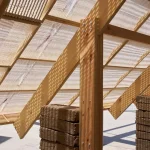
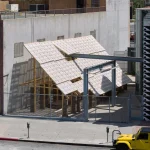
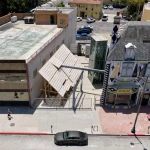
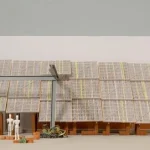
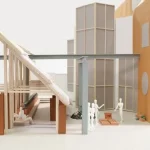
As rising temperatures reshape cities across the world, architects are increasingly revisiting passive environmental strategies. Earthen Comforts: Airing Earth, a temporary pavilion by architect Liz Gálvez and Office e.g., demonstrates how material, structure, and climate-responsive design can work together to create comfortable outdoor environments. Installed in the courtyard of Craft Contemporary in Los Angeles as part of the Materials & Applications summer program, the project investigates architecture’s ability to moderate heat through spatial and material performance rather than energy-intensive systems.
Instead of treating air conditioning as a mechanical device, the pavilion approaches thermal comfort as an architectural condition. The installation draws from passive cooling techniques commonly found in arid regions, where shade, thermal mass, airflow, and natural materials have long been used to regulate temperatures. By adapting these principles to a public courtyard, the project explores how architecture itself can become environmental infrastructure.
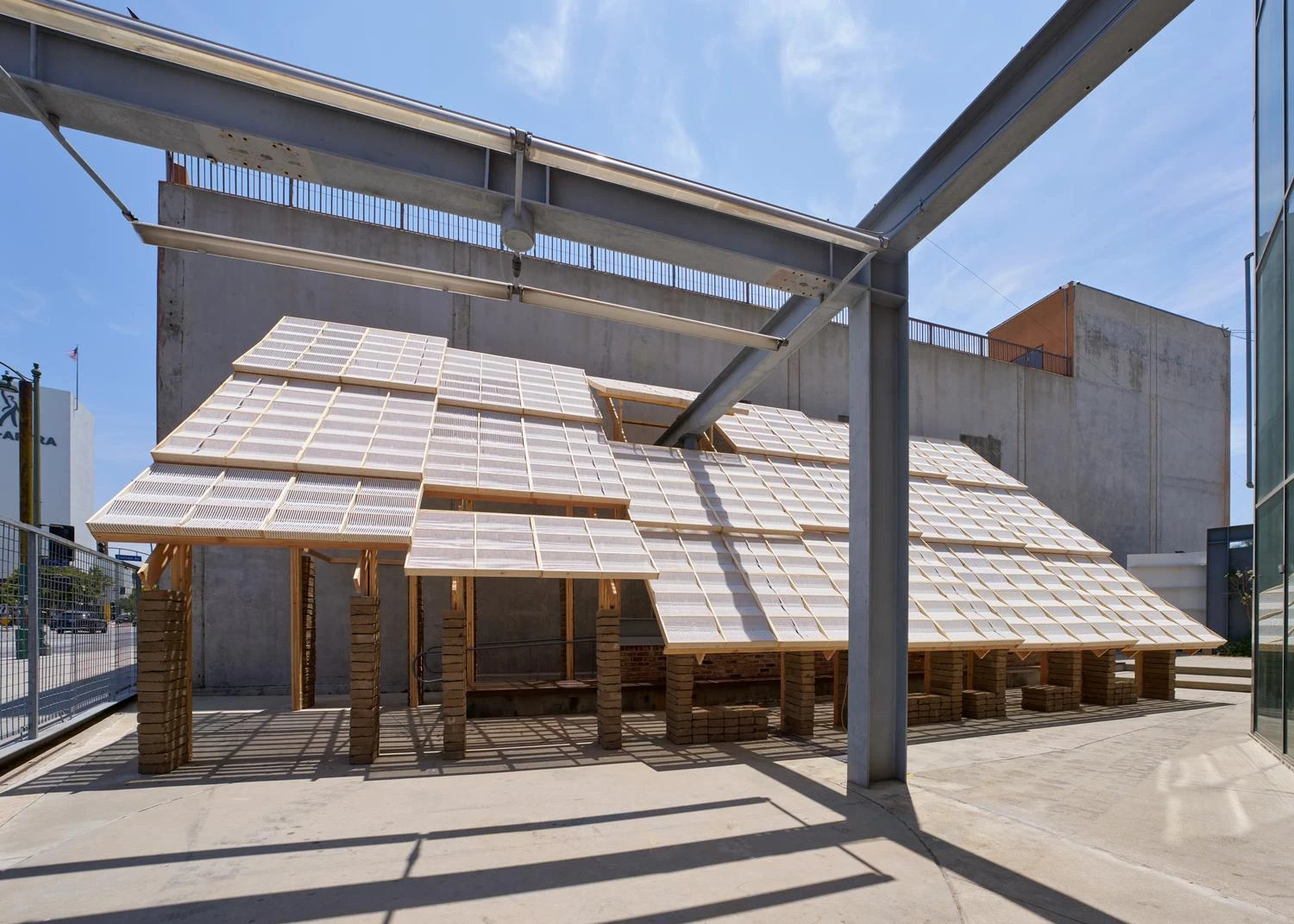
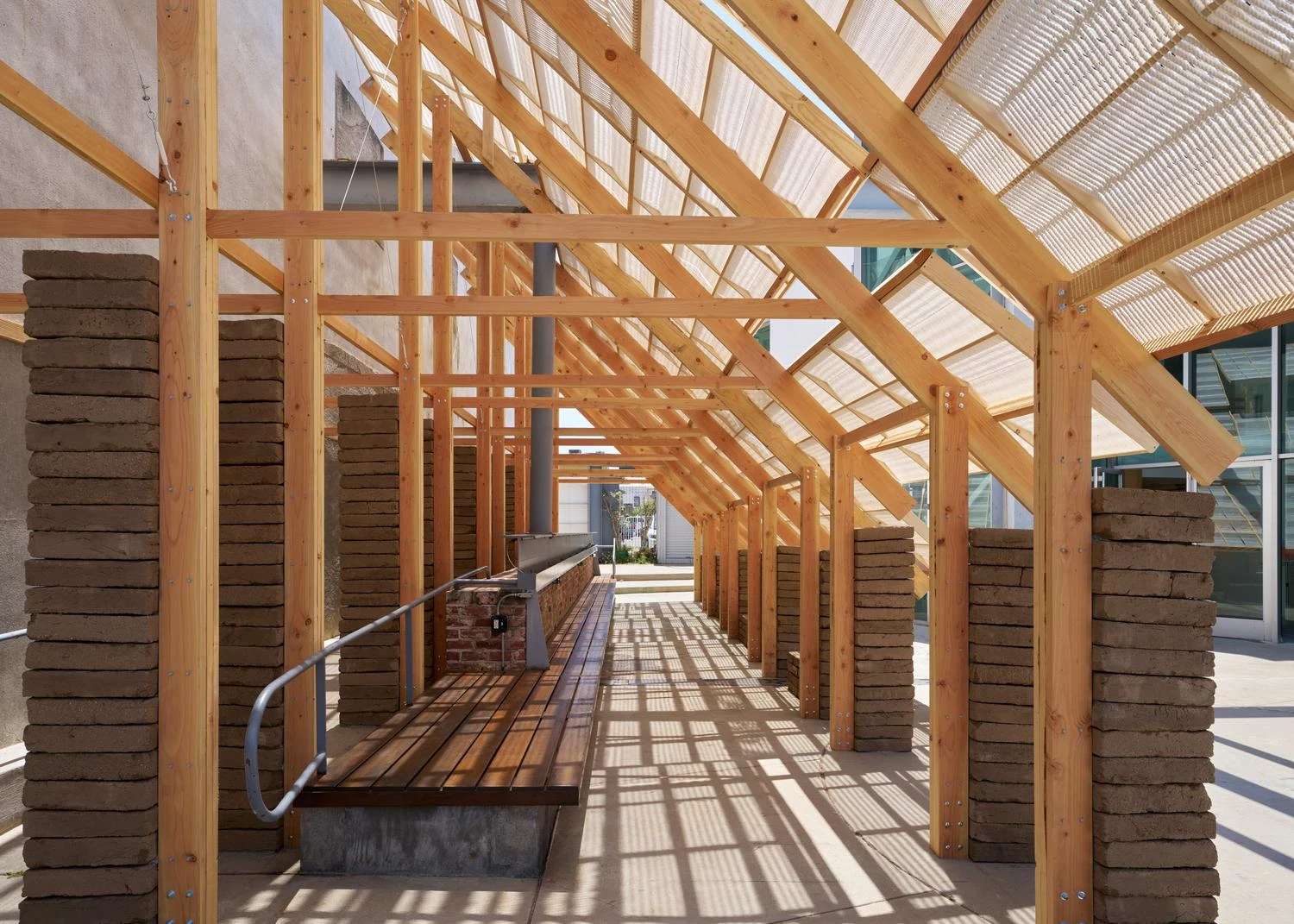
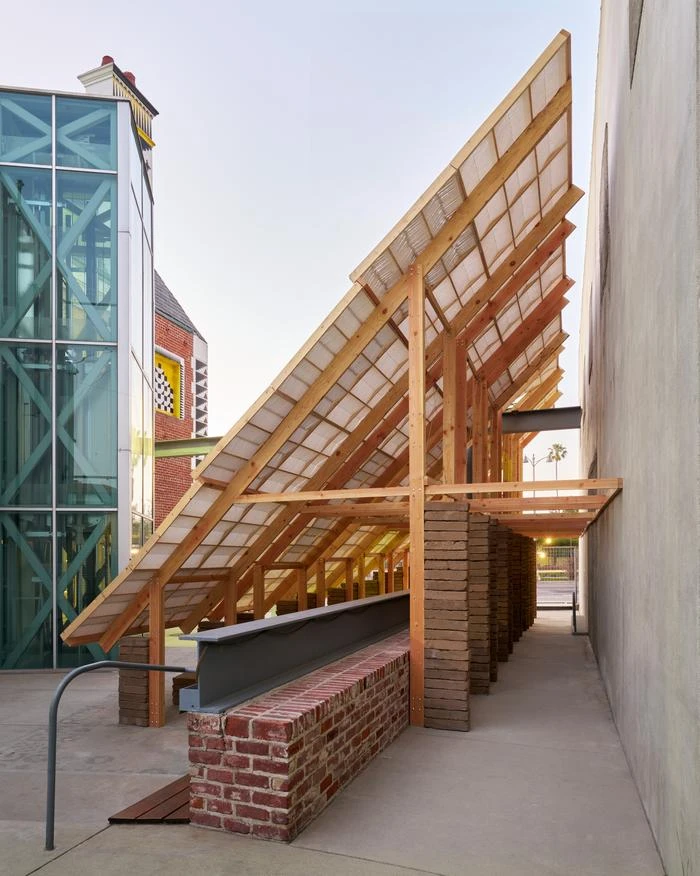
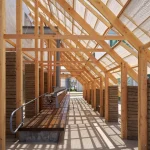
The pavilion is organized as a hypostyle hall, where a rhythmic field of timber columns supports an overhead canopy. The structure creates a porous landscape of shade that encourages movement while allowing air to circulate freely. This openness prevents heat from becoming trapped beneath the roof, maintaining continuous ventilation throughout the space. The repeated structural grid also creates varying densities of light and shadow that change during the day, reinforcing the pavilion’s relationship with the sun.
How an Earthen Pavilion Uses Material to Cool Outdoor Space
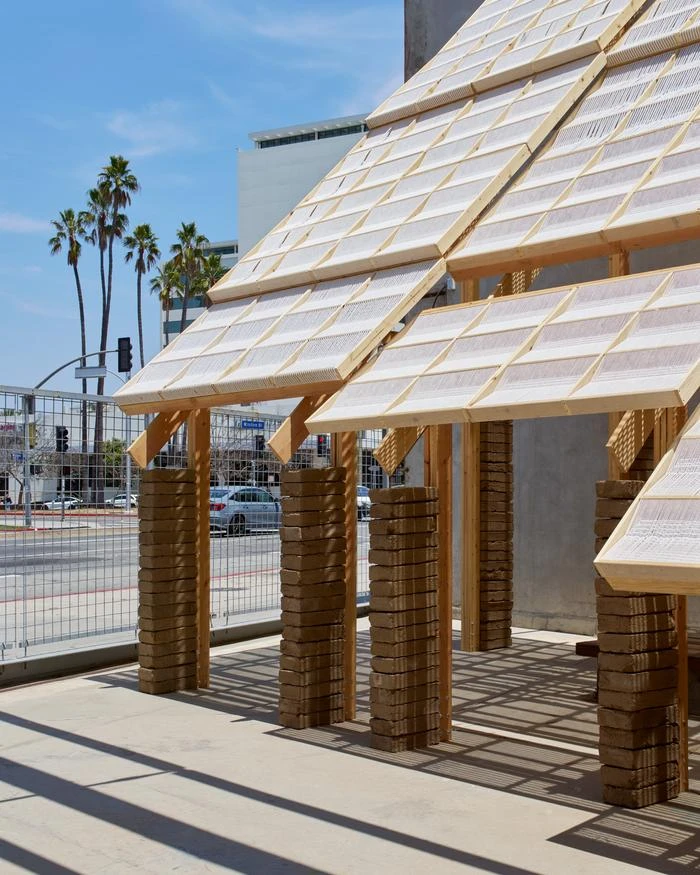
Material selection forms the central architectural idea of the installation. Earth serves not simply as a construction material but as an active environmental component. Earthen elements possess high thermal mass, allowing them to absorb heat during the day and release it gradually as temperatures decline. This capacity moderates surface temperatures and reduces radiant heat within occupied spaces. Unlike lightweight synthetic materials that often retain and re-radiate heat quickly, earth responds slowly to daily temperature fluctuations, creating more stable thermal conditions.
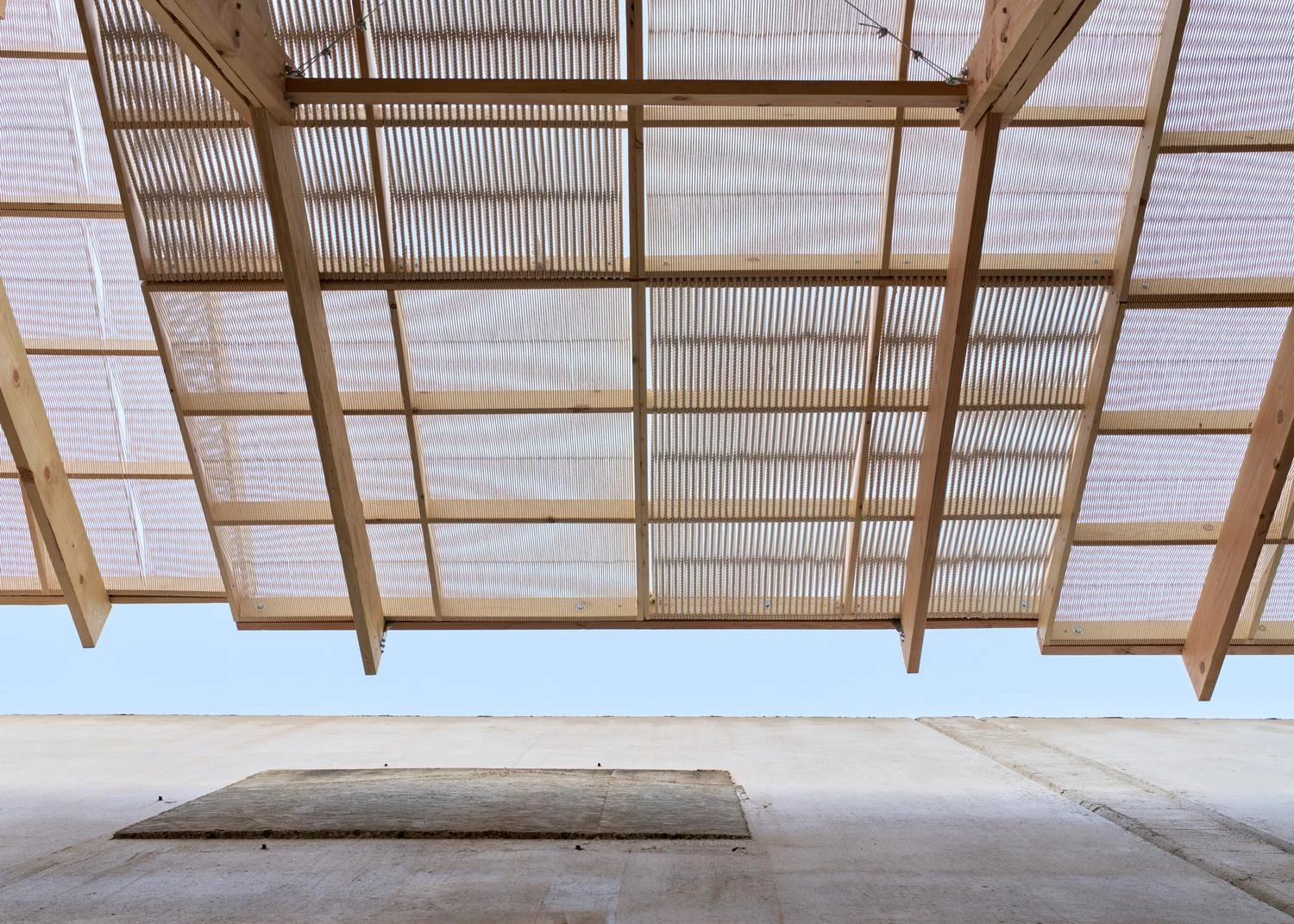
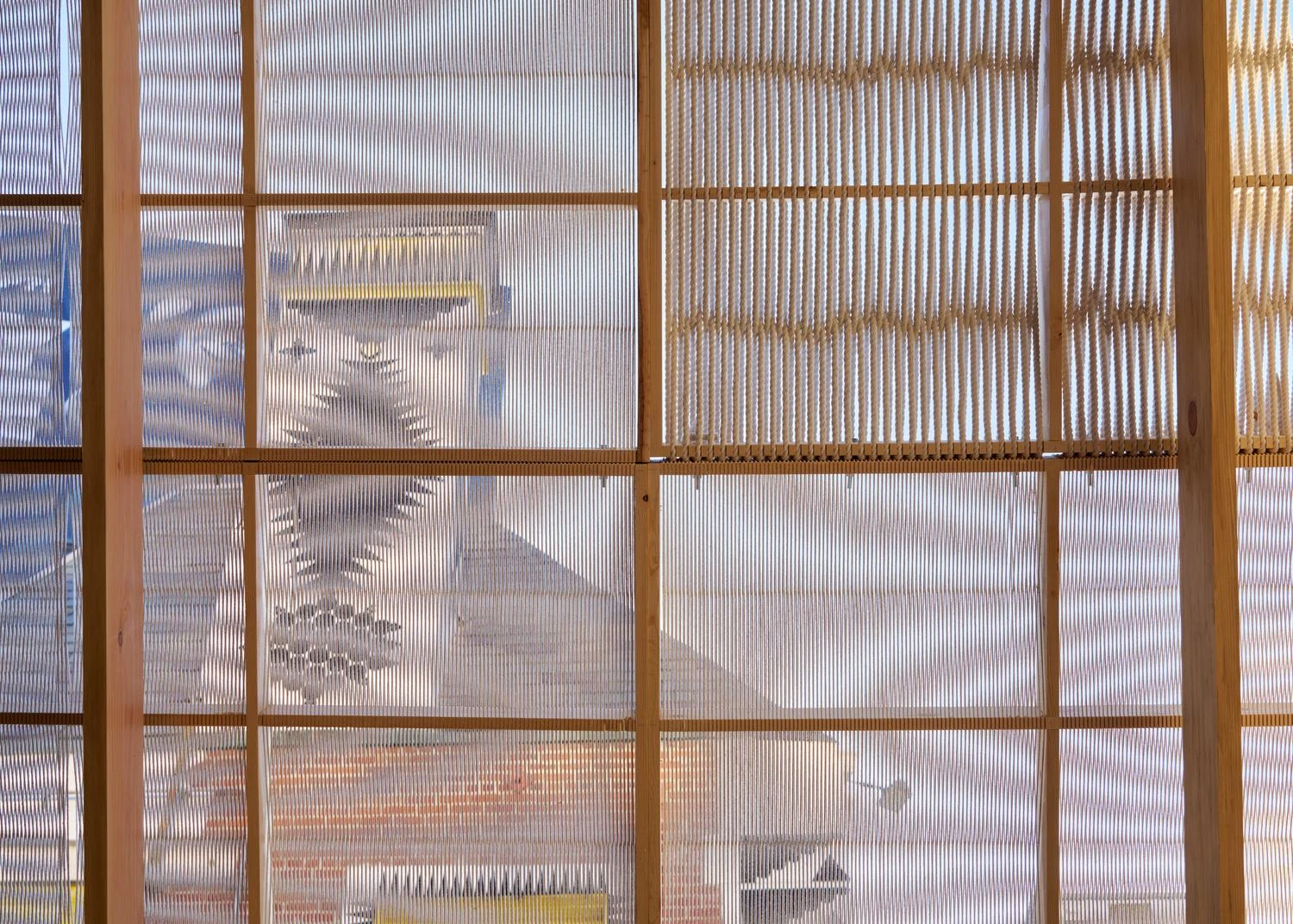
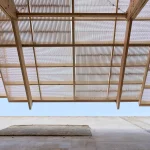
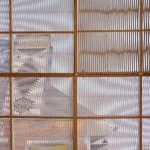
Complementing the earthen components is a layered woven canopy that filters sunlight. The textile-like roof diffuses direct solar radiation while permitting air movement through its porous surface. The combination of filtered daylight, continuous ventilation, and shaded ground significantly improves thermal comfort without mechanical intervention. The pavilion establishes a microclimate where environmental conditions are moderated through architectural form and material behavior.
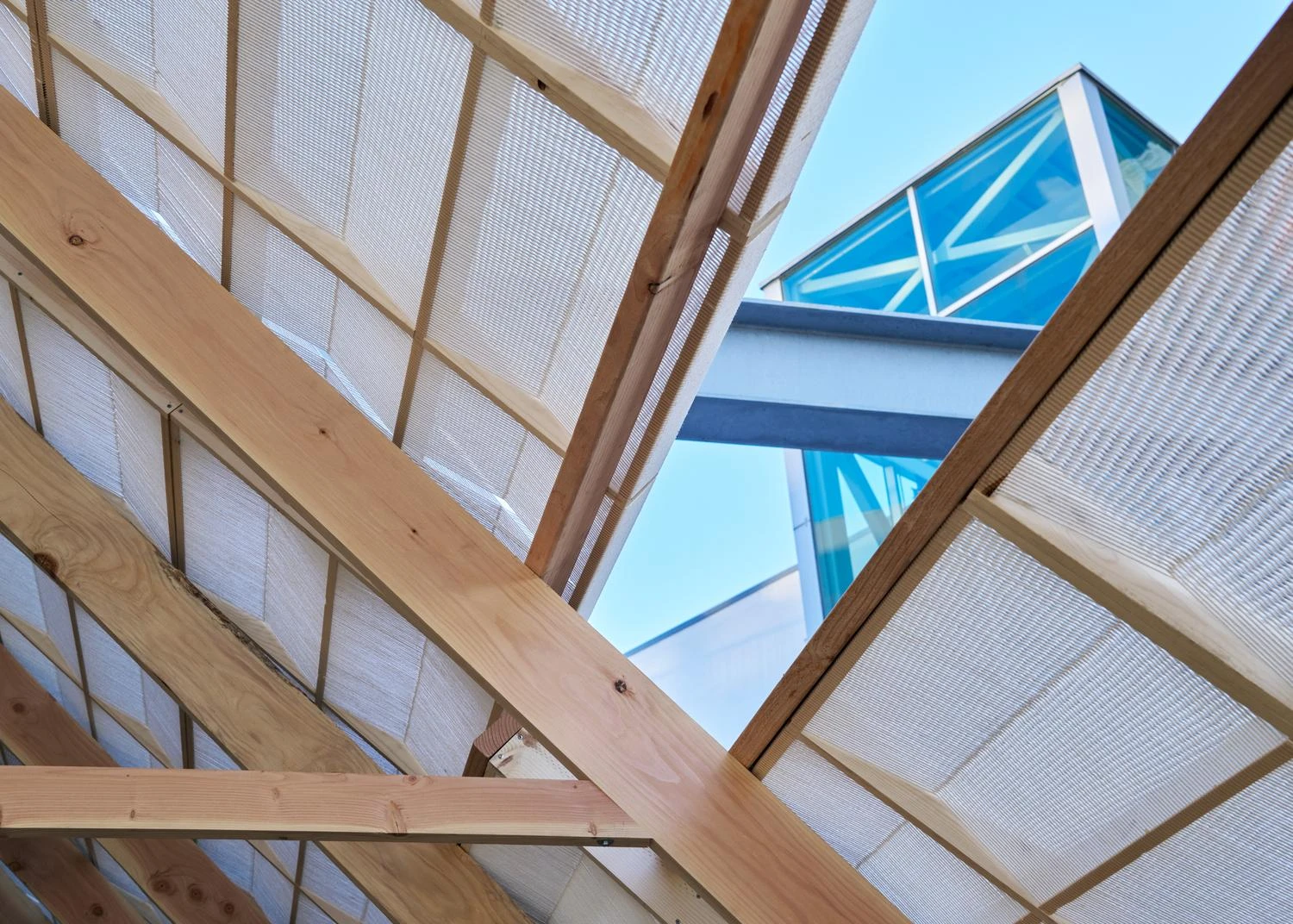
The project also highlights the relationship between mass and fiber as complementary building systems. Heavy earthen elements provide thermal stability, while lightweight woven panels create adaptable shading. Together, these contrasting materials demonstrate how different physical properties can work in balance to regulate heat. The pavilion shows how selected materials can perform environmental functions through their inherent characteristics.
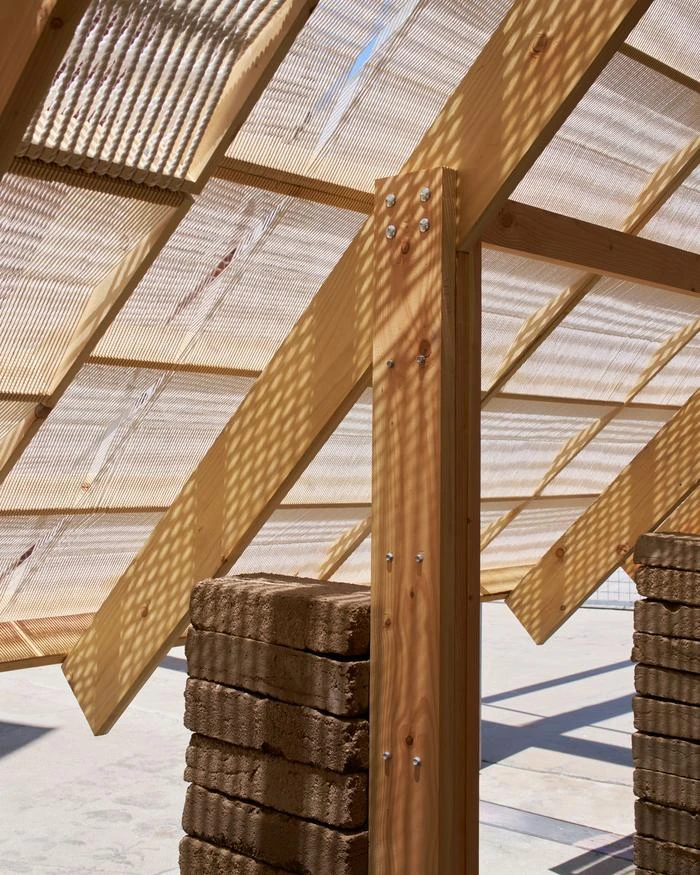
By minimizing dependence on mechanical air conditioning, the pavilion points toward lower operational energy use while encouraging occupants to engage directly with outdoor climatic conditions. Shade, airflow, and material performance become shared public resources rather than hidden building services. In this sense, the installation positions architecture as an active participant in climate adaptation rather than simply a shelter from the weather.
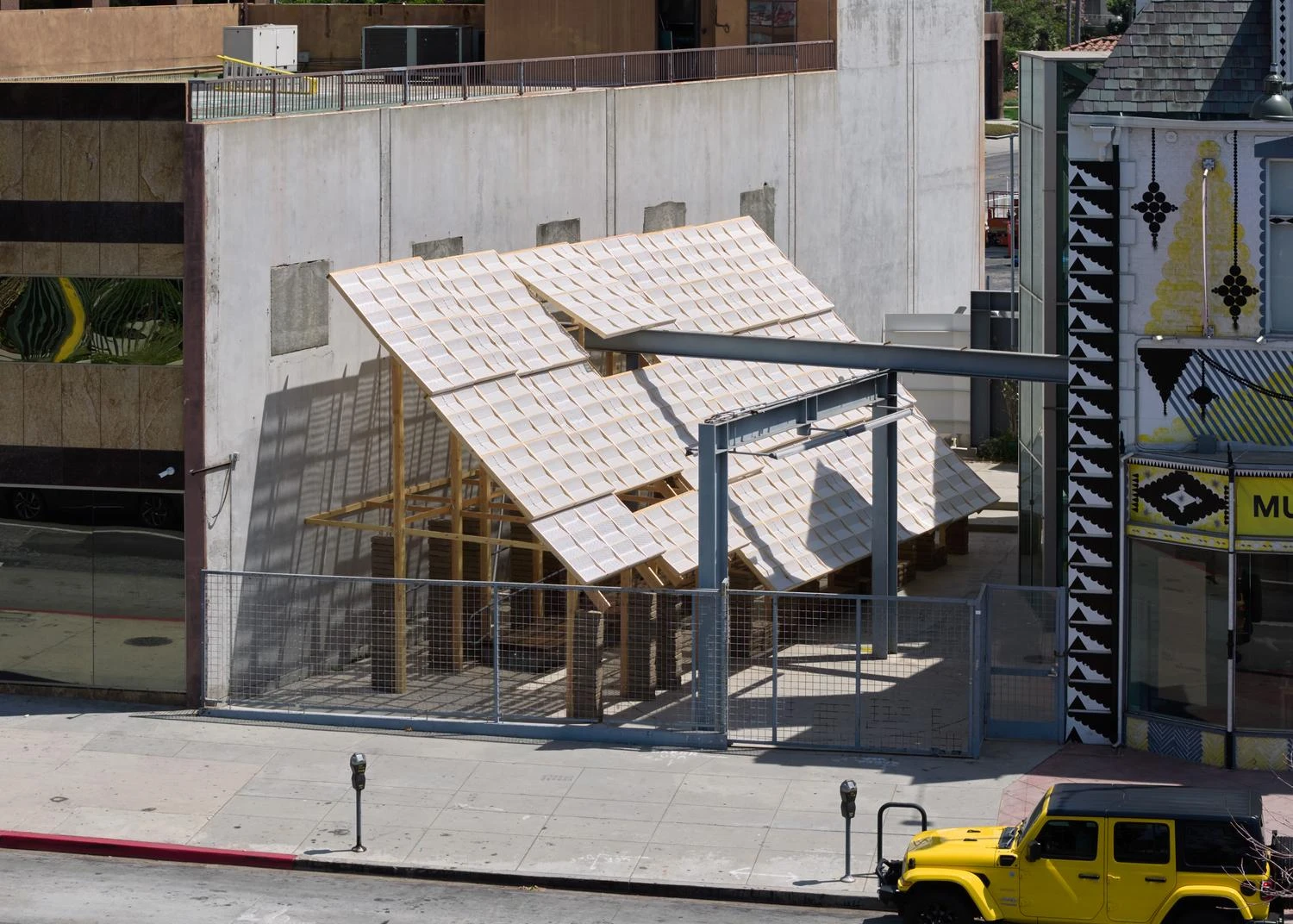
Developed through Office e.g. alongside the (Im)material Matters Lab at the University of California, Berkeley, Earthen Comforts: Airing Earth continues Liz Gálvez’s research into environmentally responsible construction and material experimentation. Installed as the final courtyard pavilion in the long-running Materials & Applications program, the project argues that future cooling strategies may depend as much on architectural design and material intelligence as on mechanical technologies. Through earth, shade, structure, and airflow, the pavilion demonstrates how traditional environmental principles can be reinterpreted to address contemporary urban heat challenges.
Earthen Comforts: Airing Earth Project Facts
Project: Earthen Comforts: Airing Earth
Project Type: Pavilion / Courtyard Installation
Location: Craft Contemporary, Los Angeles, California, USA
Exhibition Dates: May 31 – October 25, 2026
Project Lead: Liz Gálvez
Architecture Firm: Office e.g.
Curation: Kate Yeh Chiu (Materials & Applications)
Photography: Eric Staudenmaier