








For generations, architecture schools have been celebrated as places where creativity flourishes, conventions are challenged, and the future of the built environment is imagined. They are designed to encourage experimentation rather than certainty, rewarding students who question established ideas and produce bold visions of architecture yet to exist. Studio culture, juries, theoretical debates, and carefully crafted presentations have become defining characteristics of architectural education across the world. Yet beyond the walls of academia, the profession has undergone profound transformation.
Architects are now expected to work within multidisciplinary teams, coordinate complex digital models, understand sustainability standards, manage budgets, negotiate with clients, interpret regulations, and oversee increasingly sophisticated construction processes. Between these expectations and what many universities continue to teach lies a widening disconnect that has become one of the profession’s most persistent problems.
As architectural practice continues to evolve, many architects are turning to continuous learning beyond university. Through online workshops taught by professionals from firms such as BIG, Foster + Partners, Zaha Hadid Architects, UNStudio, and MVRDV, PAACADEMY helps bridge the gap between academic theory and the practical, technological, and collaborative skills shaping today’s profession.
The irony is striking. Students spend five or six years immersed in architectural education only to discover that graduation marks the beginning of learning the profession they thought they had already studied. Employers regularly complain that graduates lack practical skills, while graduates express frustration that years of intensive education have left them feeling unprepared for professional practice. Universities, meanwhile, defend themselves by arguing that their role is to educate designers rather than train employees.
Each side contains an element of truth, yet together they reveal a deeper structural failure. The problem is not that architecture schools teach creativity or that firms demand technical competence. The problem is that architectural education and architectural practice increasingly appear to be preparing students for two different professions.
The Illusion of Architectural Education
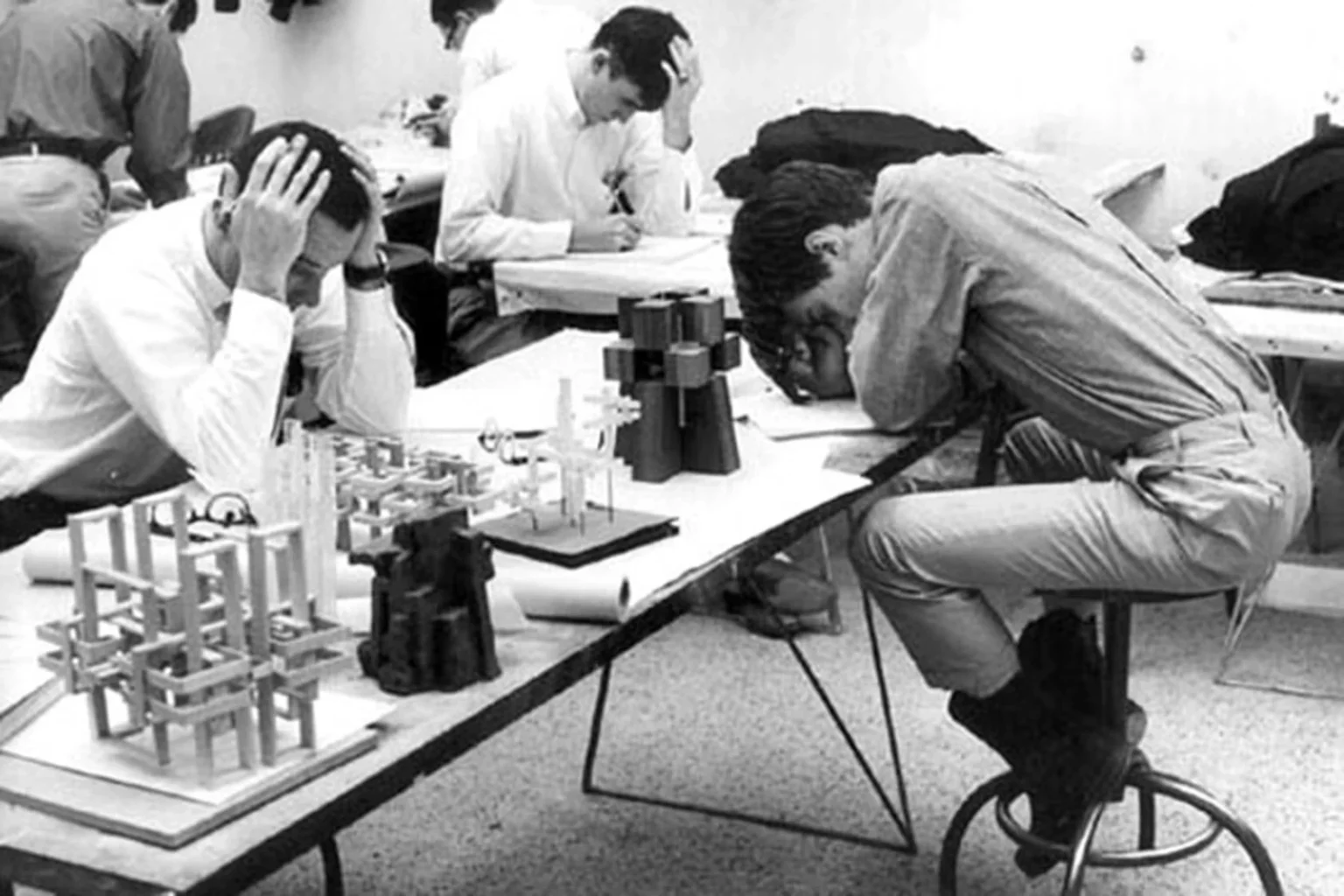
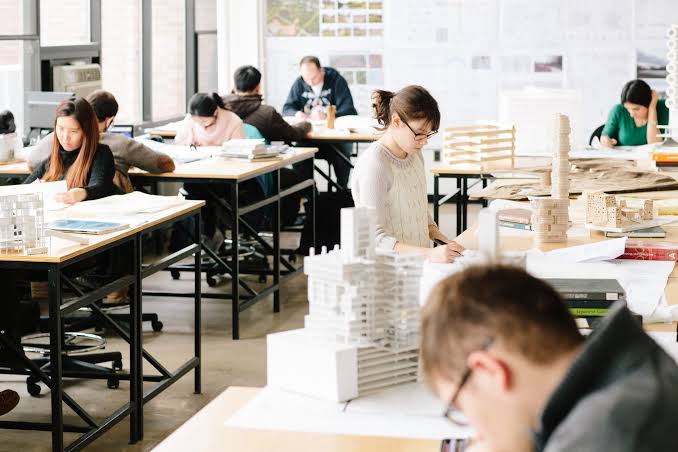
At the center of this disconnect is the design studio, the undisputed heart of almost every architecture program. Few would question its importance. The studio teaches students to think critically, synthesize complex information, develop spatial ideas, and defend their proposals through discussion and critique. These are indispensable qualities for any architect. The problem emerges when the studio becomes so dominant that nearly every other aspect of professional education is treated as secondary.
Within academia, success is often measured by originality, conceptual sophistication, graphic excellence, and persuasive storytelling. Students are encouraged to pursue ambitious ideas, explore speculative futures, and produce visually compelling projects. In many schools, the most celebrated designs are those that challenge conventions, regardless of whether they could realistically be constructed. This educational culture undoubtedly nurtures imagination, but it also creates an unrealistic perception of architectural practice. The profession is presented primarily as an artistic endeavor rather than a collaborative process shaped by technical, financial, legal, and social realities.
The transition from university to practice therefore becomes deeply disorienting. Graduates quickly discover that architects spend far more time coordinating consultants than sketching iconic buildings. They revise construction documents, respond to contractors’ requests for information, attend coordination meetings, negotiate with clients, resolve regulatory issues, and manage project schedules. These responsibilities receive only limited attention in many academic programs despite occupying a significant portion of professional life.

Construction knowledge illustrates this problem particularly well. Students routinely design museums, hospitals, airports, housing complexes, and urban districts without ever participating in the construction of comparable projects. Construction technology is frequently confined to isolated lecture courses that remain disconnected from design studios. Consequently, students may understand structural principles in theory while struggling to appreciate how architecture is assembled on site. They produce elegant details without fully understanding sequencing, tolerances, procurement, maintenance, or cost implications.
This separation between design and construction reflects an outdated educational assumption that creative thinking and technical knowledge are independent domains. In reality, they are inseparable. Every design decision simultaneously becomes a construction decision, a financial decision, an environmental decision, and often a political decision. The thickness of a wall influences structural behavior, thermal performance, construction cost, usable floor area, and long-term maintenance. Material selection affects durability, carbon emissions, local supply chains, labor requirements, and lifecycle costs. Architecture cannot be reduced to visual composition because every drawing eventually becomes physical reality.

Perhaps the most overlooked omission is the business of architecture itself. Universities frequently celebrate architecture as a cultural and artistic discipline while paying remarkably little attention to the economic systems that make buildings possible. Yet architecture is fundamentally a professional service. Projects depend on contracts, procurement strategies, fee negotiations, insurance, risk management, budgeting, and financial planning. Most architects eventually become project managers, business owners, consultants, or team leaders, but many graduate without understanding the commercial realities that shape every commission. This disconnect contributes to one of the profession’s long-standing contradictions: architects advocate for greater professional recognition while receiving little formal education in managing professional practice.
Communication suffers from a similar imbalance. Students become highly skilled at producing sophisticated visual presentations, yet relatively little emphasis is placed on communicating with people who are not architects. Professional practice requires constant negotiation with engineers, contractors, planners, developers, government officials, community groups, and clients whose priorities differ significantly from those discussed in studio critiques. The ability to explain technical ideas clearly, negotiate competing interests, and build consensus frequently determines project success. Architecture is ultimately a collaborative discipline, yet education often continues to celebrate the image of the solitary designer.
The Growing Divide Between Academia and Practice
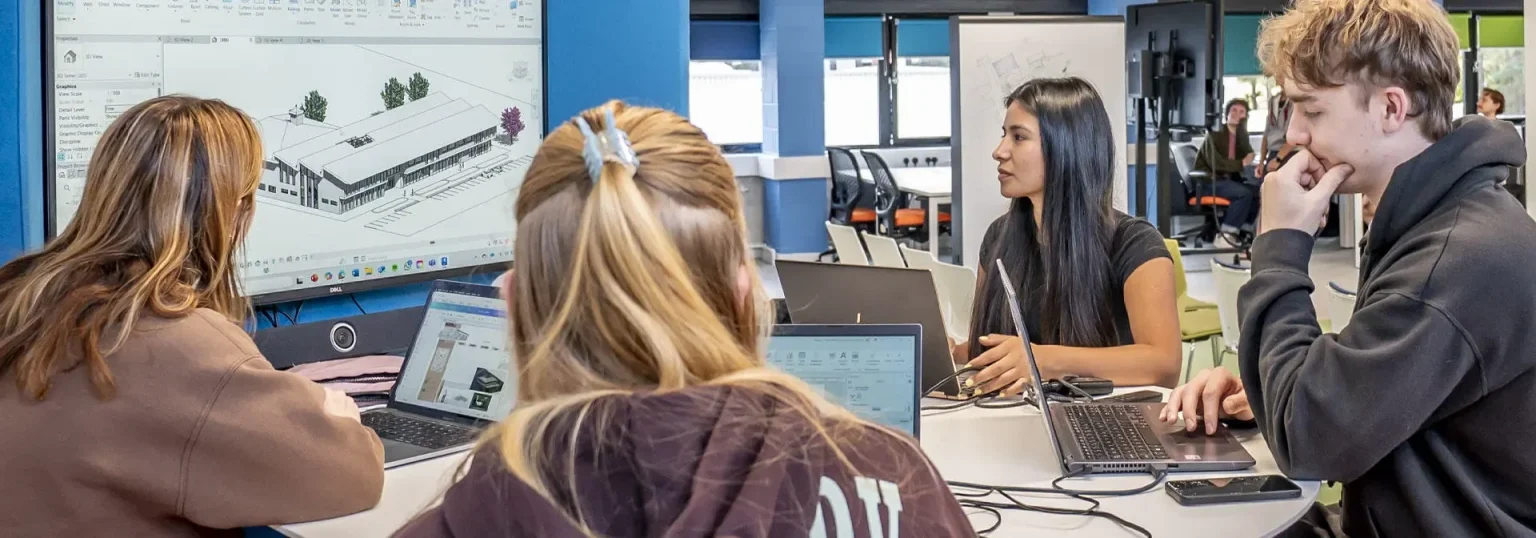
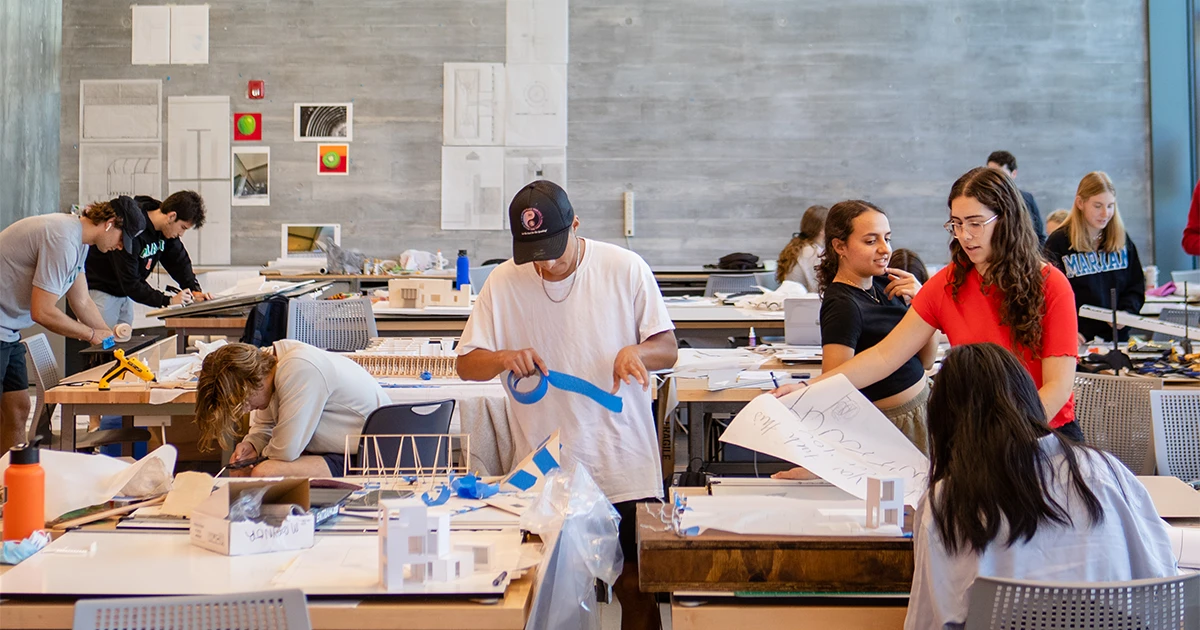
While architectural education has changed incrementally, professional practice has transformed dramatically. Digital technologies alone have redefined nearly every stage of project delivery. Building Information Modeling has replaced isolated drafting with integrated collaboration. Cloud-based platforms allow architects, engineers, contractors, and clients to work simultaneously on shared project information. Environmental simulation informs design decisions from the earliest conceptual stages. Computational design has expanded formal possibilities, while digital fabrication has altered production methods. More recently, artificial intelligence has begun influencing visualization, programming, documentation, code analysis, and project management.
Many architecture schools acknowledge these developments but struggle to integrate them meaningfully into the curriculum. Software courses are often treated as technical supplements rather than fundamental components of architectural thinking. Students learn how to operate digital tools but not how these tools transform professional collaboration. Producing attractive renderings remains easier to assess than managing complex BIM workflows or coordinating multidisciplinary information models. As a result, graduates frequently possess impressive visualization skills while lacking familiarity with the collaborative digital environments that define contemporary practice.
Artificial intelligence has exposed this educational hesitation even more clearly. Some institutions enthusiastically embrace AI without critical reflection, while others resist it almost entirely, fearing that technological assistance threatens creativity. Both positions misunderstand the issue. AI is neither a replacement for architectural judgment nor a temporary trend to be ignored. Like CAD, BIM, and computational design before it, artificial intelligence represents another technological shift that architects must learn to evaluate critically and use responsibly. Graduates entering practice increasingly encounter AI-assisted workflows regardless of whether their universities chose to engage with them.
Sustainability has created another significant challenge. Environmental responsibility is no longer an optional specialization but a fundamental expectation of contemporary architecture. Architects are expected to understand embodied carbon, circular construction, climate resilience, energy performance, passive environmental strategies, and lifecycle assessment. Yet sustainability is still too often presented as a separate course rather than an integrated design methodology. In practice, environmental considerations influence every decision from site selection and structural systems to material specification and building operation. Treating sustainability as an isolated subject reinforces the mistaken belief that ecological performance can simply be added to architecture rather than designed into it from the beginning.
Globalization has further complicated professional expectations. Contemporary architectural projects frequently involve international consultants, multinational clients, remote collaboration, and culturally diverse project teams. Architects must navigate different regulatory systems, communicate across disciplines and cultures, and adapt to rapidly changing technologies. Technical competence alone is no longer sufficient. Flexibility, collaboration, leadership, and interdisciplinary understanding have become equally important. Yet architectural education often remains centered on individual authorship, encouraging students to view design as a personal creative achievement rather than a collective process.
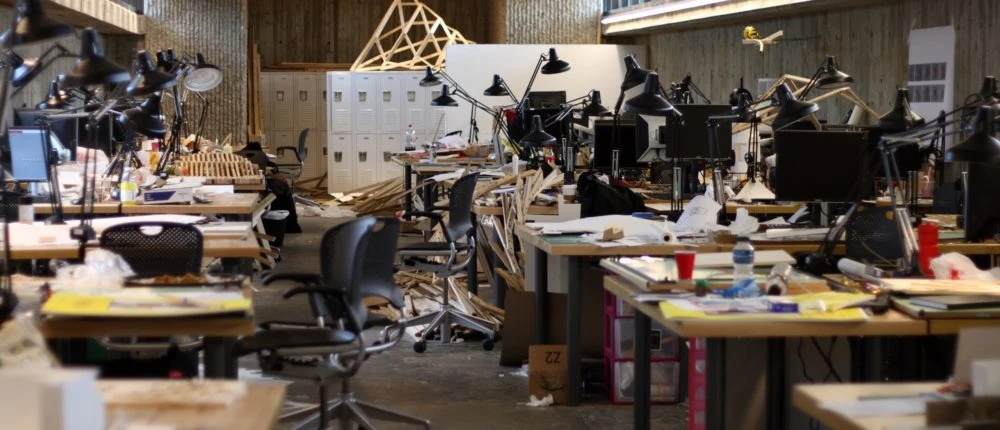
Criticism of universities, however, should not become an excuse for absolving the profession itself. Architectural firms frequently expect graduates to become productive almost immediately while investing less time in structured mentoring than previous generations did. Commercial pressures have reduced apprenticeship opportunities, leaving young architects to acquire practical knowledge through trial and error. Many employers criticize educational shortcomings while simultaneously expecting universities to deliver graduates who require virtually no additional training. Such expectations are unrealistic. Architecture has become too complex for any educational program alone to produce fully independent professionals.
Professional organizations also share responsibility. Licensing systems often separate education, internship, examination, and continuing professional development into disconnected stages rather than viewing them as components of a lifelong learning process. The quality of early professional experience frequently depends on the individual employer rather than on consistent educational frameworks. Consequently, graduates encounter highly uneven opportunities for mentorship and professional growth.
Rethinking the Future of Architectural Education
The solution is not to transform universities into vocational training centers, nor is it to abandon the intellectual and cultural ambitions that distinguish architectural education from technical instruction. Creativity remains architecture’s defining strength, and design studios should continue to encourage experimentation and critical inquiry. However, creativity should no longer be presented as separate from technical competence. The most successful architects are rarely those who ignore constraints; they are those who understand constraints deeply enough to transform them into opportunities.
A more balanced educational model would integrate professional realities directly into the design studio instead of treating them as peripheral subjects. Construction technology would be embedded within design projects rather than isolated in lecture courses. Environmental performance, cost awareness, digital collaboration, regulatory compliance, and material systems would become design parameters from the earliest conceptual stages. Students would regularly work alongside engineers, planners, contractors, landscape architects, and community stakeholders, reflecting the collaborative nature of contemporary practice.

Internships should evolve from observational experiences into structured educational partnerships between universities and professional firms. Construction sites should become extensions of the classroom. Students should graduate having participated in documentation, consultant coordination, client meetings, and construction administration, not merely having observed them from a distance. Likewise, practitioners should play a more active role in education, while academics should contribute more directly to innovation within professional practice. The relationship between universities and industry should be reciprocal rather than adversarial.
Closing the gap between education and practice requires more than curriculum reform, it also demands a culture of lifelong learning. Whether developing expertise in BIM, AI, computational design, digital fabrication, or emerging design technologies, platforms like PAACADEMY give architects opportunities to continue building the skills that modern practice increasingly demands.
Curricula must also become more adaptable. Technological change now occurs faster than traditional academic review processes, making periodic curriculum updates insufficient. Rather than teaching software that may become obsolete, schools should emphasize digital literacy, collaborative workflows, critical technological evaluation, and lifelong learning. The goal is not to predict every future tool but to prepare graduates capable of adapting as the profession continues to evolve.
Ultimately, the divide between architectural education and professional practice reflects a deeper identity crisis within the discipline itself. Architecture has long struggled to balance its dual character as both cultural expression and professional service and as both artistic pursuit and technical enterprise. Educational institutions have often leaned toward one identity while professional practice has been forced toward the other. Yet contemporary challenges such as climate change, housing affordability, urban resilience, technological disruption, and resource scarcity demand architects who are equally comfortable with theory and construction, imagination and implementation, and creativity and collaboration.
For too long, architecture schools and architectural practice have behaved as though they belong to parallel worlds connected only by graduation ceremonies. One rewards speculation; the other demands execution. One celebrates individual authorship; the other depends on collective expertise. Graduates are expected to bridge this divide almost overnight, often through costly mistakes and prolonged adjustment. This expectation is neither fair nor sustainable.
Architecture deserves an educational model that reflects the profession as it actually exists rather than as it once imagined itself to be. Producing visually compelling portfolios is no longer enough. The architect of the twenty-first century must also understand technology, sustainability, economics, communication, collaboration, and construction with equal confidence. Until architectural education fully embraces this broader vision, universities will continue graduating talented designers who possess remarkable creative potential but remain underprepared for the realities of the profession they have spent years preparing to enter. The future of architecture depends not on choosing between creativity and competence but on finally recognizing that they have always been inseparable.