


The UEFA Champions League final is the most-watched annual football match in the world, and the choice of stadium is never accidental. It is a global spectacle, watched by hundreds of millions, where architecture plays as significant a role as the football on display. Beyond capacity, each venue reflects architectural and national identity and decades of football history.
In 2025, the honor of hosting the final goes to Munich’s Allianz Arena, while 2026 will see the showpiece event staged in Budapest’s Puskás Aréna. Looking beyond these upcoming finals, Europe’s history with Champions League venues includes some of the most iconic stadiums in the world, from Madrid’s Santiago Bernabéu to London’s Wembley, Milan’s San Siro, and Barcelona’s legendary Camp Nou.
Here are Europe’s top UEFA Champions League final stadiums
Allianz Arena, Munich, Germany
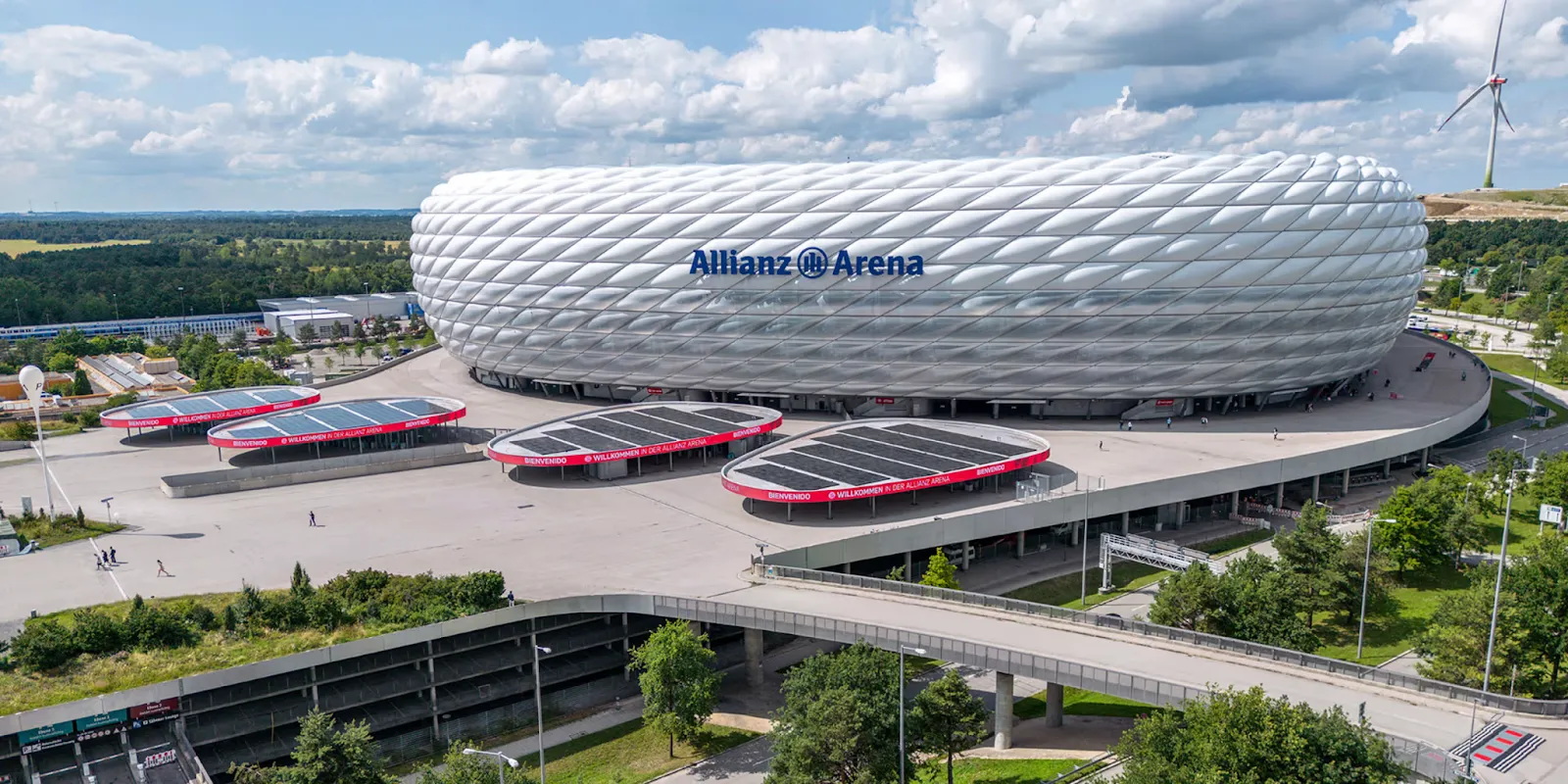
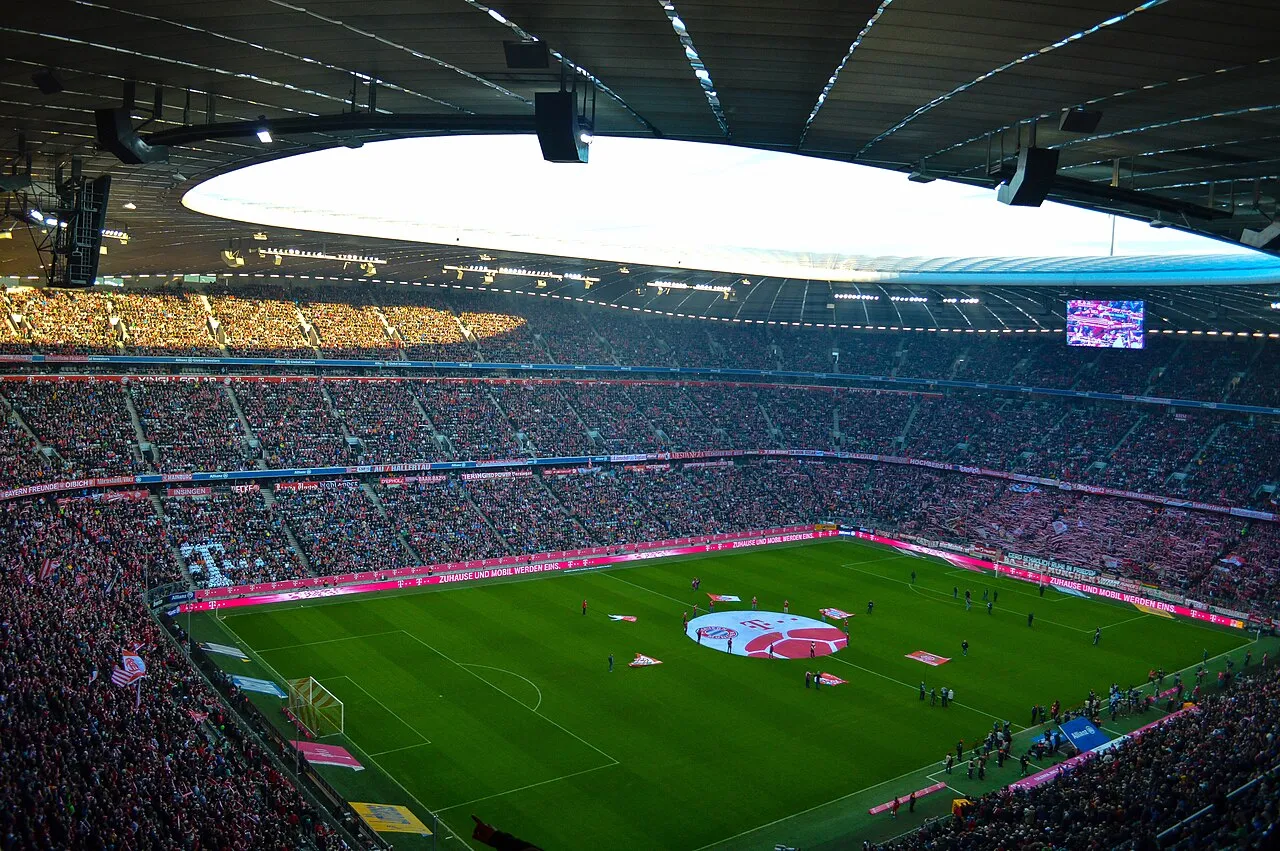
The 2025 UEFA Champions League Final took place at Allianz Arena in Munich, a stadium renowned for its architectural brilliance and futuristic design. Officially opened in 2005, the Allianz Arena was designed by the Swiss architects Herzog & de Meuron, in collaboration with the engineering firm Arup. With a seating capacity of roughly 66,000 for international matches, the stadium had long been one of the most recognizable landmarks in Germany.
The structure was covered with 2,874 ETFE foil air panels, which could be illuminated in a spectrum of colors thanks to a cutting-edge LED lighting system. This “inflatable” façade gave the stadium a luminous, almost otherworldly appearance at night, allowing it to glow in red, blue, or white depending on which team was playing.
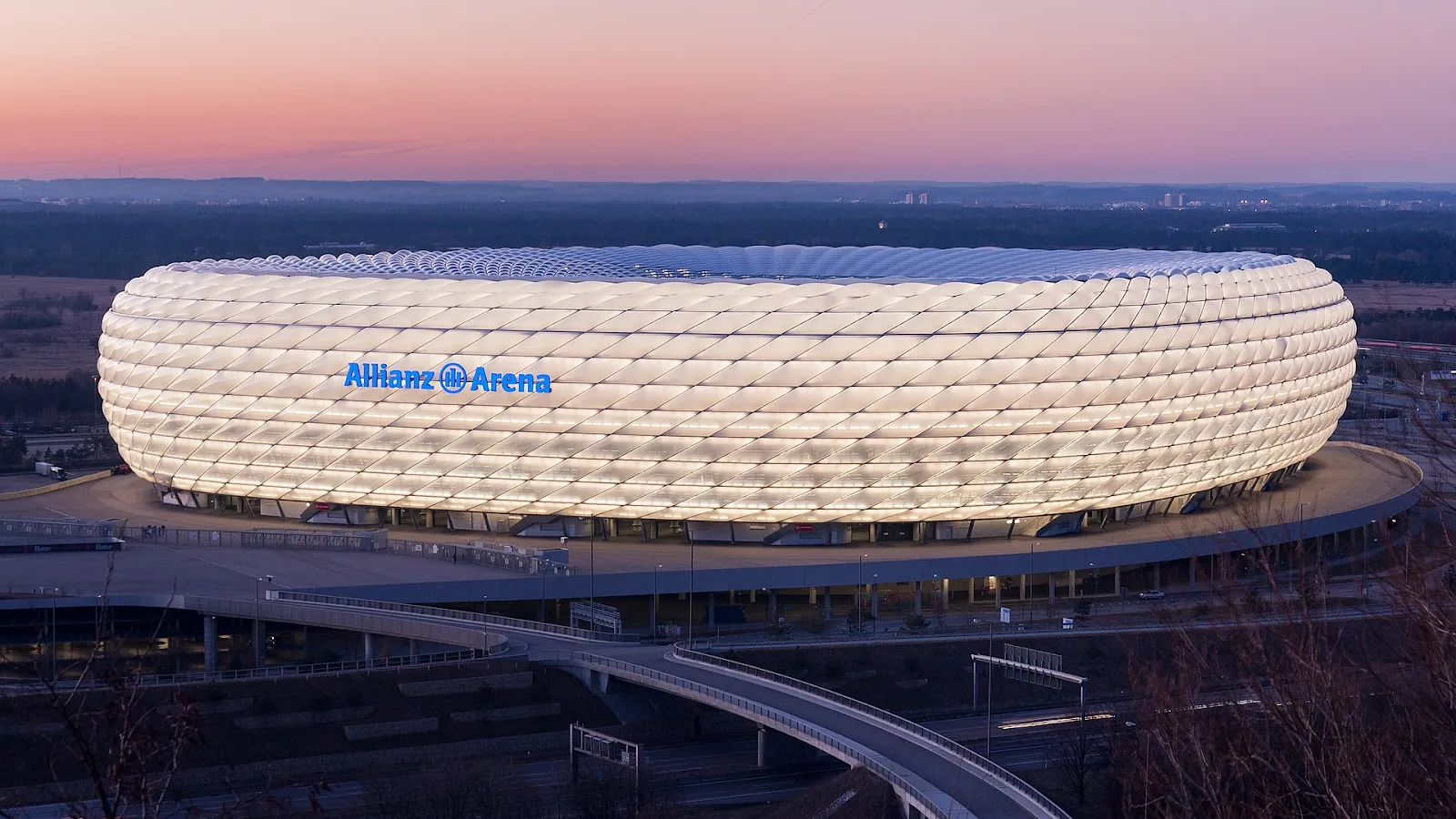
Structurally, the stadium measured 258 meters in length, 227 meters in width, and 52 meters in height, with a roof area covering about 38,000 square meters. Its façade alone spanned 28,500 square meters, making a sports venue an architectural landmark.
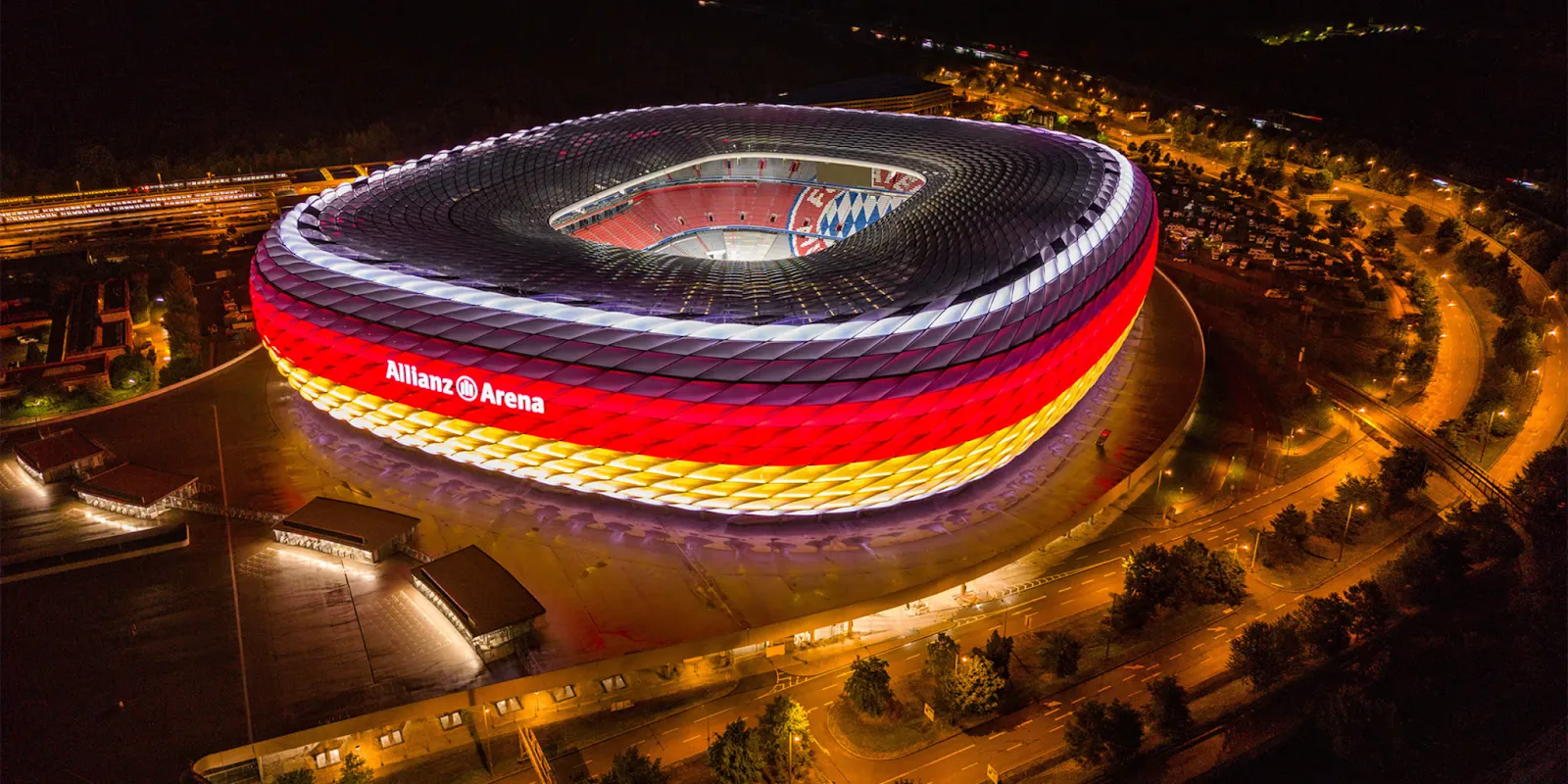
Often described as a “body of light,” Allianz Arena symbolized the modern fusion of sport and architecture. Having already hosted the 2012 Champions League Final, its staging of the 2025 final reaffirmed Munich’s position as a center for football and design excellence.
Puskás Aréna, Budapest, Hungary
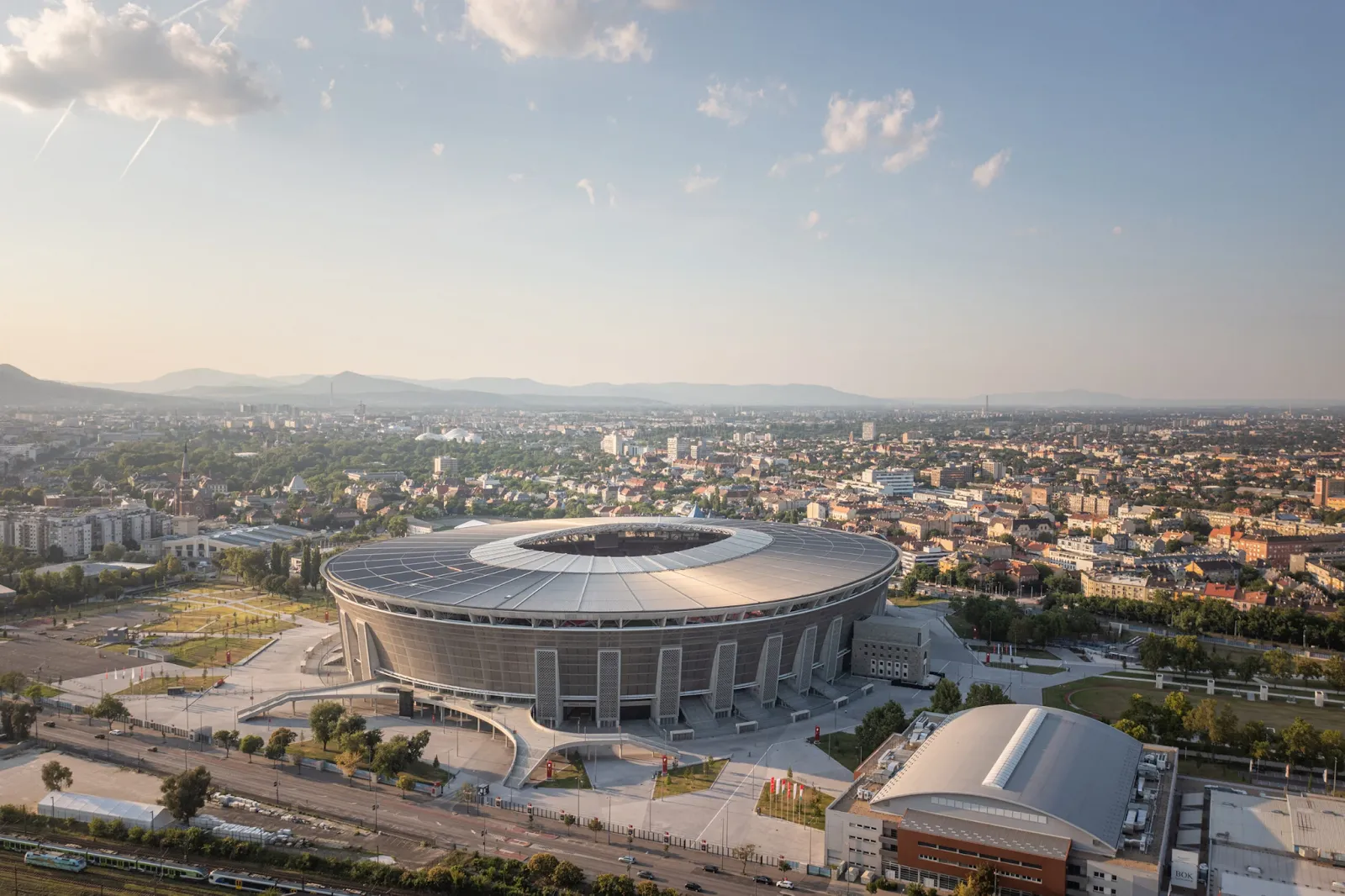
In 2026, the Champions League Final will move eastward to Budapest’s Puskás Aréna, marking the first time Hungary has hosted this prestigious match. Named after the legendary Hungarian forward Ferenc Puskás, the stadium opened in 2019 after a complete rebuild of the old Ferenc Puskás Stadium.
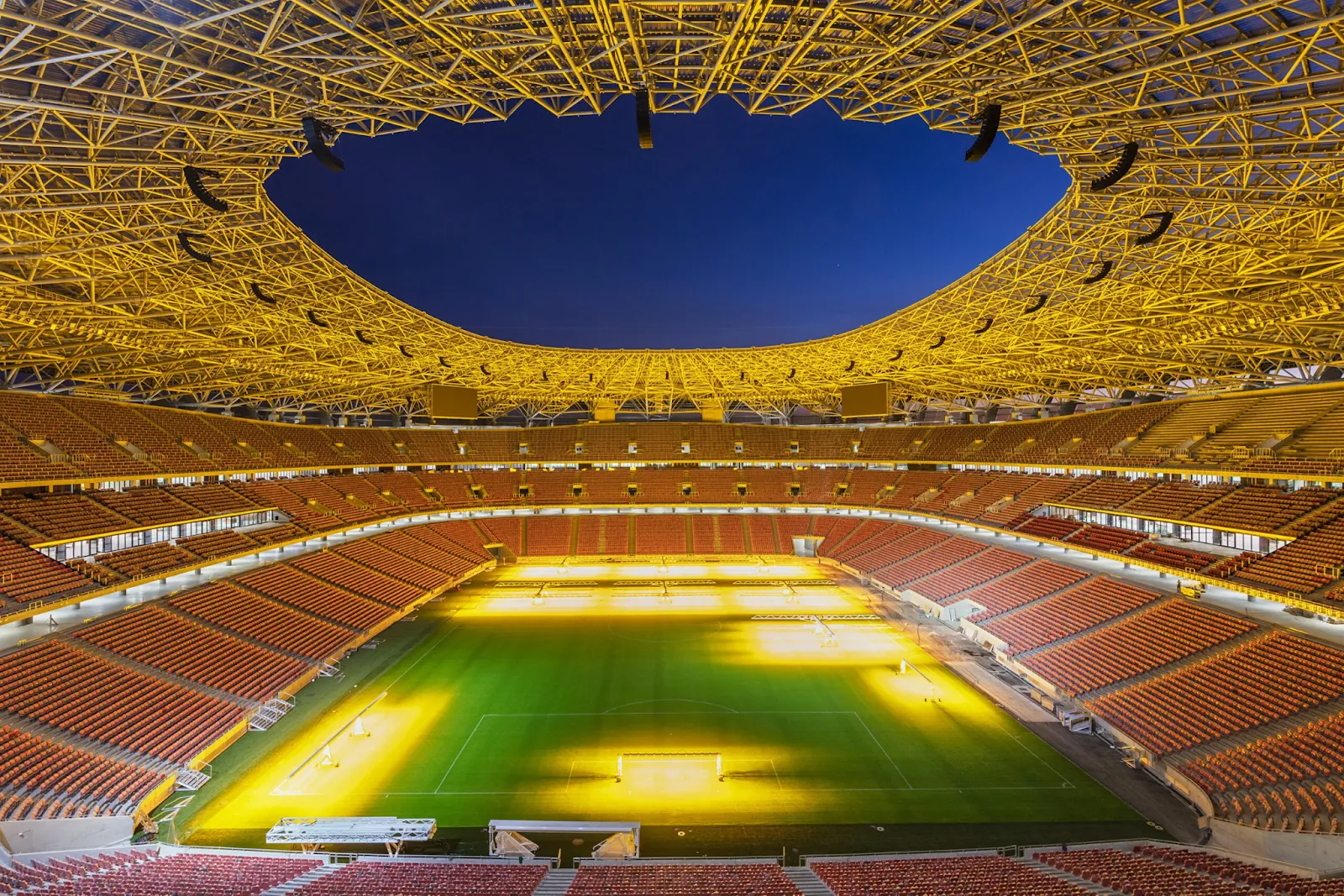
The Puskás Aréna, with a capacity of around 67,215 seats for football events, was designed to blend heritage with modernity. While the original stadium was demolished, parts of its historic brickwork were incorporated into the new structure, creating a tangible link to Hungary’s footballing past. Its most striking architectural feature is the stainless-steel mesh façade, comprising nearly 20,000 square meters of architectural mesh panels, each measuring up to 29 meters in length and weighing almost 100 kilograms. These panels shimmer in natural light and allow the stadium to breathe, offering both ventilation and a unique textured identity.
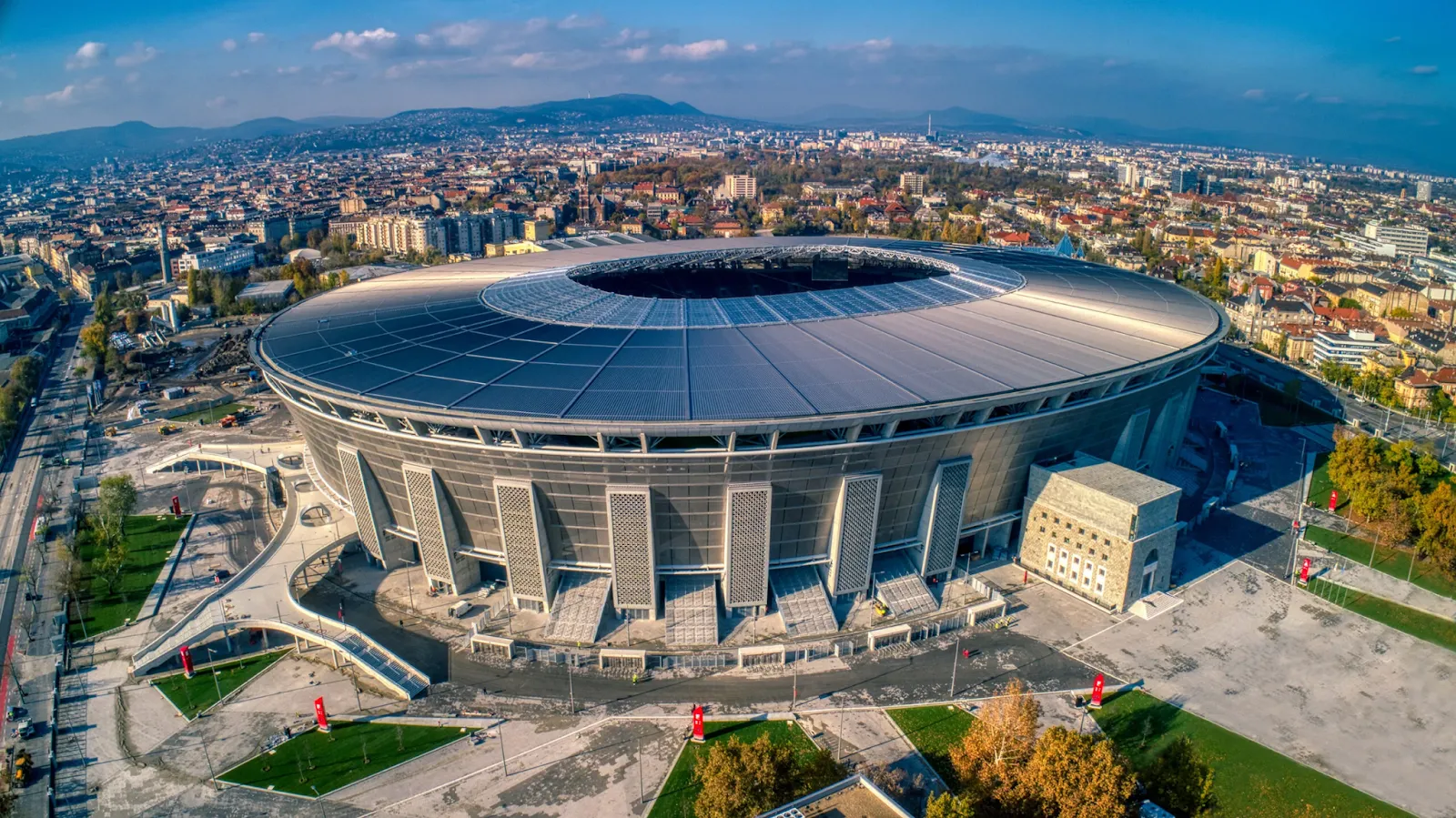
The stadium was built to UEFA’s highest Category 4 standards, ensuring state-of-the-art facilities for players, media, and fans. The decision to award Budapest the 2026 final is a recognition of Hungary’s football heritage and also a celebration of the country’s commitment to modern architectural design and urban development.
Santiago Bernabéu Stadium, Madrid, Spain
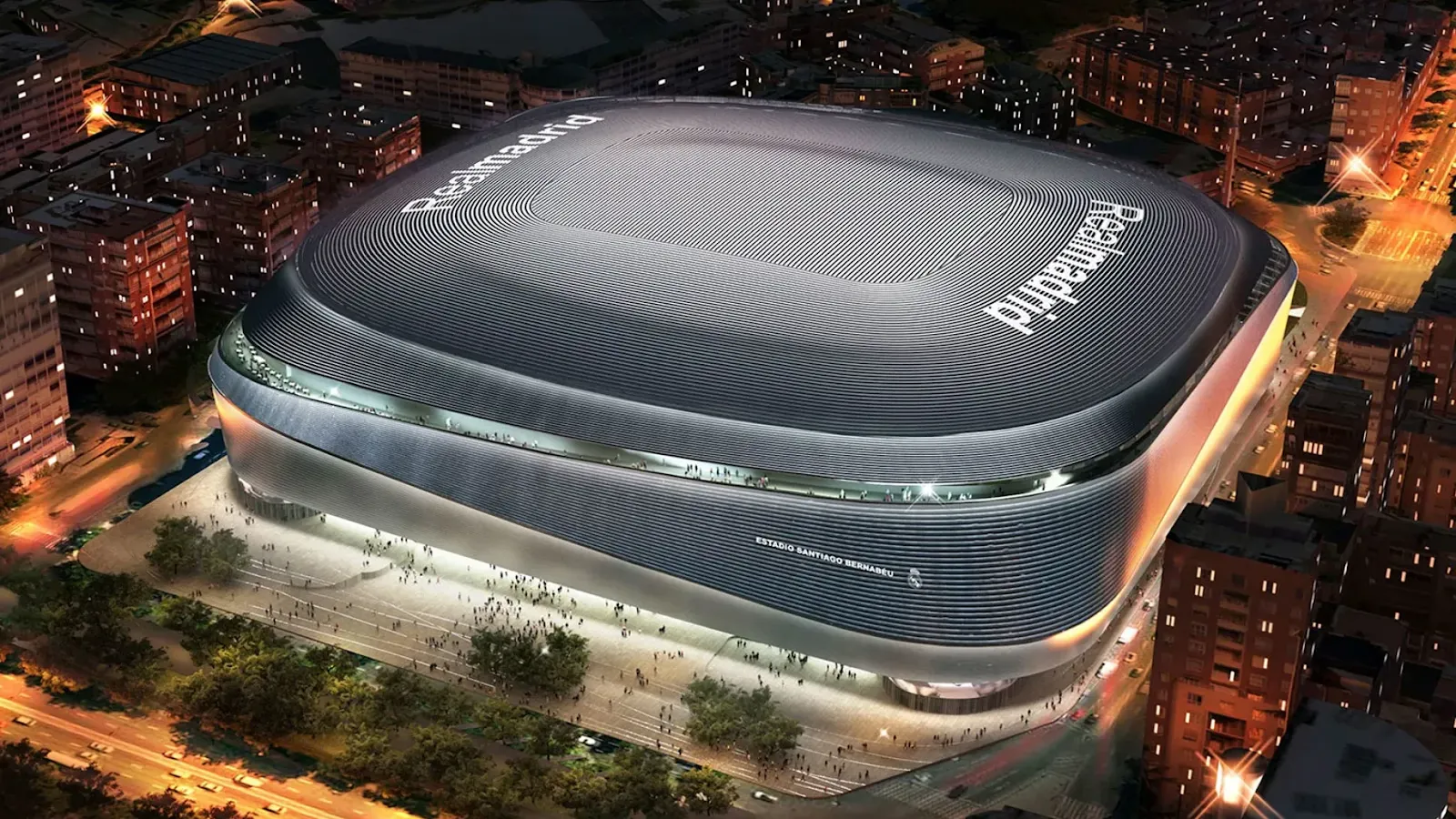
Home to Real Madrid, the Santiago Bernabéu is a historic stadium currently undergoing renovations. Manuel Muñoz Monasterio, Luis Alemany Soler, Antonio Lamela, and most recently L35 Arquitectos, GMP Architekten, Ribas & Ribas. After the latest renovation (2024), it holds about 83,186 spectators. New features include a retractable roof that will cover all stands, and a new, dynamic metal slats/glass exterior façade, designed to interact with the city visually.
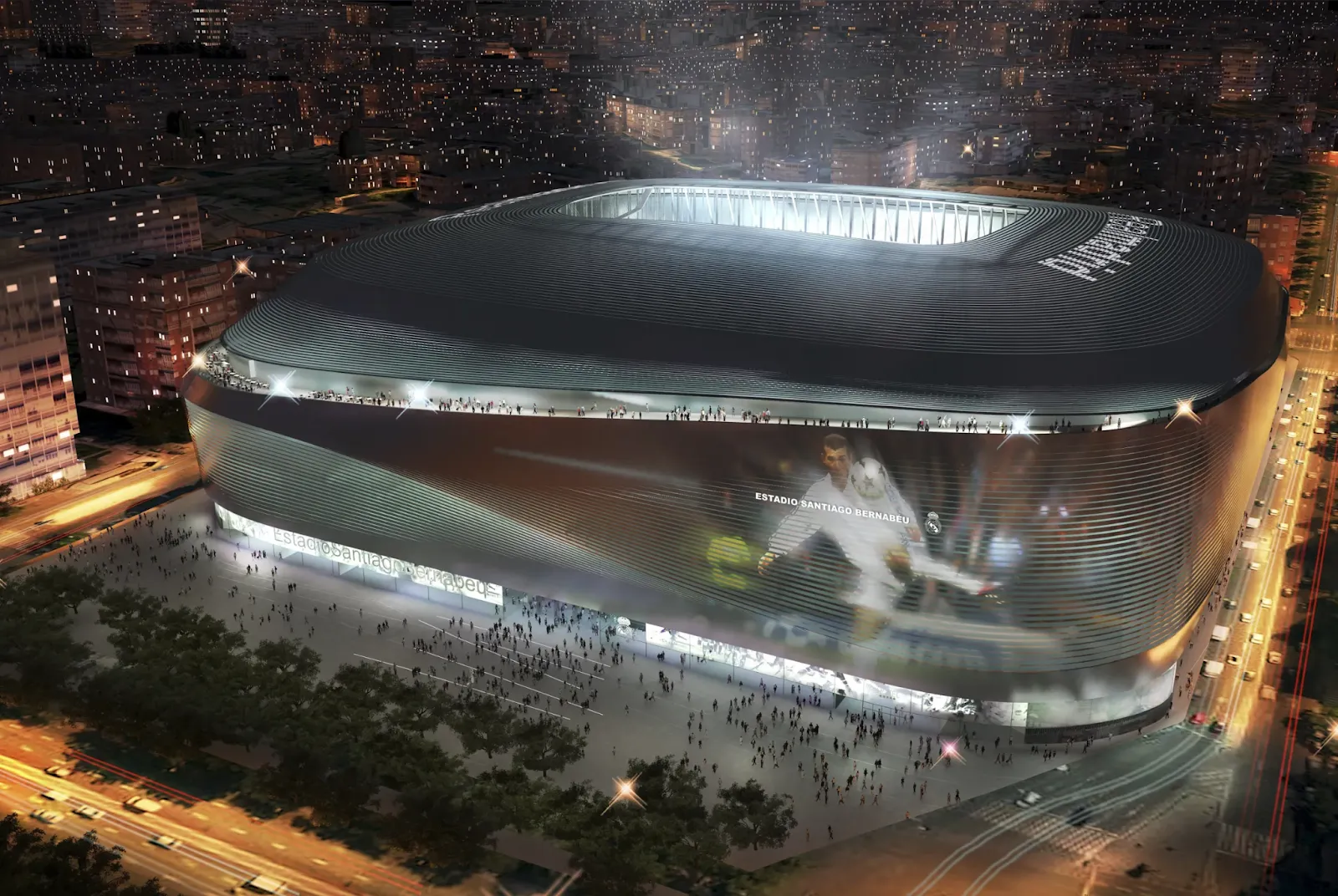
The renovation also introduces a folding/retractable pitch, expanded VIP / hospitality zones (240 VIP/hospitality lounges, adding ~1,600 additional seats), and enhancements in fan access and urban integration. With four Champions League Finals hosted (1957, 1969, 1980, 2010), the Bernabéu is part of football legend.
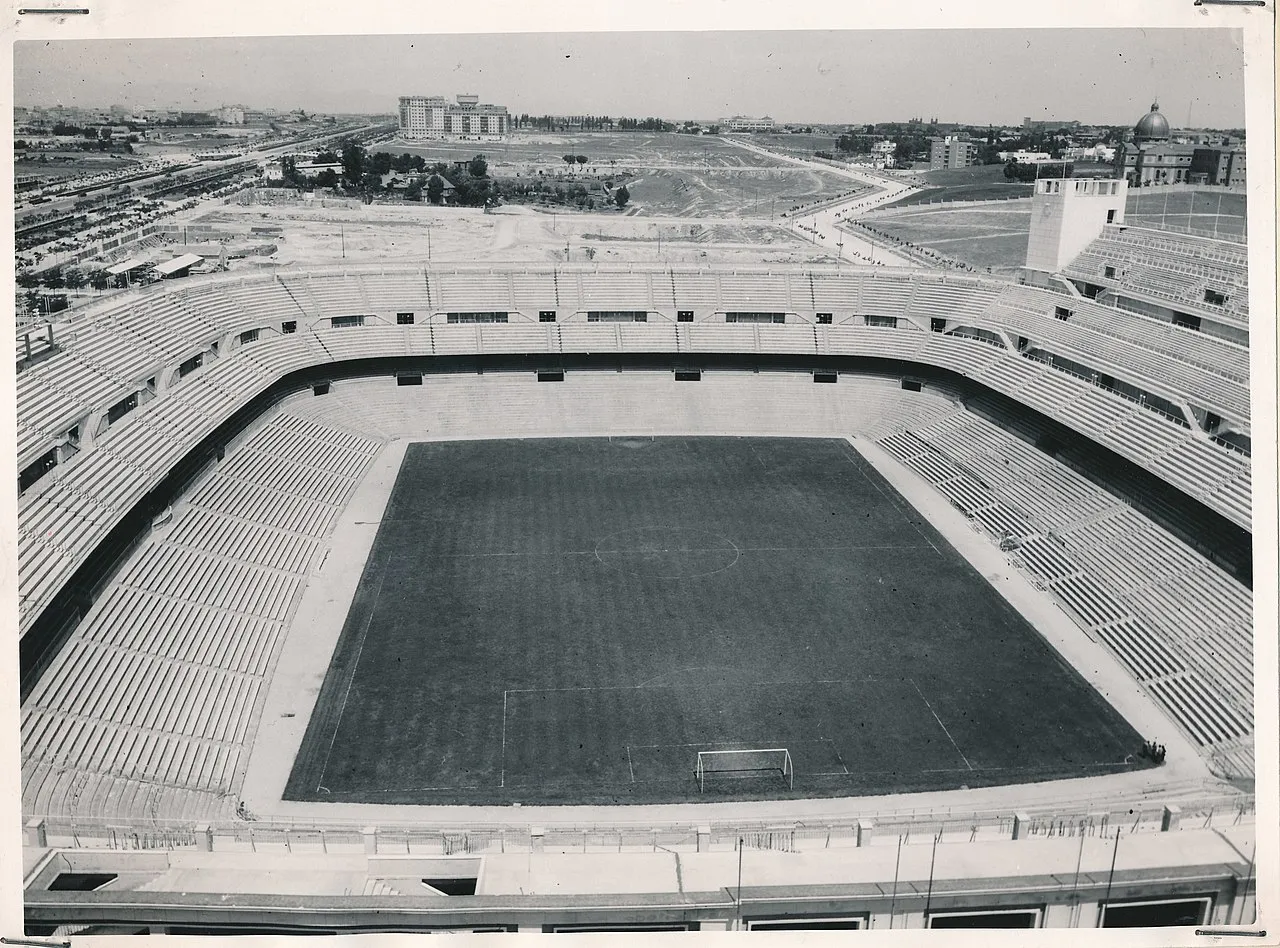
The renovation aims for capacity or comfort to reassert it as a year-round destination (museum, public spaces, events) and to blend into Madrid’s urban life.
Wembley Stadium, London, England
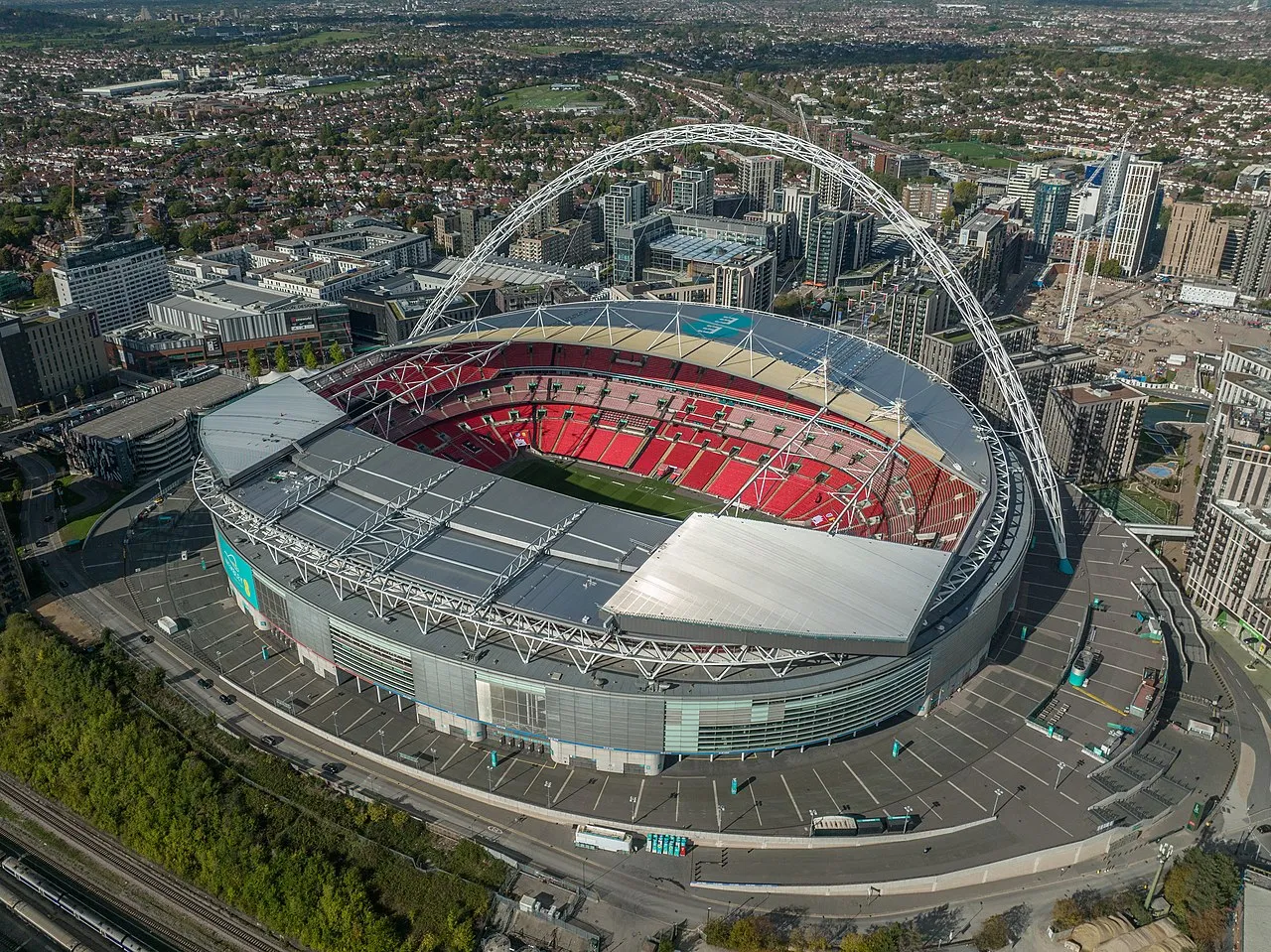
Wembley is often called the “Home of Football,” and its modern incarnation (opened in 2007) is a masterwork of engineering and design. The architects are Foster + Partners, HOK Sport (now Populous), and consultants Nathaniel Lichfield & Partners.
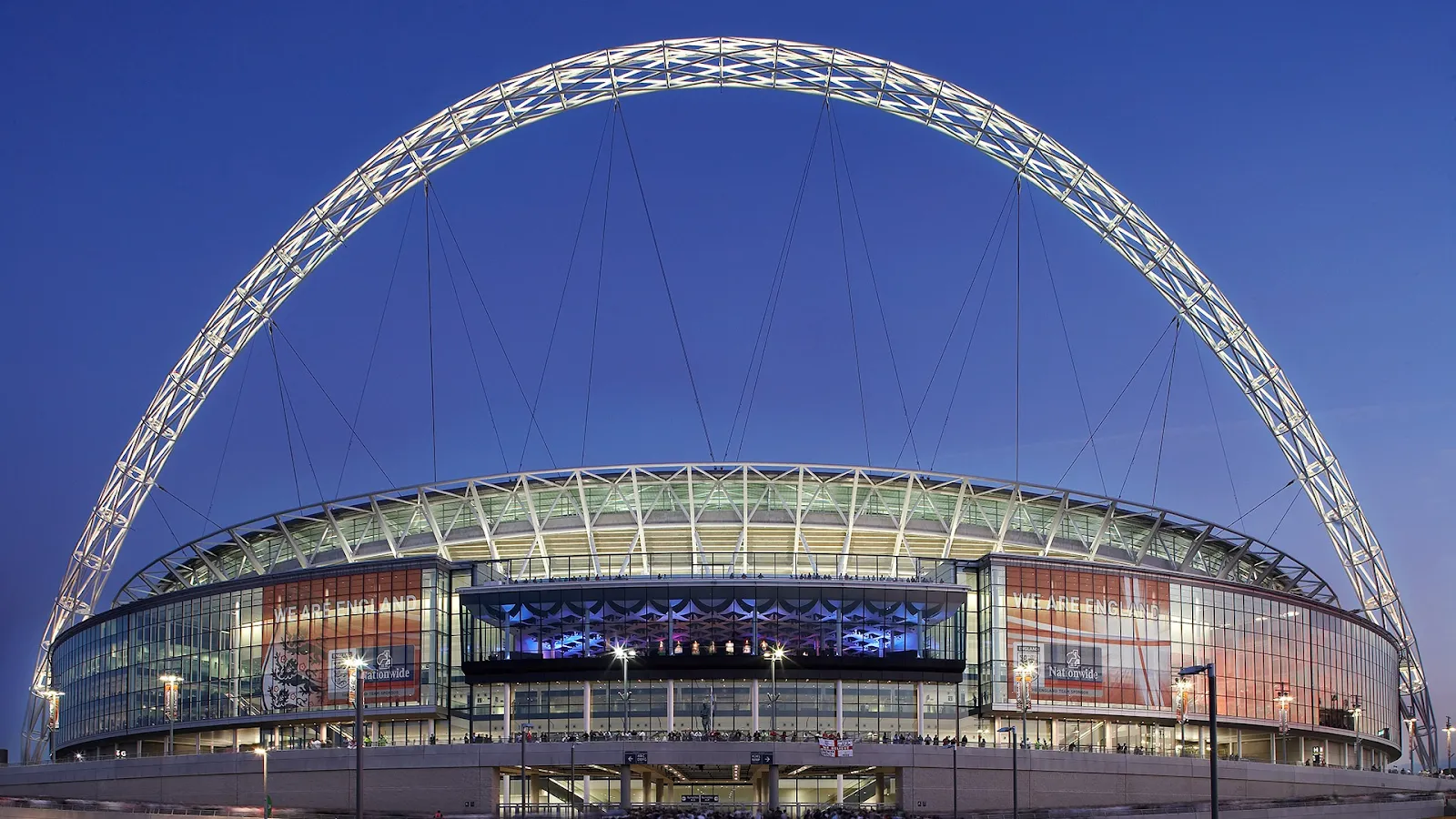
The capacity of the stadium is approximately 90,000 for football matches. A defining structural feature is its 133-meter-high steel arch, with a span of 315 meters. It supports over 75% of the roof load, including the entirety of the north roof and much of the south roof. The stadium uses a bowl-design seating layout, ensuring unobstructed views.
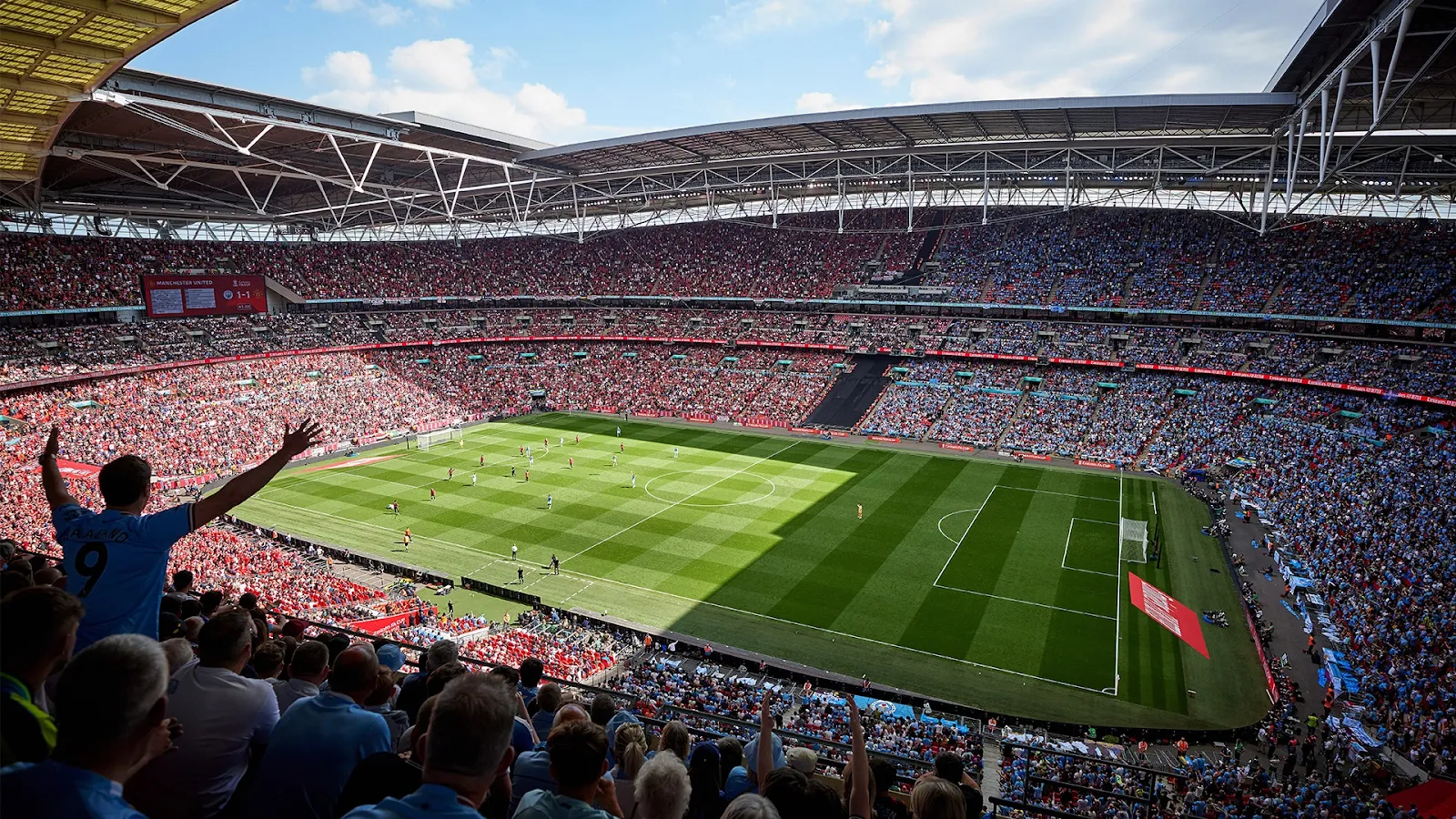
The roof is partially retractable over the east and west ends to allow sunlight to reach the pitch essential for turf health. Wembley has hosted multiple Champions League Finals (2011, 2013, 2024, among others) and is steeped in football history. It’s also a multi-purpose venue for concerts, national team fixtures, and large events. Its arch is both symbolic (icon of London) and functional (roof support).
San Siro (Stadio Giuseppe Meazza), Milan, Italy
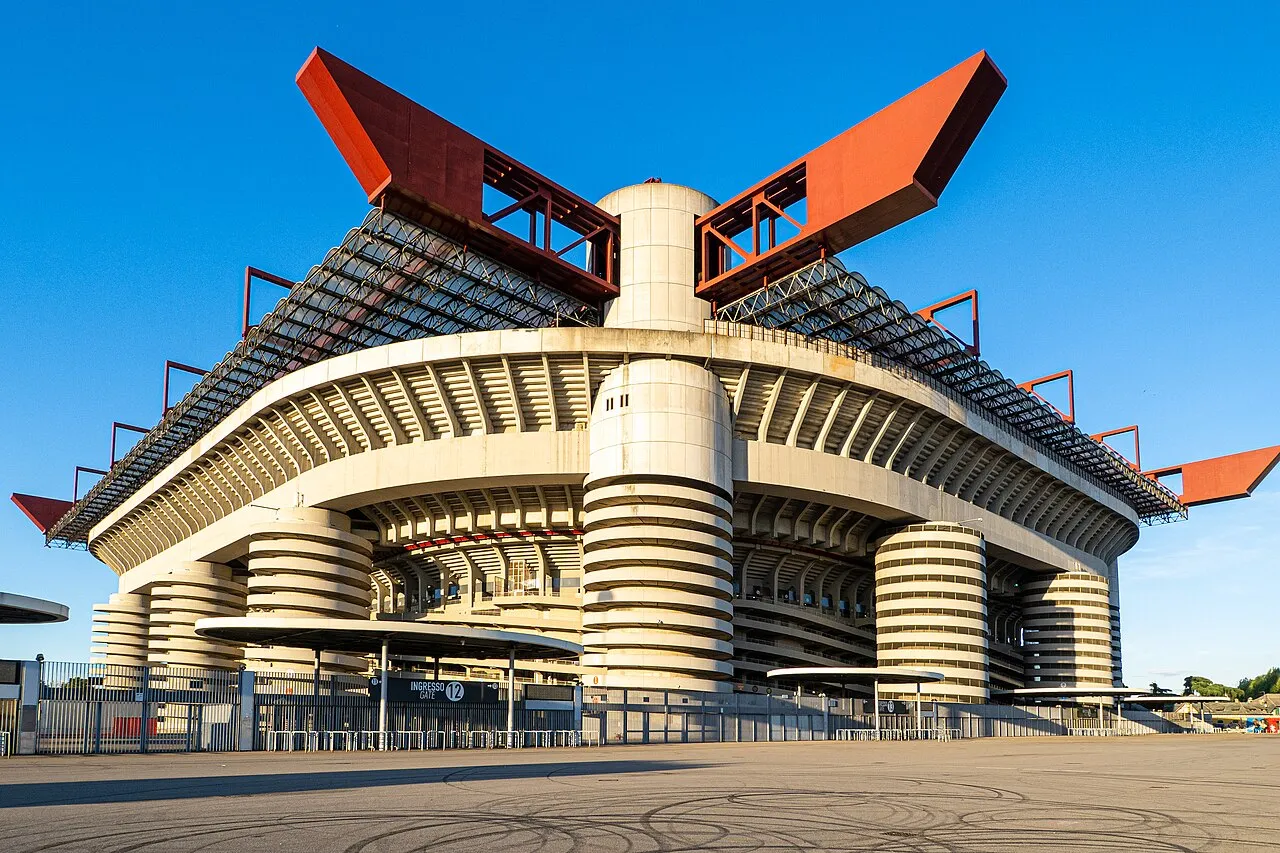
Few football grounds carry the same weight of history and raw presence as San Siro, officially known since 1980 as the Stadio Giuseppe Meazza. Often called the ‘Temple of Football’ by fans, San Siro Stadium is a true icon of the sport. Opened in September 1926, the stadium was designed by architect Ulisse Stacchini and engineer Alberto Cugini as a purpose-built home for AC Milan. Its early form consisted of four disconnected stands with space for around 35,000 spectators, but within a decade the stadium had already been expanded, reaching a capacity of about 55,000.
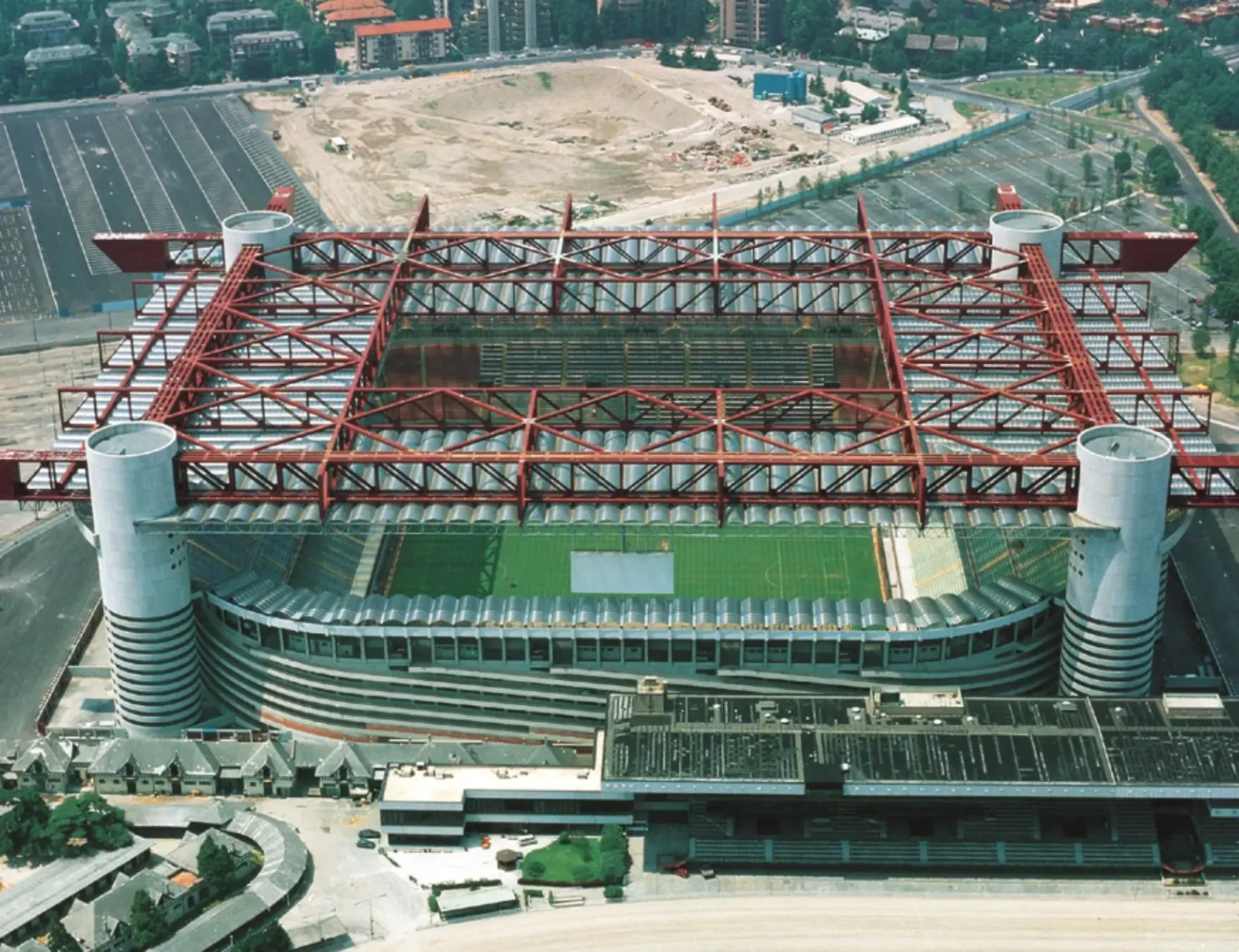
The most transformative changes came in 1955 under architects Armando Ronca and Ferruccio Calzolari, and later for the 1990 World Cup, when Giancarlo Ragazzi, Enrico Hoffer, and engineer Leo Finzi oversaw the addition of a dramatic third tier and the cylindrical concrete towers that now define its shape. These towers carry staircases and lifts and serve as structural supports for the red girders of the cantilevered roof. With a current operational capacity of 85,000, San Siro Stadium, Milan, is one of Europe’s largest stadiums and a monument to exposed concrete and monumental design.
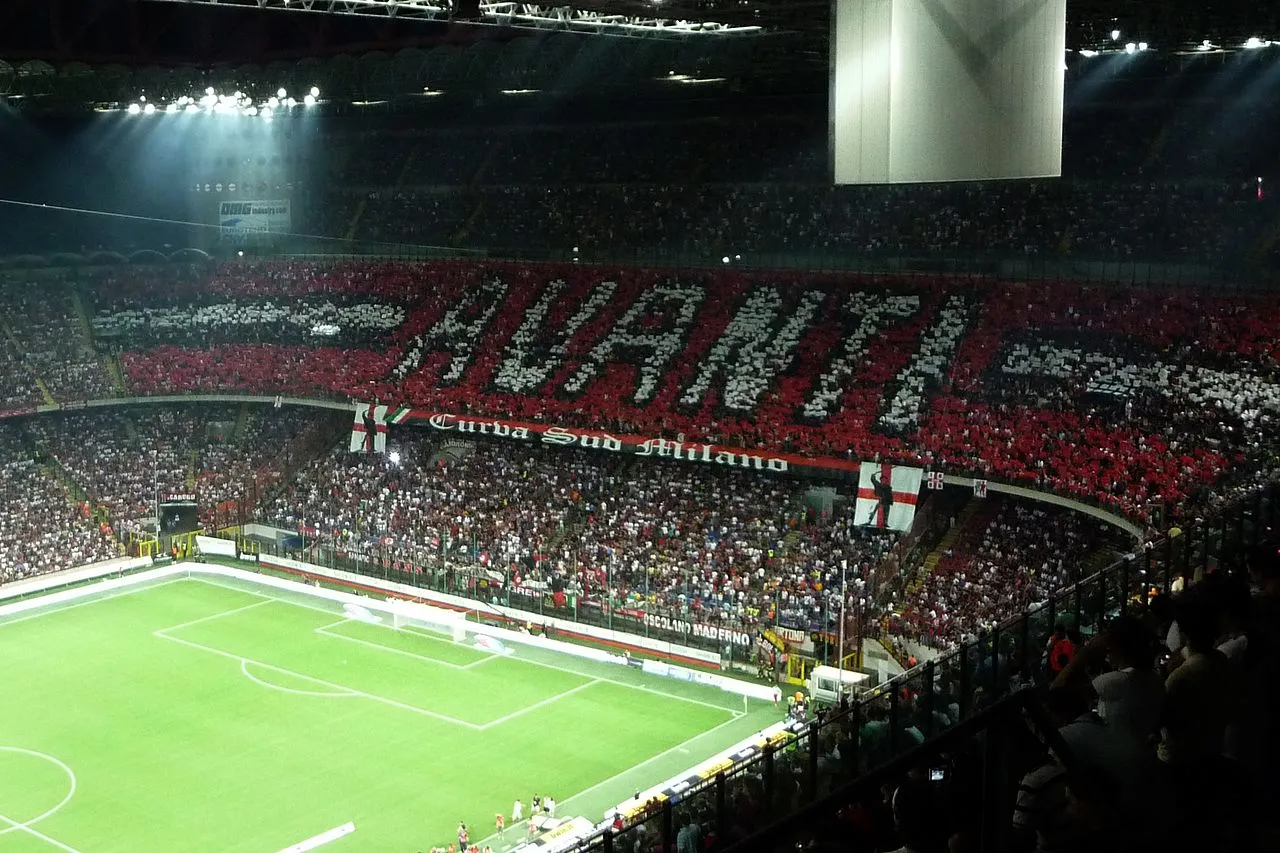
Despite its age and ongoing debates about whether it will be replaced, the shared home of AC Milan and Inter still embodies an atmosphere unmatched in Italian football, with its vast bowl, tiered stands, and raw industrial beauty.
Camp Nou (Spotify Camp Nou), Barcelona, Spain
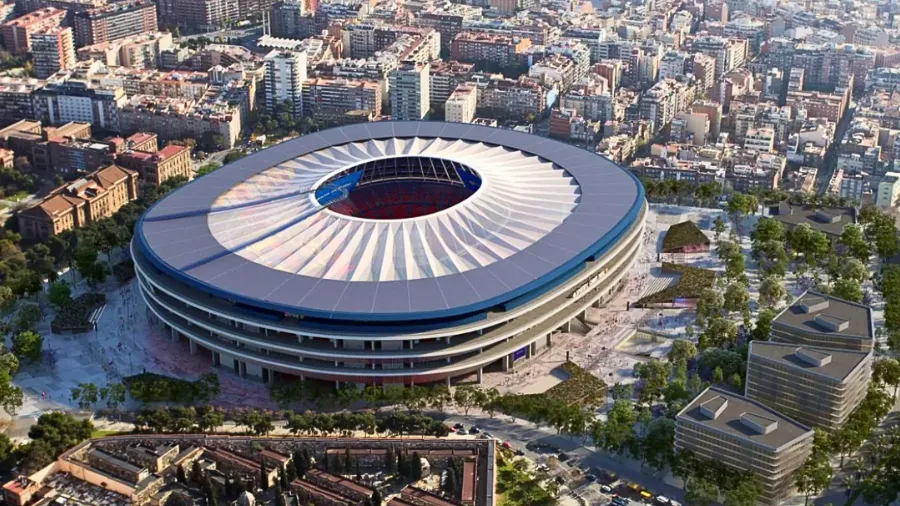
Barcelona’s Camp Nou has long stood for scale and identity. Inaugurated in September 1957, the stadium was the work of architects Francesc Mitjans, Josep Soteras, and Lorenzo García-Barbón, who designed a vast oval bowl with steep stands and open terraces capable of holding close to 93,000 spectators. ‘Camp Nou ’, sometimes referred to as Nou Camp, is the official stadium of FC Barcelona.
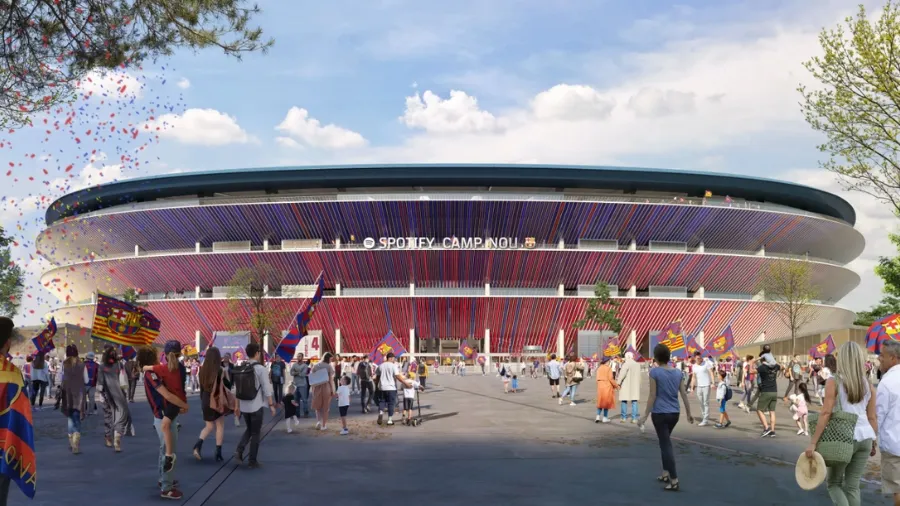
For decades, it remained Europe’s largest football venue, and its size alone gave it iconic status. In preparation for the 1982 World Cup, Camp Nou underwent major expansion, including a third tier and new press and hospitality facilities, at one point accommodating more than 120,000 spectators when standing areas were still permitted.
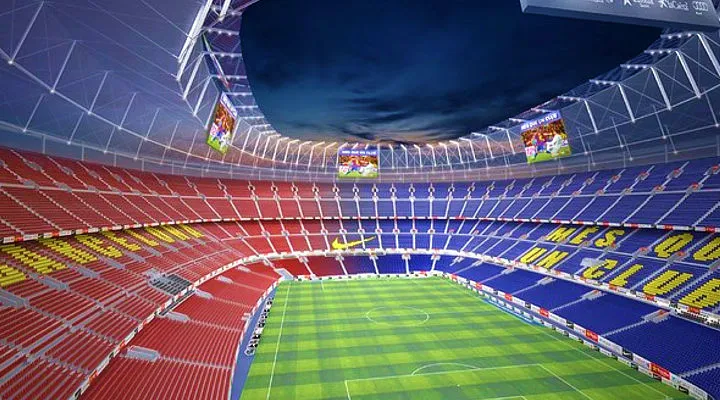
Today, its official capacity is around 99,354 seats, though it is currently undergoing the most ambitious transformation in its history. Under the Espai Barça project, Japanese firm Nikken Sekkei, together with b720 Fermín Vázquez Arquitectes and IDOM, is reshaping the ground into the “Spotify Camp Nou.” The ongoing renovation aims to transform Camp Nou with a full roof, an open-ring façade, improved accessibility, and modern spectator facilities, raising capacity to about 105,000. The redesign seeks to preserve Camp Nou’s identity as a symbol of Barcelona and FC Barcelona itself, blending mid-20th-century vision with 21st-century demands.
Explore Courses
.jpg "Ondrej Chybik - Rethinking Architecture")