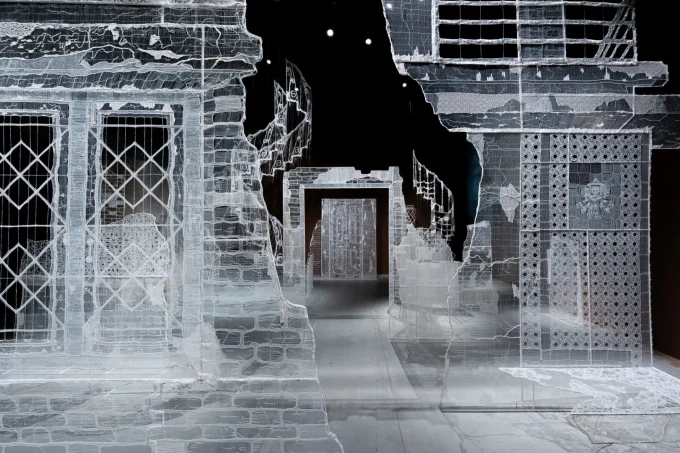





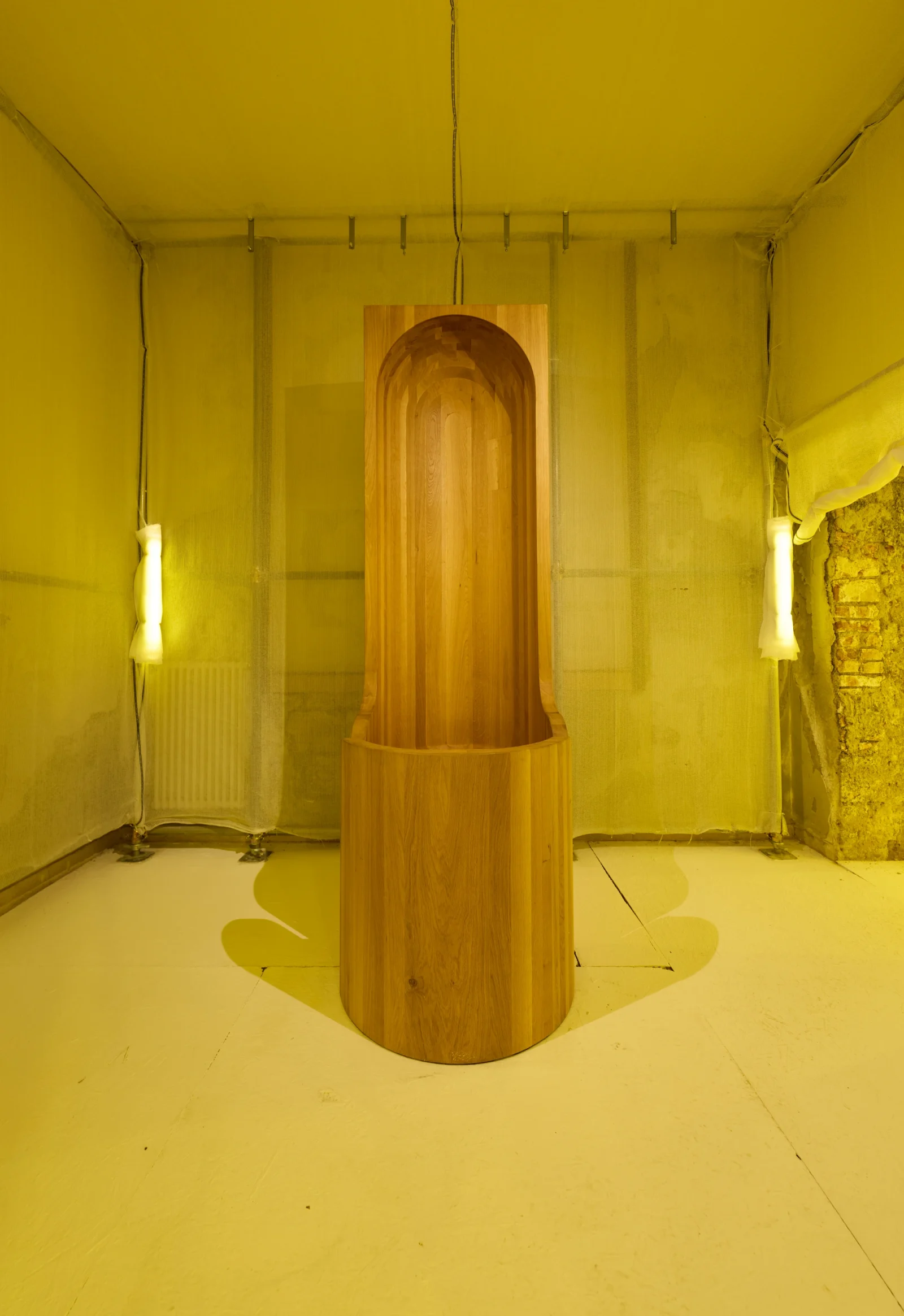


At the 61st International Art Exhibition of La Biennale di Venezia, the Dicastery for Culture and Education of the Holy See Pavilion presents The Ear is the Eye of the Soul, a contemplative exhibition that brings together 24 artists, composers, architects, writers, and filmmakers. Created as a “sonic prayer,” the Pavilion responds to the late curator Koyo Kouoh’s invitation for Venice Biennale Arte 2026 to slow down and listen to quieter forms of experience.
Curated by Hans Ulrich Obrist and Ben Vickers in collaboration with Soundwalk Collective, the exhibition takes inspiration from the life and writings of Hildegard of Bingen, the 12th-century abbess, mystic, healer, poet, and composer who was declared a Doctor of the Catholic Church by Pope Benedict XVI in 2012.
A Pavilion Built Around Listening

The Ear is the Eye of the Soul explores listening as a spiritual and artistic act. The exhibition unfolds across two distinct venues in Venice, each shaped around Hildegard’s intellectual and mystical legacy.

The Pavilion’s title was drawn from Hildegard’s writings by the late German filmmaker and author Alexander Kluge, whose final completed work forms one of the exhibition’s central elements.
The Mystical Garden: Sound, Silence, and Nature

The first site of the Holy See Pavilion is the ancient Giardino Mistico, or Mystic Garden, a secluded monastic garden hidden within a 17th-century convent cared for by the Discalced Carmelite community in Cannaregio. Here, visitors encounter newly commissioned sound works by twenty contemporary composers, musicians, poets, and artists responding to Hildegard’s chants, texts, and visionary imagery.

Participants include Brian Eno, FKA Twigs, Patti Smith, Jim Jarmusch, Meredith Monk, Suzanne Ciani, Terry Riley, and Benedictine Nuns of the Abbey of St. Hildegard Eibingen, among many others.

Visitors experience the works through headphones while moving through the garden. The sonic environment has been composed into a continuous whole by Soundwalk Collective, which also created a custom-built instrument capable of listening to the garden itself in real time. The device translates natural phenomena, including wind, insects, soil vibrations, water movement, and even bioelectrical activity within plants, into evolving sound compositions.

The project reflects a broader meditation on attention and perception. As Pope Leo XIV remarked in a 2025 address quoted in the press release, “The logic of algorithms tends to repeat what ‘works,’ but art opens up what is possible. Not everything has to be immediate or predictable.”
Santa Maria Ausiliatrice as a Contemporary Scriptorium
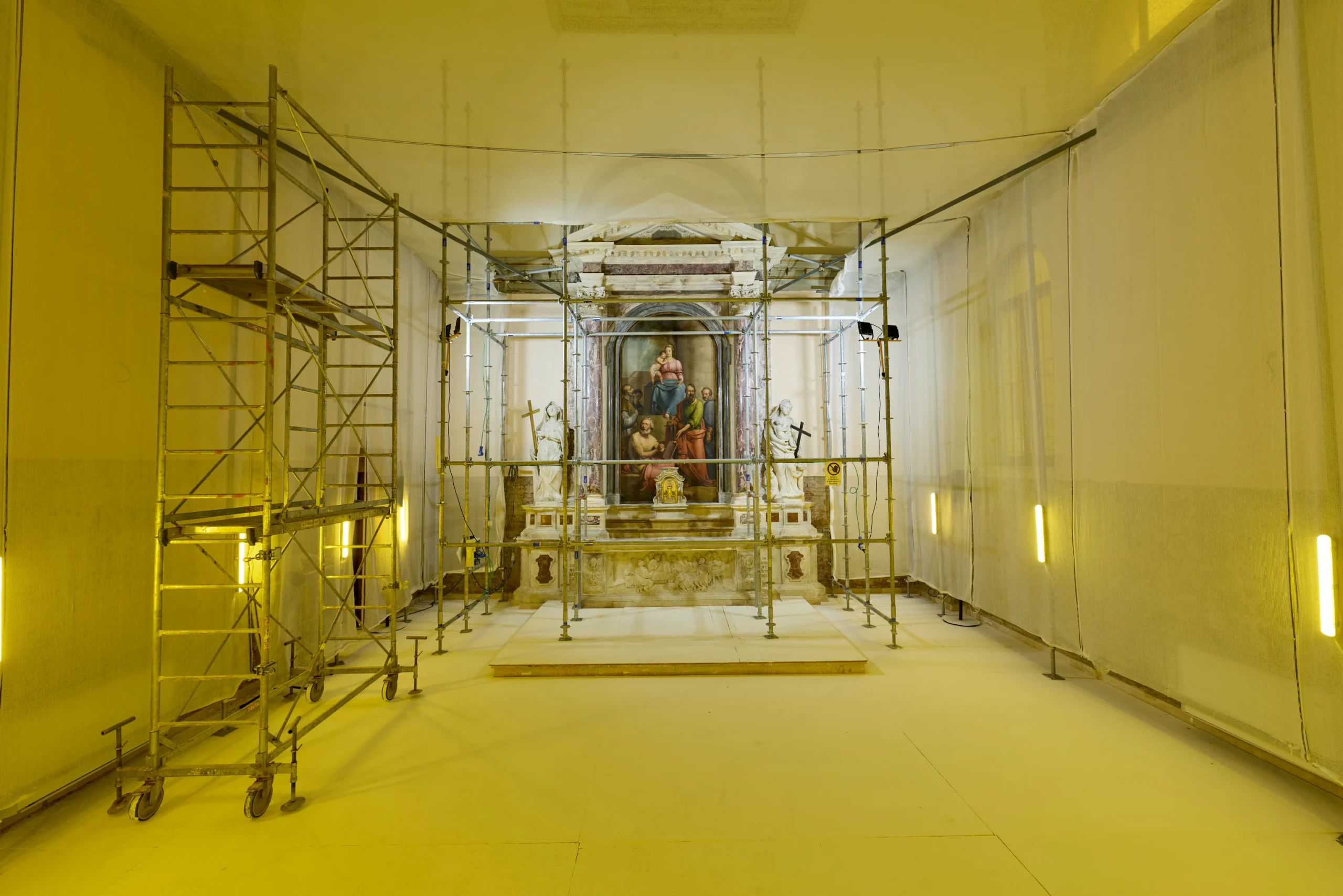
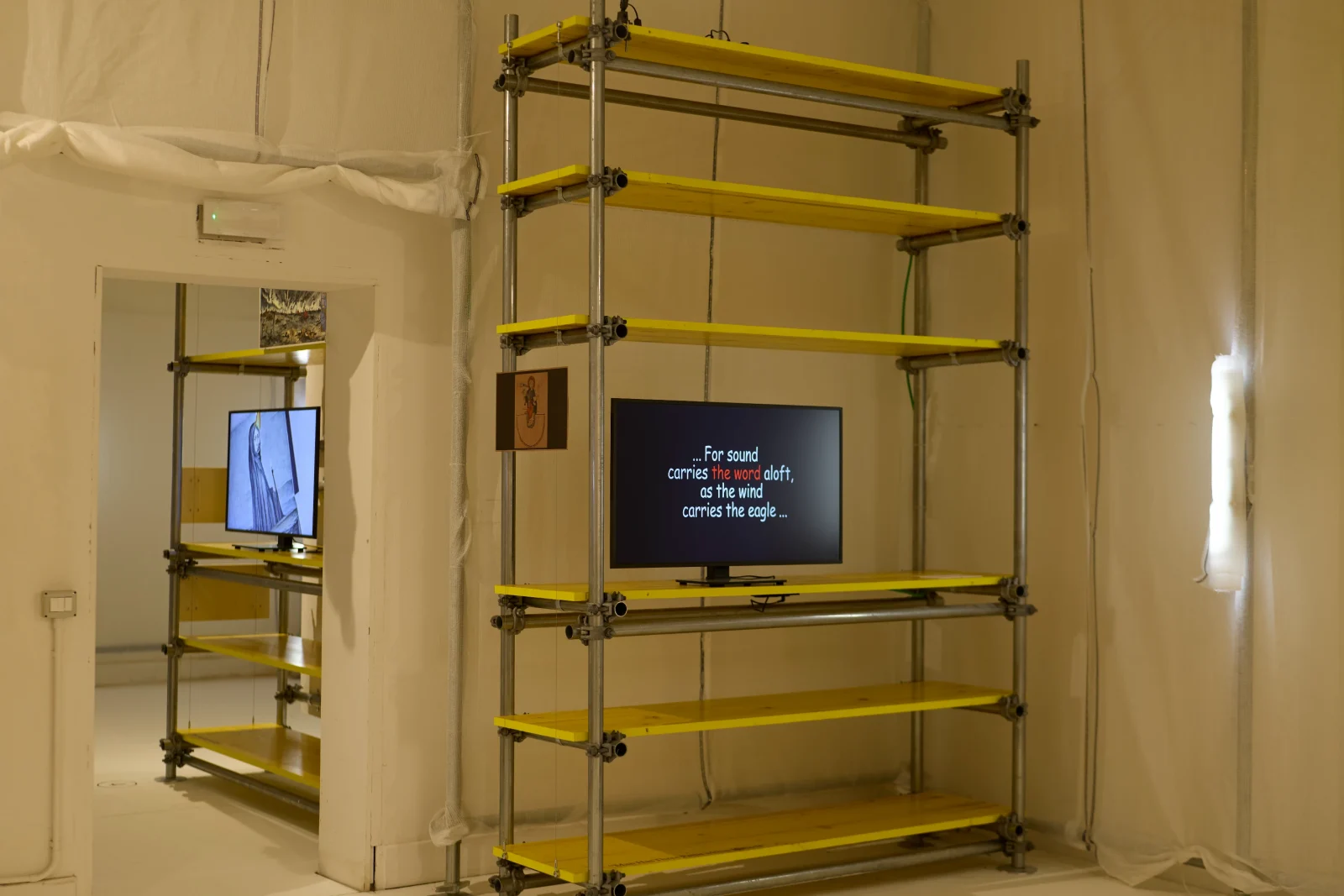
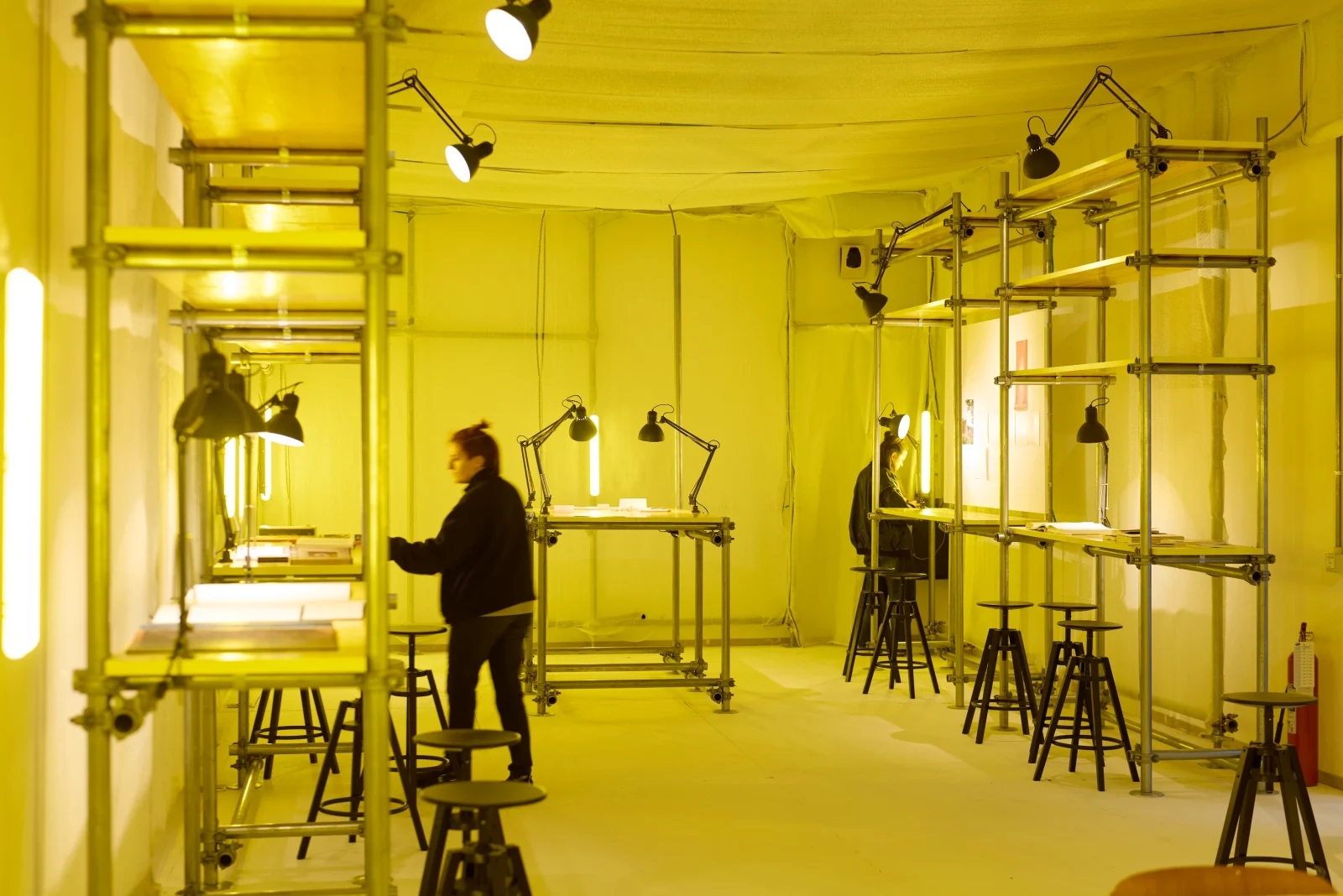
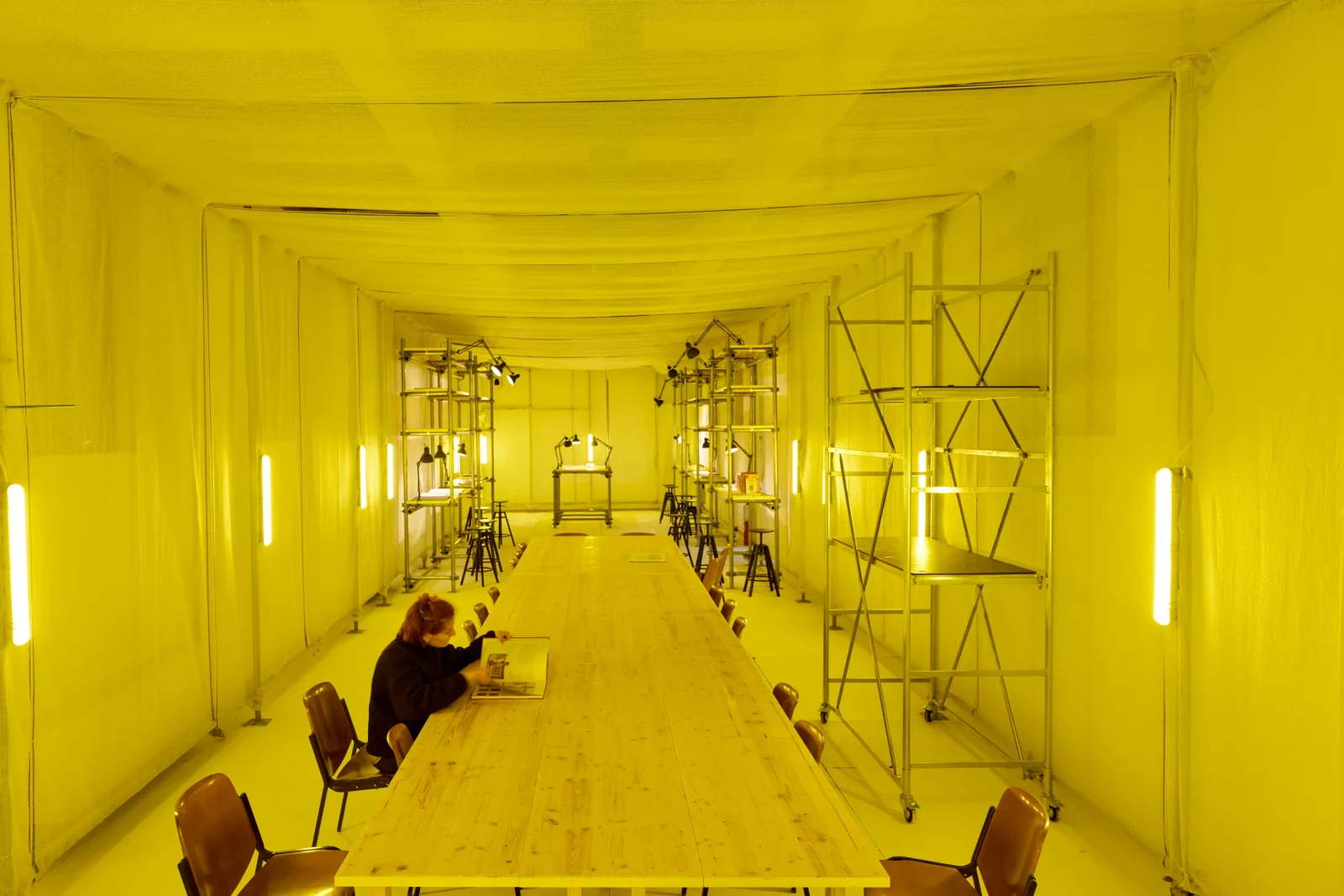
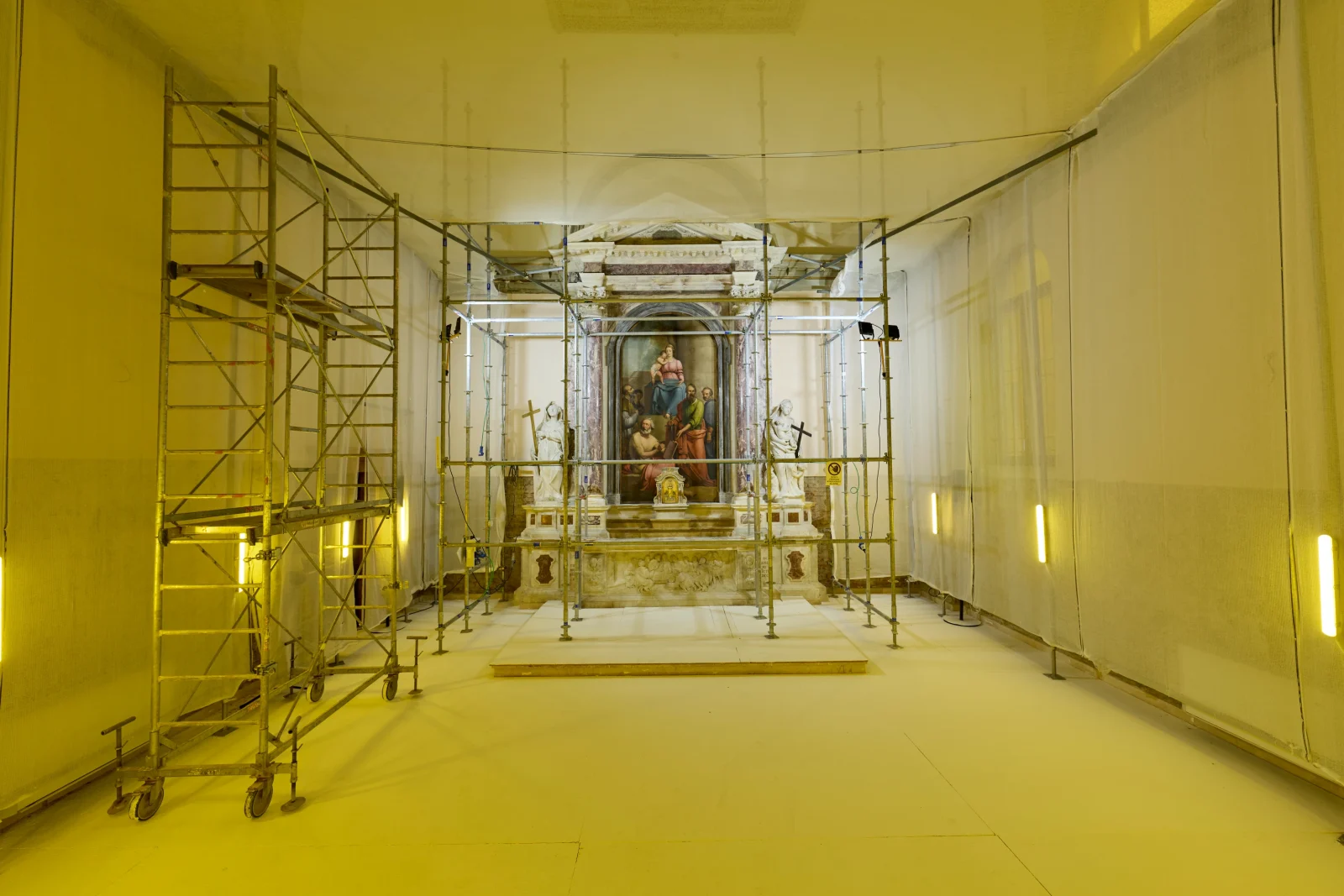
The Holy See Pavilion’s second venue is located in Castello at the Complex of Santa Maria Ausiliatrice, which has been transformed into what the curators describe as a contemporary scriptorium, recalling medieval spaces where manuscripts were copied and illuminated.
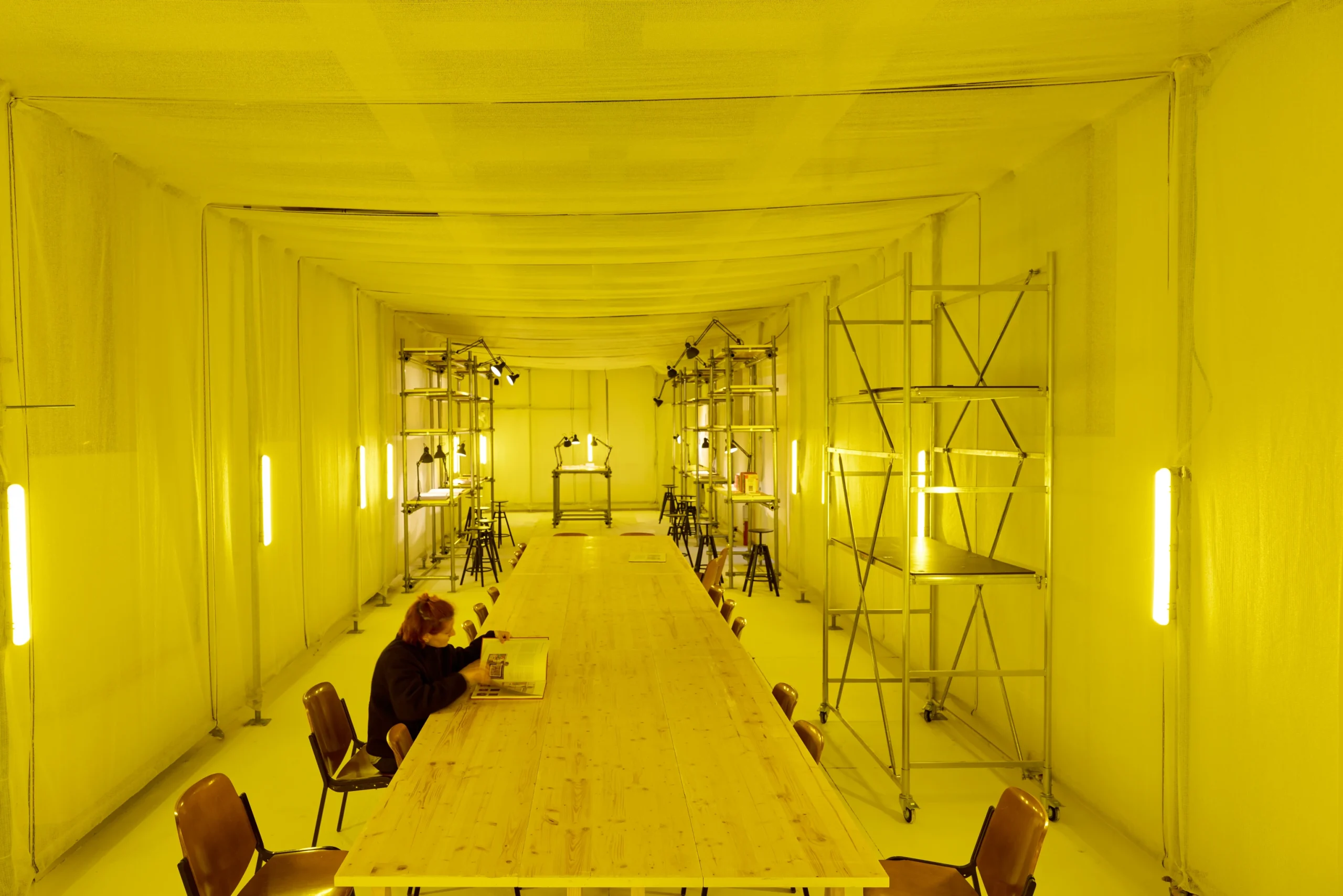
The space is structured around three interconnected elements: a living archive dedicated to Hildegard of Bingen, Alexander Kluge’s final artistic testament, and a sonic liturgy created with the Benedictine nuns of Eibingen Abbey. The archive was developed in collaboration with Sister Maura Zátonyi and the St. Hildegard Academy, whose research and preservation of Hildegard’s teachings informed the Pavilion’s wider conceptual framework.
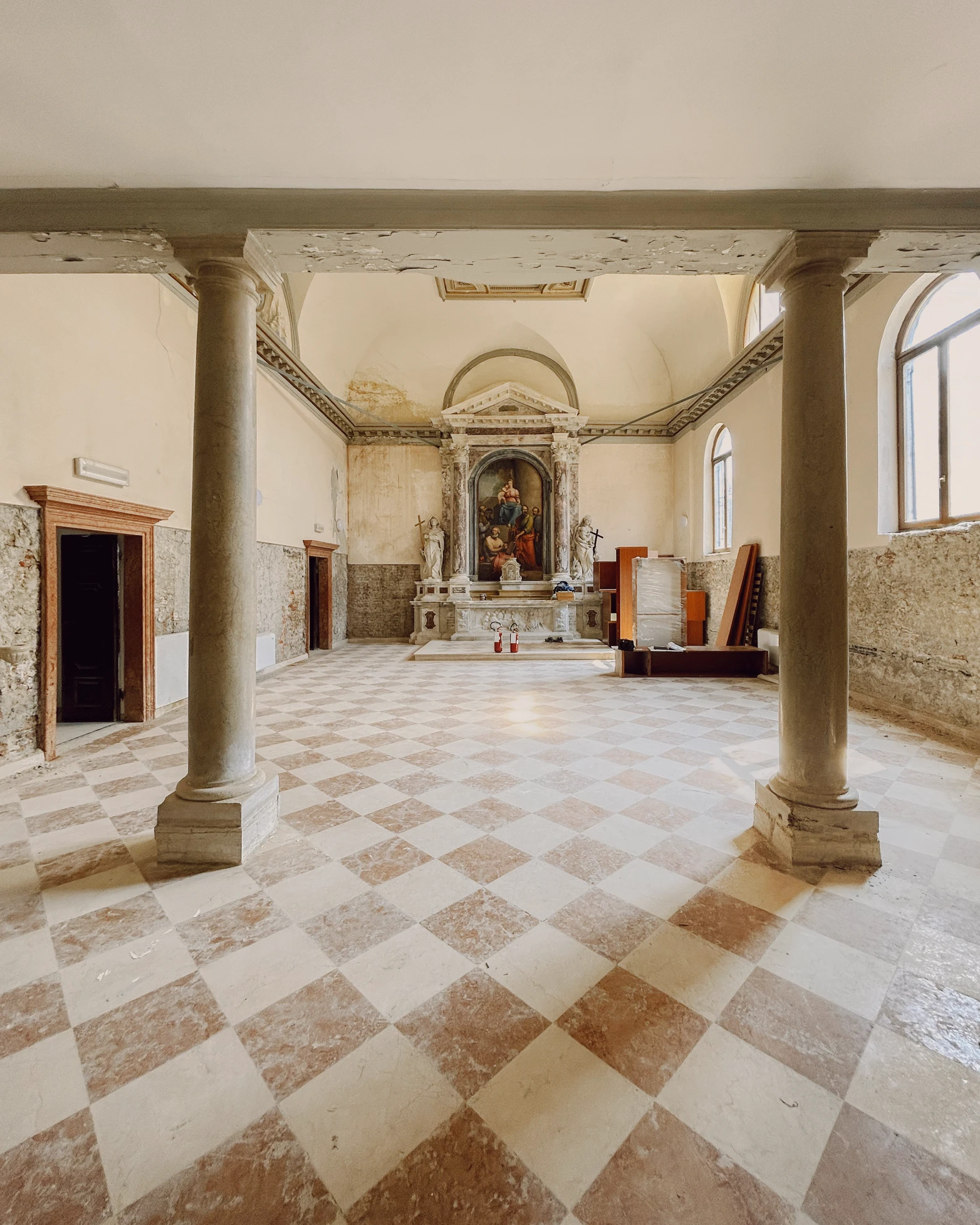
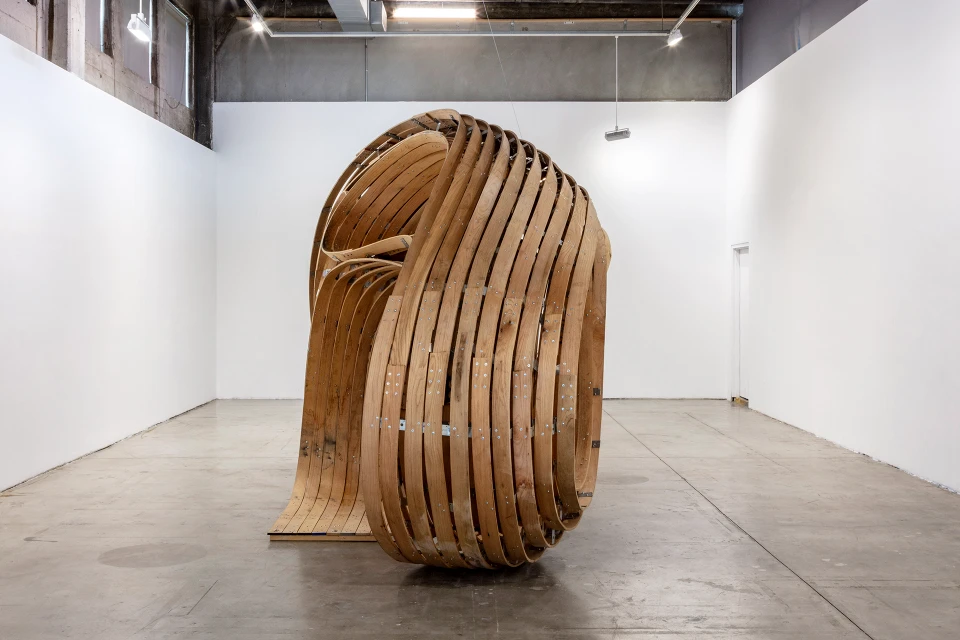
Visitors encounter multilingual editions of Hildegardian texts, artist books by Ilda David, and architectural interventions developed by Tatiana Bilbao Estudio, MAIO Architects, and DOGMA.
Alexander Kluge’s Final Work

One of the exhibition’s most significant contributions is the final completed work by Alexander Kluge, who died on 25 March 2026 at the age of 94. Installed across three rooms of the partially restored industrial complex, the twelve-station film and image installation serves as a concluding artistic statement from one of Germany’s most influential postwar intellectuals and filmmakers.

Kluge’s presence within the Holy See Pavilion deepens its engagement with memory, storytelling, and spiritual imagination. His contribution also establishes a bridge between medieval thought and contemporary artistic experimentation, a central theme running throughout the exhibition.
Continuing the Holy See’s Architectural Commitment
The presentation at Santa Maria Ausiliatrice also continues the Holy See’s long-term engagement with the site following its participation in the 19th International Architecture Exhibition of the Venice Biennale. The new exhibition builds upon Opera Aperta (2025), the architectural restoration initiative led by Tatiana Bilbao Estudio and MAIO Architects.

This continuity reflects the Vatican’s growing commitment to contemporary art and architecture simply as an exhibition practice and an ongoing cultural and social dialogue.
Curatorial Vision and Institutional Context
The Holy See Pavilion is commissioned by Cardinal José Tolentino de Mendonça, Prefect of the Dicastery for Culture and Education. Under his leadership, the Vatican’s cultural initiatives have increasingly emphasized collaboration with contemporary artists, musicians, architects, and thinkers.

The curators, Hans Ulrich Obrist and Ben Vickers, frame the Pavilion not as a conventional exhibition but as a space of contemplation and encounter. Through sound, archives, architecture, and film, The Ear is the Eye of the Soul proposes listening as both an artistic methodology and a spiritual discipline.

The project is further supported by the participation of Intesa Sanpaolo as the pavilion’s main partner, alongside Portuguese business group dstgroup and the international art services company HENI.
Explore Courses
.jpg "Ondrej Chybik - Rethinking Architecture")