

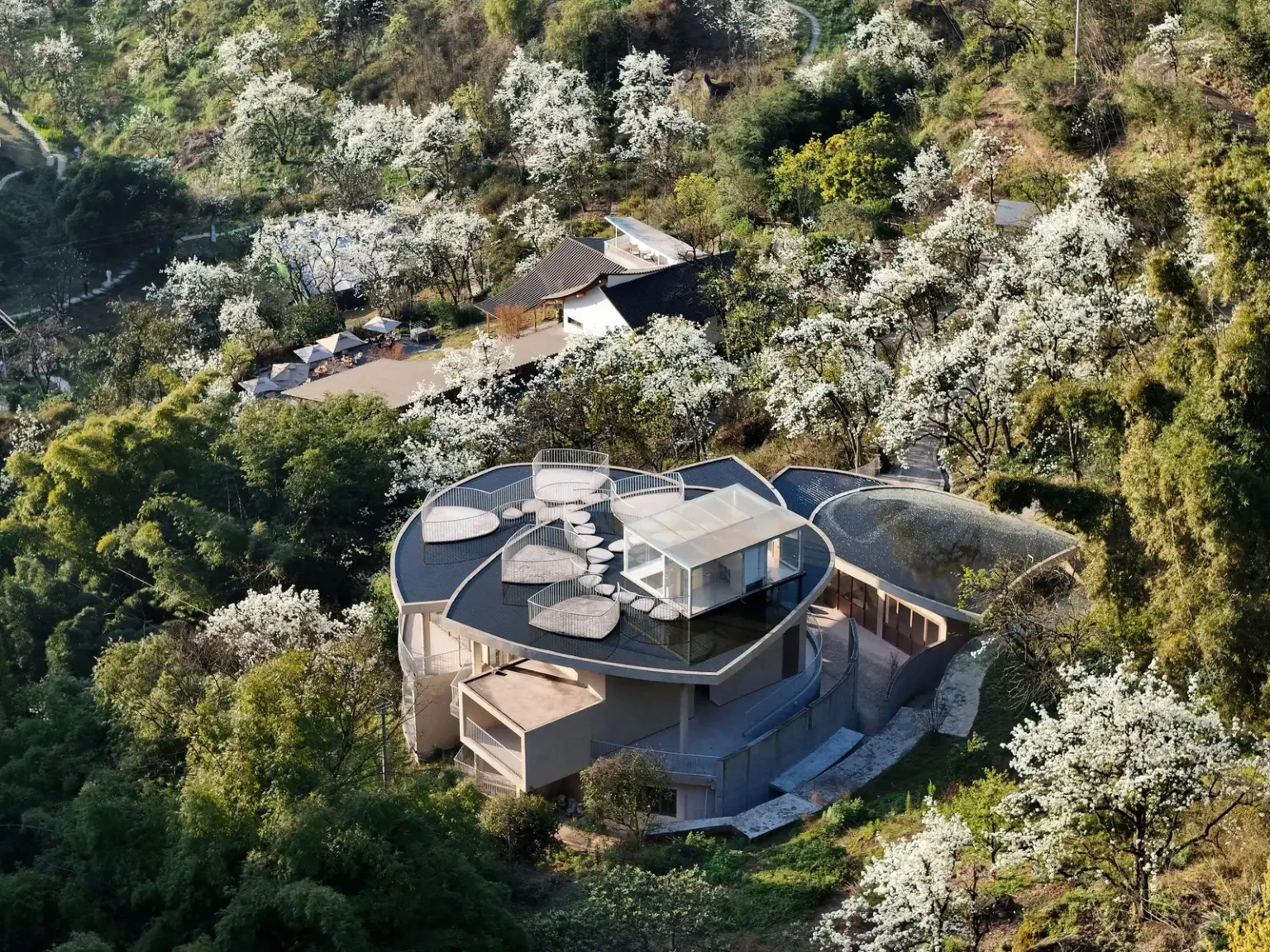
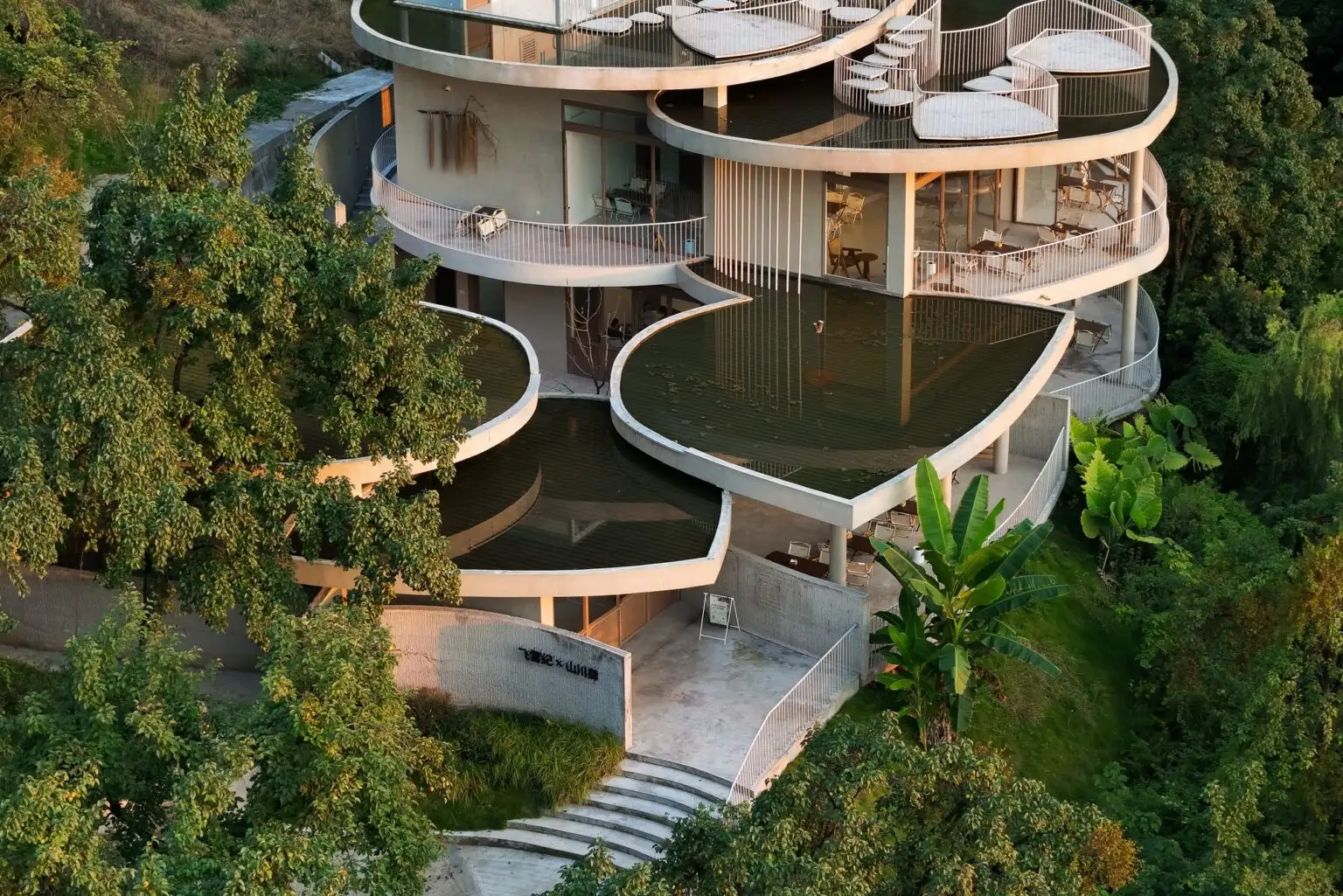



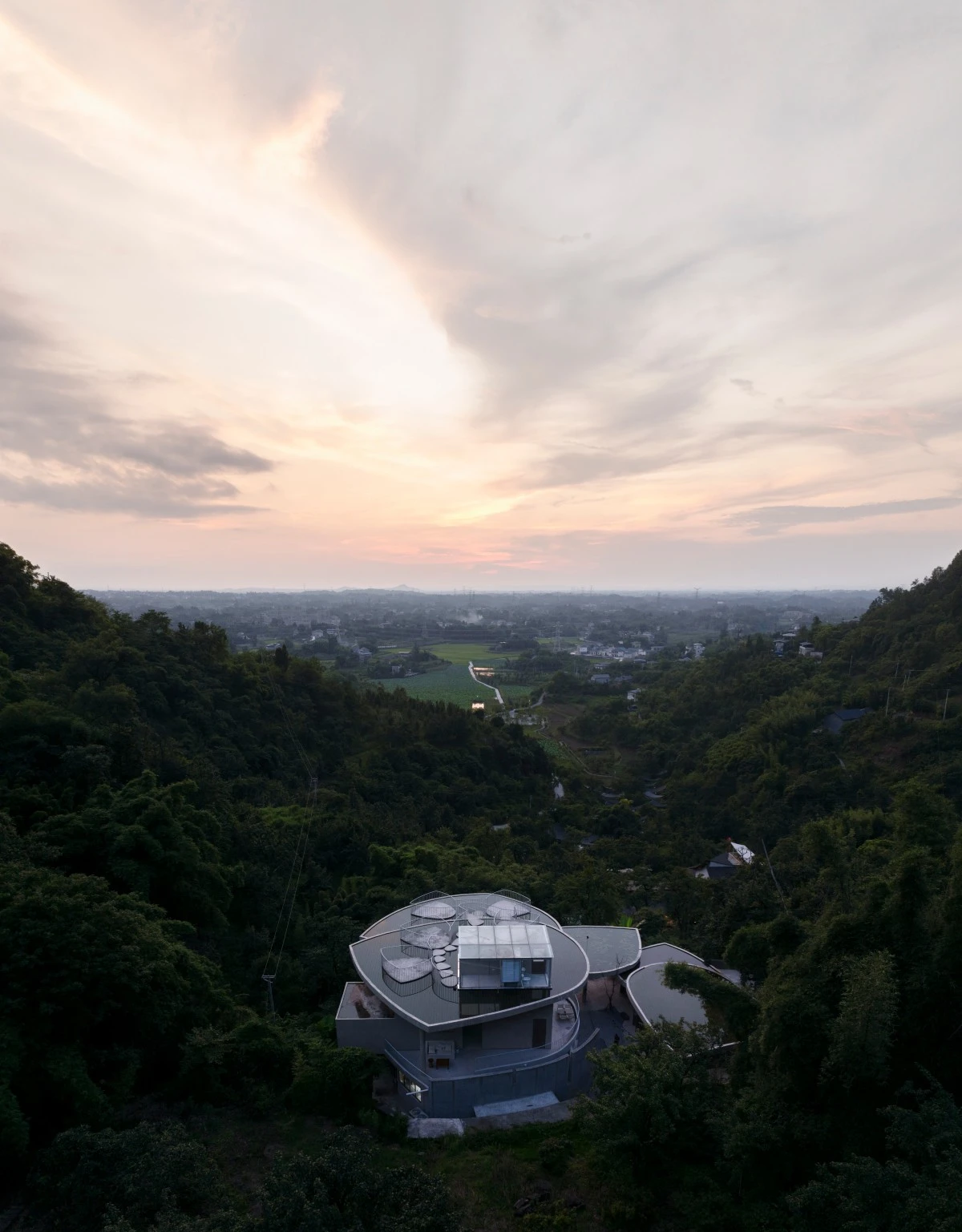

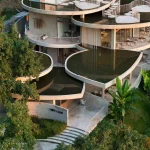
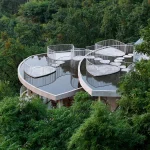
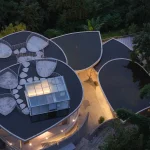
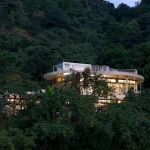
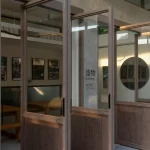
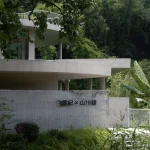
Feixue Pavilion is a rural cultural and educational pavilion designed by Archermit in Pear Blossom Village, Luzhou, Sichuan. Completed in 2025, the 672-square-meter project functions as a nature education and community activity center integrated into a mountainous agricultural landscape. The pavilion is part of a broader rural revitalization initiative aimed at reconnecting urban visitors with village life through environmental learning programs and public gathering spaces.
The project was led by architect Pan Youcai, with Yang Zhe as design director and Chen Renzhen as technical director. The client was Lihua Village Collective Asset Management Co., Ltd., Jiangyang District, Luzhou.
A Nature Education Pavilion Integrated with Mountain Landscape
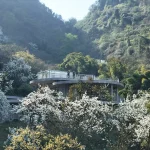
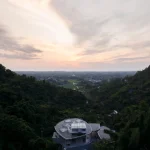
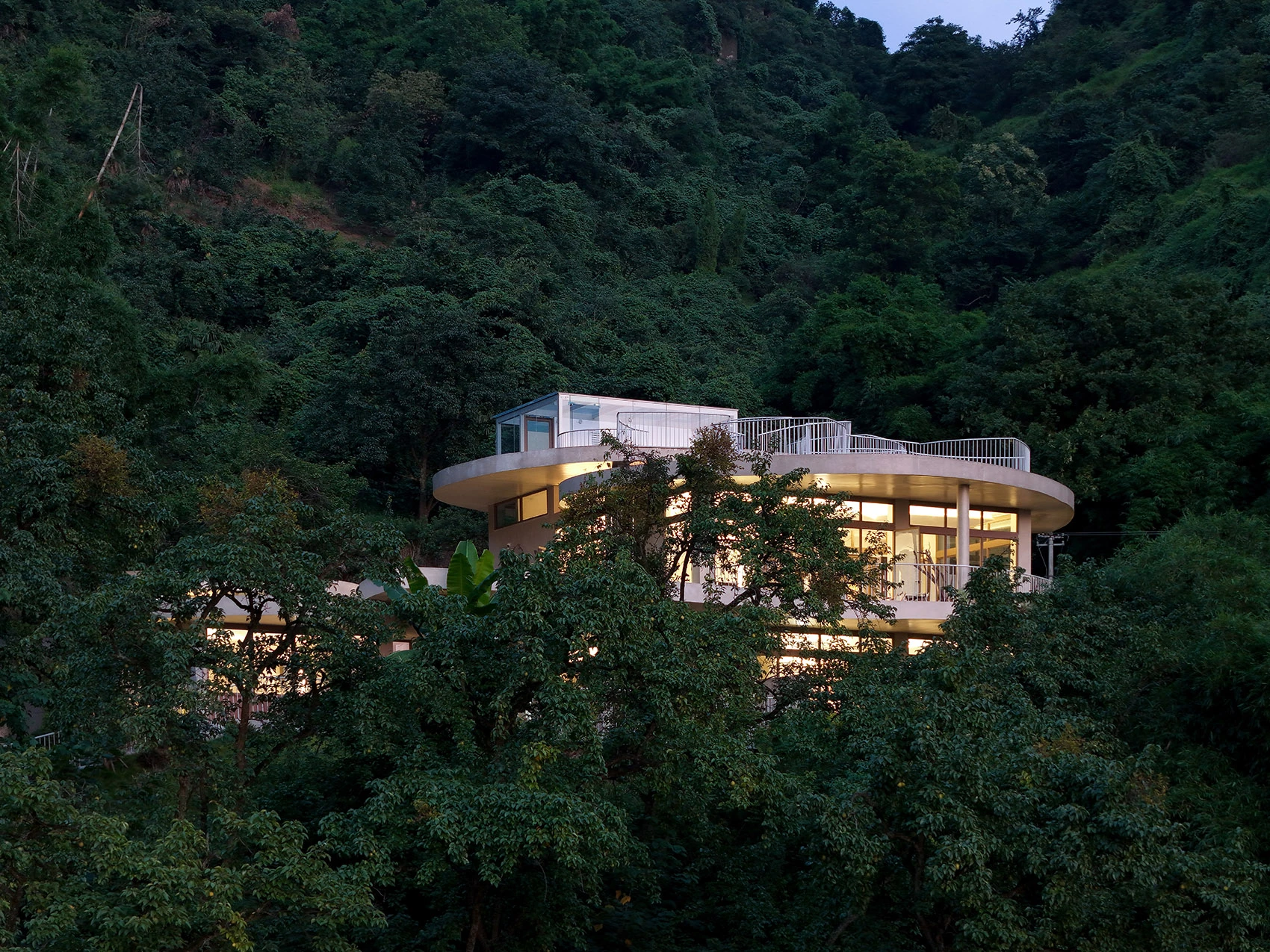
The pavilion is located on a sloped site in Pear Blossom Village, Luzhou. Existing landscape elements strongly informed the architectural response. The approach sequence follows a winding mountain path passing a large natural stone and an old pear tree preserved on site. The building adapts to the slope and existing vegetation, allowing the project to remain visually embedded within the rural environment.
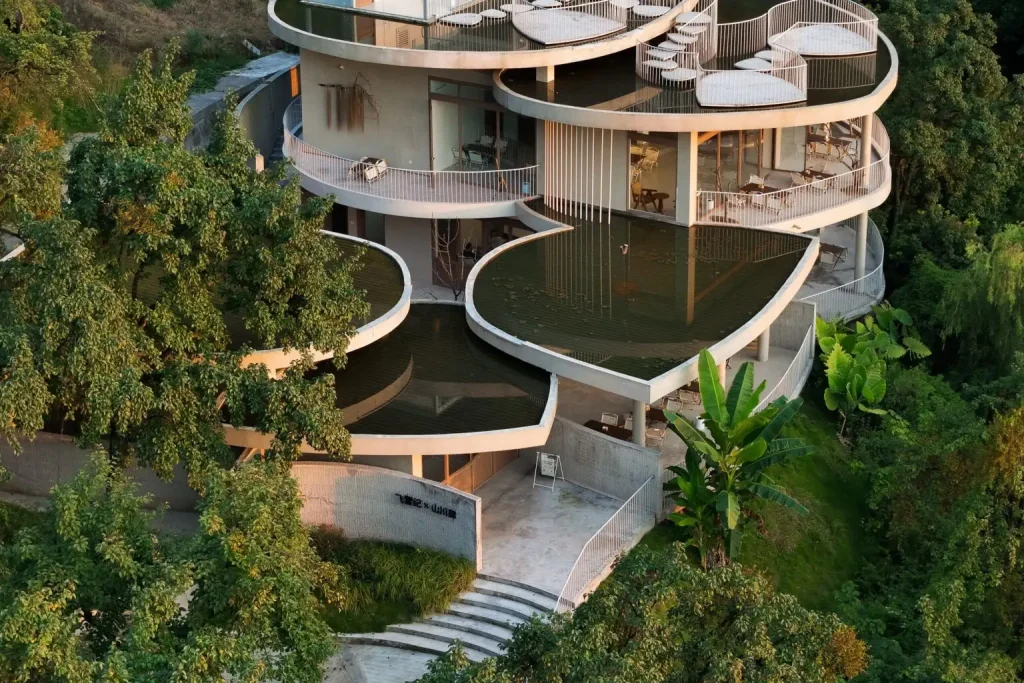
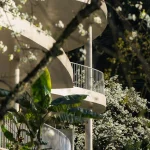
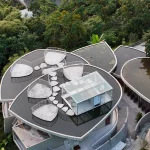
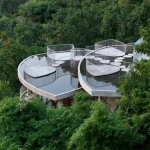
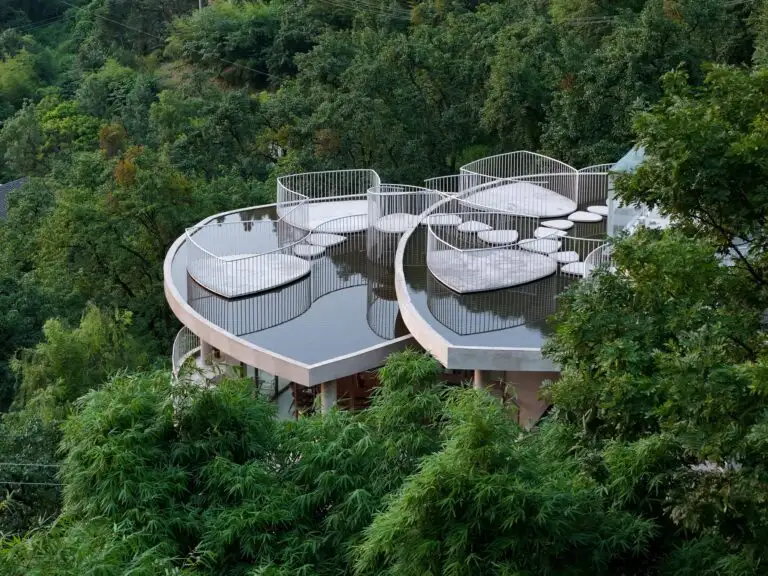
Pear blossoms became the central conceptual reference for the project. According to the architects, the experience of petals blowing across the valley during spring inspired the pavilion’s spatial and formal organization. Instead of creating a singular monolithic volume, the building was divided into overlapping roof plates that resemble drifting pear petals.
Architectural Concept of Feixue Pavilion
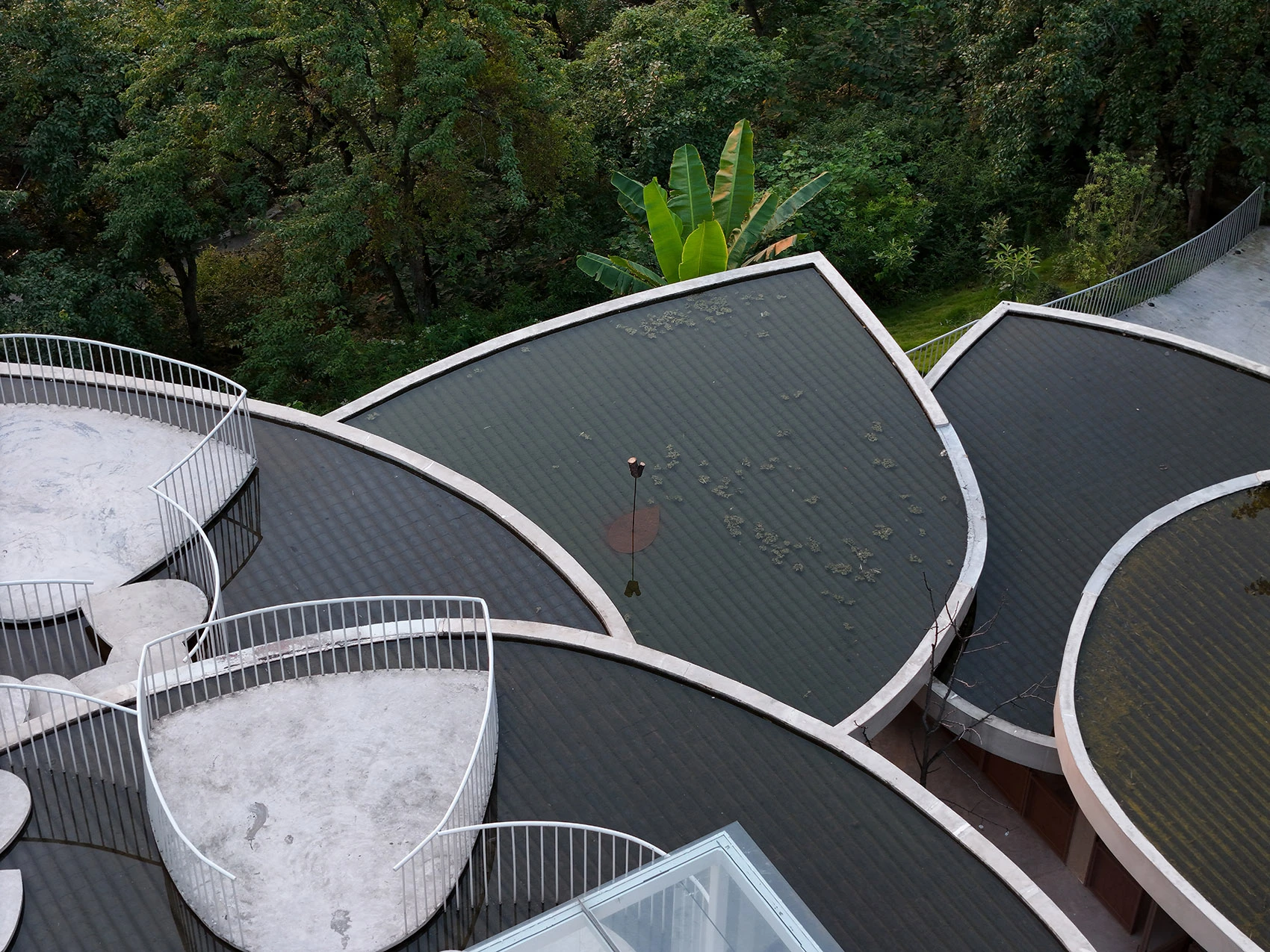
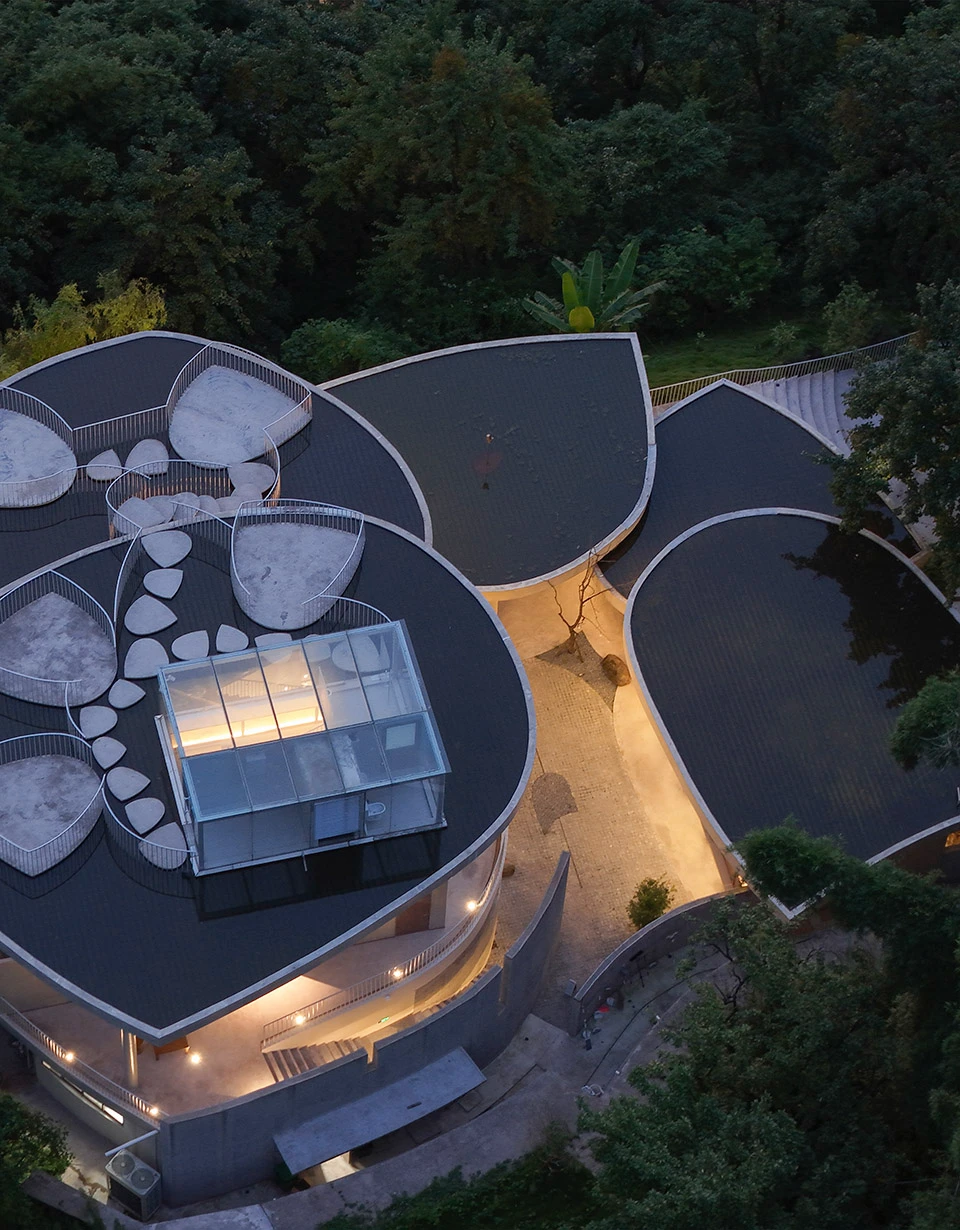
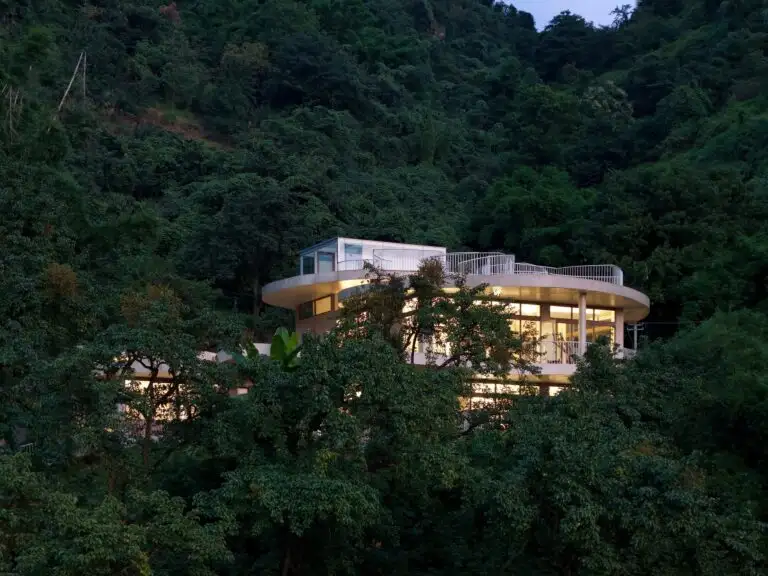
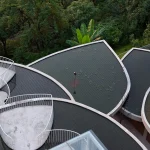
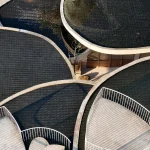
The architectural form is based on five petal-shaped concrete roof slabs. Each slab functions as an independent structural and spatial element. The petals overlap at different heights and extend through cantilevered edges, producing voids and layered spaces between them. This strategy reduces the visual heaviness of the building and breaks the overall mass into smaller interconnected forms.
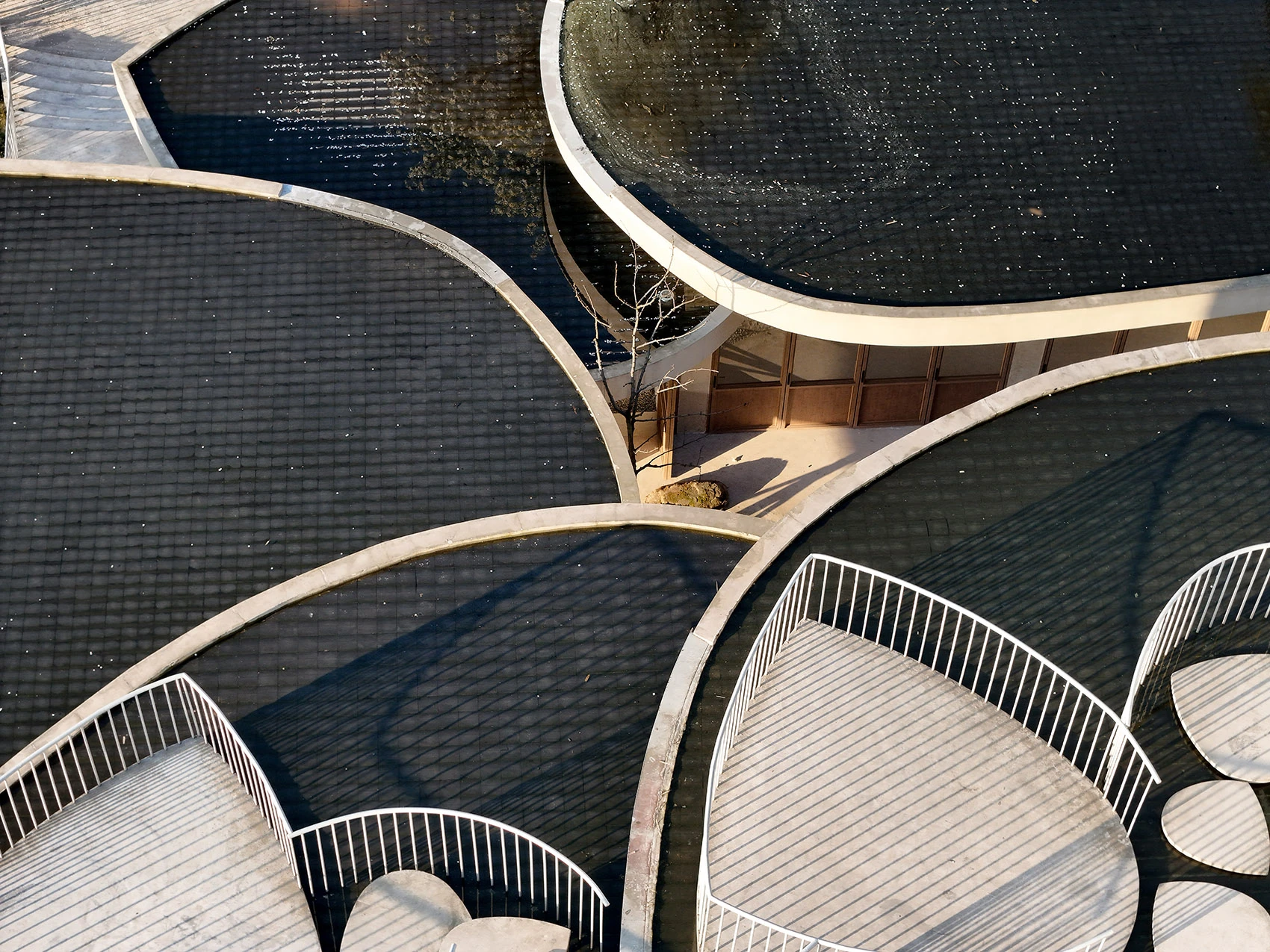
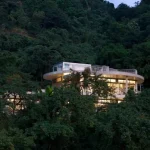
The gaps between the concrete plates allow natural light to penetrate the interior during the day while also creating framed views toward the surrounding trees and mountains. At night, interior lighting escapes through these openings, emphasizing the layered roof geometry within the dark landscape.
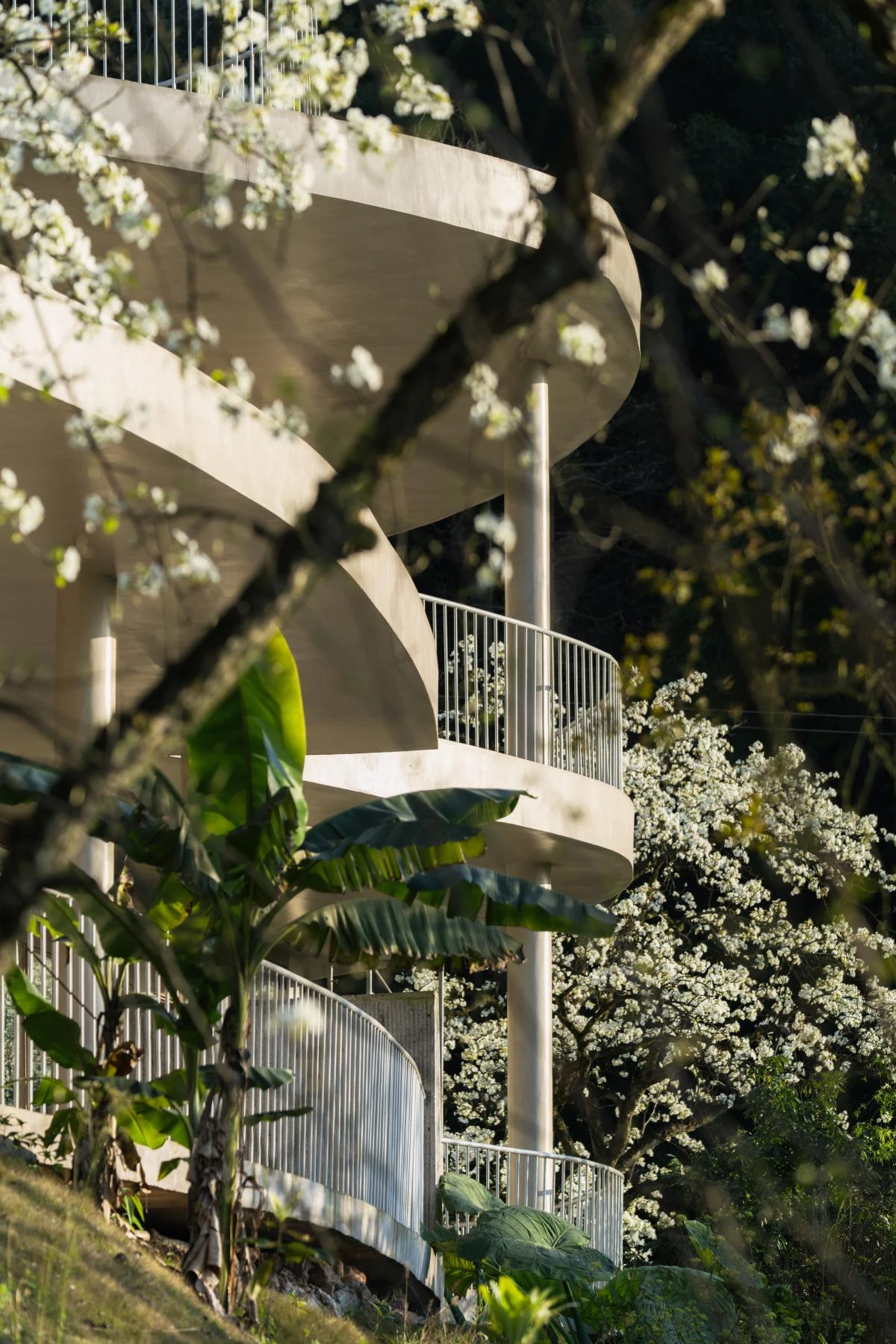
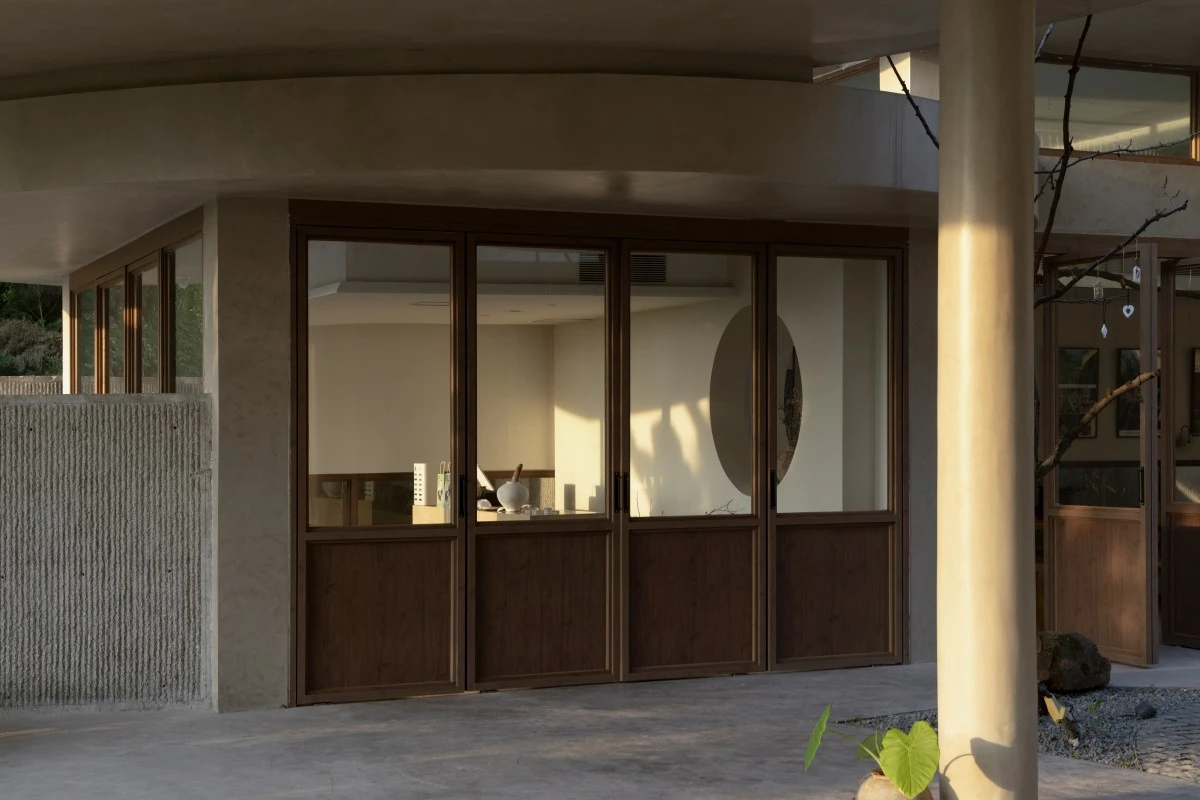
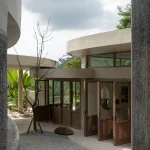
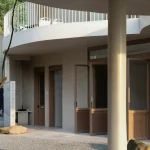
The project combines precise concrete construction with tactile handcrafted surfaces. Several courtyard walls were manually chiseled after curing to produce a rough texture resembling weathered rock or tree bark. This material treatment establishes a stronger physical relationship between the architecture and the surrounding forest environment.
Spatial Layout and Organization
The pavilion is organized around five primary zones corresponding to the five roof petals. Each section accommodates a distinct program while remaining visually connected through openings, courtyards, and transitional spaces.
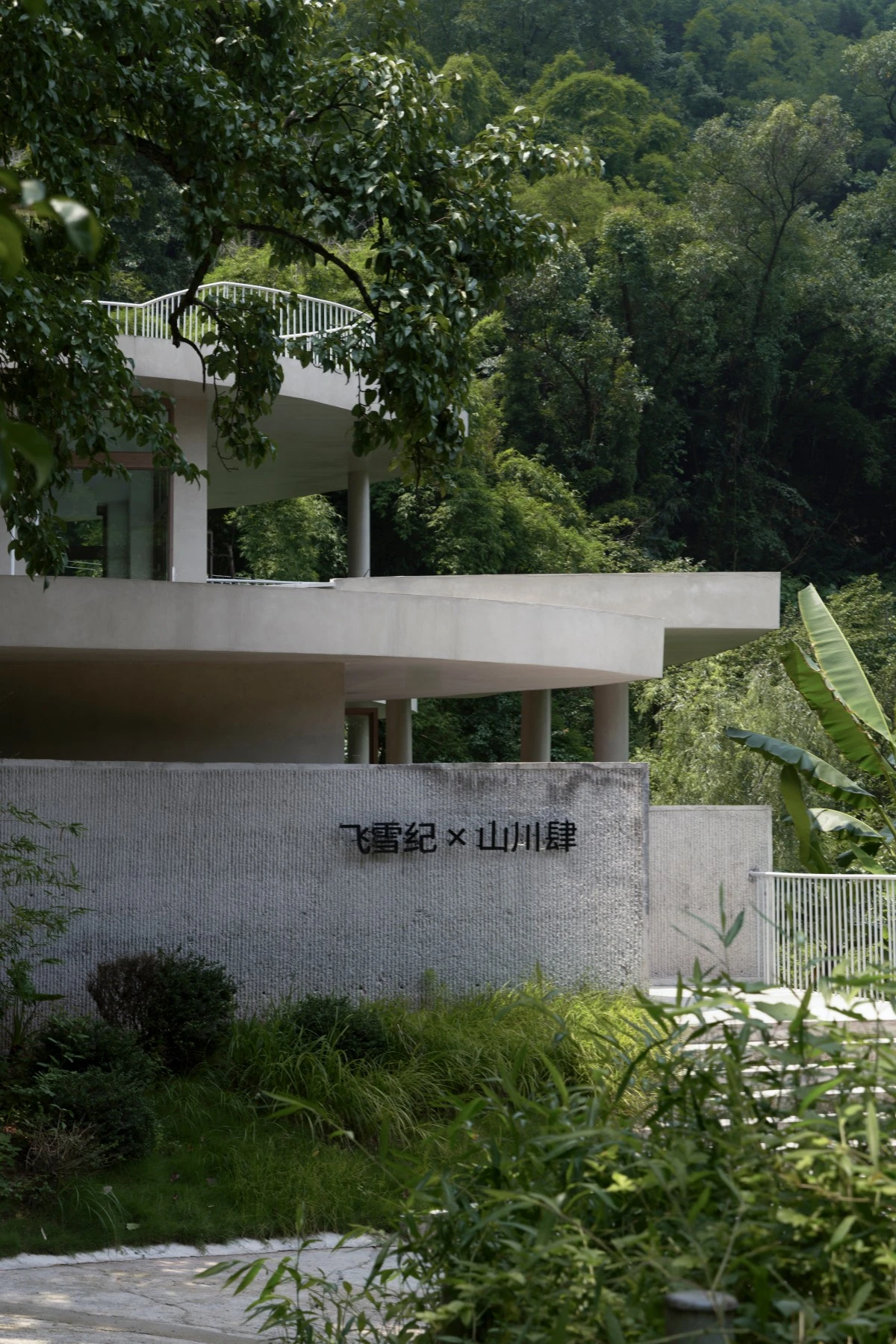
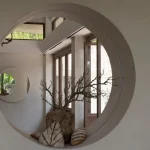
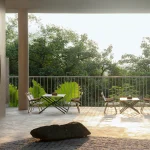
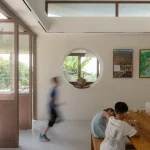
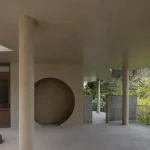
The first zone contains the main reception and entrance space. A circular opening visually links this area with the second zone, reinforcing continuity between interior functions. The third zone acts as a semi-open transitional pavilion positioned between enclosed and outdoor spaces. This area functions as a sheltered terrace where users can experience wind, rain, and views of the landscape.
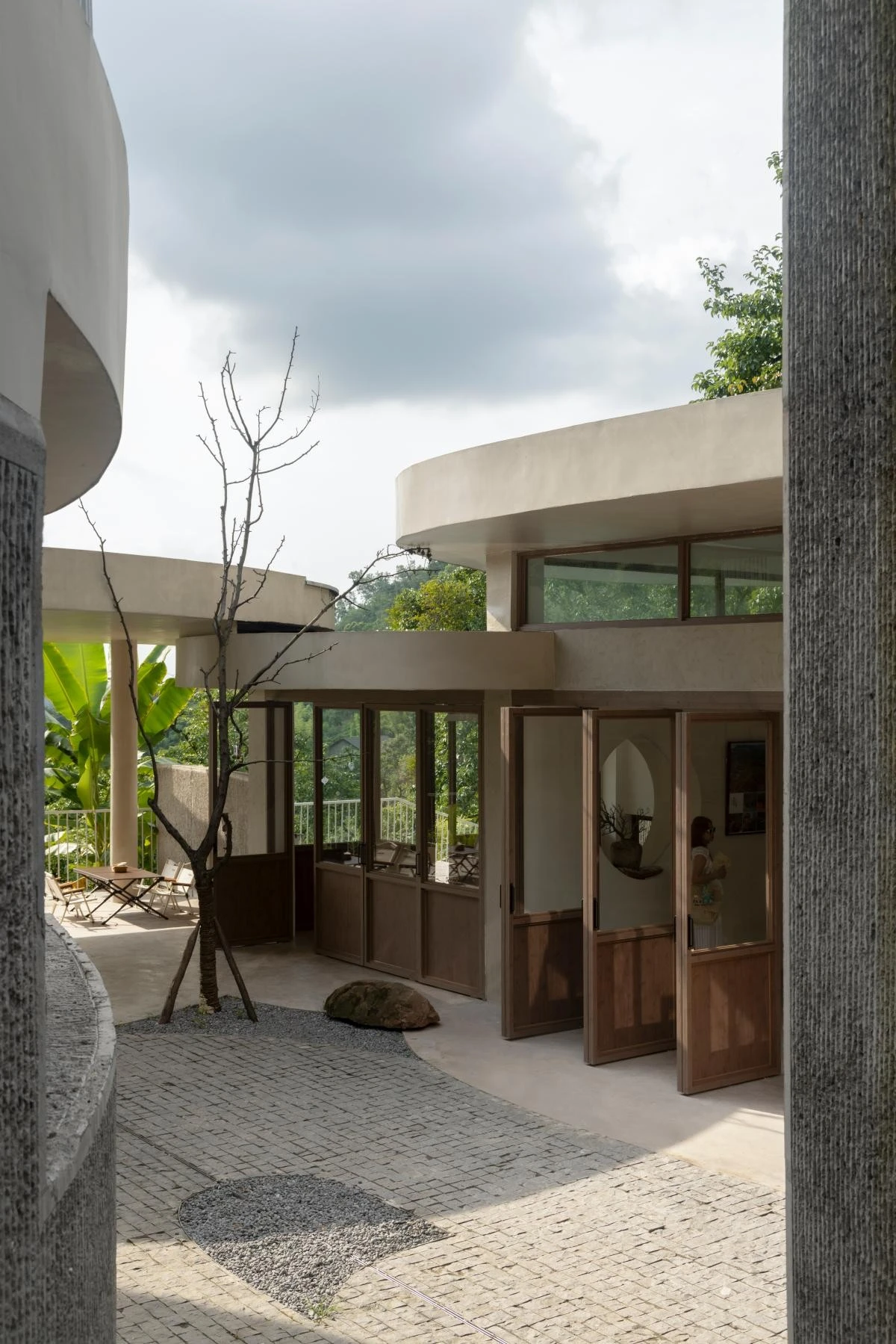
The fourth and fifth zones contain educational, workshop, and resting areas. Split levels and staggered floor plates reduce the scale of the double-height spaces and create varied interior volumes. At the center of the composition is an open atrium that introduces daylight and ventilation into the core of the building.
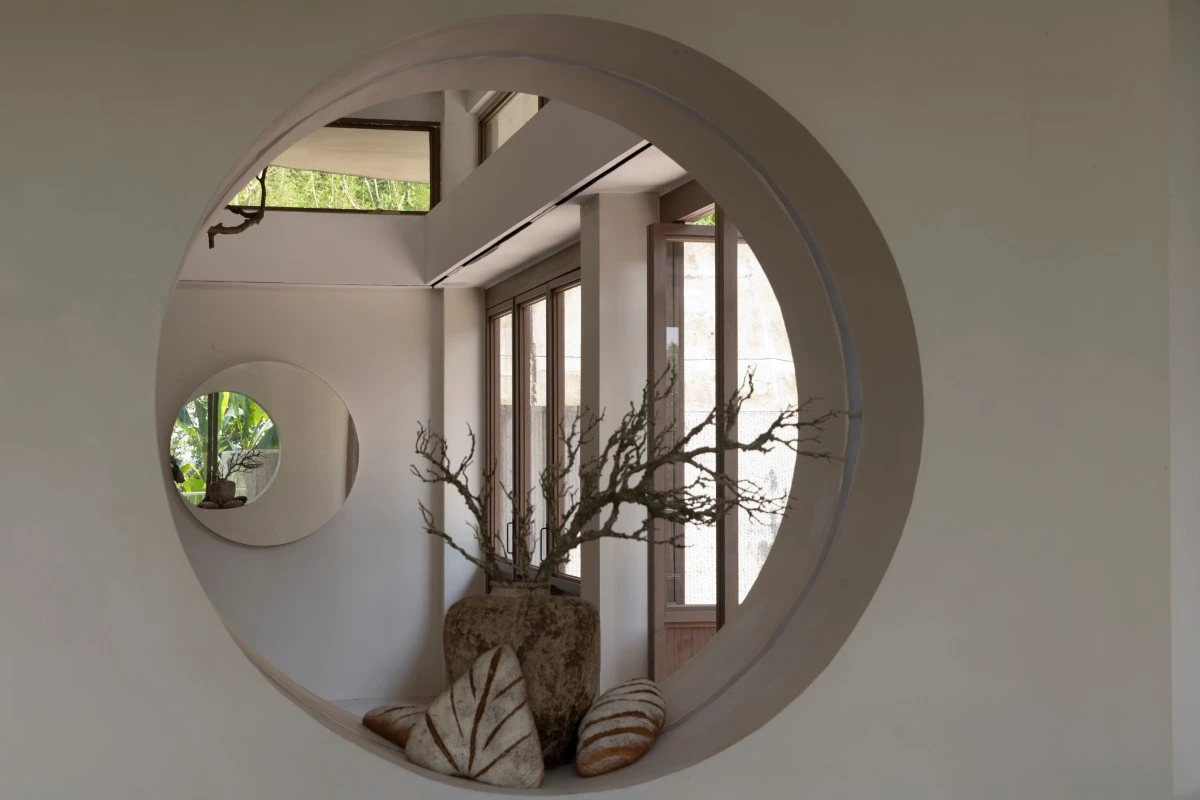
Circular openings, curved walls, and layered circulation routes contribute to the spatial depth of the pavilion. Large stones remain integrated within the circulation paths, allowing the landscape to visually continue into the built environment.
Layered Concrete Roofs Inspired by Pear Blossoms
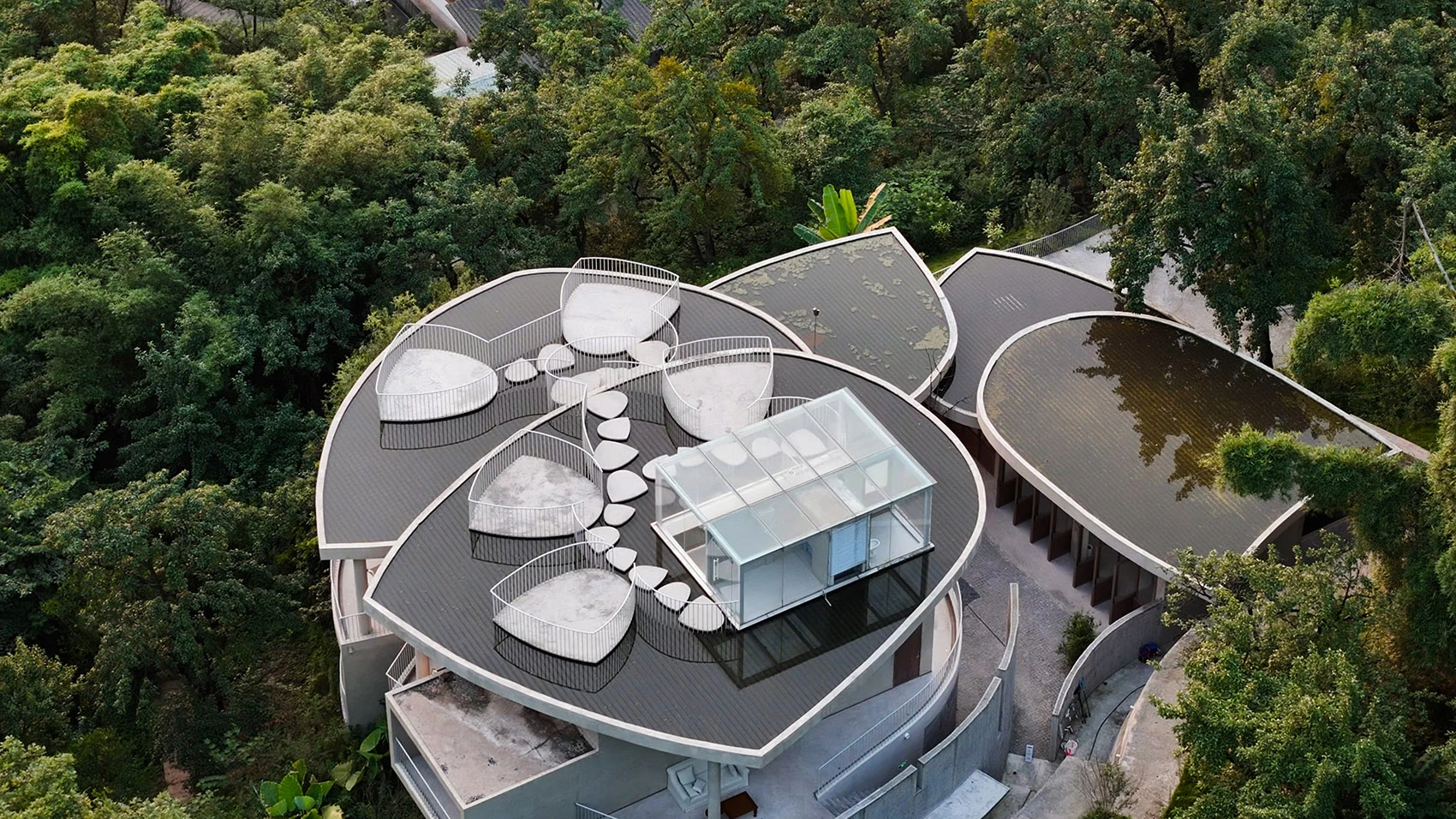
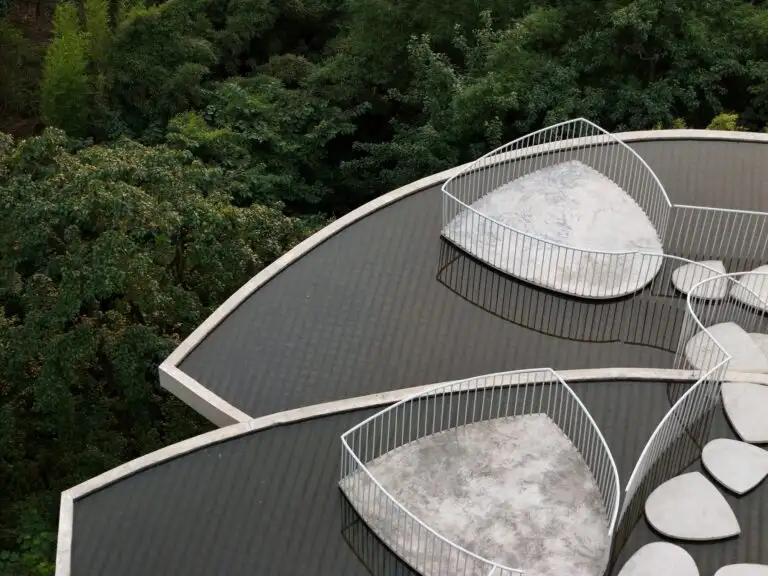
The roof is the project’s most technically and visually distinctive feature. The architects referenced traditional village rooftops that historically stored shallow water on flat surfaces while also incorporating green roof tiles commonly associated with regional sloped roofs.
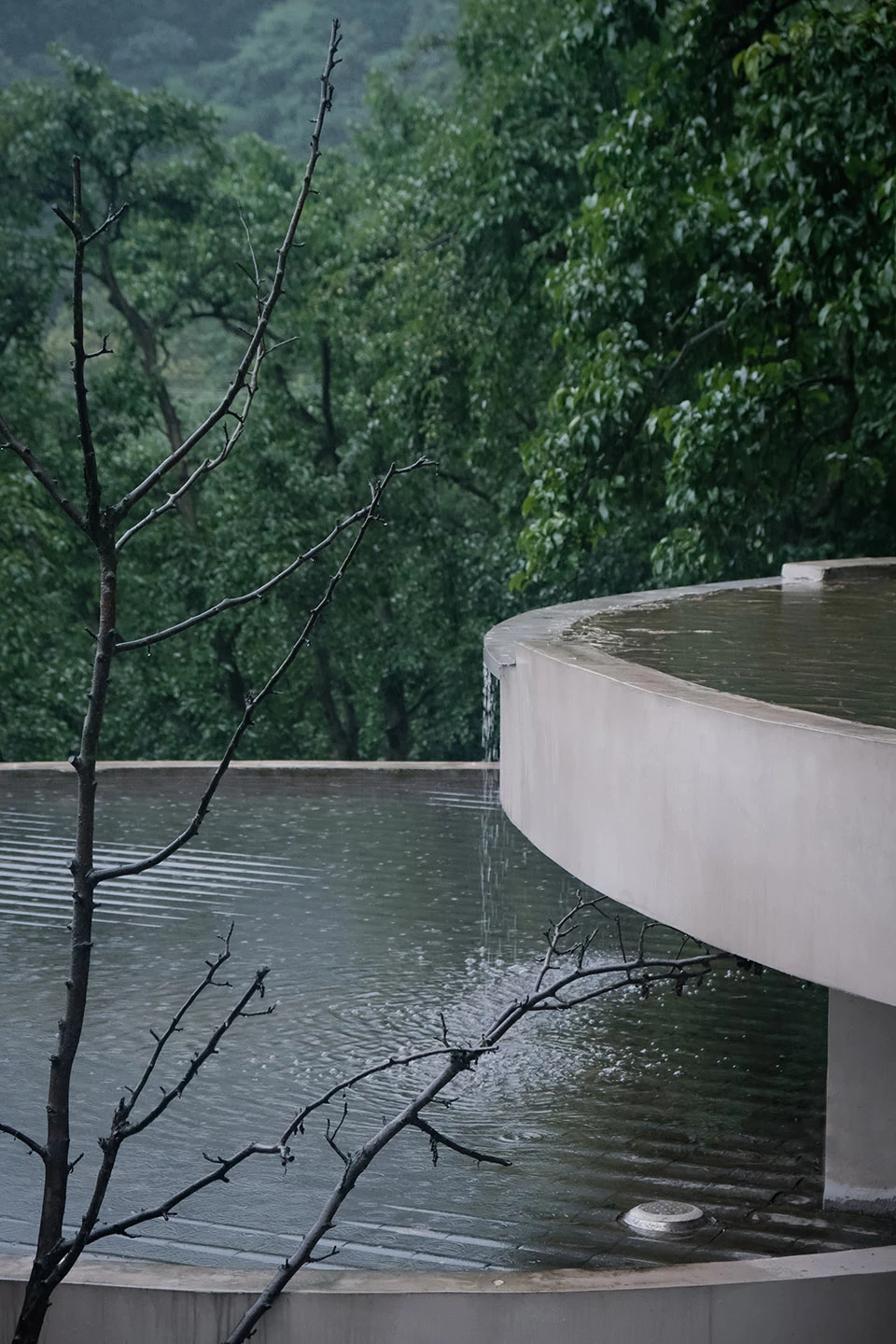
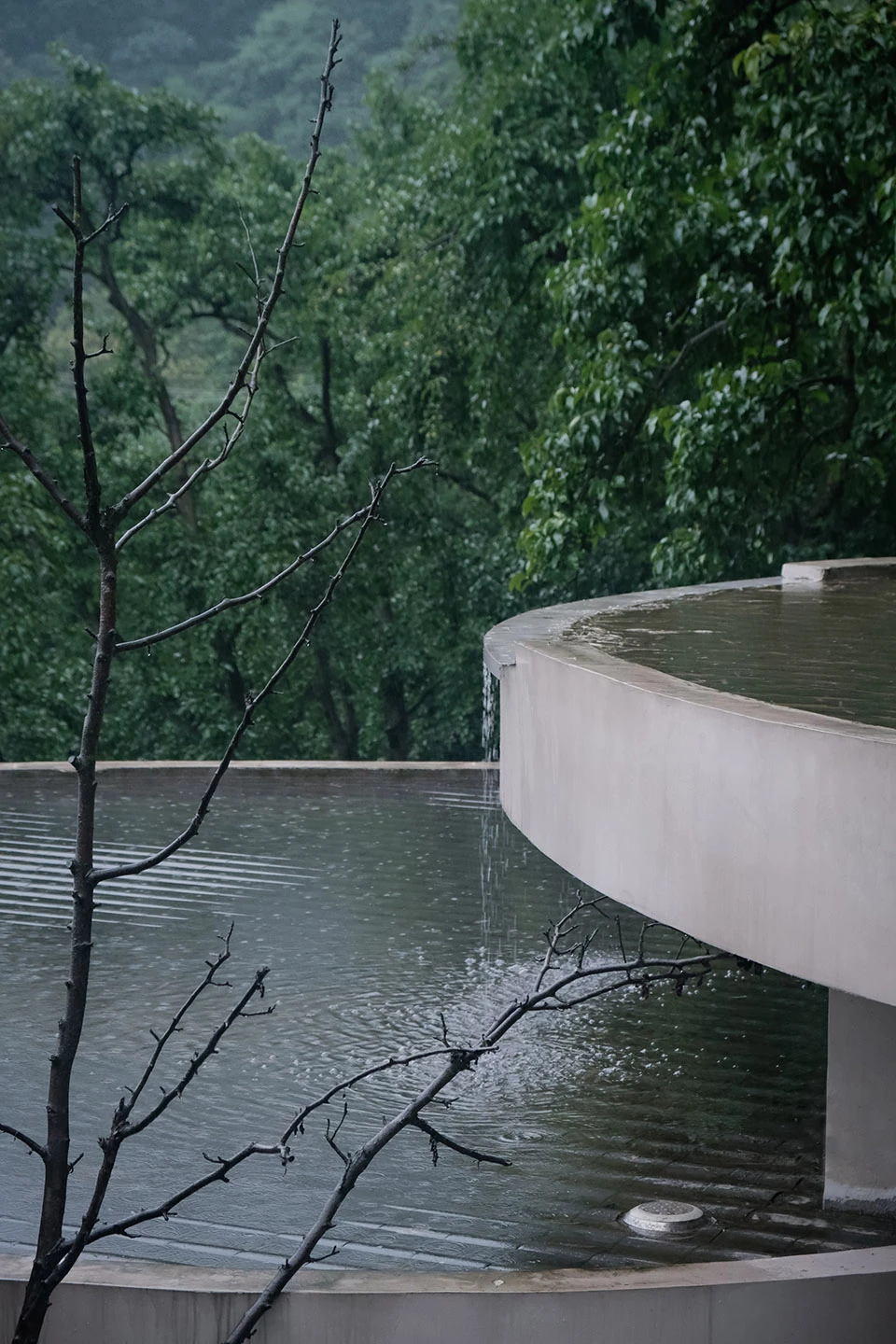
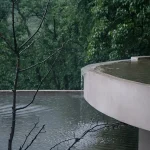
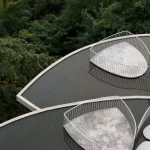
The waterproofed concrete roof slabs are covered with a thin layer of water, transforming the roof into a reflective surface. The shallow pools mirror surrounding pear trees, clouds, and sky conditions, visually extending the landscape upward onto the architecture. During rainfall, overflow channels between overlapping slabs create small waterfalls cascading through the roof intersections. This introduces movement and sound into the building while reinforcing the project’s relationship with seasonal weather conditions.
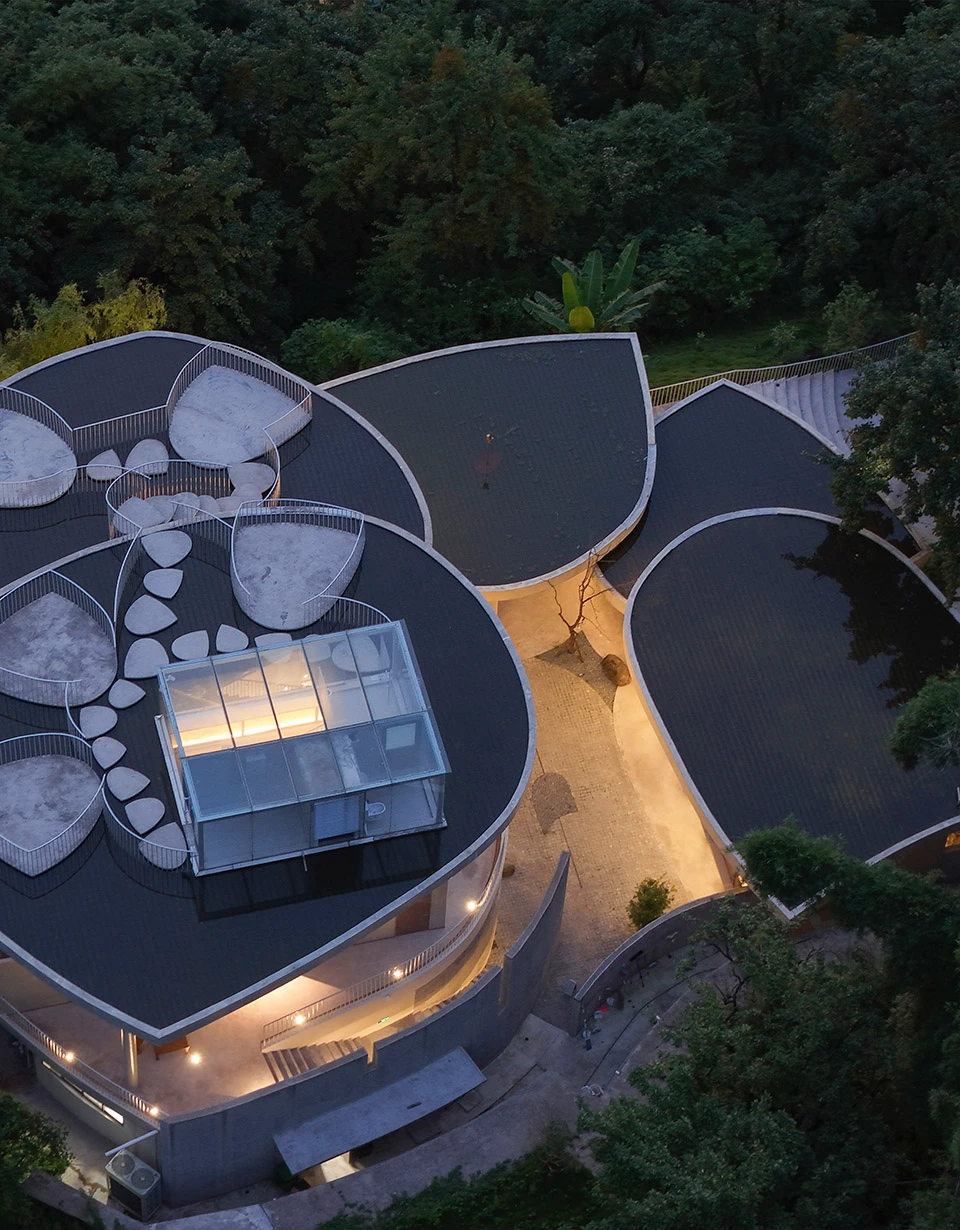
The reflection of the preserved pear tree in the rooftop water surface was intentionally considered as part of the arrival sequence and overall spatial experience.
Material and Structural Strategy
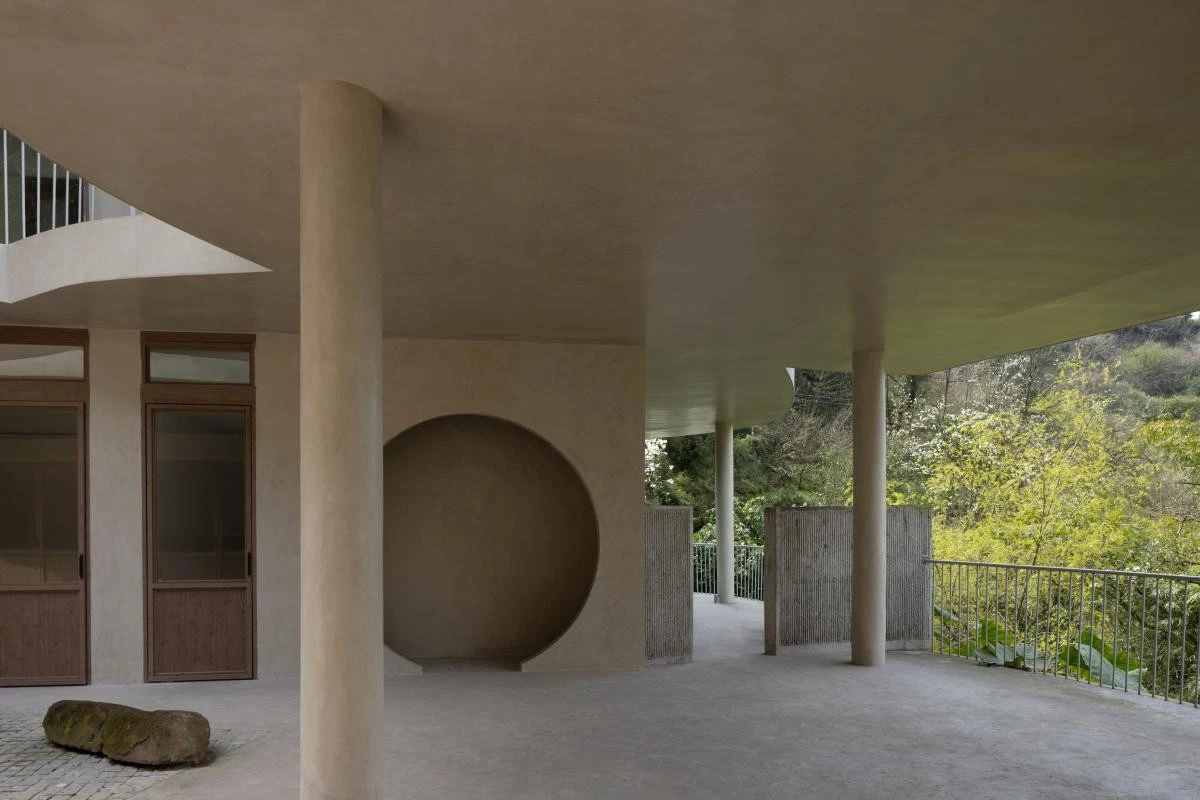
Concrete is the primary construction material. The independent petal slabs act both as roof structures and as the dominant architectural expression of the pavilion. The use of exposed concrete provides durability suitable for the humid mountain climate while enabling the sculptural cantilevered forms required by the design.
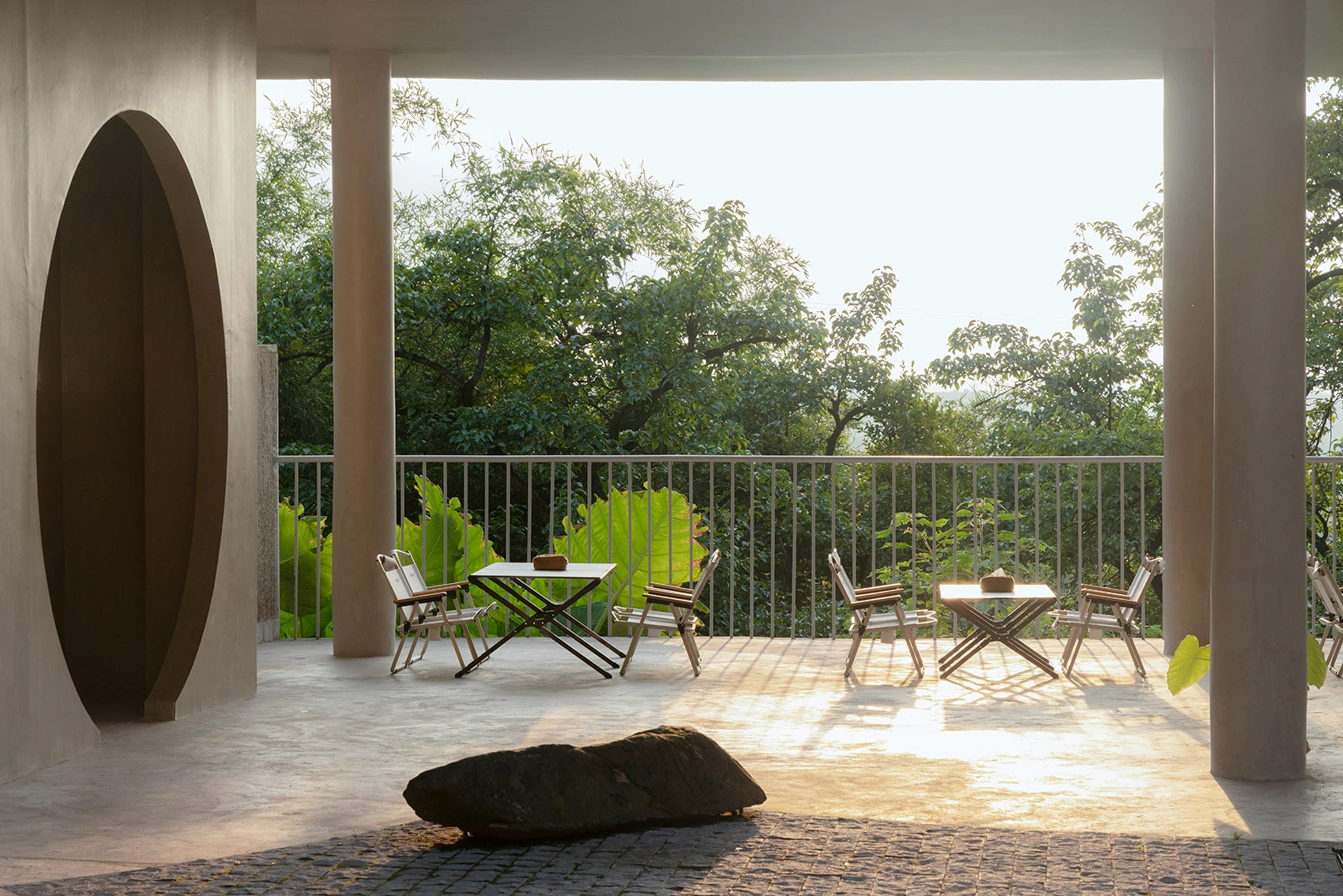
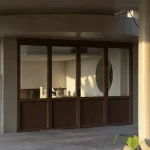
The project balances heavy materiality with visual openness through extensive glazing, slender railings, timber-framed openings, and curved columns. The combination of rough hand-finished surfaces and precisely fabricated architectural components creates a contrast between artisanal texture and controlled geometric form.
Nature Education Program
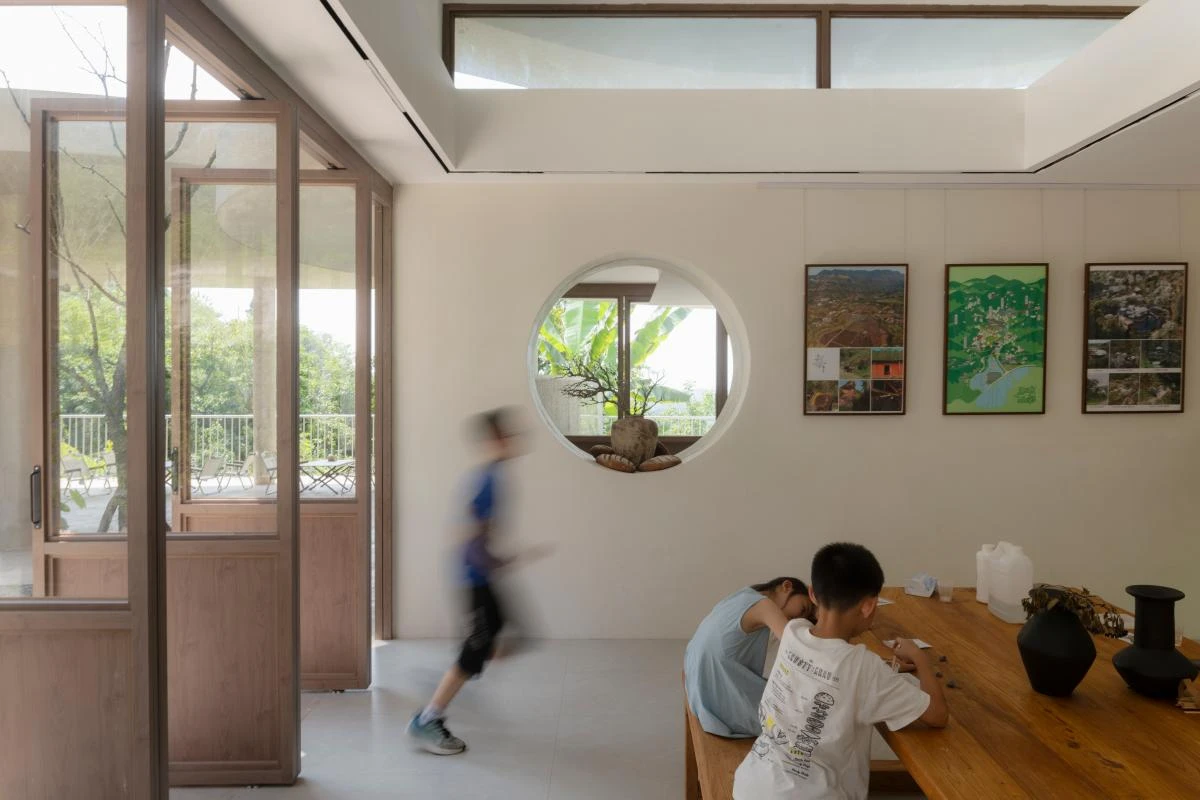
The pavilion was conceived primarily as a nature education center for children and families. Its program includes workshops related to seeds, leaf structures, insects, wood grain, stone rubbings, and wooden craft making. These activities are distributed across indoor rooms, terraces, and open courtyard spaces to maintain constant visual and physical contact with the surrounding landscape.
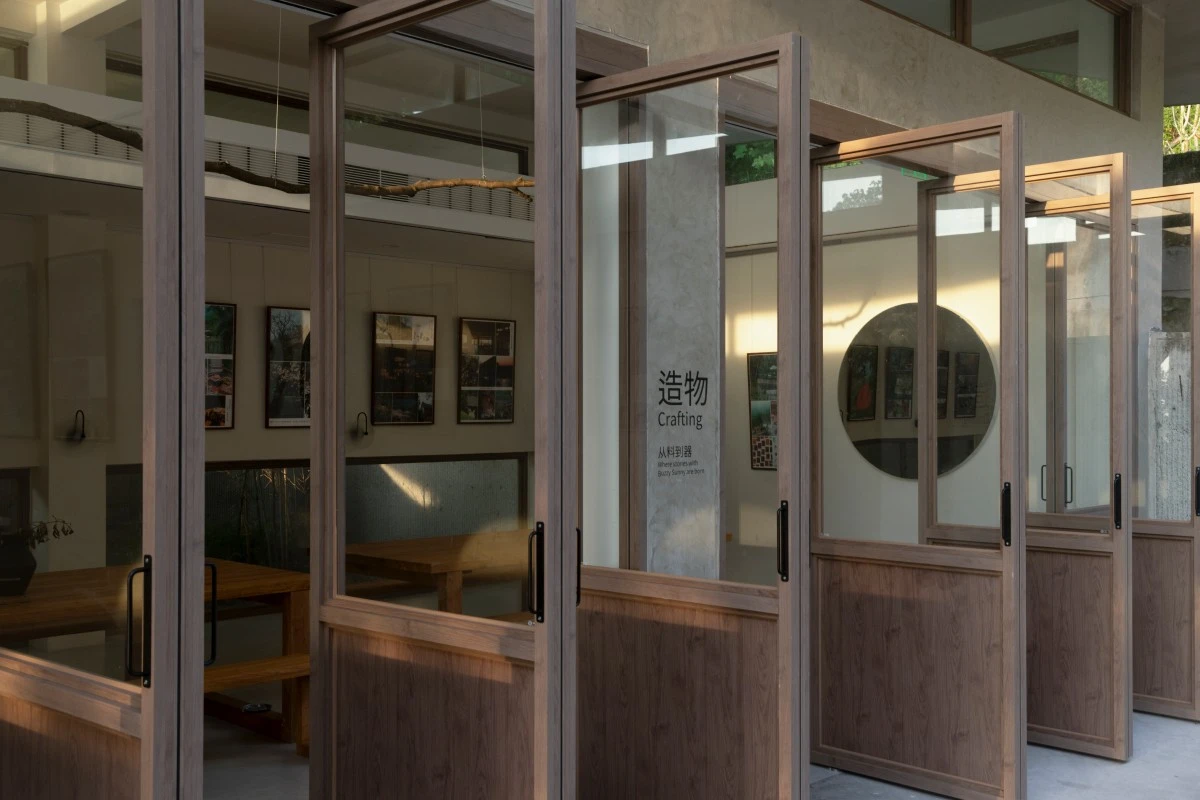
The architecture supports this educational agenda by emphasizing sensory interaction with natural elements such as water, light, stone, vegetation, wind, and seasonal change. Rather than isolating activities inside enclosed classrooms, the building encourages movement between interior and exterior environments.
Rural Revitalization and Social Role
Beyond its architectural qualities, Feixue Pavilion functions as part of a broader rural revitalization strategy in Pear Blossom Village. Since opening, the project has attracted weekend visitors from nearby urban areas and created opportunities for local participation in educational and tourism programs. The architects positioned the pavilion as an extension of the village landscape and social structure.