

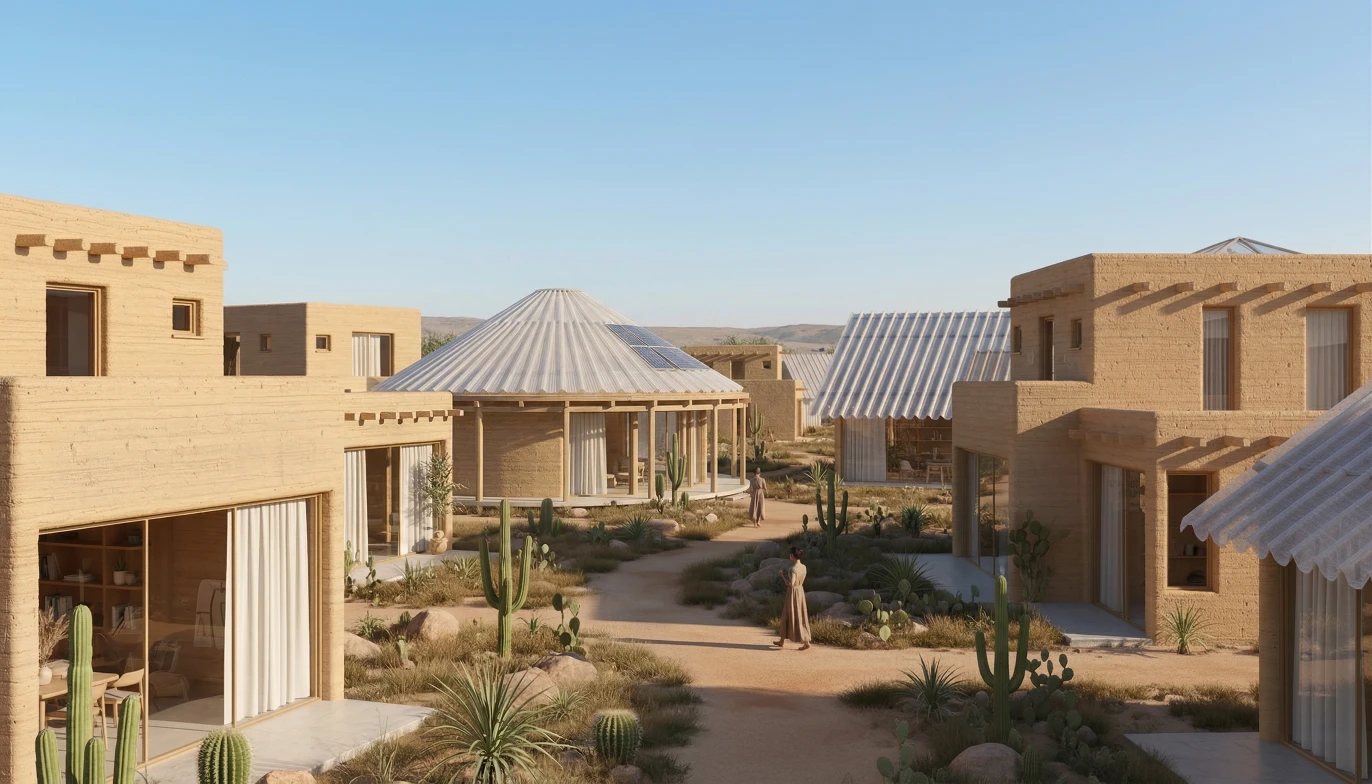




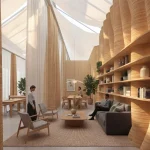
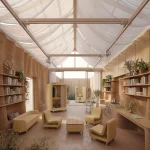
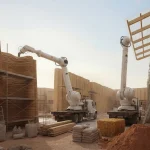
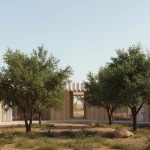
Set against the arid landscape of Antonito, Colorado, Inhabited Mud by Shenglu Qiu proposes a radical rethinking of sustainable domestic architecture through the fusion of earthen construction, robotic fabrication, and generative artificial intelligence. Developed under the University of California, Berkeley research guidance, the project envisions a new generation of zero-carbon homes that are adaptive, customizable, and materially connected to the land from which they emerge.
The project transforms mud, sawdust, timber, and other bio-based resources into a responsive architectural system capable of evolving alongside its inhabitants. Through robotic 3D printing and AI-assisted spatial design, Inhabited Mud imagines housing that can grow, shift, and eventually return harmlessly to the earth.
A Dynamic System of Earth and Biomaterials
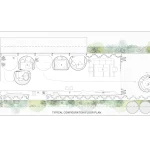
At the core of the project is a layered spatial strategy composed of three interdependent systems: a climate-responsive earthen shell, AI-generated service walls, and movable sawdust pods.
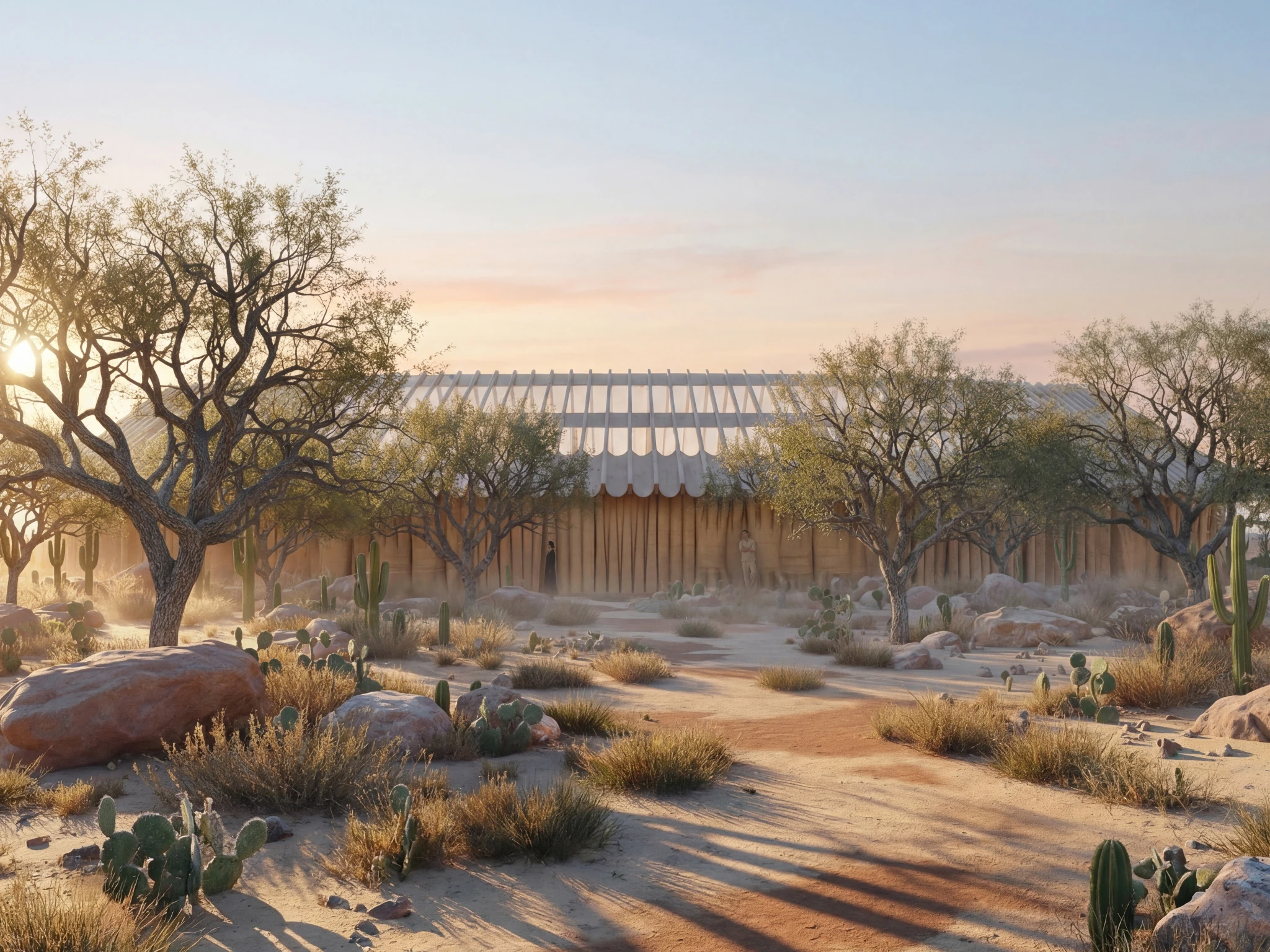
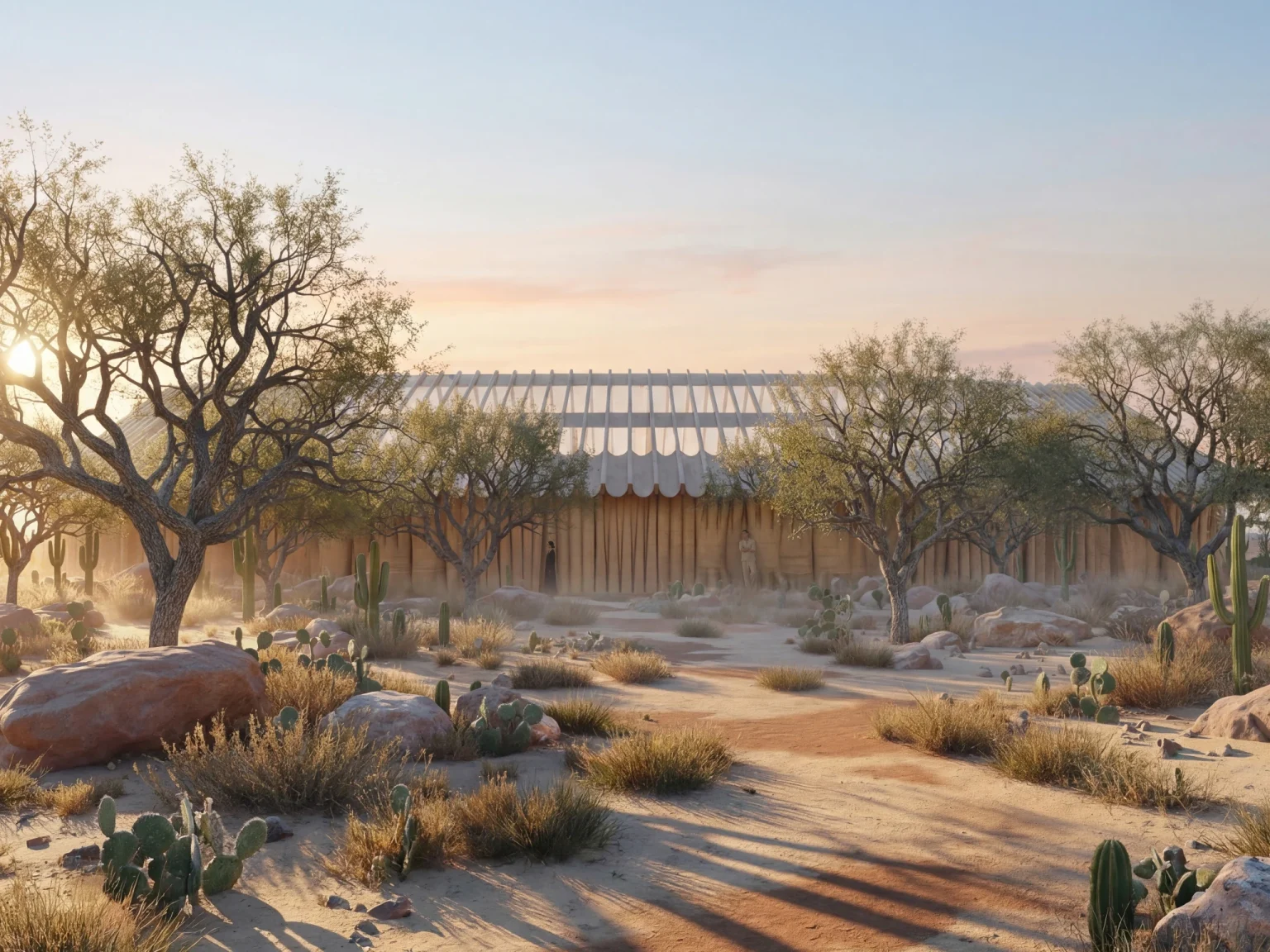
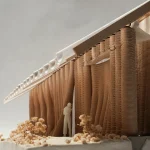
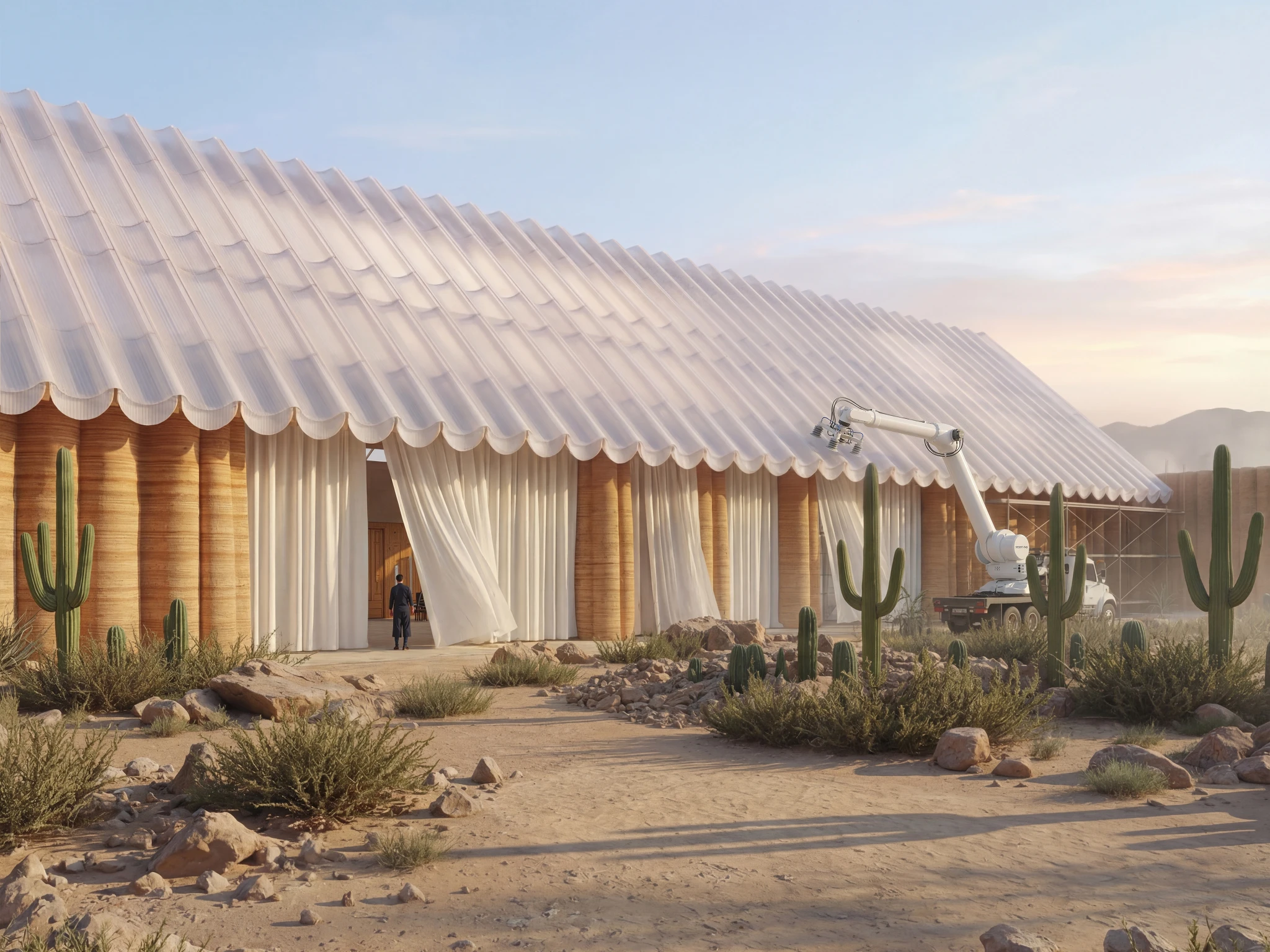
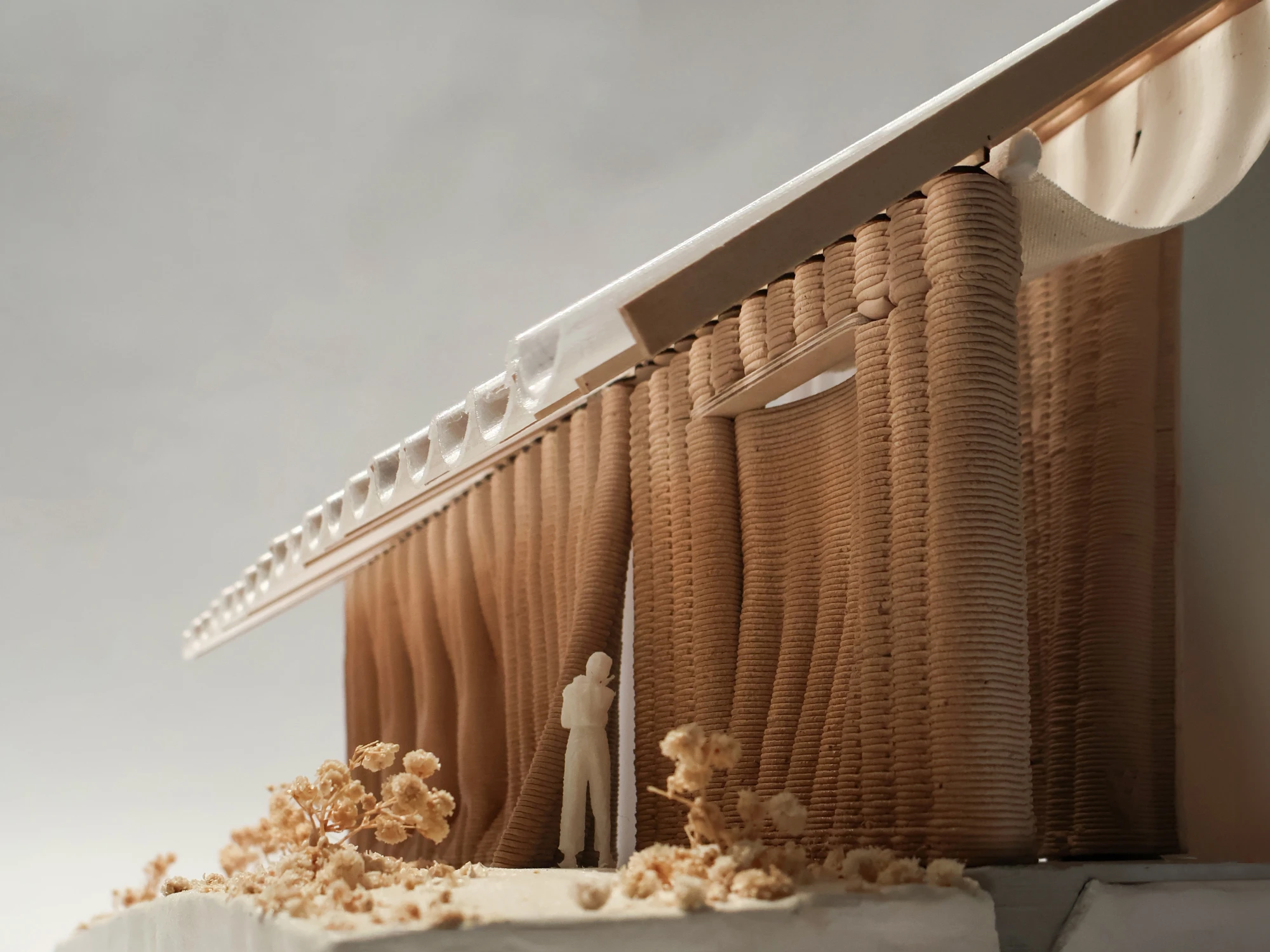
Inspired by the wind-carved canyon formations of Colorado, the exterior envelope is conceived as a continuous printed earthen curtain. Instead of relying on conventional walls punctured by standardized openings, the facade is generated through precise robotic toolpaths that seamlessly integrate ventilation, daylight openings, shading devices, and thermal buffering into a single fluid surface.
The result is an architecture that feels both primitive and futuristic: soft in appearance, deeply performative in function, and inherently tied to the environmental conditions of the site.
AI-Assisted Domestic Customization
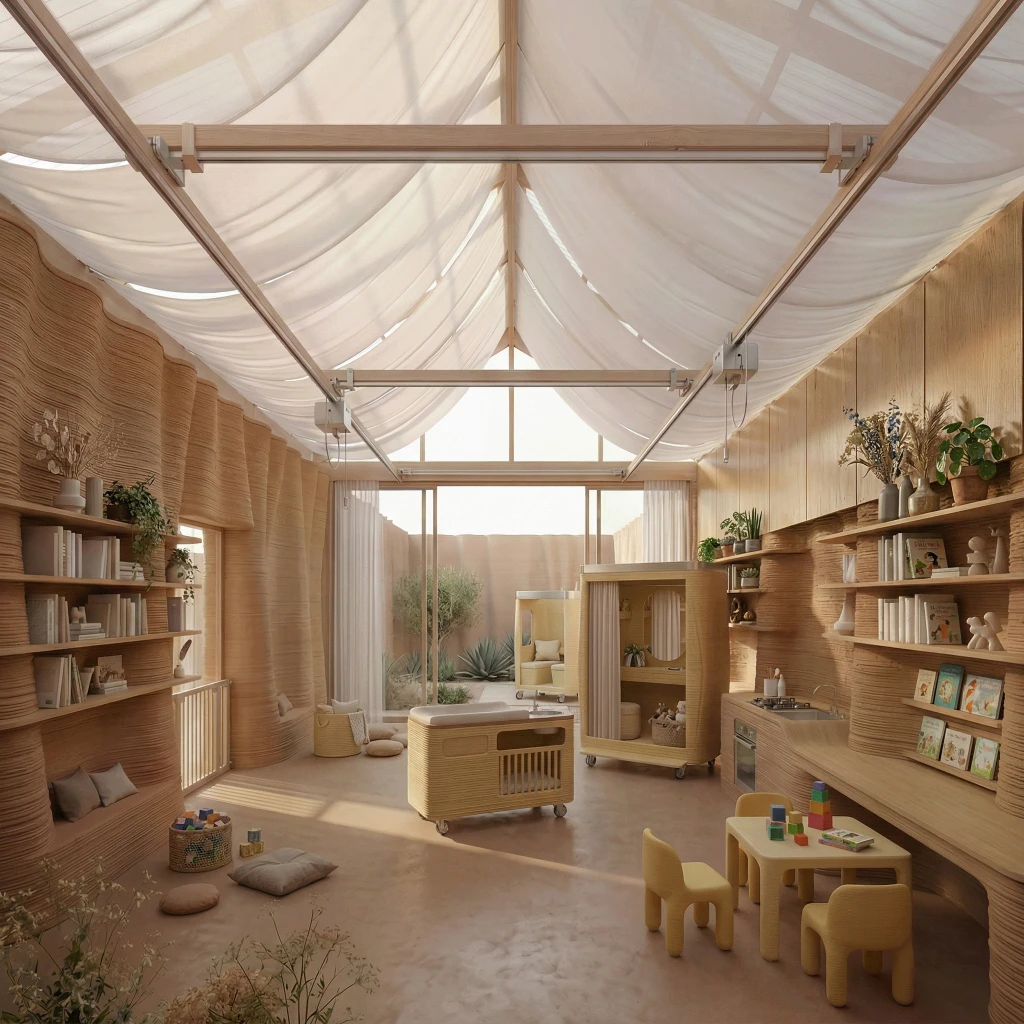
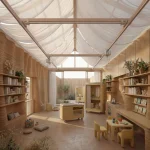
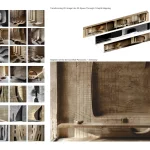
The technological centerpiece of Inhabited Mud is its generative-AI-assisted service wall system. Acting as the infrastructural spine of the house, these printed walls consolidate utilities, storage, seating, shelving, and fixed domestic functions into one highly customized architectural element.
Residents participate directly in shaping their living environment by selecting components from a visual 2D catalog of domestic features, including niches, workspaces, seating alcoves, and openings. Generative AI then interprets these selections spatially, translating them into three-dimensional geometries and robotic machine toolpaths ready for fabrication.
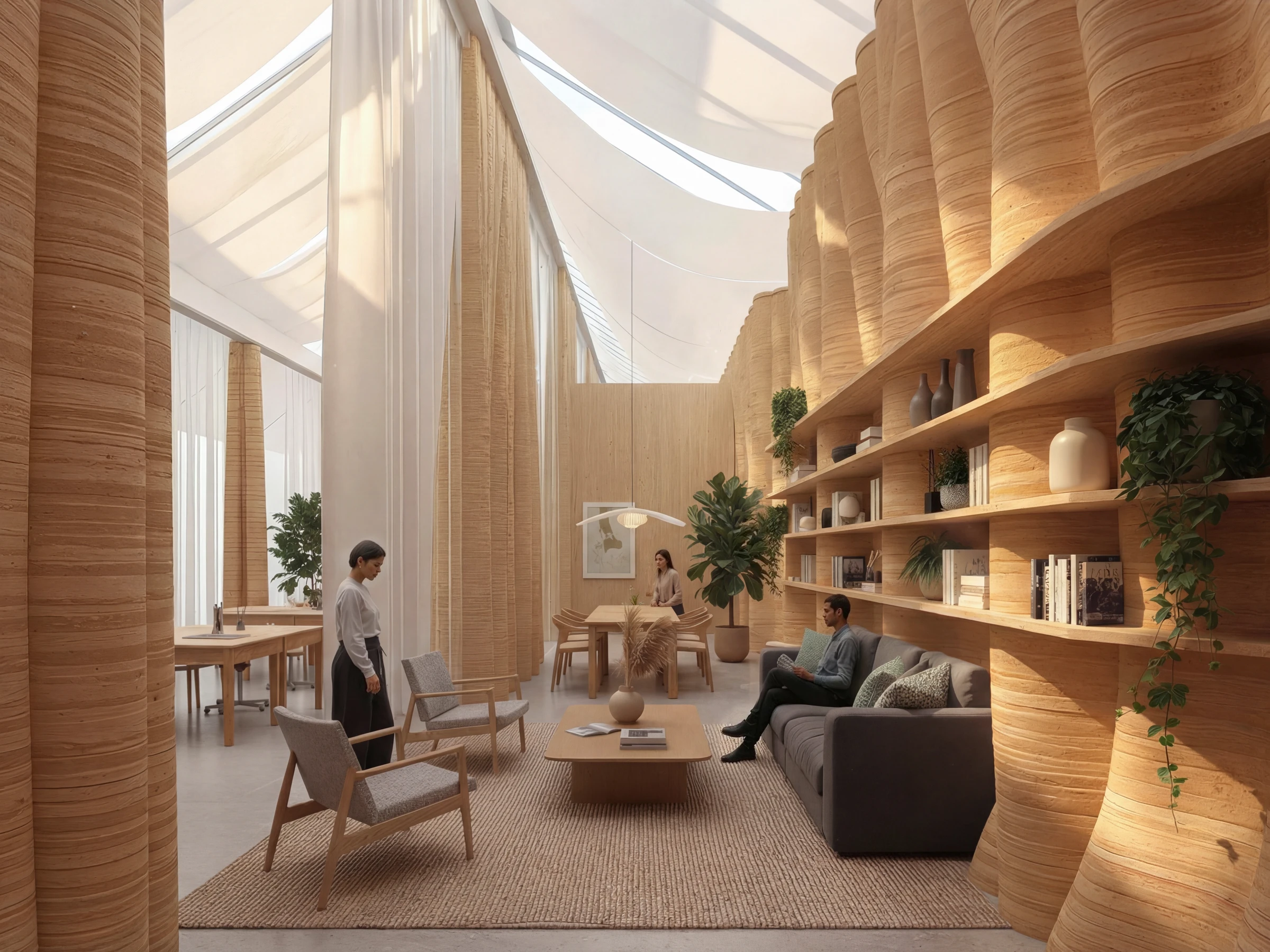
This workflow introduces a new model of mass customization where architecture becomes both deeply personal and digitally scalable. The system enables individualized living environments without sacrificing construction efficiency.
Rethinking the Room
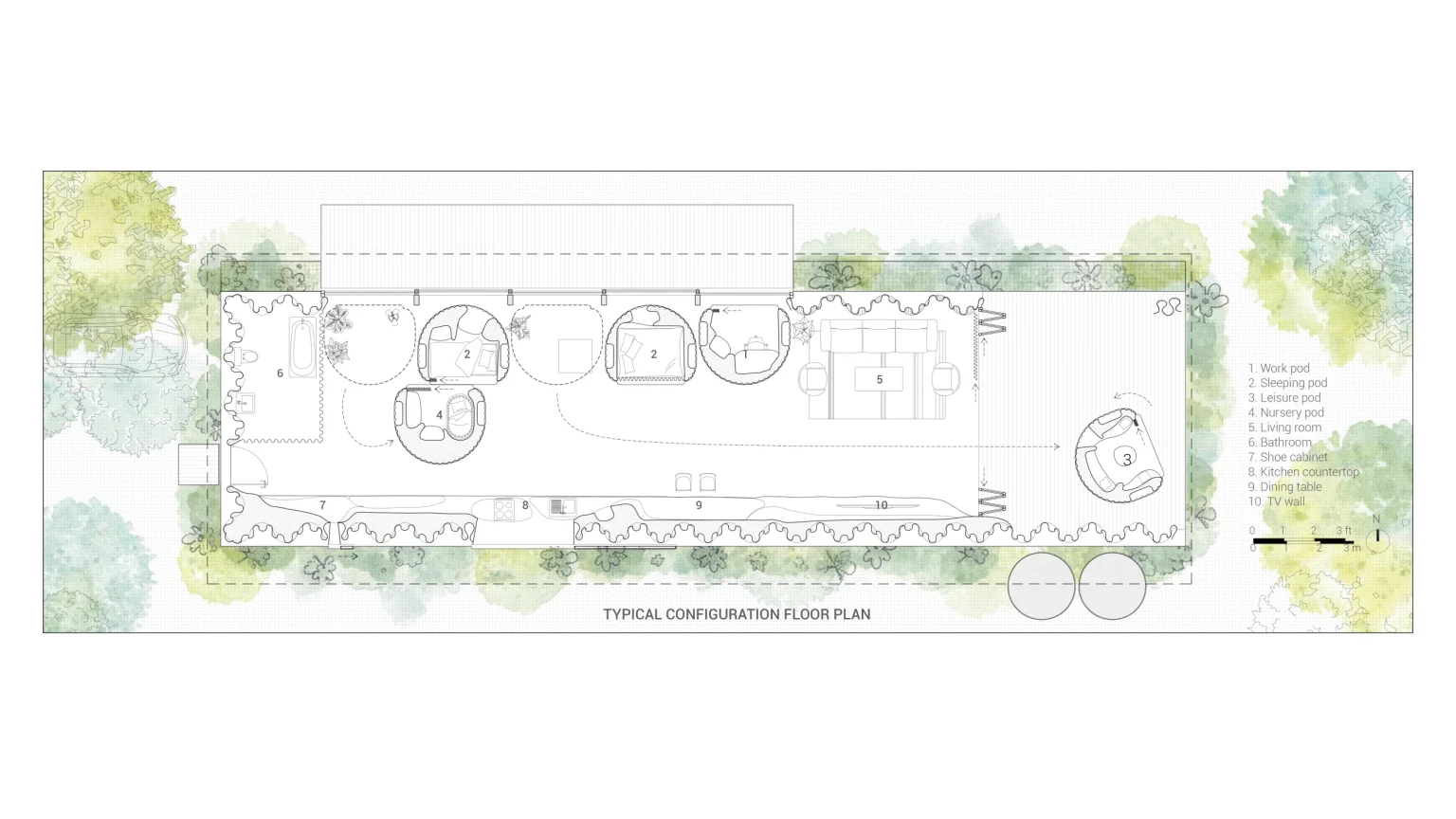
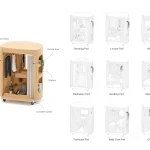
Moving beyond the rigidity of conventional floor plans, Inhabited Mud replaces fixed rooms with a family of movable sawdust pods. Lightweight and softly textured, these robotic-printed enclosures function as flexible domestic micro-environments, accommodating activities such as sleeping, working, childcare, reading, or retreat.
Mounted on lockable casters, the pods can be repositioned throughout the home according to changing daily needs or evolving family structures. A nursery may transform into a workspace; a reading nook may become a guest sleeping pod. This kinetic approach challenges the permanence traditionally associated with housing and significantly reduces the need for excess furniture and spatial redundancy. The home becomes an adaptable ecosystem.
Material Research and Robotic Fabrication
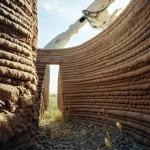
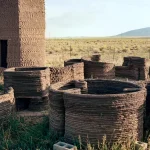
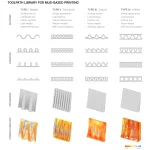
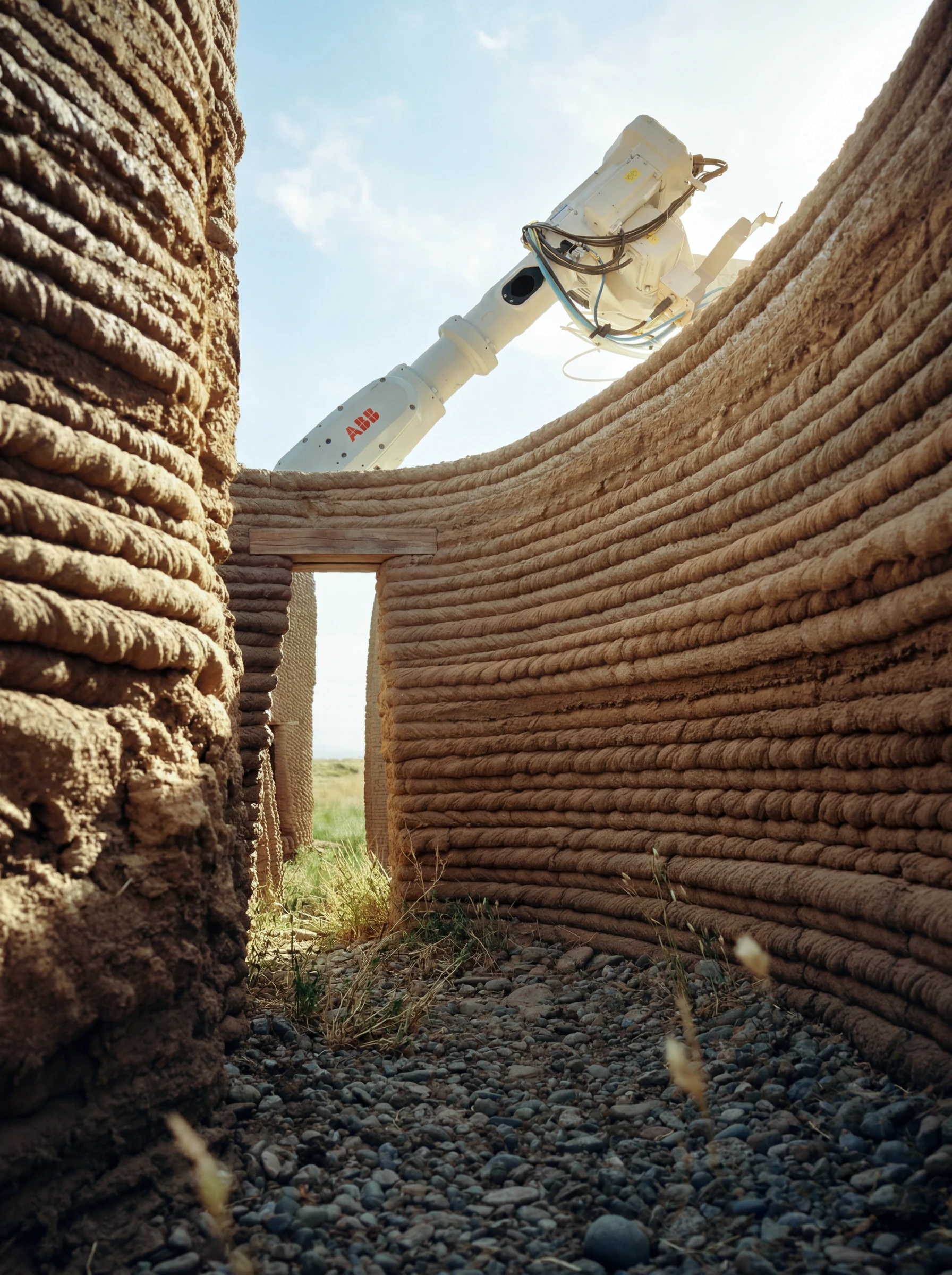
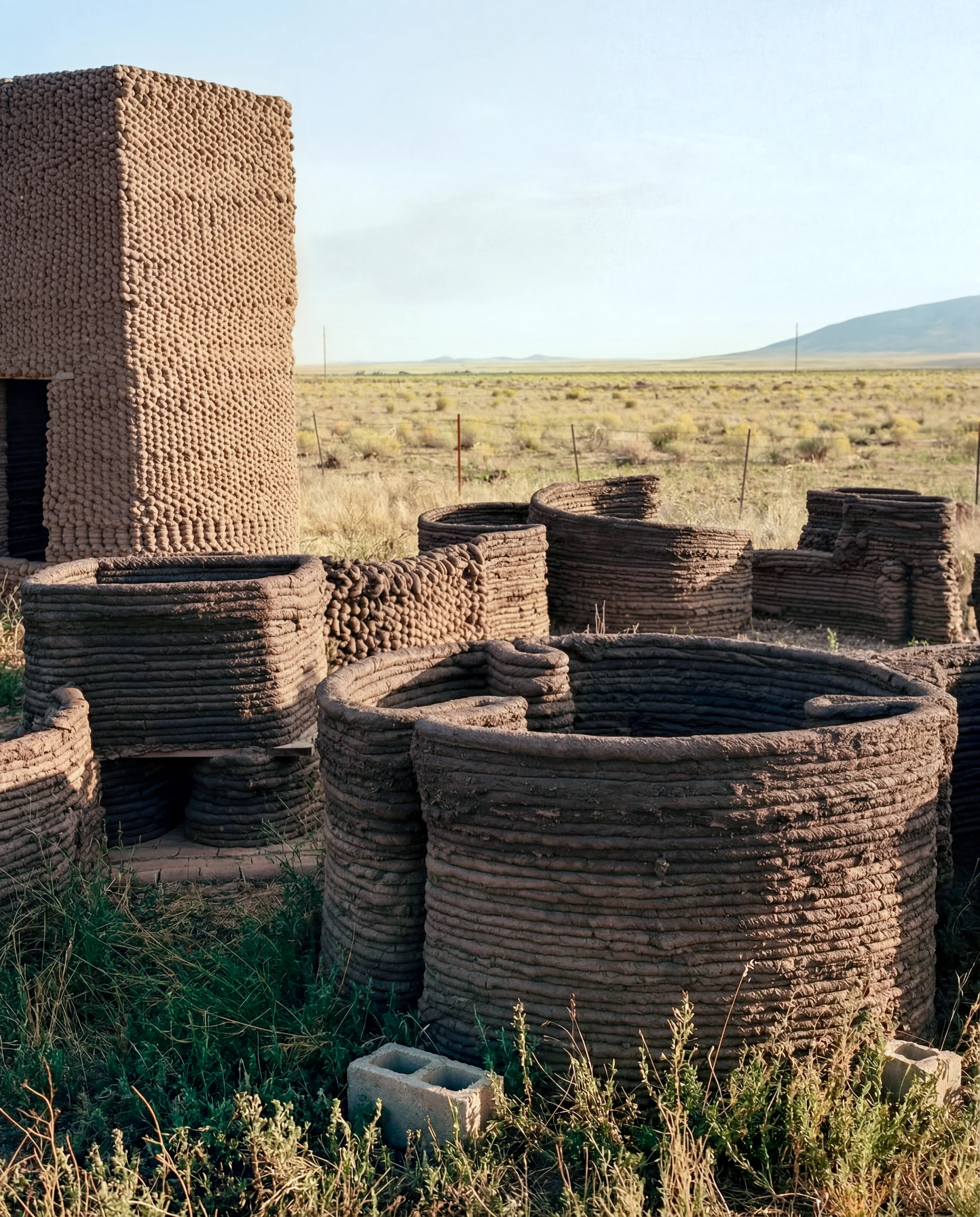
Although visionary in concept, Inhabited Mud is grounded in extensive material experimentation and full-scale prototyping. Developed with technical guidance from Ronald Rael and Barrak Darweesh, the project includes a comprehensive library of robotic printing toolpaths tested through 1:1 mock-ups.
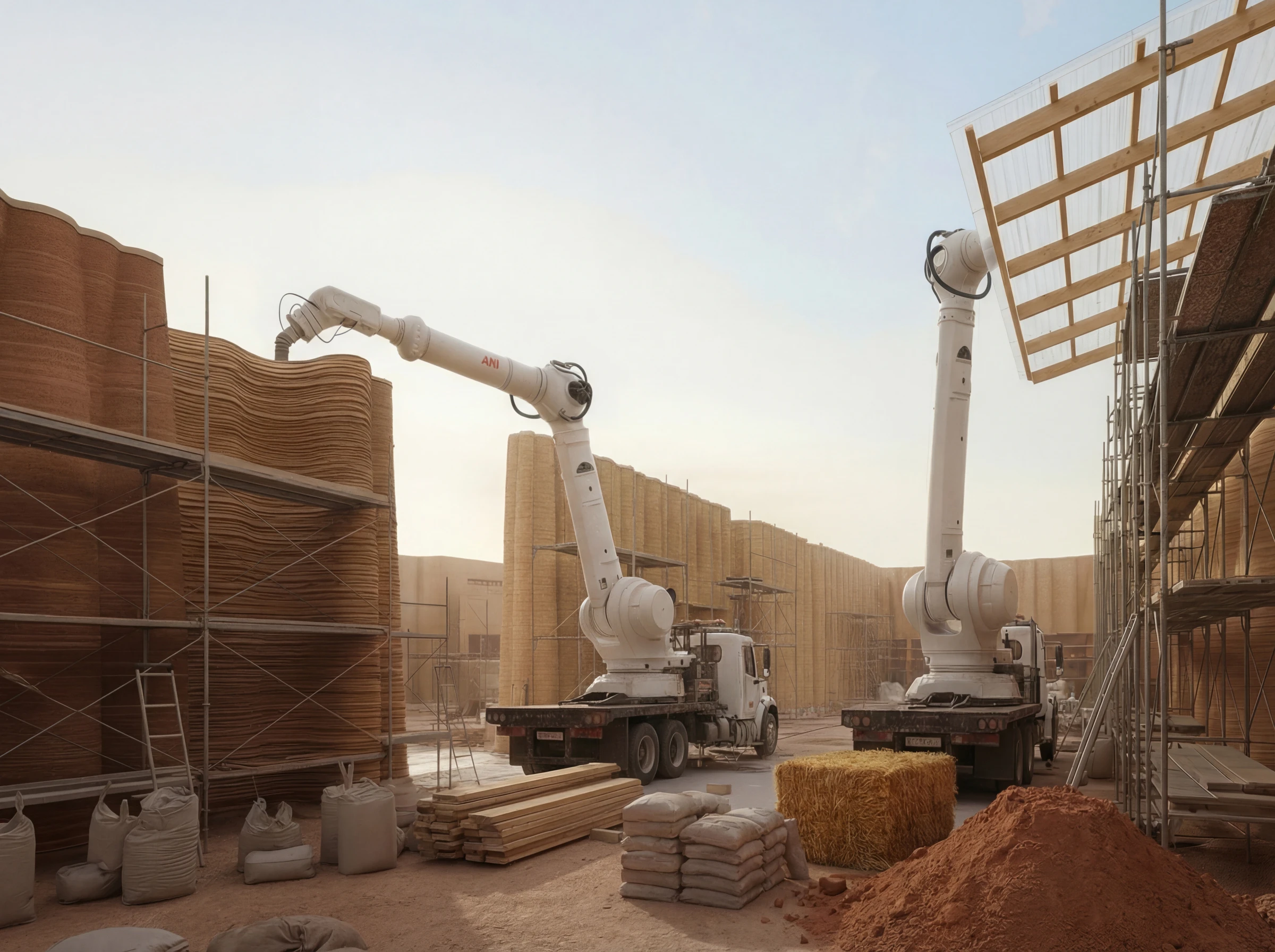
Different print patterns are calibrated to optimize structural strength, thermal mass, acoustic absorption, and material efficiency. Heavy earthen walls are paired with lightweight prefabricated timber and polycarbonate roofing systems, allowing robotic arms to handle both additive fabrication and assembly processes within a unified workflow.
This hybrid construction methodology demonstrates how low-carbon materials and advanced fabrication technologies can coexist in a practical architectural system.
Toward a Regenerative Housing Future
Recently recognized by the American Institute of Architects San Francisco Design Awards and the Jeff Harnar Award, Inhabited Mud presents a compelling vision for future eco-communities rooted in local material sourcing, circular construction, and spatial adaptability.
By merging earthen architecture with generative computation and robotic manufacturing, the project challenges prevailing assumptions about permanence, standardization, and domestic life. It proposes housing as a living framework capable of continuous transformation.
In doing so, Inhabited Mud offers a powerful prototype for architecture that is environmentally regenerative, technologically advanced, and profoundly human-centered.
Inhabited Mud Project Credits
Project Name: Inhabited Mud: Generative Earthen Housing
Architecture Firm: Atelier Qiu
Lead Designer: Shenglu Qiu
Photography: Shenglu Qiu, Fang Guo
Visualization: Shenglu Qiu
Technical Guidance: Ronald Rael, Barrak Darweesh