

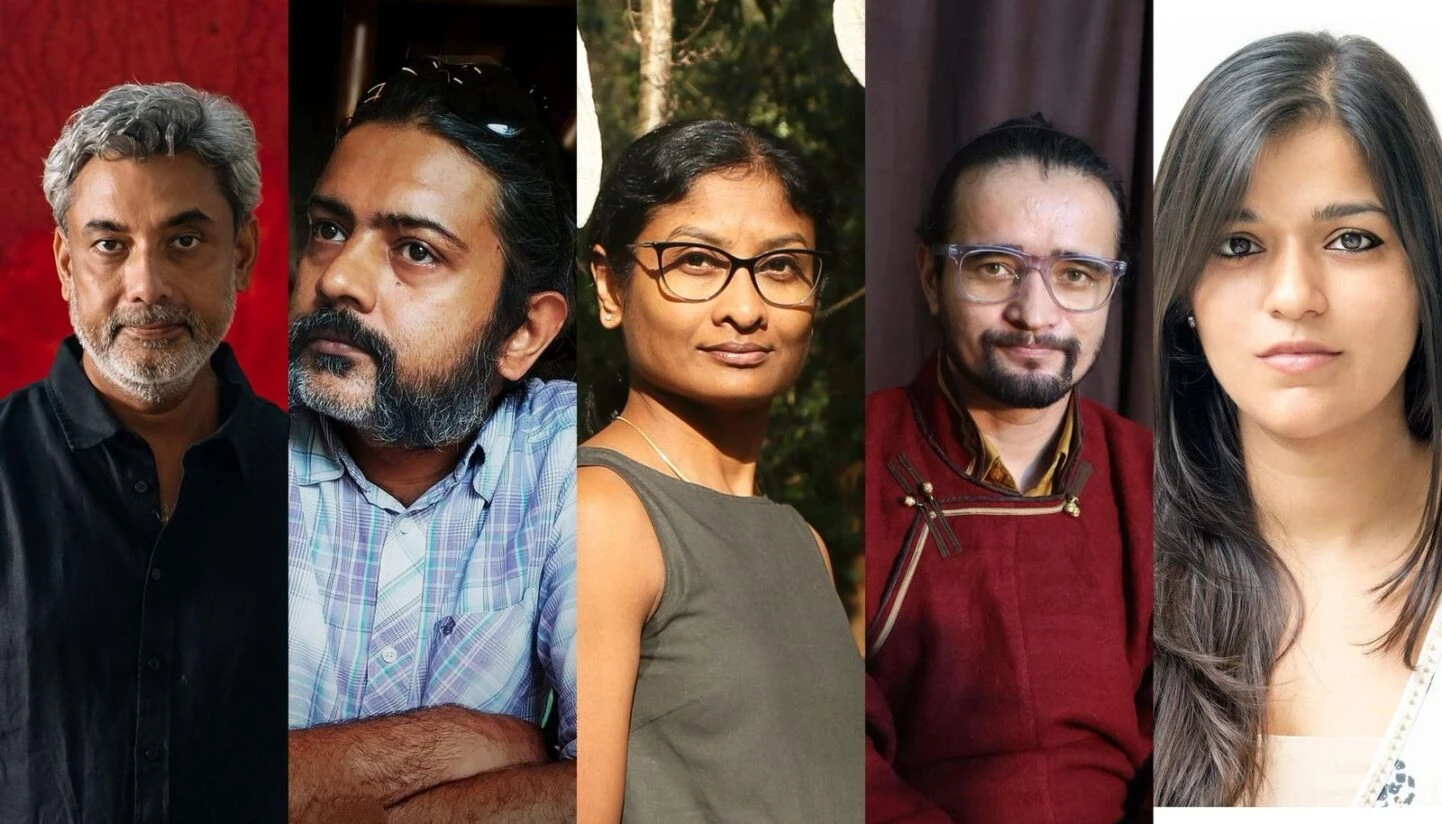












India has returned to the Venice Biennale after a seven-year gap with its national pavilion titled Geographies of Distance: Remembering Home, a presentation that places ecology, memory, craftsmanship, and material culture at the center of its narrative. Presented at the 61st International Art Exhibition of the Venice Biennale 2026, the India Pavilion brings together artists Alwar Balasubramaniam, Sumakshi Singh, Ranjani Shettar, Asim Waqif, and Skarma Sonam Tashi under a curatorial vision that explores landscape, belonging, and sustainable artistic practice.
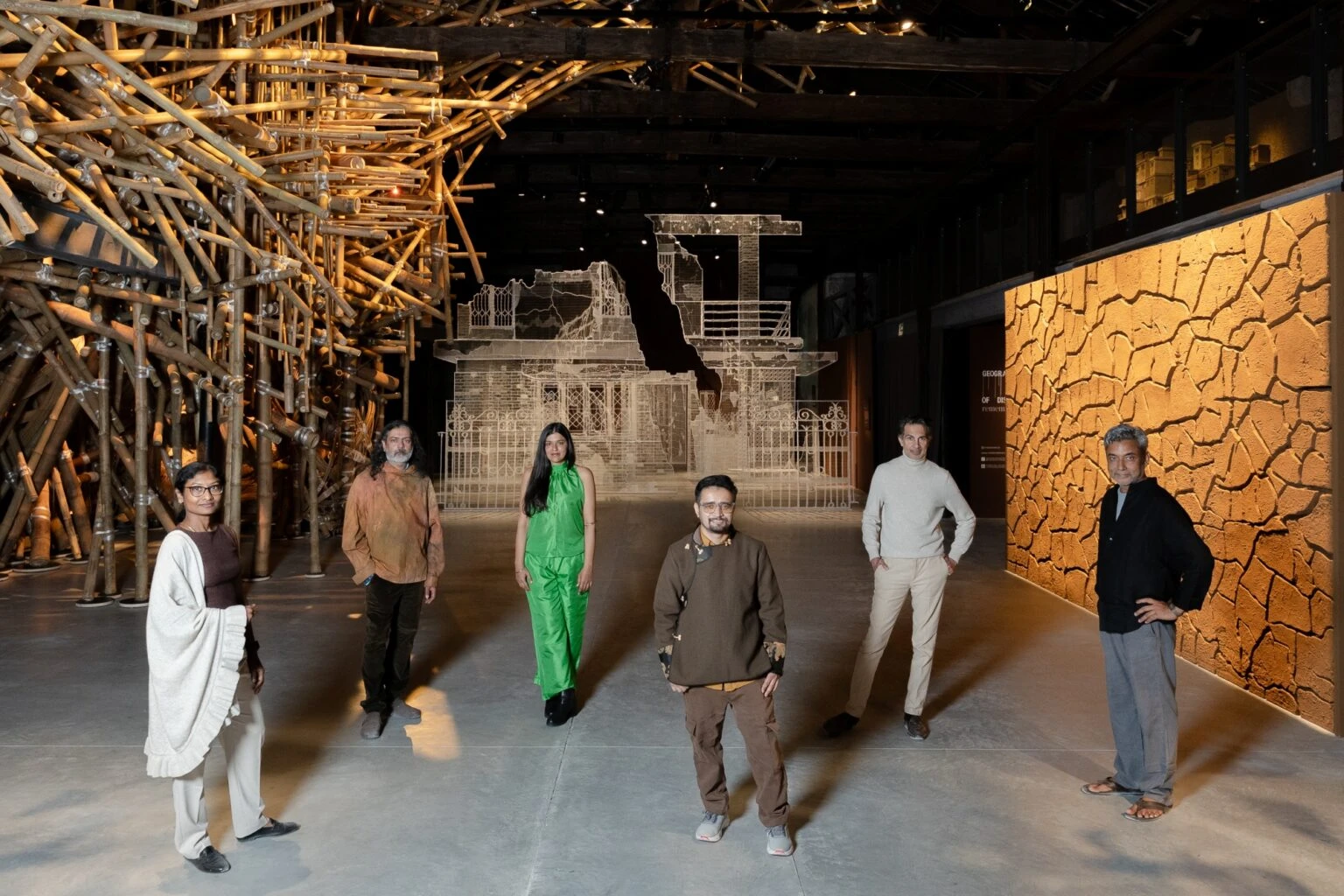
Curated by Amin Jaffer, the pavilion has been organized with support from India’s Ministry of Culture, along with collaborations involving the Nita Mukesh Ambani Cultural Centre and Serendipity Arts. The exhibition responds to the Biennale’s larger 2026 theme, “In Minor Keys,” focusing on quieter narratives, fragile ecologies, and intimate histories instead of spectacle-driven presentations.
“Geographies of Distance: Remembering Home” Explores Material Memory
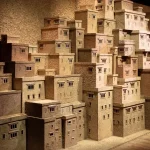
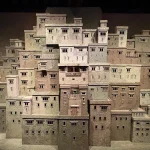
The India Pavilion stands out for its use of natural and recycled materials, including clay, bamboo, thread, lacquer, cardboard, papier-mâché, and soil. Geographies of Distance: Remembering Home leans into tactile processes and handmade structures that reflect regional knowledge systems and traditional craft practices from across India.
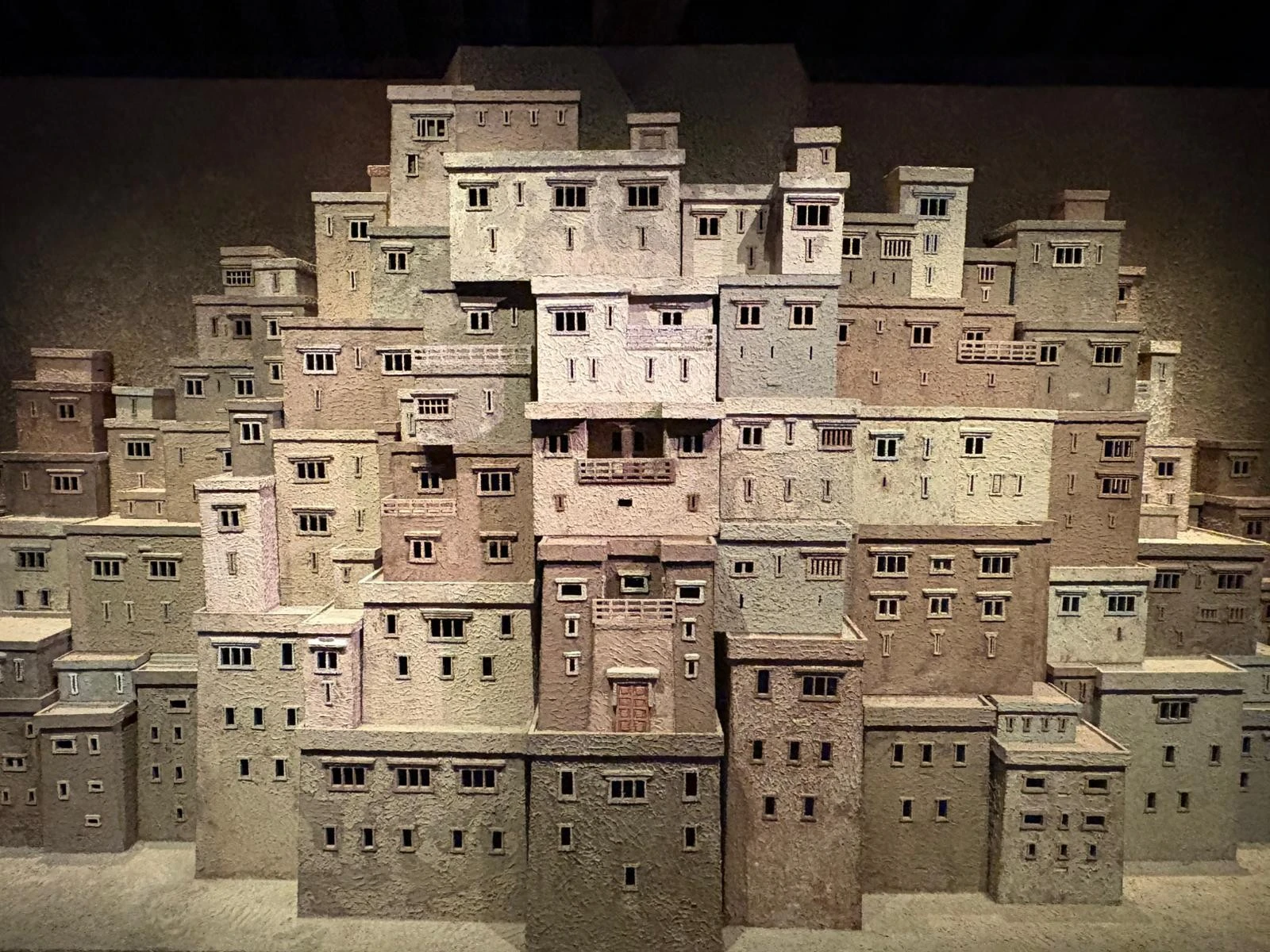
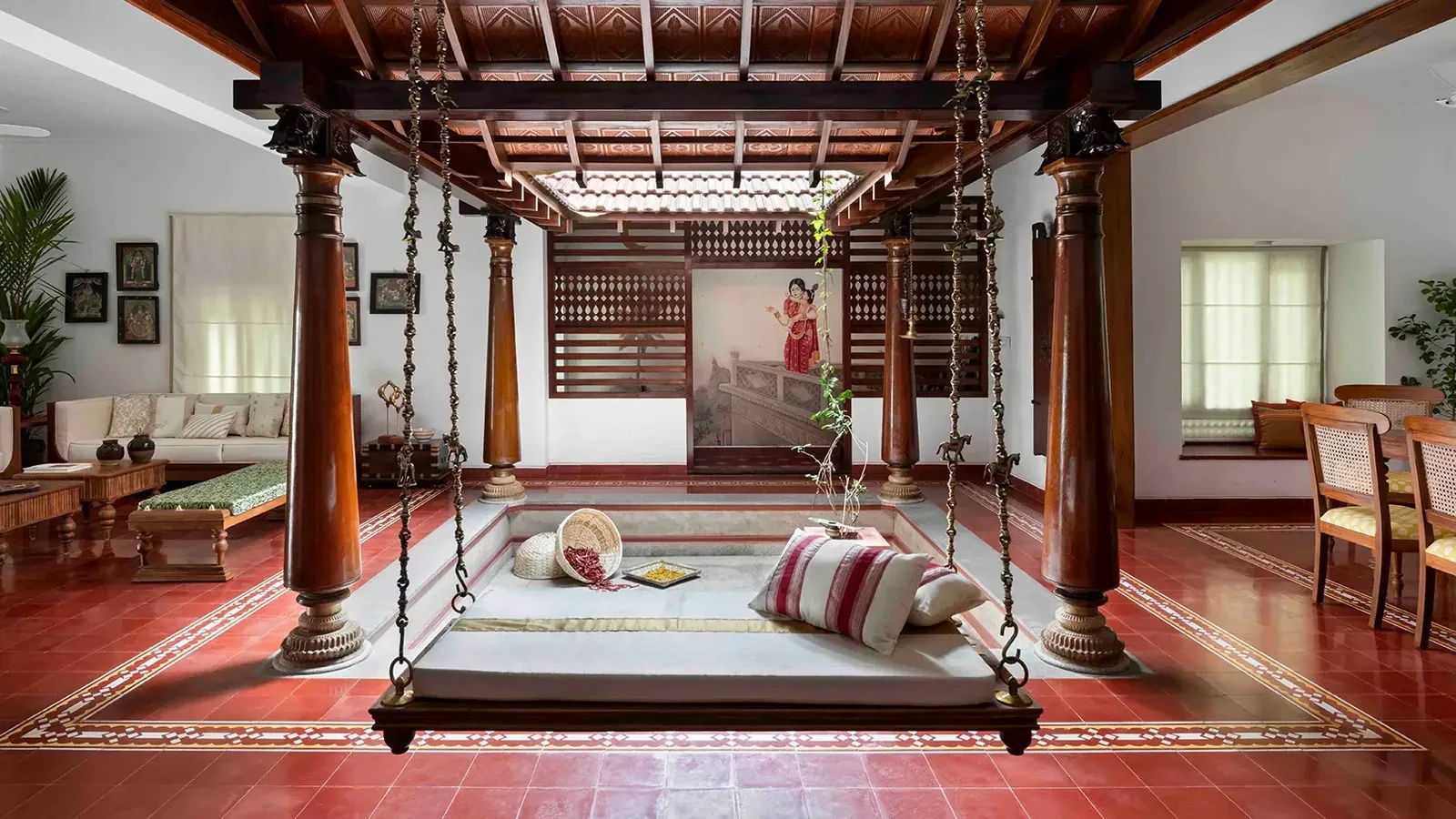
Much of the exhibition revolves around the idea of “home” and how memory survives through architecture, landscape, and everyday materials. The pavilion’s installations examine migration, environmental fragility, and cultural continuity through slow, process-oriented artistic methods. The works do not function as isolated objects but as interconnected spatial experiences that mirror India’s layered social and ecological realities.
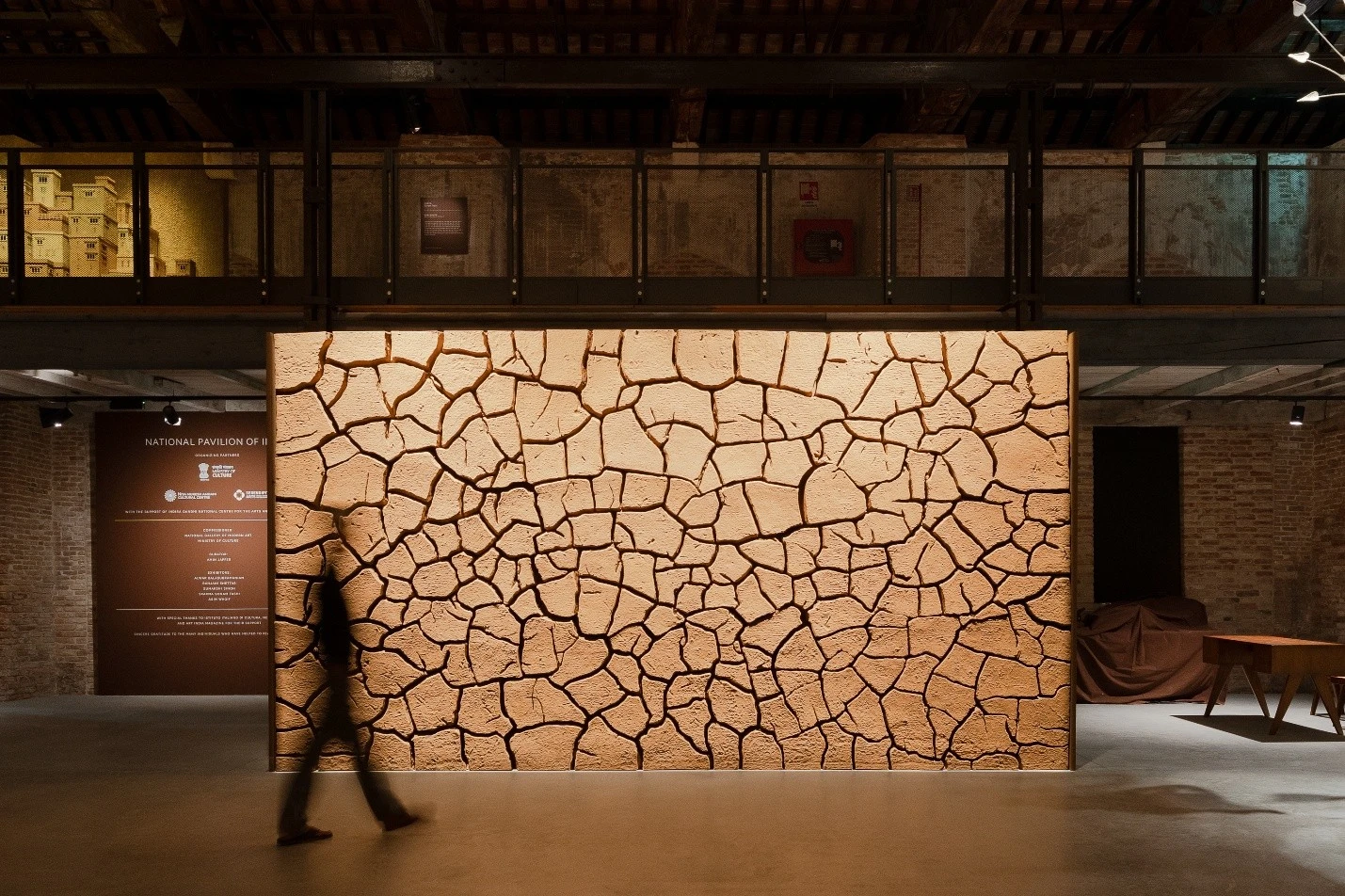
Ladakh and Himalayan Sustainability at the Center
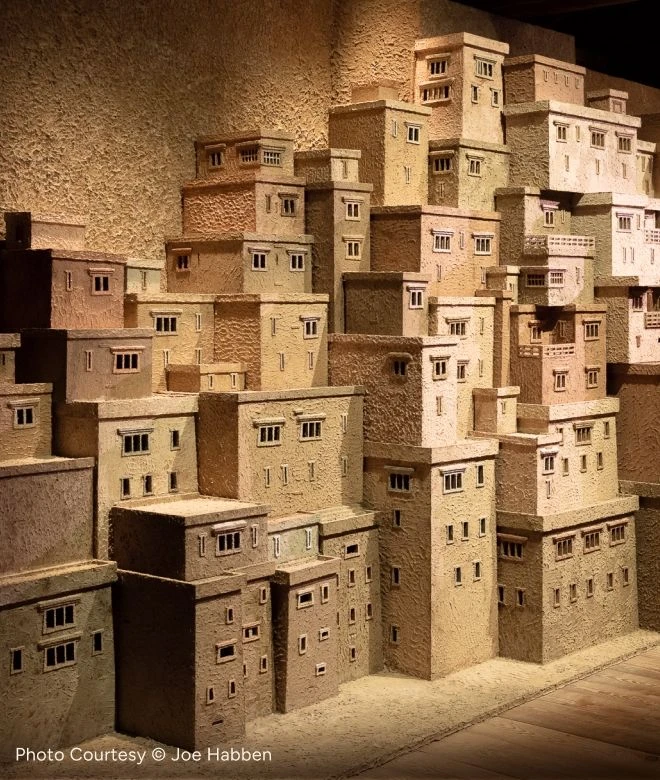
A significant aspect of the pavilion is its engagement with Ladakh and Himalayan ecological heritage through the work of Skarma Sonam Tashi. His contribution draws attention to sustainable living practices shaped by the Himalayan landscape and indigenous knowledge traditions. Reports surrounding the pavilion highlighted how Ladakh is presented as a geographic region and as a living environmental philosophy connected to land, climate, and material consciousness.
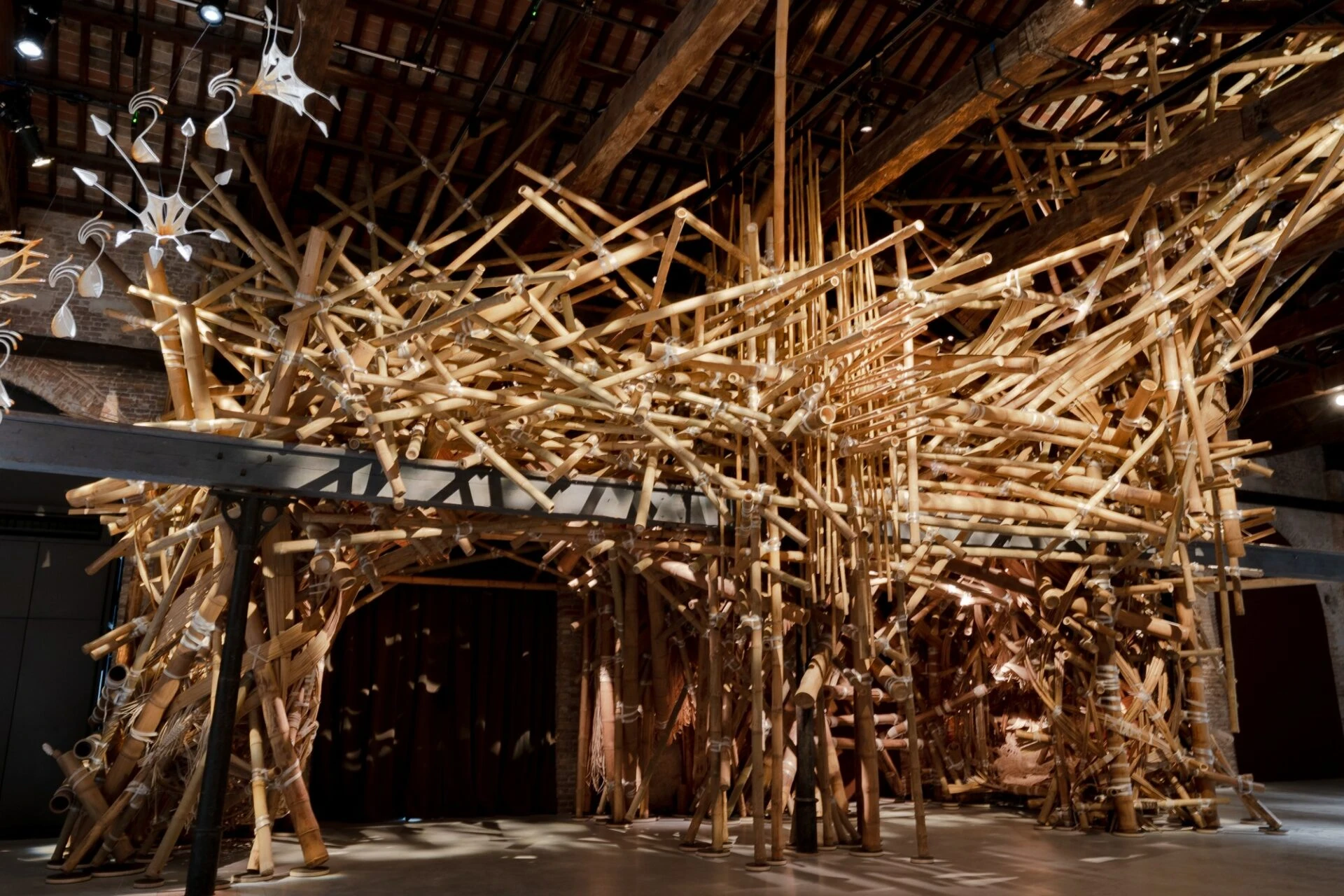
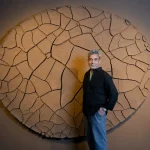
This focus on Himalayan sustainability gives the pavilion a strong environmental dimension. The curatorial approach avoids romanticizing the region and instead positions Ladakh as an example of resilience and ecological adaptation in the face of climate uncertainty. The use of earth-based materials and regenerative artistic methods reflects this larger concern with sustainability
Artists and Artistic Processes
The participating artists represent distinct practices while remaining connected through shared concerns around nature, fragility, and human presence.
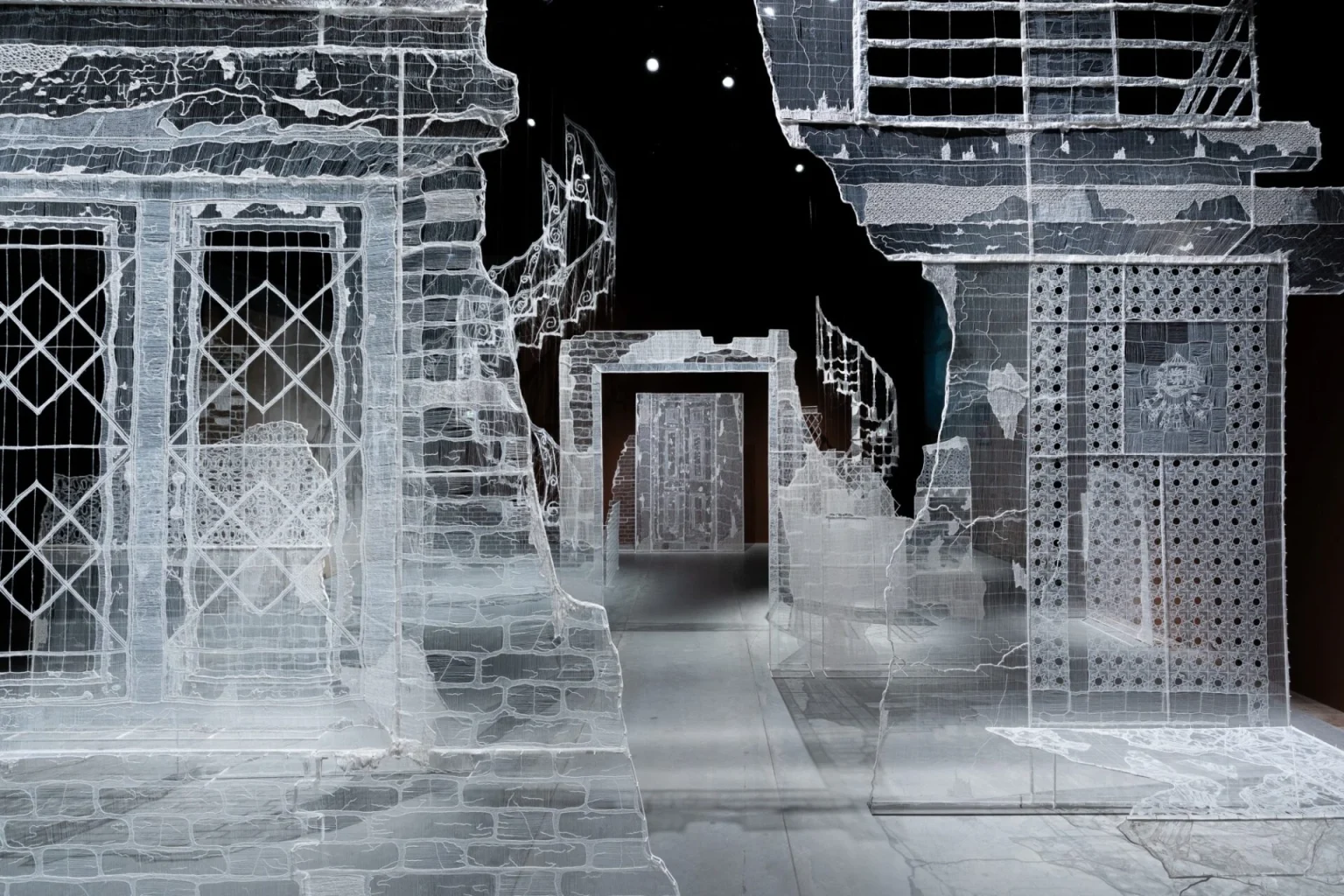
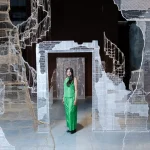
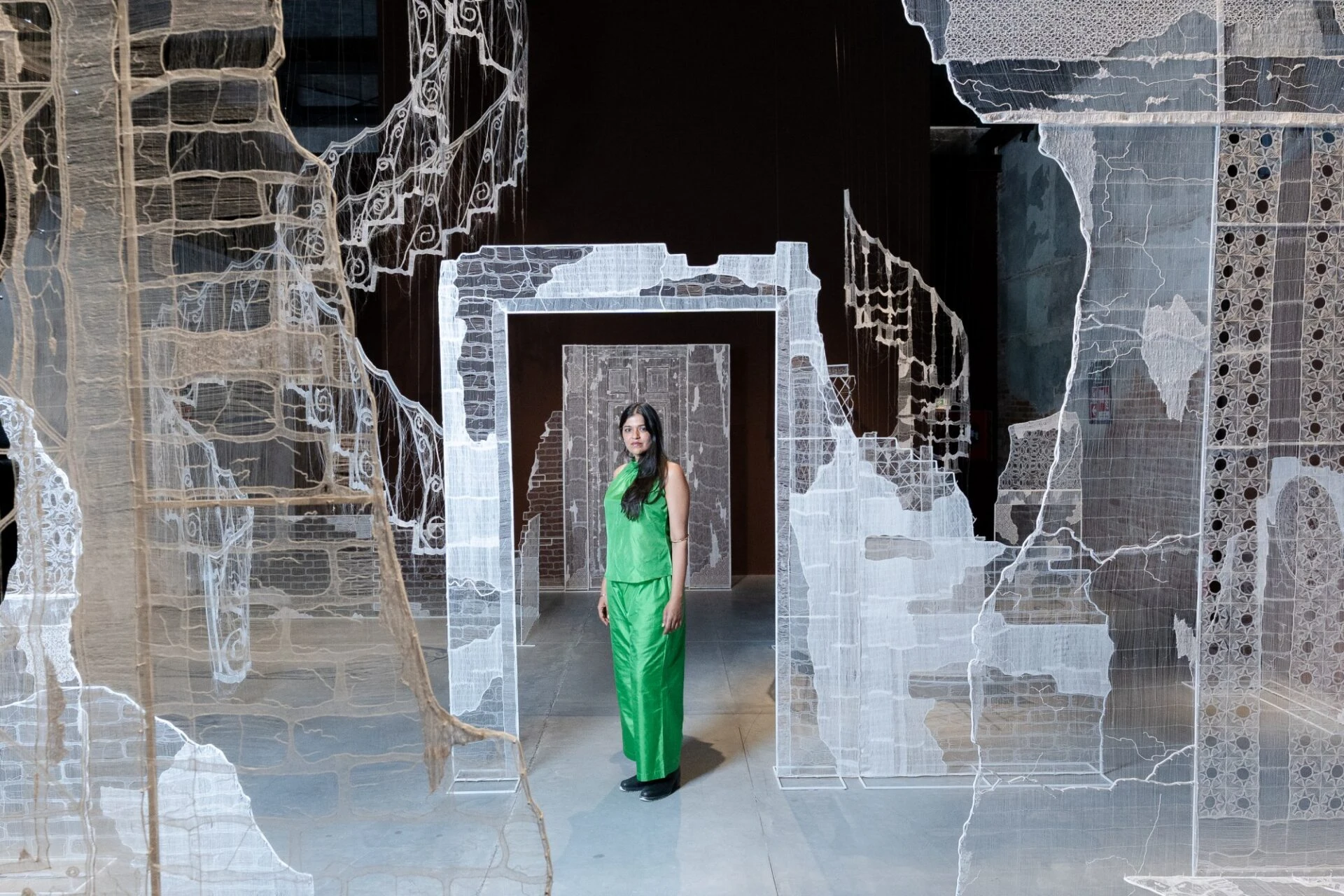
- Sumakshi Singh contributes works that engage with memory and disappearing architectural forms through intricate thread-based structures. Her installations create ghost-like spatial drawings that appear suspended between presence and absence.
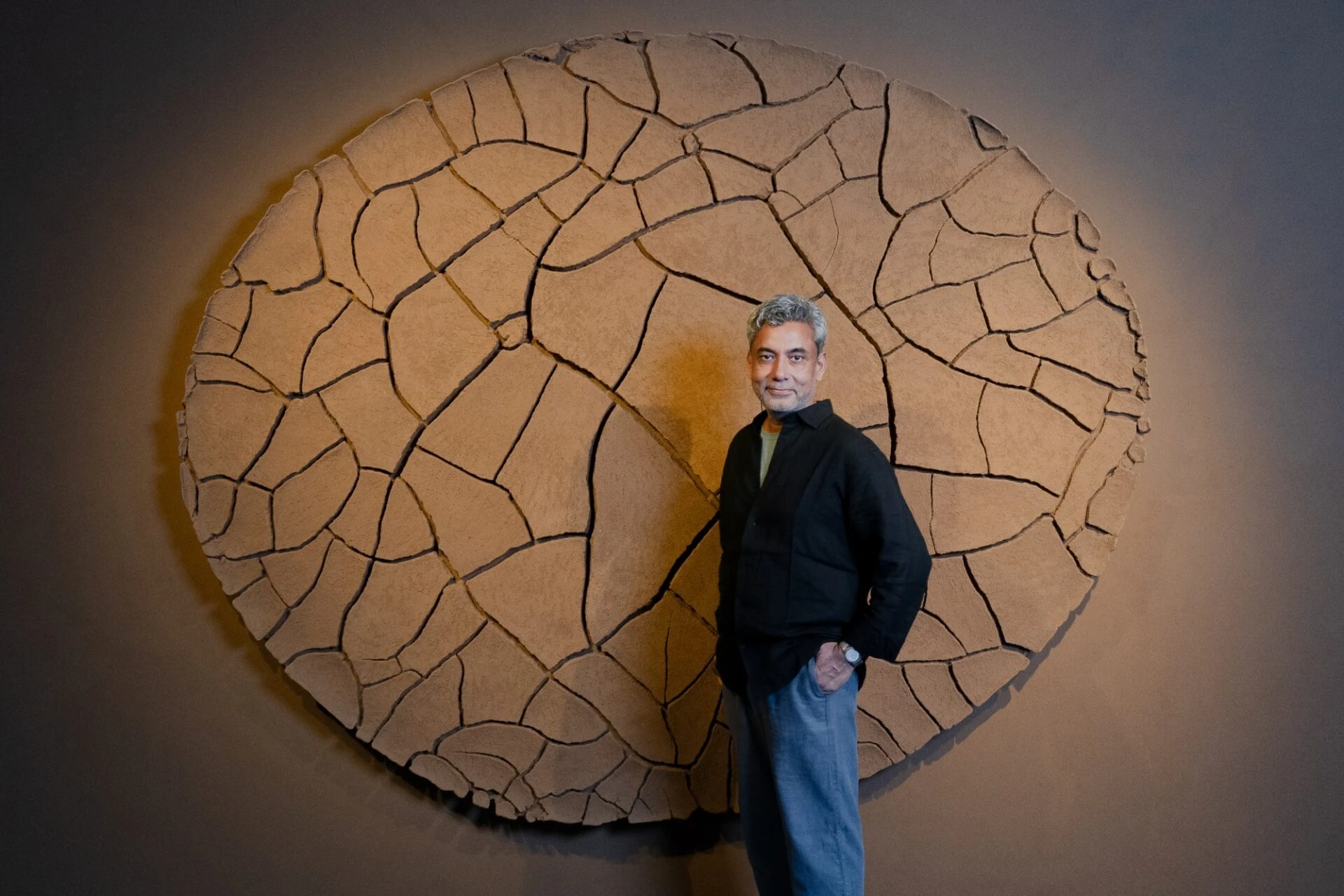
- Alwar Balasubramaniam continues his exploration of perception, material transformation, and invisible forces through sculptural interventions that challenge physical certainty and balance. His work often blurs boundaries between body, object, and space.
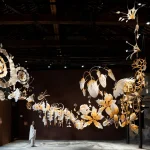
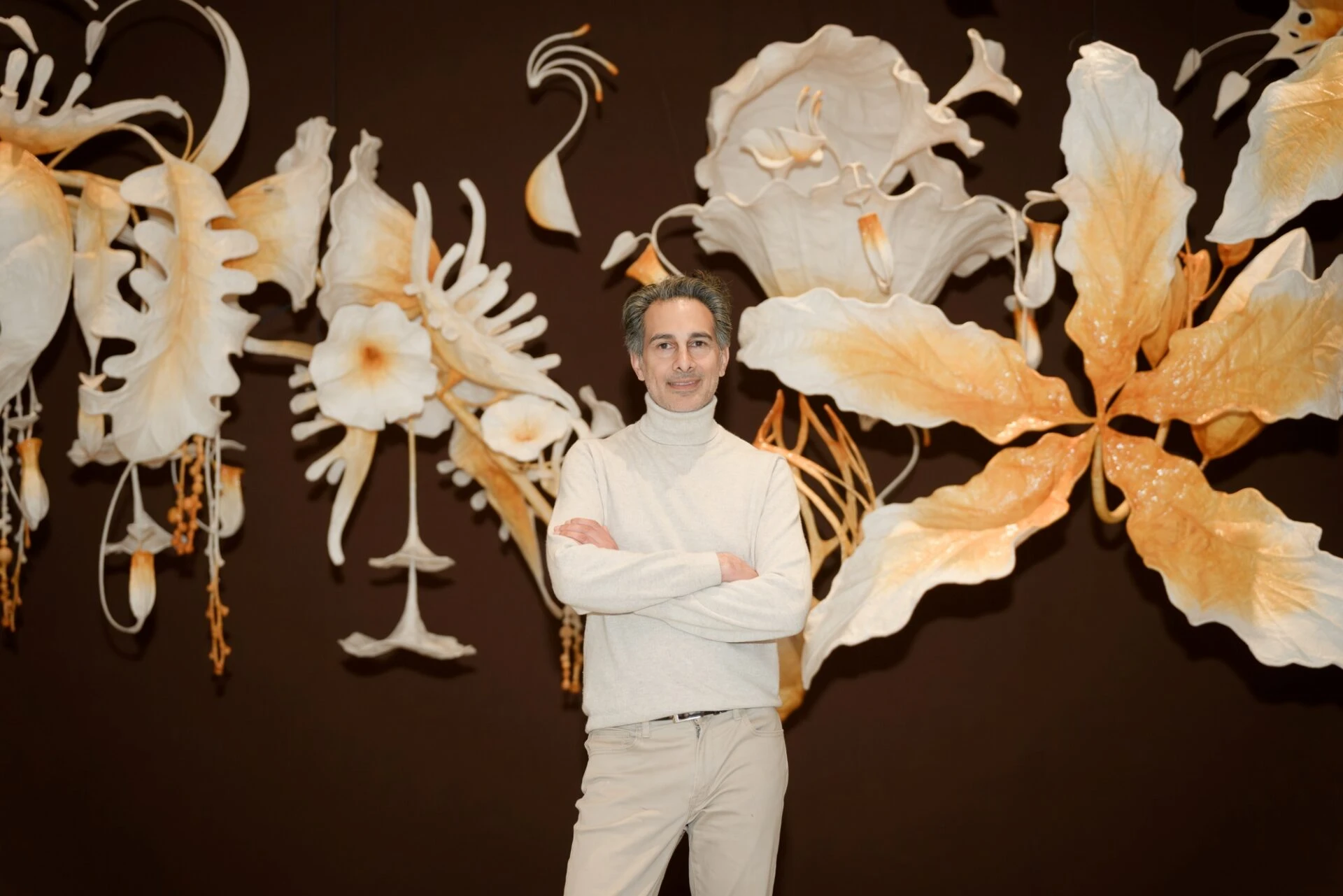
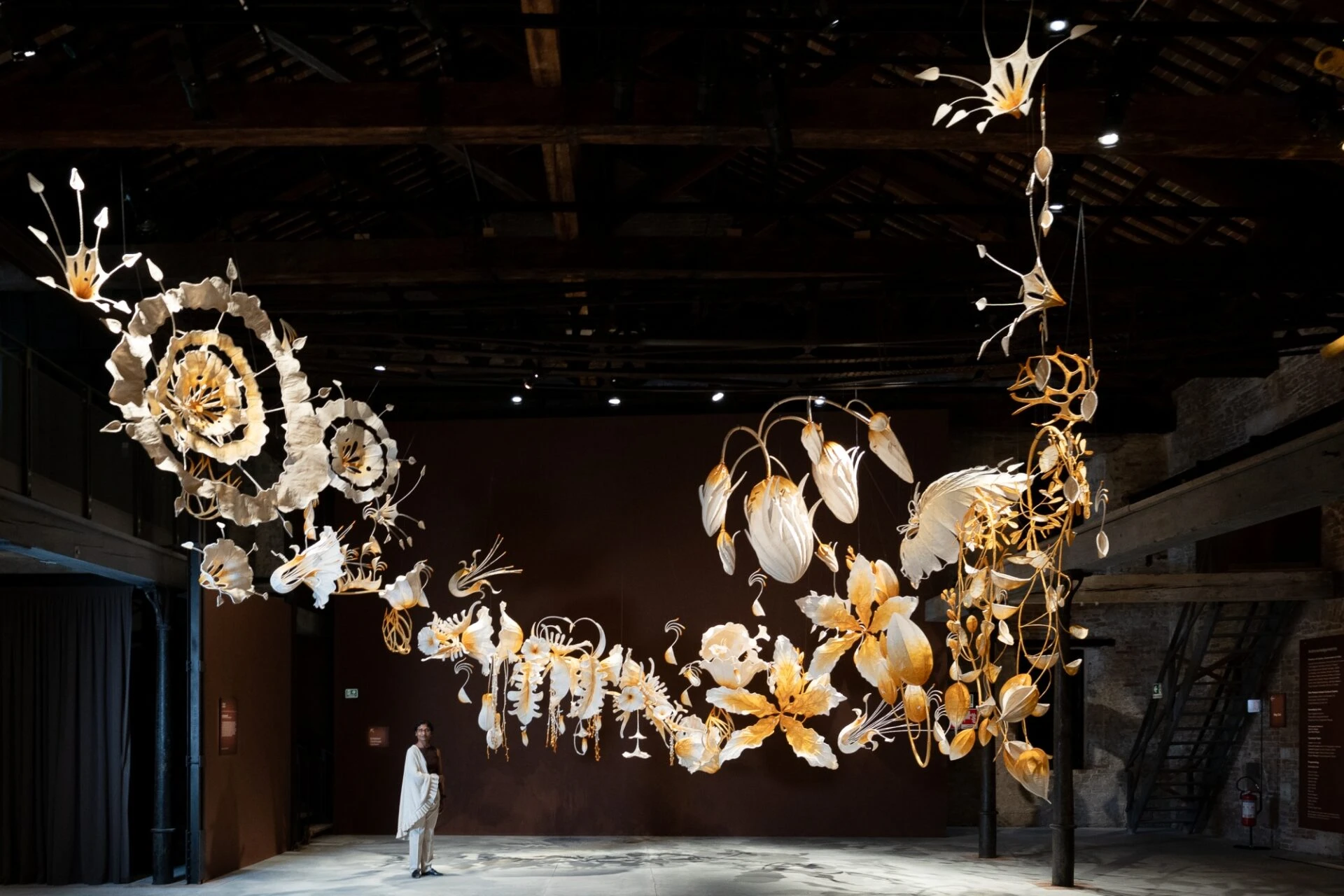
- Ranjani Shettar presents organic forms inspired by forests, natural systems, and ecological rhythms. Her sculptural language is deeply connected to handcrafted processes and biomorphic structures.
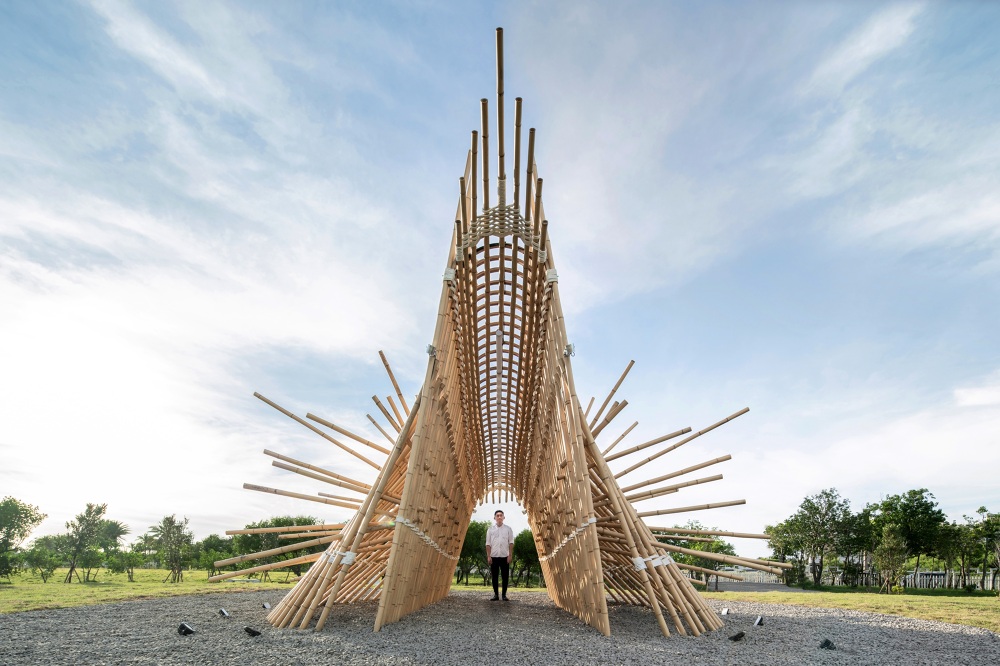
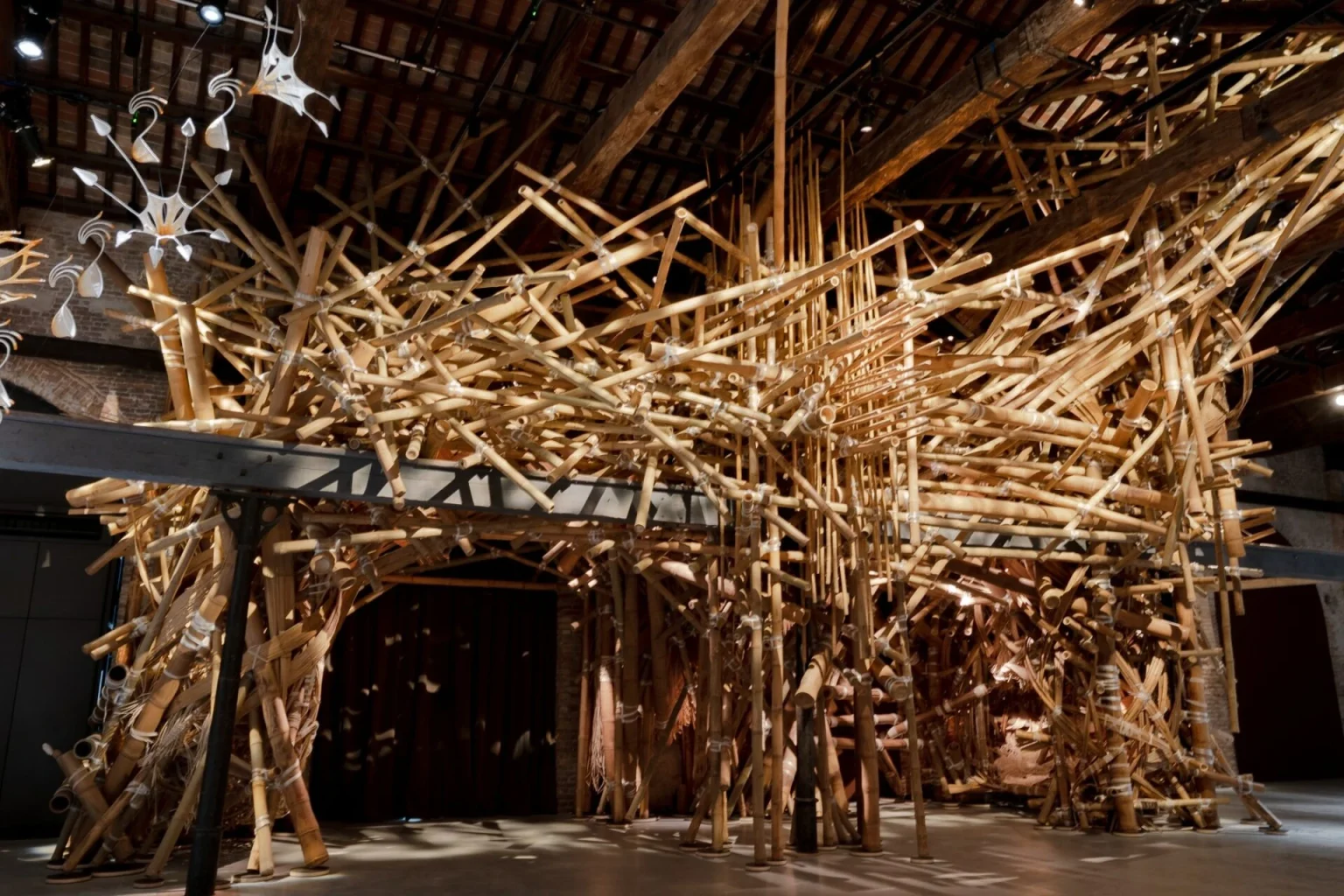
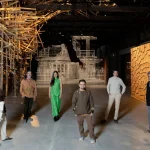
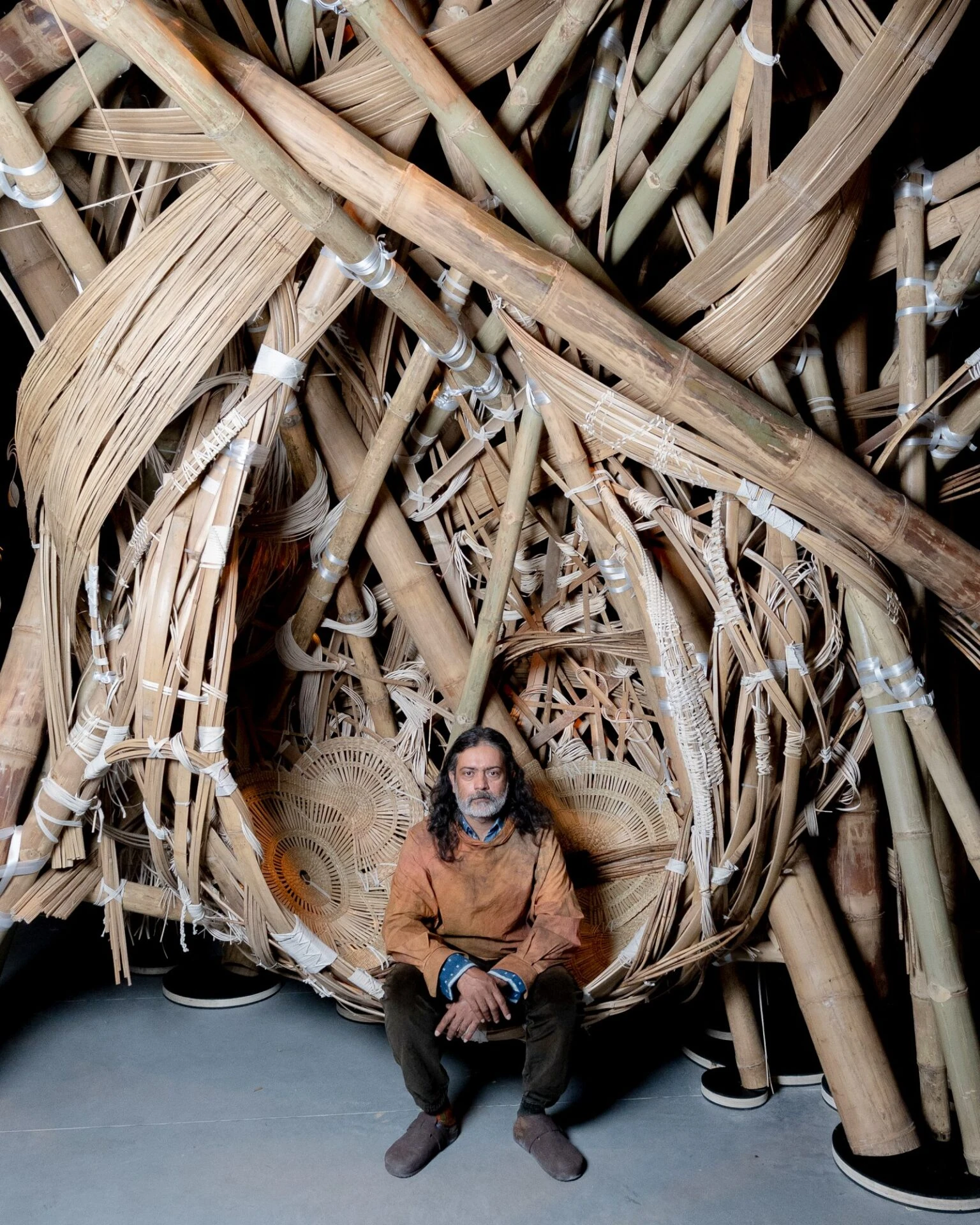
- Asim Waqif works with bamboo and salvaged materials to construct immersive architectural environments that investigate urban growth, waste, and environmental imbalance. His installations bring attention to how cities negotiate ecology and infrastructure.
Together, the artists create a pavilion that privileges process over monumentality. Handmade labor, local materials, and environmental sensitivity become part of the exhibition language itself.
India’s Return to Venice Biennale 2026
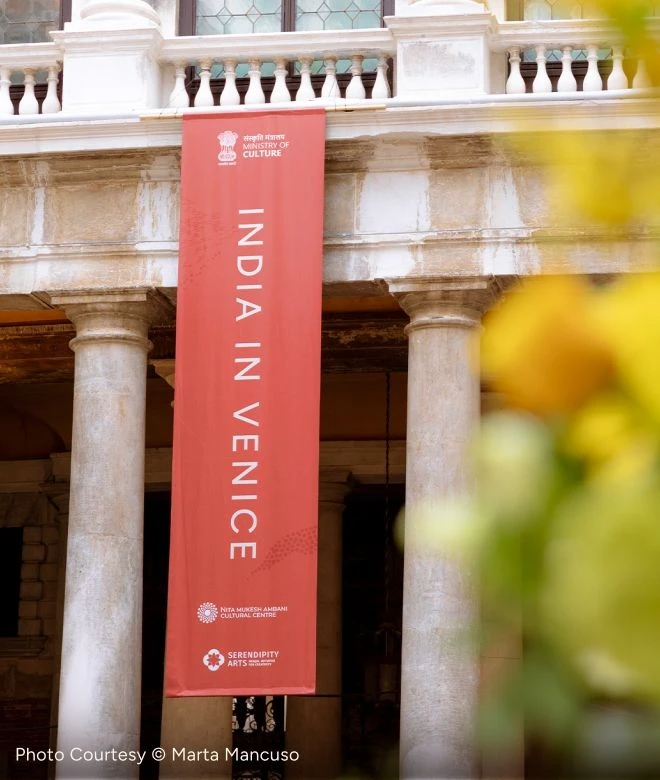
India made its official debut at the Venice Biennale in 2011 with the pavilion titled Everyone Agrees: It’s About to Explode. Organized by the Lalit Kala Akademi and curated by cultural theorist Ranjit Hoskote, the exhibition marked a significant moment for contemporary Indian art on the global stage. After this first participation, India returned with official national pavilions in 2019 and again in 2026 at the 61st International Art Exhibition, presenting the pavilion Geographies of Distance: Remembering Home, marking India’s return after seven years, renewing its presence within the global contemporary art conversation.
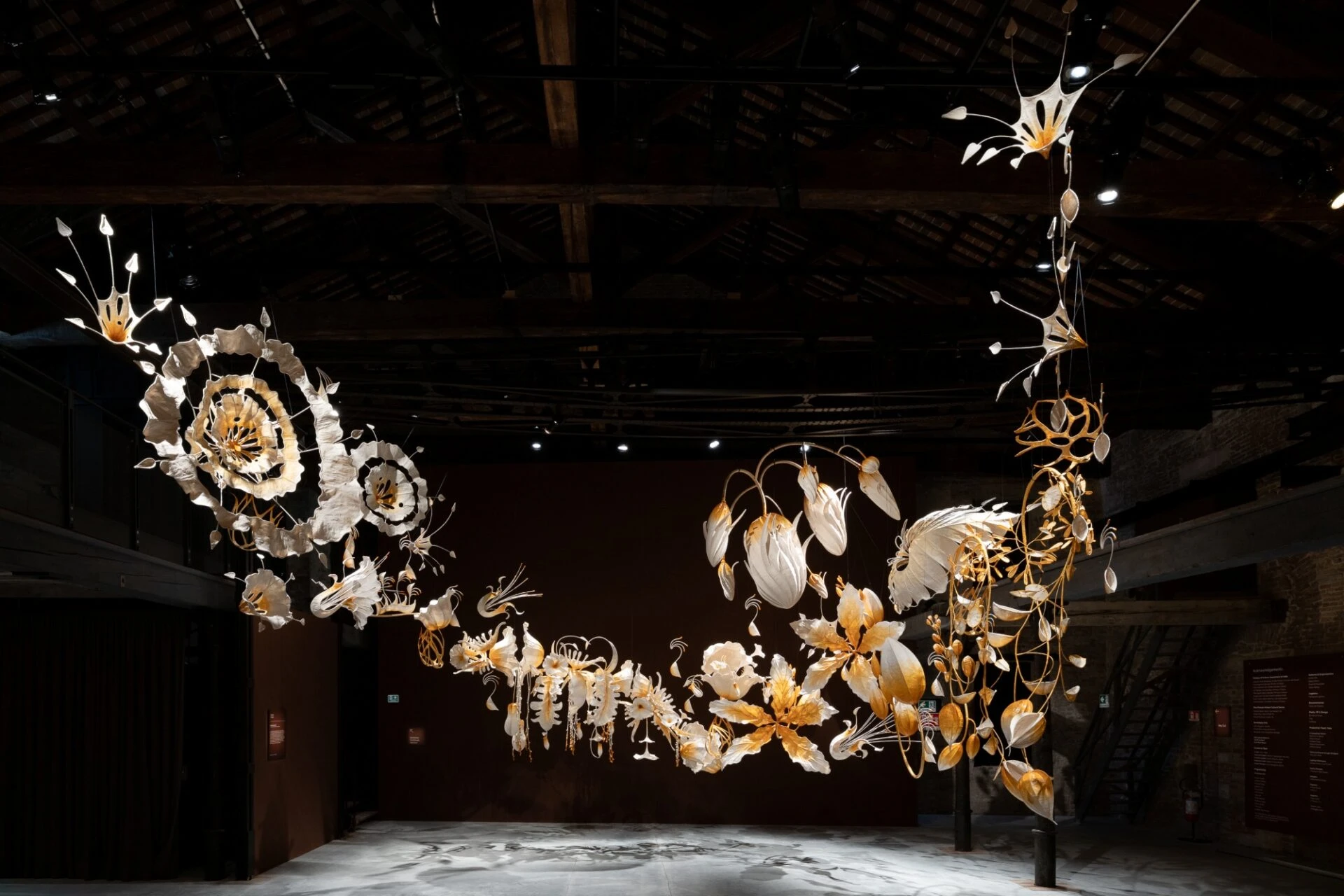
Within Venice itself, national pavilions operate as cultural statements as much as exhibitions. Countries use them to communicate artistic, political, and social identities through architecture and curatorial direction. In this context, the India Pavilion avoids overt nationalism and instead foregrounds ecological thinking, regional diversity, and material histories.
A Quiet but Powerful Presence of the Indian Pavilion in 2026
At a Biennale often dominated by spectacle and geopolitical tension, India’s pavilion adopts a quieter vocabulary. Geographies of Distance: Remembering Home relies on texture, absence, handcrafted detail, and environmental awareness rather than dramatic visual excess. This restraint aligns closely with the broader curatorial mood of 2026, where many pavilions are exploring migration, ecology, and collective memory.
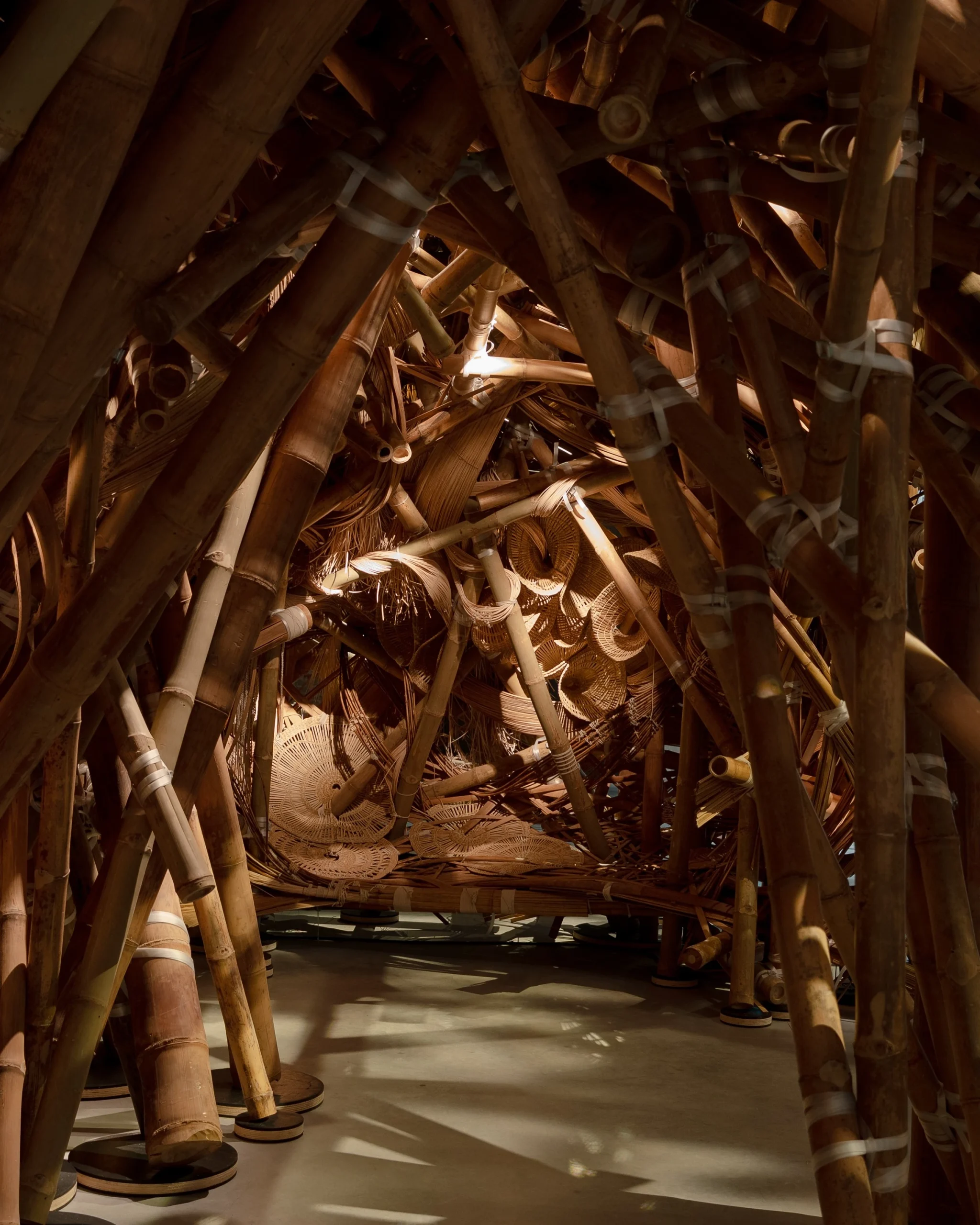
The India Pavilion ultimately succeeds in presenting contemporary Indian art not as a singular identity but as a conversation between regions, materials, and lived experiences. By connecting Ladakh’s ecological realities with broader concerns around sustainability and cultural memory, the pavilion positions India within urgent global discussions while remaining rooted in local narratives and artistic traditions.