

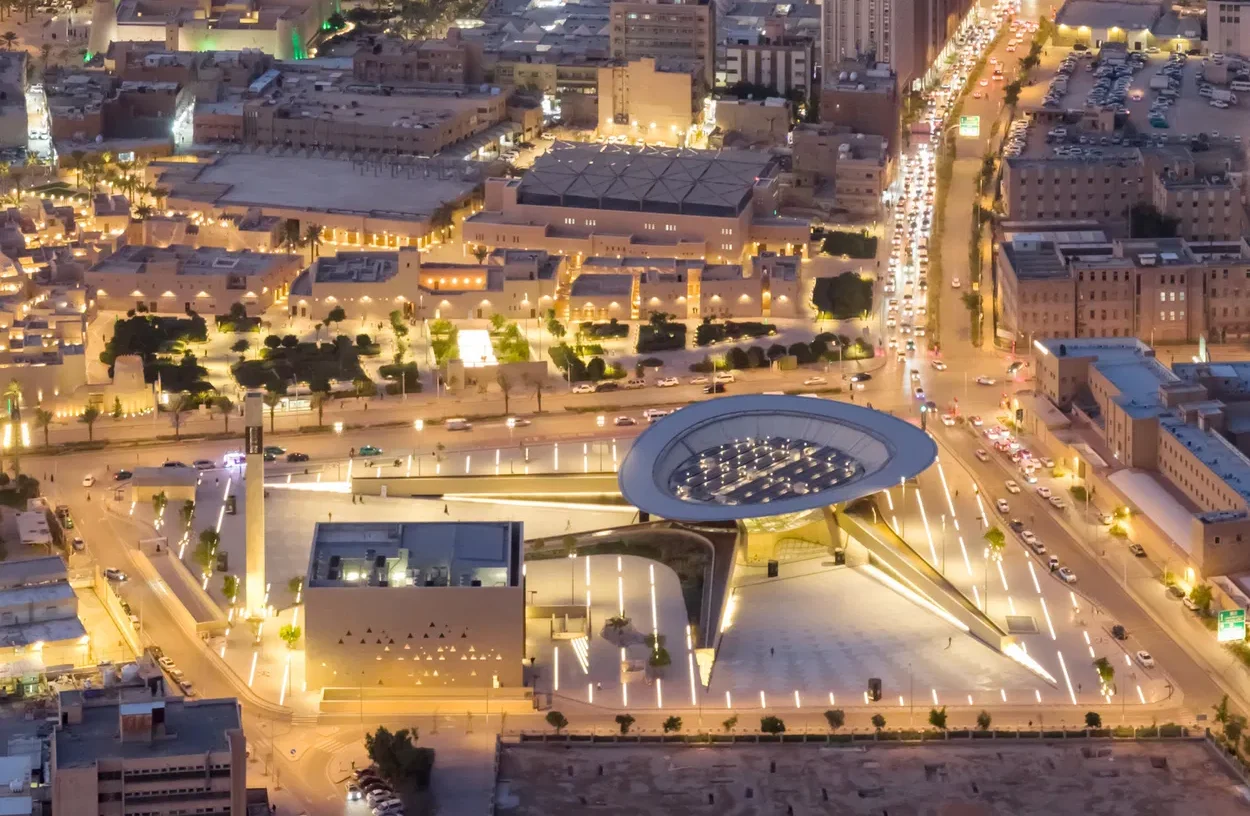
The Qasr AlHokm Metro Station, designed by Snøhetta with collaborators One Works and Crew, is one of the central hubs of Riyadh’s new metro network, linking two major lines and serving as a public transit node in the city’s historic downtown.
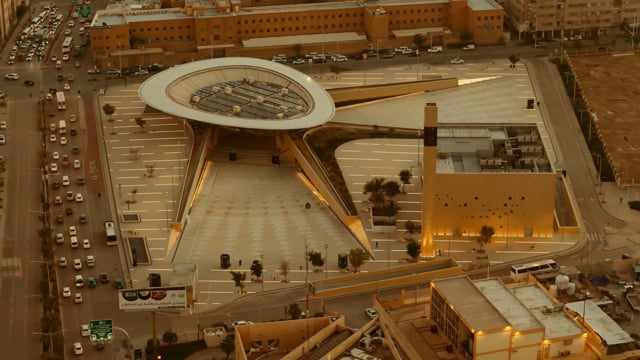
Located within the Qasr AlHokm district, near the city’s historic palace complex and main mosque, the station anchors one of the most important nodes of the Riyadh Metro network.
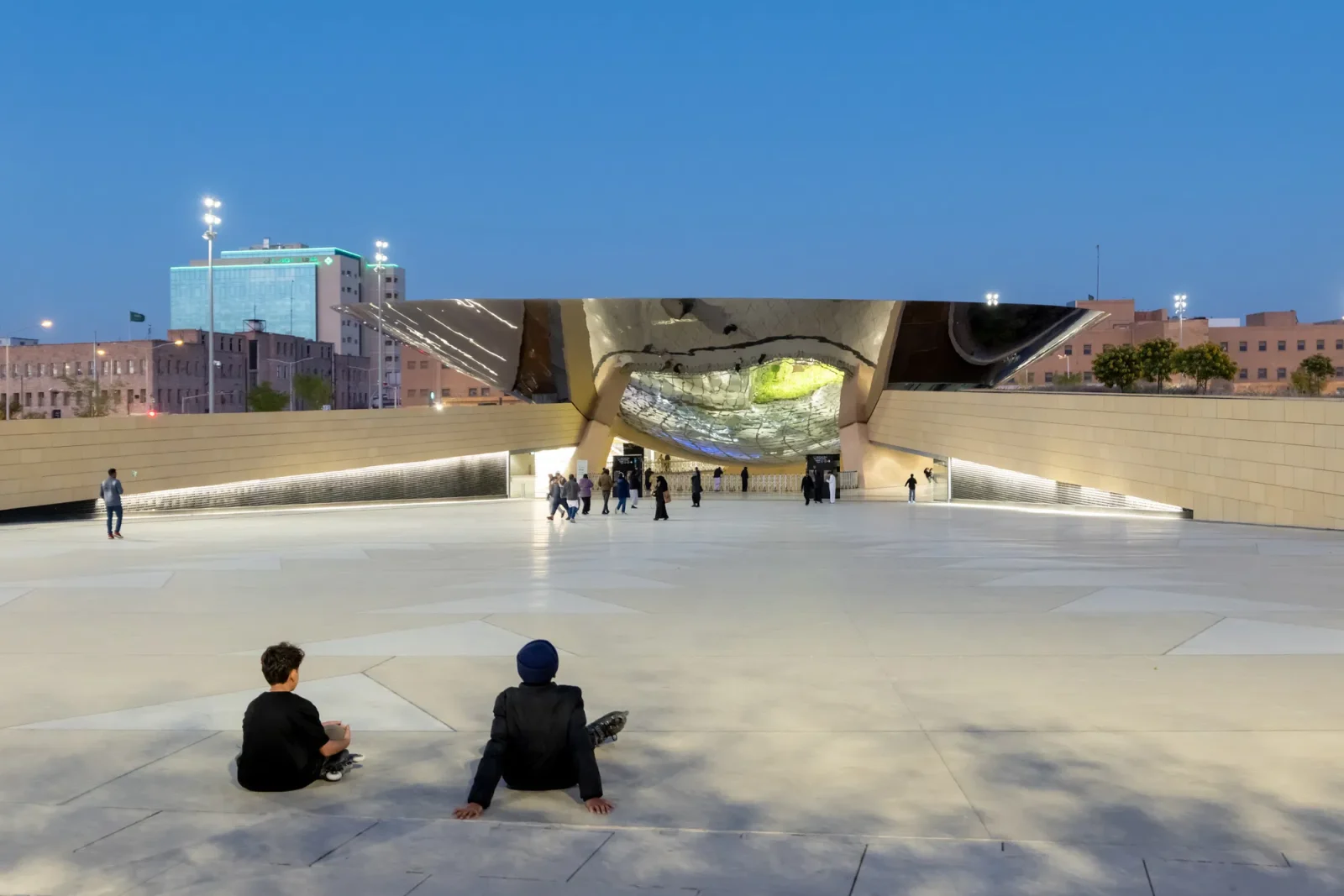
Its vast public plaza extends to a reconstructed mosque and an expanded Eid prayer area, reinforcing the station’s role as both a point of departure and a gathering space.
The Reflective Canopy
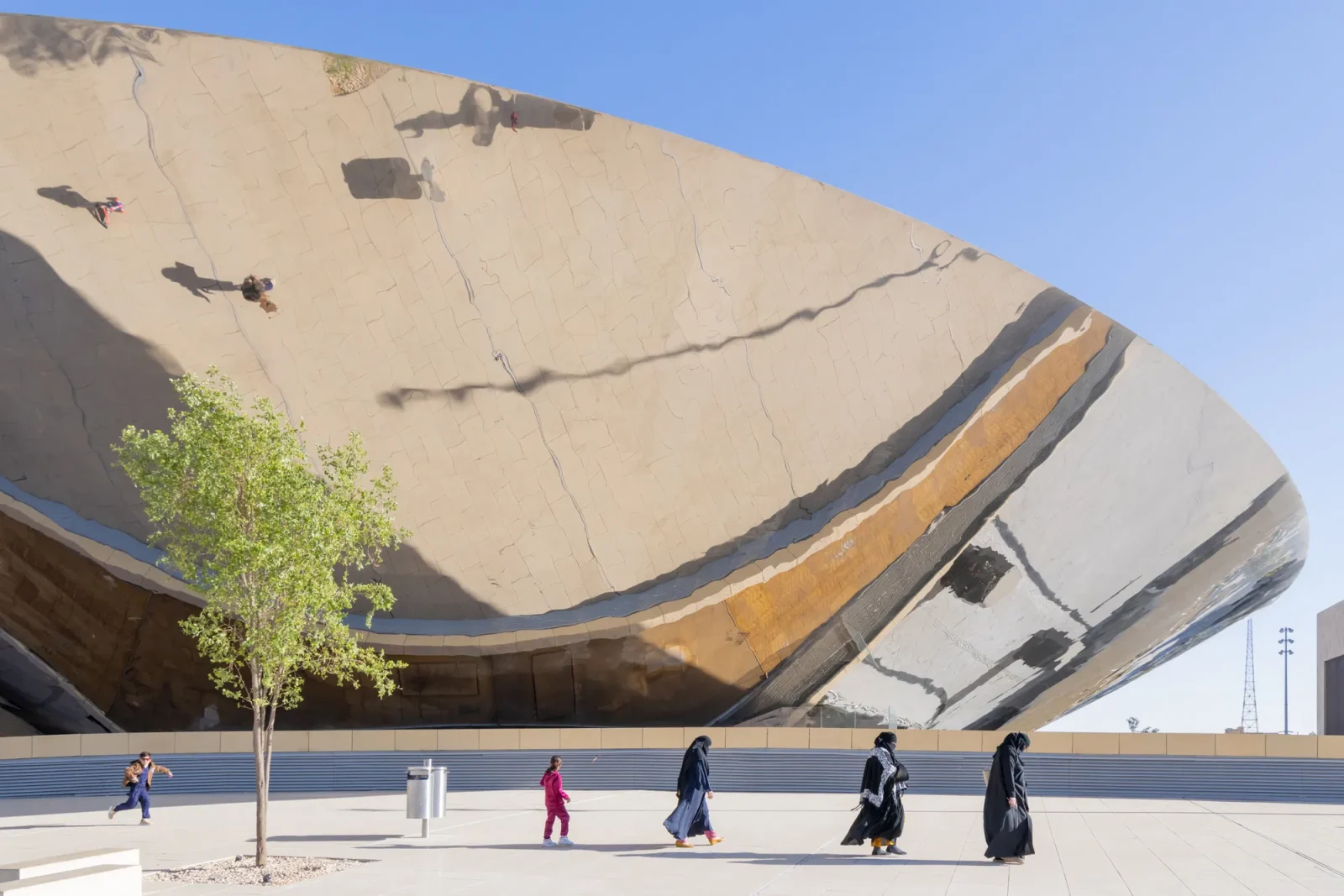
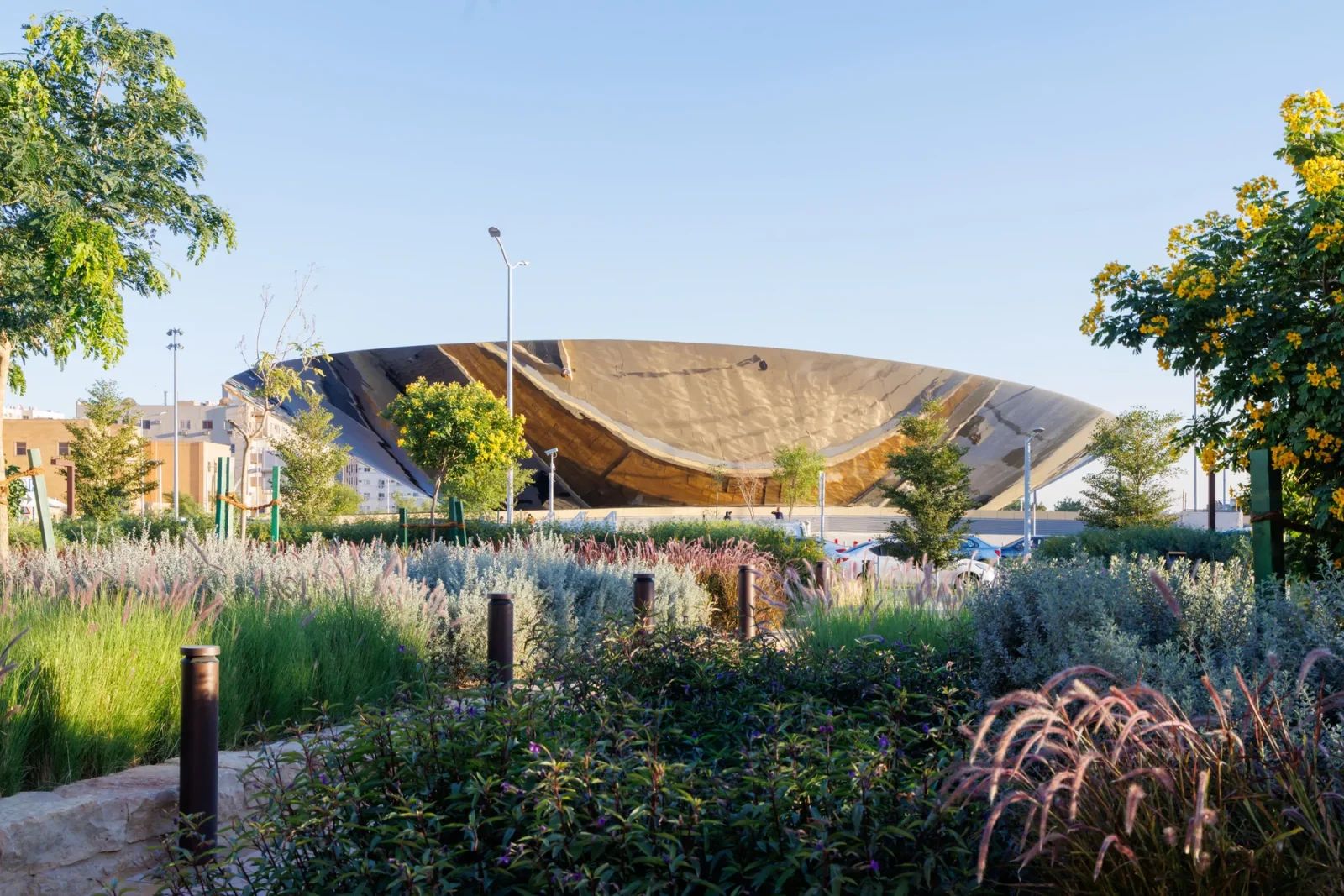
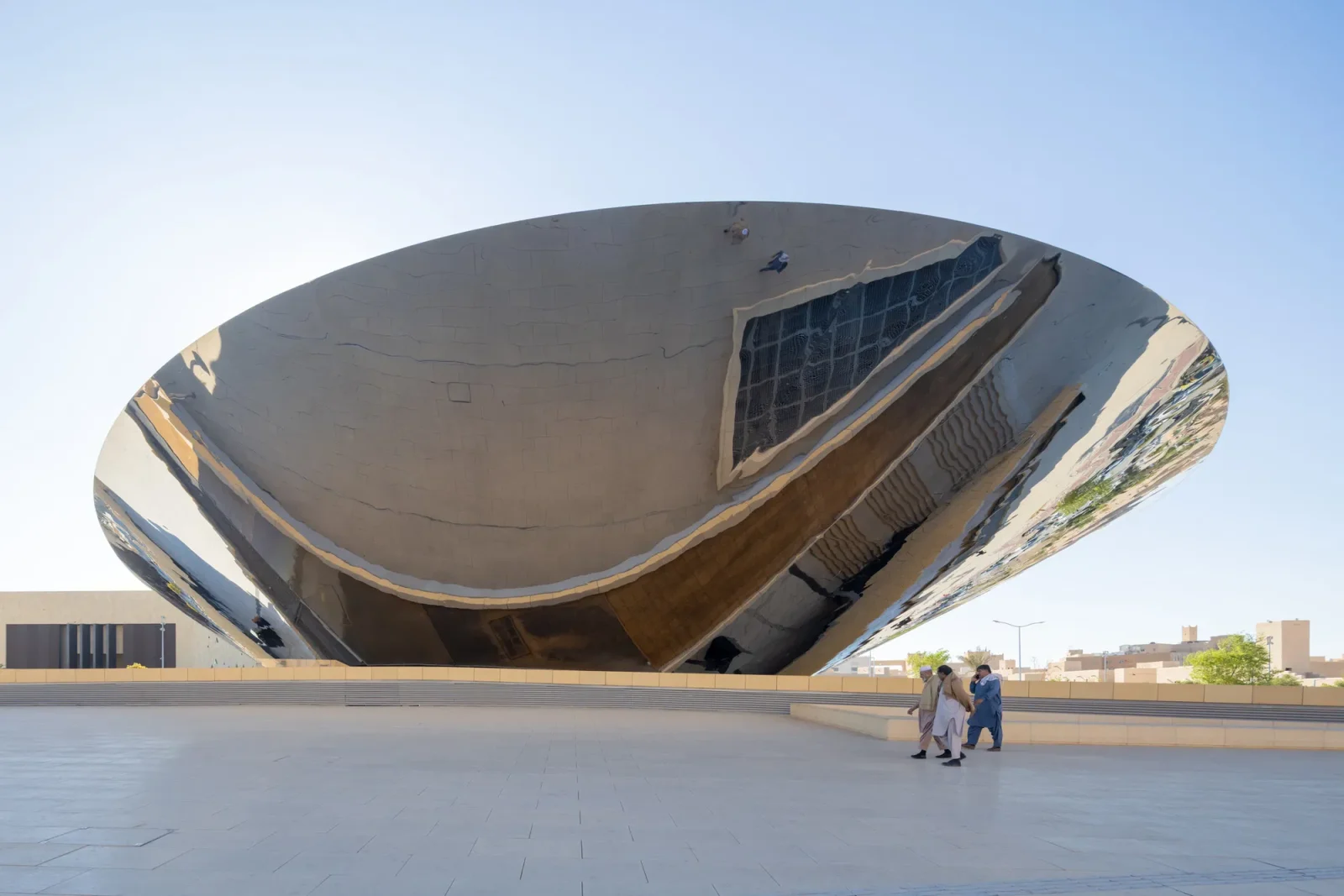
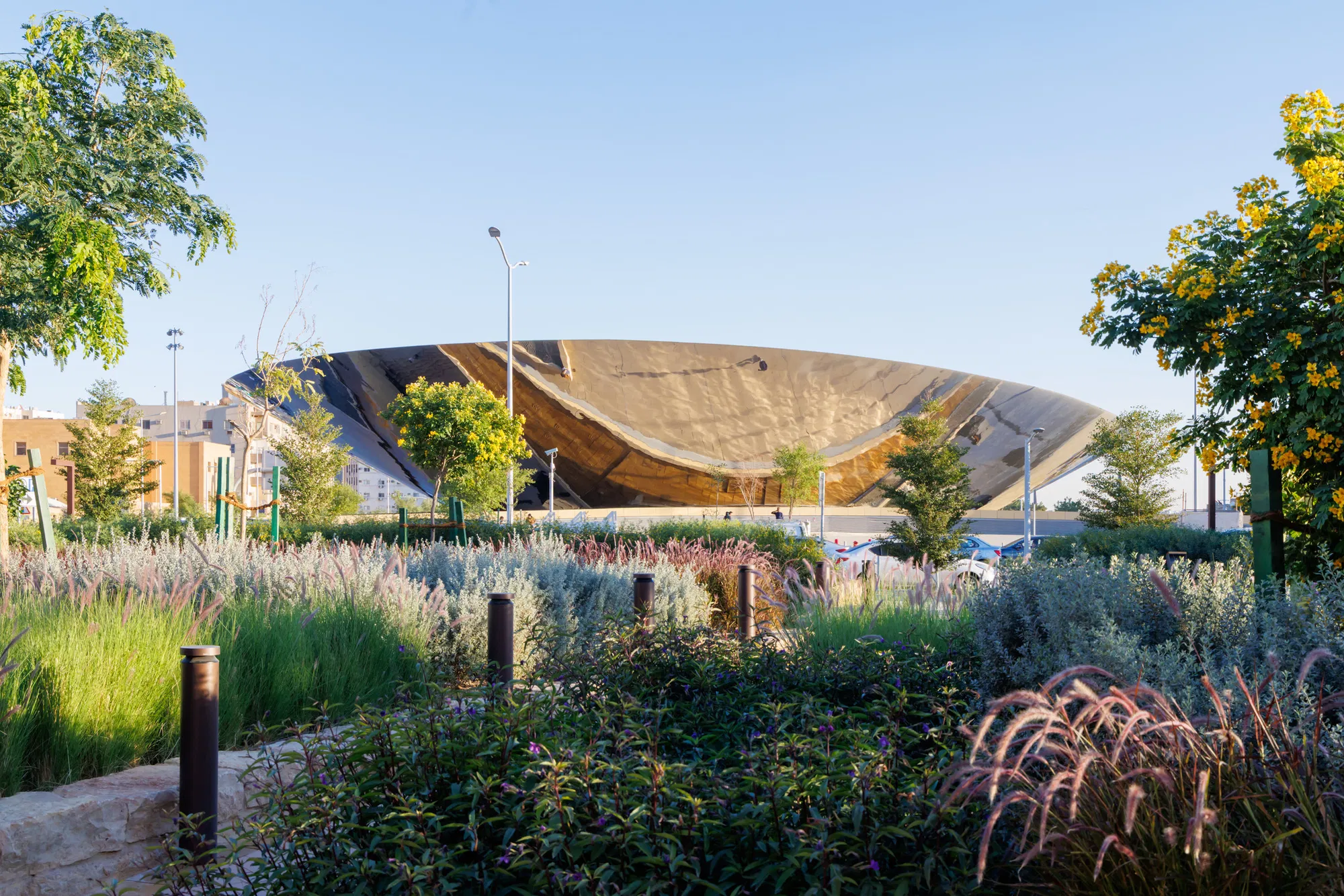
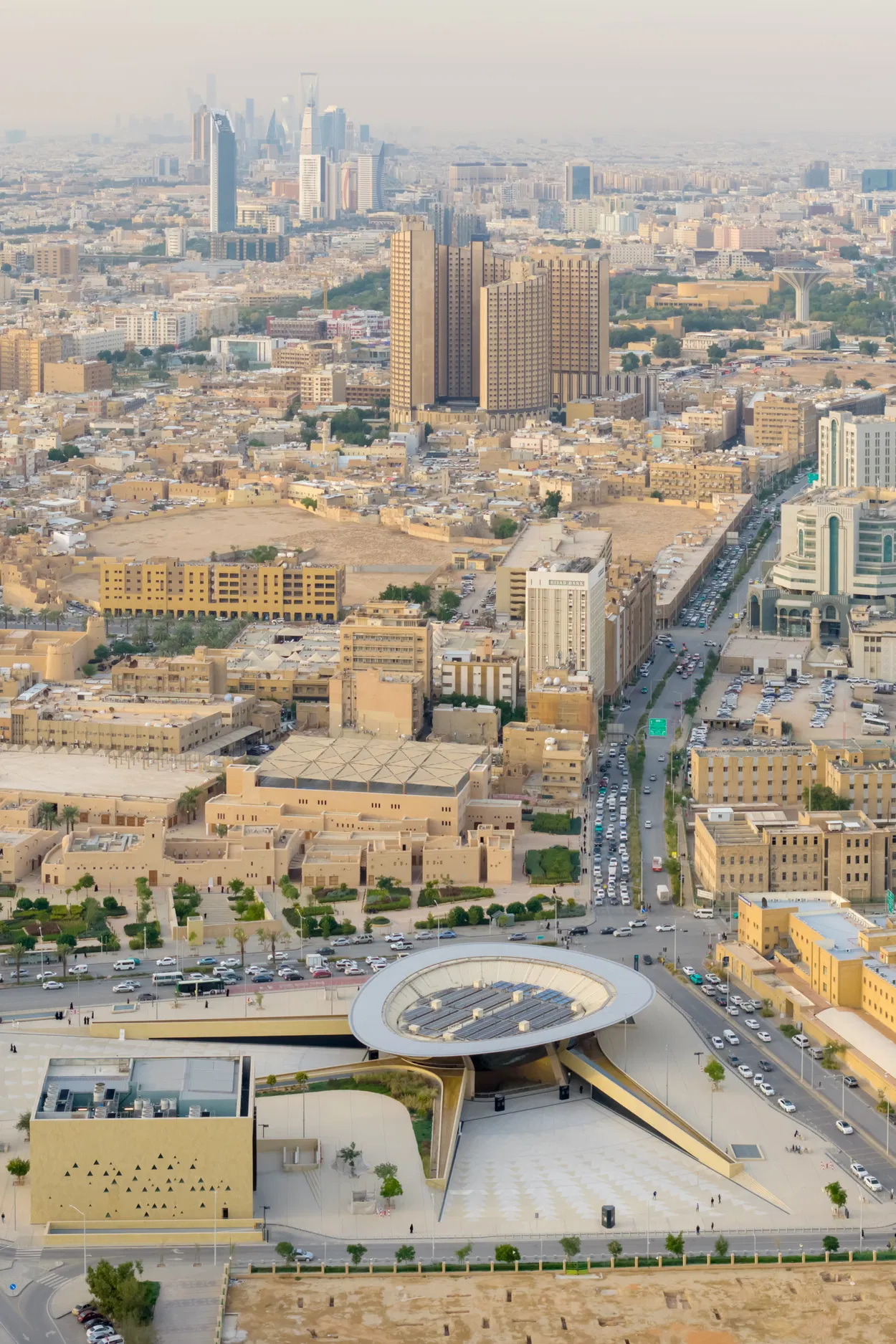
The most striking feature is the vast, concave stainless-steel canopy hovering above the entrance plaza, described as a mirrored bowl.
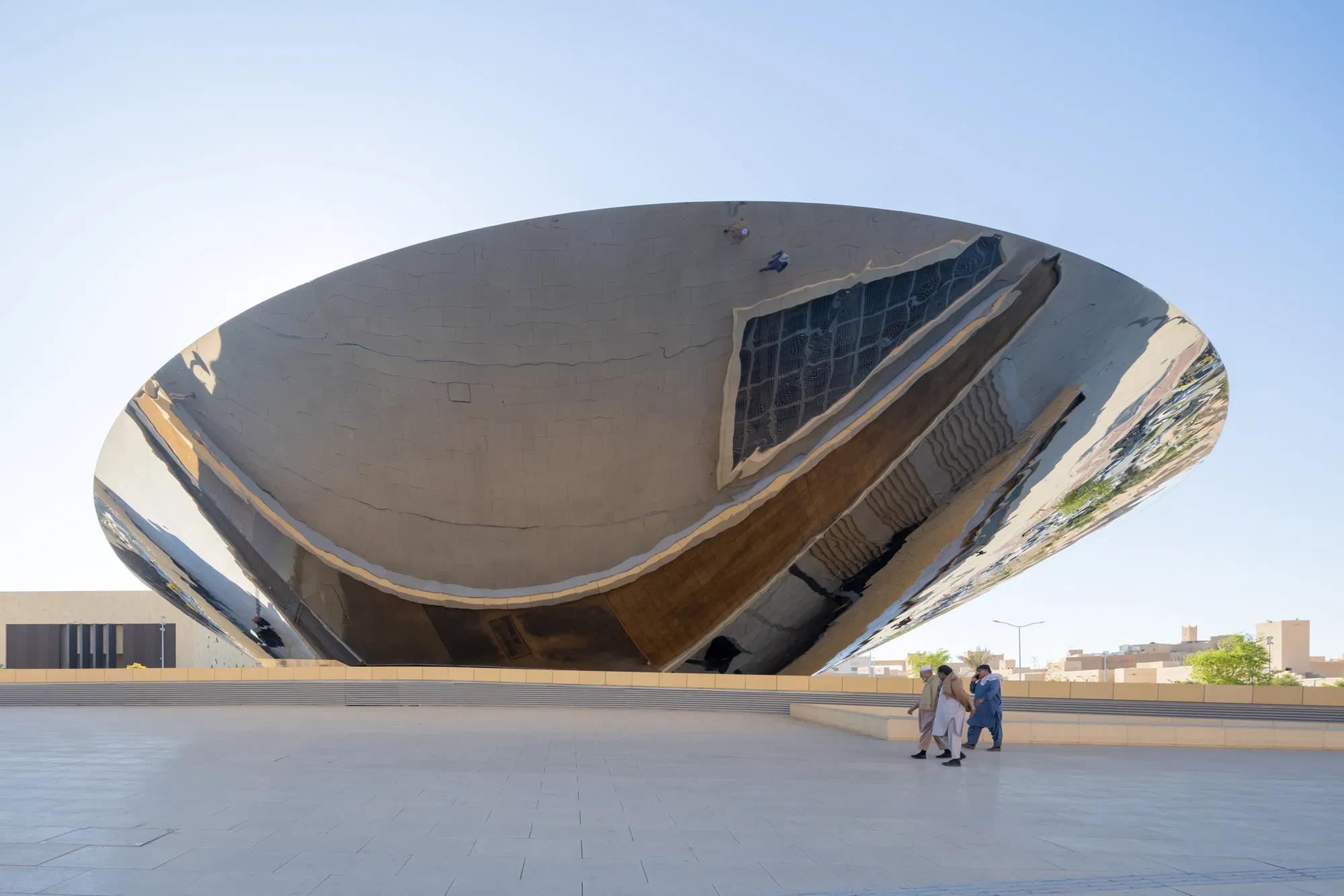
In Riyadh’s extreme climate, shade is essential infrastructure. The canopy protects the public plaza from direct sun, significantly reducing surface temperatures. Its reflective surface captures and redirects daylight deep into the station below, allowing natural light to reach far underground. This reduces reliance on artificial lighting and improves the spatial quality of the interior.
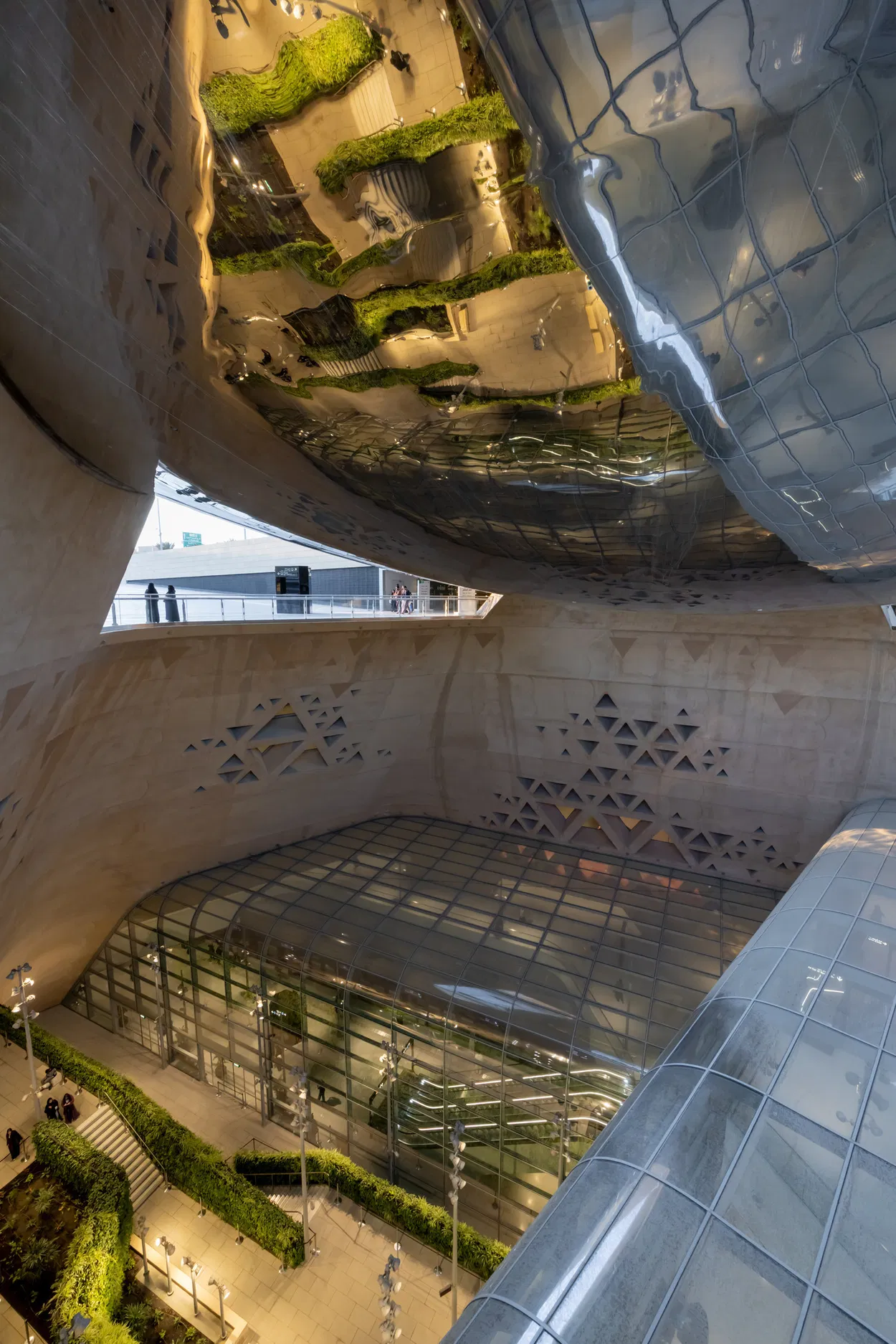
The canopy also acts as a sort of “urban periscope,” reflecting the cityscape inward and outward so that arriving passengers immediately feel oriented within the broader urban context. It reflects the surrounding historic fabric, the sky, and the movement of people across the plaza. In doing so, it visually pulls the city into the station and projects the station back into the city.
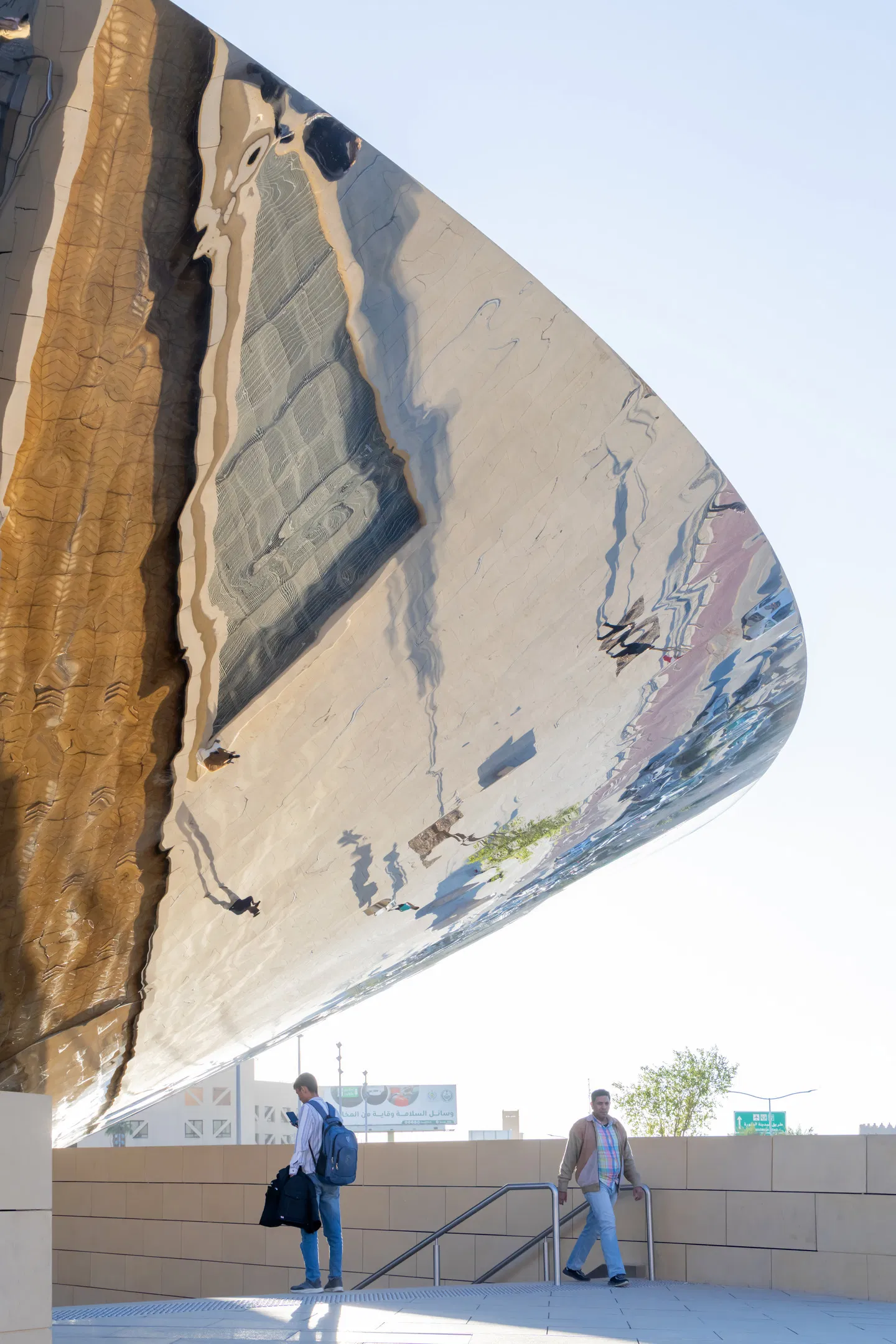
Photovoltaic panels integrated into the structure contribute to on-site renewable energy production, reinforcing the station’s environmental strategy.
The Underground Garden: An Oasis 35 Meters Below
One of the project’s most unexpected features lies deep below ground, a lush garden set approximately 35 meters beneath the surface.
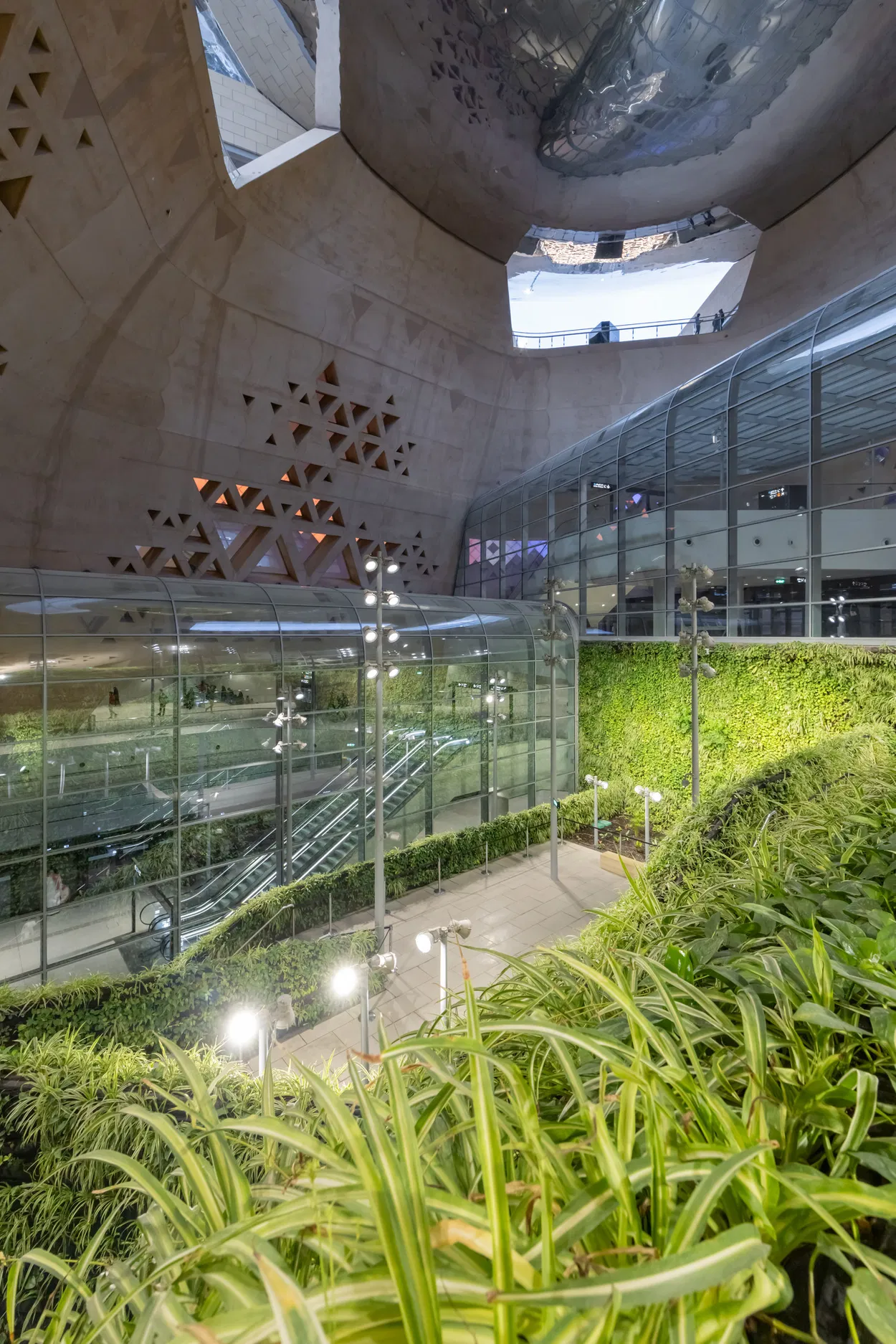
In a desert capital known for heat and arid conditions, placing greenery underground is a powerful statement. The garden softens what could have been a purely infrastructural environment. It introduces calm, humidity, and a sense of pause within a high-traffic transit space.
Water management is carefully integrated into this strategy. Rainwater and runoff collected from the canopy and plaza are harvested and reused for irrigation. This closed-loop thinking aligns sustainability with spatial experience. The garden is part of a broader ecological approach.
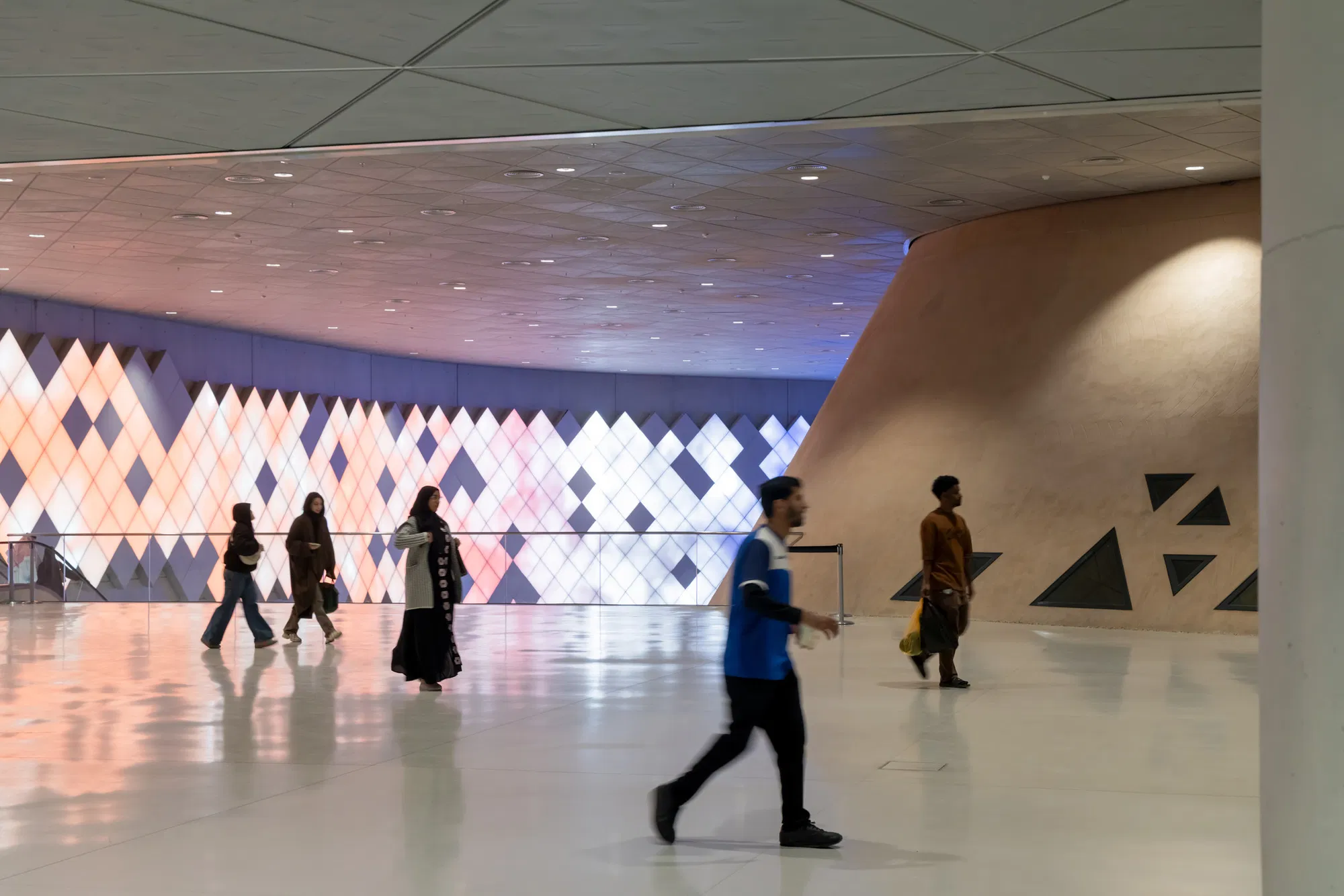
For commuters, it changes the emotional tone of travel. Instead of descending into a dark, mechanical void, passengers enter a space that feels open, breathable, and humane.
Movement and Cultural Continuity
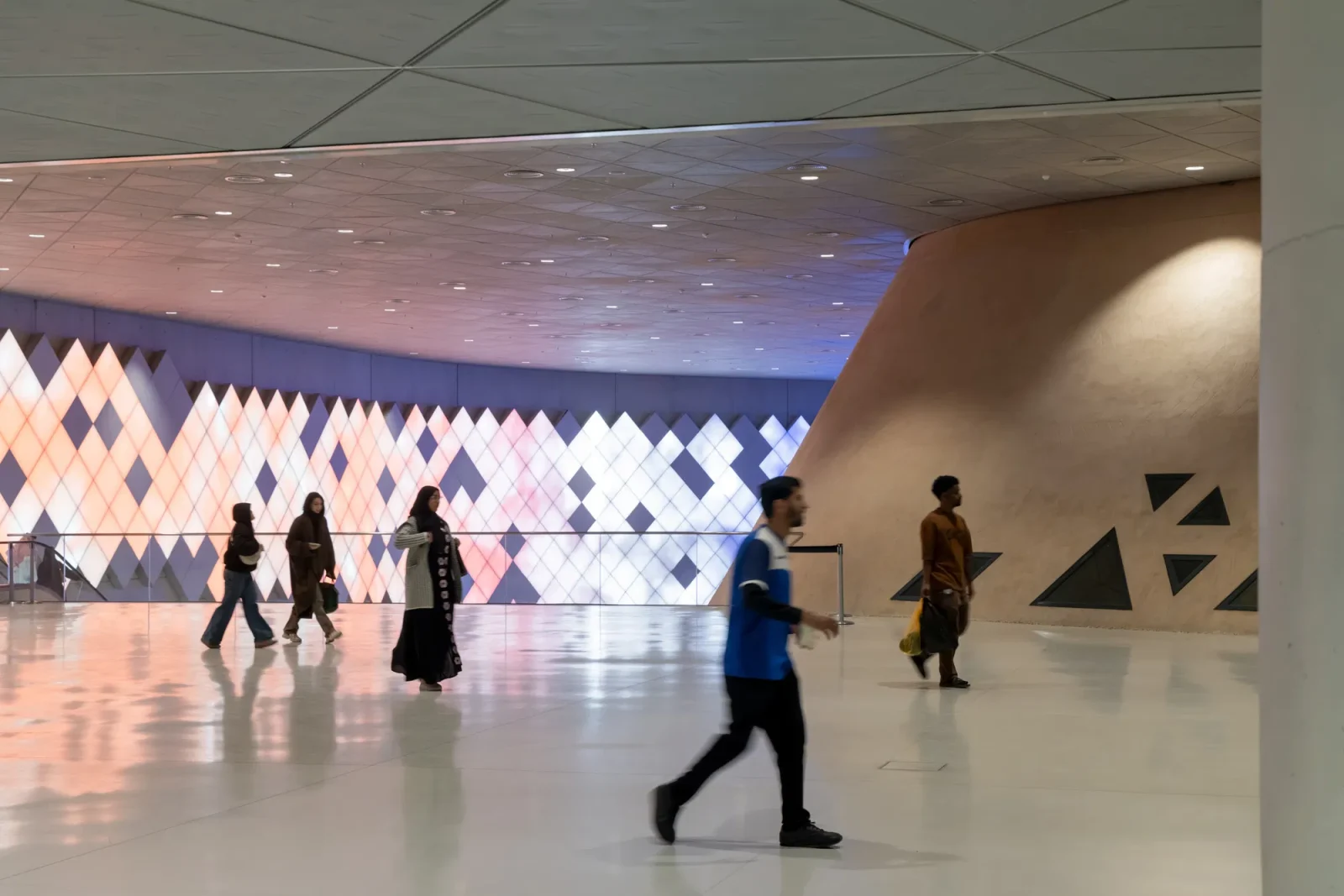
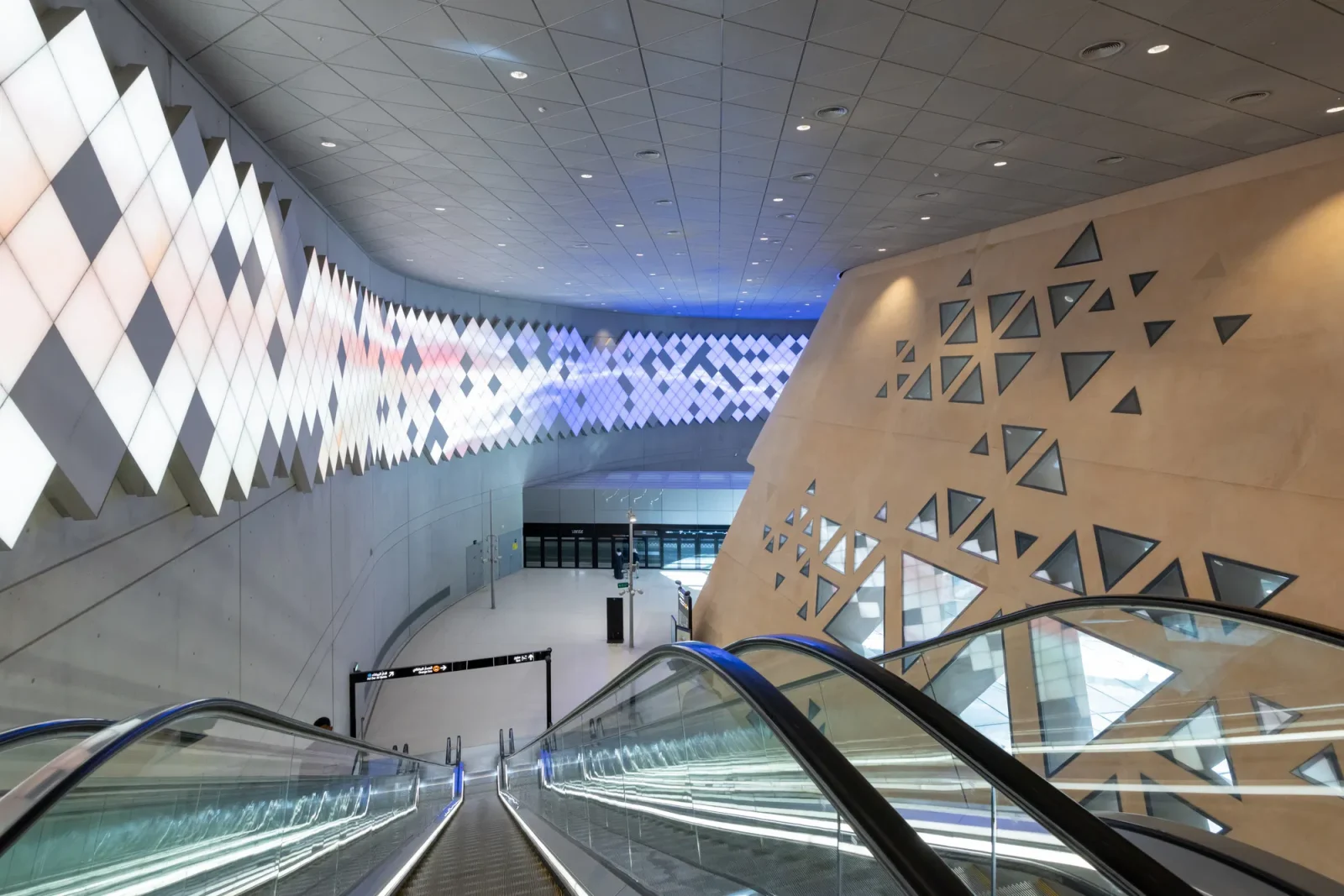
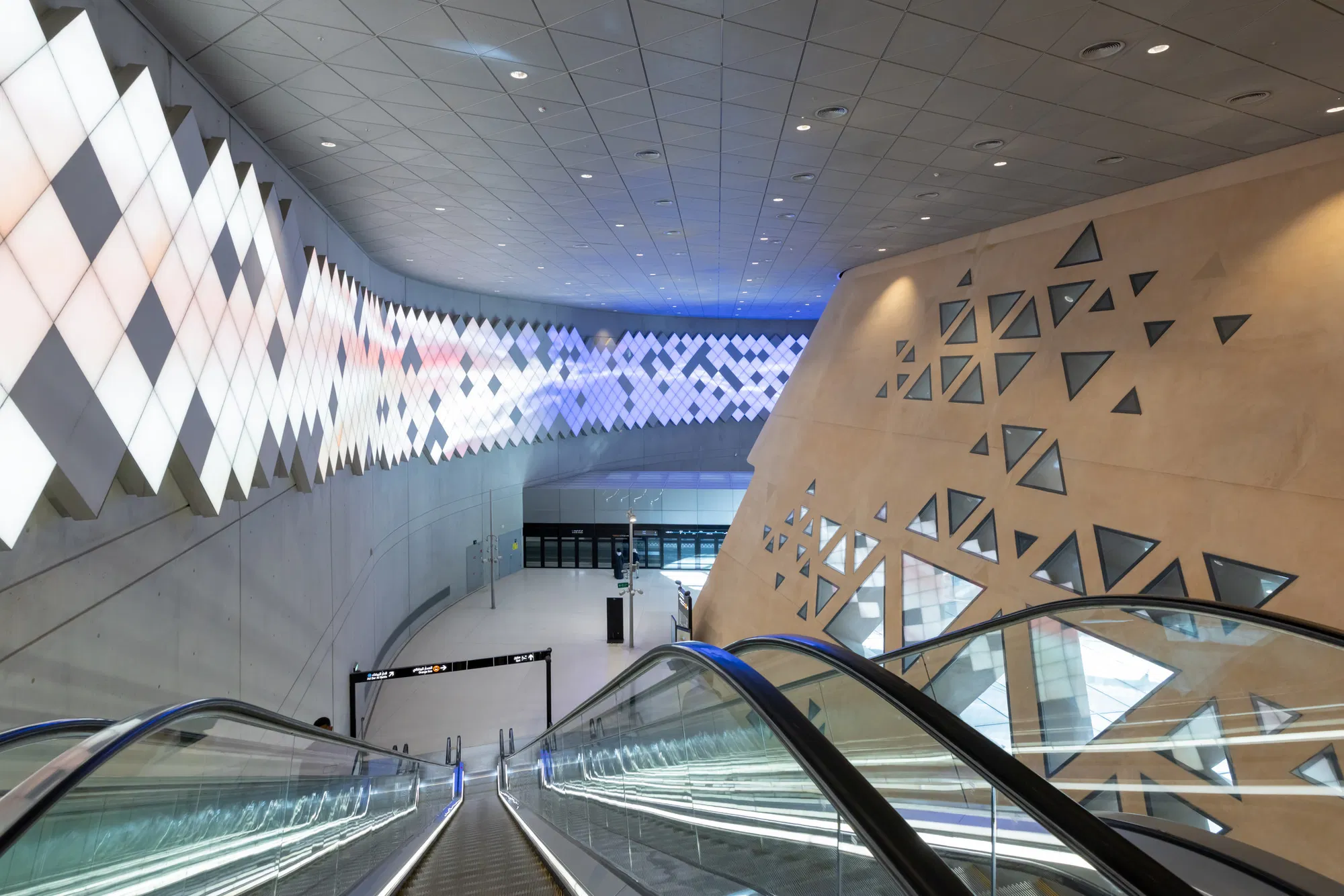
Descending below the plaza, the station opens into a tall atrium where the transit lines run through transparent glass tubes that visually connect the platforms to the public circulation space. A long media art wall introduces dynamic visual storytelling that supports visual openness and makes wayfinding intuitive. Even in a multi-level underground interchange, people understand where they are and where they need to go.
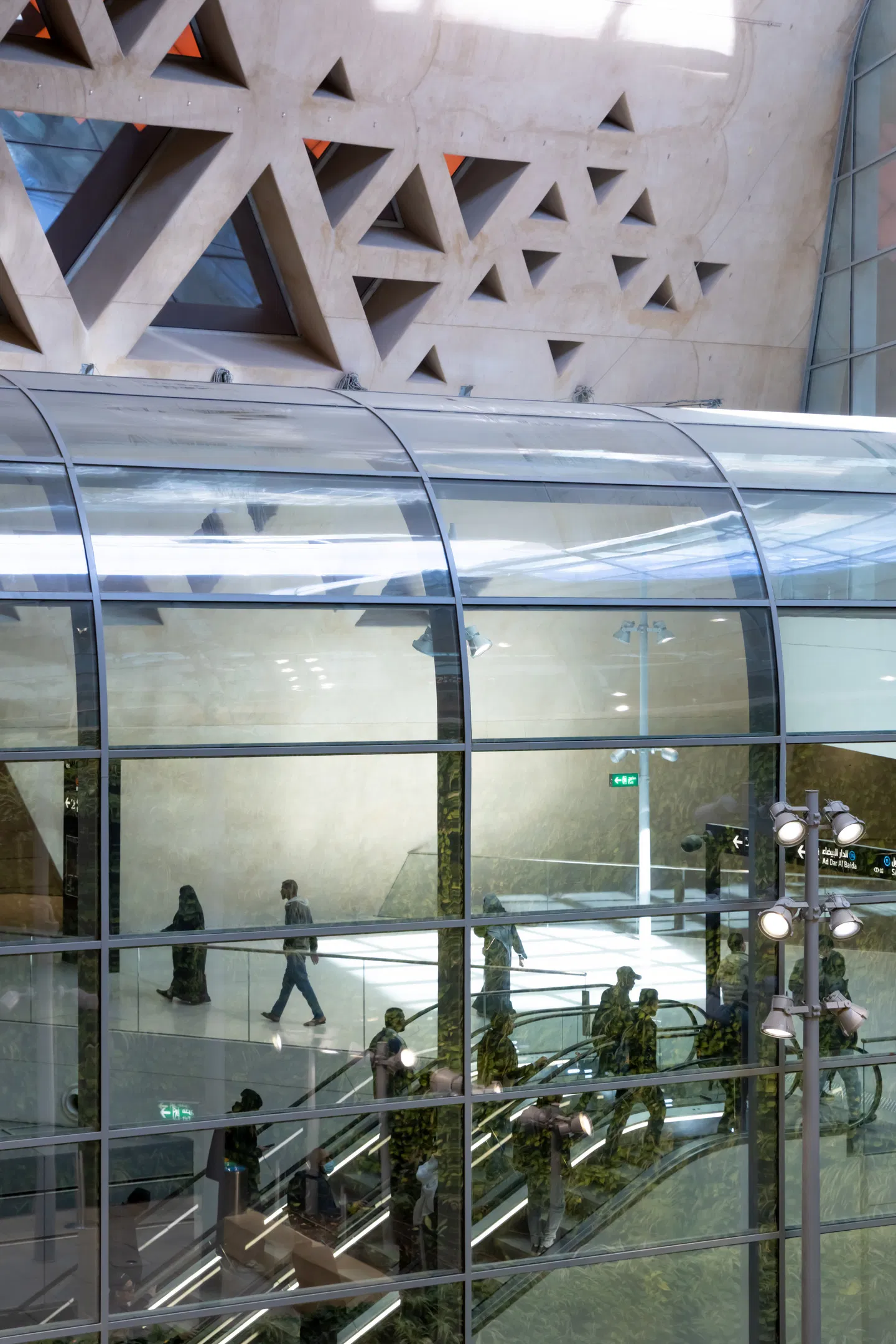
Interior surfaces incorporate patterns inspired by traditional Najdi architecture. These perforated elements filter light and create depth while referencing the region’s architectural heritage. The effect is subtle but meaningful. The station reinterprets historical forms through contemporary materials and technology.
The large public plaza above connects directly to surrounding landmarks, including a reconstructed mosque and public prayer areas. The metro station becomes an extension of the city’s public realm.
Qasr AlHokm Metro Station represents a broader vision for Riyadh’s transformation, investing in sustainable public infrastructure that catalyzes high-quality urban life and eases dependence on private vehicles. The station was developed from a competition concept in 2012 and officially opened to the public in phases of the new metro system that began operations in 2025. In the historic center of Riyadh, this project signals a shift toward infrastructure that serves as movement, memory, environment, and everyday urban experience.
Image credit: Iwan Baan
Explore Courses
.jpg "Ondrej Chybik - Rethinking Architecture")