


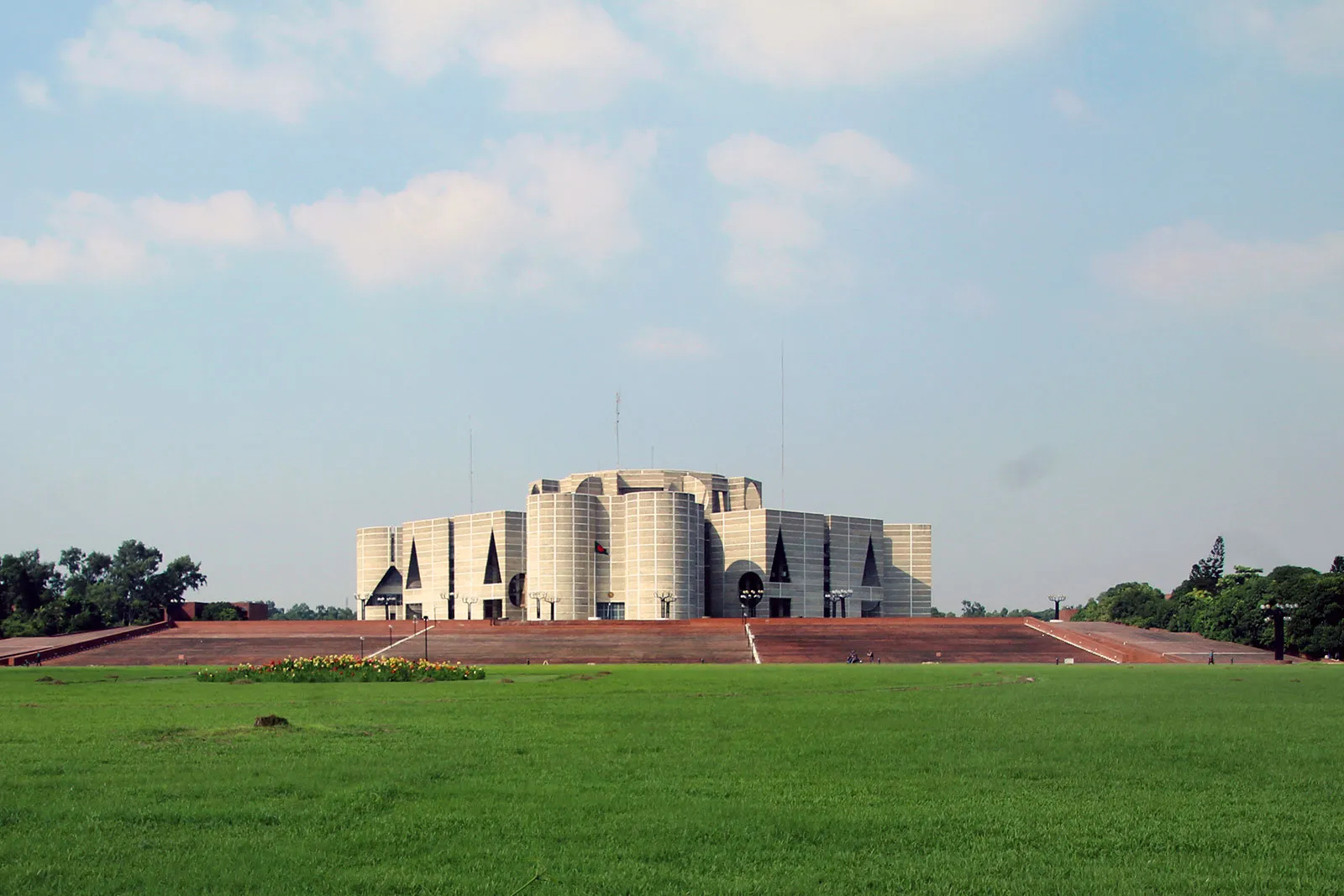
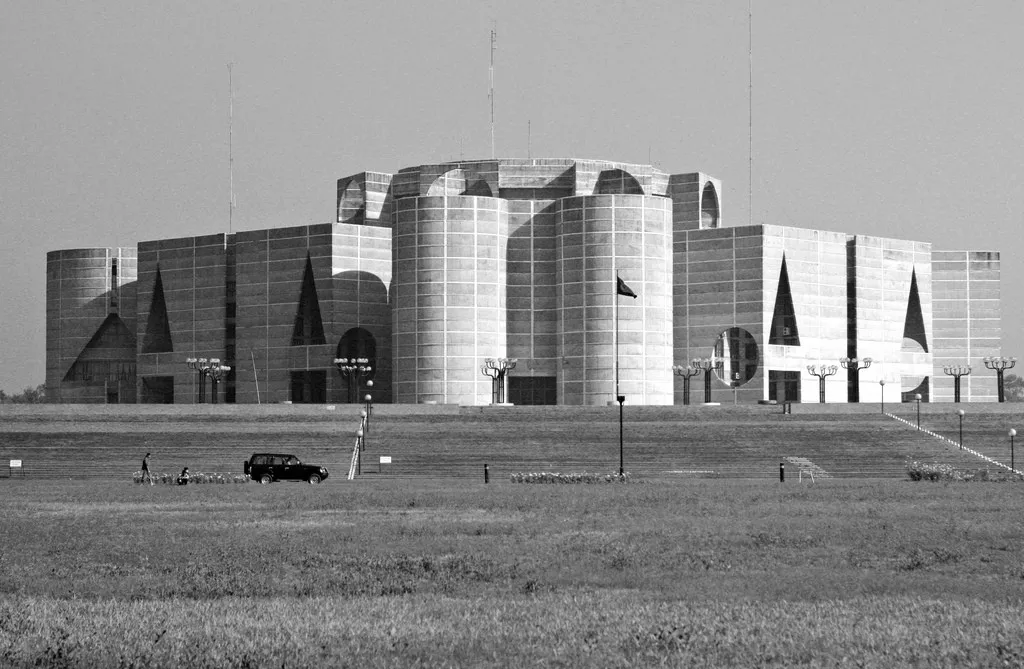
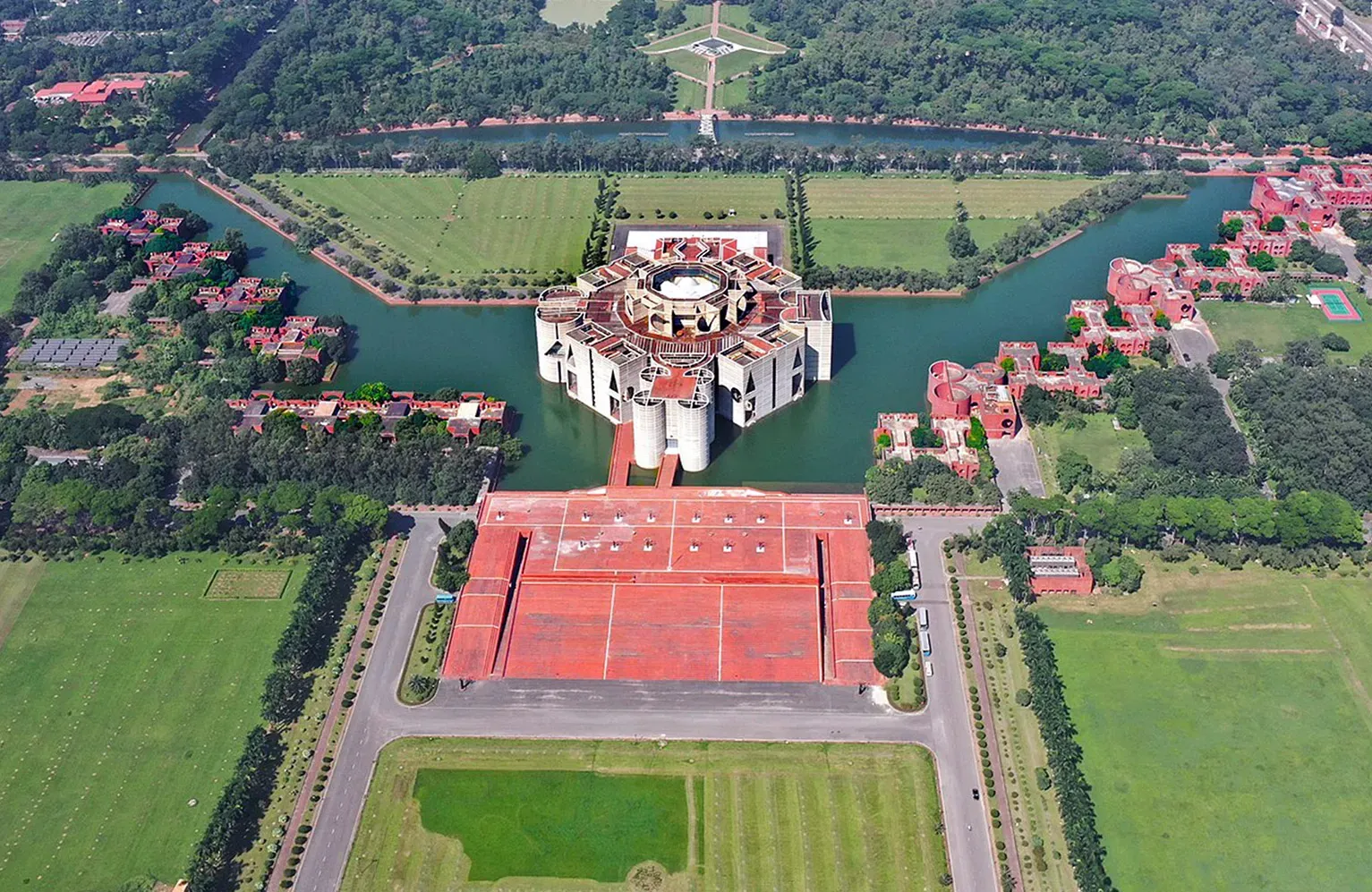
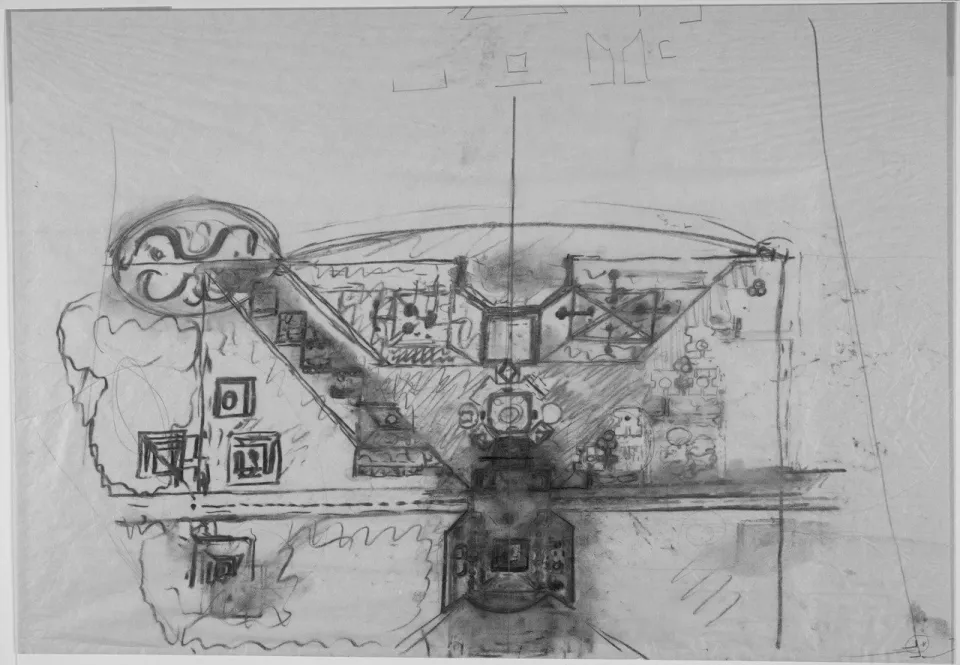
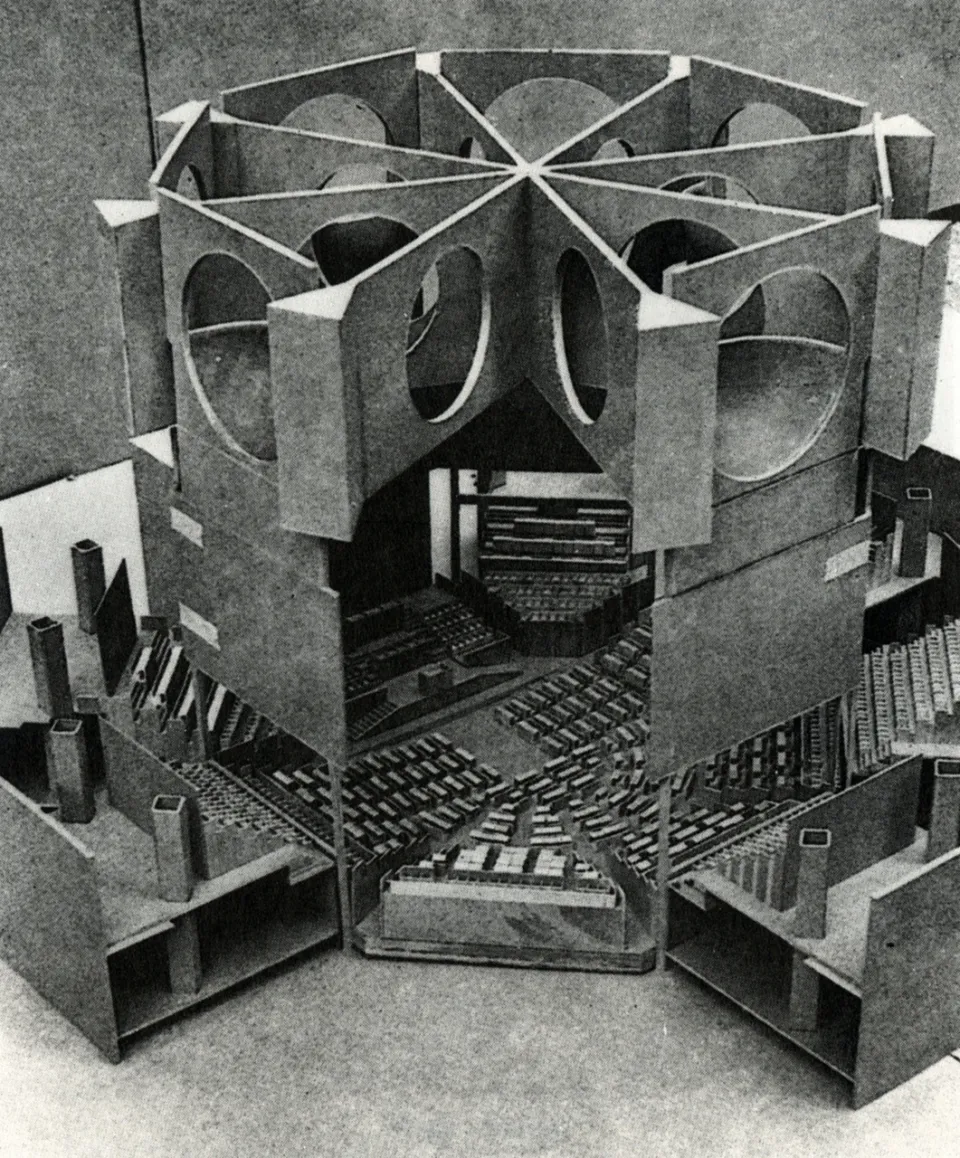
The National Assembly Building in Dhaka, Bangladesh, remains the most significant work of modern architecture in South Asia, designed by the legendary Louis I. Kahn. Completed in 1982, this brutalist legislative complex, also known as Jatiyo Sangsad Bhaban, symbolizes the nation’s identity and democracy in Dhaka. This project exemplifies Kahn’s design genius, blending modernist principles with cultural and contextual sensitivity.
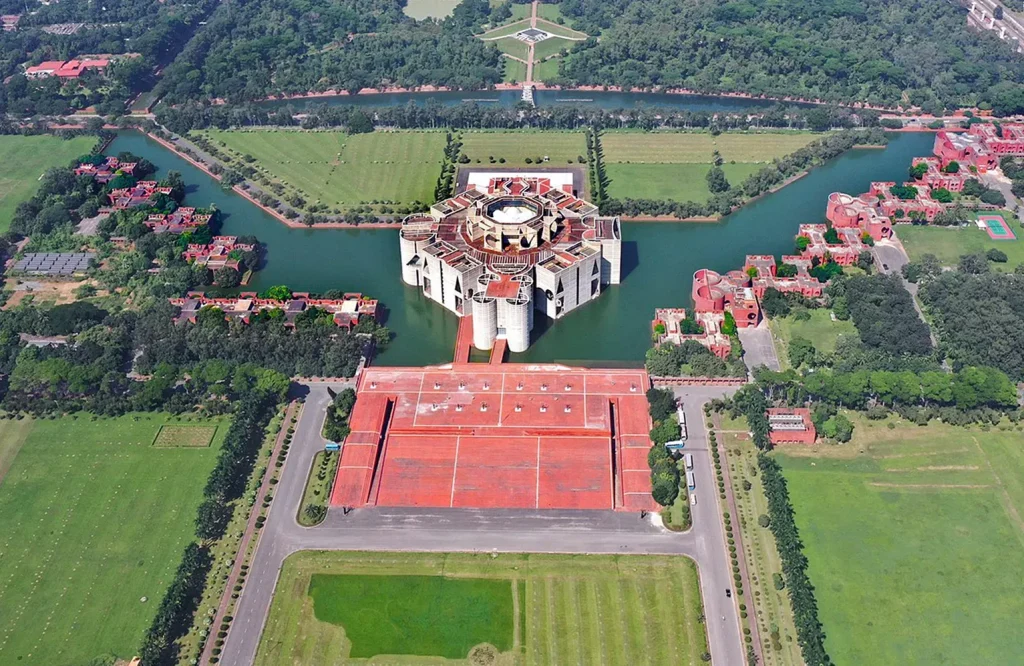
National Assembly Building: A Brutalist Masterpiece
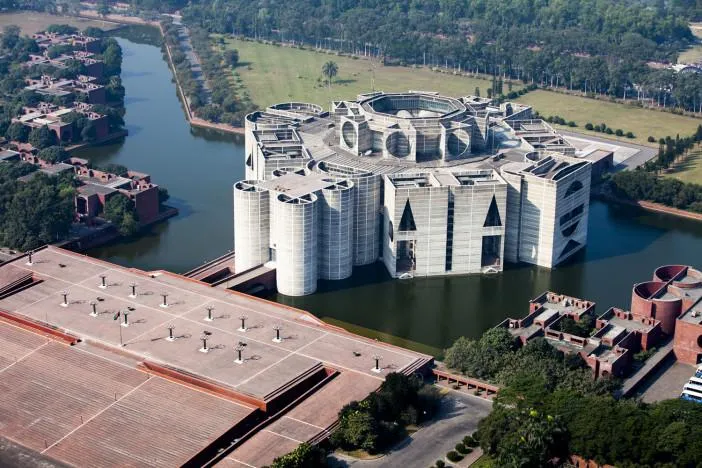
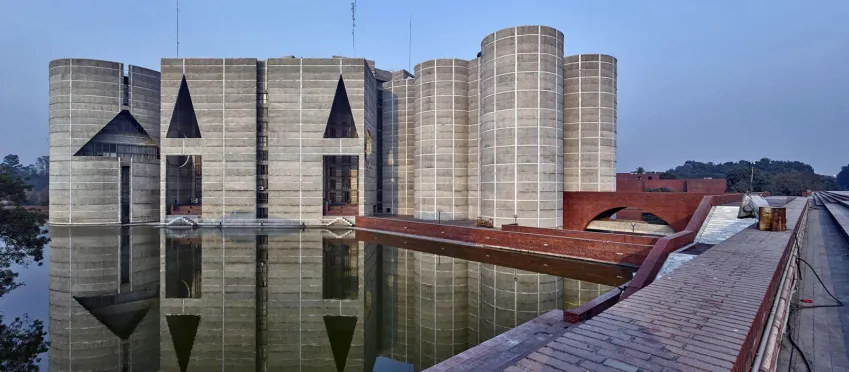
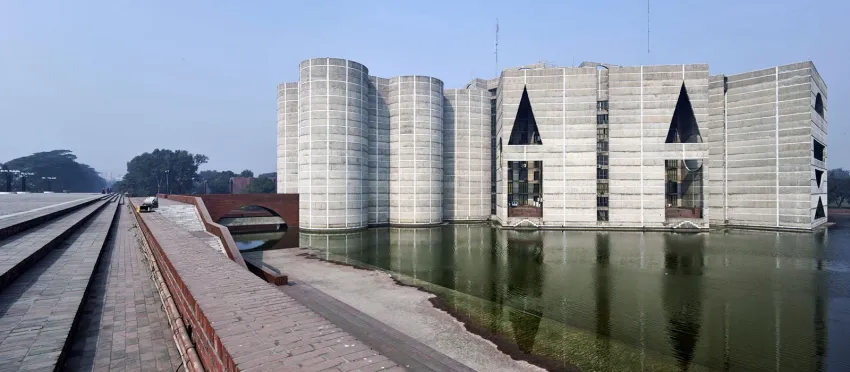
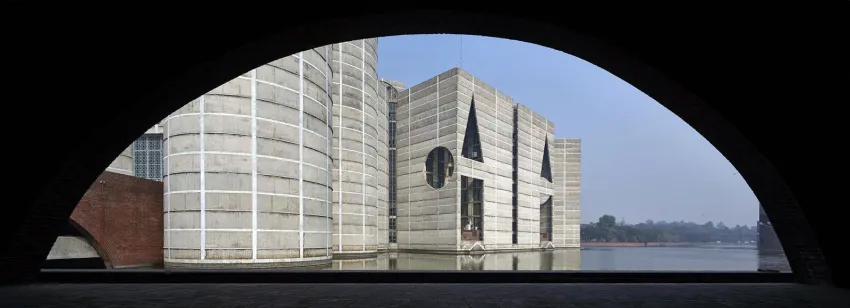
Collaborating with local architects Muzharul Islam and Alam Syed Zahoor, Louis Kahn envisioned this project, which illustrates post-independence modernist principles deeply rooted in the local context. Surrounded by an artificial lake on three sides, the National Assembly Building emerges from Bangladesh’s riverine landscape and Kahn’s philosophy of served and servant spaces, which guides the design through transitions of mass and void in the spatial experience.
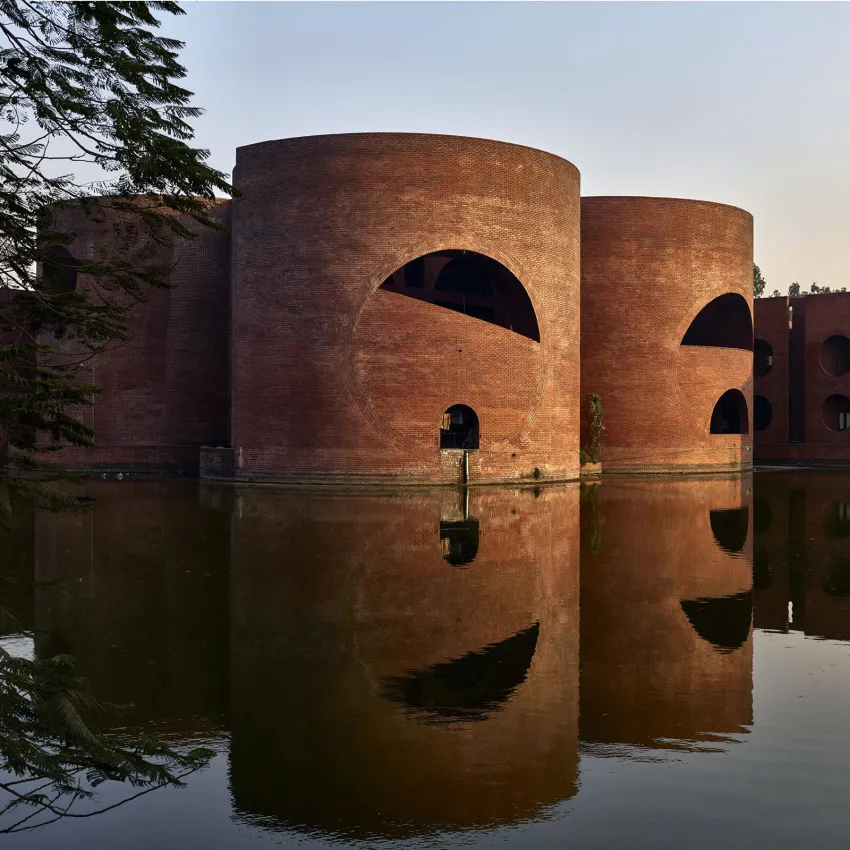
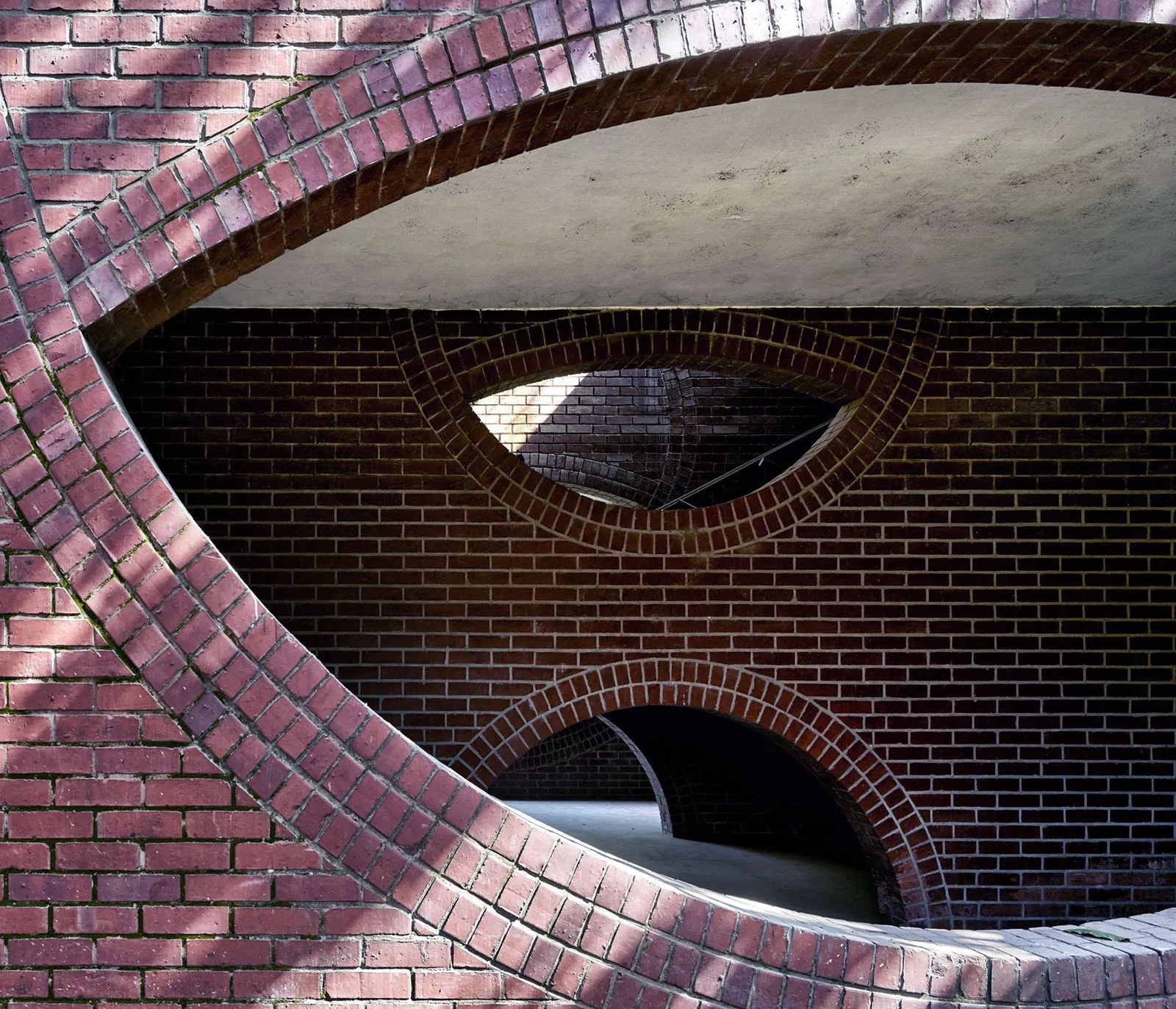
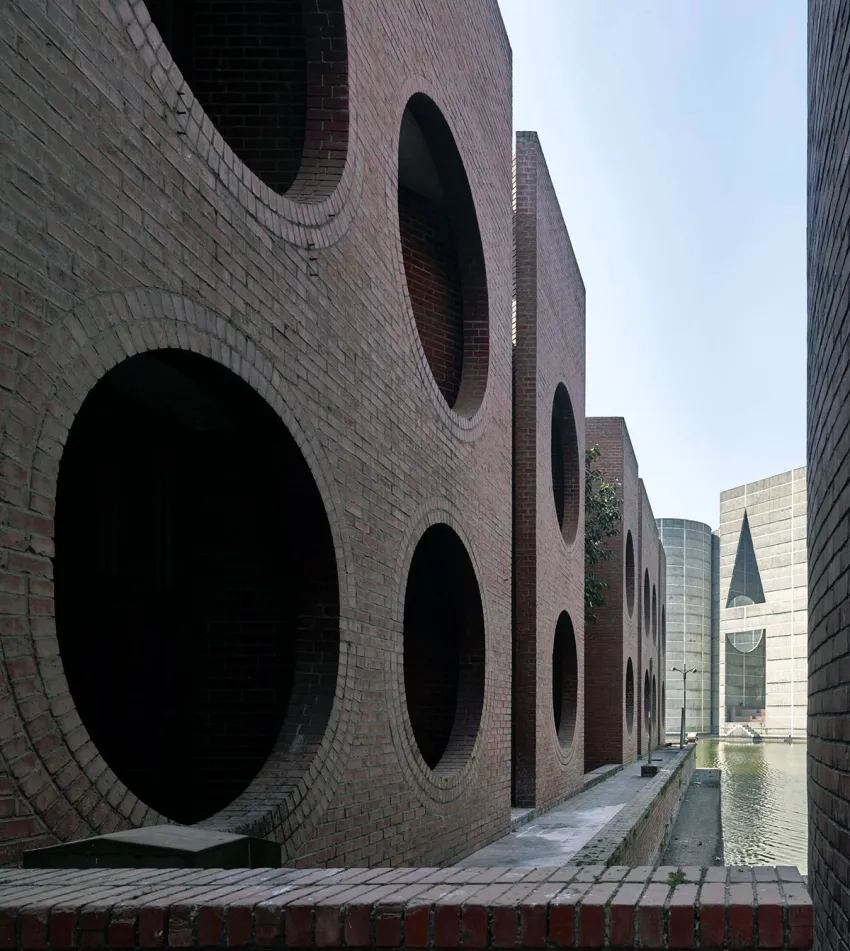
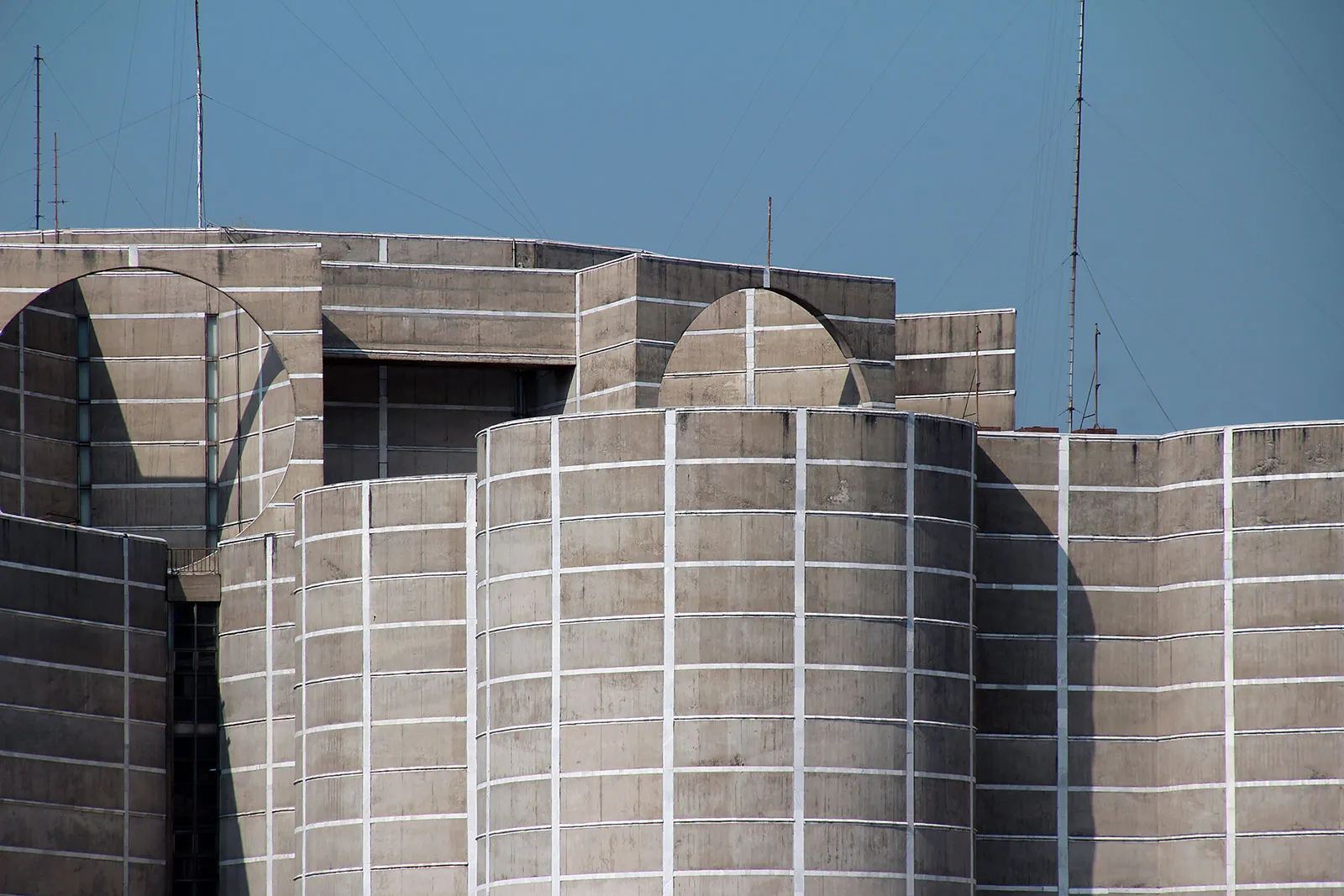
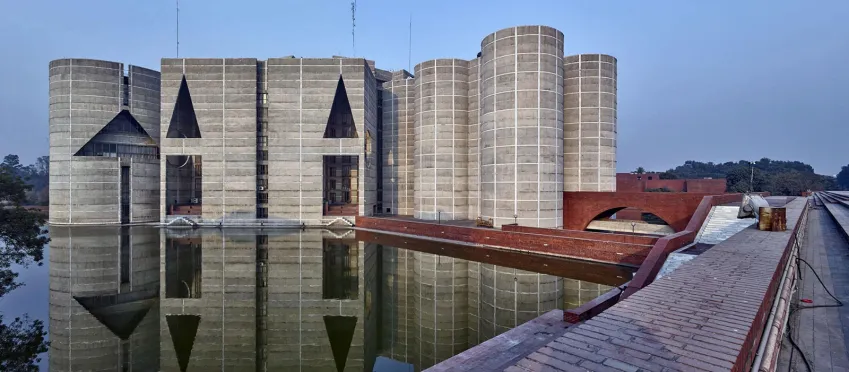
The strategic placement of cubes, triangles, and cylinders portrays the bold geometric form, punctured with large circular and triangular openings. These voids bring natural light into the space and add clarity to the sculptural mass. The bold concrete form with punctured voids and deep recesses frames the volume, providing a durable envelope and connecting to the surroundings.
Kahn’s Geometric Vision
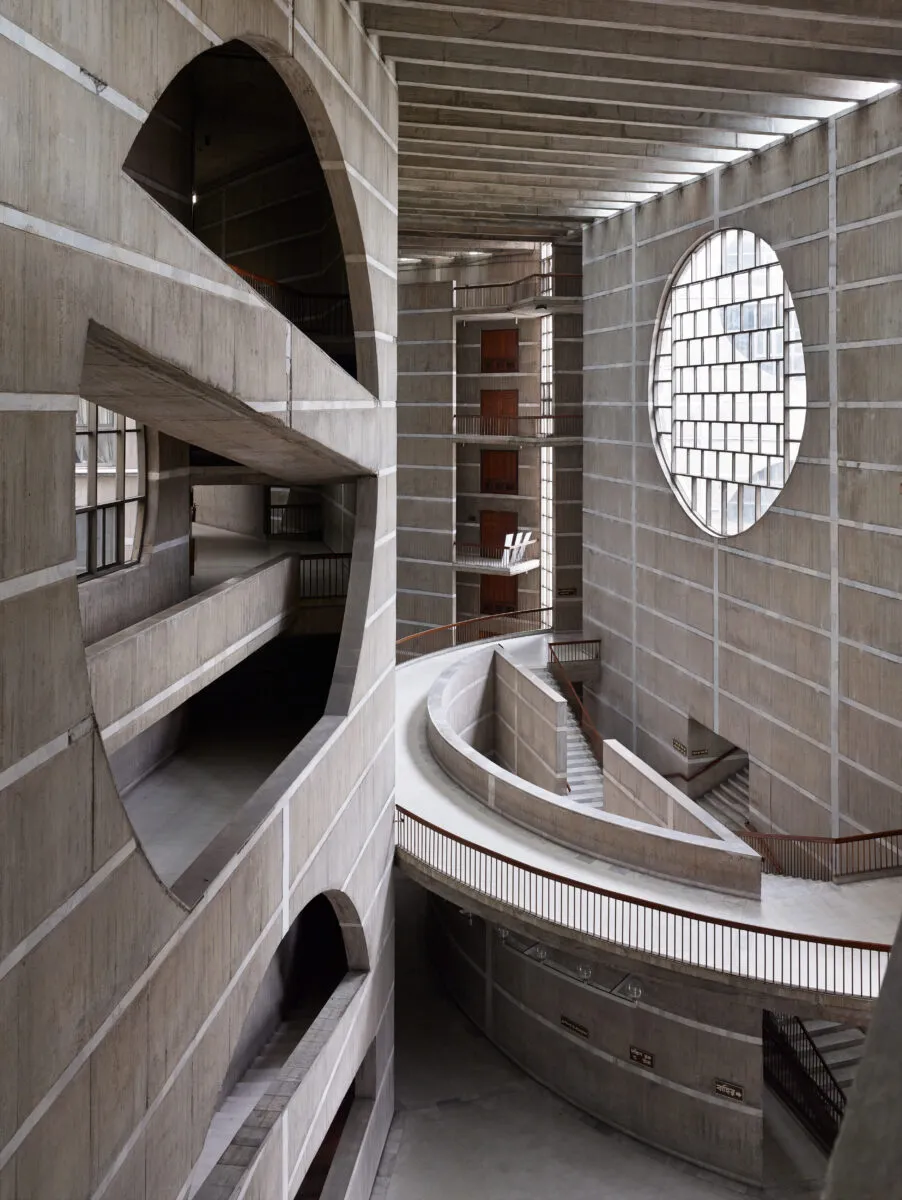
With profound reflection on spirit and silence, Kahn believed that architecture should speak of its time and place that are deeply connected through culture, environment, and people. The spatial layout of the brutalist form was designed on three main inspirations that are still evident today.
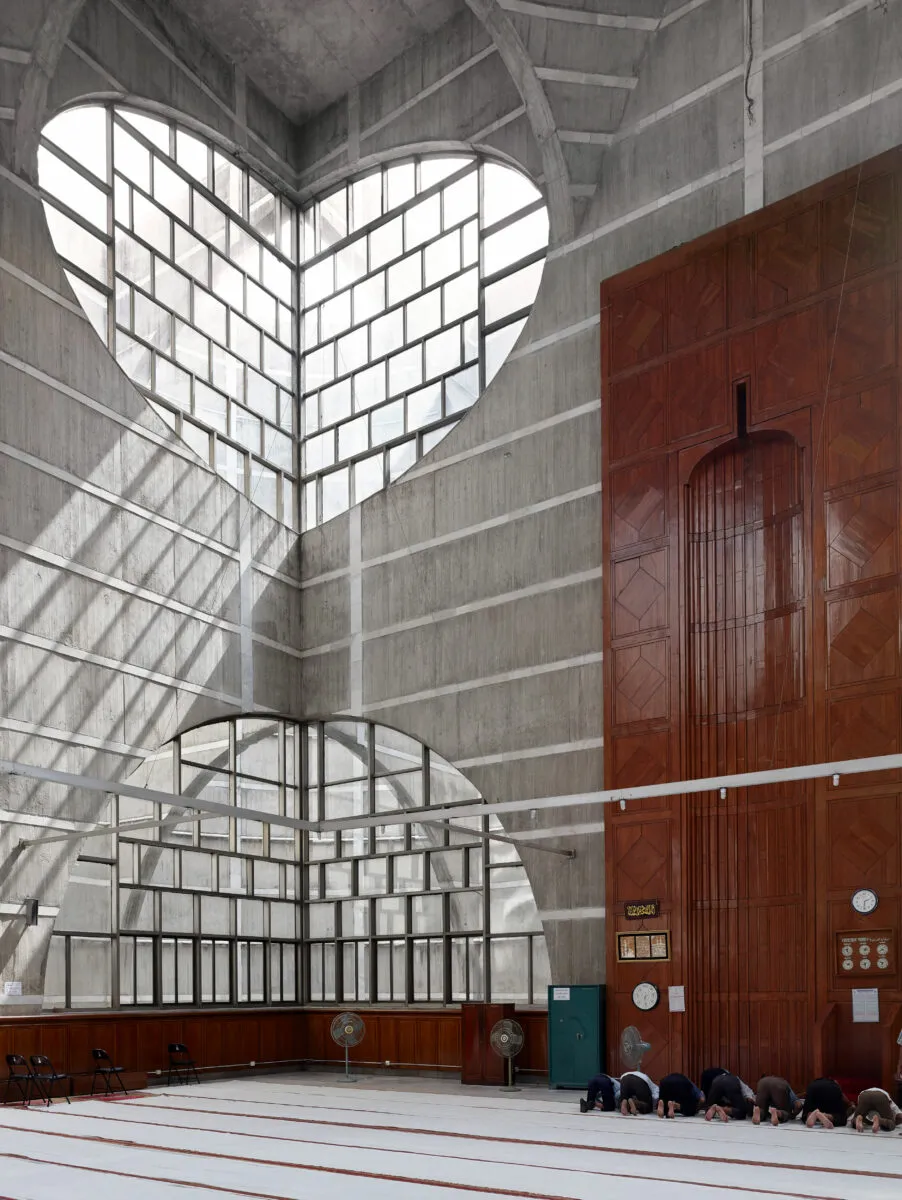
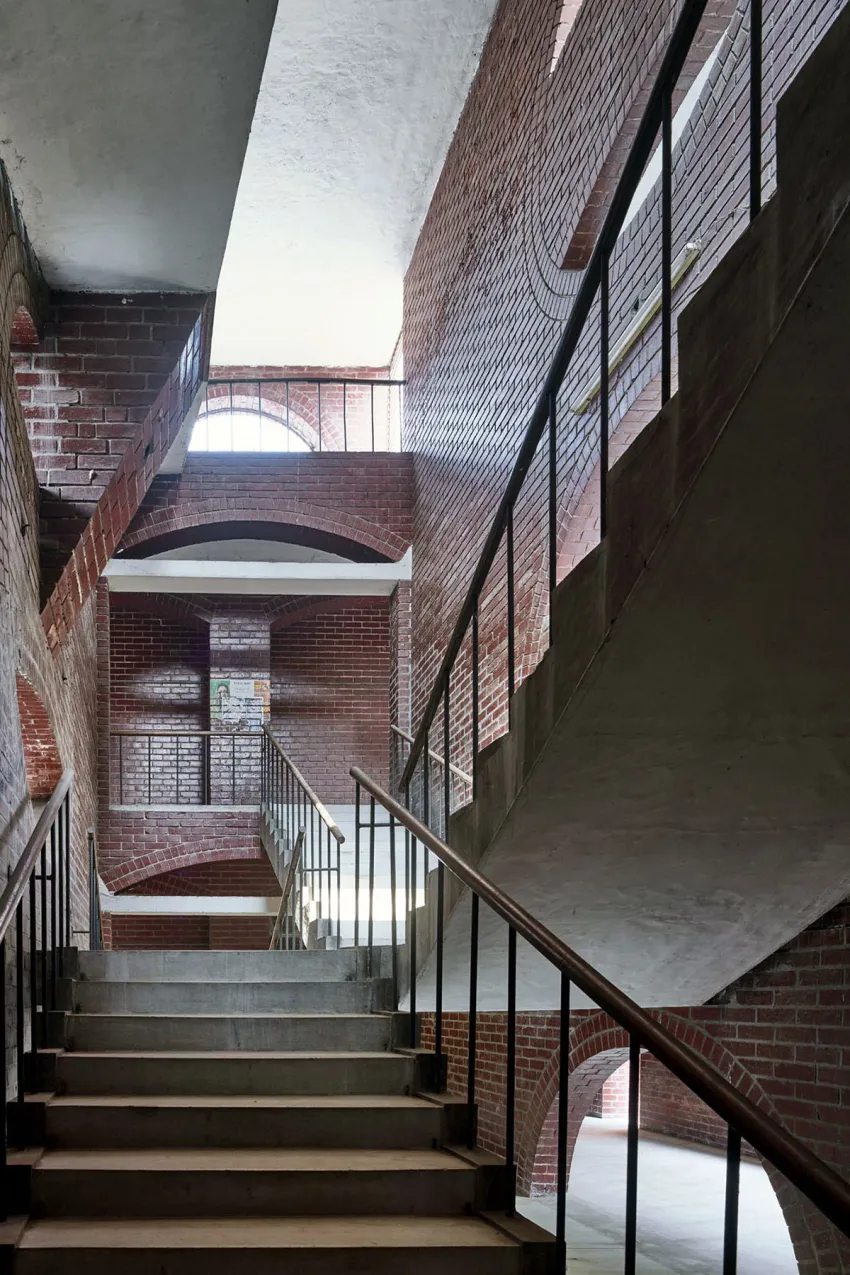
Light as a Maker of Space: Kahn believed that natural light is not just for illumination but a fundamental design element. With this idea, he created voids in the building mass that are light-giving elements, creating dynamic patterns of light and shadow throughout the day and reducing the dependency on artificial lighting.
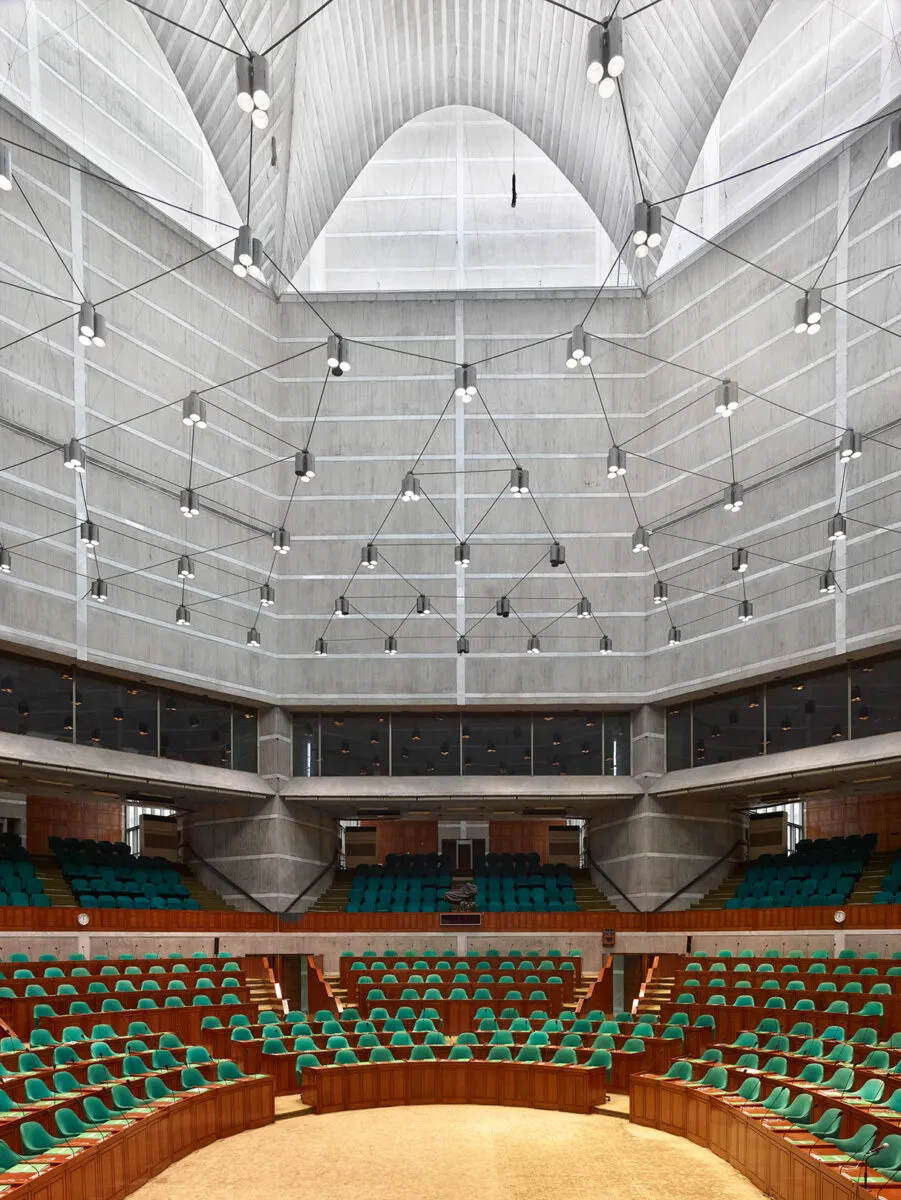
Monumentality and Geometry: Constructing on the modern ideas, the built form appeared as a massive and monumental representation of monolithic presence. It was a pure composition of geometric forms, strategically placed in a simplistic abstract shape.
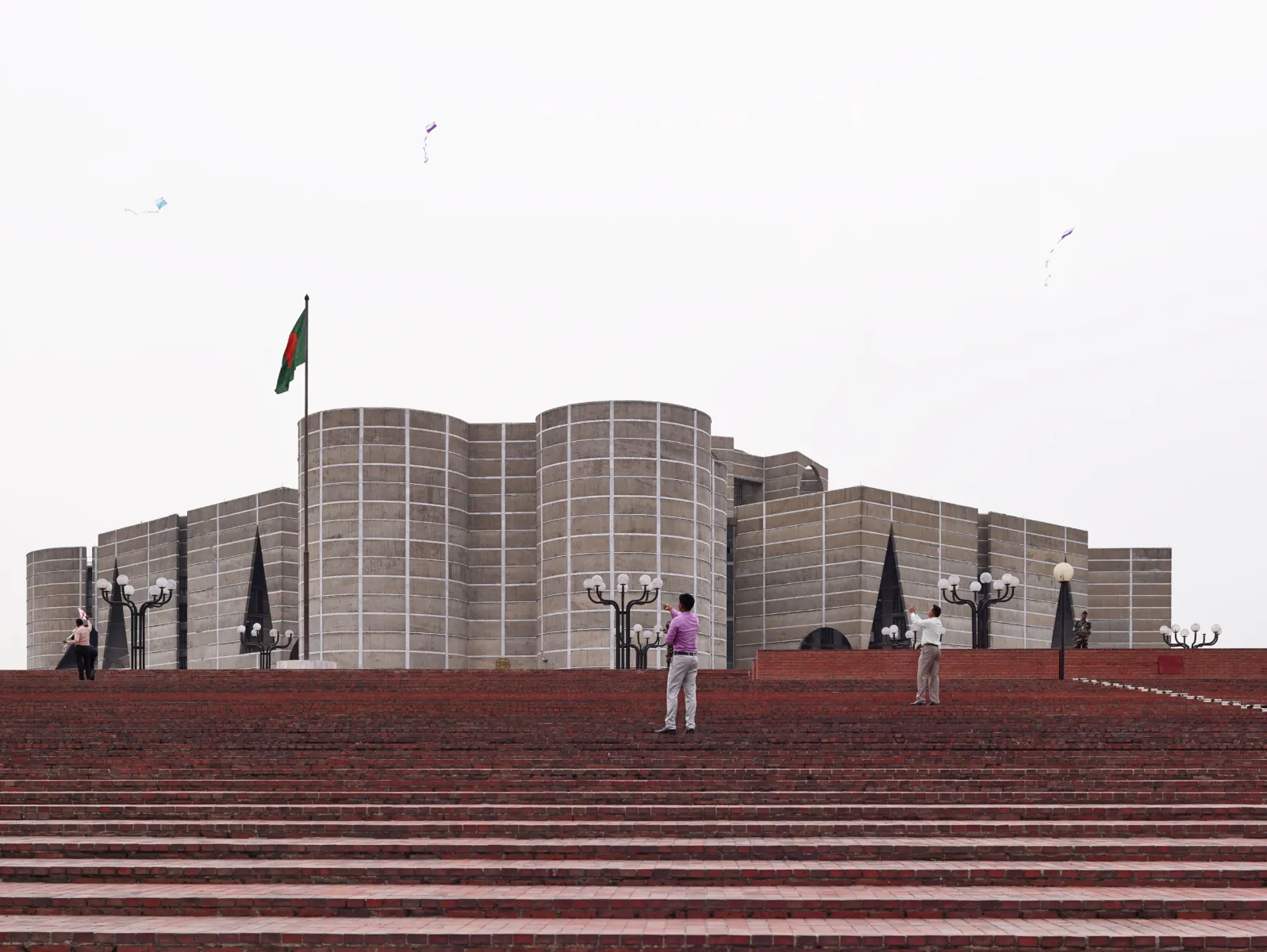
Local Context and Culture: Inspired by traditional local motifs of Bengali culture and Bangladeshi terrain, the structure integrates an abstract reinterpretation of geometric openings that create a buffer between dense urban massing and the surrounding landscape, connecting to the outside and providing a cooling effect from artificial lakes.
Inside the Plan: How Spaces Serve Power and People
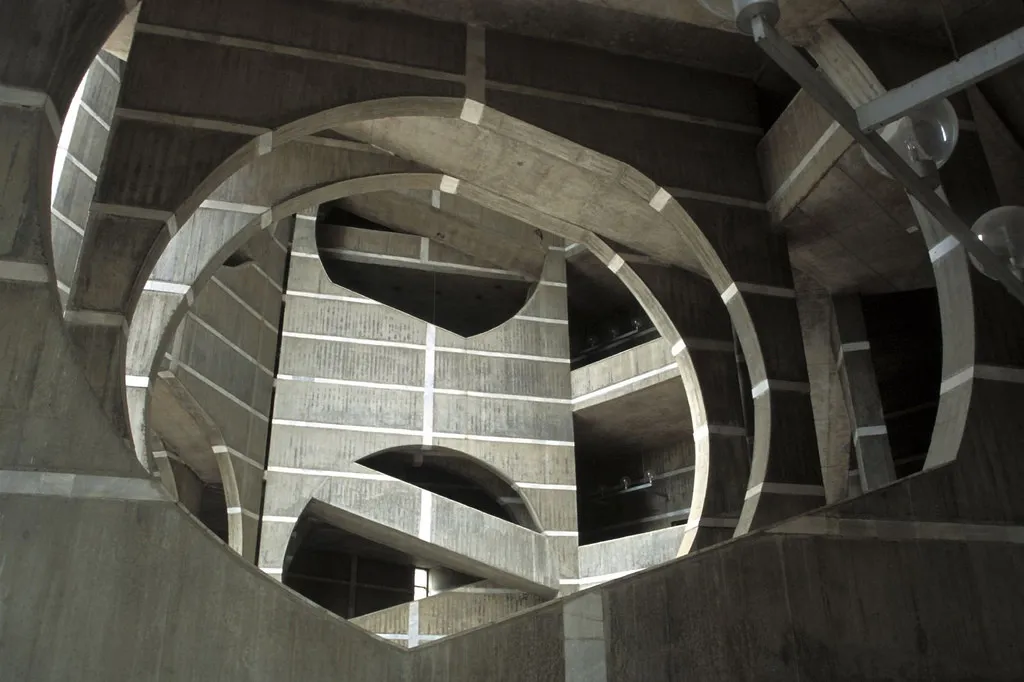
Designed on a central axis, the exposed reinforced concrete complex spans over 80 hectares and consists of an octagonal legislative chamber surrounded by eight peripheral blocks that include offices of Members of Parliament (MPs), committee rooms, and a library, all linked to the main hall by corridors and staircases. A seven-story ambulatory wraps around the main assembly hall that serves as both a circulation corridor and a symbolic pathway, reminiscent of the circumambulatory paths found in religious buildings.
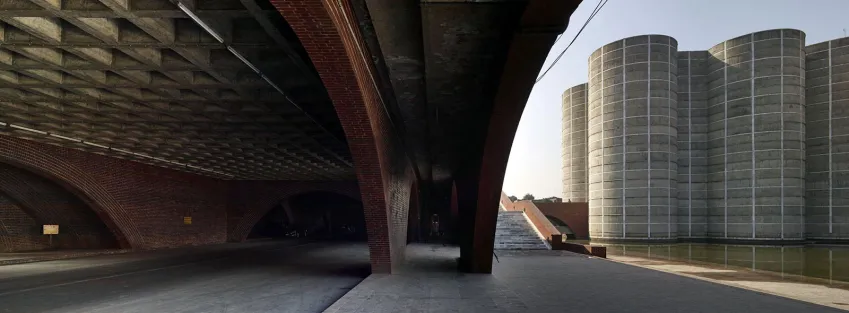
A parabolic shell roof rises to 36 meters in the assembly hall that accommodates 354 members. This layout creates a clear hierarchy of spaces, with the central chamber as the focal point, while ensuring functional efficiency. The spatial definition evolved with reinforced concrete walls and a parabolic shell that demonstrates advanced structural design. The recessed horizontal bands were filled with white marble to address uneven concrete pours and create a distinctive facade, allowing a light-filled interior.
A Monument Rooted in Dhaka’s Culture and Landscape
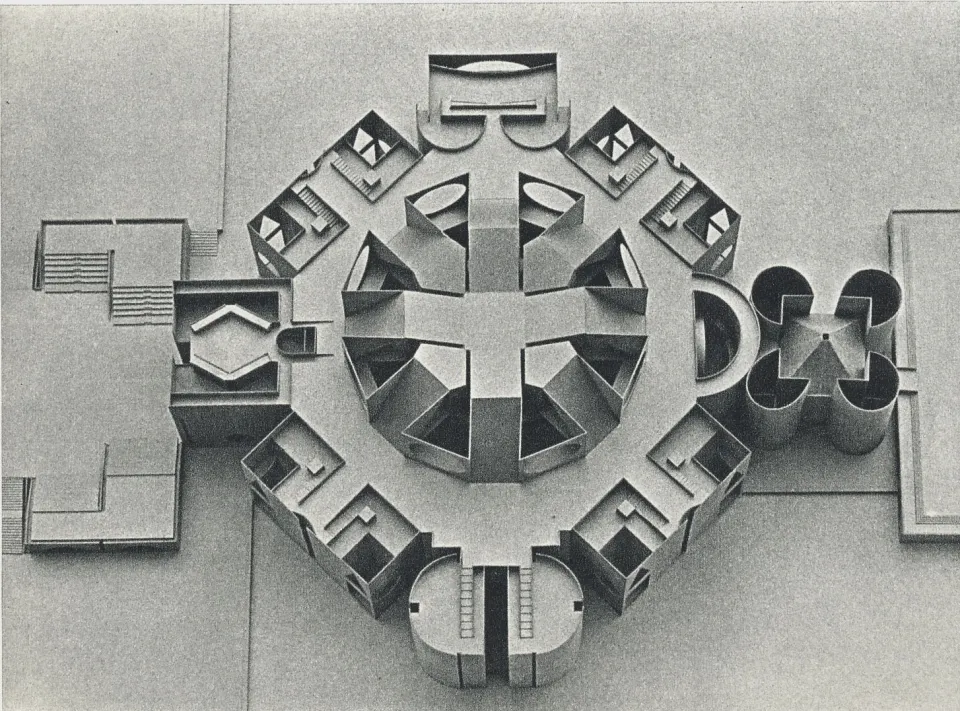
More than four decades after its completion, Louis Kahn’s National Assembly Building continues to be studied for its synthesis of modernist principles with cultural symbolism. Its planning represents ancient references, and the architectural form showcases the importance of transparency, monumental presence, and public access in national governance, influencing the generation of architects to establish dialogue between tradition and modernism.
Jatiyo Sangsad Bhaban (National Assembly Building) Project Details
Location: Sher-e-Bangla Nagar, Dhaka, Bangladesh
Architect: Louis I. Kahn, with assistance from Muzharul Islam
Year of Completion: 1982
Client: Government of Bangladesh
Explore Courses
.jpg "Ondrej Chybik - Rethinking Architecture")