

Louis Vuitton opens its first full-scale museum retrospective in Osaka. Visionary Journeys, now on view at the Nakanoshima Museum of Art, presents 170 years of the Maison’s history as a walkable archive. Designed by Shohei Shigematsu of OMA and curated by fashion historian Florence Müller, the 2,200-square-meter exhibition moves away from chronology. Spatial design carries the story, revealing how a brand can be experienced physically rather than simply viewed.
This marks Louis Vuitton’s most expansive cultural commission to date and arrives ahead of World Expo Osaka 2025.
Inside a 170-Year Archive You Can Walk Through
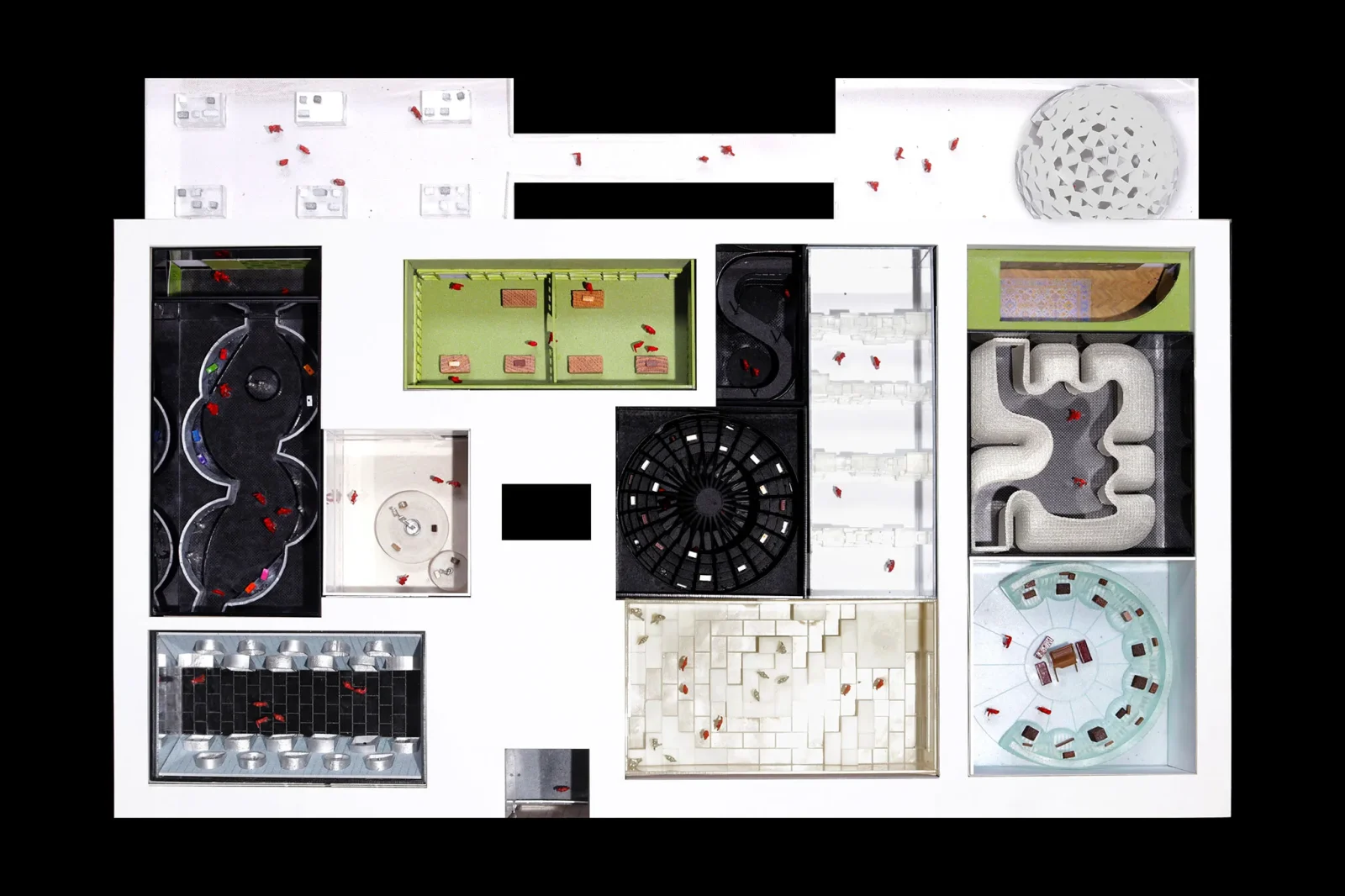
Rather than presenting a static timeline, OMA designs an immersive journey through eleven sections that explore history, design codes, craft, and cultural exchange. Each section functions as a standalone environment, constructed through mirrored chambers, suspended pieces, and kinetic installations. Shohei Shigematsu describes these spaces as vessels of imagination, designed to be explored spatially rather than followed as a traditional narrative.
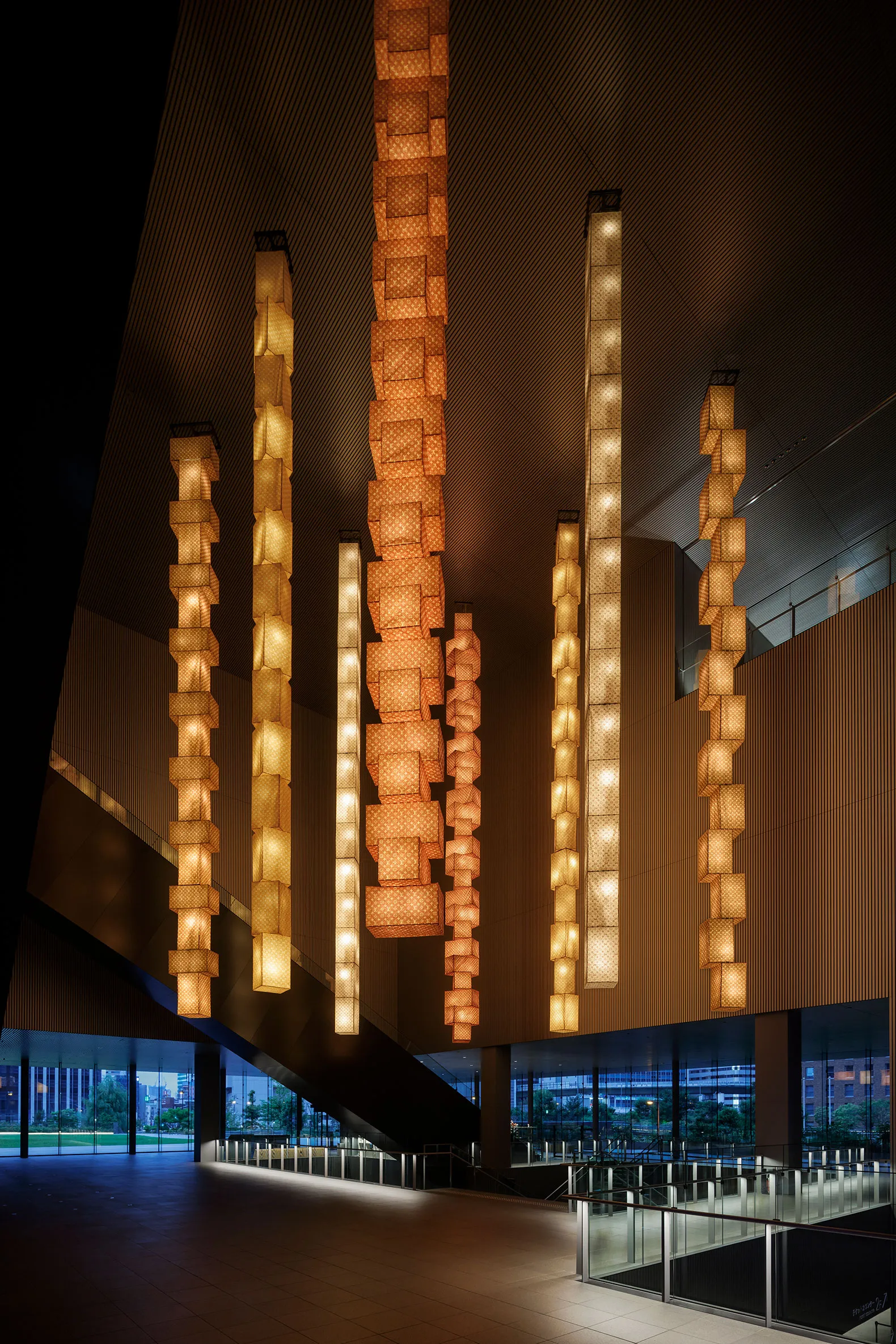
Trunkscape Lanterns and Globe: Art Installations Capture Vuitton’s Global Journey
Visitors step into the full height of the museum’s central atrium, where eight towering lanterns rise in quiet formation. Each one stacks vintage Louis Vuitton trunks, their frames wrapped in translucent washi paper printed with the Maison’s monogram. The installation, Trunkscape Lanterns, glows with filtered light. The trunks recall Vuitton’s early identity in travel, while the suspended forms suggest motion, objects caught mid-transit, carrying more than just belongings.
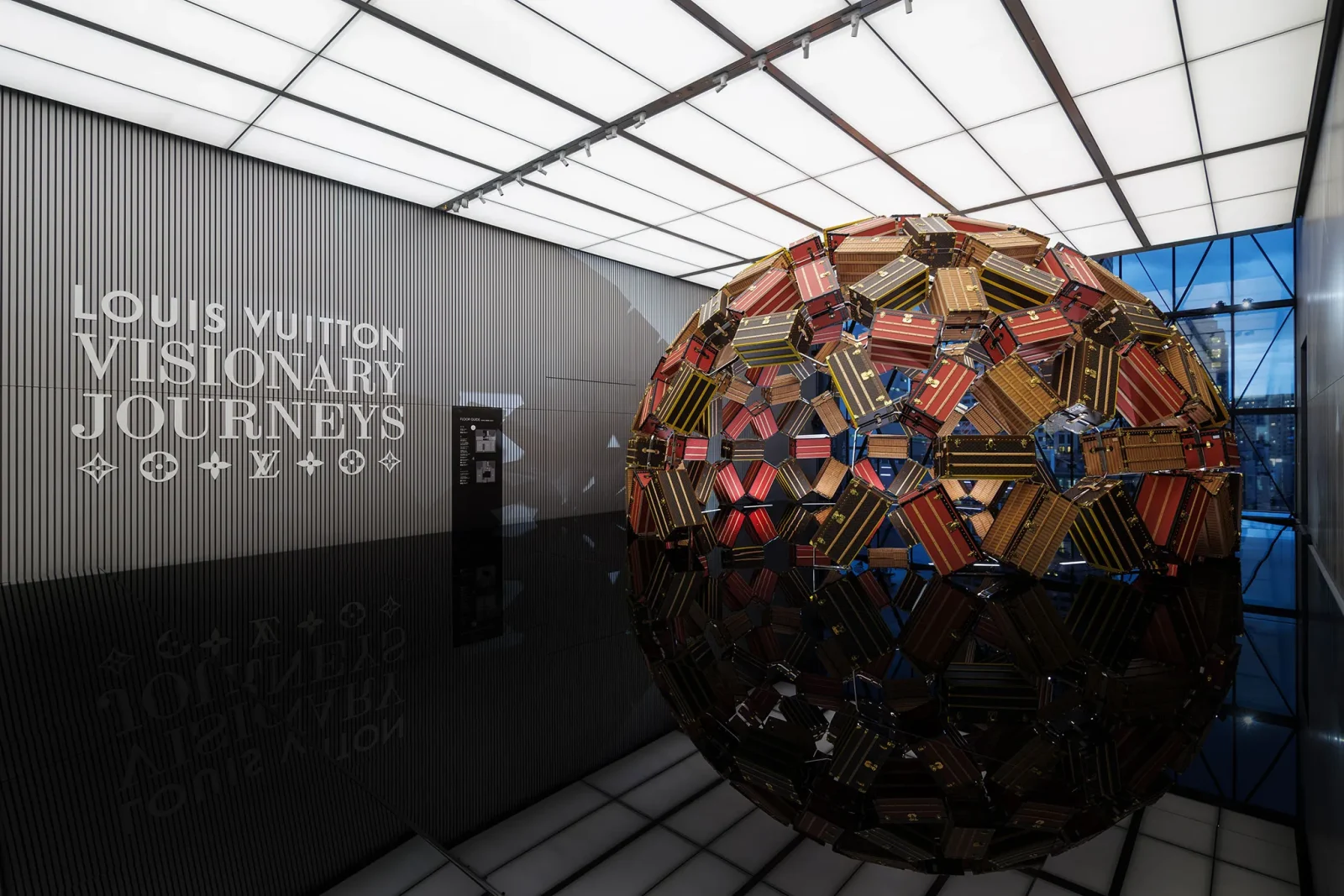
That balance between past and projection returns in Trunkscape Globe, a hemispherical dome built from 138 original trunks. Set above a mirrored black glass floor, the form appears whole only through its reflection. It reads as both compass and memory, a visual map of the brand’s expanding journey.
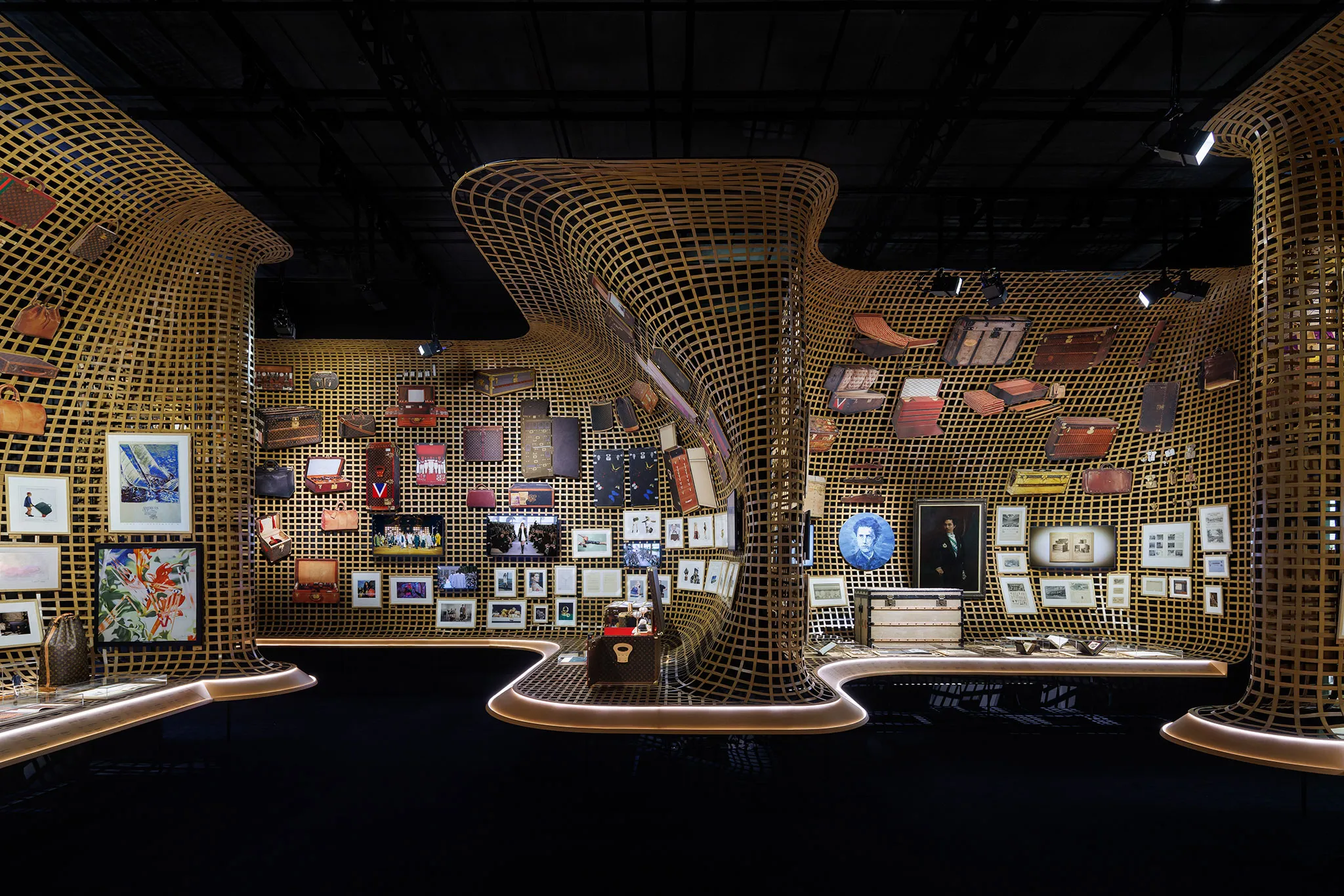
How Louis Vuitton Interweaves Japanese Craft and Fashion Evolution
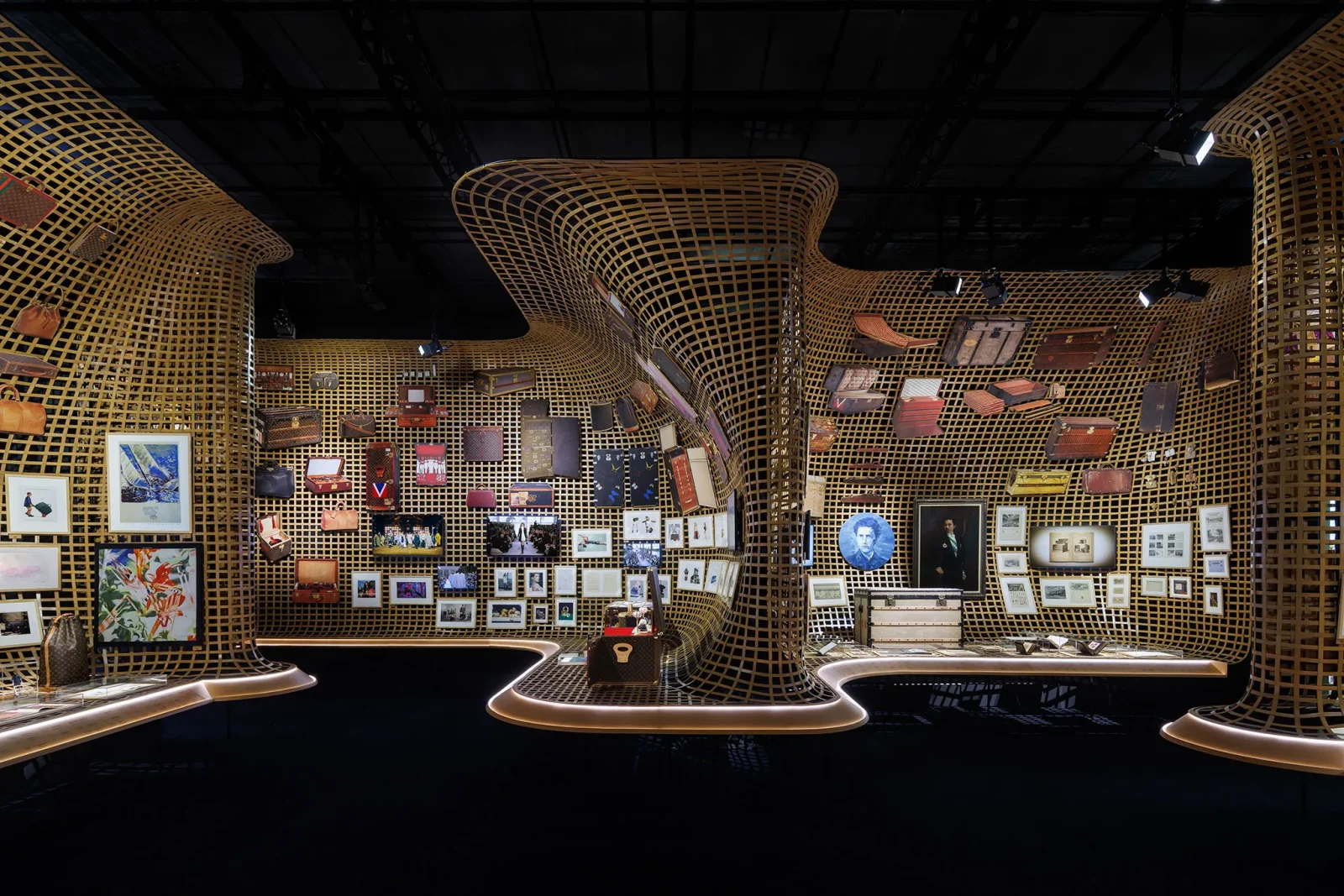
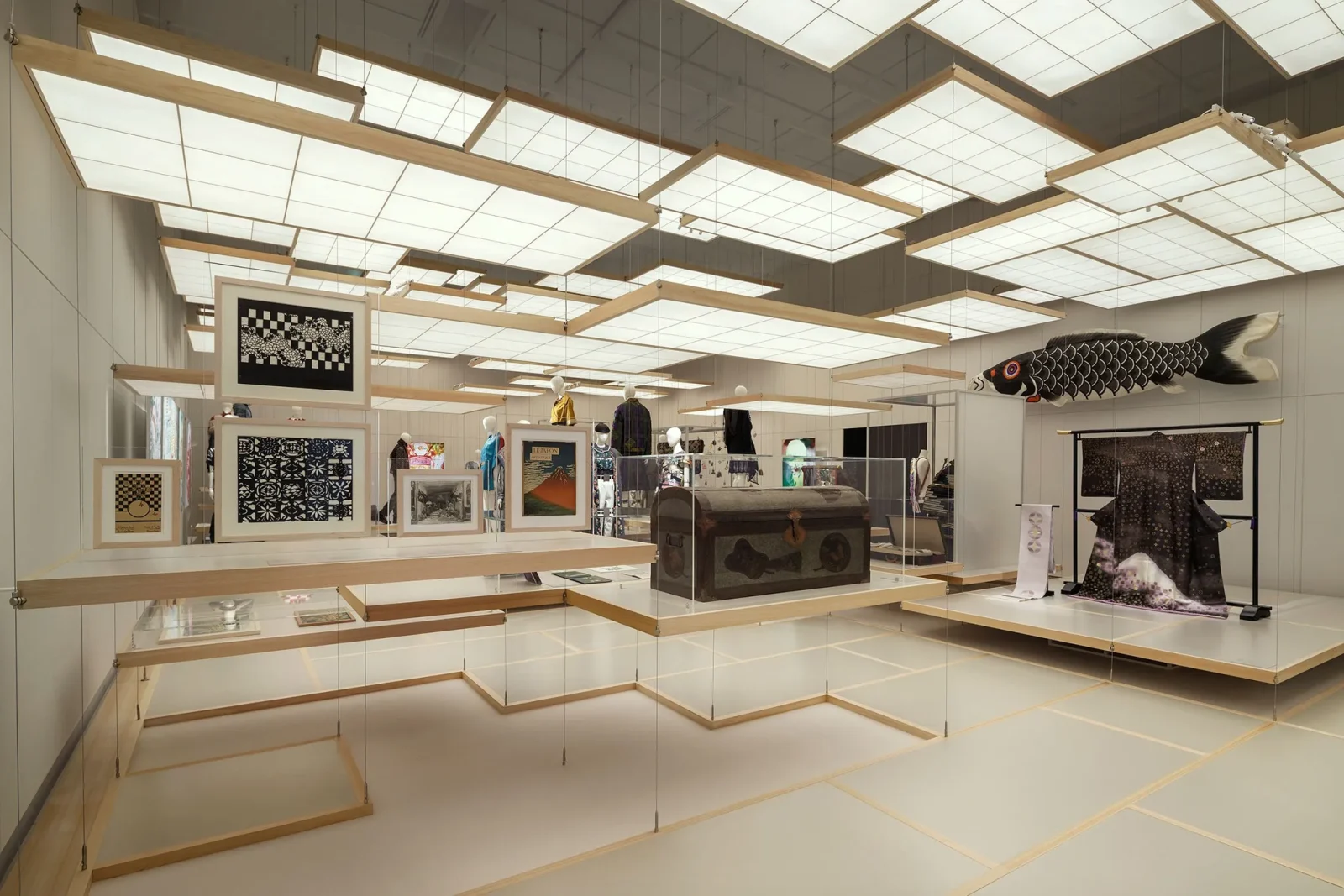
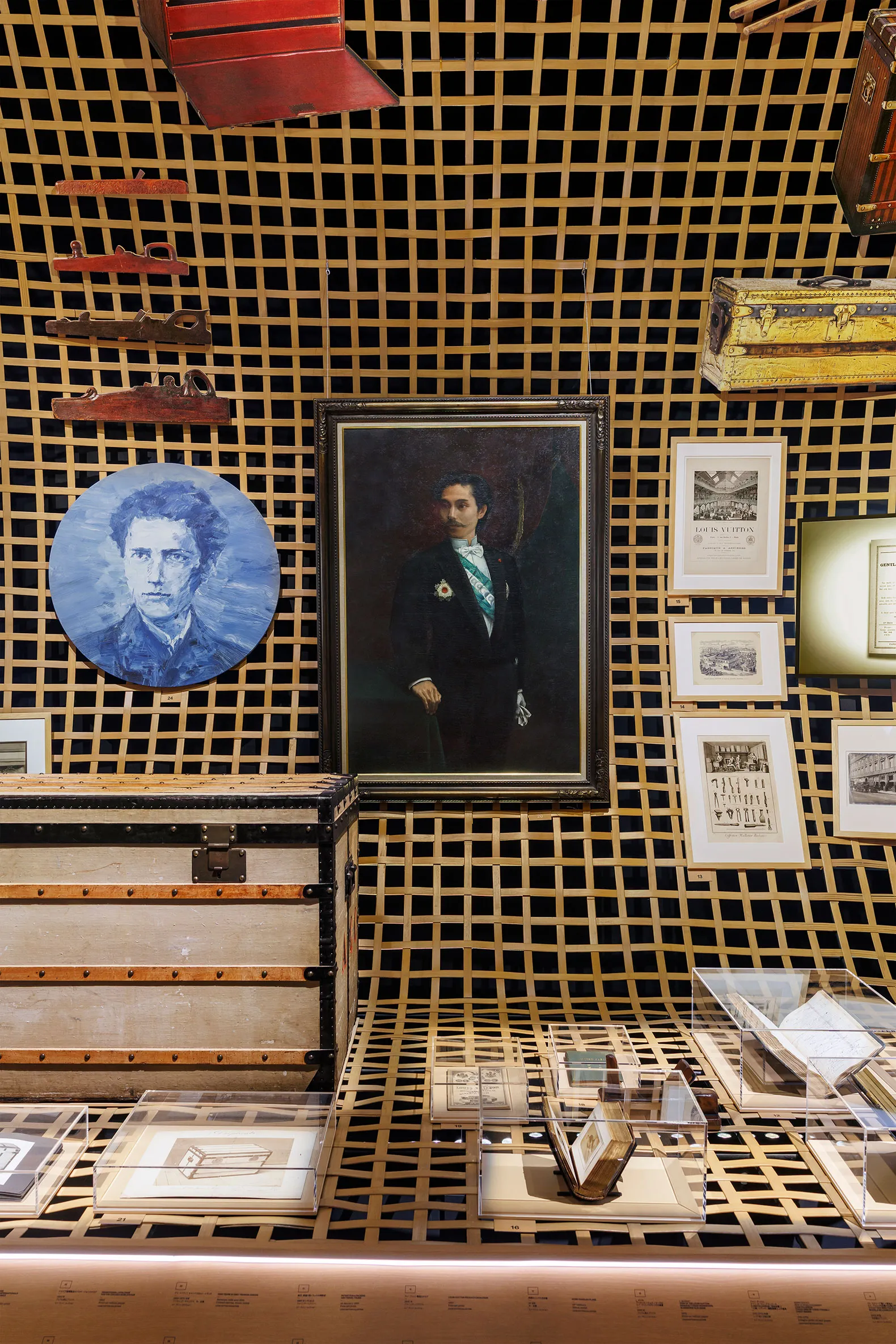
The exhibition unfurls as a sequence of built metaphors. In the Origins Gallery, over three hundred archival objects and paper cutouts are held within a basket-like structure woven from bamboo. The gallery’s form and materials gesture toward Japanese craft traditions, while the layout encourages a slow, layered form of discovery. Architecture and content move together, drawing a line from Vuitton’s early years to its deeper cultural context.
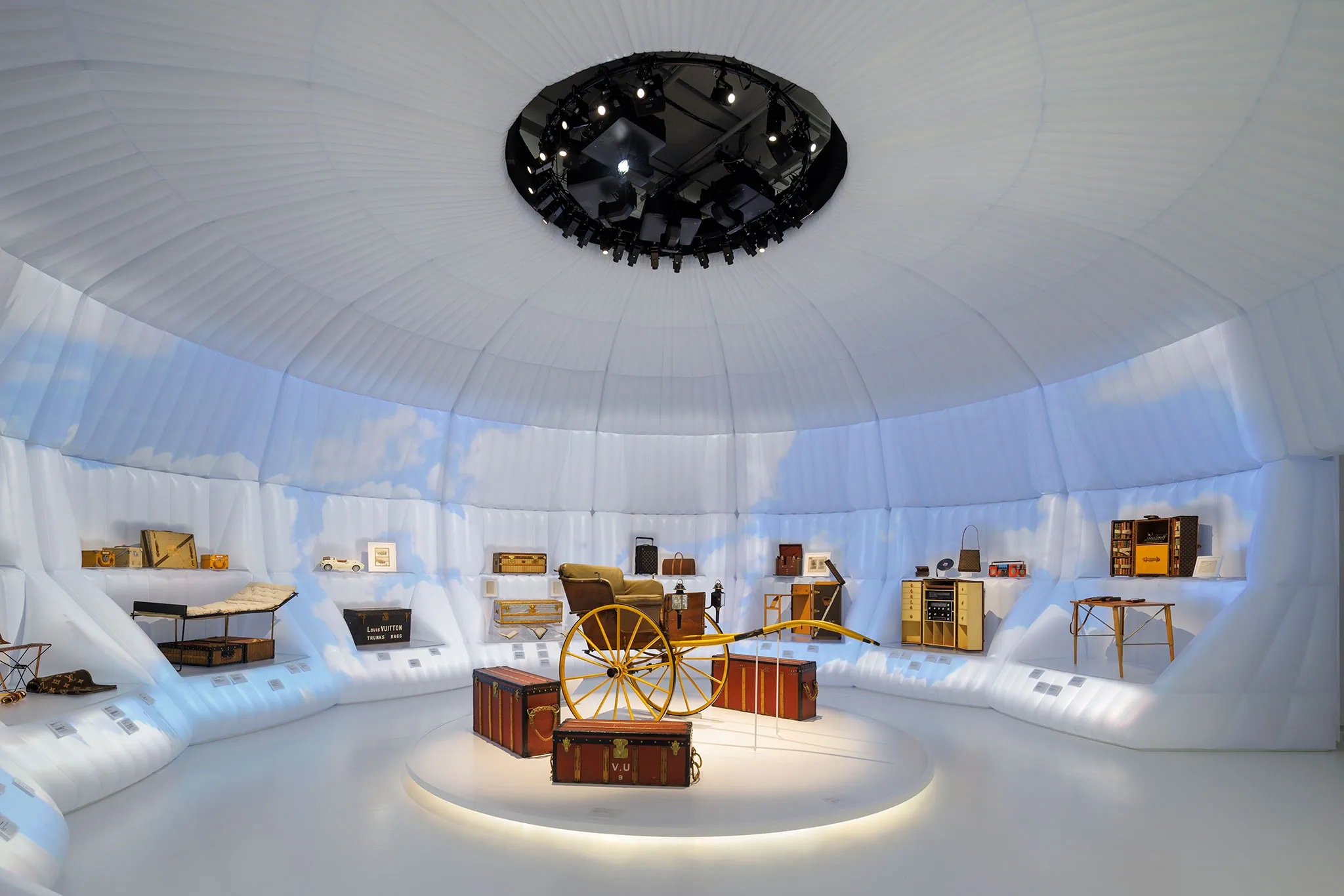
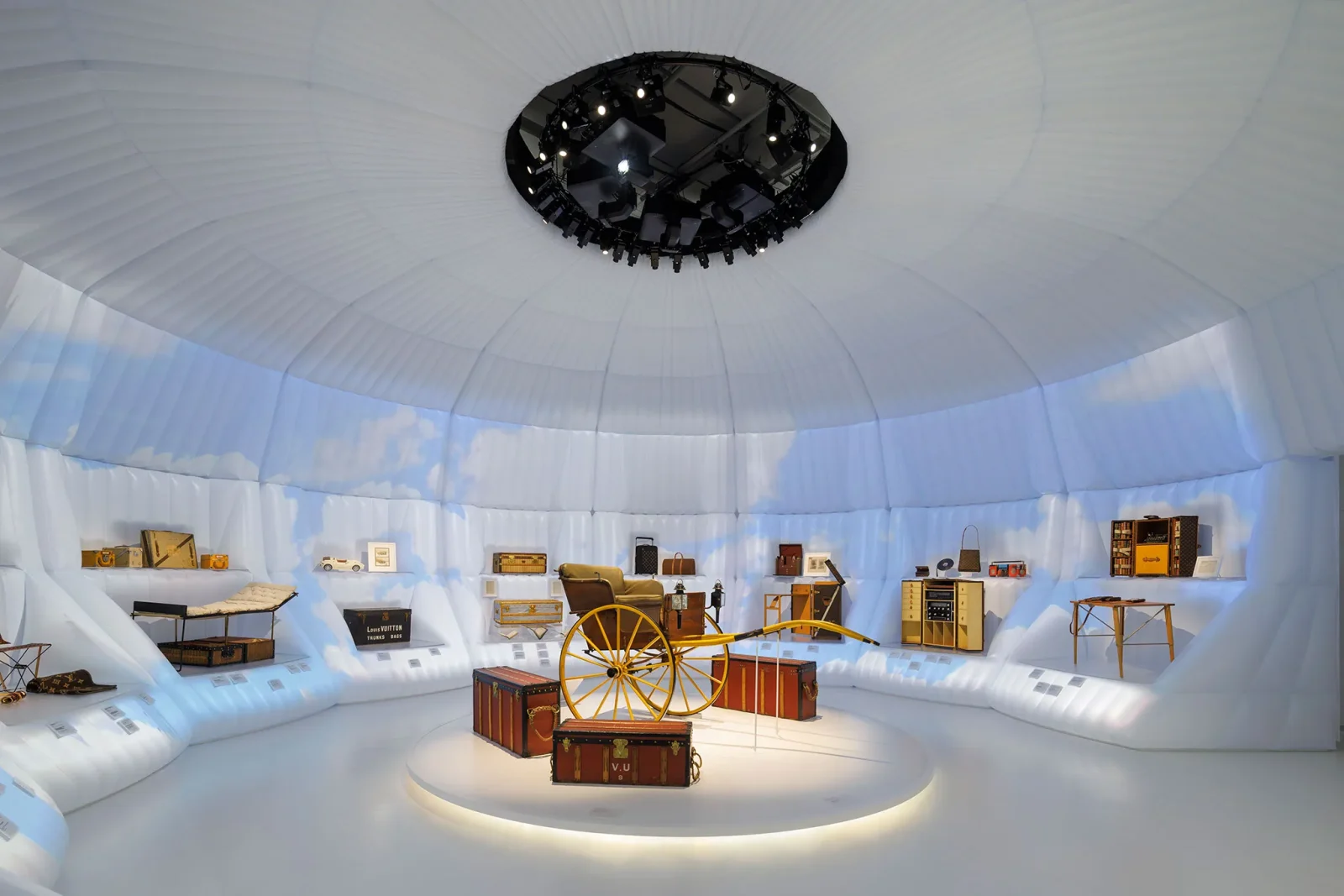
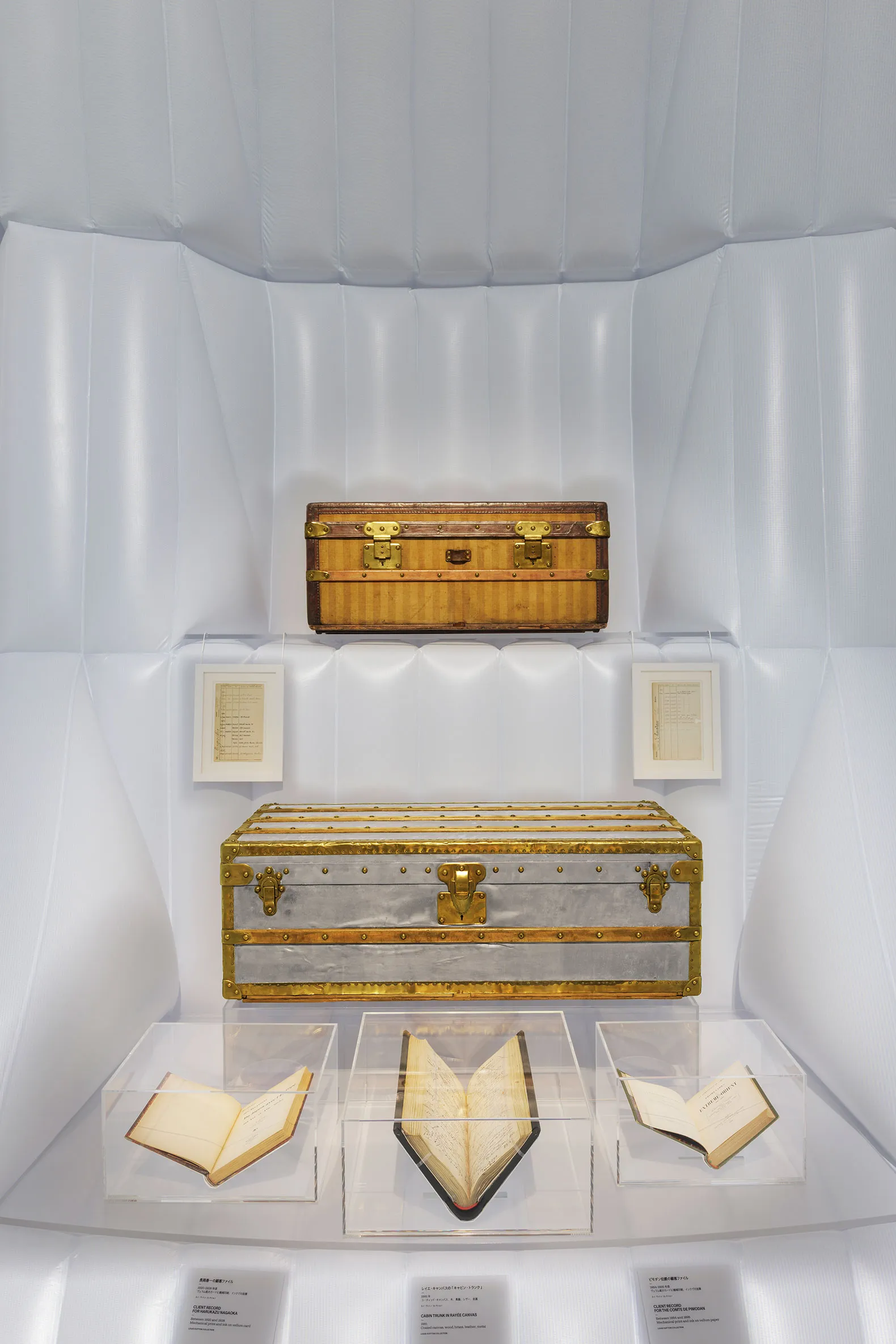
The Expeditions Gallery takes shape inside a translucent inflatable dome. Within it, projections trace the brand’s evolution in travel through shifting landscapes and a rotating trunk named Tilbury. Light and motion ripple across the interior, turning the gallery into an inhabitable map, where chronology gives way to spatial rhythm and mood.
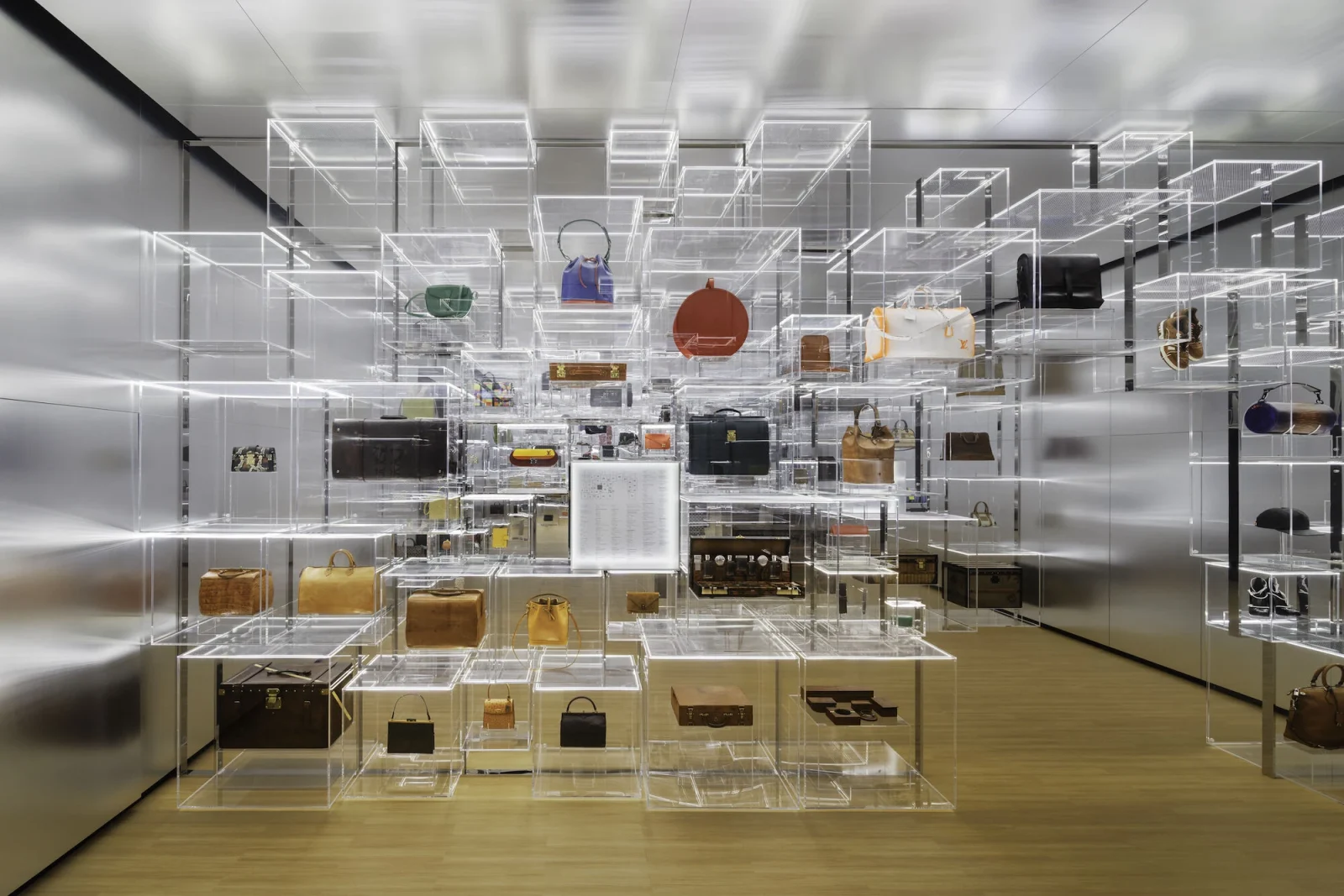
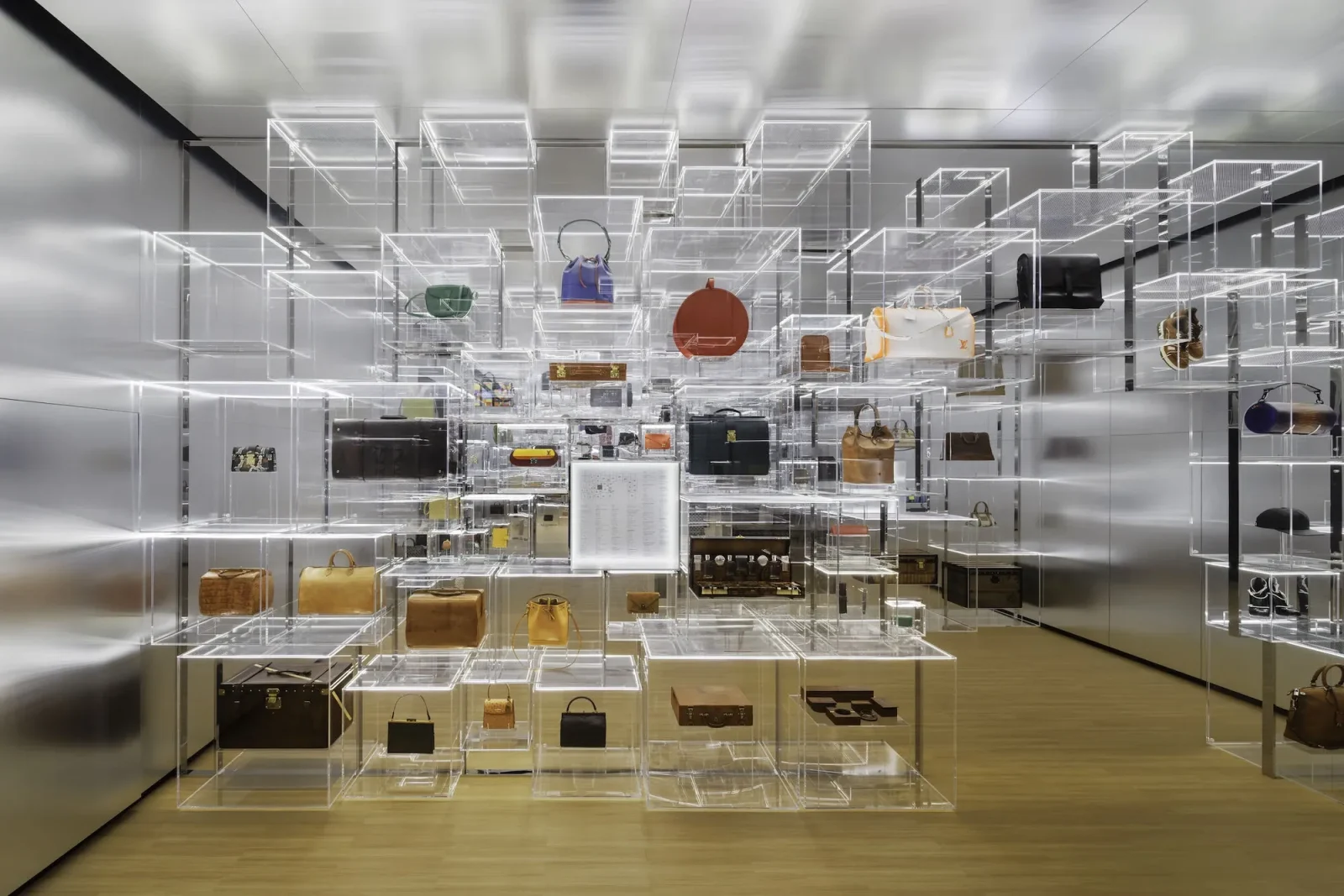
In the Materials Gallery, transparent cubes hang from the ceiling, each containing one of the maison’s core materials like wood, leather, metal, or canvas. Suspended in midair, they form a slow-moving archive that reveals the anatomy of craft through its physical components. The room feels less like a display and more like a studio paused in motion.
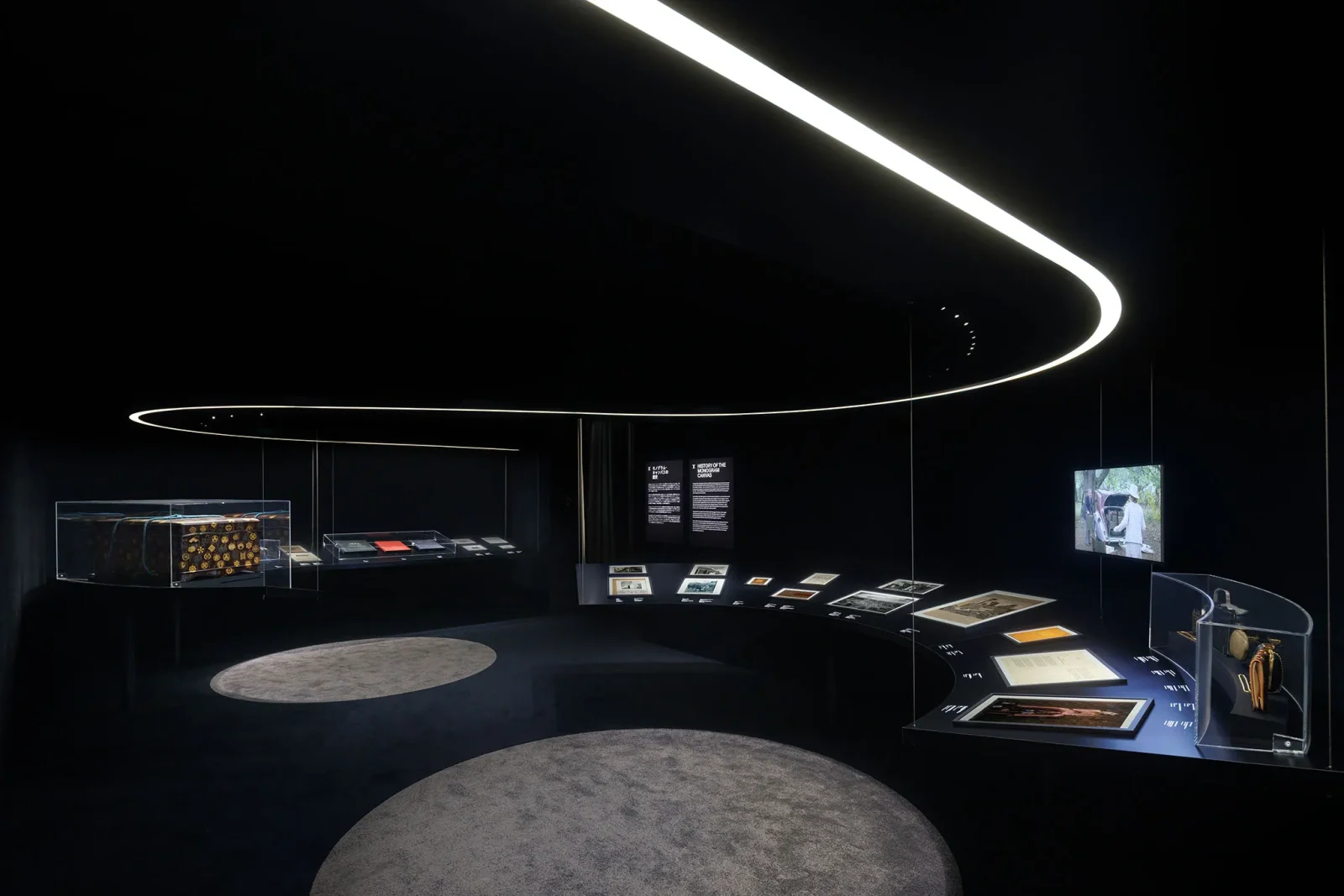
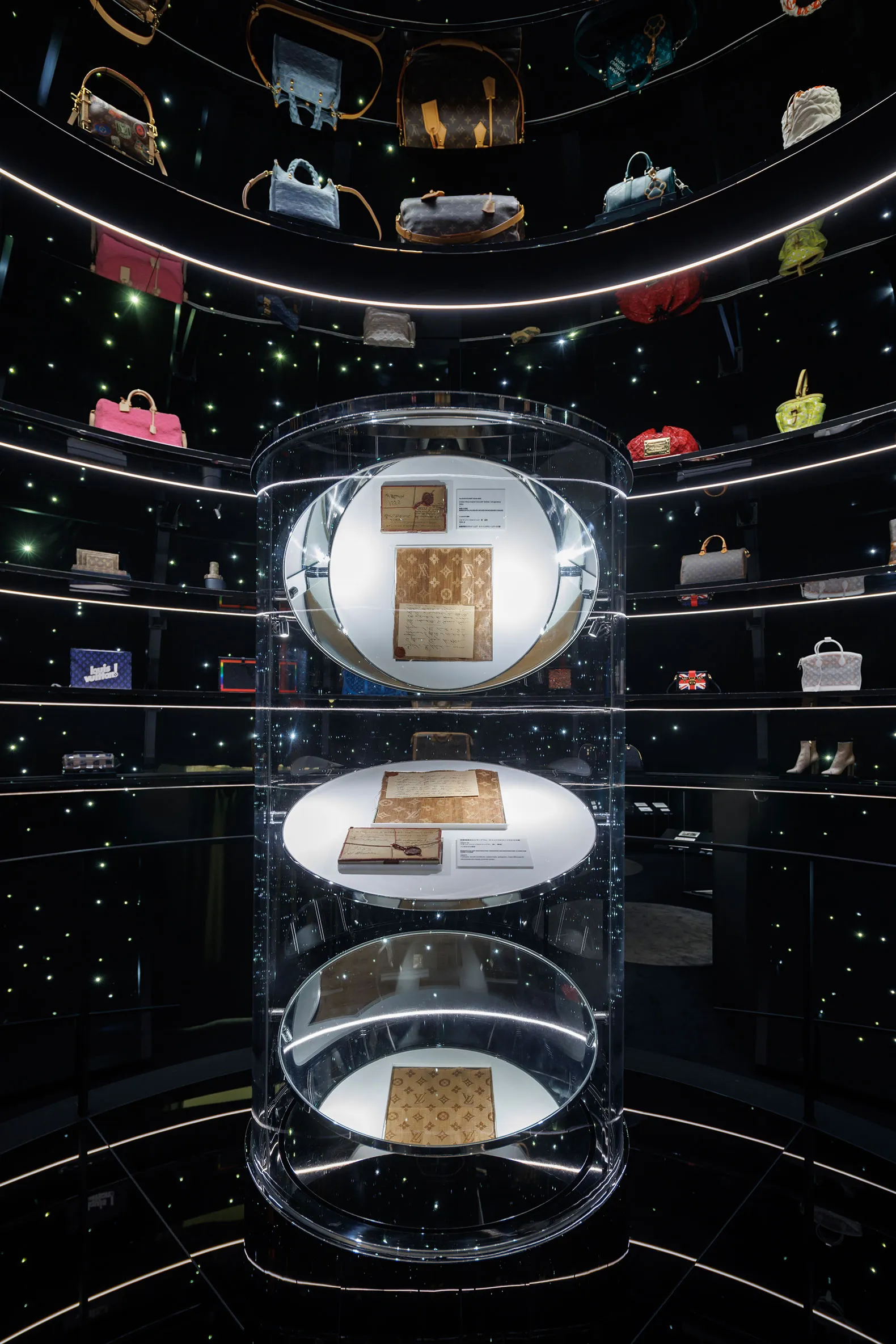
The Monogram Canvas Gallery opens with a single textile swatch from 1897. From that starting point, the gallery spirals outward with 112 reinterpretations drawn from across decades and disciplines. Early Japanese influences appear again, now accompanied by new commissions and works by contemporary collaborators. Rather than frame heritage as fixed, the gallery reshapes it as a living code that continues to evolve.
Art and technology drive the future of Vuitton.
True to its hybrid nature, the exhibition moves between artisan intimacy and technological display without leaning too heavily in either direction.
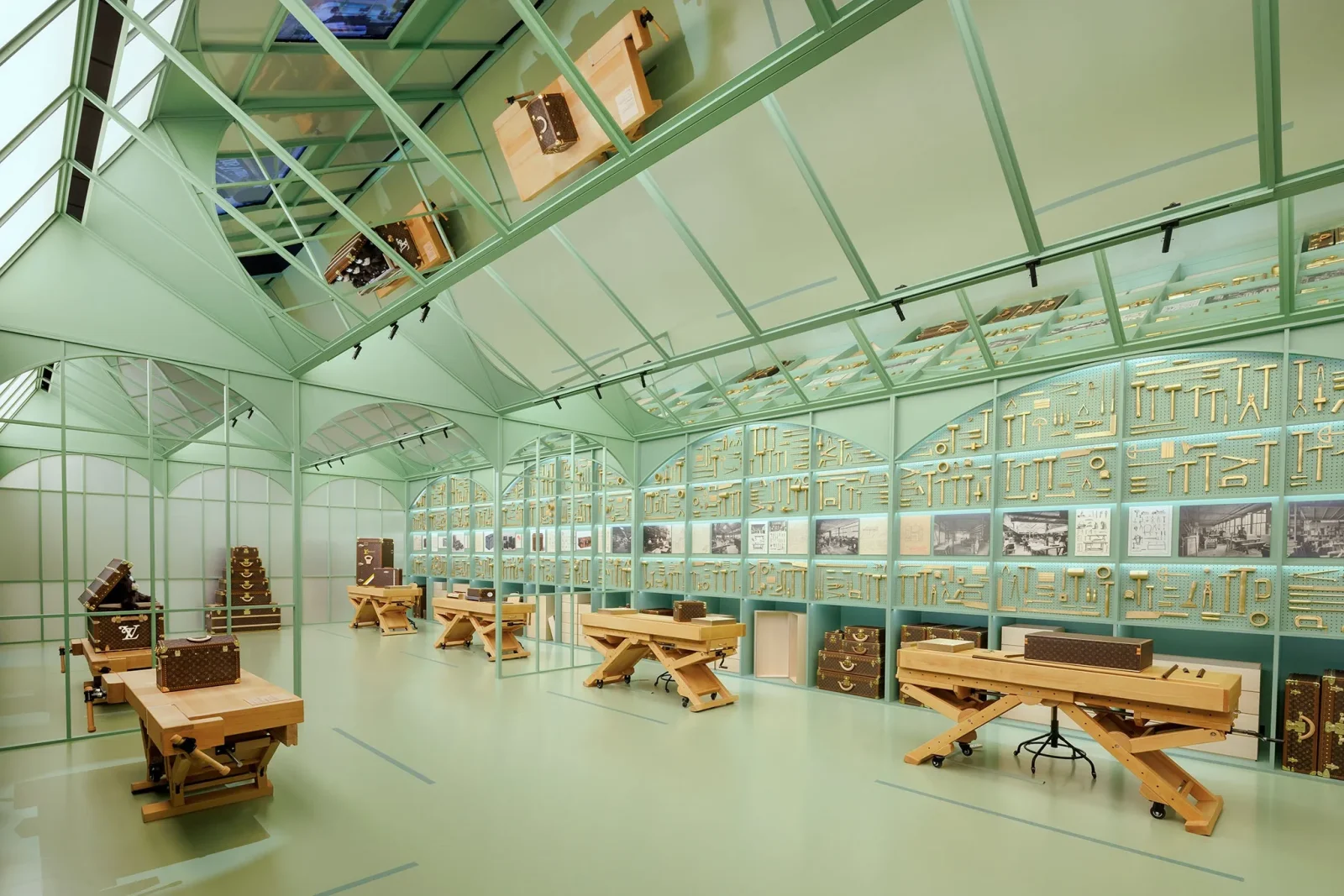
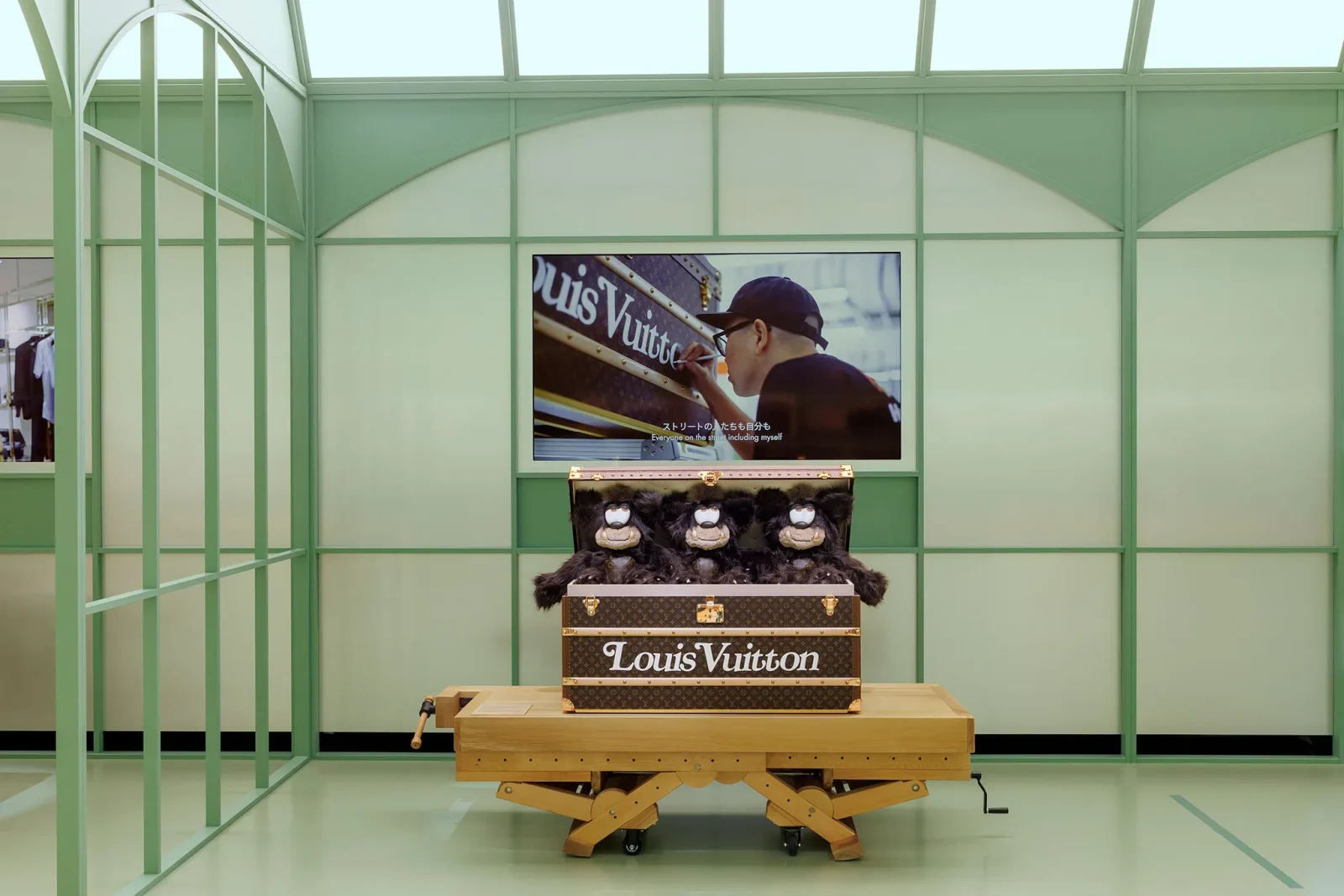
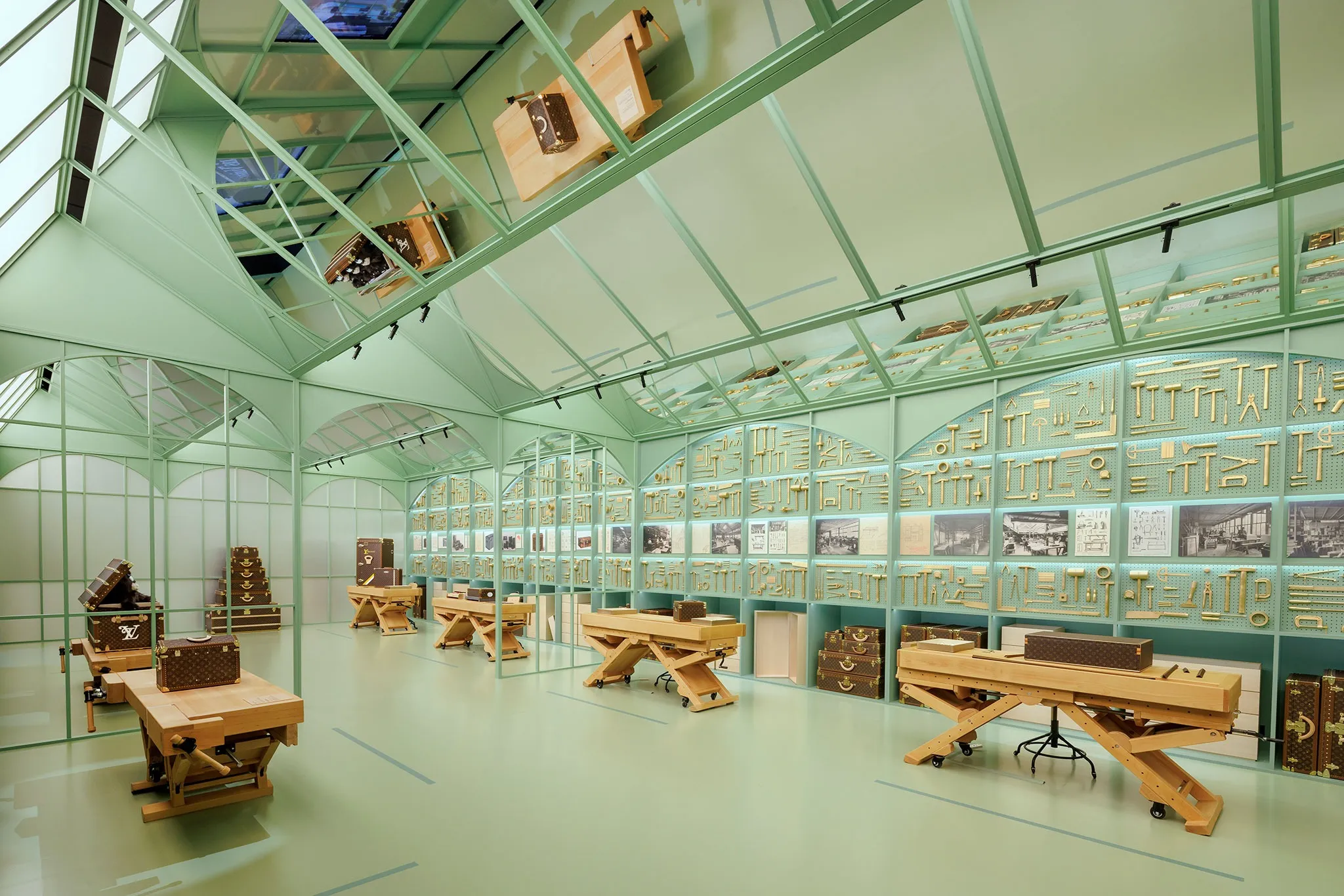
In the Workshop Gallery, OMA reconstructs the architecture of Louis Vuitton’s historic Asnières atelier, complete with mirrored sawtooth ceilings and skylights that echo the original roofline. Beneath them, live artisans work in real time, bridging the usual distance between object and maker. Craft becomes spatial, with structure and skill revealed together.
That tactility gives way to a more mechanical rhythm in the Testing Gallery, where two robotic arms named Louise and Louisette perform ongoing durability tests. Items are released onto circular sand beds, their raked patterns drawn from Japanese gardens. Over time, the repetition feels less like a quality check and more like a performance.

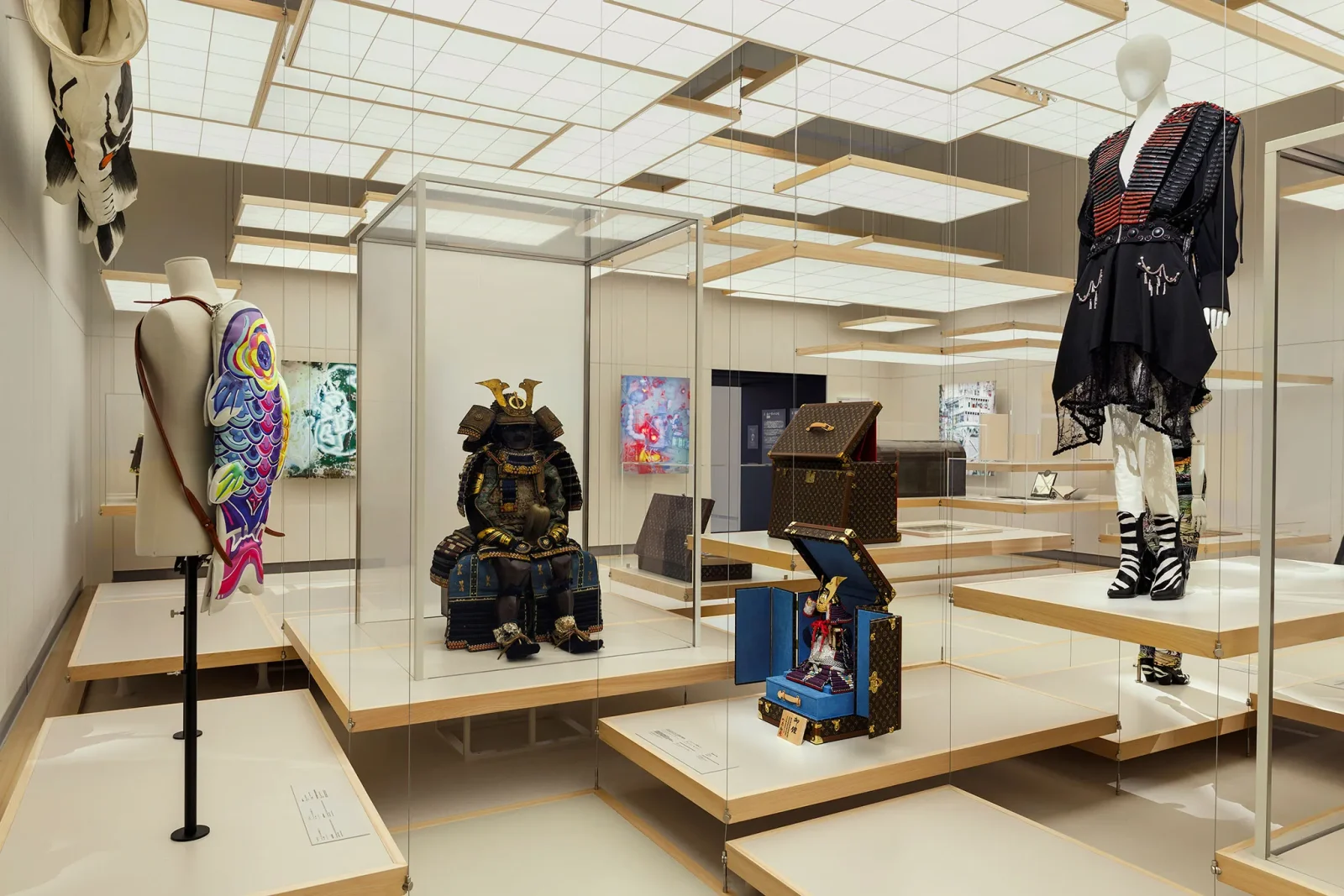
A nearby gallery, focused on Japan and Vuitton, is arranged as a floating platform with a layered flooring modelled on tatami. Above, mirrored ceilings ripple the artworks into shifting reflections, multiplying the forms of Kusama, Murakami, and NIGO across fractured surfaces. Together, these elements hold a conversation that spans eras and sensibilities.
How collaboration shapes the Louis Vuitton universe
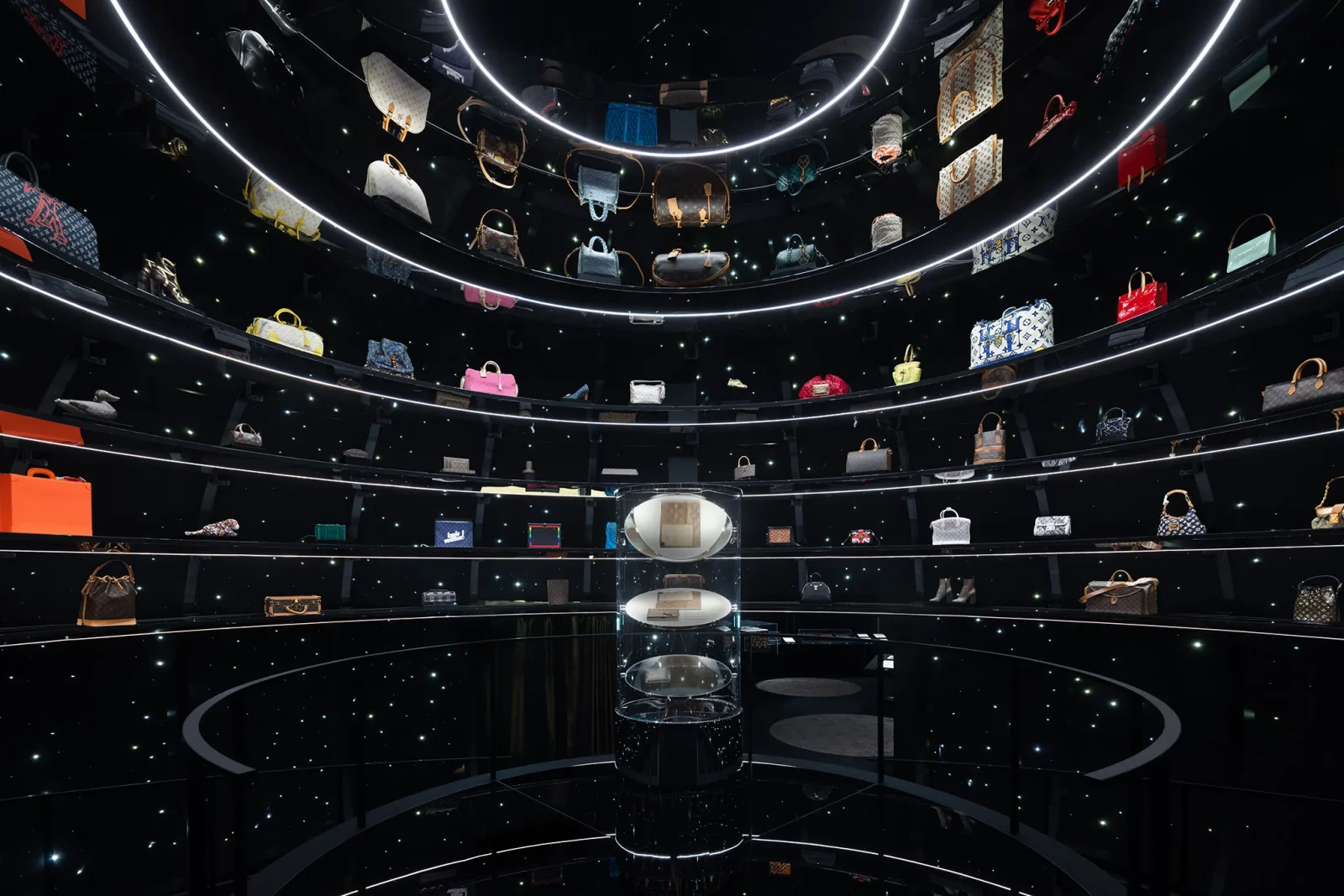
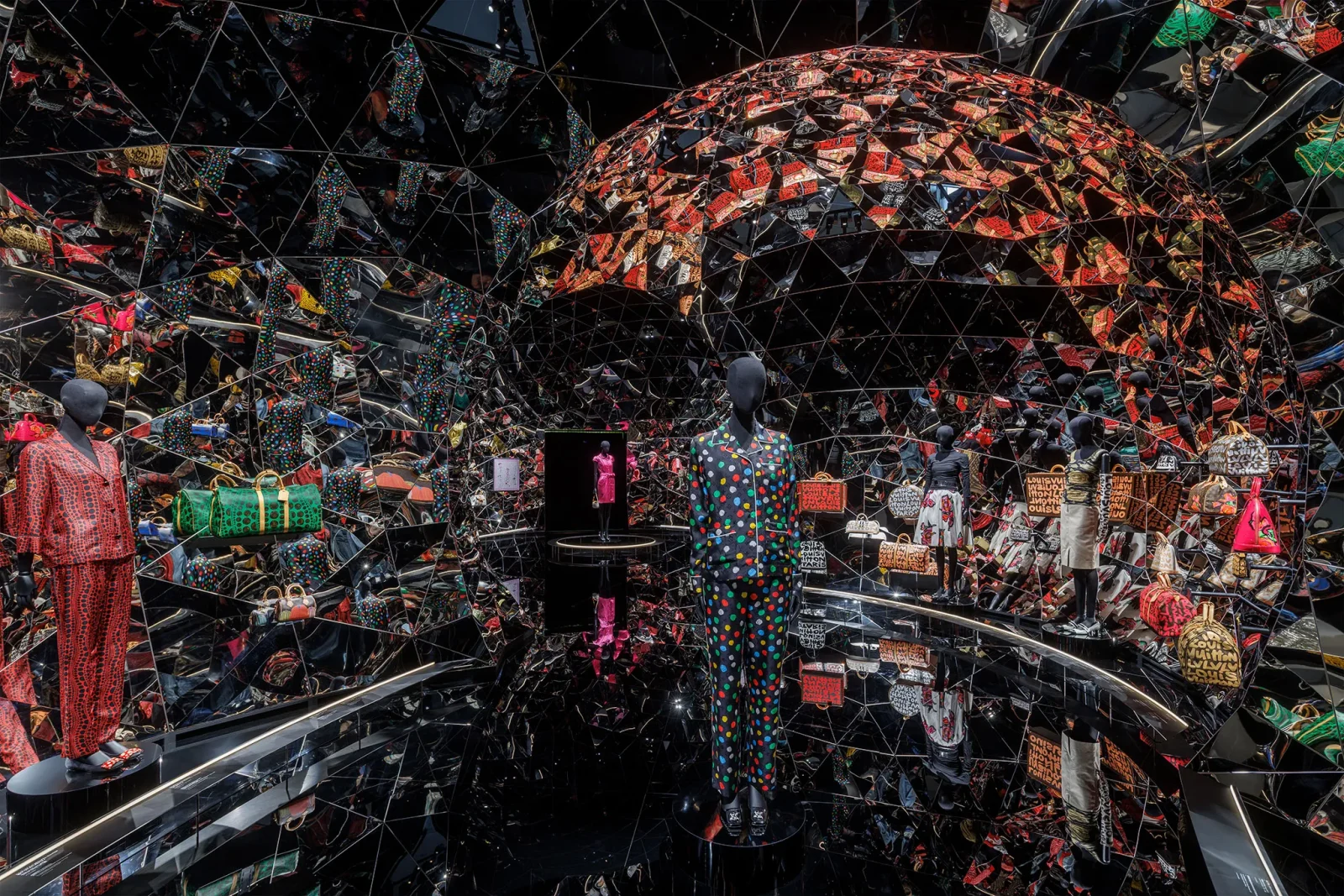
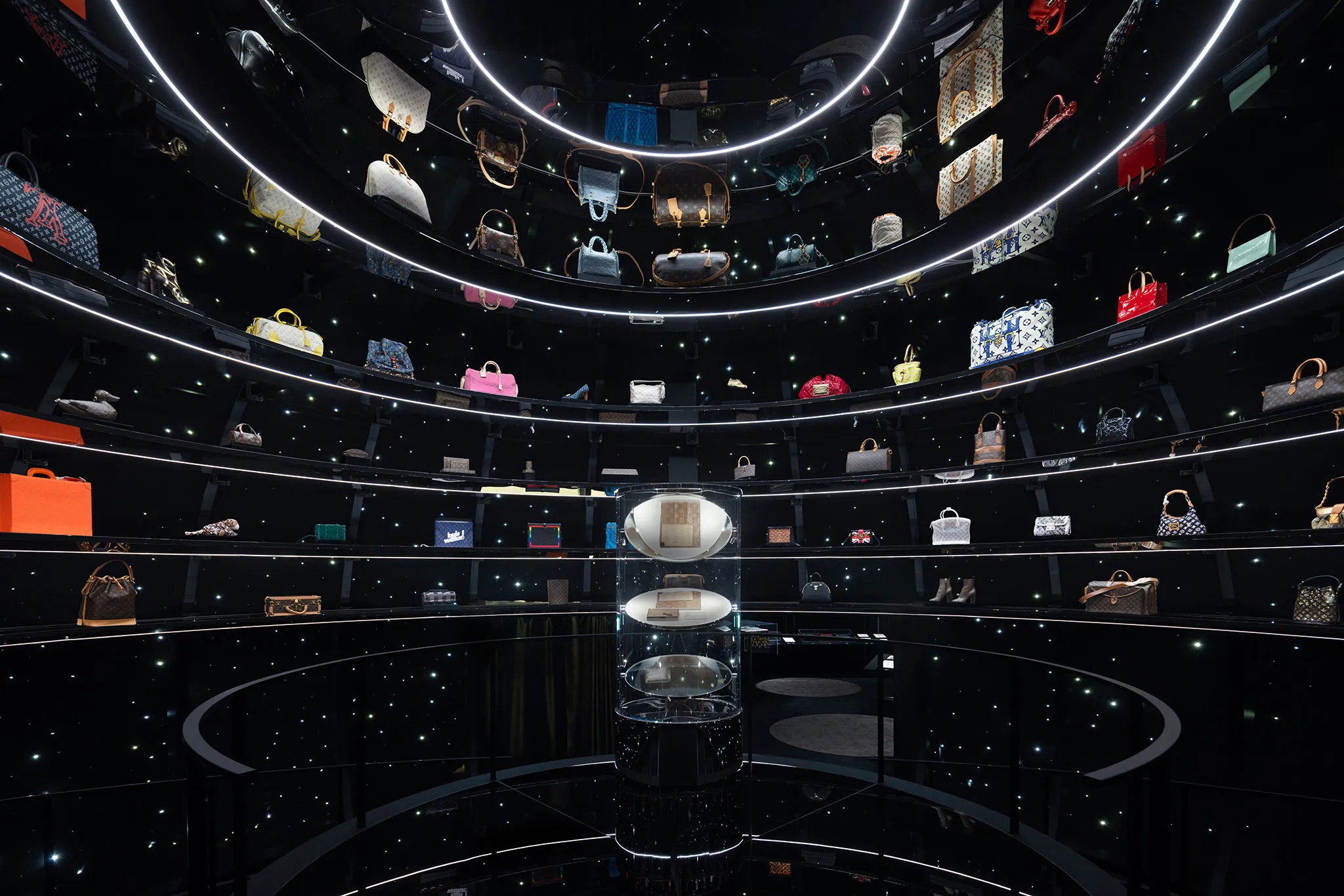
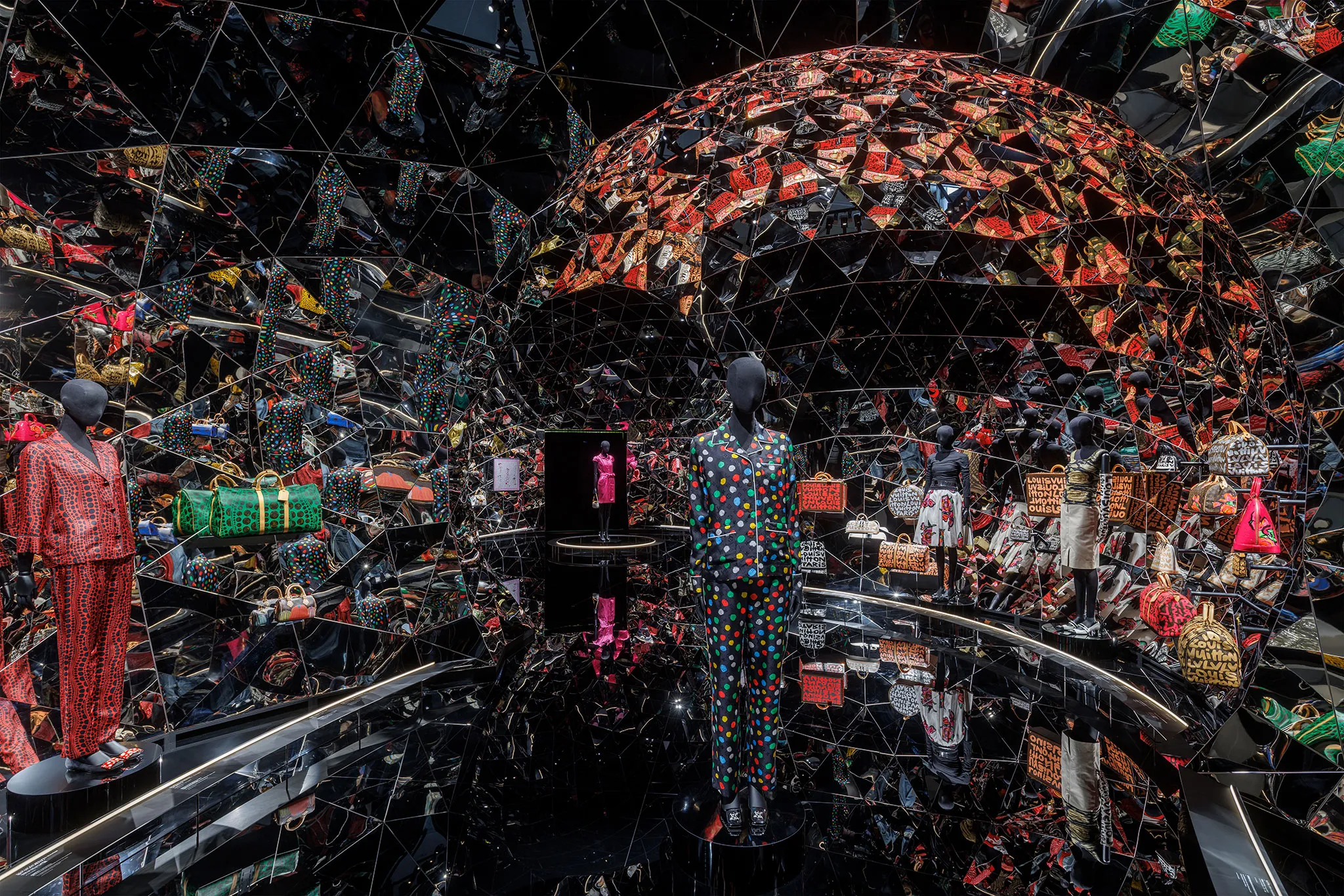
Just beyond, the Collaborations Domes open into a mirrored constellation of more than 90 pieces from Louis Vuitton’s extended history with artists. Inside each chamber, reflections blur the edges between objects, creating a layered visual field where authorship becomes difficult to pin down. Some pieces lean toward individual expression, others toward Vuitton’s language, but all emerge from a context of shared influence. These rooms treat collaboration not as an exception, but as a structure.
Louis Vuitton’s Evolution in Fashion and Architecture Through OMA’s Lens
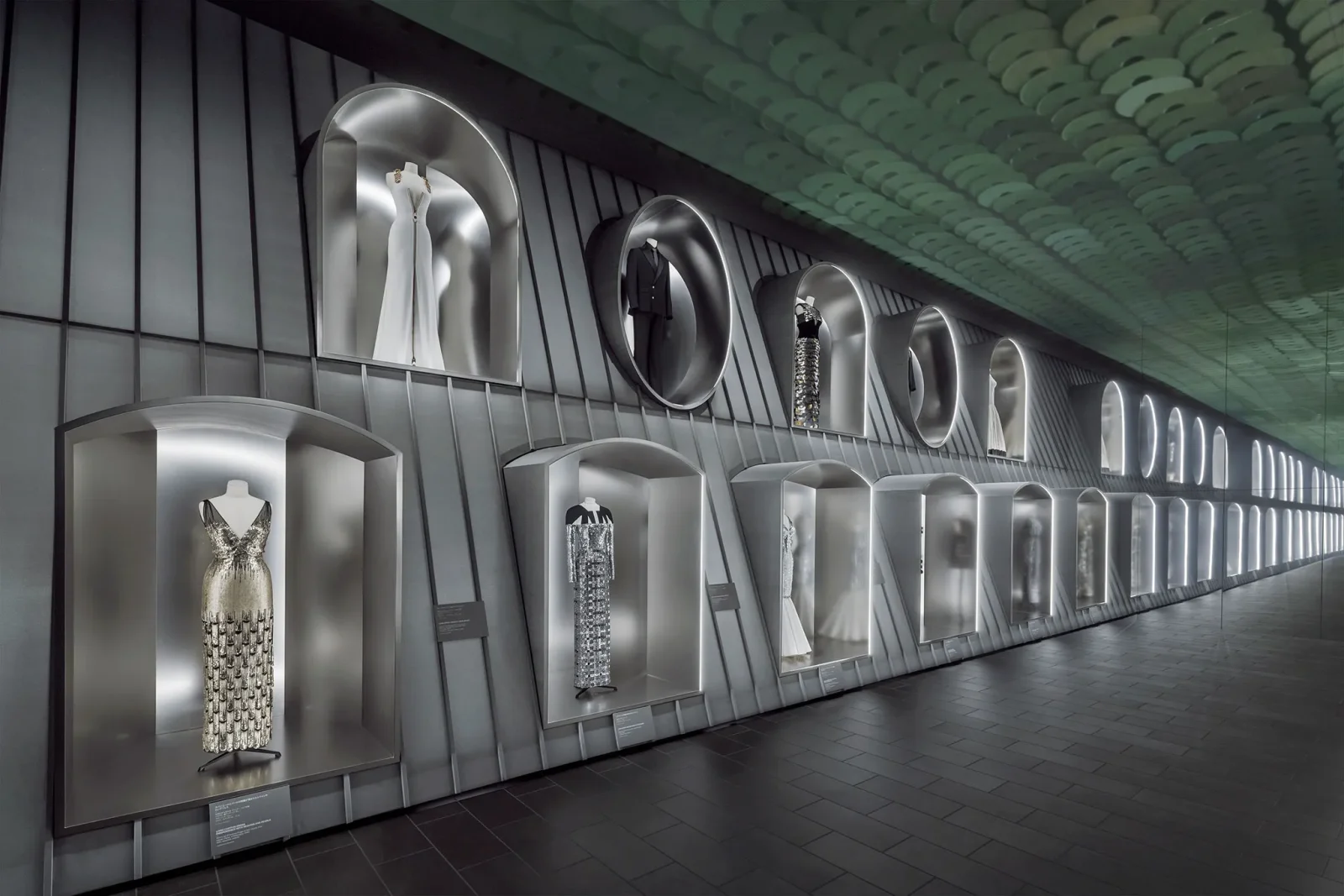
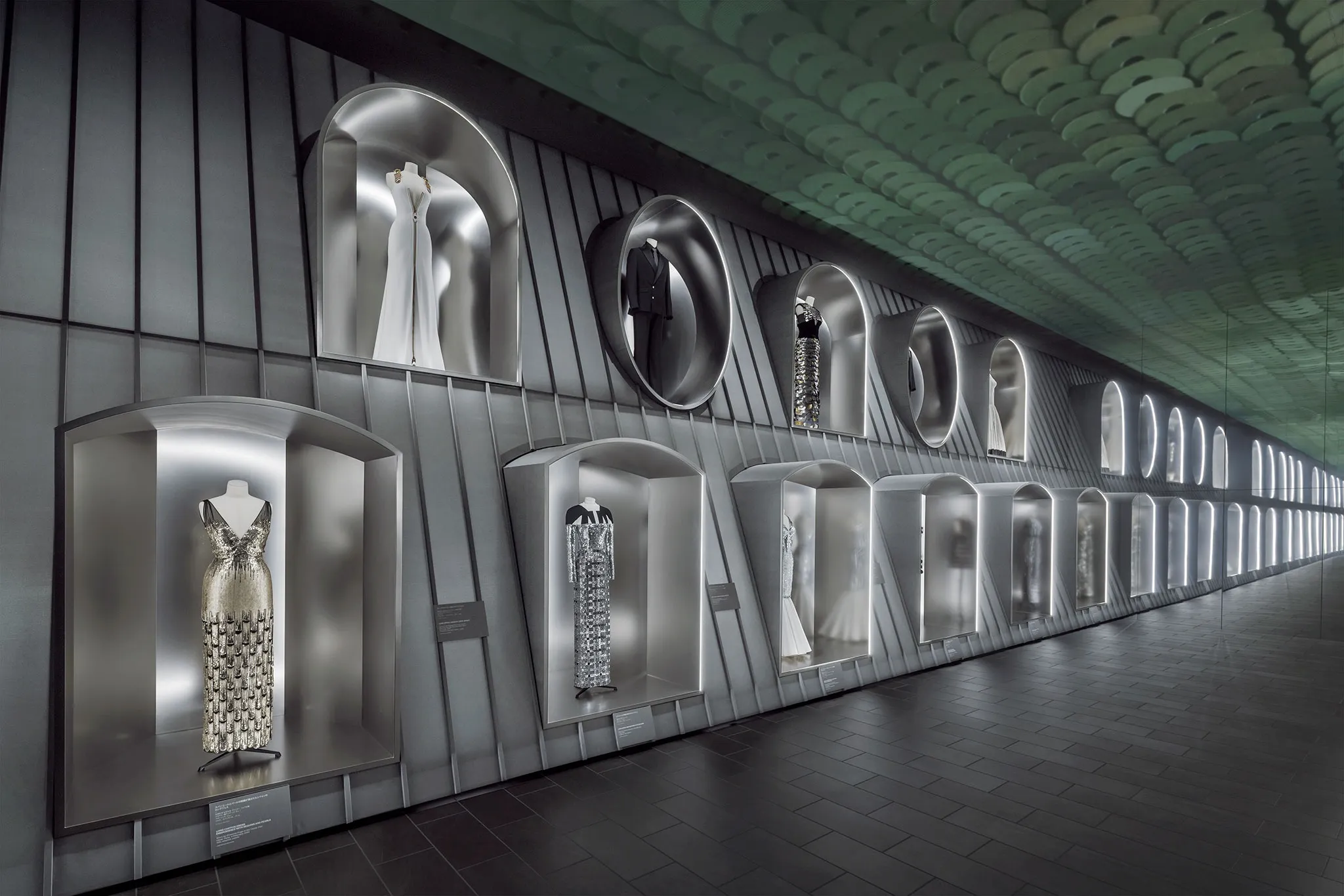
OMA’s design avoids asserting a singular architectural narrative, instead allowing the objects to define the space. Trunks and garments are integrated into the exhibition’s physical framework, presented as structural elements rather than enclosed artefacts. Fashion is treated as an active material language, choreographed through movement and form. Louis Vuitton enters the museum not as a logo or sponsor, but as a cultural agent embedded in production.
Shigematsu’s architectural language leans into disorientation. Tilted floors, reflective ceilings, and fractured sightlines unsettle fixed perspectives, turning the exhibition into a terrain to be navigated rather than simply observed.
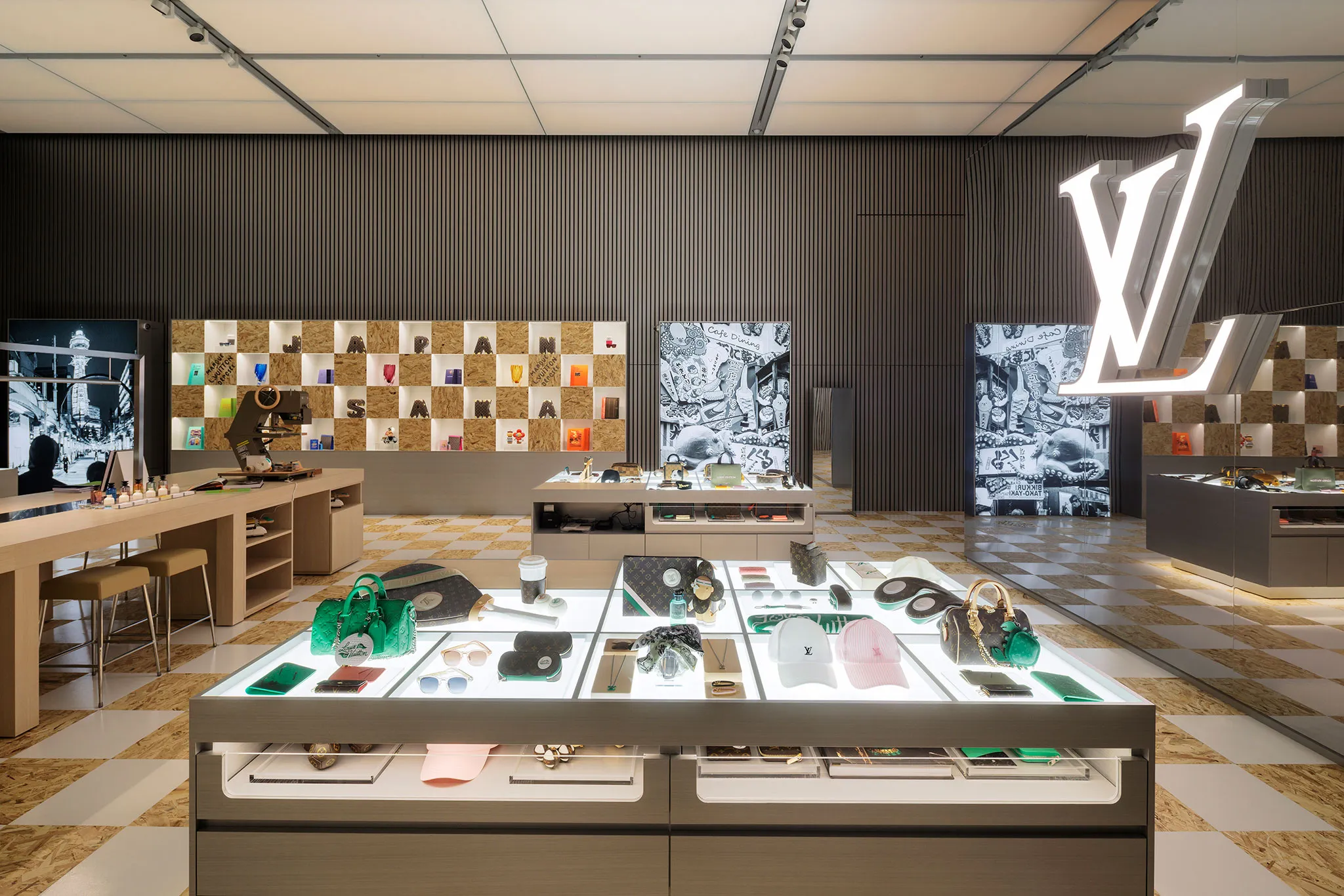
The show frames Louis Vuitton’s identity not as a fixed legacy, but as a practice of adaptation, embracing collaboration and continually redrawing its boundaries. Müller’s curatorial structure reveals this logic, presenting a brand shaped as much by exchange as by authorship. Fashion and architecture move together, giving shape to the present instead of preserving the past.
Running at the Nakanoshima Museum of Art in Osaka until September 17, 2025, the exhibition reconsiders legacy as something material and in flux. Rather than preserving the past, it works with it by reshaping memory through movement, structure, and design.
Explore Courses
.jpg "Ondrej Chybik - Rethinking Architecture")