

• Submit Project
  • Advertise
  • NewsLetter
PA | Architecture and Technology
Courses
  • Articles
    • Archipreneurs
    • Technology
    • Bim / Aec
    • 3D Printing
    • Architects
    • Artificial Intelligence
    • Robotics
    • Sustainability
    • Tools
    • Case Study
    • City Guide
    • Opinions
    • Interviews
    • Architecture & Design
      • Urbanism
      • Metaverse
      • Space Architecture
      • Geography
  • Projects
    • Architecture
    • Interior
    • Design
      • Fashion
      • Pavilion
      • Installation
      • Digital Art
      • Landscape Design
    • Products
  • News
  • Workshops
  • PA Talks
  • Videos
  • Books
  • More
    • PA+ Membership
    • Competitions
    • Courses
    • Events
    • Jobs
    • About Us
    • Contact Us
Font ResizerAa
PA | Architecture and TechnologyPA | Architecture and Technology
Search
  • Articles
  • Projects
  • News
  • Workshops
  • PA Talks
  • Videos
  • Books
  • Advertise
  • Submit Project
  • NewsLetter
  • Contact Us
Have an existing account? Sign In
Follow US

Home - Architecture News - At the Brooklyn Museum, ‘Sculpting the Senses’ Unfolds Iris van Herpen’s Experimental Design Future

Architecture NewsFashion

At the Brooklyn Museum, ‘Sculpting the Senses’ Unfolds Iris van Herpen’s Experimental Design Future

Last updated: May 13, 2026 12:20 pm
Isha Chaudhary
Isha Chaudhary
ByIsha Chaudhary
Isha Chaudhary is an architecture writer who follows and writes about current trends and emerging discussions in architecture, with a focus on design, technology, and place-making.
Share
Iris van Herpen: Sculpting the Senses
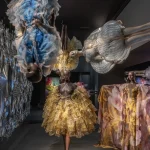
“Iris van Herpen: Sculpting the Senses” at the Brooklyn Museum. © On White Wall
Iris van Herpen: Sculpting the Senses
“Iris van Herpen: Sculpting the Senses” at the Brooklyn Museum. © On White Wall
Iris van Herpen: Sculpting the Senses
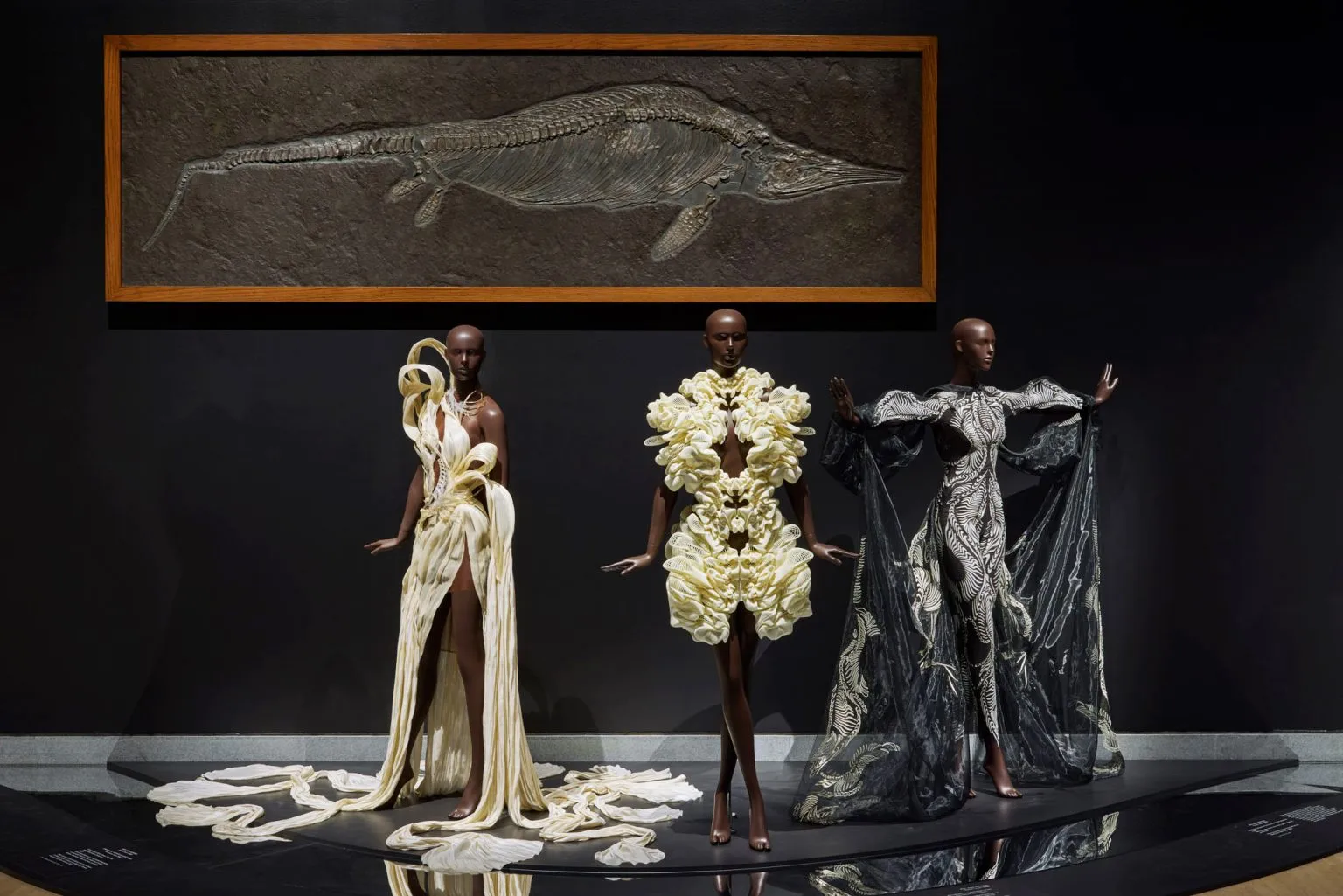
Installation view of ‘Iris van Herpen: Sculpting the Senses,’ Brooklyn Museum, New York
Iris van Herpen: Sculpting the Senses
“Morphogenesis” dress from the ‘Sensory Seas’ collection (2020), laser-cut and screen-printed mesh, duchesse satin, and laser-cut Plexiglas, created in collaboration with Philip Beesley © David Ụzọchukwu
Iris van Herpen: Sculpting the Senses
The "Living Algae” look from the "Sympoiesis" collection (2025) includes Pyrocystis lunula algae, nutrient gel, H₂O, silicone, silk organza, and tulle. © Molly SJ Lowe
Iris van Herpen: Sculpting the Senses
The "Shift Souls” dress from the "Shift Souls" collection (2019), laser-cut Komon Koubou textile, silk organza, and Mylar © Sølve Sundsbø
Iris van Herpen: Sculpting the Senses
Phantom’s Coral Dress, from the Sympoiesis collection, 2025. © Rob Rusling
Iris van Herpen: Sculpting the Senses
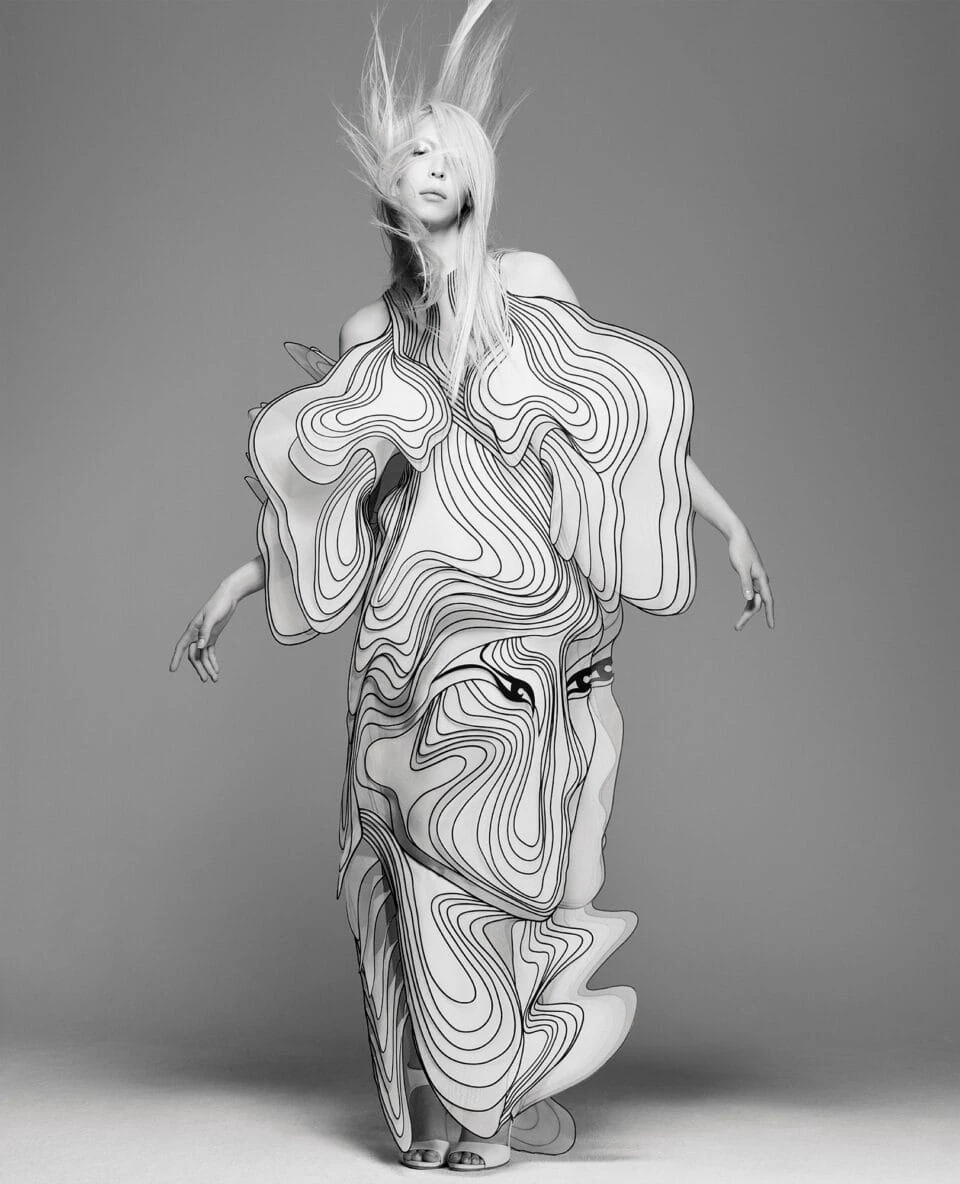
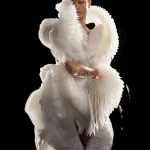
Iris van Herpen. Labyrinthine Kimono Dress, from the Sensory Seas collection, 2020. Glass organza, crepe, tulle, and Mylar. © David Ụzọchukwu
List of Images 1/11
Iris van Herpen: Sculpting the Senses
SHARE

The Brooklyn Museum is opening one of the year’s most influential fashion exhibitions this week with Iris van Herpen: Sculpting the Senses, a large-scale retrospective dedicated to the Dutch designer whose work continues to redefine the boundaries between couture, science, art, and technology. Opening to the public on May 16, the exhibition marks Van Herpen’s first major presentation in New York and the North American debut of the internationally touring show.

Contents
  • A Designer Who Changed the Language of Couture
  • The Exhibition Turns Fashion Into an Immersive Environment
  • Inside the Dreamlike World of Iris van Herpen

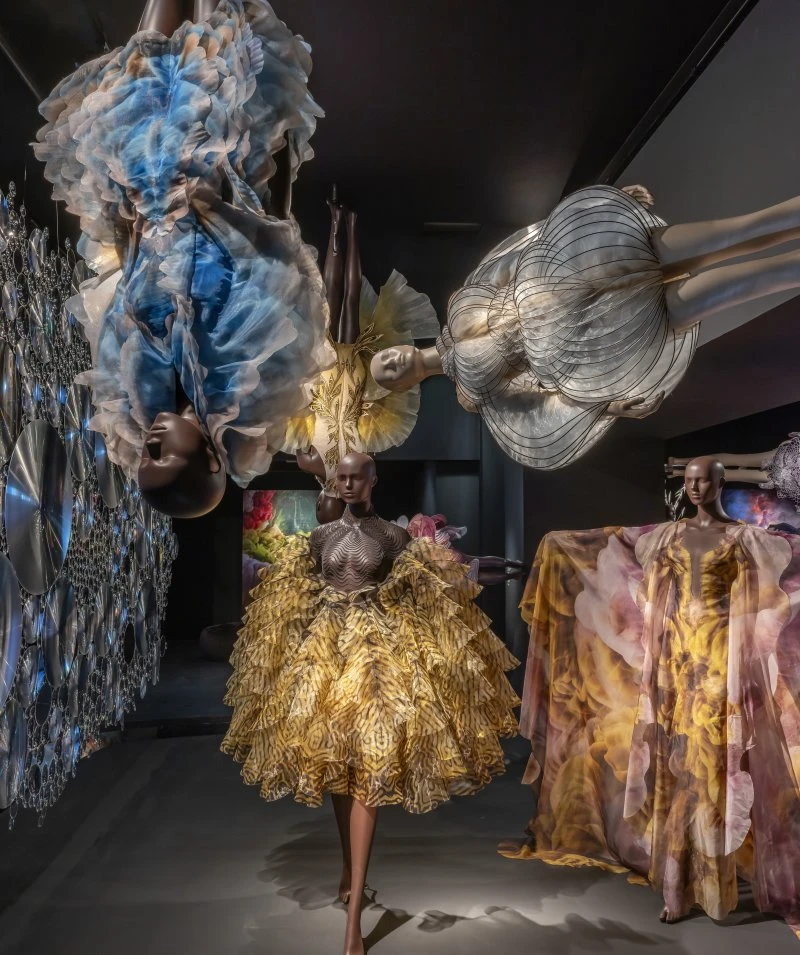
Bringing together more than 140 haute couture garments, the exhibition moves beyond the format of a traditional fashion archive. Instead, it presents Van Herpen’s creations alongside contemporary artworks, scientific specimens, fossils, coral structures, kinetic installations, and immersive sound environments. The result is a multisensory exhibition that explores how fashion can exist as sculpture, movement, biology, and speculative design all at once.

A Designer Who Changed the Language of Couture
Iris van Herpen: Sculpting the Senses

Iris van Herpen has spent nearly two decades building a fashion practice that sits between haute couture craftsmanship and experimental technology. After graduating from ArtEZ University of the Arts in the Netherlands and interning with Alexander McQueen, she launched her label in 2007 and quickly became known for pushing fashion into unfamiliar territory.
Iris van Herpen: Sculpting the Senses
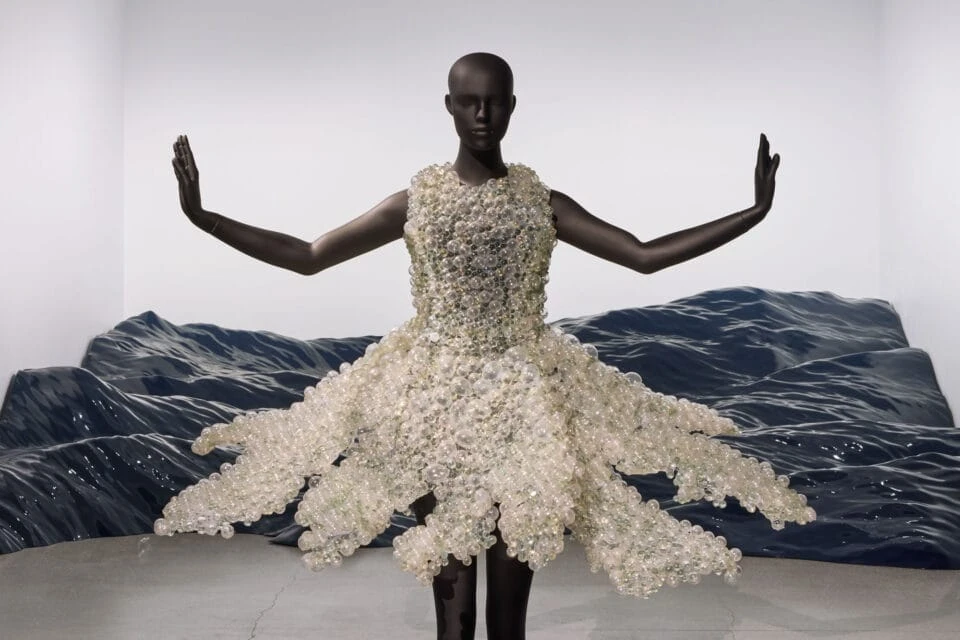
Installation view of ‘Iris van Herpen: Sculpting the Senses,’ Brooklyn Museum, New York

She was among the first designers to integrate 3D printing into couture, but her work extends far beyond technological novelty. Van Herpen combines hand craftsmanship with laser cutting, resin structures, biomaterials, silicone molding, and architectural fabrication techniques. Across her collections, garments often resemble marine organisms, skeletal systems, liquid surfaces, cosmic formations, or microscopic cellular patterns.
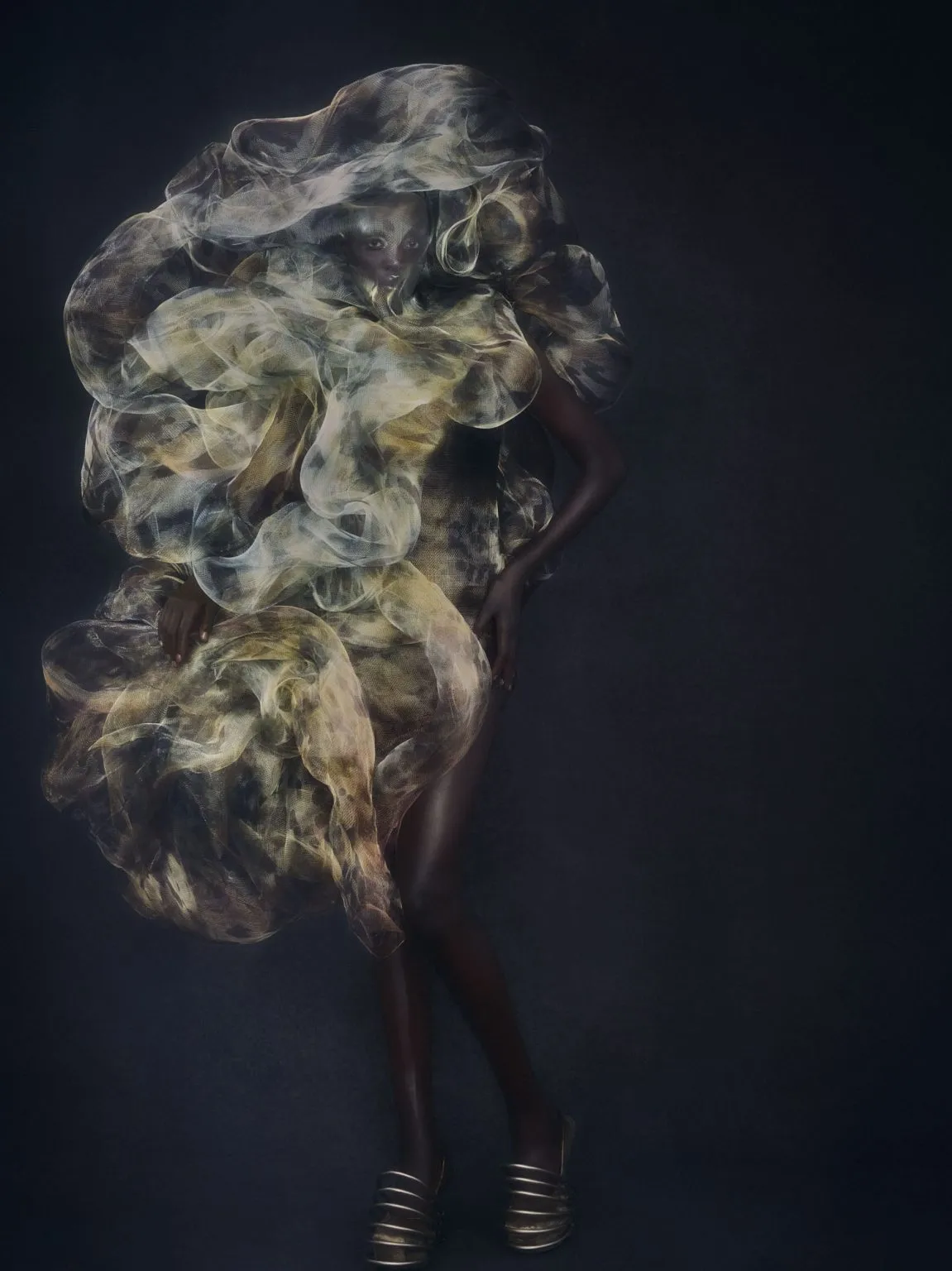
Iris van Herpen: Sculpting the Senses
Phantom’s Coral Dress, from the Sympoiesis collection, 2025. © Rob Rusling

Her designs have been worn by performers and cultural figures, including Björk, Lady Gaga, Cate Blanchett, Beyoncé, Ariana Grande, and Eileen Gu. Yet even with celebrity recognition, her work consistently operates closer to experimental design and conceptual art than mainstream fashion.

The Exhibition Turns Fashion Into an Immersive Environment
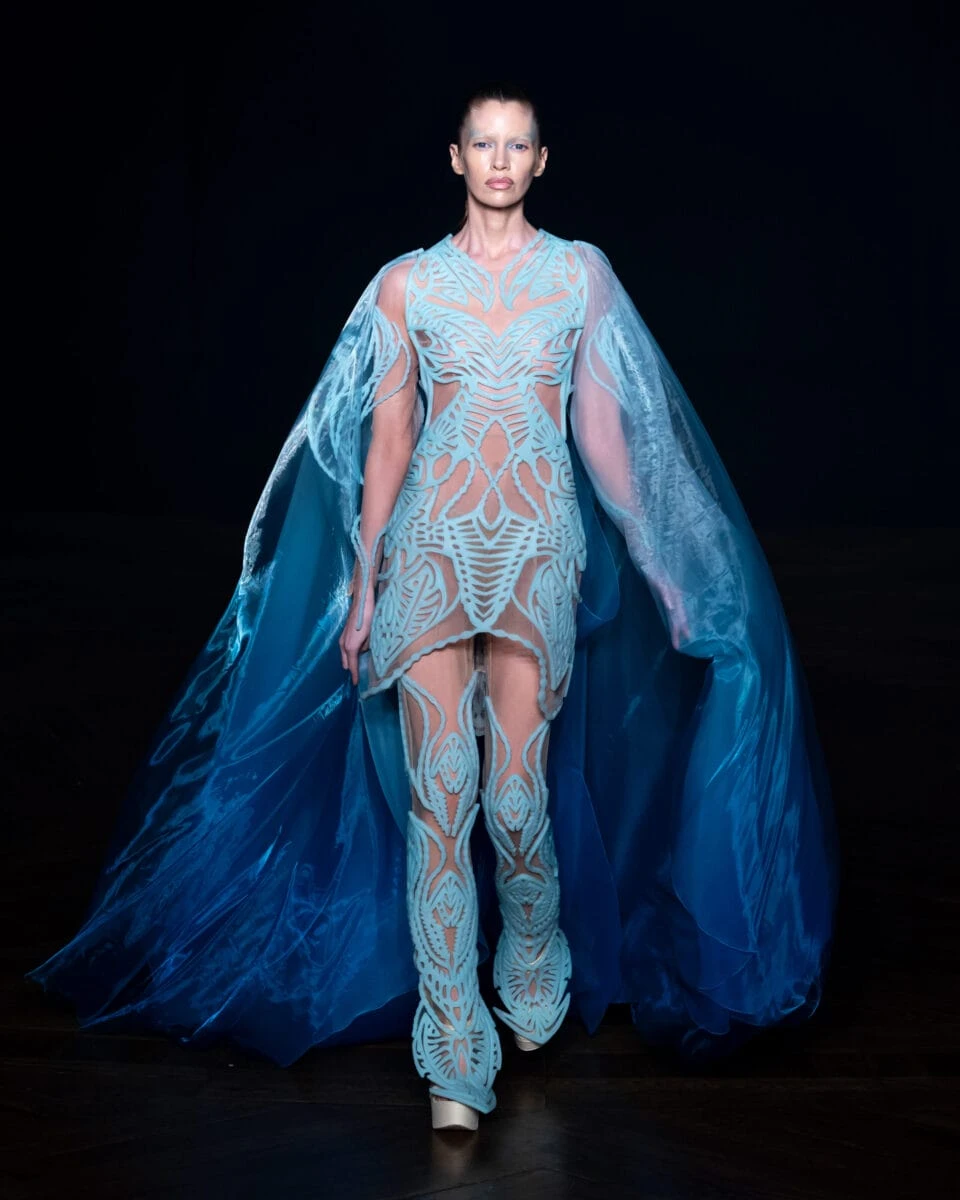
Iris van Herpen: Sculpting the Senses
The “Living Algae” look from the “Sympoiesis” collection (2025) includes Pyrocystis lunula algae, nutrient gel, H₂O, silicone, silk organza, and tulle. © Molly SJ Lowe

Sculpting the Senses is structured around themes including water, anatomy, movement, sound, biology, and the relationship between the body and its environment. The exhibition travels conceptually from deep ocean ecosystems to outer space, reflecting Van Herpen’s long-standing fascination with natural systems and scientific discovery.
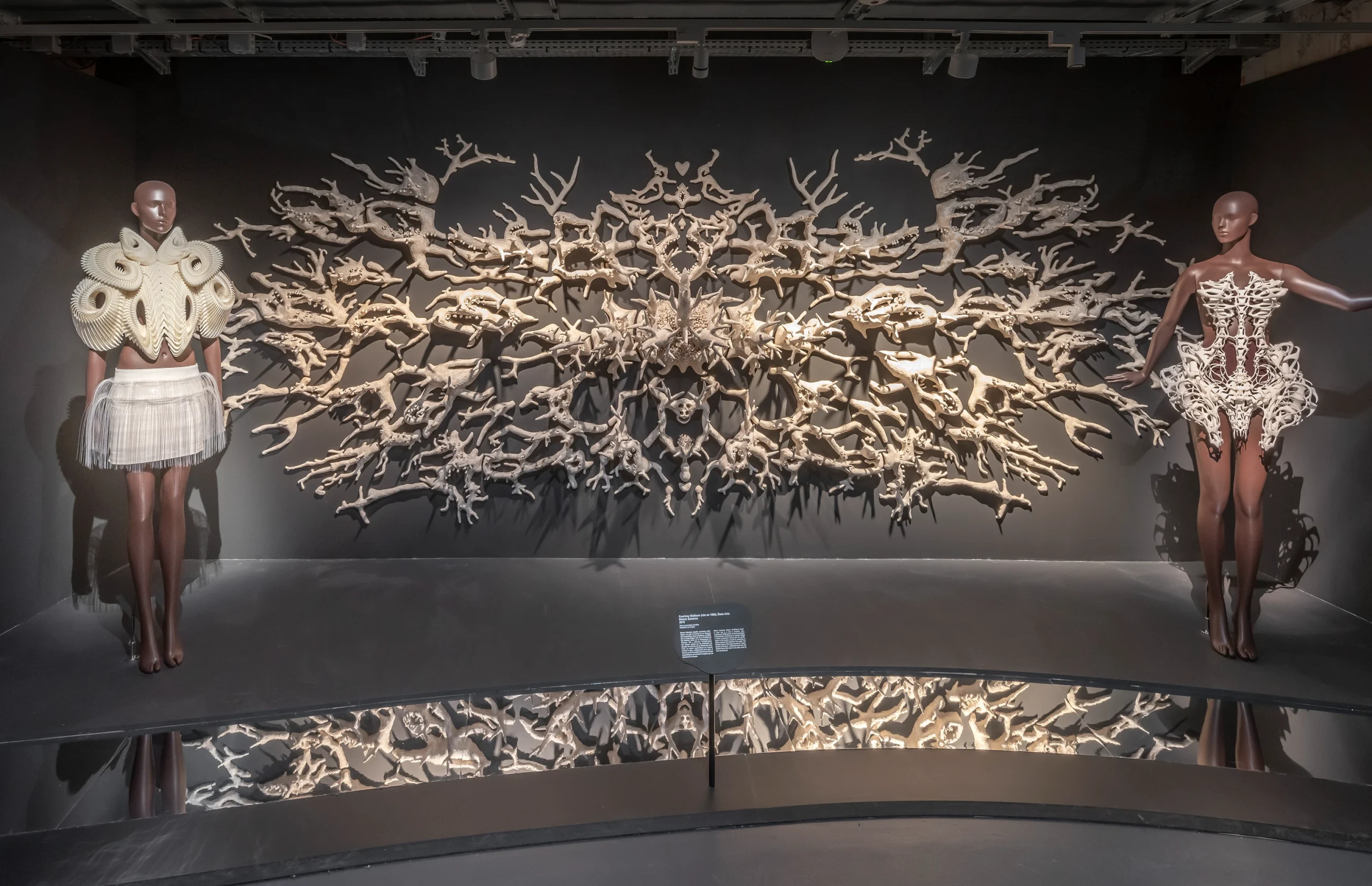
Iris van Herpen: Sculpting the Senses

Several installations highlight her collaborations with architects, scientists, and artists. Garments are displayed beside works by architect Philip Beesley, photographer Nick Knight, and other contemporary creators whose practices overlap with Van Herpen’s interest in motion, perception, and organic structure.
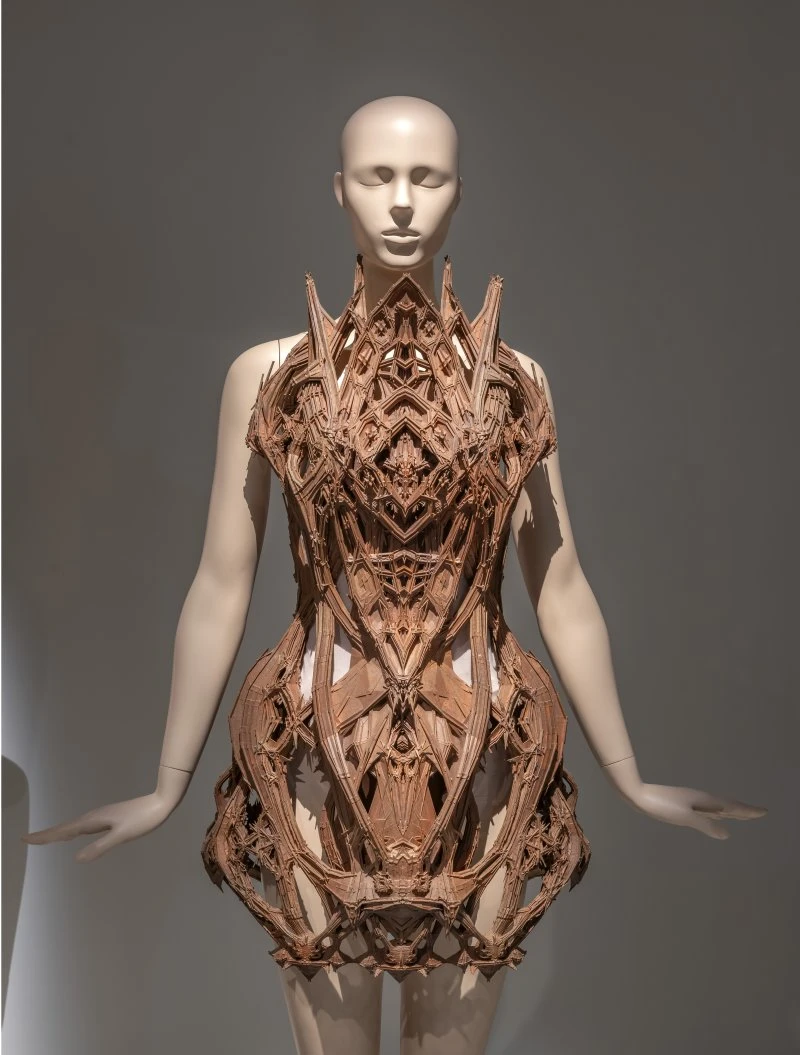
Iris van Herpen: Sculpting the Senses

The Brooklyn presentation also includes recreations of her atelier process, allowing visitors to see the intense handcraft involved behind the futuristic silhouettes. While the garments often appear digitally generated, many rely on traditional couture methods layered with advanced fabrication technologies.

Inside the Dreamlike World of Iris van Herpen

One of the strongest aspects of Iris Van Herpen’s work is how consistently she draws from scientific research without reducing it to visual gimmickry. Her collections reference neuroscience, marine biology, astronomy, mycology, fractal geometry, and biomimicry.
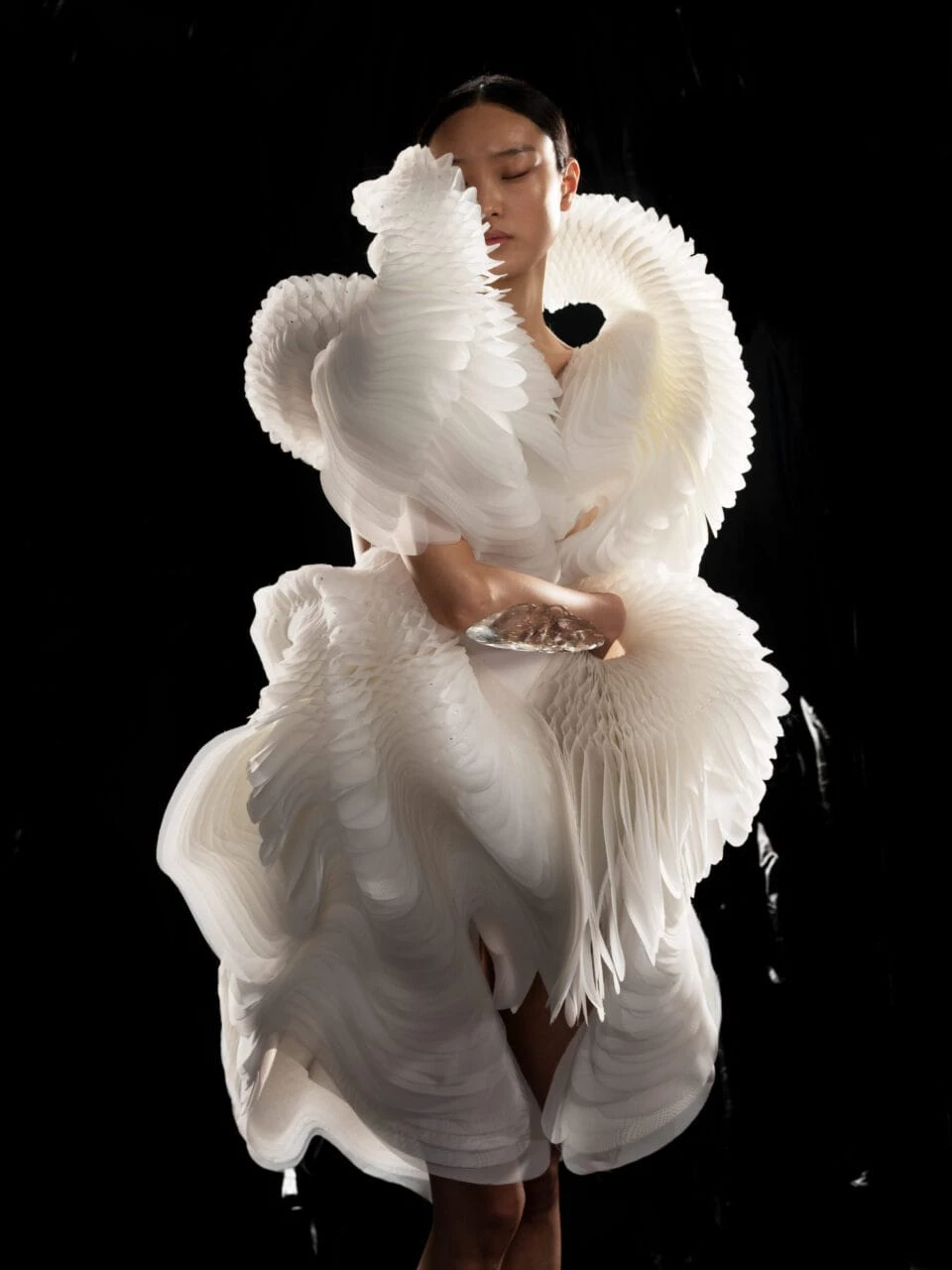
Iris van Herpen: Sculpting the Senses
“Morphogenesis” dress from the ‘Sensory Seas’ collection (2020), laser-cut and screen-printed mesh, duchesse satin, and laser-cut Plexiglas, created in collaboration with Philip Beesley © David Ụzọchukwu

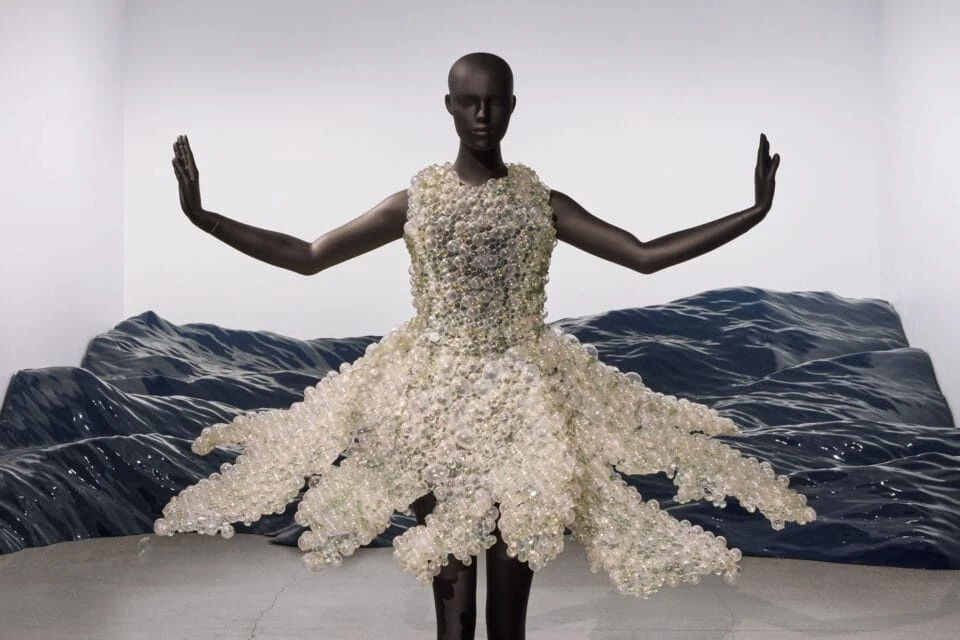
Some of the exhibition’s most discussed pieces include dresses inspired by jellyfish movement, garments constructed with bioluminescent algae, and sculptural forms that mimic coral reefs or wave patterns. Her “Sensory Seas” collection, featured prominently in the exhibition, transforms oceanic motion into floating architectural profiles using laser-cut Plexiglas, transparent mesh, and engineered textiles.
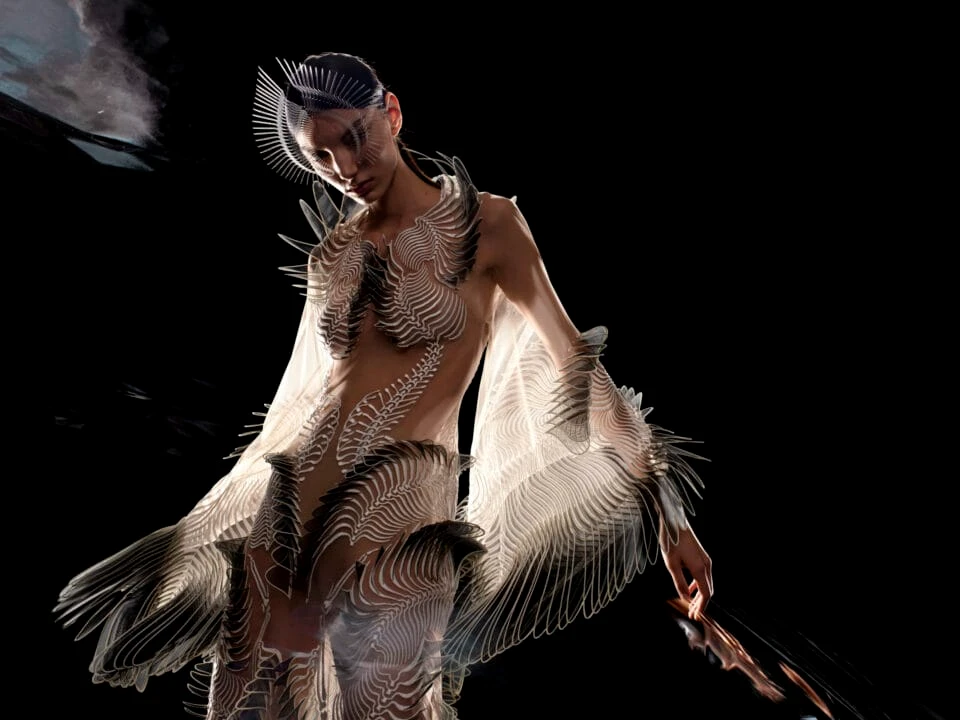
Iris van Herpen: Sculpting the Senses
Iris van Herpen. Labyrinthine Kimono Dress, from the Sensory Seas collection, 2020. Glass organza, crepe, tulle, and Mylar. © David Ụzọchukwu

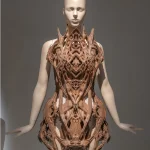
Another widely recognized work is her skeletal 3D-printed dress, which helped establish Van Herpen as a pioneering figure in technologically driven couture. Instead of treating the body as something to simply cover, many of her garments extend outward like evolving organisms, blurring distinctions between skin, clothing, and environment.
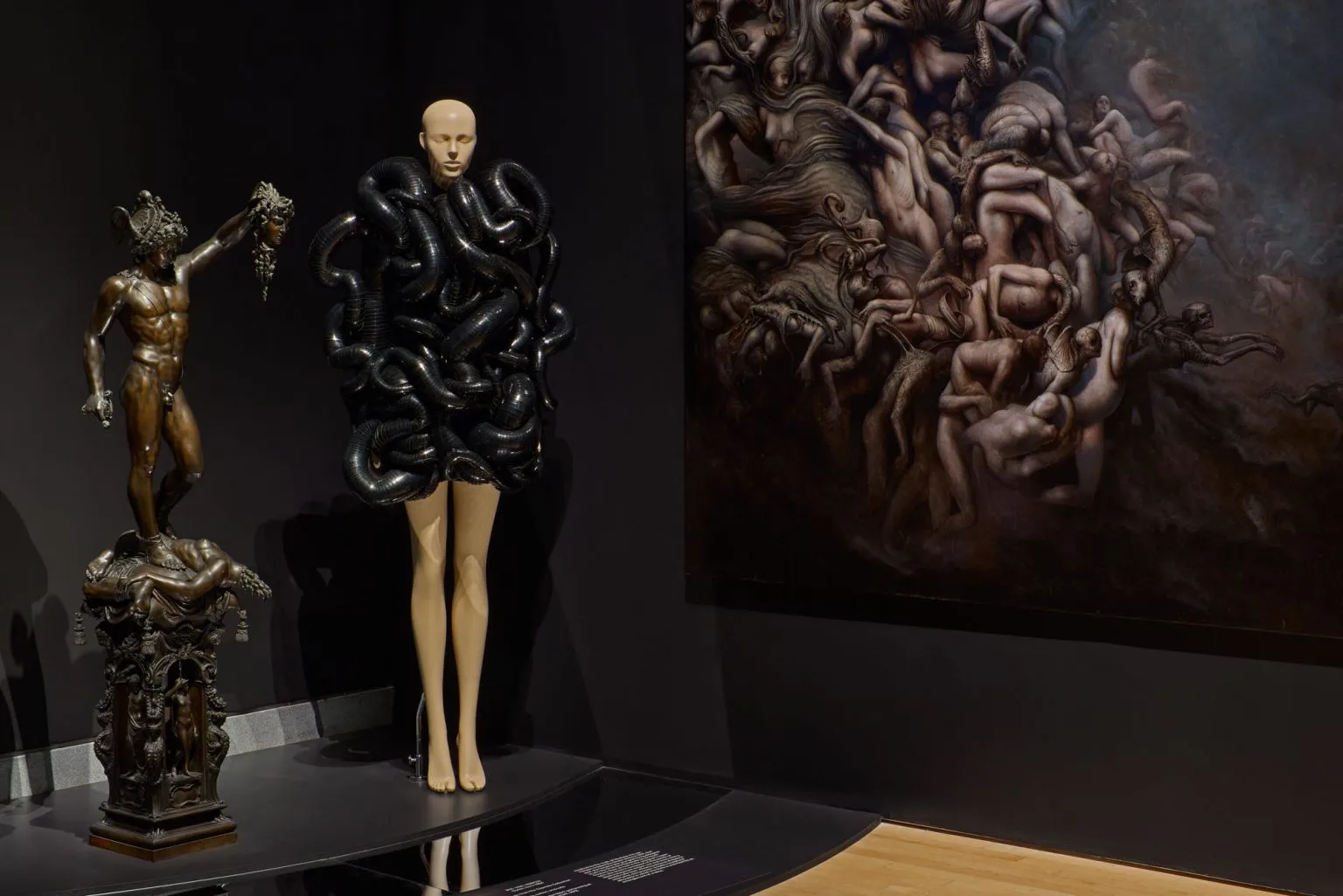
Iris van Herpen: Sculpting the Senses
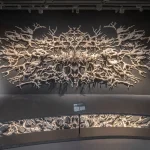
“Iris van Herpen: Sculpting the Senses” at the Brooklyn Museum. © On White Wall

The timing of Sculpting the Senses feels especially relevant as conversations around sustainability, material innovation, and digital experimentation continue to reshape contemporary fashion. Iris van Herpen’s work proposes an alternative future for couture, one where fashion becomes interdisciplinary research.
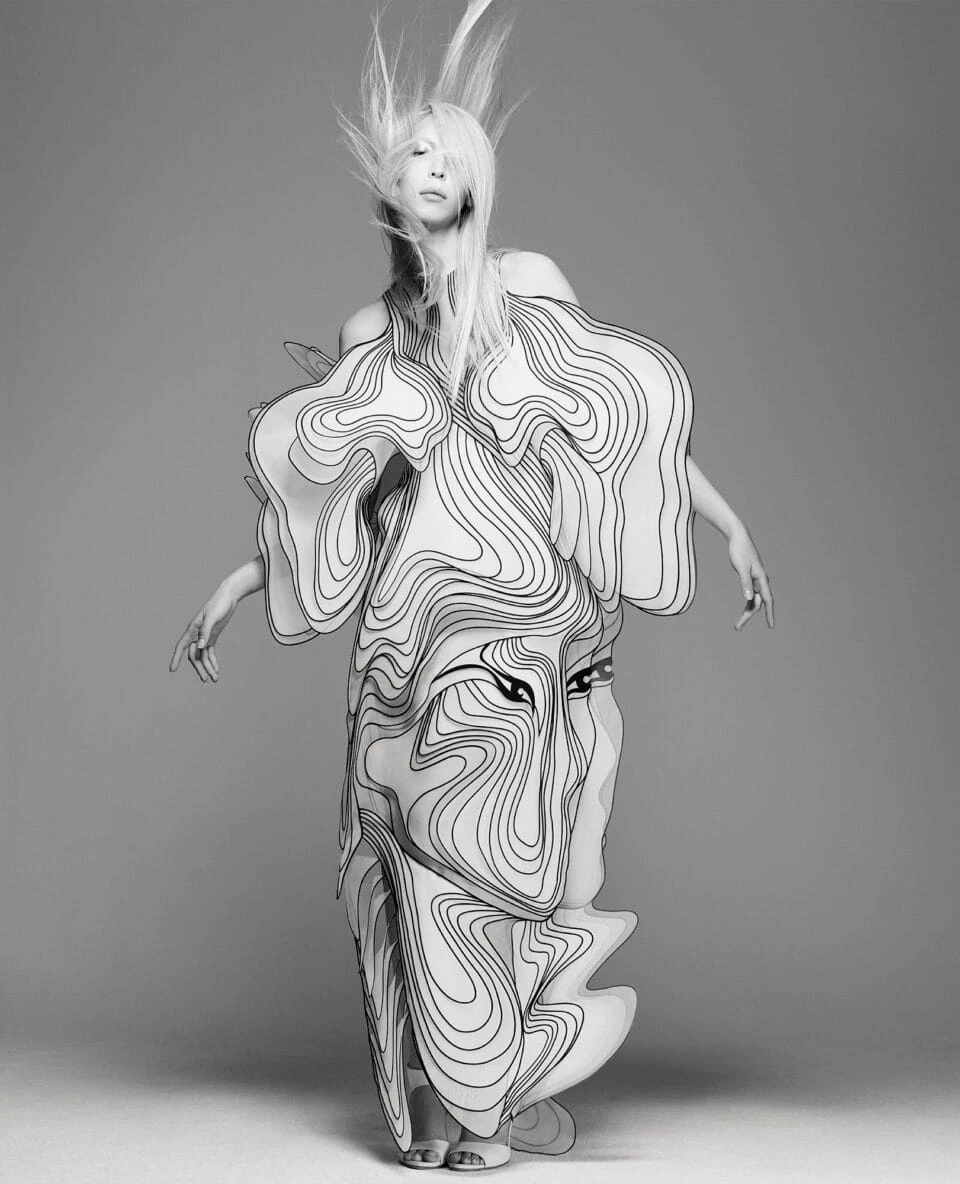
Iris van Herpen: Sculpting the Senses
The “Shift Souls” dress from the “Shift Souls” collection (2019), laser-cut Komon Koubou textile, silk organza, and Mylar © Sølve Sundsbø

Her designs often function as conceptual investigations into transformation, ecology, and the human relationship with technology. Many pieces are less concerned with wearability in a commercial sense and more focused on provoking sensory and emotional responses.

The exhibition also reinforces the growing position of fashion within museum culture. The Brooklyn Museum, with Van Herpen, moves even further into fashion as experimental contemporary art

Credit: Iris van Herpen

TAGGED:Brooklyn Museumfashion exhibitioniris van herpenIris van Herpen: Sculpting the Senses
Share This Article
Facebook LinkedIn Email Copy Link Print
ByIsha Chaudhary
Isha Chaudhary is an architecture writer who follows and writes about current trends and emerging discussions in architecture, with a focus on design, technology, and place-making.
Previous Article Architecture for Heritage at Yacademy Architecture for Heritage at Yacademy: Imagine a visitor center in a medieval fortress in central Italy
Next Article MVRDV and OODA Reveal Landscape-Led Vision for Lisbon’s Marvila Waterfront MVRDV and OODA Reveal Landscape-Led Vision for Lisbon’s Marvila Masterplan
Leave a Comment Leave a Comment

Leave a Reply Cancel reply

You must be logged in to post a comment.

Most Popular

© PBS

Dover Sun House: How Three Women Built America’s First Solar-Heated Home

Architecture & Design

Hayao Miyazaki’s Movies and Architecture

Architecture & Design
Cloudflare Global Outage

Cloudflare Global Outage Causes Widespread Disruption Across Major Platforms

Architecture News

Can we build skyscrapers on Mars?

Articles
10 Remarkable Hotels Redefining the Future of Hospitality

10 Contemporary Hotels Shaped by Context and Material

Architecture & Design

How Blockchain Tickets Can Cut Fakes and Add Real Perks at Design Events

Articles

The Psychological Effects of Color in Architectural Design

Architecture & Design

How the Urbanised Paris Was Born Through Haussmann’s Vision

Urbanism

Architect’s Guide to 30 Must-See Landmarks in New York City

City Guide

On’s LightSpray™ Uses Robotic Nozzles to Spray Shoes Directly Onto Foot-Shaped Molds

Technology
Previous Next
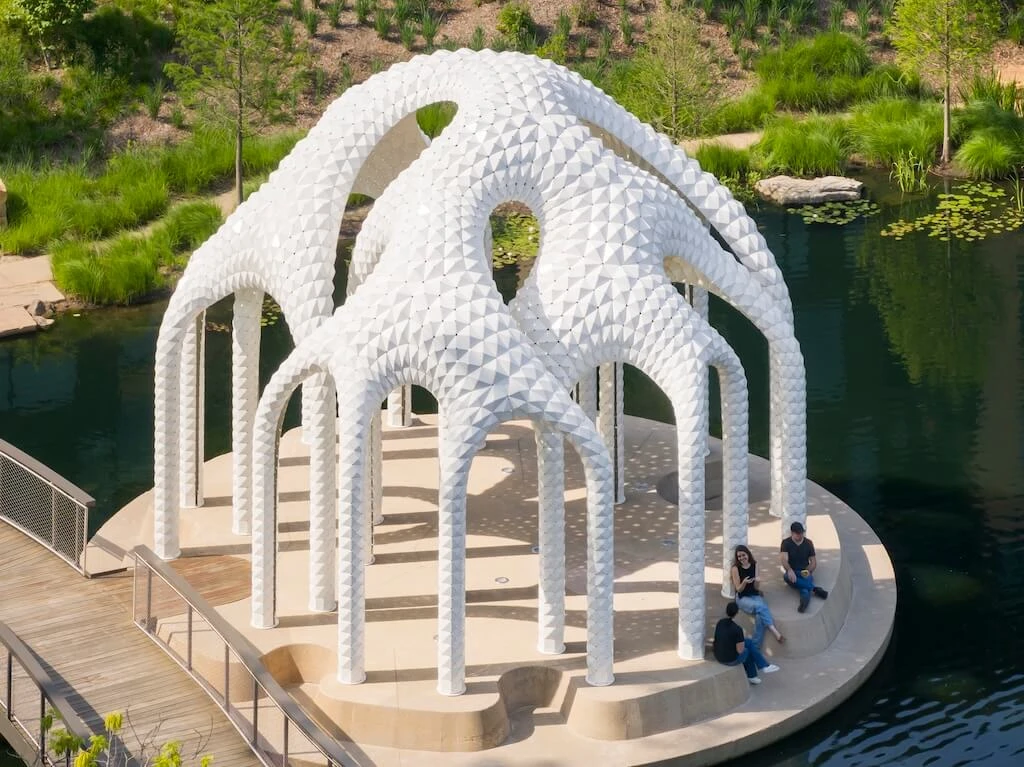
L’île Folie Pavilion by Marc Fornes/THEVERYMANY

Subscribe to our newsletter

- Advertisement -
Ad image

You Might Also Like

Architecture News

BIG Architecture Festival 2025 Celebrates Grand Prix Winners for Outstanding Architecture Projects

June 10, 2025
Architecture News

NEOM unveils Epicon, a new high-end coastal tourism destination in Saudi Arabia

August 15, 2024
Donald Trump Hires Shalom Baranes, White House Ballroom
Architecture News

Donald Trump Hires Shalom Baranes to Rebuild White House Ballroom

December 5, 2025
Casa Batlló Reopens Gaudí’s Last Original Residence After Three-Year Restoration in Barcelona
Architecture News

Casa Batlló Reopens Antoni Gaudí’s Last Original Residence After Three-Year Restoration in Barcelona

May 15, 2026
PA | Architecture and Technology

© All rights reserved. Parametric Architecture (2018-2026) – ISSN 3023-7564

Parametric Architecture (PA) is a leading global architecture and design platform connecting millions of architects, designers, and students through innovative projects, industry insights, and educational initiatives.

Instagram Facebook X-twitter Youtube Linkedin Pinterest Tiktok

Get in touch​

  • About Us
  • PA+ Membership
  • Contact Us
  • Submit Project
  • NewsLetter
  • Advertise
  • Cookie Policy
  • Distant Sales Agreement
  • PA+ Membership Agreement
  • Privacy Policy

Explore More

  • Articles
  • Projects
  • Videos
  • Books
  • PA Talks
  • Jobs
  • Subscribe

Subscribe Newsletter

Subscribe to our newsletter to get our newest articles instantly!

© 2026 ParametricArchitecture. All Rights Reserved. By utilizing this website, you are consenting to our User Agreement, Privacy Policy, and Cookie Statement. In compliance with the privacy laws of Turkey and the United States, we recognize and respect your rights. Please be aware that we may receive commissions for products bought through our affiliate links. Unauthorized reproduction, distribution, or transmission of any material from this site is strictly forbidden without prior written permission from ParametricArchitecture.

Welcome Back!

Sign in to your account

Username or Email Address
Password


Lost your password?

Not a member? Sign Up