



Topic: Fibrous Architecture: Robotic Fabrication & AI Rendering
Date: January 17 & 18, 2026
Time: 13:00 – 17:00 GMT
Format: Online on Zoom
Duration: 2 Sessions (8 Hours)
Registration Deadline: January 16th, 2026
Total Seats: 50 seats
Difficulty: Beginner-Intermediate
Language: English
Certificate: Yes
General Registration: 100 EUR
Join free: with Full Access membership
Fee For Digital Members: 85 EUR (15% discount available only for Digital Members)
Organized By: PAACADEMY
Tutor: Amar Shetty
Recordings: Recordings will be available for all participants afterward indefinitely.
Introduction to Fibrous Architecture:
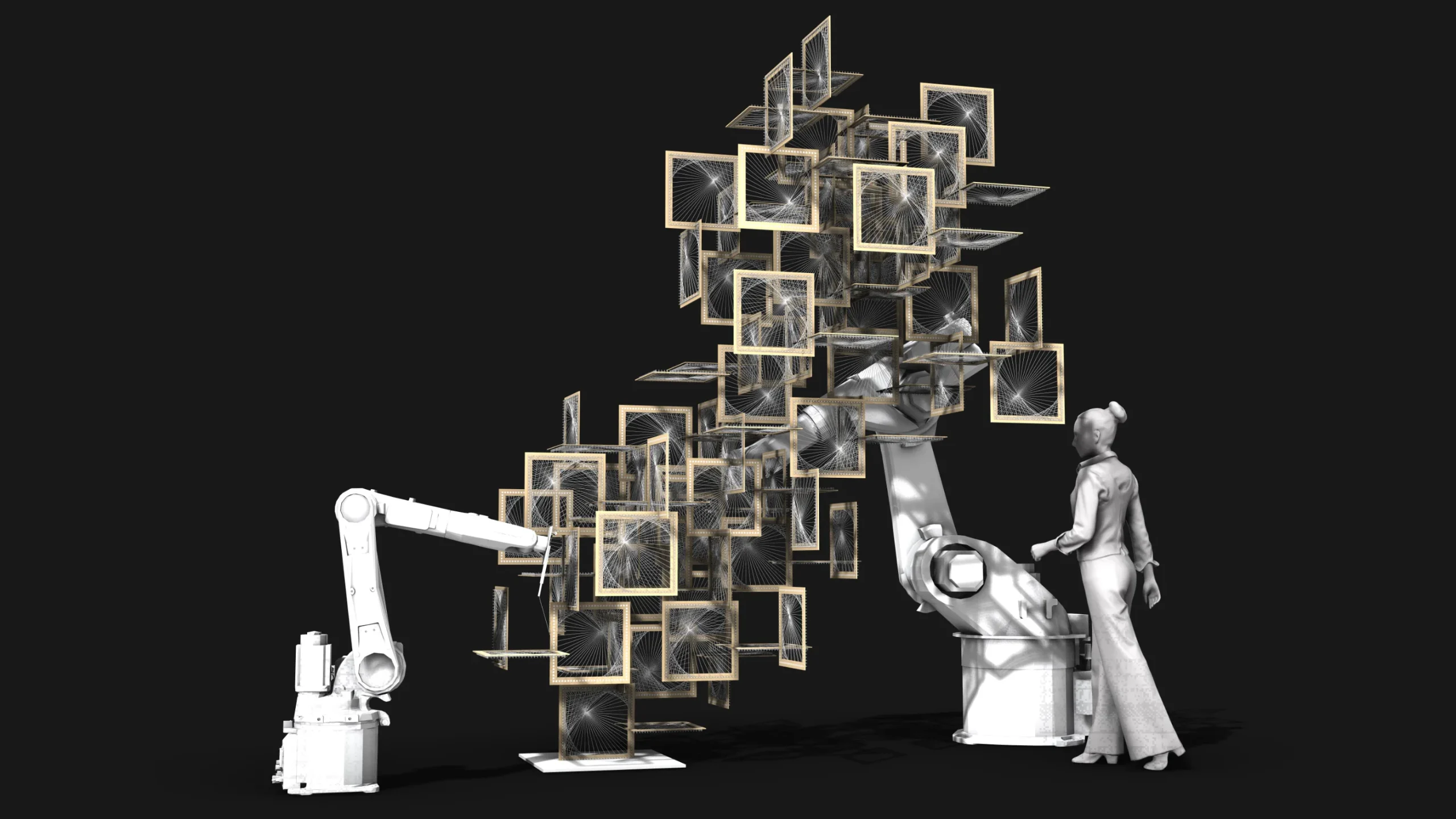
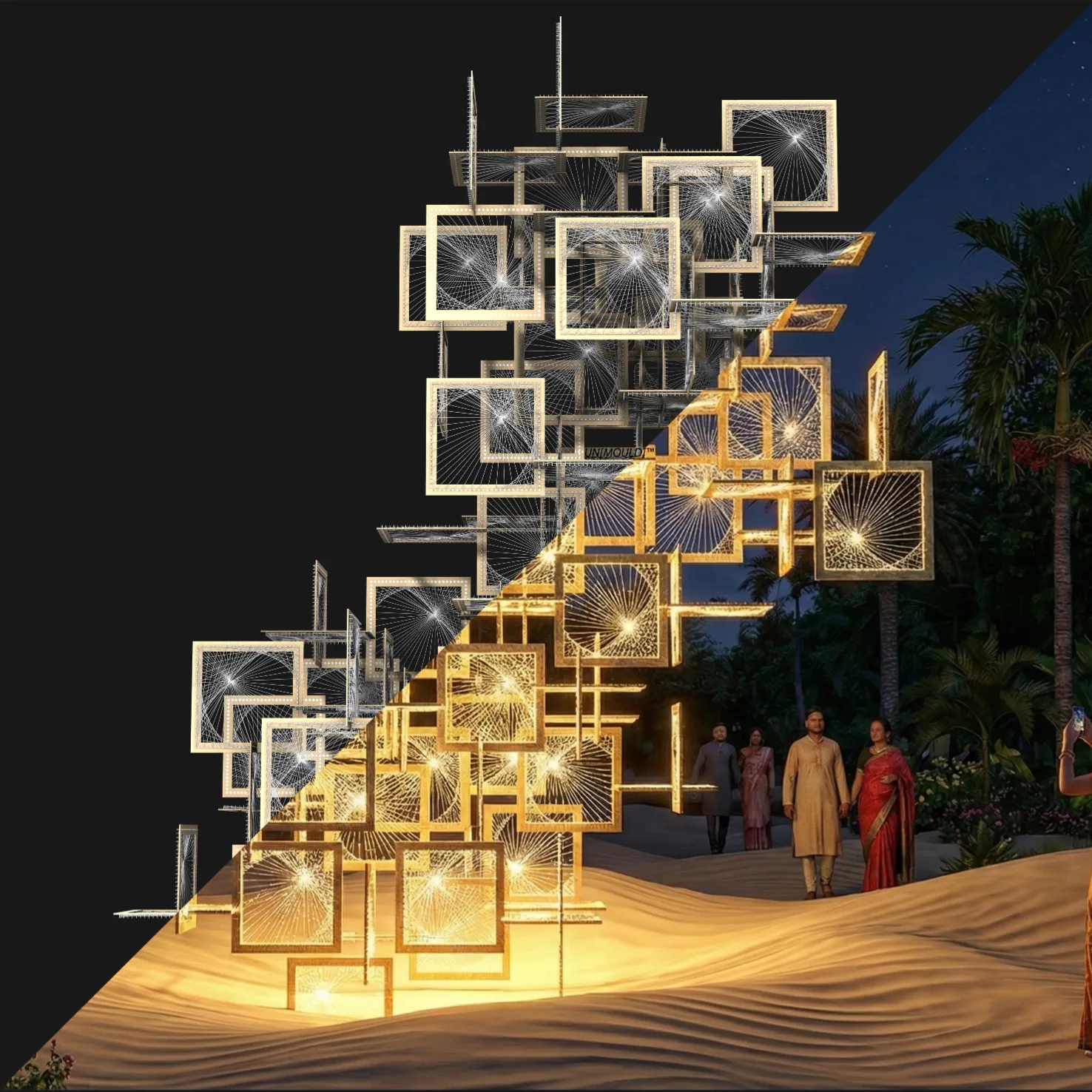
The workshop will be a loop between design and fabrication revolving around emerging morphologies of fibrous trajectories. The Workshop will delve into creating a workflow from design to digital fabrication for architectural-scale installation of an aggregated fibrous structure using a six-axis KUKA robotic arm. For projects where accessibility to a robotic arm would not be possible, a low-tech system for a manual wound strategy will be implemented.
Participants will learn how to create computational workflows within Grasshopper 3D using ‘MutAnt’ for aggregation of polygonal planar geometries and ‘Weaver Ant’ to design fibrous systems for robotic winding through ‘KUKA Prc’.

Methodology:
This workshop guides participants through a complete workflow that moves from fabrication strategies to full robotic winding. It begins with the design of filament paths for manually wound systems using CNC-cut frames, developed through Grasshopper definitions that include formwork modeling, anchor fixtures, notching, and data extraction using Weaver Ant.
The workshop shifts to robotic fabrication, where planar frames generated through MutAnt aggregations are prepared with precise coordinates for KUKA robotic winding. Throughout the process, participants build a continuous chain from conceptual modeling and aggregation to winding pattern generation, frame preparation, robotic simulation, and final AI-assisted rendering with Nano Banana.
Key Learning Topics:
- Create a computational workflow linking digital design and fabrication in Grasshopper 3D.
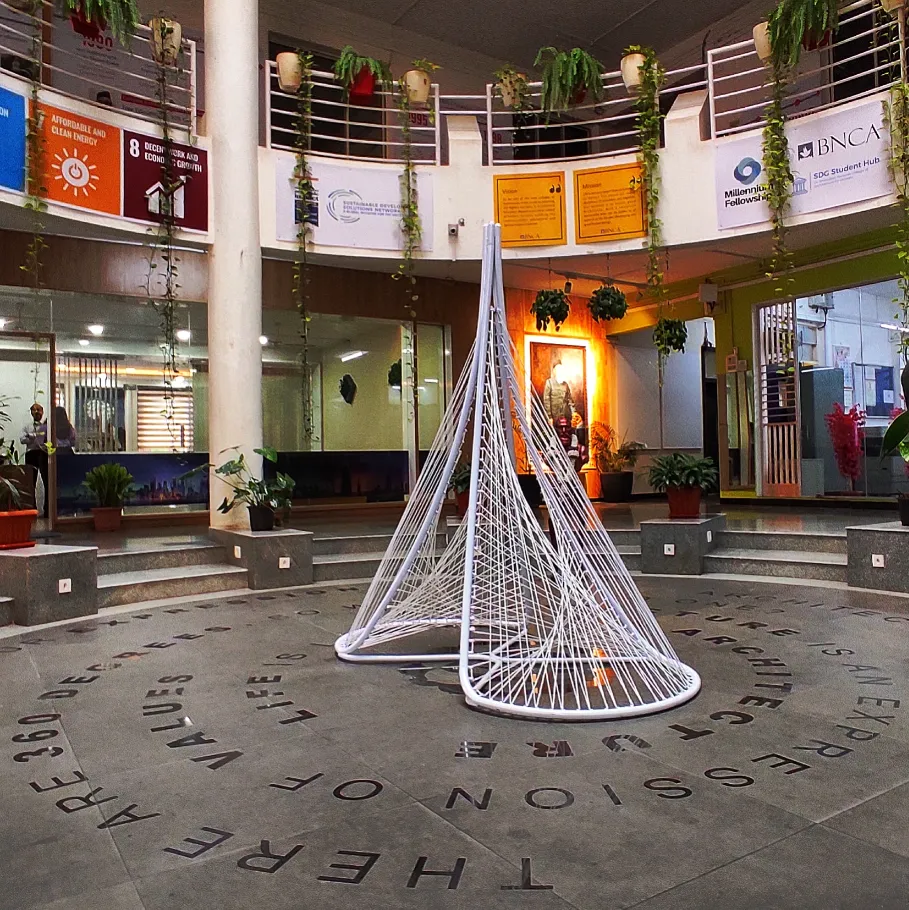
- Design installations for low-tech fabrication using CNC cutting and manual cable winding.
- Generate planar aggregations using boundary rule sets through MutAnt.
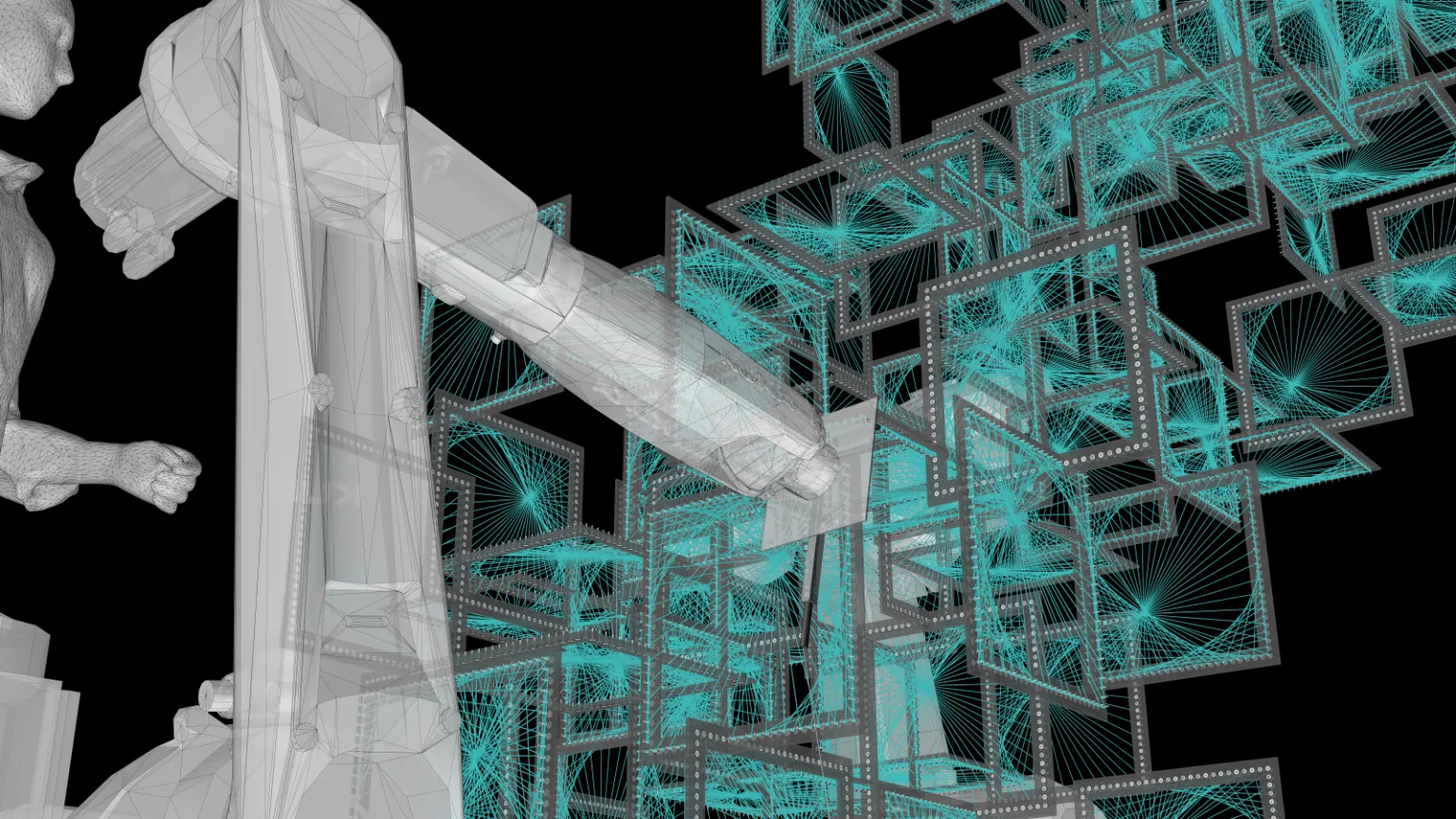
- Build and simulate a robotic winding workflow using Weaver Ant and KUKA Prc for architectural-scale fabrication.
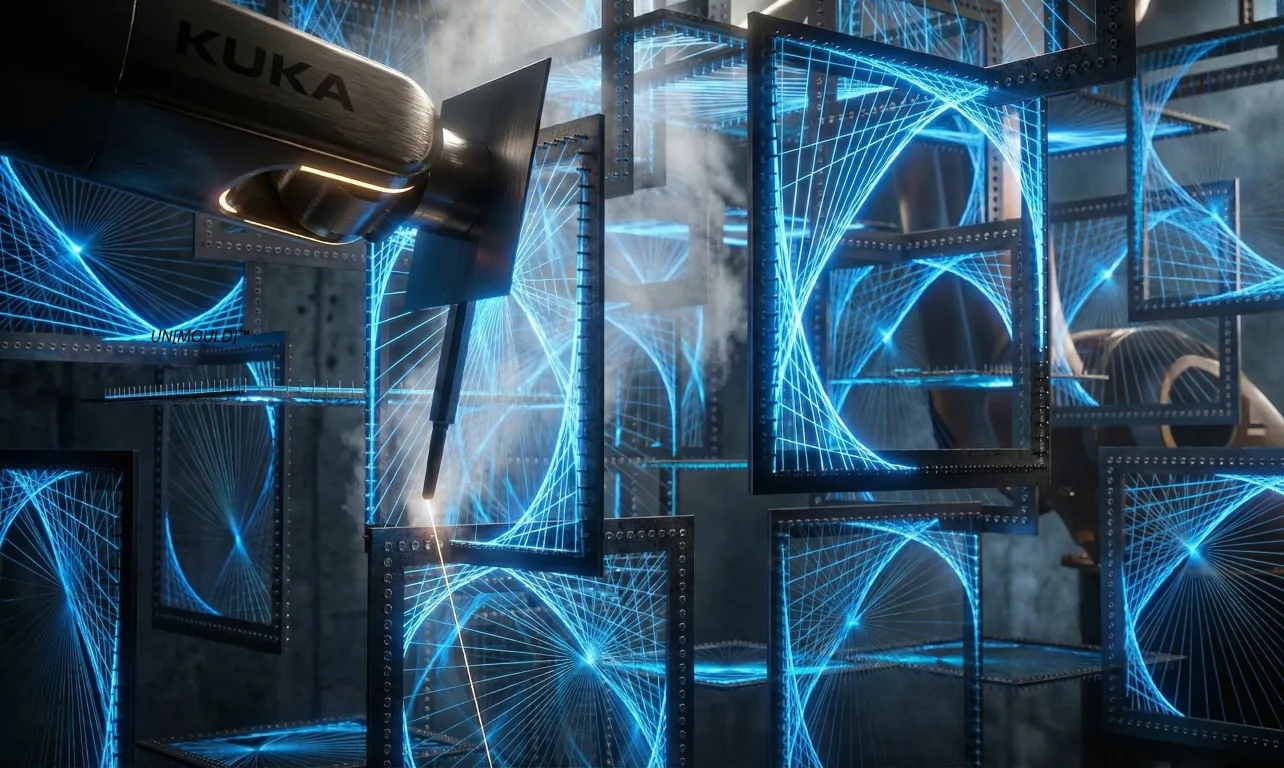
- Rendering through Nano Banana.
Program:
Day 1
This session begins with the design of rope winding on a single-curved stay-in-place formwork. The filament strategy will be designed to be provided for manual winding onto a CNC-cut frame.
The workshop will focus on scripting a computational workflow within Grasshopper, from designing the frames to incorporating nuts and bolts with notches for fixing the frames together. ‘Weaver ant’ will be used to generate the filament pattern and to generate data for winding.
- Introductory presentation of projects by UN[MOULD]™ pertaining to fibrous systems from an array of executed products to architectural scale strategies.
- Conceptual modeling within Grasshopper with the required proportions of an installation
- Designing formwork and anchor fixtures
- Understanding the Weaver Ant workflow, generating winding patterns.
- Unrolling the frame, text tags, and making files required for CNC cutting.
- Assignment with Q&A
Day 2
The second day will look into the design of rope winding on planar frames derived from aggregations. These frames will be designed with precise nuts and bolts; these coordinates will provide the anchor points for robotic winding using Weaver Ant and KUKA PRC.
- Creating planar frame systems derived from aggregations generated through MutAnt.
- Designing detailed planar frames in Grasshopper, including precise nuts and bolts used as anchor coordinates for robotic winding.
- Generating winding geometries and knots using Weaver Ant for robotic execution.
- Focusing on robotic fabrication: understanding TCP, end-effector behavior, TCP setup, KUKA movements, and simulation using KUKA Prc.
- Producing final renders using Nano Banana for AI-assisted visualization.
- Assignment and Q&A.
Software:
- Rhinoceros
- Grasshopper 3D
- Weaver Ant
- MutAnt
- KUKA|prc
- Nano Banana
Workshop Notes:
- Basic knowledge of Rhinoceros 3D modeling and Grasshopper 3D required.
- Time for troubleshooting will be incorporated between the conduct of each program module.
Instructor:
Amar Shetty

After graduating as an Architect, he pursued the application of data-driven architectural strategies in India. Subsequently, UN[MOULD]™ was initiated by him as a practice of alternative systems for the built environment, which delves into developing indigenous methods that convolute a thread between data, design, and material with human/ machinic production systems within a range of products, architectural strategies, and urban installations.
He investigates bridging the academic experiments and industrial applications by disseminating the strategies developed from digital and analogue experiments pertaining to the built environment. He has been actively involved as an assistant professor since 2021 and has conducted multiple experiments in the form of architectural prototypes and filed IPRs within the umbrella of Dr. B.N. College of Architecture’s Digital Architecture Department.
He is the Author/ Developer of ‘ Weaver Ant ‘, which was initiated in 2019 as a plugin for Grasshopper and is an outcome of research in robotic weaving, used by academicians and industry professionals, which has led to the open-ended development of a plugin for varied mechanical processes. He has published plugins such as ‘Weaver Ant ‘ and ‘ MutAnt ’ on food4rhino.com.
Important Notes:
- The “Fibrous Architecture: Robotic Fabrication & AI Rendering” Studio workshop by PAACADEMY will start at 13:00 (GMT) on Saturday, January 17th, 2026.
- Total sessions: 2 Sessions (8 Hours).
- The teaching duration per session will be 4 hours.
- Students will have time for a break between teaching hours.
- Each session and the entire studio will be recorded, and videos will be available for participants just a day after the class for an unlimited time.
- PAACADEMY will provide a certificate of attendance.
- The studio has limited seats. Tickets are non-transferable & non-refundable. Please read carefully before you register.
Topic: Fibrous Architecture: Robotic Fabrication & AI Rendering
Date: January 17 & 18, 2026
Time: 13:00 – 17:00 GMT
Format: Online on Zoom
Duration: 2 Sessions (8 Hours)
Registration Deadline: January 16th, 2026
Total Seats: 50 seats
Difficulty: Beginner-Intermediate
Language: English
Certificate: Yes
General Registration: 100 EUR
Join free: with Full Access membership
Fee For Digital Members: 85 EUR (15% discount available only for Digital Members)
Organized By: PAACADEMY
Tutor: Amar Shetty
Recordings: Recordings will be available for all participants afterward indefinitely.
Explore Courses
.jpg%202.jpg "Building Performance with Forma & Opossum")
.jpg "Ondrej Chybik - Rethinking Architecture")