

Hanoi, the capital of Vietnam, possesses a built environment that operates as a physical archive of its turbulent history. The city’s spatial layout and structural typologies display a complex layered evolution, where traditional East Asian vernacular patterns, formal French colonial planning, Soviet socialist realism, and high-tech global capitalism have successively overwritten the landscape.
Before European colonization, the architectural language of Hanoi, historically known as Thang Long, was defined by imperial dynastic power and deep Buddhist, Confucian, and Taoist spiritual traditions. The design philosophy of this era was characterized by axial symmetry, timber-frame construction, low-rise profiles, and symbolic geomantic alignments.
Tran Quoc Pagoda
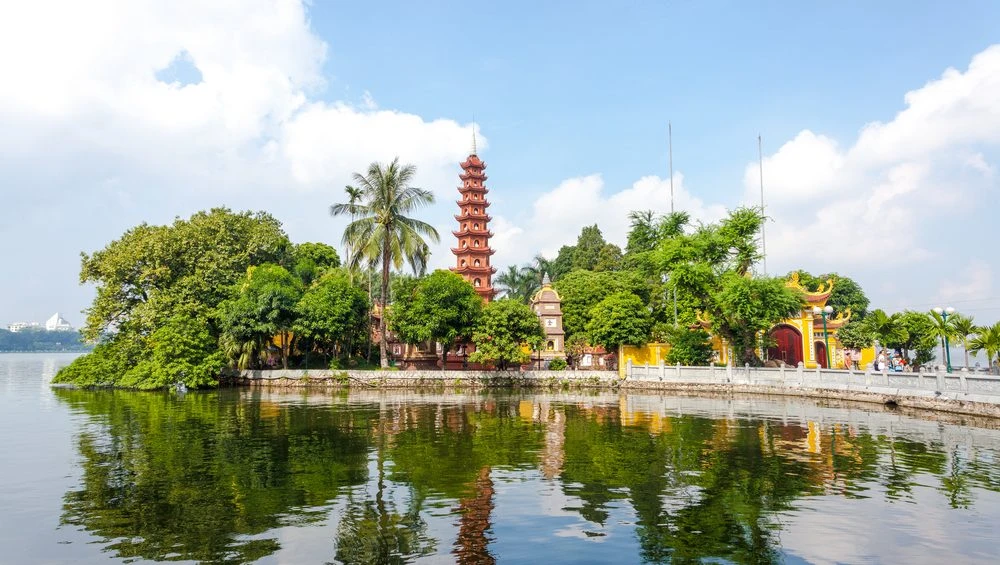
Among the oldest surviving architectural landmarks is the Tran Quoc Pagoda, established in the 6th century during the reign of Emperor Ly Nam De. The most prominent feature is the striking eleven-story red hexagonal tower, constructed to symbolize the stages of spiritual enlightenment. The design uses a vertical arrangement of niches housing white stone Buddha statues, culminating in a lotus-shaped crown symbolising purity and transcendence. The grounds also house a sacred bodhi tree, which grew from a cutting of the original Bodhi tree in India, under which the Buddha attained enlightenment, and was gifted during a state visit in 1958.
One Pillar Pagoda
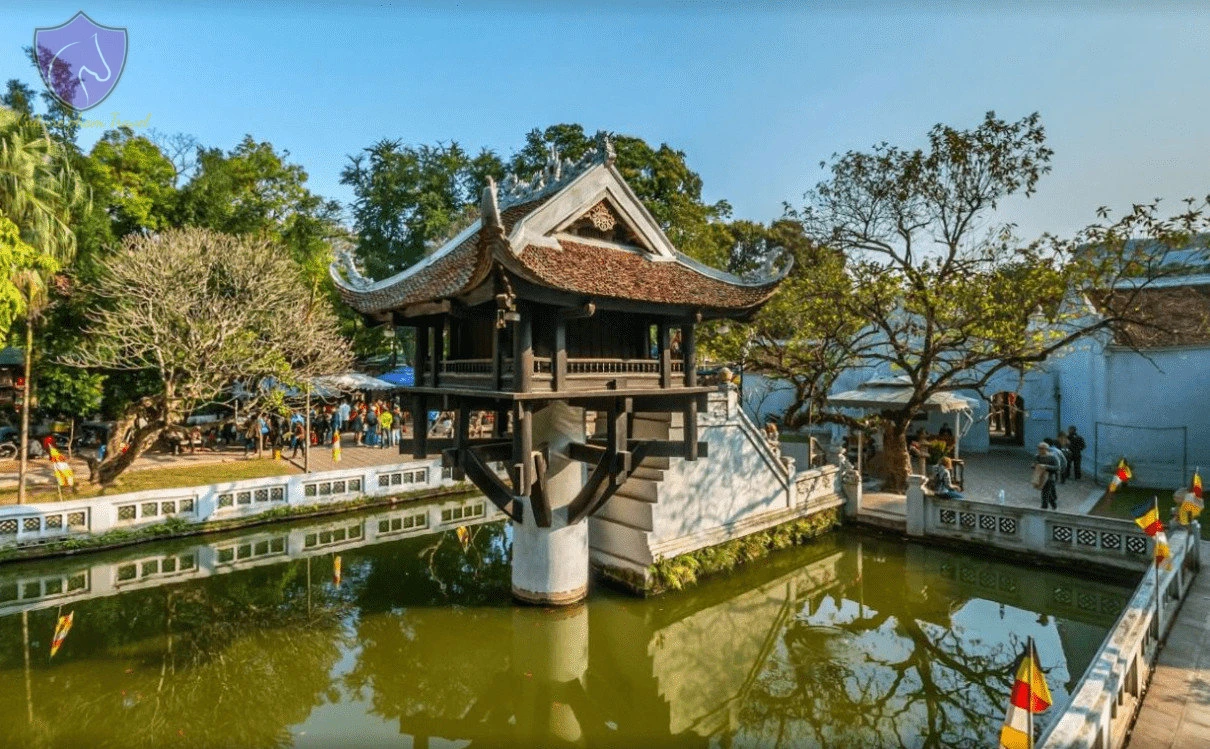
The One Pillar Pagoda (Chùa Một Cột), formally belonging to the Diên Hựu Pagoda complex, represents a unique spatial translation of imperial gratitude and Buddhist philosophy. Originally constructed in 1049 under Emperor Ly Thai Tong, the structure was designed to resemble a lotus flower blooming from a muddy pond, a primary Buddhist metaphor for spiritual purity emerging from worldly suffering.
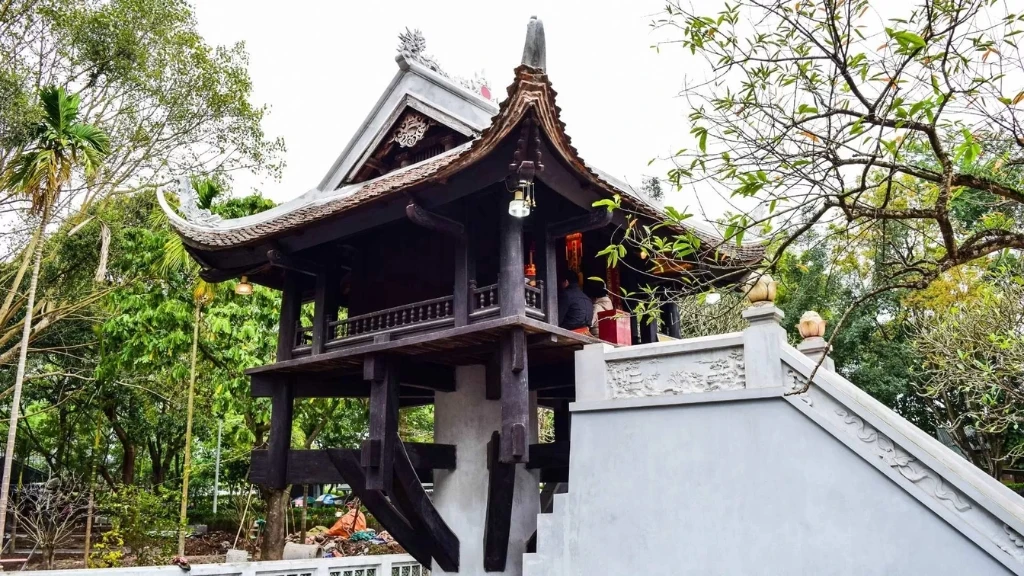
The structural system consists of a square wooden shrine, measuring three meters on each side, balanced atop a single stone column with a diameter of 1.2 meters and a height of 4 meters above the water line. Eight curved ironwood beams radiate outward from the central stone pillar to support the floor of the shrine, mimicking the petals of a lotus. The roof features four elegantly curved corners covered in traditional red scale tiles, topped with a relief carving of two dragons flanking a crescent moon, a traditional motif representing cosmic harmony and protection.
The Temple of Literature
The Temple of Literature (Văn Miếu – Quốc Tử Giám), founded in 1070 by Emperor Ly Thanh Tông, exemplifies the spatial organization of Confucian academies. Spanning over 54,000 square meters, the complex is oriented along a strict south-to-north axis divided into five distinct courtyards.
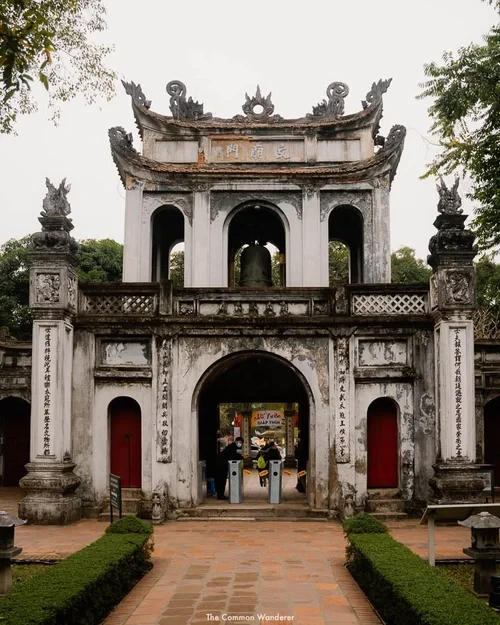
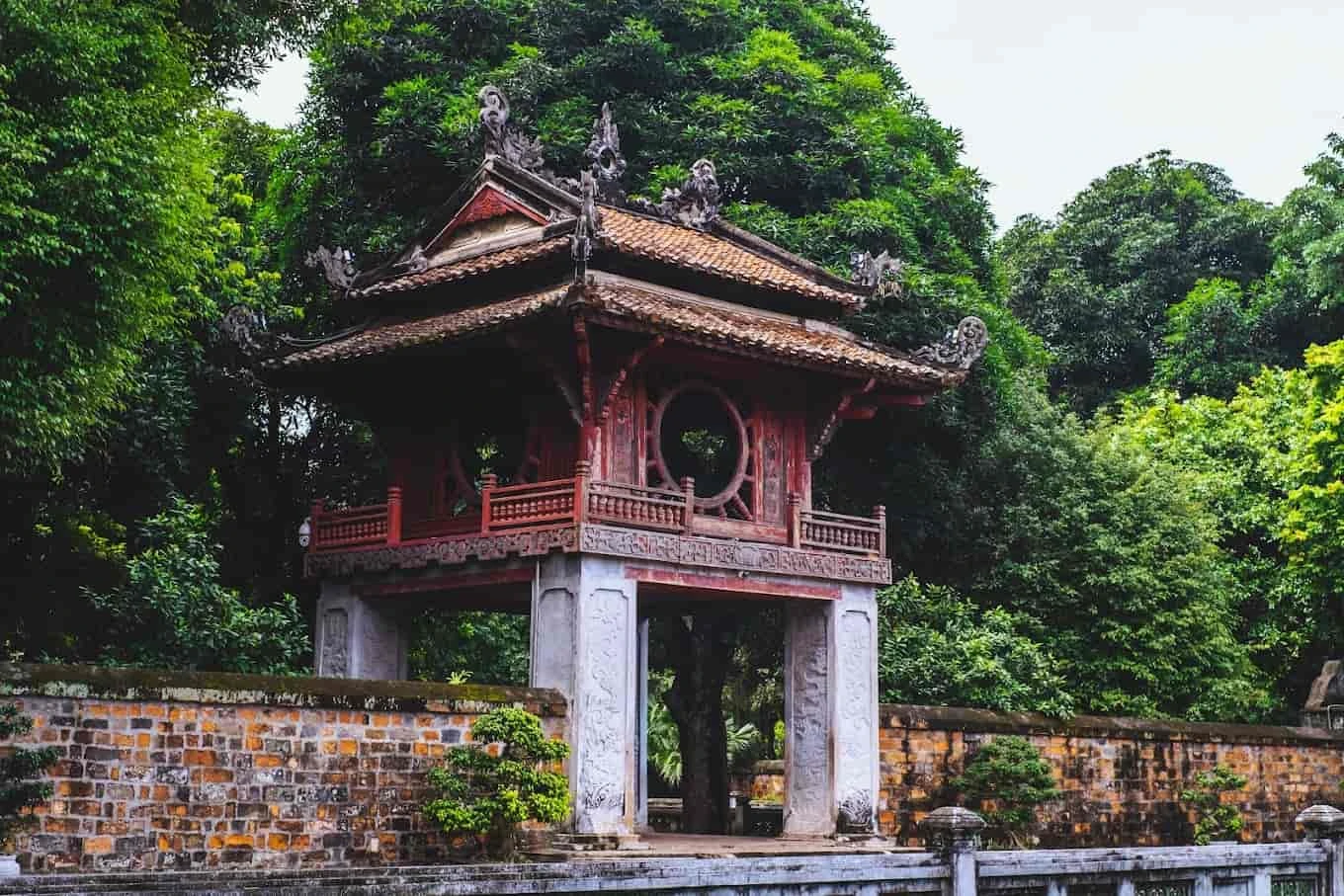
The first courtyard acts as a buffer zone where scholars entered through side gates named Attained Talent and Accomplished Virtue, emphasizing the Confucian belief in balancing intellectual capability with moral character. In the second courtyard stands the Khue Van Pavilion, built in 1805. This two-tiered timber structure rests on four solid brick pillars. The upper level features circular wooden windows with radiating spokes, symbolizing the radiating intellect of the Khue Star shining upon the earth.
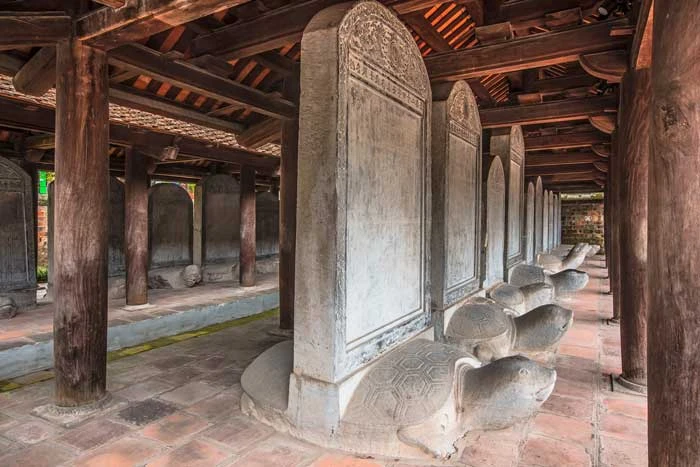
The third courtyard houses the Well of Heavenly Clarity, a square-shaped, stone-lined pond. Flanking this well are the 82 Doctoral Steles, which UNESCO recognizes. The fourth courtyard is the spiritual core of the complex, containing the Gate to Great Success, a grand House of Ceremonies, and a sanctuary dedicated to Confucius. It is characterized by deep red lacquerware, gilded timber columns, and traditional hanging lanterns.
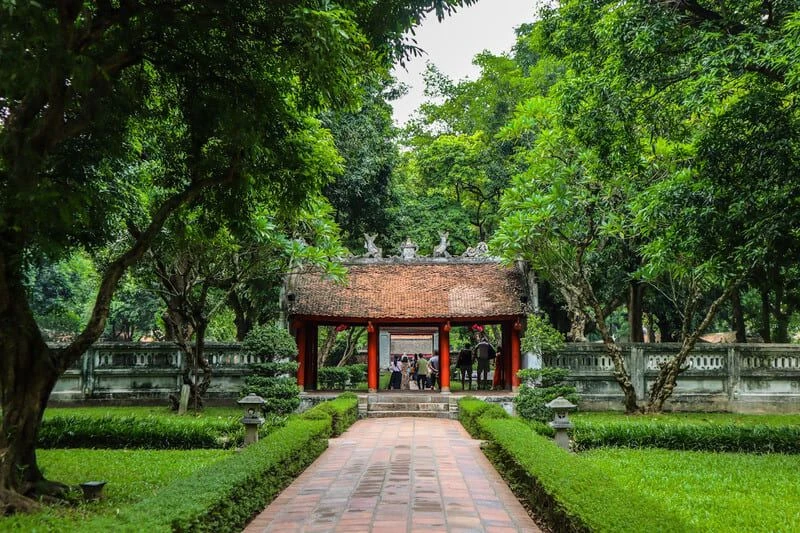
Finally, the fifth courtyard is the site of the historic Imperial Academy, which operated as Vietnam’s first national university. The buildings have been reconstructed to showcase traditional multi-tiered, hip-roofed schoolhouses and dormitories.
Gothic, Neoclassical, and Beaux-Arts Structure
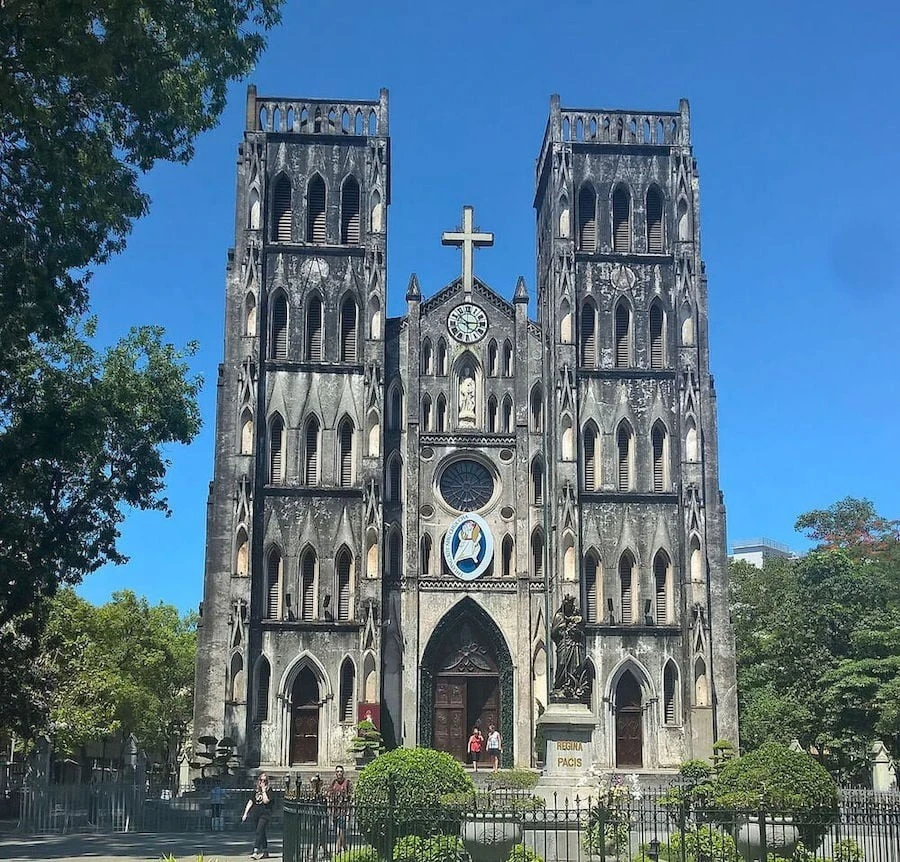
The early colonial phase sought to recreate the visual landscape of France. St. Joseph’s Cathedral, completed on Christmas Eve in 1887, was built on the ruins of the ancient Bao Thien Pagoda, signaling the political and religious shifts of the era. The cathedral was designed in the Gothic Revival style, modeled after Notre-Dame de Paris.
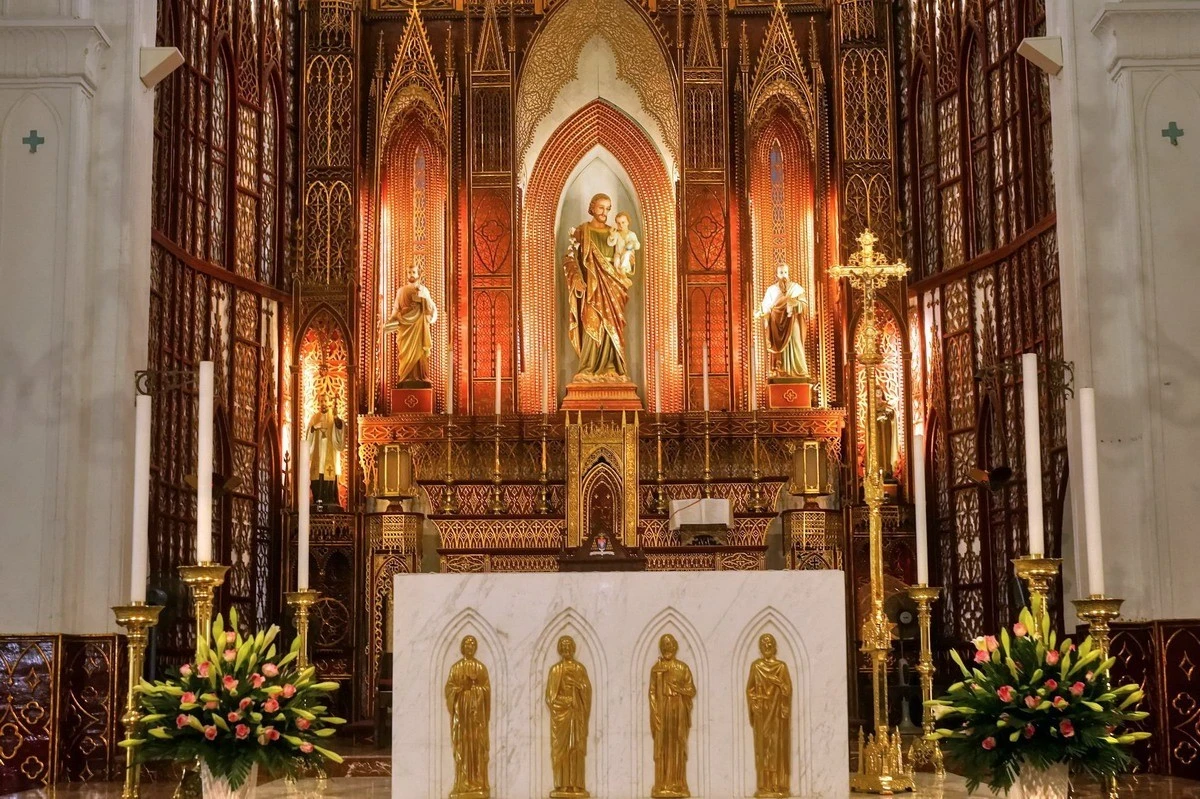
The structure measures 64.5 meters in length and 20.5 meters in width, flanked by symmetrical twin bell towers rising 31.5 meters. It was constructed using local terracotta bricks bound with a mortar composed of lime, brown sugar, and ground rice paper. The exterior walls are finished with a textured plaster that has weathered to a charcoal-grey patina. The interior features a soaring ribbed-vault ceiling, pointed lancet windows, and vibrant hand-painted stained glass imported from France.
Hanoi Opera House
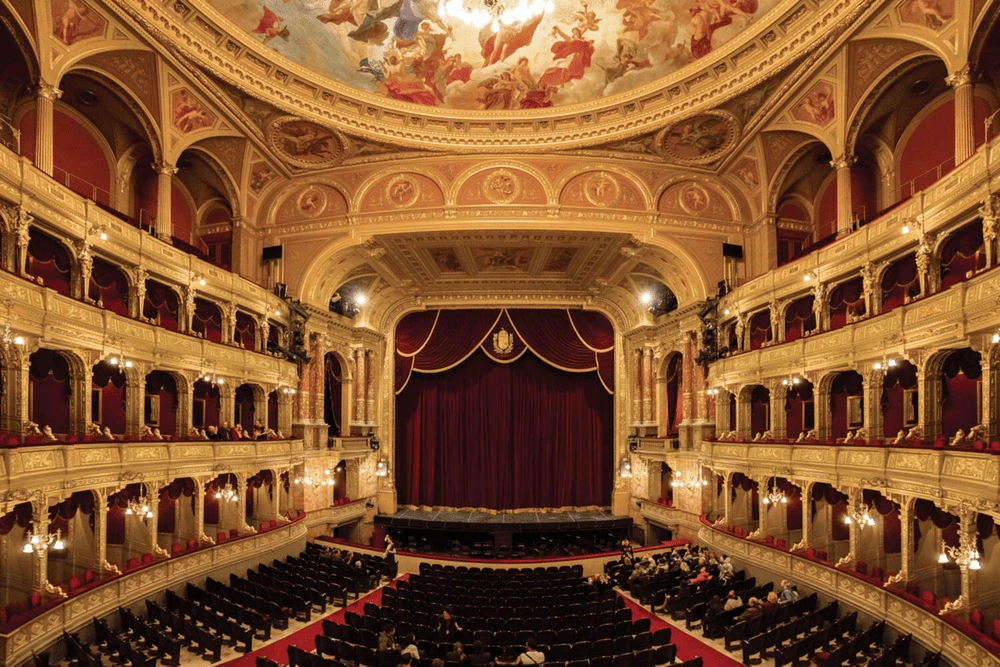
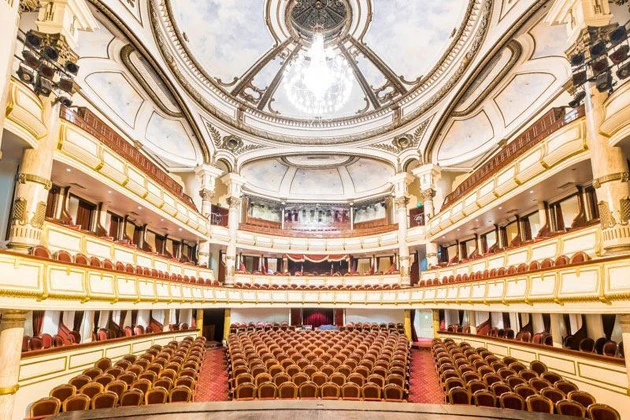
The Hanoi Opera House, built between 1901 and 1911 by architects François Lagisquet, V. Harley, and Broyer, represents the peak of Beaux-Arts eclecticism in Southeast Asia. Modelled closely on the Palais Garnier in Paris, the building sits on a foundation stabilized by 30,000 bamboo stakes driven into swampy terrain near the Red River.
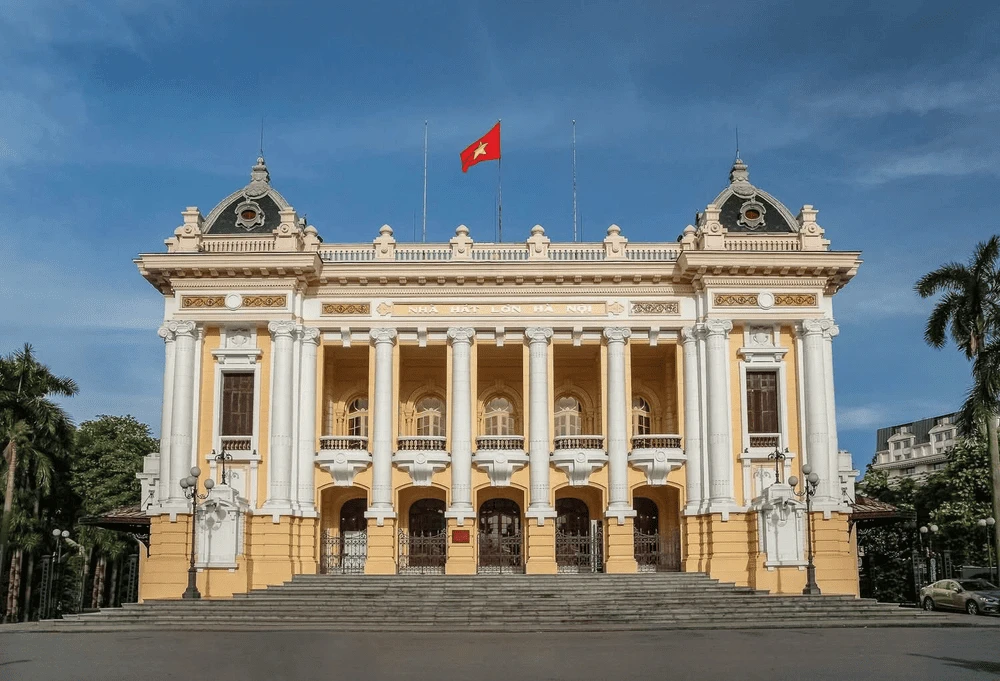
The exterior facade features rows of Roman Ionic columns, arched loggias, and a slate-tiled mansard roof. The interior is highly ornate, utilizing Italian marble floors, decorative plasterwork, ceiling murals, and a central bronze chandelier surrounded by three tiers of red velvet seating.
Vietnam National Museum of History
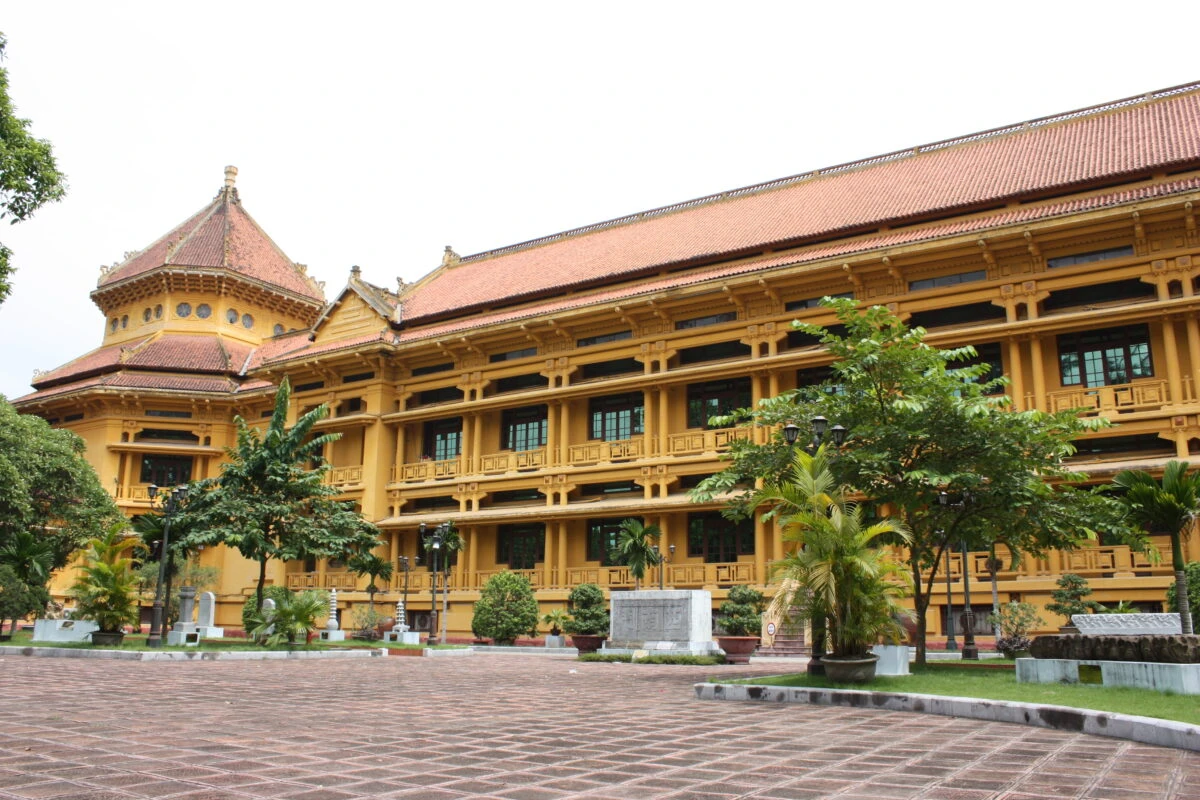
The Vietnam National Museum of History, constructed between 1926 and 1931, is designed around a central octagonal exhibition hall capped by a high, multi-tiered dome. The dome’s profile was inspired by the bell tower of the historic Keo Pagoda in Thai Binh Province. Beneath the dome, the exhibition wings feature wide double-roofs with deep overhanging eaves supported by paired concrete consoles that imitate traditional wooden framing.
Ho Chi Minh Mausoleum
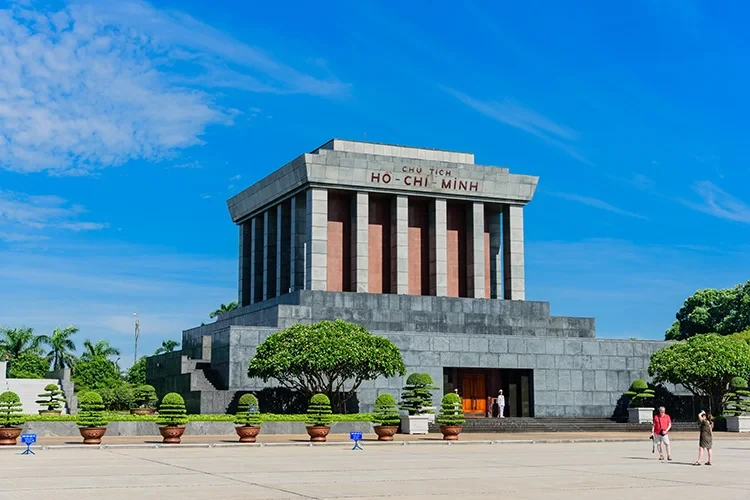
The Ho Chi Minh Mausoleum, constructed between 1973 and 1975 in Ba Dinh Square, the historic site where Ho Chi Minh read the Declaration of Independence in 1945. Designed by Soviet architect Garol Isakovich, the structure was inspired by Lenin’s Mausoleum in Moscow but incorporates distinct Vietnamese cultural elements.
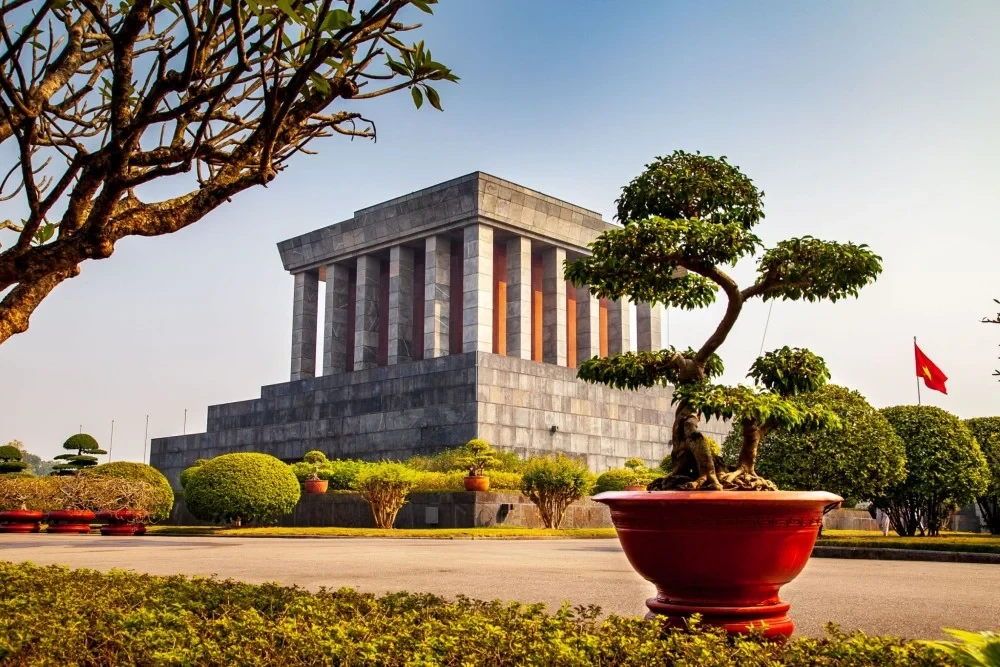
Classified stylistically as Stripped Classicism, the mausoleum is a square building measuring 21.6 meters high and 41.2 meters wide, featuring a colonnade of square granite columns. The top of the building features a sloping roofline designed to mimic the profile of traditional Vietnamese communal stilt houses.
The construction materials were sourced from different regions of Vietnam to symbolize national unity: the grey granite exterior was quarried in Thanh Hoa, the interior features pink-veined marble from Ha Tay, the main entrance doors are carved from precious timber from the Central Highlands, and the garden is planted with 79 cycad trees symbolizing Ho Chi Minh’s age at his death. Inside, the grand front hall features a marble-lined chamber on a bronze bed decorated with stylized lotus patterns, shielded by high-impact glass on three sides. The ceiling is equipped with a metal canopy containing integrated, automated cooling and lighting systems.
The Lotte Center Hanoi
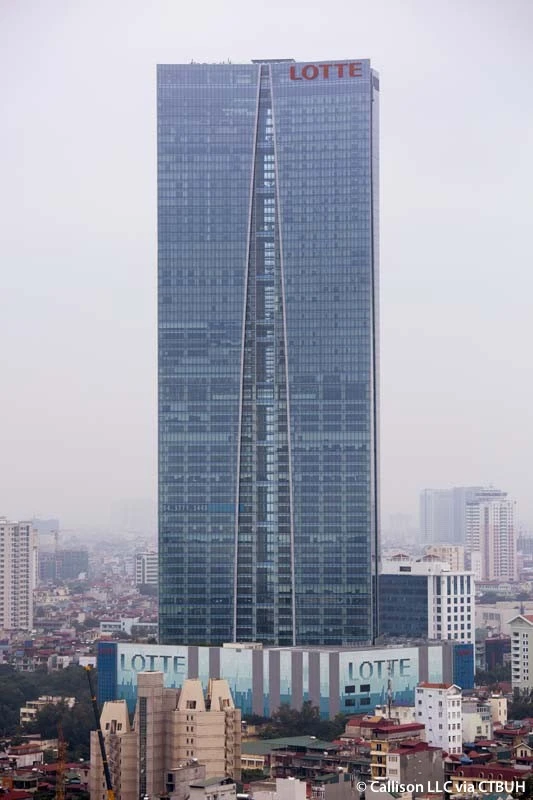
The Lotte Center Hanoi, completed in 2014, stands 272 meters tall with 65 floors, making it the second-tallest high-rise in Hanoi. Designed by the American firm Callison with detailed drawings by South Korea’s Junglim Architecture, the tower’s sleek, tapered form was inspired by the traditional Vietnamese áo dài dress.
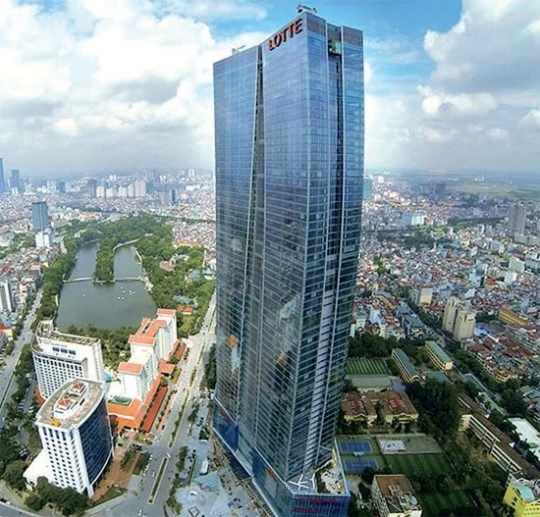
The structure features a deep vertical slit that separates the building into two distinct towers. Along this spine, architects integrated five-story vertical sky garden atria that climb the entire elevation of the building. The tower is oriented along a southwest-northeast axis, exposing only its narrowest profiles to low sun angles, which minimizes solar heat gain during hot summer months.
The sky gardens are positively pressurized, preventing hot outside air from infiltrating while facilitating cross-ventilation in the adjacent office and hotel zones. The integration of sky gardens and double-glazed low-emissivity glass reduces artificial electrical lighting requirements by up to 70% compared to conventional office high-rises.
Keangnam Hanoi Landmark 72
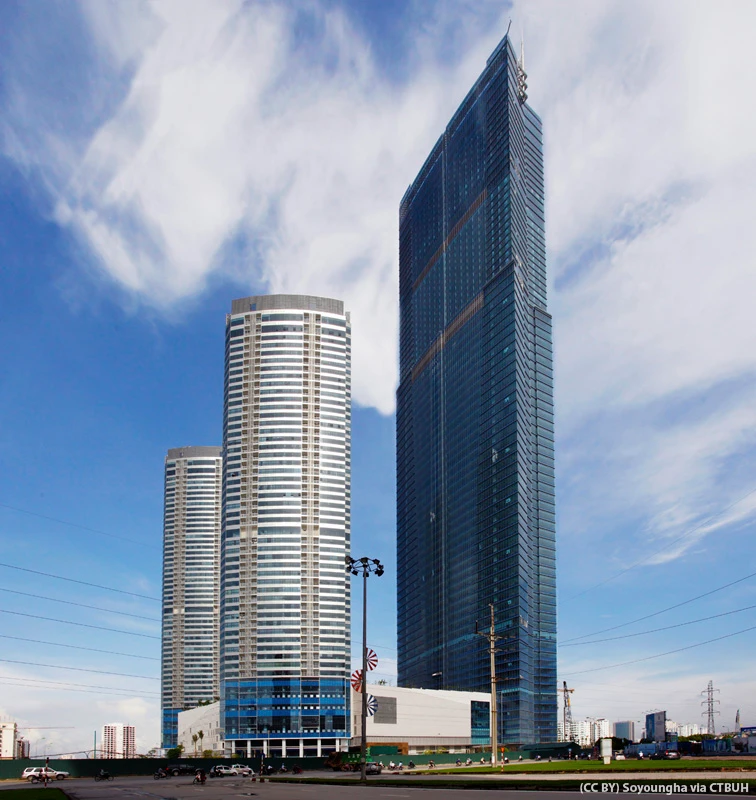
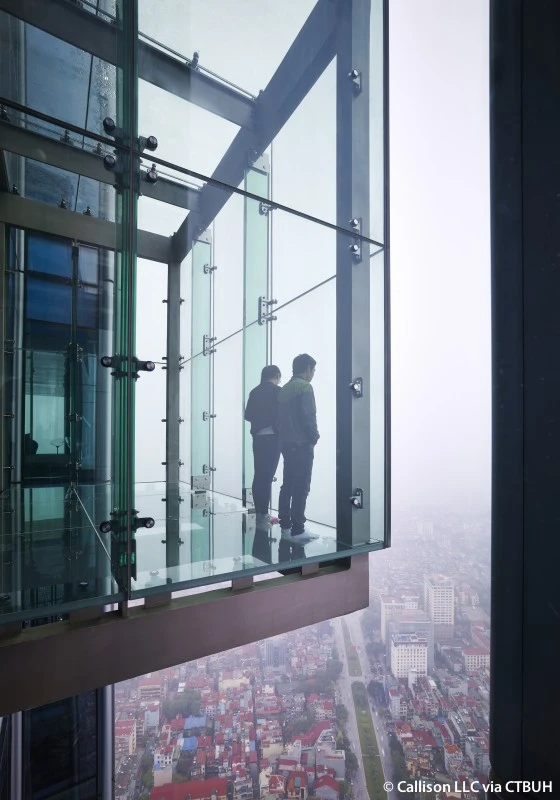
The Keangnam Hanoi Landmark 72, completed in 2011, is a supertall mixed-use complex consisting of a 72-story central tower and two 48-story residential towers. Developed by South Korea’s Keangnam Enterprises, the complex was designed as a self-contained vertical city containing offices, a 5-star hotel, serviced apartments, and retail spaces.
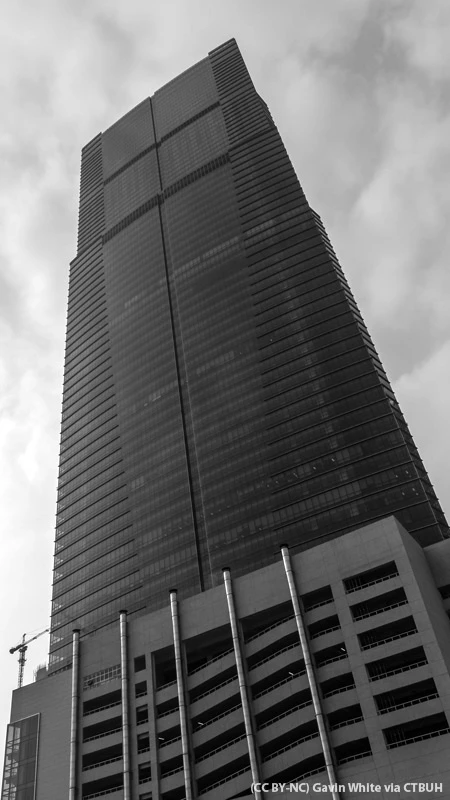
The towers are clad in energy-efficient, insulated glass panels designed to reduce heat transfer in tropical climates. The central tower features the Sky 72 Observatory on the top floor, which houses interactive displays, a 3D Trick Art Museum, and the symbolic Wish Wall, where visitors display colourful messages on brick panels
The Hanoi Museum: The Inverted Pyramid
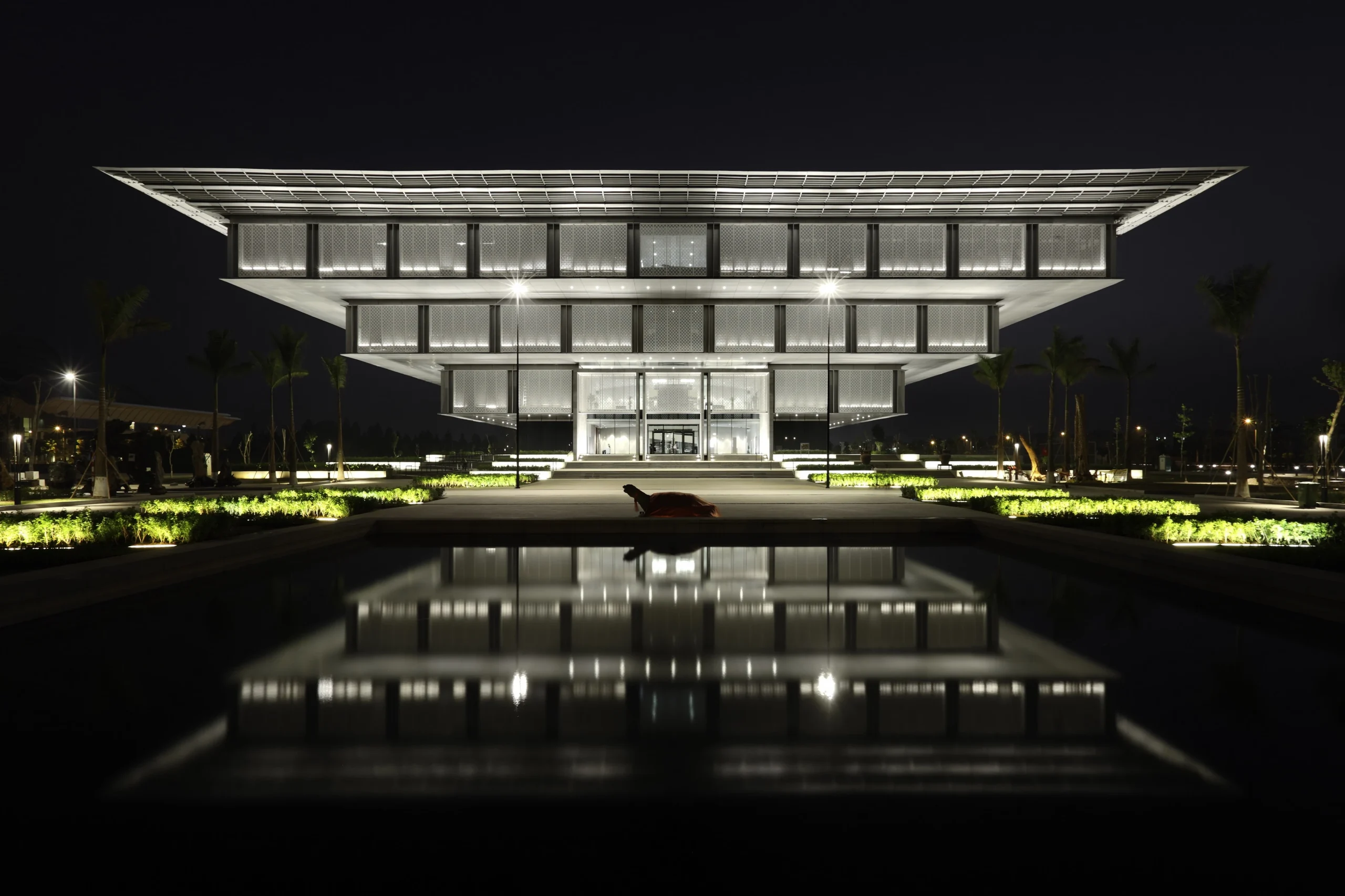
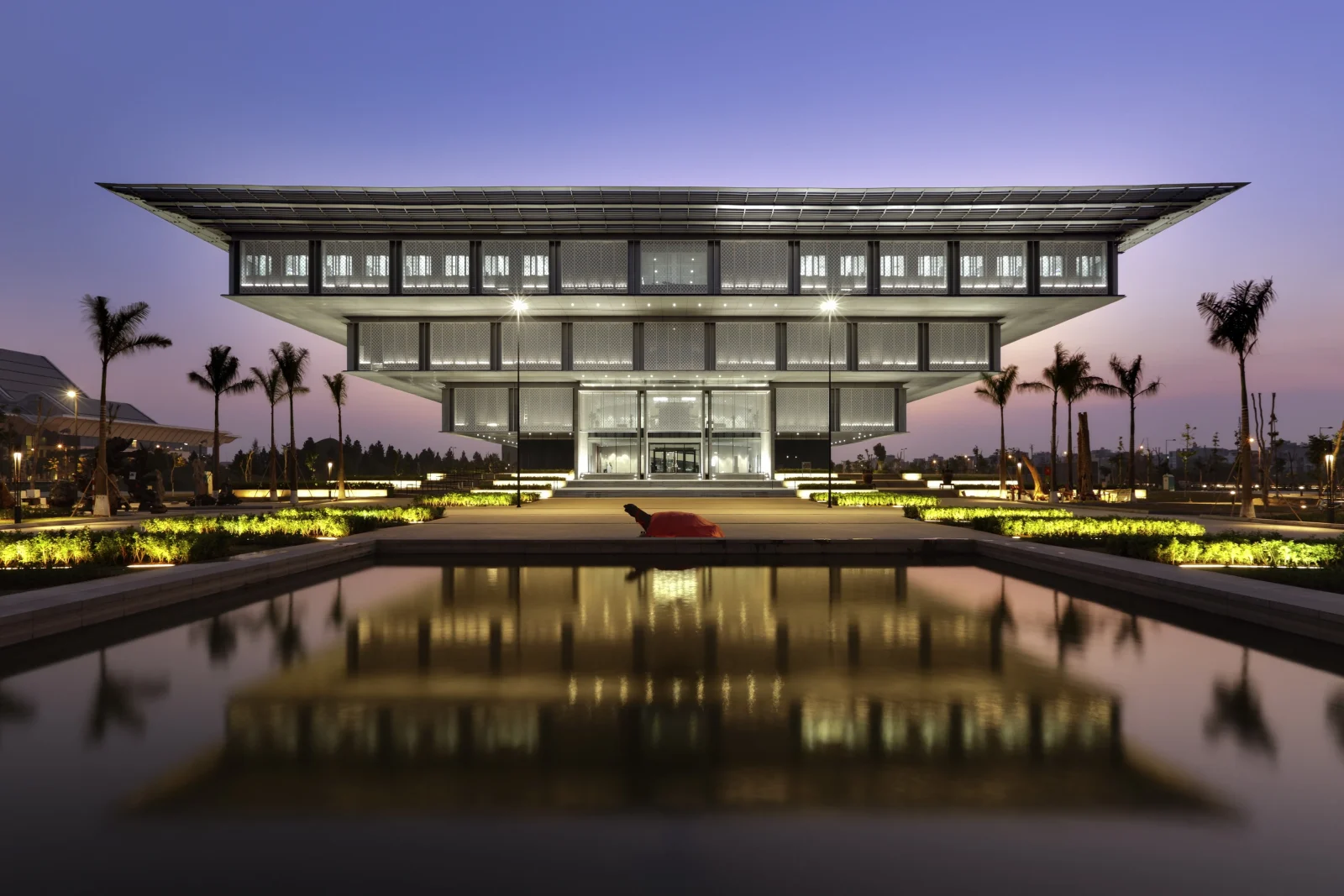
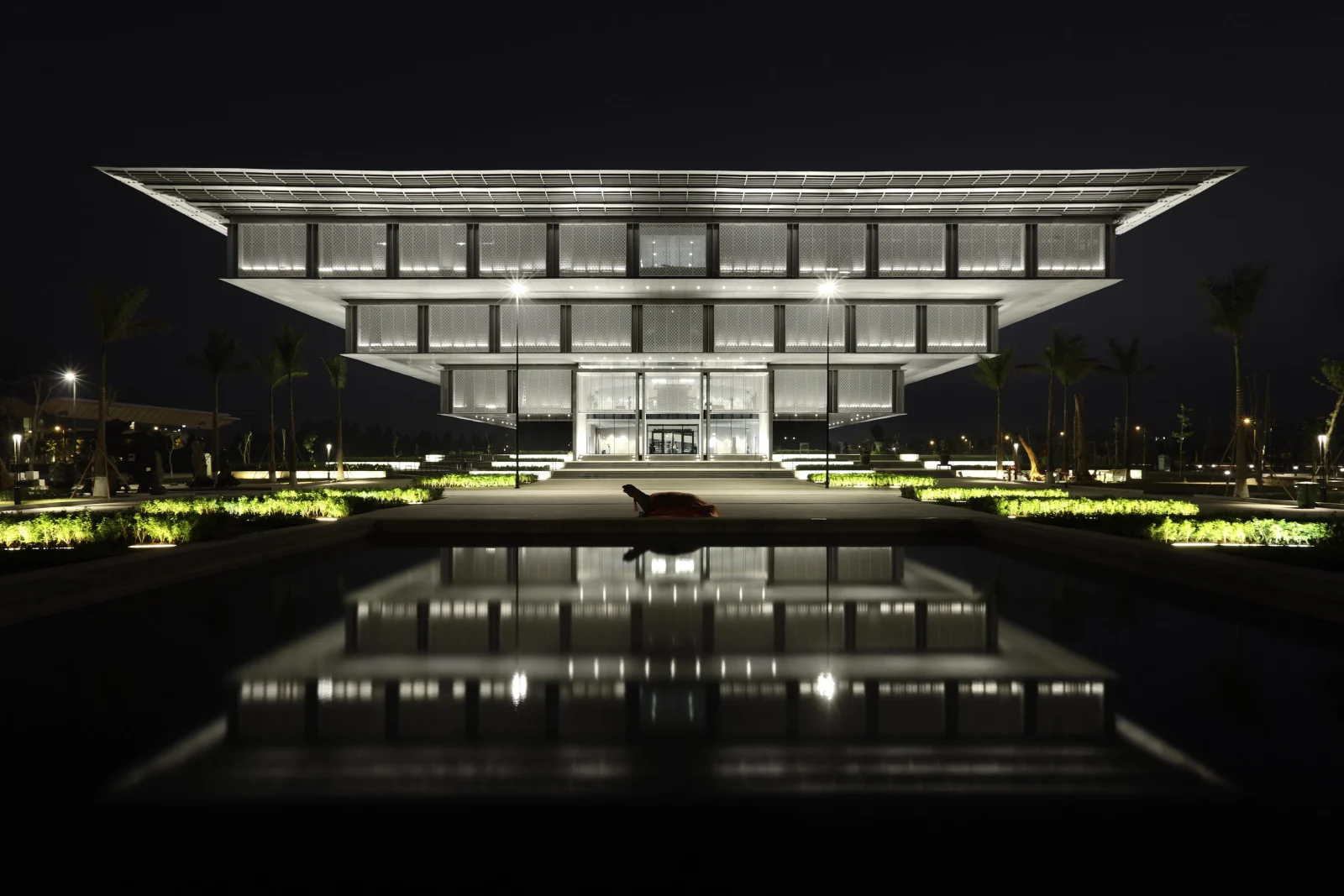
The Hanoi Museum, located in South Tu Liem district, is a striking example of structural expressionism. Designed by German firm gmp Architekten, the building has the shape of an inverted square pyramid. The structure features four stories that get progressively larger as they go up, with each level cantilevered over the one below to provide shade for the lower floors.
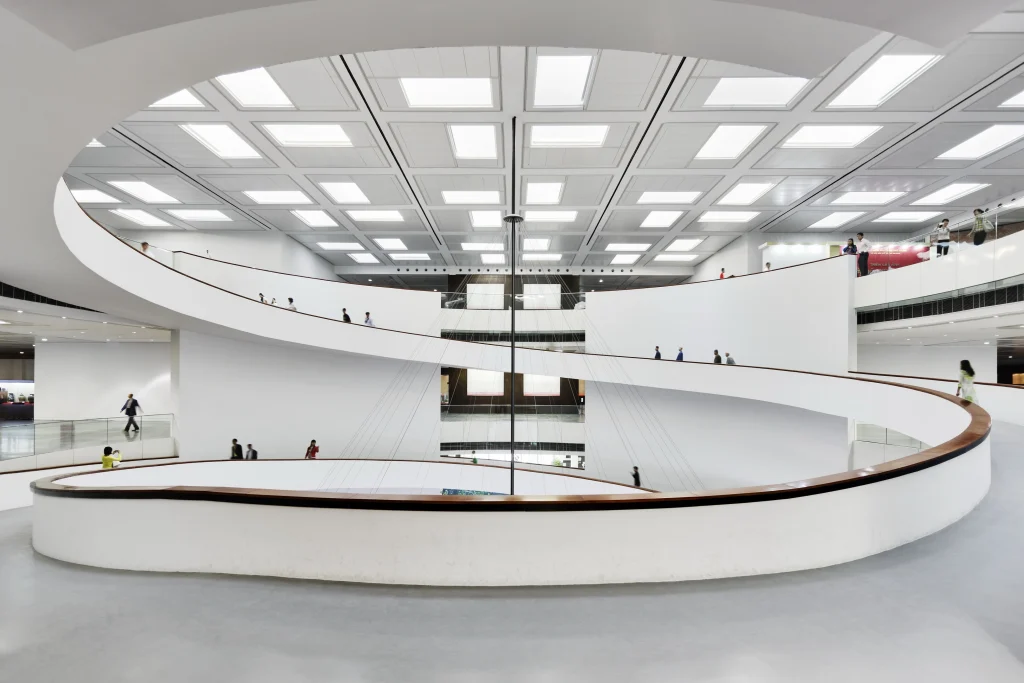
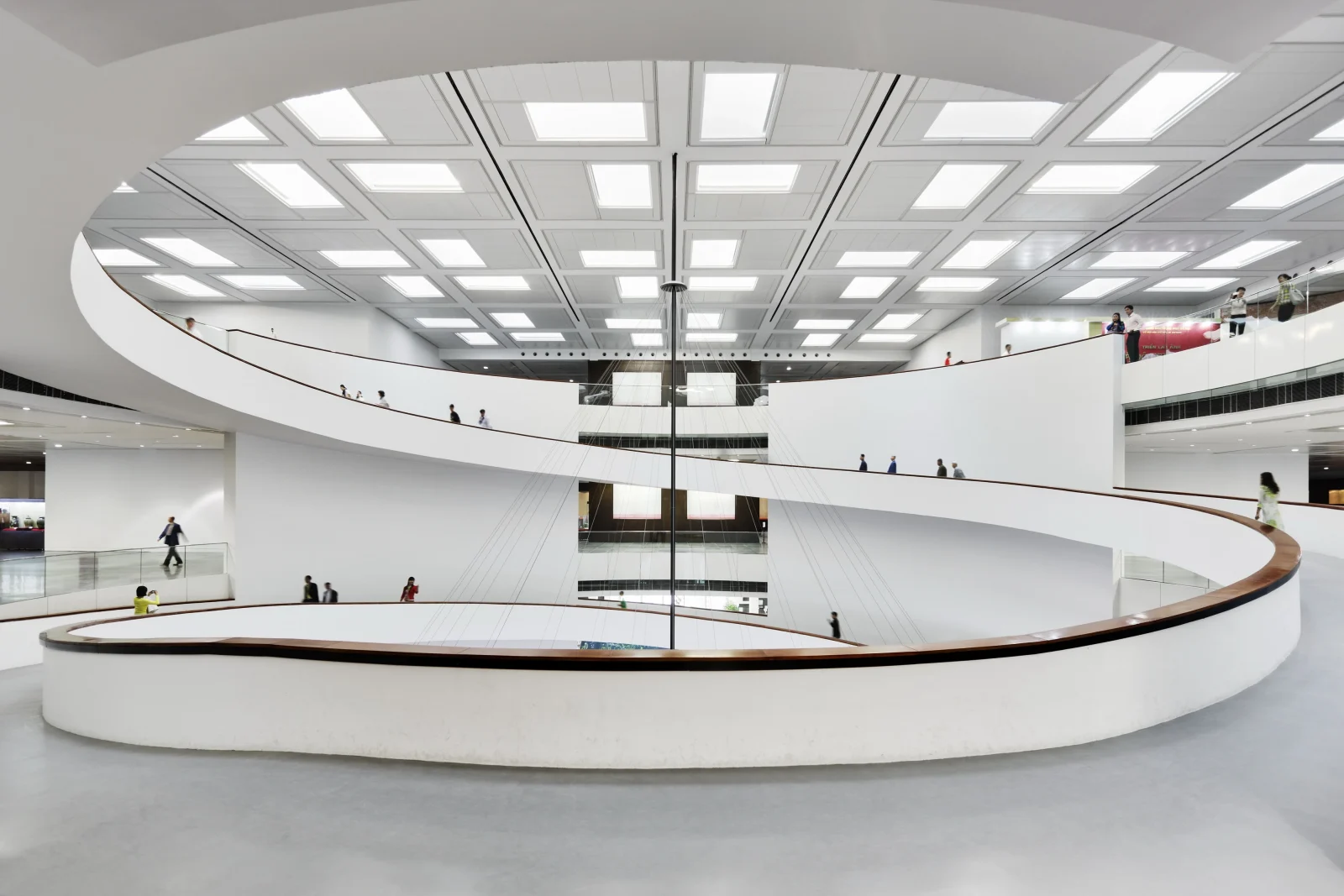
Visitors enter the museum through a grand, light-filled central atrium containing a circular spiral ramp that links the exhibition floors. The exterior facade is clad in frosted glass paneling, which diffuses bright daylight to protect the historical artifacts inside from UV damage while reducing the energy needed for artificial interior lighting.
These landmarks indicate how Hanoi’s urban fabric captures centuries of transformation, blending royal traditions, French colonial elegance, and modern development into a uniquely timeless cityscape.
Explore Courses
.jpg "Ondrej Chybik - Rethinking Architecture")