

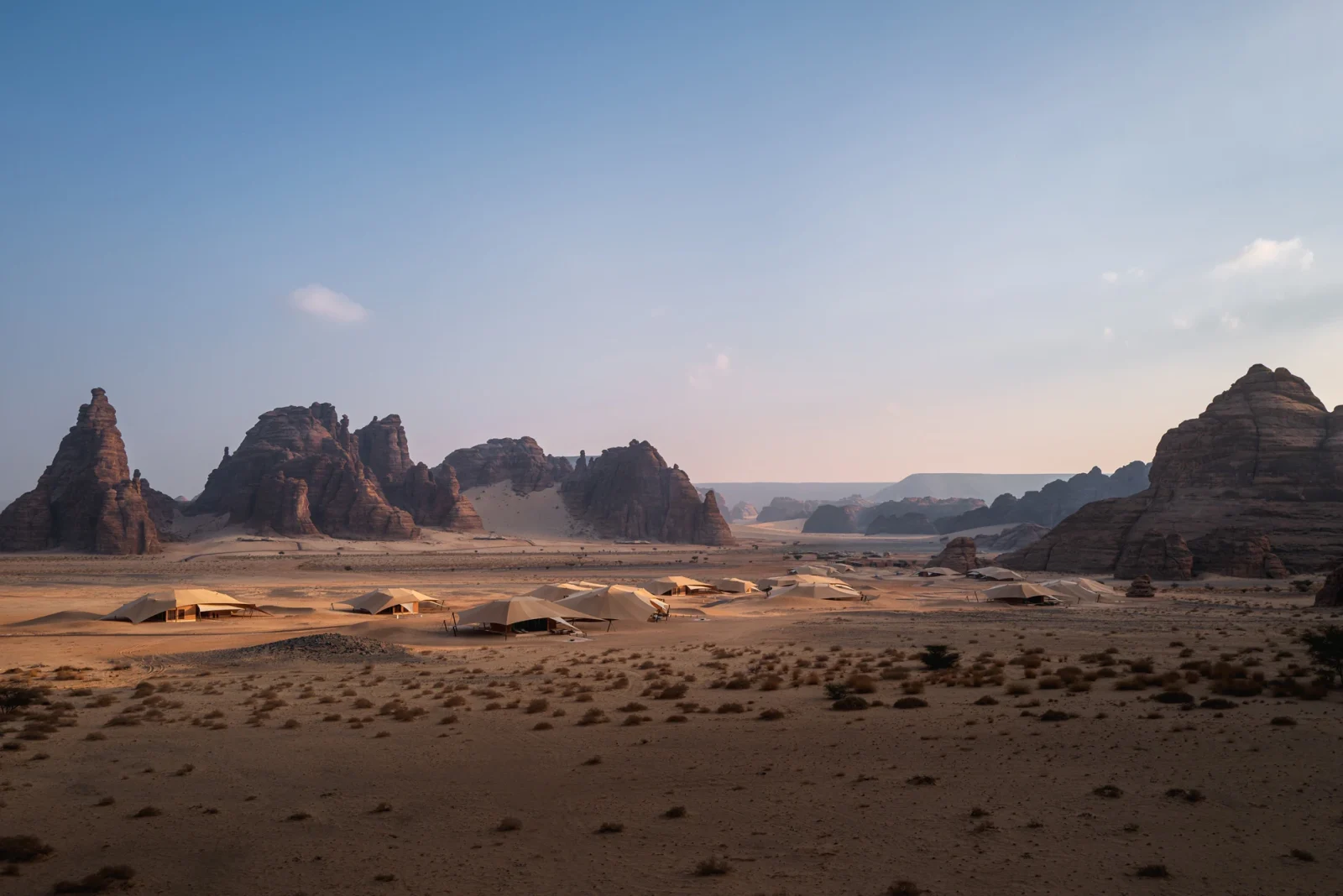
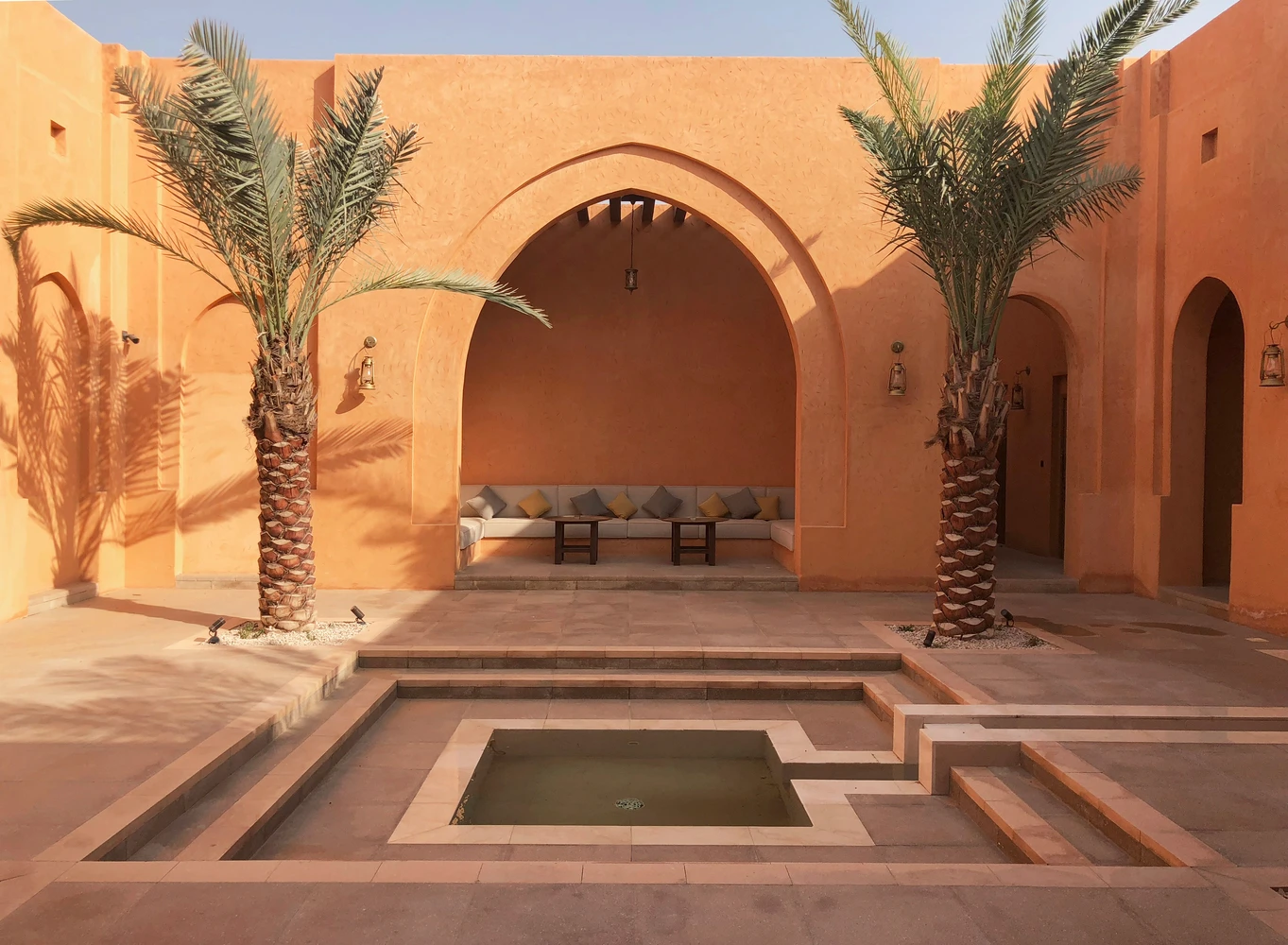
More than ever, travel is changing and leaning toward thoughtfully designed retreats offering more than just an escape but a sense of calmness set within quiet, sandy landscapes. Desert retreats are becoming a favorite destination, drawing people to sun-warmed environments where architecture gently blends into the dunes.
The architecture of the retreats sits among the desert landscapes, with spaces rooted in the land, shaped by the textures of the desert. Retreats designed to feel effortless and grounded, where experiences are immersive, where silence, light, and landscape come together to reconnect you with the sandy surroundings.
Desert architecture beautifully makes the most of wide horizons and open skies, creating spaces that feel calm, immersive, and closely connected to nature. In the sandy, quiet settings, designers create retreat designs that work gently with the landscape, using light, materials, and scale to shape and add to the experience. The stillness of the desert, combined with its raw beauty, creates a natural pause where silence, space, and simplicity come together, offering visitors a true sense of reset.
These six iconic desert retreats are reshaping the aesthetics of what a getaway can feel like, blending desert sculptural architecture with sandy dunes while standing out in their own quiet way.
1. Desert Rock | Saudi Arabia
Architect: Oppenheim Architecture
Typology: Hospitality | Hotel + Wellness
Location: Saudi Arabia | UAE
Construction: 2024
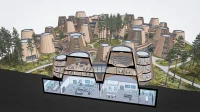
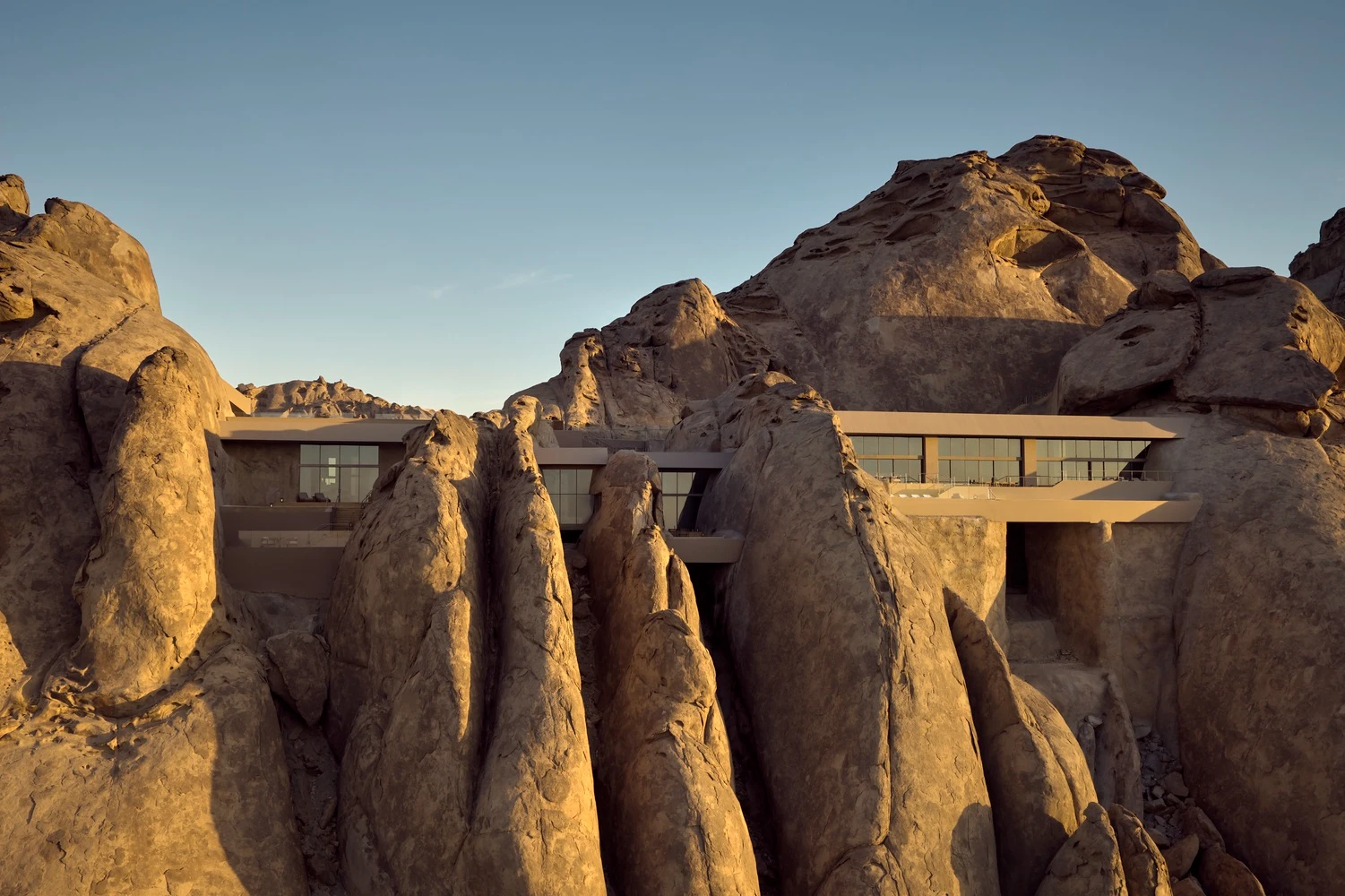
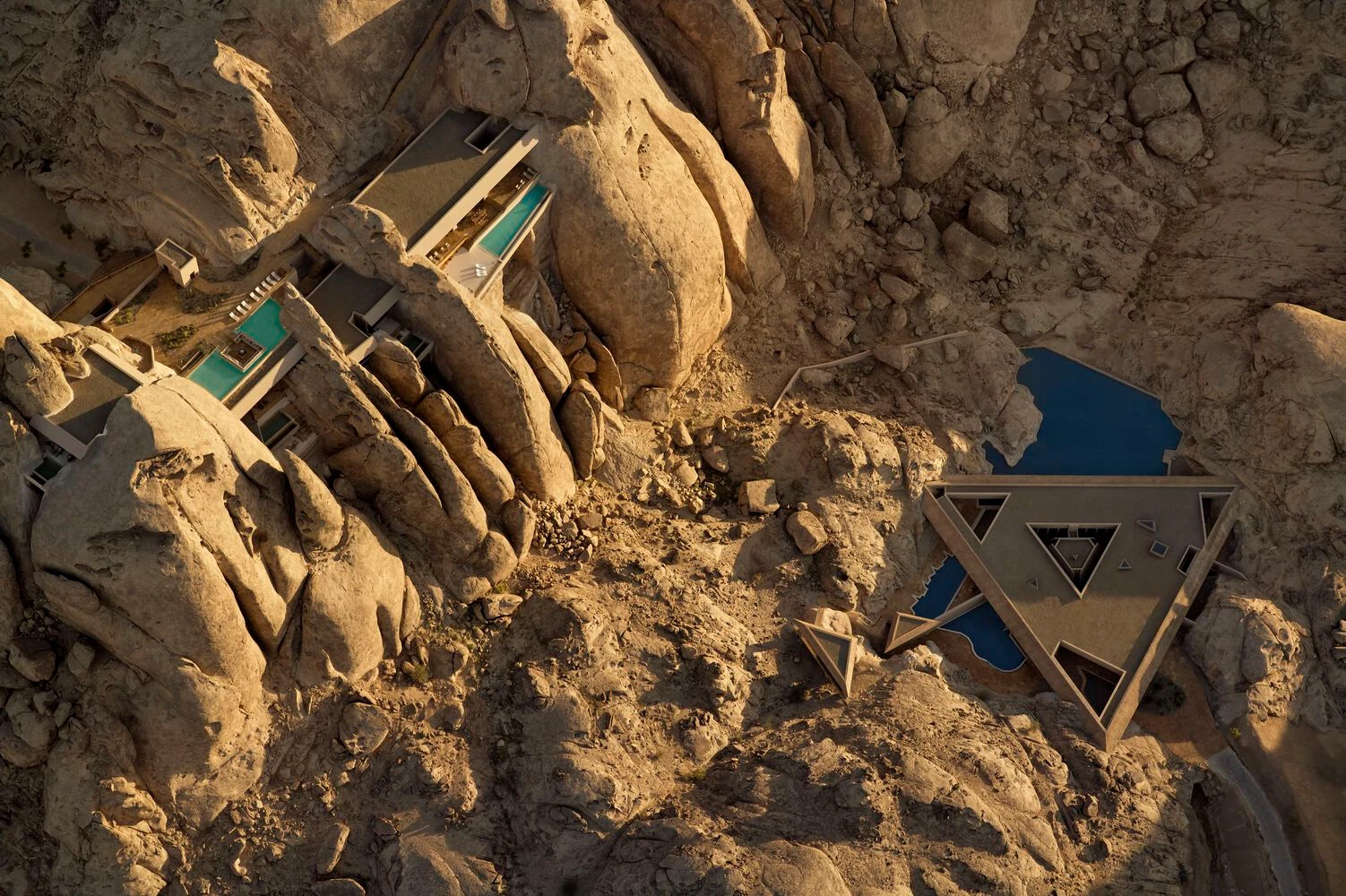
Set within the vast desert landscapes of Saudi Arabia, Desert Rock emerges as an ambitious eco-tourism vision that redefines hospitality in extreme terrain. Designed by Oppenheim Architecture, the retreat is carefully carved into ancient granite mountains, allowing architecture and nature to exist as one.
Surrounded amidst a mix of desert, volcanic landforms, and distant coastlines, the architecture responds to its rugged context with a design that feels grounded and elemental. The design’s identity, inspired by the surroundings, creates an immersive experience shaped by silence, scale, and raw natural beauty.
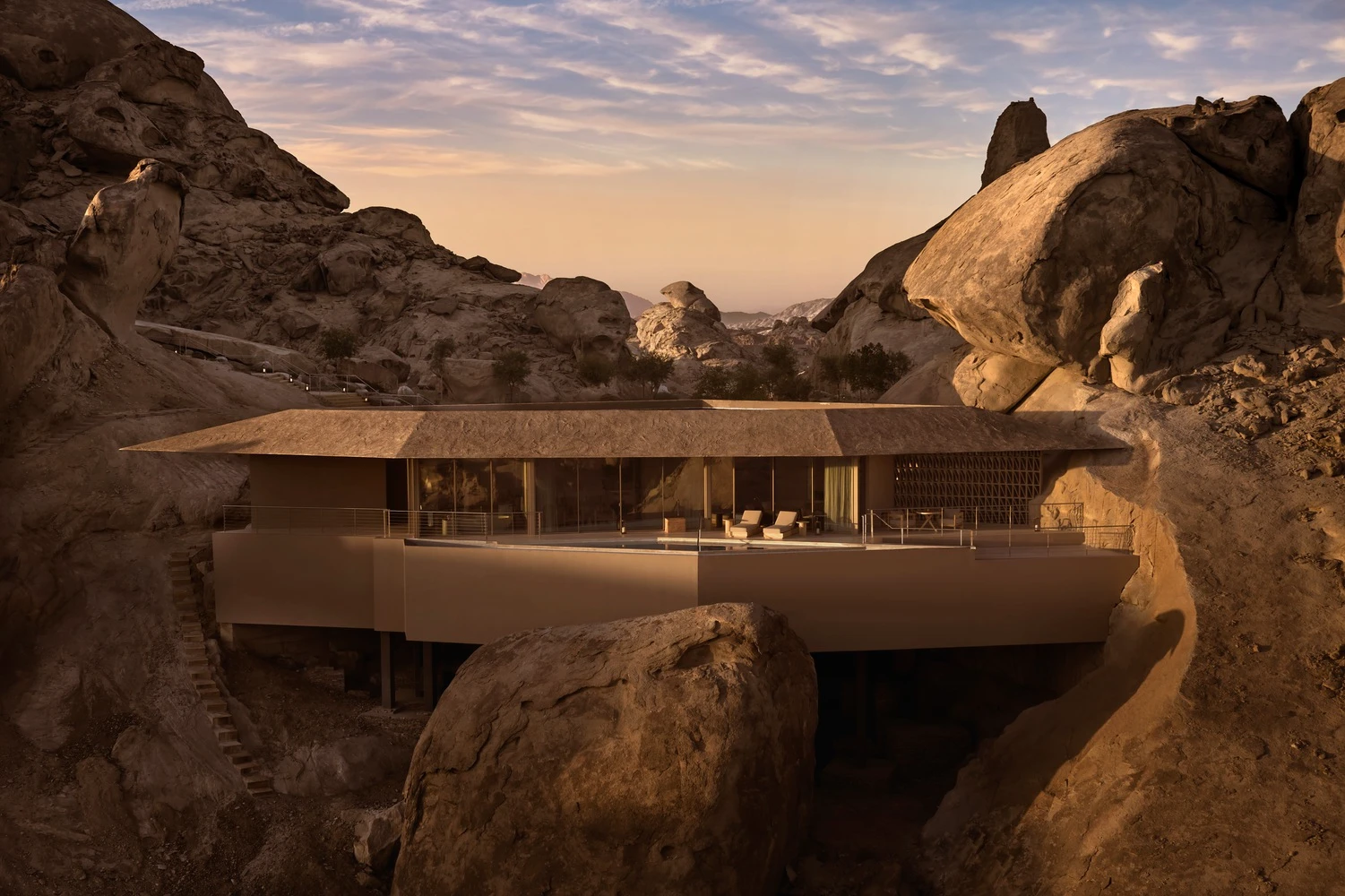
The architecture almost disappears into the rugged terrain, inspired by ancient Nabatean settlements that shaped this landscape. Spaces are tucked into natural crevices, caves, and shaded slopes, naturally creating cooler microclimates and comfort while staying closely connected to the land.
The buildings blend quietly into the rock; by night, they glow softly like scattered lanterns across the mountains. Building materials sourced from the site reflect a thoughtful approach where sustainable architecture and design come together in harmony with the desert.
2. Amangiri | USA
Architects: Marwan Al Sayed, Wendell Burnette, and Rick Joy
Typology: Hospitality | Hotel Wellness
Location: Canyon Point, Utah | USA
Construction: 2009
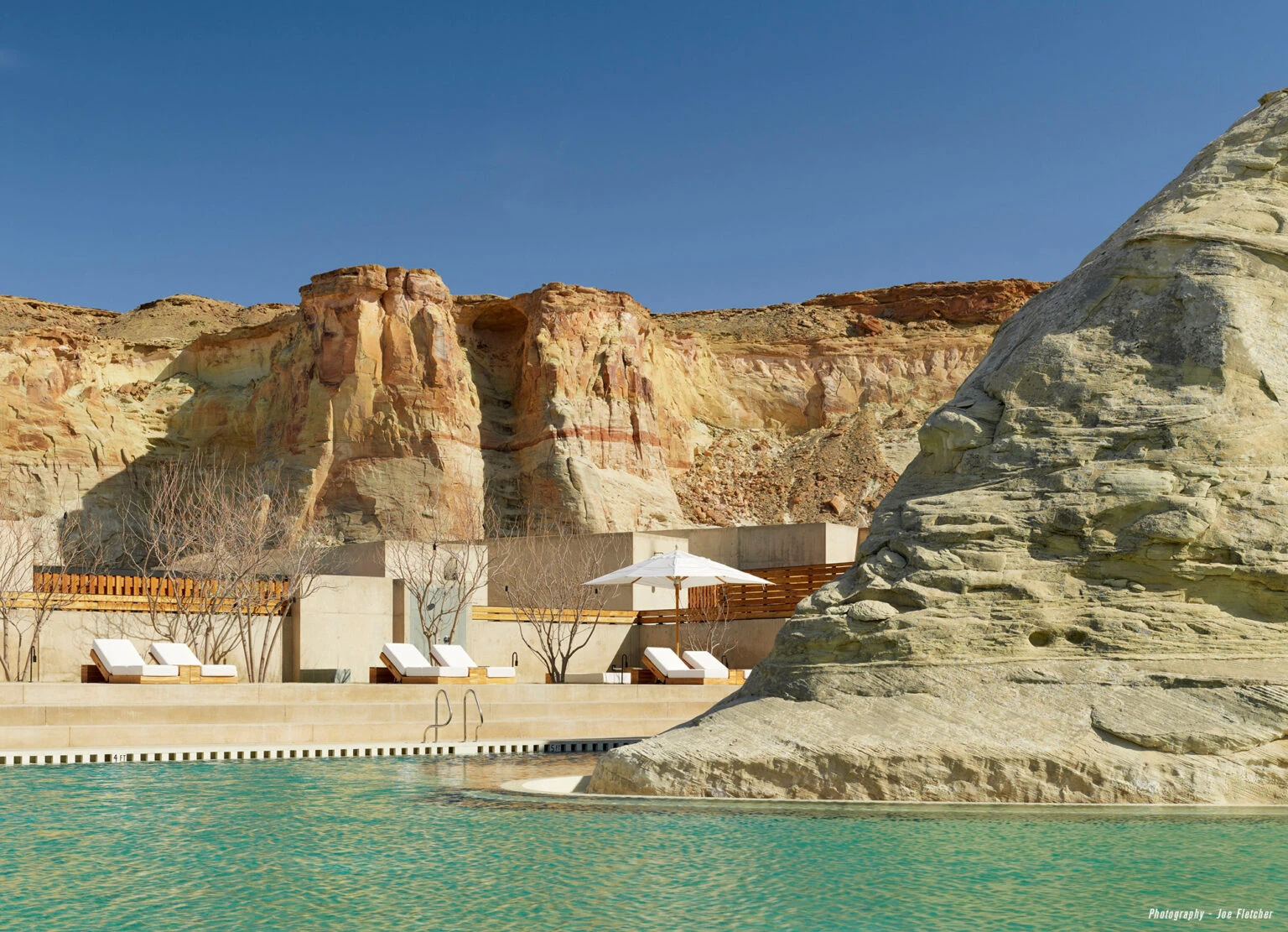
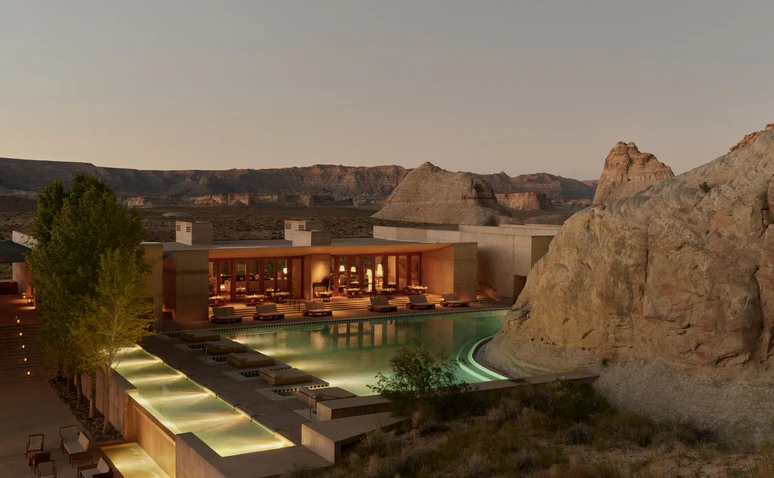
Set within the vast desert of Utah, Amangiri is a powerful retreat where the architecture is shaped by its landscape. Surrounded by sweeping views of mesas, national parks, and the Navajo Nation, the resort’s design feels deeply rooted in its dramatic setting. Spread across more than 600 acres, it was designed by a thoughtful collaboration between architects Marwan Al-Sayed, Wendell Burnette, and Rick Joy. They have reinterpreted luxury as quiet and immersive, where modern design gently blends with the desert, creating a place that is grounded and unforgettable.
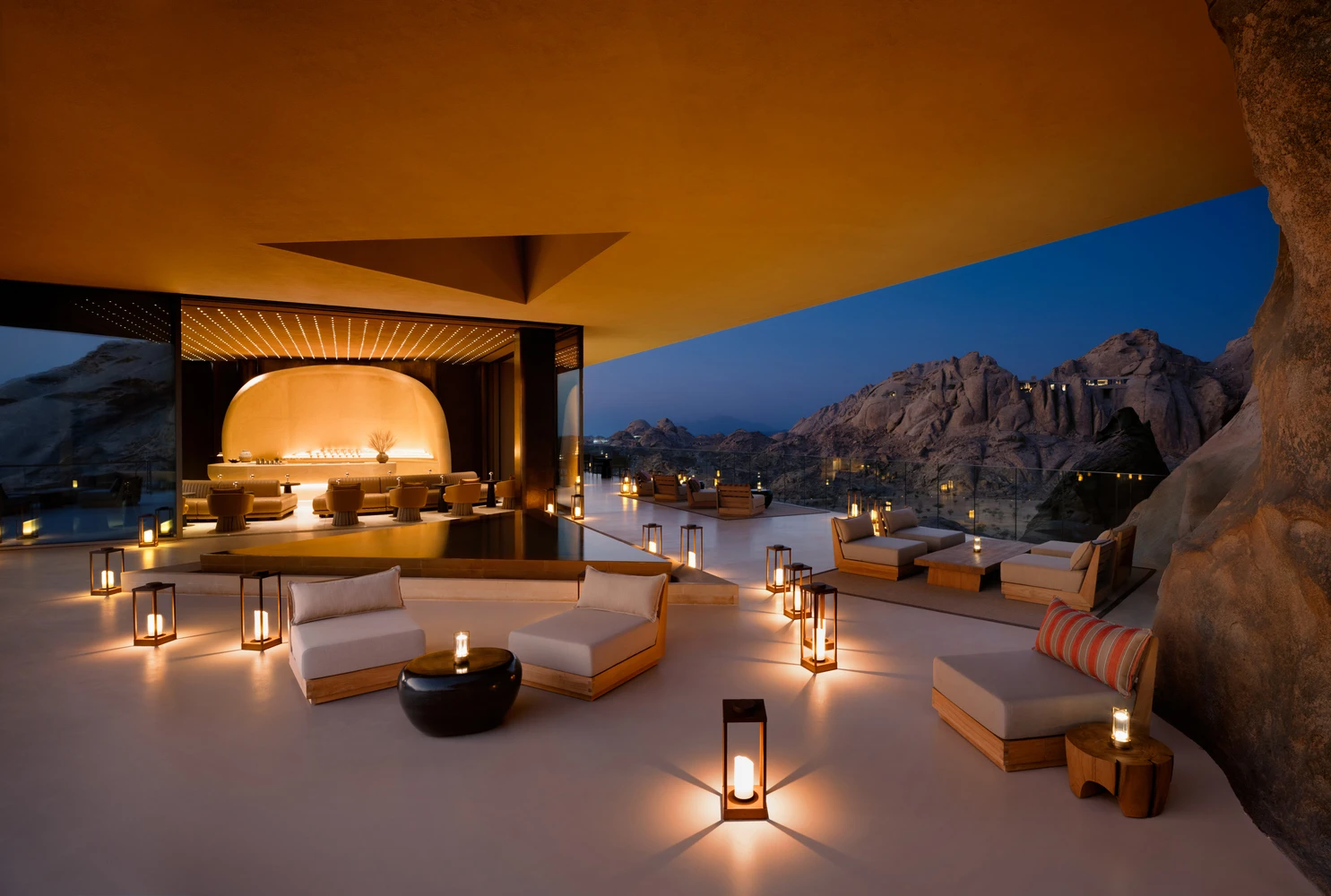
The thoughtful yet bold design is shaped to echo the quiet drama of southern Utah’s cliffs and rock formations. Features ‘Minimalism in architecture,’ created with a composition of angular concrete volumes, reflect the surrounding terrain, allowing the architecture to blend into the desert. Elements like water, stone, and open sky are integrated into the design, creating a calm dialogue between built form and landscape. Large openings and spaces frame sweeping desert views with intimate courtyards that bring guests closer to the experience of the stillness of the desert.
3. Mysk Al Badayer Retreat | UAE
Architect: Wael Al-Masri Planners & Architects (WMPA)
Typology: Master Planning | Hospitality
Location: Sharjah, UAE
Construction: 2012 – 2018
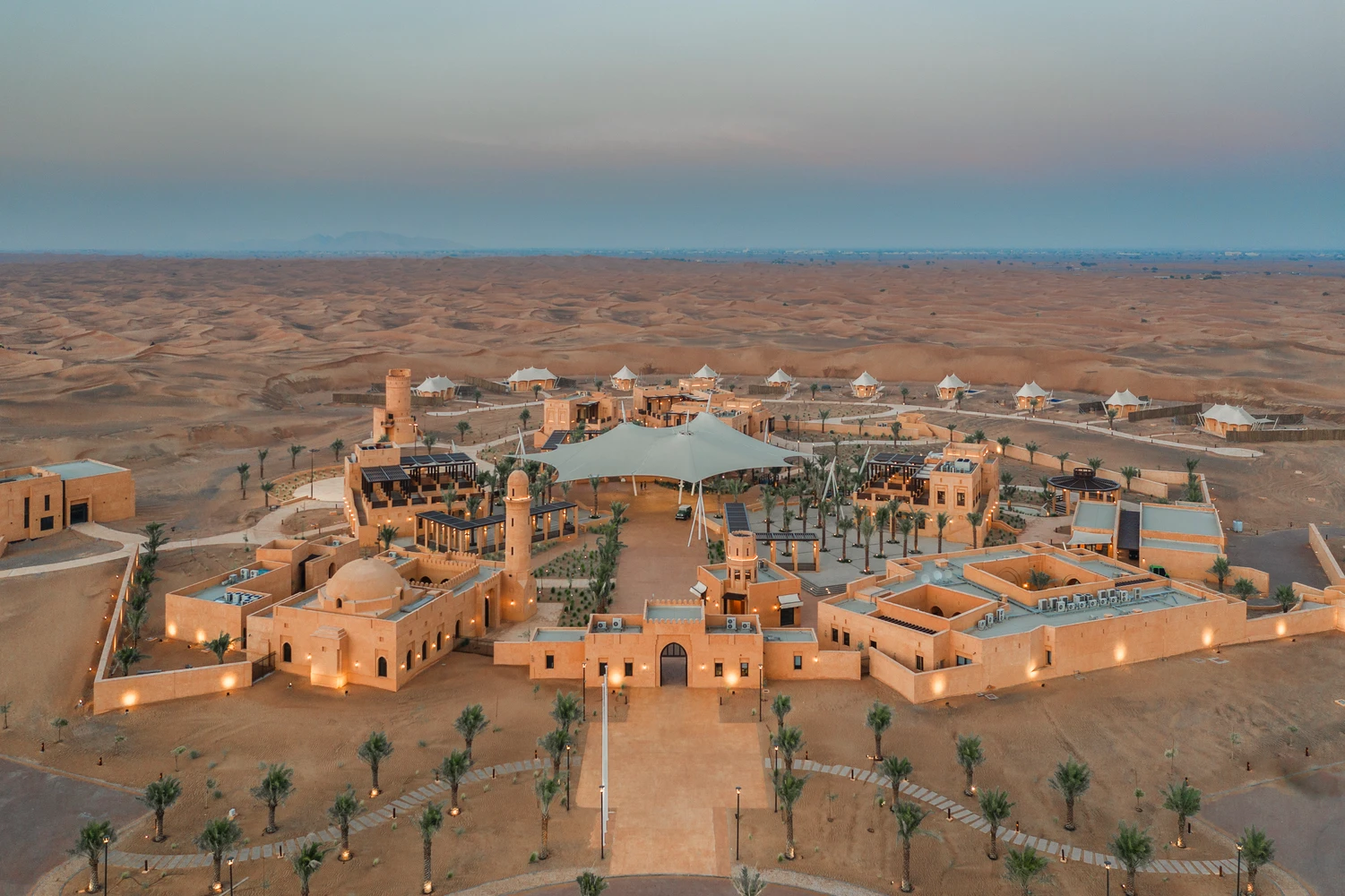
Located amidst the sandy dunes of the Sharjah desert, Mysk Al Badayer Retreat offers a grounded yet culturally rooted approach to desert hospitality. Designed by Wael Al-Masri Planners & Architects, it’s inspired by the identity of Al Badayer, creating a contemporary retreat that feels both local and timeless.
Designed as a series of connected buildings, from the entrance gateway and mosque to gathering spaces and visitor facilities, interconnected with shaded outdoor areas. The architecture settles naturally into the desert, inviting visitors to experience the landscape at a slower and more thoughtful pace.
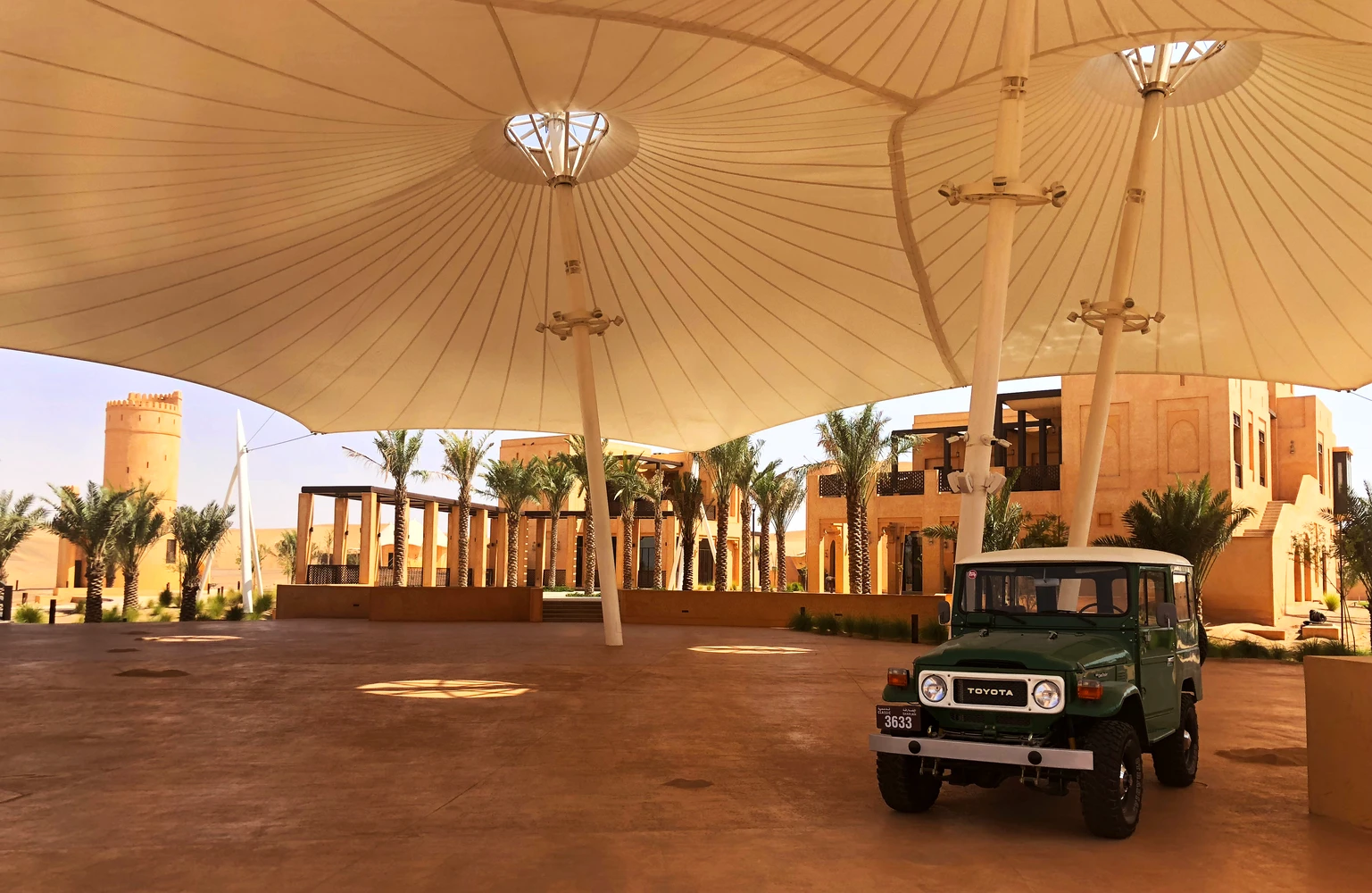
At the heart of the retreat is a tent-covered plaza that brings the entire retreat together, surrounded by a café, restaurant, and a 21-room lodge with spaces like an indoor pool, cinema, amphitheater, etc. The design is rooted in local tradition, and the architecture integrates courtyards, arcades, arches, and mashrabiyas finished in soft desert-toned hues, echoing the surrounding sands. Shaded walkways and pergolas create comfortable shaded spaces that feel both culturally grounded and naturally suited and sustainable to the desert landscapes.
4. Banyan Tree AlUla Resort | Saudi Arabia
Architect: AW² Architecture & Interiors
Typology: Hospitality
Location: AlUla, Saudi Arabia
Construction: 2022
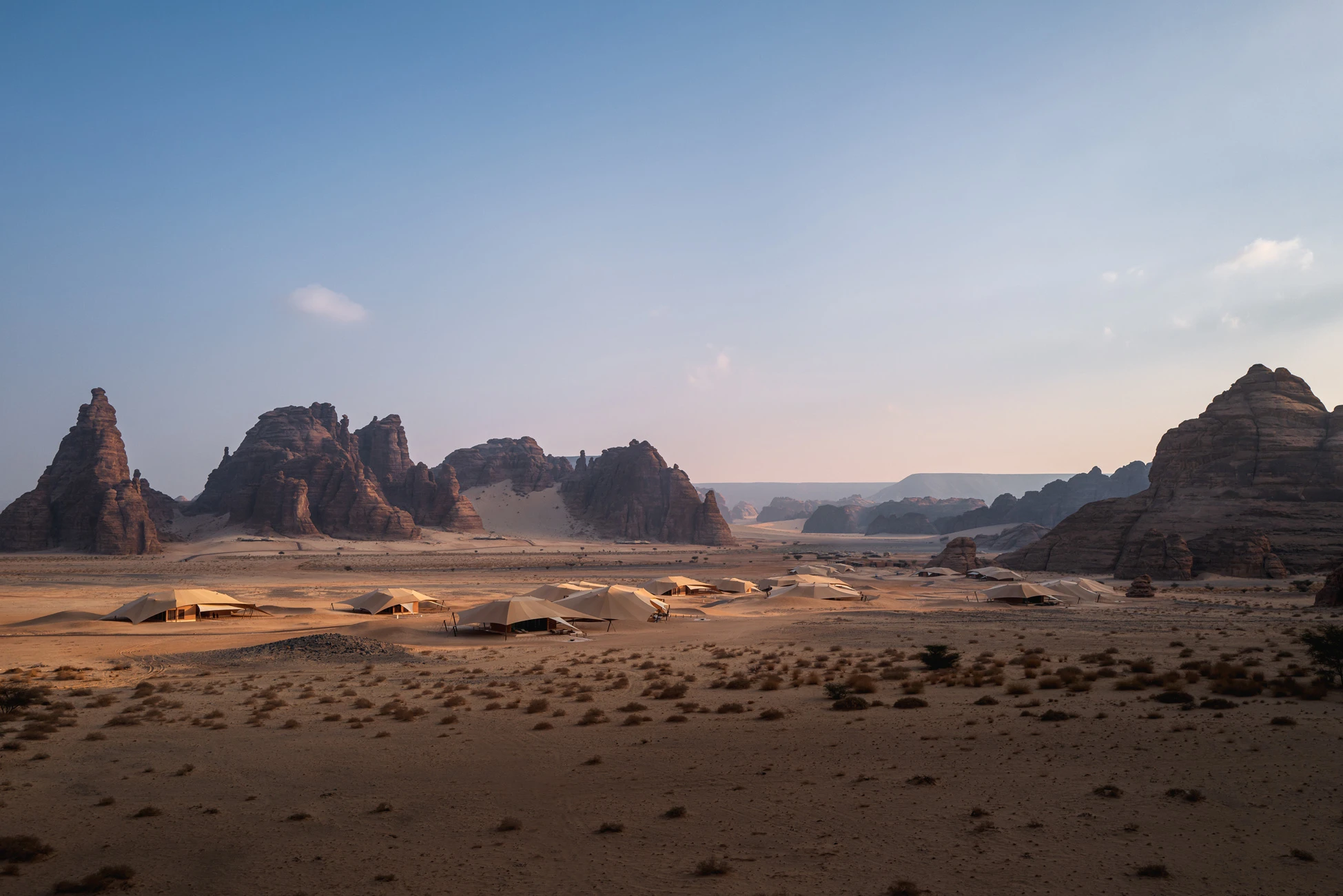
Set within the striking desert landscapes of AlUla, Banyan Tree AlUla offers a quiet, immersive take on luxury retreats that feels deeply connected to its surroundings. Designed by AW² Architecture & Interiors, the design is shaped by the landscapes, transitioning into the raw beauty of the desert.
Located in Ashar Valley, the site is surrounded by dunes and sandstone cliffs. The design remains minimal and aligned with the natural landscape, maintaining a calm and grounded spatial character.
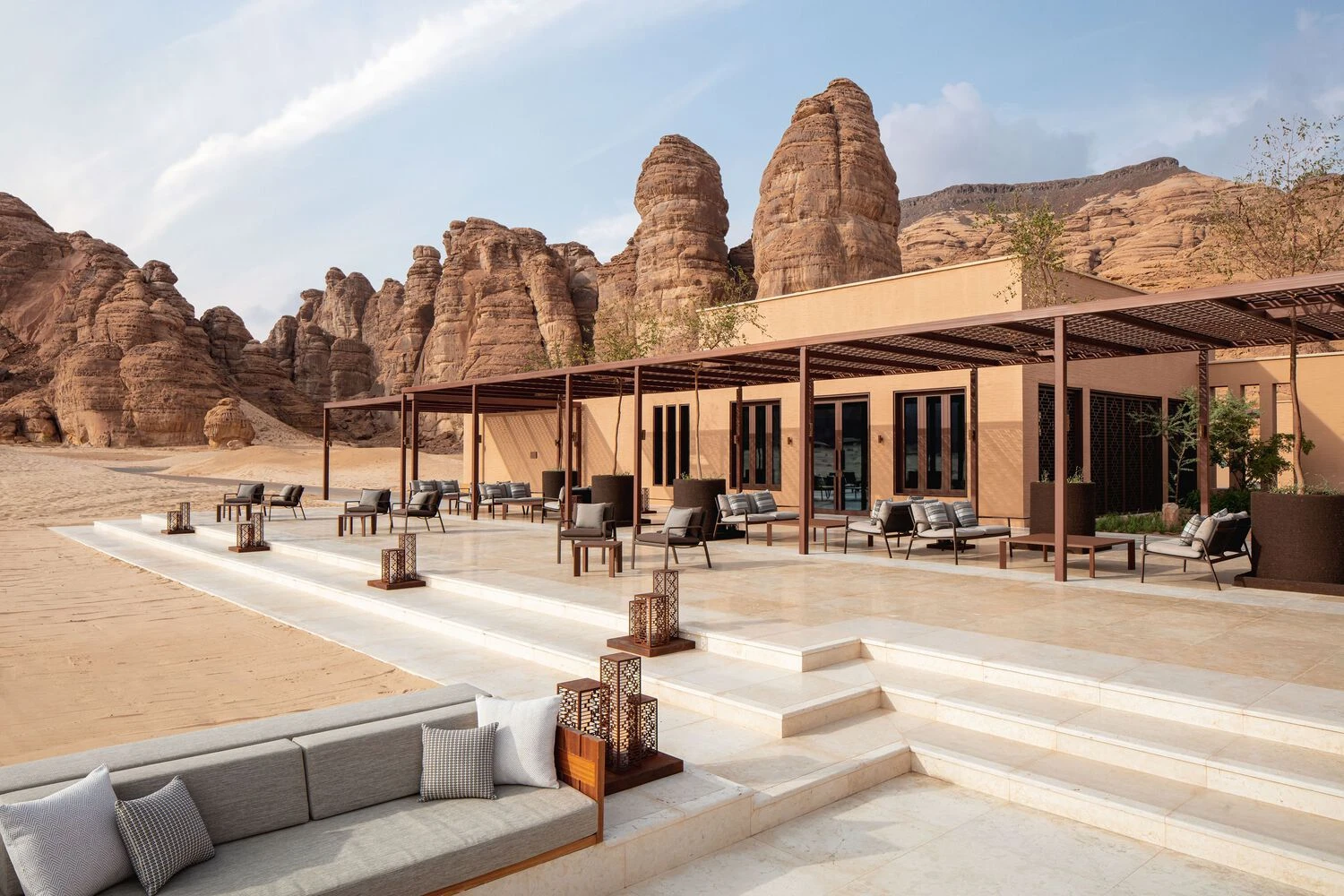
The design is rooted in a thoughtful approach where modern architecture grows directly from its surroundings. Rather than imposing on the desert, the resort uses a light, sensitive touch by blending natural materials and traditional motifs inspired by Bedouin life. Interiors flow seamlessly into the outdoors, creating spaces that feel open, grounded, and closely tied to nature.
5. Ritz-Carlton al Wadi Desert | UAE
Architect: H + A Architecture
Typology: Hotel Villas
Location: Ras Al Khaimah, United Arab Emirates
Construction: 2021 – 2024
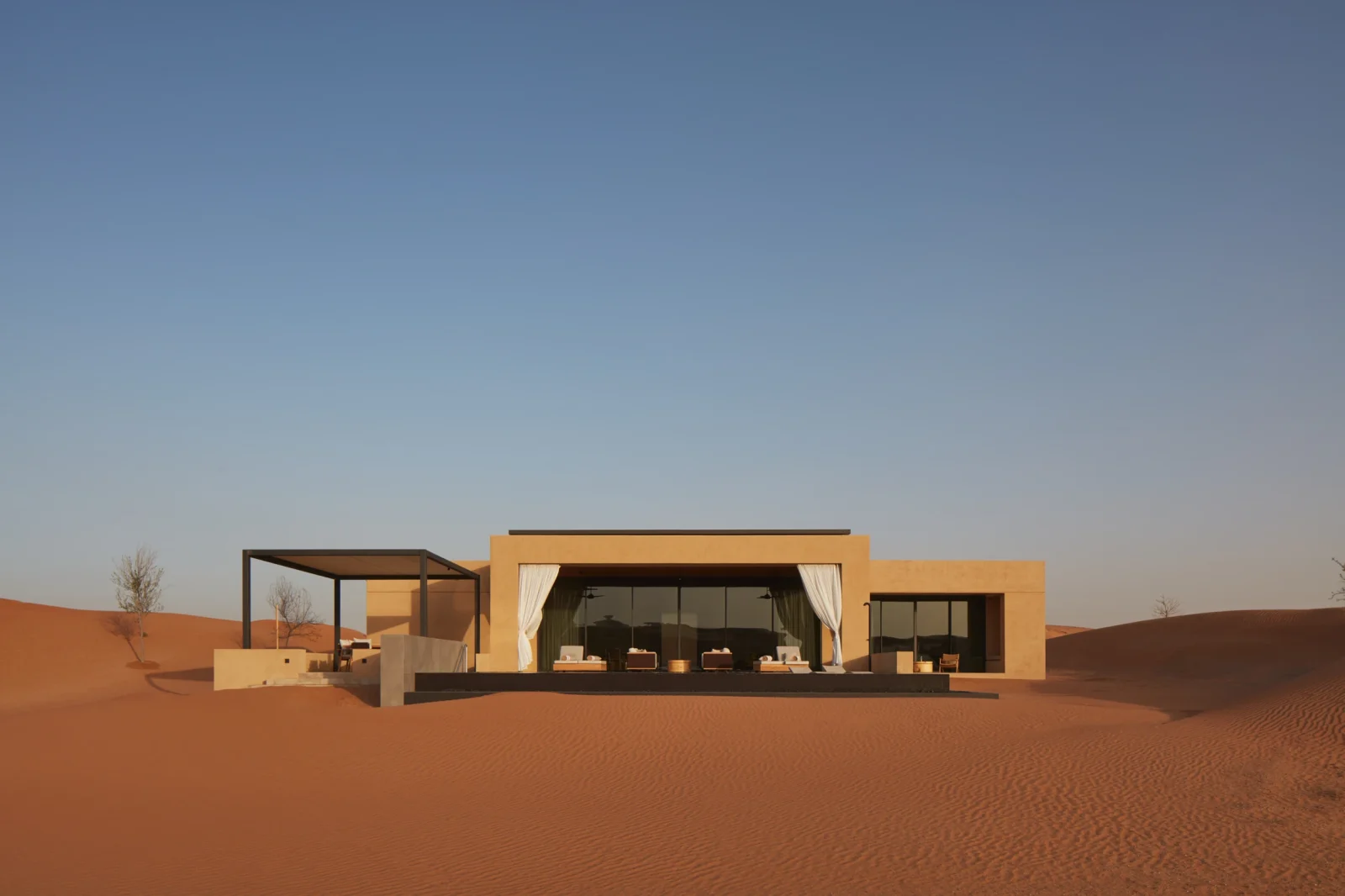
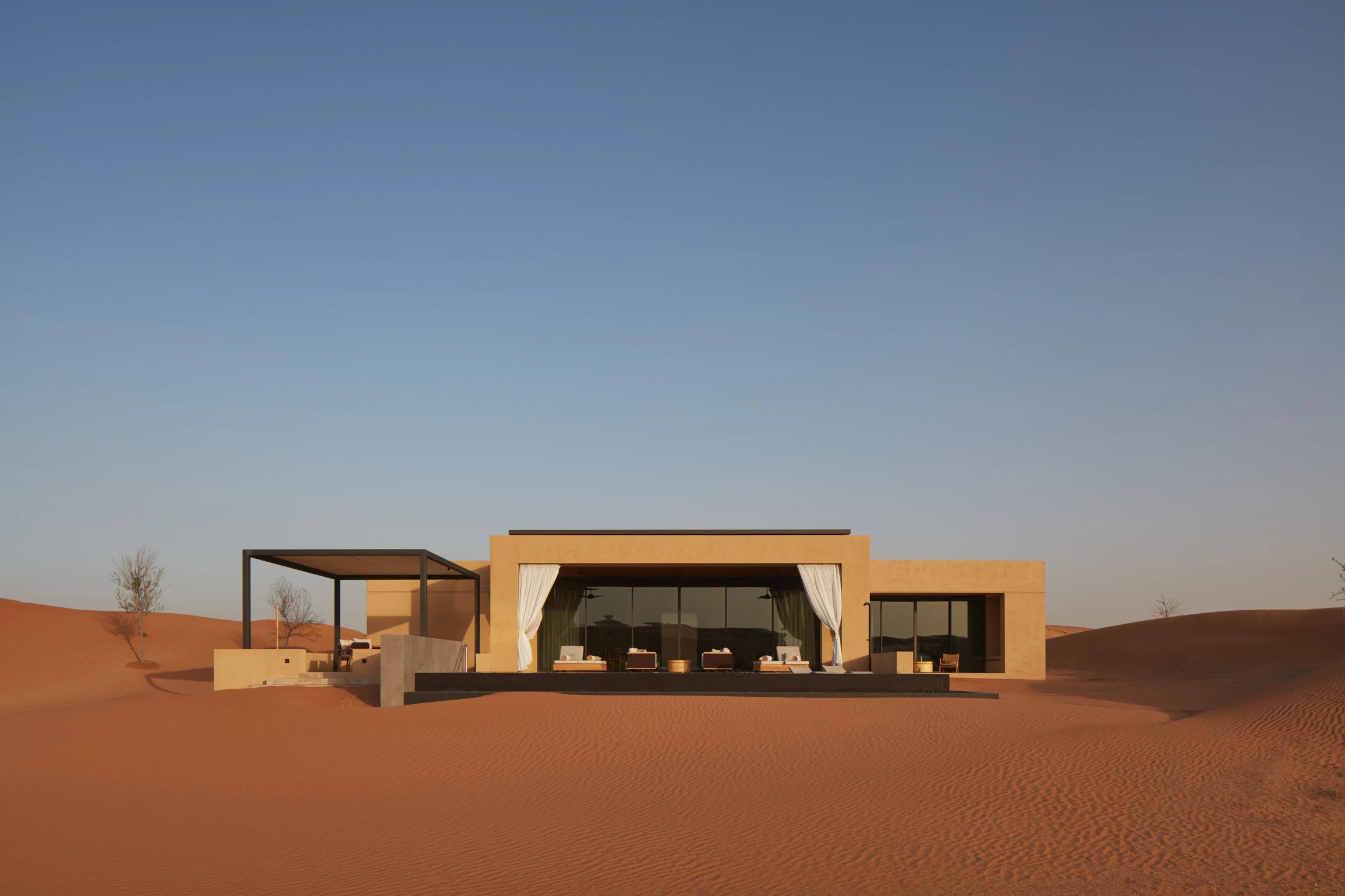
The retreat situated within a protected desert reserve, The Ritz-Carlton Ras Al Khaimah Al Wadi Desert, offers a secluded escape shaped by dunes, silence, and open skies. Designed by H + A Architecture, the retreat is carefully placed within a desert landscape of rolling sand and native wildlife.
The extension is composed of a series of private villas spaced generously across the site, creating a sense of quiet exclusivity. Inspired by Bedouin traditions, the architecture blends effortlessly into its surroundings, allowing the desert itself to shape the experience.
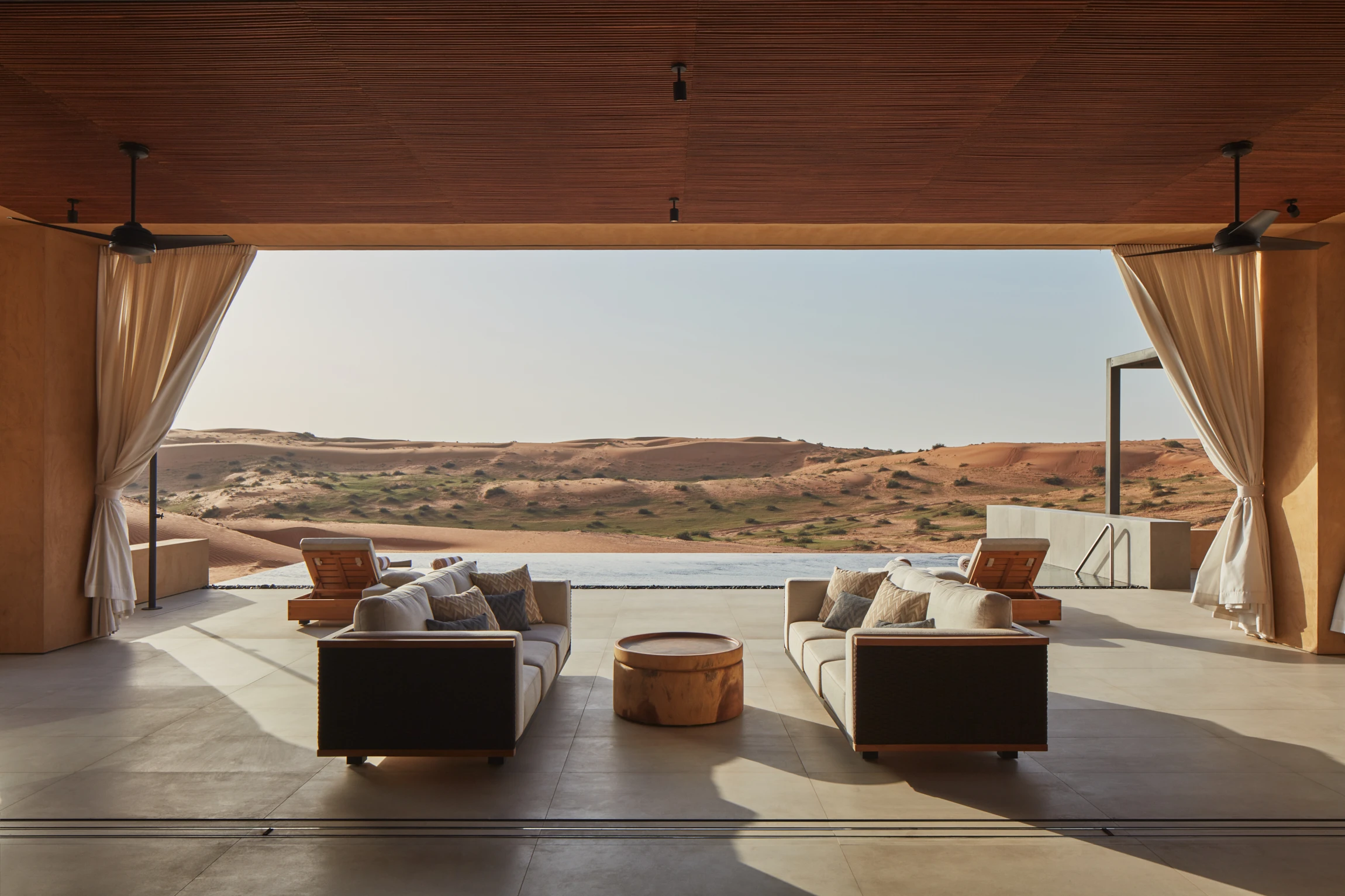
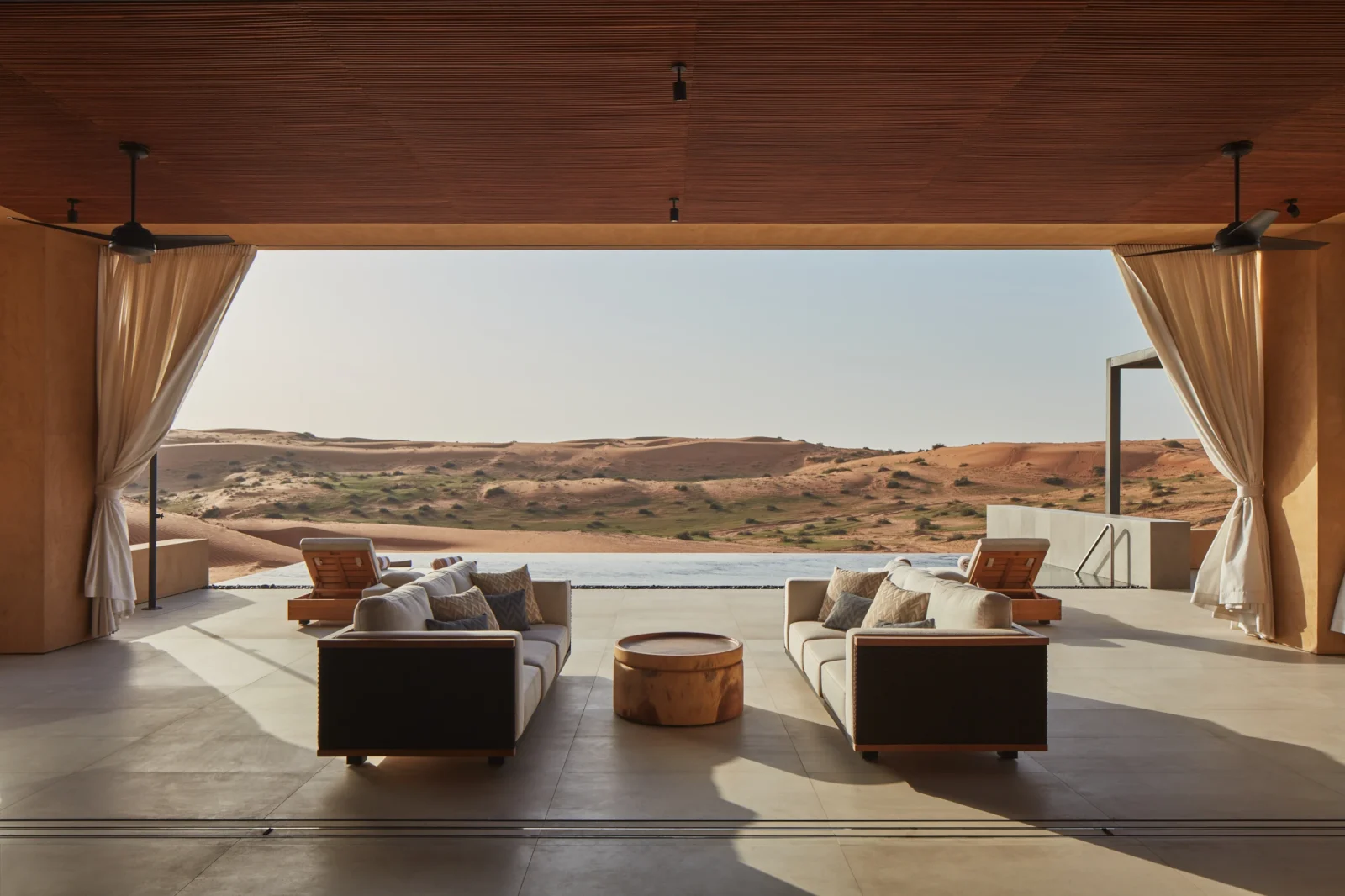
The design is inspired directly from its desert setting, with a material palette and form that feel both grounded and contemporary. The architecture is characterized by clean lines and bold volumes, softened by wooden latticework, muted tones, and wide openings that frame uninterrupted views of the dunes. The villas balance modern comfort with a strong sense of place that blends heritage with simplicity, offering a desert experience that feels both authentic and quietly luxurious.
6. Six Senses Southern Dunes Resort | Saudi Arabia
Architect: Foster + Partners
Typology: Hospitality
Location: Umluj, Saudi Arabia
Construction: 2023
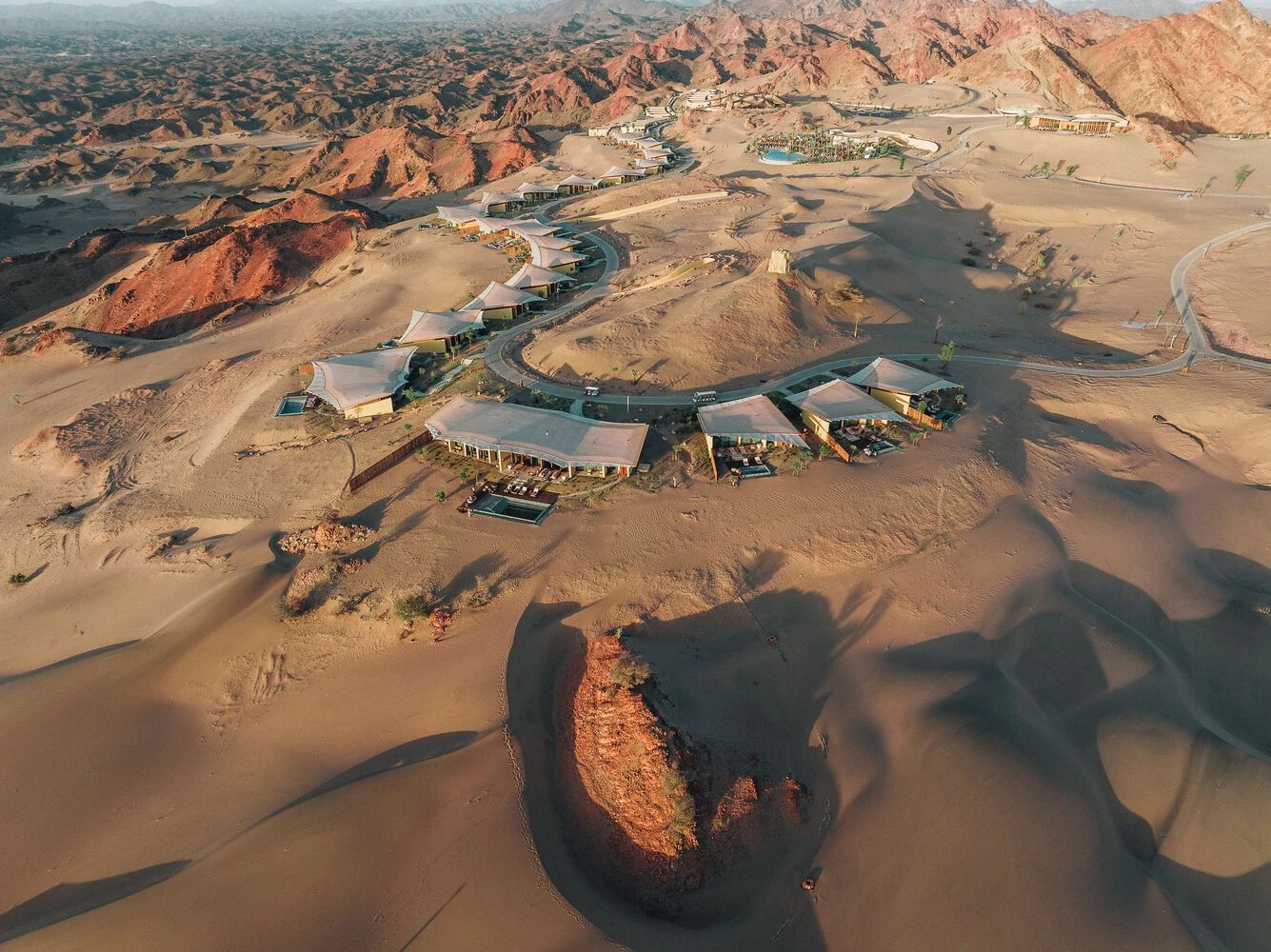
Situated just inland from the Red Sea coast, the Six Senses Southern Dunes Resort offers an interesting blend of culture and contemporary architecture. Designed by the iconic Foster + Partners, it draws inspiration from Nabataean traditions and responds gently to its desert surroundings. Composed of lightweight structures and flowing rooflines echoing the movement of sand, allowing the architecture to merge seamlessly with the landscape. The project reflects a thoughtful balance between luxury, sustainable architecture, and cultural context, creating an experience that is refined and rooted in place.
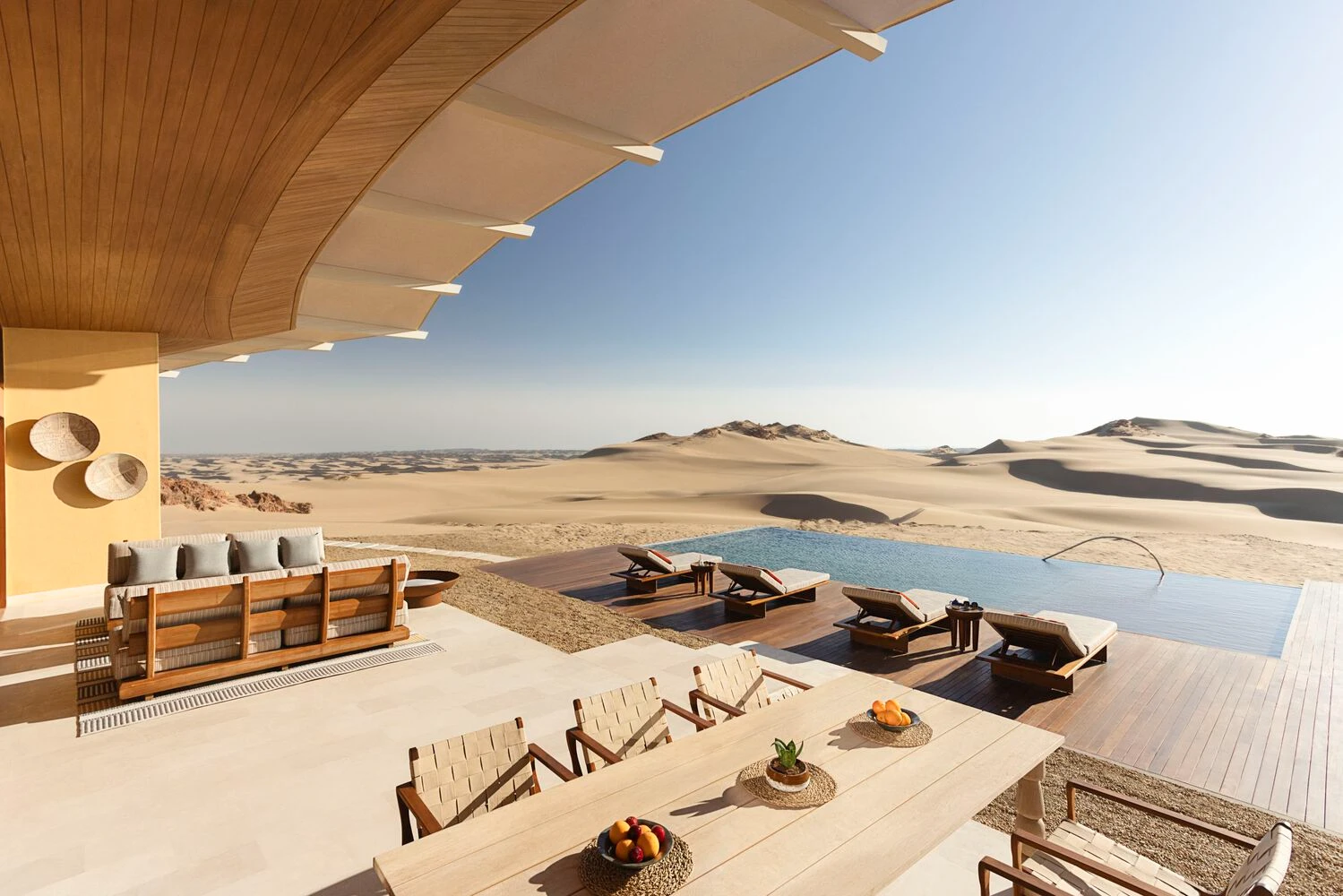
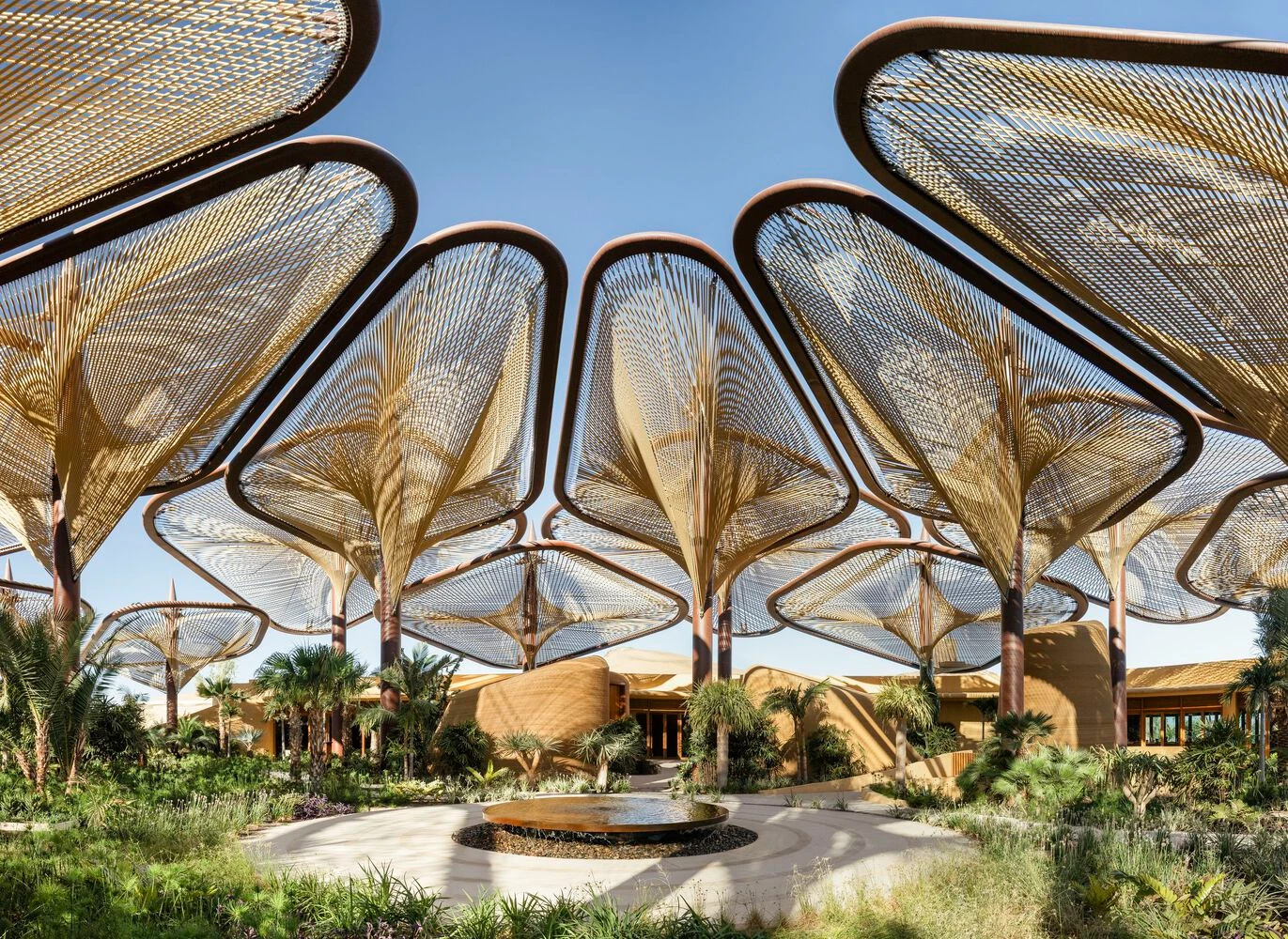
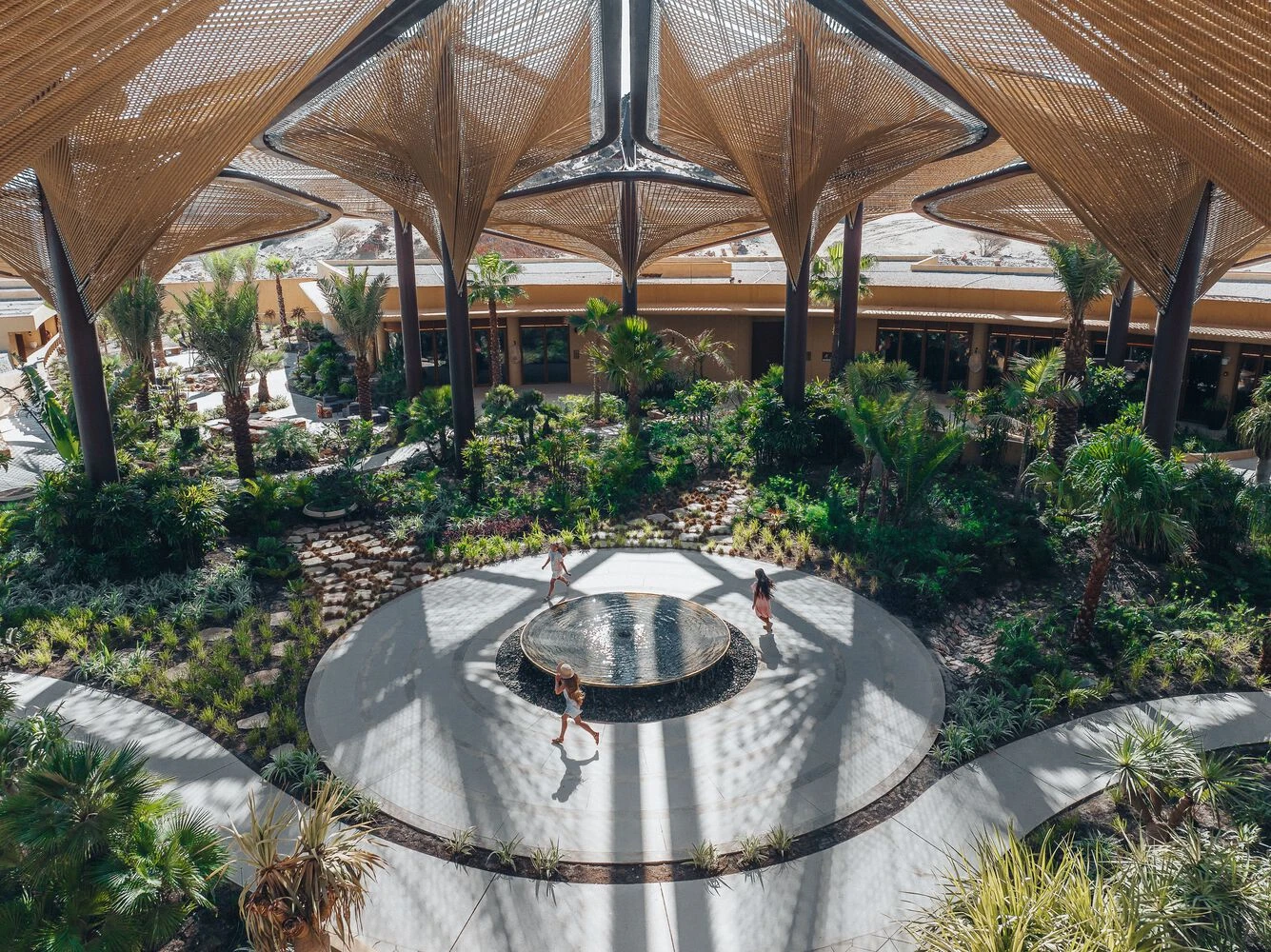
The resort’s journey begins with a striking arrival shaped as a sculptural, flower-like canopy that casts shade while naturally cooling the space. The resort unfolds through a series of carefully placed rooms and private villas, inspired by Bedouin traditions and finished in warm, earthy tones.
The architecture follows the natural contours of the land, with soft, flowing forms that seem to settle into the desert. Designed with sustainable design at its core, the project balances comfort and responsibility, offering a stay that feels both refined and deeply connected to its surroundings.
These desert retreats show how contemporary design can adapt to extreme landscapes, using material, light, and form to create spaces that respond quietly and respectfully to their surroundings.
Explore Courses
.jpg "Ondrej Chybik - Rethinking Architecture")