

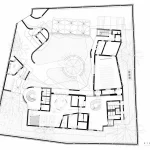
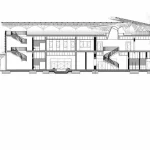
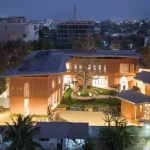
The Goethe-Institut Dakar is a purpose-built cultural center in Dakar, designed by Kéré Architecture. Developed between 2018 and 2026, the 1,700 sqm project marks the first fully custom-built institute commissioned by the organization globally. As a major cultural hub in West Africa, it reflects a progressive vision of exchange, learning, and collaboration.
With a global presence spanning over 60 years, the Goethe-Institut conceptualizes its Dakar center as an open platform instead of a closed institution. The architecture fosters inclusivity and flexibility, allowing diverse programs, including exhibitions and performances, to coexist with language learning and informal gatherings. The space encourages interaction, positioning culture as an evolving, shared process.
Context-Responsive Architecture
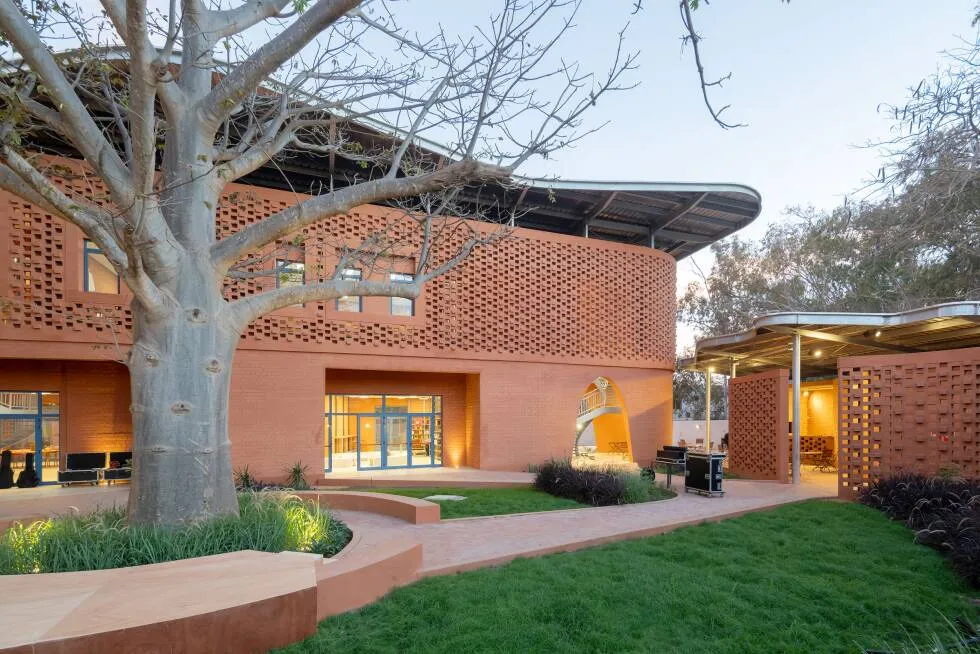
Located within a residential setting near the Léopold Sédar Senghor Museum, the design of Goethe-Institut carefully negotiates its surroundings. The compact two-story form follows the footprint of the existing tree canopy, preserving mature vegetation and minimizing disruption.
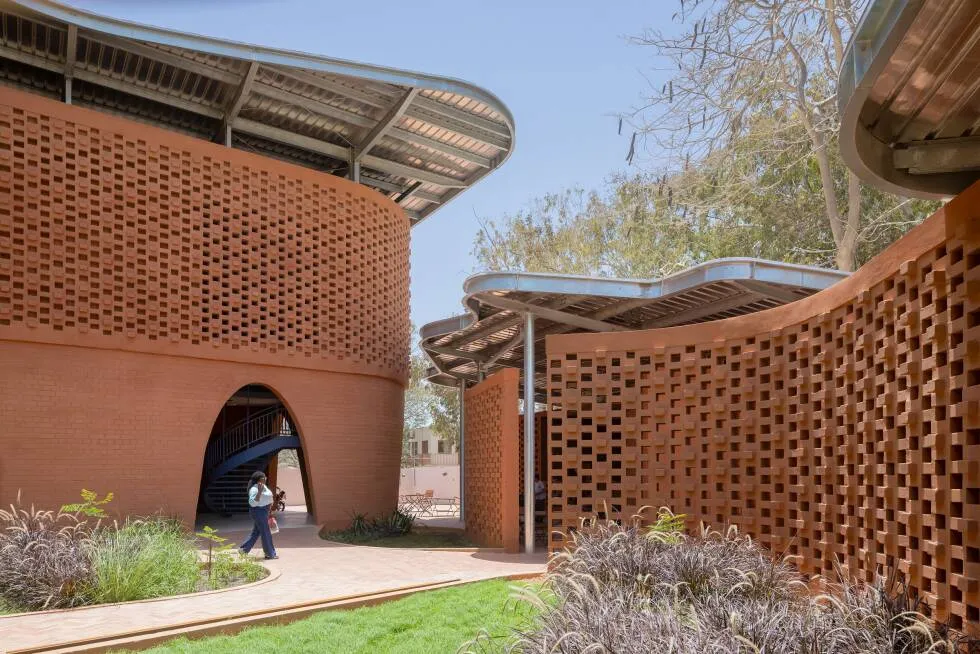
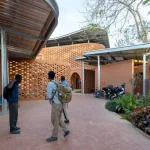
The building acts as an acoustic and environmental buffer, reducing noise impact on neighbors while shielding internal spaces from traffic. A secondary perforated façade made of locally sourced compressed earth (BTC) bricks creates a breathable envelope that filters light and air, giving the structure a porous, lightweight expression.
Passive Design and Climate Strategy
Passive design is central to the project’s performance. The building maximizes natural ventilation through strategically placed openings, shaded courtyards, and a double-skin façade that promotes airflow while reducing heat gain.
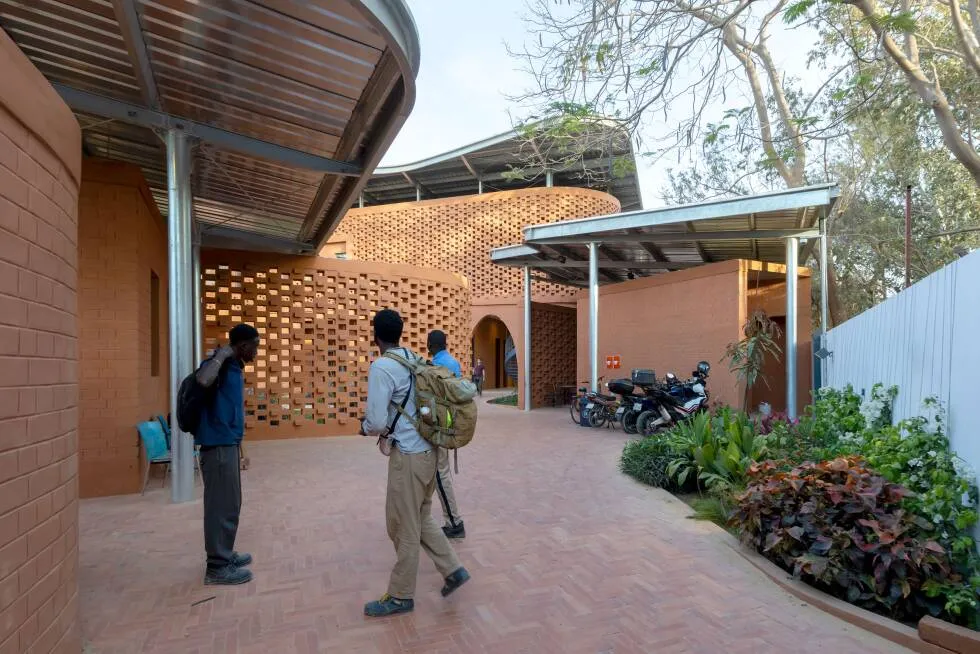
Thermal mass from earth-based materials helps regulate indoor temperatures, minimizing reliance on mechanical cooling. Deep overhangs, screened facades, and vegetation further enhance shading, creating comfortable microclimates throughout the building.
These climate-responsive design strategies reflect a low-tech, high-impact approach that is aligned with local climate conditions and resource availability.
Program and Spatial Organization
Public functions, including the auditorium, library, and cafeteria, are located on the ground floor, ensuring accessibility and encouraging community engagement.
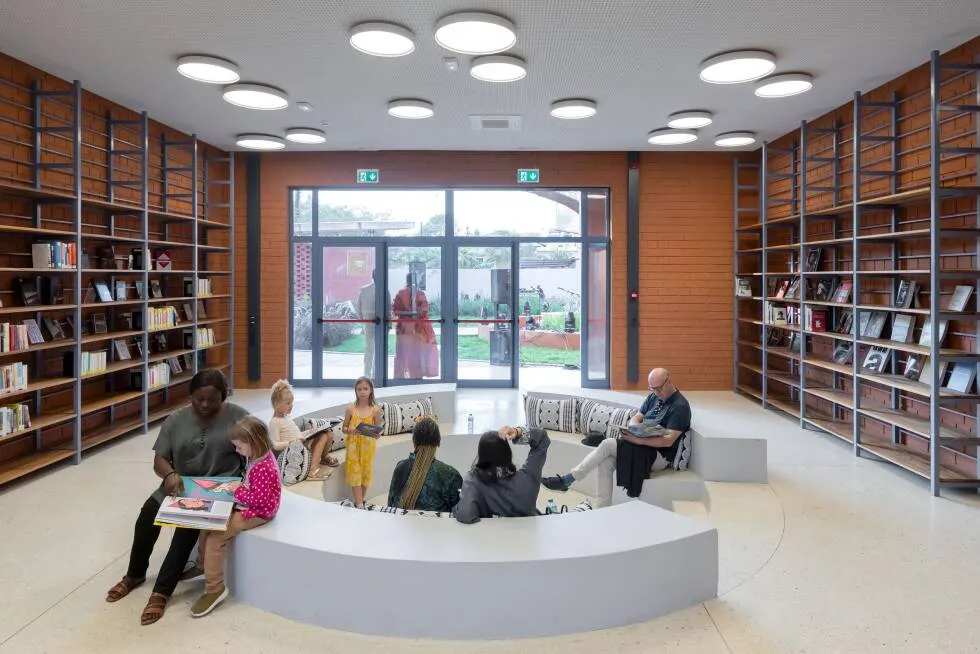
The upper level houses offices and classrooms, creating a more controlled environment for focused work and learning. The spatial organization balances openness with privacy, while maintaining visual connections across levels.
Materiality and Craft
The use of locally sourced compressed earth bricks reinforces sustainability and cultural continuity. These materials not only reduce the building’s carbon footprint but also support local craftsmanship and construction knowledge.
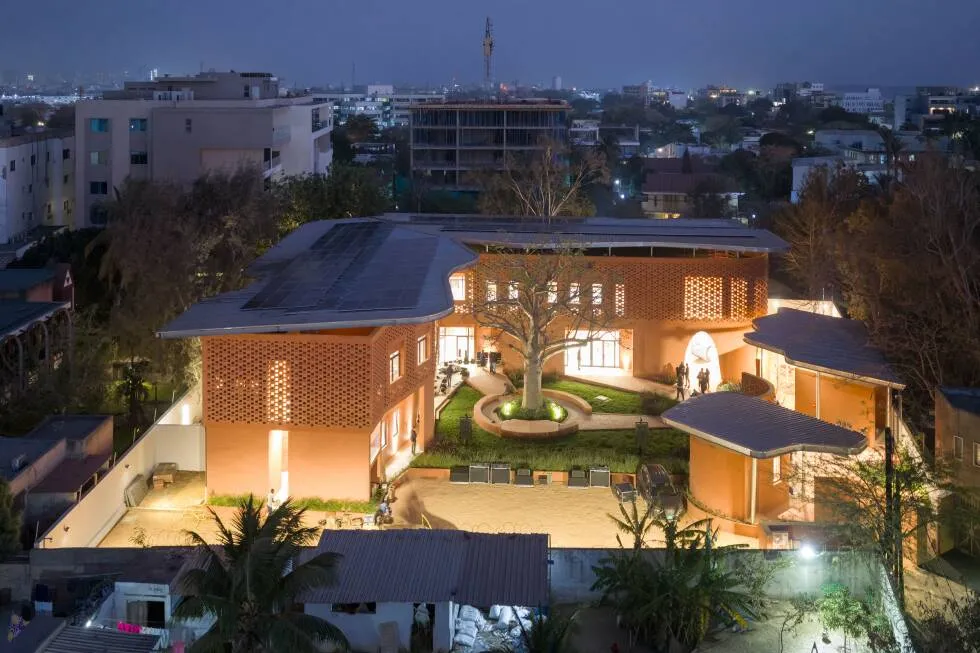
The tactile quality of the façade, combined with its perforated layering, creates a dynamic play of light and shadow that enhances the spatial experience while serving environmental functions. Beyond material and climatic strategies, the Goethe-Institut integrates a holistic approach to sustainability combined with social, environmental, and cultural dimensions.
By preserving the landscape, reducing energy demand, and creating an inclusive civic space, the building minimizes its footprint while maximizing its impact. The Goethe-Institut Dakar by Kéré Architecture stands as a benchmark for contemporary cultural architecture in Africa, where passive design, local intelligence, and global exchange intersect.
Credit: Kere Architecture