




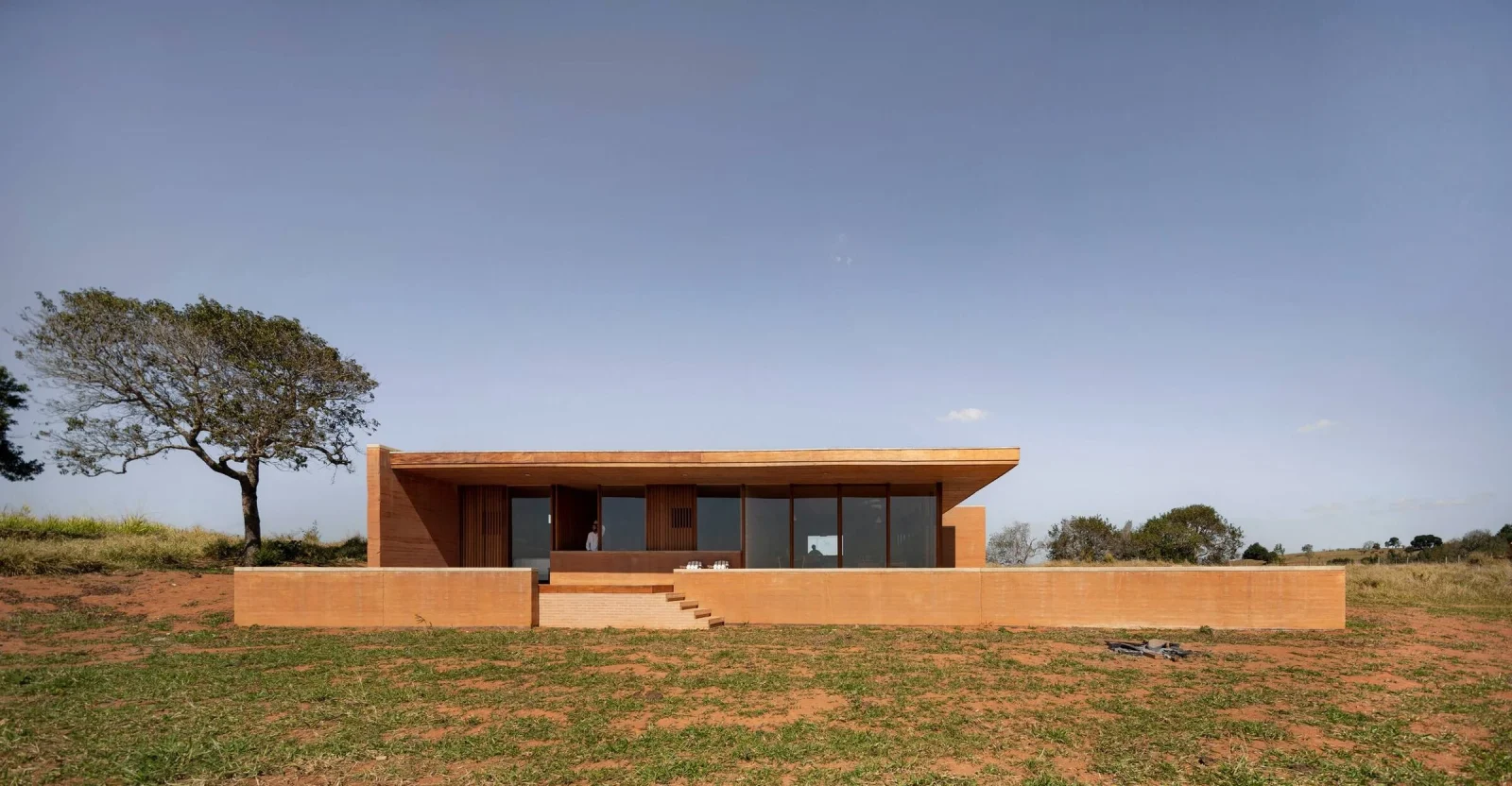
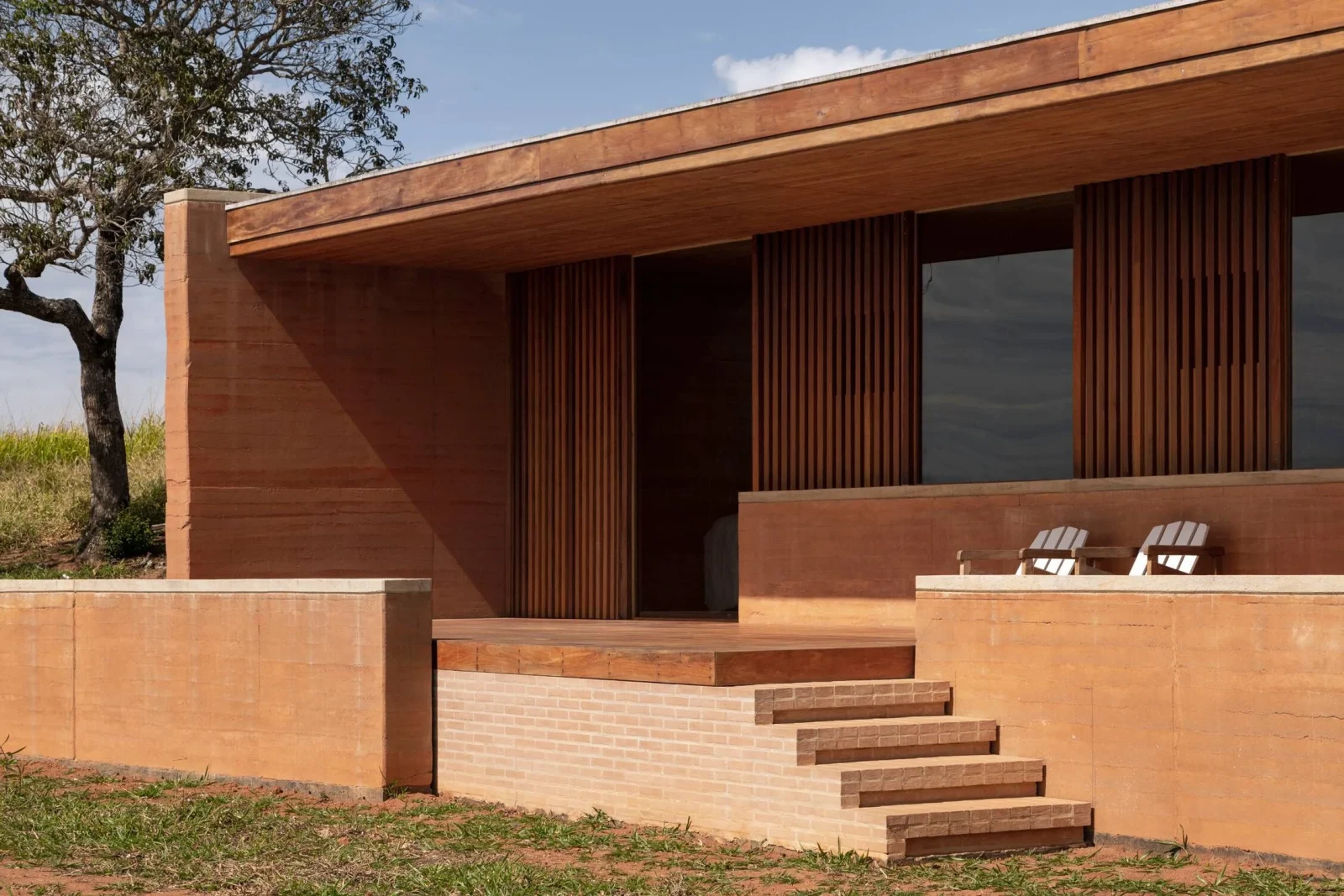
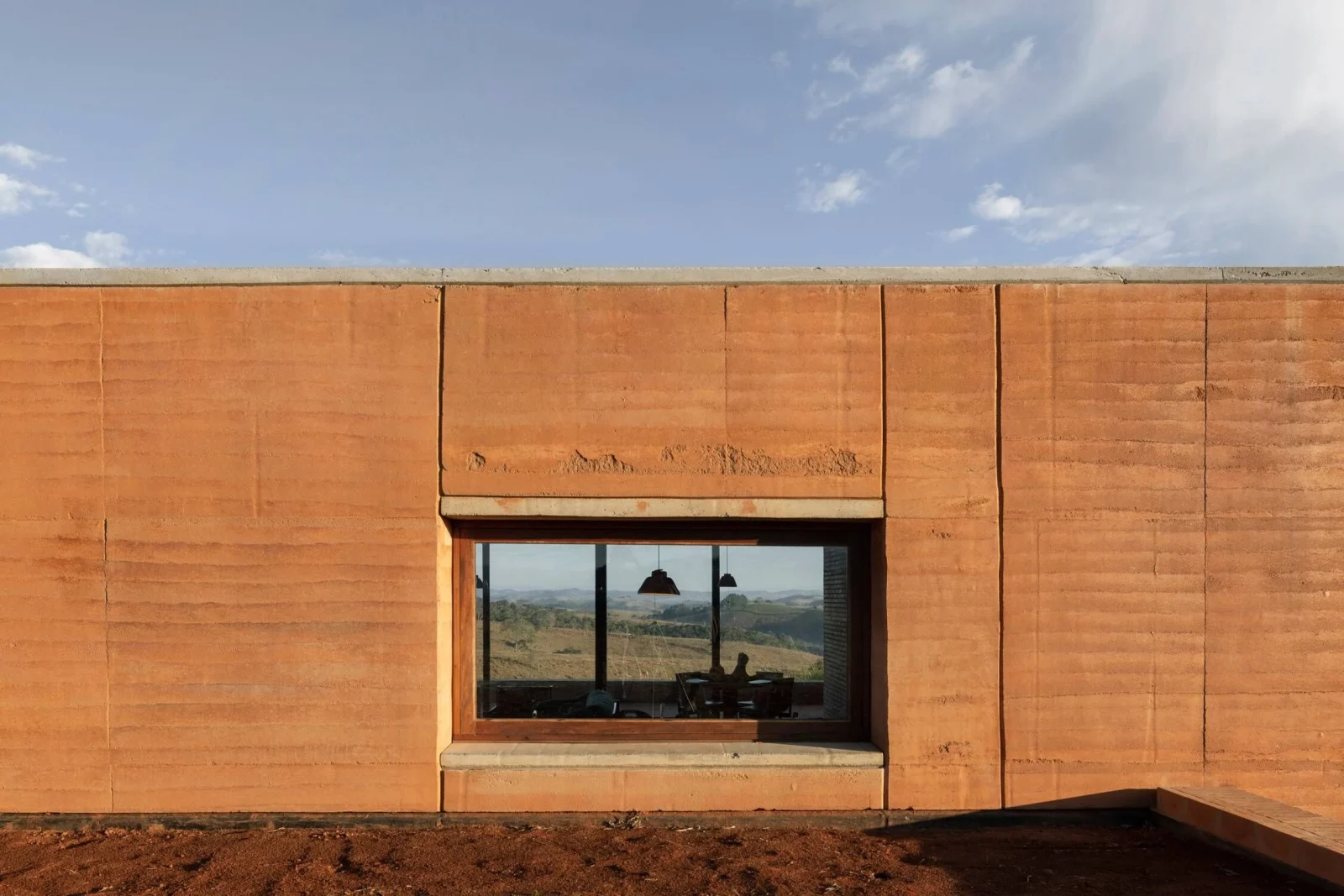
Rammed earth, a material used since ancient times, is not only durable and energy-efficient but also features a striking, layered appearance with natural color variations. Formed by compacting layers of raw materials such as sand, gravel, clay, and stabilizers, its warm tones and textures often harmonize with the surrounding natural environment. Enabling sustainable and environmentally conscious design in its environment, rammed earth, combined with advanced construction techniques, is frequently preferred in the construction of modern homes.
Let’s explore the top 10 rammed-earth houses that look surprisingly modern:
1. Casa Lasso
Location: Ranchos San Jose, Lasso, Cotopaxi, Ecuador
Architect: Rama Estudio
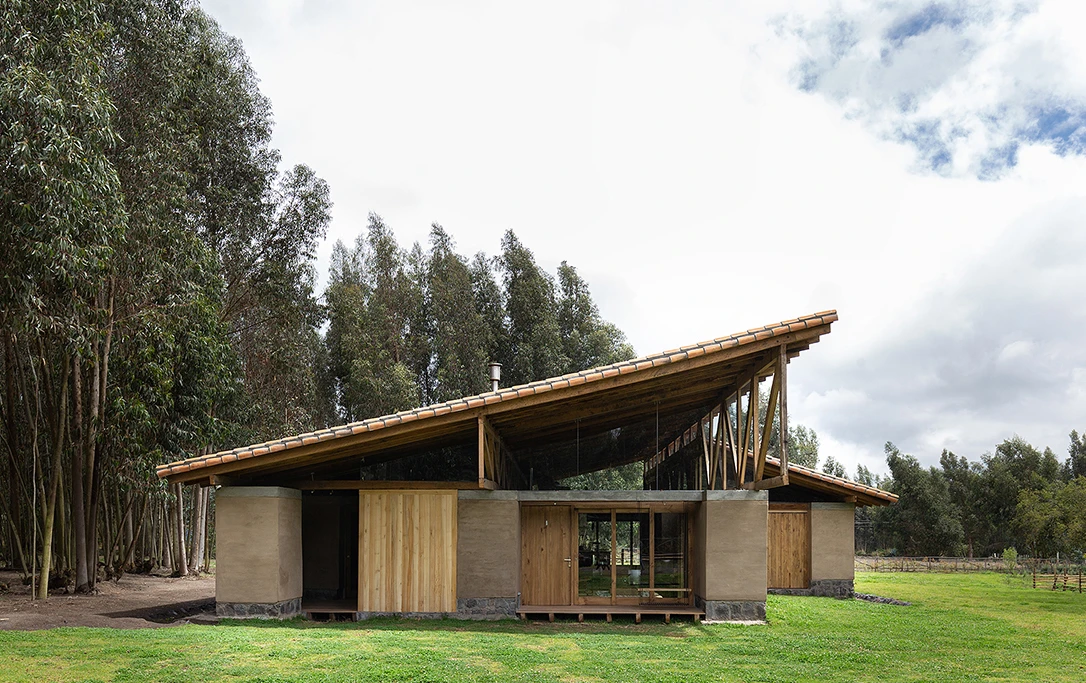
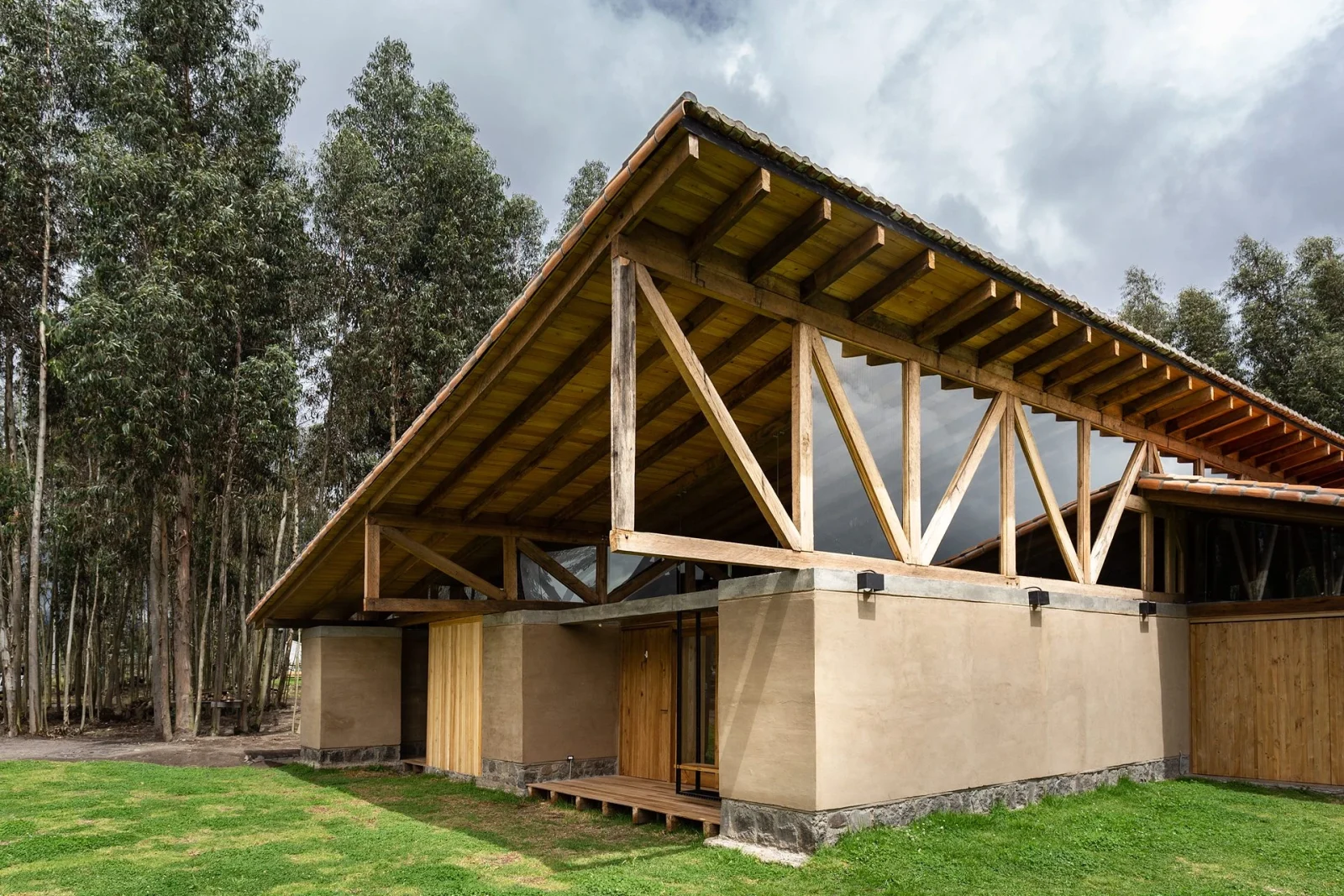
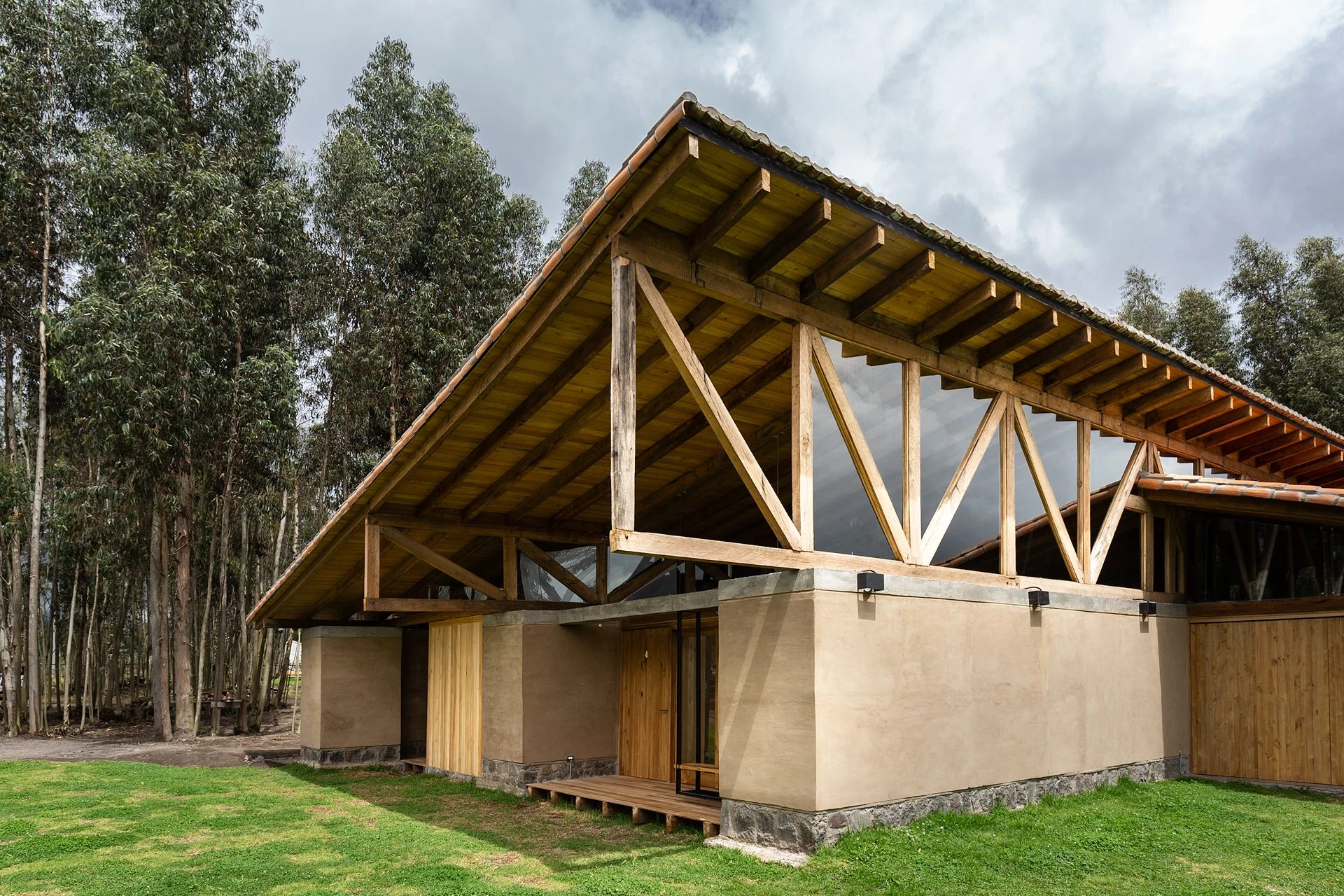
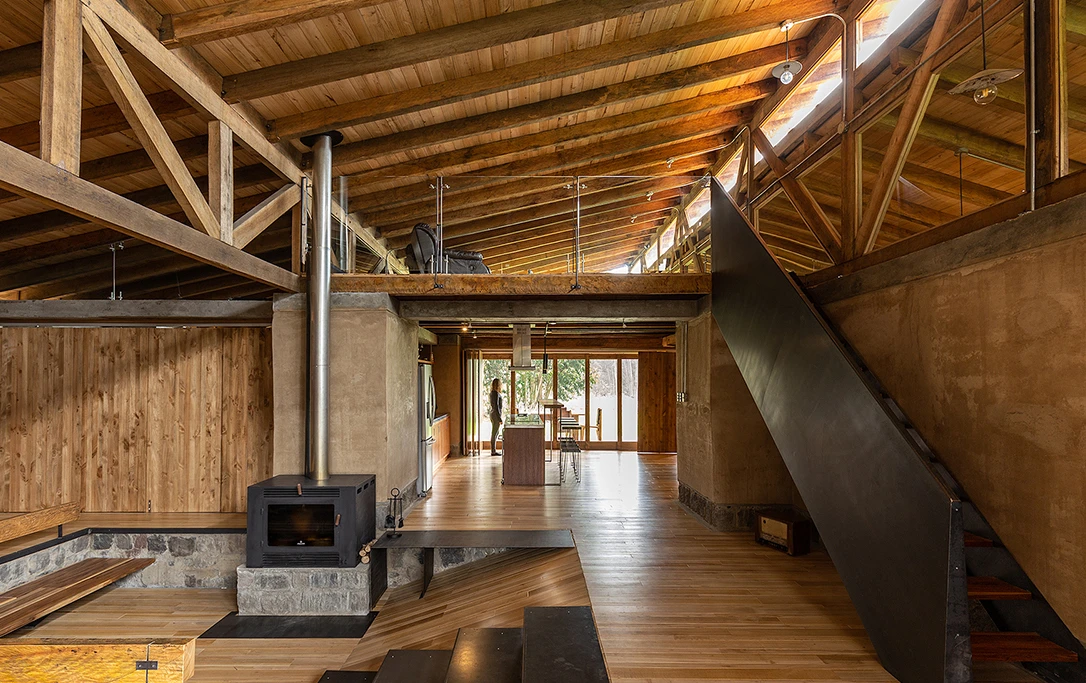
Casa Lasso, built by Rama Estudio using rammed earth, is located in the middle of a eucalyptus plantation in Ecuador. This 350 m² weekend home, intended for family relaxation and entertaining guests, aims to preserve the rural environment of the region. The house is organized around a fireplace, a warm and inviting space. Located at the lowest point of the house, the fireplace is set back to emphasize the idea of welcome. This central area connects the sleeping and social areas. A system of rotating panels, replacing conventional partition walls, allows the spaces to be subdivided according to the family’s changing needs.
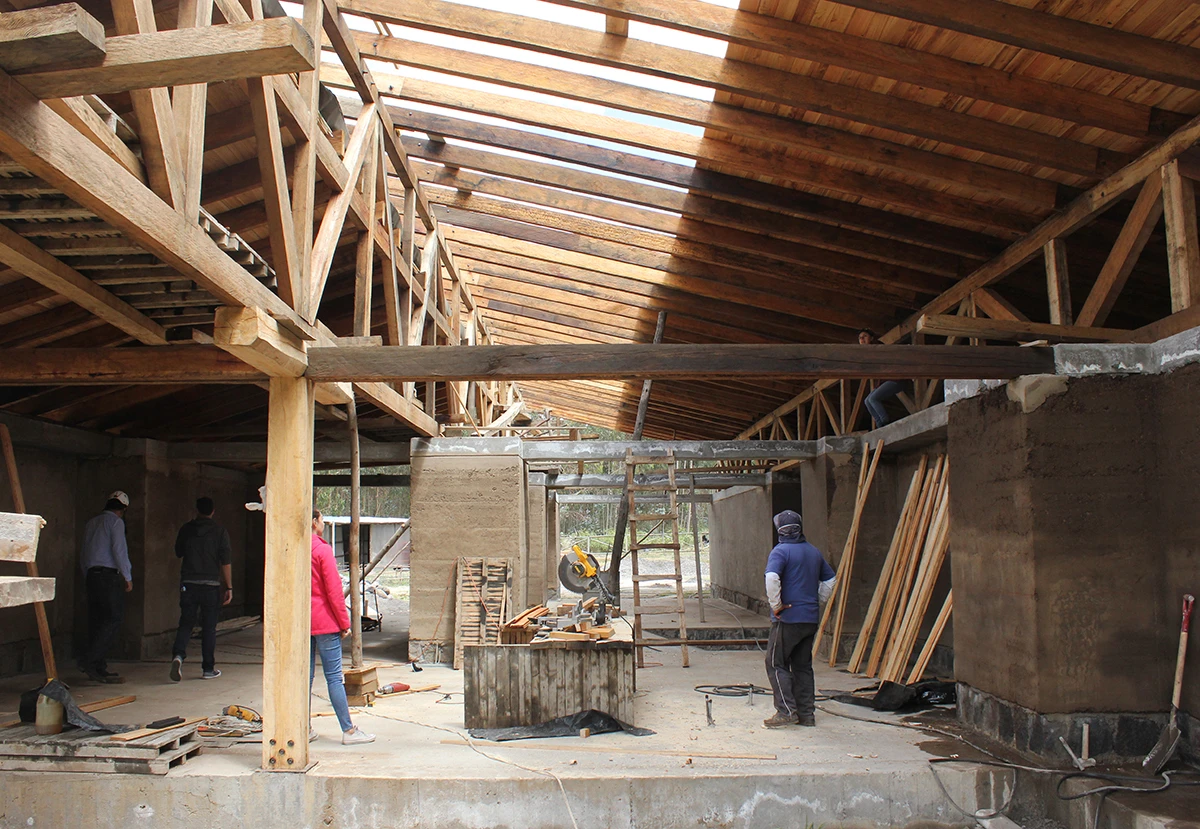
Casa Lasso, an example of passive architecture designed using traditional methods and craftsmanship, has a structural system conceived from a material and mass perspective. The sloped roof is supported by thick rammed-earth walls. Reinforced by a wooden beam, the roof forms an attic and a balcony that open up to the surrounding landscape. The upper parts of the habitable roof are made of adobe and mud, allowing for limited openings that enhance thermal performance while filtering the incoming light.
Five longitudinal load-bearing rammed-earth walls, placed along the length of the site, fully protect the house from winds while improving the interior’s thermal performance. The 40 cm walls feature 80 cm buttresses positioned to accommodate the structural and functional operation of the built-in furniture.
2. House in Cunha
Location: Cunha, Brazil
Architect: Arquipélago Arquitetos
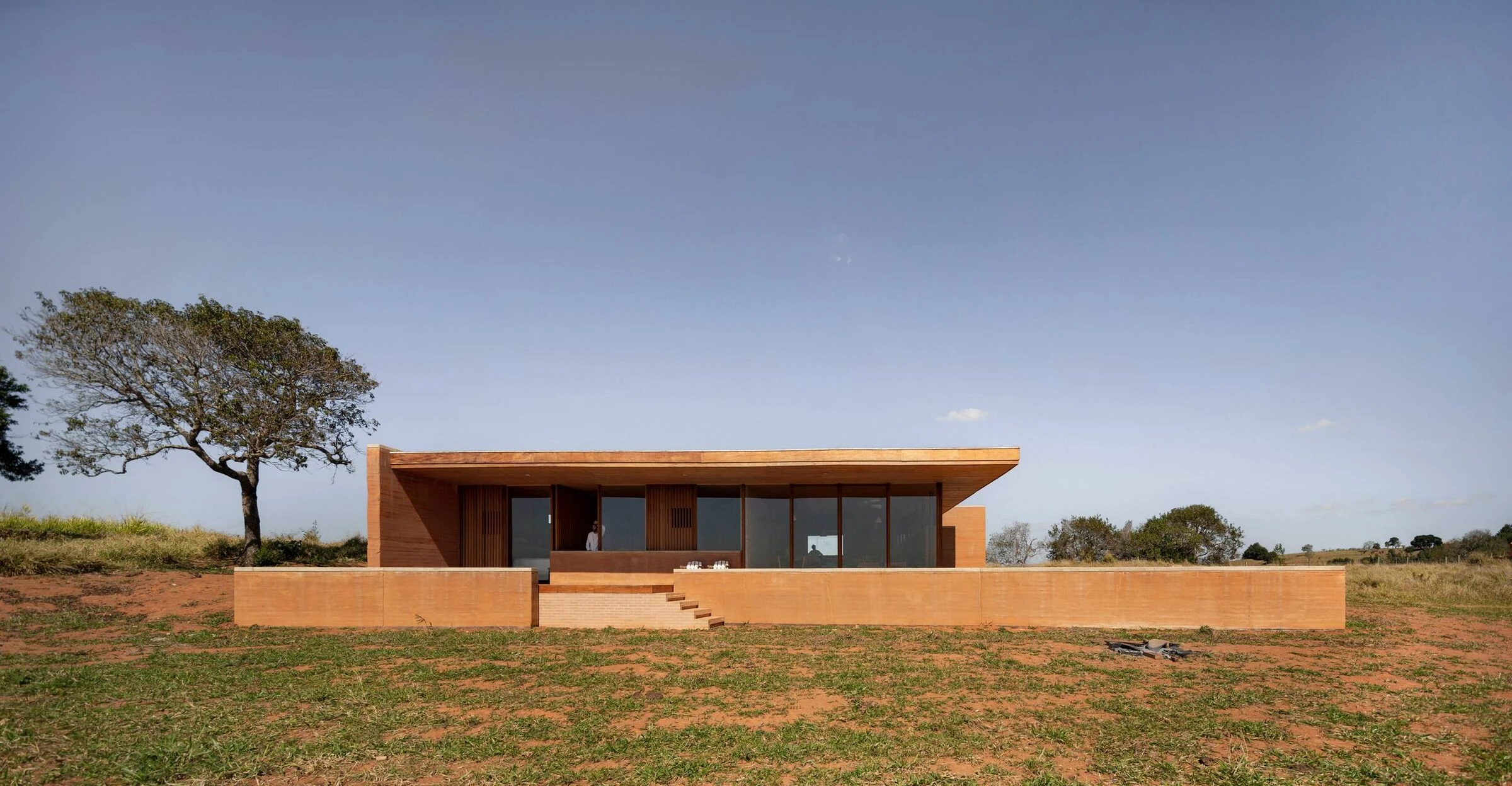
The House in Cunha, located in the inland areas of Cunha, is positioned at the top of a hill to capture the best views of the sloping terrain and the Serra mountain range. To protect it from strong winds, the house is partially embedded into the ground up to the height of the service volumes. A strong example of modern homes built with rammed earth, the house derives its structural material directly from a 1-meter excavation on site.
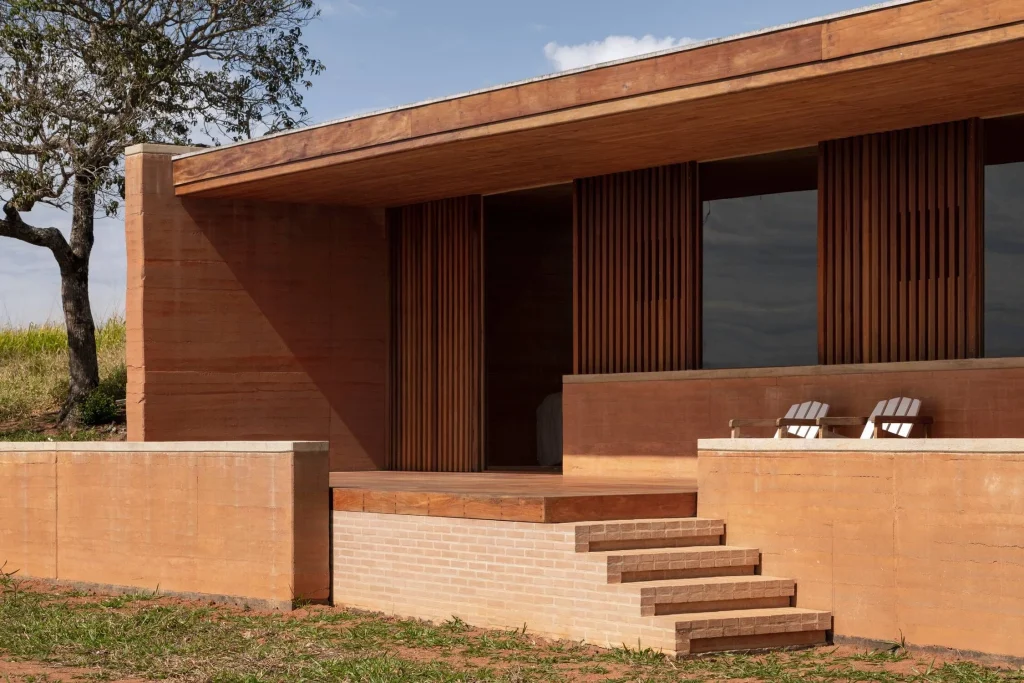
The main rammed-earth wall was constructed using an authentic formwork system that avoids perforation with metal rods, allowing for a more efficient construction process; the modular components could be easily dismantled and reassembled. The remaining walls are made of straw-colored bricks and terracotta, produced by a local potter who extracts aluminum-rich clay from the floodplains of a stream.
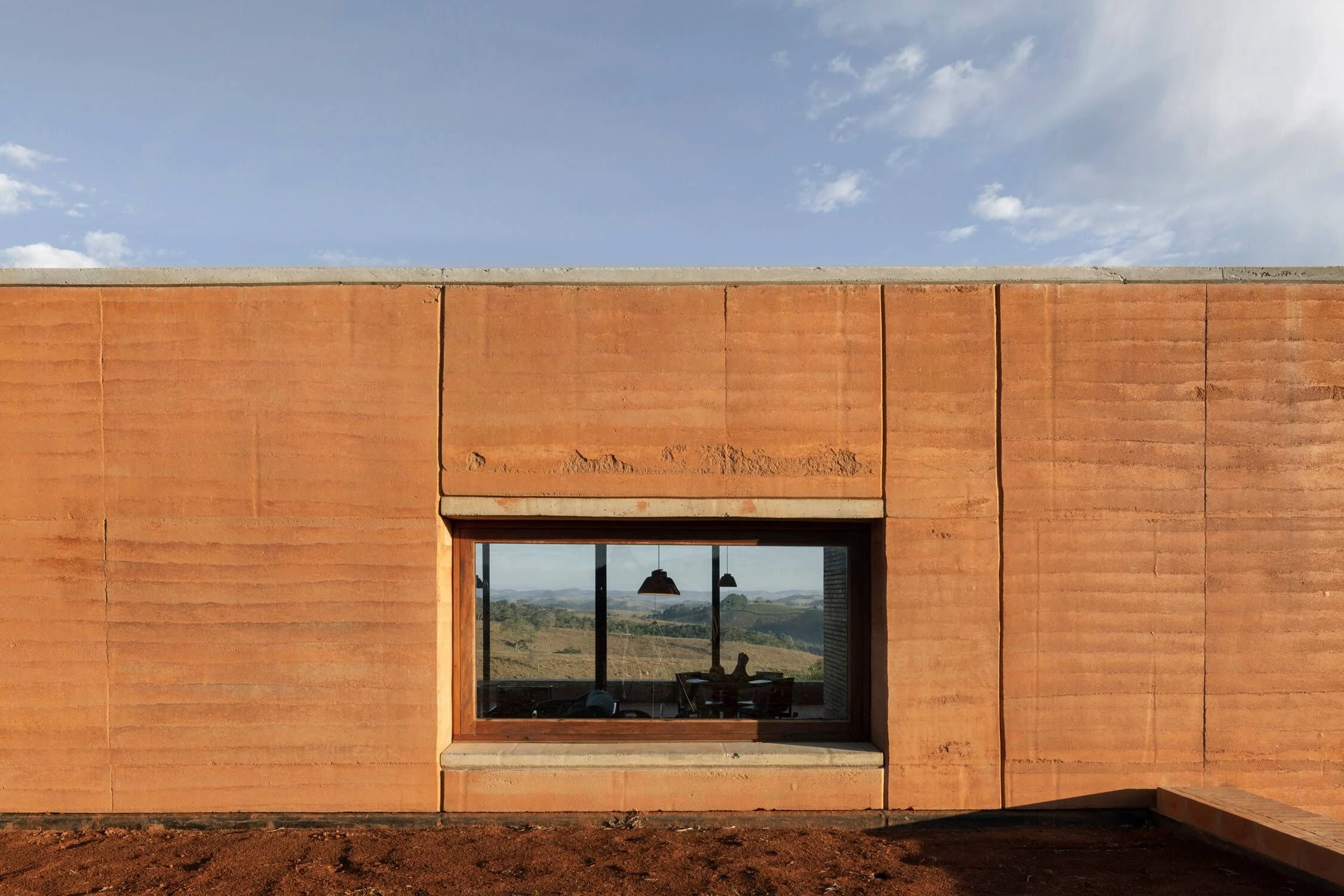
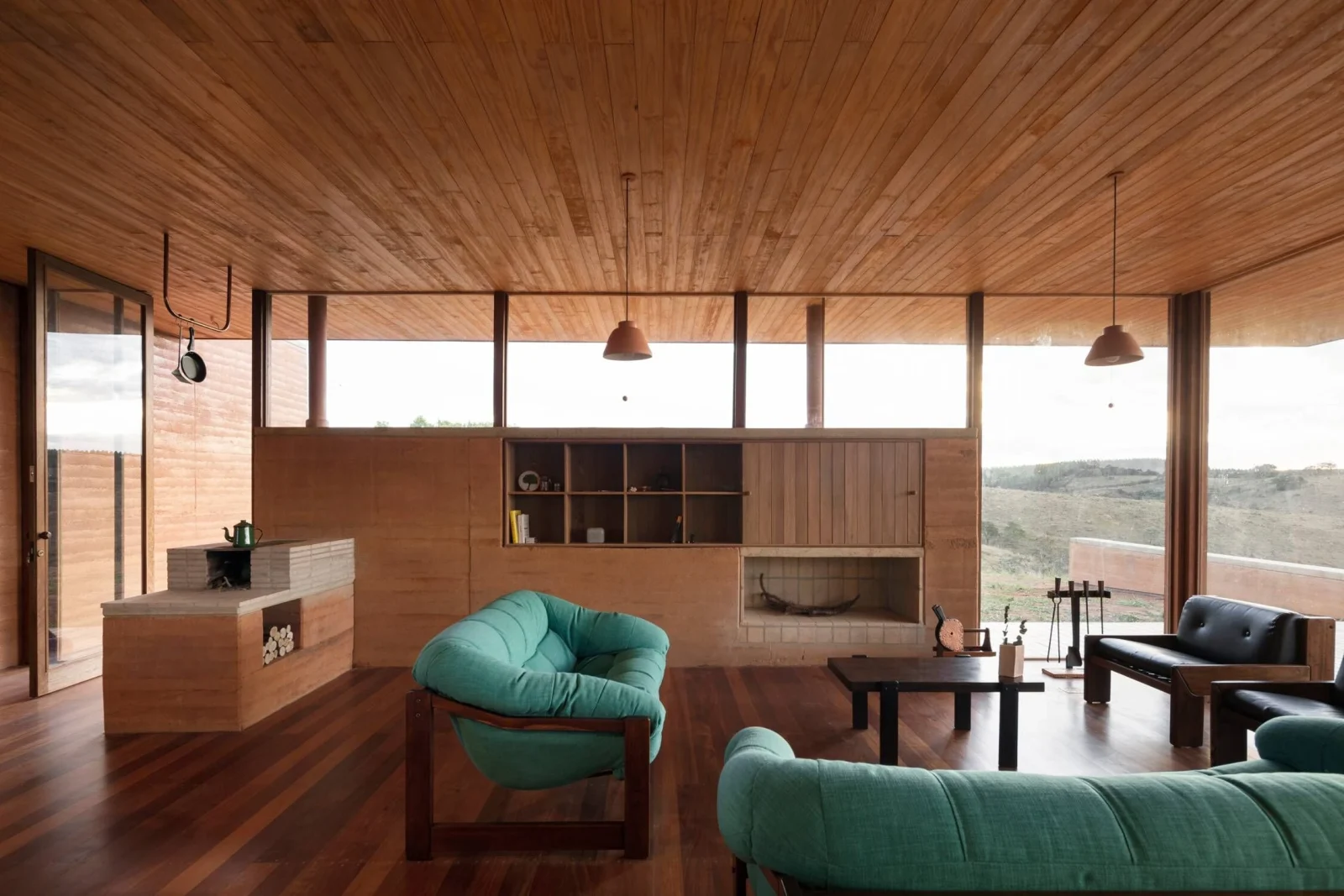
The House in Cunha has north-facing rooms as well as a northwest-facing room to heat the living areas during the harsh winter months. The living room features an adobe fireplace and a wood storage area. The roof structure, along with the floor, is a wooden grid forming two large horizontal wooden planes separated by vertical planes on the ground.
3. Casa Franca
Location: Paris, France
Architect: Déchelette Architecture
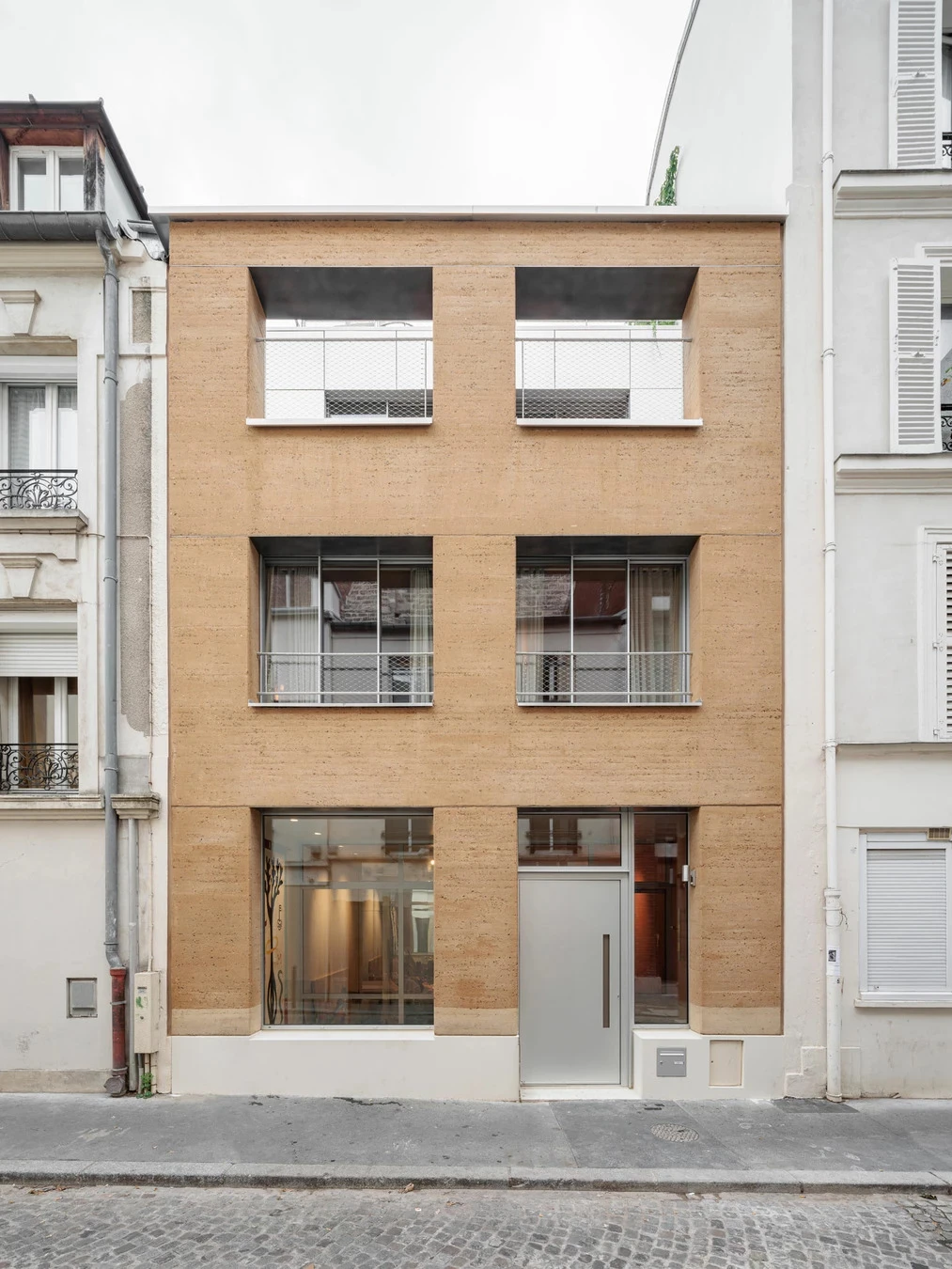
Designed by Déchelette Architecture, Casa Franca demonstrates how ancient building techniques can succeed in urban, design-oriented environments. A five-story townhouse and artist studio, Casa Franca features a rammed earth façade constructed using 550 tons of soil, which eliminates the need for air conditioning even during Paris’s increasingly hot summers. Steel beams, frames, and railings create a striking contrast with the rough texture of the rammed earth walls.
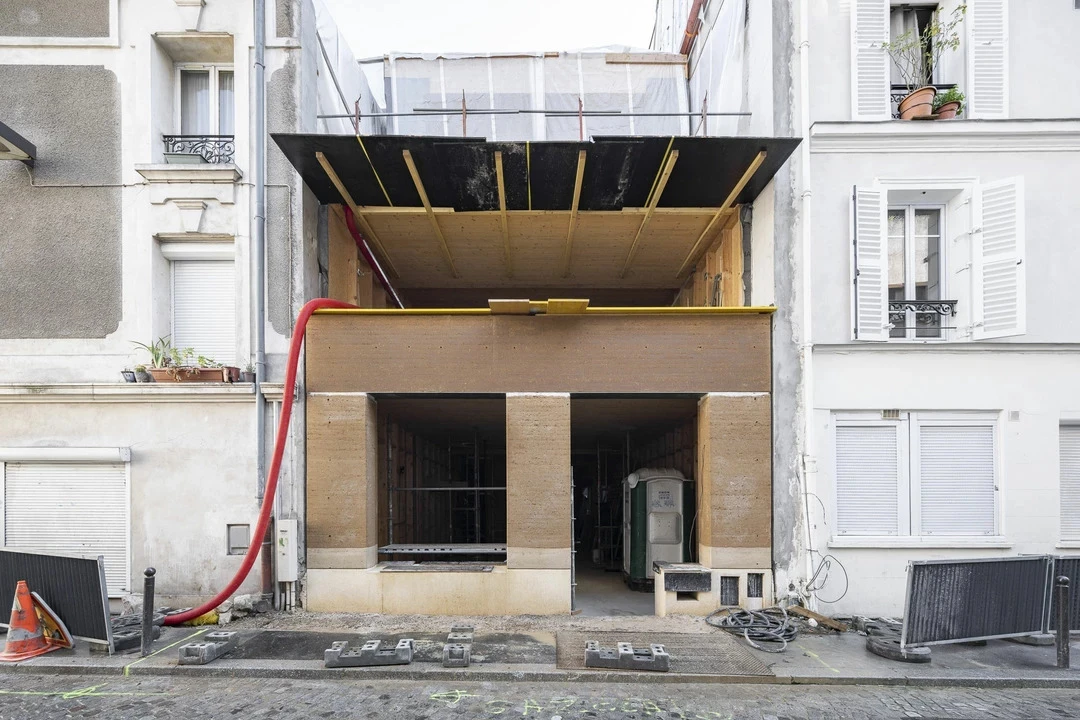
Casa Franca creates a gradation of privacy from the entrance upwards, with a public artist studio on the ground floor, artist accommodations on the next floor, and the owner’s bedroom on the top floor. Designed independently from the building, the basement houses a reception area and sound recording system. Clad in aluminum on the exterior and set back from the rammed earth façade, the top two floors feature a spacious terrace and a planted roof. Inside, materials such as travertine stone, birch wood, and metal contribute to the natural material palette.
4. Casa Ballena
Location: Los Cabos, Mexico
Architect: RIMA Design Group
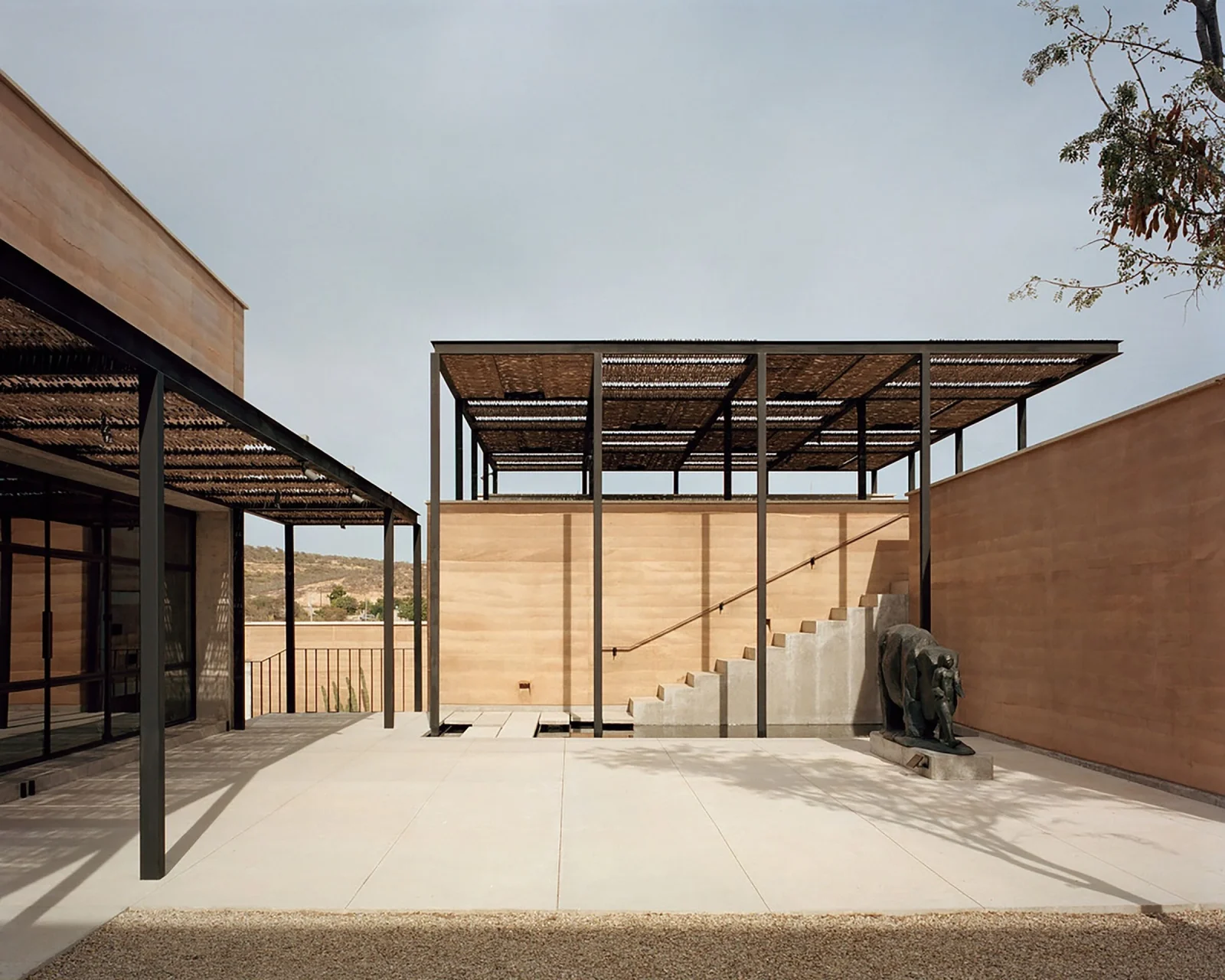
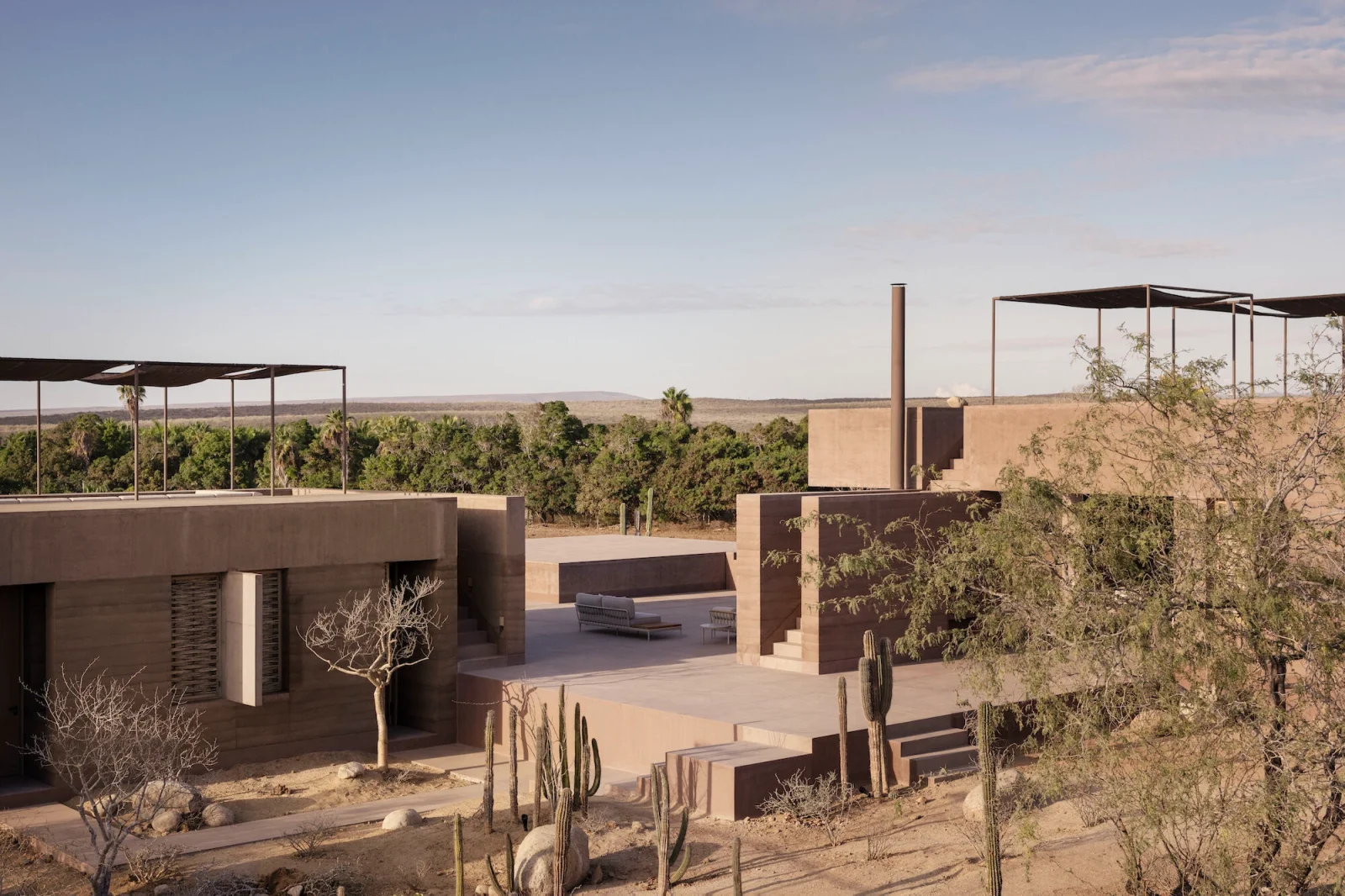
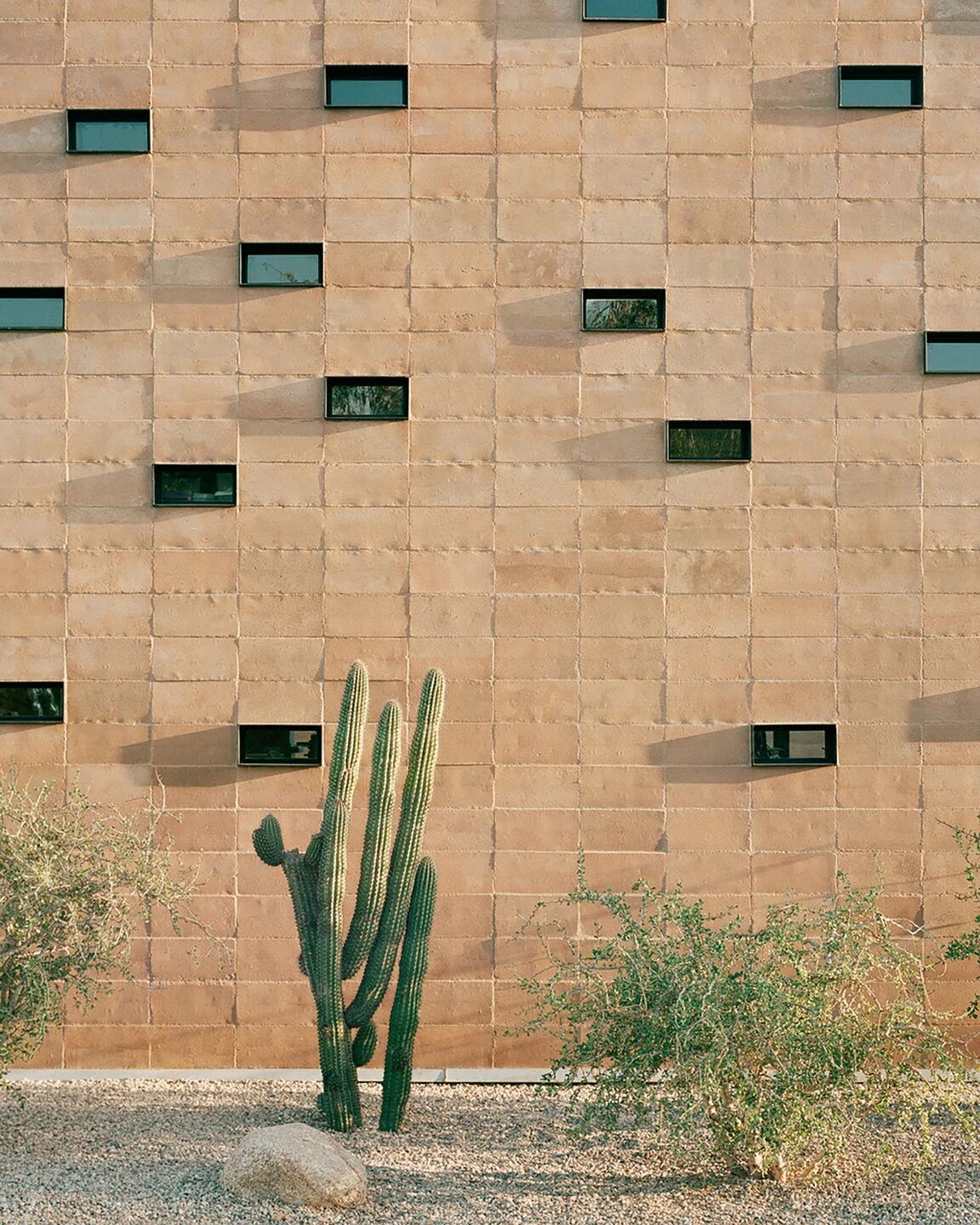
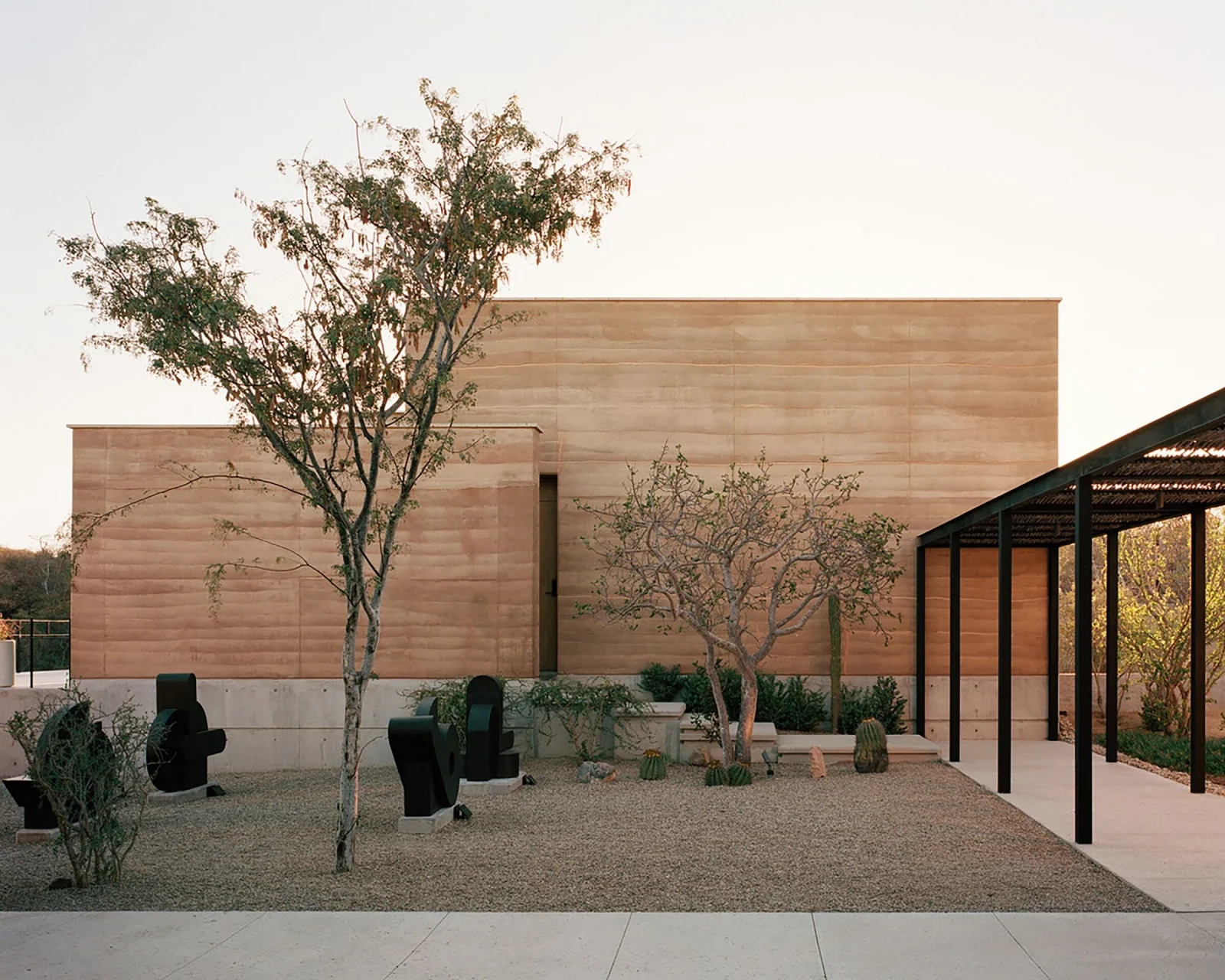
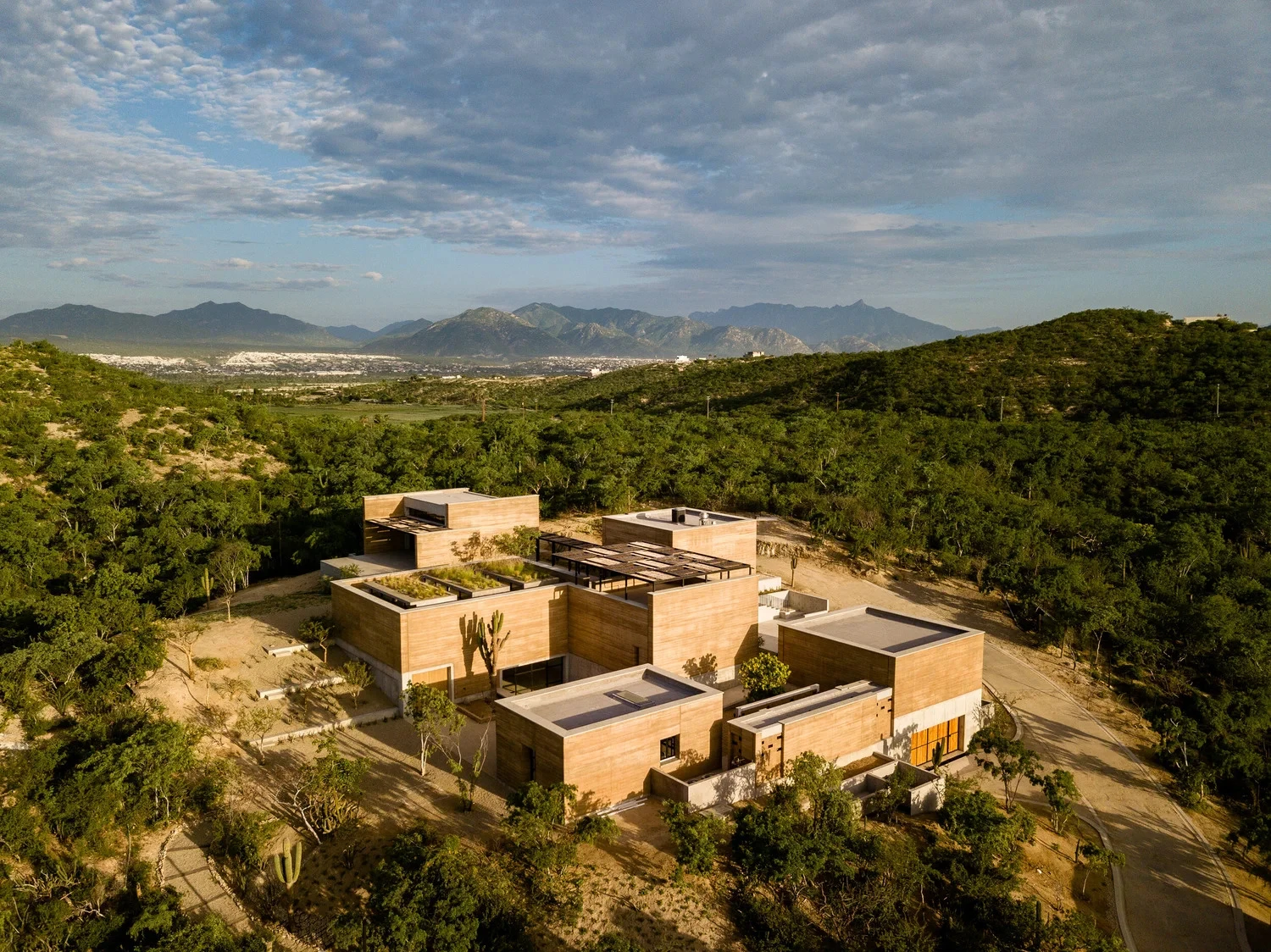
Casa Ballena, designed by RIMA Design Group on Mexico’s Baja Peninsula, highlights the importance of using local materials. This modern complex, composed of rectangular rammed earth volumes connected by wooden pergolas, is gradually placed across the site in response to the slope of the terrain. While rammed earth helps create different microclimates, it also provides effective sound insulation. The structures vary in height according to the surrounding landscape and the slope of the land. Some of the masses touch each other to create internal connections, while others separate to form large open-air terraces paved with gravel and stone and planted with local desert vegetation.
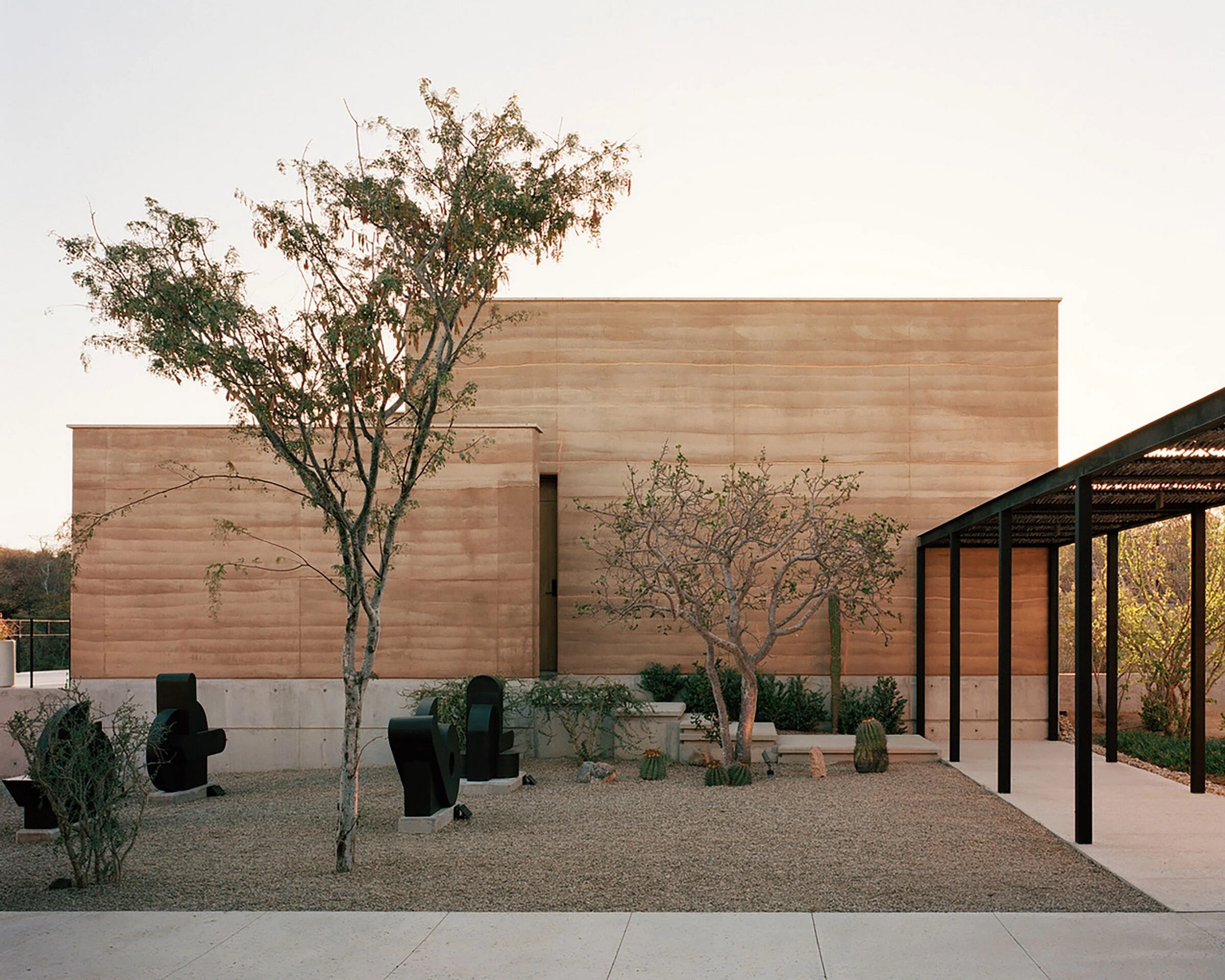
The center’s program consists of three workshops, an exhibition gallery, dining and living rooms, and a storage area, each occupied by a volume oriented according to its function: the workshops face north, while the living and dining rooms, administrative area, and residences face south, overlooking a nearby marina. On the roof, three linear planting beds placed side by side form a rooftop garden. Casa Ballena’s façades feature staggered windows framed by thin concrete borders, while the surrounding concrete pathways and courtyards are shaded by a series of pergolas with slatted roofs.
5. Marfa Ranch
Location: Marfa, Texas, USA
Architect: Lake Flato
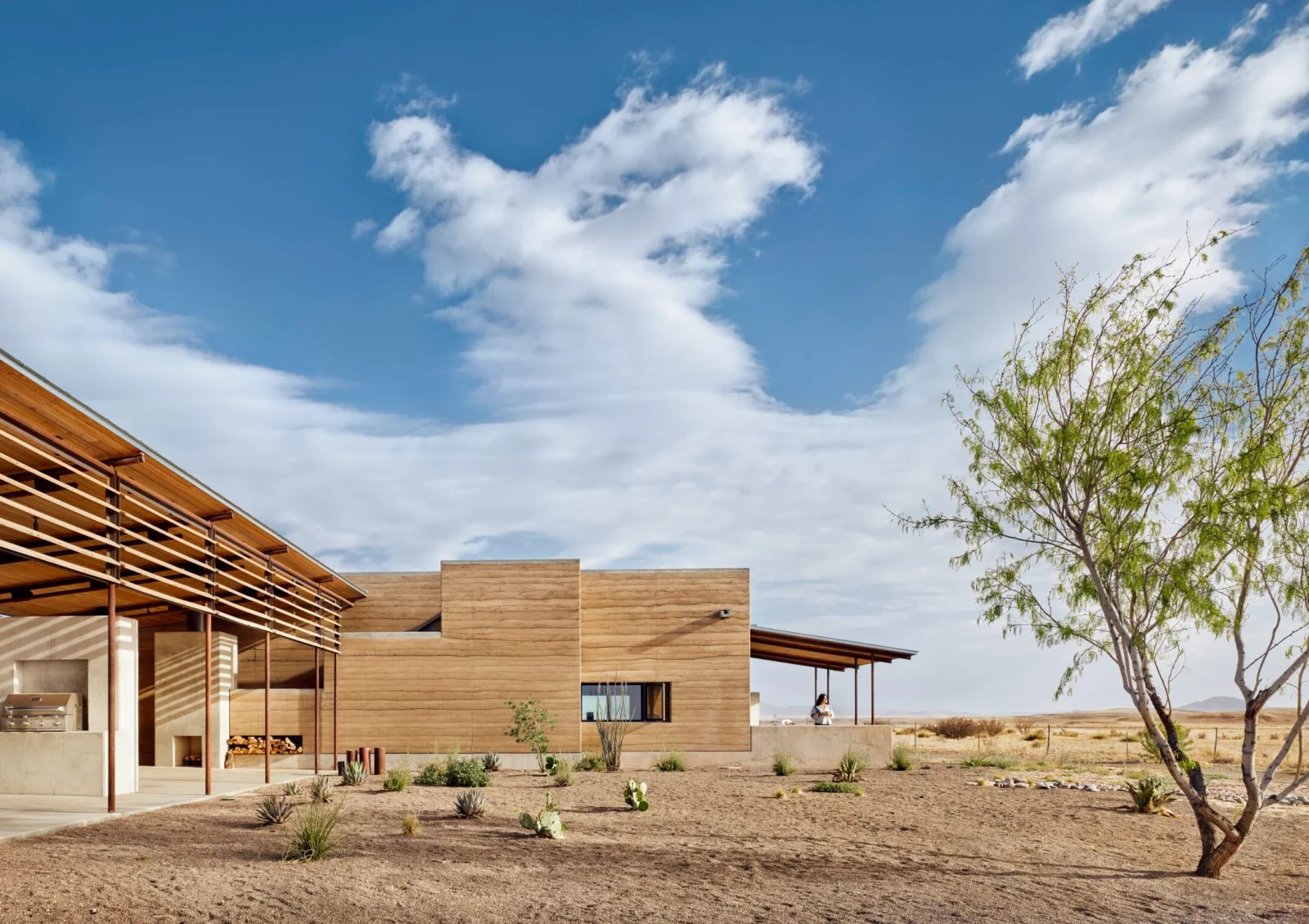
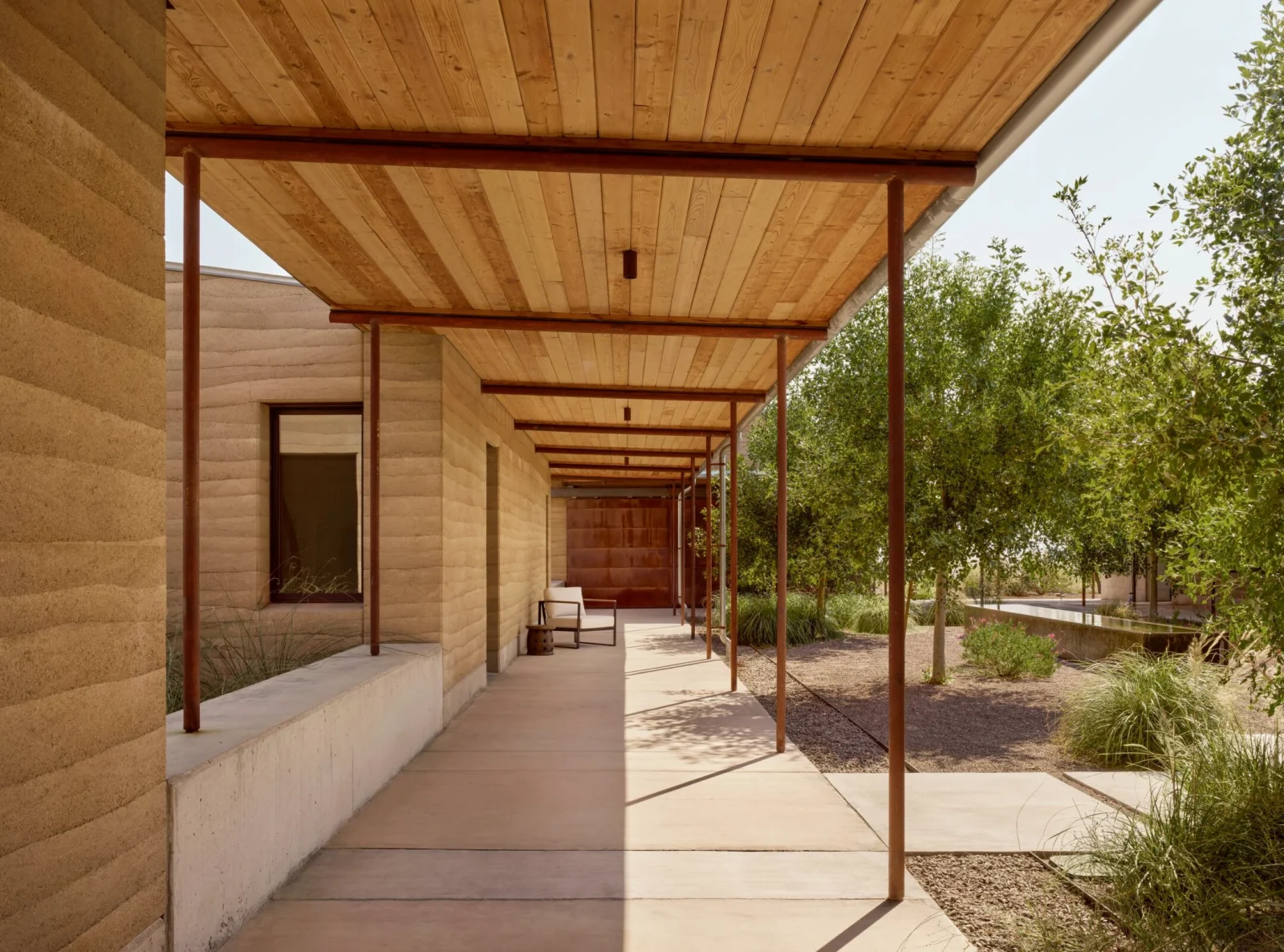
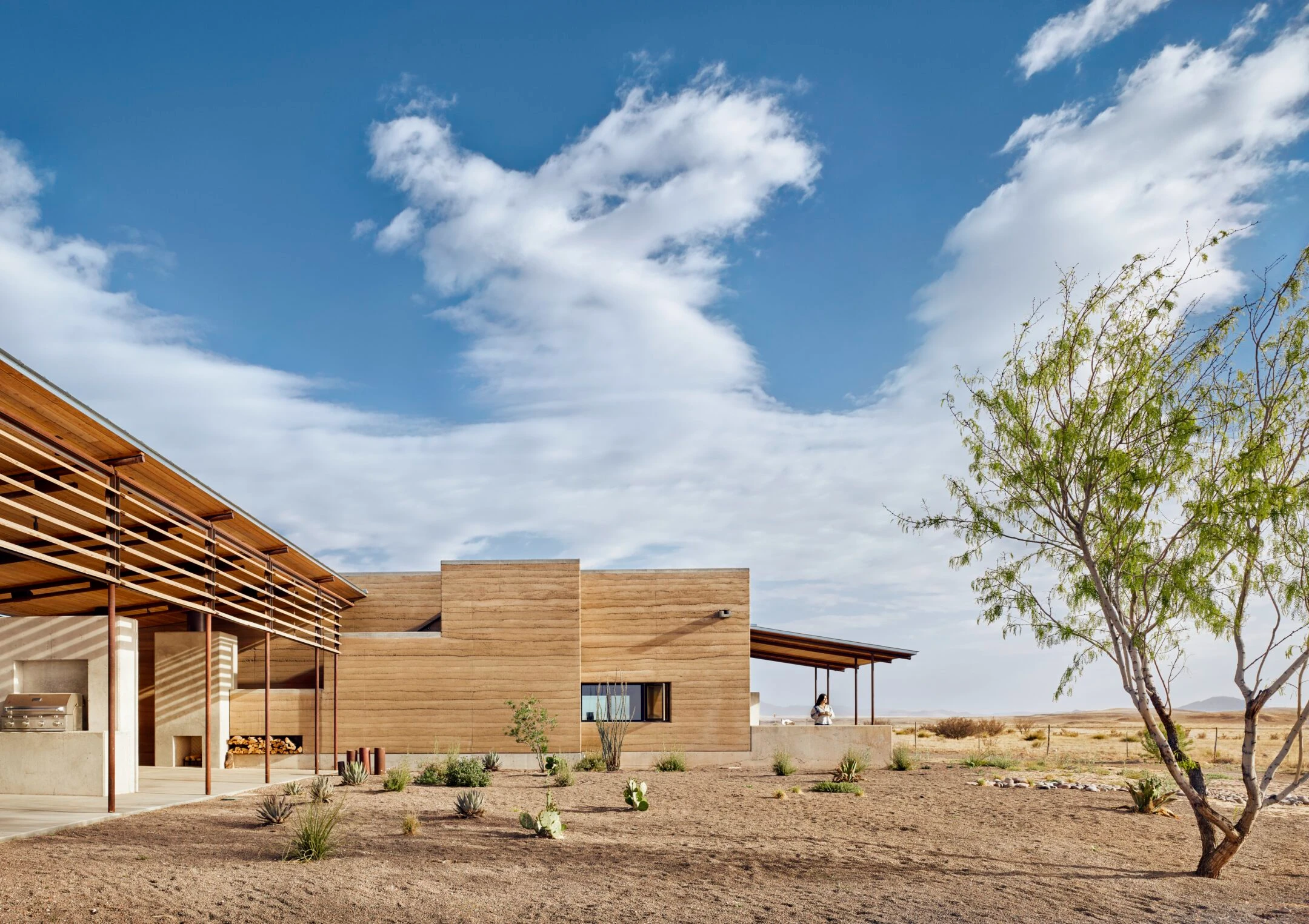
Designed by Lake Flato, Marfa Ranch is situated on a low hilltop with spectacular views between the Chihuahuan Desert and the Davis Mountains. Comprising eight structures arranged around a central courtyard shaded by native mesquite trees, Marfa Ranch draws inspiration from the region’s early architecture. The rooms act as a wall around the courtyard, creating an arrangement that the studio defines as both walled and open. Featuring floor-to-ceiling glass windows and a large black fireplace, the open-plan living area offers views of the surrounding desert.
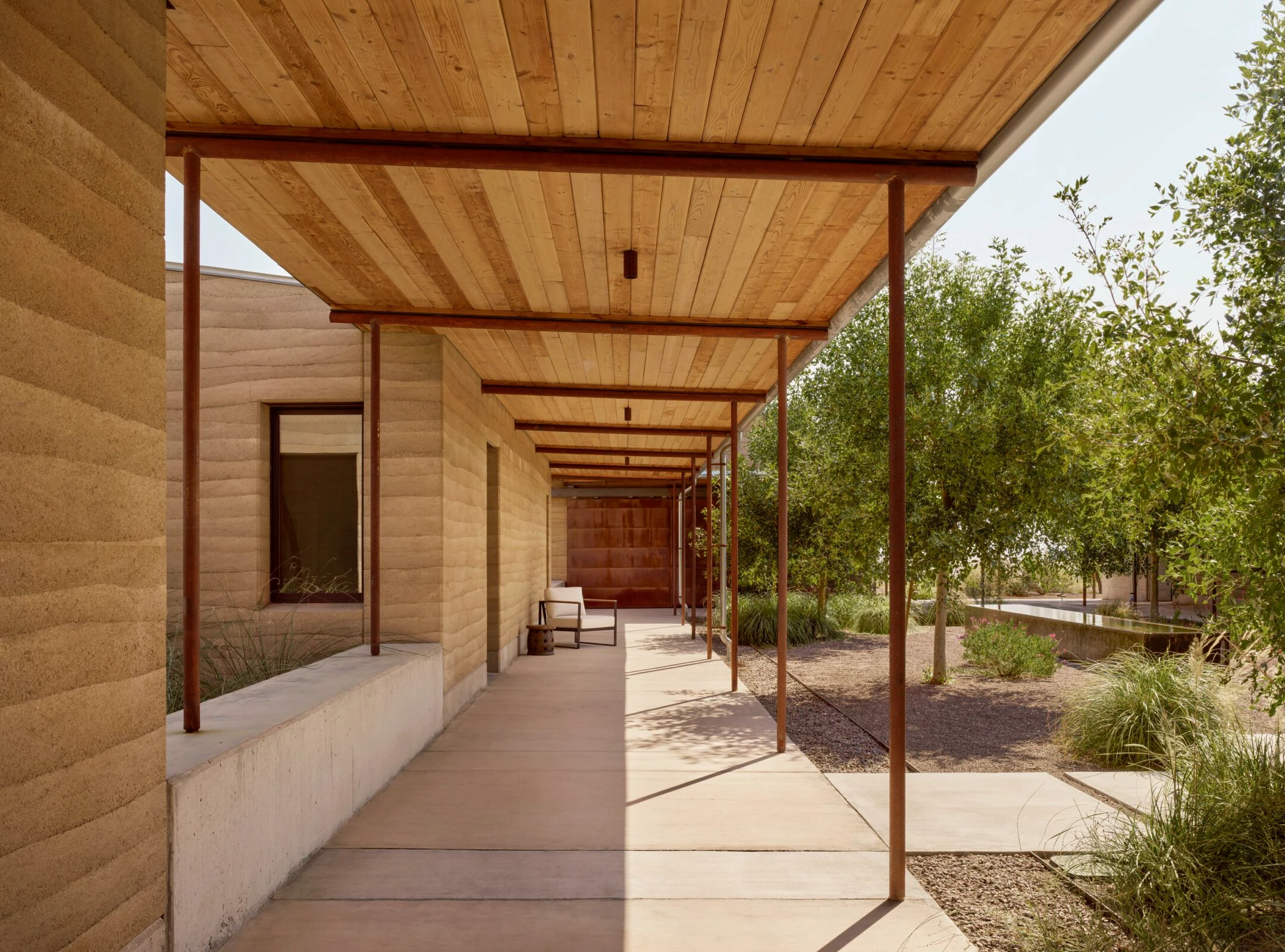
Constructed with rammed-earth walls that are two feet thick, Marfa Ranch protects its occupants from the region’s extreme conditions, including heat, cold, and strong winds. Approximately three million pounds of soil, sourced directly from the site, were used both as a structural and finishing material. In addition to the rammed-earth walls, the layout of the house is also designed in response to the climate. Large glass surfaces create a striking contrast between the heavy earthen masses and a sense of weightless transparency, while the high thermal insulation performance reduces energy consumption by up to 60% compared to conventional construction. Marfa Ranch embraces expansive views with lightweight walkways and verandas made from recycled oilfield pipes.
6. Desert Wash
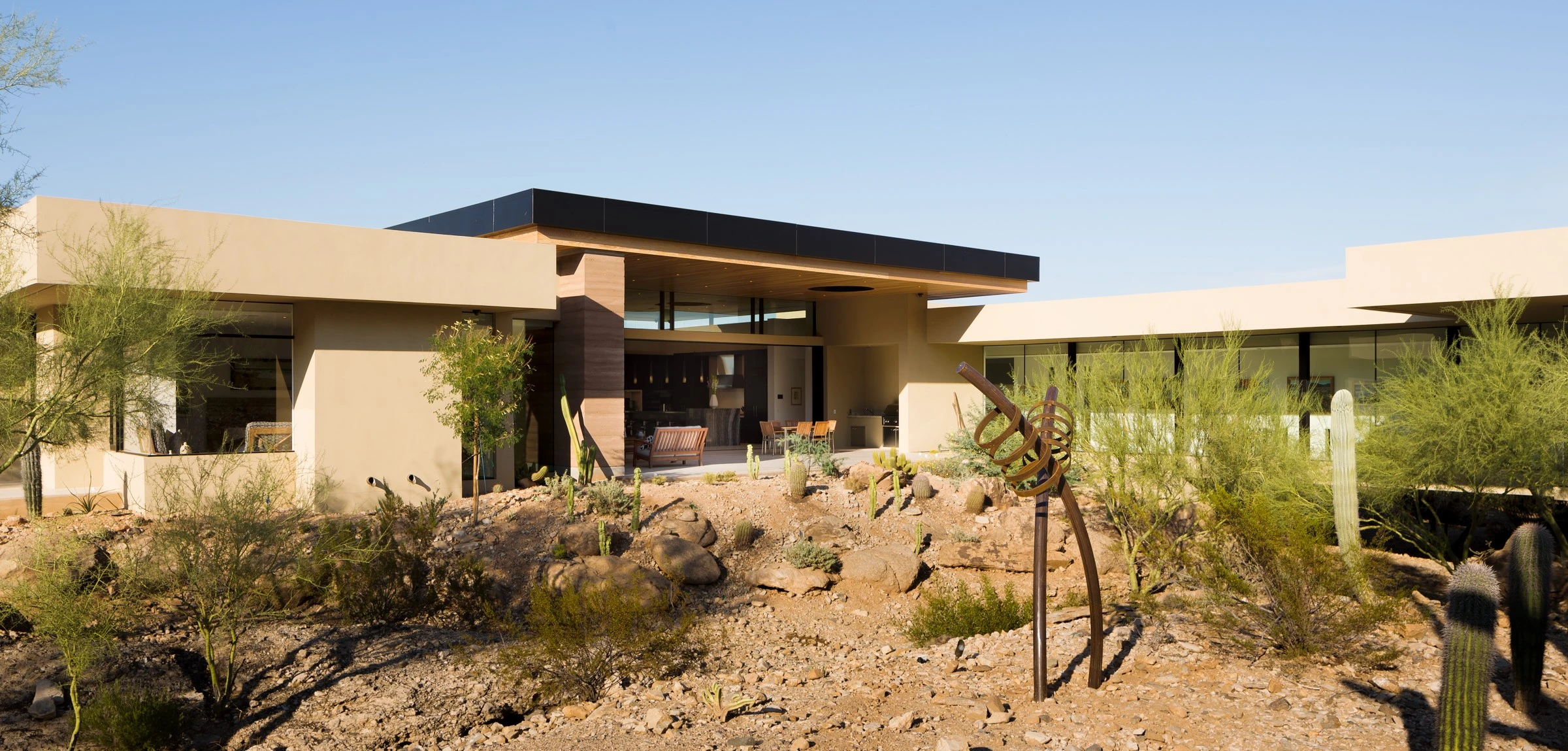
Location: Paradise Valley, AZ, US
Architect: Kendle Design Collaborative
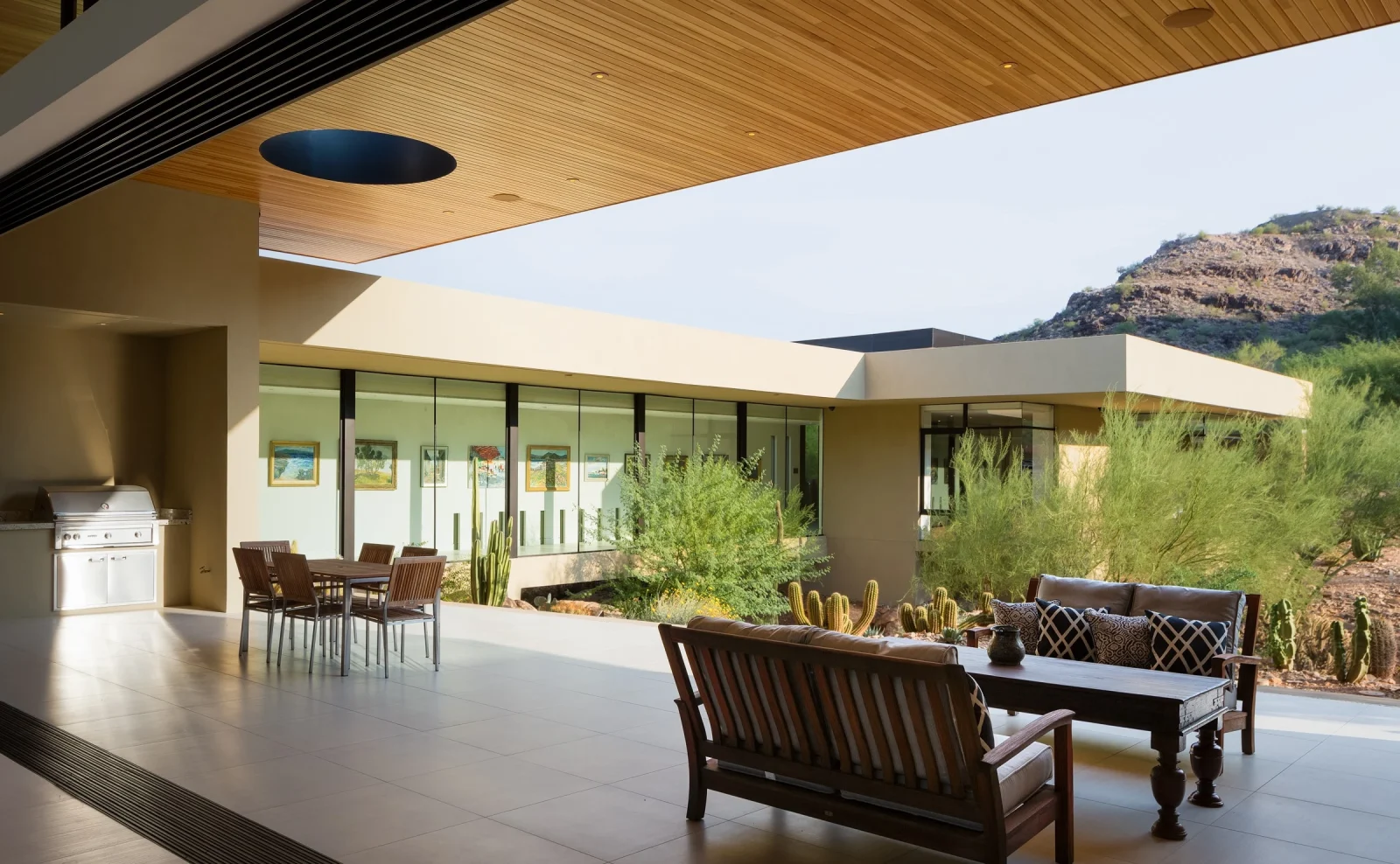
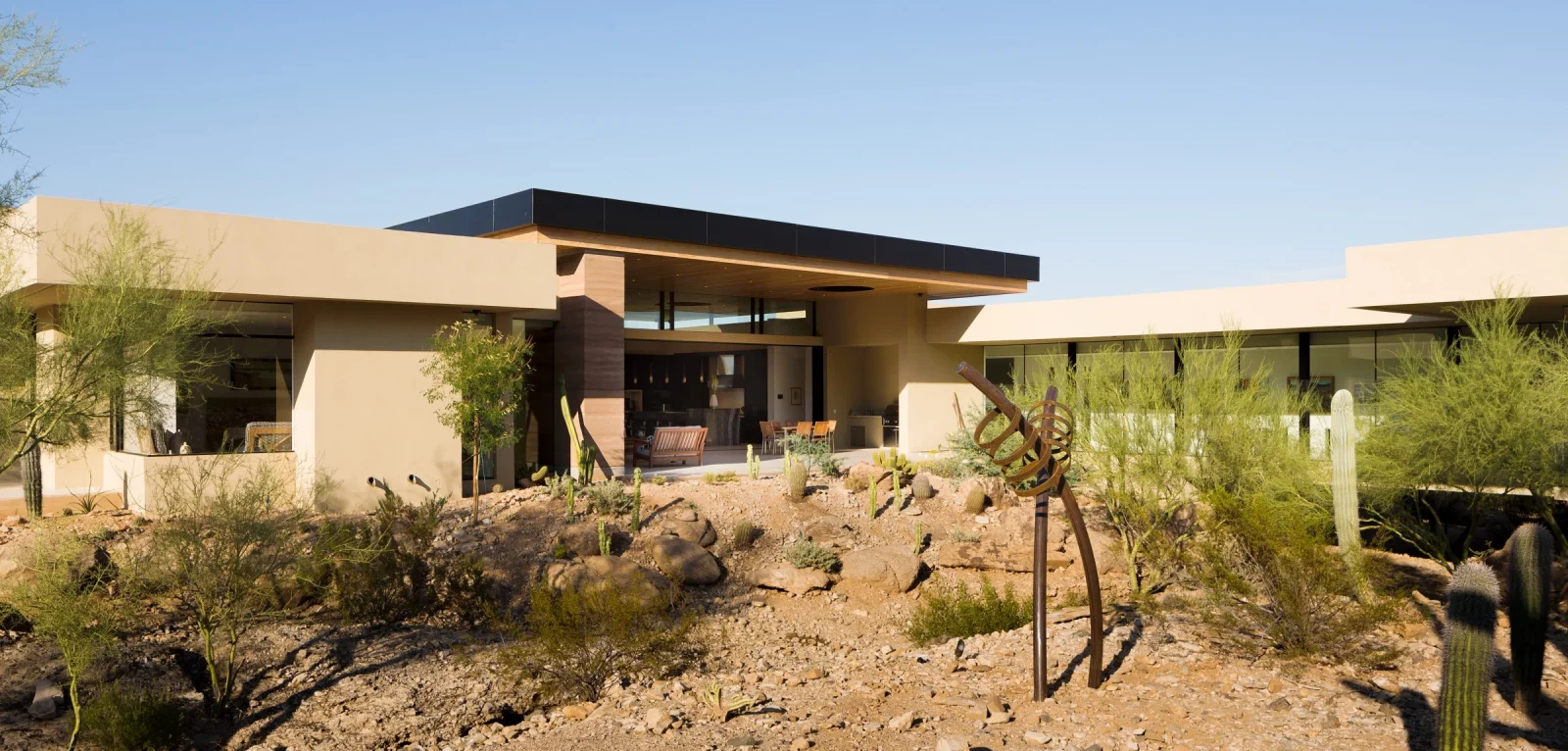
An inspiring example of how a modern home can be designed using rammed earth, Desert Wash reflects a seamless integration between architecture and the surrounding desert ecosystem. Adorned with interconnected bridges and suspended roof forms, this captivating home sits nestled in a rugged valley. Seamlessly blending elements of nature and art, Desert Wash takes its inhabitants on an experiential journey that transcends the traditional boundaries of indoor and outdoor living.
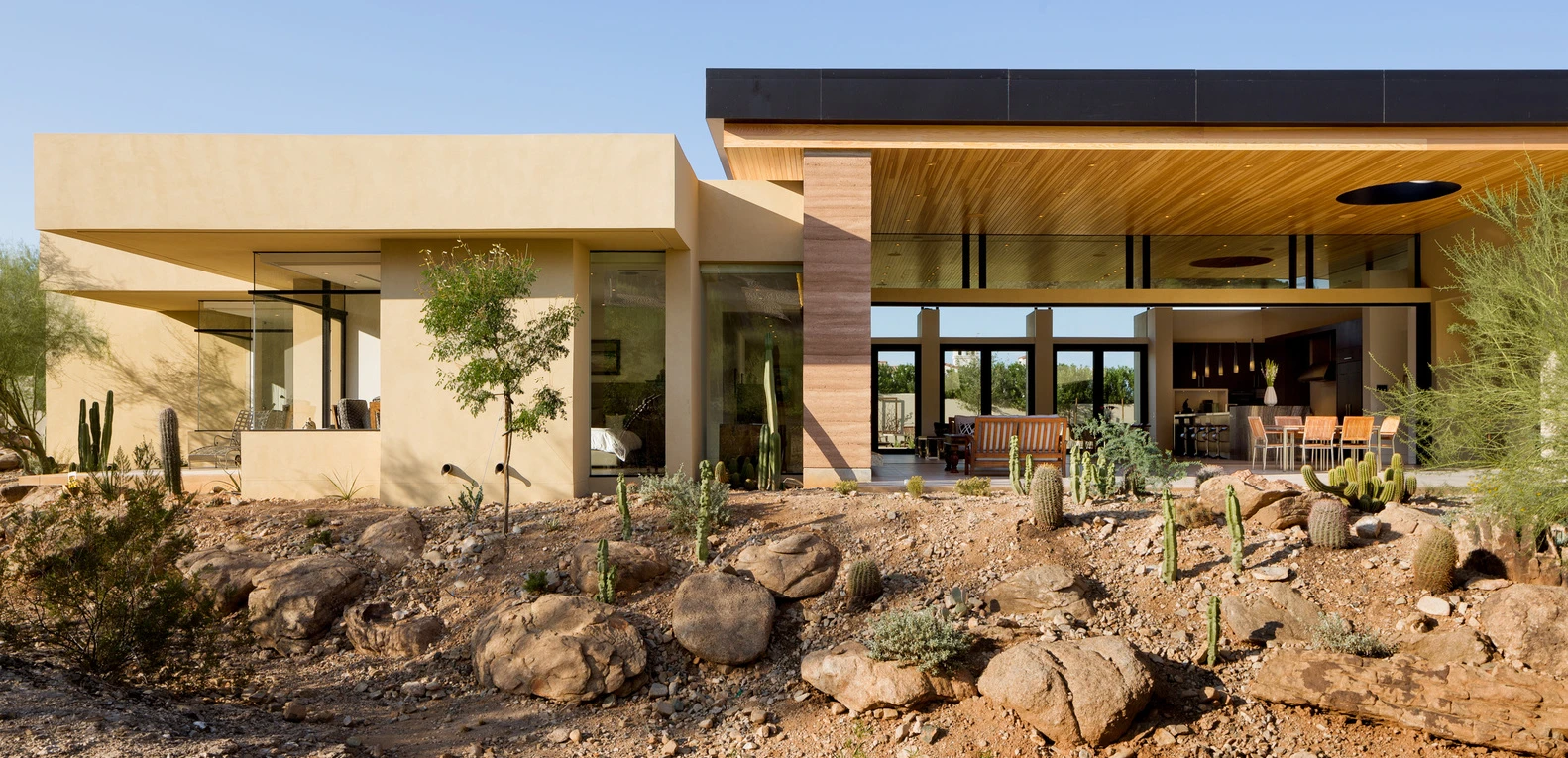
Desert Wash Home features rammed-earth walls that deliberately echo the layered sediment of the natural wash running through the property, which divides the site into two. The linear form of the house follows and preserves the flow pattern of the wash, establishing a hydraulic dialogue between the building and the land. The earth volumes, which protect the glass-walled living spaces from the harsh western sun, are positioned to frame the spectacular panorama of the nearby mountain ranges. The thick rammed-earth walls create a harmonious interaction with the desert landscape, maintaining a deep connection to the outdoors while also providing a strong sense of shelter.
7. Peninsula House
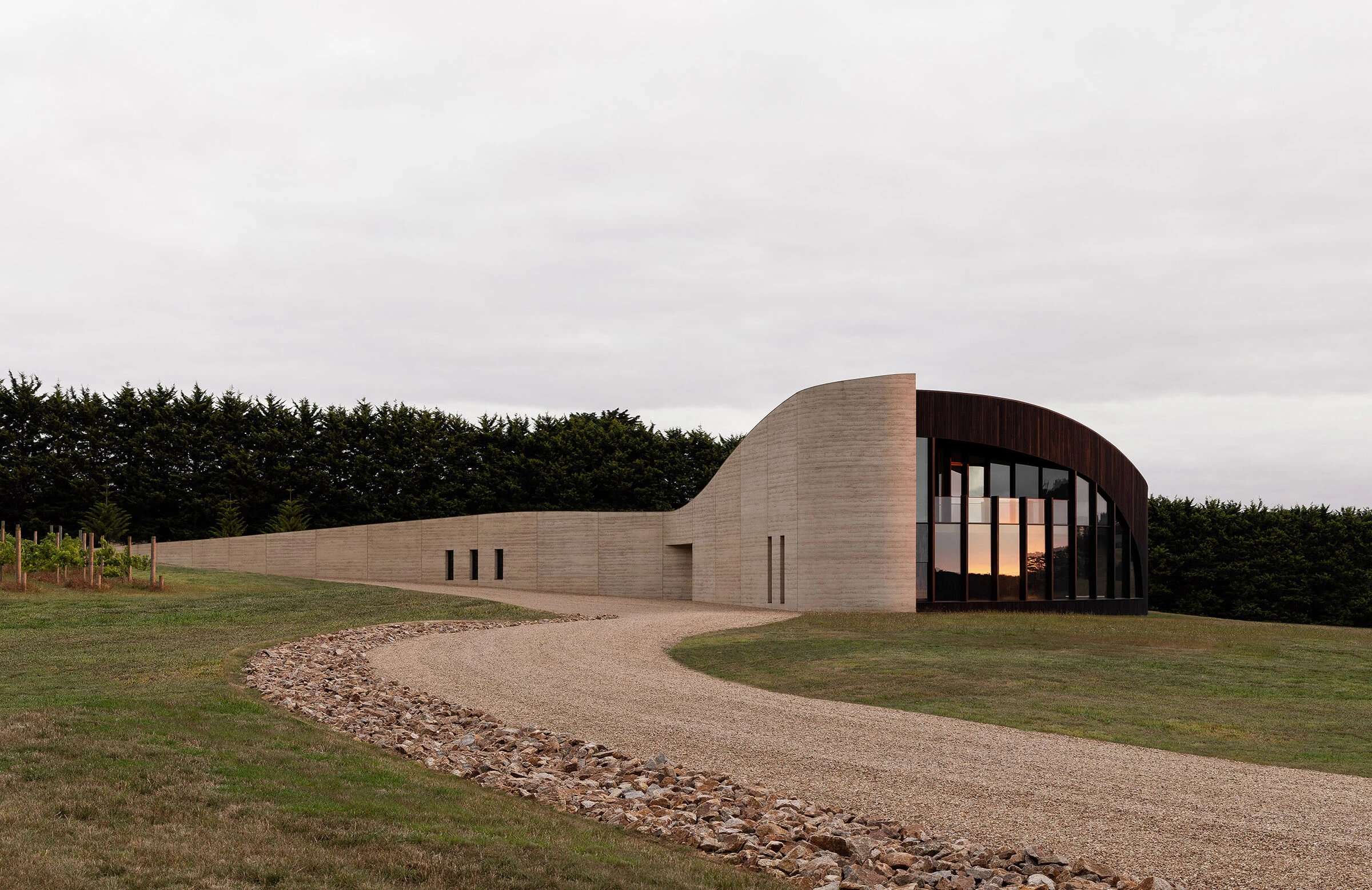
Location: Melbourne, Australia
Architect: Wood Marsh
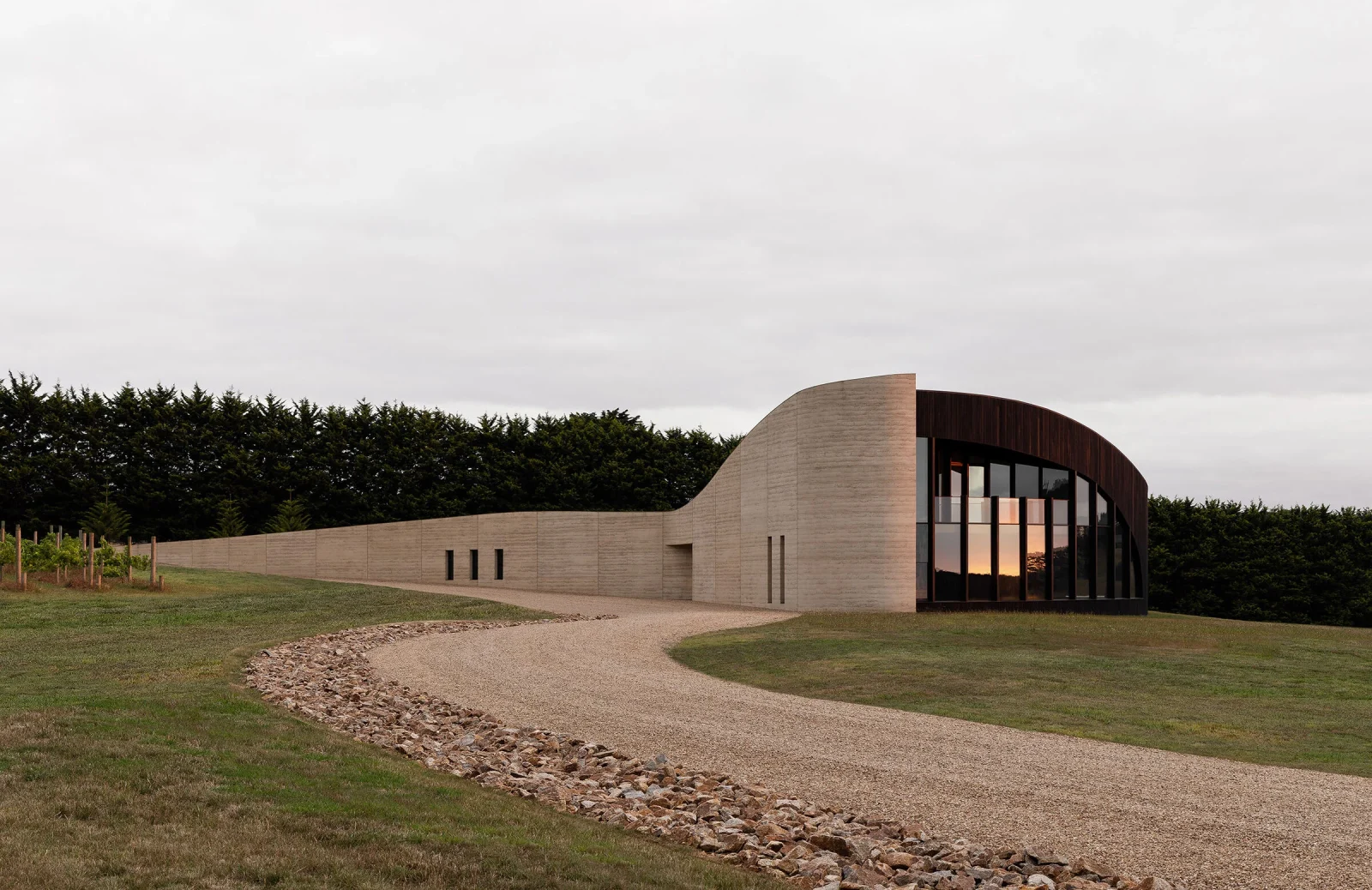
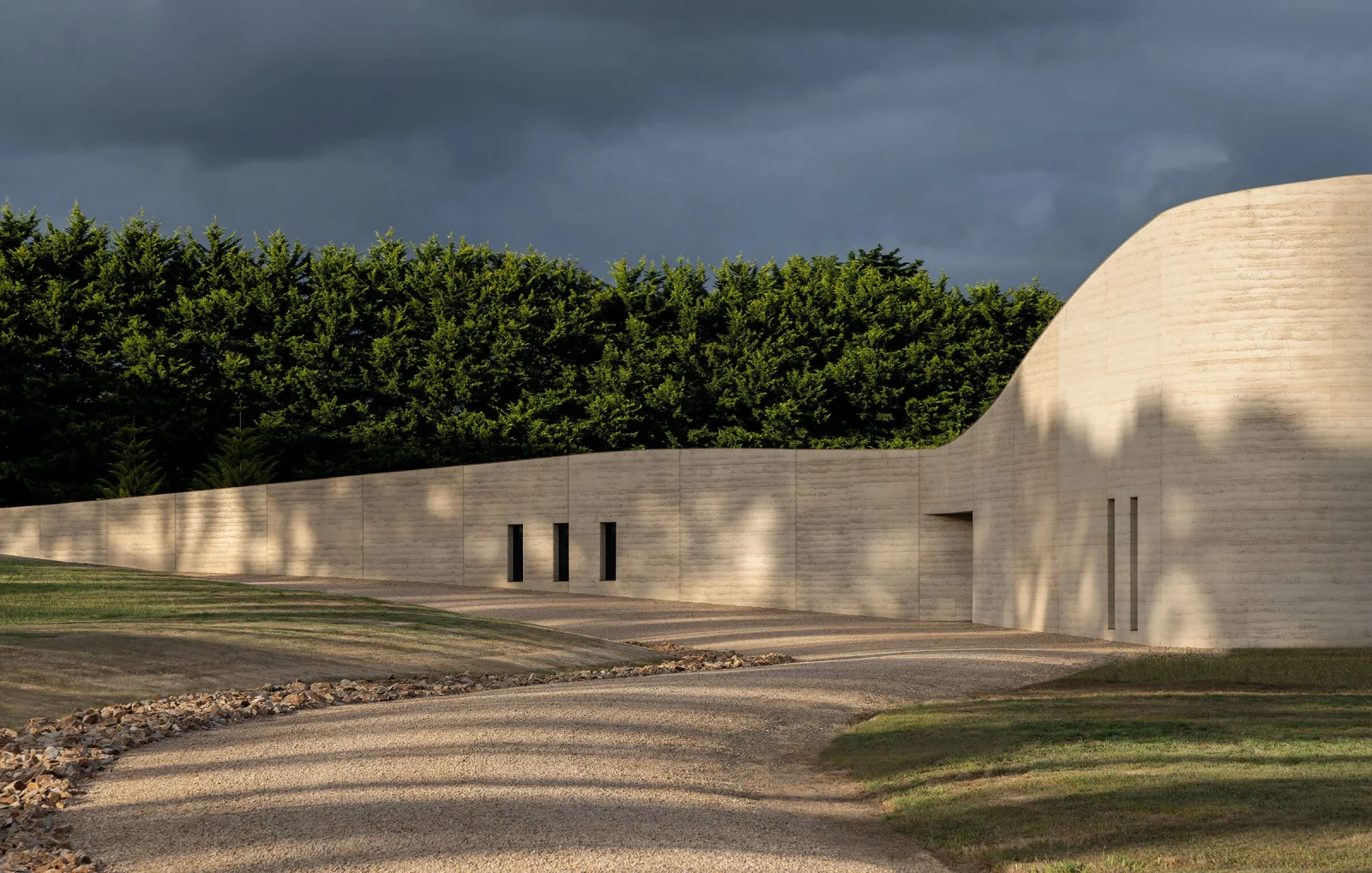
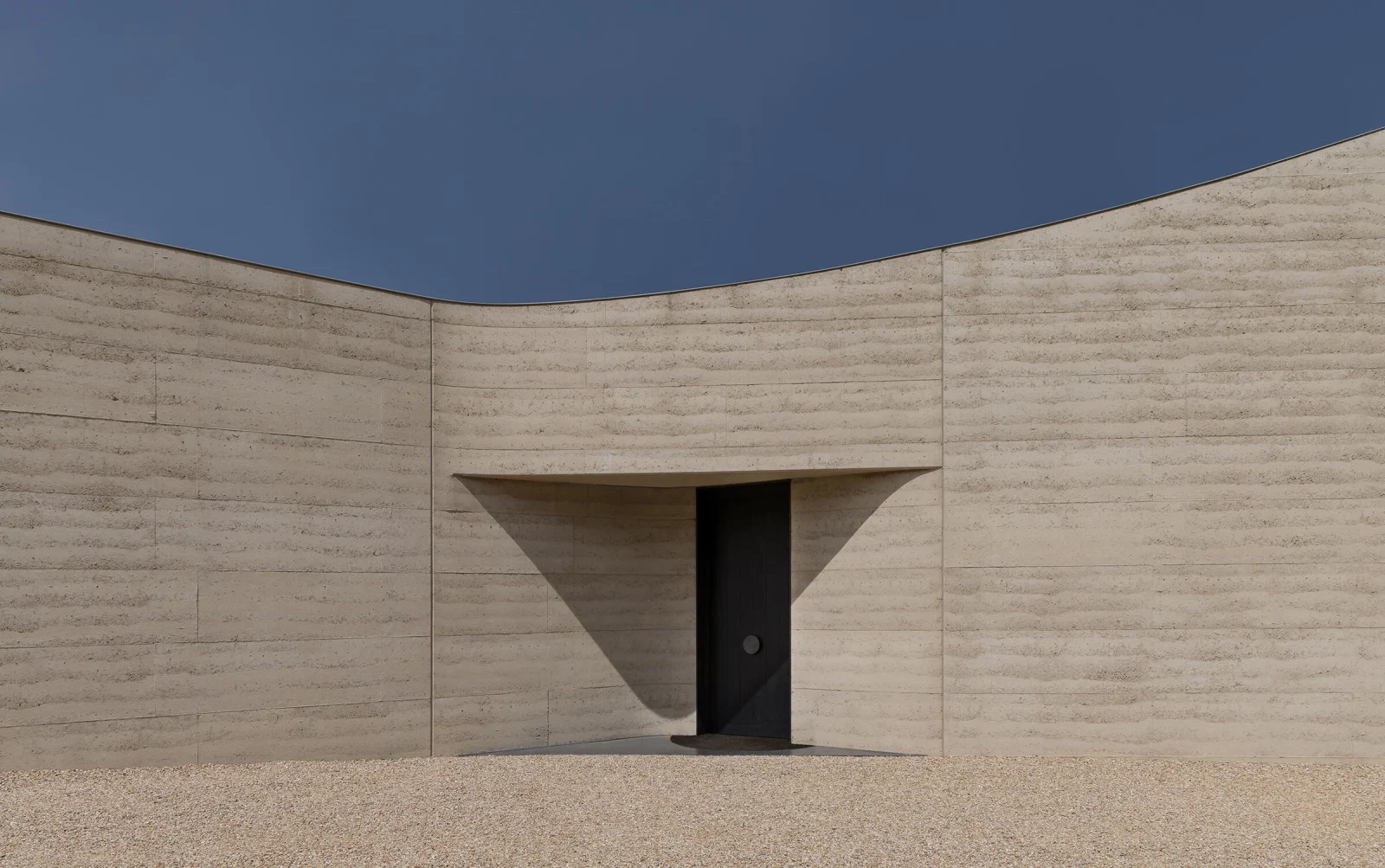
Perched on the highest point of the site overlooking Bass Gorge, Peninsula House is designed as an artistic architectural response to the contours of the rural landscape. Curved walls of charred timber and rammed earth were used to reflect Australia’s windy coastline. Approaching from the winding road, a strip of rammed earth rises monumentally to 10 meters at the back of the house, then gradually tapers back toward the view. The texture of the exterior, reminiscent of a wind-swept, weathered form, also alludes to an organic mammal reminiscent of whale carcasses washed ashore. A recess in the center of the wall defines the entrance, creating a line of shadow.

A courtyard forms the axial center of the building. Corridors winding from the courtyard define three distinct zones: living area, bedroom, and living area. A wide, dark staircase leads residents to the private master bedroom above the living area. The expansive parabolic ceiling gives the space a unique acoustic quality. At the end of an impressive corridor, partially clad in rammed earth and slit windows, lies a custom-built recording studio.
Charred timber and rammed earth were chosen for the exterior due to their durability and low maintenance requirements. The curved surfaces and the forms of walls and openings emphasize the changing interplay of light and shadow. Monochromatic tones frame the natural colors of the surrounding landscape.
8. Tados Santos Guesthouse
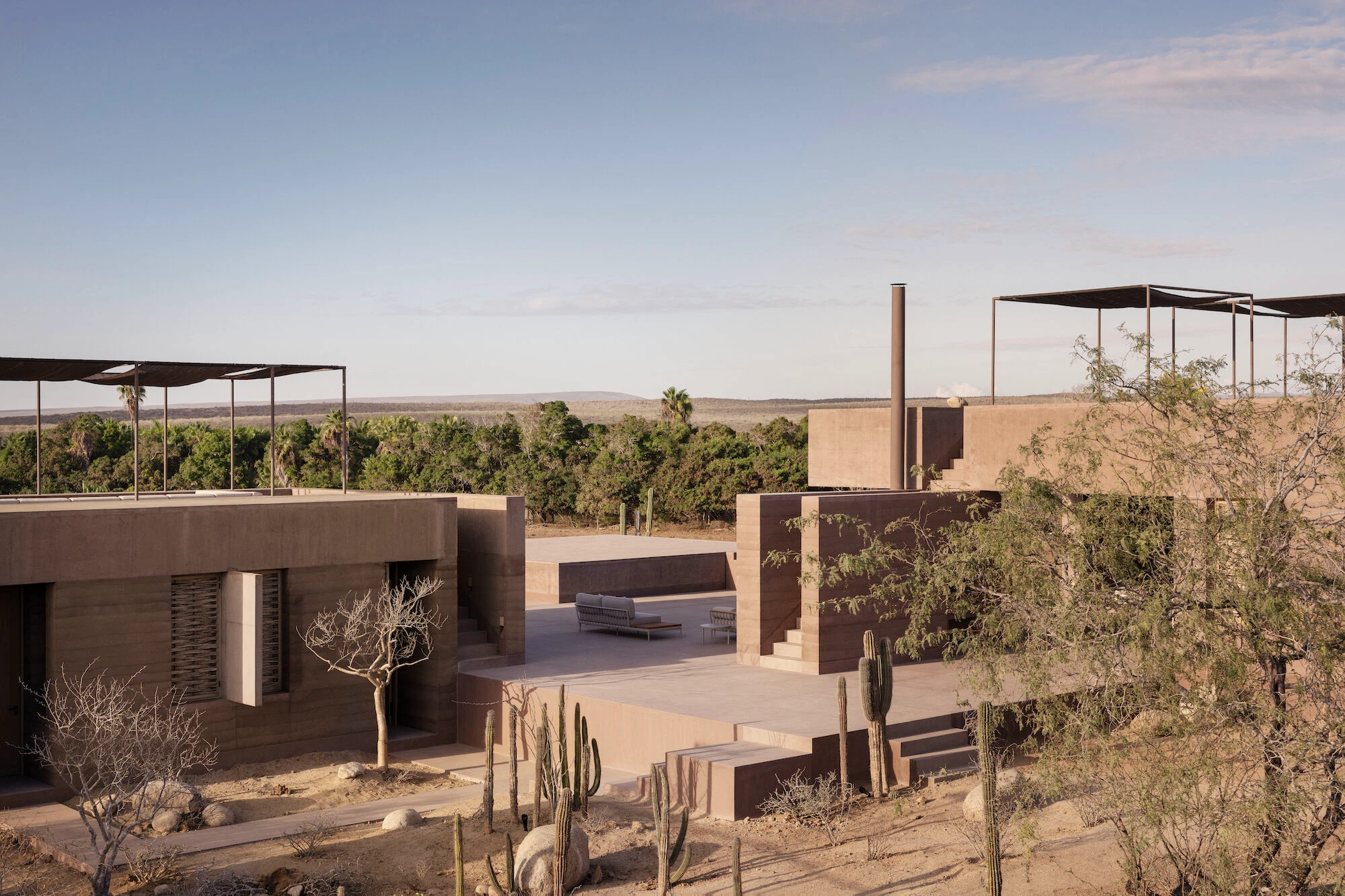
Location: Tados Santos, Mexico
Architect: PPAA
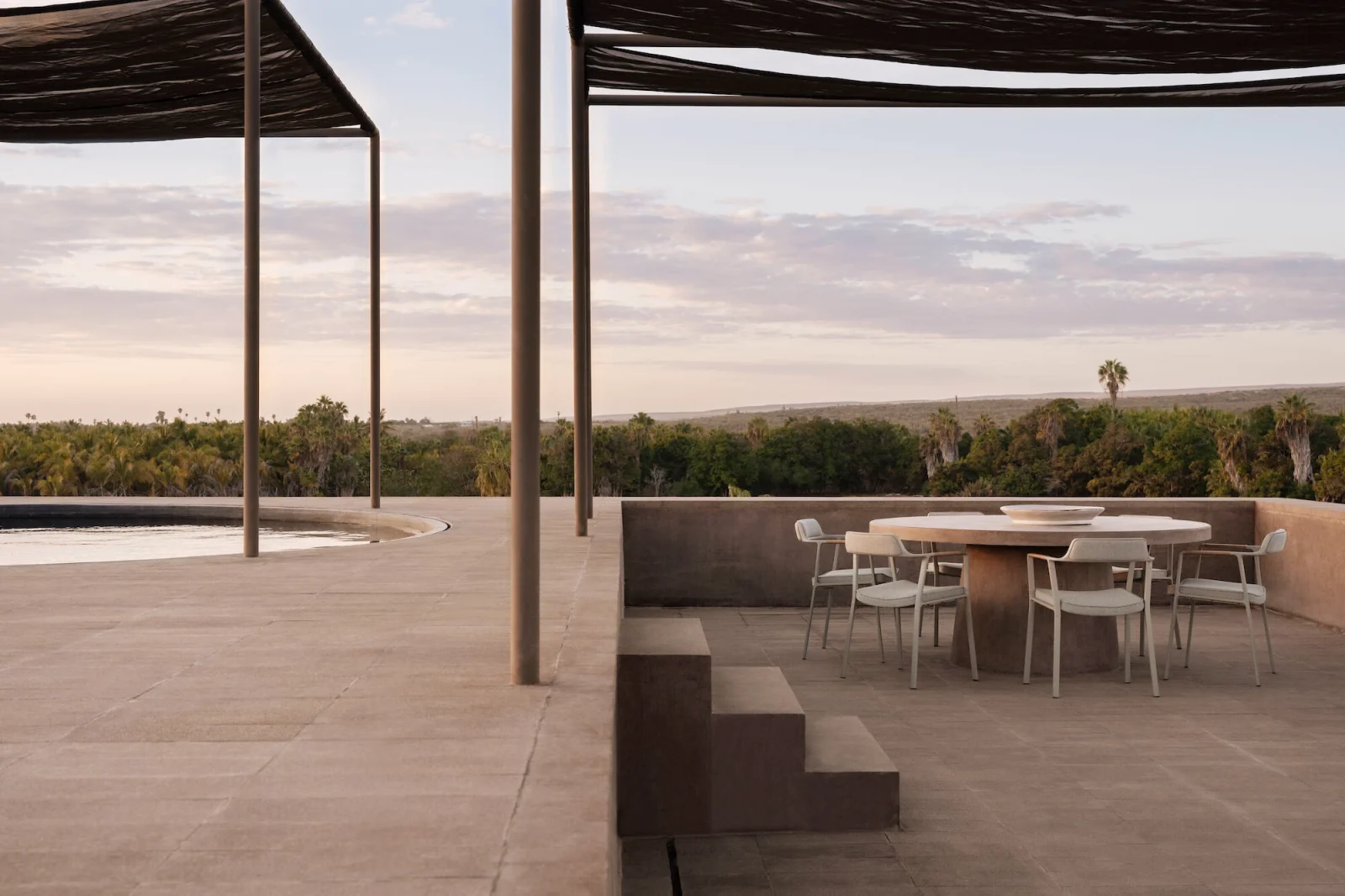
Offering a sophisticated blend of Mexican warmth and Scandinavian coolness, Tados Santos Guesthouse carefully responds to the contours of the landscape. Spanning 350 square meters, the five-bedroom structure comprises a main house, two interconnected guest houses, an indoor courtyard, a rooftop pool, and terraces. Paying homage to the region and its indoor/outdoor living culture, Tados Santos Guesthouse features a circular rooftop pool offering guests ocean and sky views, while the enclosed terrace provides a gathering place from day to night.
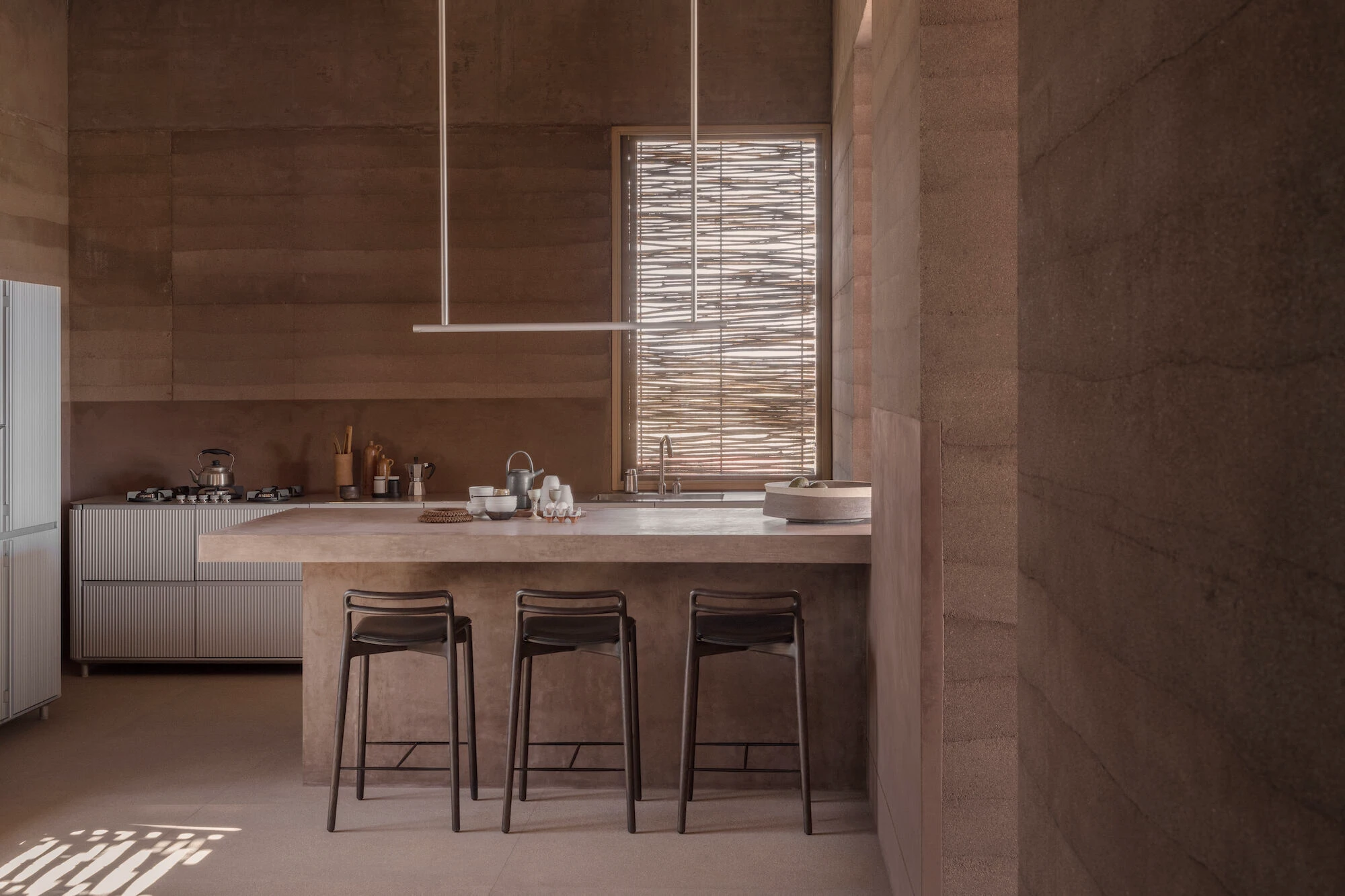
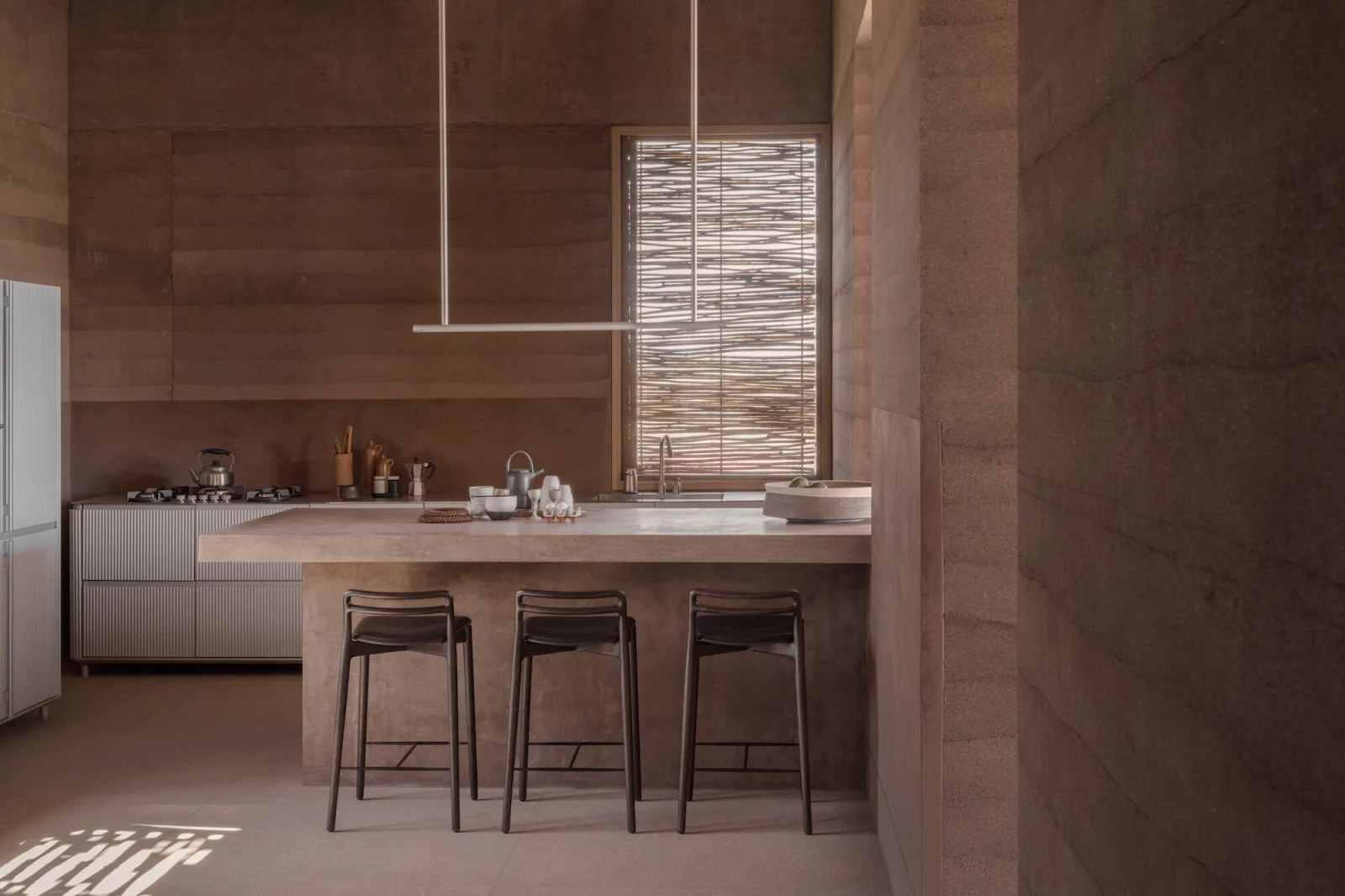
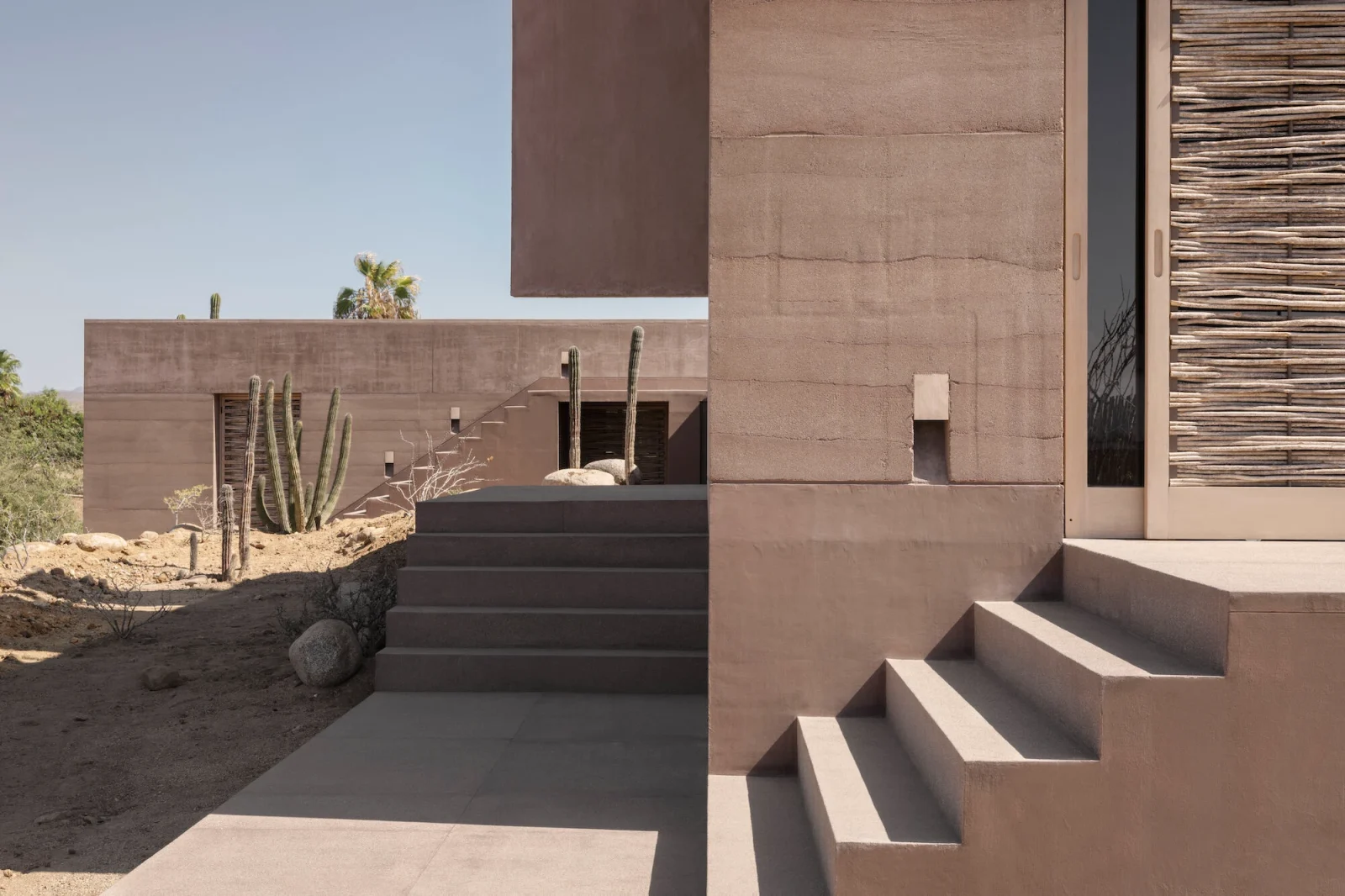
Constructed using local natural materials and traditional building techniques, Tados Santos Guesthouse’s rammed earth structure is perfectly adapted to the climate. These solid walls, left in their raw state, shape the exterior and interior of the building. Thick rammed earth walls provide natural insulation at night while keeping interiors cool during the day. Large windows framing panoramic ocean views create a seamless connection between the interior spaces and the surrounding environment.
9. Mud House
Location: Alwar, India
Architect: Sketch Design Studio
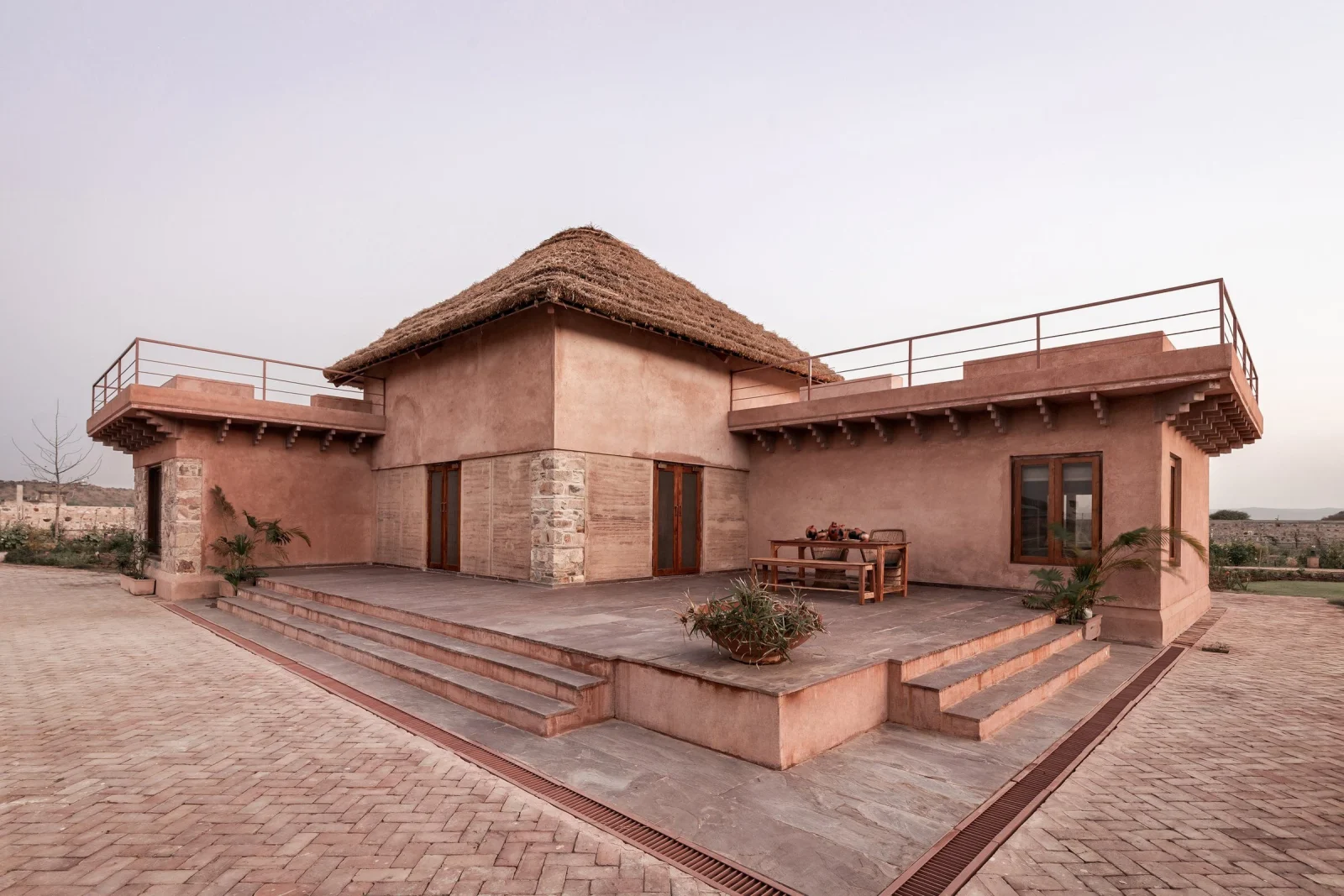
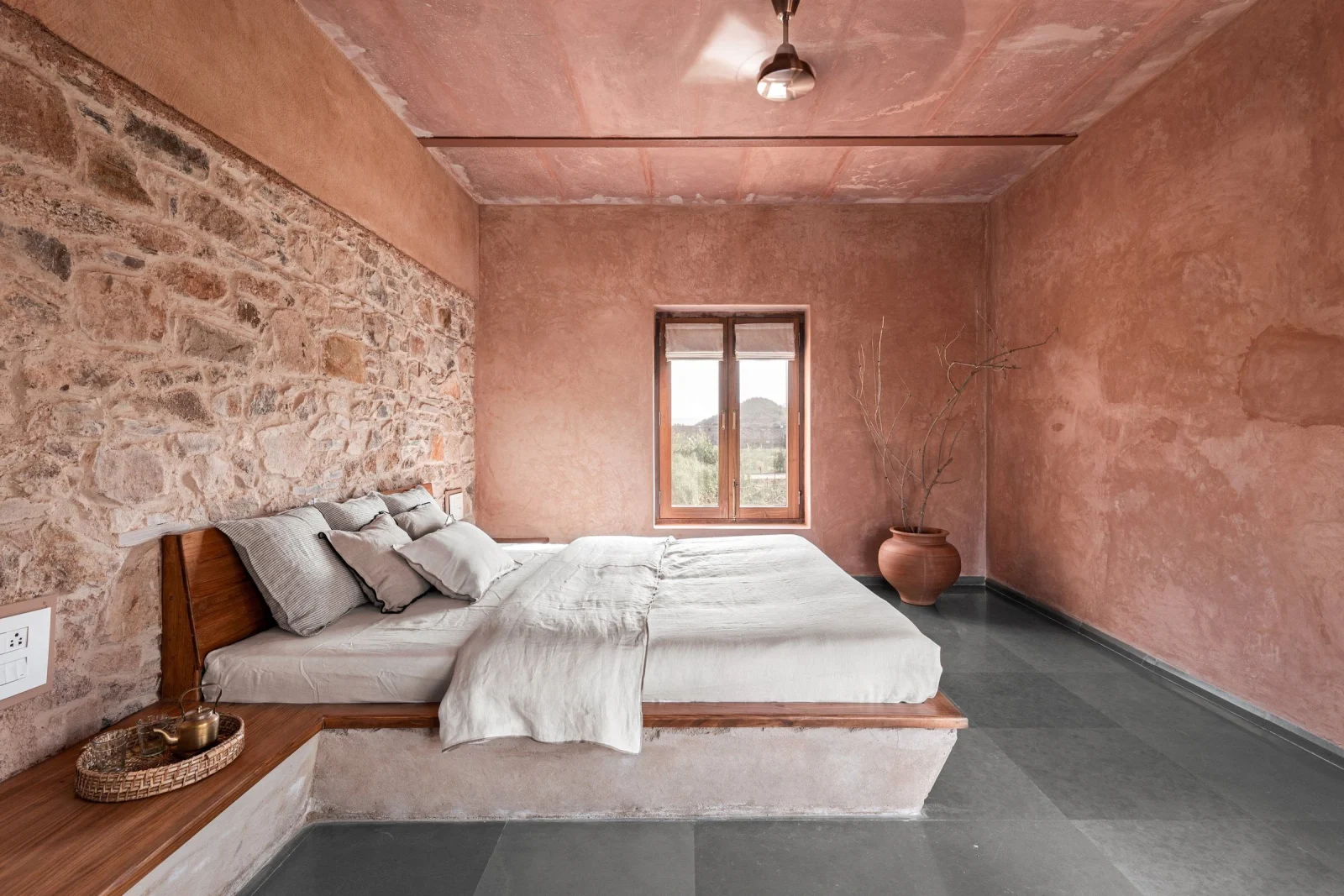
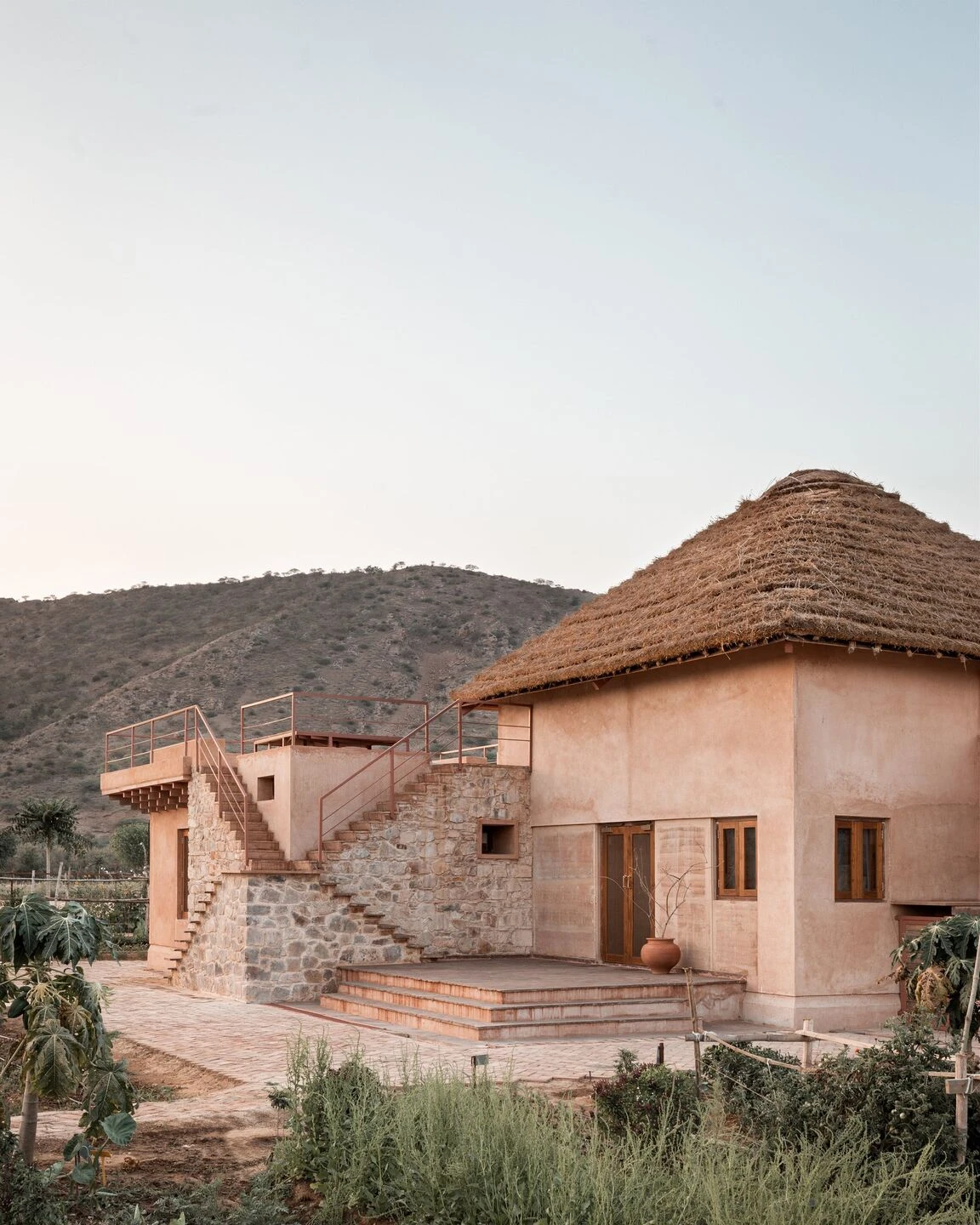
Mud House, designed by Sketch Design Studio, aims to revive traditional construction techniques used by craftsmen long before the advent of cement. Situated in the heart of a four-acre permaculture-inspired farm, the house comprises two bedrooms and a central living room. Locally sourced bamboo lamps hanging from the ceiling form the focal point of the living room. Numerous windows in both bedrooms open onto views of the surrounding farm.
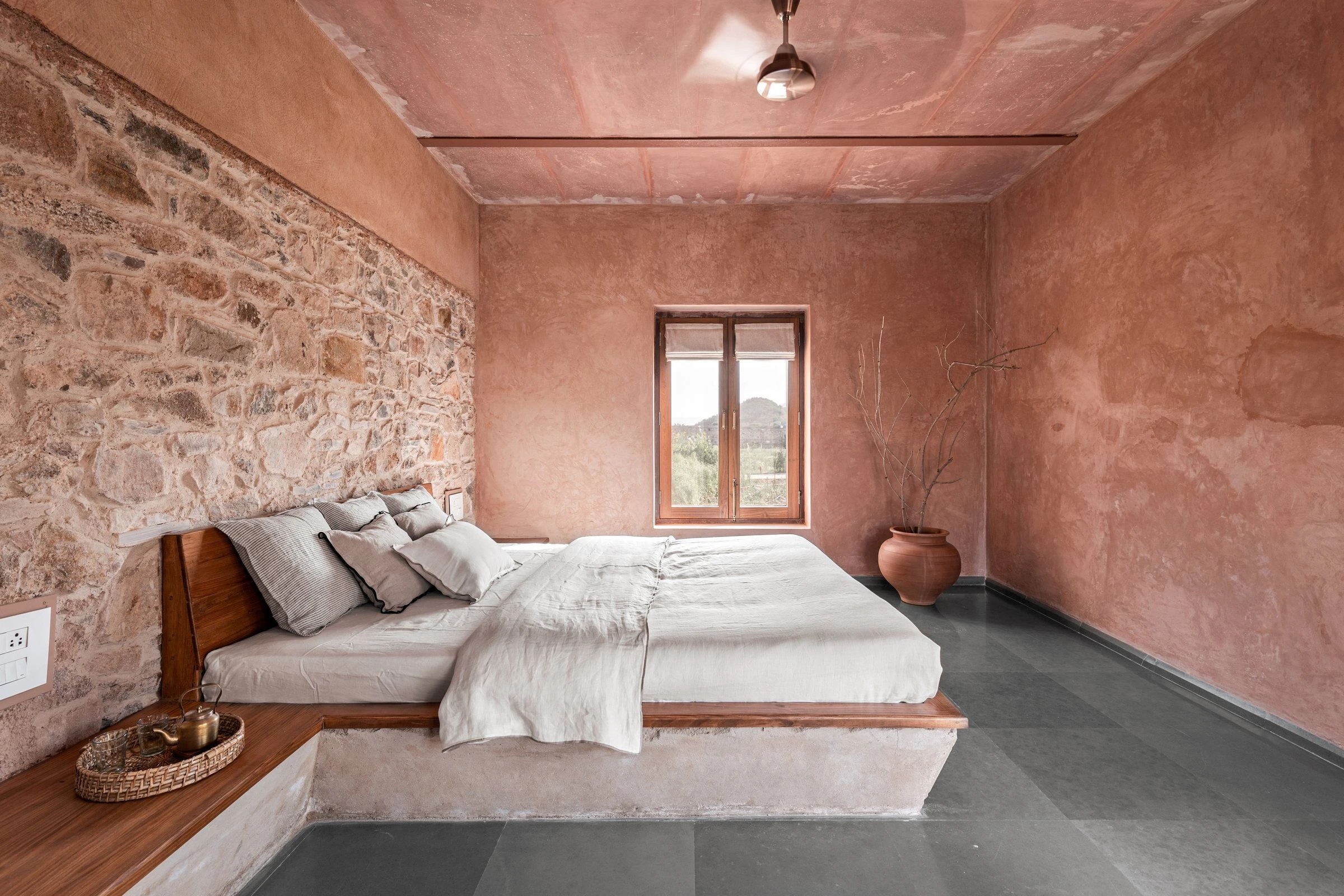
Built with virtually no concrete, Mud House utilizes recycled stone, lime, and mud walls. The walls are composed of soil compacted with lime and natural binders such as fenugreek seeds, sourced from the site. Jaggery and medicinal Indian leaves added to the mixture serve as natural insect repellents. The house, a load-bearing structure, incorporates stone supports to create a larger terrace and to extend cantilevers to protect the windows from rain. These stone supports, which also serve as decorative elements, add a beautiful detail to Mud House.
10. Casa Jatoba
Location: Porto Feliz, Brazil
Architect: Studio Guilherme Torres
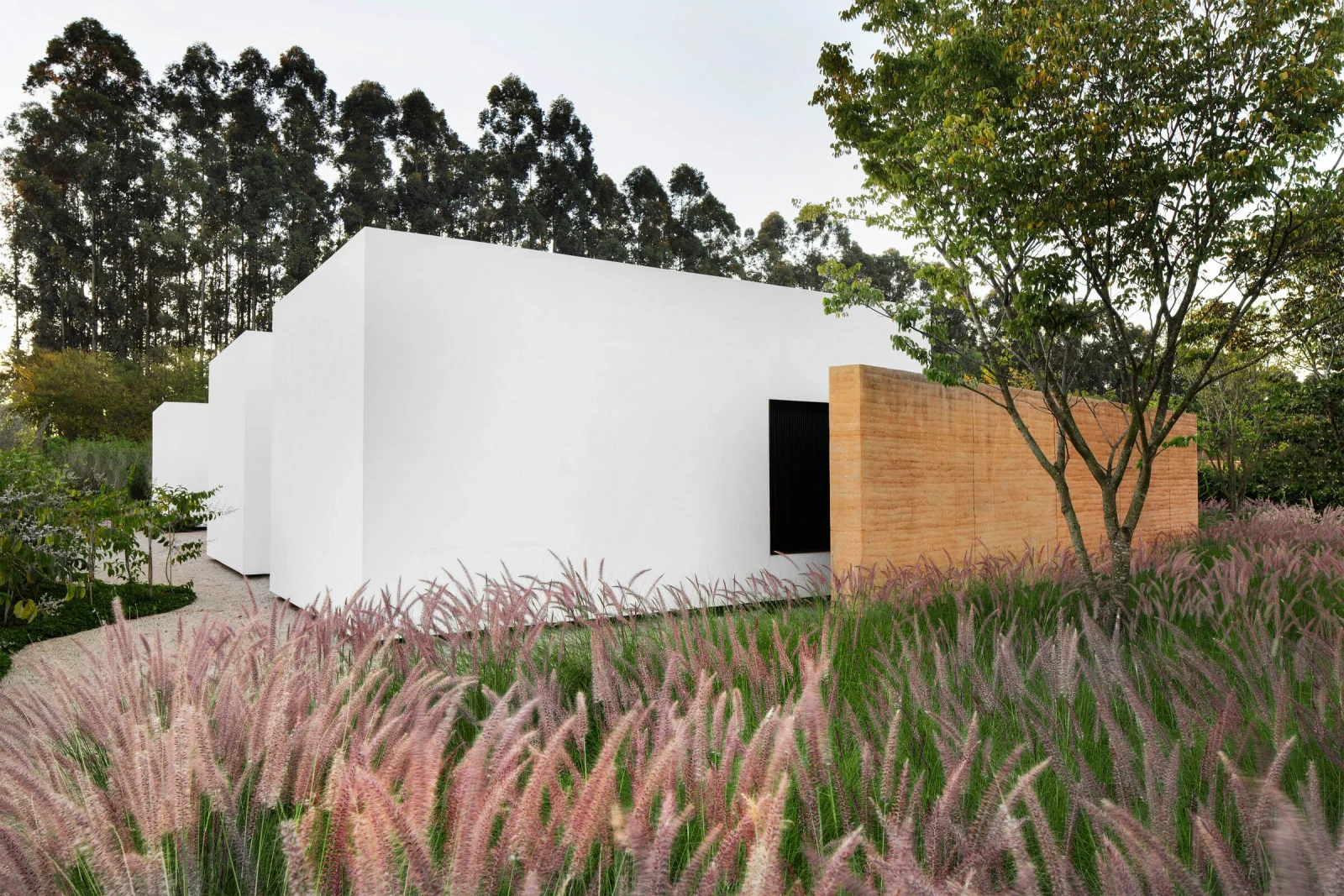
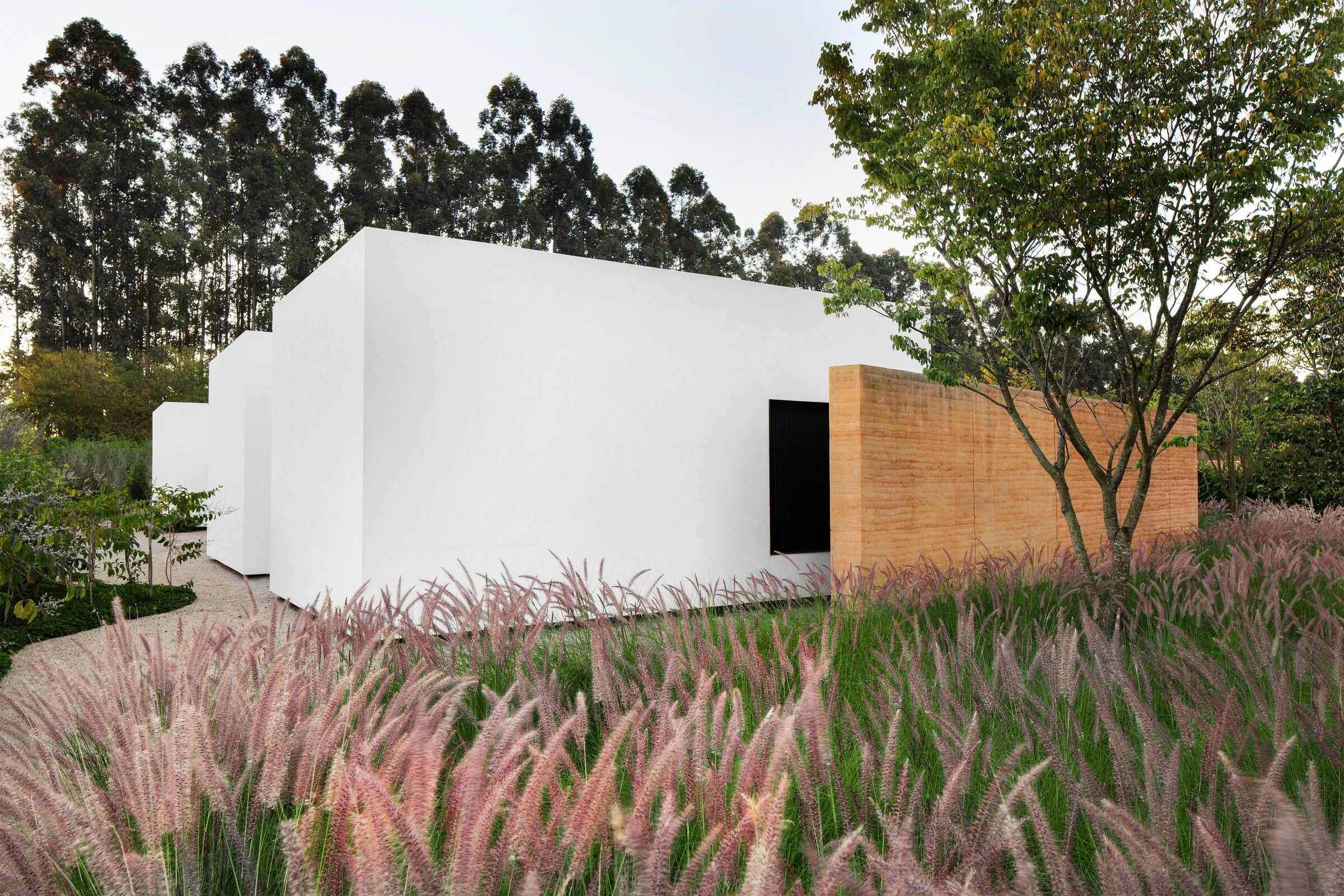
Designed for its inhabitants to enjoy nature in its purest and simplest form, Casa Jatoba rises in the heart of the Atlantic Forest with its simple lines and impressive volumes. Each of the five large cubic blocks that define the project is a suite that functions independently. A large wall made of rammed earth, created from sand and soil extracted from the site, surrounds the entire house while also functioning as an integral part of the structure. Due to the scale and proportions of the building, high-quality adhesives were used to enhance the strength and durability of the material.
The house is entirely constructed from CLT (Cross-Laminated Timber), a material composed of interlocking wooden panels pressed under high heat and pressure. This approach allows the floor and all structural elements of the project to be formed without concrete, using raw timber as the primary structural material.
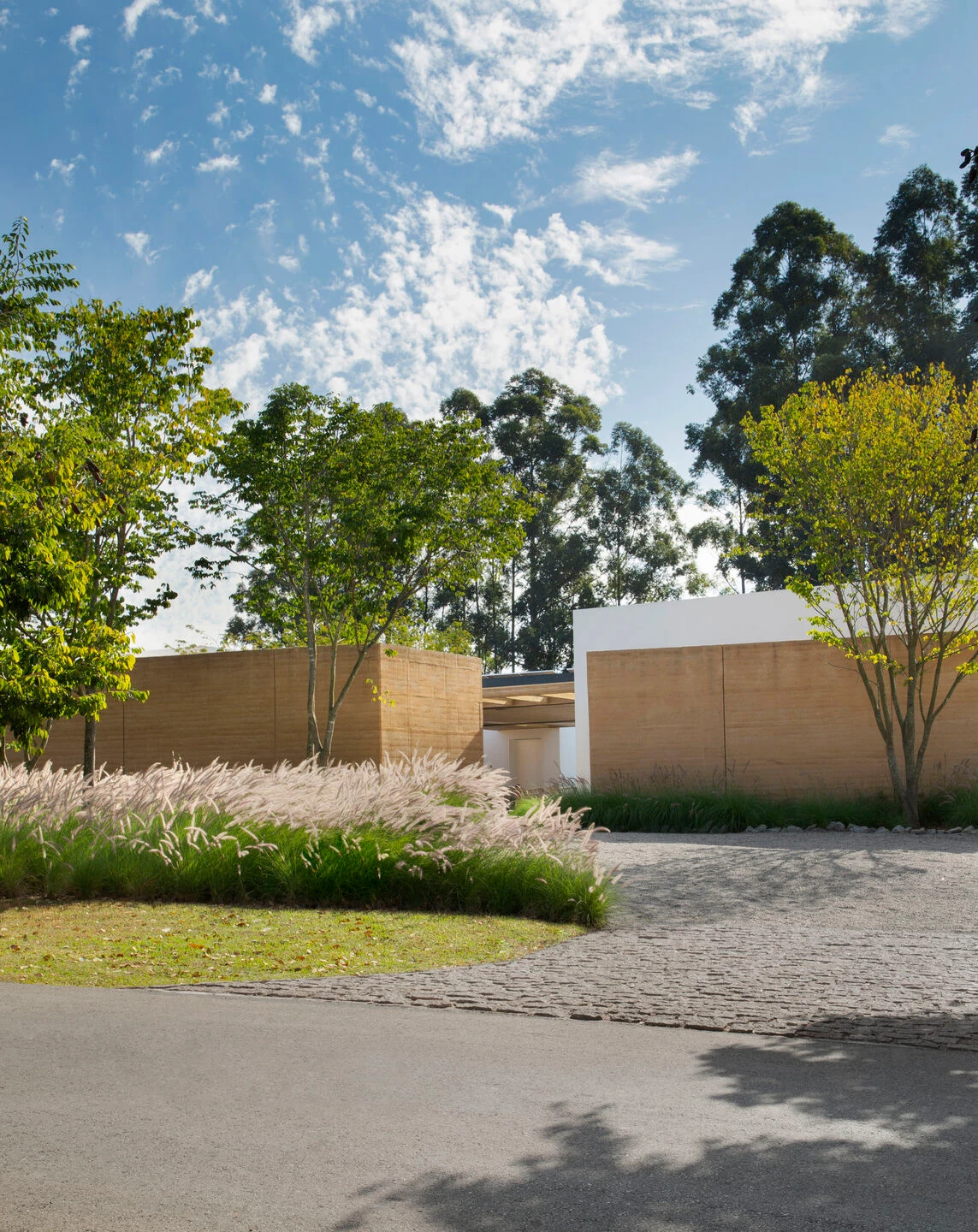
Rammed earth, one of the oldest construction techniques, offers remarkable environmental benefits and aesthetic qualities. In recent decades, this material has regained popularity, appearing in modern and contemporary buildings around the world. As seen in the 10 examples we examined above, rammed earth sometimes serves as a building’s structural wall, while at other times it surrounds and integrates with the architecture as a defining element. In all these cases, rammed earth gives structures a unique identity and stands out as a sustainable, natural, and long-lasting building material.
Explore Courses
.jpg "Architecture Diagram Mastery: Concept to Portfolio")
.jpg%202.jpg "Building Performance with Forma & Opossum")
.jpg "Ondrej Chybik - Rethinking Architecture")