



Green architecture, an environmentally friendly approach to design and construction in the building industry, aims to reduce the impact of human activity on the natural environment across all stages, from the design phase through construction to subsequent operation and maintenance. The Leadership in Energy and Environmental Design (LEED) certification program is one of the most widely recognized and trusted systems for green building rating. Established by the U.S. Green Building Council, which has advocated for efficiency, sustainability, and cost-effectiveness in community development since 1993, LEED serves as a leading international standard for constructing energy-efficient buildings and protecting human living environments.
These 10 LEED-certified projects from around the globe inspire environmentally friendly projects of the future:
1. One Vanderbilt
Location: New York, USA
Architect: Kohn Pedersen Fox Associates
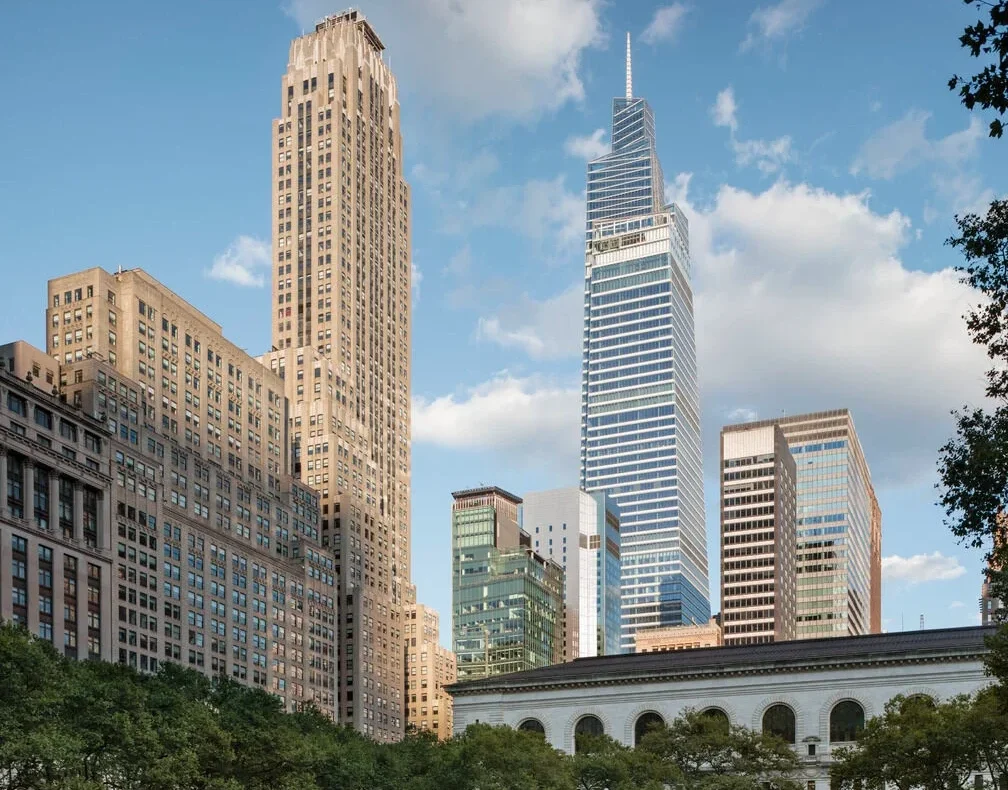
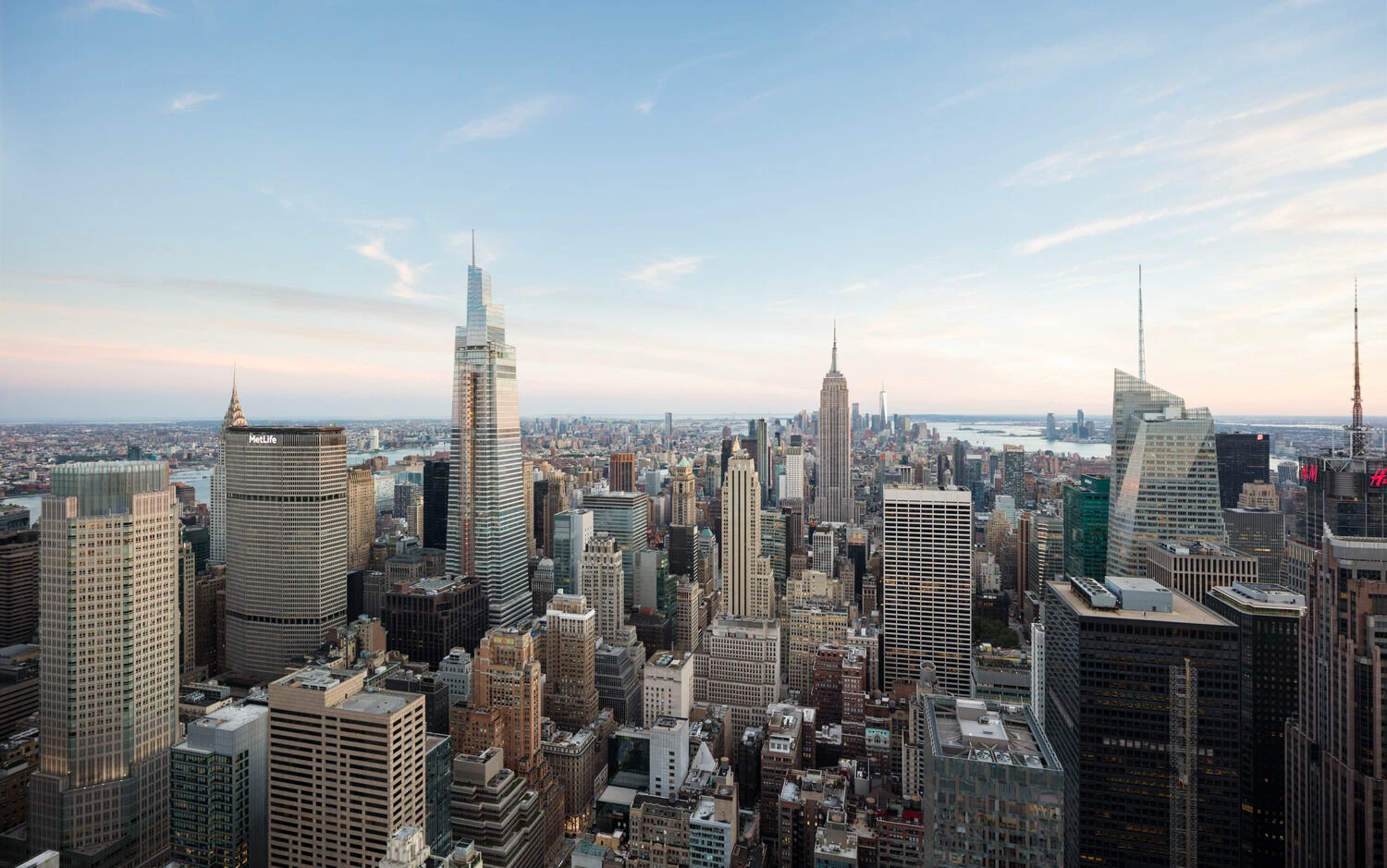
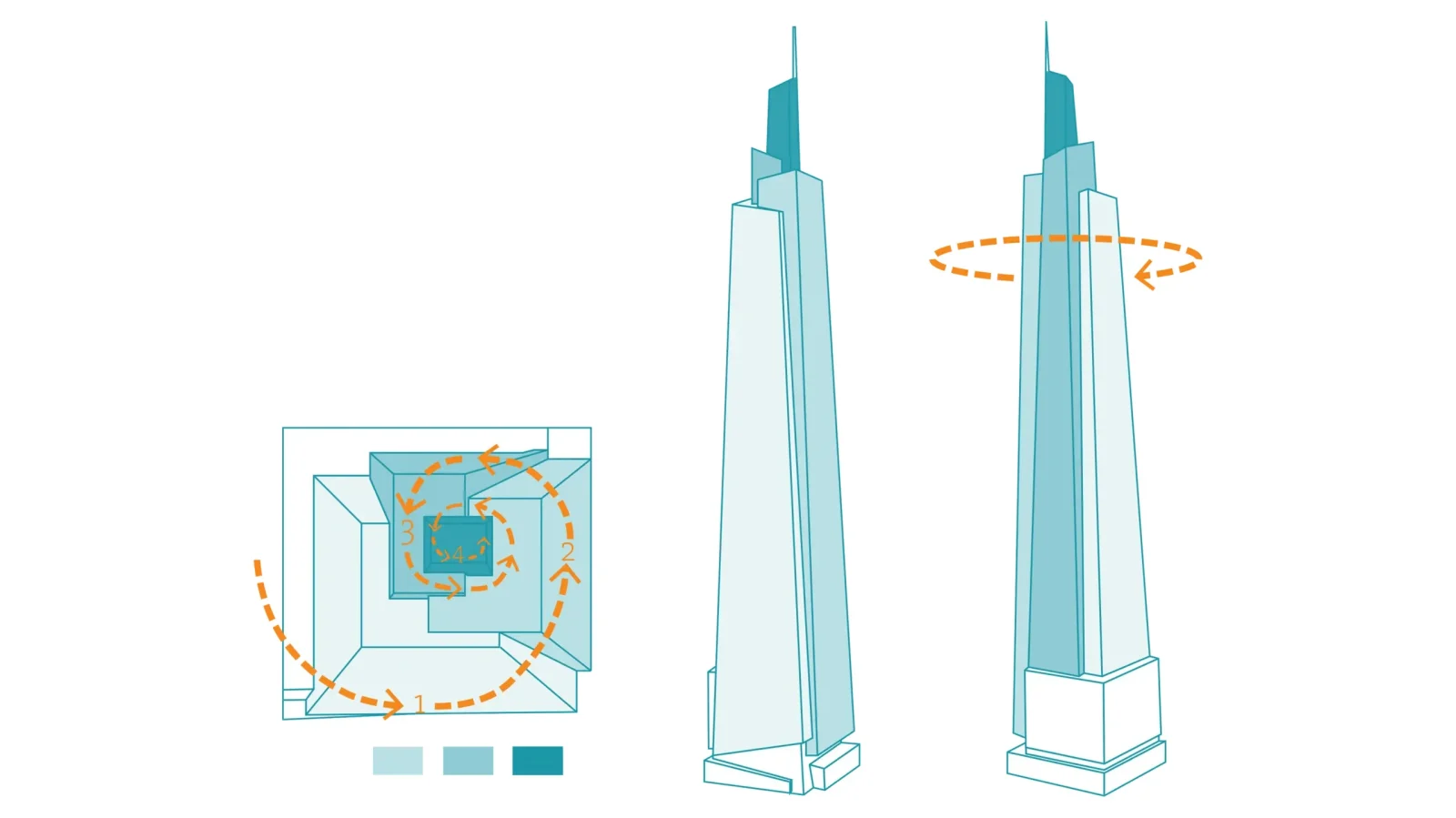
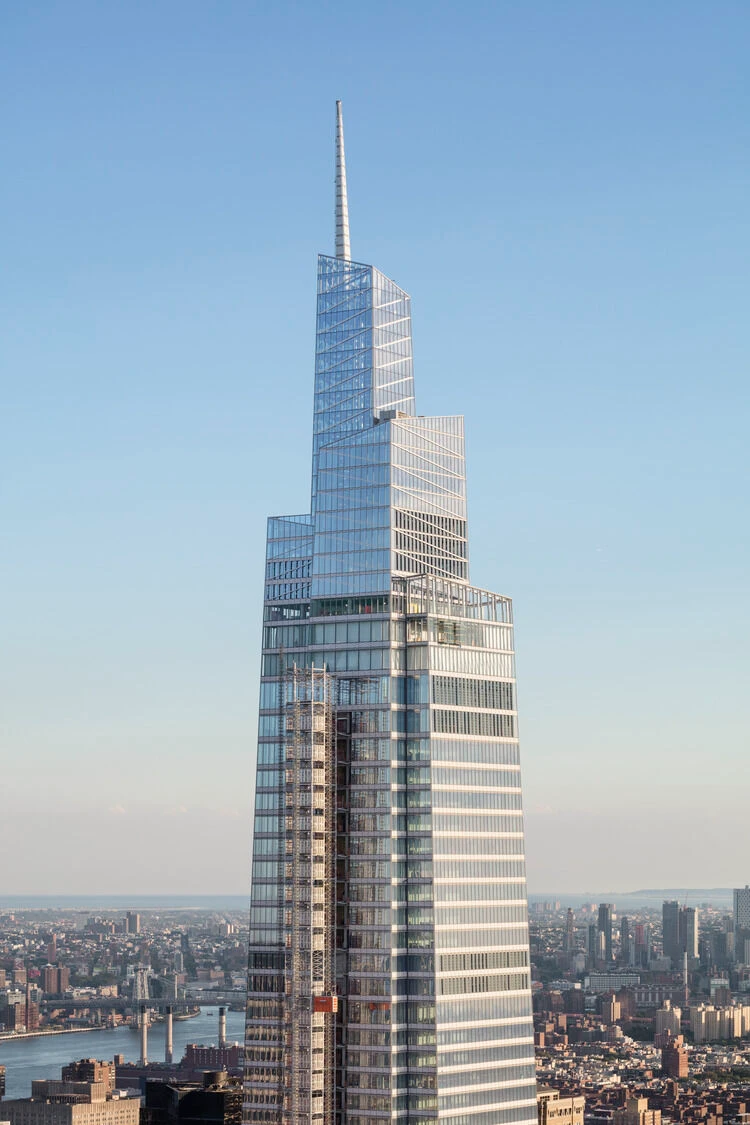
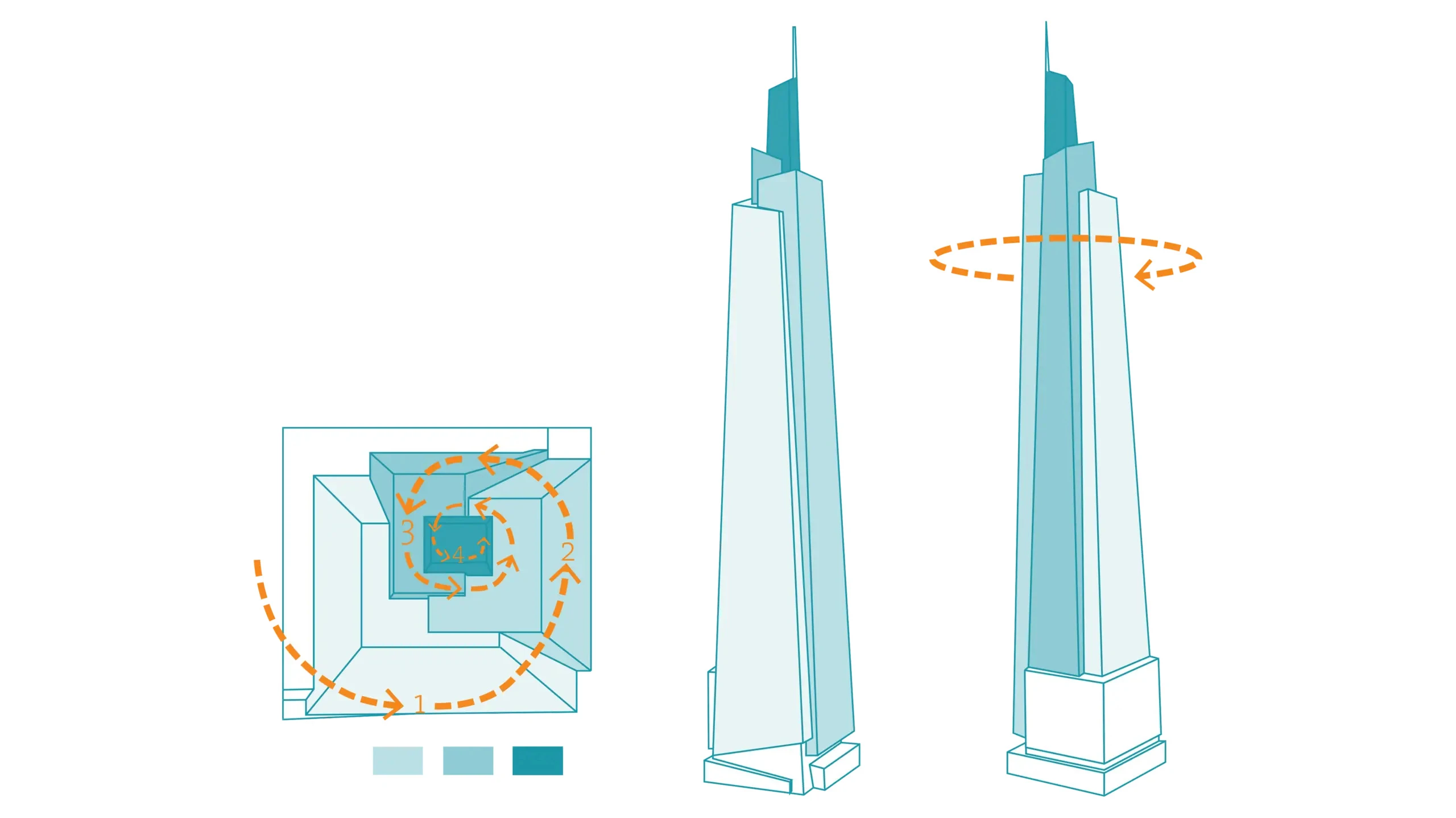
One Vanderbilt, designed by KPF, is the tallest office tower in Midtown, directly connecting to the city’s transportation network and bringing together the private and public sectors. One of three iconic structures defining Manhattan’s skyline alongside the Chrysler Building and the Empire State Building, One Vanderbilt consists of four interlocking and tapering volumes that spiral upwards towards the sky.
Inspired by the ceiling tiles found throughout Grand Central Terminal, the terracotta facade gives the building a natural and luminous texture that complements its historical context. This refined approach, combining vertical and diagonal forms with transparent glass, also offers a practical solution for maximizing panoramic views of the city. High-performance glazing helps regulate heating and cooling throughout the building.
Integrating many of the latest sustainable design and construction methods, One Vanderbilt is a recipient of LEED v3 Platinum and LEED v4 Gold certifications. The tower incorporates 90% recycled-content structural steel reinforcement and features advanced technologies such as a 1.2 MW cogeneration plant and a 90,000-gallon rainwater harvesting system. With one of the lowest carbon footprints of similarly sized buildings in New York, over 75% of wastewater generated during the demolition and construction of One Vanderbilt was saved from landfills.
2. Shanghai Tower
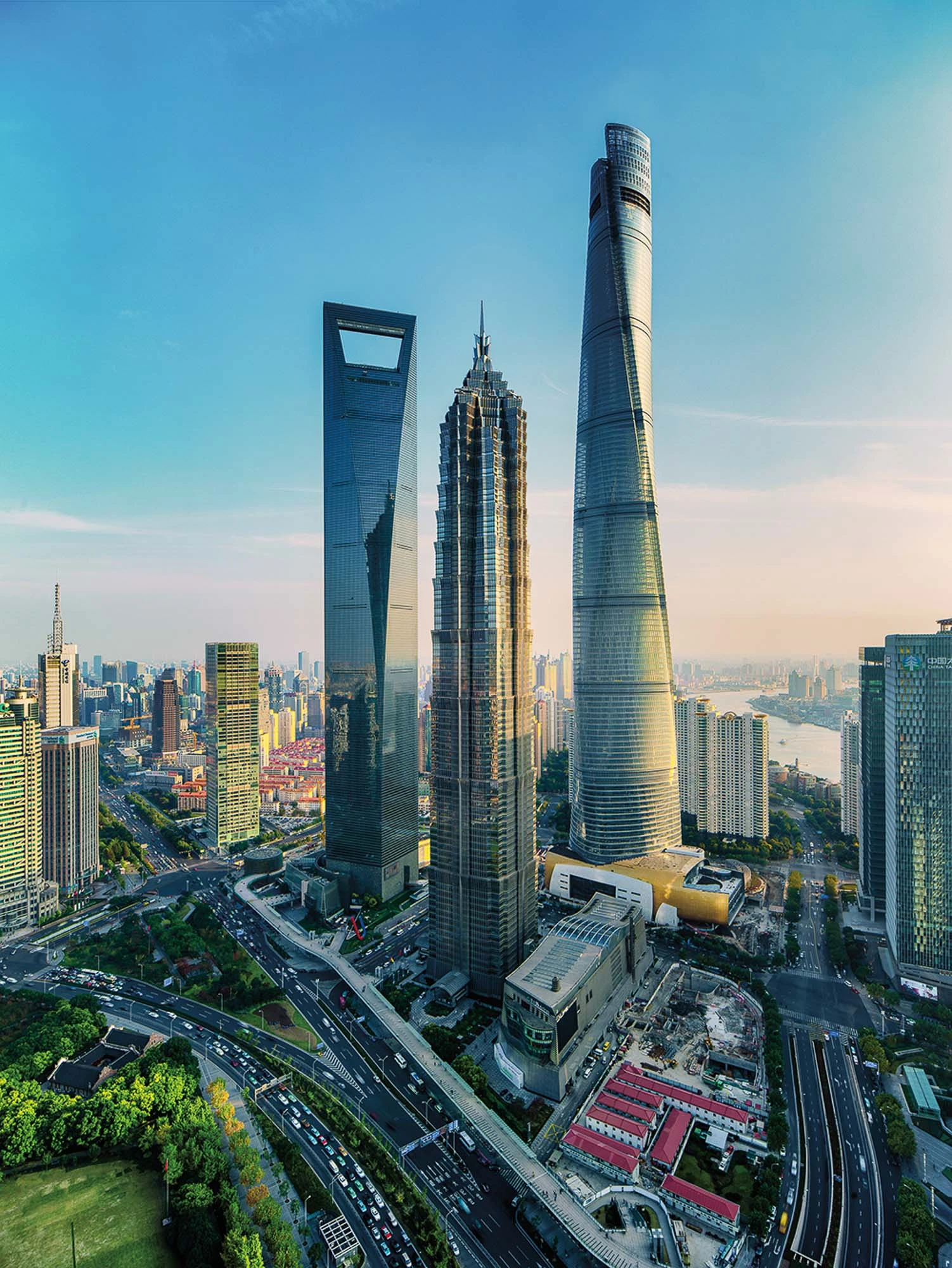
Location: Shanghai, China
Architect: Gensler
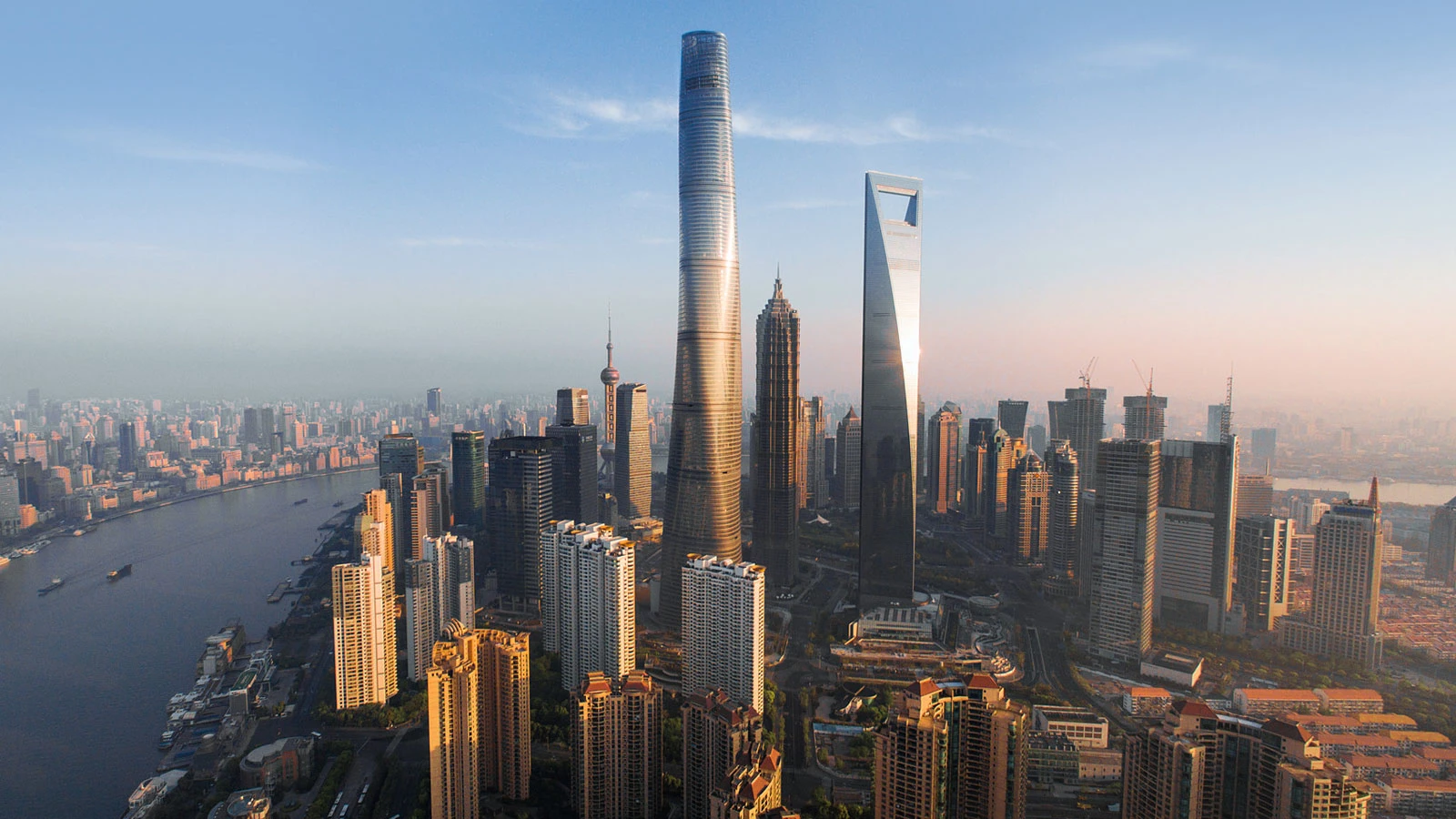
The Shanghai Tower, one of the world’s tallest skyscrapers at 632 meters, is a 127-story tower housing Class A office spaces, entertainment venues, retail areas, a conference center, a luxury hotel, and cultural facilities. Built with a range of technologies that reduce energy consumption, the tower has achieved LEED v4 Platinum certification.
Composed of a series of rotating double-skin cylindrical forms, its dynamic curved façade effectively reduces wind loads by 24%. The 200 wind turbines at the top of the tower generate approximately 10% of the building’s electricity.
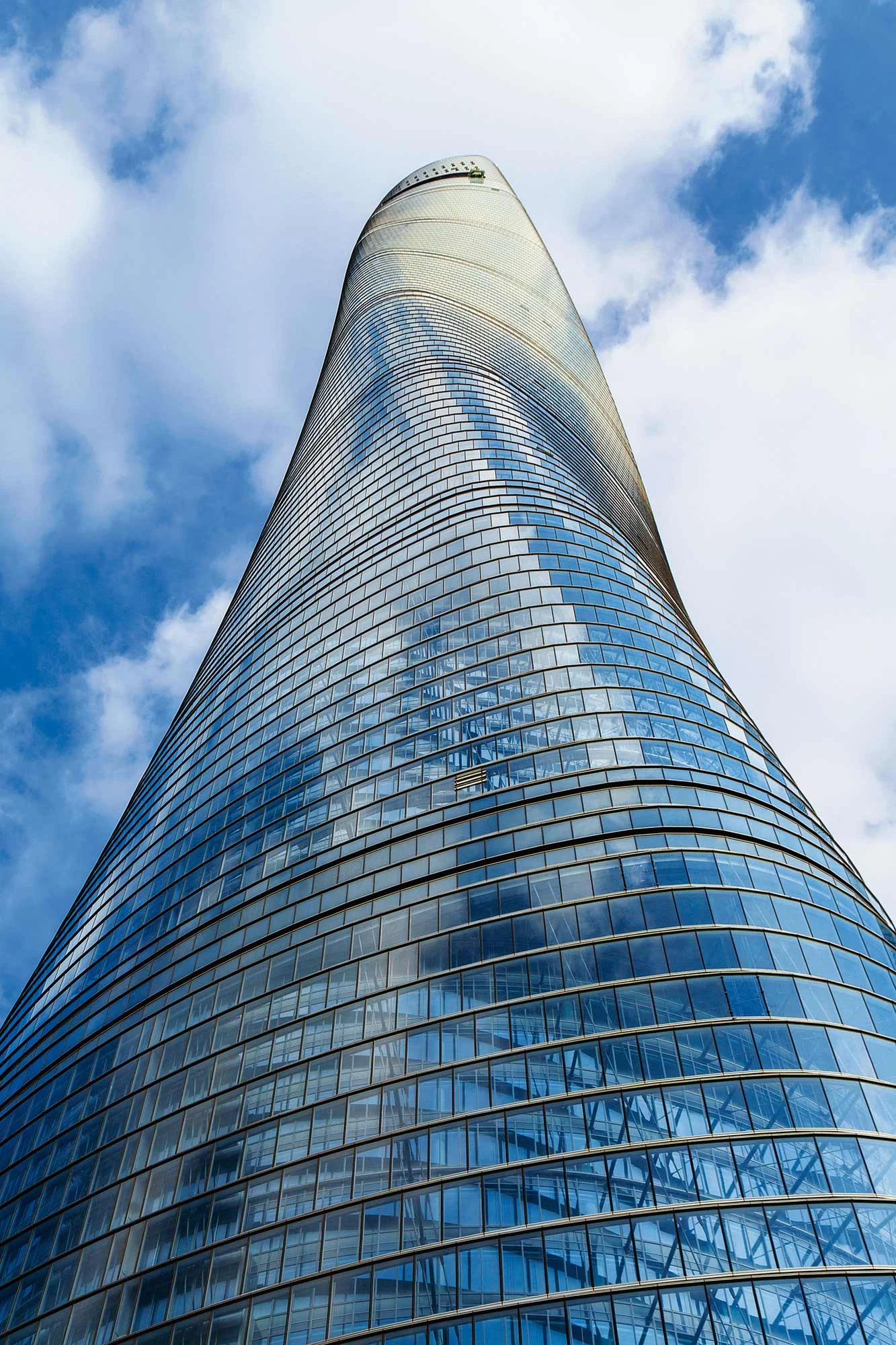
The Shanghai Tower’s double-walled facade is 2.14 meters high and consists of more than 25,000 panels forming a curtain wall. This facade protects the interior from external elements, reducing heating and cooling needs and energy consumption. Large windows and openings maximize natural daylight, thereby lowering the need for artificial lighting.
The 21 gardens located within and around the tower support biodiversity and are irrigated using water collected from the rooftop rainwater harvesting system. Shanghai Tower has succeeded in reducing total energy consumption by 21%, lowering its carbon footprint by an estimated 37,000 metric tons annually, and saving approximately $58 million in material costs.
3. The Crystal
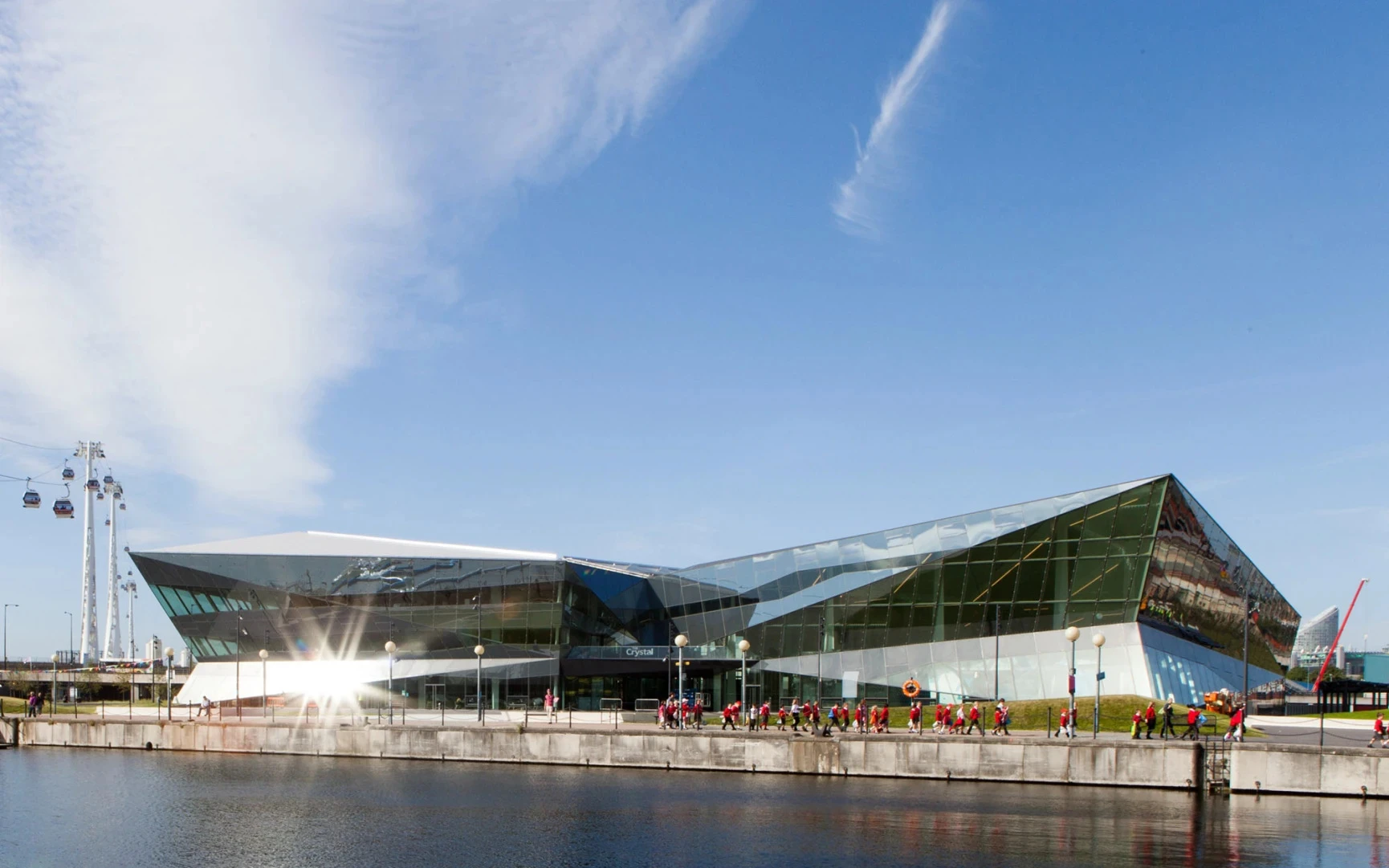
Location: London, UK
Architect: Wilkinson Eyre
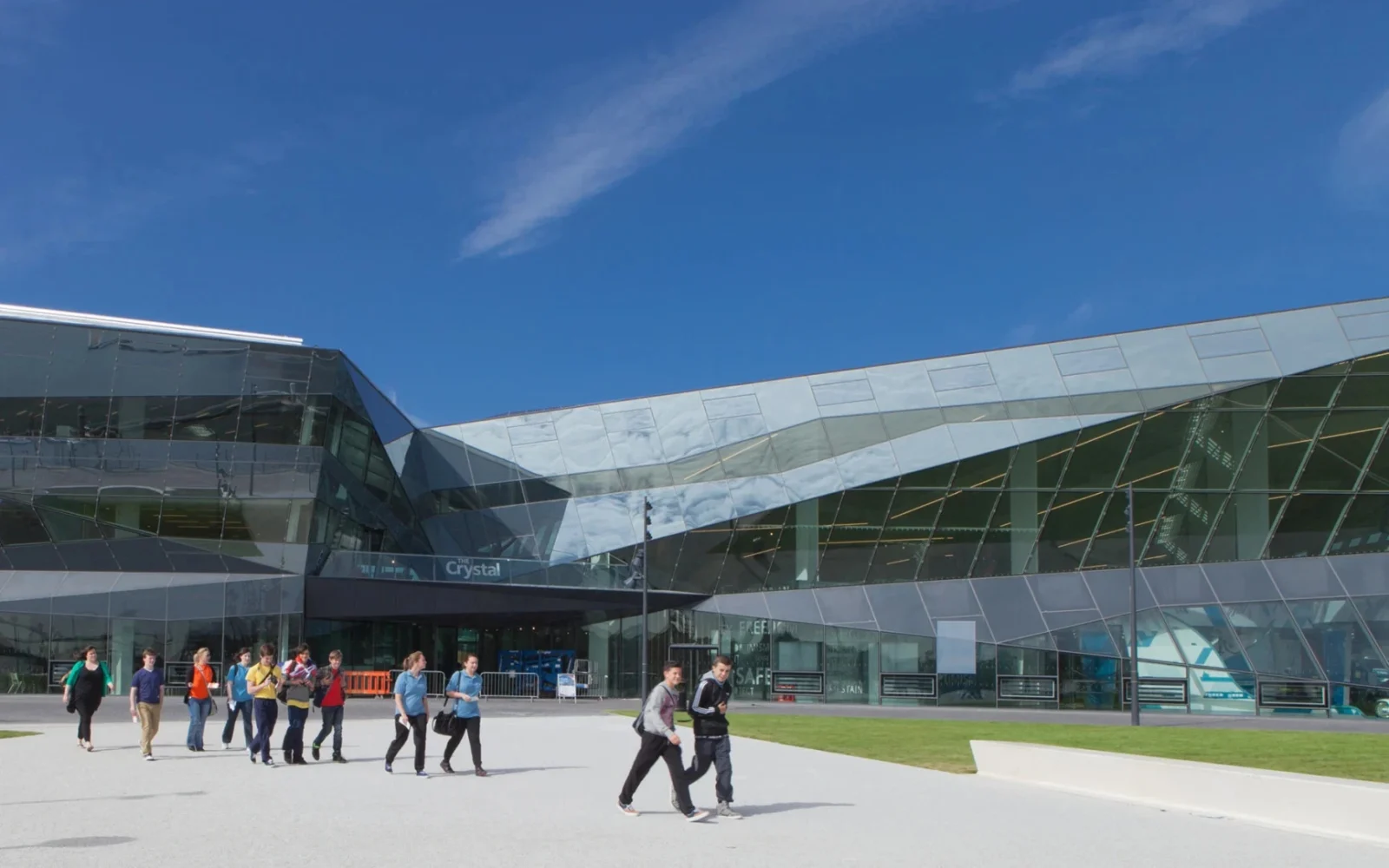
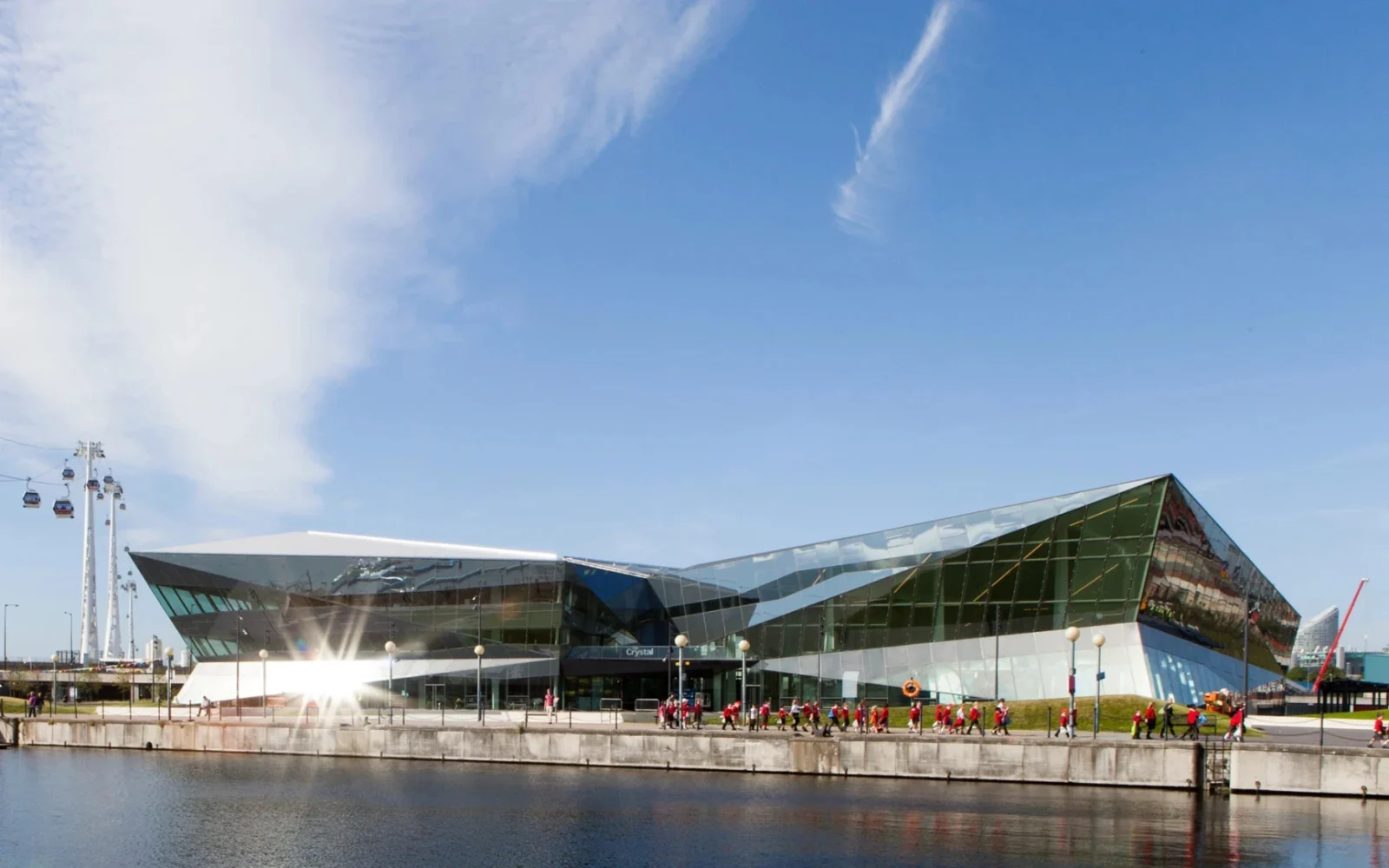
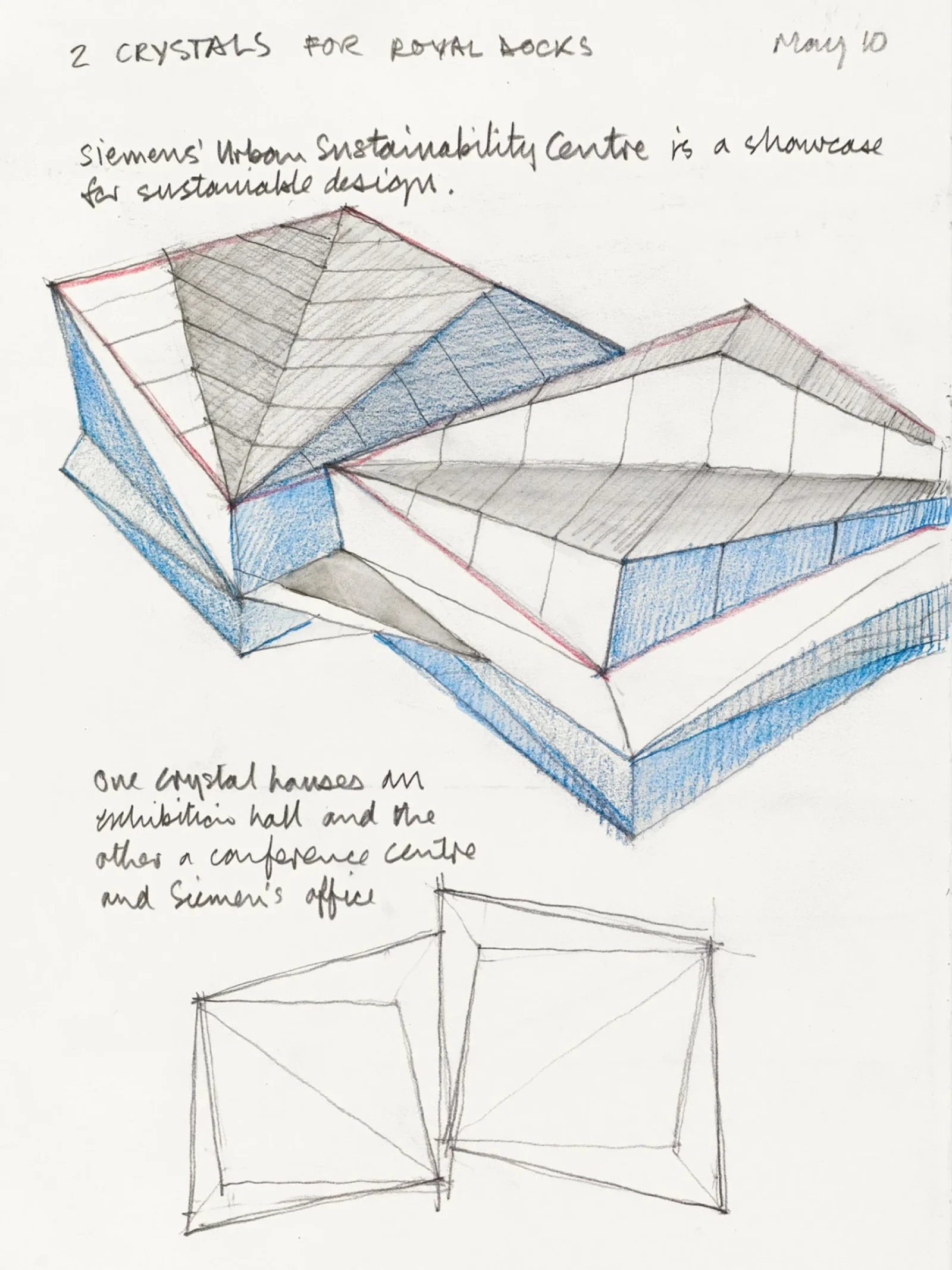
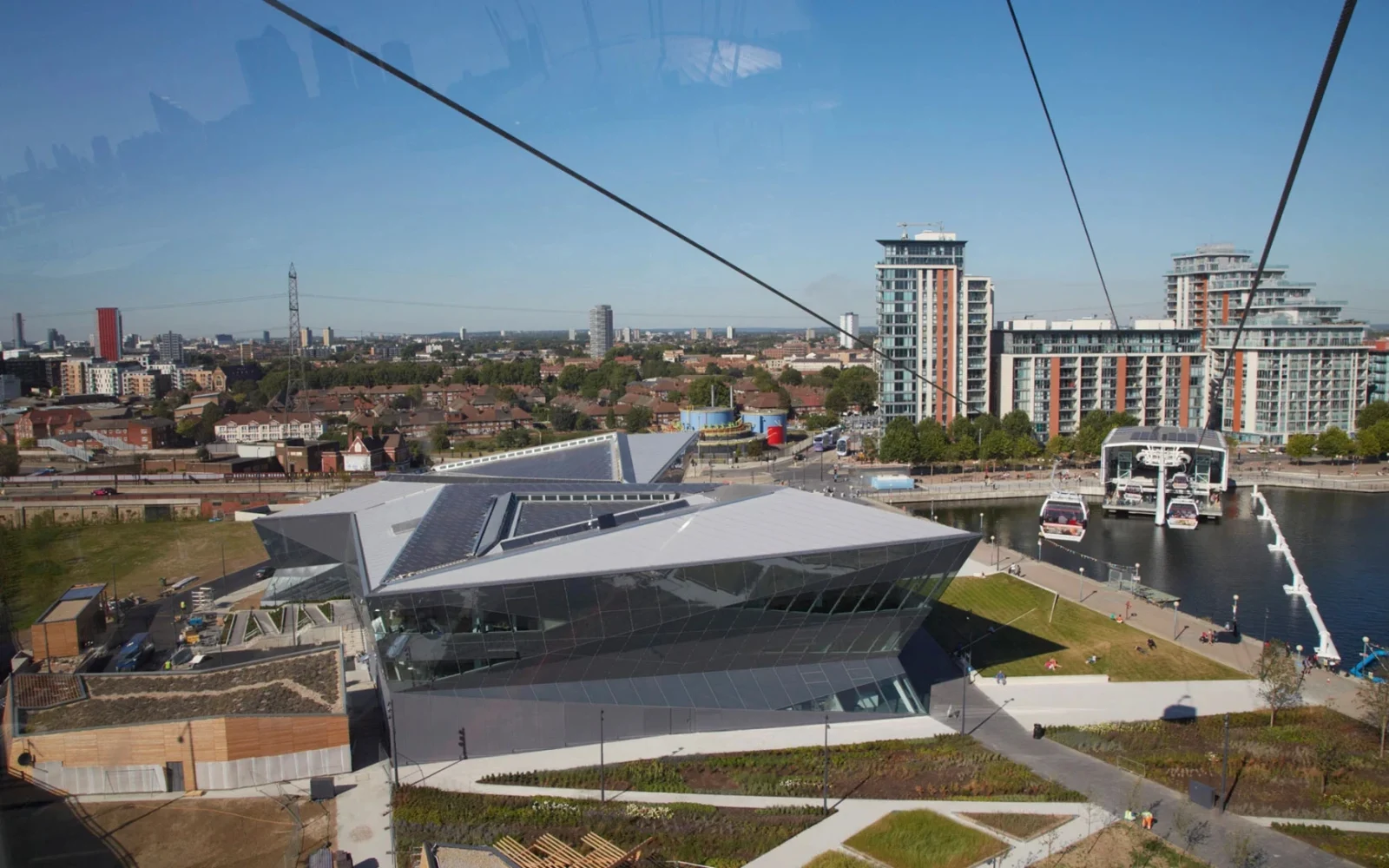
Designed by Wilkinson Eyre as part of Siemens’ Sustainable Cities Initiative, The Crystal challenges conventional ideas about sustainability. Inspired by the many surfaces of a crystal, the building’s geometry forms a series of angular shapes, creating an architectural focal point for the area. Advocating for the use of advanced technology, the building has received a LEED v3 Platinum rating. The all-glass building’s exterior features six different types of highly insulated glass with varying levels of transparency, surrounding the landscape both inside and out while reducing the impact of sunlight.
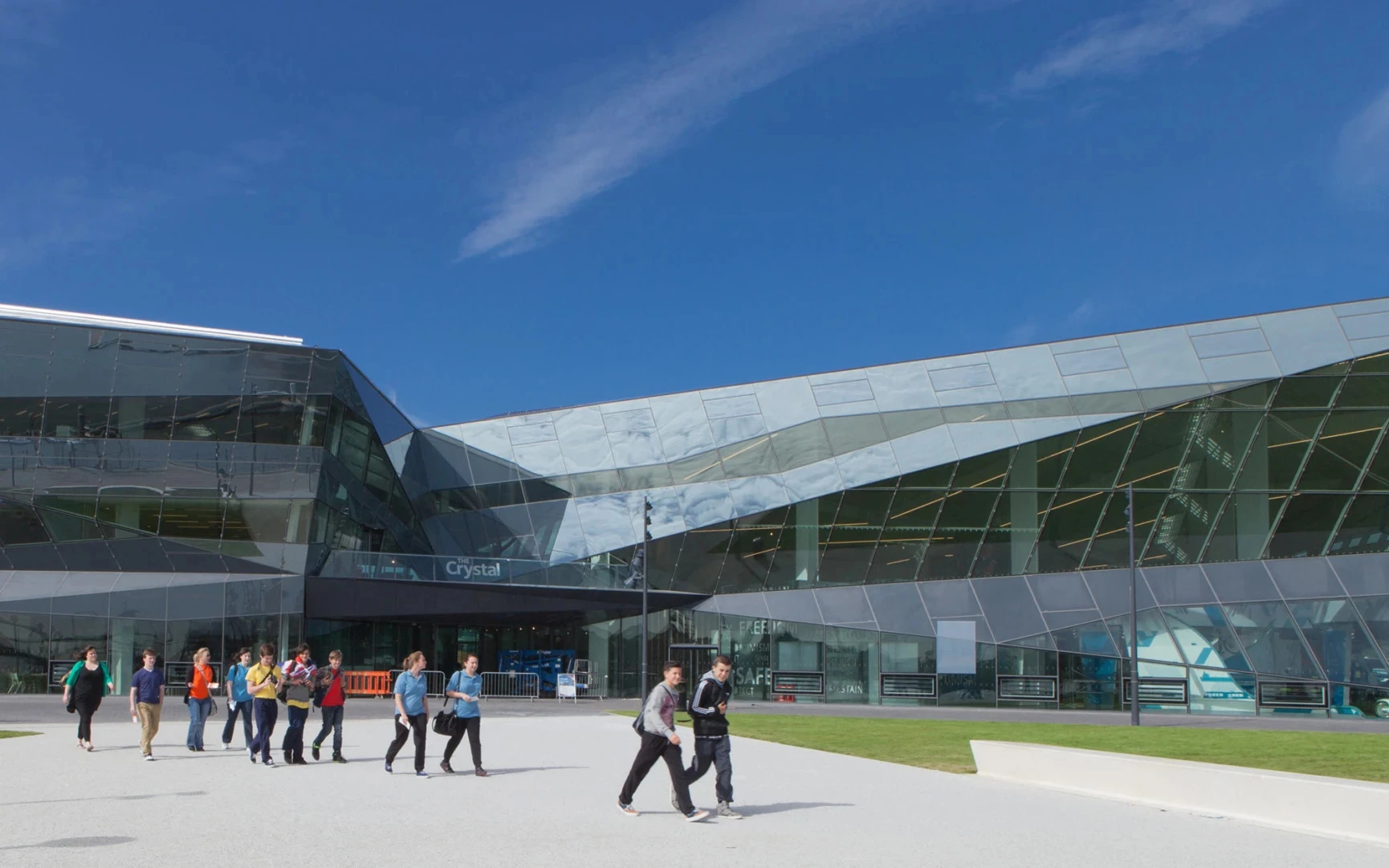
As a demonstration of sustainable design, The Crystal employs a range of innovative technologies to reduce energy consumption rather than relying solely on passive systems. In addition to its high-performance thermal envelope, an advanced management system enables each component of the fully electric building to be monitored, compared, and fine-tuned for optimal comfort and minimal energy use, with surplus energy fed back into the National Grid. Supporting a progressive water agenda that collects rainwater and treats it to drinking water quality, The Crystal also treats wastewater on-site.
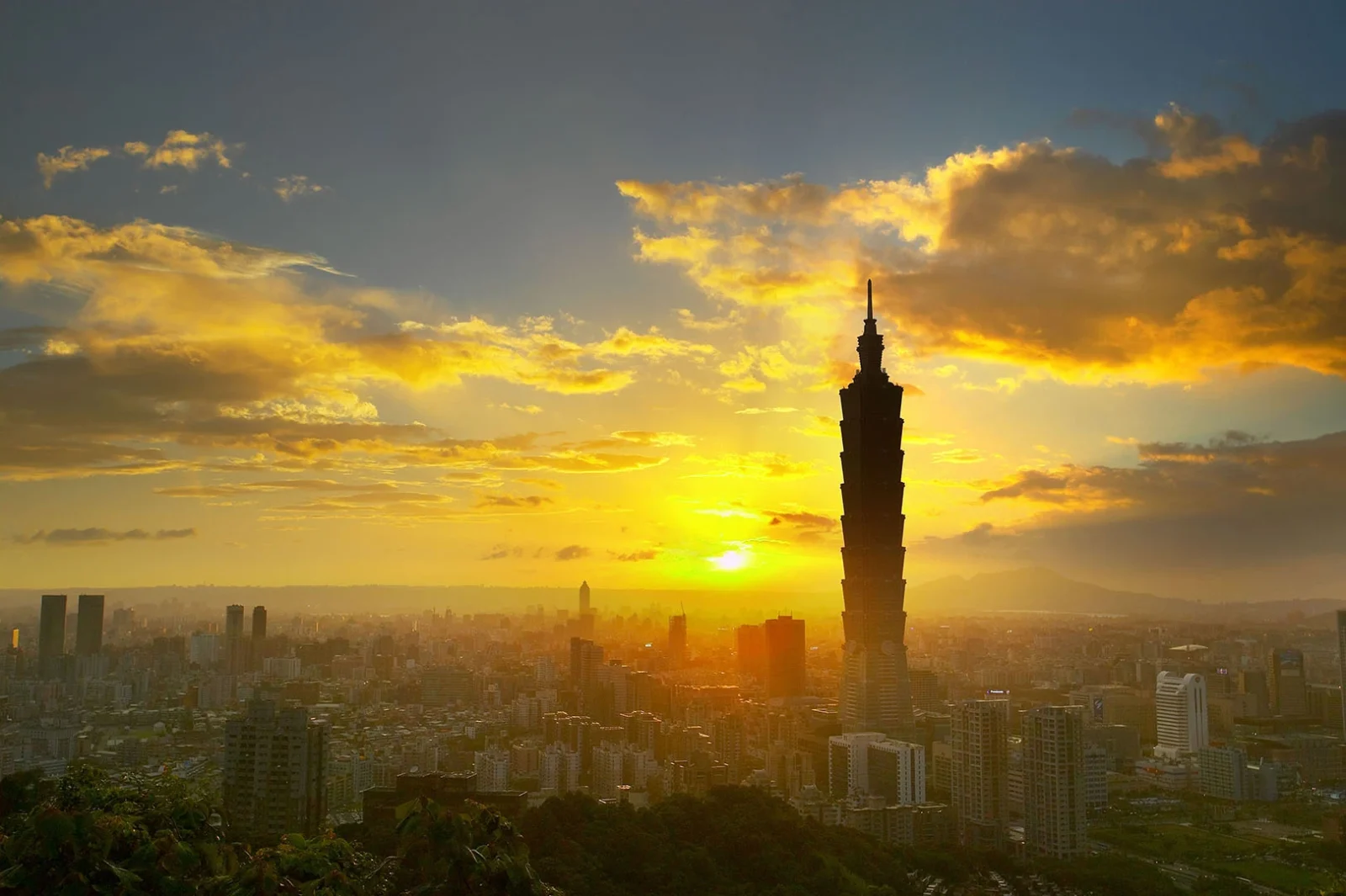
4. Taipei Financial Center (Taipei 101)
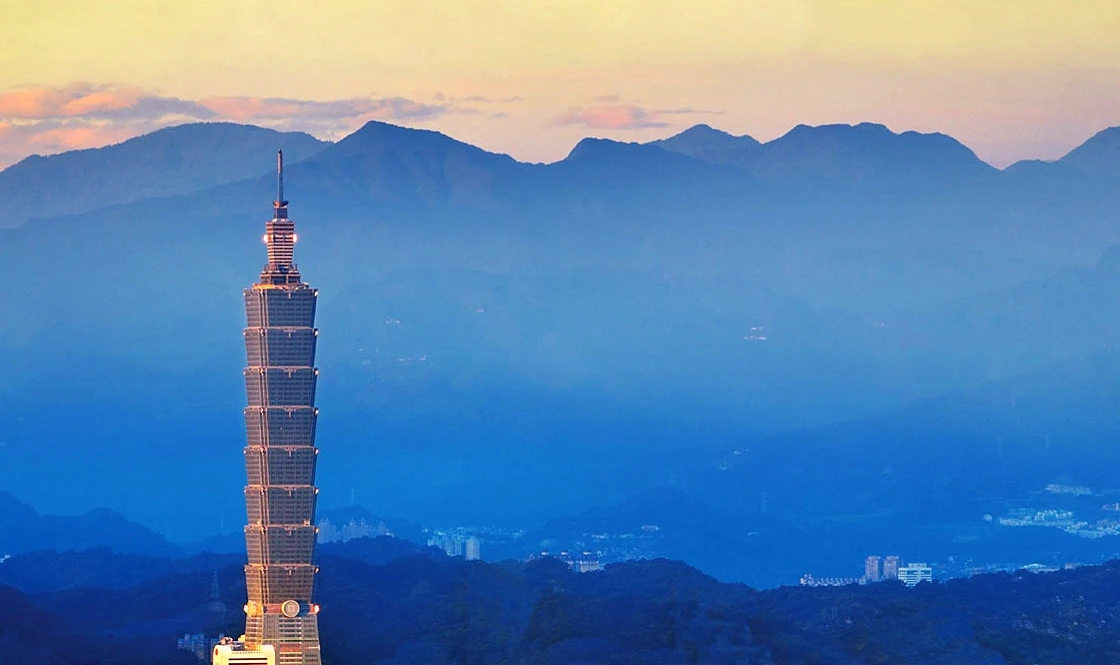
Location: Taipei, Taiwan
Architect: C.Y. Lee & Partners
With its unique profile, the 508-meter, 101-story Taipei 101 includes a five-story deep basement and a surrounding six-story retail structure. Designed to withstand earthquakes and storms, the tower is LEED-EBOM Platinum certified. An 800-ton heavy-duty stabilization system is located within a spherical support structure at the top of Taipei 101, between the restaurant and the observation deck.
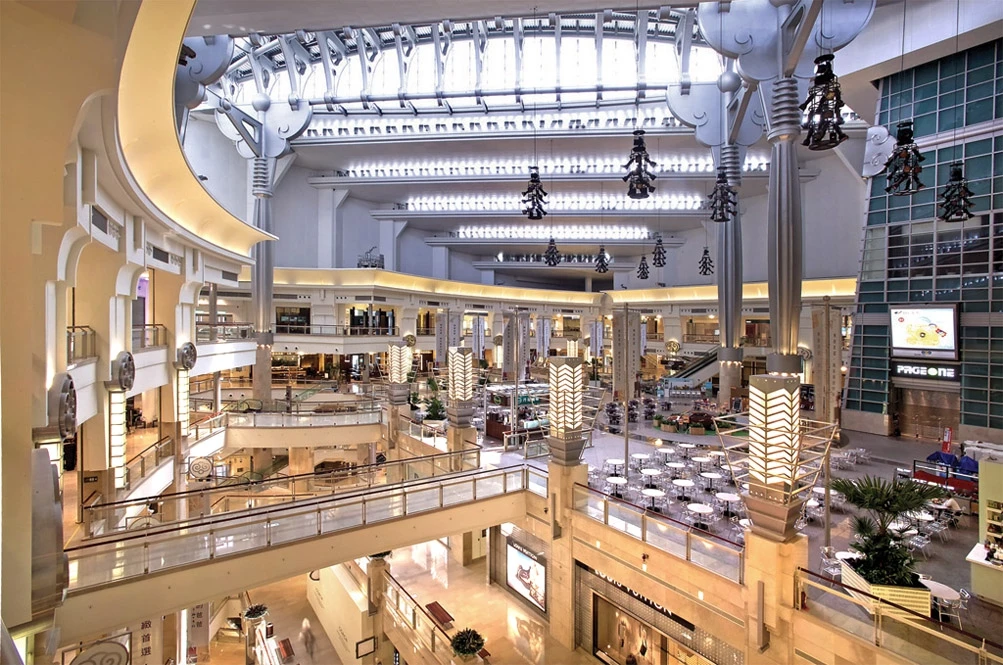
Inspired by the rice stalk motif from Chinese architectural tradition, the project features the world’s fastest elevators. The elevator cabins, designed using wind tunnel testing, are equipped with a safe pressure braking system and impact protection.
Over three years of green retrofitting, Taipei 101 reduced electricity and water costs by 10%, cut waste significantly, and lowered energy use by 30%, saving 33.41 million kWh and over US$2 million annually in operating costs.
5. Vancouver Convention Centre West
Location: Vancouver, Canada
Architect: LMN Architects
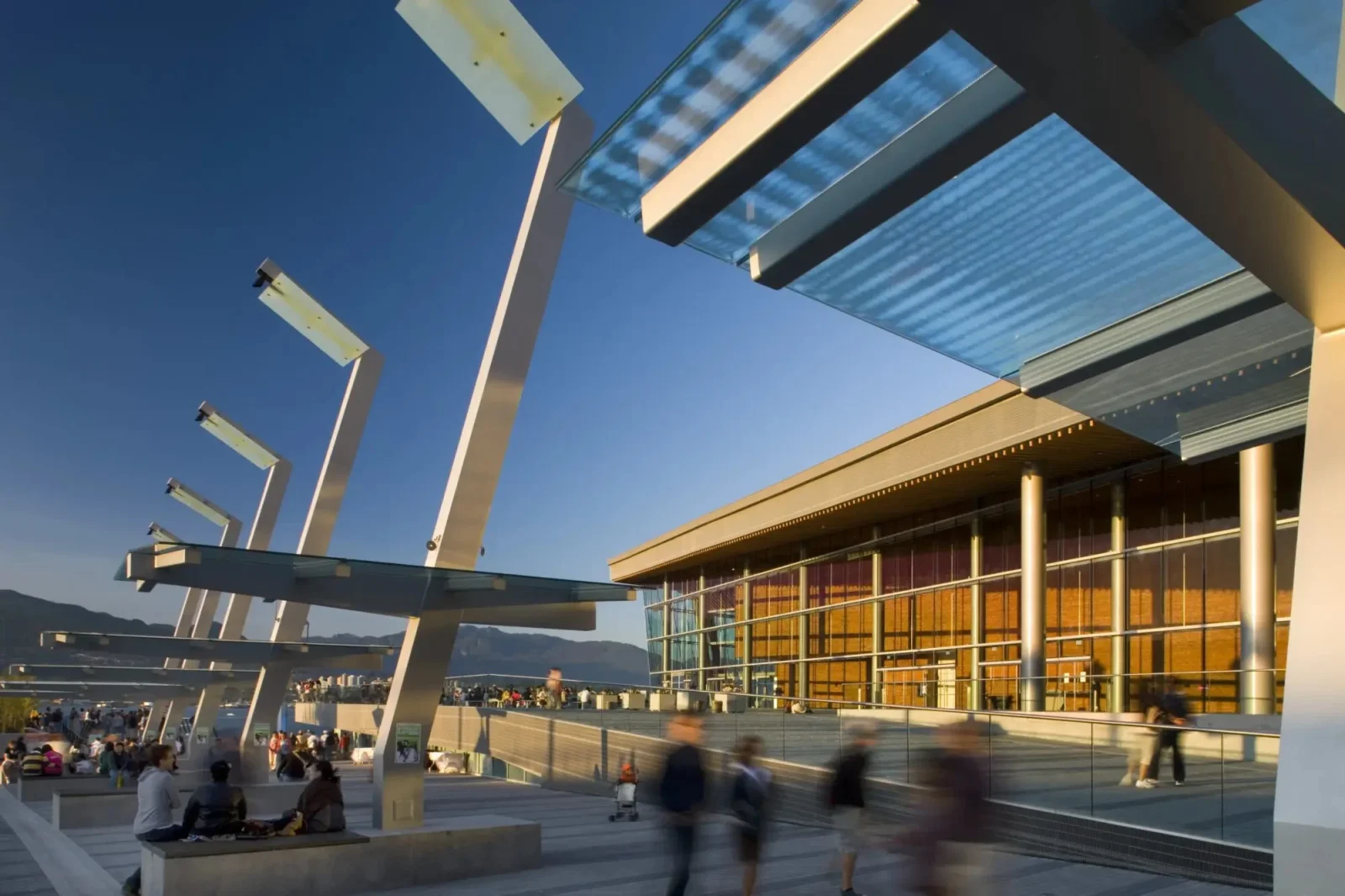
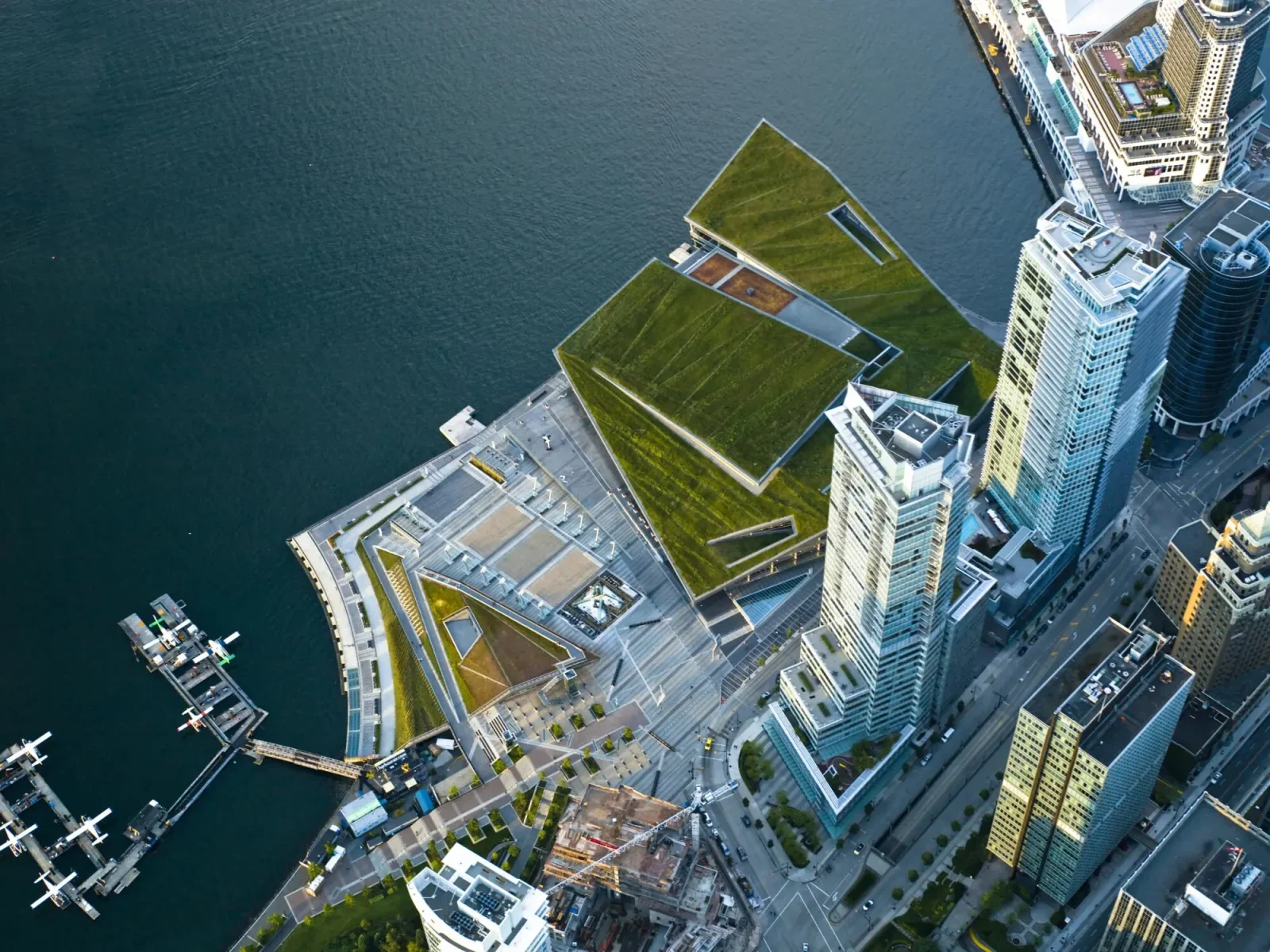
Designed by LMN Architects, the Vancouver Convention Centre West is the world’s first convention center to achieve double LEED Platinum certification. Located at the intersection of a vibrant city center and one of North America’s most spectacular natural ecosystems, the project integrates the urban ecosystem, encompassing a single building and a new urban district simultaneously.
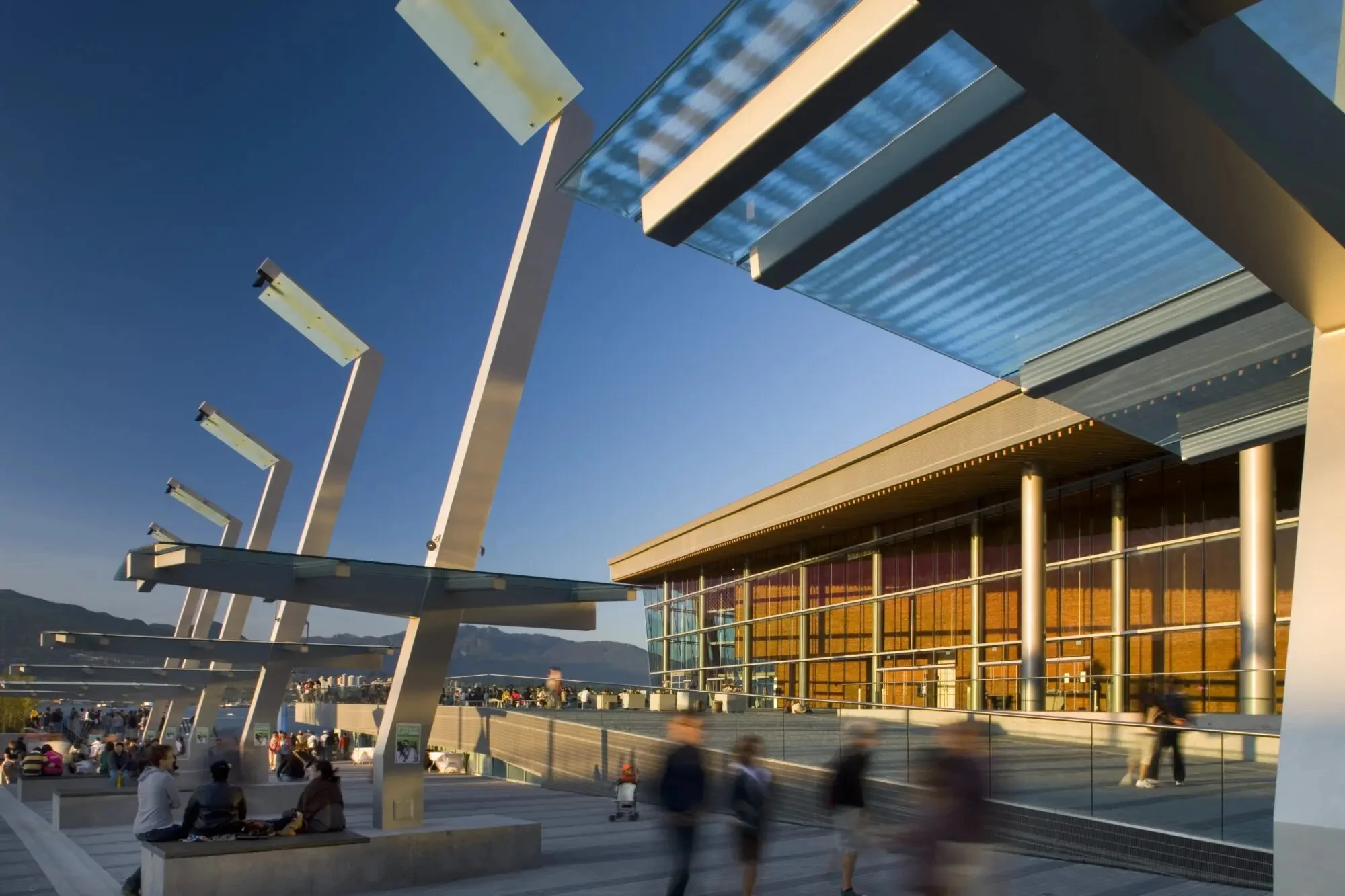
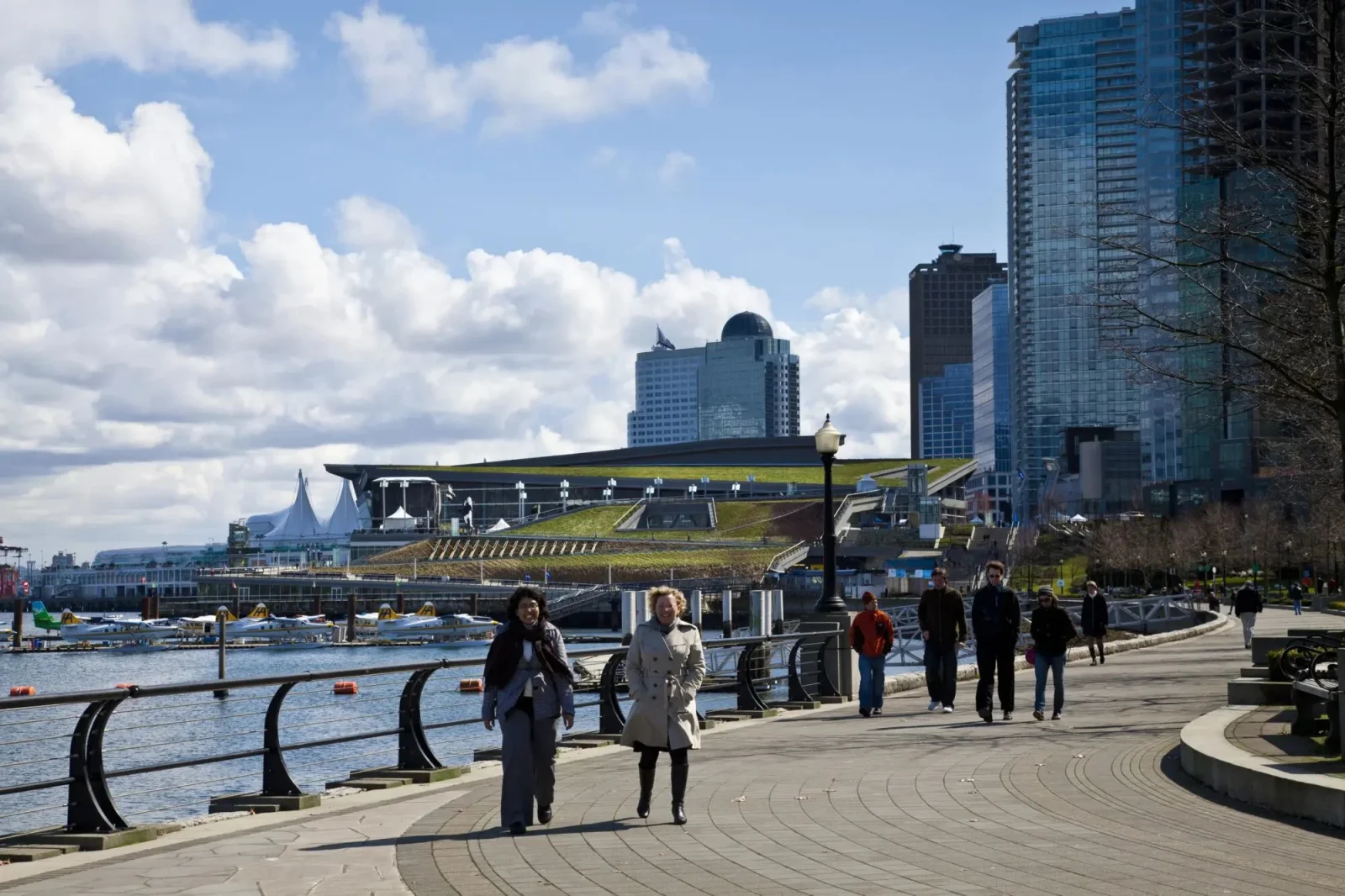
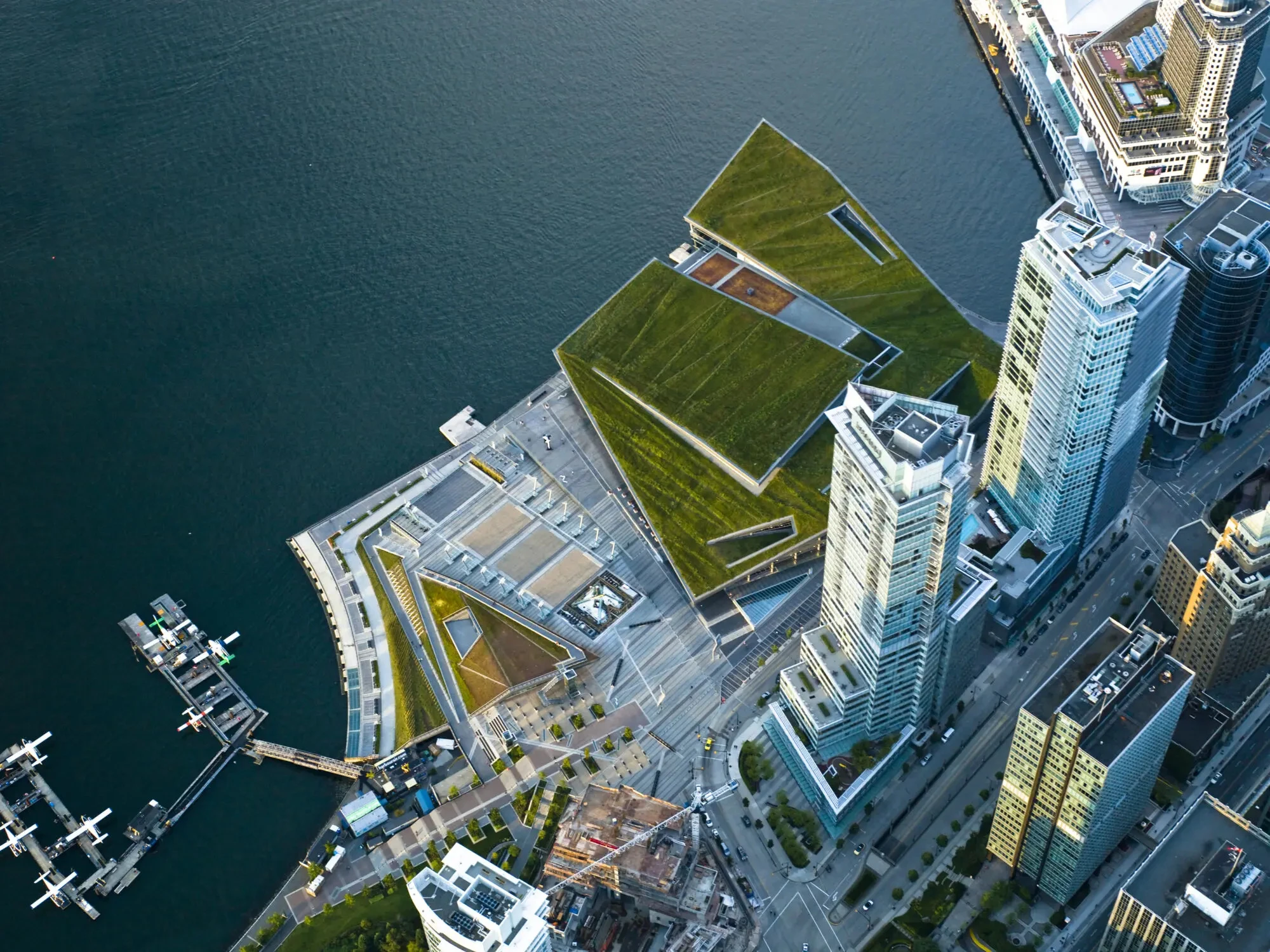
Built on a former brownfield site along the downtown waterfront, the Vancouver Convention Centre spans approximately 14 acres of land and 8 acres of water, featuring 1 million square feet of convention space, 90,000 square feet of retail area, parking for 450 vehicles, and 400,000 square feet of pedestrian walkways, cycling paths, public open spaces, and plazas.
Covering 6 acres, Canada’s largest green roof hosts more than 400,000 native plants and includes four beehives with approximately 240,000 bees that produce honey for the convention center’s restaurant. The sloping forms of the roof create natural drainage and seed migration patterns for the ecology. This unique roof of the center acts as an insulator, reducing heat gain in summer and heat loss in winter.
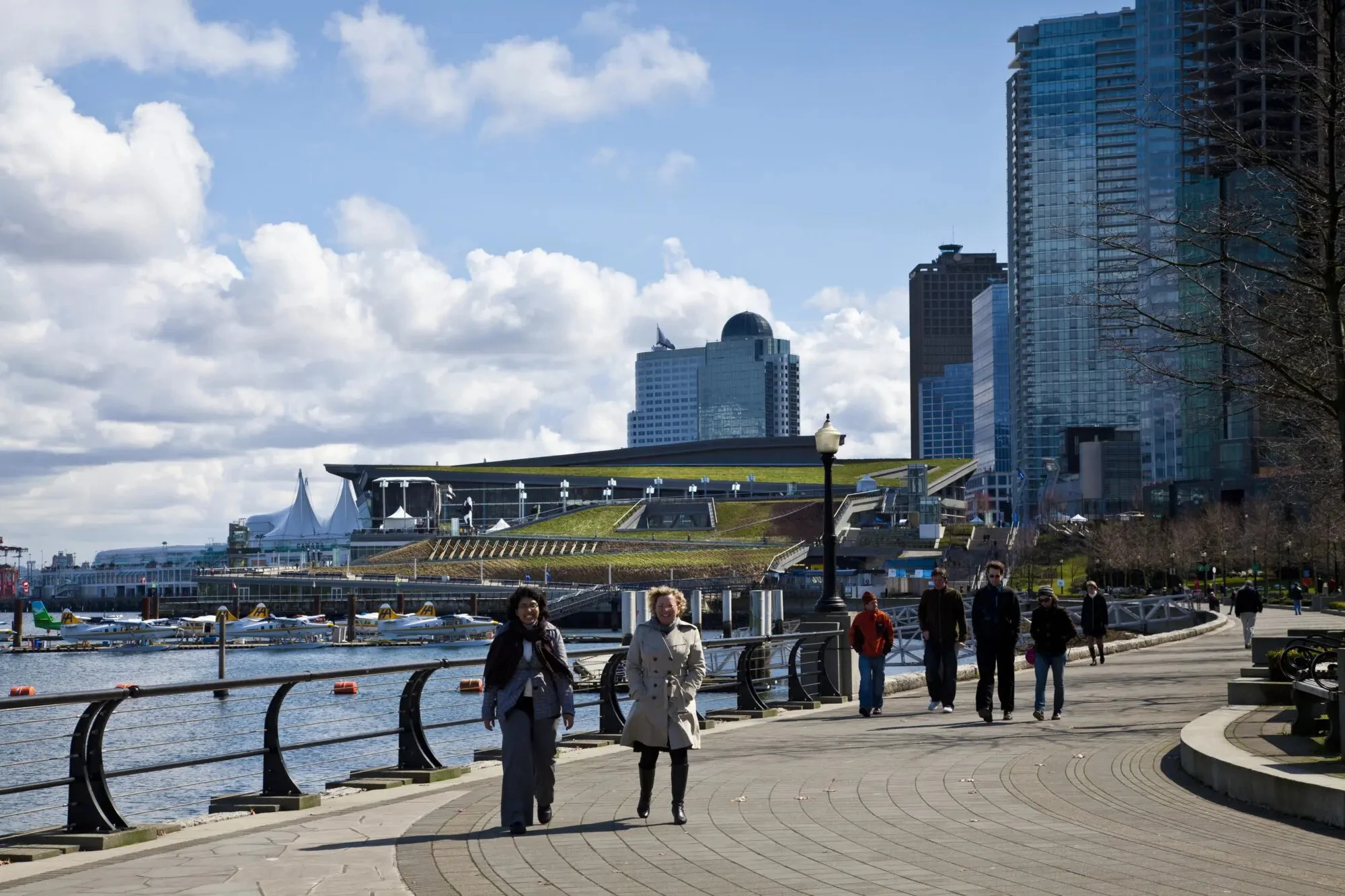
Approximately 35% of the structure, built on piles over water, is surrounded by a specially designed marine habitat skirt composed of five layers of concrete that provide textured surfaces for marine life to attach to. Each layer supports a distinct biota group depending on the water depth, creating a complete coastal ecosystem containing salmon, crabs, starfish, shellfish, and dozens of other native species. Water treatment systems and the use of natural daylight further contribute to the building’s sustainability and efficiency strategies.
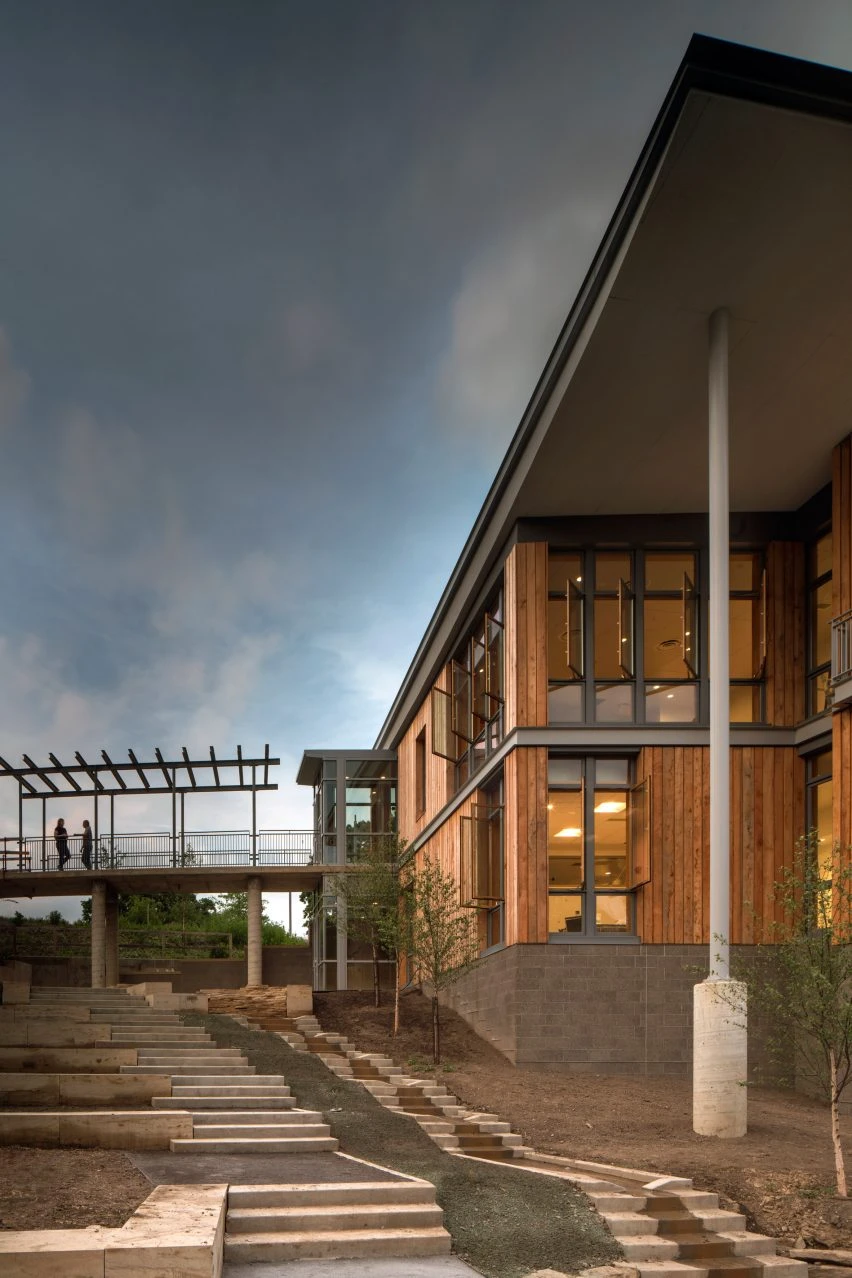
6. Frick Environmental Center
Location: Pittsburgh, Pennsylvania, USA
Architect: Bohlin Cywinski Jackson
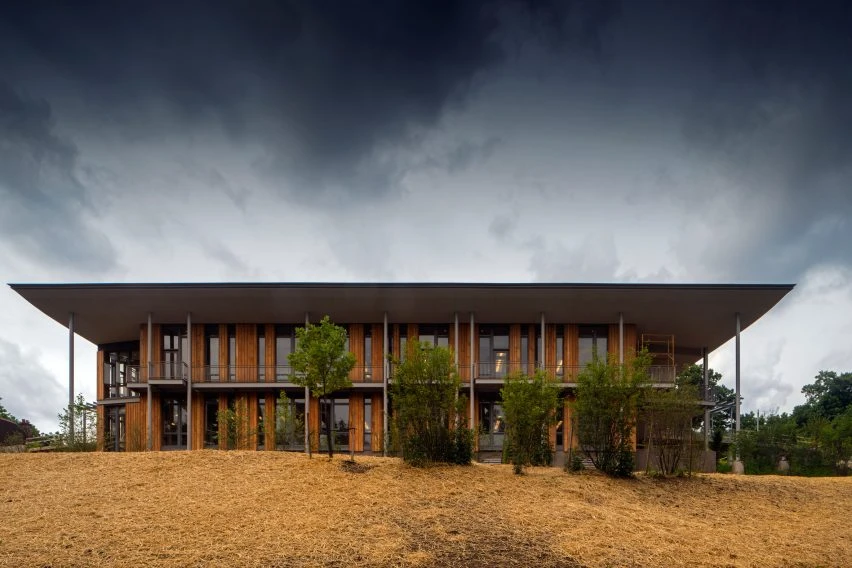
Designed by Bohlin Cywinski Jackson, the Frick Environmental Center brings together architecture, landscape, and a strong sense of civic and environmental stewardship. The LEED-Platinum-certified building is the first free and public structure to receive Living Building certification.
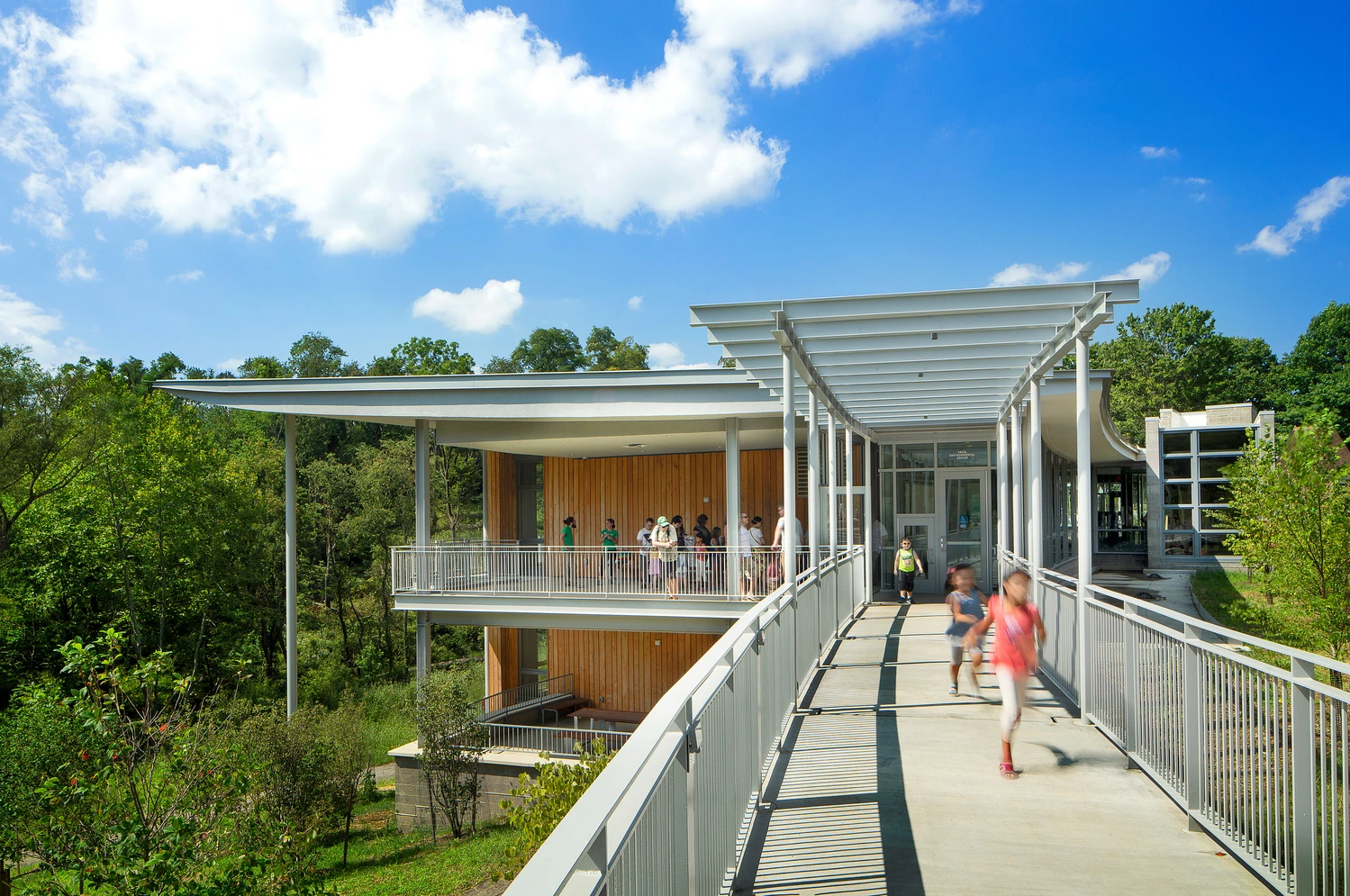
Serving as a living classroom for environmental education, the Frick Environmental Center offers hands-on opportunities to experience nature and learn about sustainable design. It includes a public living room and gallery, classrooms for K–12 environmental education programs, offices, and support spaces for staff.
The Frick Environmental Center is based on various passive heating and cooling strategies, beginning with a high-performance, highly insulated exterior cladding made from locally sourced wood that requires no sealing or painting. The project incorporates numerous passive features, including roof overhangs, natural ventilation, and a red-light/green-light system that signals the optimal time for occupants to open windows. Photovoltaic shading structures in the parking area provide a significant portion of the building’s energy.
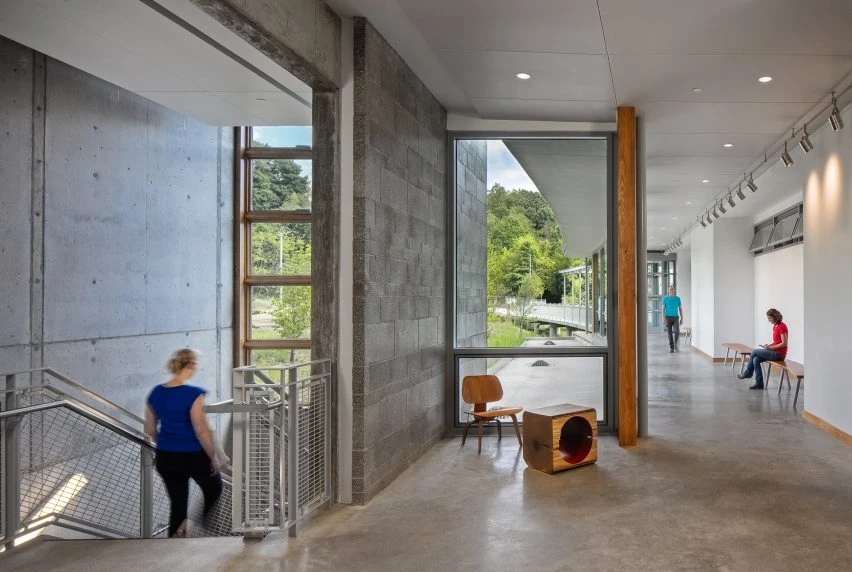
Installations such as the Rain Veil and Rain Ravine, along with a restored historic fountain, a photovoltaic solar panel array, and a palette of locally sourced natural materials, demonstrate the value and benefits of sustainable design while fostering long-term environmental awareness for present and future generations.
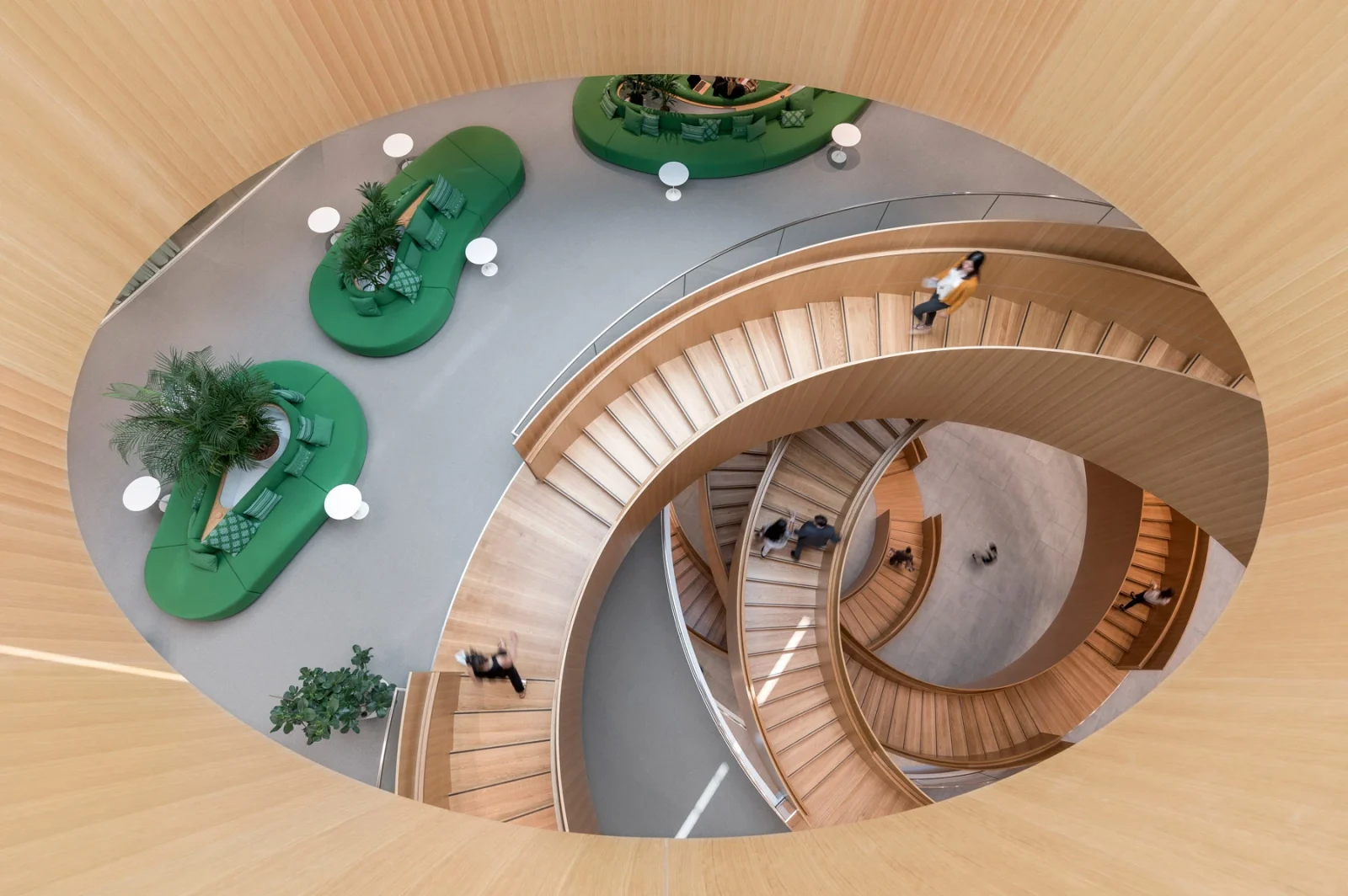
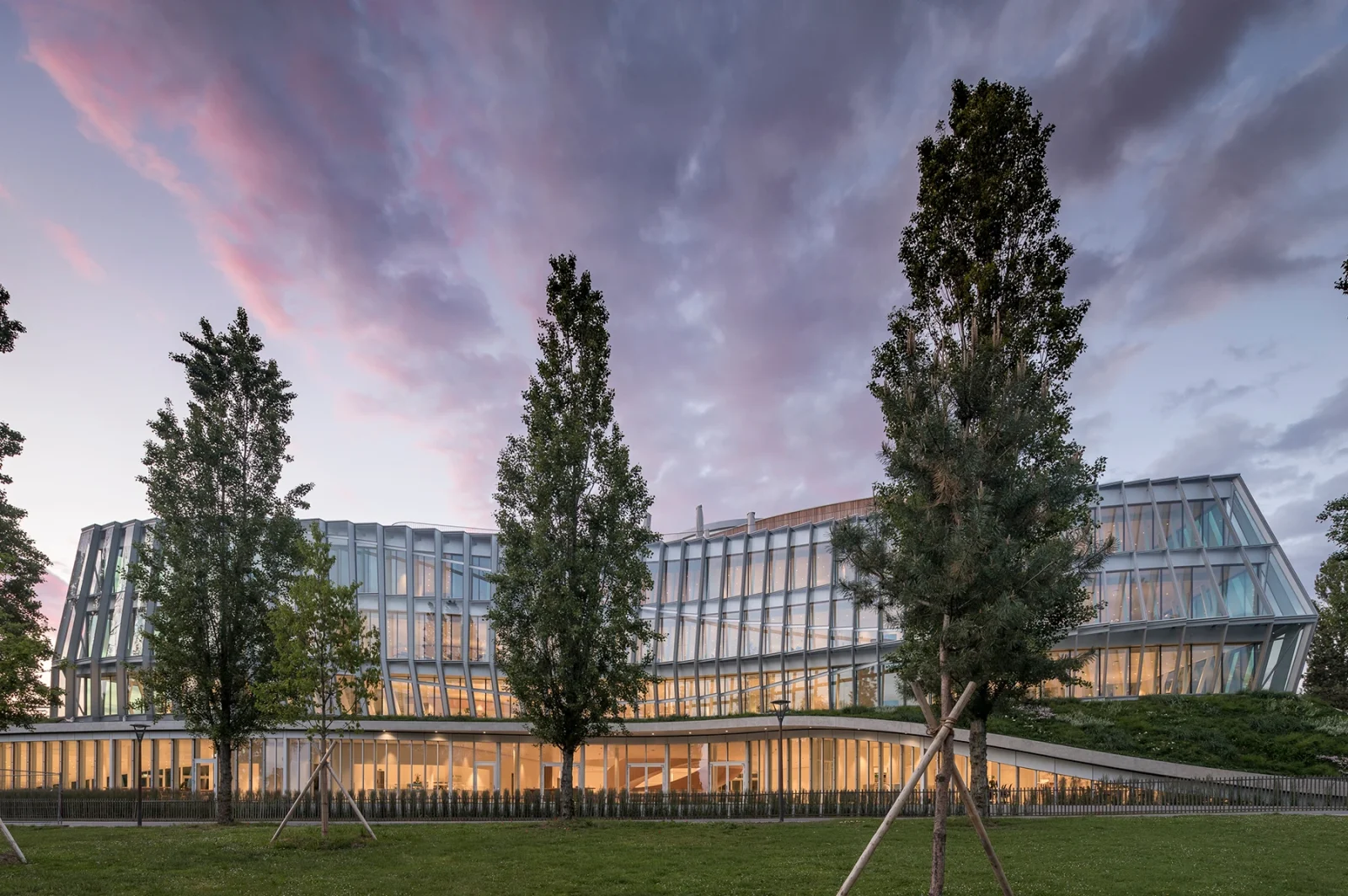
7. Olympic House
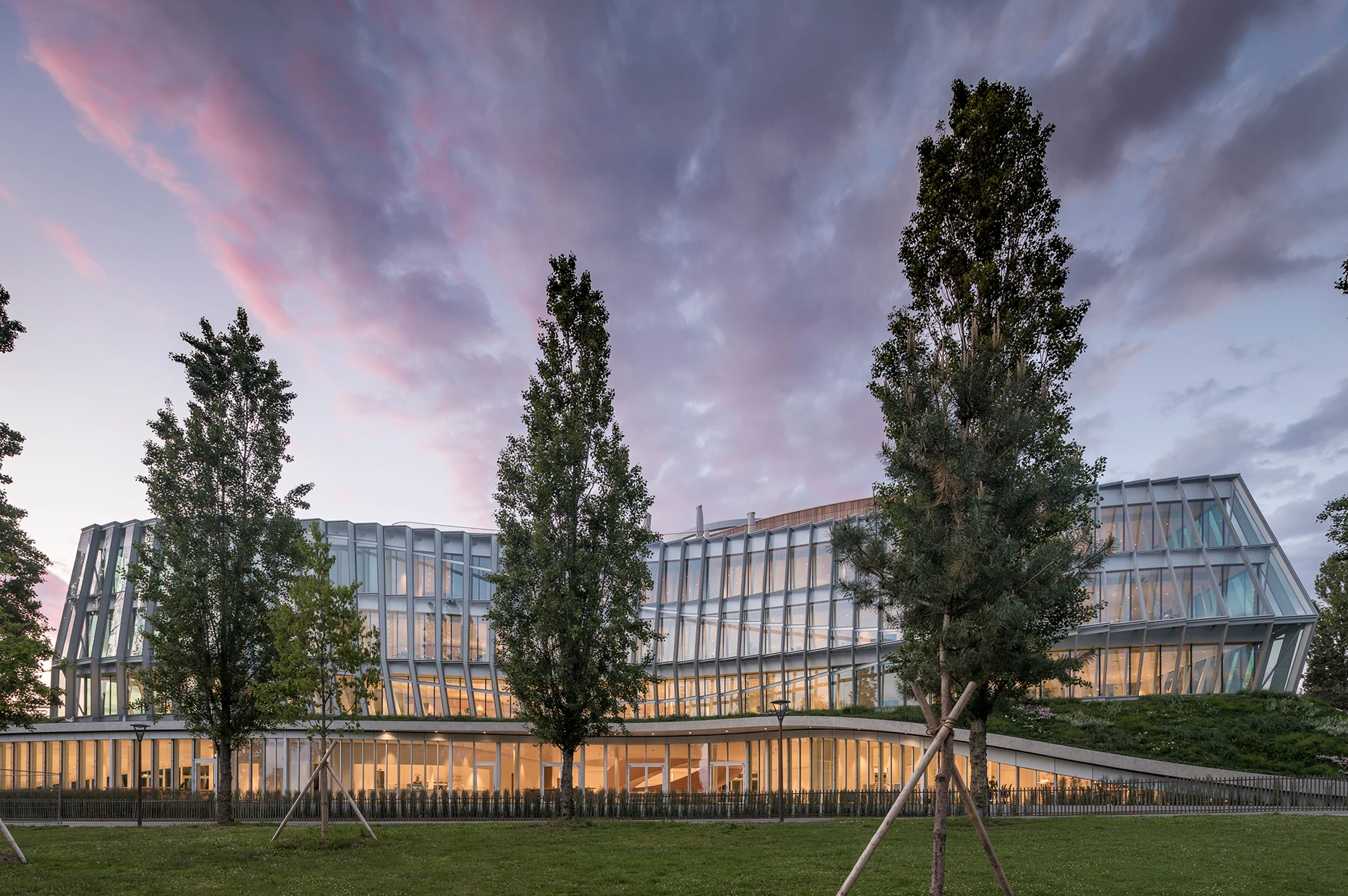
Location: Lausanne, Switzerland
Architect: 3XN, Itten + Brechbühl
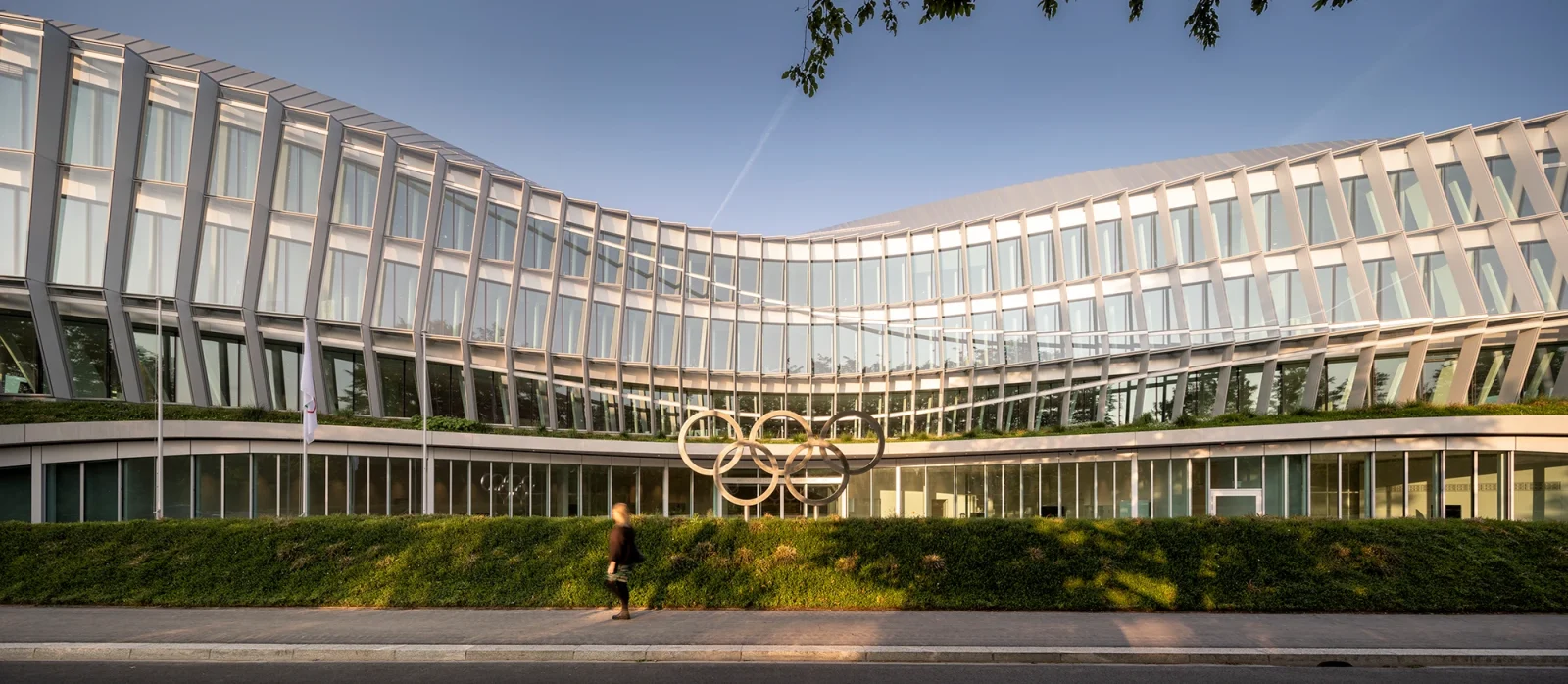
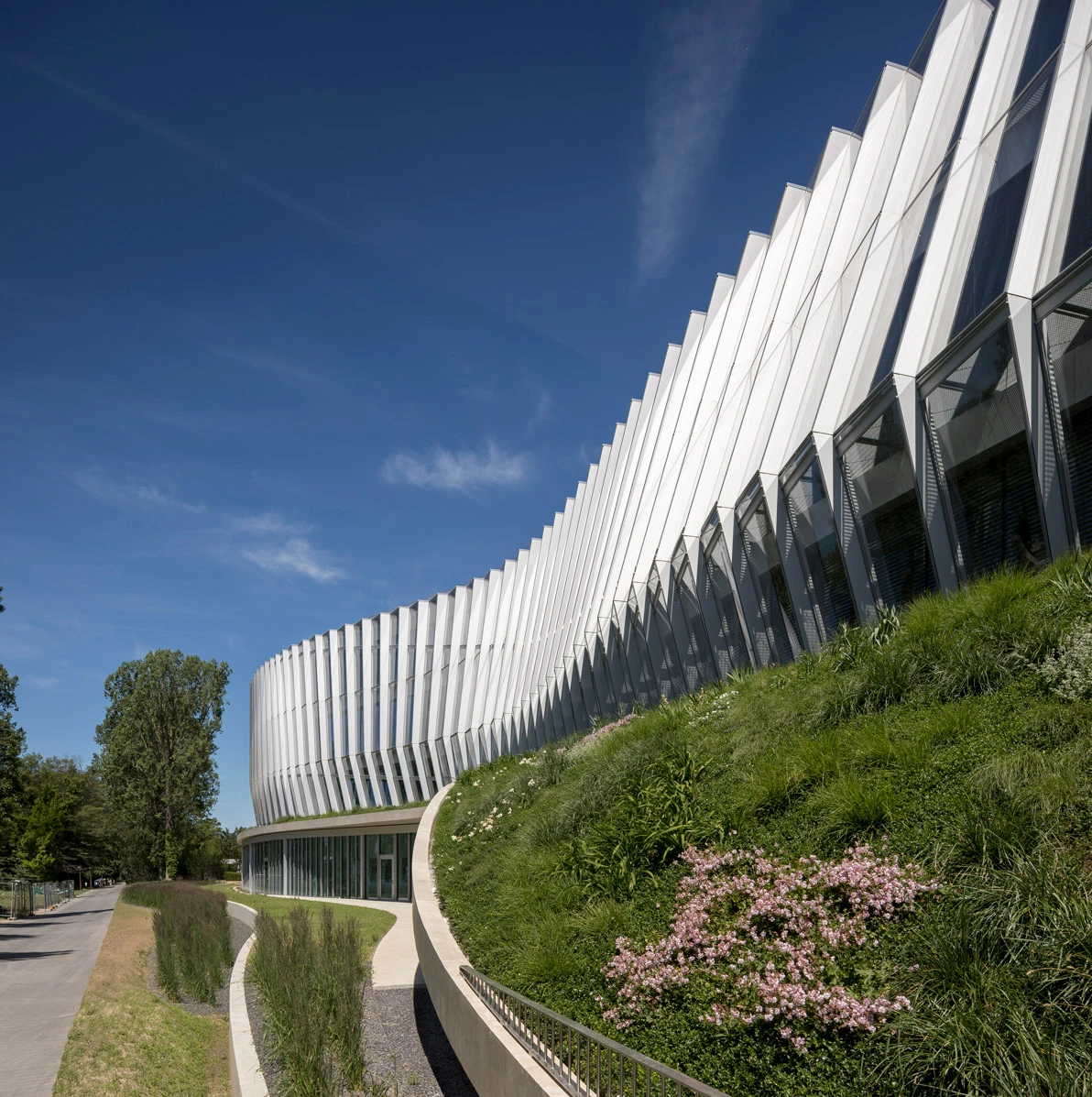
One of the world’s most sustainable buildings, the Olympic House is designed around five core goals: movement, transparency, flexibility, sustainability, and collaboration. Inspired by an athlete’s movement, the building’s dynamic, undulating facade looks different from every angle. Designed with as few structural constraints as possible, the open and flexible interior adapts to various working styles, both now and in the future. Built near Lake Geneva, the structure uses heat pumps that reuse lake water to provide renewable energy to the building.
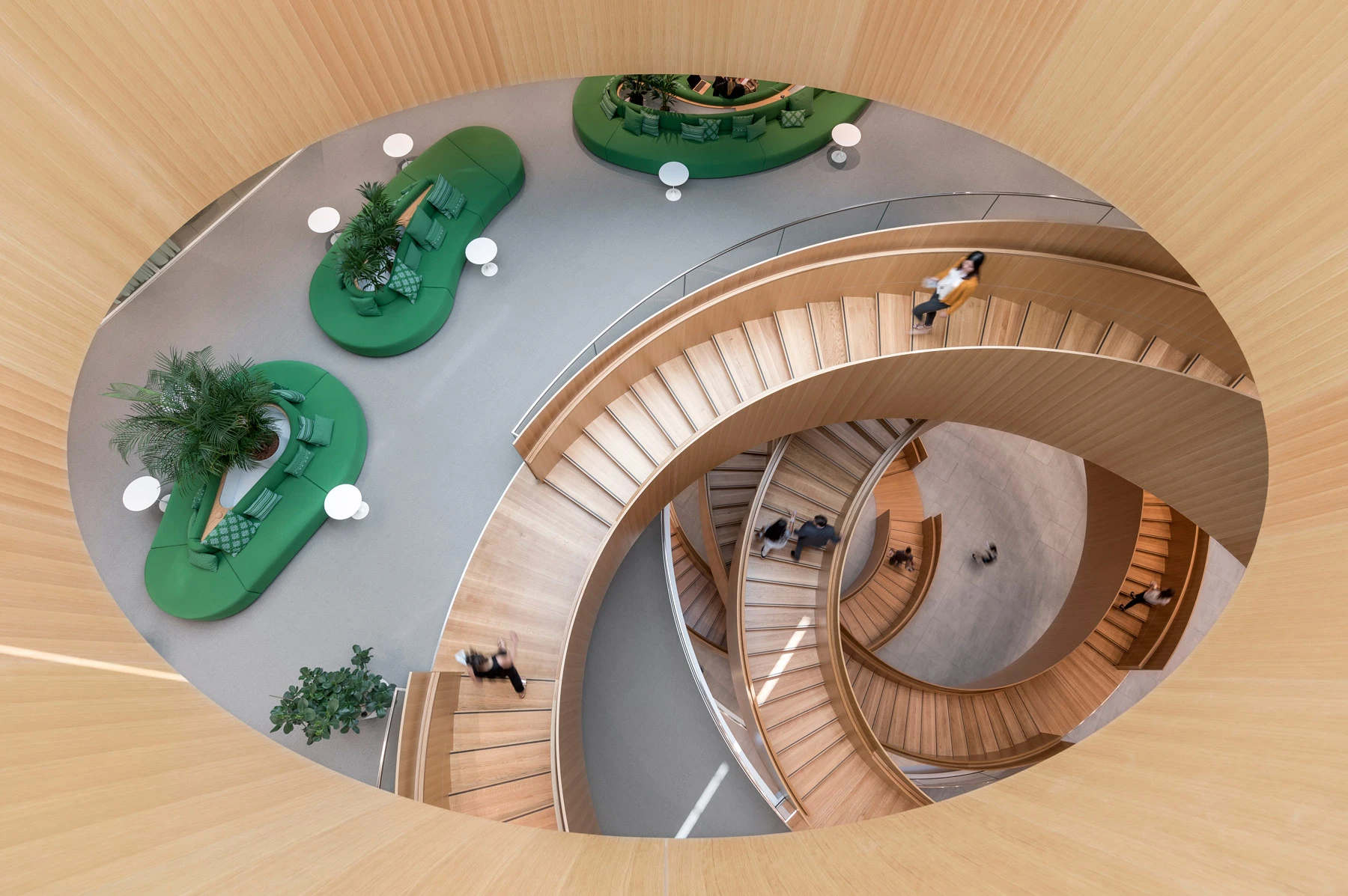
Achieving LEED v4 Platinum certification, the architects of Olympic House focused on enhancing sustainability while minimizing negative environmental impacts. This approach even included the demolition of the original building on the site.
Energy, water, and thermal efficiency, acoustics, material selection, and impacts on the local economy were all evaluated before, during, and after construction to identify the best possible solutions and reflect an ongoing commitment to environmental responsibility.
8. Bank of America Tower at One Bryant Park
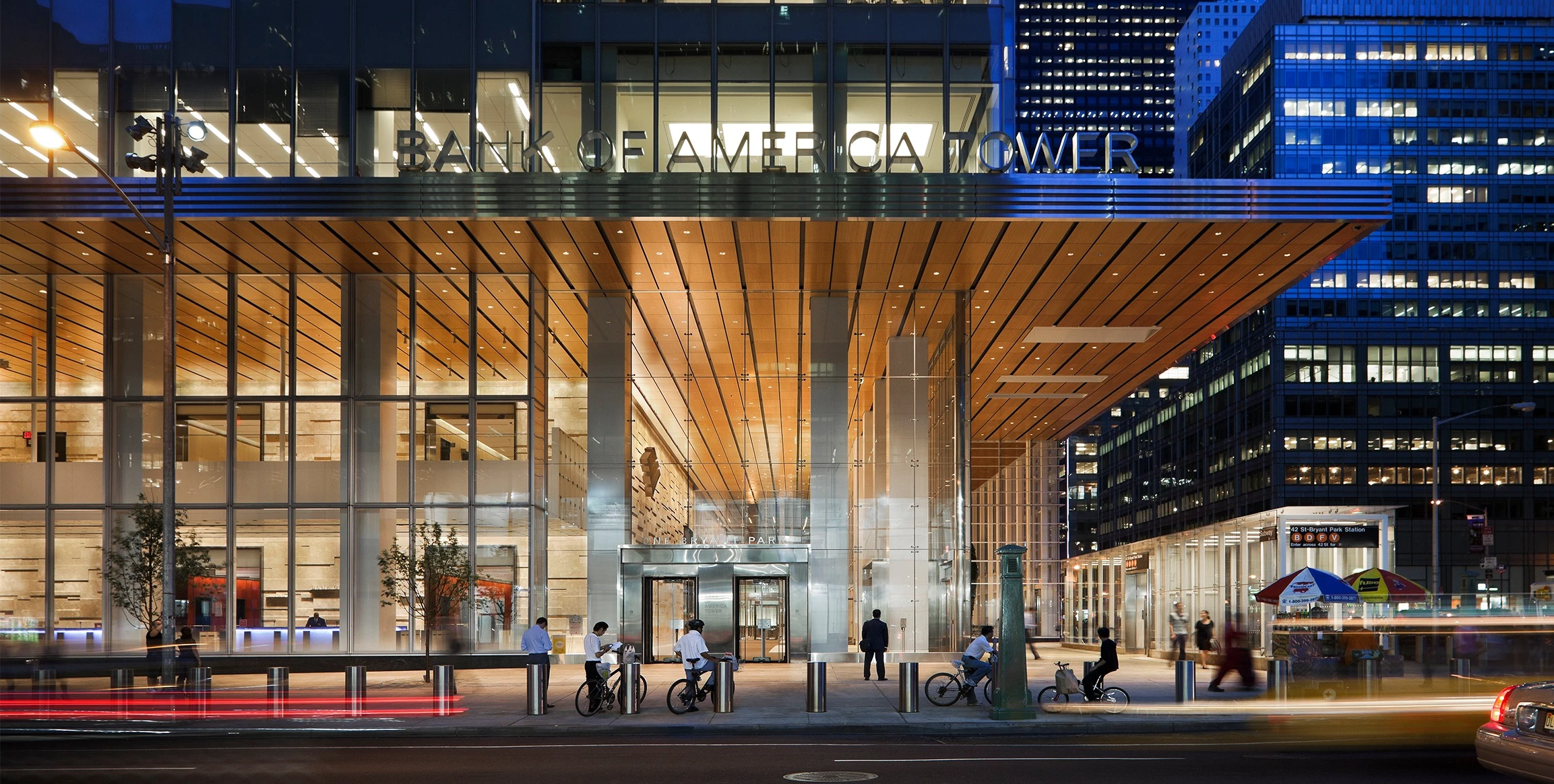
Location: New York, USA
Architect: Cook + Fox Architects
Designed by Cook + Fox Architects, the Bank of America Tower at One Bryant Park is the first commercial skyscraper to receive LEED Platinum certification. This 55-story, 2.2 million-square-foot project sets a new standard for high-performance buildings for office workers and a nation increasingly aware of the modern necessity of sustainability. Rooted in the concept of biophilia, the tower emphasizes the human connection to nature by maximizing access to daylight and fresh air.
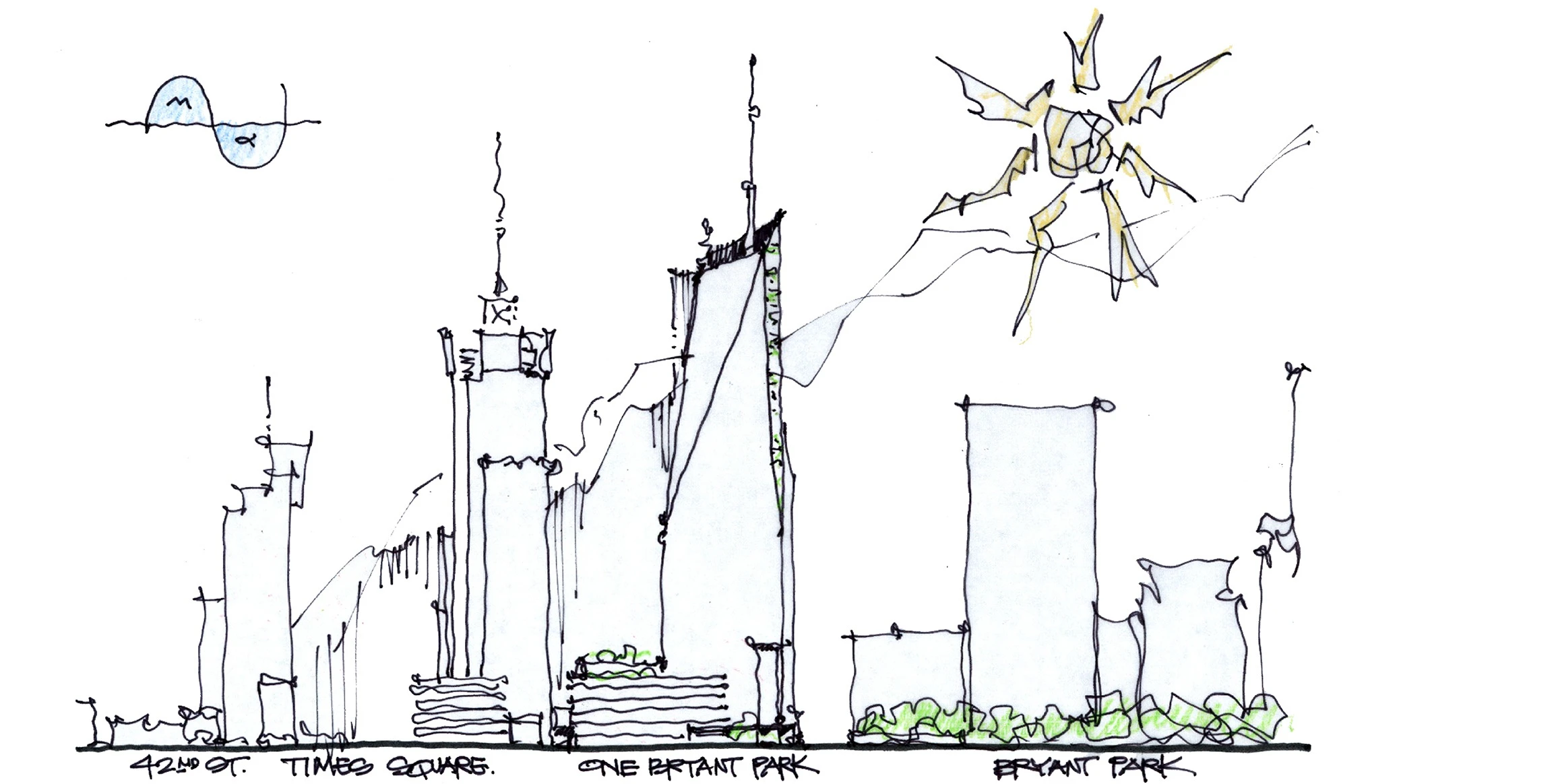
Water-saving measures such as greywater recycling, rainwater harvesting systems, and waterless urinals save millions of gallons of drinking water and reduce the building’s water consumption by approximately 50%. Clean air supplied to offices via an underground air system with 95% filtration can be individually controlled.
Thermal ice storage tanks in the basement produce ice at night, reducing peak electricity demand on the city’s strained power grid. Additionally, an on-site 4.6-megawatt cogeneration plant provides a clean and efficient energy source that supplies approximately 70% of the building’s annual energy needs.
9. Manitoba Hydro Place
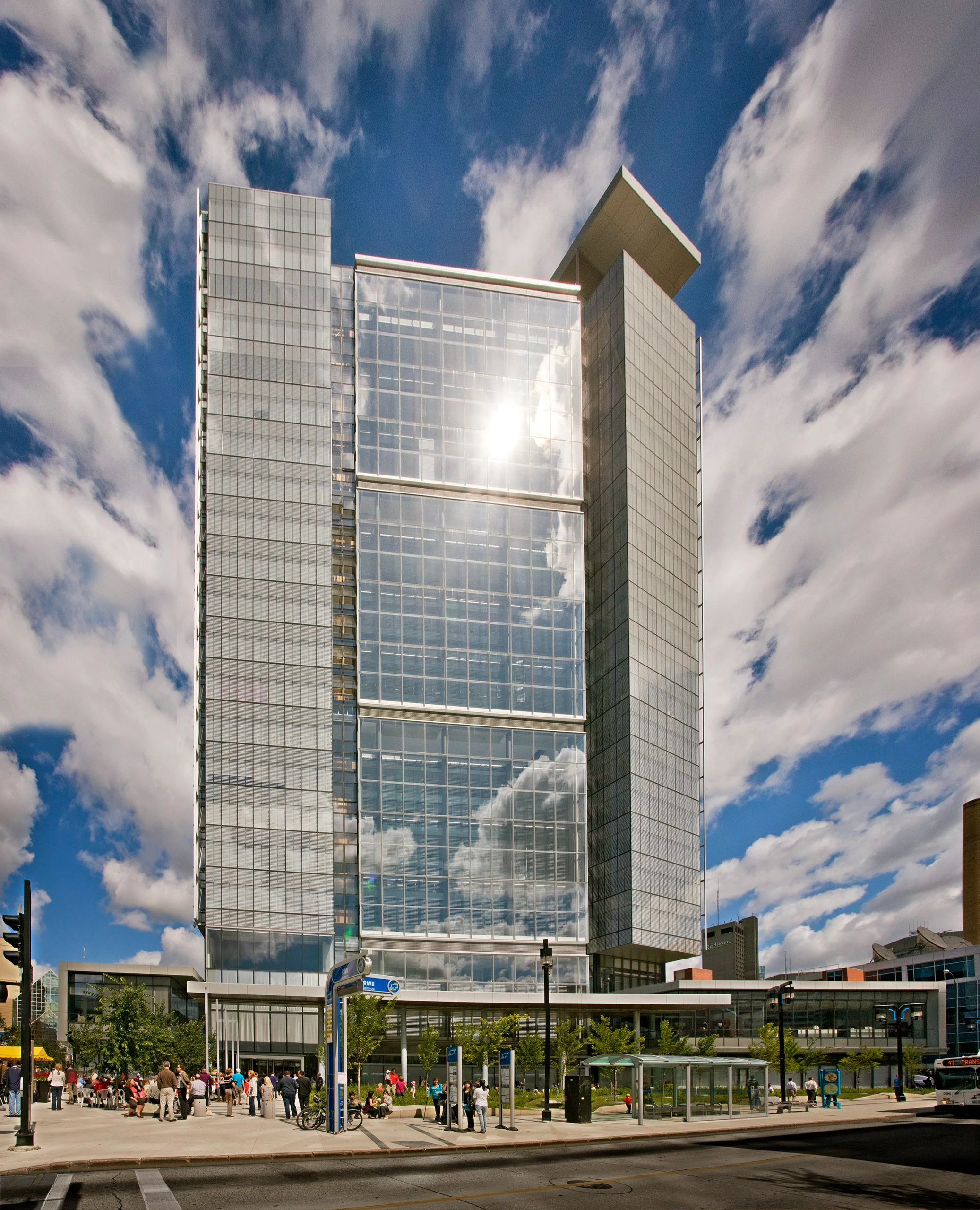
Location: Winnipeg, Manitoba, Canada
Architect: KPMB Architects
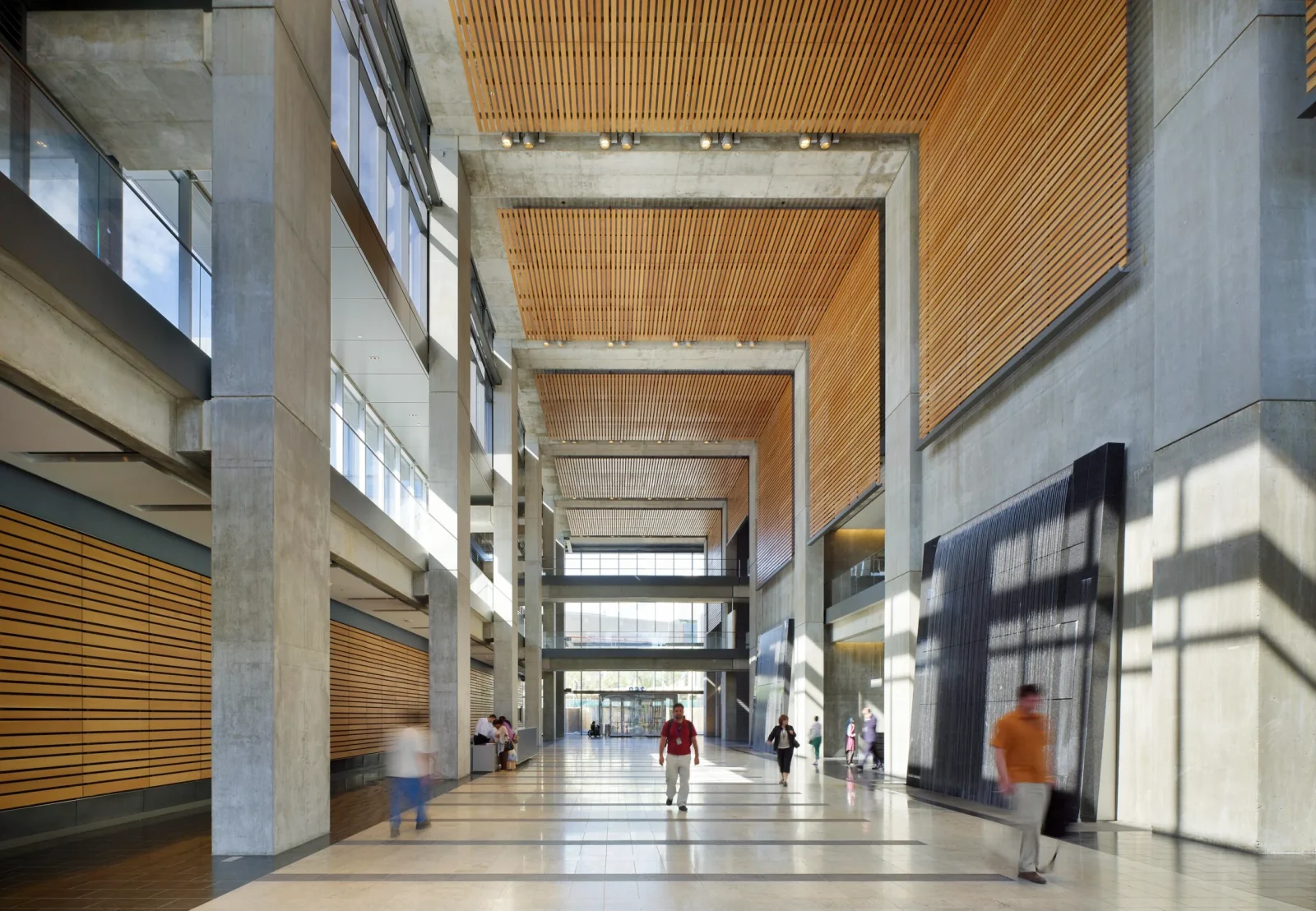
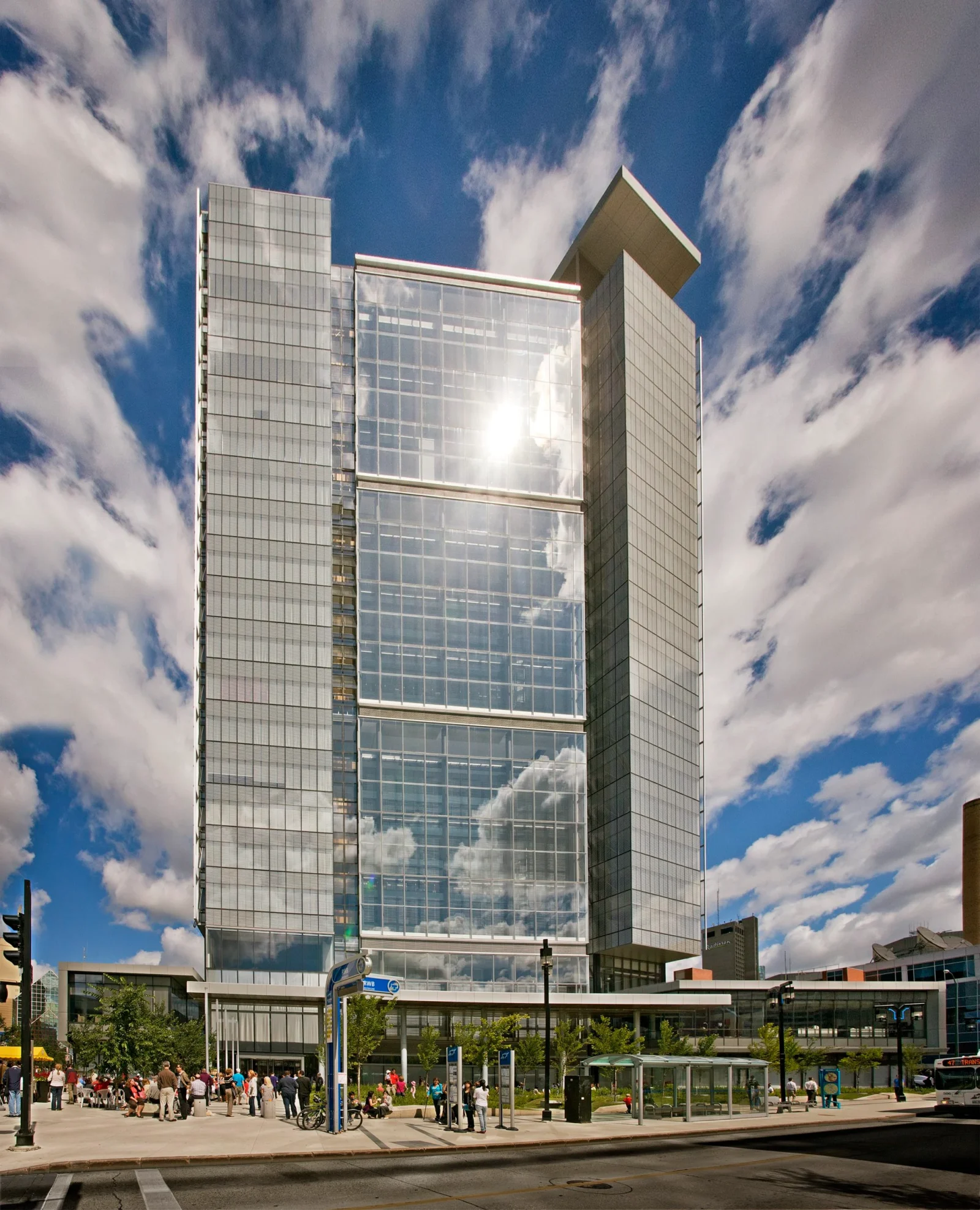
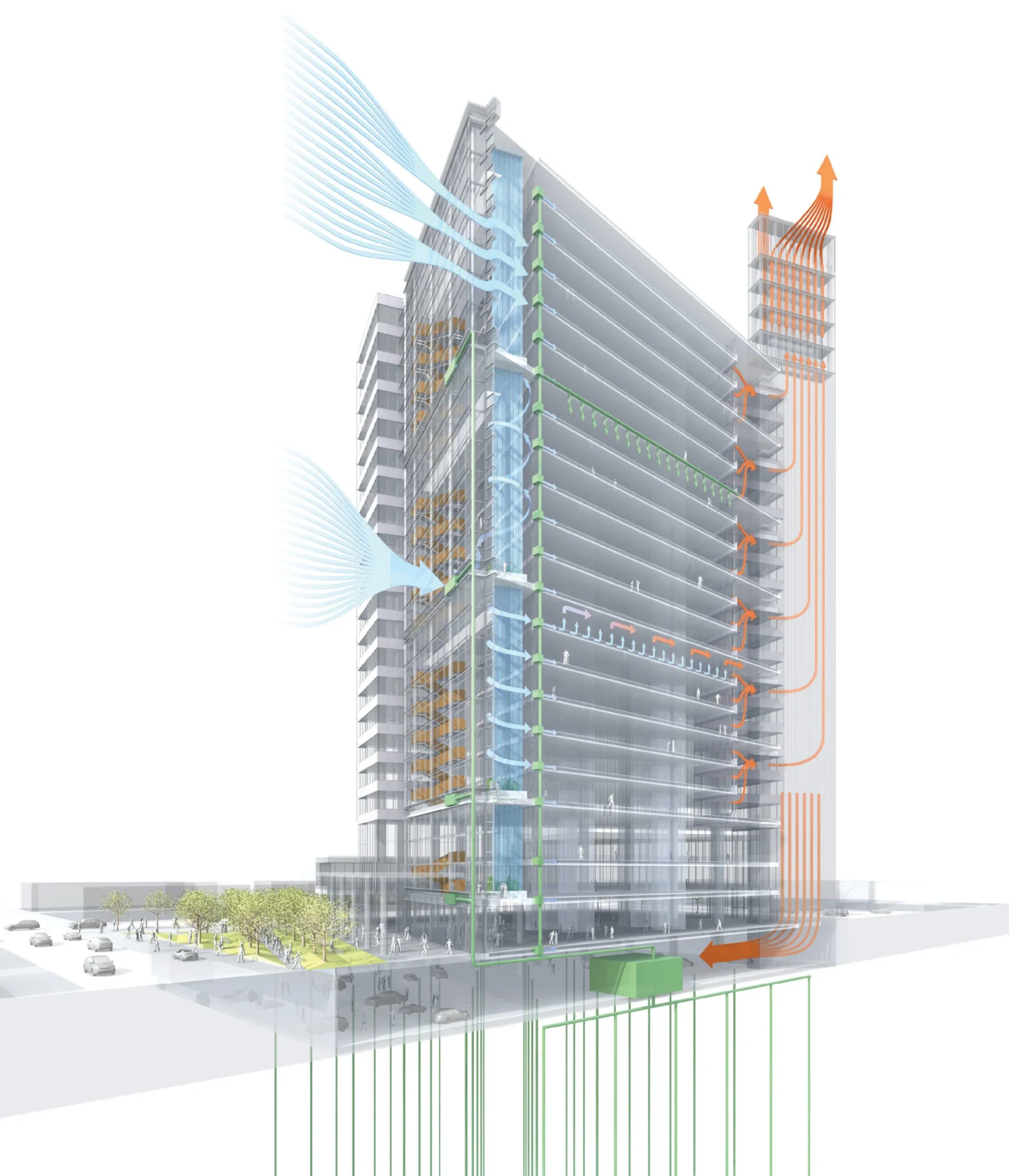
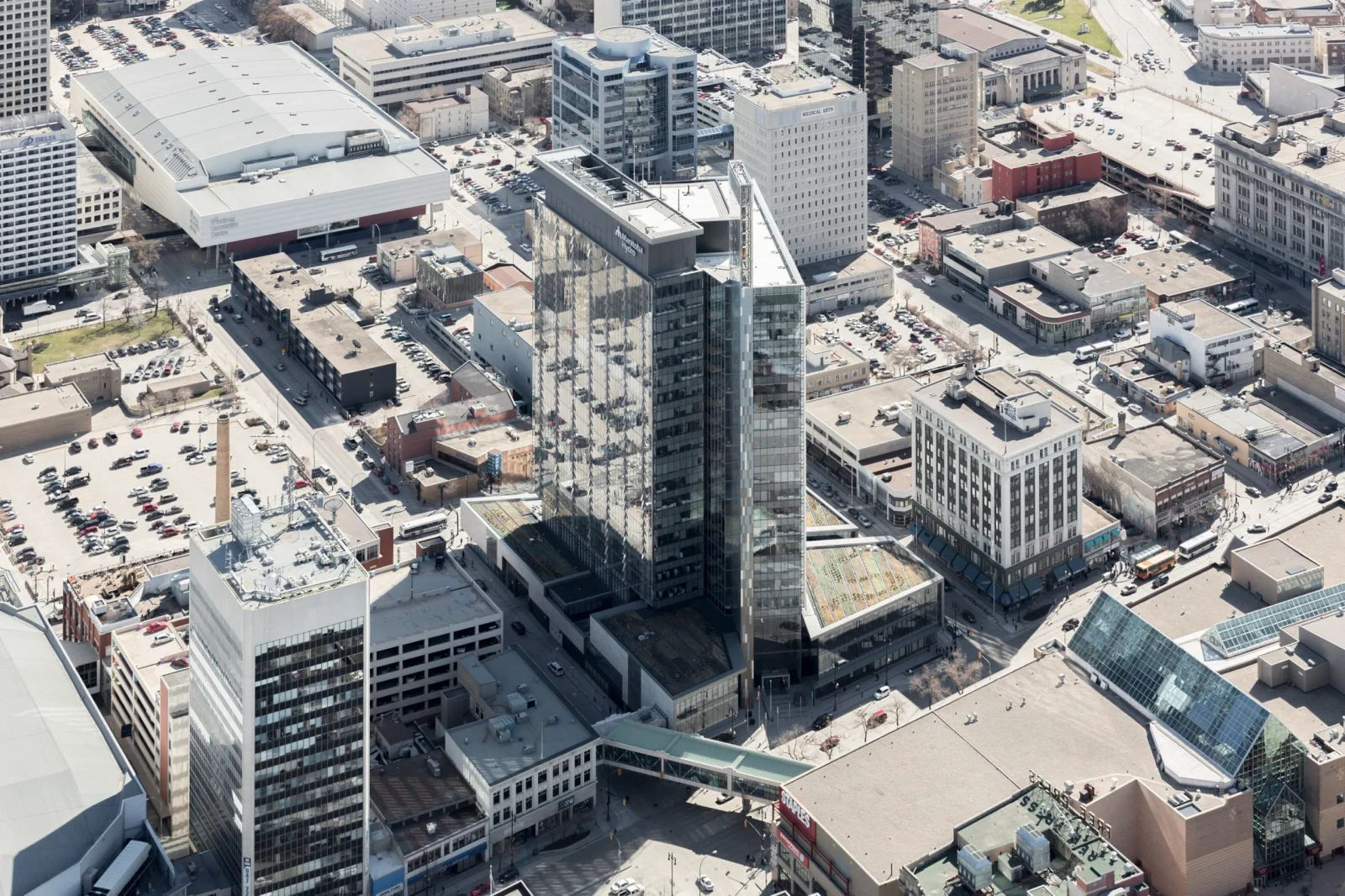
Designed as a model for net zero and extreme climate conditions, Manitoba Hydro Place is the first large-scale office tower in North America to receive LEED Platinum certification. 80% more efficient than traditional Winnipeg buildings, it utilizes passive solar and wind energy, taking advantage of the region’s unusually abundant sunlight and prevailing southerly winds.
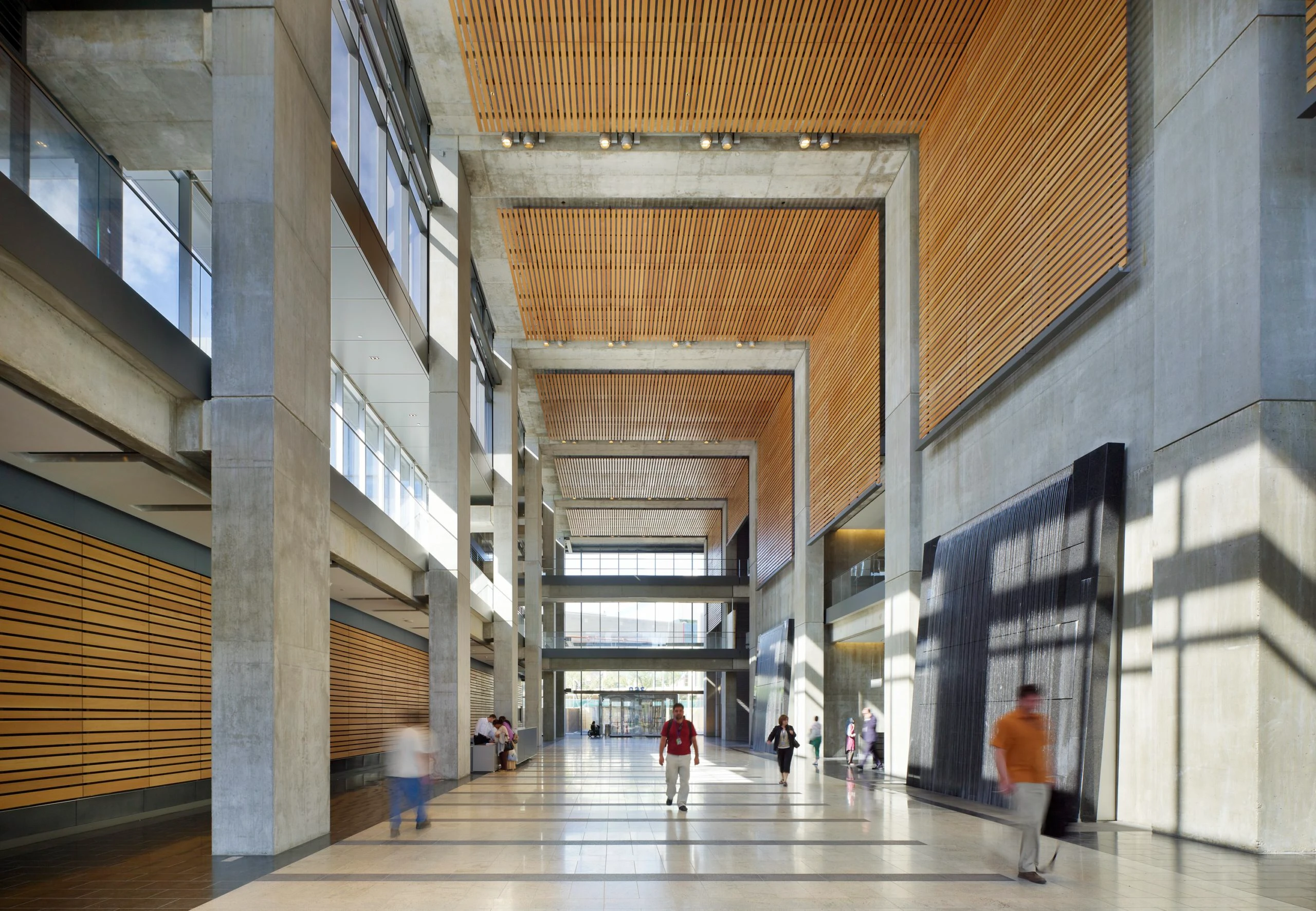
Manitoba Hydro Place’s large “A” shape consists of two wings that meet at the north and open to the south. This opening, acting as the building’s lungs, houses three six-story atriums. The atriums, featuring 24-meter-high waterfalls, regulate the humidity balance of the incoming air depending on the season.
10. Torre Reforma (Reforma Tower)
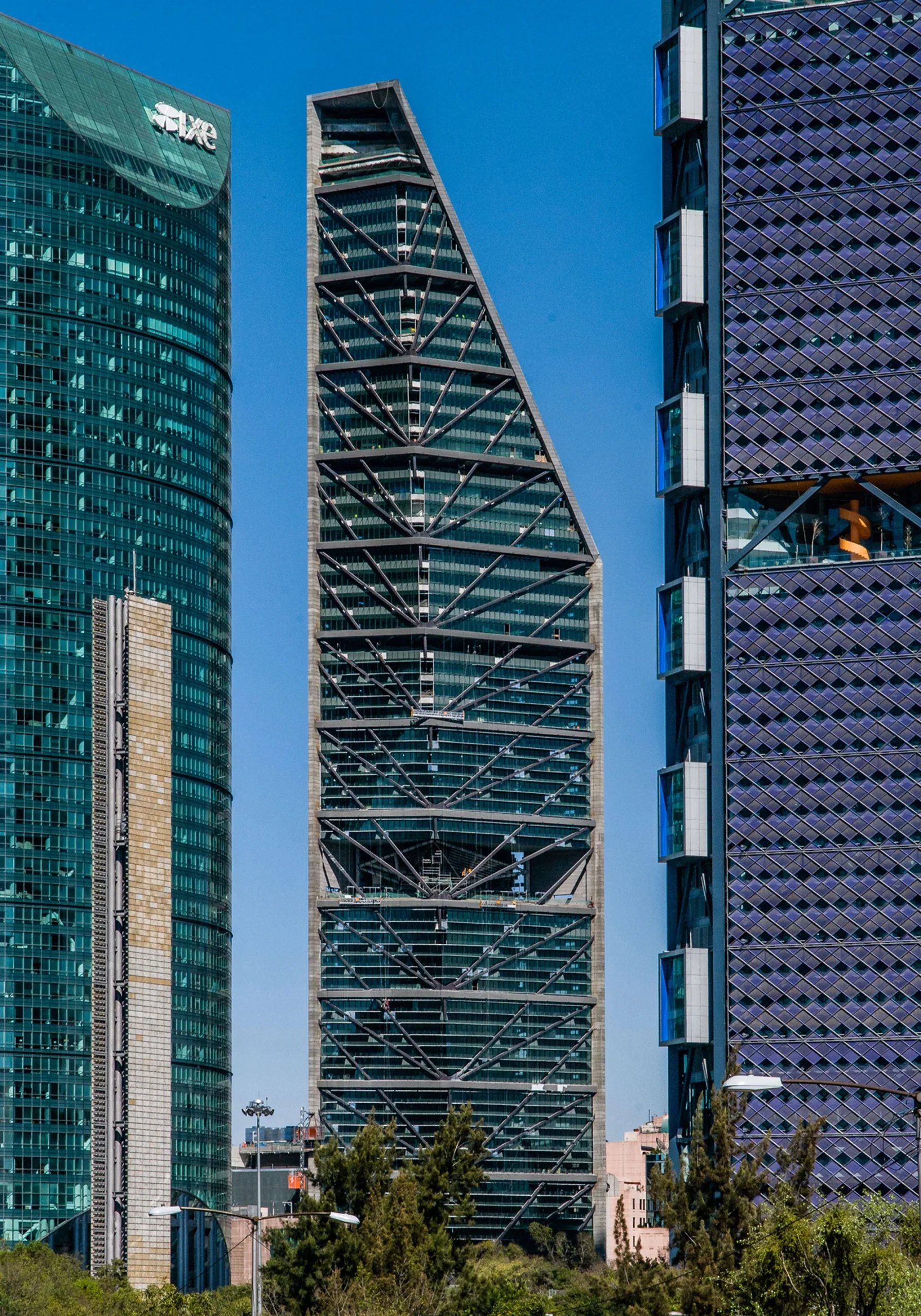
Location: Mexico City, Mexico
Architect: LBR&A Arquitetos
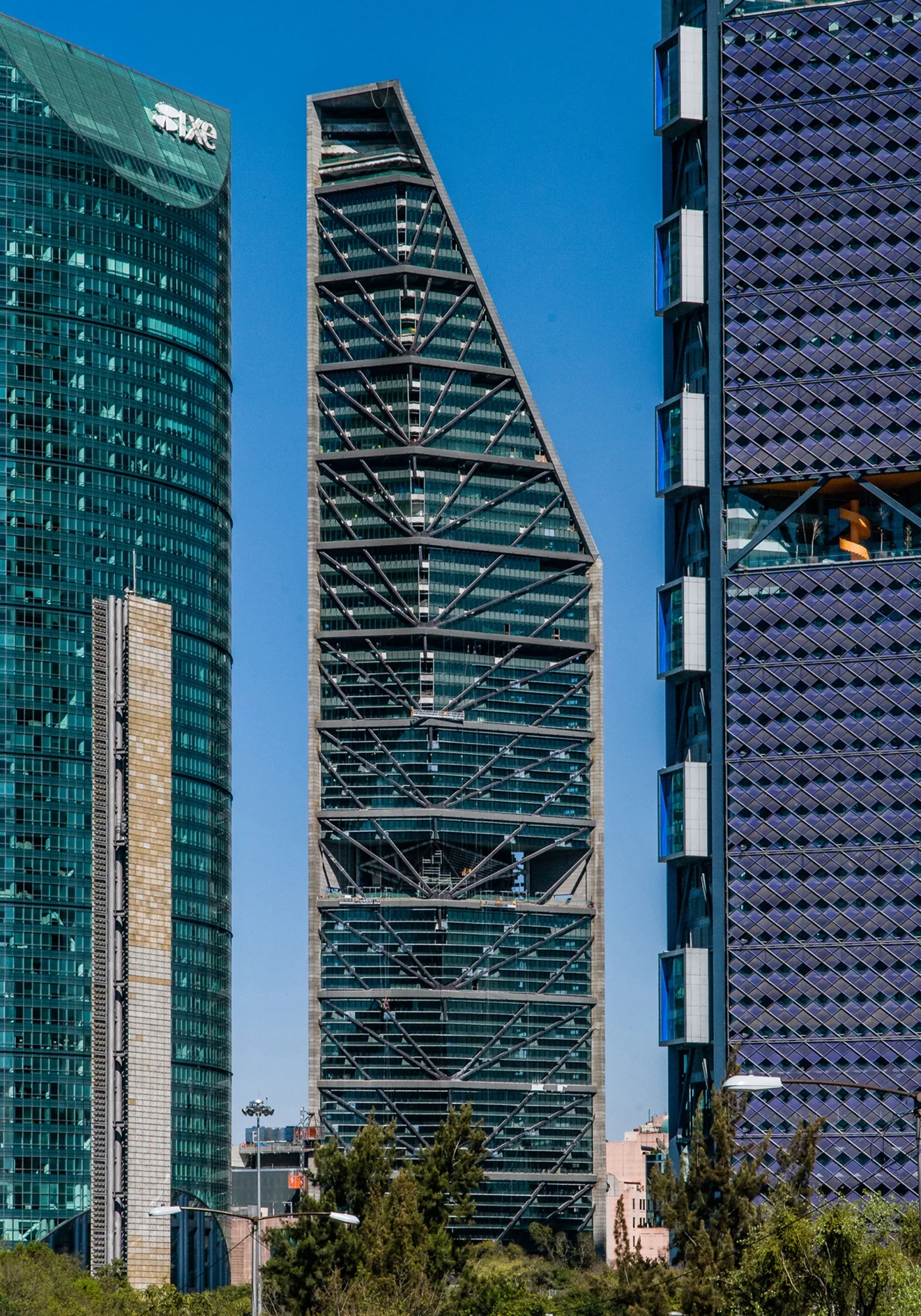
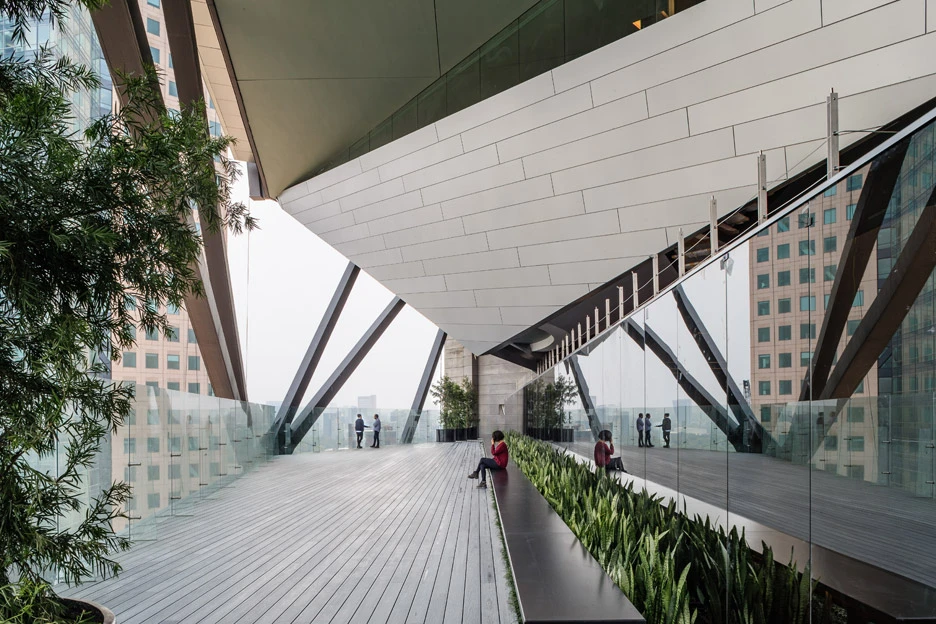
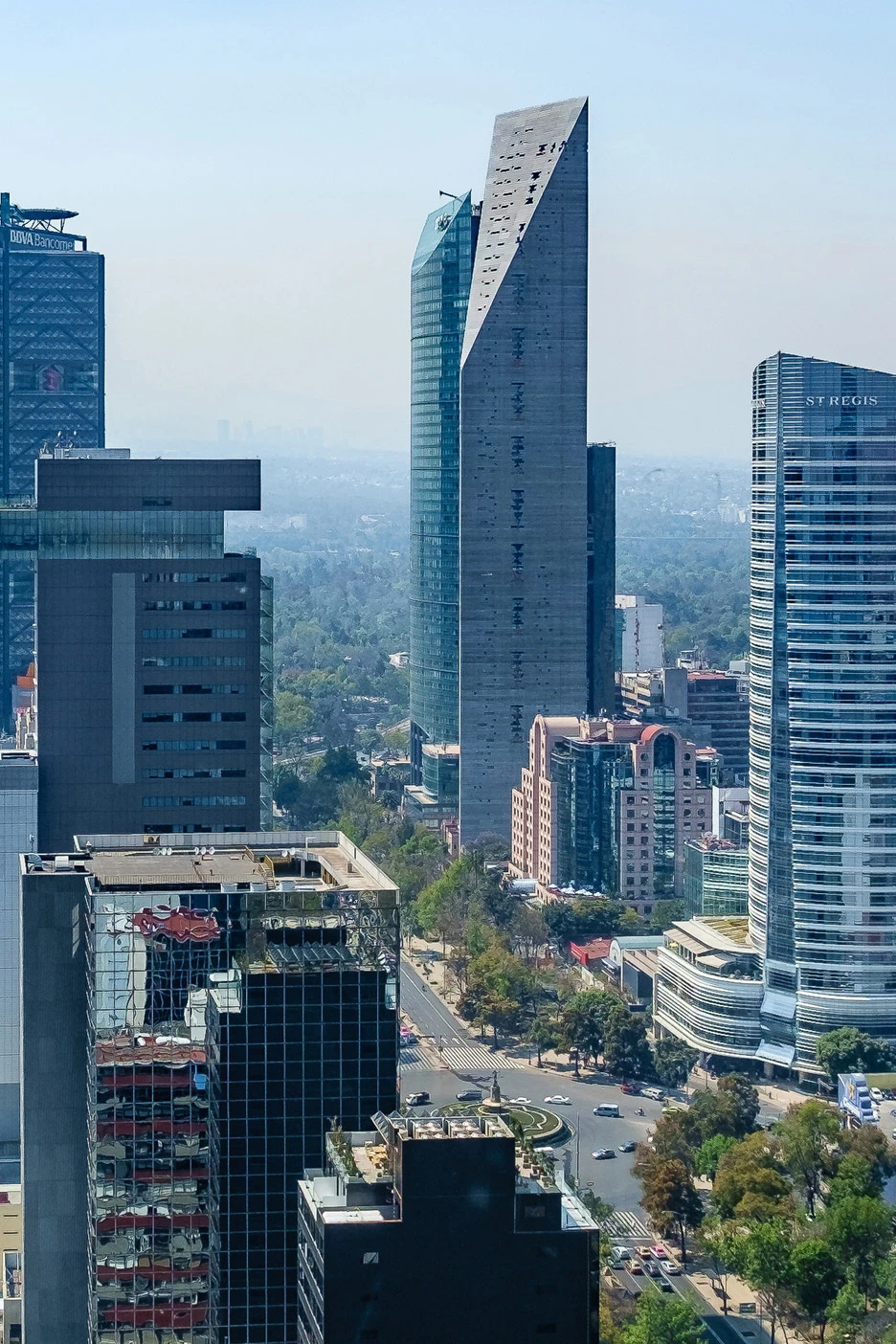
Standing at 246 meters, Torre Reforma is the tallest skyscraper in Mexico City and one of the city’s leading symbols of sustainability. The 57-story building stands out with its triangular form and consists of two 246-meter-high reinforced concrete walls that resemble an open book. It is enclosed by a third glass façade and a metal diagonal lattice structure, offering panoramic views of Chapultepec Park.
Providing a versatile, column-free space, the facades also represent a transition to a fully glass-facade generation, significantly reducing energy use. According to ASHRAE standards, the building’s façade achieves a 24% improvement in energy performance.
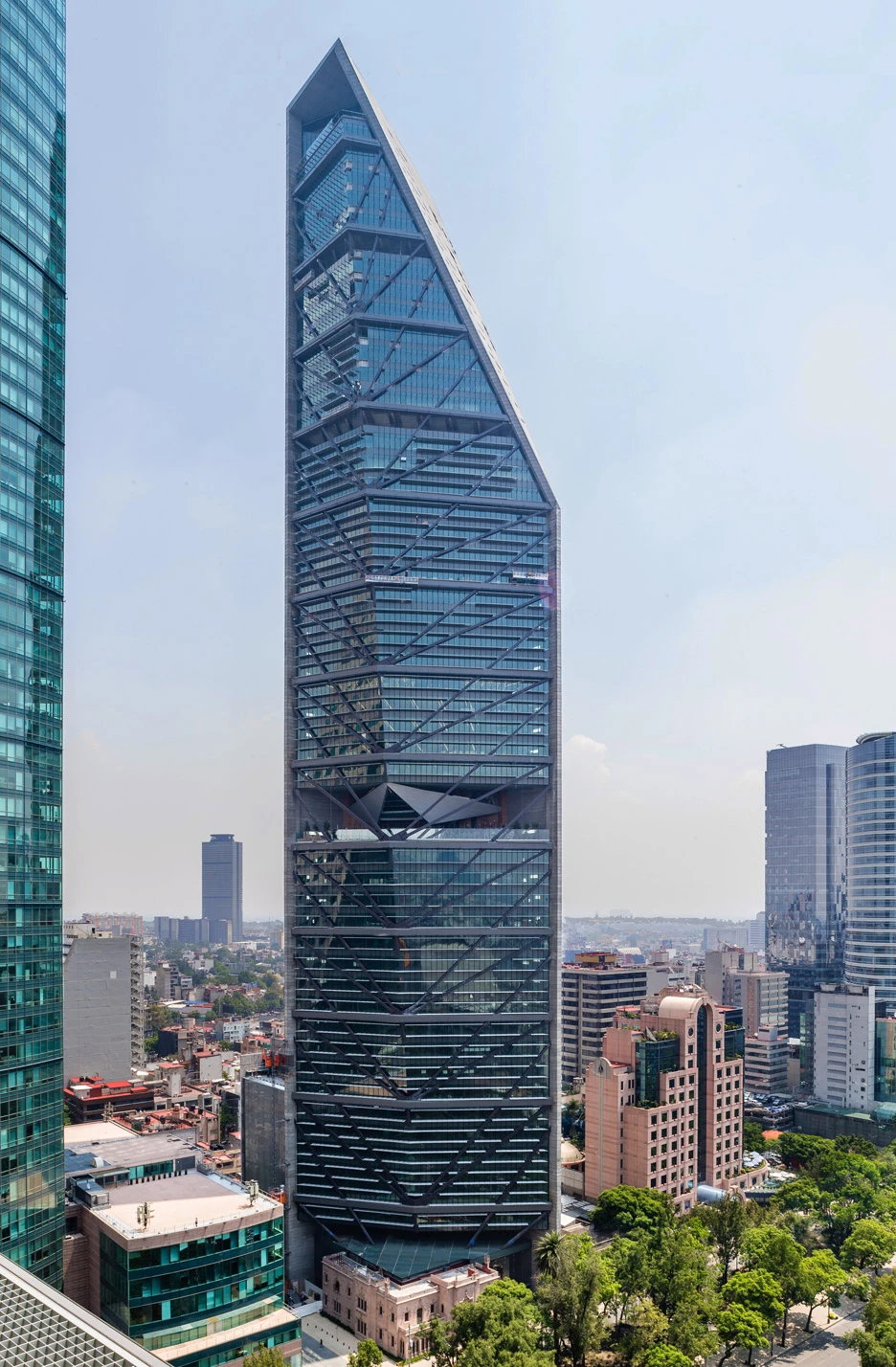
As one of the most efficient buildings in Latin America, Torre Reforma has achieved LEED Gold certification. Rainwater and wastewater are 100% recycled through an on-site treatment facility and reused primarily for restrooms and air conditioning systems. Water tanks located throughout the tower provide a more efficient water system, relying on gravity rather than pumps, especially in fire emergencies.
LEED, which supports sustainable building methods, aims to guide the design, construction, and management of environmentally conscious and resource-efficient buildings. Recognized as a global standard for sustainable construction, LEED certification helps promote buildings that are not only energy-efficient and cost-effective but also create healthier environments for their occupants. Additionally, they use less energy and water, emit fewer greenhouse gases, and generate less waste during construction and operation phases.
Explore Courses
.jpg%202.jpg "Building Performance with Forma & Opossum")
.jpg "Ondrej Chybik - Rethinking Architecture")