

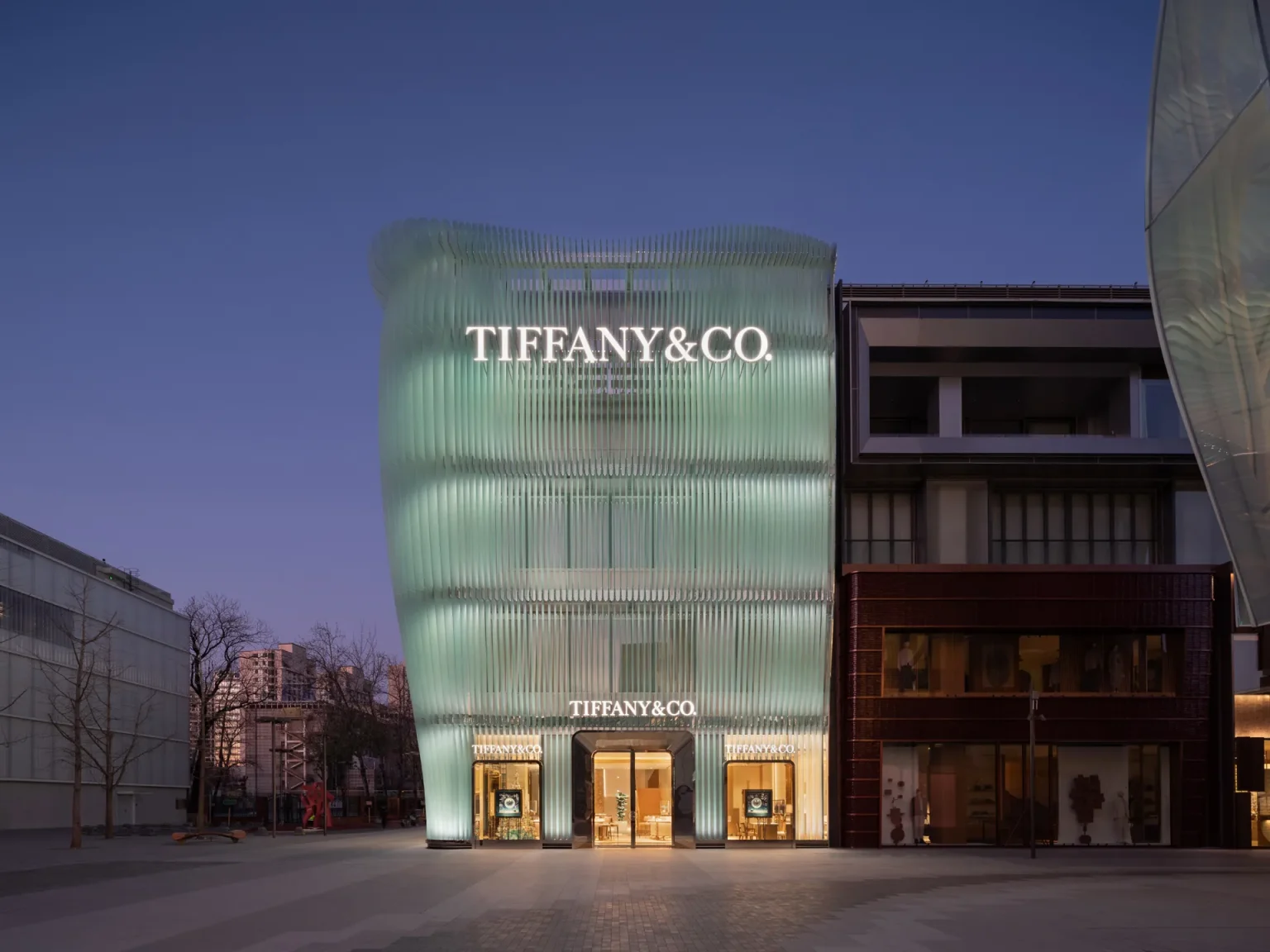
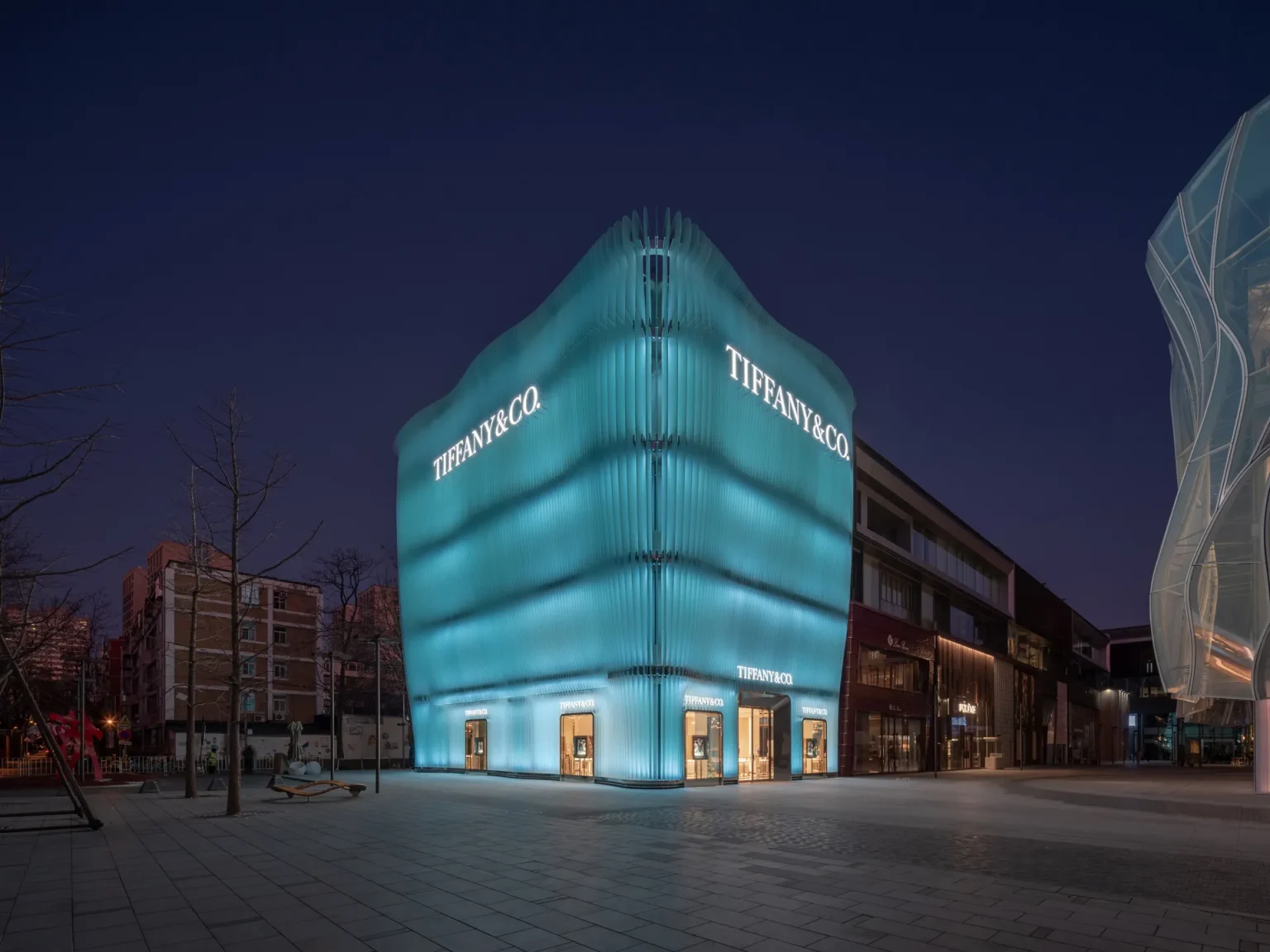










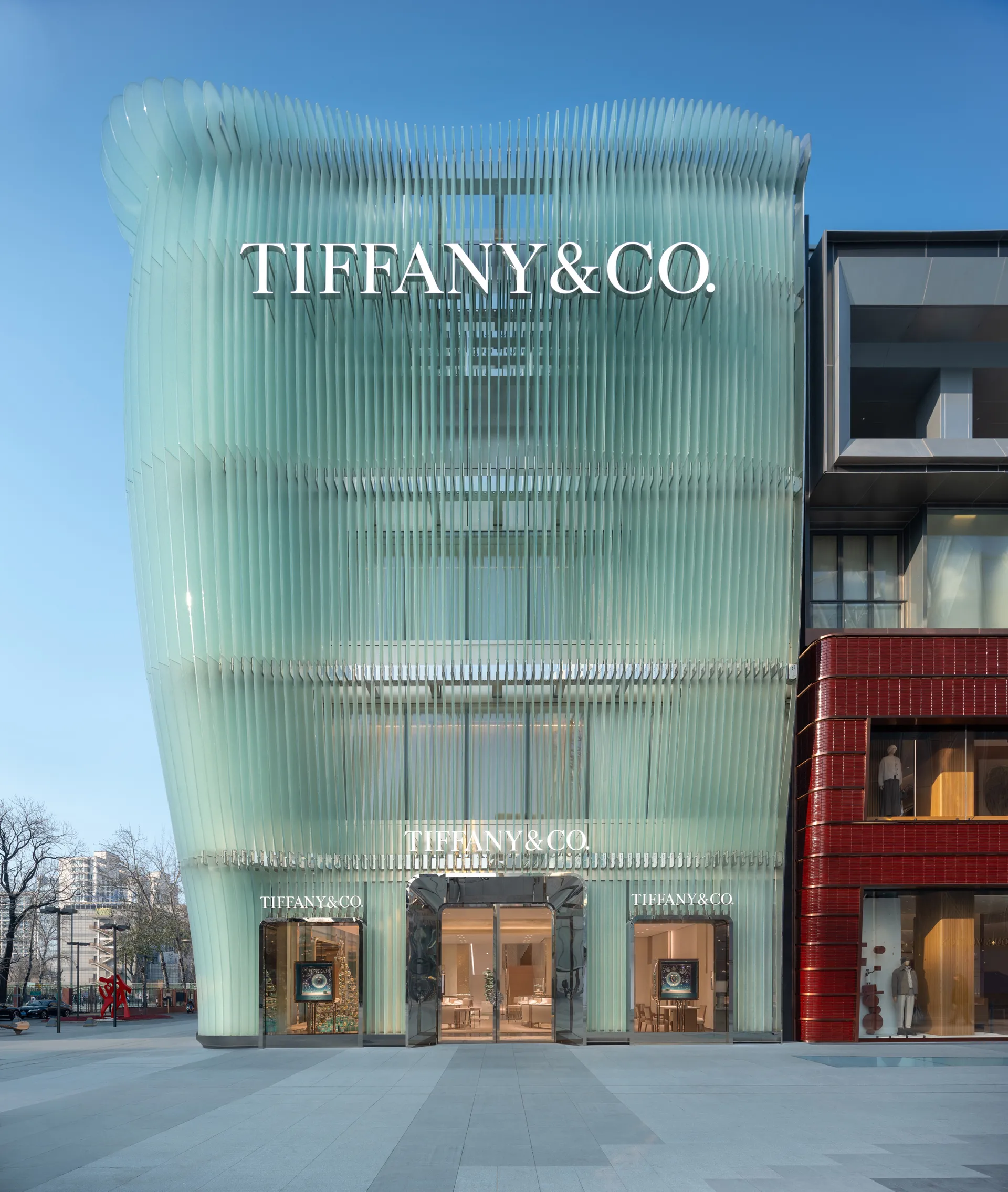
Tiffany & Co.’s flagship store in Beijing, designed by the Dutch architectural firm MVRDV, exemplifies the boundaries of material science, digital fabrication, and circular construction. The project utilizes an envelope of vertical, translucent glass fins with fluid curves, translating the organic geometry of jewelry design into a refined architectural expression.
Tiffany & Co. Flagship Store’s Design for Disassembly
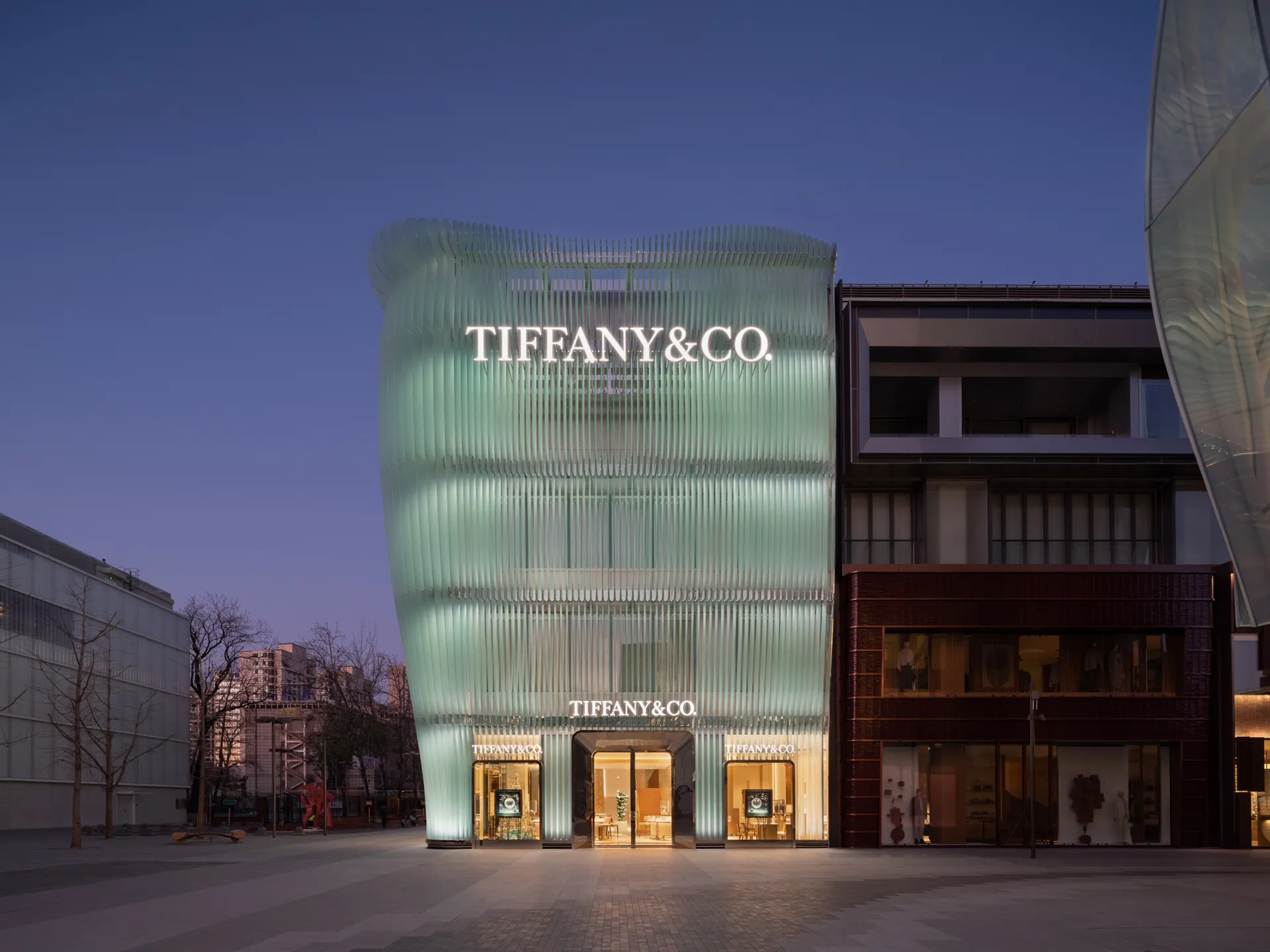
Located at a contemporary and urban landmark in Beijing’s Taikoo Li Sanlitun district, Tiffany & Co.’s flagship store represents a structure that emphasizes the interplay of light, depth, and three-dimensionality rather than that of traditional retail stores. Strategically situated at a crossroads in the northern retail quarter, the store positions itself as a visual anchor for the district.
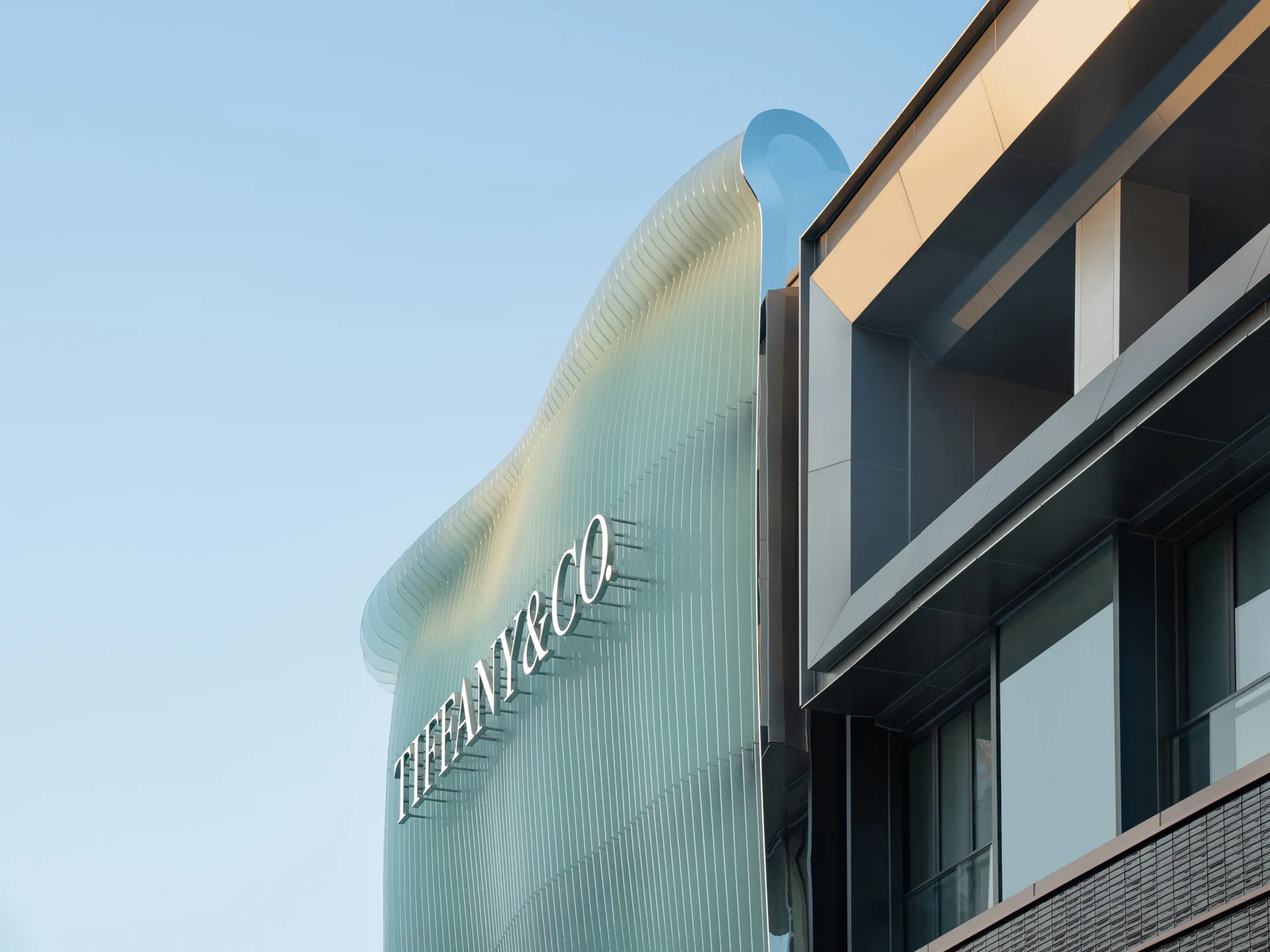
MVRDV’s design uses an exuberant strategy, introducing light as a fluid presence into a luxurious context often characterized by heavy, opaque envelopes. Revolutionizing the brand’s design language, Elsa Peretti focuses on sensual geometry and organic forms, drawing inspiration from objects found in nature. She translated tactile pieces into silver and gold with smooth finishes.
Fluid Tectonics
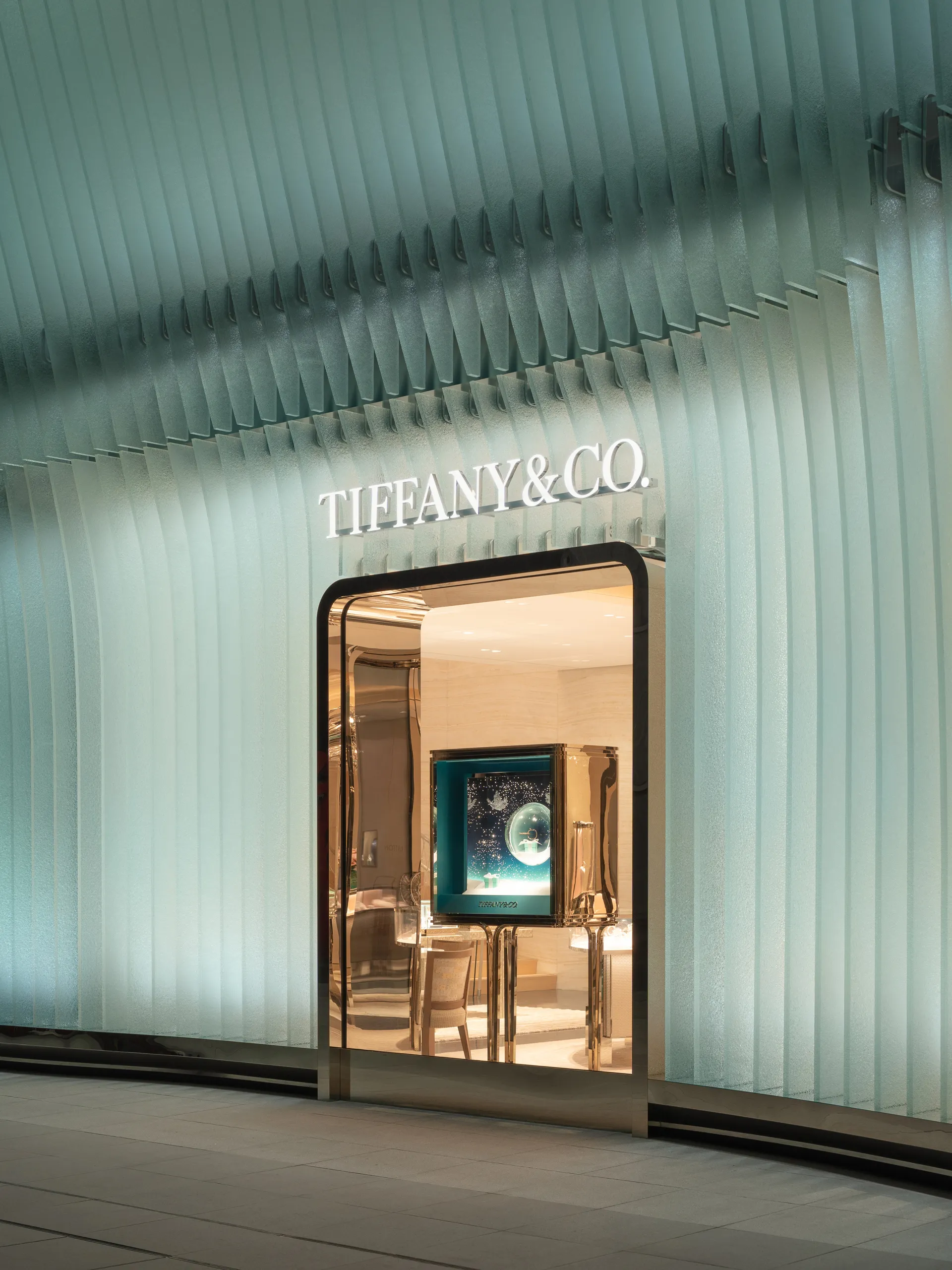
Inspired by her famous creation, the Bone Cuff, MVRDV’s design team, led by founding partner Jacob van Rijs and Head of Interior Aser Gimenez Ortega, adopted it as a primary design element. Entering a 1,000-square-meter store, visitors are greeted by a champagne gold leaf ceiling and sparkling crystal chandeliers. The interior walls are hand-crafted with gilded accents, providing a richly textured background.
Materiality and the Technicality of the Glass Fins
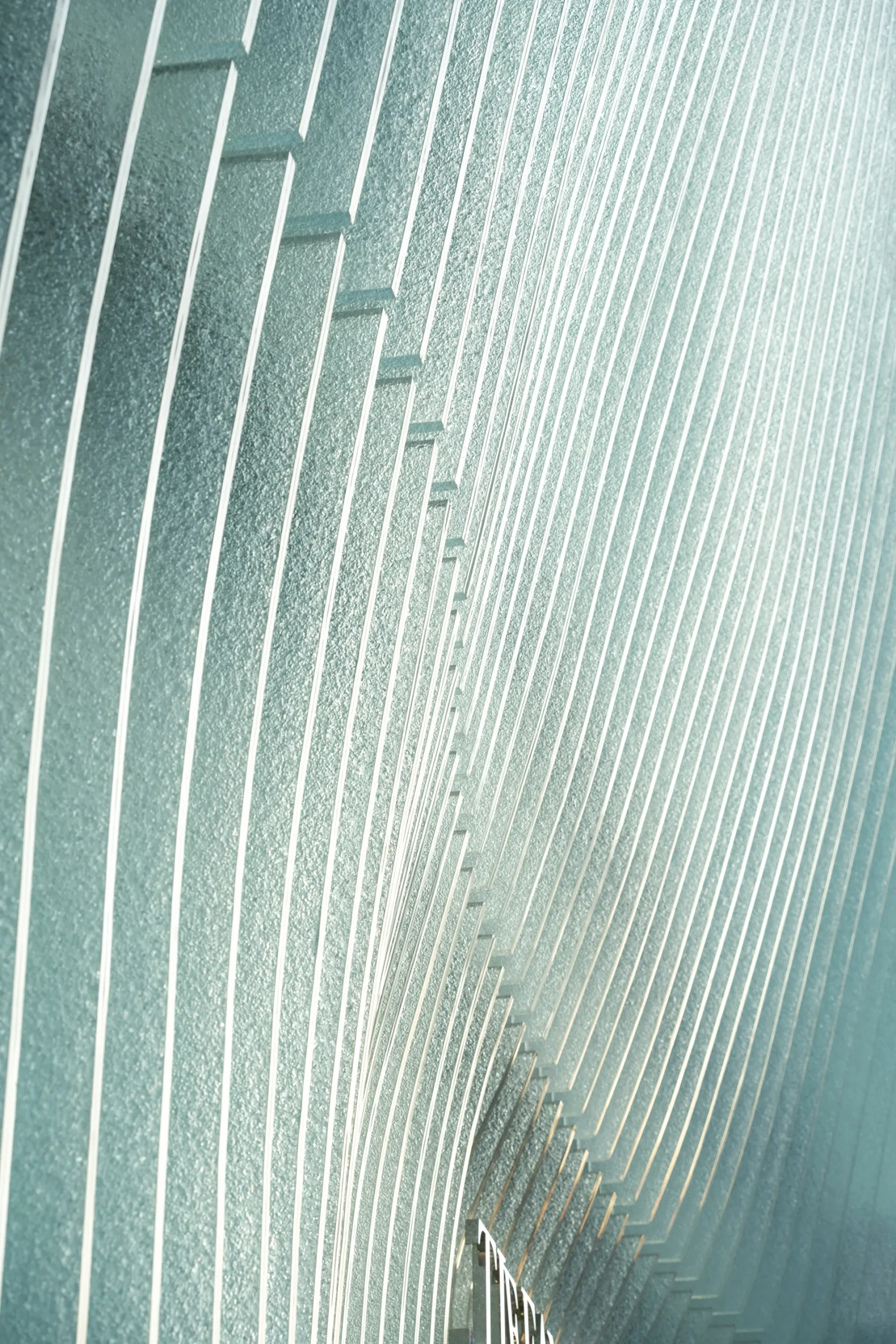
The 20-meter-high facade consists of vertical, translucent, textured glass fins that rise the full four-storey height. The perception of the facade shifts when viewed from an acute angle due to the layering of the glass fins, which amplifies reflection and refraction, while from a perpendicular viewpoint, the envelope’s porosity is revealed.
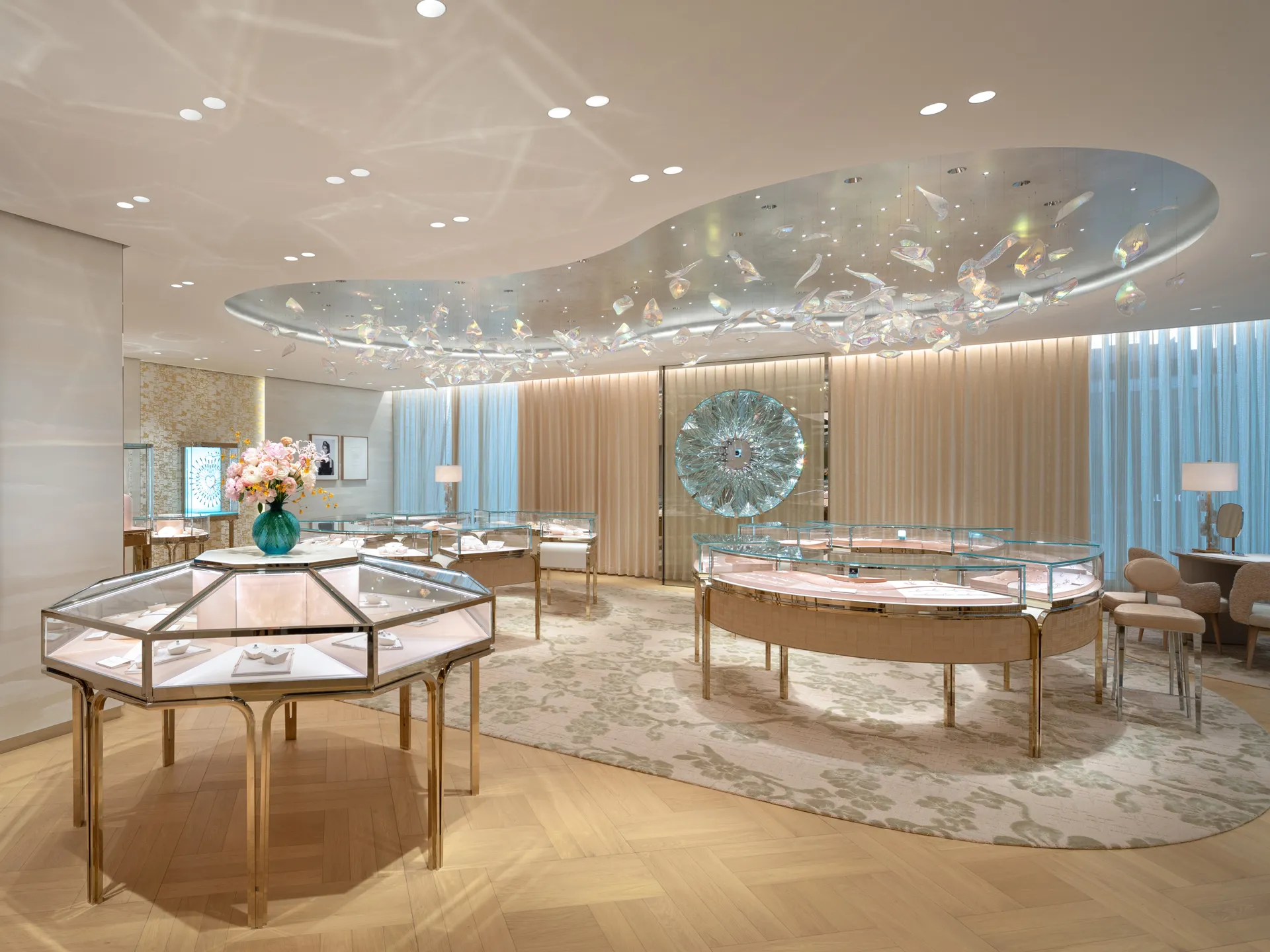
The vertical glass fins are held in place by custom-designed brackets, ensuring that the hardware does not distract from the fluid form of the glass. This approach allows for easy disassembly, as the glass fins and mounting brackets can be removed individually without damage.
Texture, Tone, and Optical Quality
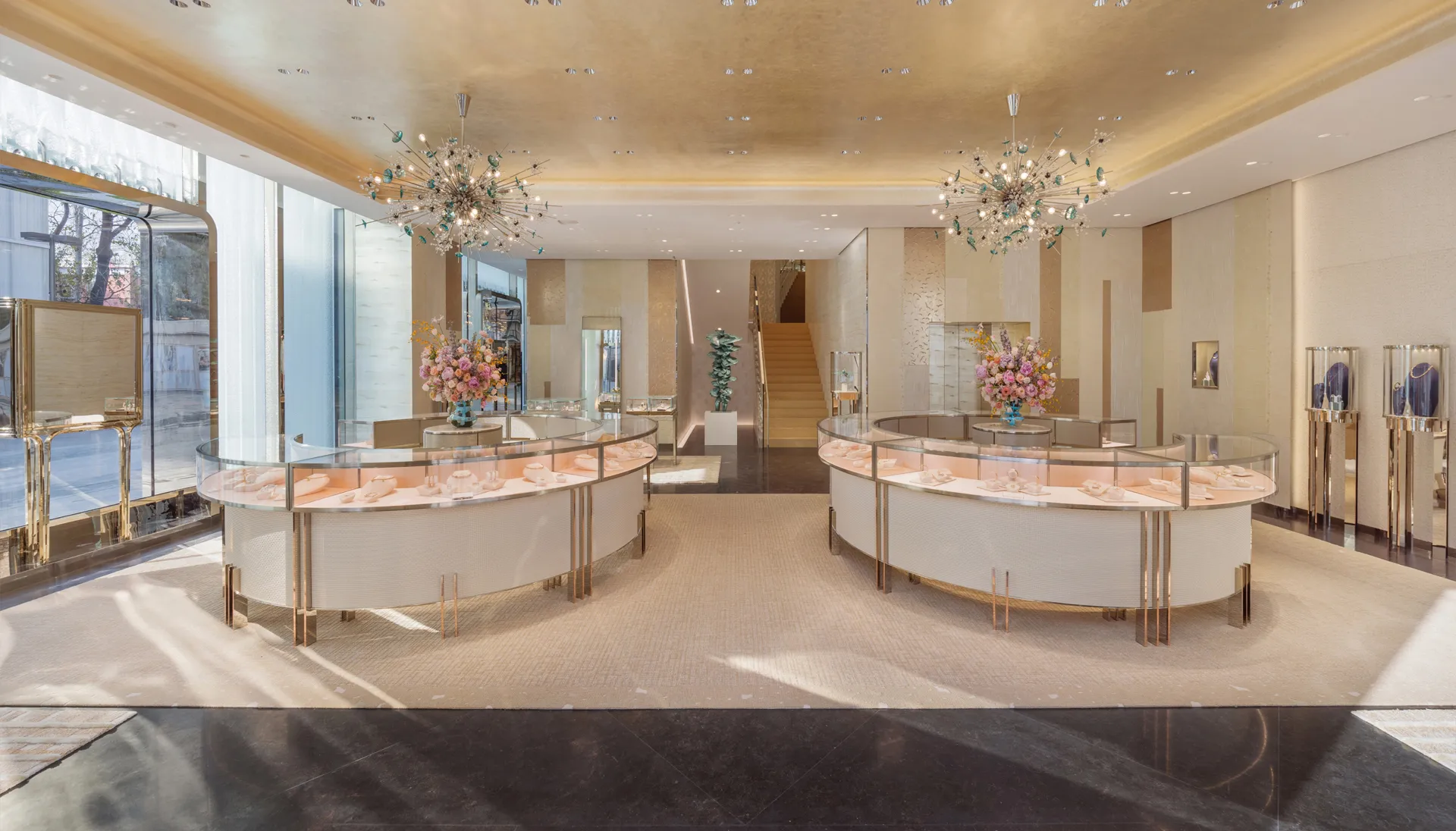
The glass fins are crafted from recycled materials, minimizing the environmental footprint and supporting the goal of achieving net-zero greenhouse gas emissions by 2040. The blue-colored glass was chosen for its textural and tonal qualities, which scatter light and provide a soft translucency that reduces harsh glare. The technical challenge of installing each fin with complex curvature required detailed coordination between the design team and the contractor.
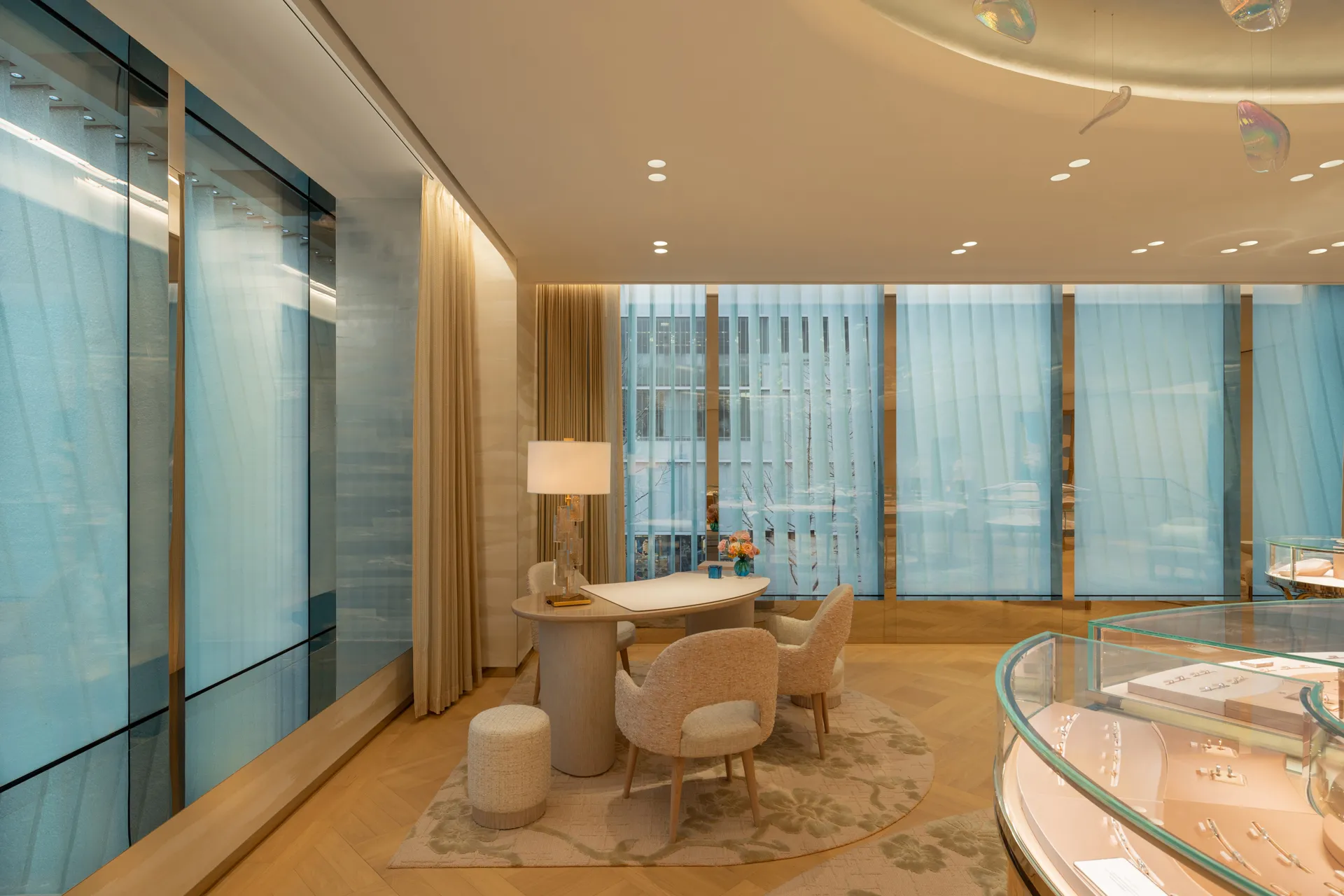
Each fin must be structurally sound to resist wind loads at the height of the four-storey building while maintaining its elegant, slender profile. The contractor, Permasteelisa Gartner Hong Kong Limited, a specialist in advanced facade design, developed a system that relies on mechanical connections rather than permanent adhesives or destructive fixing methods.
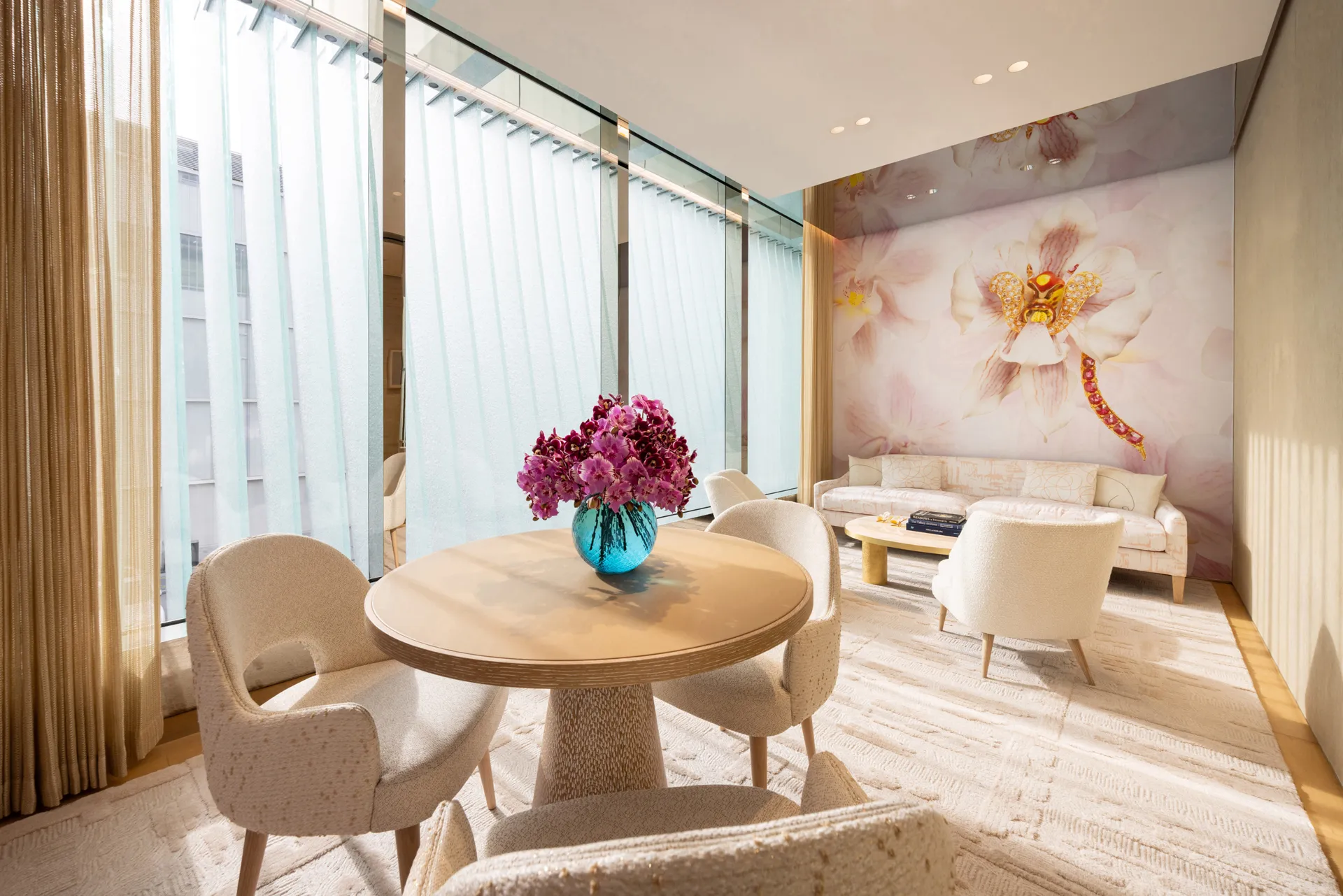
Viewers can catch glimpses through the fins of the jewelry displays and the warm interiors, creating a rhythmic revelation that encourages movement and curiosity. The lighting design, executed by the New York-based Cooley Monato Studio, turns the store into a “radiant Tiffany Blue lantern.”
Tiffany & Co. Beijing Flagship Store Project Details
Location: Beijing, China Mainland
Architect: MVRDV
Area: 1000 m²
Client: Tiffany & Co.
Photo Credits: © MVRDV