



Topic: Robotic Fabrication for Irregular Geometry
Date: February 28 – March 1, 2026
Time: 14:00 – 18:00 GMT
Format: Online on Zoom
Duration: 2 Sessions (8 Hours)
Registration Deadline: February 27th, 2026
Total Seats: 50 seats
Difficulty: Intermediate
Language: English
Certificate: Yes
General Registration: 100 EUR
Join free: with Full Access membership
Fee For Digital Members: 85 EUR (15% discount available only for Digital Members)
Organized By: PAACADEMY
Tutor: Zvonko Vugreshek
Recordings: Recordings will be available for all participants afterward indefinitely.
Introduction to Robotic Fabrication for Irregular Geometry:
Most robotic fabrication tutorials assume that you are starting with a perfect digital model. However, the future of construction and manufacturing involves interacting with irregular and ‘messy’ real-world objects, or digital captures of them.
In this technical workshop, we will explore the latest frameworks for digitising complex objects and generating complex, surface-aware robotic toolpaths that adapt to their unique topology.
This workshop provides an in-depth exploration of the generation of computational toolpaths. The technical workflows required to generate valid instructions for any robot will be covered.
- Input: We will use automated computer vision to digitise a physical object.
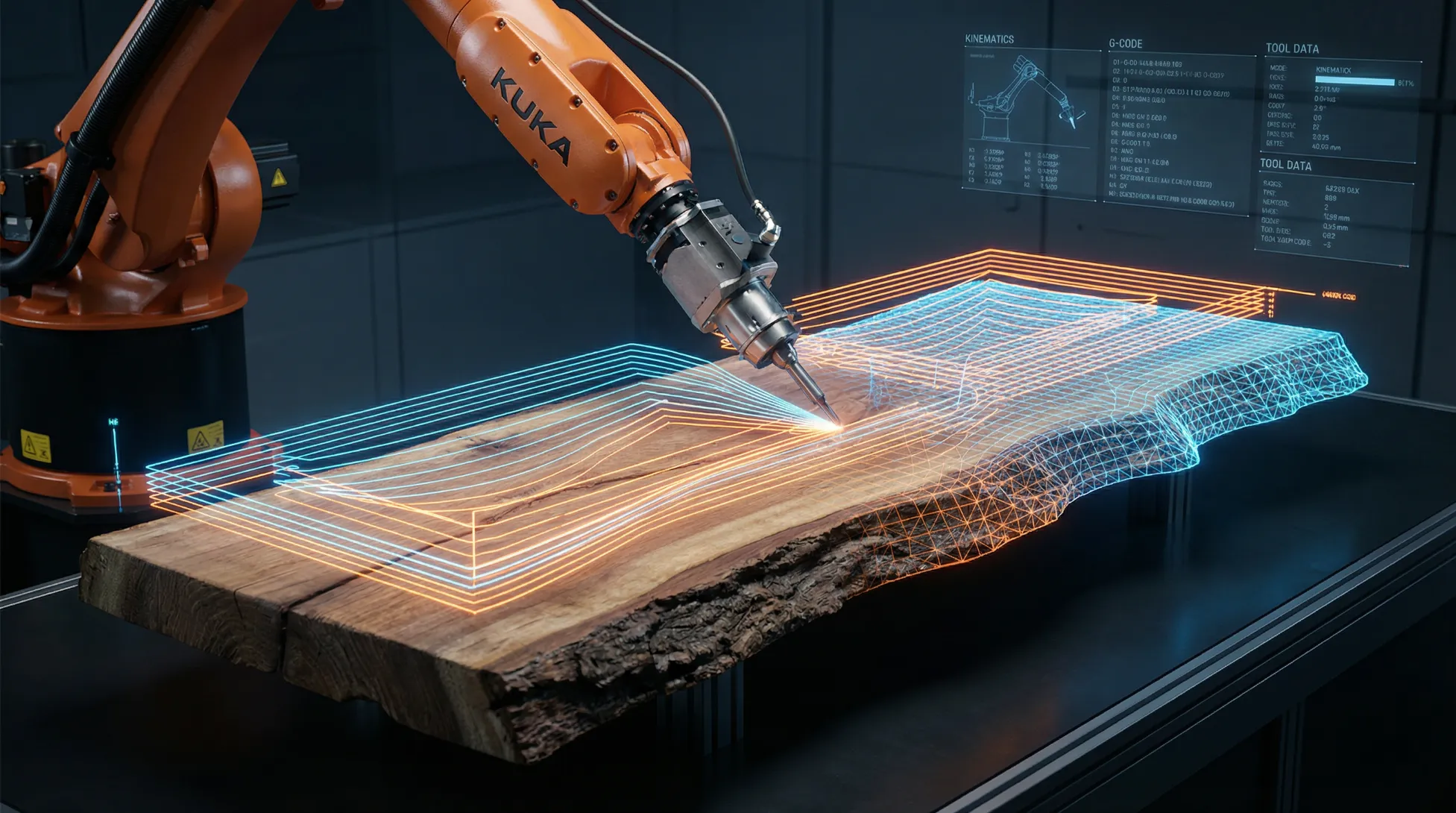
- Process: The geometry will be processed by Grasshopper to create suitable toolpaths.
- Output: We will validate these paths using a kinematic simulation (Robots plugin) to ensure they can be executed without issue.
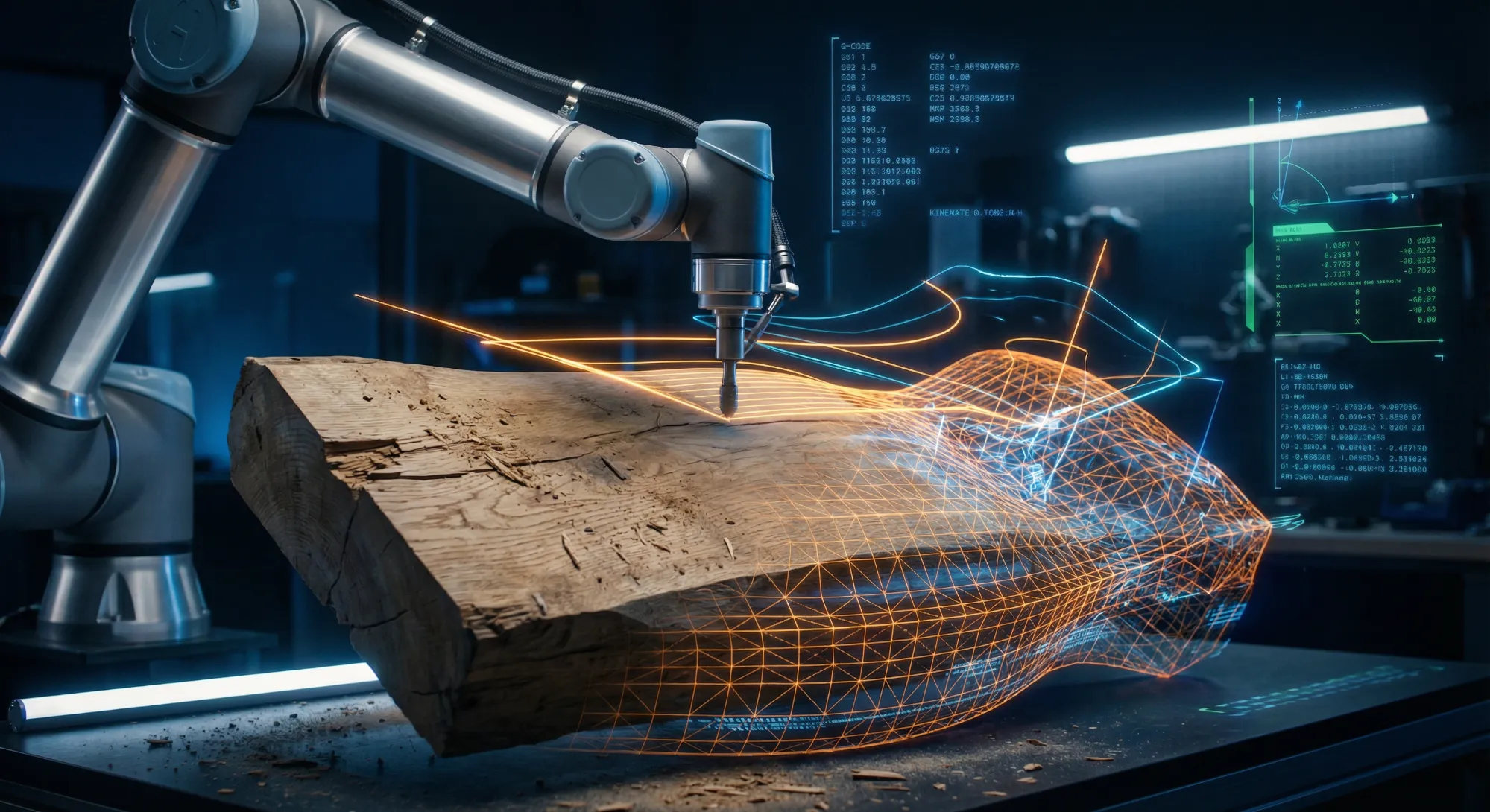
Methodology:
- Digitisation (the input): We will use a streamlined ‘scan-to-mesh’ workflow using computer vision tools to instantly create a 3D digital twin of a physical object from an image.
- Toolpath Logic (the core): We will develop parametric scripts to generate ‘surface following’ paths (e.g., for 3D printing or milling) that hug the geometry.
- Kinematics (The Validation): We will simulate the robot’s motion to check reachability, collisions, and joint limits using the Robots plugin.
Key Learning Topics:
- Mastering computational concepts for managing complex toolpath arrays.
- Understanding robot kinematics and how to visualise and validate reachability.
- Mesh-to-Path Logic: Techniques for projecting vector paths onto ‘noisy’ scanned meshes.
- Simulation & Safety: Verifying toolpaths digitally to prevent physical crashes (singularity analysis).
- Machine Code Generation: Learn how to export your design as code that robots can read.
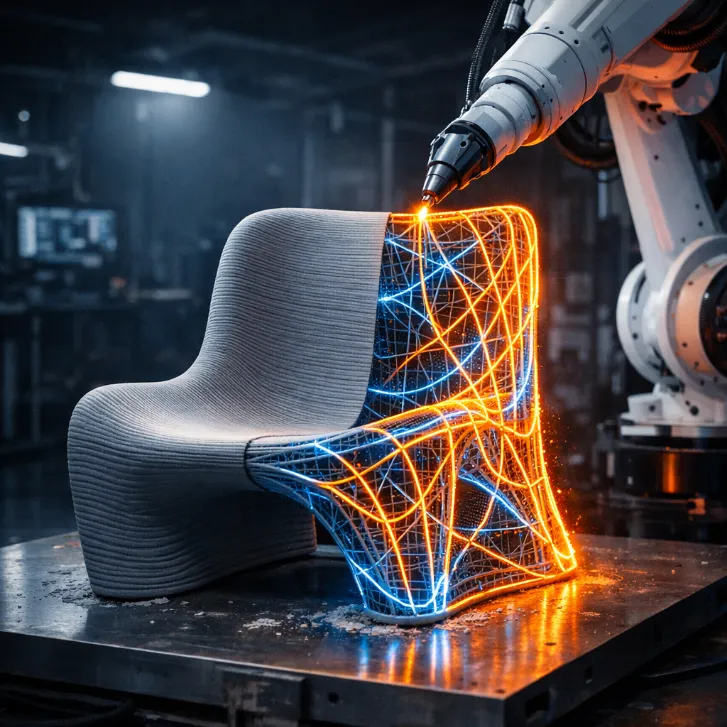
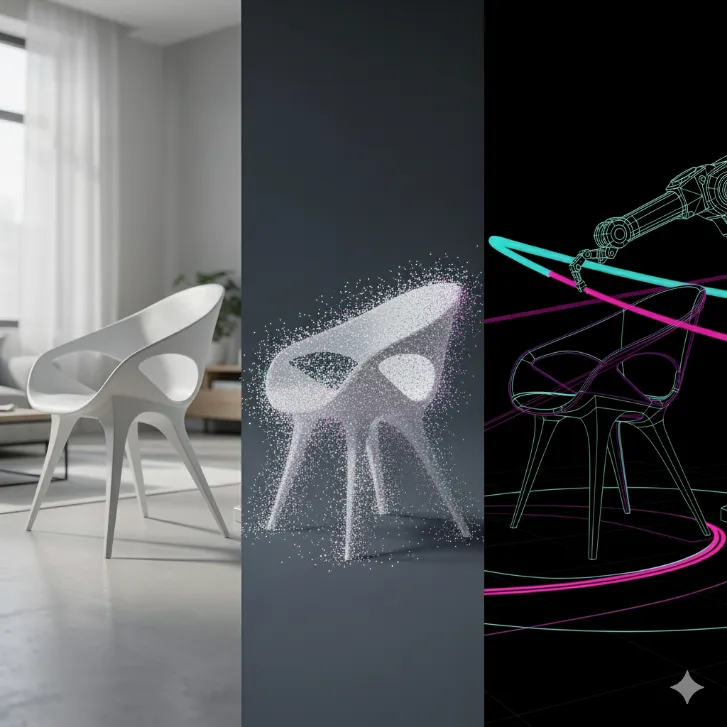
Program:
Day 1 – From Scan to Surface
- First step: Extract 3D models of objects from images using computer vision tools.
- Second step: Mesh clean-up and rationalisation in Rhino 8.
- Third step: Generating toolpaths on the geometry to guide the robot.
Day 2 – The ‘Robotic Hand’ (Toolpathing & Simulation):
- Import the ‘digital twin’ into the robotic environment.
- Generate a toolpath for 3D printing, milling, or coating that adapts to the unique geometry of the object.
- Use the Robots plugin to simulate the execution of the robotic arm.
- If time allows, run it on a real robot.
Software:
- Rhino
- Grasshopper
- Robots
- Google Collab
Workshop Notes:
- Software Installation is NOT a part of the workshop! Students must have all the software installed before starting the workshop.
Instructor:
Zvonko Vugreshek

Zvonko is an architect turned engineer and digital fabricator. He is currently addressing the challenge of integrating data science and machine learning into design and fabrication processes. He is working on his company, Pixolid UG, which operates in these fields, in Berlin.
Zvonko has also been active in academia, working as a researcher and lecturer at various universities in Berlin and the surrounding area, including TU Berlin, BTU Cottbus, and IU Berlin, in the fields of digital fabrication, robotics, and computational/generative design. His work focuses on bridging the gap between digital models and physical realities by training models to enhance robot-to-robot and human-to-robot collaboration.
In this workshop, he will share his experience of translating real-world objects from photographs and demonstrate how computer vision and adaptive toolpaths can transform fabrication and design workflows.
Important Notes:
- The “Robotic Fabrication for Irregular Geometry” Studio workshop by PAACADEMY will start at 14:00 (GMT) on Saturday, February 28th, 2026.
- Total sessions: 2 Sessions (8 Hours).
- The teaching duration per session will be 8 hours.
- Students will have time for a break between teaching hours.
- Each session and the entire studio will be recorded, and videos will be available for participants just a day after the class for an unlimited time.
- PAACADEMY will provide a certificate of attendance.
- The studio has limited seats. Tickets are non-transferable & non-refundable. Please read carefully before you register.
Topic: Robotic Fabrication for Irregular Geometry
Date: February 28 – March 1, 2026
Time: 14:00 – 18:00 GMT
Format: Online on Zoom
Duration: 2 Sessions (8 Hours)
Registration Deadline: February 27th, 2026
Total Seats: 50 seats
Difficulty: Intermediate
Language: English
Certificate: Yes
General Registration: 100 EUR
Join free: with Full Access membership
Fee For Digital Members: 85 EUR (15% discount available only for Digital Members)
Organized By: PAACADEMY
Tutor: Zvonko Vugreshek
Recordings: Recordings will be available for all participants afterward indefinitely.
Explore Courses
.jpg2.jpg "Carlo Ratti - Rethinking Architecture")
.jpg "Architecture Diagram Mastery: Concept to Portfolio")
.jpg%202.jpg "Building Performance with Forma & Opossum")