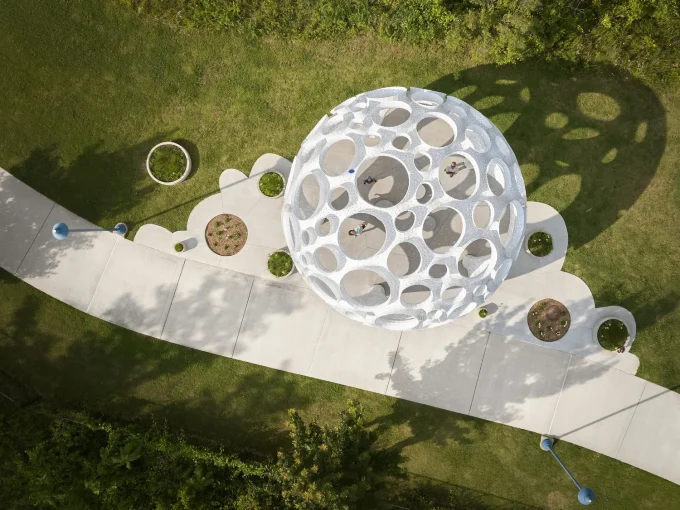


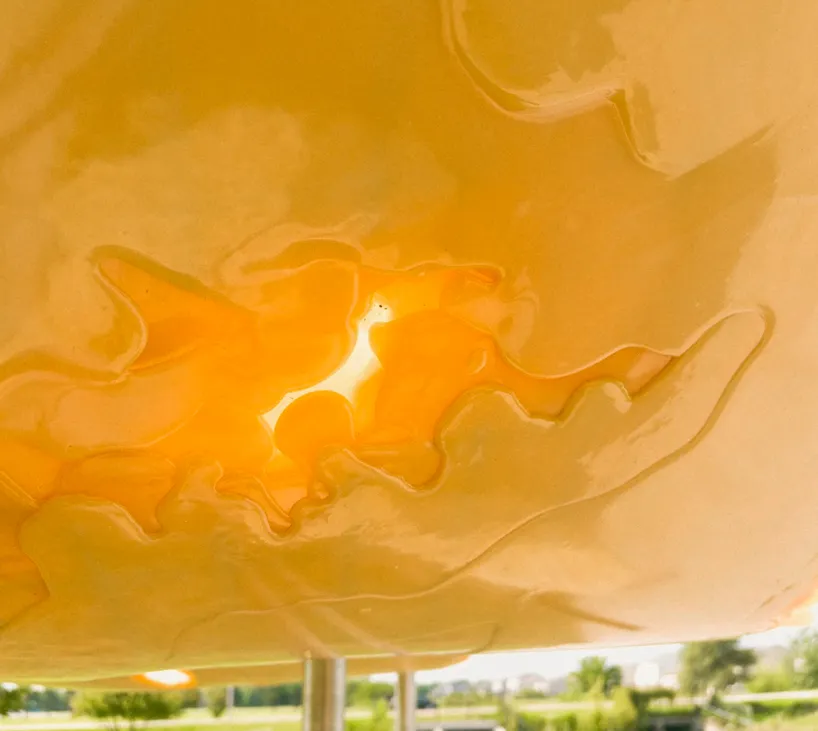
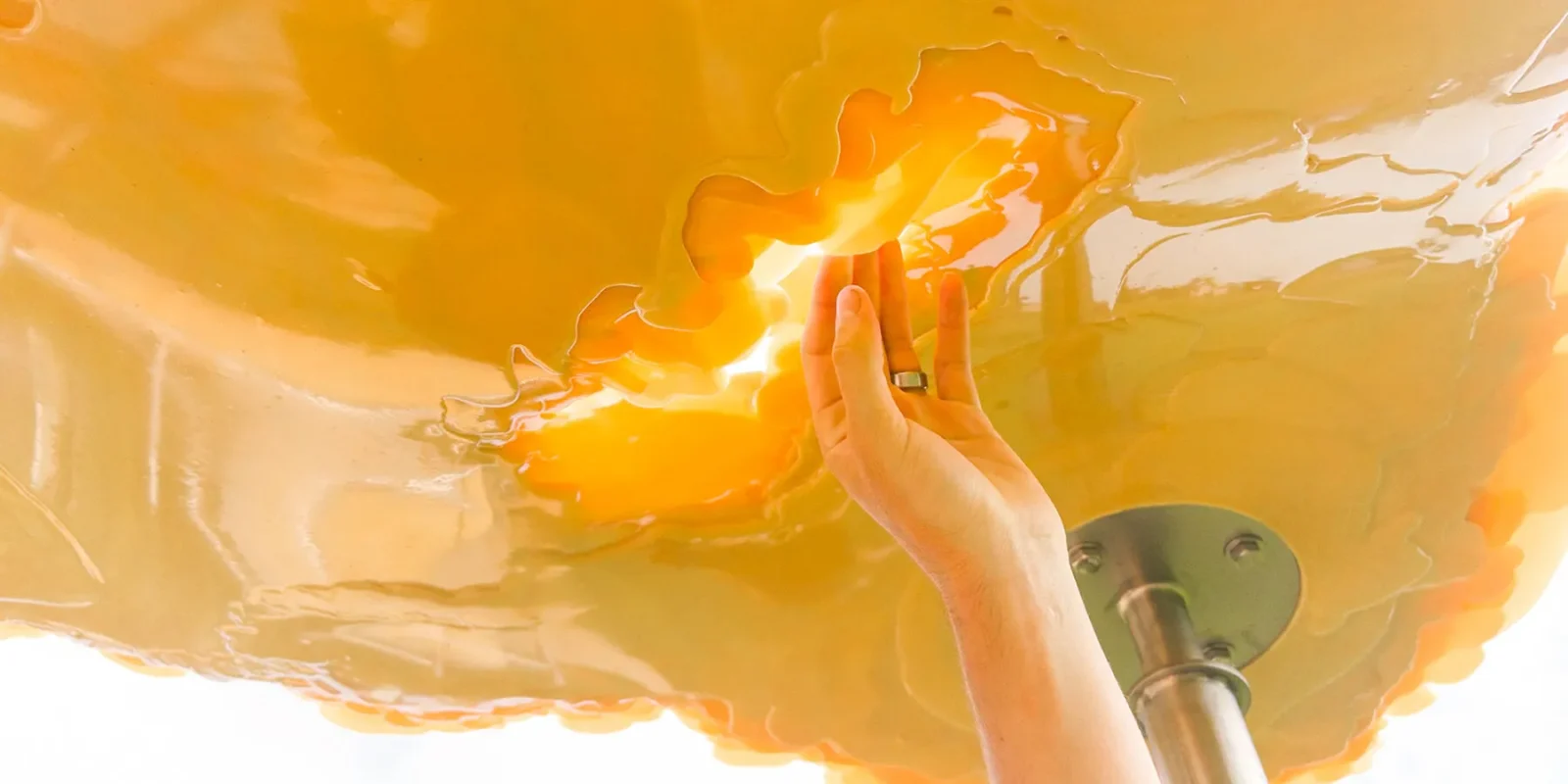
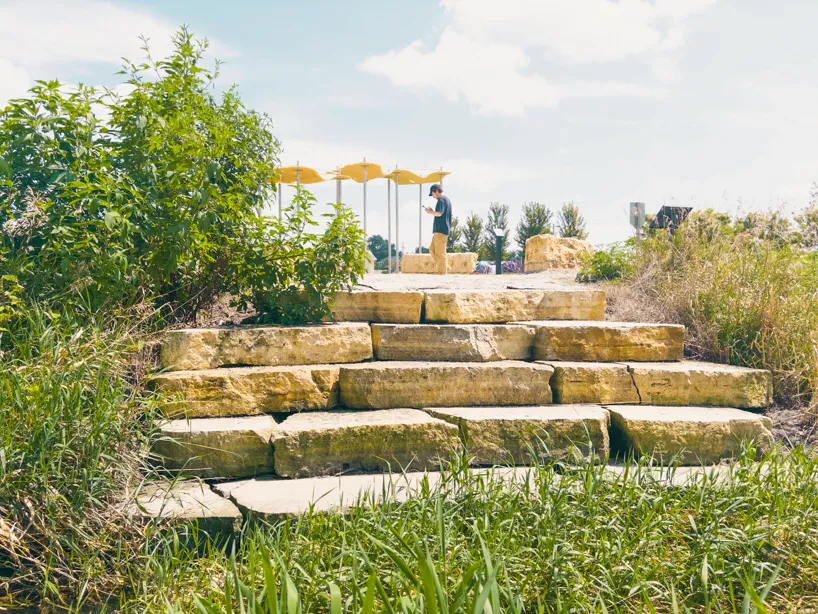
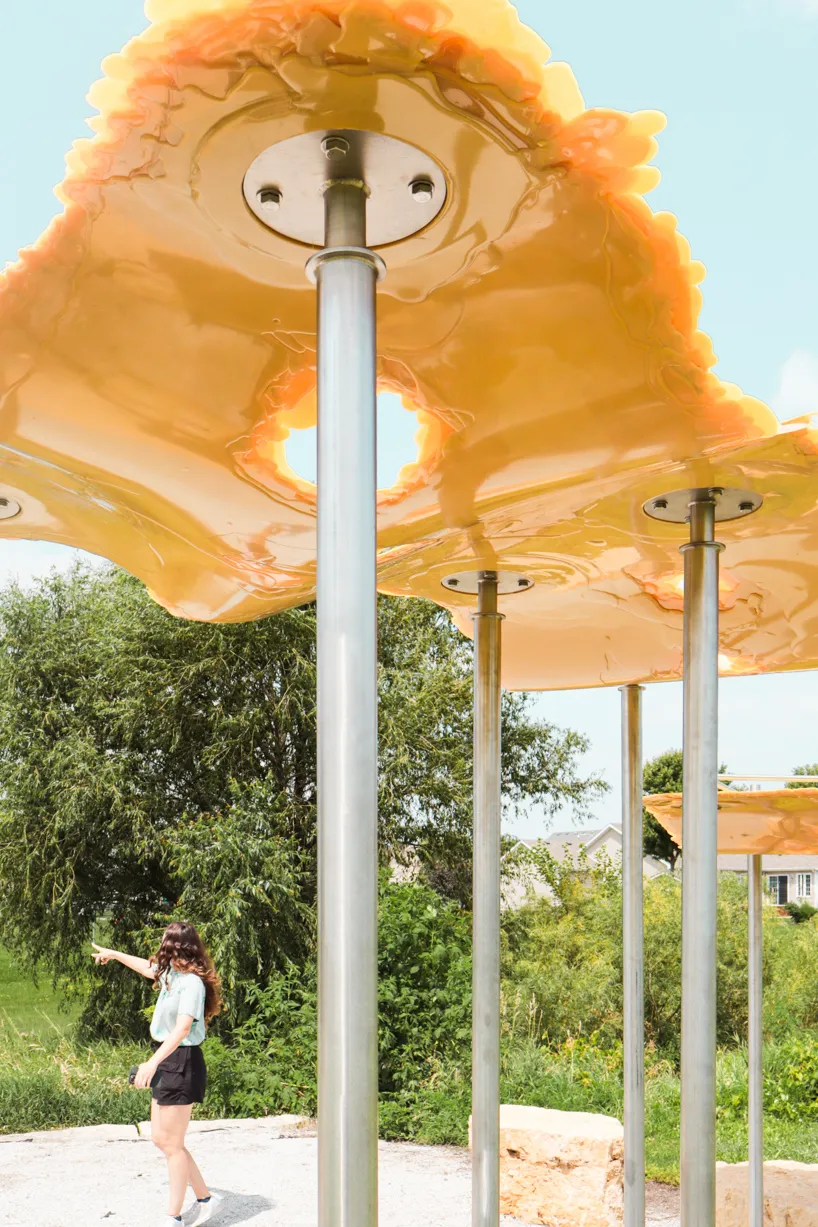
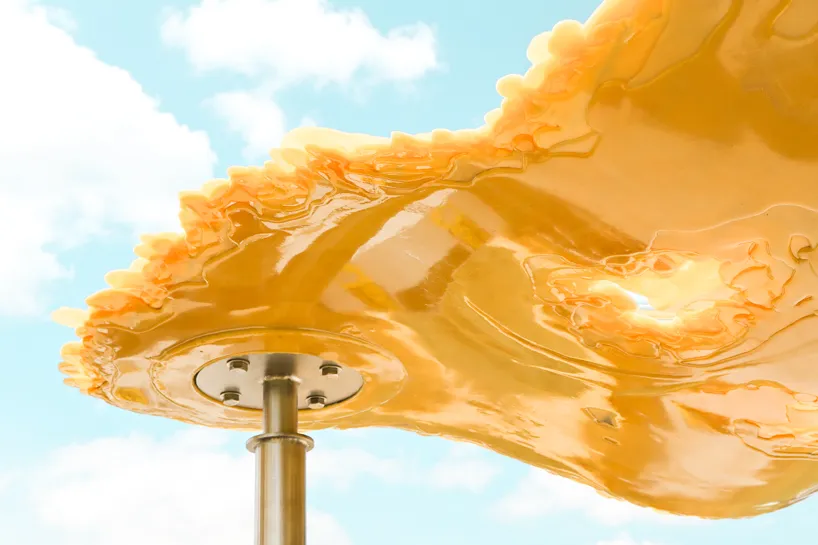
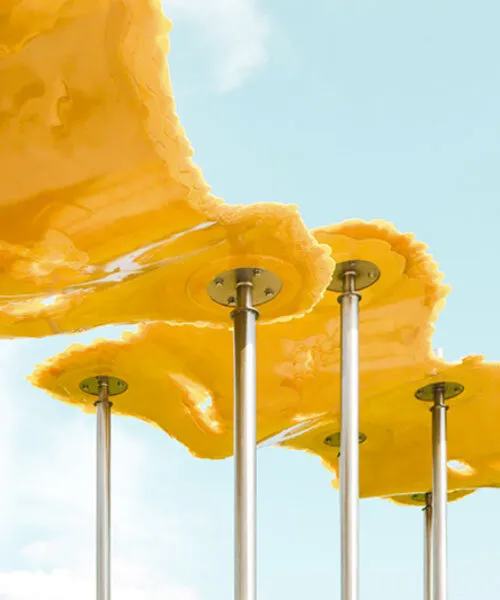
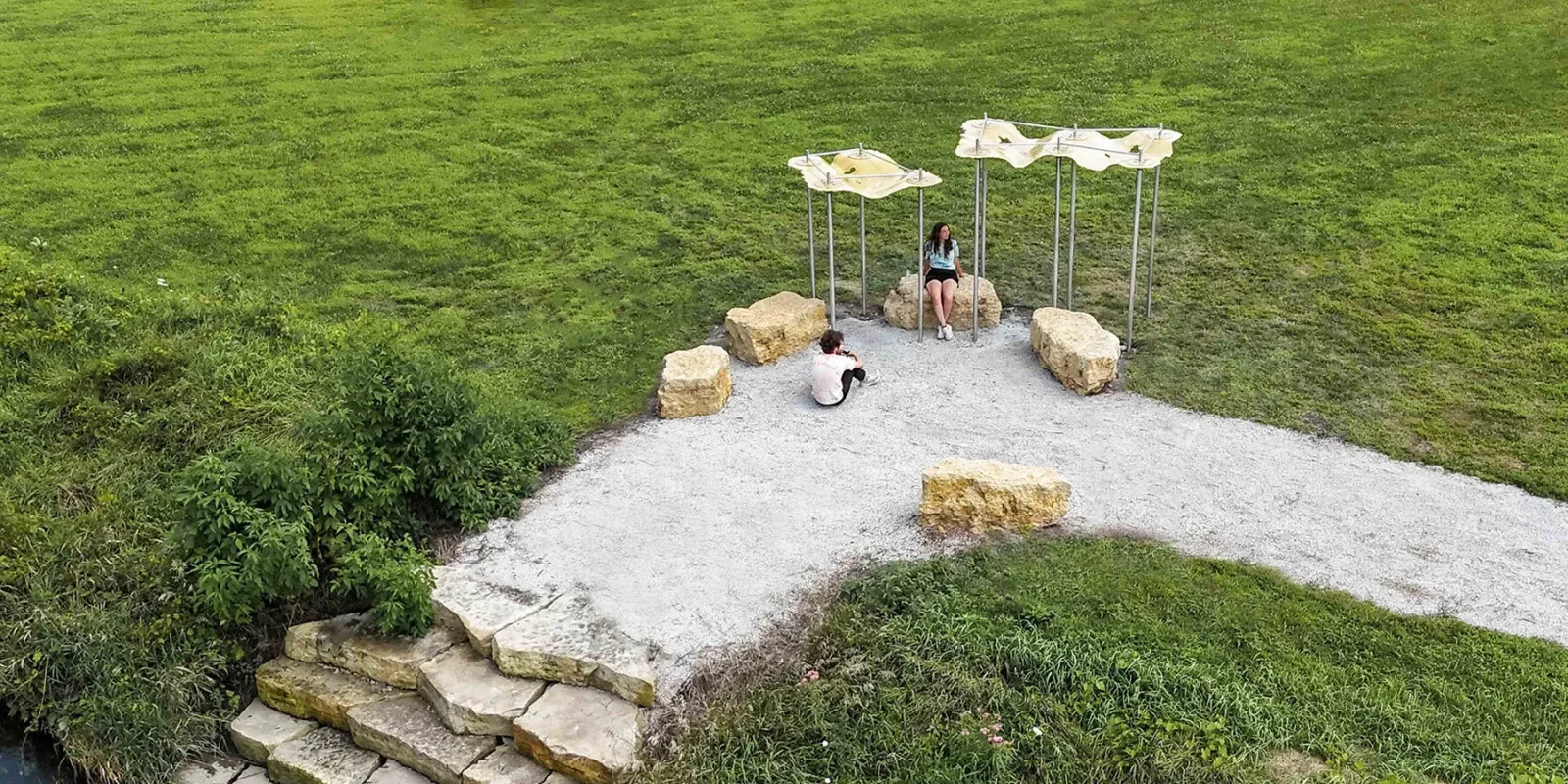
Iowa’s first public structure made from algae is drawing attention in Bondurant. The Puddle Pavilion, designed by experimental collective i/thee, hovers above Mud Creek like a suspended splash of water. Its translucent canopy is cast from algae-based bio-resin, a biodegradable alternative to petrochemical plastics, marking a step toward sustainable architecture in the Midwest.
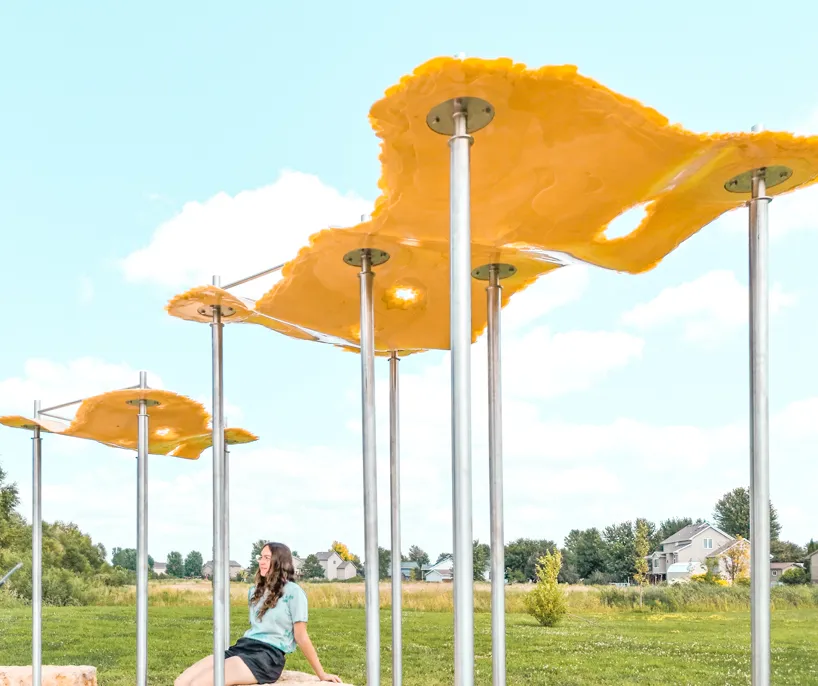
The installation is part of a slow-developing commission by the City of Bondurant, where i/thee stages experimental works along the floodplain. The Dining Room, completed in 2024, employed rammed-earth walls deliberately left to erode into frames. In 2026, The Garden, a fractal boardwalk, will begin weaving through the terrain. Together, these works form a slow-building masterplan that reimagines Mud Creek not only as a public space but also as a stage for experimental architecture.
The Idea of Action Architecture by i/thee
For i/thee founders, Neal Lucas Hitch, Kristina Fisher, and Martin Francis Hitch, design is discovered through making. Their method, which they call “Action Architecture,” treats construction as performance.
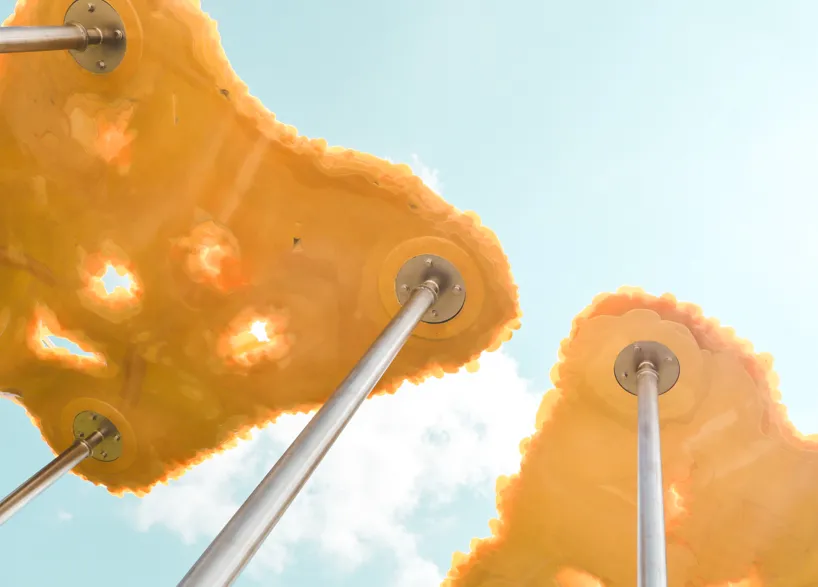
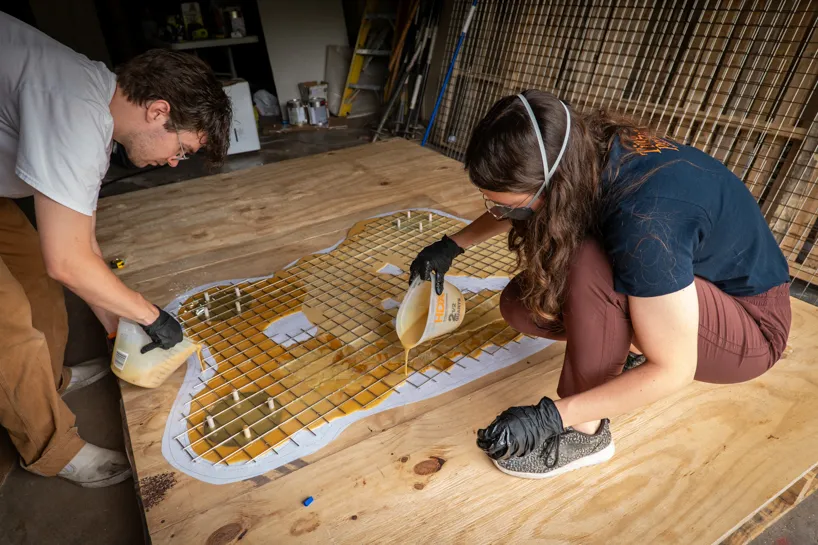
Instead of using moulds, the team poured and splattered liquid resin directly onto the ground. They left it to settle and harden under the pull of gravity, the drag of surface tension, and the unpredictability of wind and temperature. The hardened material formed uneven sheets with curled edges and layered thickness, a surface that feels spontaneous.
Turning Resin into Shelter
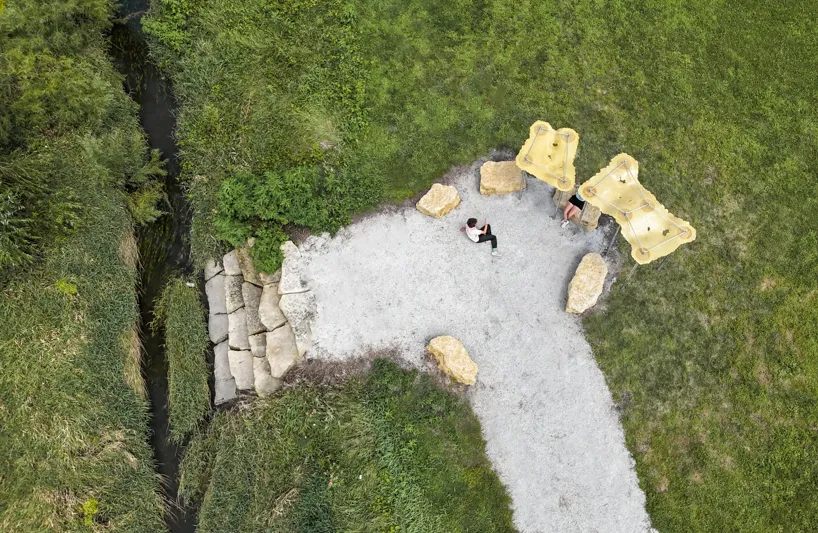
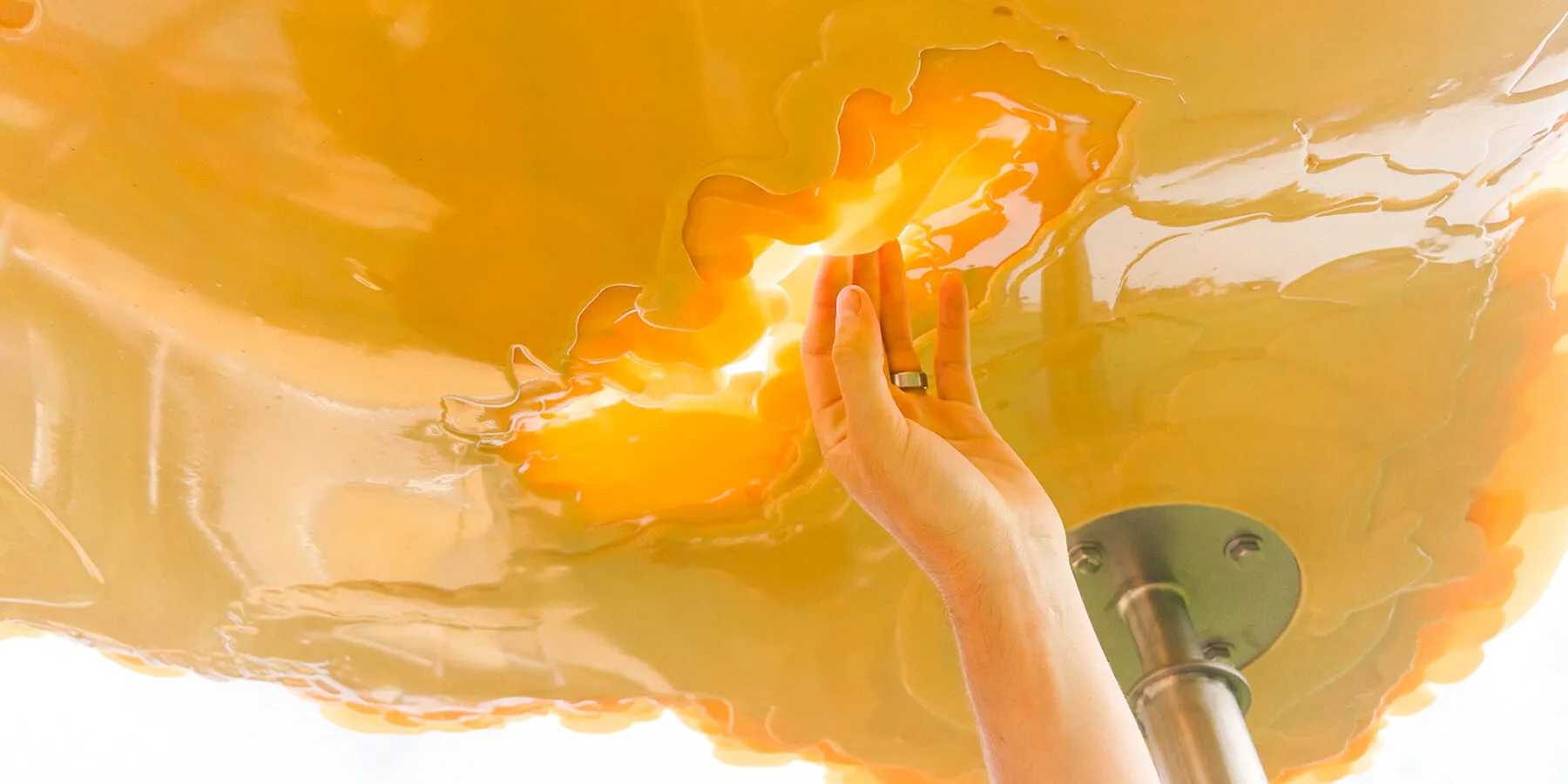
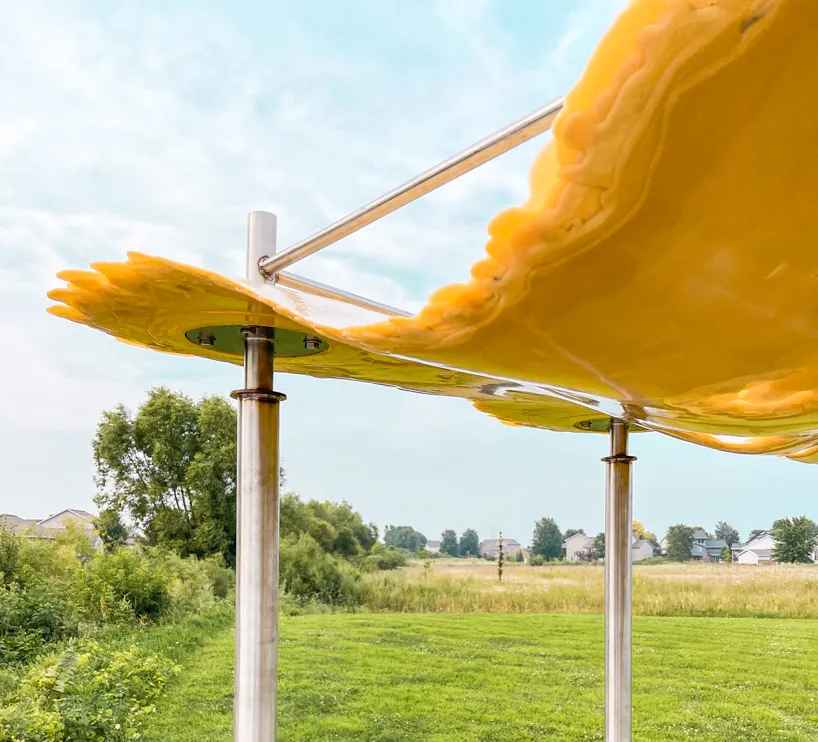
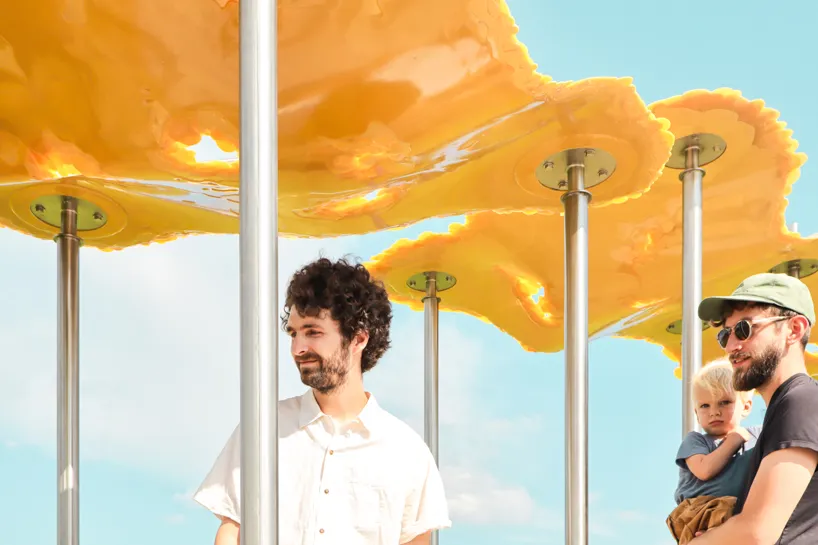
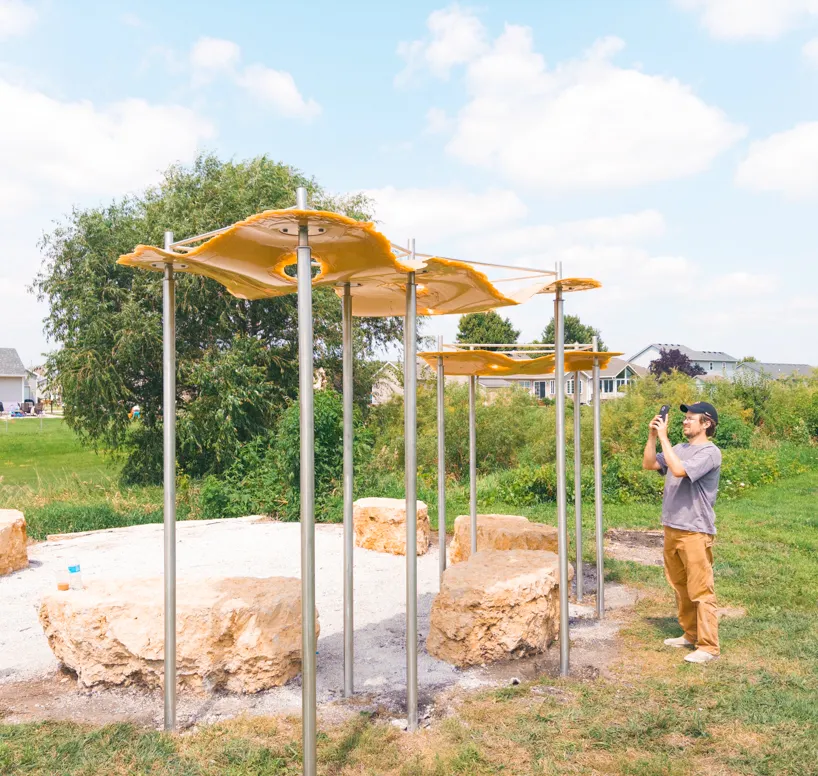
Once cured, the resin was lifted onto steel columns fabricated by Zeus Welds, turning the hardened puddle into a hovering canopy. From above, it resembles a resin river frozen in place; from below, it evokes an abstract painting freed from its canvas. The semi-transparent surface catches light unevenly, filters shadows, and refracts glimpses of the surrounding greenery. The canopy feels simultaneously fragile and monumental, more like water suspended in air than a conventional pavilion.

Algae-Based Bio-Resin as Sustainable Material
The project is also an early trial of algae-based bio-resin in construction. The material comes from natural biomass rather than petroleum. It lowers carbon impact and avoids the toxic legacy of conventional plastics. It also points toward more sustainable methods of building.
By casting the resin directly onto the ground rather than into moulds, i/thee avoided the waste typical of formwork and let the material define its own geometry. The process highlights the unpredictability of the medium while suggesting new ways polymers could be sourced and applied in architecture.
Abstract realism in architecture
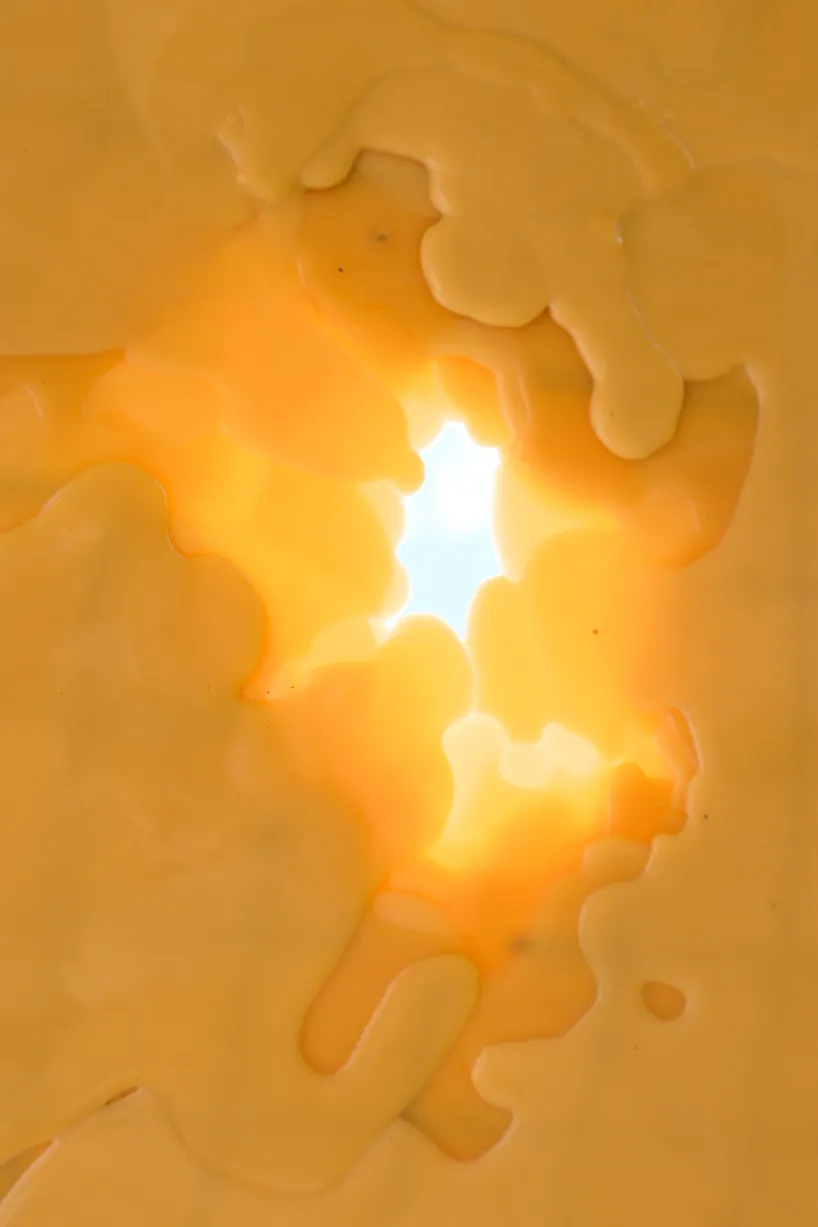
“The Puddle Pavilion is not a metaphor: it is not like a puddle, it is a puddle, made by poured layers of algae resin left to find its own form,” explains Neal Lucas Hitch. That literalism roots the work in direct engagement with natural processes rather than symbolic reference.
The designers frame the work as an exploration of Abstract Realism. Rather than depicting or symbolising, the pavilion arises directly from material behaviour and environmental forces. Its abstraction comes from having no fixed composition, while its realism lies in its direct physical formation. In this tension between control and chance, the project positions architecture less as imposition and more as collaboration with its surroundings.
Puddle Pavilion Connecting Public Space and Ecology
Installed at the entrance to Eagle Park, the pavilion acts as both a shaded threshold and an informal gathering space. Children play beneath its resin canopy, community events use it as a backdrop, and casual visitors pause under its translucent shelter. It also invites engagement with the site’s ecology, drawing visitors closer to the rhythms of Mud Creek.
The Puddle Pavilion continues a lineage of experimental works that blur the boundary between art and architecture. Its significance lies in presenting algae as a viable building substance rather than a temporary experiment. At a time when architecture faces material scarcity and environmental urgency, the project points to a future where renewable biomaterials shape public spaces.
Hovering above Mud Creek, the pavilion suggests a design culture that looks beyond rigid form and toward fluid gestures, creating structures that grow out of their surroundings and remain inseparable from them.
Explore Courses
.jpg "Architecture Diagram Mastery: Concept to Portfolio")
.jpg%202.jpg "Building Performance with Forma & Opossum")
.jpg "Ondrej Chybik - Rethinking Architecture")