

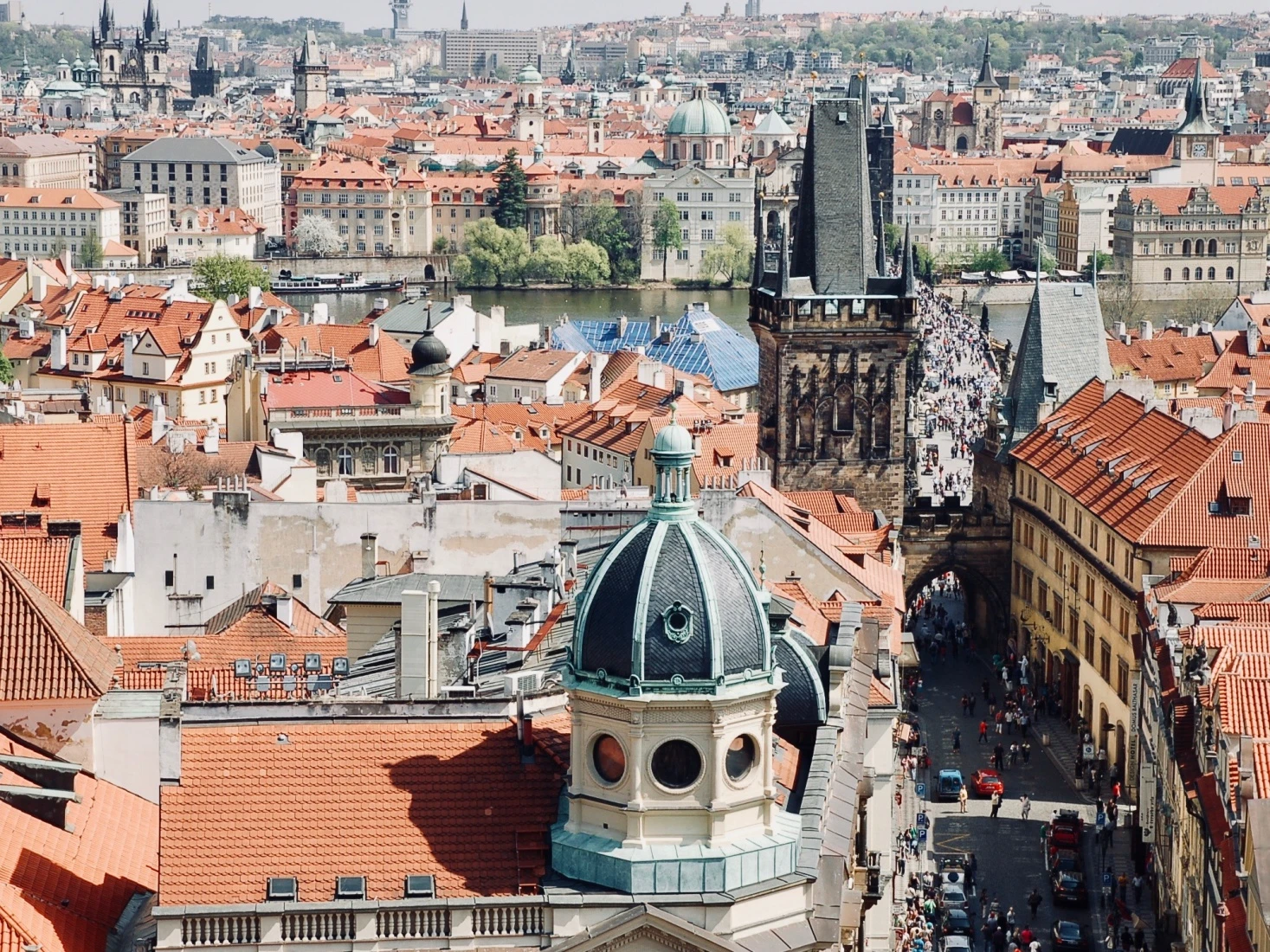
Prague, the largest urban historical center listed on the UNESCO World Heritage List, encompassing 900 hectares and containing roughly 4,000 monuments, remains a contiguous laboratory of structural and aesthetic development. Prague’s built environment has evolved through a process of continuous adaptation and spatial dialogue. Even today, Prague stands as an anomalous monument to European architectural history, operating as an intact, open-air repository of structural and aesthetic evolution spanning over ten centuries.
The Gothic Era
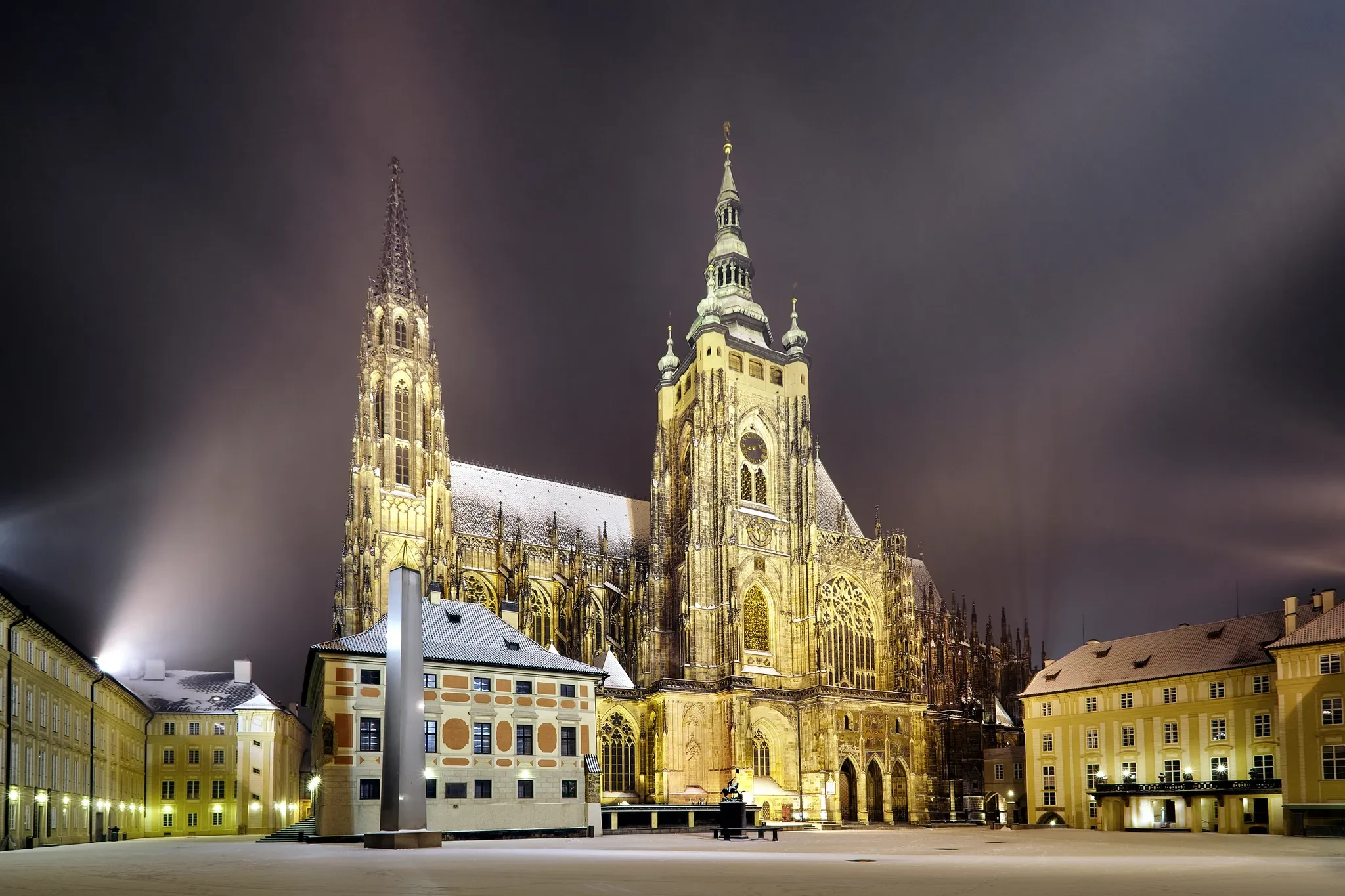
The arrival of Gothic architecture in Bohemia during the thirteenth century marked a fundamental transition from the heavy, load-bearing thick stone walls of the Romanesque period to skeletal systems characterized by pointed arches, flying buttresses, and lightweight vaulting. Sandstone, abundantly quarried in the Bohemian basin, served as the primary material for these soaring structures.
Saint Vitus Cathedral
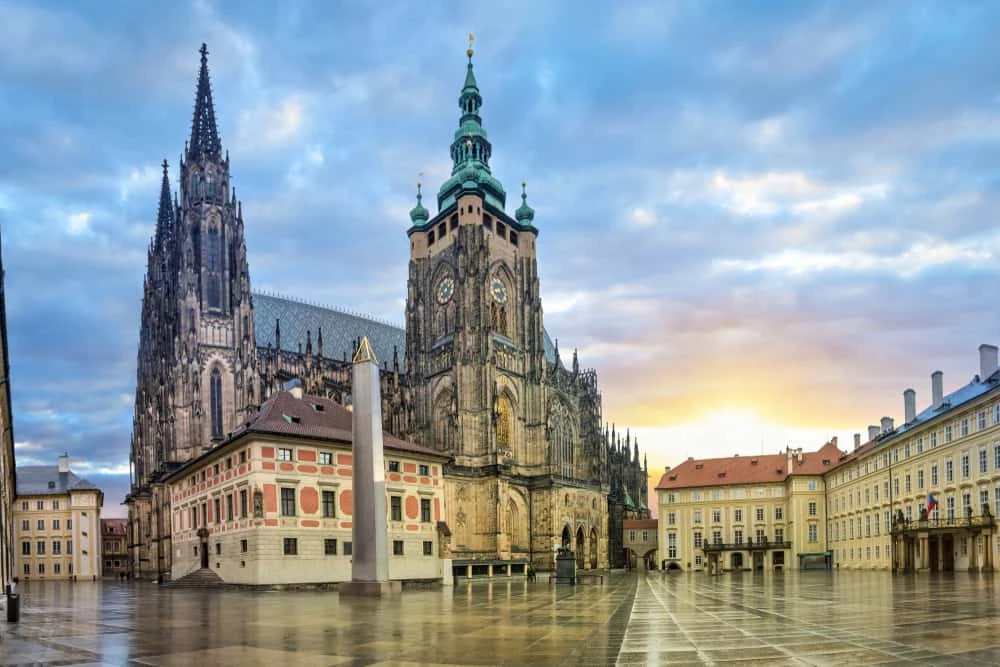
The initial French Gothic design was directed by Matthias of Arras, summoned from the Papal Palace in Avignon, who laid out the classic French cathedral plan with an easternmost chancel, an ambulatory, and a horseshoe-shaped ring of eight chapels. Following Matthias’s death in 1352, the workshop was assumed by the twenty-three-year-old German master builder Peter Parler, whose father Heinrich was a master mason in Schwäbisch Gmünd.
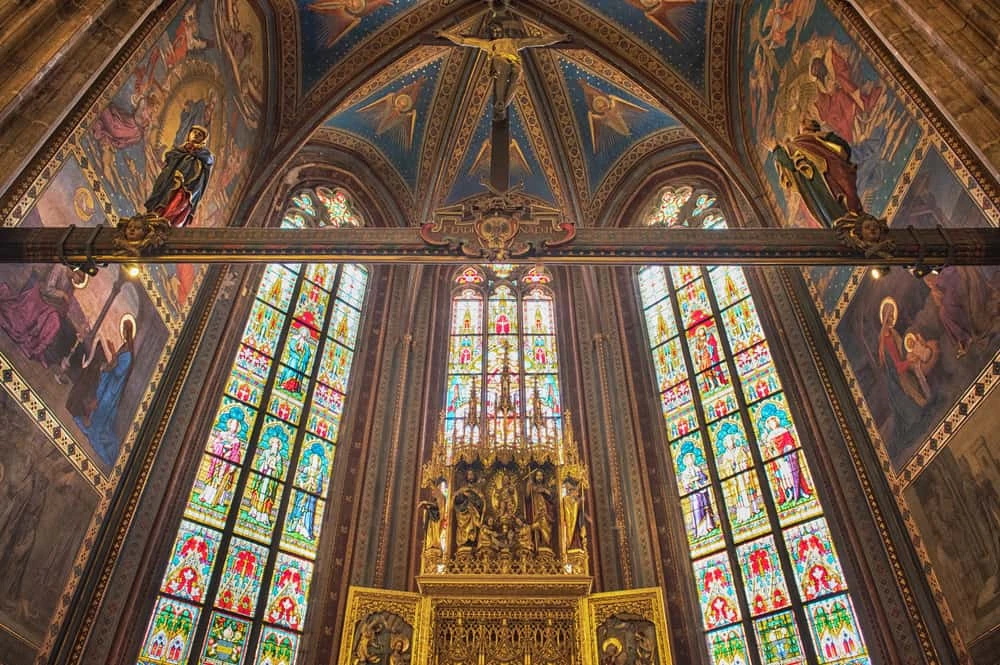
Parler introduced a highly innovative synthesis of late-medieval engineering. Rather than adhering to the rigid, bay-by-bay divisions of traditional French Gothic design, Parler implemented a revolutionary net-vaulting system over the high choir. By utilizing double diagonal ribs that intersected in a continuous, zigzag wagon-vault pattern cut for windows, Parler created a cohesive, undulating ceiling that distributed weight more efficiently while establishing a unified, rhythmic interior space.
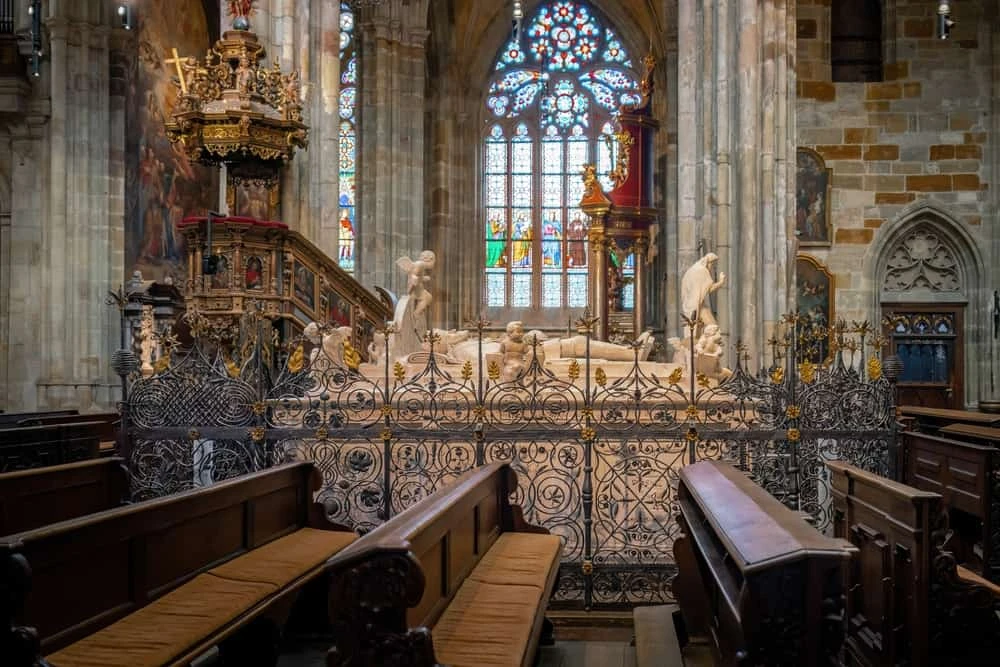
The cathedral’s most sacred space, the Saint Wenceslas Chapel, was constructed between 1362 and 1367 over the patron saint’s grave. Parler crowned this square chapel with an original dome-style vault and encrusted the lower walls with 1,345 semi-precious Bohemian stones set in plaster.
The Charles Bridge
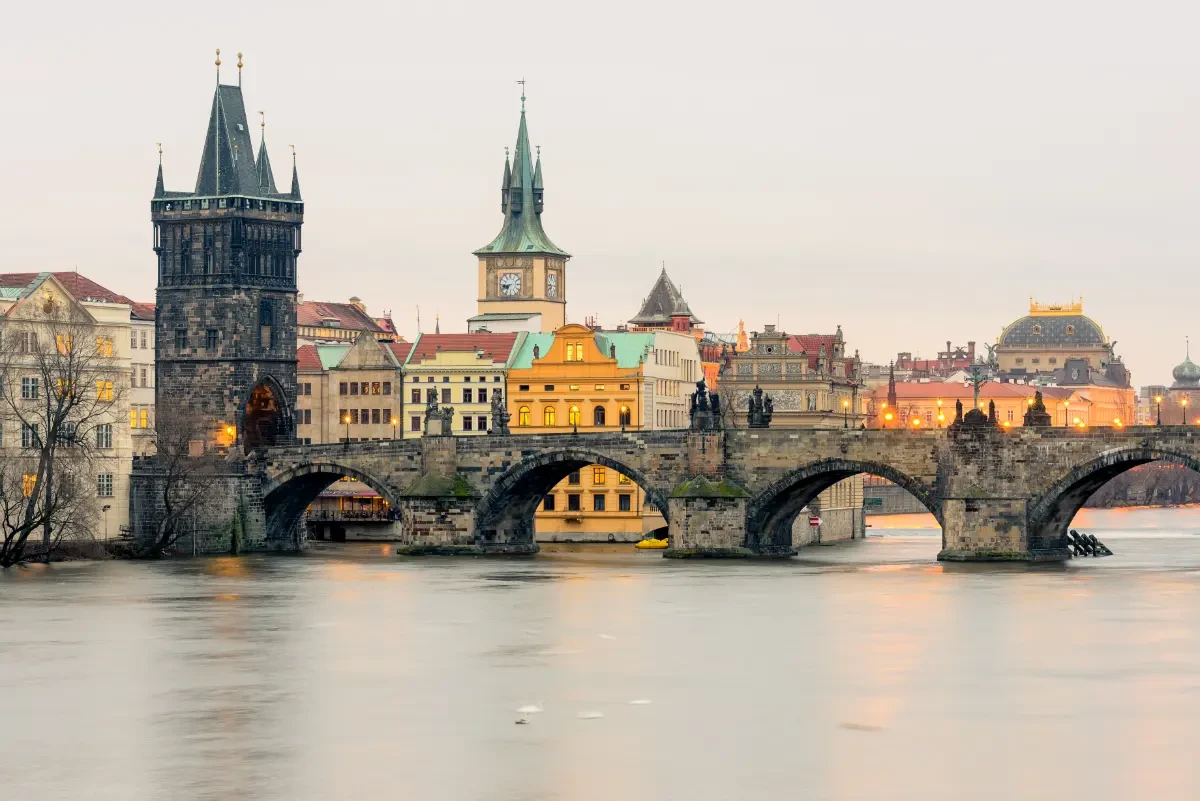
Parler designed the bridge as a massive stone arch bridge spanning 516 meters in length and nearly 10 meters in width, resting on 16 stone arches shielded by robust triangular ice guards. It was constructed of Bohemian sandstone, set on foundations of carefully shaped, millstone-like stones. The bridge features three gentle bends and a slight convex shape against the river’s current to deflect the hydrodynamic pressure of the Vltava.
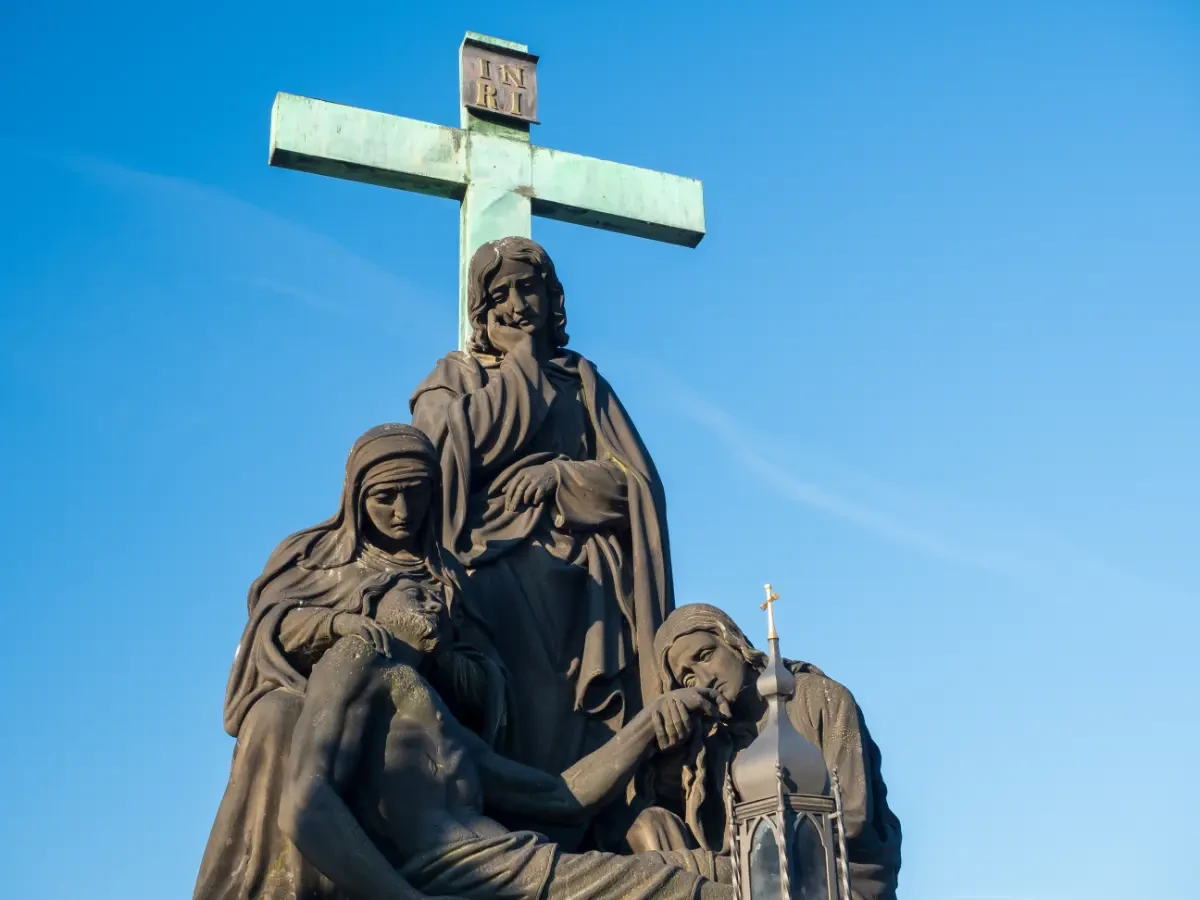
The bridge’s famous open-air gallery of 30 predominantly Baroque statues, designed by masters such as Matthias Braun, Jan Brokoff, and Ferdinand Brokoff, was added starting in the late seventeenth century, turning a critical commercial trade artery into a path of Counter-Reformation propaganda.
The Renaissance Epoch
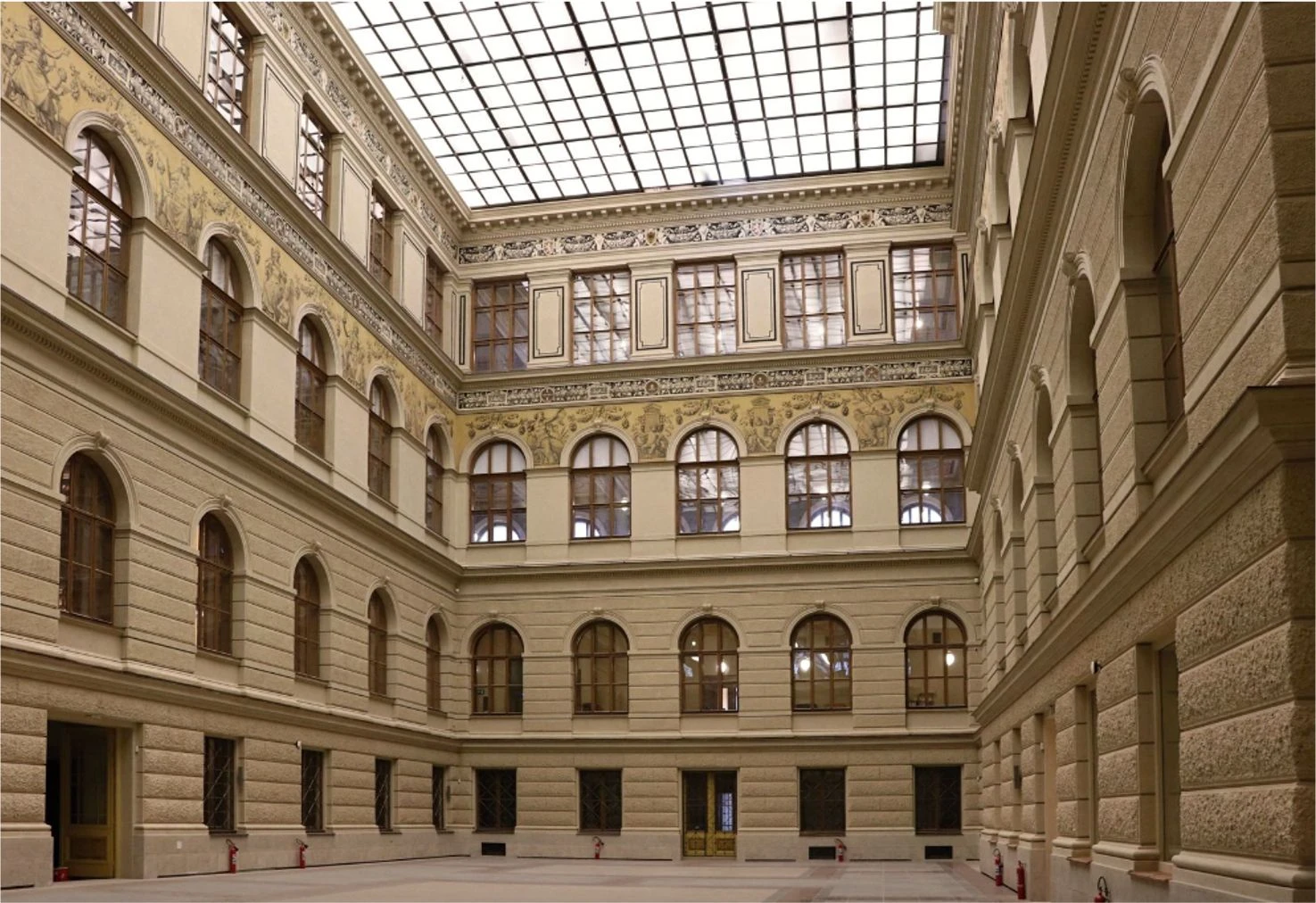
During the late fifteenth and sixteenth centuries, the verticality and structural complexity of the Gothic style yielded to the horizontal, symmetric, and geometric principles of the Italian Renaissance. Brought to Prague primarily under the patronage of the Habsburg dynasty, when they temporarily relocated the imperial capital from Vienna, the Renaissance introduced a spatial philosophy grounded in humanism, characterized by semi-circular arches, colonnaded loggias, and highly ordered proportions.
Queen Anne’s Summer Palace
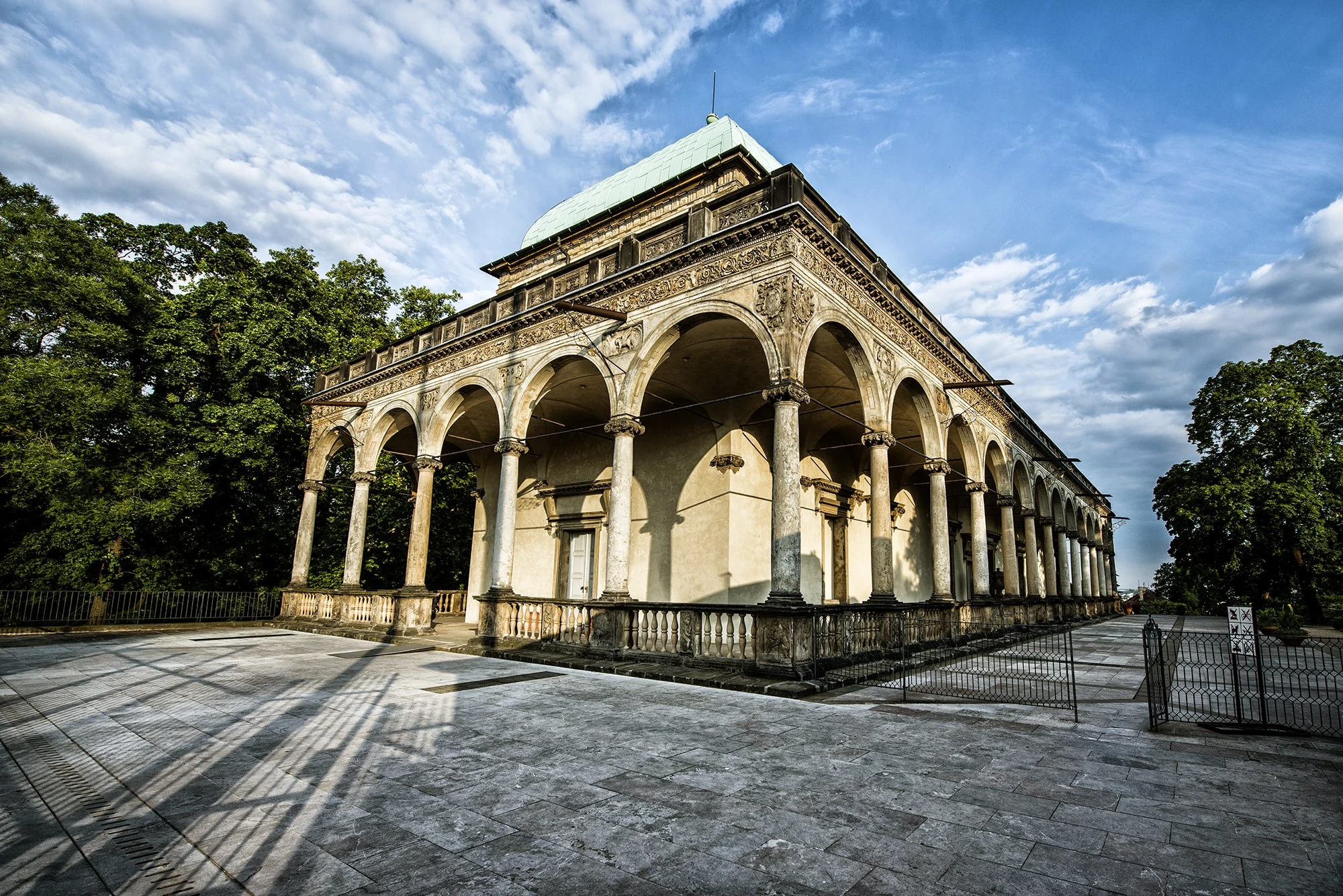
Commissioned in 1538 by Emperor Ferdinand I for his wife, Anne Jagiellonica, Queen Anne’s Summer Palace is widely recognized as one of the purest examples of Italian Renaissance architecture constructed north of the Alps. Located at the eastern edge of the Royal Garden at Prague Castle, the building was designed by the Italian architect Paolo della Stella, with initial construction overseen by Giovanni Spatio.
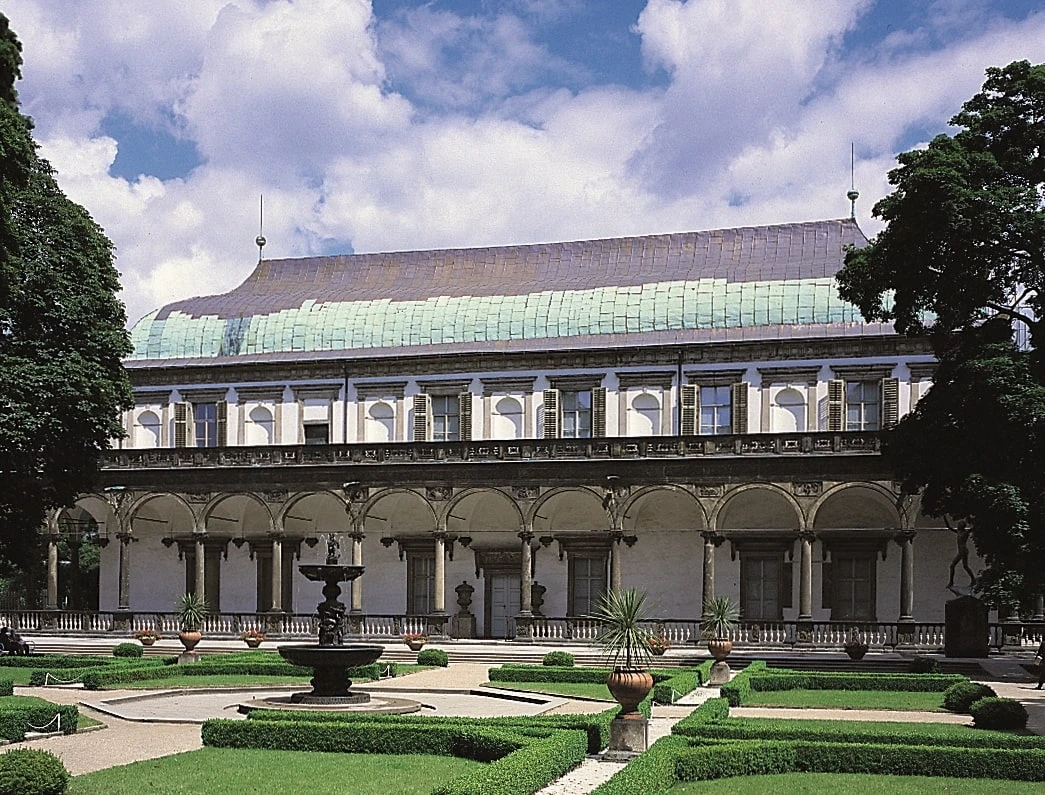
The ground floor of the palace is enveloped by a continuous arcade gallery featuring 36 slender Ionic and Doric columns, decorated with rich mythological stone relief carvings inspired by classical antiquity. Della Stella and his stonemasons completed only this ground-floor arcade before his death. The surrounding geometric garden was laid out simultaneously to harmonize the built environment with nature.
Schwarzenberg Palace
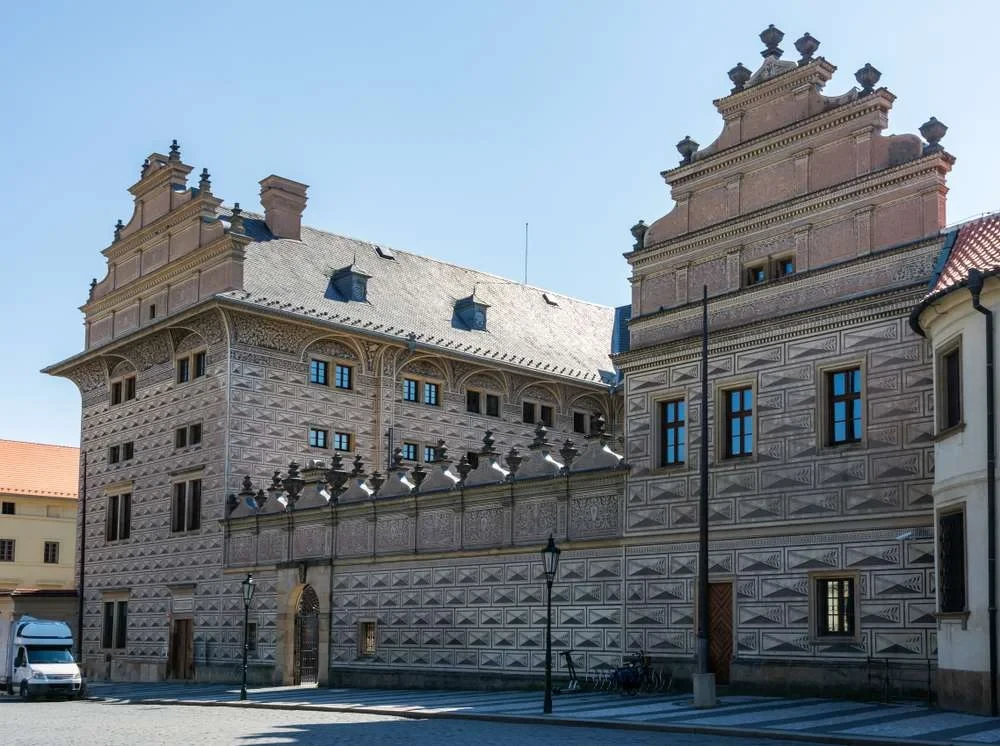
Standing prominently on Hradčanské Square, the Schwarzenberg Palace serves as a monumental example of how Renaissance architects utilized sgraffito to manipulate urban scale and perspective. Following a devastating fire in 1541 that destroyed four medieval structures on the site, one of which had housed the fourteenth-century workshop of Master Theodoric, court painter to Charles IV, Johann IV Popel of Lobkowicz acquired the plots.
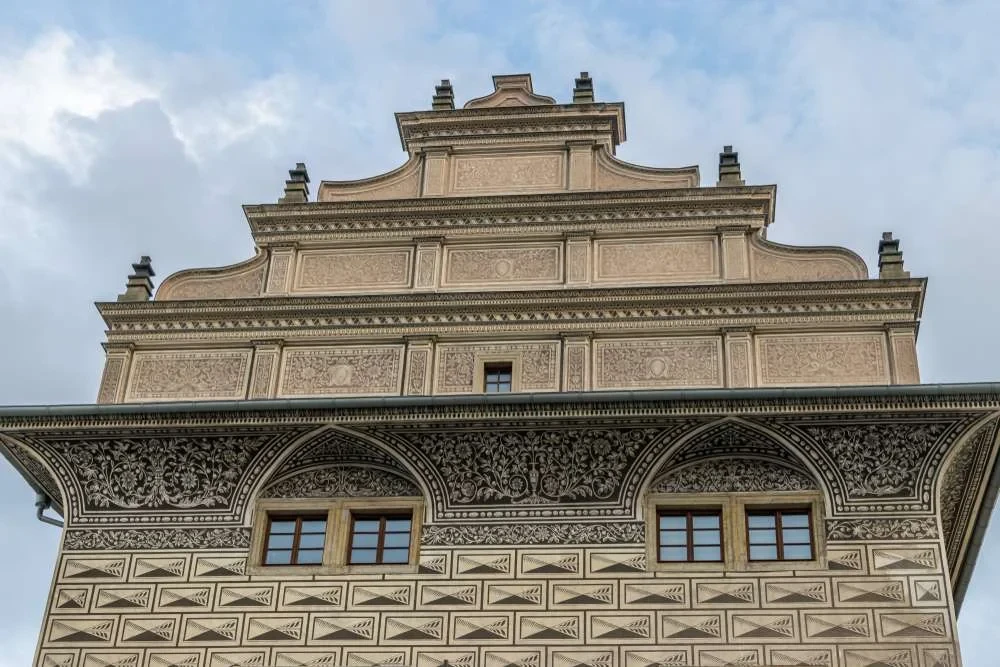
The palace’s design features steep, stepped gables that are distinctly Florentine, yet adapted to the dramatic topography of Prague’s castle district. The defining feature of the Schwarzenberg Palace is its extensive Sgraffito decoration, covering approximately 7,000 square meters of exterior surface.
The pattern consists of repeating, monochromatic black-and-white cuboid blocks. This geometric schema exploits light and shadow to create a convincing, three-dimensional illusion of rusticated, raised diamond-point stone blocks, though the wall surface is entirely flat. These designs were extensively expanded and restored between 1871 and 1893 based on the historical designs of architects Jan Koula and Josef Schulz. The facade incorporates highly detailed, figurative sgraffito carvings, including a rooster and an owl positioned alongside the palace’s historic sundial.
The Large Ball Game Hall
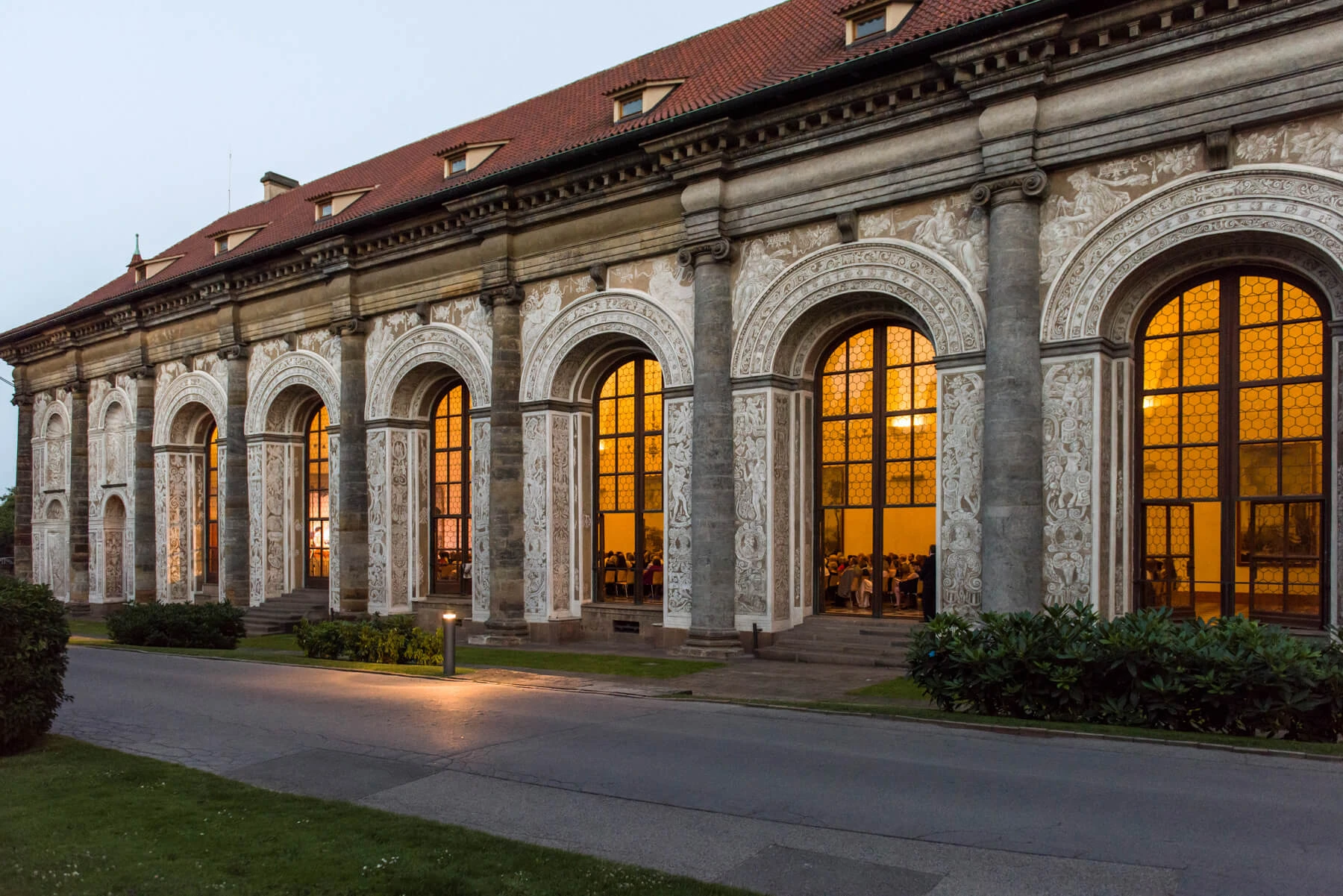
Designed by Bonifác Wohlmut, the structure is characterized by a grand garden facade featuring an open arcade supported by robust pillars and classical details. The entire exterior is covered in elaborate sgraffito representing allegories of the Liberal Arts, Virtues, and Elements. In the twentieth century, it suffered severe structural defects and was burned during hostilities, leaving only the peripheral outer walls standing. A meticulous reconstruction was completed in 1952 under the supervision of Pavel Janák, restoring the sgraffito work and structural integrity of the hall.
The High Baroque Zenith
The seventeenth-century transition to Baroque architecture in Prague was driven by the political and religious efforts of the Catholic Counter-Reformation following the Thirty Years’ War. Designed to inspire religious awe and reassert ecclesiastical authority, the Baroque style abandoned the rigid symmetry of the Renaissance in favor of dynamic curves, dramatic chiaroscuro, complex geometry, and monumental trompe-l’oeil frescoes that dissolved physical boundaries.
Saint Nicholas Church
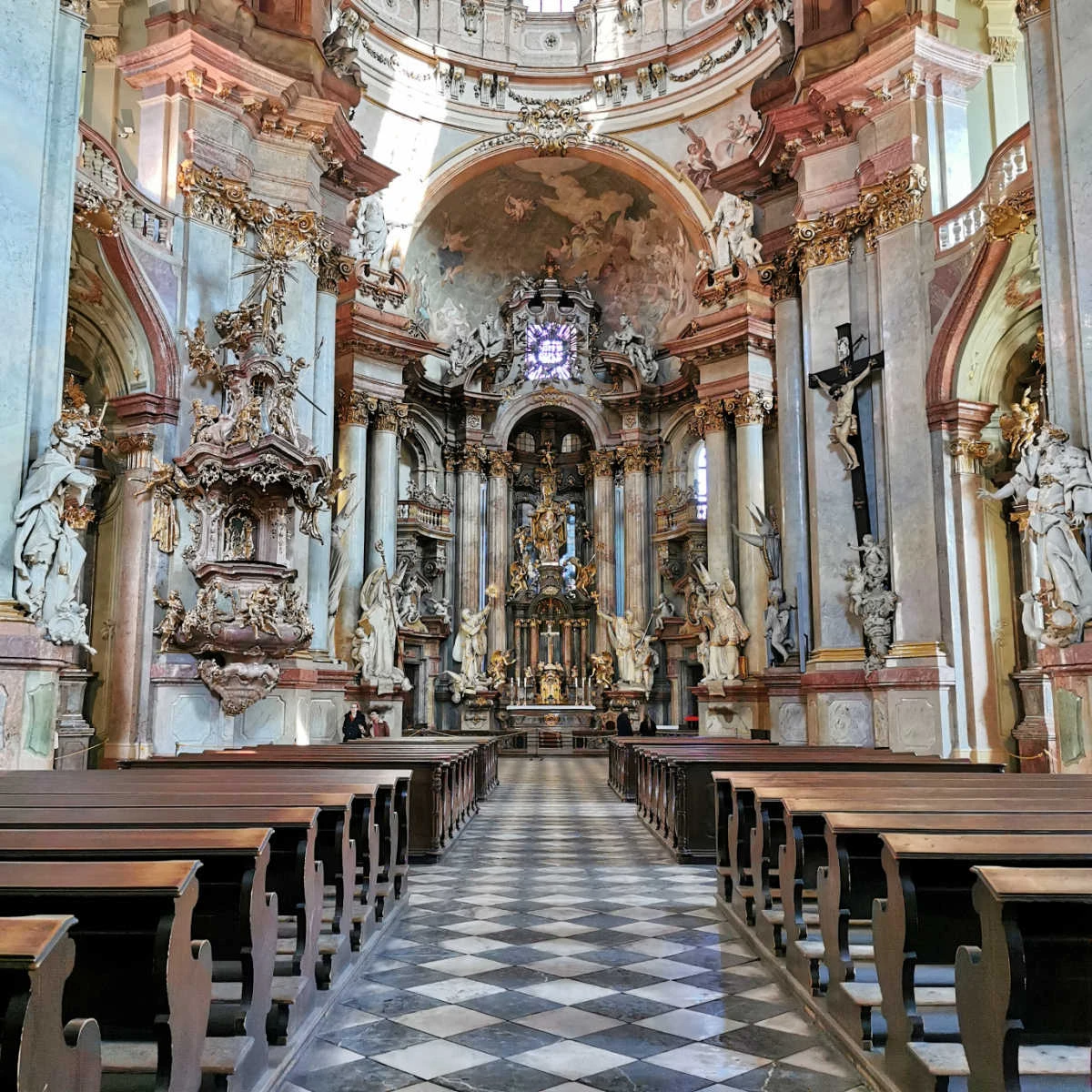
Situated at the center of the Lesser Town Square, the Church of Saint Nicholas is widely regarded as the crowning achievement of the Bohemian High Baroque north of the Alps. Constructed over approximately one hundred years, starting in 1673, the church’s structural complexity represents the work of three generations of a single architectural dynasty: Kryštof Dientzenhofer, his son Kilián Ignác Dientzenhofer, and his son-in-law Anselmo Lurago.
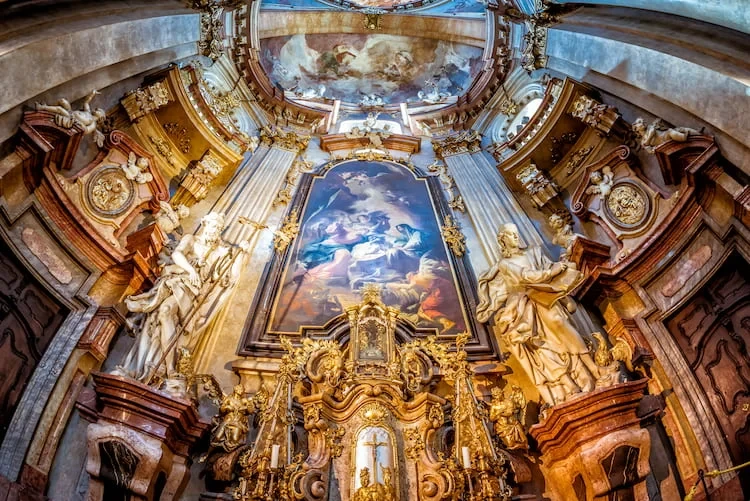
The interior of Saint Nicholas is designed as a theatrical space where structural elements are integrated with decorative arts. The vault features Jan Lukáš Kracker’s monumental trompe-l’oeil frescoes, which extend the physical architecture of the church into an illusory heavenly realm.
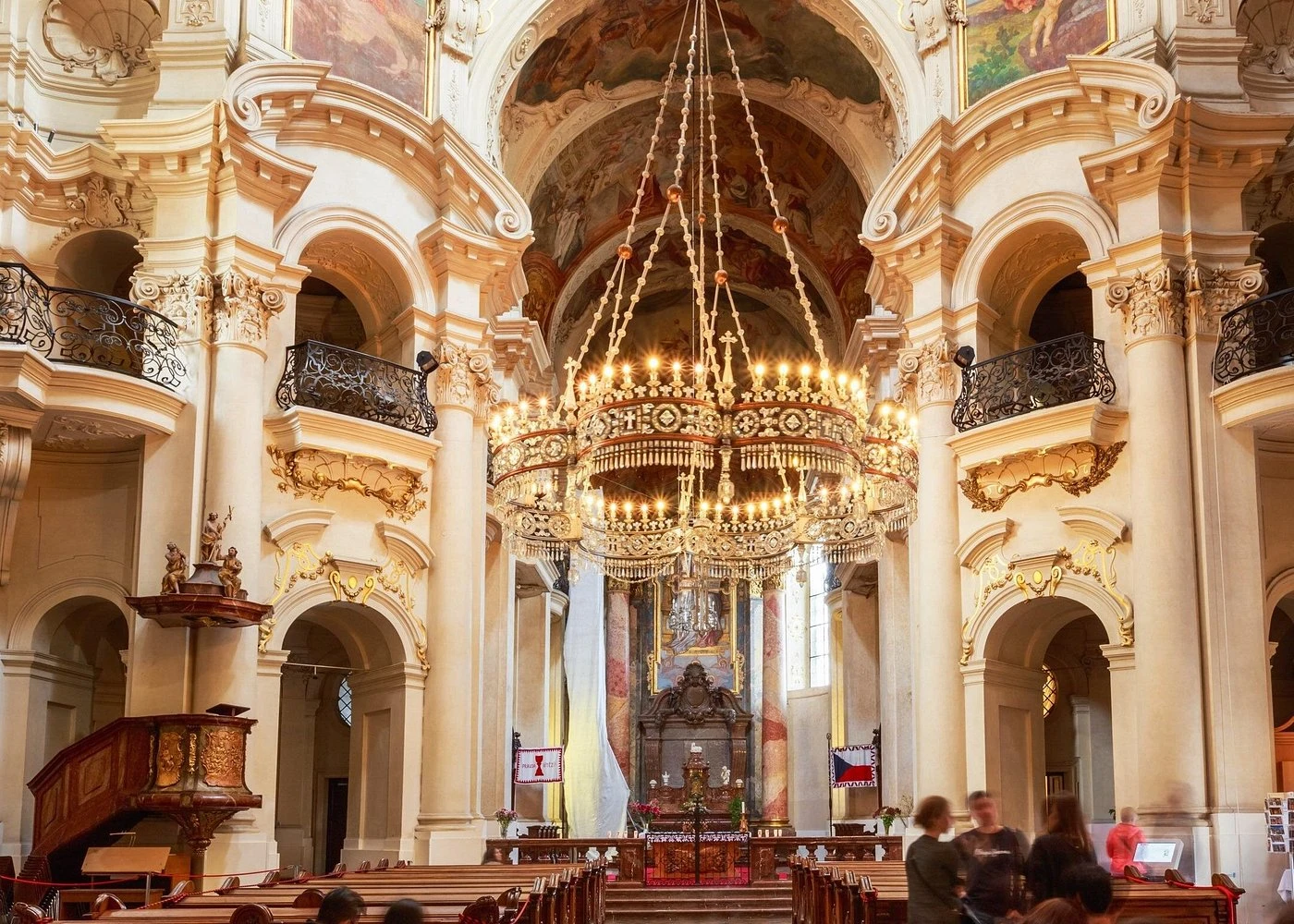
The interior is lit by windows positioned at multiple levels, creating a stark contrast between the relatively dark, shadowed lower chapels and the brilliant, direct light flooding down from the dome’s lantern. The acoustic design was optimized for liturgical music, featuring a main organ built by Josef Blažek with over 4,000 pipes, which was famously played by Wolfgang Amadeus Mozart during his residence in the city.
Art Nouveau and the Czech National Revival
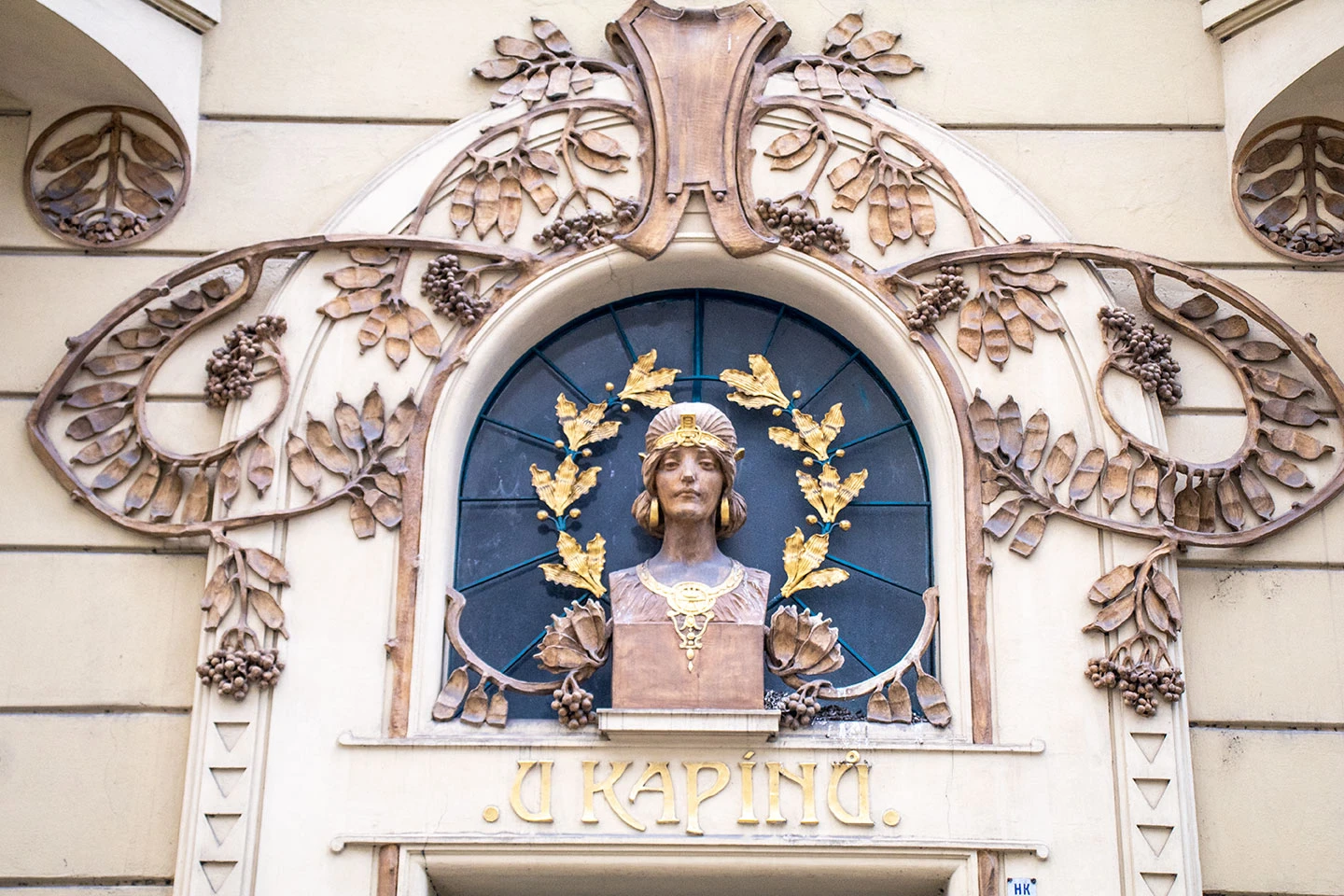
At the turn of the twentieth century, the weakening of the Austro-Hungarian Empire catalyzed the Czech National Revival, a cultural and political movement aimed at asserting a distinct Slavic identity. Prague’s architects abandoned historical revivalism in favor of Art Nouveau. This international style, characterized by sinuous, organic lines and floral motifs, was adapted in Prague as a vehicle for national romanticism.
The Municipal House
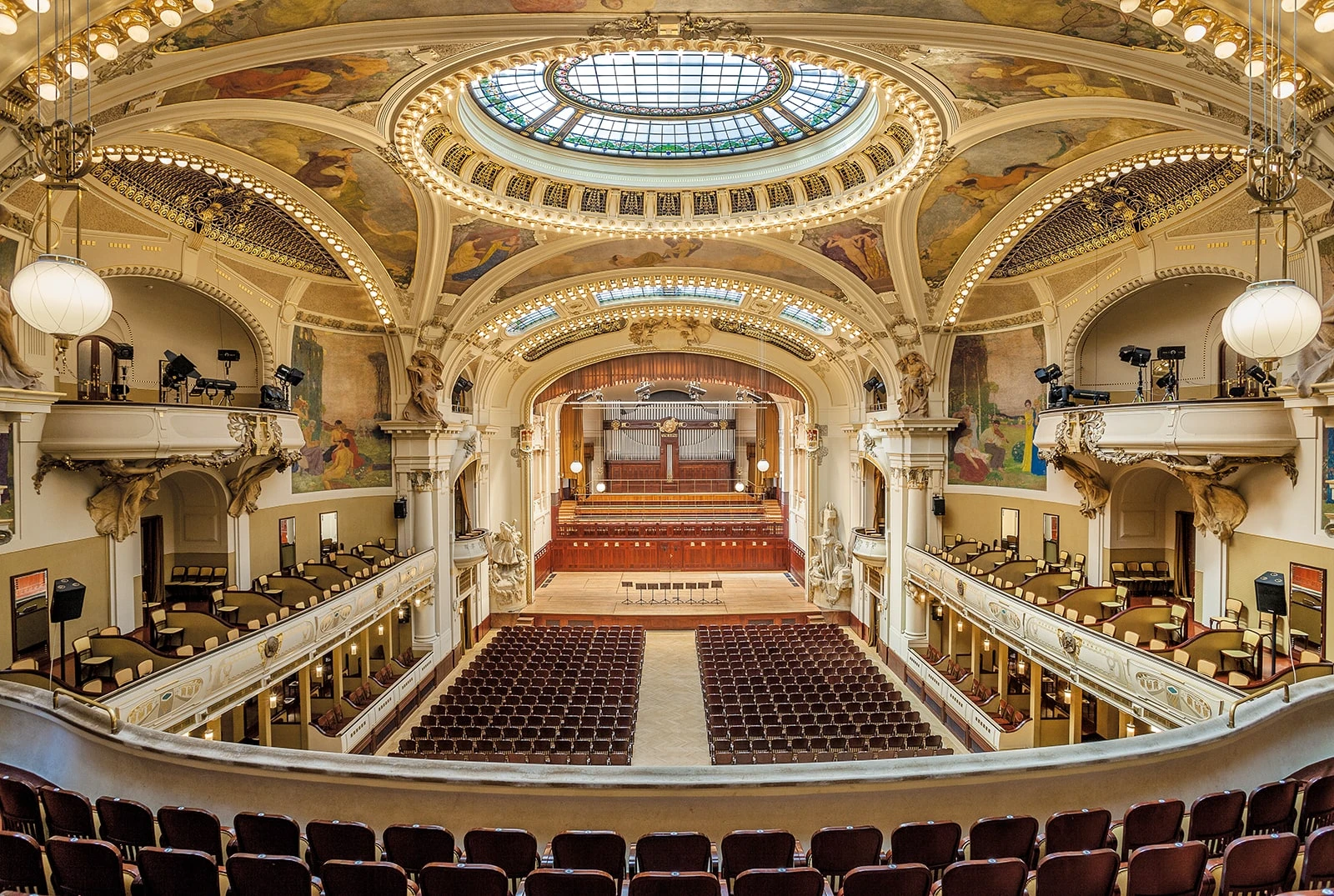
Completed in 1912, the Municipal House stands as the premier monument of Prague Art Nouveau. Built on the site of the former fourteenth-century medieval King’s Court. The primary architectural challenge of the Municipal House was its highly irregular, triangular site. Polívka and Balšánek resolved this by arranging the building’s functional spaces symmetrically around a monumental central concert venue, the Smetana Hall.
This concert hall has a capacity of 1,259 seats and serves as the home of the Czech National Symphony Orchestra. The hall is crowned by a massive glass-paneled dome that rises through the center of the building, illuminating the interior.
The Cubist and Rondocubist Avant-Garde
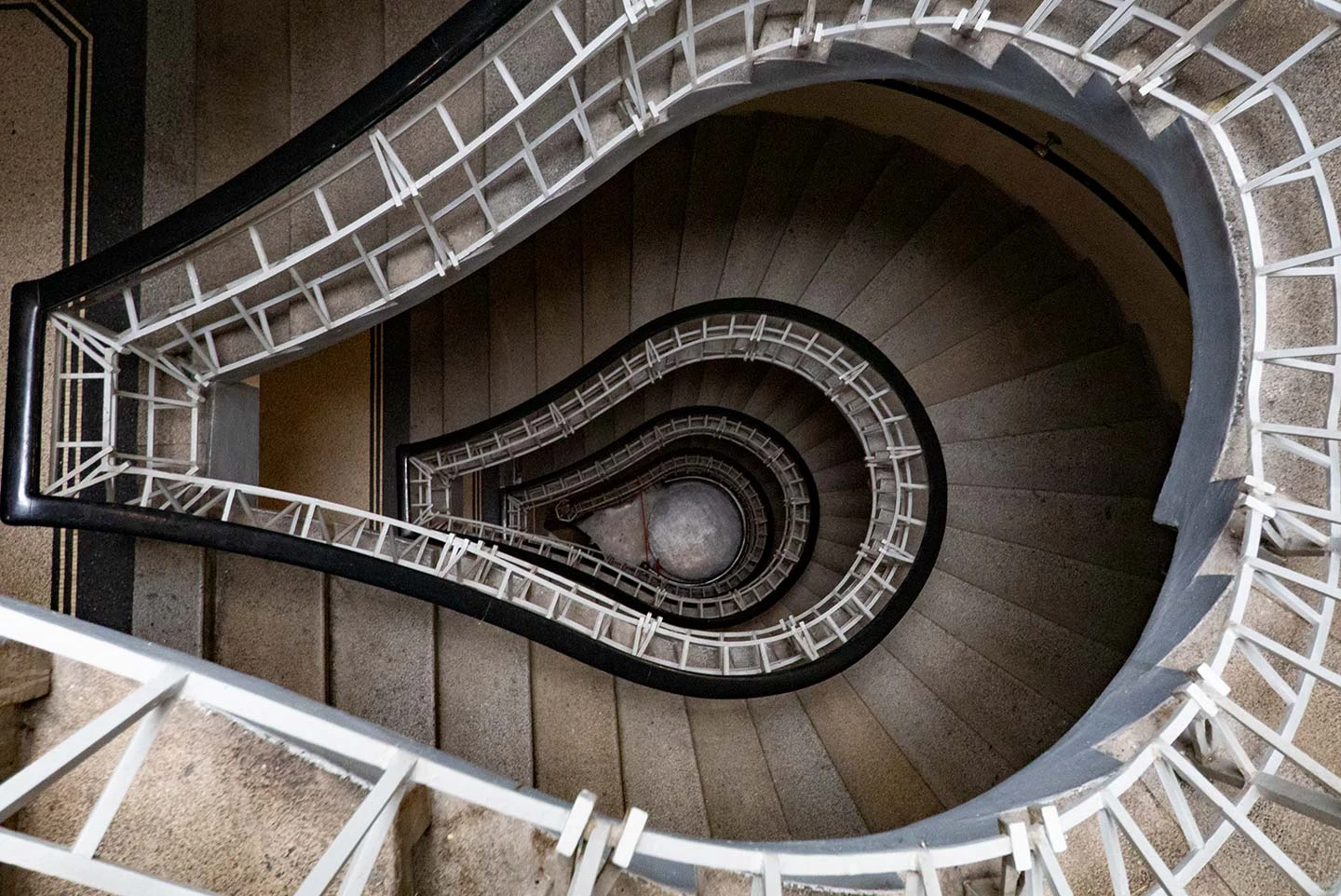
Immediately following the rise of Art Nouveau, Prague became the site of an extraordinary architectural experiment: Czech Cubism. Emerging between 1911 and 1914, this movement sought to translate the revolutionary spatial concepts of Cubist painting into three-dimensional architectural forms. Czech Cubists designed furniture, ceramics, and entire building facades using sharp points, sliced planes, and intersecting geometries. They aimed to turn everyday functional items into works of art.
The House of the Black Madonna
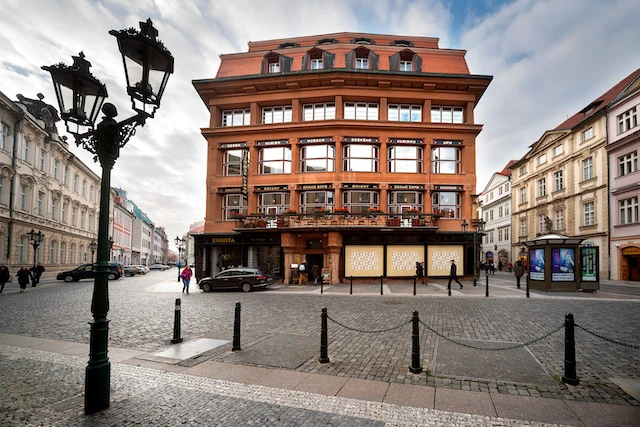
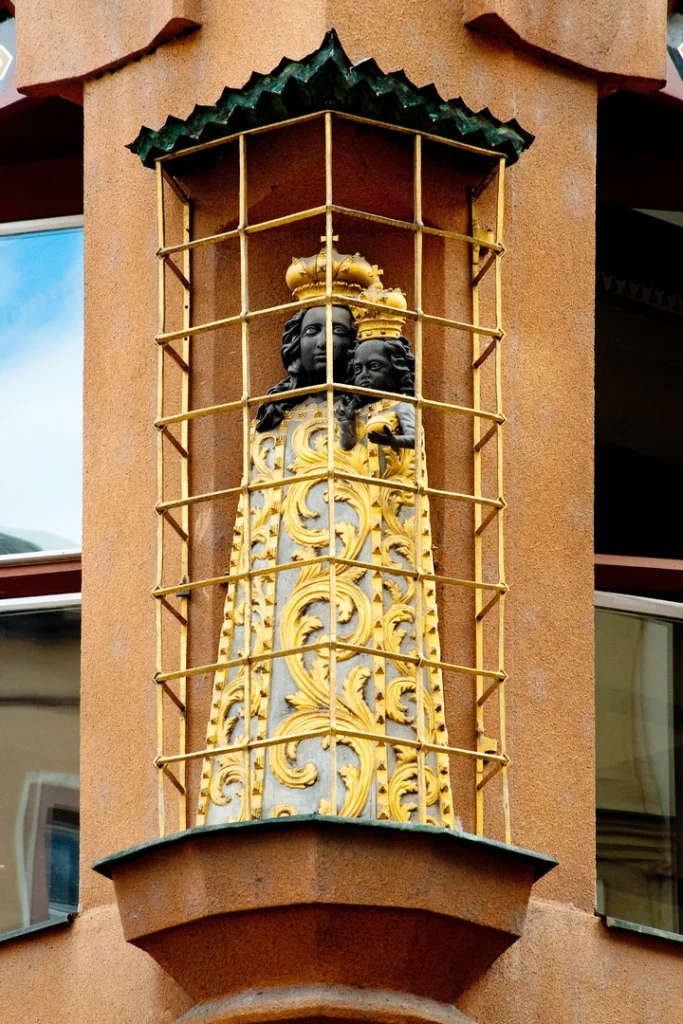
Designed by the architect Josef Gočár for the wholesale merchant František Josef Herbst, the House of the Black Madonna is the earliest example of Cubist architecture in Prague, completed in 1912. Structurally, the building utilizes a modern, reinforced-concrete skeleton inspired by the Chicago School of architecture. This structural frame allowed Gočár to eliminate interior load-bearing columns, creating large, open interior spaces.
Free of central pillars, the cafe features a fully coordinated Cubist interior, showcasing Gočár’s custom-designed geometric furniture, brass chandeliers, and an angular balcony overlooking Celetná Street. The exterior facade achieves dramatic depth through deep-set, angular bay windows and rhythmic, faceted portal frames that cast sharp, geometric shadows, mimicking the plasticity of neighboring Baroque facades without reproducing their historic details.
Palace Adria
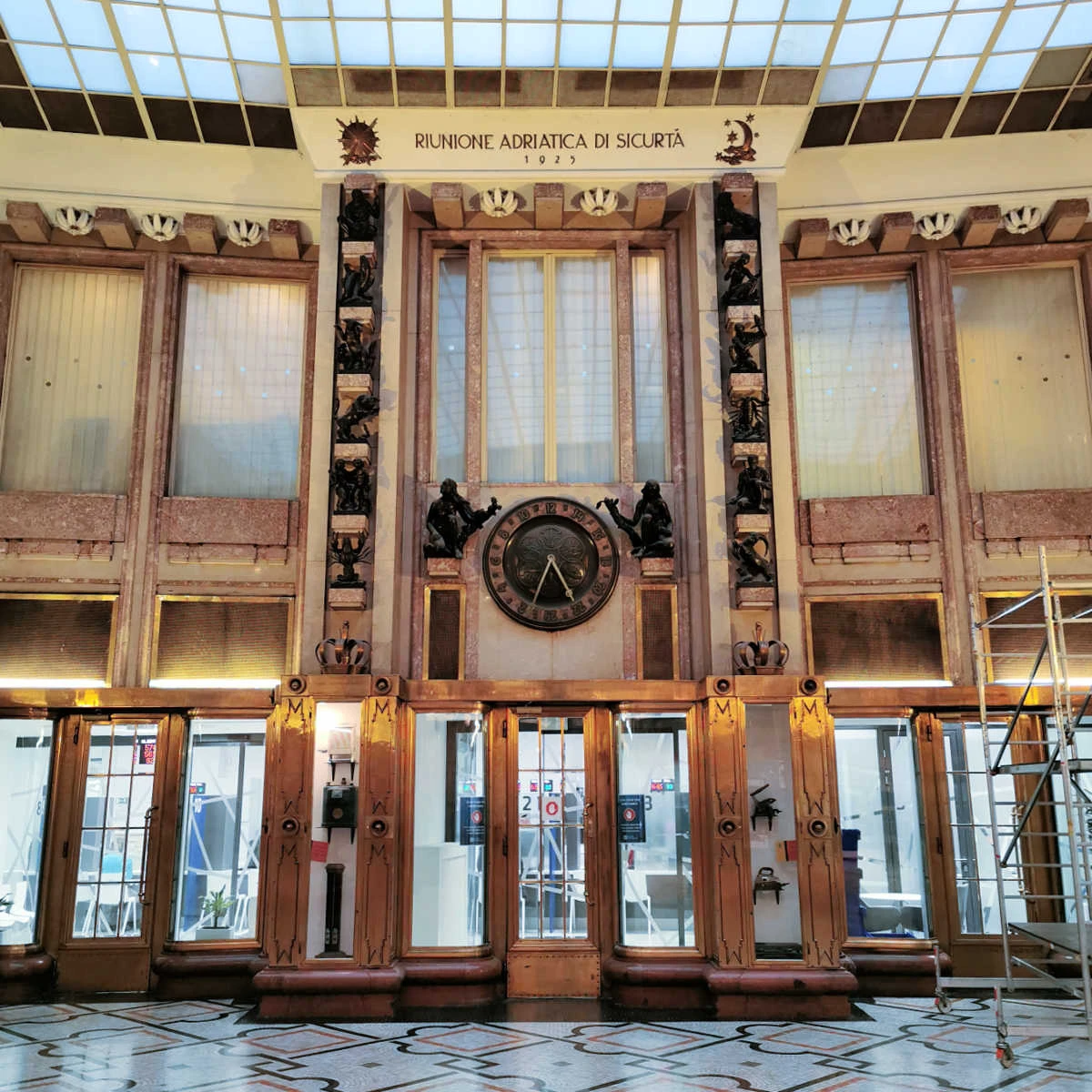
Constructed between 1923 and 1924 at the corner of Jungmannova Street and Národní třída, the Palace Adria stands as a monumental civic example of Rondocubism, often described as Czech Art Deco. Commissioned by the Italian insurance company, the building was designed by German-Czech architect Josef Zasche in collaboration with Pavel Janák, who designed the vibrant, plastic color scheme and the complete interior layout.
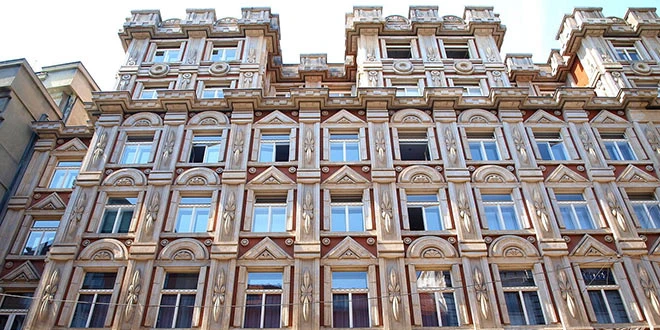
The physical structure consists of a reinforced-concrete frame with brick infill walls, rising eight stories above ground and extending three levels into the basement. The exterior facade is boldly designed with upper floors that look like massive towers with battlements, inspired by the fortification architecture of Italian Renaissance town halls and palaces.
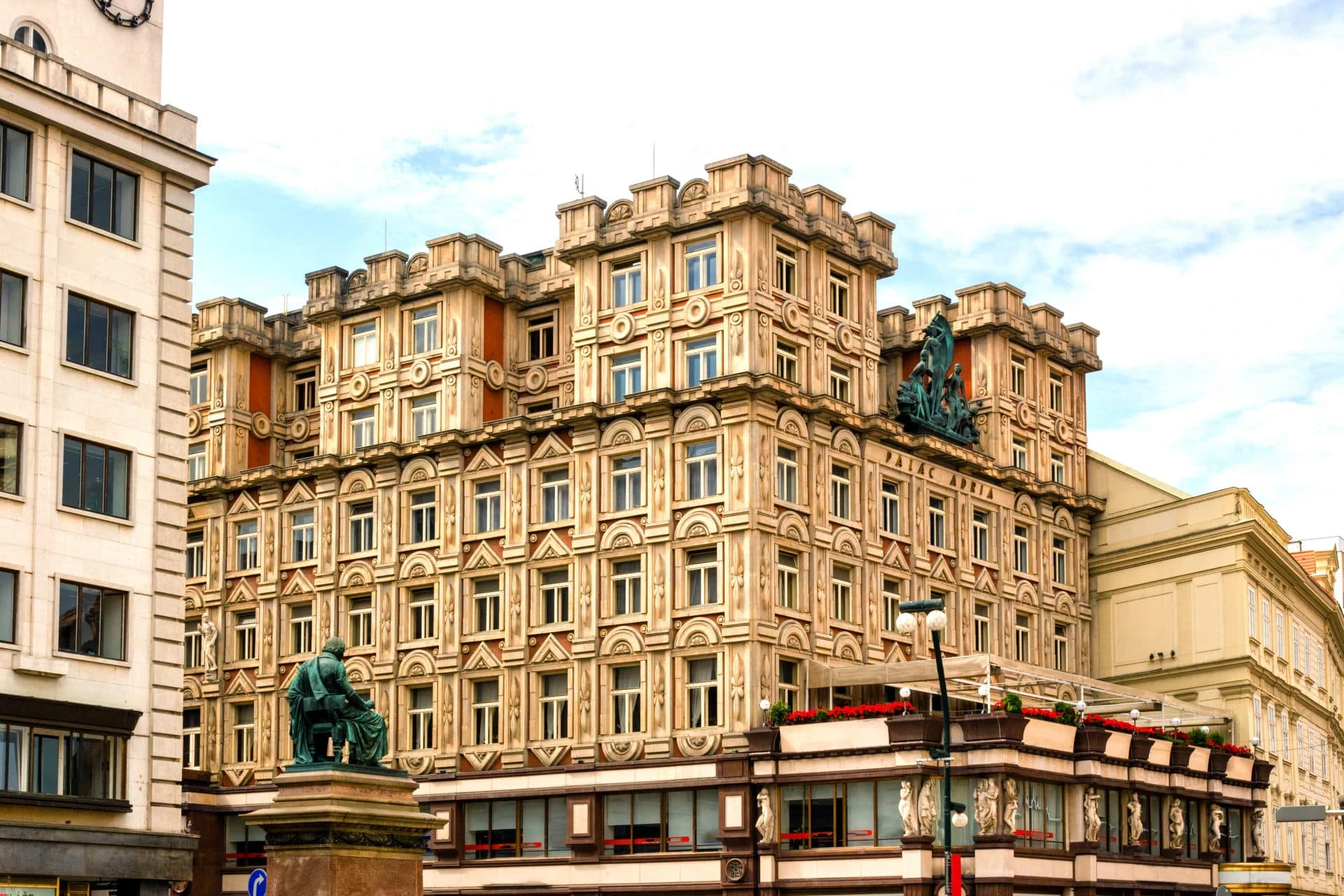
The building is integrated into the city through a grand central passage that functions as an interior plaza. The arcade’s interior is lined with pinkish-brown Austrian marble and detailed with gleaming brass fixtures and custom chandeliers. The building also integrated a theater hall in the basement, which became the home of the Laterna Magika Theatre in 1959 and served as a critical organizing center during the Velvet Revolution of 1989.
Prague’s architectural heritage reveals centuries of artistic evolution, where Gothic grandeur, Baroque ornamentation, Renaissance elegance, and modern influences collectively shape one of Europe’s most visually enduring cityscapes.
Explore Courses
.jpg "Ondrej Chybik - Rethinking Architecture")