




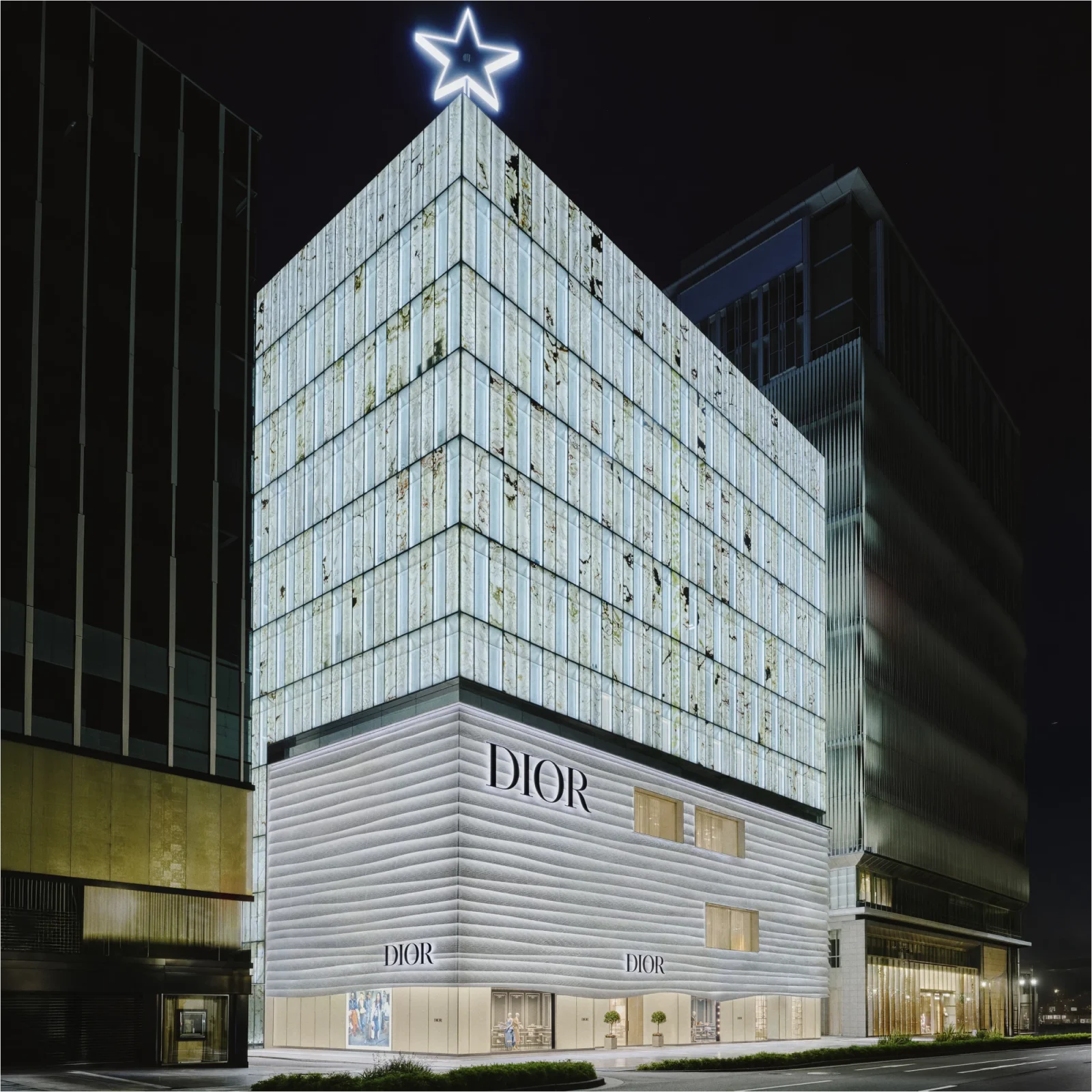
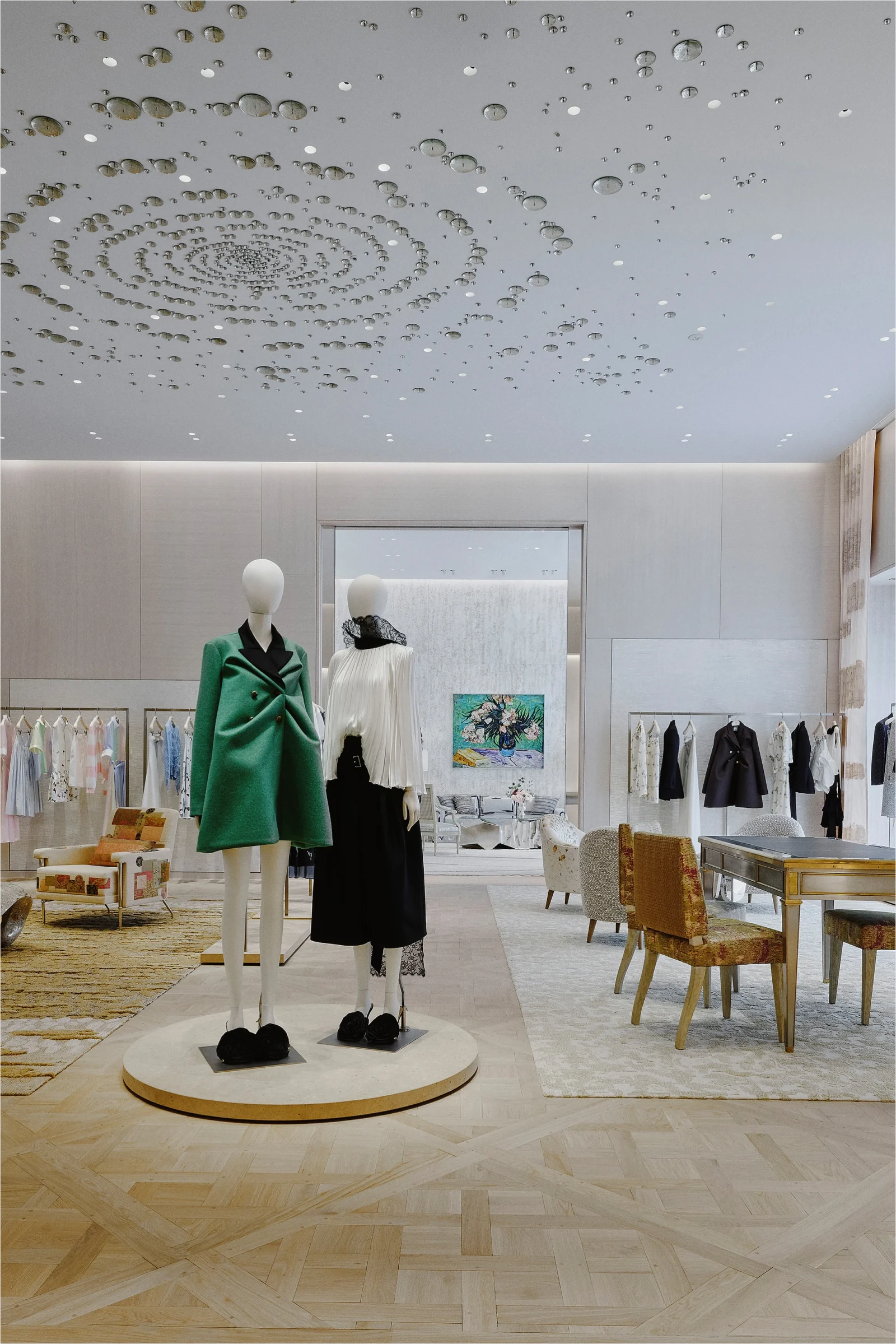
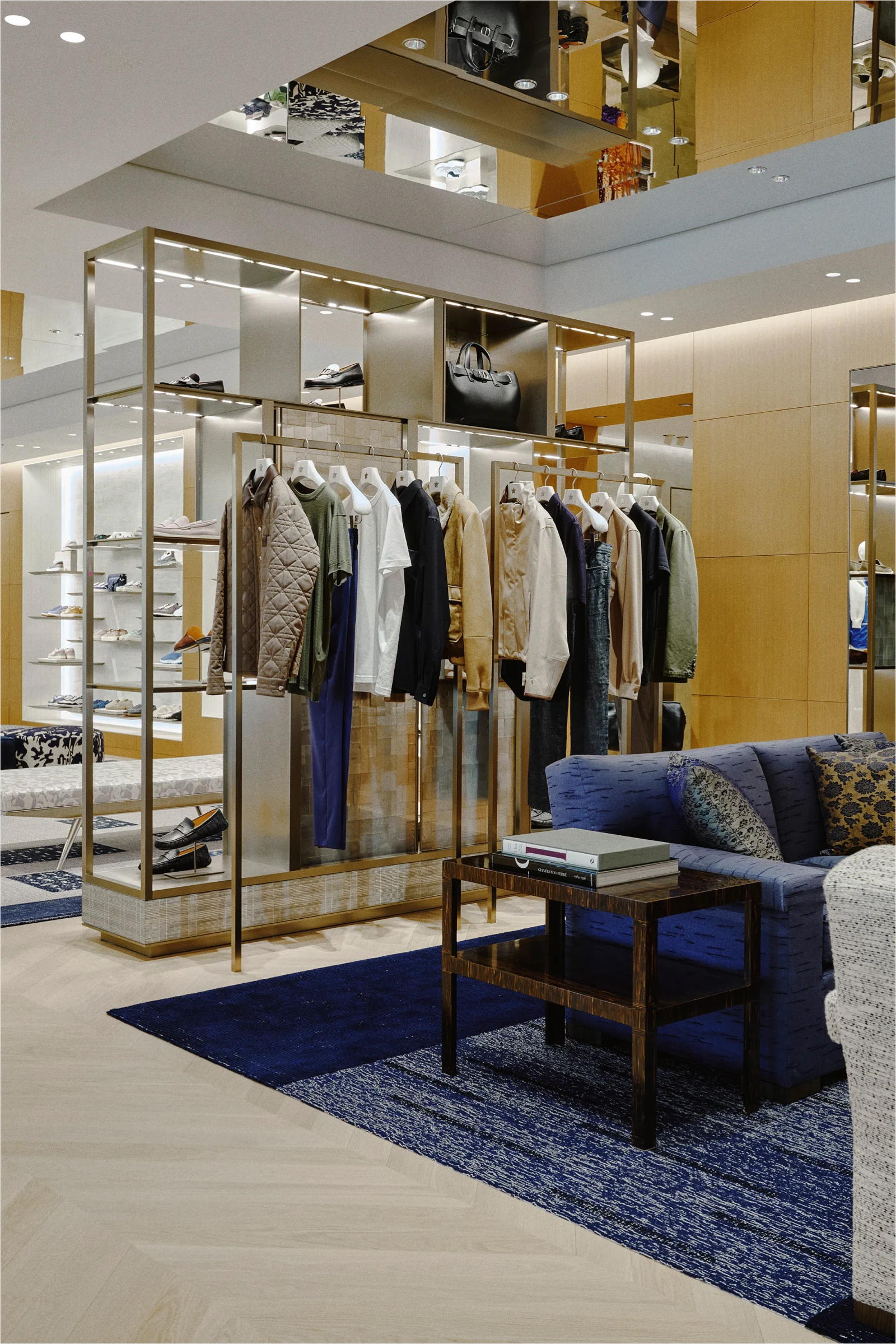
In Osaka’s Shinsaibashi district, Dior has opened a new four-storey flagship that positions retail architecture as a long-term brand environment. Named the House of Dior Shinsaibashi, the project combines a façade designed by Sou Fujimoto with interiors by Peter Marino, extending the fashion house’s ongoing investment in architect-led retail spaces across Japan.
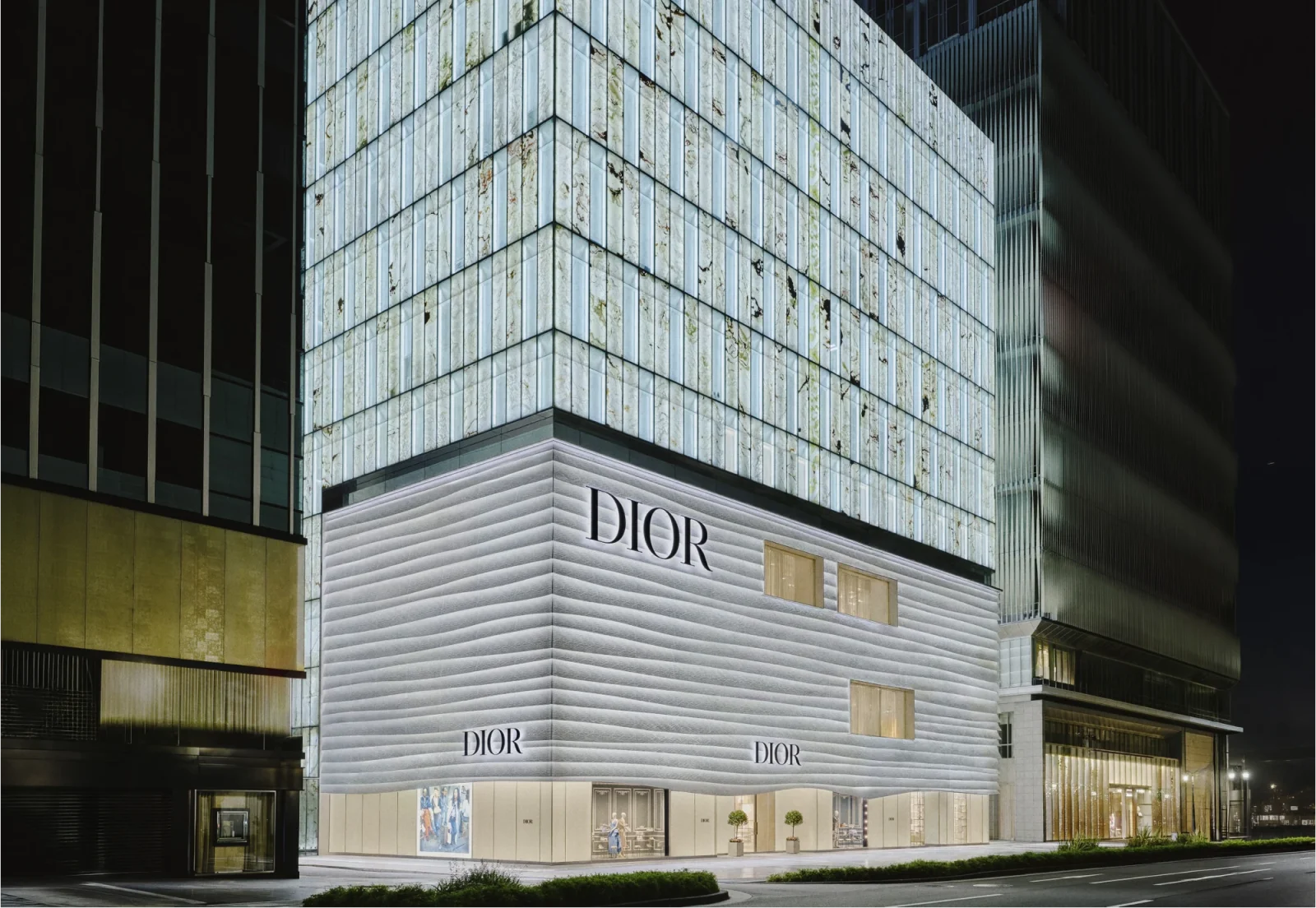
Sou Fujimoto Designs Dior’s Translucent Facade
Located within one of Osaka’s historic commercial corridors, the flagship enters a dense urban streetscape dominated by illuminated retail facades and luxury branding. The building relies on surface treatment and material depth. Sou Fujimoto’s exterior references layered couture textiles through a translucent, draped skin that wraps the building’s upper volume. The façade appears lightweight during the day and increasingly porous at night, allowing the internal lighting to soften the building’s street presence.
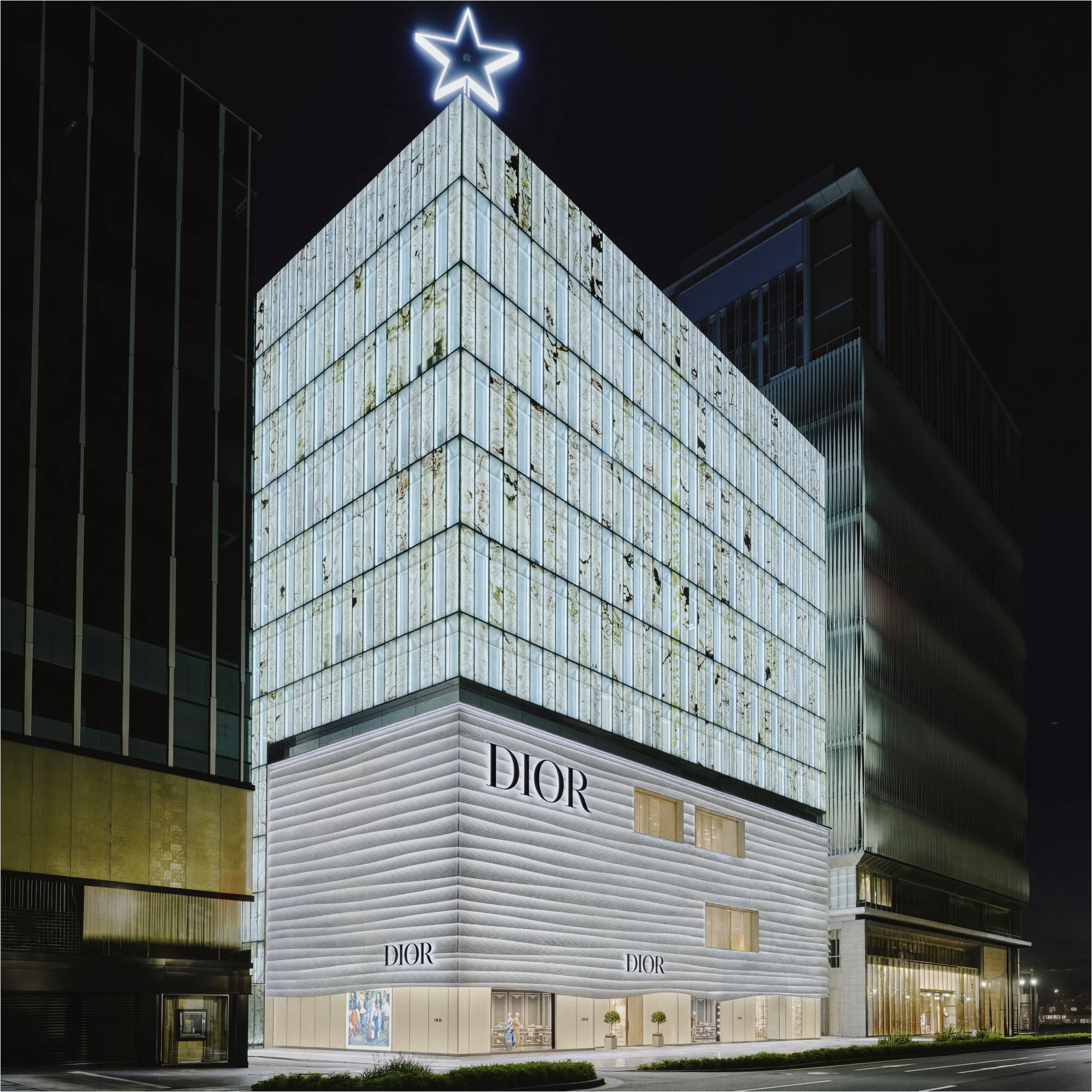
The project continues Fujimoto’s broader architectural language, where boundaries between enclosure, atmosphere, and movement are intentionally blurred. Here, the façade operates less as a rigid envelope and more as a filtering device. Its folds and layered surfaces create varying levels of opacity while giving the flagship a recognizable identity within Shinsaibashi’s retail strip. Instead of relying on monumental form-making, the design focuses on texture, depth, and changing light conditions throughout the day.
Peter Marino Shapes the Interior Around Art and Circulation
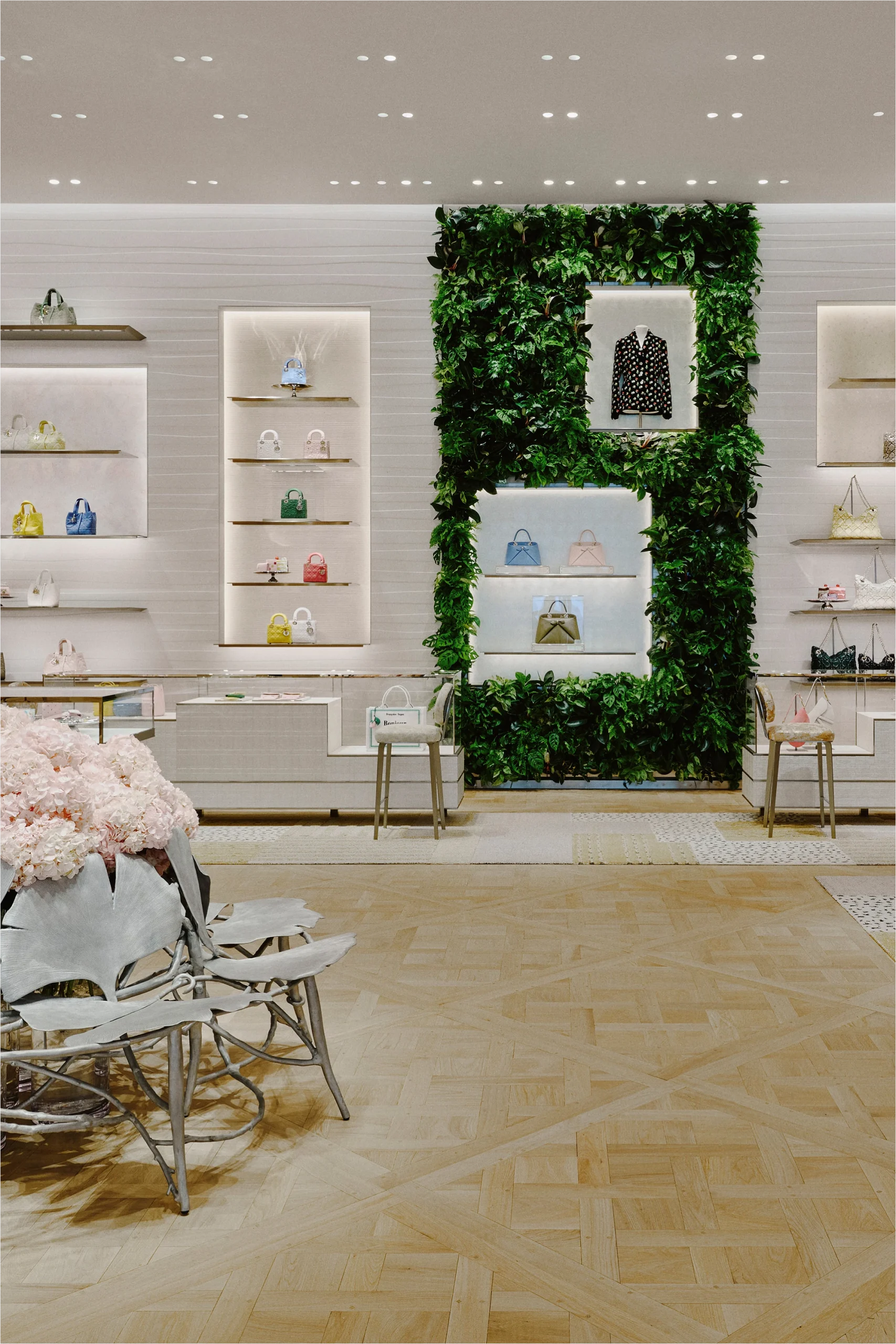
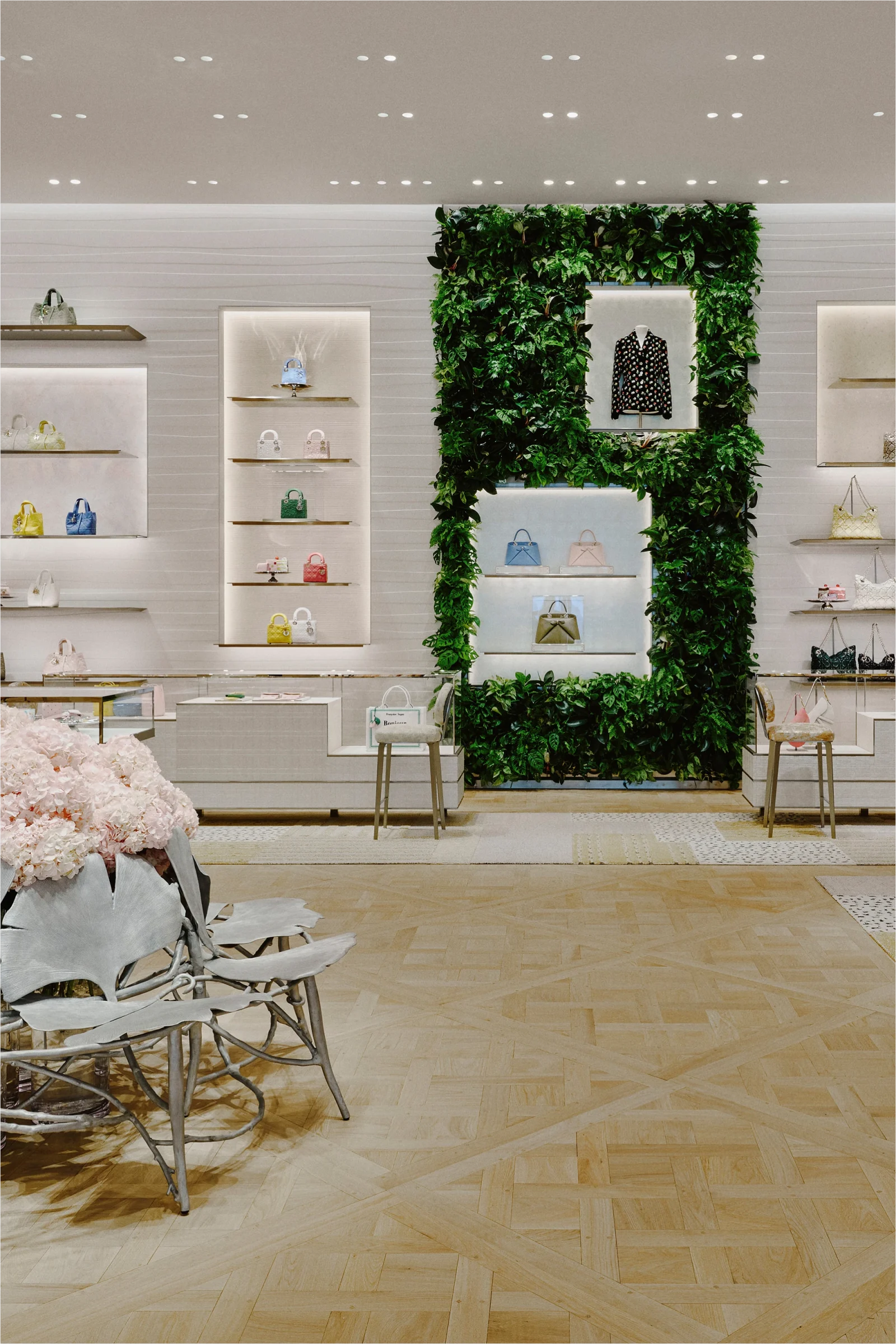
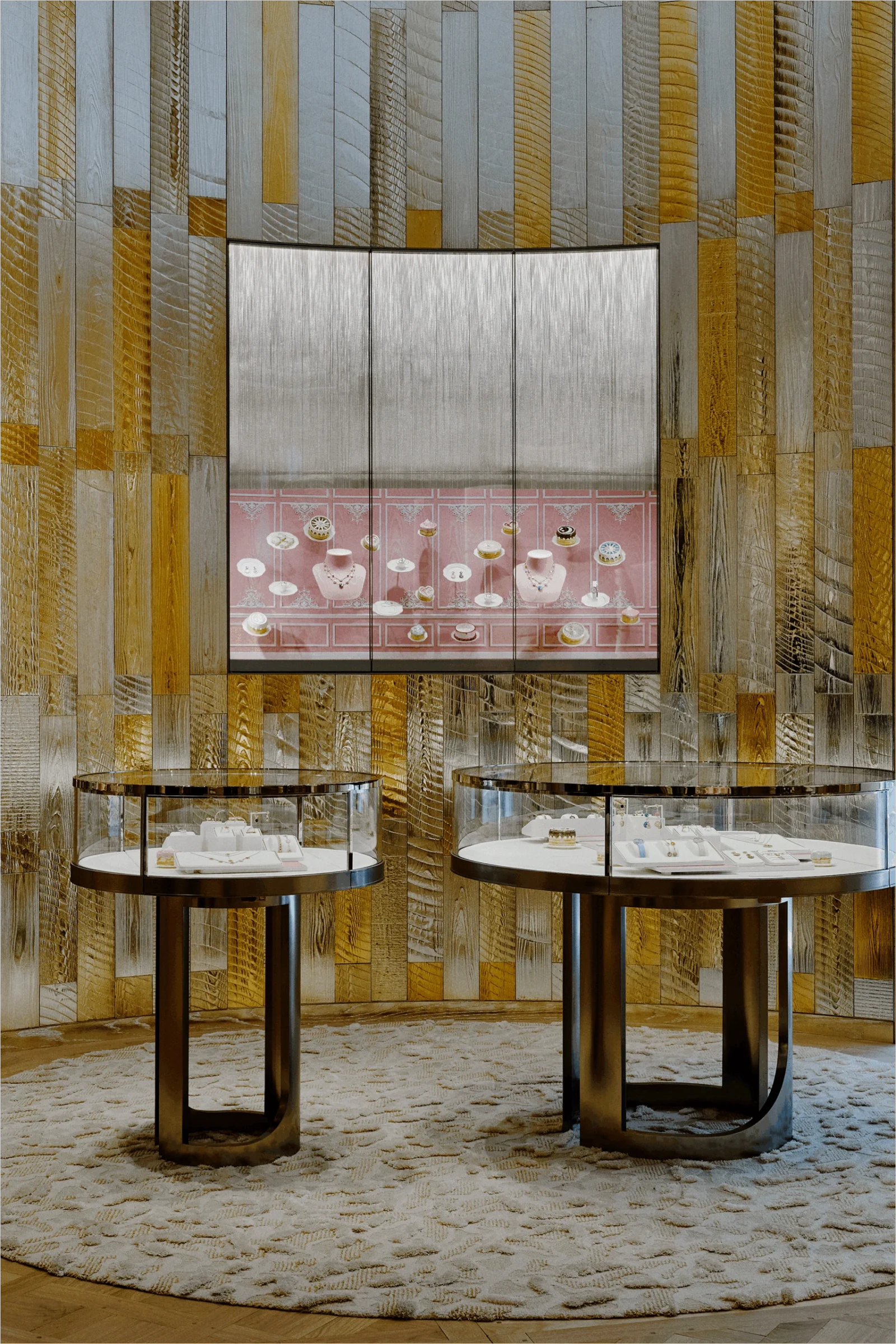
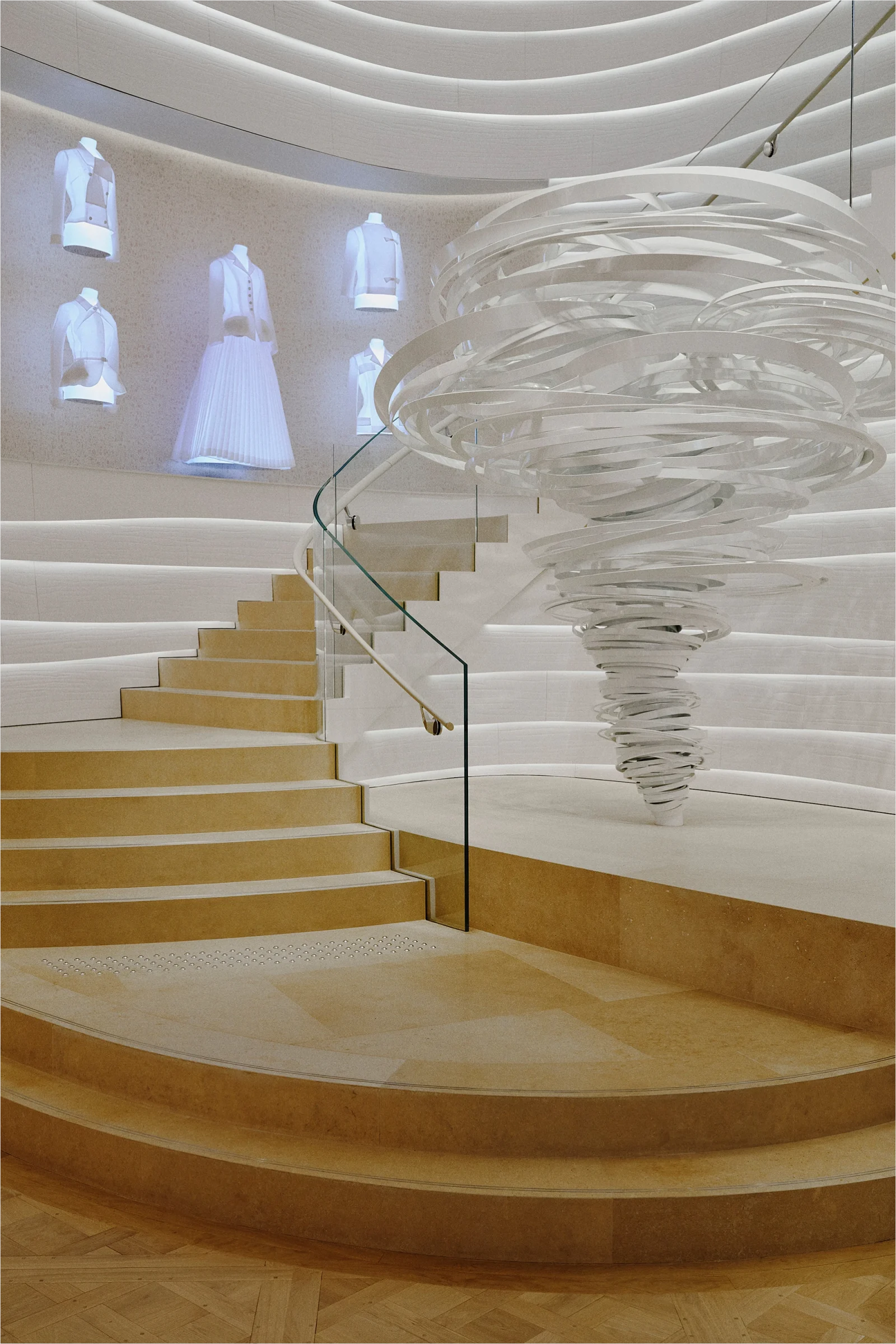
Inside, Peter Marino approaches the store as a sequence of curated spatial environments rather than a continuous retail floorplate. The interiors draw from several recurring Dior retail codes: pale material palettes, gallery-scaled rooms, parquet flooring, sculptural staircases, and integrated artworks, but the Osaka flagship appears more vertically layered than many of the brand’s earlier projects. A central staircase serves as the organizing element of the building, visually connecting the four levels and structuring movement between departments.
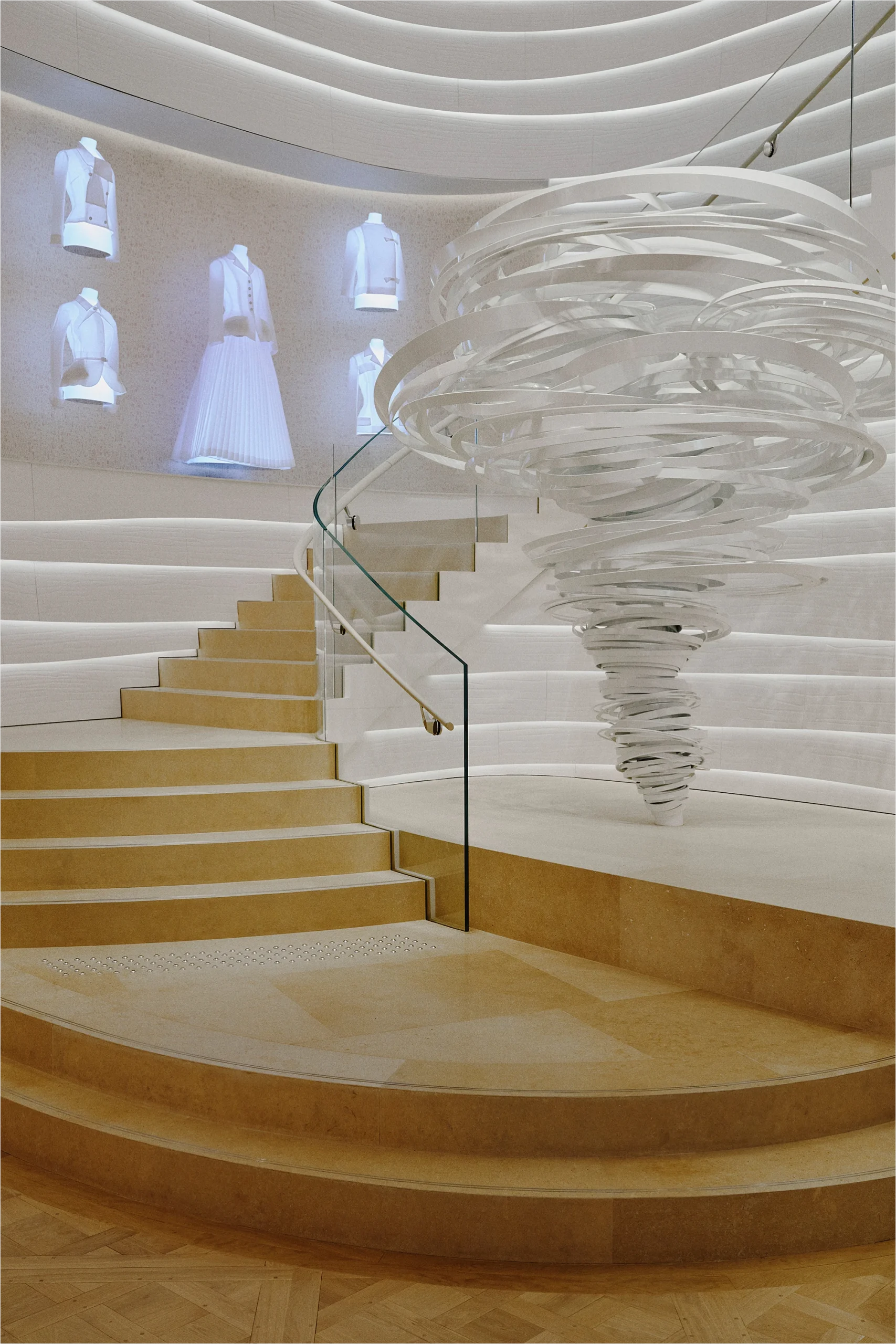
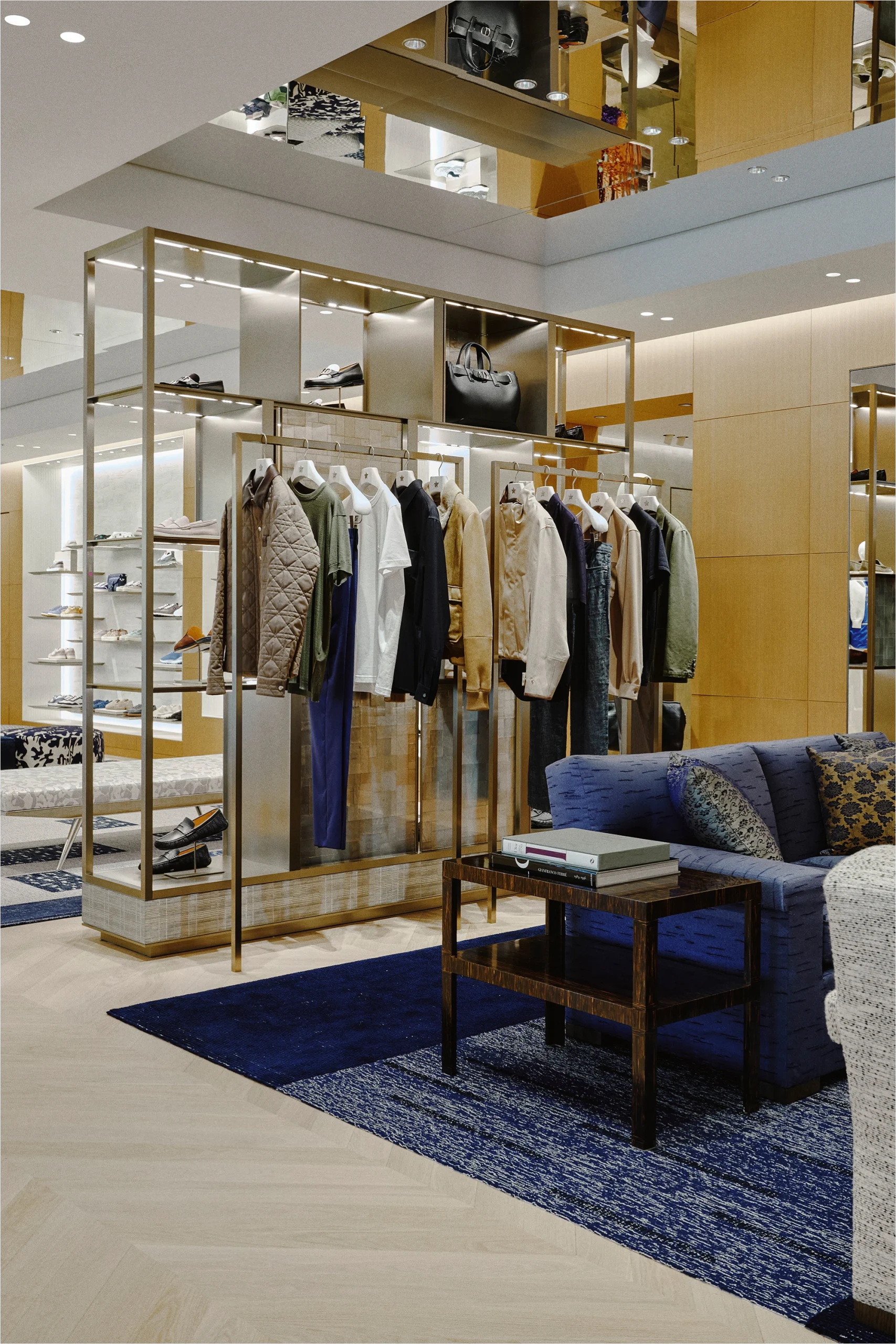
The program distribution reinforces the idea of the building as a mixed cultural environment. Womenswear, accessories, leather goods, jewelry, fragrances, and menswear are separated across multiple floors, allowing each level to maintain a distinct spatial identity. The interiors prioritize circulation width, display spacing, and controlled sightlines. This planning strategy aligns with the broader shift in luxury retail architecture, where stores increasingly function as exhibition-like environments intended to extend visitor dwell time.
Art integration plays a significant role throughout the flagship. Works by artists and designers, including Christian Bérard, Claude Lalanne, Alice Aycock, Tim Hailand, and Franck Evennou, are embedded in the spatial experience. A vertical garden and floral installations by Japanese artist Azuma Makoto introduce natural elements into the otherwise highly controlled retail interiors. These insertions help soften the transition between gallery, hospitality, and retail functions.
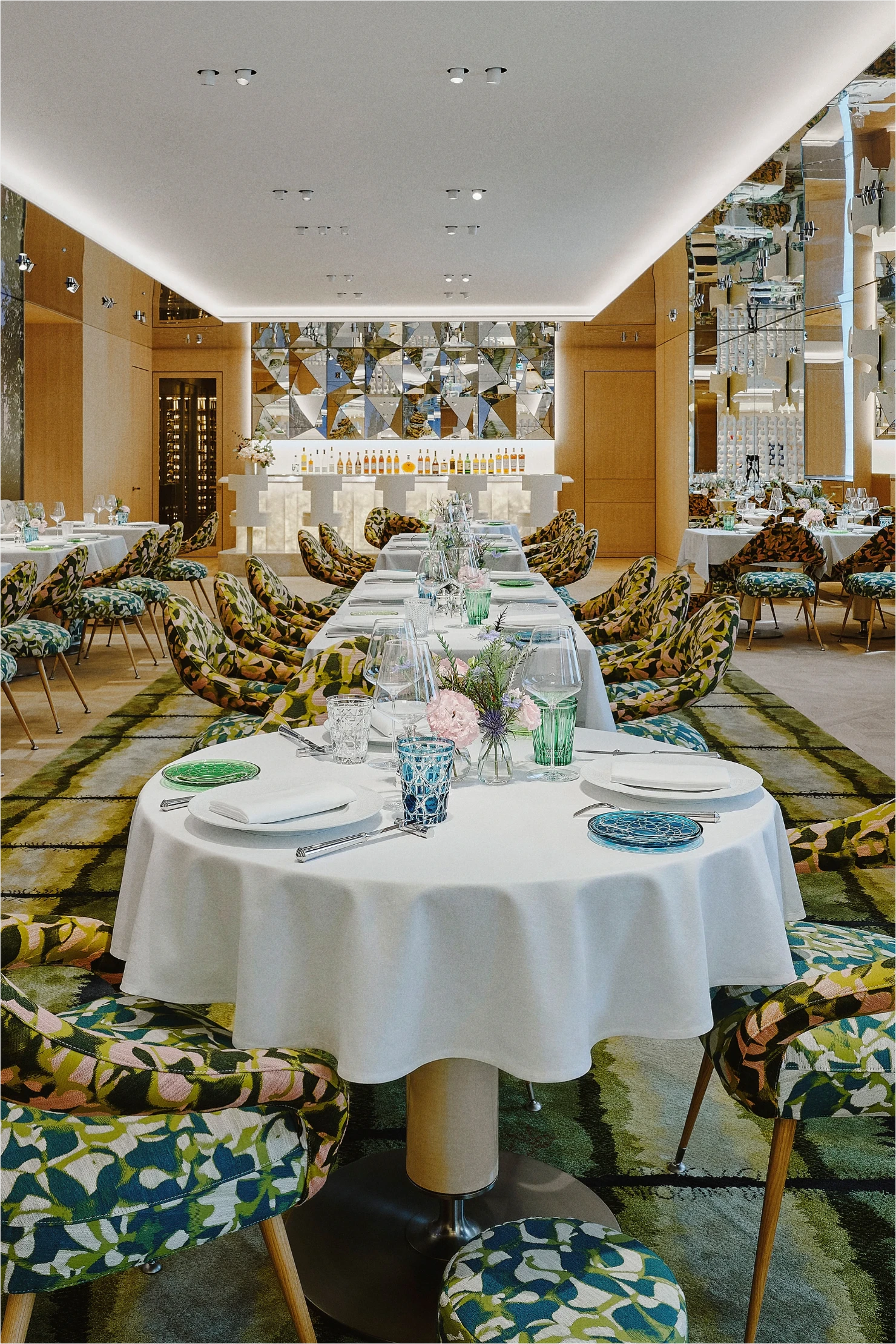
The upper floor houses Monsieur Dior, a restaurant led by French chef Anne-Sophie Pic. The inclusion of hospitality within the flagship reflects a wider strategy increasingly visible in contemporary luxury retail, where fashion houses are extending their architectural footprint beyond commerce into dining, exhibitions, and lifestyle programming. In the Osaka project, the restaurant is positioned as an integral part of the building, completing the transition from boutique to full experiential destination.
House of Dior Arrives in Osaka
The opening also reinforces Dior’s long-standing relationship with Japan. The brand has repeatedly referenced Japanese craft, textiles, and cultural history since the era of Christian Dior himself, and recent projects in Tokyo and Kyoto have further expanded that connection through architecture and exhibition-driven retail. The Shinsaibashi flagship continues that trajectory, but with a stronger architectural emphasis through the pairing of Fujimoto and Marino — two designers whose approaches differ significantly yet intersect here through material refinement and controlled spatial sequencing.
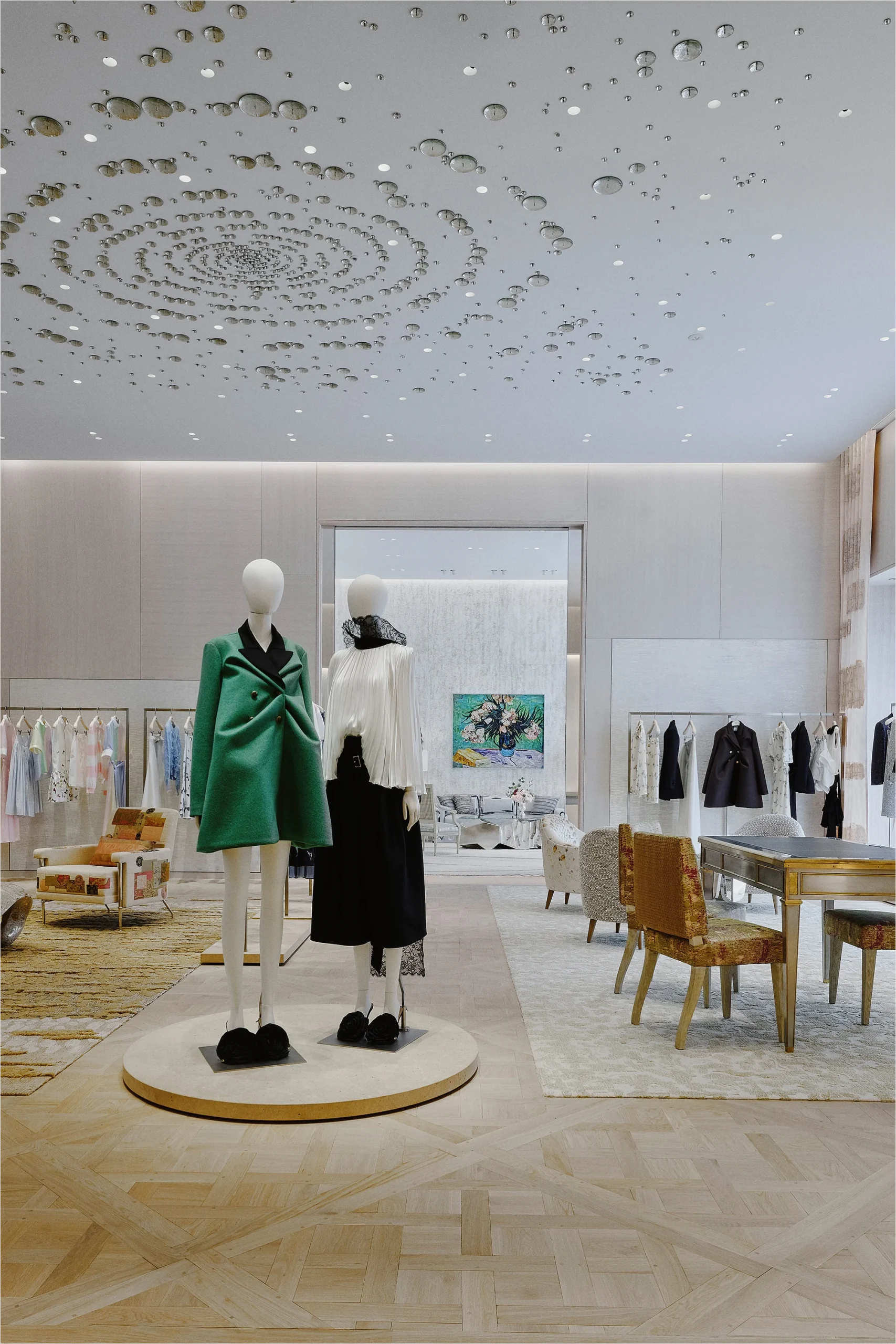
What distinguishes the House of Dior Shinsaibashi is scale, luxury positioning, and architecture, which are used to structure the brand experience. The project avoids excessive digital spectacle and instead focuses on façade composition, circulation, light diffusion, artwork placement, and spatial pacing. In a retail environment increasingly shaped by temporary visual trends, the Osaka flagship leans toward permanence and architectural authorship
Image credit: © Dior / Den Niwa
Explore Courses
.jpg "Ondrej Chybik - Rethinking Architecture")