




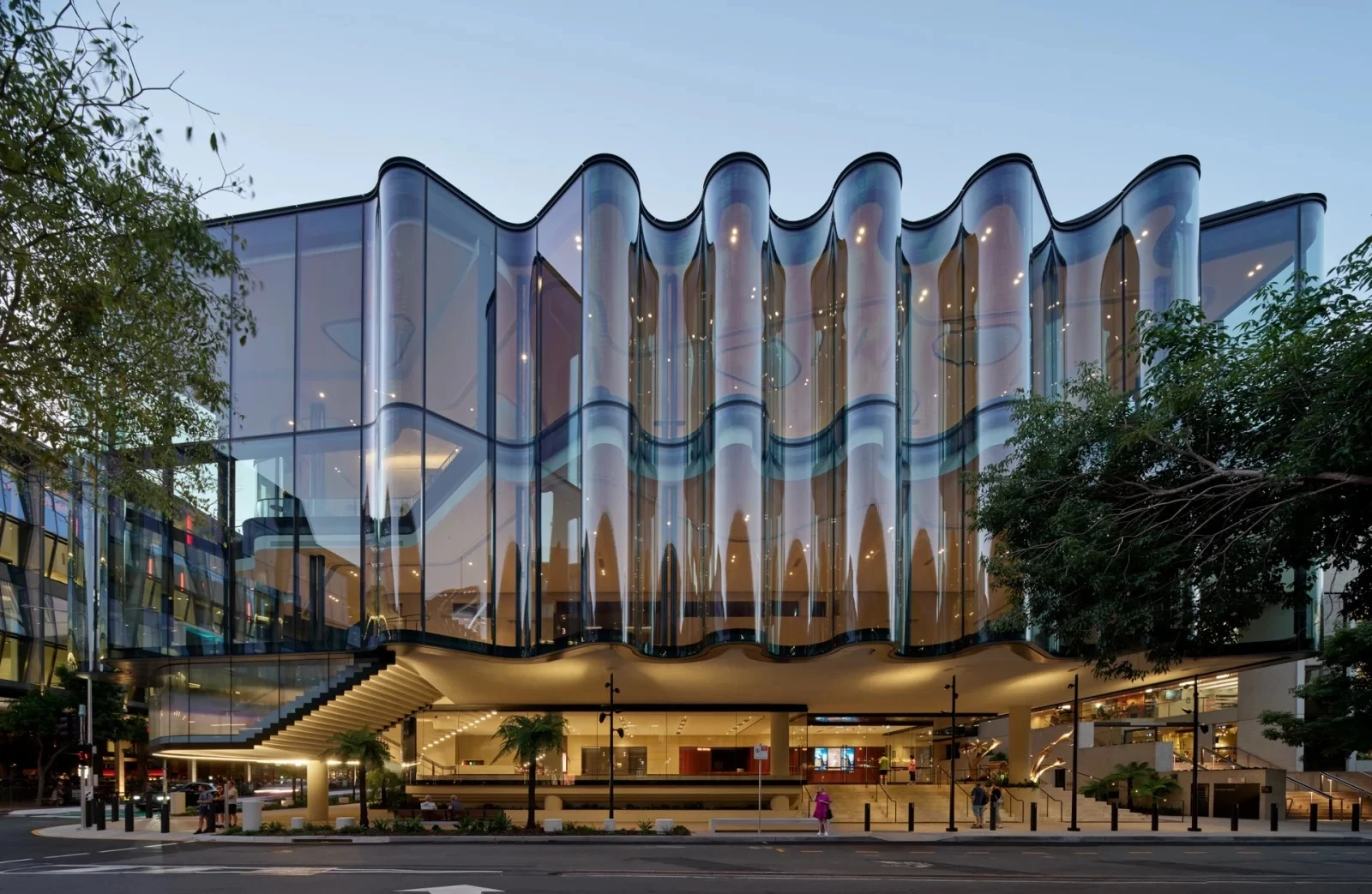
Glass façades have evolved beyond transparency, and today we see them acting as dynamic skins that shape identity, filter light, and mediate between the interior and the exterior. Across scales, they are no longer passive envelopes but active architectural systems. From cultural buildings to retail flagships and large infrastructure, the new age glass façades indicate how material innovation can redefine spatial experience while improving environmental performance.
Glass as a Dynamic Urban Interface
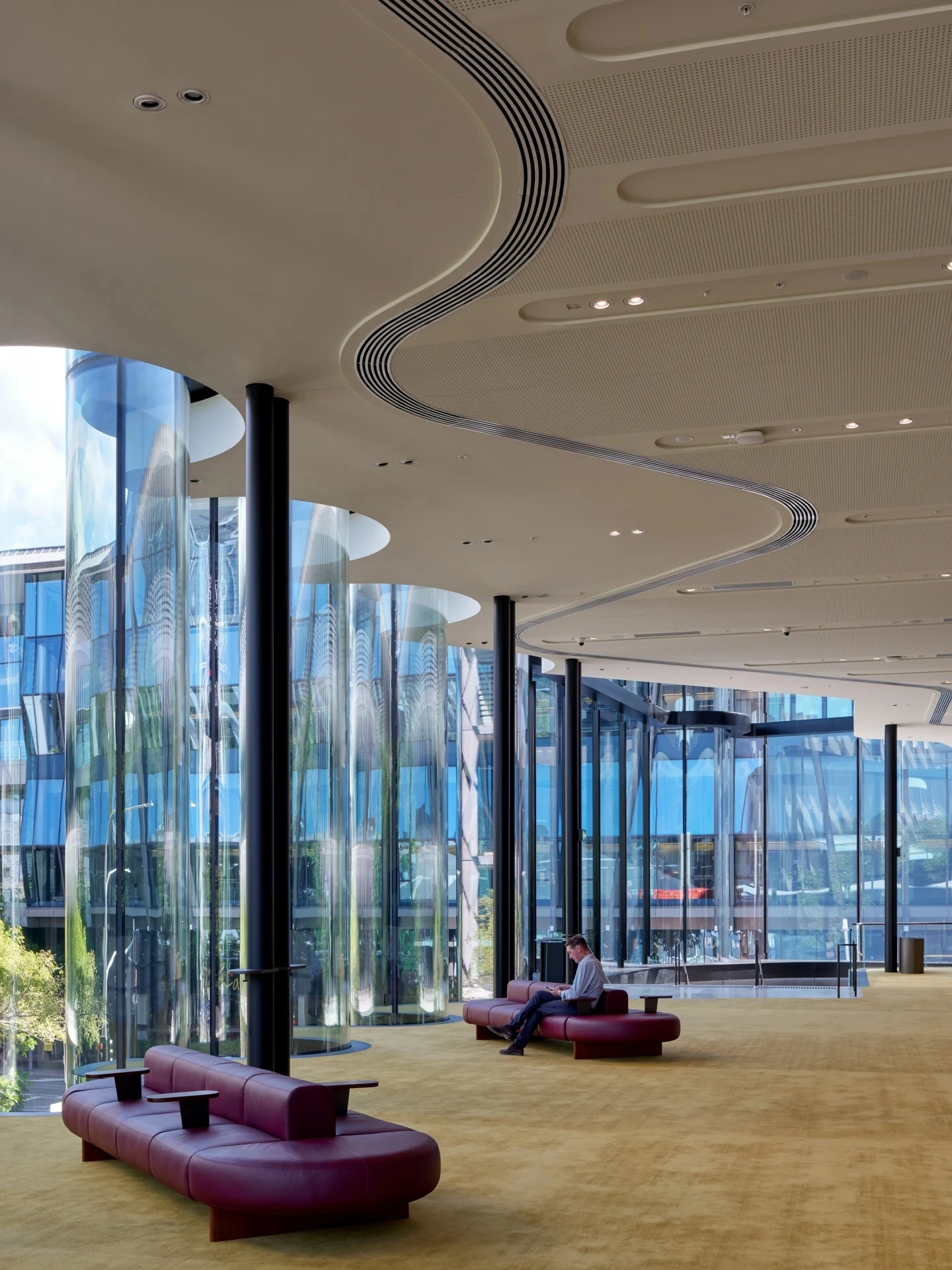
Glass façades are designed to engage with their surroundings via transparency, where visibility, reflection, and opacity are carefully balanced. This creates a dialogue between inside and outside, allowing buildings to feel more open, accessible, and connected to urban life while still maintaining thermal and visual comfort.
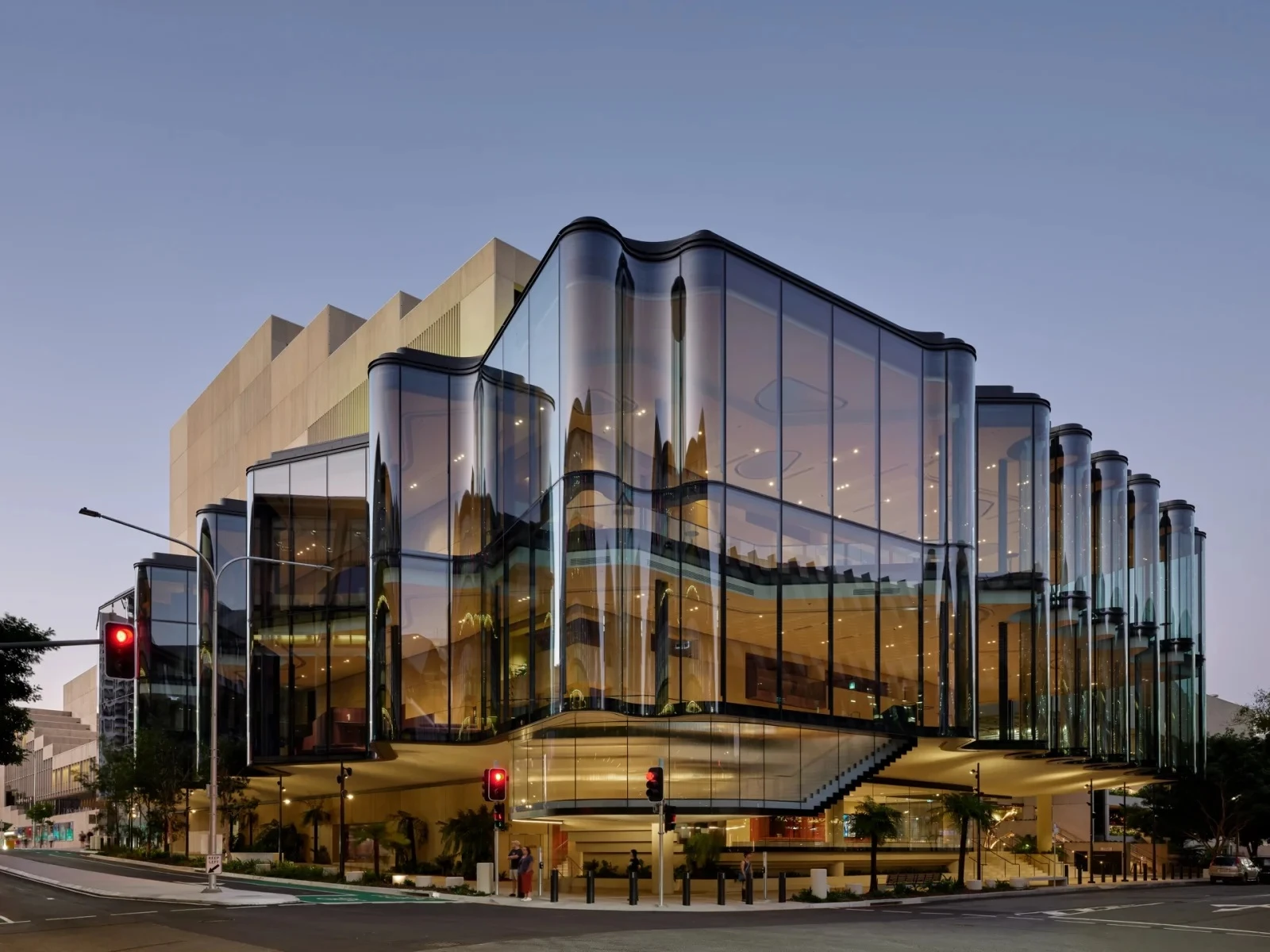
The Glasshouse Theatre in Brisbane by Snøhetta and Blight Rayner demonstrates this approach through its rippling glass façade. Its transparent, undulating skin draws from the Brisbane River and First Nations narratives. Its high-performance layered glass controls light and heat, while subtly revealing interior activity, turning the façade into a cultural expression and a responsive environmental system.
Sculpting Identity Through Glass Geometry
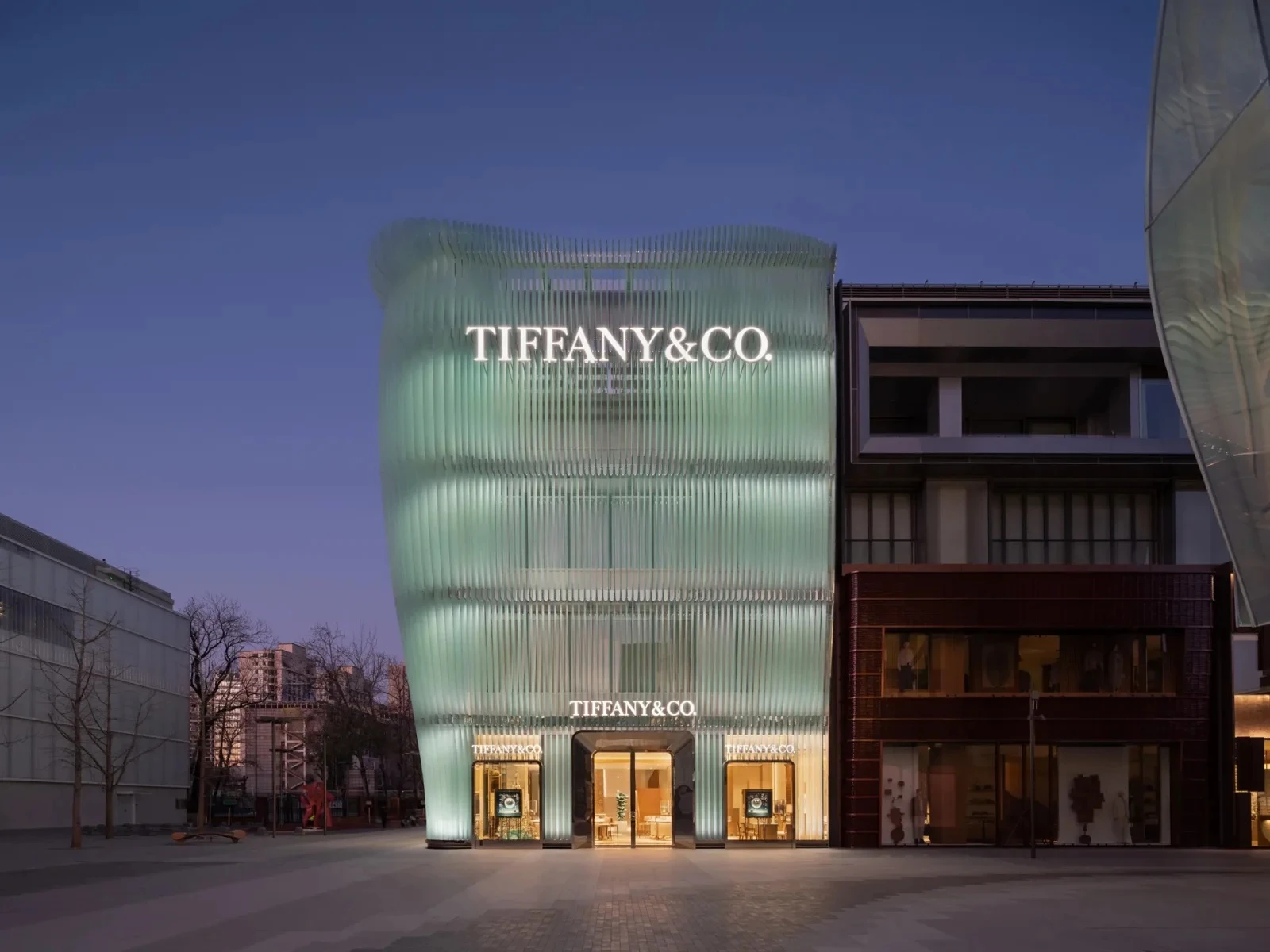
In contemporary architecture, glass is increasingly used to express identity through form and geometry. Instead of flat curtain walls, glass façades are becoming sculptural, using depth, curvature, and texture to create movement. Light becomes a design tool that continuously shapes how a building is perceived during the day and at night.
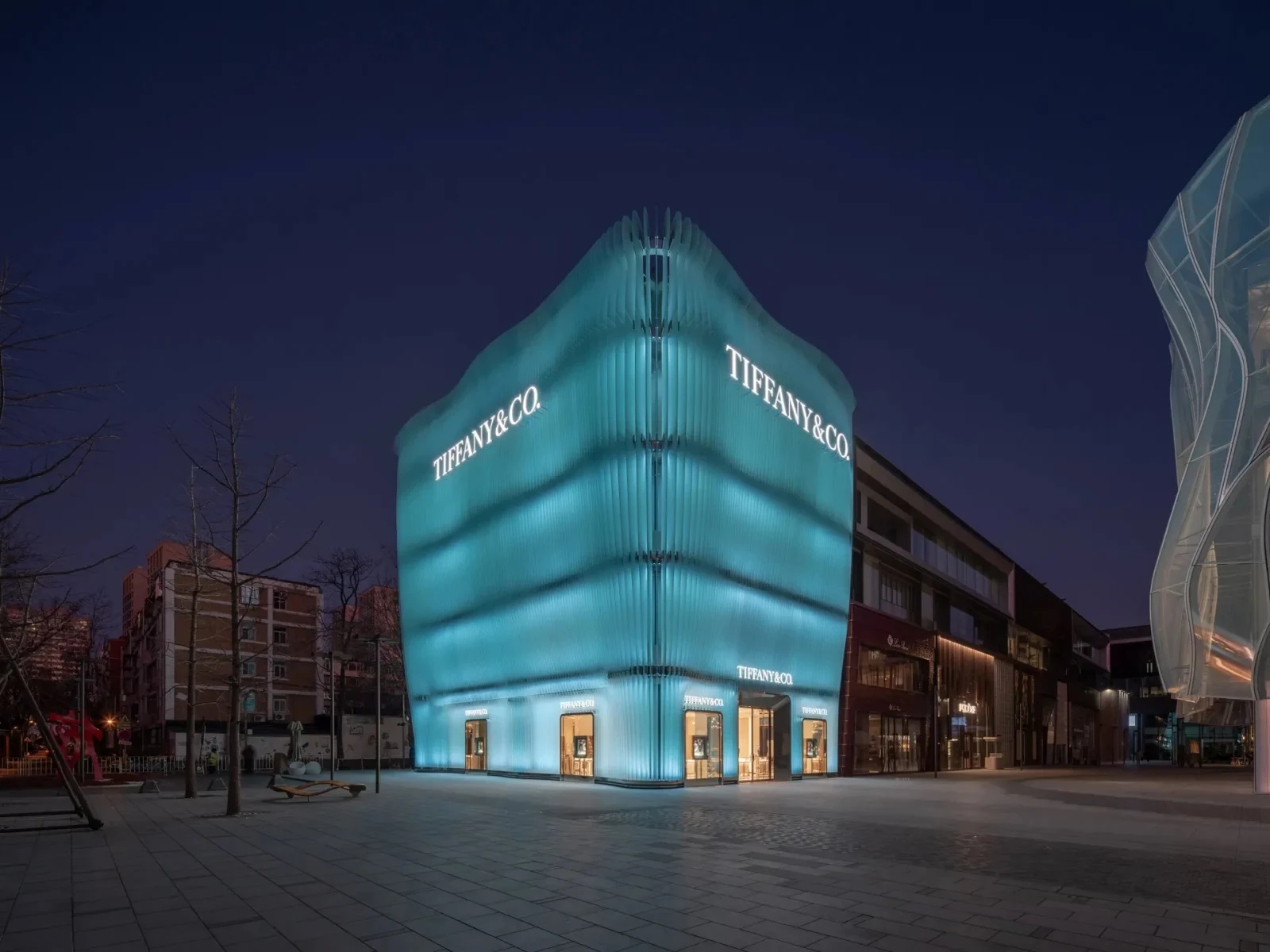
This strategy is evident in the Beijing flagship store for Tiffany & Co., designed by MVRDV. The project uses vertical translucent glass fins with fluid curves, translating jewelry-inspired geometry into architecture. Rising four storeys, the textured fins shift between reflection and transparency while filtering light. Made from recycled glass and designed for disassembly, the façade balances visual richness with sustainability, turning the building into a glowing, lantern-like landmark within Beijing’s urban fabric.
Transparency, Scale, and Experience in Infrastructure
At larger scales, glass façades play a critical role in shaping user experience. One can experience most clearly in transport hubs, where transparency improves orientation, reduces stress, and enhances spatial clarity. Natural light becomes essential, guiding movement and making large environments feel intuitive and welcoming.
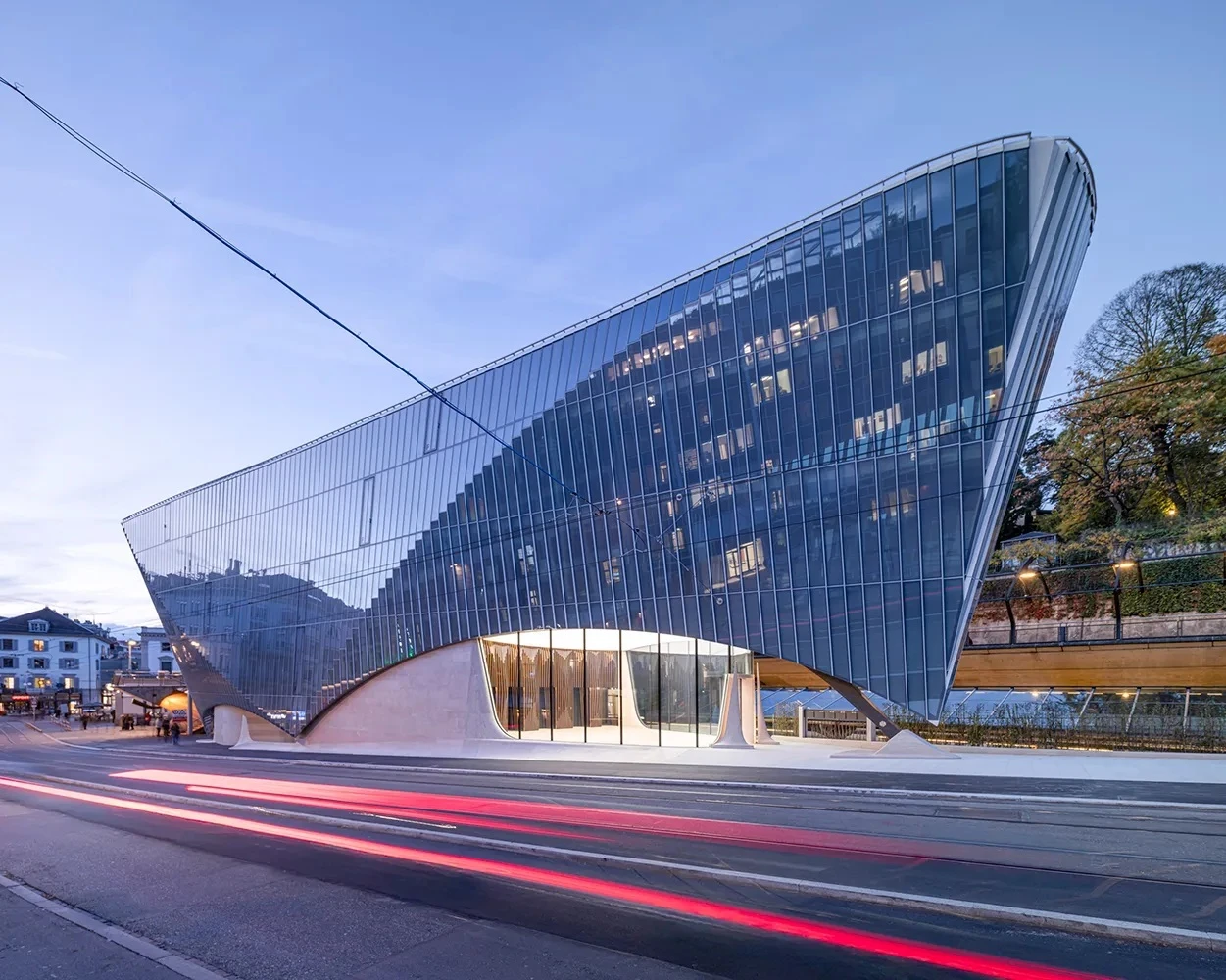
Expansive glazing defines this approach in Haus zum Falken by Santiago Calatrava. Composed of 260 custom glass panels, the folded façade carefully balances transparency and scale, admitting daylight while controlling exposure along the busy Stadelhofen Station edge. Its faceted geometry diffuses reflections and noise, creating calmer interiors. At the same time, the large glazed surface maintains visual openness, allowing the building to feel lightweight and seamlessly connected to its dense urban context.
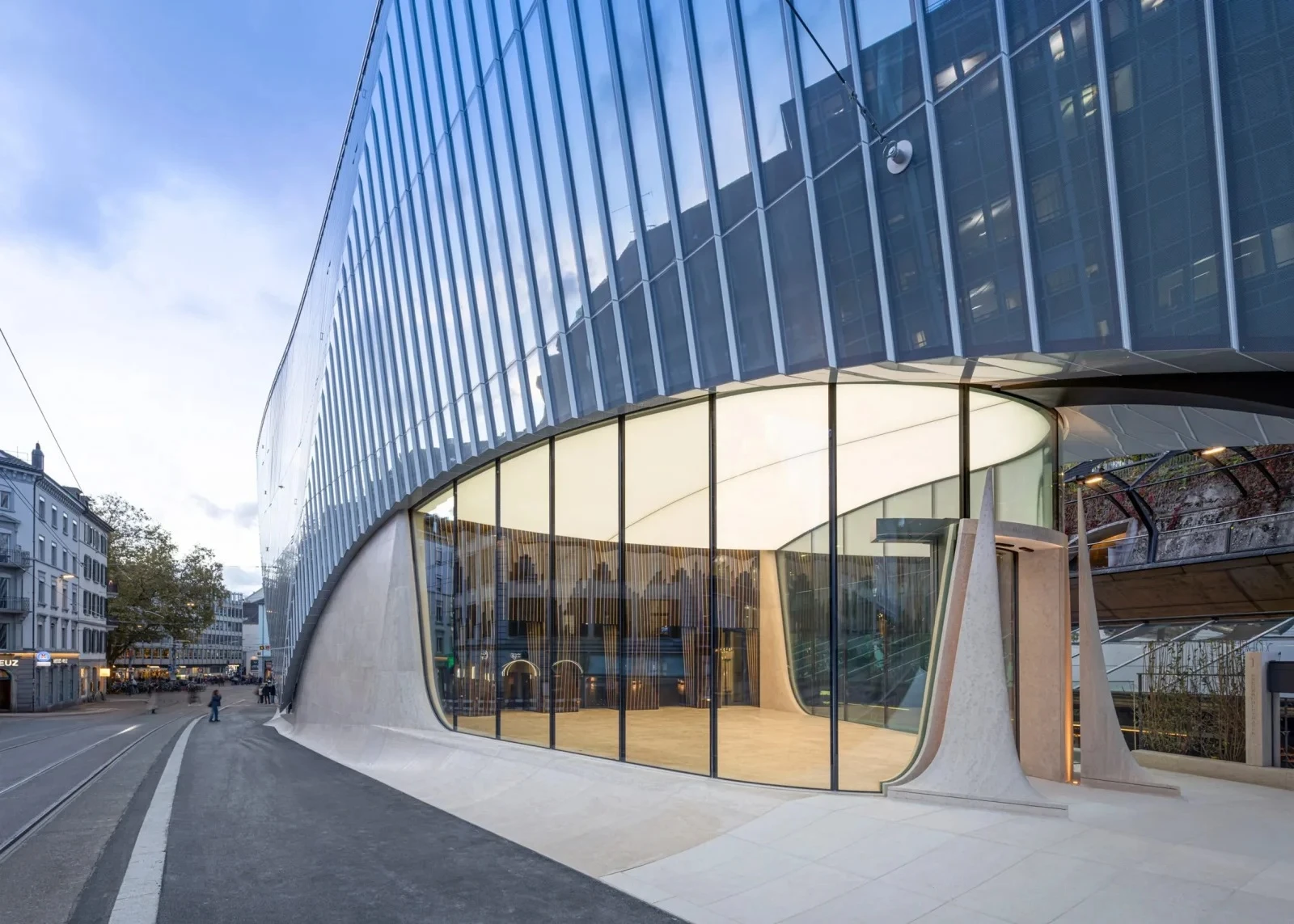
Glass façades now shape architectural narratives, improve performance, and create immersive spatial experiences. As design continues to evolve, glass façades are expected to push boundaries further by integrating technology, sustainability, and storytelling into a cohesive and refined architectural expression.
Explore Courses
.jpg "Ondrej Chybik - Rethinking Architecture")