

The city council of The Hague in the Netherlands has approved a major development strategy for Laakhavens Hollands Spoor, a key area within the Central Innovation District (CID). This plan marks an important step in expanding the city’s core, with the CID set to significantly increase the size of The Hague’s central area.
Laakhavens, situated near Hollands Spoor station, will transform into a vibrant mixed-use district that seamlessly integrates housing, workplaces, public amenities, and green spaces. The broader CID connects major transport hubs such as The Hague Central, Hollands Spoor, and Laan van NOI, bringing together educational institutions, businesses, and research centers to encourage collaboration and innovation.
The Hague’s Vision for a Hub of Living and Innovation
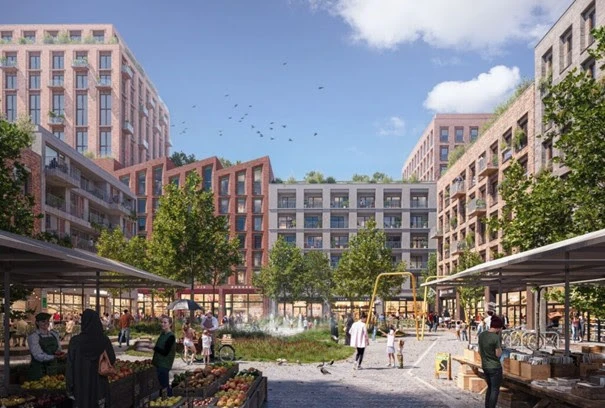
The vision for Laakhavens Hollands Spoor focuses on creating a dynamic urban environment where people can live, work, and study in proximity. The plan allows for the construction of around 11,400 homes by 2040, alongside offices, cultural spaces, shops, and hospitality venues. Development is already underway in parts of the area, including around Waldorpstraat and the Megastores district. The municipality will continue to guide the project in partnership with developers and investors, shaping the area into a thriving community that supports both economic activity and everyday urban life.
A Greener, Future-Focused Neighborhood
Klaas Verschuure, Alderman for Urban Development in The Hague, said the project marks the beginning of the city’s long-term transformation. He noted that it lays the foundation for The Hague’s development over the next fifteen years and brings new opportunities for people seeking housing in the city, as well as future generations.
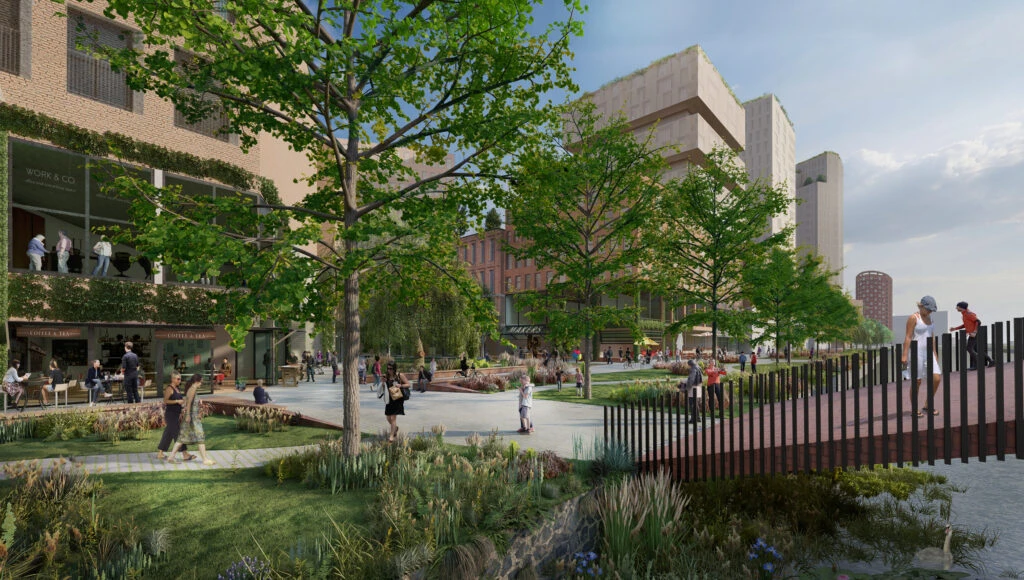
He added that the neighborhood will undergo a significant renewal, shifting away from its current “concrete jungle” character toward a greener, more sustainable urban environment. According to him, the area will become largely car-free, with a strong emphasis on cycling and walking infrastructure, offering a glimpse of what he described as the future direction of The Hague.
Sustainability and liveability are central to the redevelopment strategy. The plan includes a large new city park, greener streets, and public spaces designed to encourage walking, cycling, and social interaction. Traffic will be reduced in favor of pedestrian- and cyclist-friendly infrastructure, while climate-conscious features such as improved water management, tree planting, and heat reduction measures will be introduced. Together, these efforts aim to transform Laakhavens from a dense, concrete-heavy area into a more environmentally friendly and people-oriented neighborhood and are aligned with The Hague’s long-term vision for urban growth.