

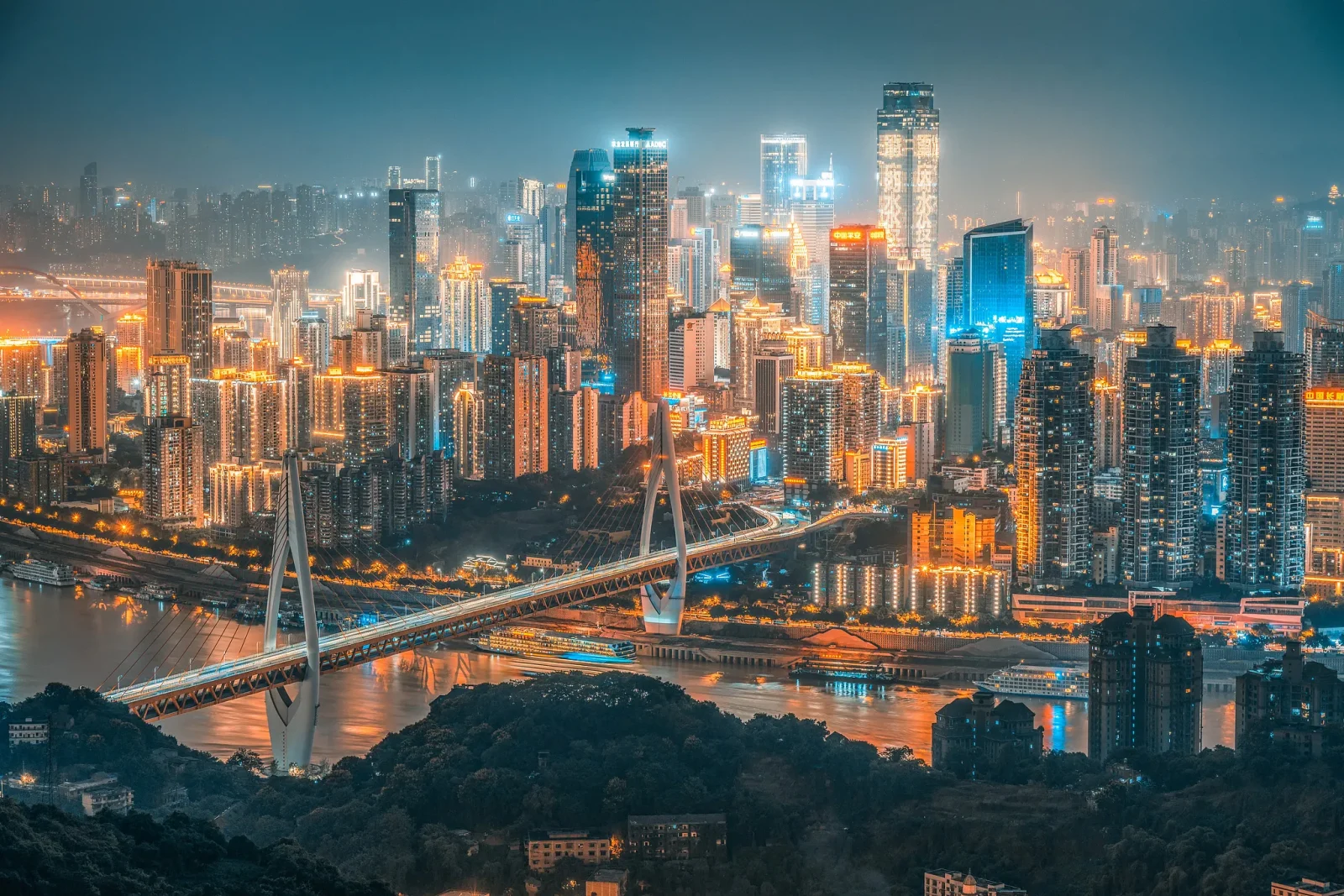
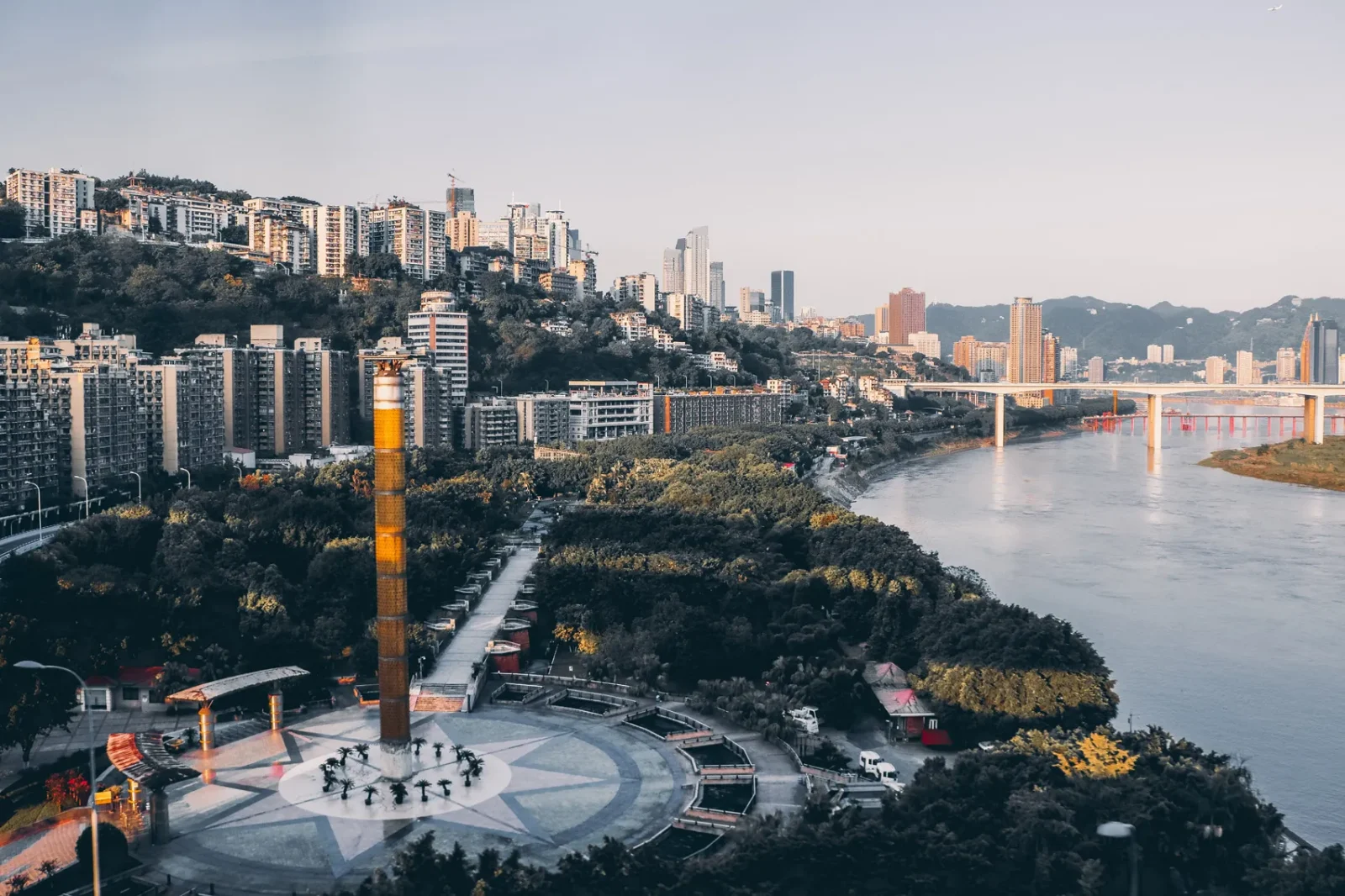
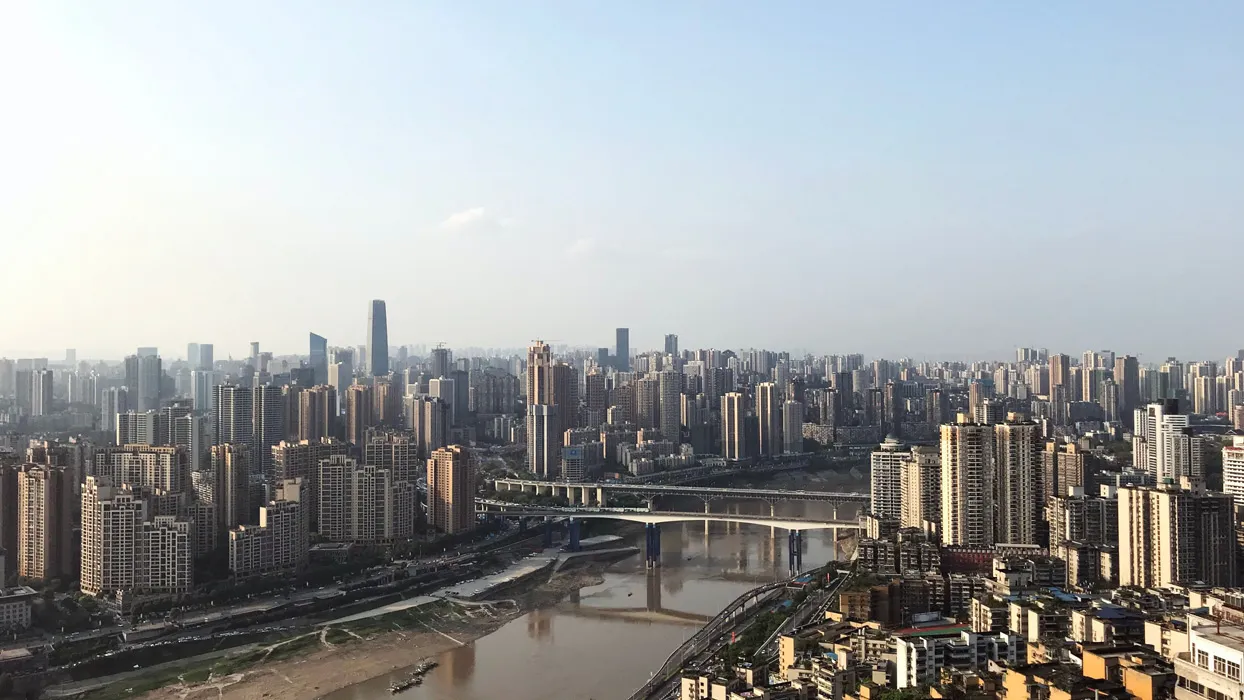
Chongqing stands as one of China’s most emblematic megacities, where history and hypermodernity converge in dramatic fashion. Carved between the Yangtze and Jialing rivers, its steep topography and riverine geography have long shaped an urban identity known as the “Mountain City” (Shancheng) and the “Fog Capital” (Wudu).
This unique terrain has produced a vertical metropolis of extraordinary density, where infrastructure threads through cliffs, towers rise above swirling mist, and heritage sites coexist with futuristic architecture.
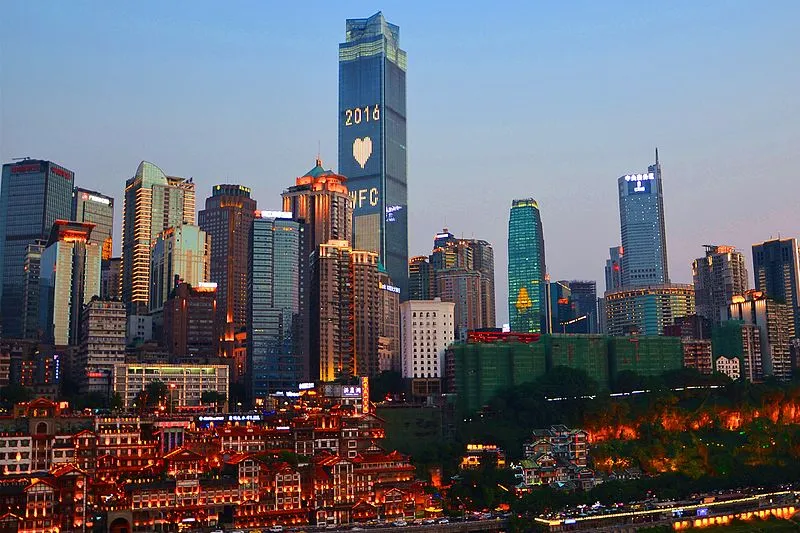
Real Life Cyberpunk City
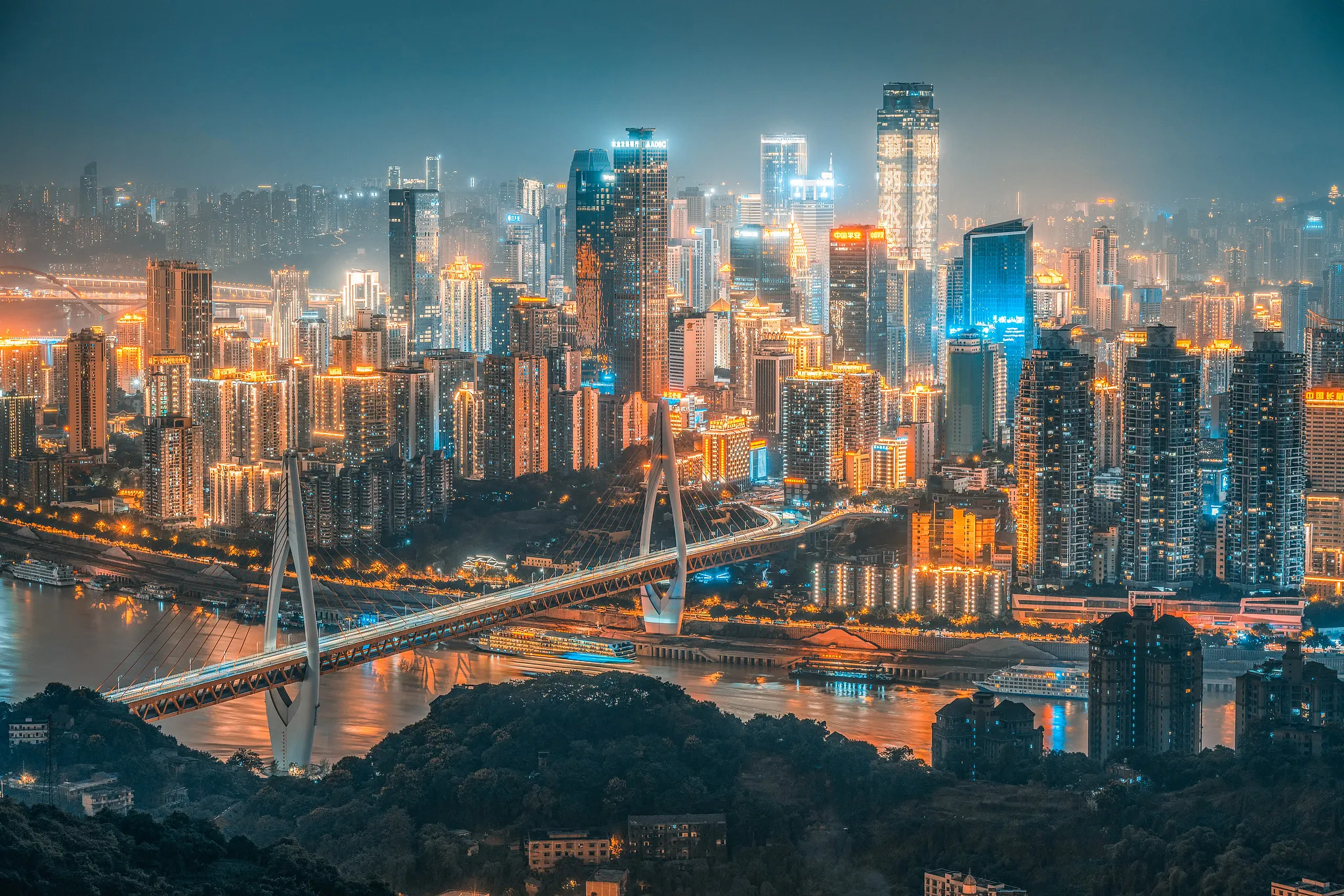
Compared to a real-life cyberpunk city, the architectural language evolved in the vertical form of tunnels. Skyscrapers, multi-level roads, and sky bridges blend with the surroundings and rise as the 8D City or 3D Magic City.
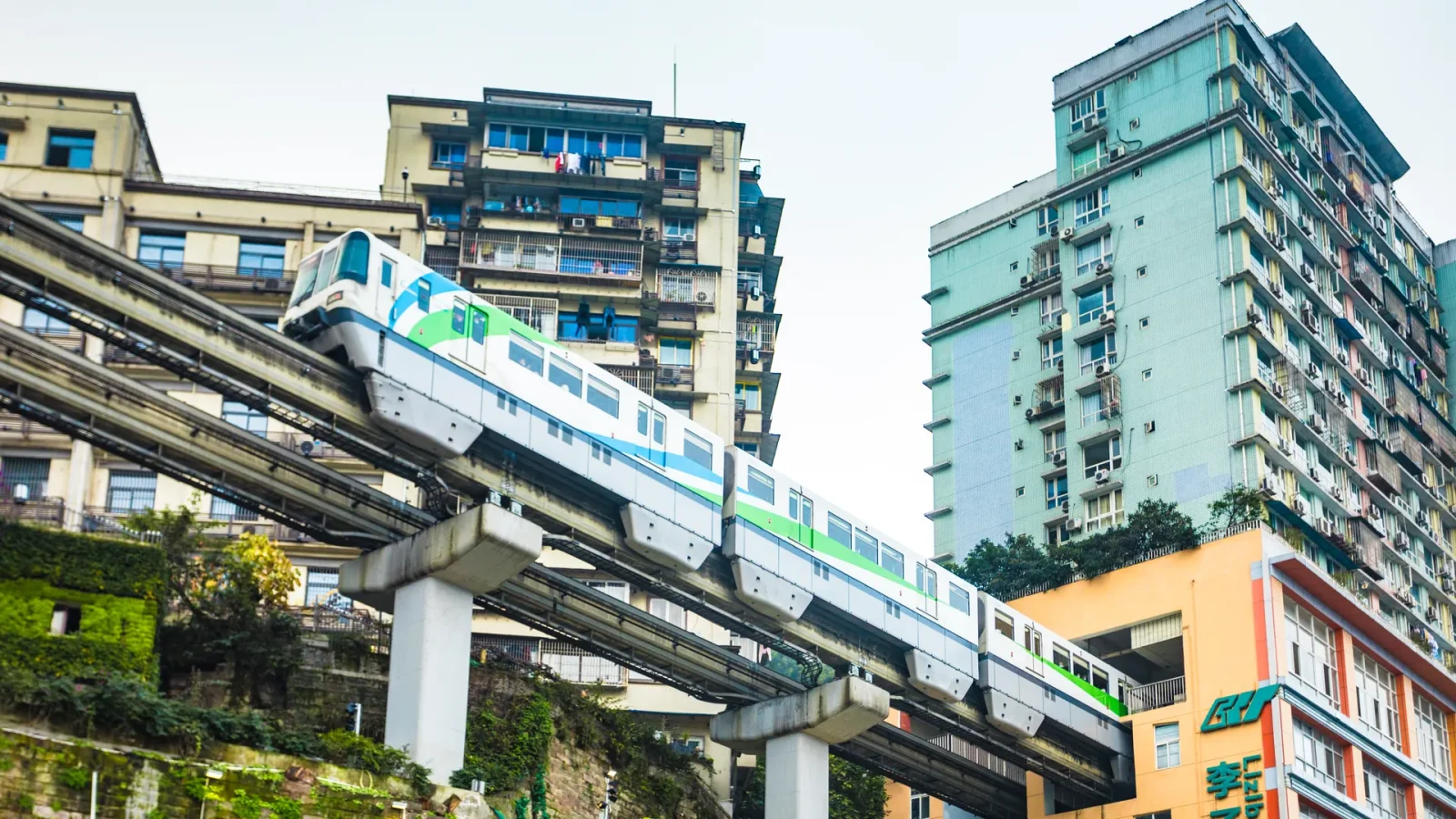
A few notable urban features include a train line that passes through an apartment building, a complex tower connected through a horizontal sky bridge, rooftop shopping centers, and a pedestrian skywalk, reflecting the city’s urban form. Chongqing city lies in contradictions – representation of ancient yet futuristic, chaotic yet orderly, rugged yet refined.
Here is the list of 10 extraordinary projects that highlight the cultural, innovative, and futuristic vision of Chongqing city:
1. Chongqing Xinhua Bookstore Group Jiefangbei Book City Mixed-use Project
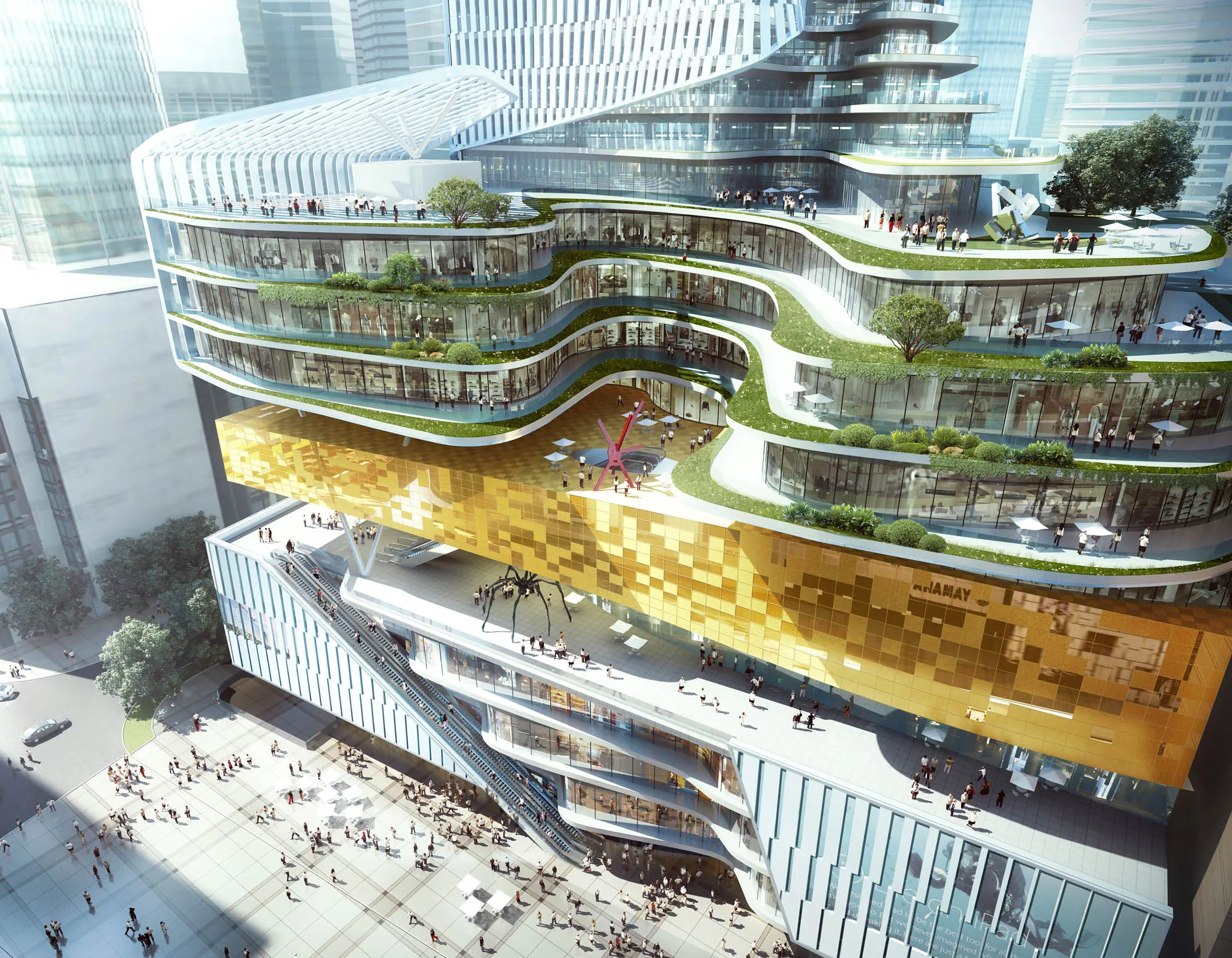
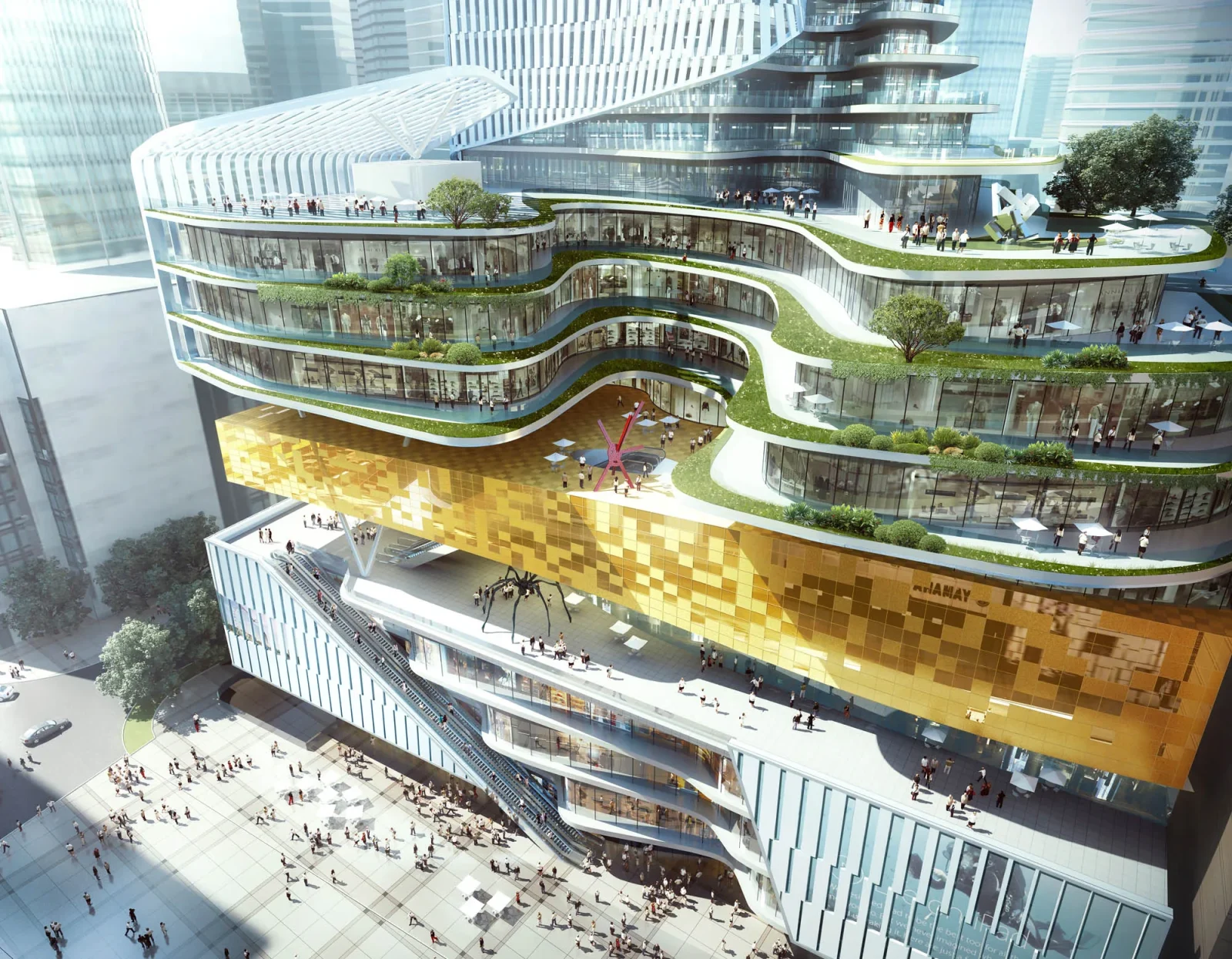
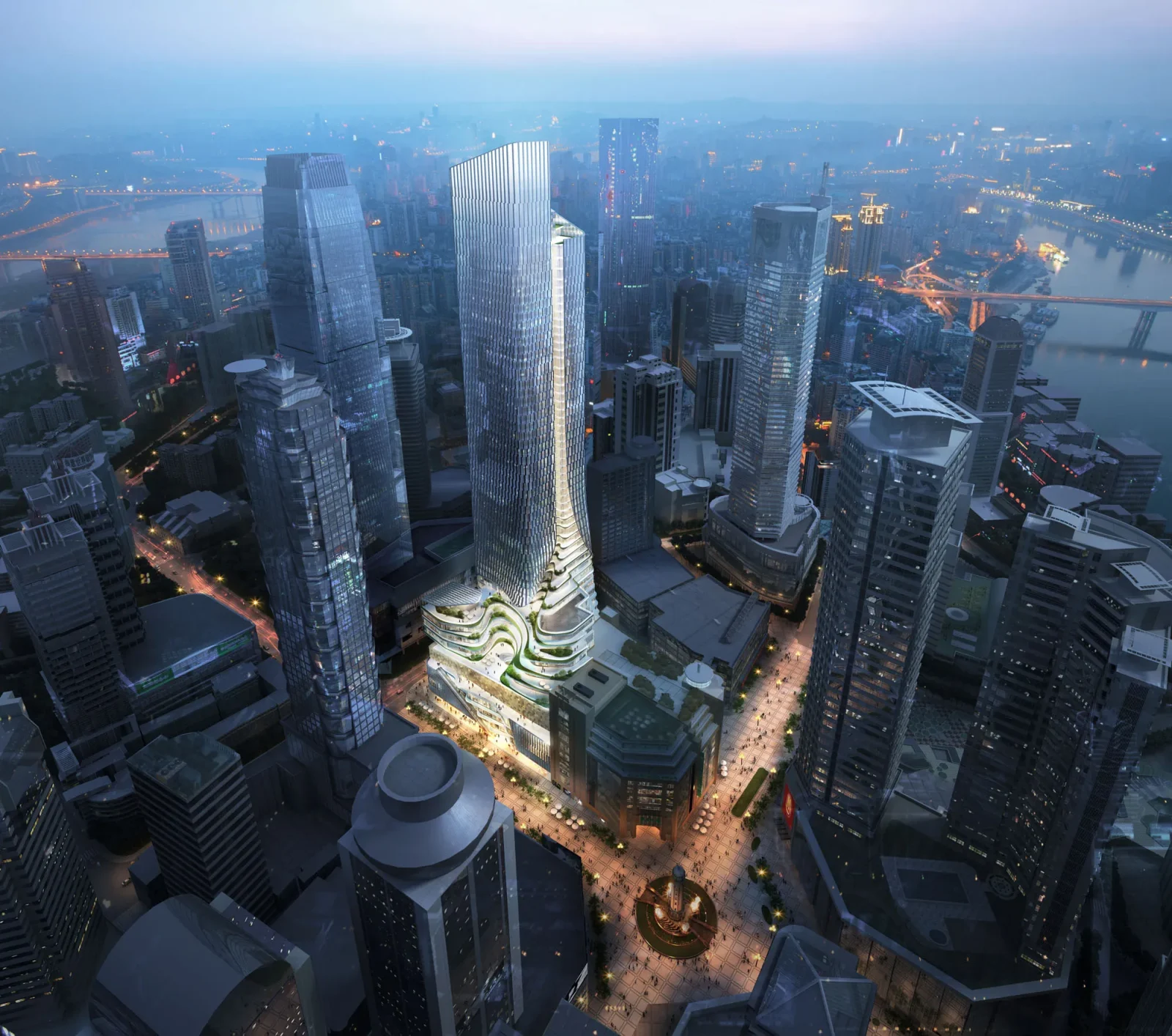
Designed by the renowned architectural firm Aedas, it features stepped terraces symbolizing form and function, echoing knowledge. Inspired by the Chinese proverb knowledge brings wealth, the architectural language was shaped on the concept of a rolling book scroll, a metaphor for wisdom, learning, and cultural authenticity.
Spanning across 153,980 sqm, the design features Office spaces, residential apartments, a boutique hotel, a public plaza, a sky garden, and a sky entertainment plaza to provide a vibrant space to gather and elevate the experiences.
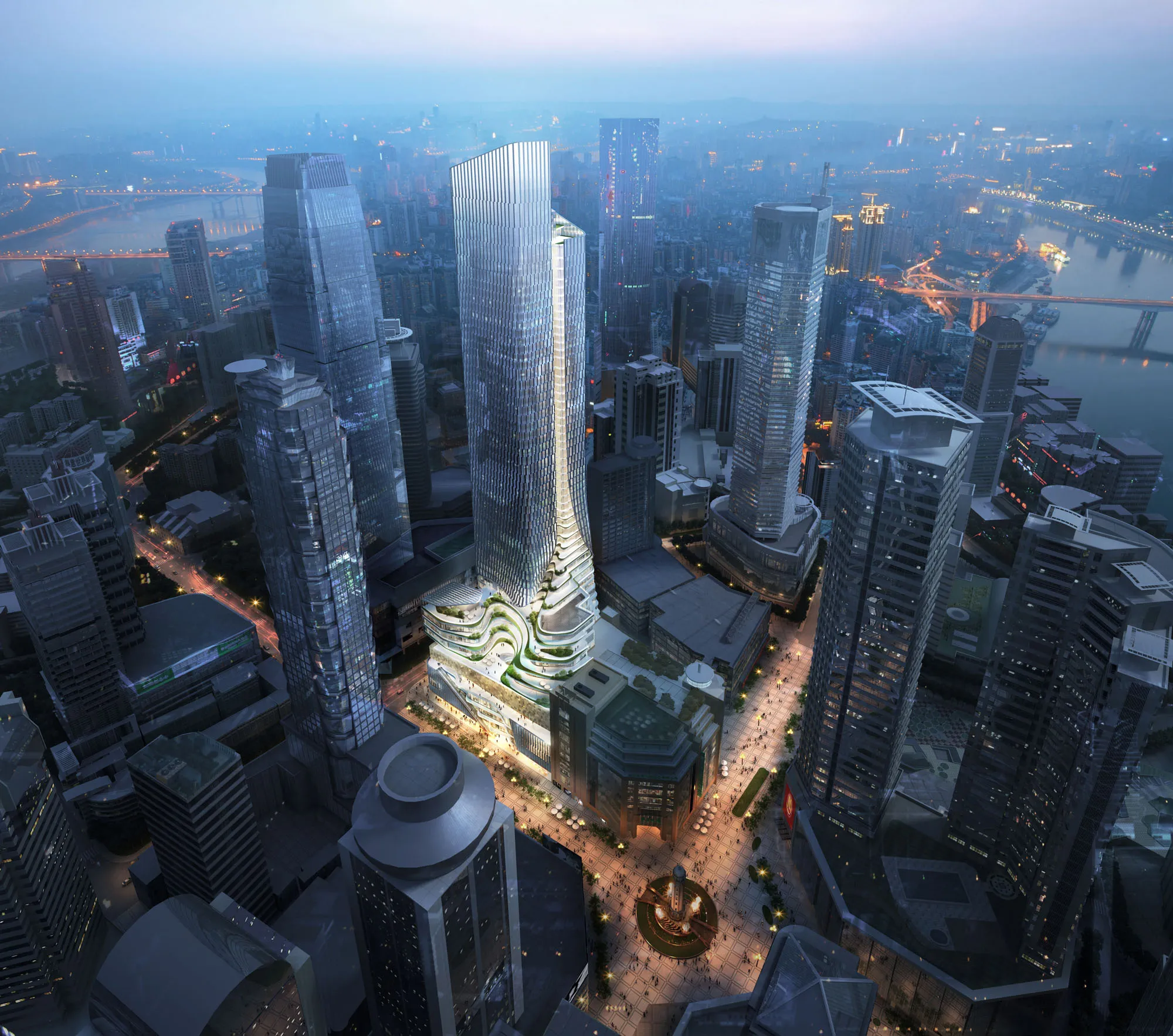
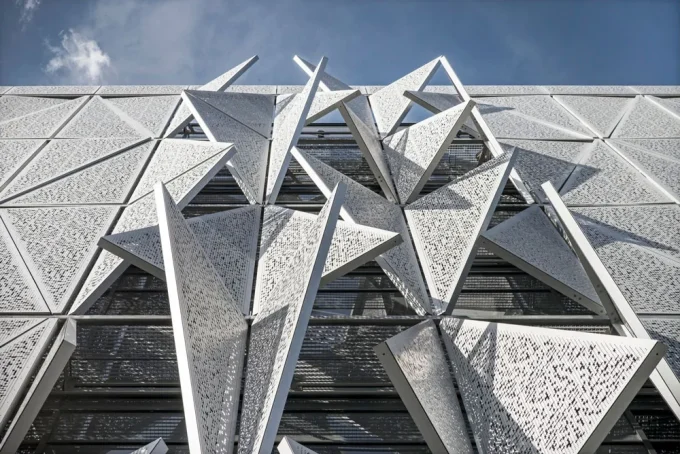
Well-connected plaza with express escalators enriches pedestrian interaction within the dense urban context. The facade of the built form integrates perforated aluminum panels with glass curtain walls, controlling daylight and ventilation while improving the ecological performance.
2. Raffles City Chongqing
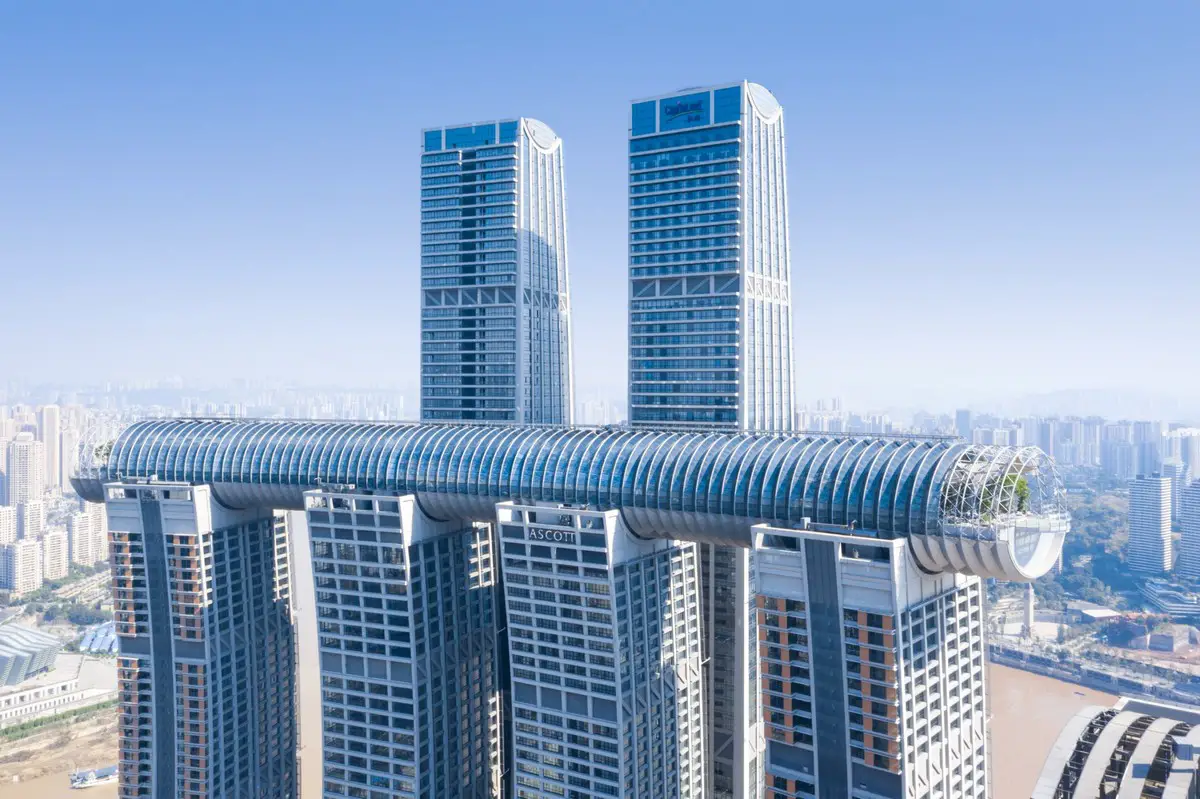
Composed of eight towers, Raffles City Chongqing is inspired by maritime history and the Chinese symbol of sailing vessels, meaning a gateway to the city. Designed by Safdie Architects, a mixed-use project located at the confluence of the Yangtze and Jialing rivers represents the vertical and horizontal skyscraper featuring public and green spaces connected at multiple heights. A
t the top of the towers sits the crystal, a 300 m horizontal skyscraper, assembled in nine segments functioning as a sky‑bridge linking multiple buildings. Advanced engineered by Arup, the building structure employs a mega frame system that withstands the loads, wind, and potential earthquake. Overlooking the Chaotianmen Square, the built form includes a podium with a retail mall, gallery, and a rooftop park.
3. Cuntan International Cruise Centre
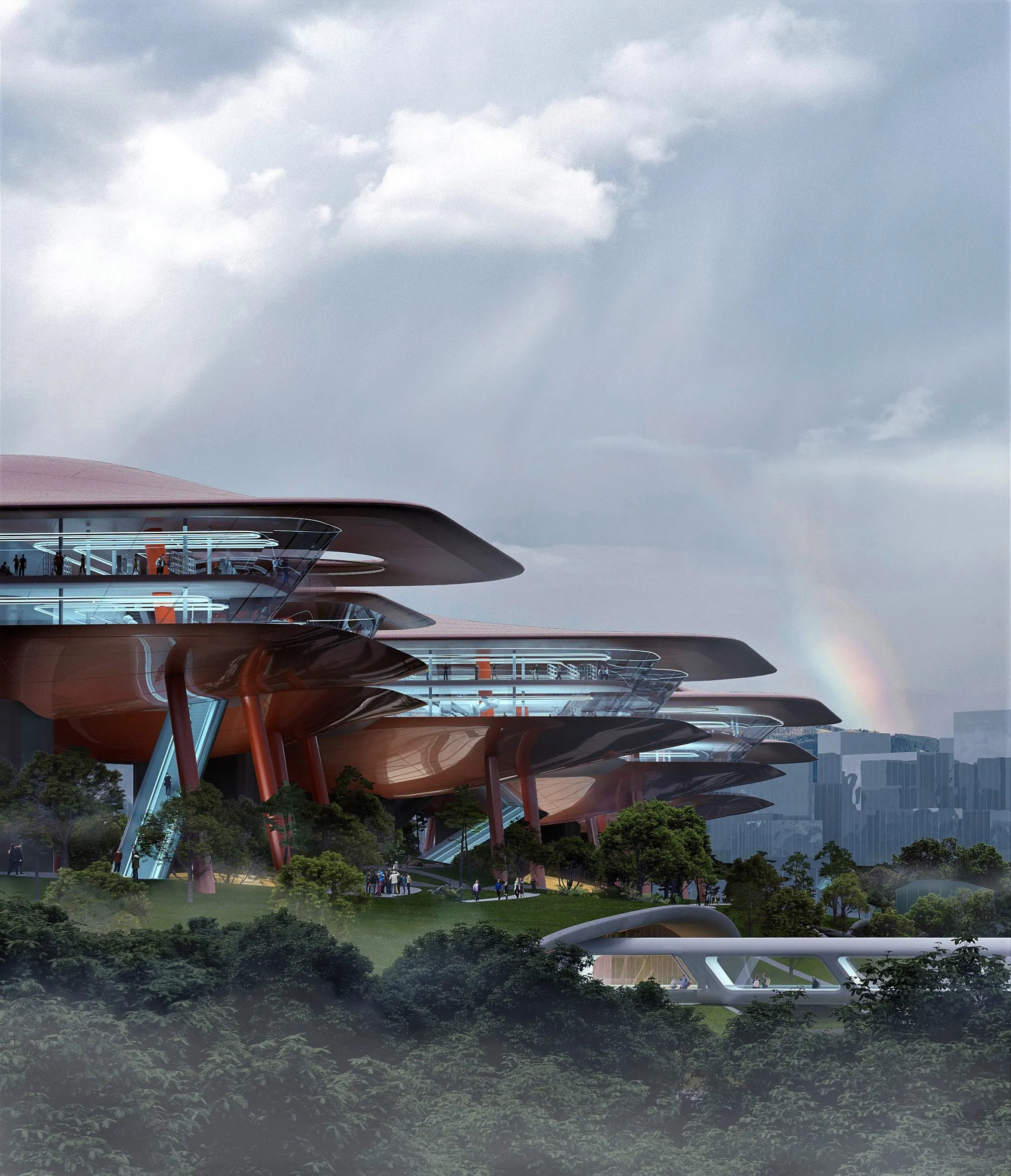
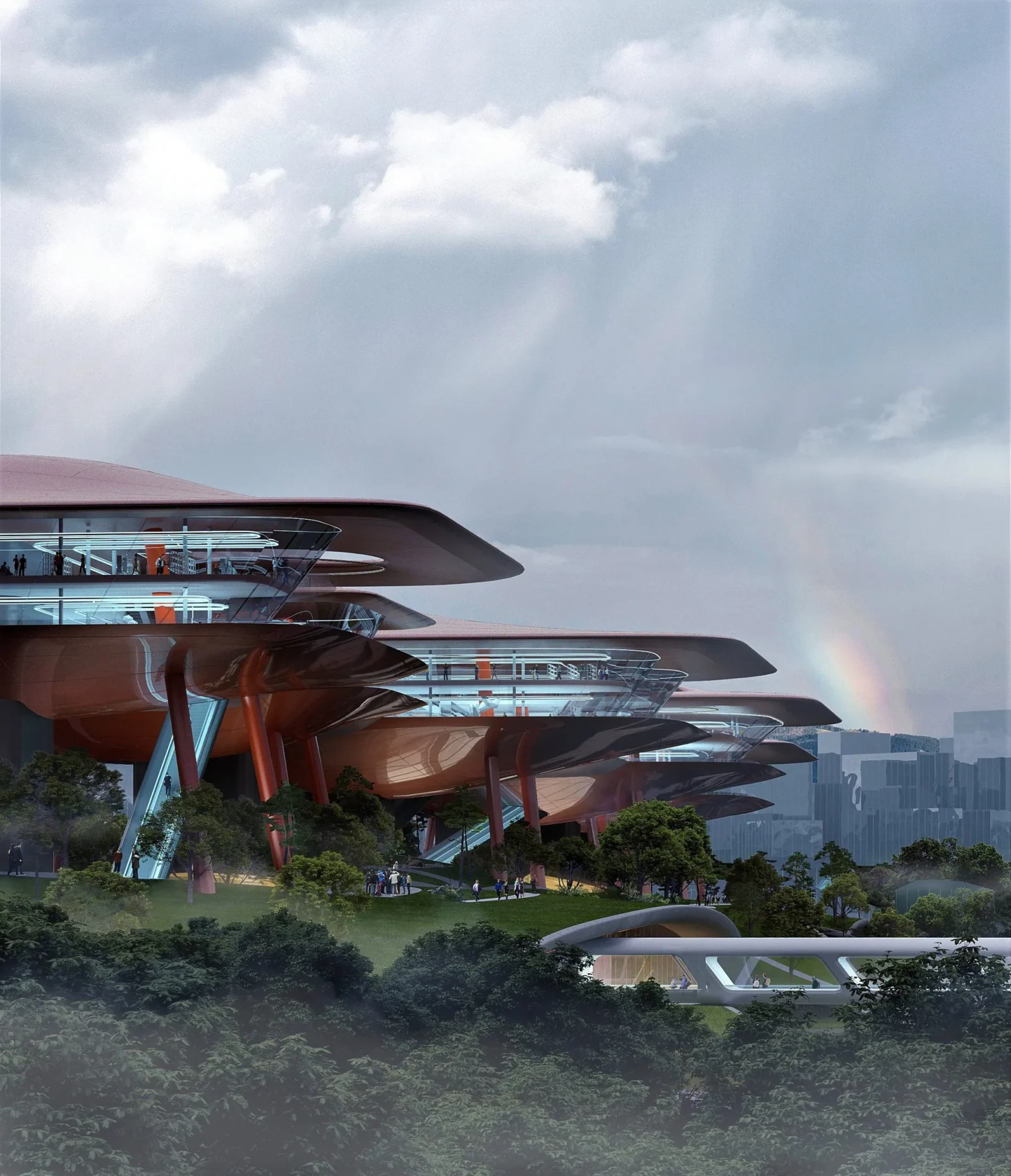
Opening in 2027, MAD Architects unveils the Cuntan International Cruise Centre in partnership with the China Academy of Building Research (CASR). Spanning across 65,000 m², the building structure consists of a 15,000 m² cruise terminal and 50,000 m² of commercial space.
Orange-hued gantry cranes of the old port were reimagined as surreal living alien creatures in the futuristic form that evokes energy and movement. Raised on supports and connected by the Yangtze River Skywalk, the structure elevates 430 metres vertically, forming the floating Chongqing city image.
4. Hongya Cave
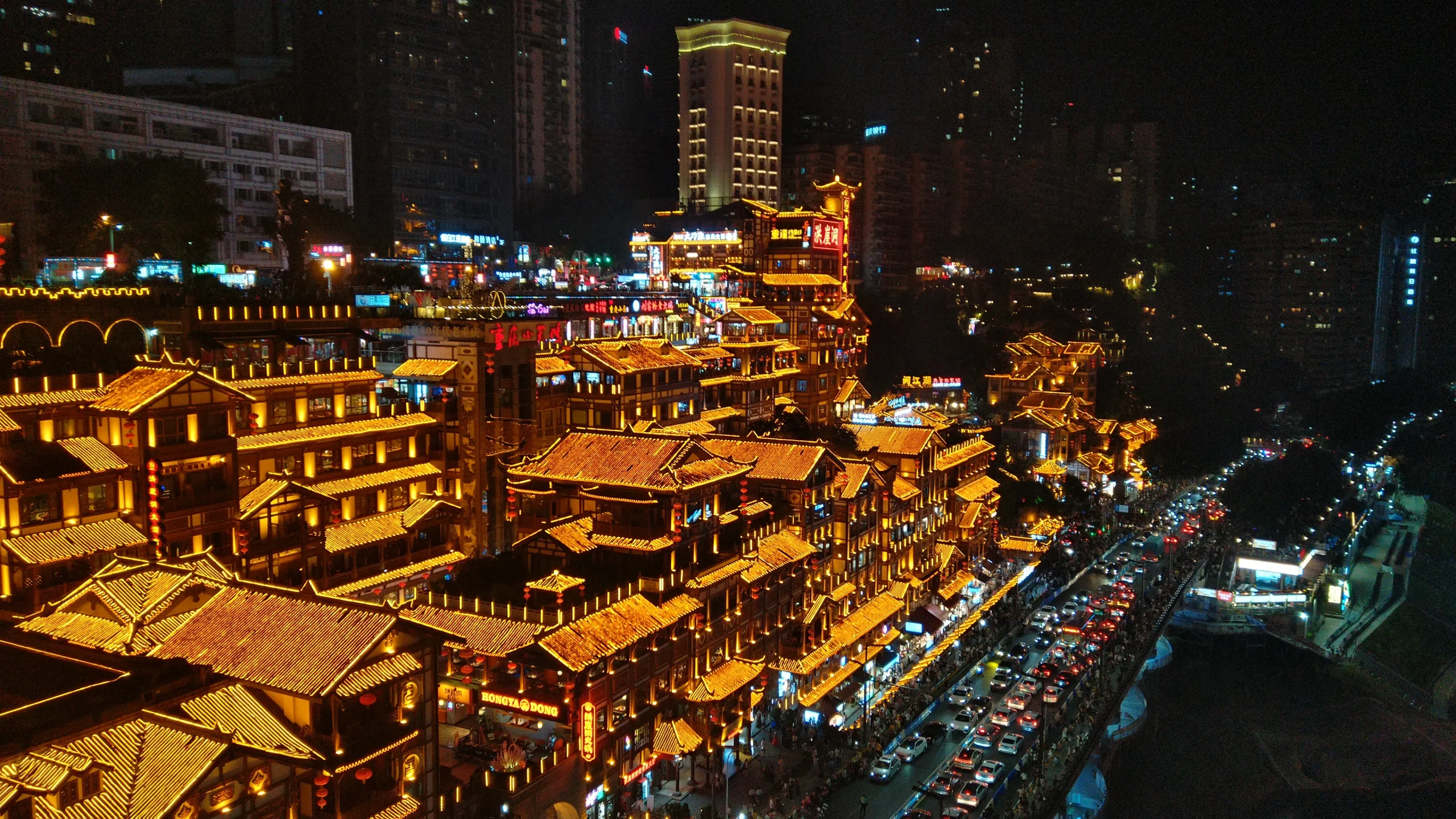
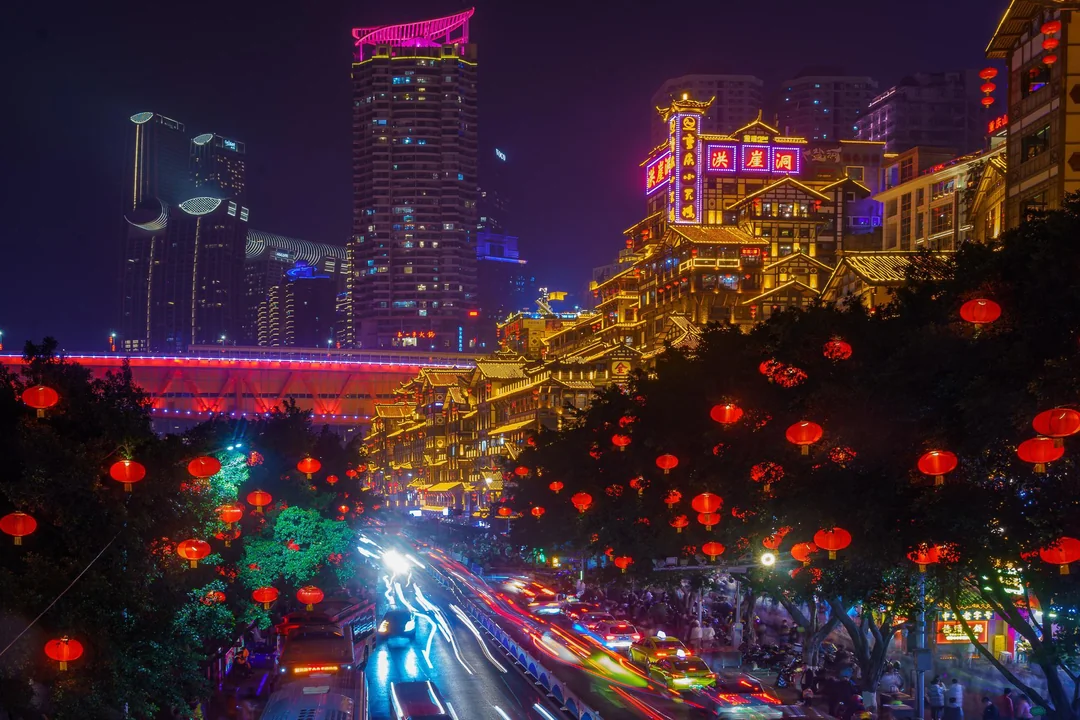
Hongya Cave, perched dramatically on the cliffs of the Jialing River in Chongqing’s Yuzhong District, is an 11-storey complex that reinterprets the city’s traditional diaojiaolou stilt houses within a vertical urban setting. By day, its maze of restaurants, teahouses, and handicraft shops offers glimpses into Chongqing’s cultural heritage, while terraces provide sweeping views of the river.
By night, the entire façade comes alive in a blaze of neon light, transforming the cliffside into a surreal, cinematic scene that has earned comparisons to cyberpunk cityscapes. With its layered walkways, escalators, and glowing façades, Hongya Cave has become both an architectural landmark and a must-visit attraction for travelers, merging vernacular tradition with the futuristic energy that defines Chongqing’s rapidly evolving skyline.
5. Chongqing Greenland Clubhouse
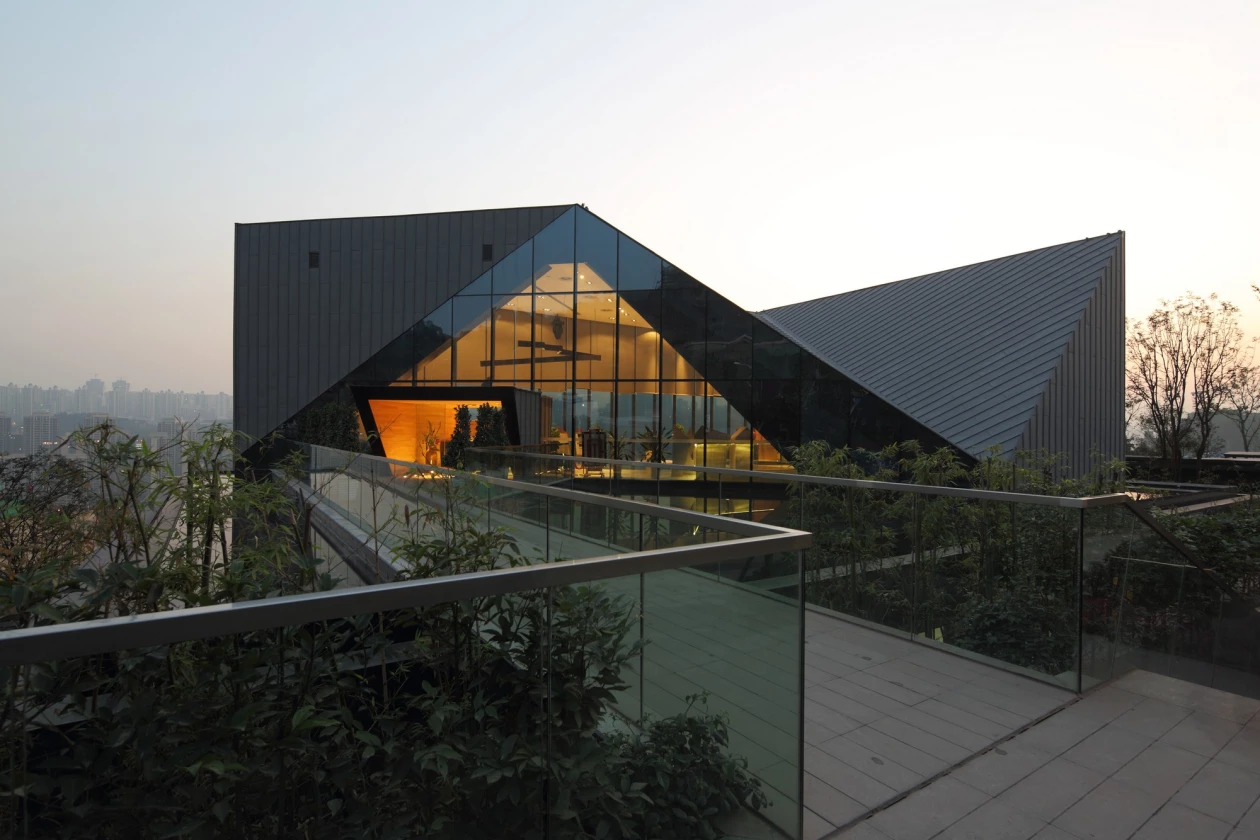
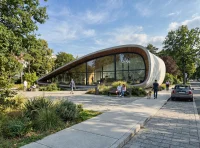
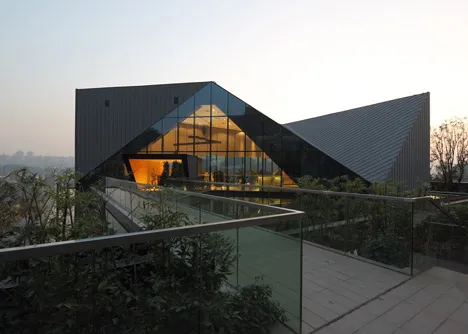
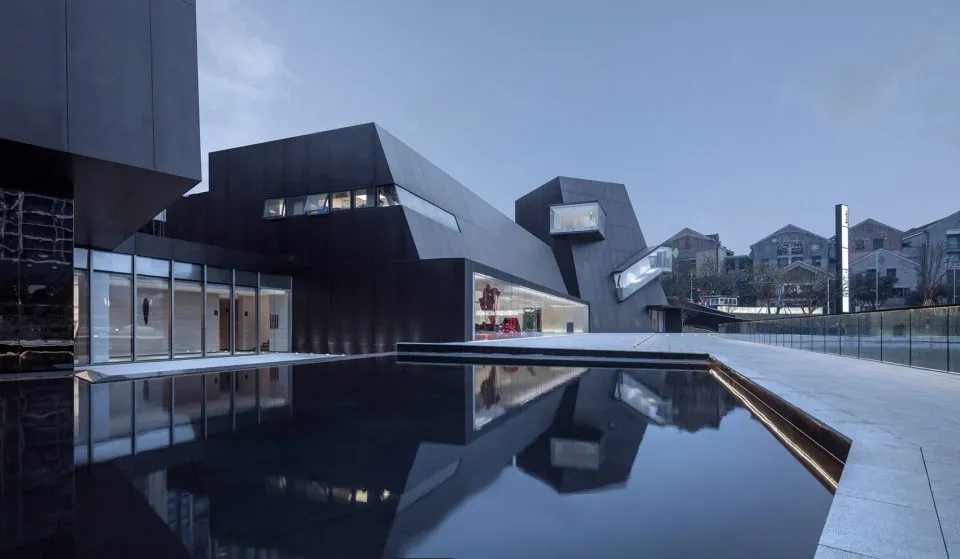
Pure Architecture crafted a terrain-driven clubhouse that resembles a crystal jewel box, a translucent and elegant structure. Perched up on a mountainside in Hong’en Temple Forest Park, the built form acts as a transitional dialogue between river and mountain.
The sleek form with a pitched roof looks like a boat setting sail. The two-level structure illustrates exhibition space with multimedia experience and river views, a sales center for real estate models and homes. To remain visually connected to the river, the facade was crafted using glazing, and on the mountain-facing side, the structure was solid and textured, blending with the context.
6. Chongqing Art Museum
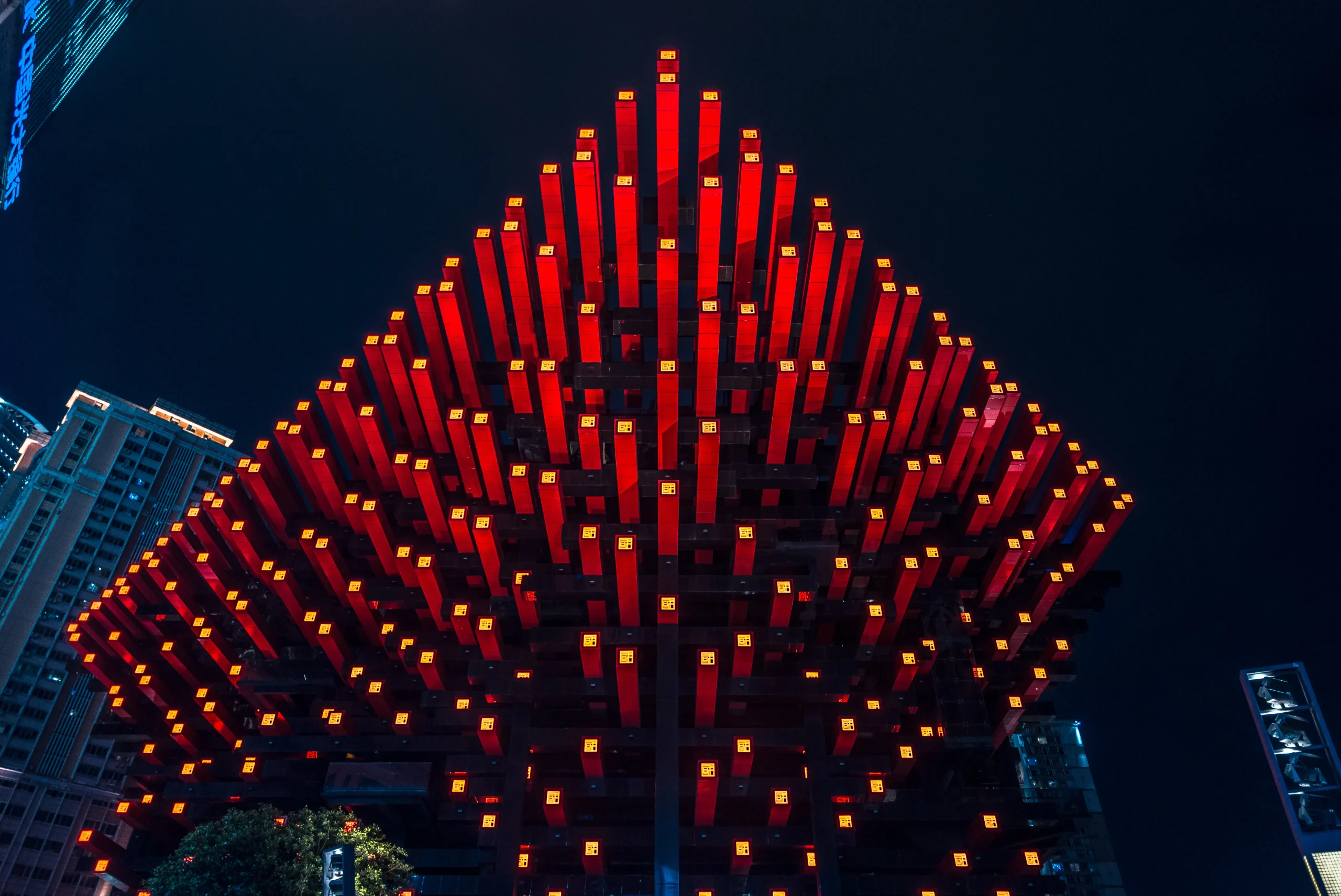
The Chongqing Art Museum, also known as the Guotai Arts Center, stands in the heart of Jiefangbei as an urban beacon of cultural identity. Designed by architect Cui Kai, its façade of interlocking red and black beams abstracts the ancient Chinese Dougong bracket system into a monumental architectural language.
The result is a structure that feels simultaneously archaic and futuristic, a vast geometric lattice suspended in the city. By day, its mass reads as a sculptural play of light and shadow; by night, illuminated beams transform the museum into a glowing grid that resonates with Chongqing’s dense skyline and layered infrastructure.
7. The Ring
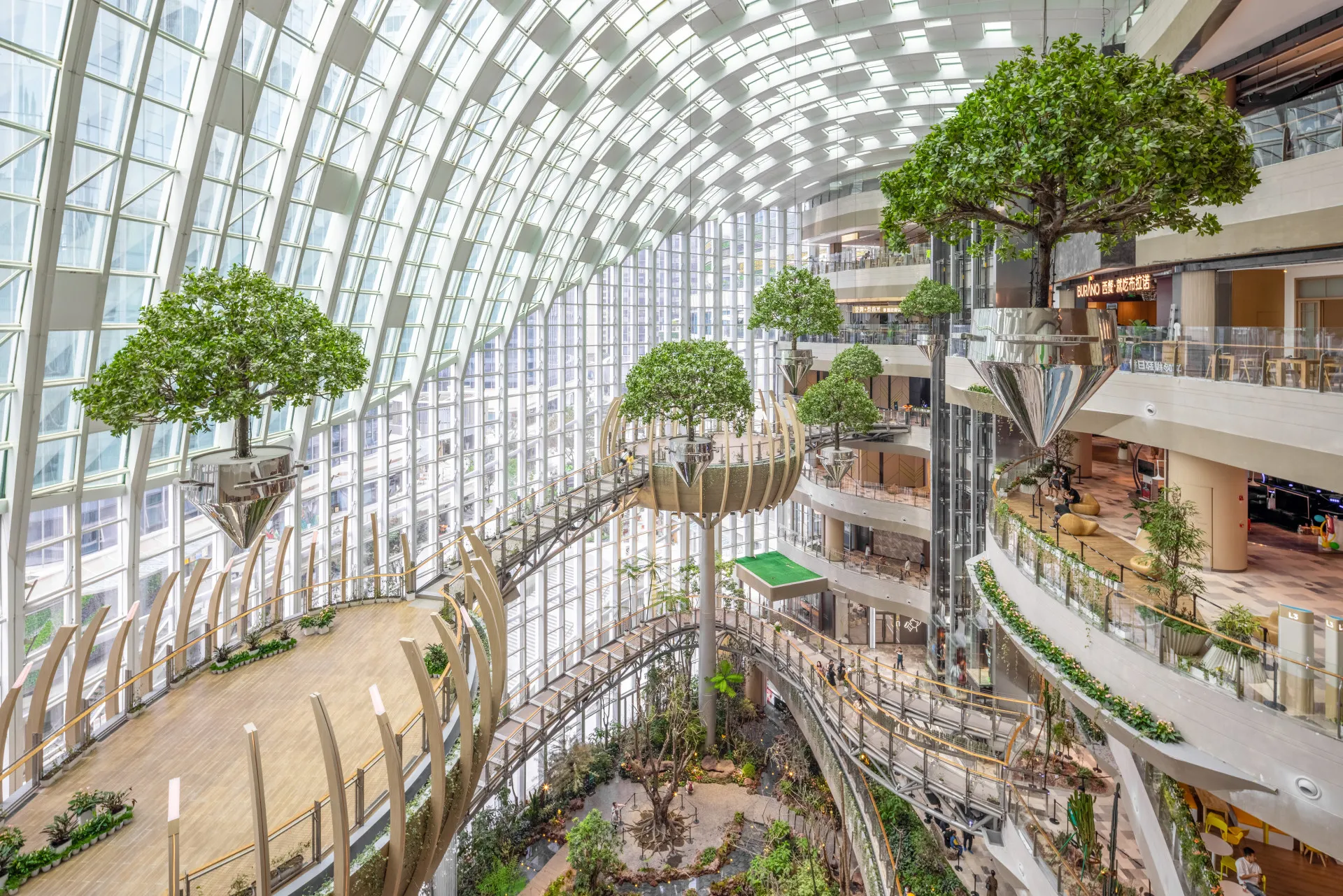
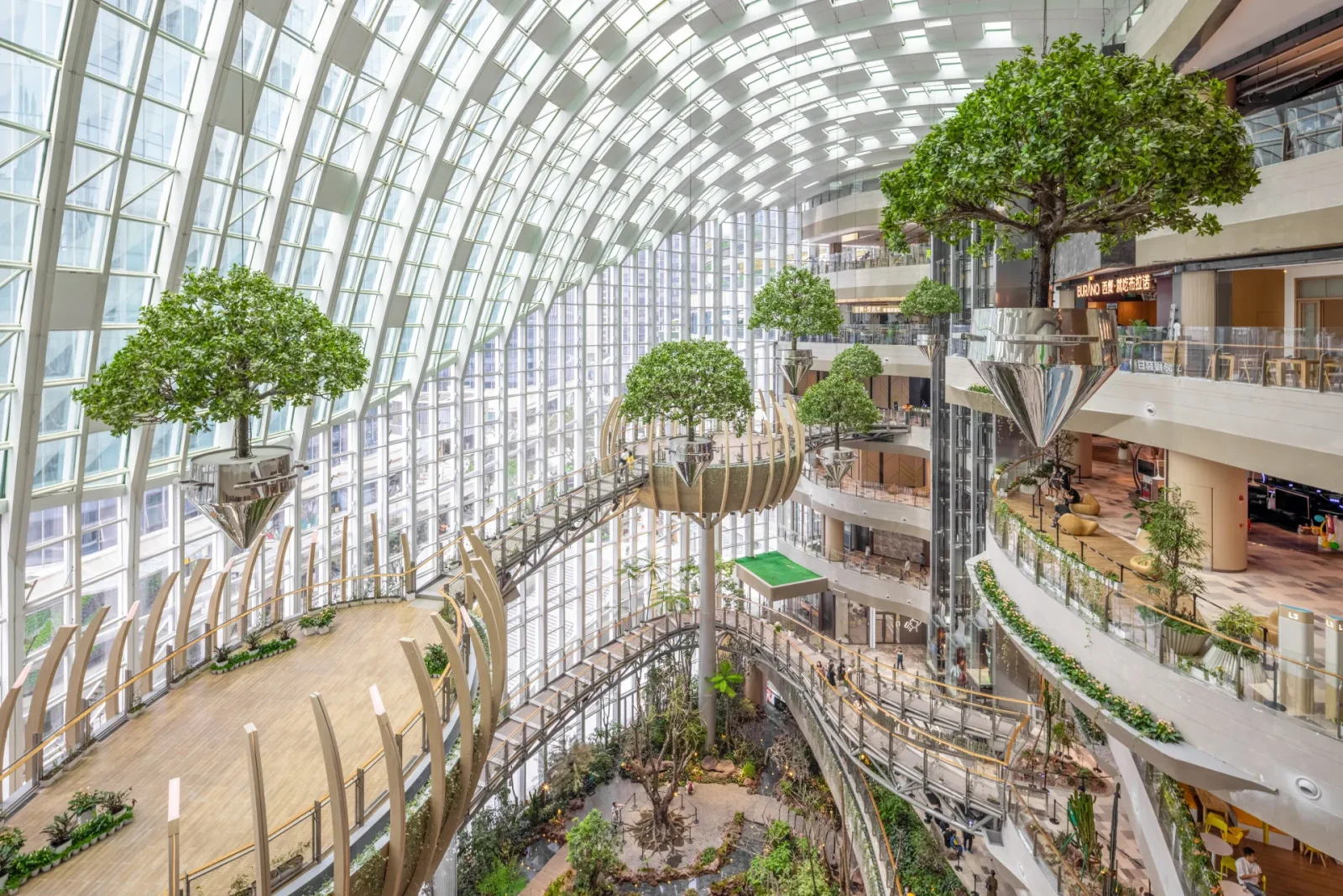
Located in Chongqing’s Jinzhou Business District and part of mixed mixed-use development, Lead8, an international design studio, designed the retail space spanning 154,000 m² of the seven-level mall. The striking element of the design stands as one of the largest 42-meter-tall indoor botanical gardens.
Bringing nature indoors, it immerses visitors, following the L-shaped layout with stepped terraces and green balconies echoing Chongqing’s Mountain City identity. Its biophilic design includes elevated walkways known as Oasis Walk, public seating, hanging fixtures, and an immersive light-and-water show anchored by a 24‑meter airborne waterfall.
8. Liziba Station
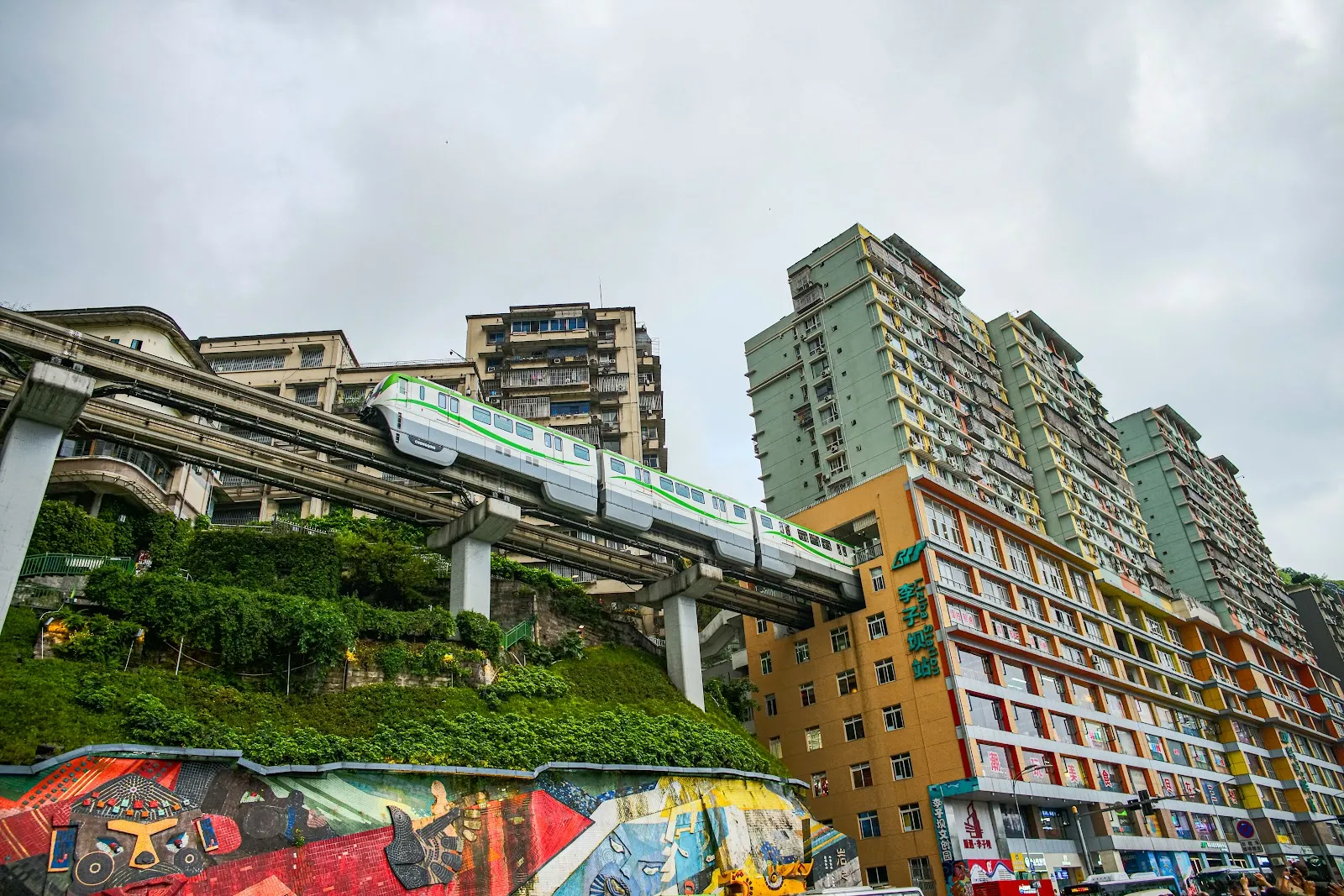
Designed by Ye Tianyi and his team at Chongqing University, Liziba Station, located in Yuzhong District, has a striking feature of a station occupying the 6th to 8th floors of a 19-story residential building where the train passes through the structure.
Due to urban growth and increasing challenges of the hilly terrain, the design team thoughtfully planned an efficient layout without relocation. The monorail structure, an isolated structure, employs a station‑bridge separation system. It has become an iconic tourist spot, serving as a transit that highlights cultural significance.
9. Lijia Smart Hall
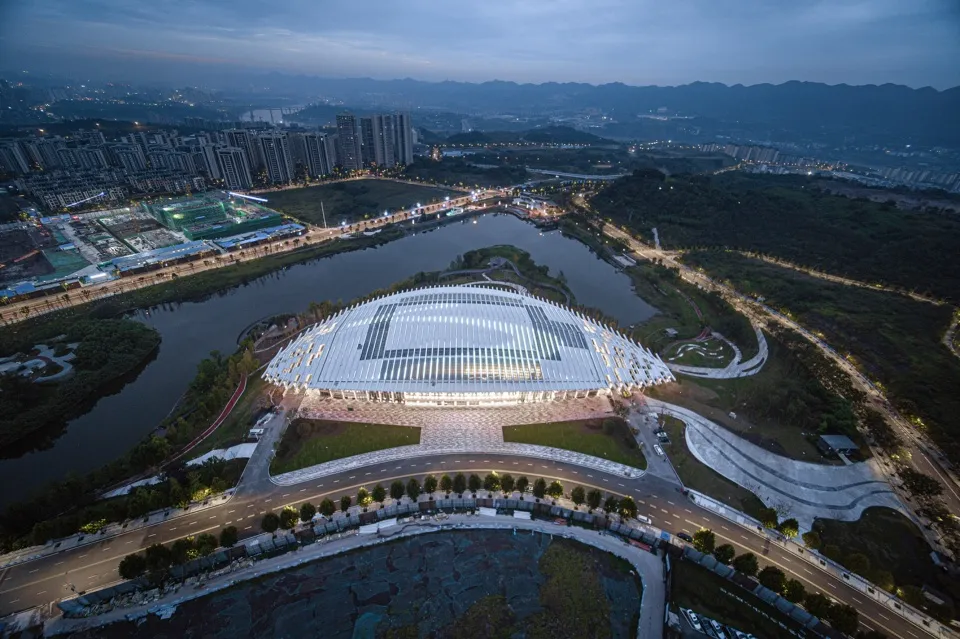
For the annual Smart China Expo, Gensler and his team designed an exhibition center that draws inspiration from the natural terrain of Chongqing, resulting in a fluid, organic form. Designed on the eight principles – simplicity, relevance, timelessness, distinction, scalability, technology, experience, and connectivity- the built form carries a visual metaphor of floating.
The parametric design focused on the complex geometry and fabrication through unified design language, offering visual coherence and functional flexibility. The striking facade clad in Ultra-High Performance Concrete (UHPC) with a rustic white, sculptural texture minimizes heat gain and reduces cooling energy needs.
10. Chongqing Gaoke Group Office
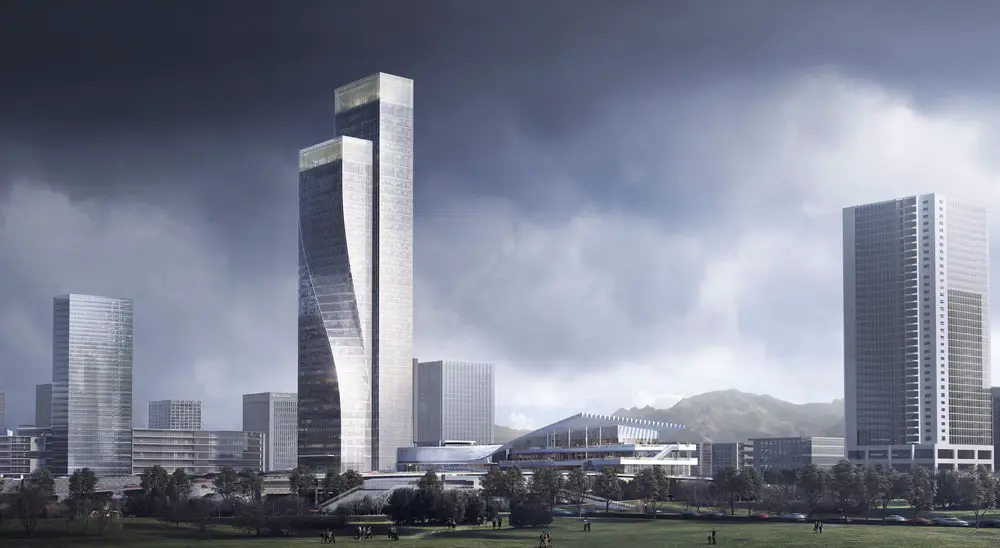
Drawing inspiration from the dance of light, Northern lights, Aedas, the globally renowned firm designs a dynamic office workspace in the form of a twisted tower that integrates straight and curvilinear surfaces. A 180M tall tower crafted from double-curved facades changes its appearance throughout the day. Collaborating with RFR Group, the complex geometry of the facade was modeled using BIM technology, where the twist reaches a striking 8.8° per floor, making it one of the most twisting towers globally.
Explore Courses
.jpg "Ondrej Chybik - Rethinking Architecture")