

Chris Precht is an architect renowned for his approach to placing nature at the heart of every project. As a co-founder of Studio Precht, he integrates sustainable materials, organic forms, and cutting-edge ecological concepts to create architecture that actively celebrates the natural environment. His work challenges conventional urban development by fostering a deep connection between humans and the ecosystems they inhabit, advancing a future where architecture serves as a regenerative force for people and planet.
Chris Precht has built a reputation in designing nature-inspired concepts. His work is just an example of a growing global movement on how we live with the environment.
1. Bert, Austria
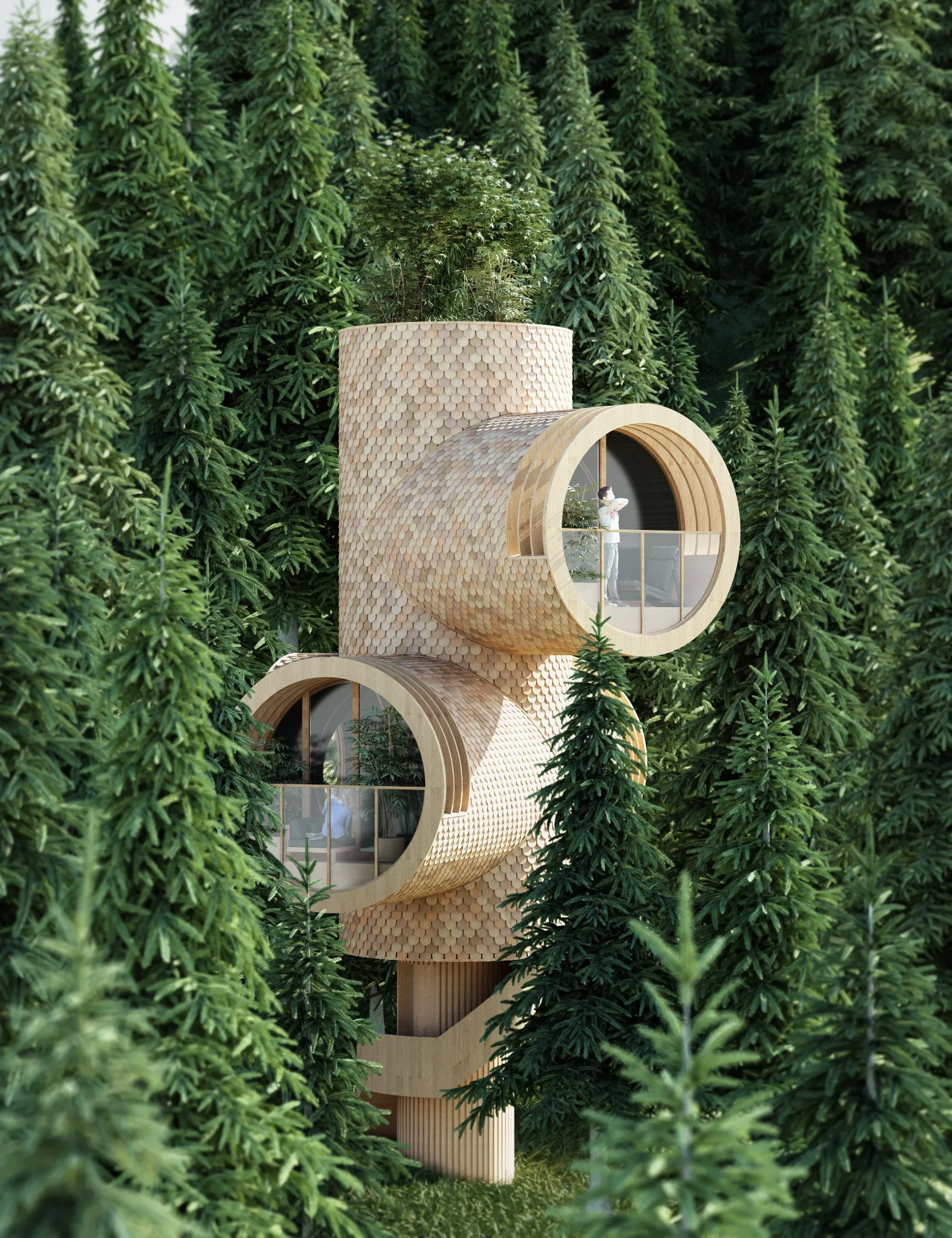
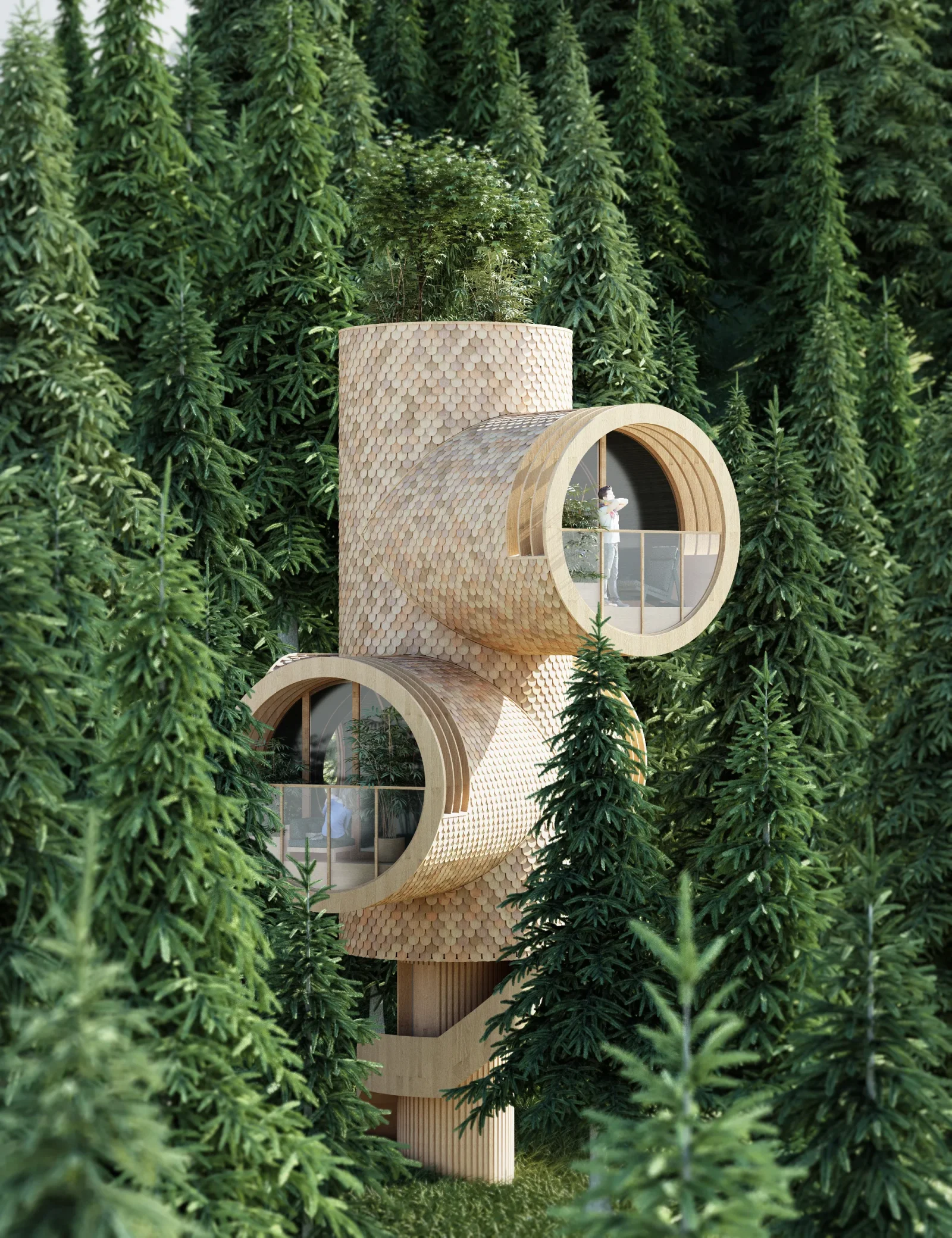
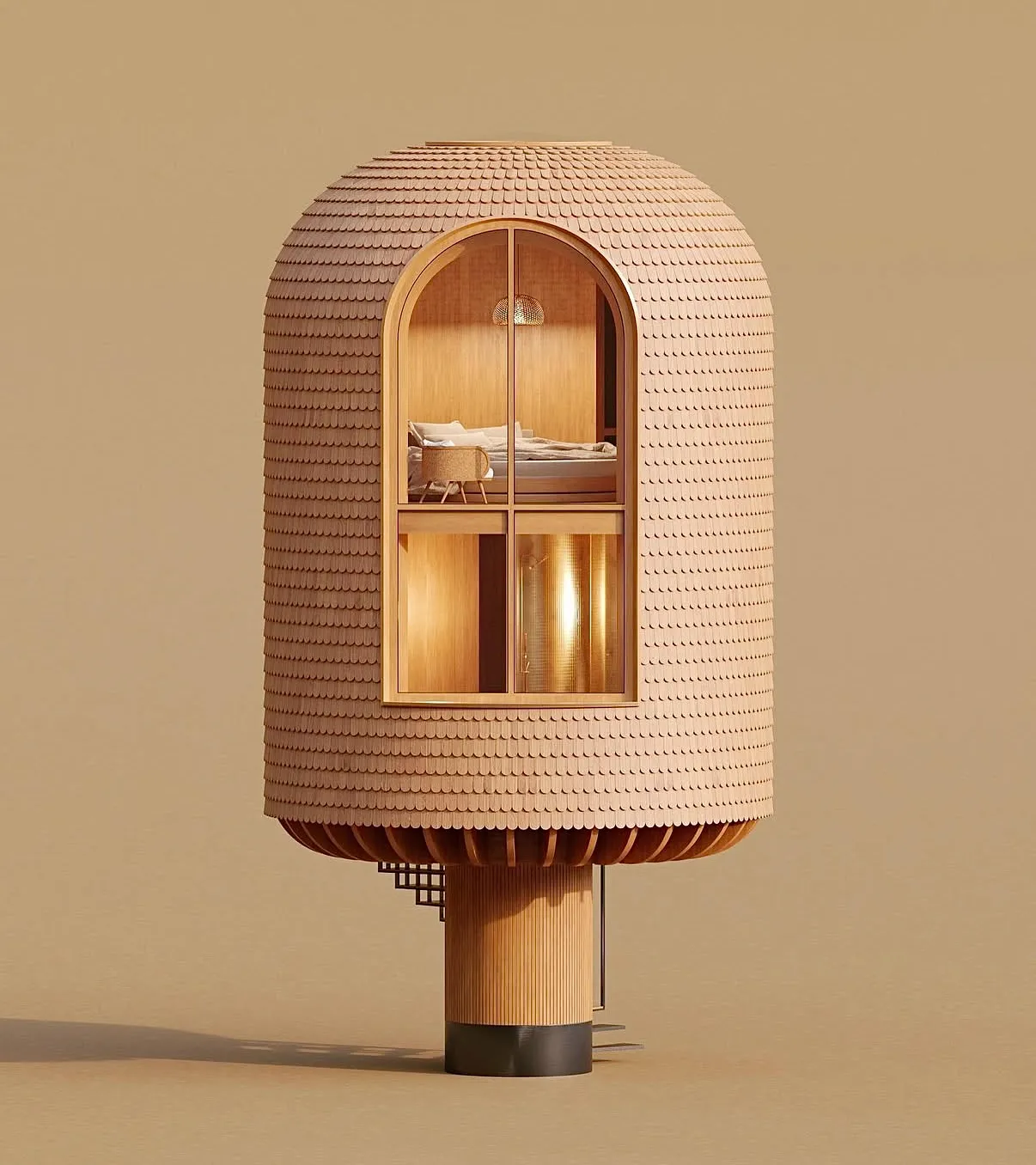
The Bert project by Studio Precht, led by architect Chris Precht, is a family of modular timber treehouses designed for playfulness, nature, and architecture into a unique experiential form. Conceptualized together with the tiny home start-up Baumbau, Bert offers a modular building system inspired by the shapes and forms of trees, aiming to create structures with minimal environmental footprints.
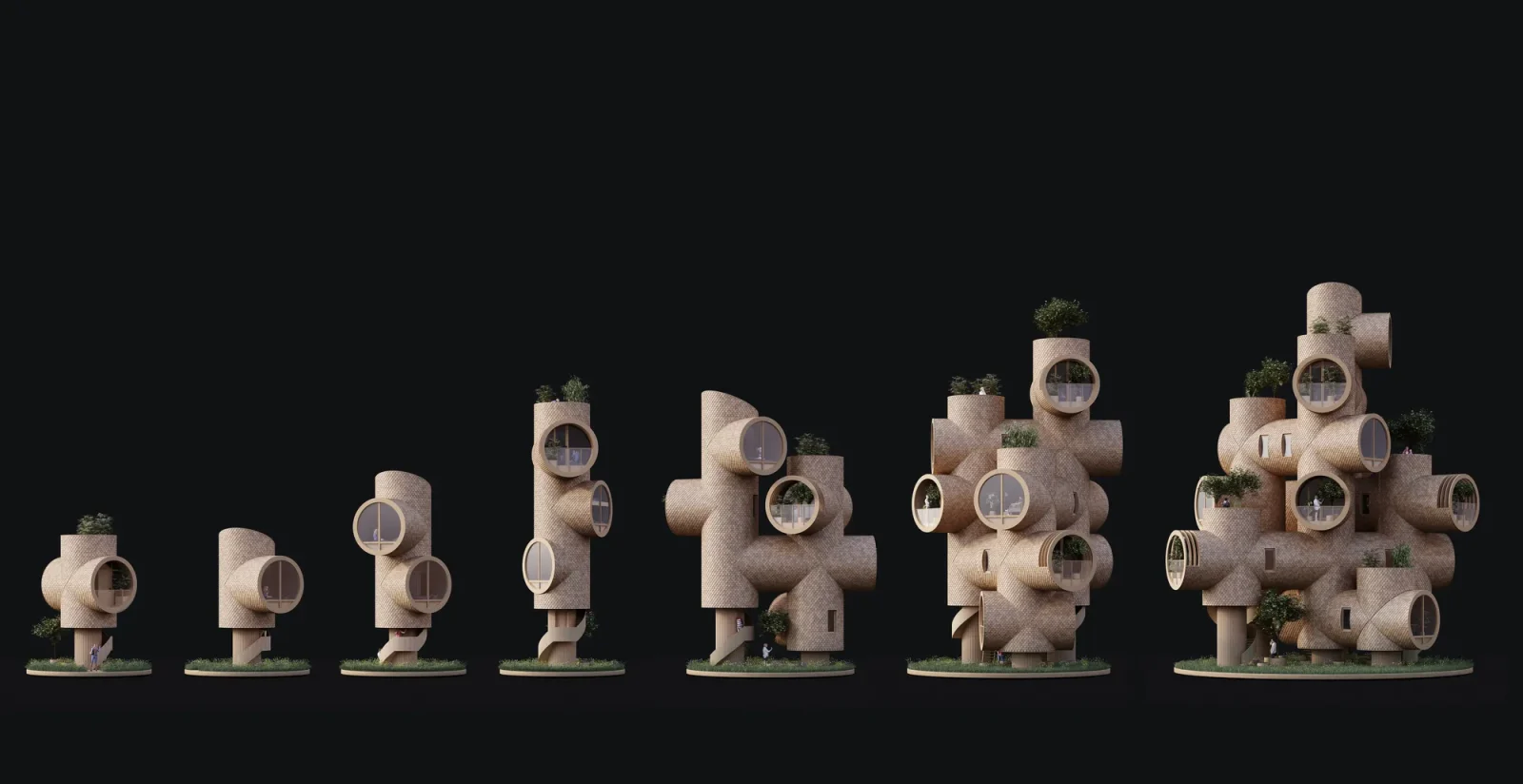
Each Bert treehouse is composed of tube-shaped modular components made from bent cross-laminated timber (CLT), prefabricated in a factory and assembled quickly on-site. These modules contain key living functions such as kitchens, bedrooms, living spaces, and bathrooms. The structures sit on circular concrete bases, stacked vertically and branching out like limbs of a tree, embodying a physical form that harmonizes with its forest setting.
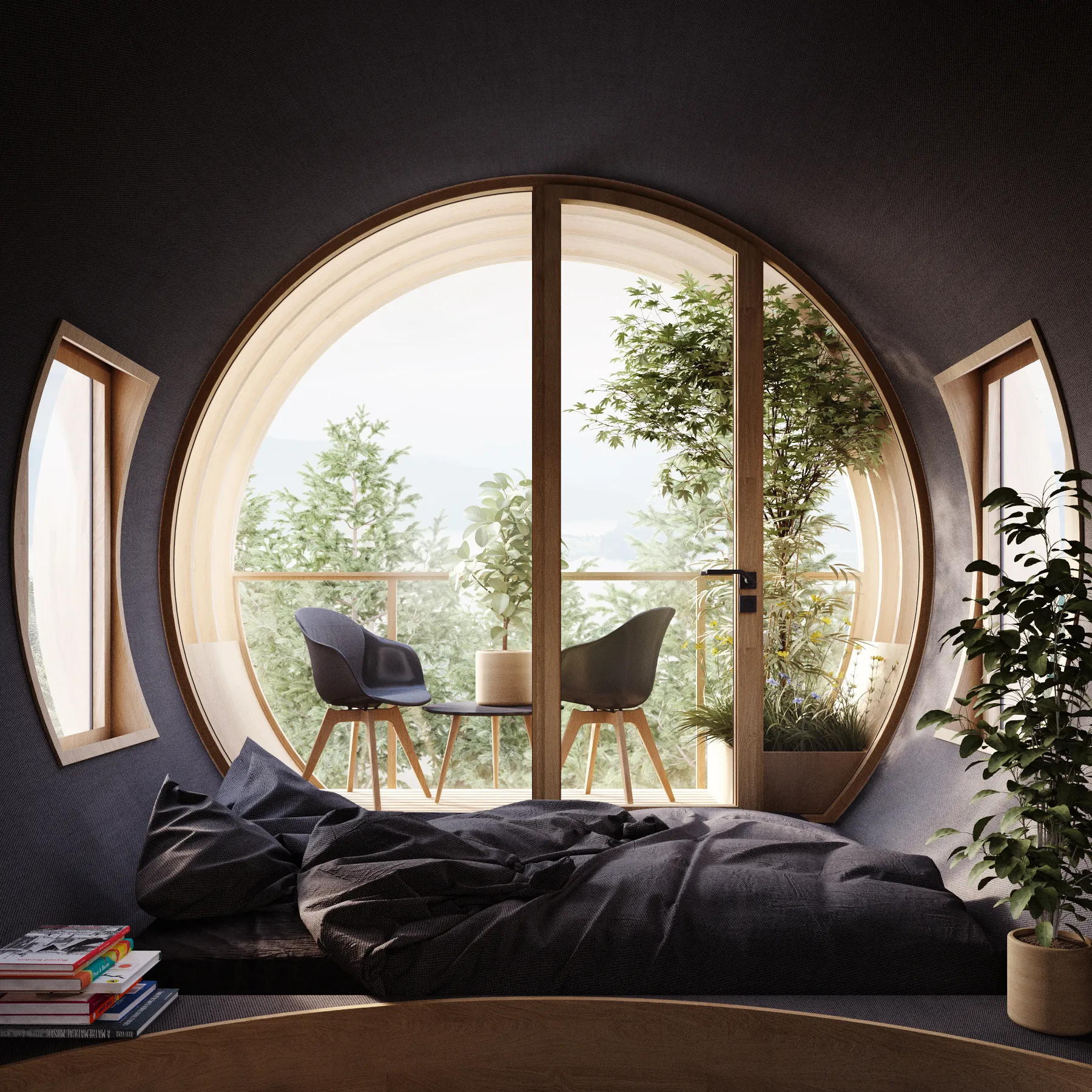
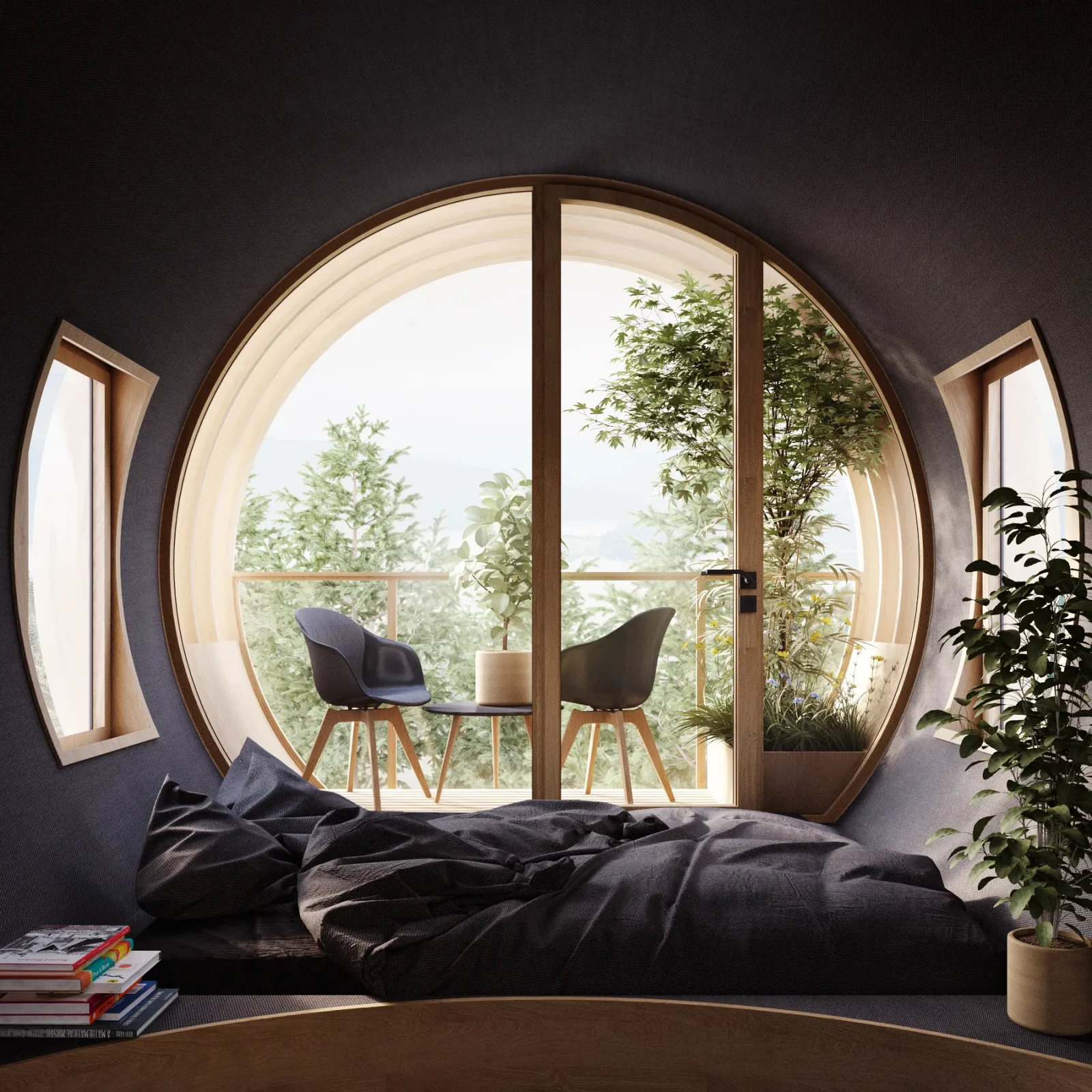
The exterior is clad in wooden shingles shaped like leaves and shaded in varying tones of brown to camouflage the buildings within woodland environments. Large, round windows resemble cartoon eyes, inspired by characters from Sesame Street and the Minions films, giving each Bert a whimsical and approachable personality. Inside, the interiors are intentionally darker and cozy, creating a cave-like atmosphere that focuses attention outward through the expansive glazed openings and highlights the natural wood structure.
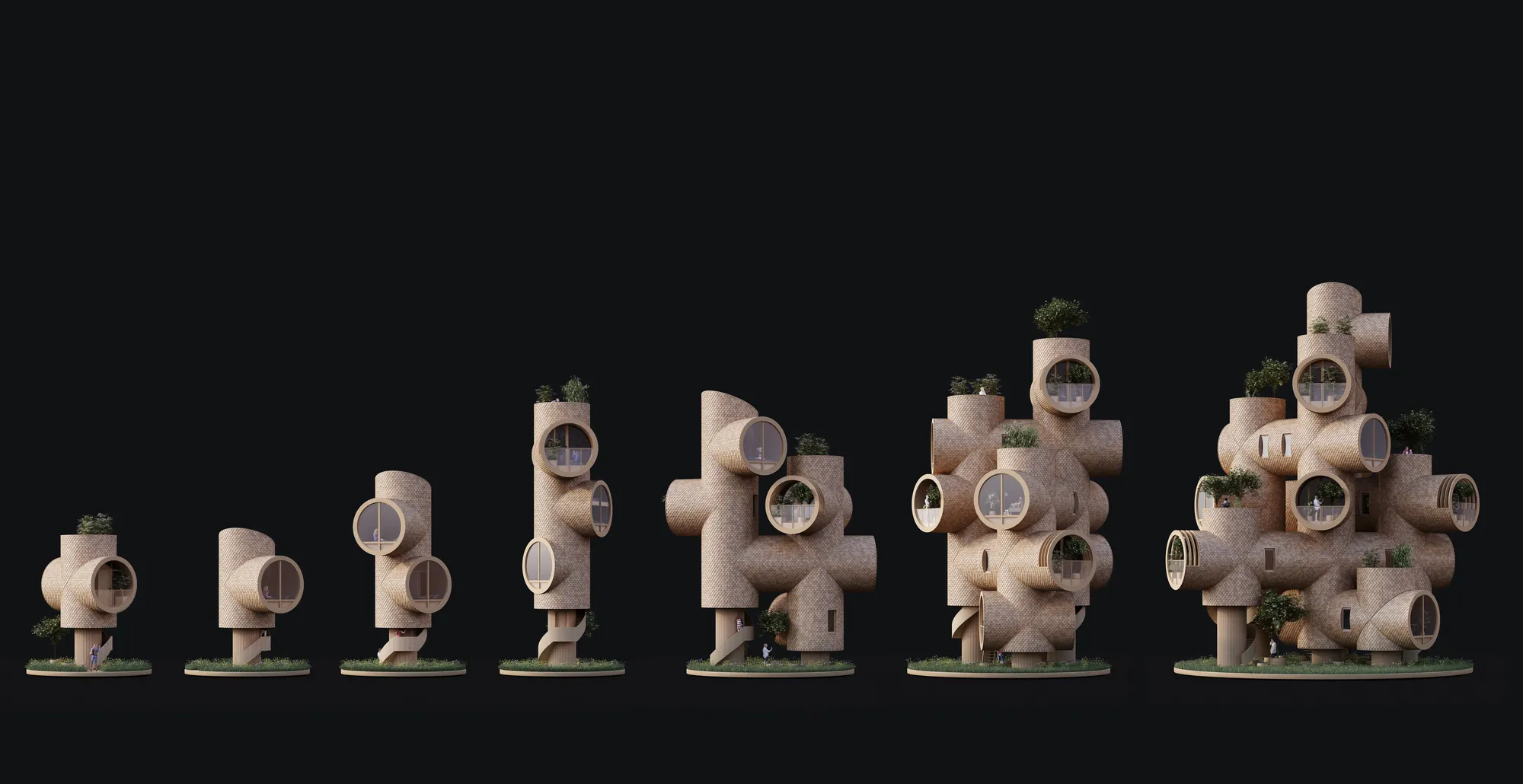
Bert is designed to be flexible and expandable throughout its lifespan by adding modules vertically or horizontally, enabling configurations from tiny homes to garden houses, multifamily residences, hotels, or urban developments. It also embraces sustainability with options for solar panels, composting toilets, and water treatment systems, addressing ecological concerns comprehensively.
2. The Flower of Qianhai
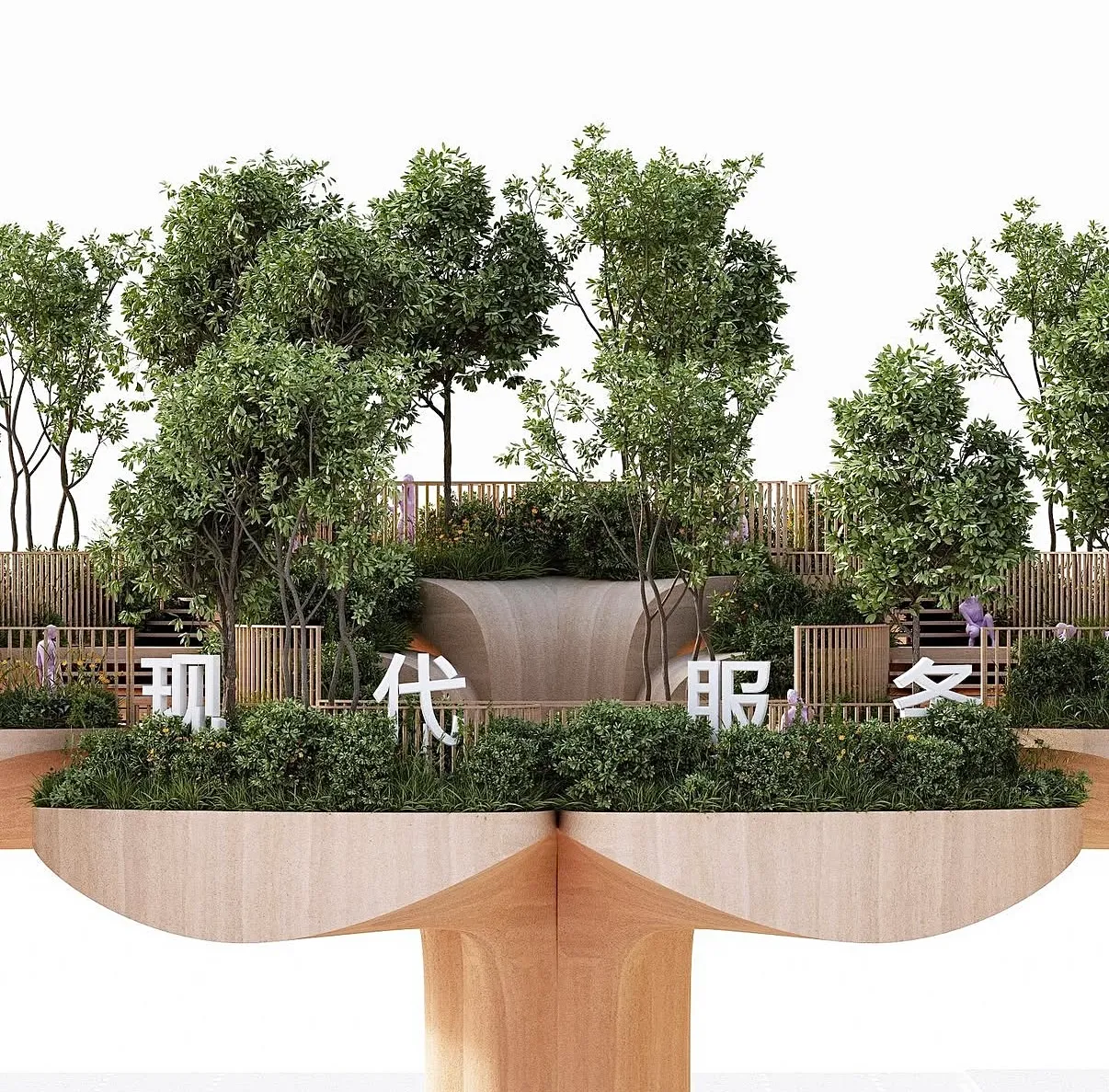
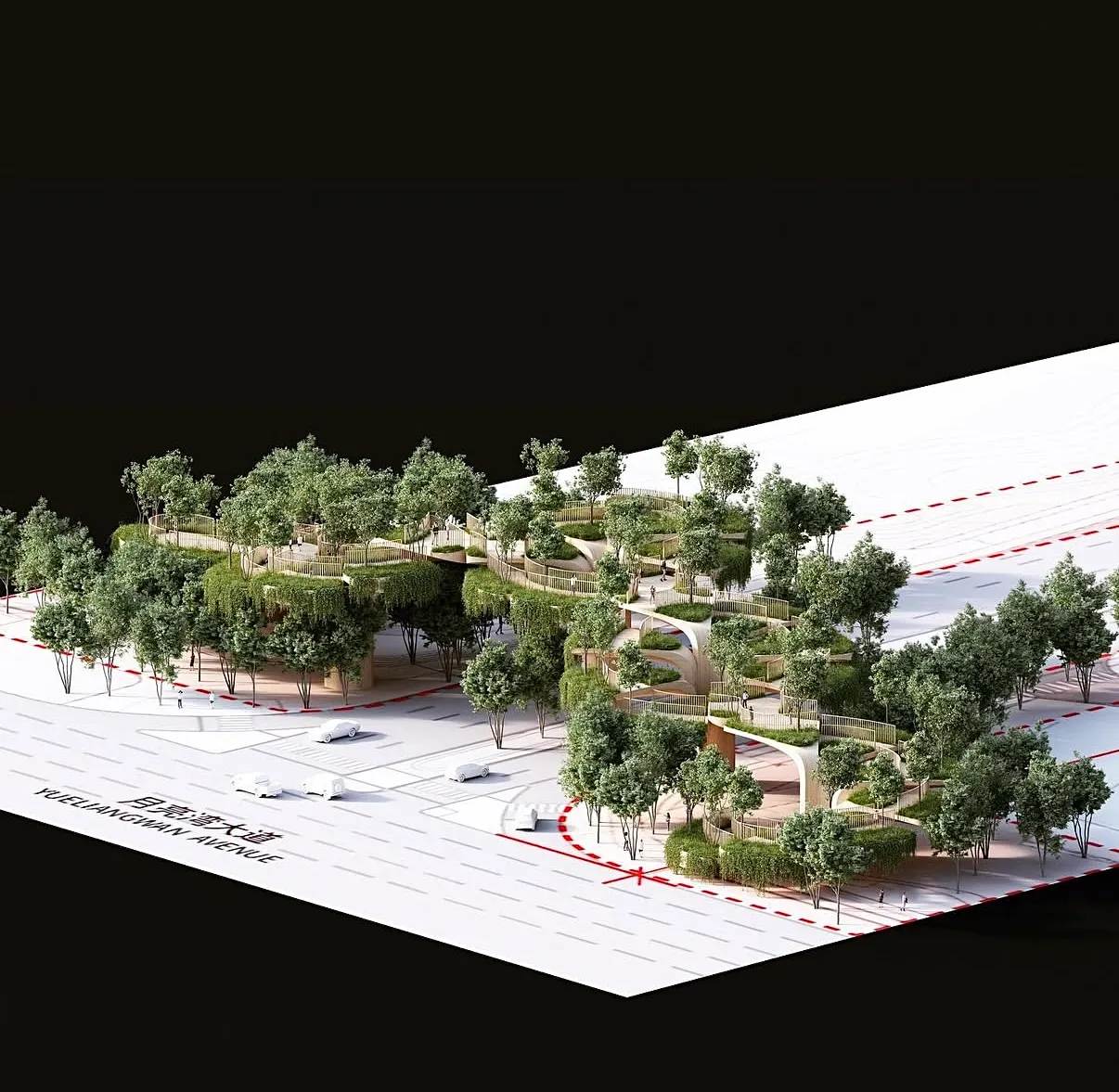
The Flower of Qianhai is a public gateway designed for the developing city of Qianhai. Created as a symbolic entrance, this gateway embodies the city’s dedication to sustainability and ecological values, offering an encounter with nature amid urban growth.
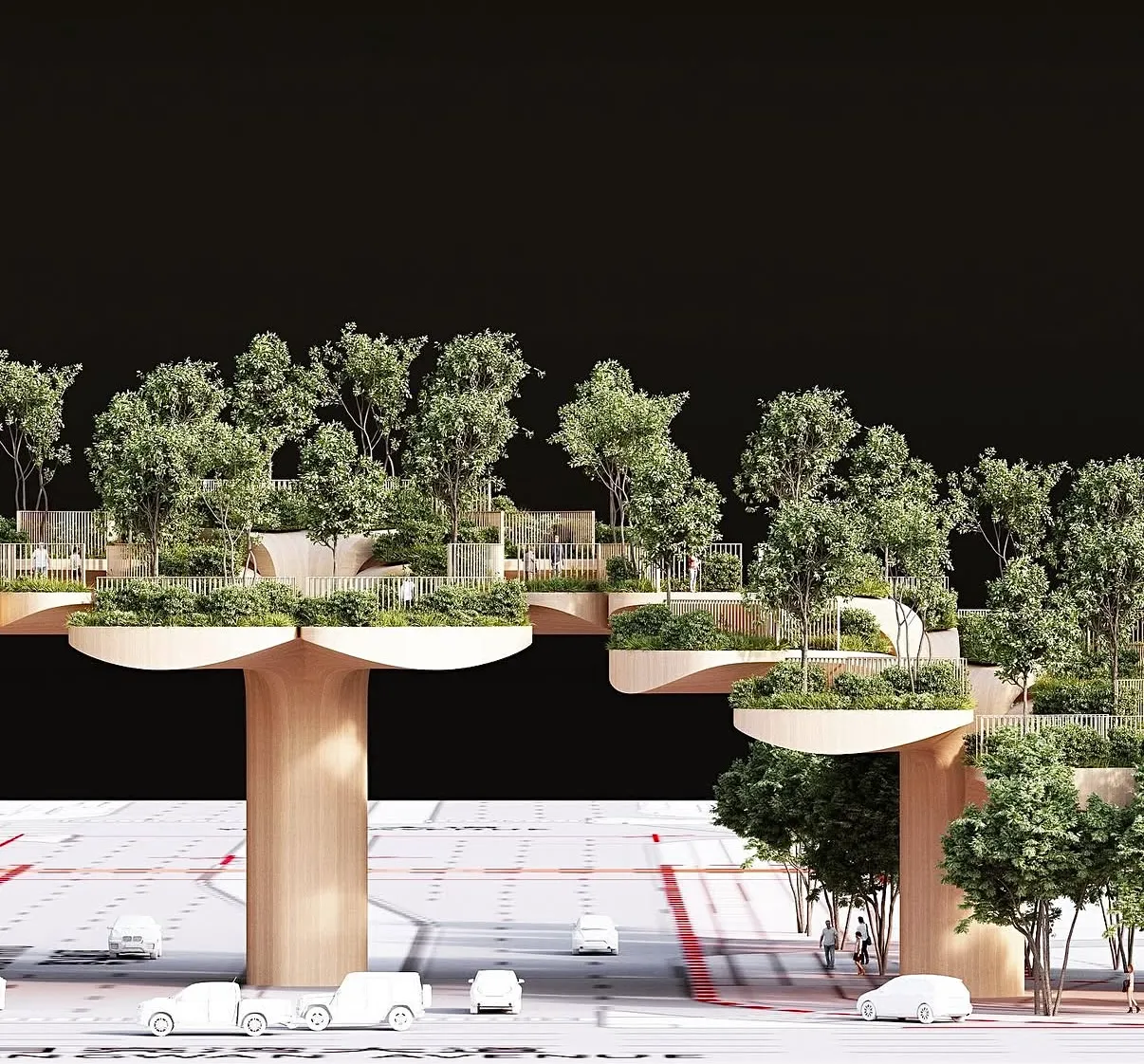
The design presents the gateway as a bouquet, with paddle-like structures that transport people and plants across the street. These paddles have depth to grow a variety of local plants, turning the gateway into a lush, tranquil garden that visually and experientially represents Qianhai’s ecological aspirations. Visitors can access the gateway via a staircase or elevator, which provides them with unique vantage points to view the city.
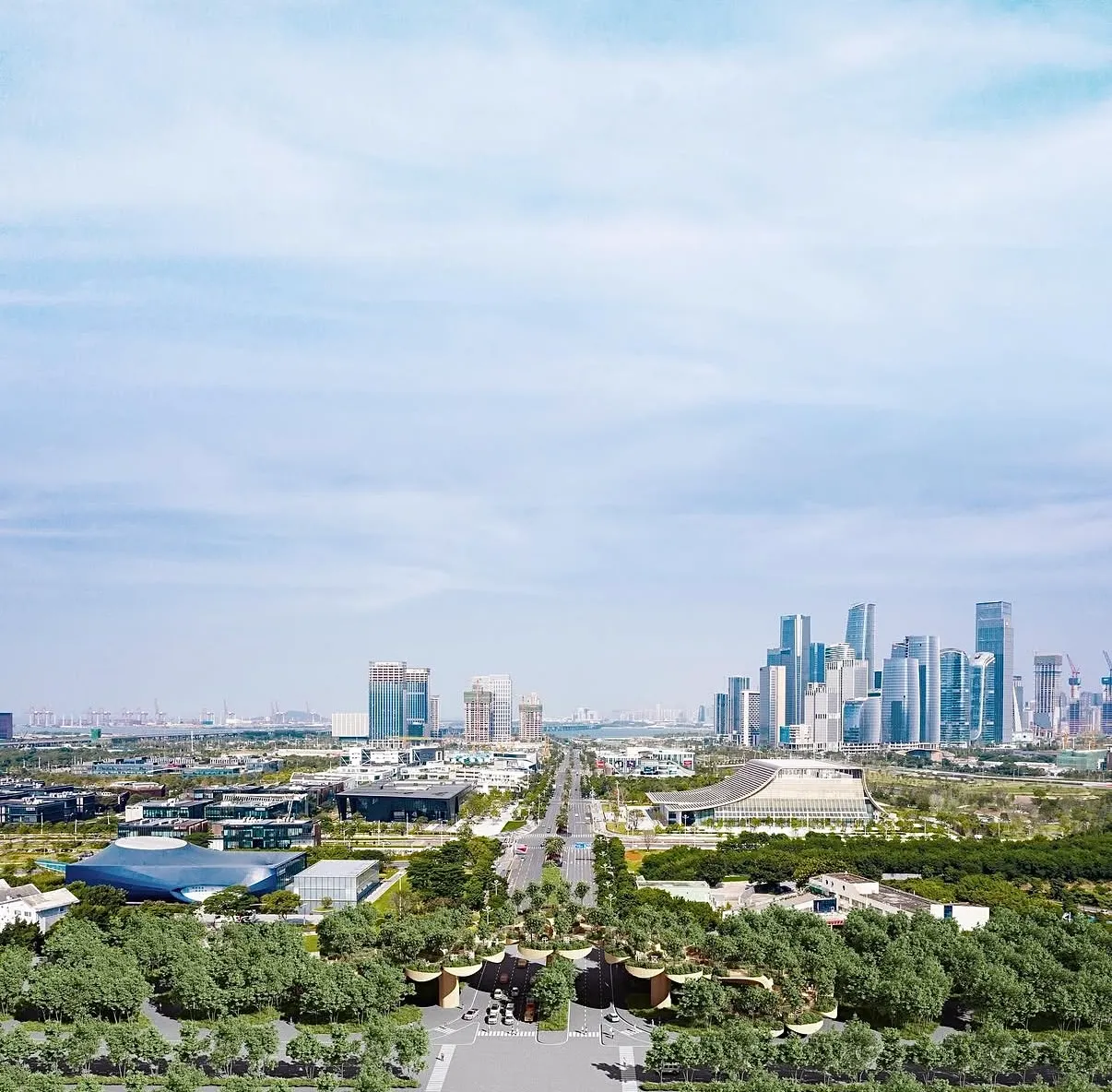
The Flower of Qianhai serves as an urban infrastructure. By integrating greenery directly into its form and operation, the project emphasizes the importance of ecological connectivity in new urban contexts and offers a counterpoint to conventional city gateways.
3. Tel Aviv Arcades
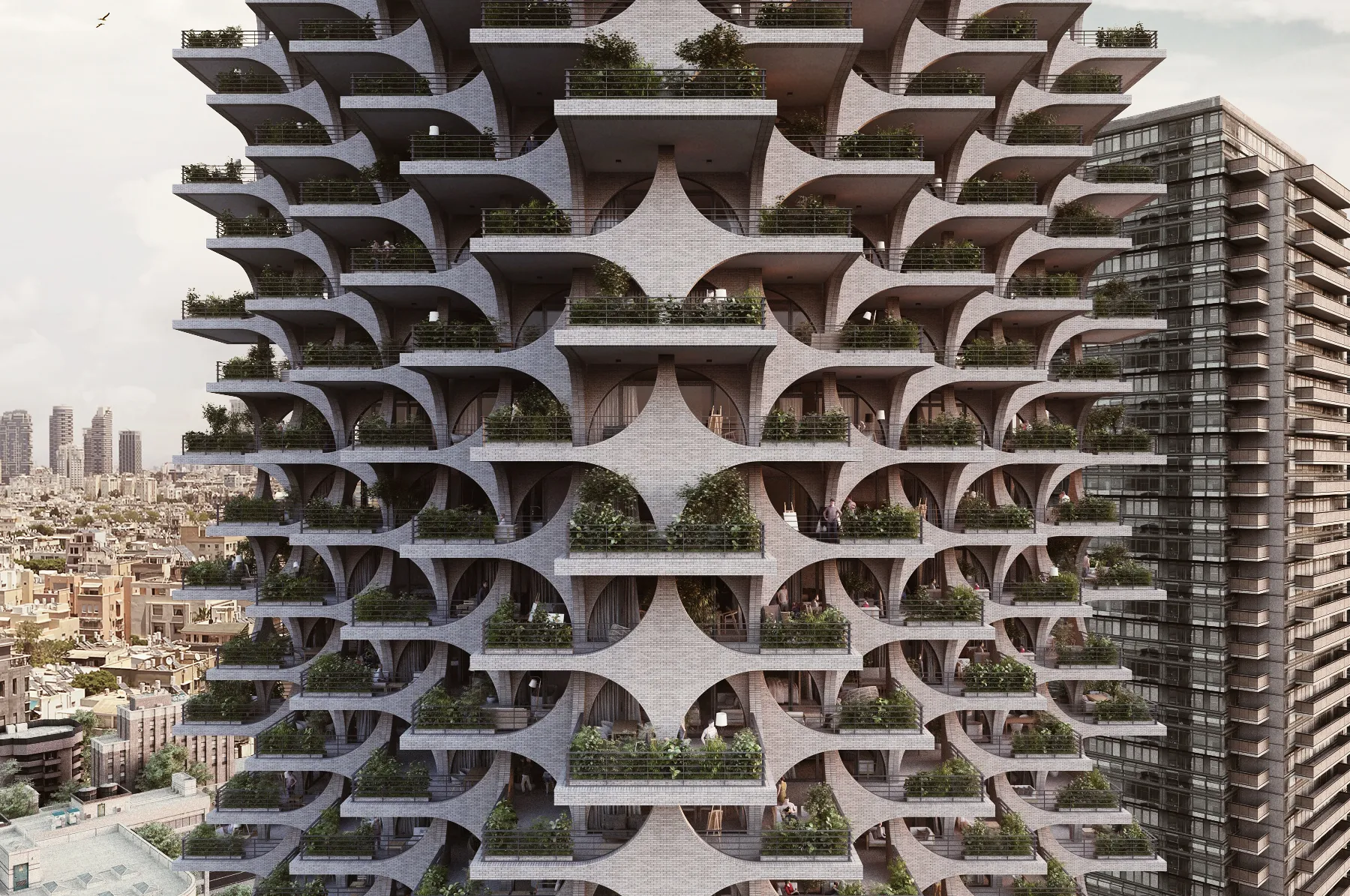
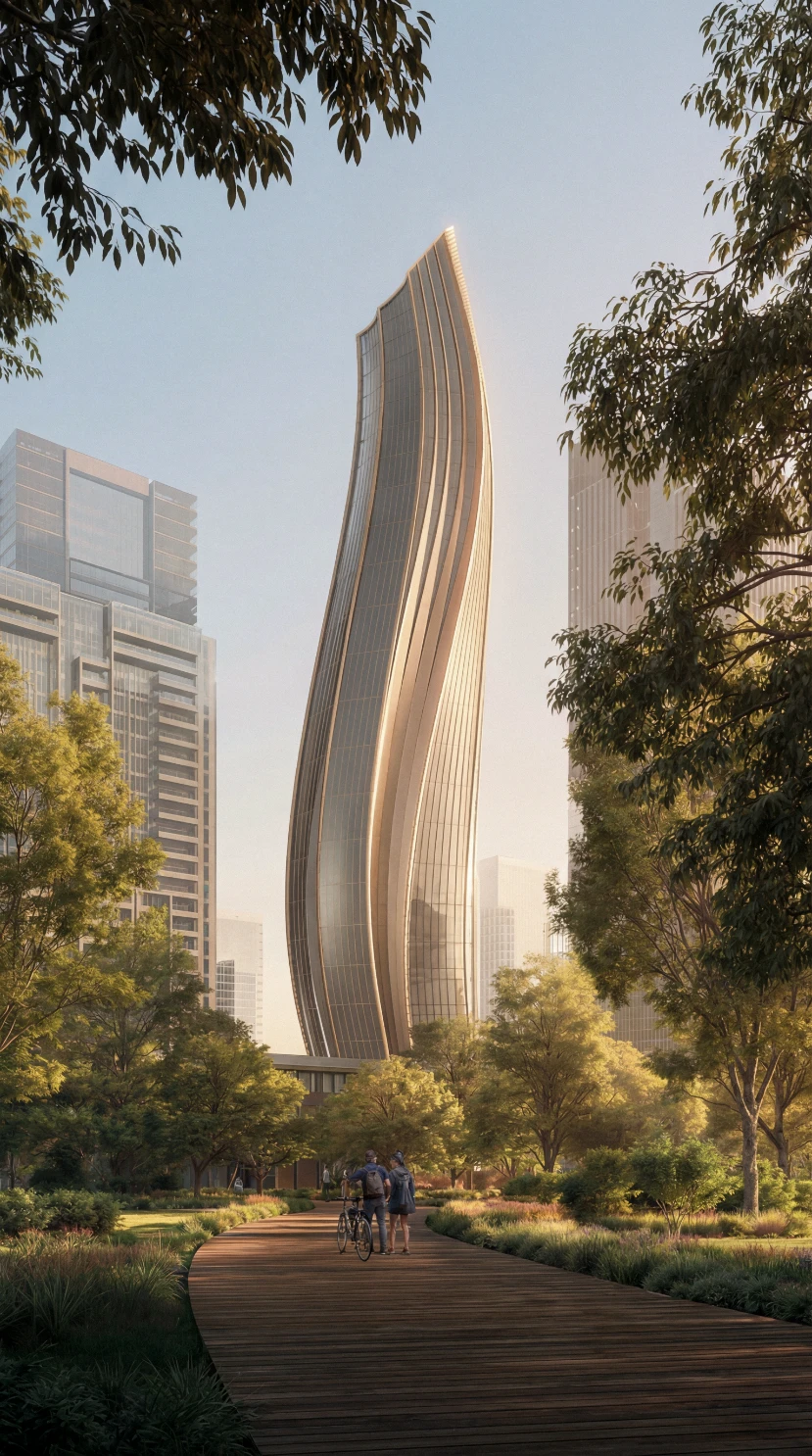
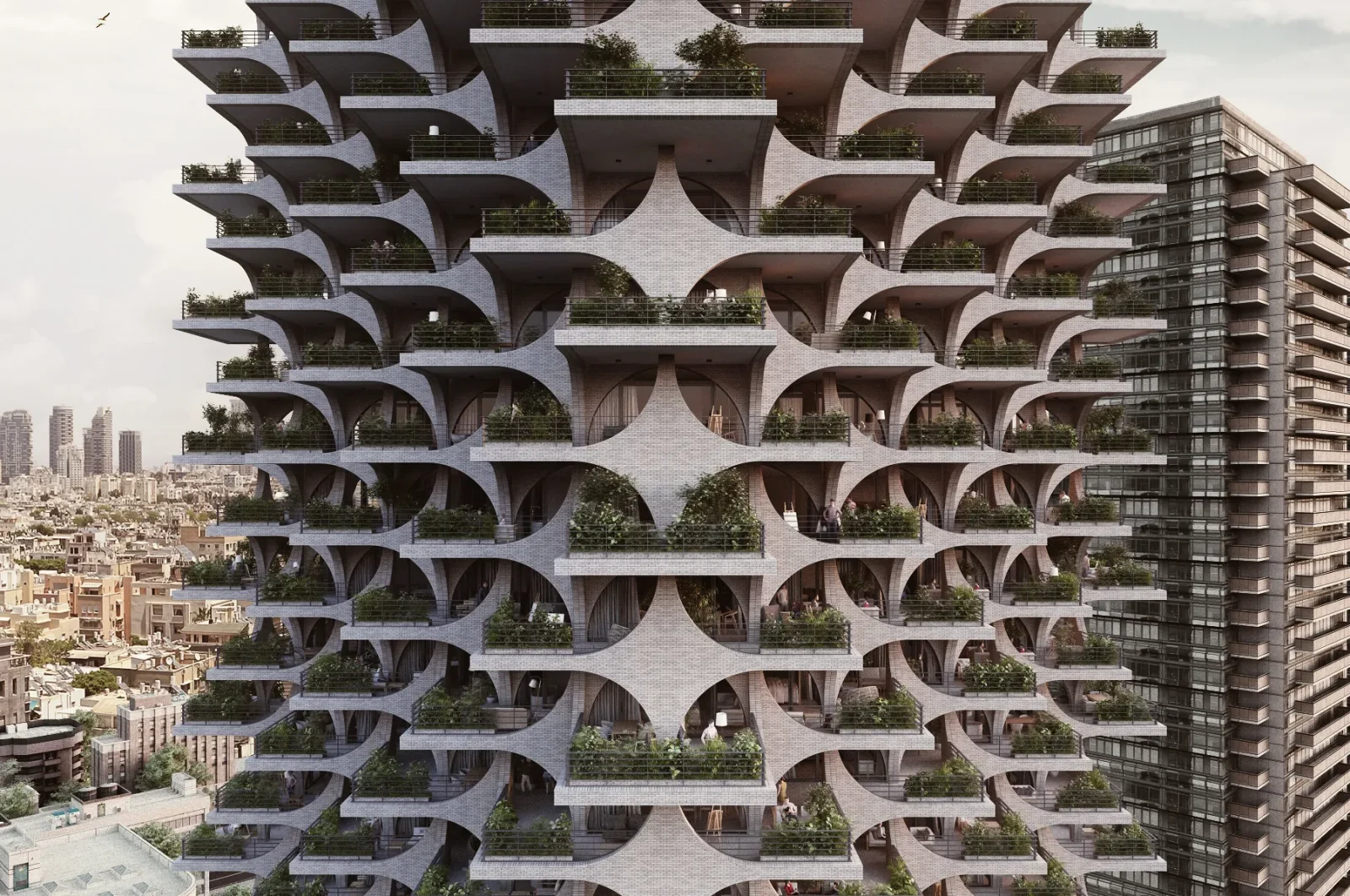
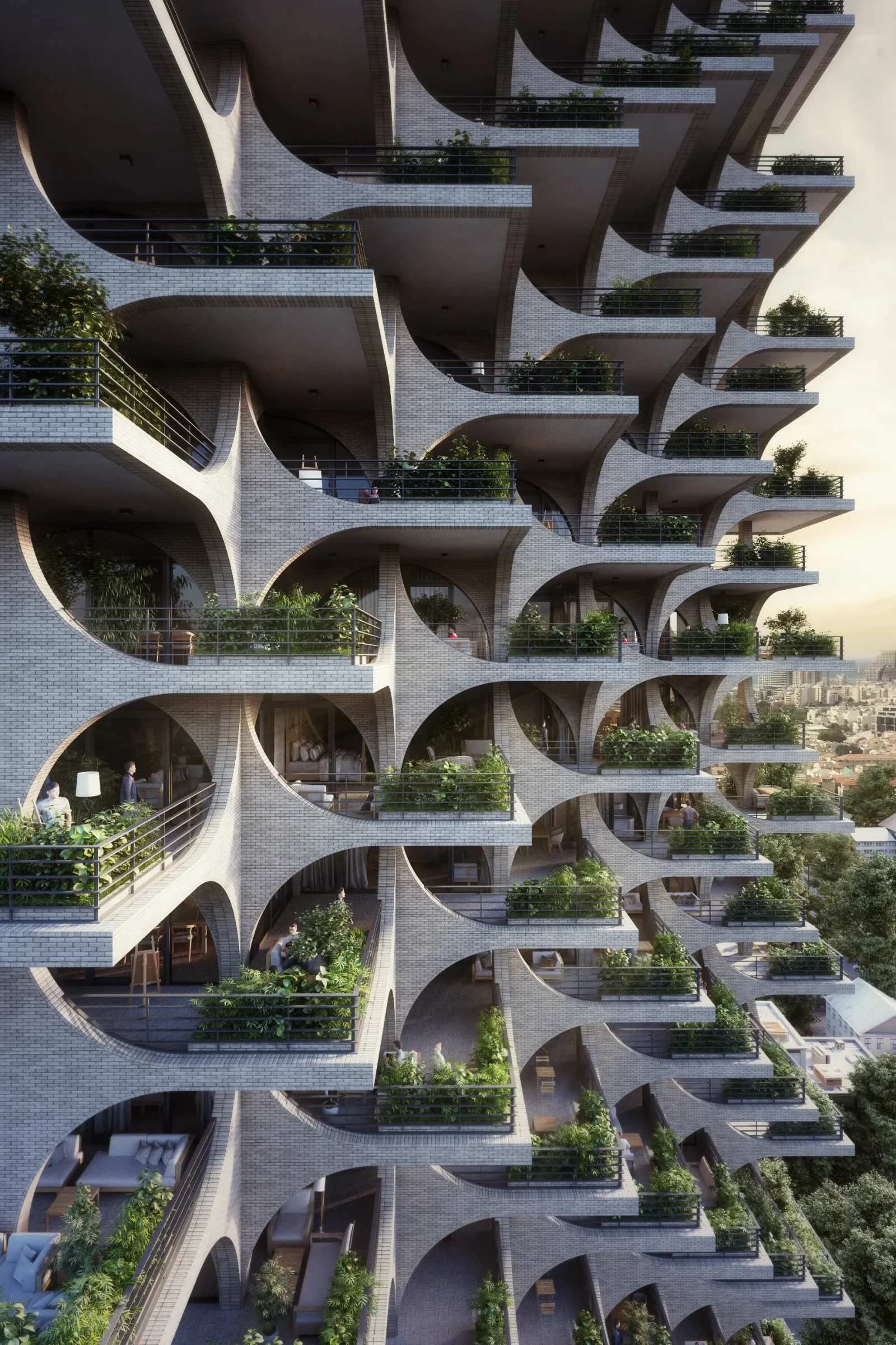
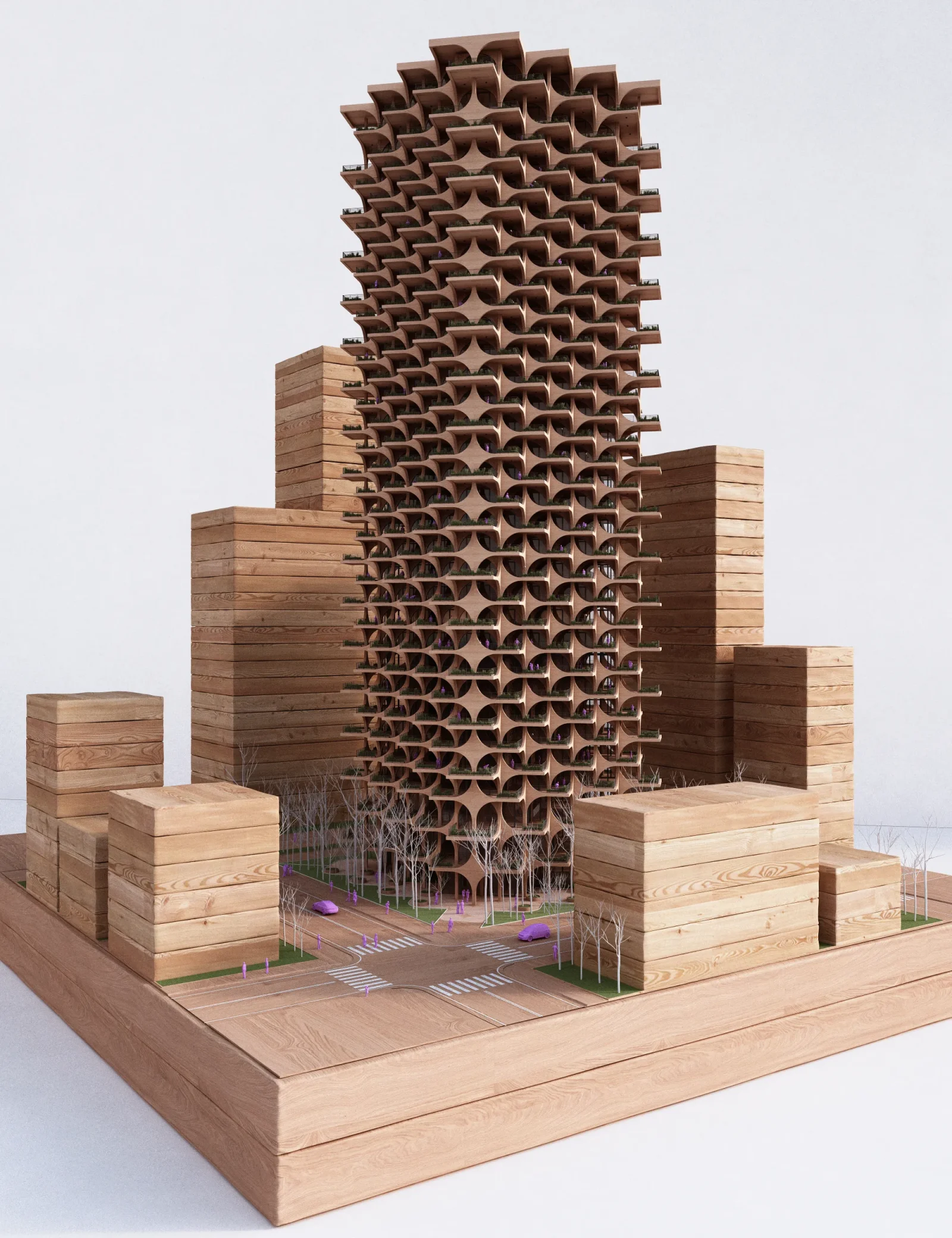
The Tel Aviv Arcades is a residential tower that pays homage to the rich architectural heritage of Tel Aviv, notably its renowned Bauhaus era. This 116-meter-tall building spans 18 floors and offers approximately 17,650 square meters of residential space with a variety of apartment layouts ranging from one to four bedrooms, including double-height penthouses.
What makes this high-rise distinctive is its defining architectural feature: the arch. The arch serves functional and symbolic roles, drawing from the deep history of architectural forms. Historically used as a structural element and a welcoming gesture, the arch in Tel Aviv Arcades becomes a structural expression that enhances the building’s engineering and improves energy efficiency by minimizing direct sunlight exposure, critical in the city’s Mediterranean climate. This strategic use of arches helps reduce dependence on air conditioning by providing natural shading and cooling.
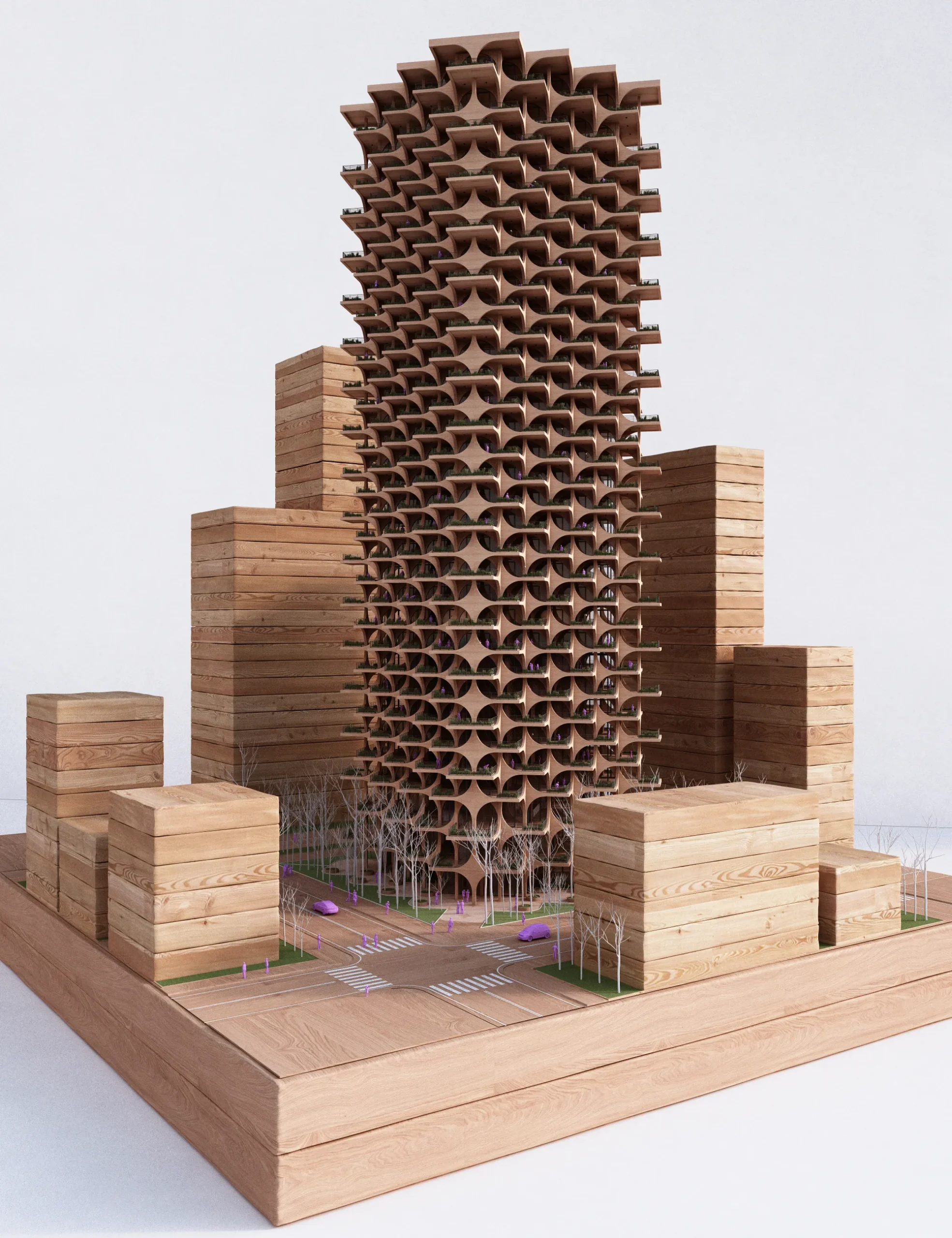
Complementing the arches is the innovative use of cascading terraces that wrap around the building’s facade. These terraces serve as outdoor extensions of the apartments and as shading devices that balance openness with shelter, creating a vertical neighborhood. The terraces have varied typologies, some roofed to protect from the sun, others open to allow gardening and more exposure to natural elements.
Inspired by old Tel Aviv’s Jaffa district, the design uses hand-laid brickwork and a grey brick facade to complement the historical surroundings. The building’s modular system facilitates prefabrication, which reduces construction costs and future maintenance.
4. One With The Birds
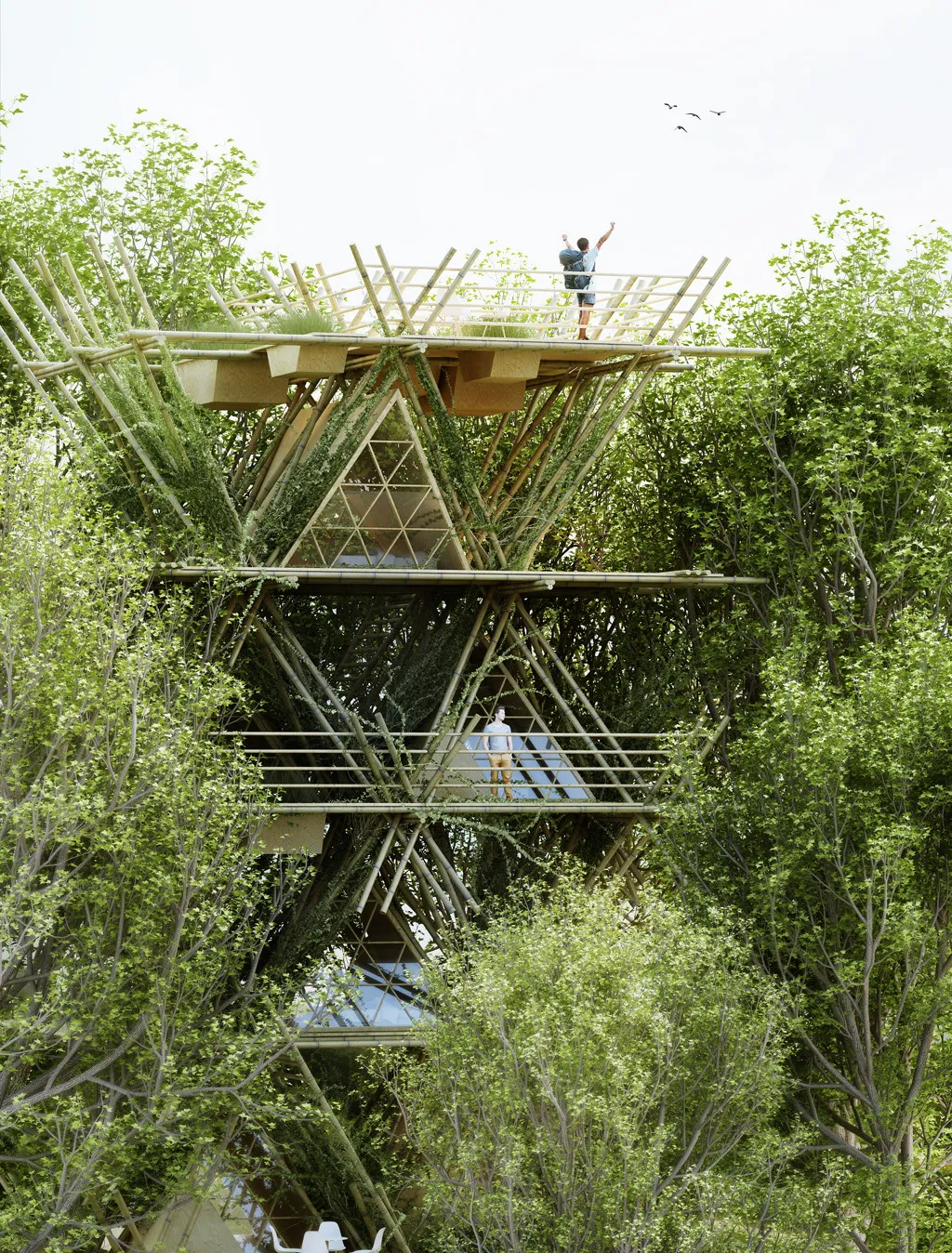
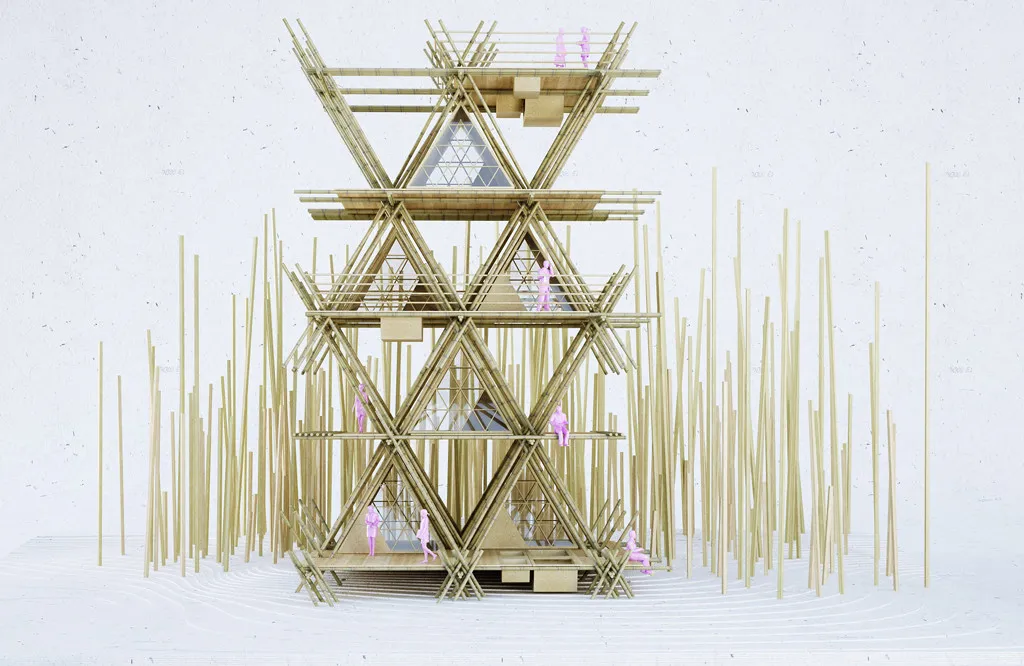
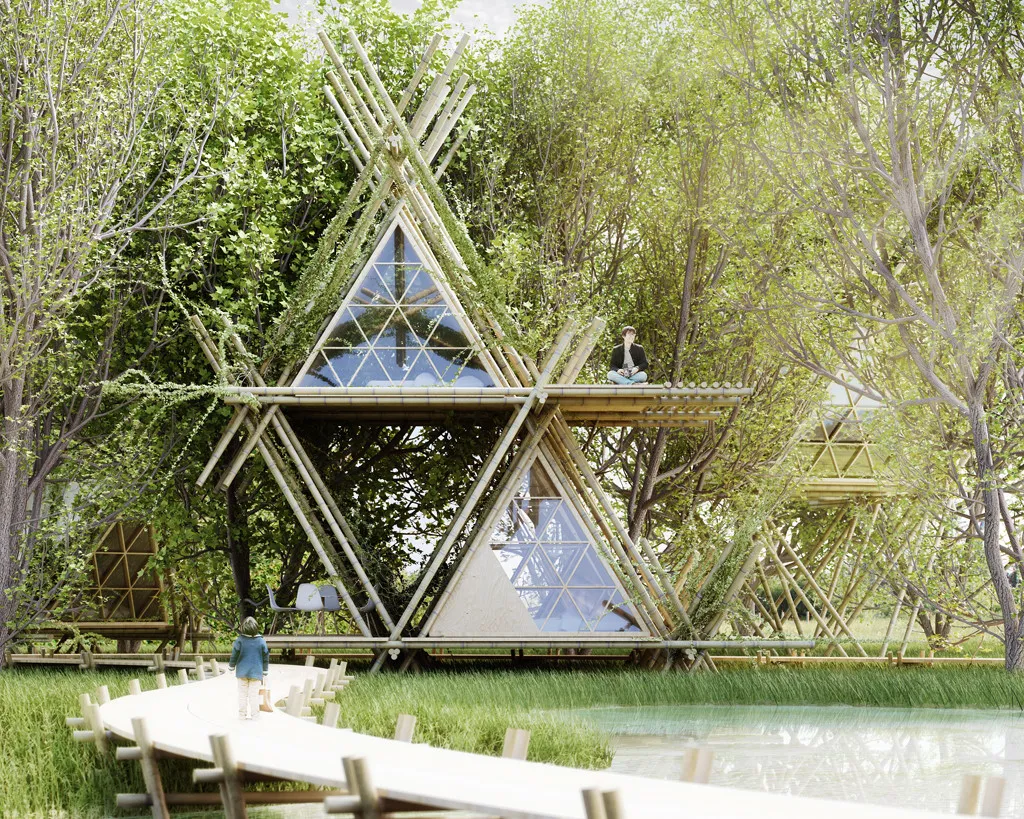
The One With The Birds project by architect Chris Precht and the design collective Penda is a flexible, modular bamboo structure designed to reconnect people with nature through low-impact architecture. Inspired by Native American tipis, the structure uses a grid system of bamboo rods connected by X-shaped bamboo joints tied with rope, avoiding the use of nails or screws. This approach not only preserves the bamboo’s integrity for multiple uses but also allows the entire structure to be easily assembled, disassembled, and reused, making it truly sustainable and adaptable.
The design allows the building to grow vertically and horizontally by adding more modular joints and beams as needed, accommodating different sizes and functions such as single rooms, family units, or larger hospitality spaces. Elevated slightly from the ground, the bamboo framework can adjust to varying landscape levels without disturbing the site. The structure is envisioned as a temporary hotel or shelter that leaves no permanent trace on its location and whose components can be recycled, for example, as scaffolding after the building’s lifecycle ends.
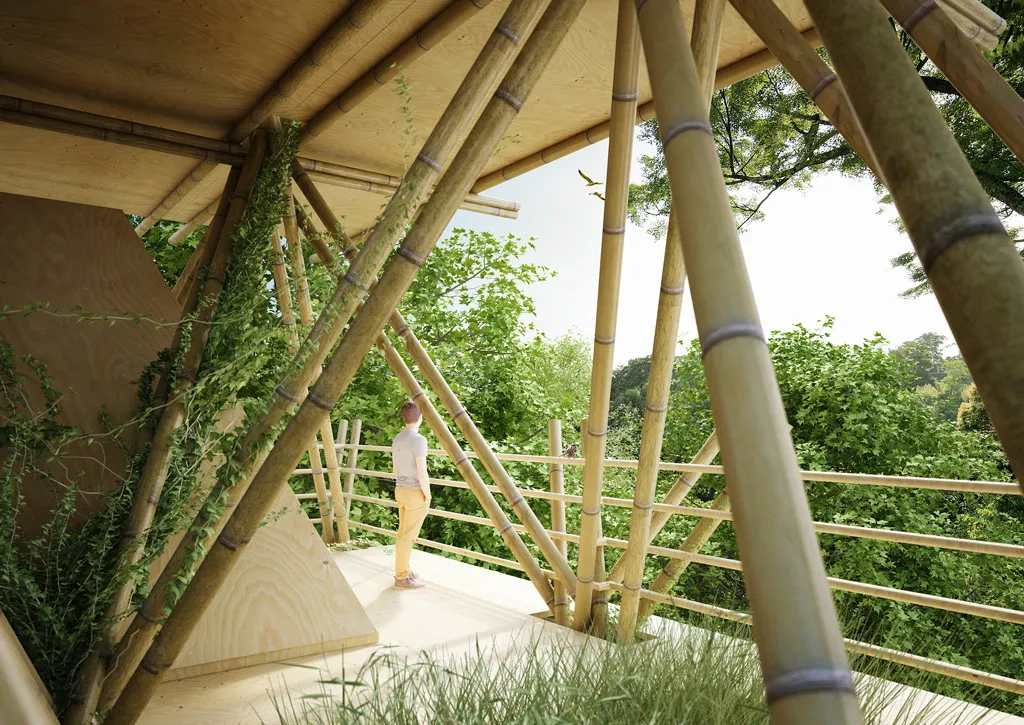
One With The Birds provides an experiential design where visitors engage with their natural surroundings in three dimensions, living among and above the trees as if climbing and exploring the forest canopy with birds. The bamboo grid can also serve as a living framework for plants like ivy to grow on, enhancing the blend between built form and nature as the structure transforms over time.
5. Mush Room
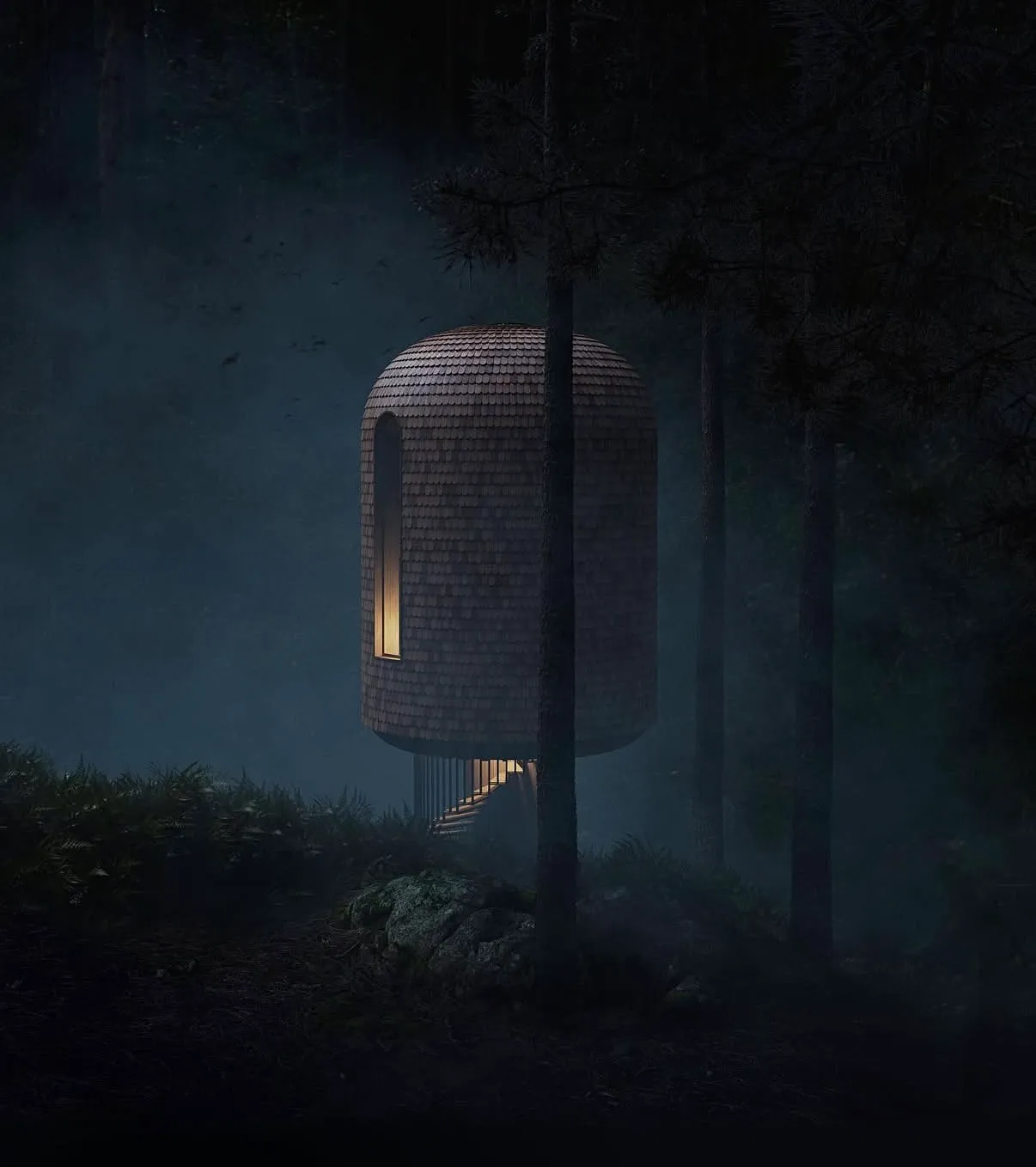
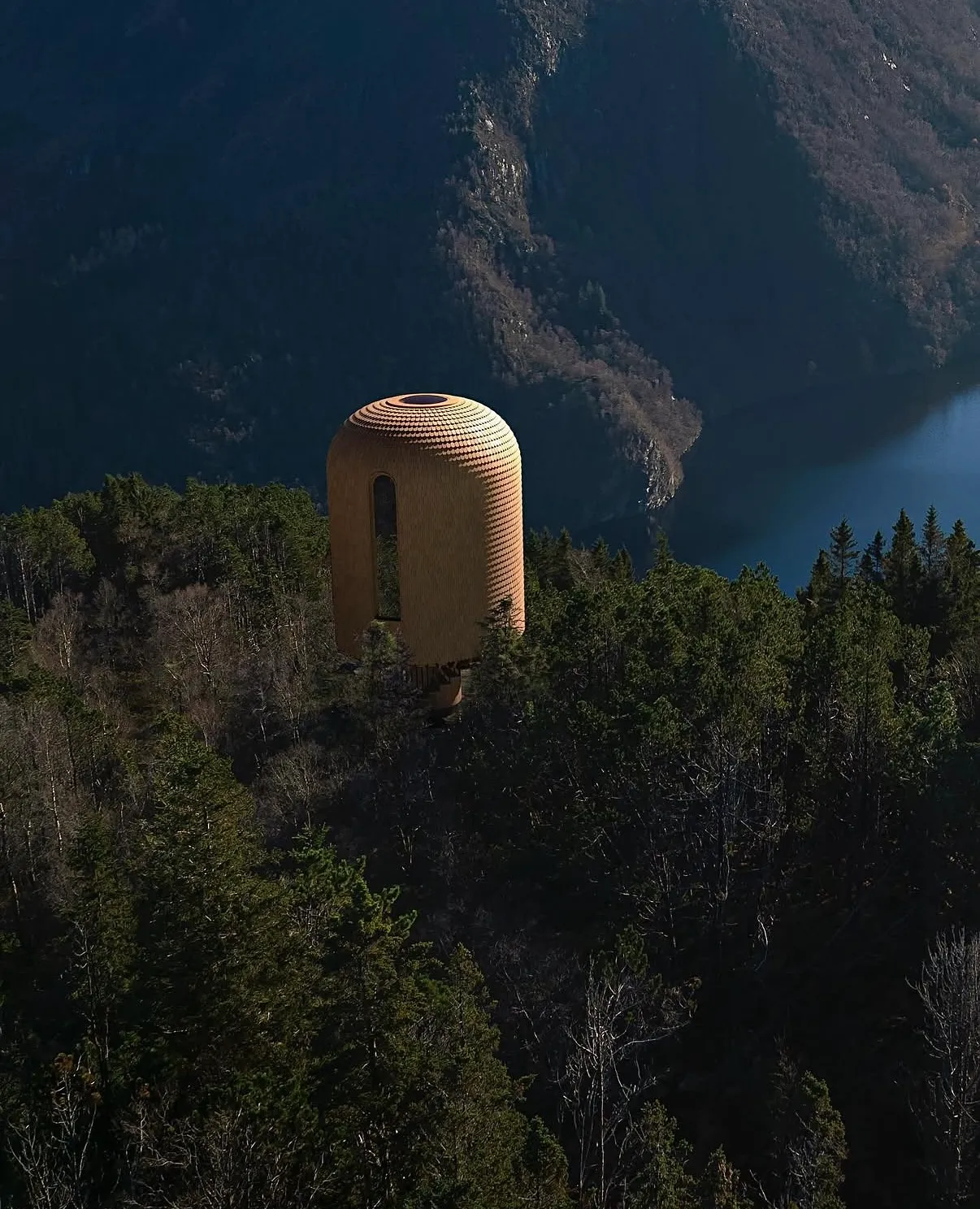
The Mush Room project is a tiny cabin designed for a peaceful retreat deeply connected with nature. This forest cabin creates a magical experience where occupants awaken to the gentle sounds of birds chirping and the soothing rustling of leaves, visually anchored by large windows that connect the interior to the surrounding woodland aecosystem.
The design emphasizes a rejuvenating atmosphere that helps people escape the stresses of urban life and find solace in the beauty of the natural environment. As you move through the space, from the bedroom to communal areas like the kitchen or living room, you experience a sense of relaxation with the outdoors. The Mush Room serves as a reminder to slow down, reconnect with the environment, and recharge. It stands as a serene sanctuary that invites occupants to engage with the natural world intimately.
Chris Precht’s architecture is a powerful testament to the transformative potential of placing nature at the center of design. Whether it’s cross-laminated timber modules nestled in the treetops, bamboo frameworks that grow with nature, or urban structures that double as ecological habitats, these projects showcase how sustainability and creativity are no longer separate goals but part of a unified design language shaping the future of living spaces.
Explore Courses
.jpg%202.jpg "Building Performance with Forma & Opossum")
.jpg "Ondrej Chybik - Rethinking Architecture")