





Topic: Algorithmic Urban Design in Grasshopper: Data-Driven Site Analysis & Massing
Date: January 31 & February 1, 2026
Time: 14:00 – 18:00 GMT
Format: Online on Zoom
Duration: 2 Sessions (8 Hours)
Registration Deadline: January 30th, 2026
Total Seats: 50 seats
Difficulty: Beginner-Intermediate
Language: English
Certificate: Yes
General Registration: 100 EUR
Join free: with Full Access membership
Fee For Digital Members: 85 EUR (15% discount available only for Digital Members)
Organized By: PAACADEMY
Tutor: Ognjen Graovac
Recordings: Recordings will be available for all participants afterward indefinitely.
Introduction to Algorithmic Urban Design in Grasshopper:
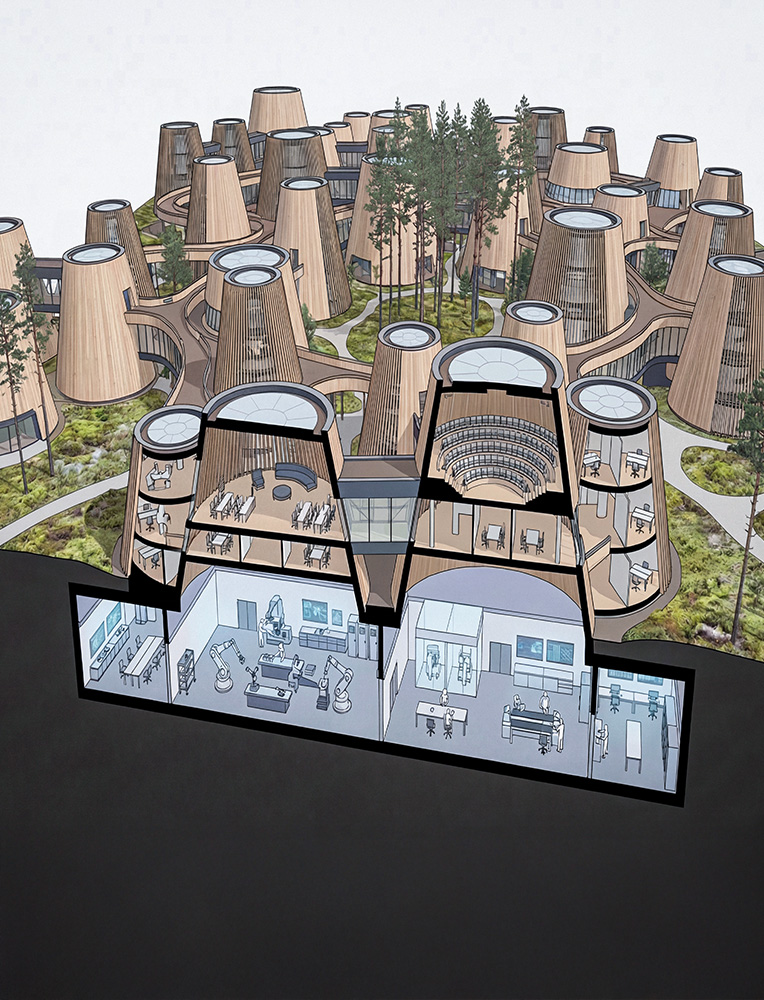
Creating urban design from scratch on complex terrain can often feel like a big challenge. So, in order to gather a deeper understanding of the site and quickly explore different design possibilities, we can use digital tools, parametric modelling, and an algorithmic approach. The idea is to read the landscape first and let the environment guide the concept.
Therefore, in this workshop, we will explore how to analyze the location and use the data to inspire design solutions, not just as technical requirements. You will learn how to create four different analysis methods:
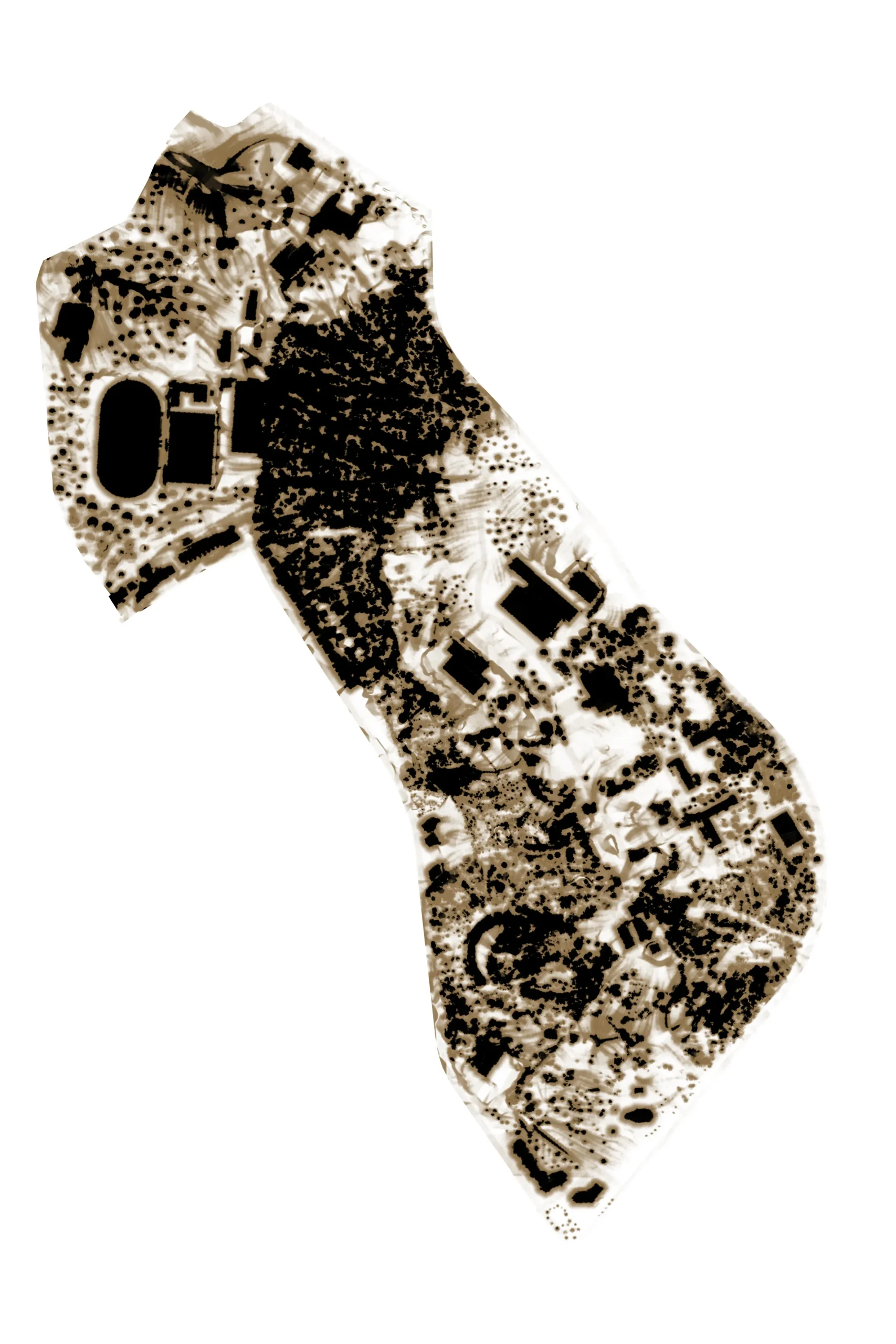
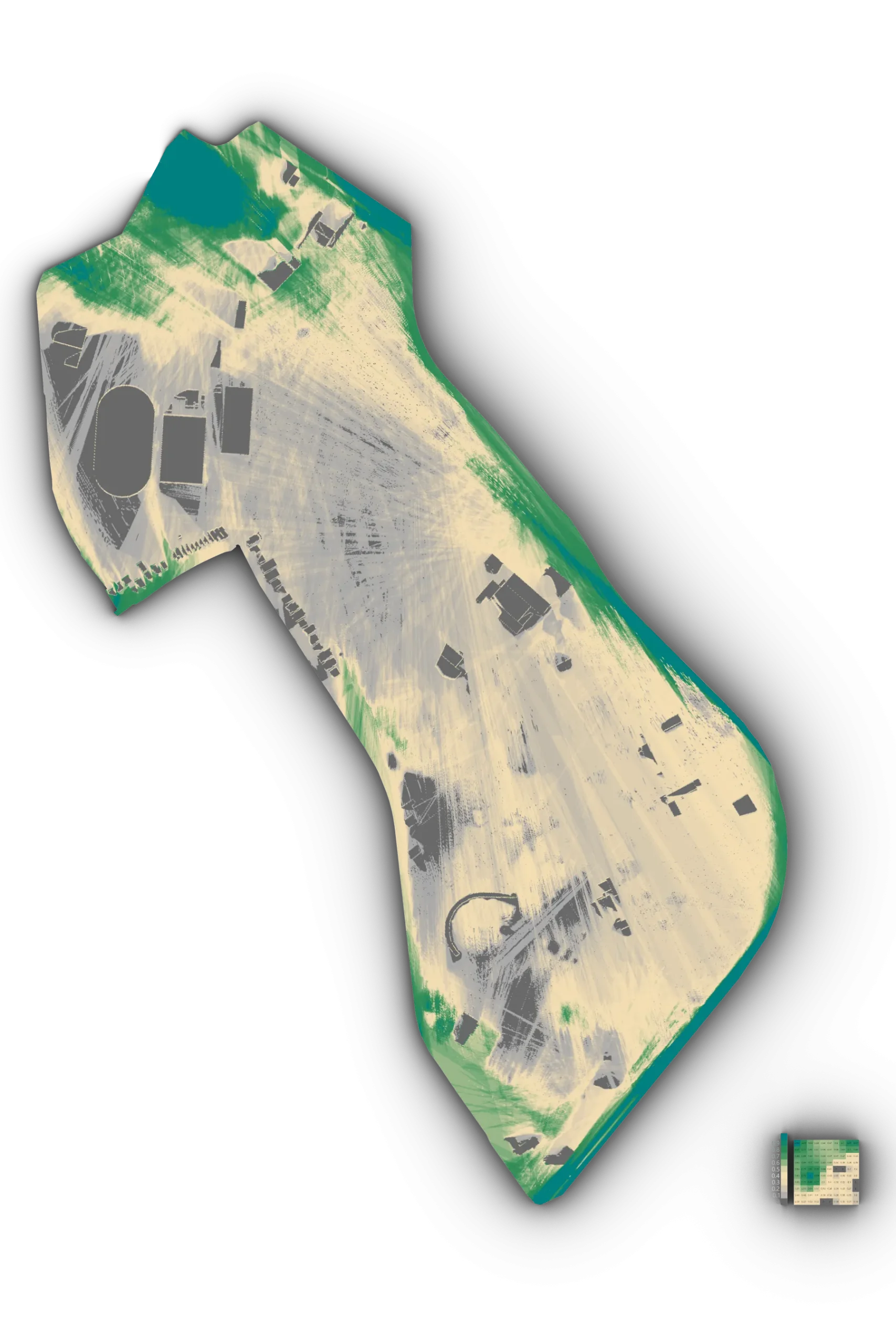
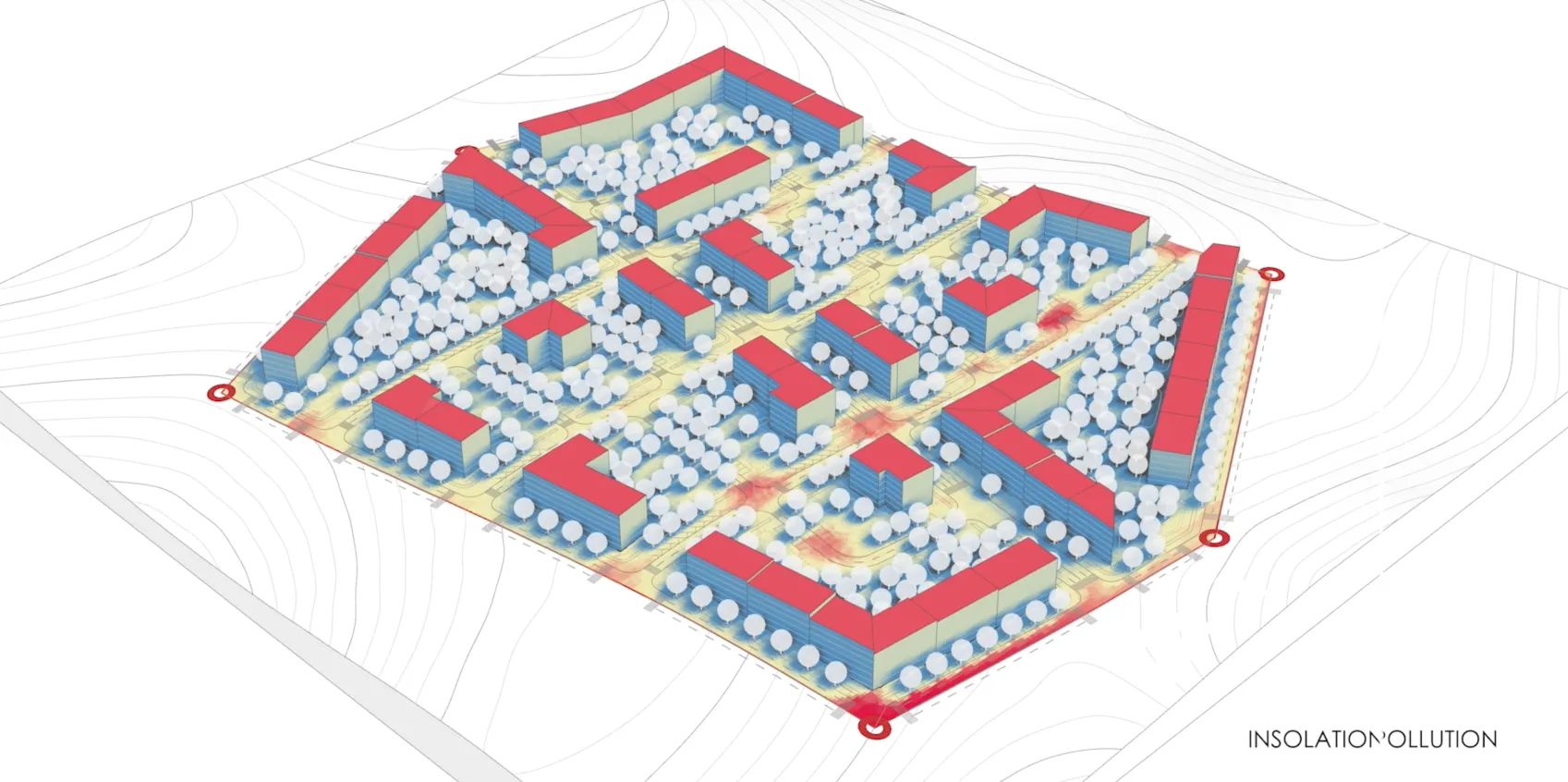
- Sunlight exposure
- Terrain slope
- Vegetation density
- Visibility study
Each of these methods will be demonstrated step-by-step, showing how raw site information can be turned into visual diagrams. Then, these diagrams will become inputs for a generative design workflow focused on finding optimal building positions and shapes.
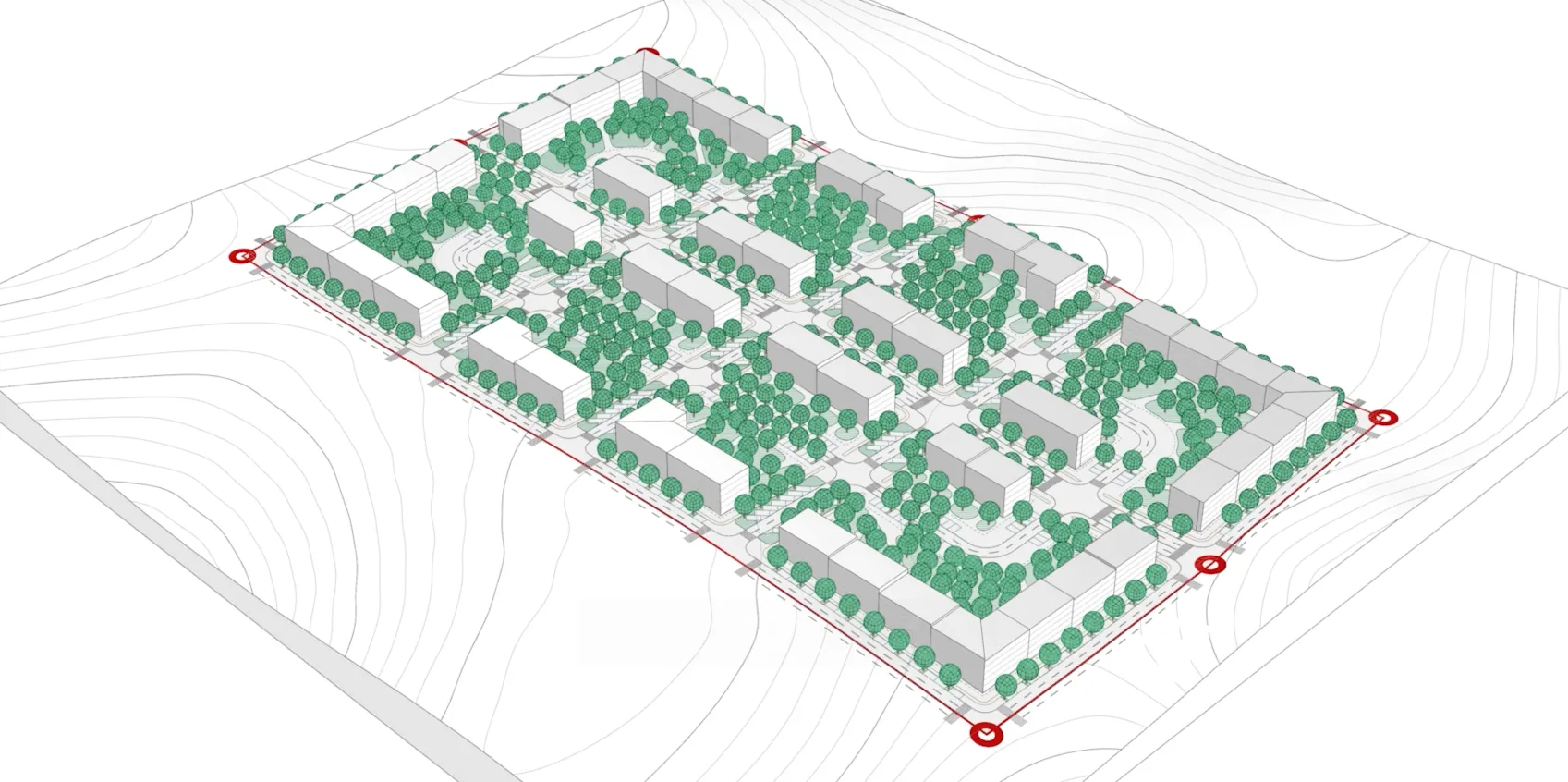
Rather than guessing where a building should go or relying purely on intuition, we can use algorithms, or in other words, a sequence of geometric operations, to analyze the site, gather data, and suggest initial massing for the urban design. This workflow is one of the strategies for early design exploration and can be used in any location.
The complete workflow, including 4 analyses and generative design, will be developed entirely in Grasshopper for Rhino, since it is one of the best tools for architects and designers for parametric and generative design.
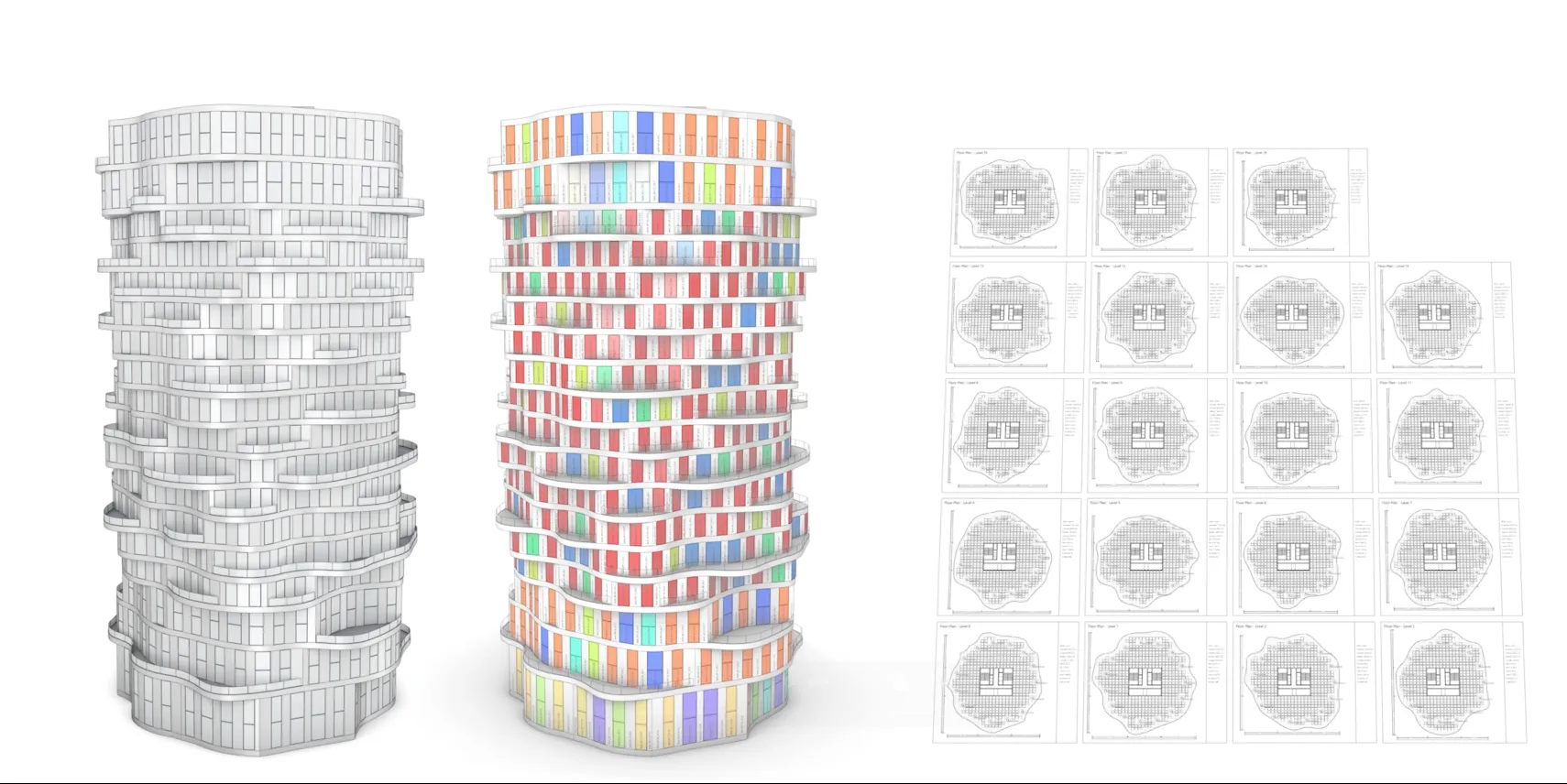
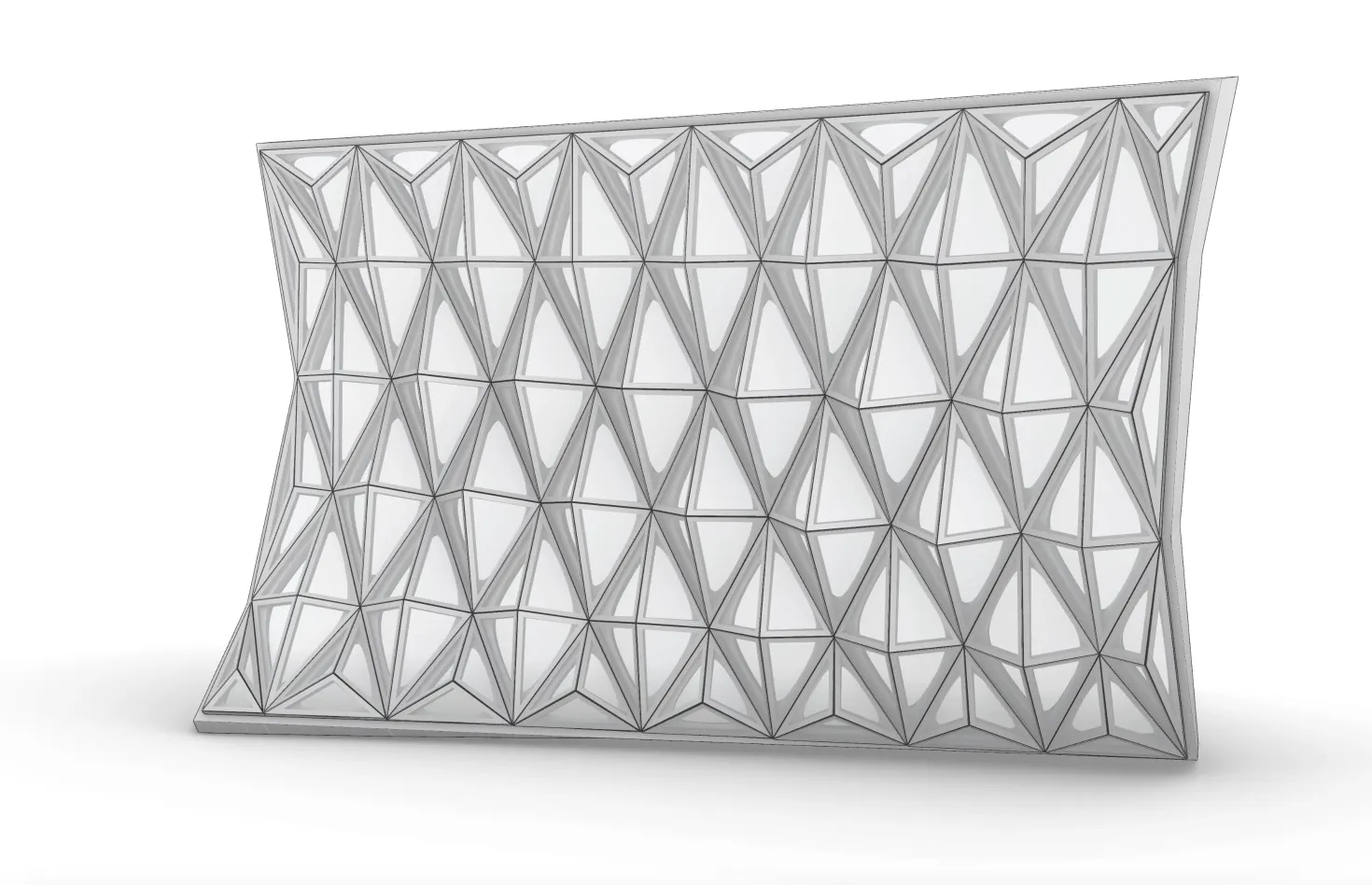
Methodology:
The workshop will focus entirely on creating algorithms within Grasshopper. This includes creating different methods for site analysis and a parametric model for generating urban design. The input geometry will be available in Rhino, but we will not cover basic 3D modelling techniques there. Therefore, it is expected that the student is familiar with Rhino and basic Grasshopper concepts.
This workshop will focus on creative algorithmic thinking and problem-solving in Grasshopper. The algorithms for site analysis and urban design will be created from scratch. You will learn how to set up your own custom analysis method, which will allow you to extend this workflow after the workshop based on your own preferences.
Each student will work alone. We will start with the same terrain for input geometry, but the students will be encouraged to use the same algorithm for different site locations.
By the end of the workshop, each student will have a complete parametric definition capable of generating multiple urban design scenarios based on environmental data and design priorities.
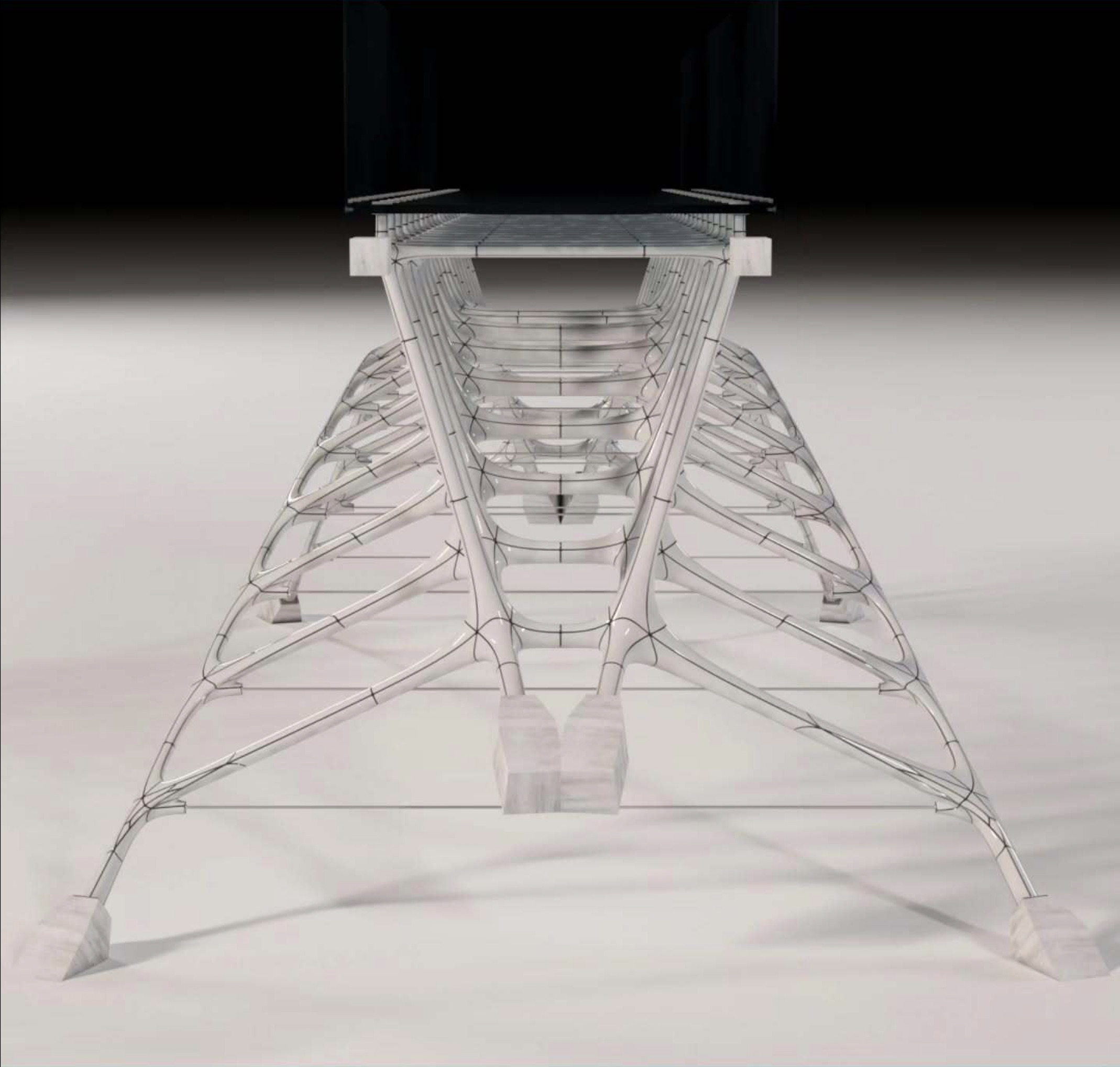
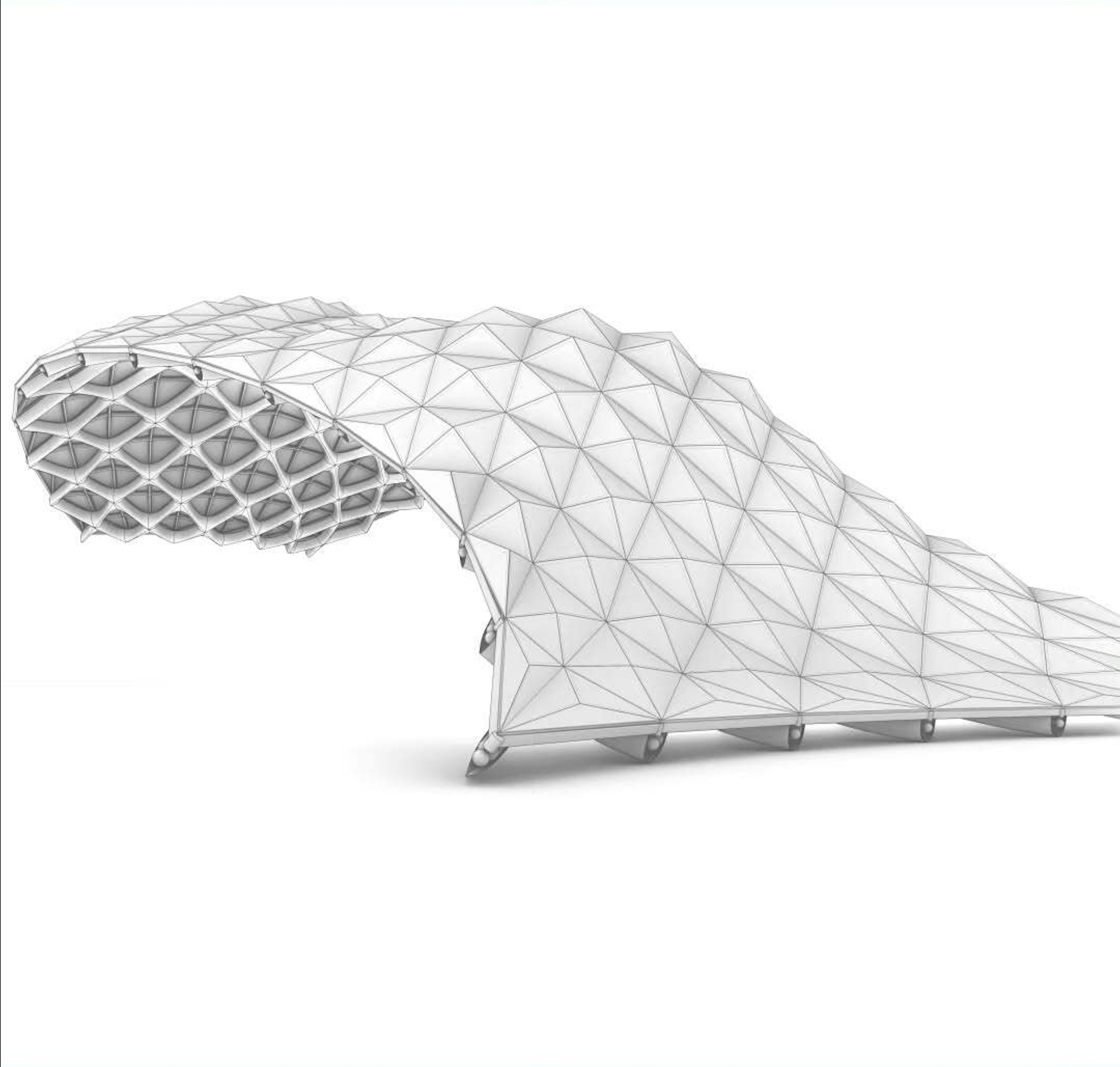
Key Learning Topics:
- Creative algorithmic thinking and problem-solving
- Analyzing complex terrain geometry (Sunlight + Slope + Vegetation + Visibility)
- How to create your own custom analysis method from scratch
- Data-driven design strategies
- Generative approach to urban design
- Tips & tricks for creating efficient and organized Grasshopper definitions
Program:
Day 1 – Introduction and Terrain Analysis
- Presentation and Concept Overview
- Overview of the workshop and objectives. Explanation of key concepts for creating necessary algorithms and preparing for parametric analysis.
- Grasshopper Introduction and Setup
Understanding the interface and workflow. Step-by-step setup for terrain analysis. - Development of Terrain Analysis Methods
Creation of four different analysis methods. Practical demonstrations and explanations for each technique. - Application and Experimentation
Running analyses on sample terrains. Adjusting parameters and experimenting with settings. - Visualization and Customization
Applying color gradients and visual styles. Developing custom styles for improved readability and presentation. - Outcome by End of Day 1
A fully functional Grasshopper definition capable of analyzing any terrain. - Homework
Continue experimenting with parameters, settings, and visualization styles. Explore ways to refine analysis speed and precision.
Day 2 – Data Integration and Urban Design
- Working with Large Data Sets
Using outputs from different analysis methods. Handling data for urban design purposes. - Prioritization and Shape Extraction
Setting priorities to identify relevant shapes for buildings, parks, and squares. - Parametric Urban Design Development
Completing the remainder of the parametric model. Integrating multiple datasets to generate complex urban layouts. - Exploration of Design Solutions
Comparing alternative outcomes based on input parameters. Observing how variations affect the overall design and spatial organization. - Outcome by End of Day 2
A complete parametric urban design model ready for further development or presentation.
Software:
- Rhino
- Grasshopper
- Ladybug
Workshop Notes:
- The installation process is not part of the workshop. The student should have Rhino 8 and Grasshopper already installed.
- We will also use the Ladybug plugin for Grasshopper to perform daylight analysis.
- Basic familiarity with Rhino and Grasshopper concepts is expected
Instructor:
Ognjen Graovac

Ognjen Graovac is an architect and computational designer from Belgrade who loves blending design, technology, and creative problem-solving. He completed both his Bachelor’s and Master’s degrees at the Faculty of Architecture in Belgrade, where he first got into parametric and computational design.
That curiosity quickly pushed him toward object-oriented programming and creating digital tools and workflows to expand architects’ ability to design complex and precise shapes.A year later, Ognjen founded Algorithmic Architecture, a small studio focused on solving geometric challenges in complex architectural forms and automating the creation of precise, large-scale 3D models for the building industry. Through his work, he has contributed to both small and large projects, including major developments such as Madison Square Garden in Las Vegas.
Ognjen is also an active member of the open-source community. He develops free Grasshopper plugins such as 3D Graphic Statics and Spider 3D. The 3D Graphic Statics plugin alone includes over 100 components and has been downloaded more than 11,000 times worldwide. He has also won several awards in architectural competitions, including a first-place prize for a pedestrian bridge over the Danube River in Novi Sad.
Important Notes:
- The “Algorithmic Urban Design in Grasshopper: Data-Driven Site Analysis & Massing” Studio workshop by PAACADEMY will start at 14:00 (GMT) on Saturday, January 31st, 2026.
- Total sessions: 2 Sessions (8 Hours).
- The teaching duration per session will be 4 hours.
- Students will have time for a break between teaching hours.
- Each session and the entire studio will be recorded, and videos will be available for participants just a day after the class for an unlimited time.
- PAACADEMY will provide a certificate of attendance.
- The studio has limited seats. Tickets are non-transferable & non-refundable. Please read carefully before you register.

Topic: Algorithmic Urban Design in Grasshopper: Data-Driven Site Analysis & Massing
Date: January 31 & February 1, 2026
Time: 14:00 – 18:00 GMT
Format: Online on Zoom
Duration: 2 Sessions (8 Hours)
Registration Deadline: January 30th, 2026
Total Seats: 50 seats
Difficulty: Beginner-Intermediate
Language: English
Certificate: Yes
General Registration: 100 EUR
Join free: with Full Access membership
Fee For Digital Members: 85 EUR (15% discount available only for Digital Members)
Organized By: PAACADEMY
Tutor: Ognjen Graovac
Recordings: Recordings will be available for all participants afterward indefinitely.
Explore Courses
.jpg%202.jpg "Building Performance with Forma & Opossum")
.jpg "Ondrej Chybik - Rethinking Architecture")