

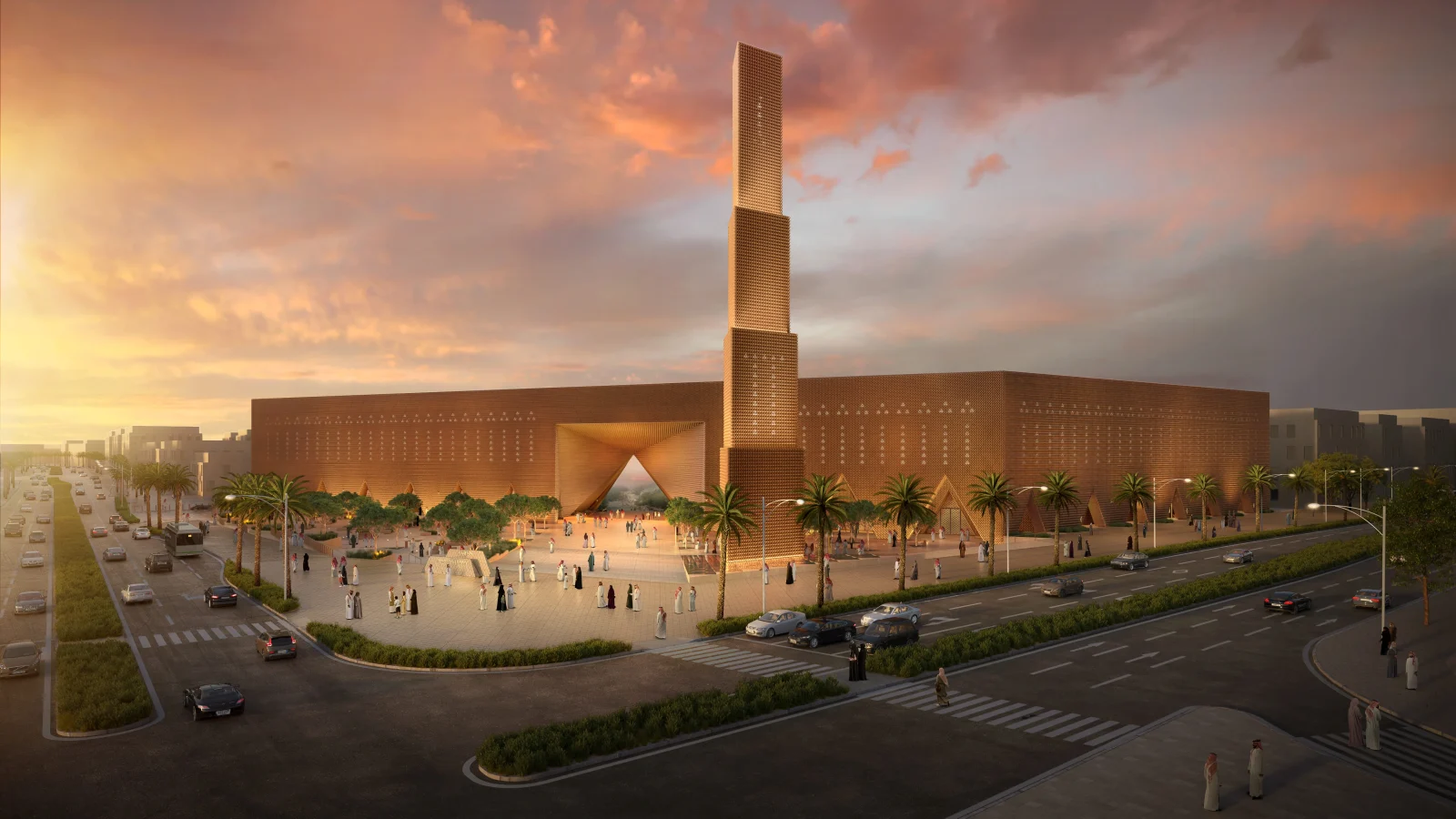
X Architects has revealed plans for the Grand Mosque, located between Riyadh’s main boulevard and the historic Wadi Hanifah. The Grand Mosque at Diriyah Gate II reinterprets traditional Najdi architecture as a shared civic environment. Designed to accommodate 11,400 worshippers, it connects everyday city life with religious practice and the natural desert landscape.
Diriyah, the 300-year-old birthplace of the first Saudi state and a center of traditional Najdi mud-brick architecture, is undergoing a major transformation into a 14 sq km cultural district. Planned to include museums, civic institutions, residential neighborhoods, and public spaces, the development positions the Grand Mosque as a central civic anchor and a key arrival point within Saudi Arabia’s heritage destinations.
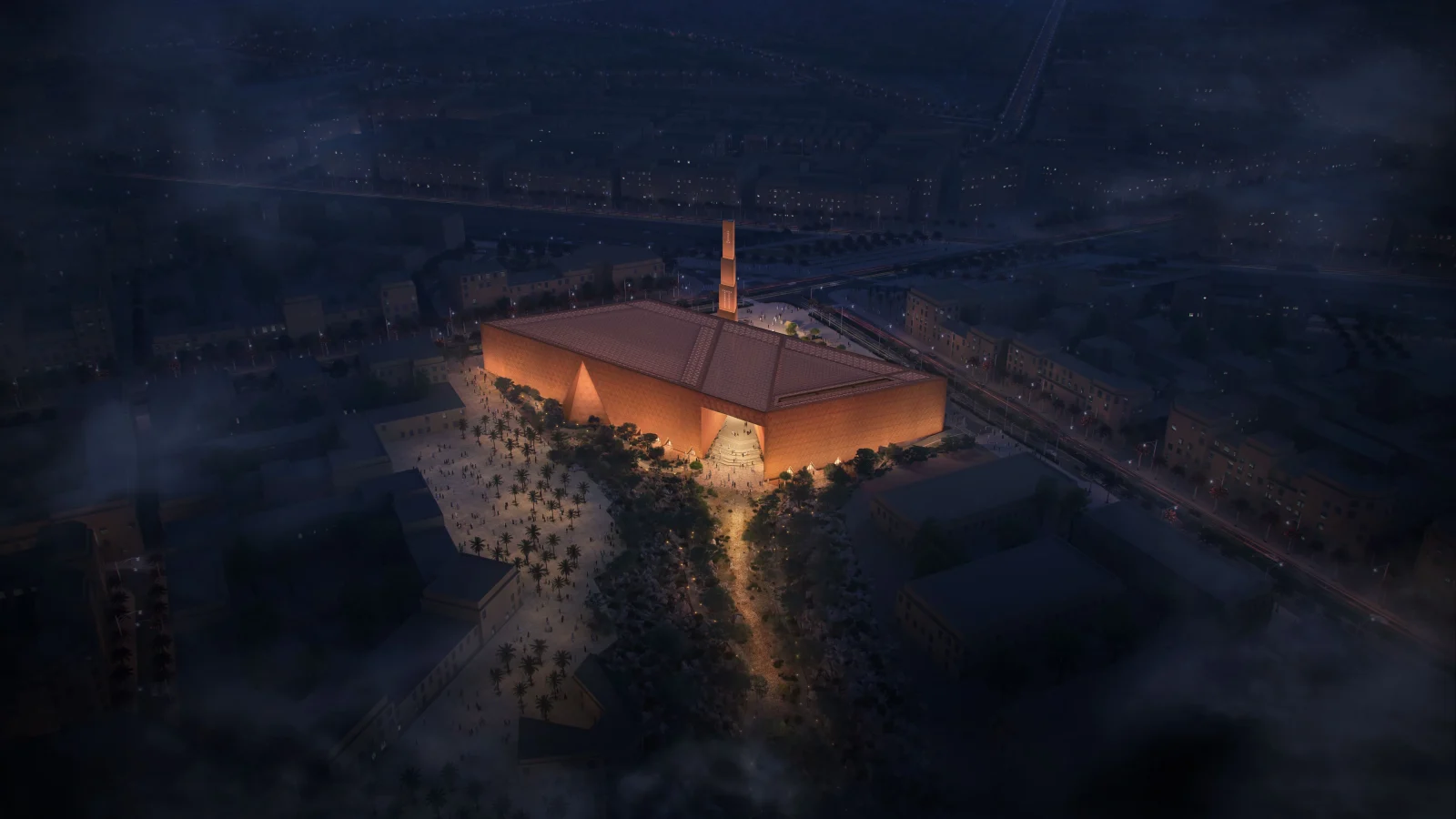
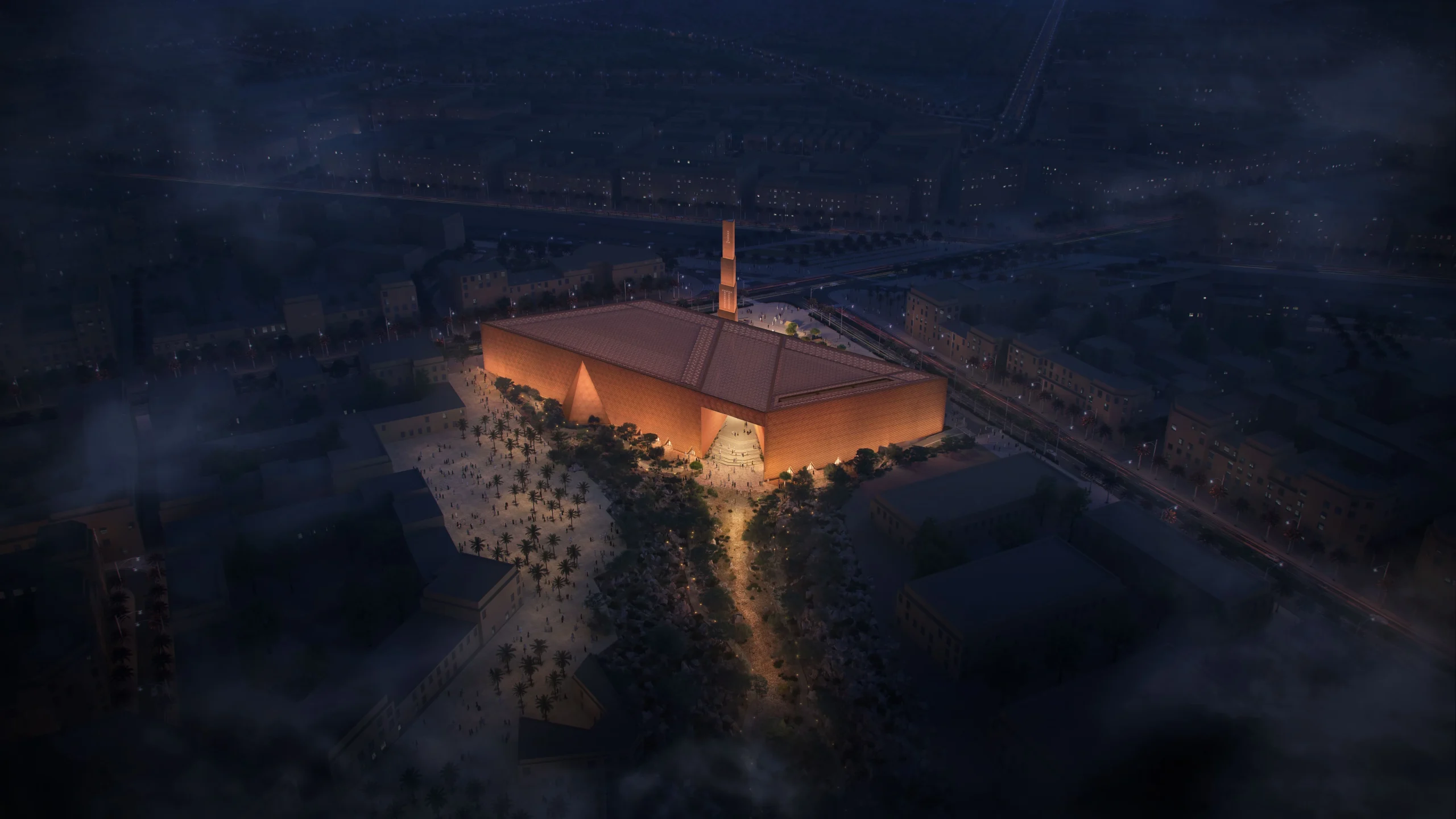
Positioned at the junction of Diriyah Gate’s grand boulevard and Wadi Hanifah, the mosque spans a 21,690 sqm site, with a total built-up area of 12,300 sqm. It is designed to serve residents alongside visitors entering the district, thereby reinforcing its role as a place of worship and a public landmark.
Connecting Riyadh’s Cityscape with Wadi Hanifah
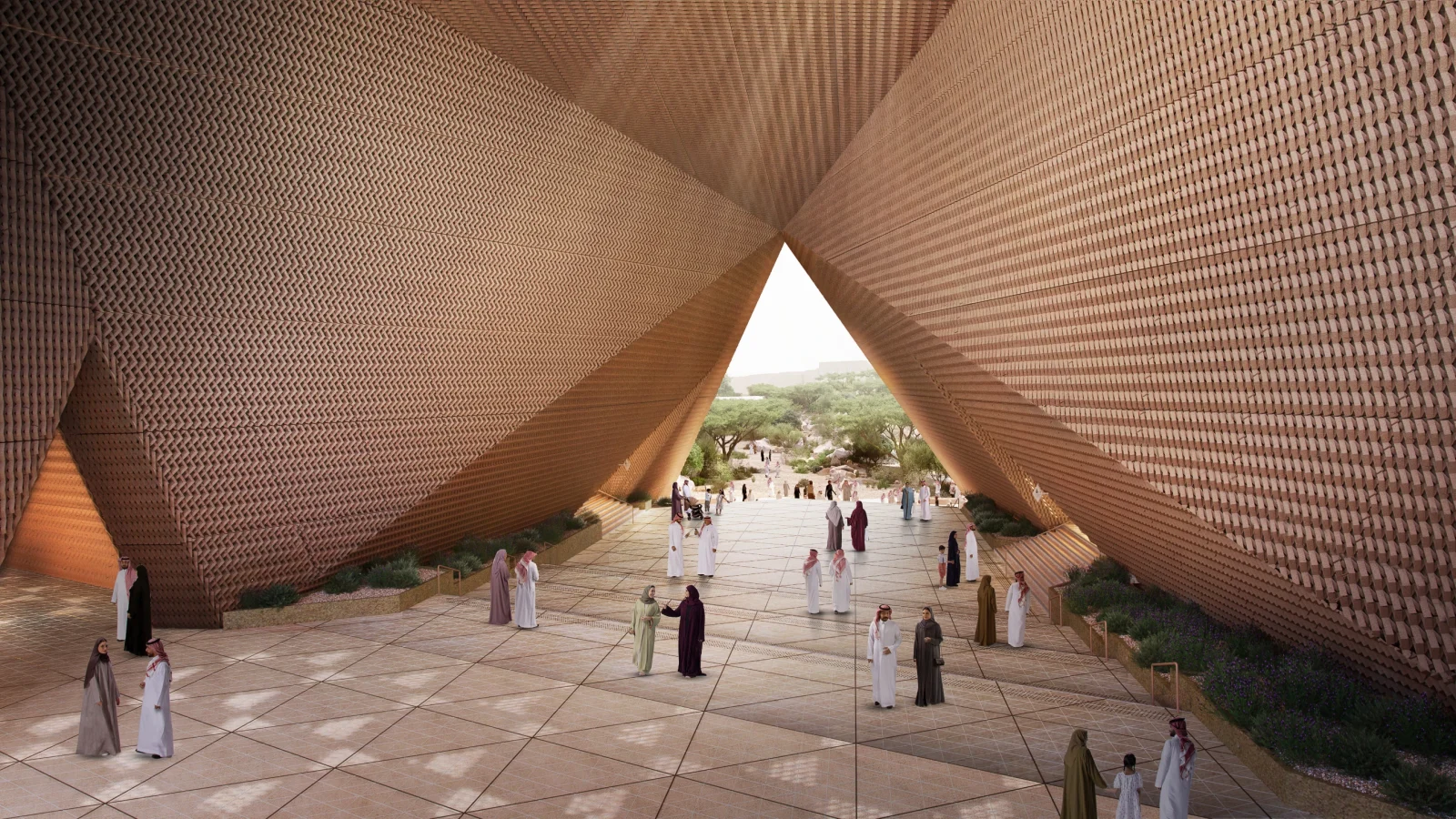
Wadi Hanifah, a historic valley cutting across the site, shapes the project’s core idea. The mosque is designed as an intermediate terrain that links the urban boulevard with the ecological corridor of the wadi.
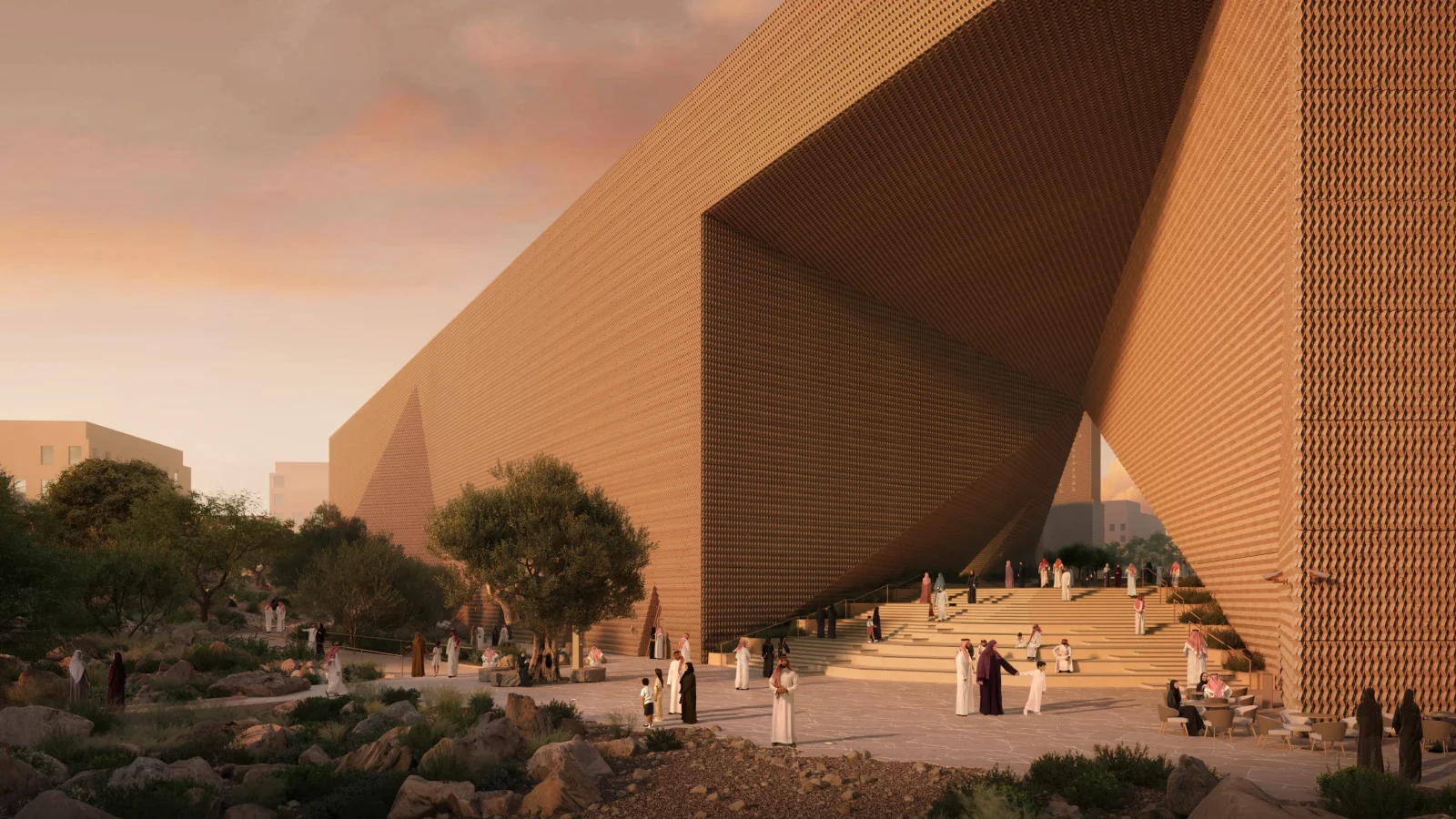
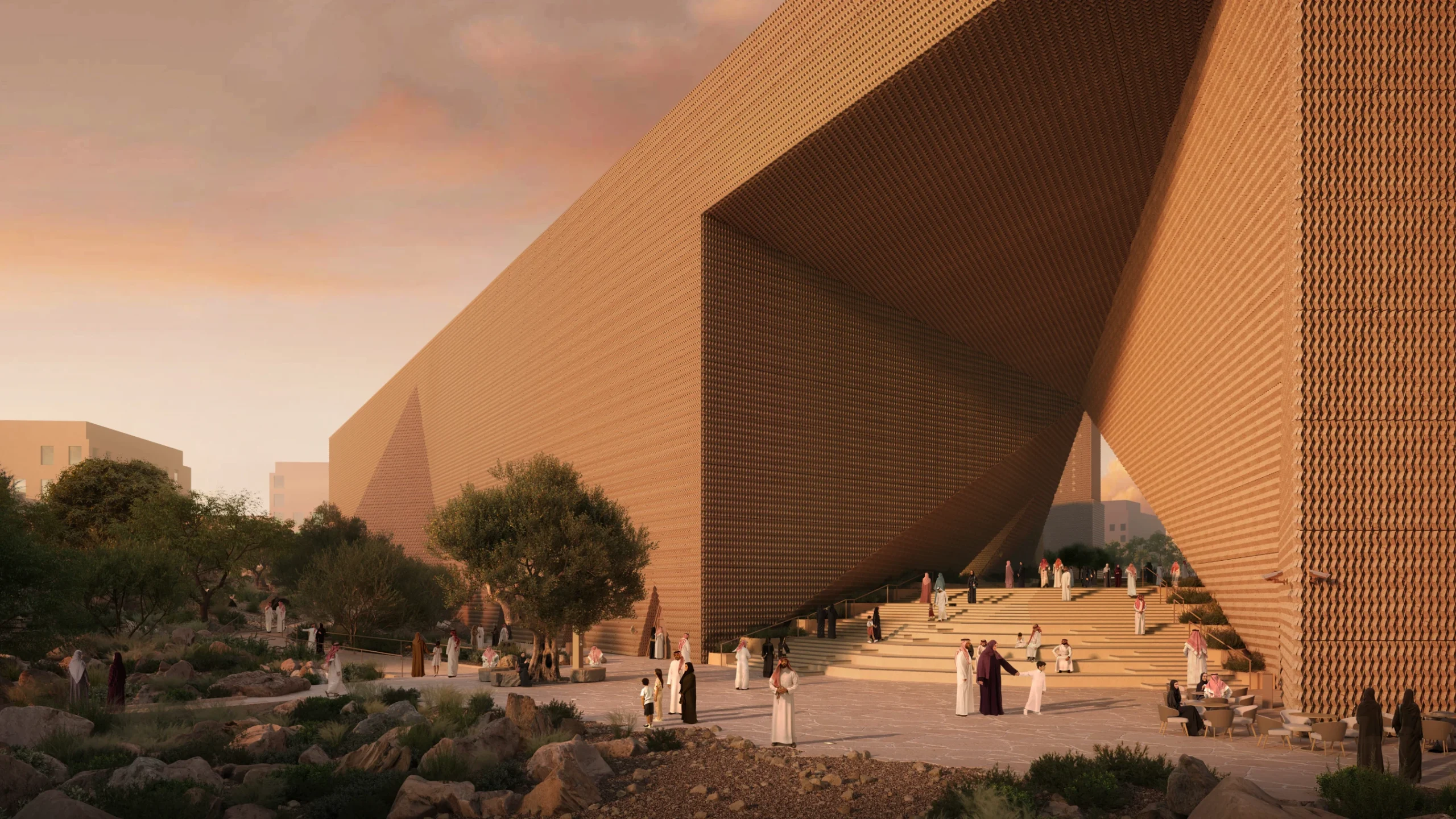
A sequence of plazas, shaded pathways, and landscaped terraces guides visitors from street level down toward the valley edge. This movement creates a gradual transition between everyday activity and moments of reflection. A grand, stepped entrance hall carved into the building mass is at the center of this sequence. The deep triangular portal gathers visitors in a shared spatial experience that moves between light, shade, and open landscape.
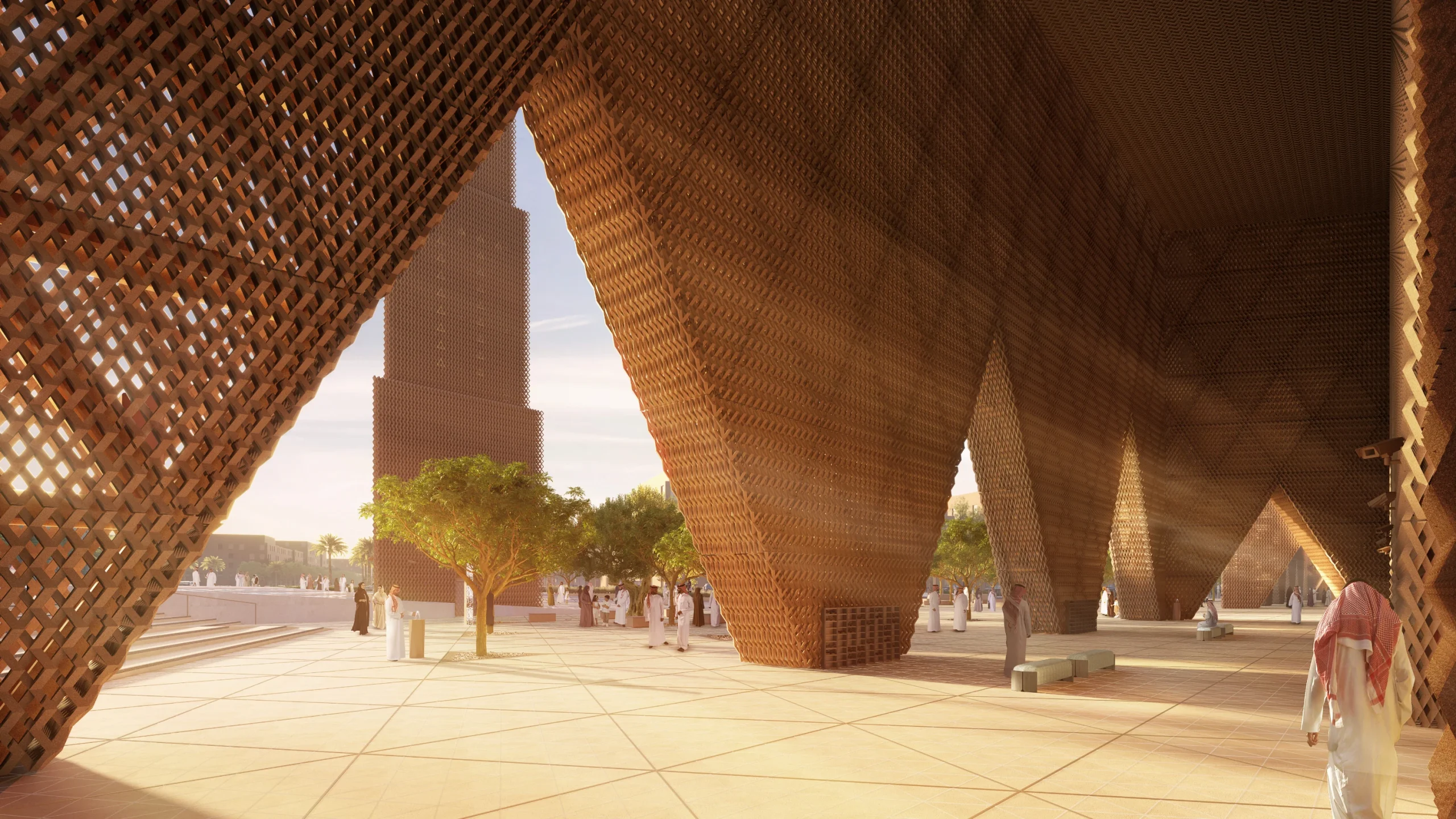
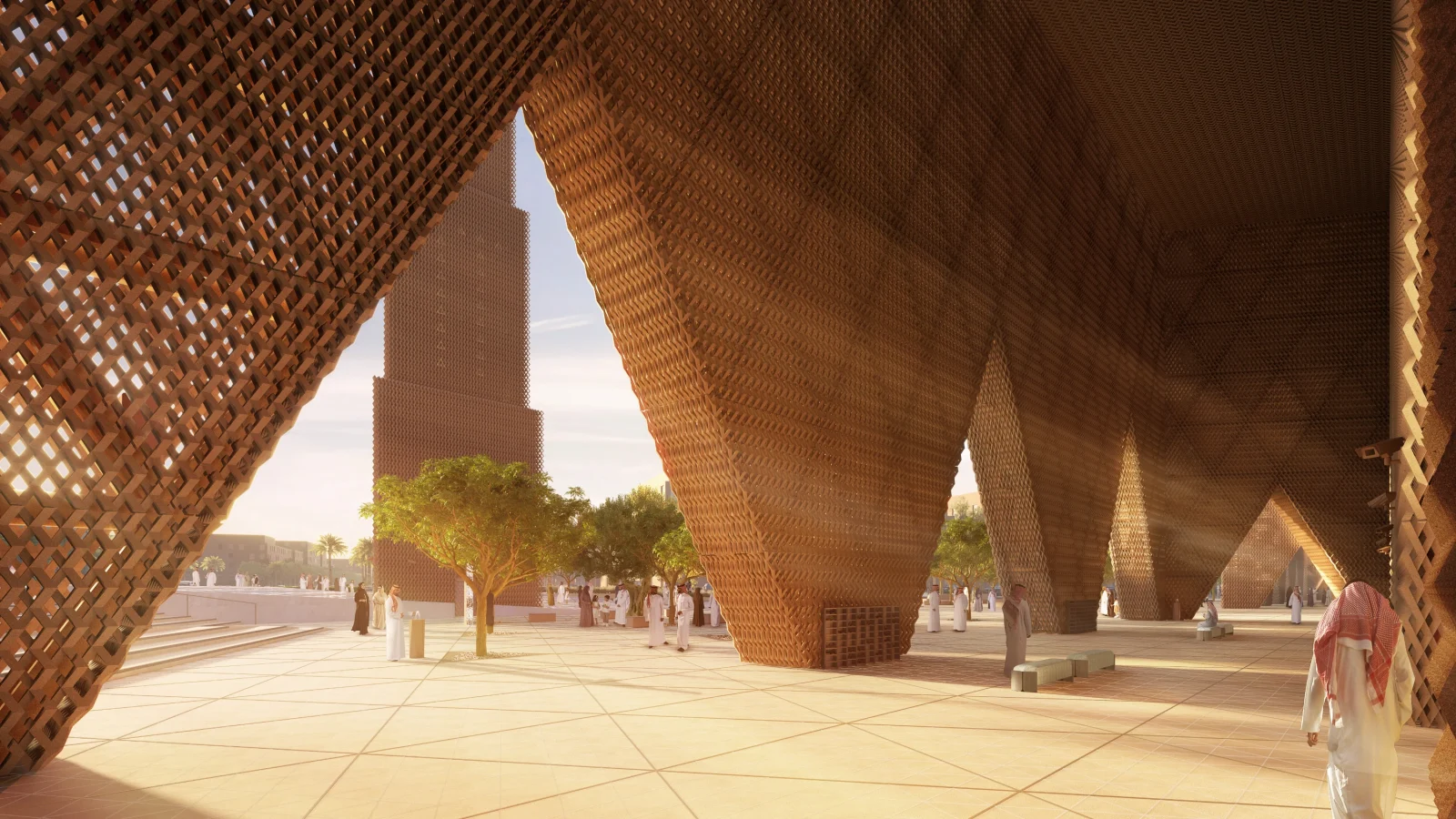
The central mosque plaza is designed to host Eid prayers, community events, and weekend markets, extending the building’s use beyond formal prayer times. Surrounding colonnades and planted courtyards create a porous edge, allowing people to move through or pause without encountering a rigid boundary between the mosque and the city.
As co-founder Ahmed Al Ali explains, the design explores “the poetics of everyday movement,” connecting arrival, descent, and prayer into a single spatial narrative that reconnects the historic valley with contemporary Riyadh.
Contemporary Najdi Design at Diriyah Gate Mosque
The mosque draws from the clustered forms, thick walls, and sculpted parapets of traditional Najdi architecture, translating them into a contemporary architectural language. The result is a textured volume that remains visually grounded in its context while clearly modern in execution.
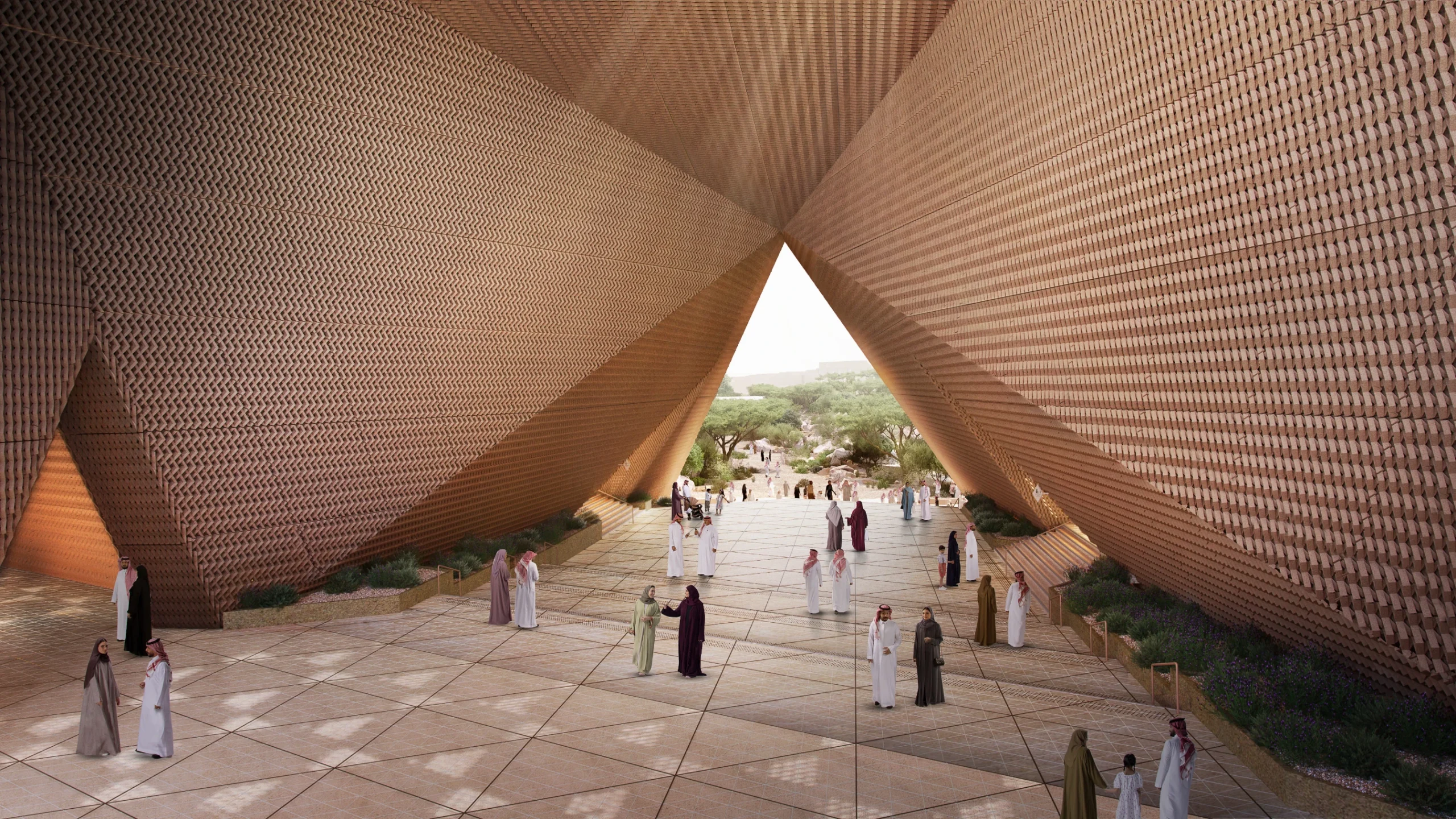
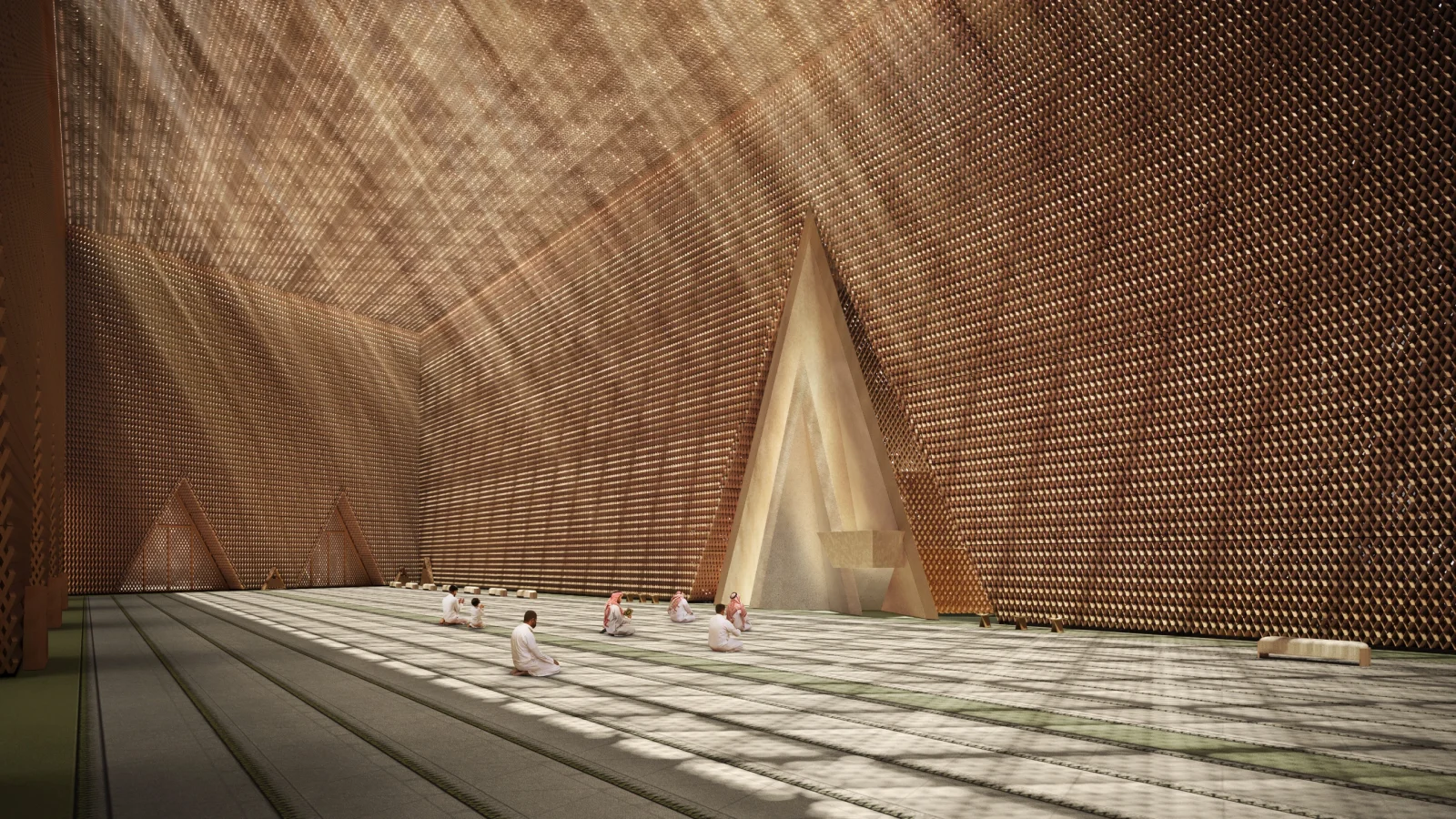
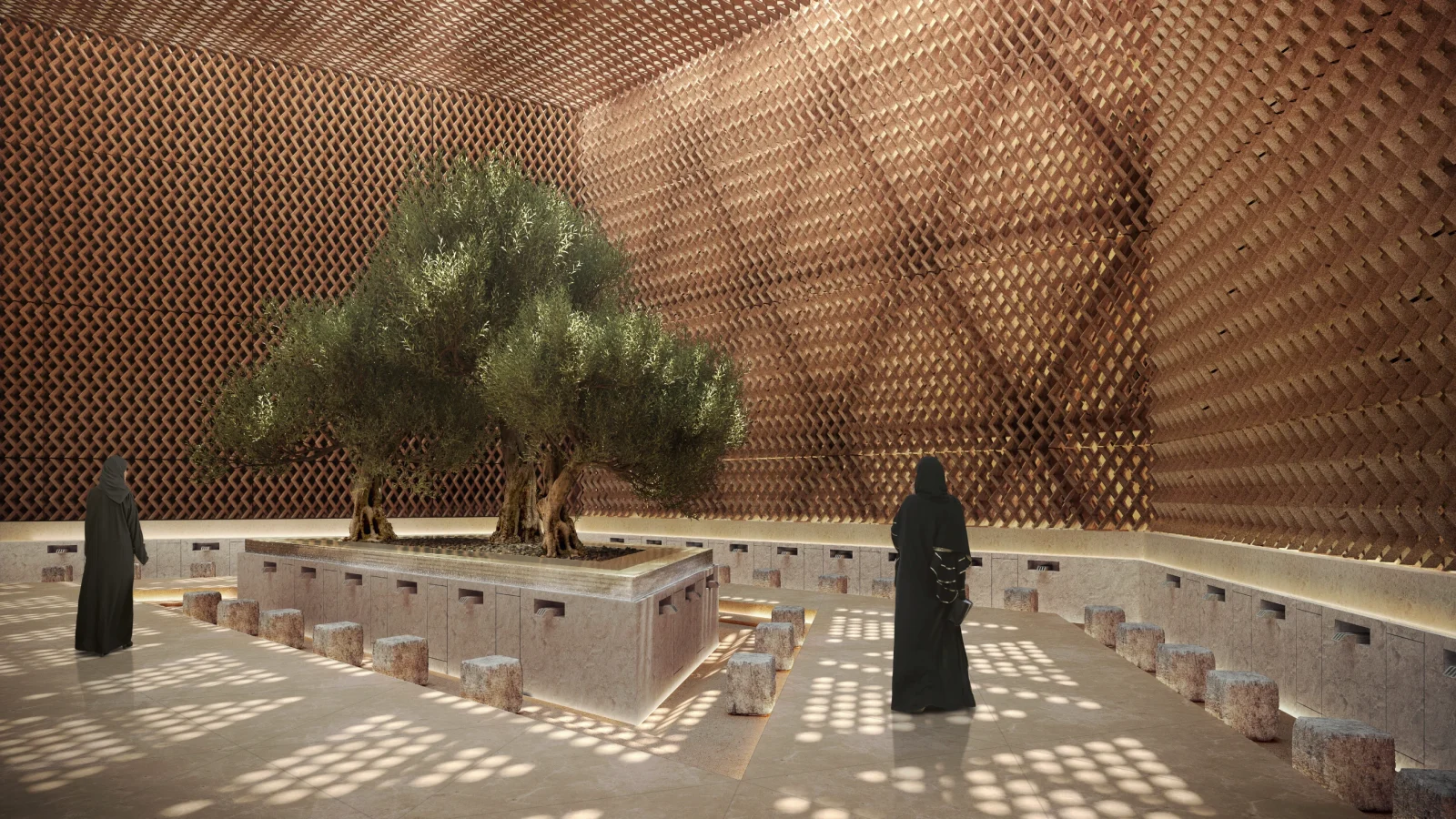
A double-sided mashrabiya wraps around the building, and it is made up of a continuous three-dimensional lattice of prefabricated panels. This high-performance façade system reinterprets traditional mud-brick patterns while providing shading and environmental control.
Large triangular openings are carved into the structure, creating gateways, porches, and transitional spaces between exterior plazas and the internal sahn (courtyard). A layered roofscape, deep recesses, and rhythmic colonnades echo the historic profile of Diriyah while framing views toward At-Turaif and the surrounding landscape.
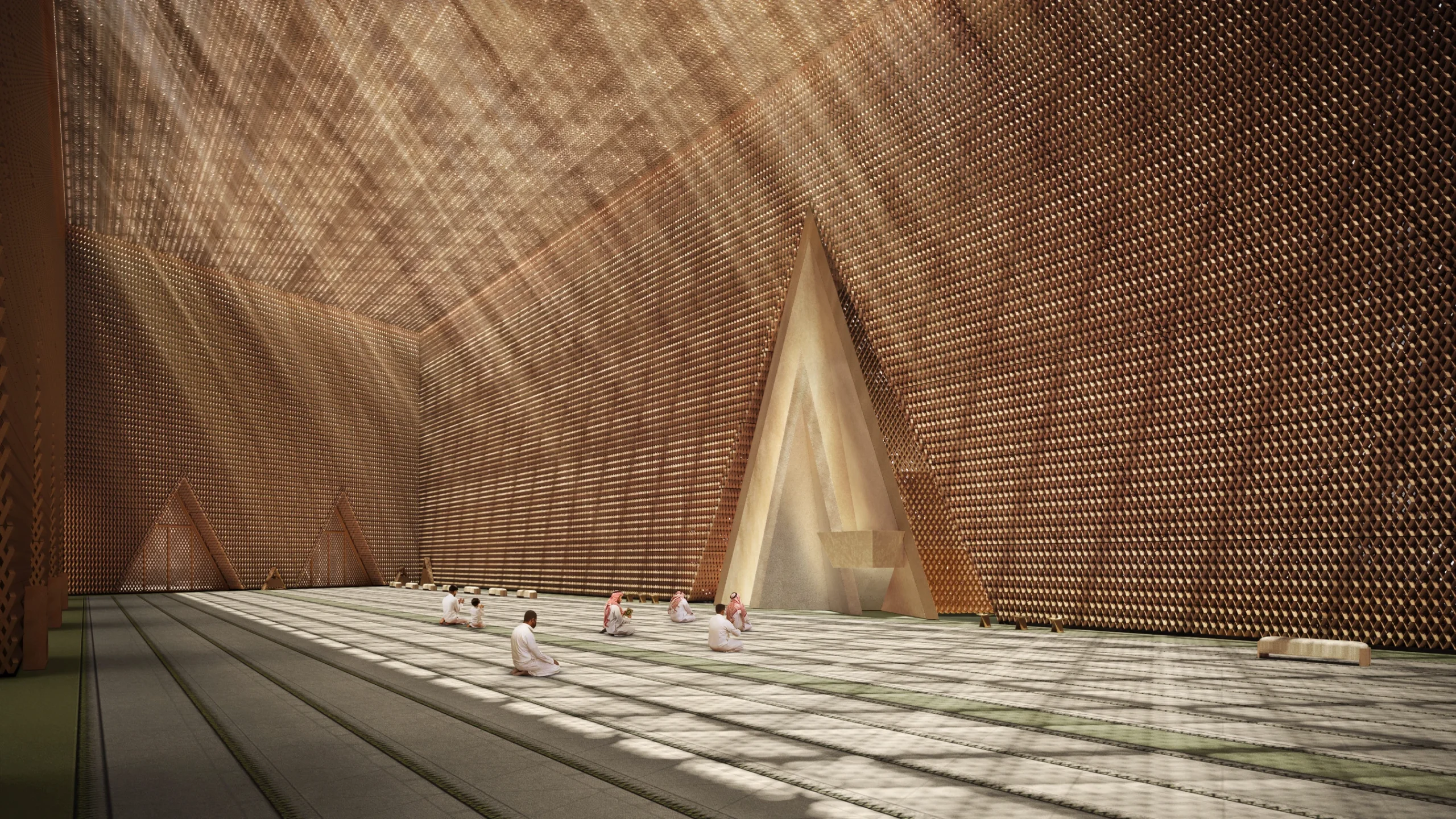
Inside the main prayer halls, filtered light passes through the mashrabiya and sloping walls, reinforcing orientation toward the qibla and creating a calm, legible interior. Secondary spaces, including classrooms, a library, and women’s areas, are designed as more intimate, timber-lined rooms that open onto planted courtyards.
Environmentally Adaptive Architecture
Environmental performance is central to the project, aligning with Diriyah Gate II’s sustainability goals. The mosque is targeting LEED and MOSTADAM Gold certifications through strategies that combine orientation, shading, thermal mass, and natural ventilation.
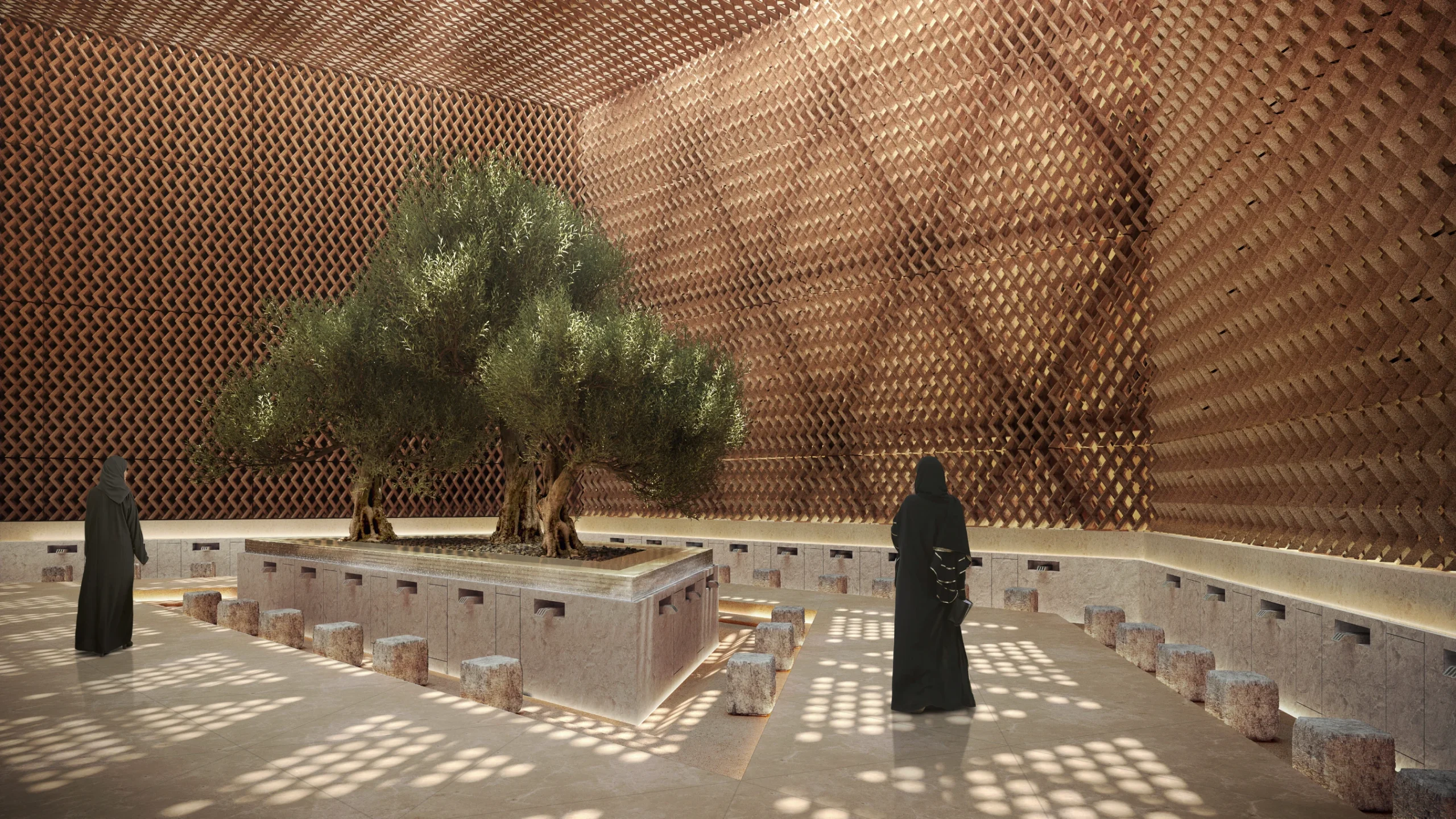
The layered façade and roof system help regulate heat gain while softening daylight within interior spaces. At the same time, the wadi landscape supports a microclimate strategy, where planting, water features, and topography contribute to cooling outdoor areas and extending their usability throughout the day.
Program and Accessibility
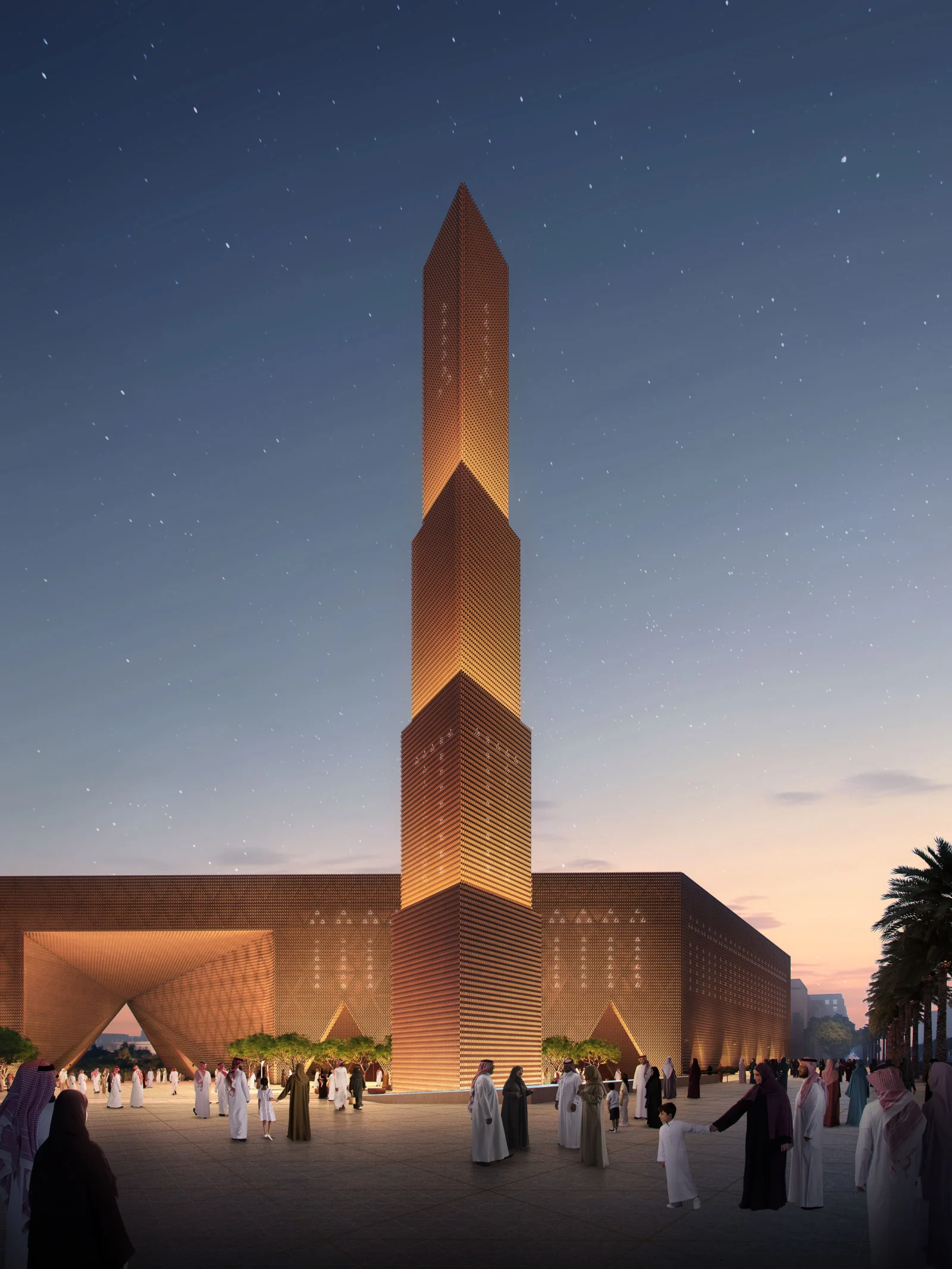
In accordance with Saudi Ministry of Islamic Affairs guidelines, the mosque includes male and female prayer halls, ablution areas, an external courtyard, a crèche, Quran classrooms, offices, a library, a café, and a minaret.
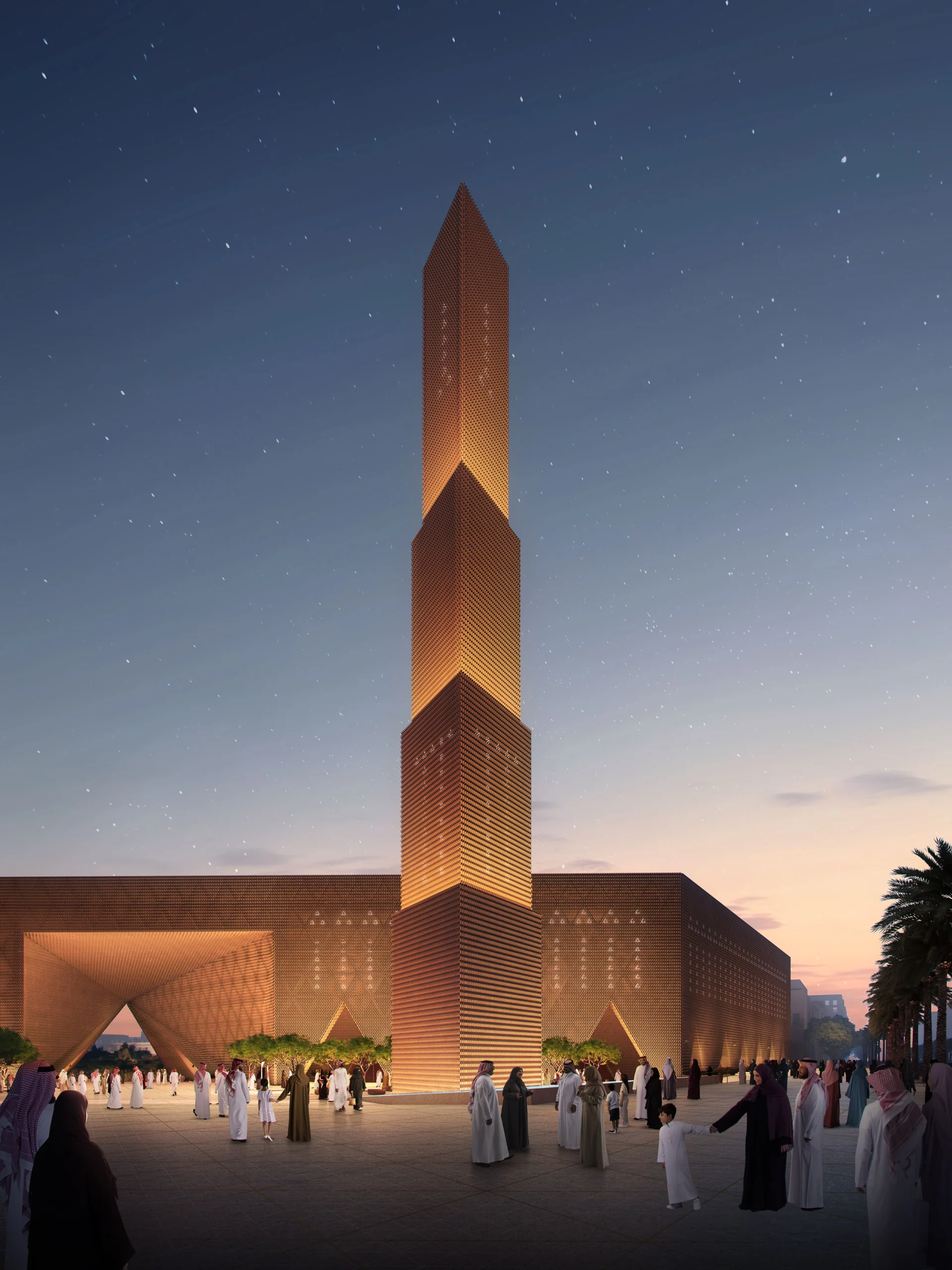
The inclusion of learning spaces reinforces the mosque’s traditional role as a center of knowledge and community life. These areas are designed as open, civic rooms that encourage study, dialogue, and everyday use beyond prayer times. The building is fully accessible, with step-free circulation and inclusive design integrated throughout.
A Civic Landmark for a Changing Riyadh
Strategically positioned along the grand boulevard, the mosque is well connected by car, public transport, and pedestrian routes. It will serve both the surrounding neighborhoods and visitors arriving from the King Saud University Cluster to the east.
As Riyadh continues to evolve, the Grand Mosque at Diriyah Gate II reflects a balance between heritage and contemporary life. The design draws deeply from local building traditions, adapting them to present-day needs.
Ahmed Al Ali describes the ambition as creating a mosque that responds to the realities of a rapidly changing city while maintaining its spiritual and civic responsibilities. Farid Esmaeil, co-founder of X Architects, adds that the project avoids superficial historic references, instead using spatial strategies such as thick walls, shaded courtyards, and clustered volumes to address climate, privacy, and collective worship in a contemporary way.
At night, the mosque transforms into a luminous presence along the boulevard, marking its role as both a place of gathering and a defining landmark within Diriyah’s evolving landscape.
Grand Mosque at Diriyah Gate II Project Details
Architects: X Architects
Location: Diriyah Gate II, Riyadh, Saudi Arabia
Site Area: 21,690 sqm
Built-Up Area: 12,300 sqm
Capacity: Up to 11,400 worshippers
Image credit: X Architects
Explore Courses
.jpg "Ondrej Chybik - Rethinking Architecture")