

At the center of the evolving MIND Milano Innovation District, the new Ambrosian Monastery, designed by Stefano Boeri Architetti, introduces a contemporary interpretation of monastic architecture shaped around dialogue, spirituality, and public life. Commissioned by the Archdiocese of Milan, the project positions itself within a district dedicated to science, research, technology, and education, creating a deliberate relationship between spaces of reflection and spaces of innovation.
The Ambrosian Monastery is planned on a 2,700-square-meter site with an additional 1,100 square meters dedicated to open landscape areas. Located at the intersection of the Cardo and Decumanus axes of MIND, the project is developed as an accessible civic environment. The architects reinterpret the traditional cloister typology through a permeable spatial system that welcomes residents, researchers, students, and visitors expected to inhabit the district in the coming years.
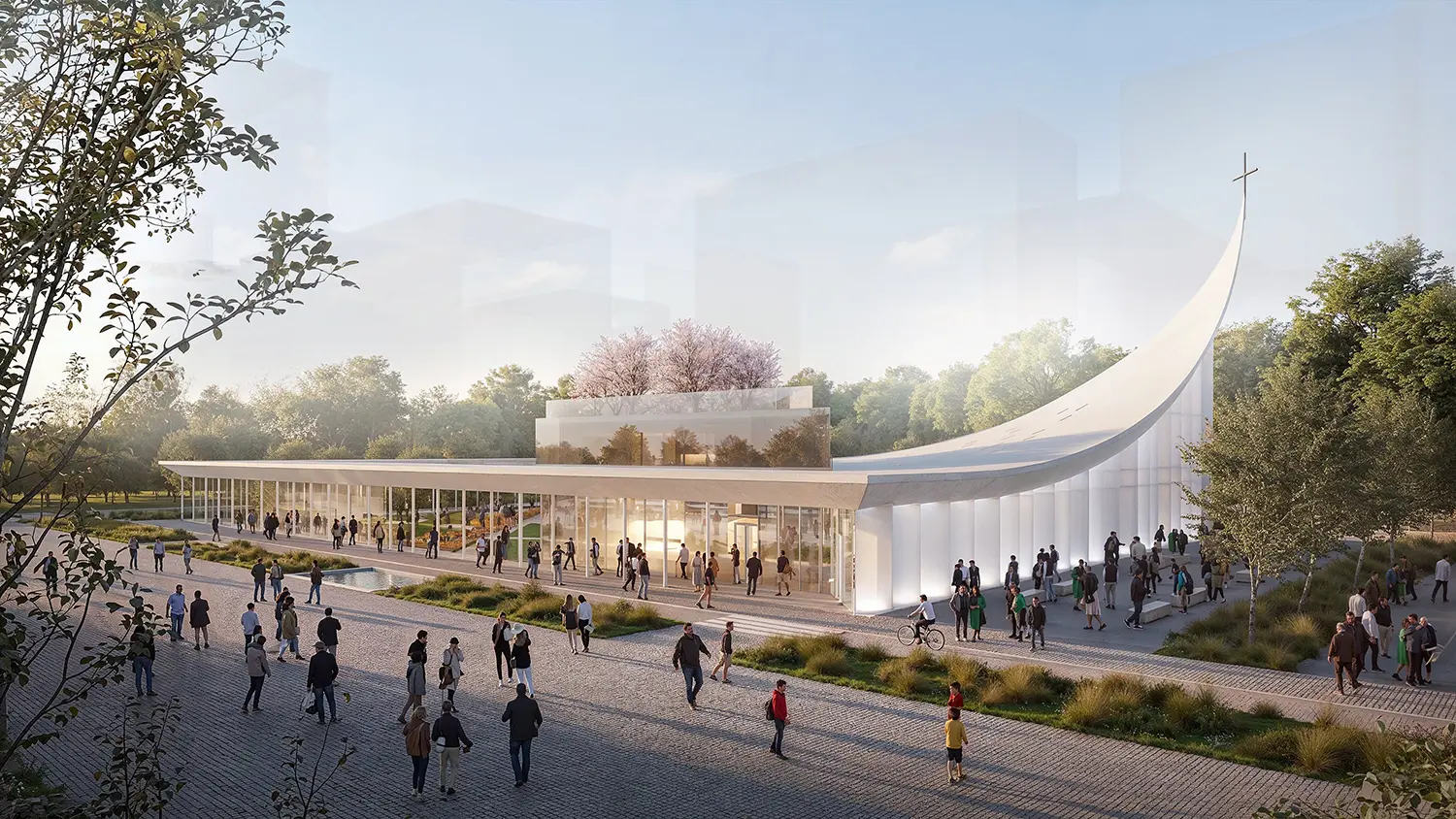
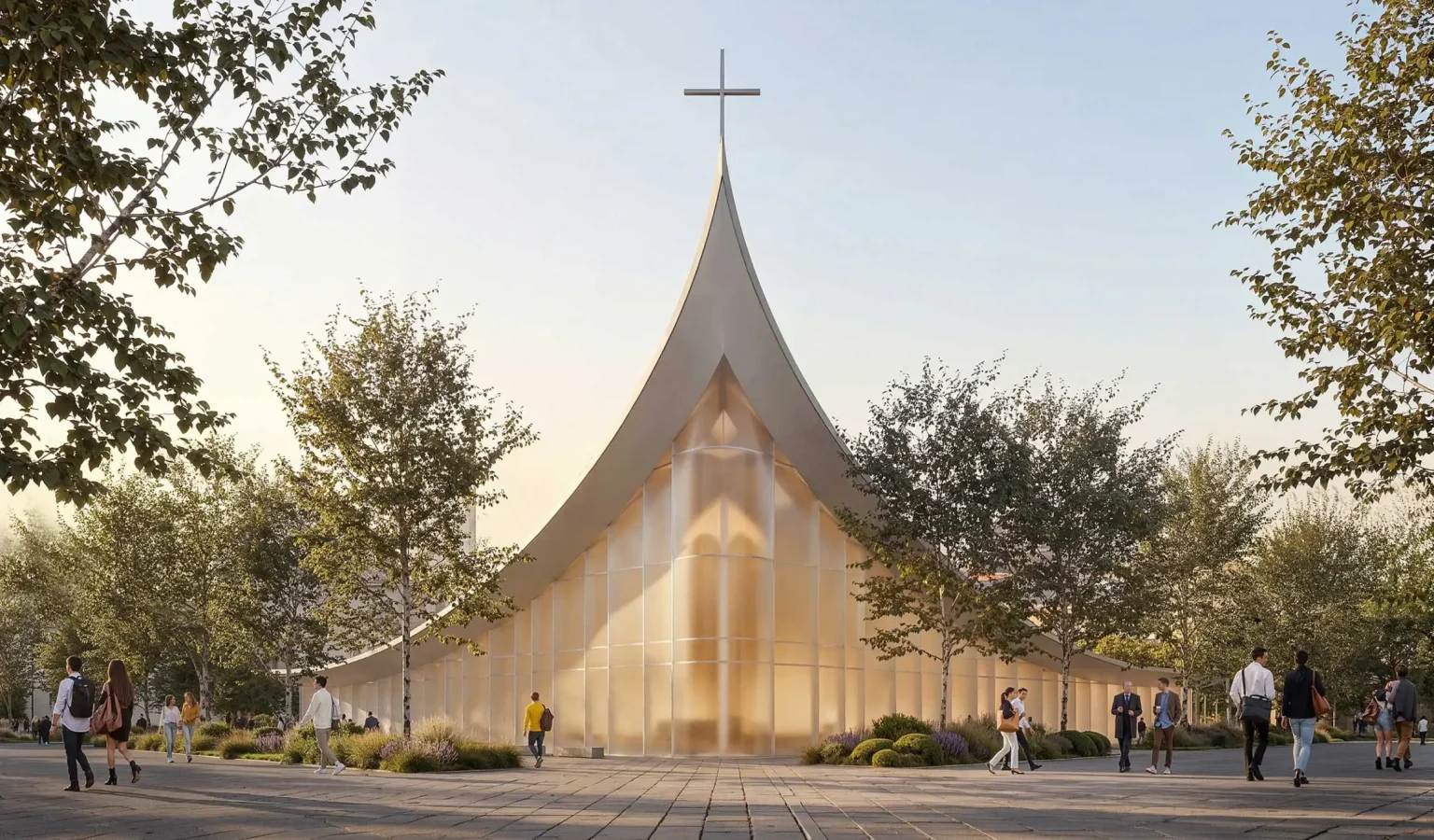
The architectural composition revolves around a triangular cloister that organizes circulation and collective activity across the complex. This geometry establishes a balance between enclosure and openness, allowing the monastery to maintain contemplative qualities while remaining connected to the surrounding urban condition. Rising from this central space is a trigonal-plan church designed to accommodate approximately 300 to 350 worshippers. Its elevated roof form references the vertical character of Milan’s historic cathedral architecture while presenting a distinctly contemporary profile within the district.
Stefano Boeri Architetti’s Vision for the Ambrosian Monastery
A central component of the project is the Library of Religions, conceived as a transparent prism dedicated to study, interfaith exchange, and intellectual interaction between theological thought and scientific research. The library is envisioned as a shared platform for public discussion, education, and cultural interaction. Study areas, multifunctional rooms, and an open-air amphitheater extend the institution’s role into the broader civic realm.
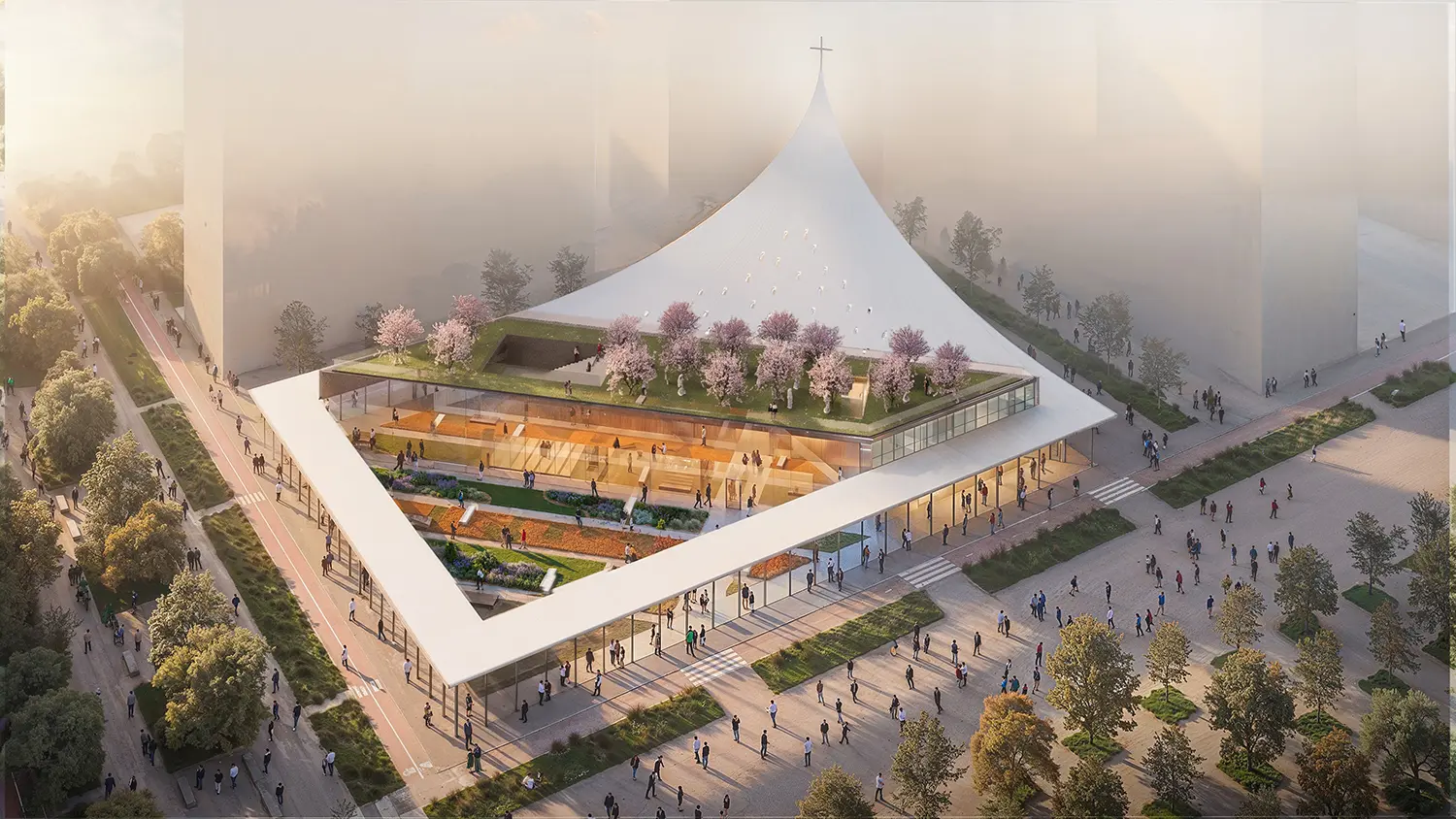
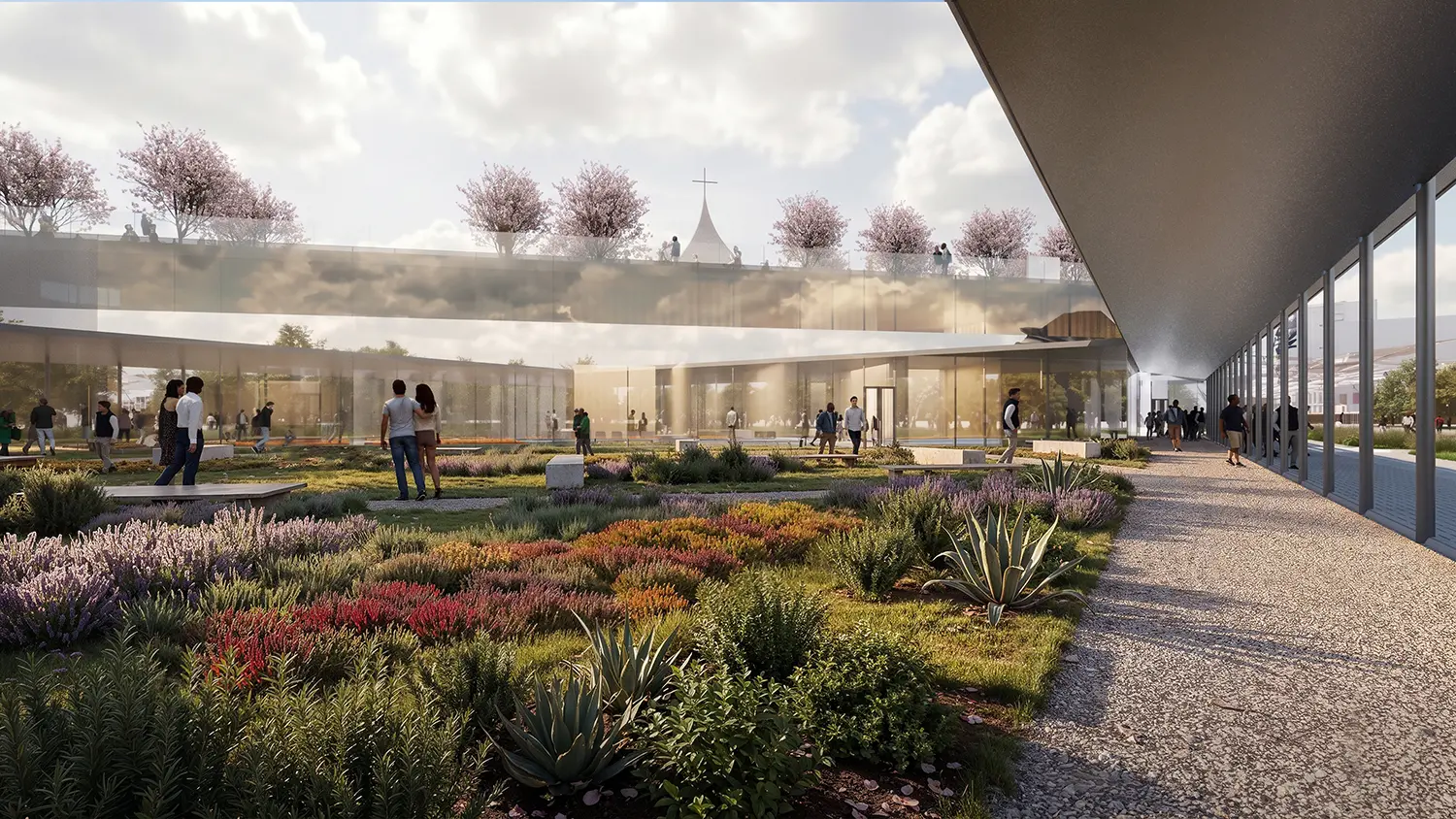
Landscape architecture also plays a defining role in the Ambrosian Monastery’s conceptual framework. The proposed Garden of Religions gathers plant species associated with the monotheistic faith traditions in Milan, reinforcing the project’s purpose of encouraging coexistence and participation among different communities. The garden is intended as a symbolic landscape and a collectively maintained public environment integrated into everyday urban life.
Another significant element appears above the library, where cherry trees and sculptures from the storage collections of the Veneranda Fabbrica del Duomo are planned to occupy a rooftop grove. By relocating these historic works from archival storage into an accessible public setting, the project creates a connection between Milan’s religious heritage and its future-oriented innovation district.
Through the Ambrosian Monastery, Stefano Boeri Architetti develops an architectural language centered on openness, collective care, and spatial inclusivity. The project translates their social and spiritual functions into a contemporary urban condition shaped by research, technological progress, and cultural plurality. Within MIND, the monastery becomes both a place of contemplation and an active civic institution embedded in the city.
Image credit: Stefano Boeri Architetti / Source: urdesignmag